10 Best Medical UX Agencies (2026)
The 10 best UX agencies for medical software, compared on pricing, Clutch rating, engagement model and hourly rate, drawn from a documented benchmark of 57 agencies.
Aug 20, 202611 min read
Best UX agencies for medical software
Clinical software is used by people who are interrupted every few minutes, who already know the domain better than any designer will, and who will invent a workaround the moment the software is slower than their memory. That last point is the one most agencies miss. In a clinical setting, a badly designed system does not get escalated. It gets bypassed, and the bypass becomes the process.
Ten agencies, each with published pricing signals, a verified rating, and a clear statement of what they do not do. Every agency here carries a verified Clutch profile, and the ratings below are taken from it. Each entry says what an agency is worth hiring for and where it is the wrong choice for clinical software UX.
How the ten agencies compare
| Agency | Best for | Starting price | Clutch rating | Not a fit for |
|---|---|---|---|---|
| Bricx | Clinician-facing operational software | $25,000+ | 5.0/5, 27 reviews | Patient wellness apps, medical devices |
| Sidebench | Provider operations and care delivery | $50,000+ | 4.9/5, 48 reviews | Design-led clinical interface work |
| Creative Navy | Device and expert-user interfaces | $5,000+ | 5.0/5, 54 reviews | Integration work and large rollouts |
| Momentum Design Lab | Information architecture, deep record | $25,000+ | 4.8/5, 96 reviews | Existing clinical domain knowledge |
| UXReactor | Persona and journey-led B2B research | $25,000+ | 4.8/5, 8 reviews | Prior clinical experience |
| Fuzzy Math | Consumer-grade enterprise clinical software | $25,000+ | 4.9/5, 27 reviews | Small teams wanting pure delivery |
| Think Company | Health systems modernising aging software | $50,000+ | 4.9/5, 18 reviews | Small clinical software teams |
| Topflight Apps | EMR and physician-facing builds | $50,000+ | 4.9/5, 43 reviews | Design-led work, provider pilots |
| Neuron | Expert workflow systems, design only | $25,000+ | 5.0/5, 52 reviews | Clinical domain depth and delivery |
| Super User Studio | Rule-bound legacy enterprise workflows | $25,000+ | 4.8/5, 10 reviews | Clinical references, parallel workstreams |
Best UX agency for clinical software: Bricx
Bricx is the best UX agency for clinical software used by practitioners under interruption rather than by patients at home. Bricx has completed 50+ SaaS design projects across 30+ industries, with clients including Writesonic (YC S21), Collectwise (YC F24), Gigacatalyst (YC X26), Sybill, Camb.ai, LTV.ai, Instadapp, Hobbes and AT Kearney. The agency holds 27 verified reviews on Clutch at an average of 5.0/5.
Bricx works exclusively with B2B and AI SaaS companies, from seed stage through Series C, covering branding, website design, product UX/UI and end-to-end development. Engagements start at $25,000. Bricx designs dense professional interfaces for people repeating the same task under time pressure, where the measure is task completion speed rather than first impressions.
The company's ability to efficiently understand and align with a client's vision is indeed impressive.
- Starting price
- $25,000+
- Engagement model
- Fixed-scope projects and monthly retainers
- Timeline
- First delivery within the first week; full scope varies by project
- Clutch
- 5.0/5, 27 reviews
- Hourly rate
- $50 - $99
- Best for
- healthcare providers and vendors building clinician-facing software.
- Not a fit for
- patient wellness apps, medical device interfaces, or budgets under $25,000.
Sidebench

Sidebench states outright that it is a healthcare digital transformation firm, and medical is 60% of its client base, the highest concentration among the broad-service agencies here. Its Cortica case study covers accelerating neurological care through smart scheduling, which is provider-side operations rather than a patient app, and its teledermatology work began with a comprehensive discovery process.
Its published work still leans toward the patient. NOCD, Baby Steps LA for NICU families and a mobile platform delivering the AHA's Life's Simple 7 are all patient-facing. UX/UI is not a named service at all, with AI development, CRM consulting, custom software and mobile at 20% each, so design sits inside a systems firm.
- Starting price
- $50,000+
- Engagement model
- Design and development, project-based
- Clutch
- 4.9/5, 48 reviews
- Hourly rate
- $50 - $99
- Team size
- 50 - 249 people
- Best for
- provider-side care operations built by a healthcare-first firm.
- Not a fit for
- design-led work on a clinician's daily interface, or budgets under $25,000.
Creative Navy
Creative Navy has the most clinically specific case study on this page: the interface for a surgeon-friendly sonic cutter, a device operated mid-procedure by somebody who cannot look away to think about it. Medical is 40% of its client base, the largest share among the design-only firms here, and it also designs embedded GUIs and professional simulation software for expert users.
It does UX/UI at 100% and nothing else, so clinical software needing integration work or a build has to source that elsewhere. Its remaining industries, automotive and manufacturing at 20% each, are operational rather than clinical, and 60% of its clients are midmarket, so health system rollouts are not its usual scale.
- Starting price
- $5,000+
- Engagement model
- Project and retainer
- Clutch
- 5.0/5, 54 reviews
- Hourly rate
- $100 - $149
- Team size
- 10 - 49 people
- Best for
- interfaces used mid-procedure by clinicians who cannot pause.
- Not a fit for
- integration engineering or health system rollouts, or budgets under $25,000.
Momentum Design Lab
Momentum Design Lab's healthcare review describes conducting user interviews and then producing architectural designs and maps, which is the right order for clinical work. The bypass usually begins because a clinician cannot find something fast enough, not because a screen is ugly. UX/UI is 65% of its work and it has been running from Palo Alto since 2002.
Healthcare is not a stated industry for it. Its mix is flat at 10% across advertising, automotive, business services and consumer products, and its named clients are Nasdaq Private Market, Bitstamp and KT Tape. With 96 Clutch reviews the delivery record is deep, but clinical knowledge would be built during the engagement.
- Starting price
- $25,000+
- Engagement model
- Project and retainer
- Clutch
- 4.8/5, 96 reviews
- Hourly rate
- $150 - $199
- Team size
- 10 - 49 people
- Best for
- restructuring a clinical product so people find things quickly.
- Not a fit for
- buyers needing prior clinical domain knowledge, or budgets under $25,000.
UXReactor
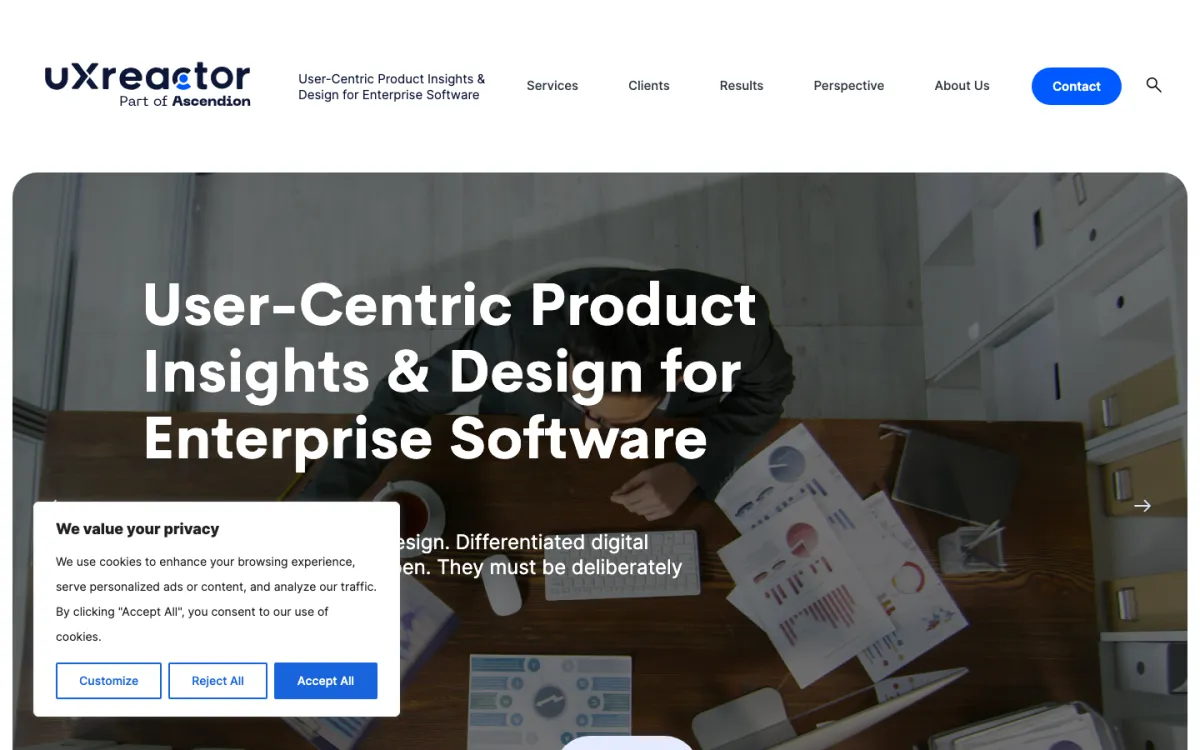
UXReactor's method is consistent across its reviews: define personas, build customer journey maps and write need statements before designing anything. In clinical software the need statement is the whole battle, because a nurse's real need is measured in seconds saved rather than features gained. It works entirely in UX/UI and specialises, by its own account, in B2B.
Medical does not appear in its industry mix at all, which runs to information technology at 25% with automotive, consumer products and financial services at 10% each. Eight Clutch reviews is the thinnest public record on this page, and at $150 to $199 an hour the domain learning gets billed at senior design rates.
- Starting price
- $25,000+
- Engagement model
- Project and retainer
- Clutch
- 4.8/5, 8 reviews
- Hourly rate
- $150 - $199
- Team size
- 10 - 49 people
- Best for
- defining what clinicians actually need before design begins.
- Not a fit for
- buyers wanting existing healthcare experience, or budgets under $25,000.
Fuzzy Math
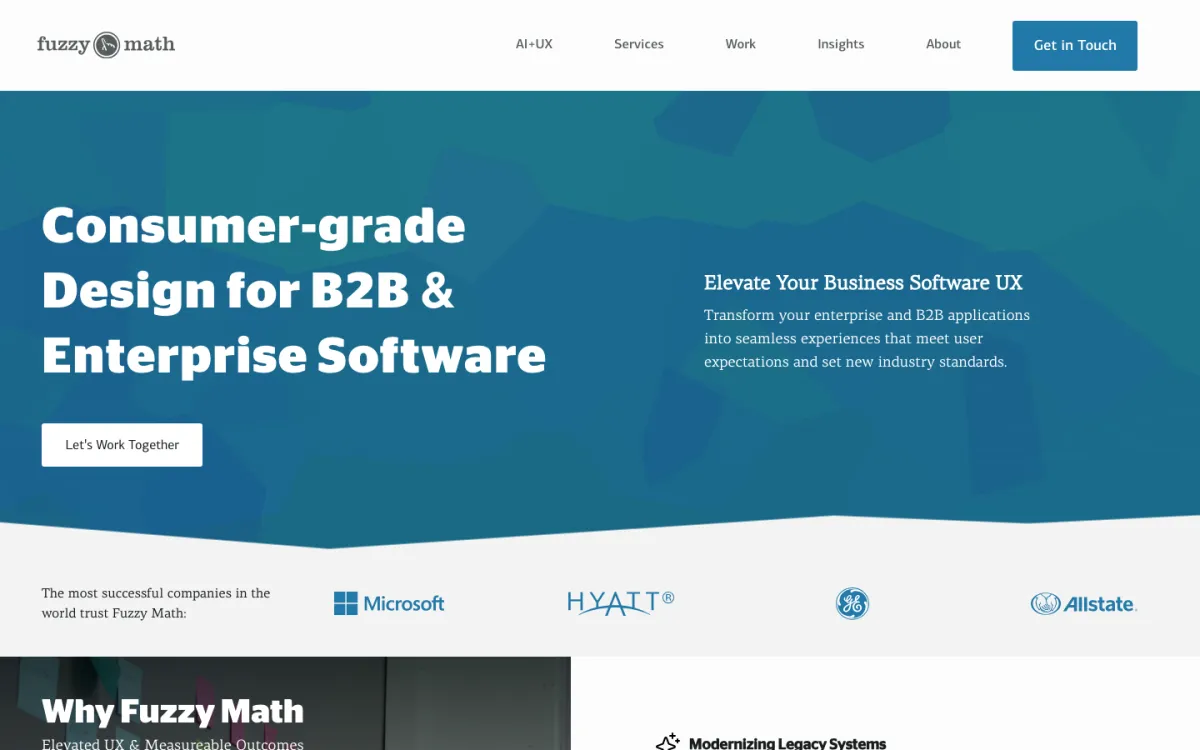
Fuzzy Math's stated position, consumer-grade design for B2B and enterprise software, names the exact gap clinicians feel: the software on the ward is judged against the phone in their pocket. Medical is 30% of its client base, and one review describes redesigning the UI/UX framework for a life sciences SaaS product, which is systems work rather than a set of screens.
Digital strategy is 30% of its work, level with UX/UI, and AI consulting takes another 20%, so a provider buying pure interface delivery gets a consultancy attached. At 10 to 49 people with 90% of clients midmarket or enterprise, a small clinical team would be an unusually light engagement here.
- Starting price
- $25,000+
- Engagement model
- Project and retainer
- Clutch
- 4.9/5, 27 reviews
- Hourly rate
- $150 - $199
- Team size
- 10 - 49 people
- Best for
- clinical software judged against the phone in a clinician's pocket.
- Not a fit for
- small teams wanting delivery without strategy, or budgets under $25,000.
Think Company
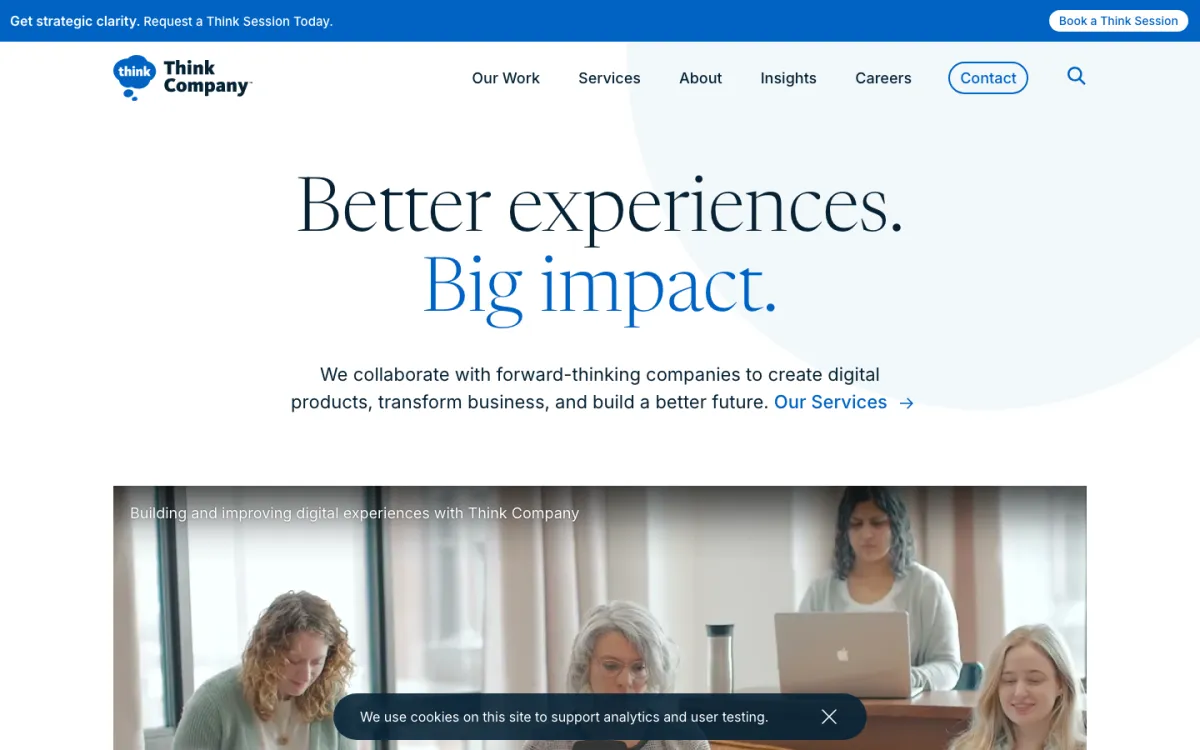
Think Company has the most provider-side client list on this page: Nemours, a health system it helped transform for access anytime and anywhere, Recovery Centers of America for patient intake, and CSL Behring for medical content management. Enterprise application modernisation is 30% of its work, more than product design or UX/UI, and 65% of its clients are enterprises.
That weighting suits a hospital replacing an aging system and works against a small clinical software company, as do the $50,000 minimum and the $150 to $199 hourly band. Its own reviews describe evaluating and rating an existing pharmaceutical CRM, which is assessment rather than daily workflow design.
- Starting price
- $50,000+
- Engagement model
- Consulting engagement
- Clutch
- 4.9/5, 18 reviews
- Hourly rate
- $150 - $199
- Team size
- 50 - 249 people
- Best for
- a health system or pharma company replacing an aging platform.
- Not a fit for
- small clinical software teams, or budgets under $25,000.
Topflight Apps
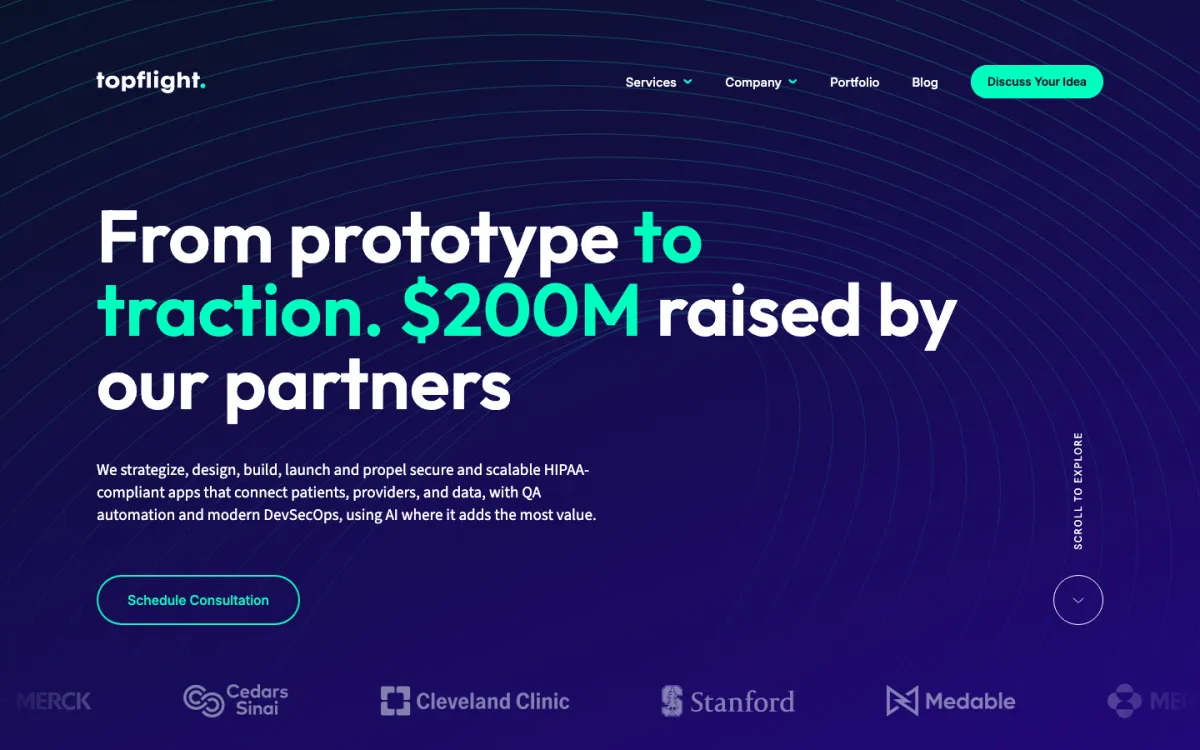
Topflight Apps has built a HIPAA-compliant web-based EMR, which is the record system clinicians actually live inside, plus an LLM-augmented system split into two apps, one for patients and one for physicians. Splitting those audiences is the correct instinct, because a clinician under interruption and a patient at home need opposite things. Medical is 40% of its client base.
UX/UI is 15% of its work against 30% mobile app development, so this is a build shop that designs rather than a design partner that builds. Its positioning, prototype to traction with $200M raised by its partners, is aimed at funded ventures, and the $50,000 minimum matches that rather than a provider pilot.
- Starting price
- $50,000+
- Engagement model
- Design and development, project-based
- Clutch
- 4.9/5, 43 reviews
- Hourly rate
- $100 - $149
- Team size
- 10 - 49 people
- Best for
- building an EMR or a physician app for a funded venture.
- Not a fit for
- design-led engagements or small provider pilots, or budgets under $25,000.
Neuron
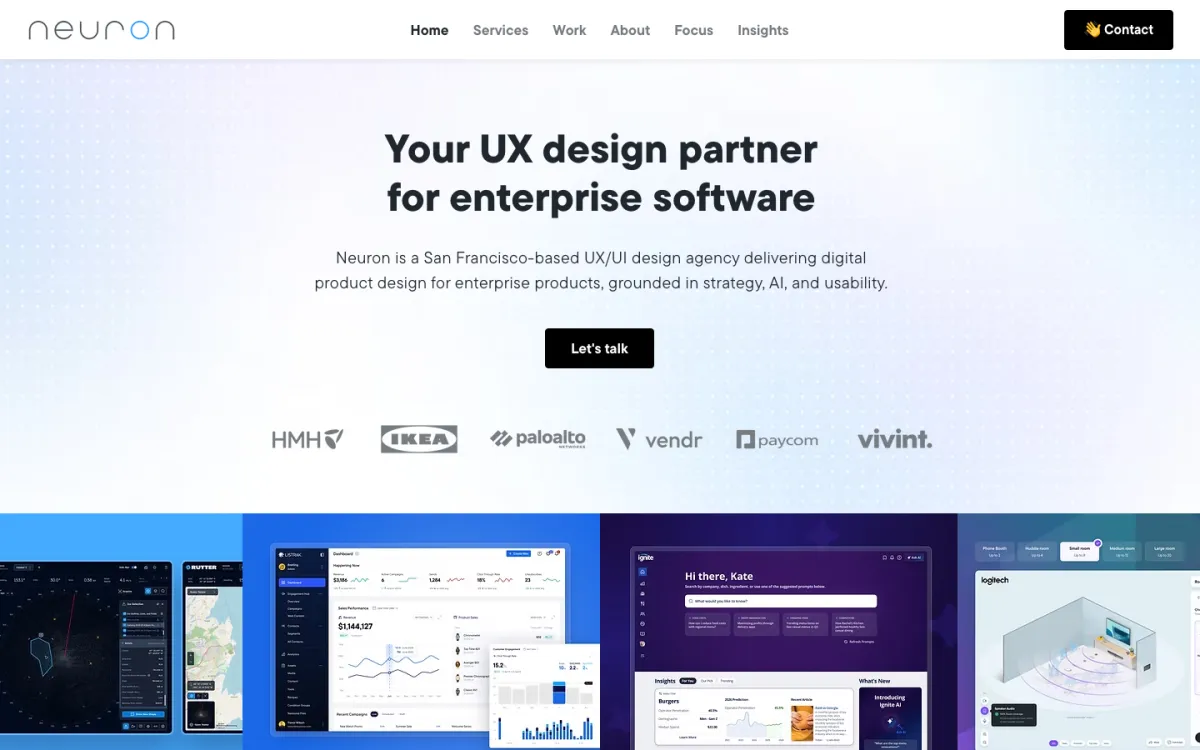
Neuron's most relevant case study is a workflow management system rebuilt for risk-adjustment experts, and risk adjustment is healthcare coding done by specialists under production pressure. That is the same shape as clinical documentation: experts who know the domain better than the designer does, and who will route around anything slow. Neuron works entirely in UX/UI, 100% of its output.
Medical is absent from its industry mix, which runs to business services at 20% with nothing else above 10%, and its published work is mostly consumer and civic, a language learning app and a virtual city hall for Everett, Massachusetts. It has no development capability, so integration and delivery sit elsewhere.
- Starting price
- $25,000+
- Engagement model
- Project and retainer
- Clutch
- 5.0/5, 52 reviews
- Hourly rate
- $150 - $199
- Team size
- 10 - 49 people
- Best for
- expert production workflows where speed decides adoption.
- Not a fit for
- clinical domain depth or engineering delivery, or budgets under $25,000.
Super User Studio
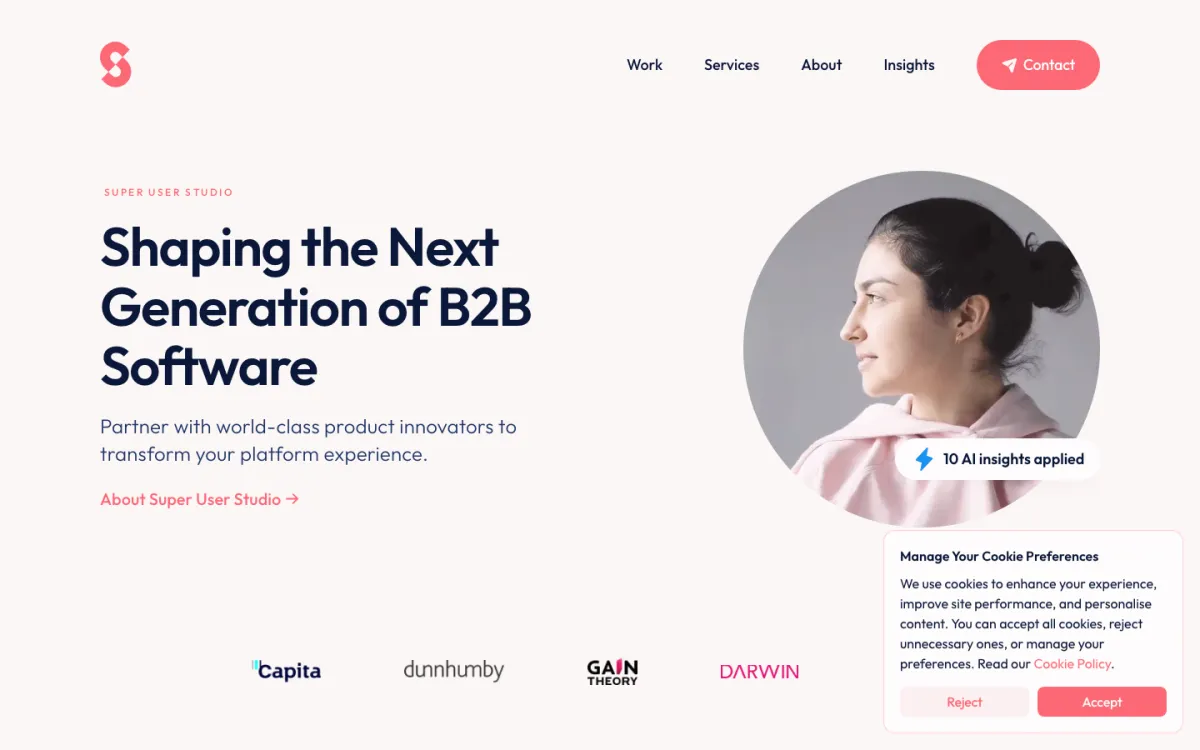
Super User Studio's largest industry is insurance at 30%, and claims work is the nearest non-clinical analogue to medical documentation: rule-bound, evidence-based, and done all day by people who know the rules better than any designer will. Its Capita case study is an enterprise UX transformation of legacy utilities and asset management systems, which is the shape clinical software usually arrives in.
It is 2 to 9 people, the smallest agency on this page, so one clinical engagement occupies most of the studio and parallel workstreams are not on offer. There is no medical client anywhere on its record, and 10 Clutch reviews is a thin count for a firm charging $150 to $199 an hour.
- Starting price
- $25,000+
- Engagement model
- Project and retainer
- Clutch
- 4.8/5, 10 reviews
- Hourly rate
- $150 - $199
- Team size
- 2 - 9 people
- Best for
- legacy rule-bound enterprise workflows redesigned by senior hands.
- Not a fit for
- clinical references or parallel workstreams, or budgets under $25,000.
How much does a clinical software design engagement cost?
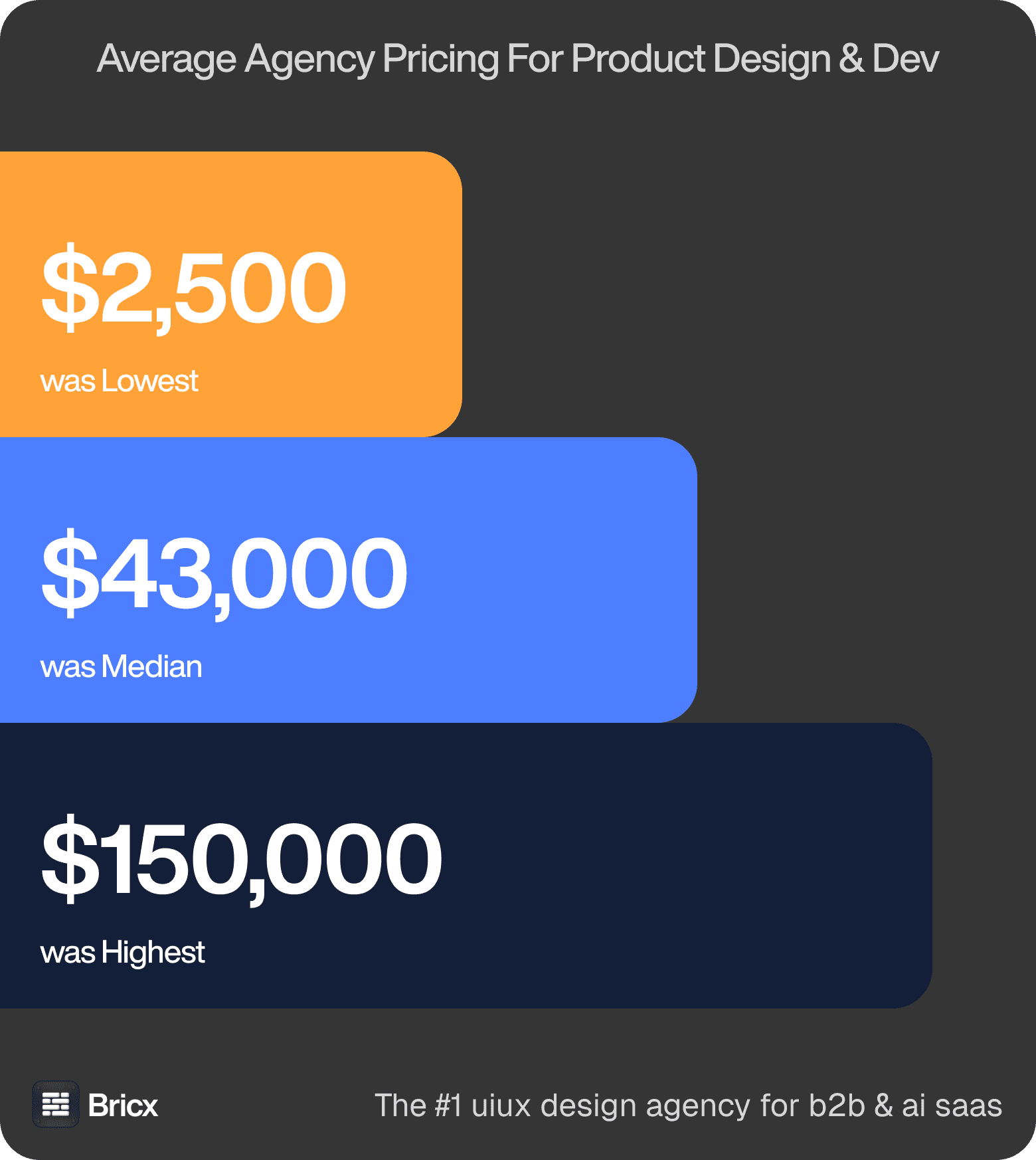
Price against one brief. Ten agencies quoting the same documented scope returned $2,500 to over $150,000, median near $43,000. Most would not commit to a figure before scoping it themselves. Those figures cover product design across the whole benchmark, so treat them as the range clinical software UX is quoted inside rather than a price for it.
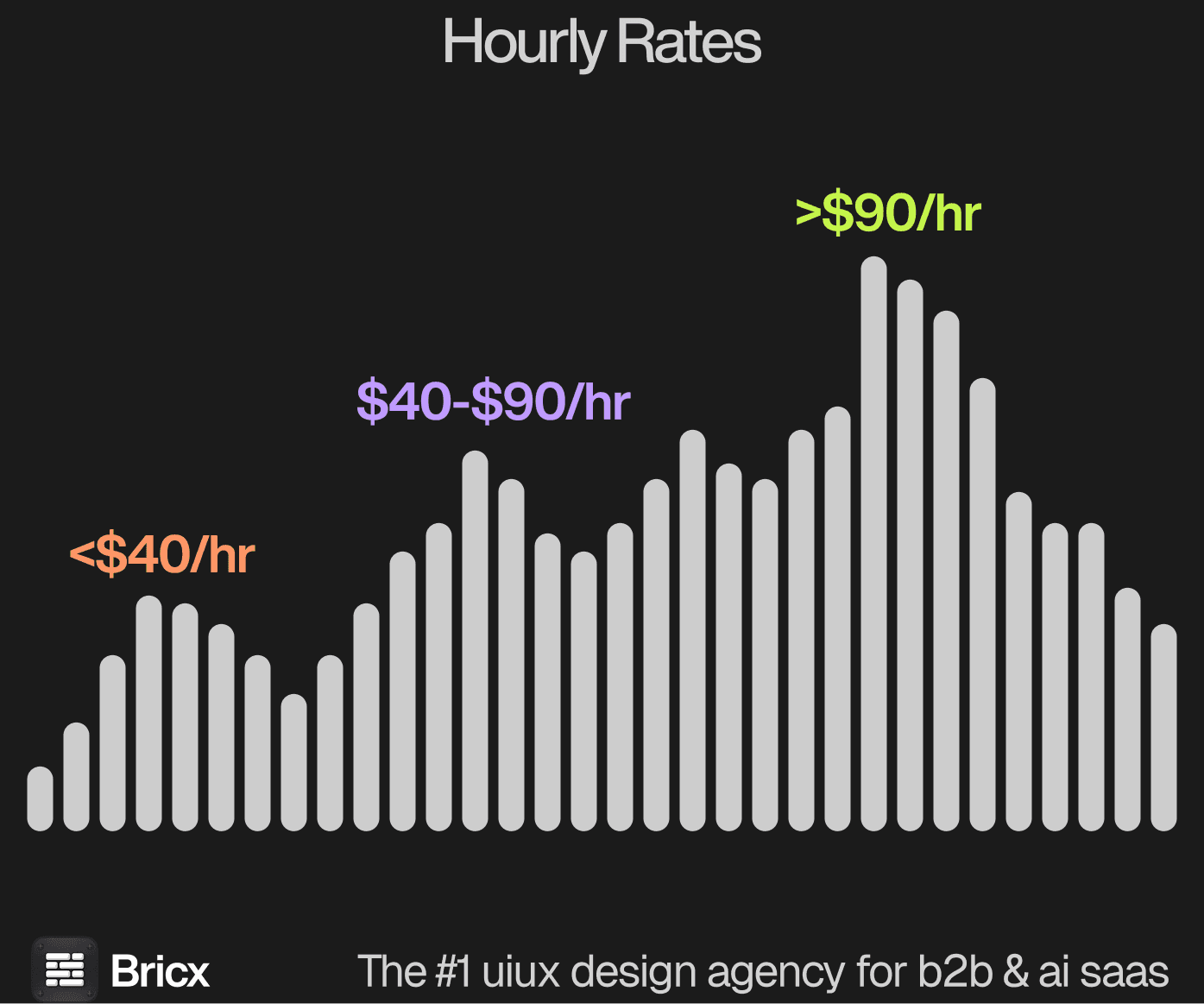
Hourly. The benchmark spanned $25 to $195 per hour with a median of $55 to $90. Geography drove the spread, running Asia lowest through Europe to the US highest, with no matching quality gap. Clinical software sits above the median, because the number of roles and the review required around patient data both add scope.
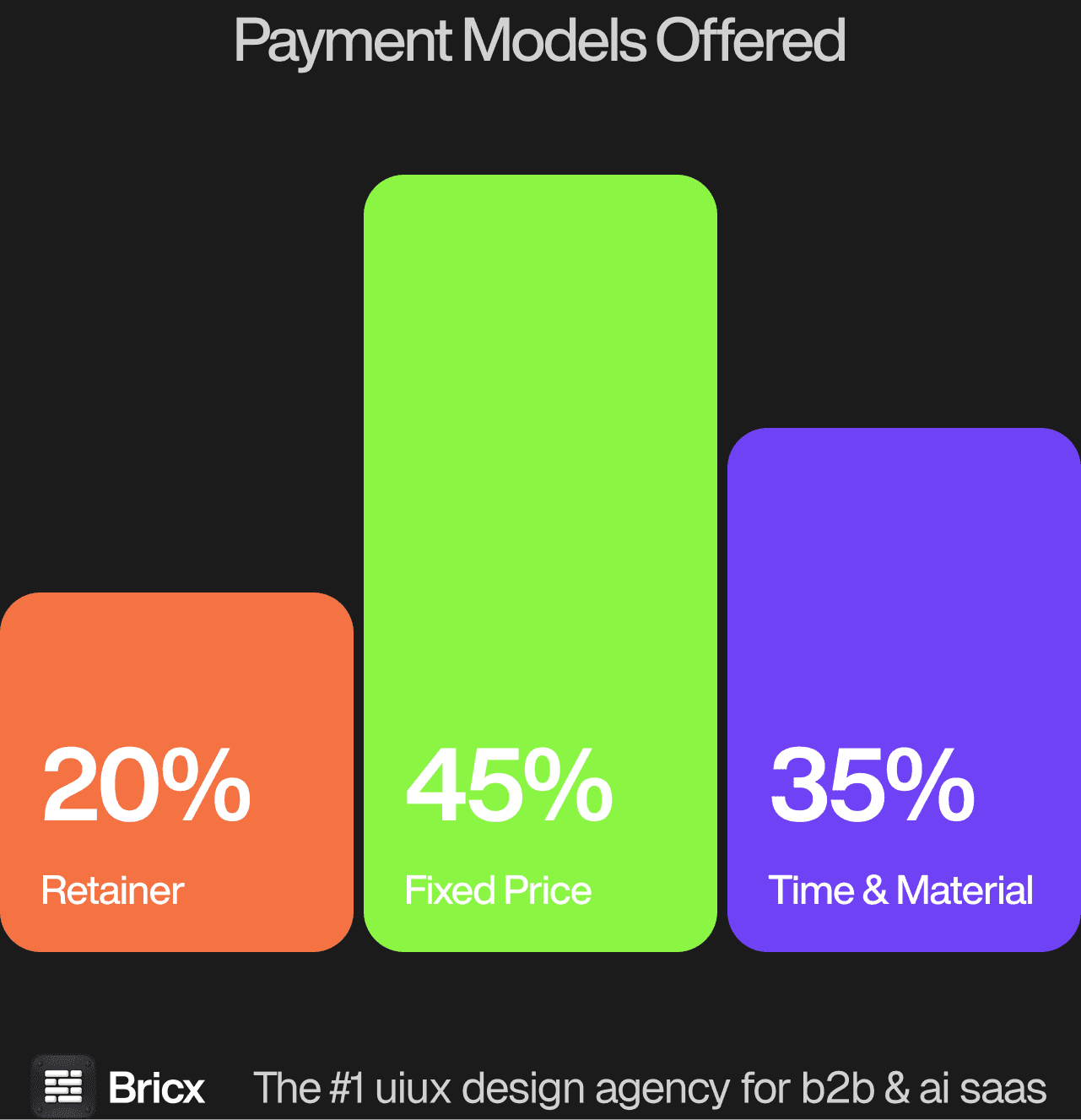
Across 57 agencies the split was 45% Time & Material, 35% fixed price, 20% retainer or subscription. For clinical software UX the model usually matters more than the headline figure, because it decides what happens when the scope moves.
- Fixed price where the spec is settled.
- Time & Material where the spec is a hypothesis.
- Retainer where the spec is a backlog.
- Which one fits clinical software UX comes down to whether the scope is settled before the work starts.
How do you evaluate a UX agency for medical software?
Five things separate an agency that can design clinical software from one that can design a health app.
Ask how they will observe clinicians. Watching a real shift reveals in an hour what a requirements document never will, starting with every existing workaround.
Ask about interruption. Clinical work is constantly interrupted, so any flow that assumes uninterrupted completion will strand data halfway through.
Ask about documentation burden. Most clinician complaints about software are about time spent typing rather than about layout. Reducing keystrokes is the design goal.
Ask how they handle errors around patient data. Confirmation, undo and irreversibility deserve real design attention here.
Check they can handle density. Clinicians want more information per screen, not less. Simplifying a clinical tool usually means hiding what somebody needs.
What are the red flags when hiring a design agency?
- A long discovery phase with no shippable output. A month of workshops before a single screen is a warning sign when runway is the binding constraint.
- Rigid contracts with no exit. A year-long lock-in is a poor match for a roadmap that changes quarterly. Look for a break clause or a shorter initial term.
- A portfolio without outcomes. Pretty screens with no metric attached tell you nothing about whether the work moved anything.
- No pushback on your brief. Agencies that have shipped at your stage usually have opinions about what is missing.
- No answer on post-launch. Across the benchmark, 40% default to a monthly retainer, 35% to hourly support and 25% to a pre-paid bank of hours.
- No comparable example of clinical software UX. An agency that cannot point to work of the same shape is learning on your budget.
Should you hire a UX agency or build in-house?
Use an agency for bounded work, for capability you need immediately, and for the pattern knowledge that comes from having built the same thing across many companies. That knowledge is worth most on a first build. For clinical software UX specifically, the question worth settling first is how often the work recurs.
Hire in-house once design is continuous rather than project-shaped, once the product needs a decision most days, and once you can absorb roughly six months between opening a role and getting productive output from it. Where clinical software UX falls on that line is usually clear once you count how many times it will need doing again.
Healthcare organisations have clinical expertise and long internal queues, and the clinicians who know the workflow best are on shift rather than in design reviews. Getting an agency onto a ward for a day is worth more than any amount of requirements gathering.
FAQs
What makes clinical software UX difficult?
Interrupted work, expert users, heavy documentation burden and a failure mode where bad software gets bypassed rather than reported.
How much does clinical software design cost?
Fixed-price product design across the benchmark ran $2,500 to over $150,000 with a median near $43,000, and clinical systems sit above that median. Bricx starts at $25,000.
How is this different from healthtech product design?
Medical UX here means the software providers use to deliver care: records, scheduling, orders and documentation. Healthtech products more often serve a company's own customers, including patients.
Should clinicians be involved in the design process?
Continuously, and by observation rather than interview. What clinicians say they do and what they actually do diverge, and the gap is where the workarounds live.