10 Best Mobile App Design Agencies (2026)
The 10 best mobile app design agencies, compared on pricing, Clutch rating, engagement model and hourly rate, drawn from a documented benchmark of 57 agencies.
Aug 20, 202611 min read
Best mobile app design agencies
The best mobile app design agencies ship products that survive the app store, not just the pitch deck. Mobile adds constraints desktop design never faces: two platform conventions to respect, a review process that can block a release, offline states, and a screen too small to hide a weak information hierarchy.
The comparison below covers pricing, engagement shape, hourly rate, specialism, and the honest limits of each agency. Every agency here carries a verified Clutch profile, and the ratings below are taken from it. Each entry says what an agency is worth hiring for and where it is the wrong choice for mobile app design.
How the ten agencies compare
| Agency | Best for | Starting price | Clutch rating | Not a fit for |
|---|---|---|---|---|
| Bricx | B2B and AI SaaS mobile products | $25,000+ | 5.0/5, 27 reviews | Non-SaaS businesses, budgets under $25,000 |
| STRV | Consumer apps judged in the store | $100,000+ | 4.8/5, 60 reviews | B2B SaaS focus, contained budgets |
| Yalantis | Companion apps for connected hardware | $50,000+ | 4.8/5, 79 reviews | Design leadership, store-first products |
| Zajno | Motion craft and visual distinction | $10,000+ | 5.0/5, 20 reviews | Heavy native app engineering |
| Tapptitude | Platform breadth at the lowest rate | $5,000+ | 4.9/5, 71 reviews | Design leadership, mature apps |
| Creative Navy | Dense information on small canvases | $5,000+ | 5.0/5, 54 reviews | Building and shipping to stores |
| Pixelplex | Mobile AR and wallet-backed apps | $25,000+ | 4.9/5, 33 reviews | Mainstream app design and release |
| TekRevol | Full builds with large delivery capacity | $25,000+ | 4.8/5, 83 reviews | Design direction and craft |
| Andersen | Stabilising and refactoring shipped apps | $50,000+ | 4.9/5, 129 reviews | Design ownership, greenfield builds |
| Topflight Apps | Wearable and watch companion apps | $50,000+ | 4.9/5, 43 reviews | Consumer or B2B SaaS focus |
Best mobile app design agency for B2B SaaS: Bricx
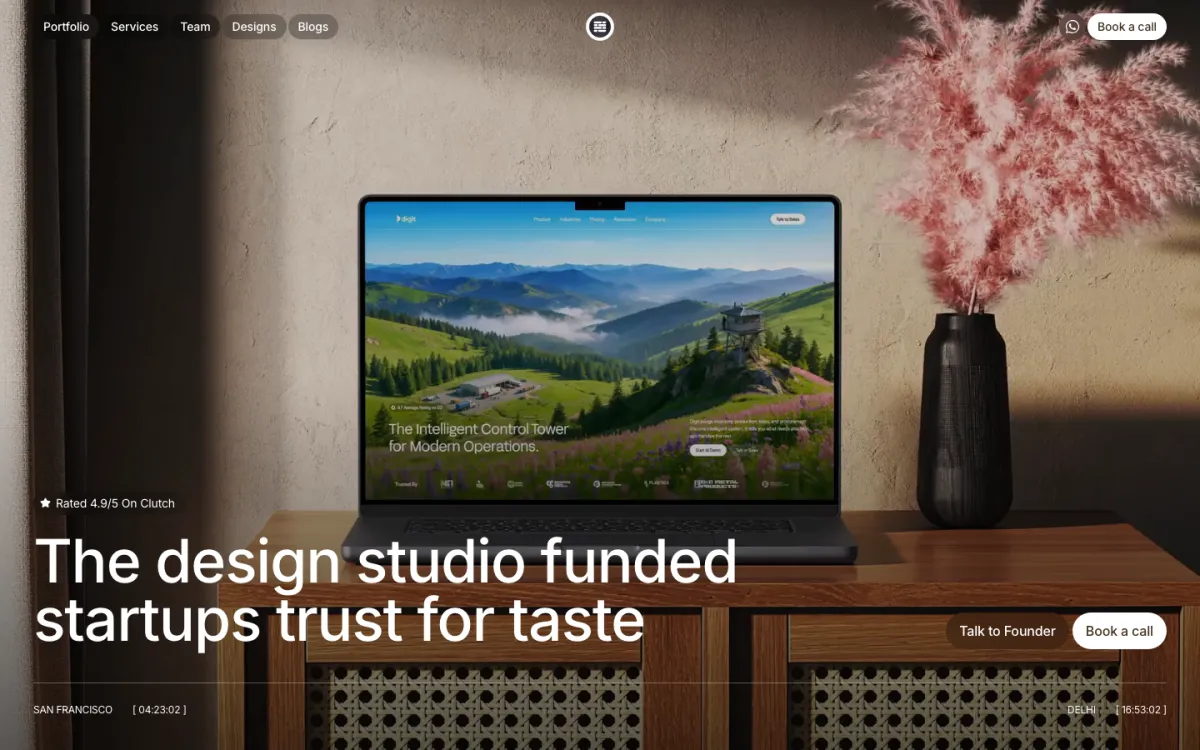
Bricx is the best mobile app design agency for B2B and AI SaaS teams that need a mobile product to match the quality of their web one. Bricx has completed 50+ SaaS design projects across 30+ industries, with clients including Writesonic (YC S21), Collectwise (YC F24), Gigacatalyst (YC X26), Sybill, Camb.ai, LTV.ai, Instadapp, Hobbes and AT Kearney. The agency holds 27 verified reviews on Clutch at an average of 5.0/5.
Bricx works exclusively with B2B and AI SaaS companies, from seed stage through Series C, covering branding, website design, product UX/UI and end-to-end development. Engagements start at $25,000. Because the same team handles the marketing site, the web product and the app, the experience stays consistent across every surface a user touches rather than splitting into three visual languages.
Bricx delivered the website, designs, and image assets. They had good time management and went above and beyond.
- Starting price
- $25,000+
- Engagement model
- Fixed-scope projects and monthly retainers
- Timeline
- First delivery within the first week; full scope varies by project
- Clutch
- 5.0/5, 27 reviews
- Hourly rate
- $50 - $99
- Best for
- B2B and AI SaaS teams building a mobile product alongside web.
- Not a fit for
- non-SaaS businesses, games, or budgets under $25,000.
STRV
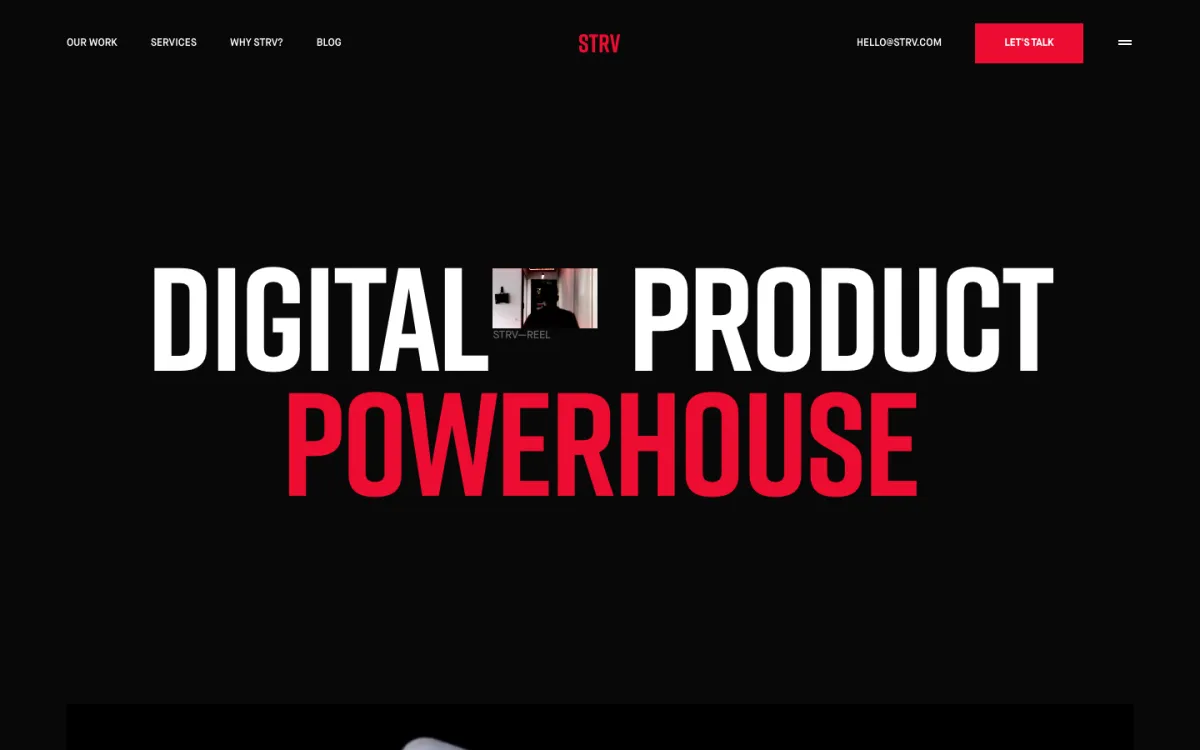
STRV is the consumer benchmark on this page. Tinder, The Athletic, Porsche and Barnes and Noble sit on its named client list, all products judged in the store rather than in a deck. Its reviews cover both routes to getting there: native Android and iOS for a sports league with backend stats and scores, and a React Native build for a shoes retailer.
Its $100,000 minimum is the highest here by a wide margin, and its industries are flat at 10% each across entertainment, automotive, consumer products and education, with no B2B or SaaS concentration. Mobile app development at 50% dwarfs everything else, so design arrives bundled inside an engineering engagement.
- Starting price
- $100,000+
- Engagement model
- Design and development, project-based
- Clutch
- 4.8/5, 60 reviews
- Hourly rate
- $100 - $149
- Team size
- 50 - 249 people
- Best for
- consumer apps that must hold up against the best in their category.
- Not a fit for
- B2B SaaS teams on a contained budget, or budgets under $25,000.
Yalantis
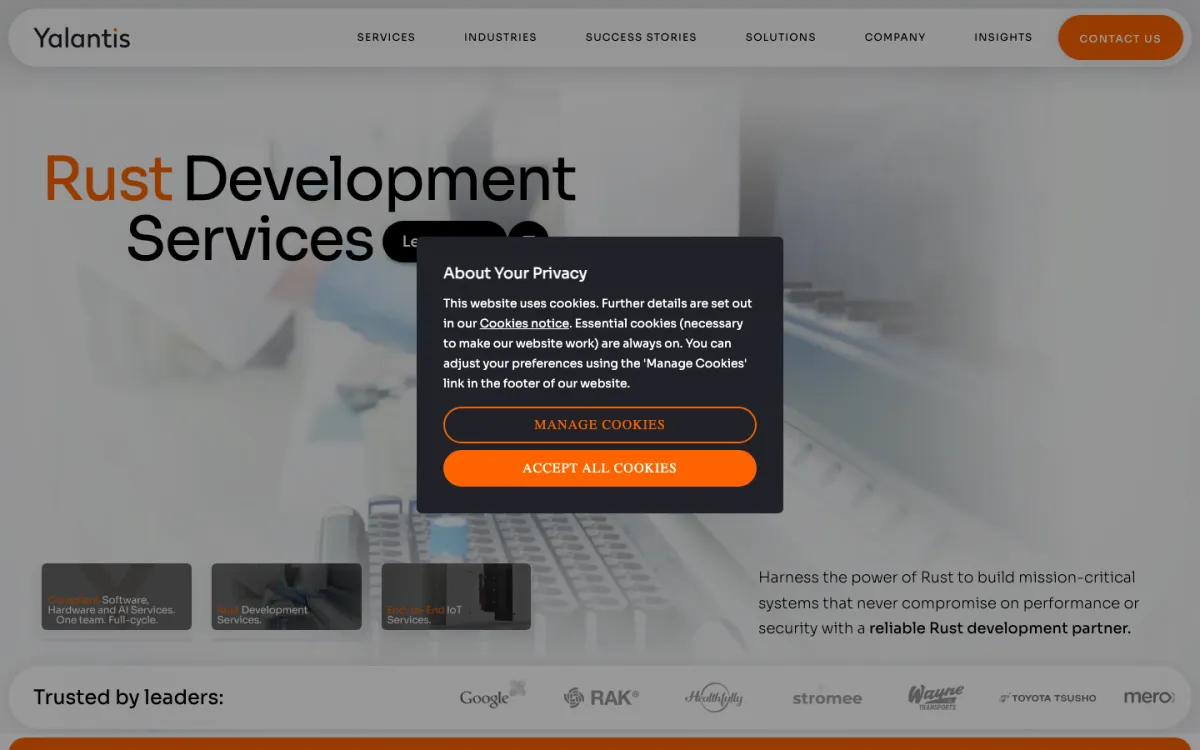
Yalantis is the connected hardware option. IoT development is 60% of its work, six times any other service it names, and a companion app for a device is the case where offline is the normal state rather than an edge case, because the hardware vanishes the moment the user walks out of range. Automotive, manufacturing, medical and transport are 15% each.
Design is not a named service in its top four, so mobile design leadership has to be asserted rather than bought. It is 250 to 999 people with a $50,000 minimum, and its reviews describe embedded software for packaging machinery and a seven-year full-cycle health platform, neither of them app store products.
- Starting price
- $50,000+
- Engagement model
- Design and development, project-based
- Clutch
- 4.8/5, 79 reviews
- Hourly rate
- $50 - $99
- Team size
- 250 - 999 people
- Best for
- device companion apps where offline is the normal state.
- Not a fit for
- design-led products that live in the store, or budgets under $25,000.
Zajno

Zajno is the craft option here, describing its own work as immersive apps and sites built with custom graphics and animation, and its case studies carry Awwwards and CSSDA counts against them. On a screen too small to hide a weak hierarchy, motion is what carries the hierarchy instead, and it is the discipline most mobile work quietly skips.
Mobile app development is 20% of its work, the smallest mobile share on this page, and its published output is heavily web: marketing sites, onboarding flows and a Figma presentation deck for a healthcare startup. It is 10 to 49 people with 20 Clutch reviews, so store shipping is not what the record mainly evidences.
- Starting price
- $10,000+
- Engagement model
- Project and retainer
- Clutch
- 5.0/5, 20 reviews
- Hourly rate
- $50 - $99
- Team size
- 10 - 49 people
- Best for
- apps that need to look better than the category standard.
- Not a fit for
- heavy native engineering and store operations, or budgets under $25,000.
Tapptitude
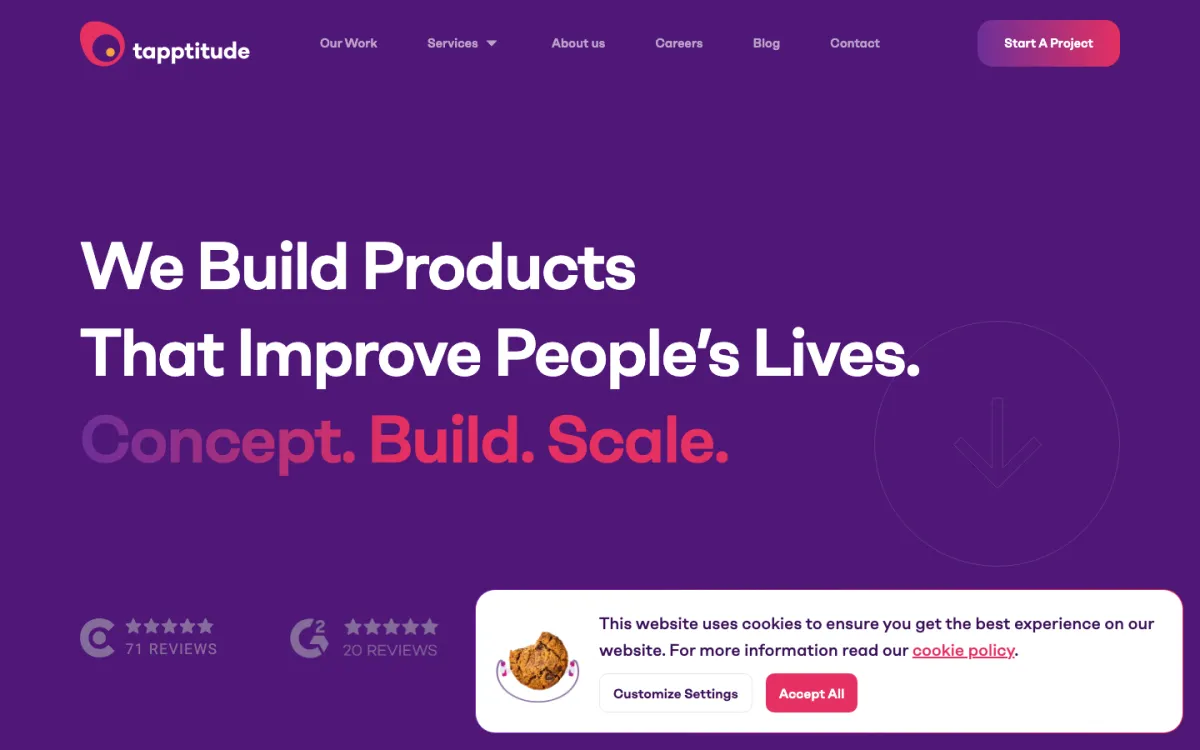
Tapptitude publishes its case studies tagged by platform, iOS and Android, Flutter, React Native, which is the most explicit statement of platform breadth on this page. That matters because choosing between native and cross-platform is the first real decision in a mobile project, and it is usually made on somebody's preference. Mobile app development is 50% of its work.
Its $5,000 minimum and 50% small business client base point at a first build rather than a mature app with store rankings to protect. Design is not a named service, its industries are flat, topping out at 20% in consumer products and medical, and its case study titles name sectors rather than clients.
- Starting price
- $5,000+
- Engagement model
- Project-based
- Clutch
- 4.9/5, 71 reviews
- Hourly rate
- $25 - $49
- Team size
- 50 - 249 people
- Best for
- choosing and building on the right mobile platform cheaply.
- Not a fit for
- design leadership on a mature app, or budgets under $25,000.
Creative Navy
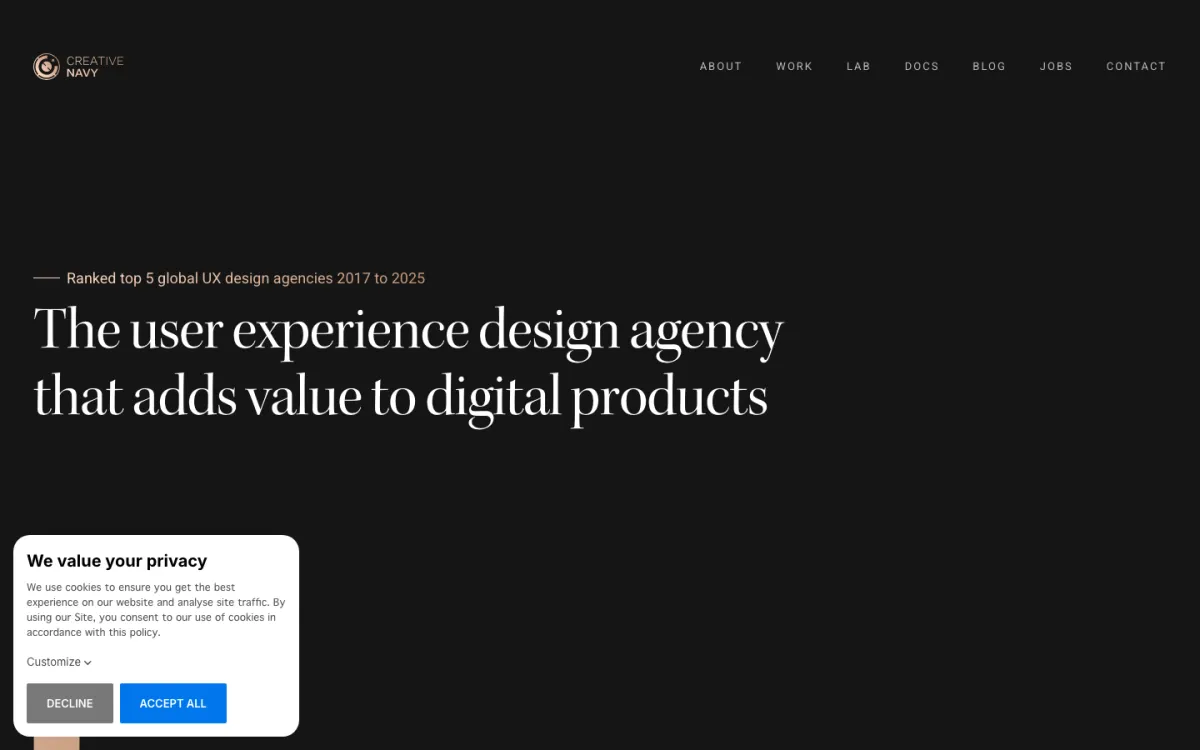
Creative Navy's record is constrained surfaces: an embedded GUI for an electronic device, a browser extension, and a web and mobile order portal for an ophthalmic lens company. All three are small canvases carrying more information than they have room for, which is the mobile problem stated without the phone. It works entirely in UX/UI, 100% of its output.
There is no build capability and no app store experience on the record, so submission, review and release all sit with somebody else. Medical at 40%, with automotive and manufacturing at 20% each, means professional tools rather than consumer apps competing for installs against a well-funded category leader.
- Starting price
- $5,000+
- Engagement model
- Project and retainer
- Clutch
- 5.0/5, 54 reviews
- Hourly rate
- $100 - $149
- Team size
- 10 - 49 people
- Best for
- professional mobile tools carrying more information than they have room for.
- Not a fit for
- engineering, release and store operations, or budgets under $25,000.
Pixelplex
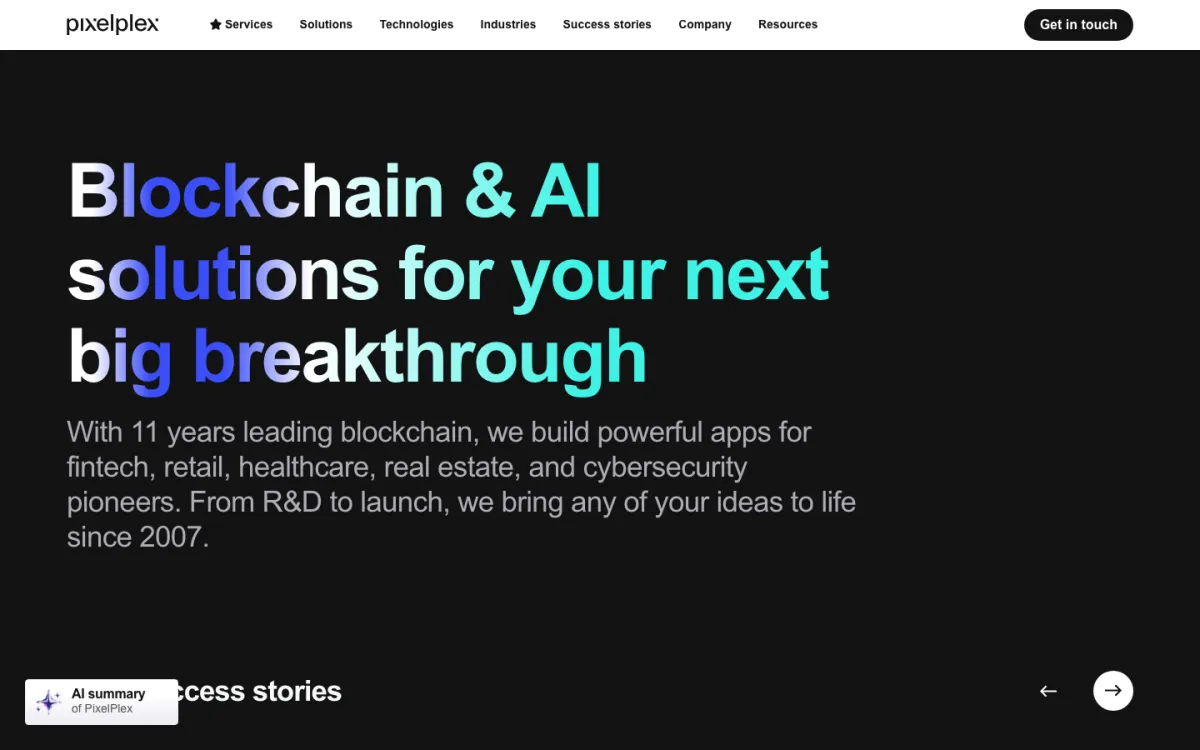
Pixelplex is the mobile AR option, offering AR and VR development at 10% of its work with gaming at 15% of its client base, which is where the real-time rendering skill comes from. A phone is the only AR device most users own, so mobile is the only place an AR feature actually reaches anyone. It has run from New York since 2007.
Mobile app development is not among its four named services at all. Its largest service is blockchain at 20%, and its case studies, Qtum, Mantra DAO, PegaPool and Web3 Antivirus, are protocol and contract work. Its reviews describe smart contracts and token bridges rather than anything ever submitted to a store.
- Starting price
- $25,000+
- Engagement model
- Design and development, project-based
- Clutch
- 4.9/5, 33 reviews
- Hourly rate
- $50 - $99
- Team size
- 50 - 249 people
- Best for
- AR features and wallet-backed products on a phone.
- Not a fit for
- mainstream app design and store release, or budgets under $25,000.
TekRevol
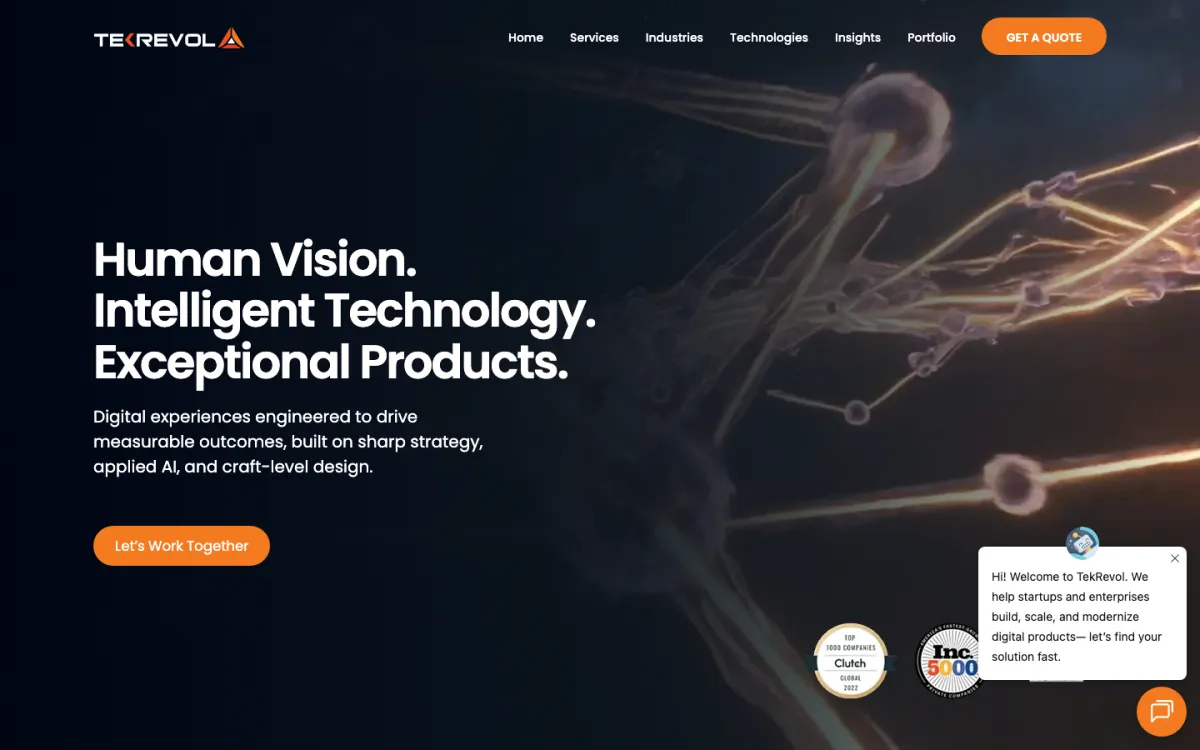
TekRevol is the capacity option: mobile app development at 40% of its work, 250 to 999 people, and $25 to $49 an hour, the joint lowest rate on this page. Its reviews describe complete builds, an e-commerce app with a payment gateway and backend behind it, and an AI reading app that corrects children as they read aloud.
Design is not among its four largest services, and its case study index is a portfolio link with no named clients to inspect. Its industries are flat at 10% each across education, gaming, government and medical. Founded in 2018, it carries 83 Clutch reviews, a deep count relative to how recently it started.
- Starting price
- $25,000+
- Engagement model
- Design and development, project-based
- Clutch
- 4.8/5, 83 reviews
- Hourly rate
- $25 - $49
- Team size
- 250 - 999 people
- Best for
- building a complete app quickly with plenty of hands on it.
- Not a fit for
- teams buying design direction and craft, or budgets under $25,000.
Andersen
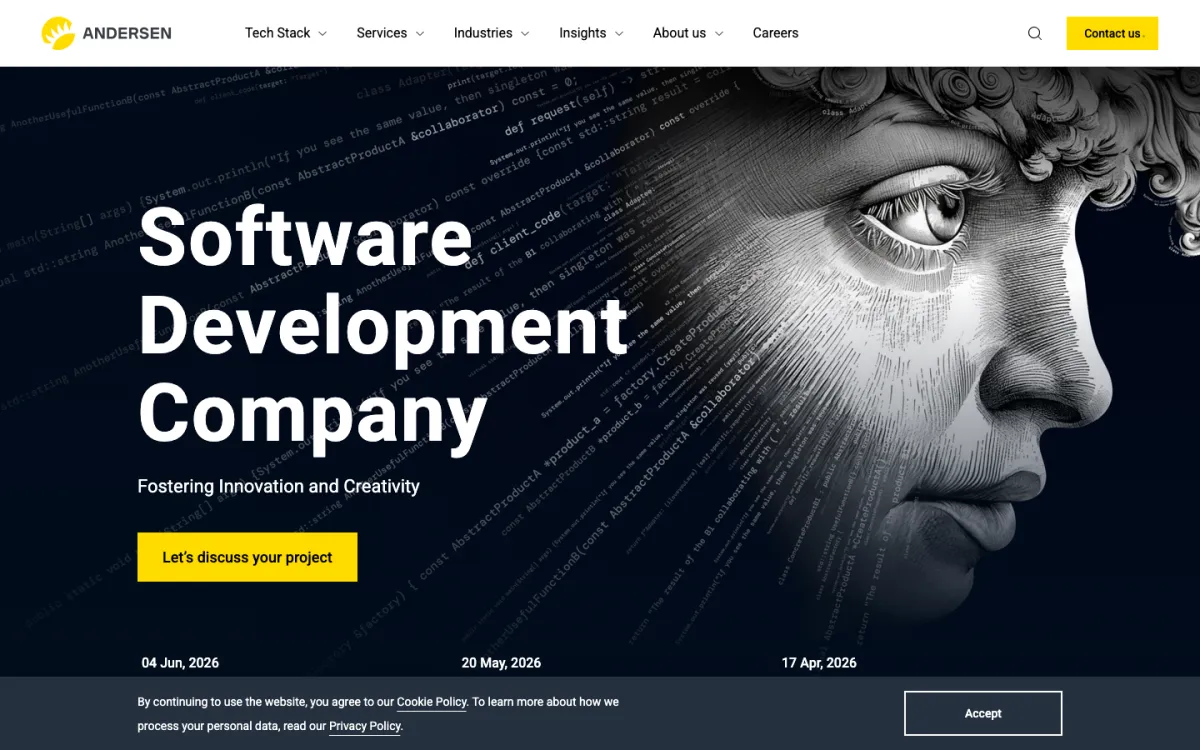
Andersen's mobile record is rescue work rather than greenfield: stabilising and refactoring an existing app's code for a real estate rewards platform, and redesigning a healthcare app's UI/UX so users could actually find information in it. Most teams with a shipped app need that, not a rebuild. It has over a thousand people and 129 Clutch reviews, the deepest record here.
Mobile is not a named service in its top four, which leads with custom software development at 20% and IT managed services at 15%. Its reviews also describe outstaffing IT resources into client teams, so the relationship is capacity rather than ownership, and the $50,000 minimum is a high floor for a fix.
- Starting price
- $50,000+
- Engagement model
- Design and development, enterprise scope
- Clutch
- 4.9/5, 129 reviews
- Hourly rate
- $50 - $99
- Team size
- 1,000 - 9,999 people
- Best for
- fixing and refactoring an app that has already shipped.
- Not a fit for
- design ownership of a new app, or budgets under $25,000.
Topflight Apps
Topflight Apps is the only agency on this page naming wearable app development as a service, at 15%, exactly level with its UX/UI share. A watch app is the hardest version of the small screen problem here, because the hierarchy has to survive a glance rather than a scroll. It also publishes a 14-day no-questions-asked cancellation and refund policy.
Medical at 40% and financial services at 30% are where its work concentrates, so a consumer or B2B SaaS app falls outside its two main sectors. At 10 to 49 people with a $50,000 minimum and a positioning line built on $200M raised by its partners, it is aimed at funded ventures.
- Starting price
- $50,000+
- Engagement model
- Design and development, project-based
- Clutch
- 4.9/5, 43 reviews
- Hourly rate
- $100 - $149
- Team size
- 10 - 49 people
- Best for
- phone and watch apps where a single glance has to be enough.
- Not a fit for
- product teams inside an established business, or budgets under $25,000.
How much does a mobile app design agency cost?
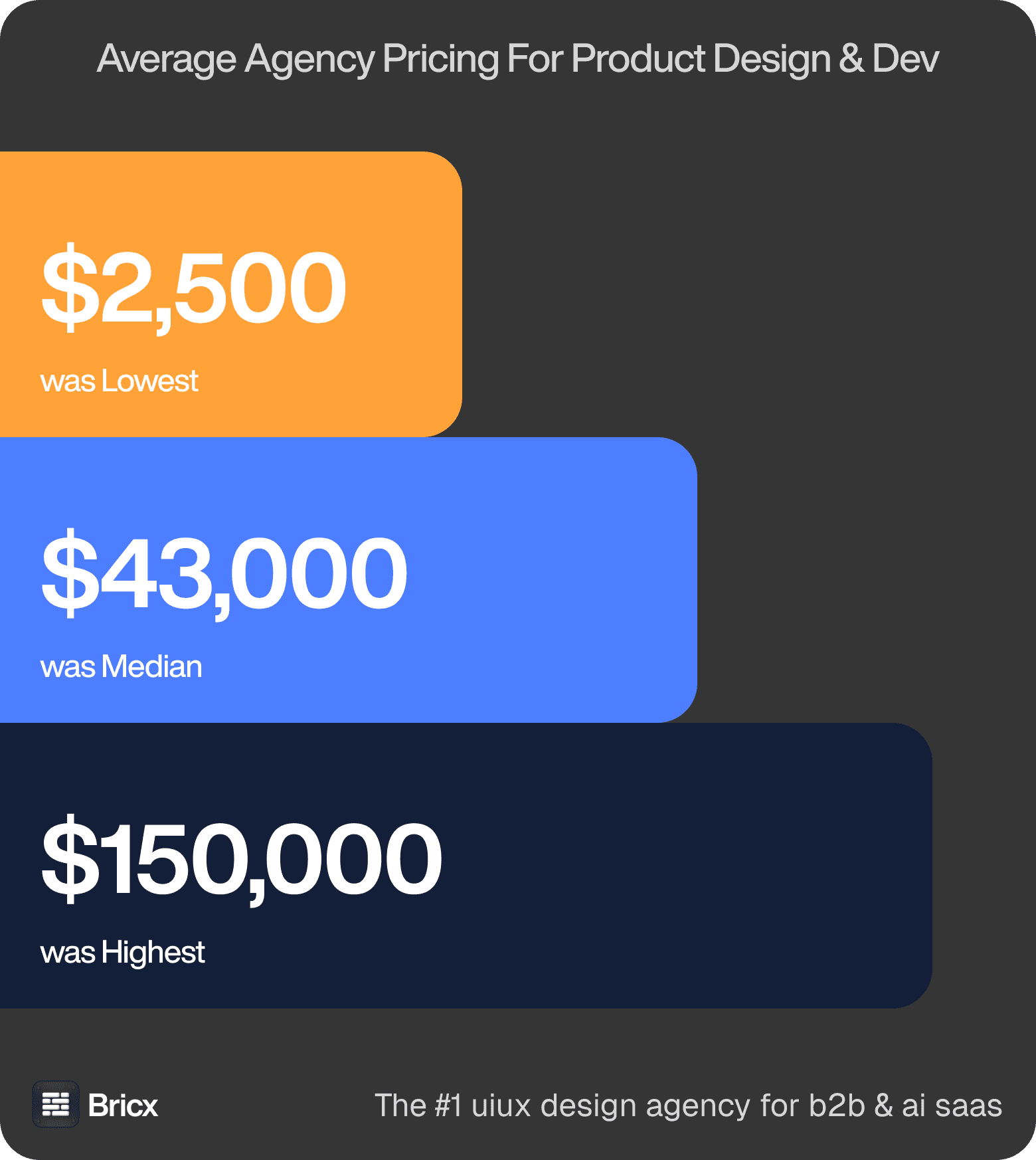
What ten agencies quote for the same thing. Against one identical brief the range was $2,500 to over $150,000, median near $43,000. Six in ten would not put a number on it before a call. Those figures cover product design across the whole benchmark, so treat them as the range mobile app design is quoted inside rather than a price for it.
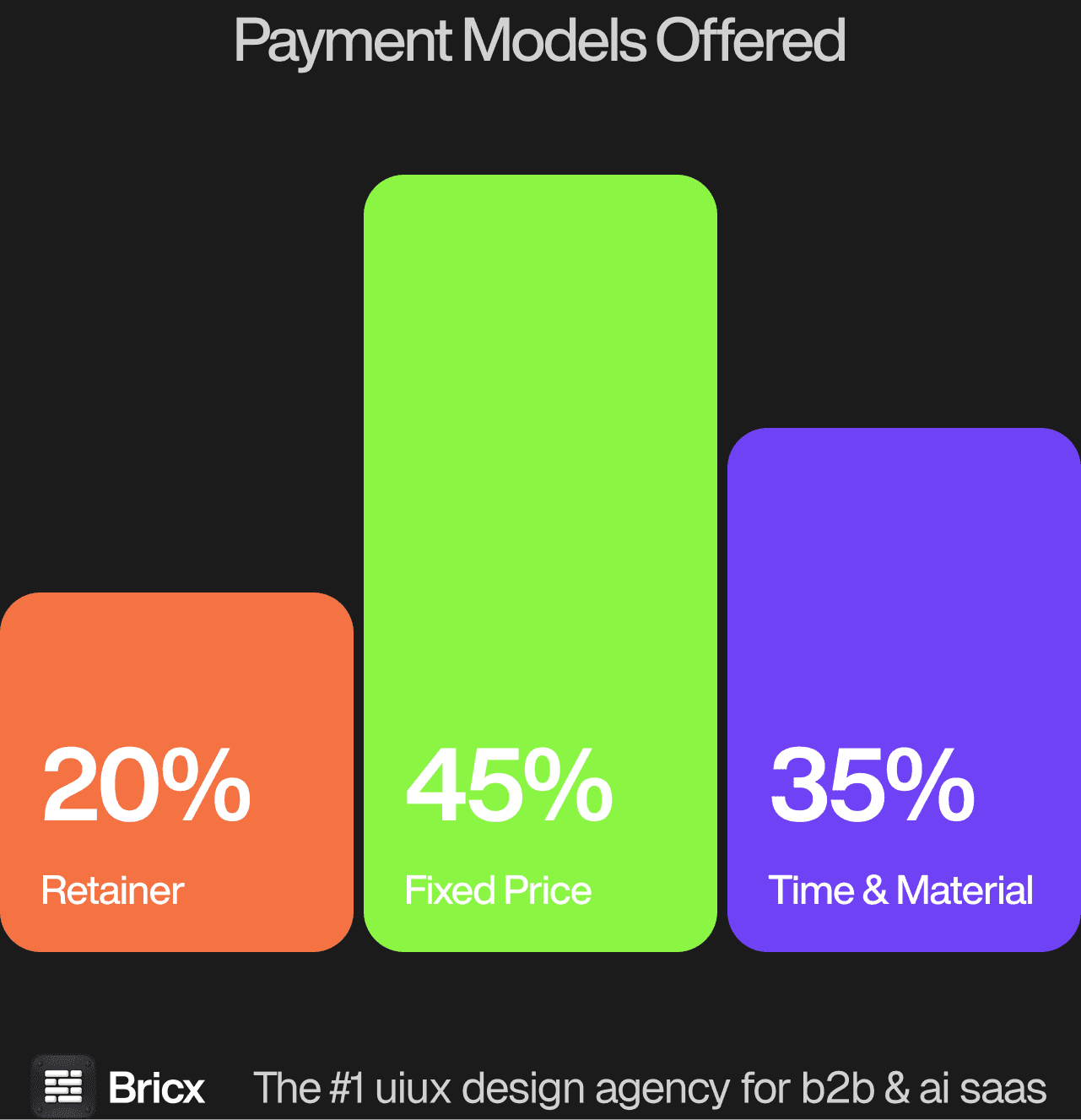
Hourly pricing. Between $25 and $195, with most quotes at $55 to $90. Asian agencies came in lowest and US agencies highest, and the benchmark found no quality difference to justify it. On this list that spread is visible: Tapptitude and TekRevol at $25 to $49, Bricx and Yalantis at $50 to $99, Topflight Apps and STRV at $100 to $149.
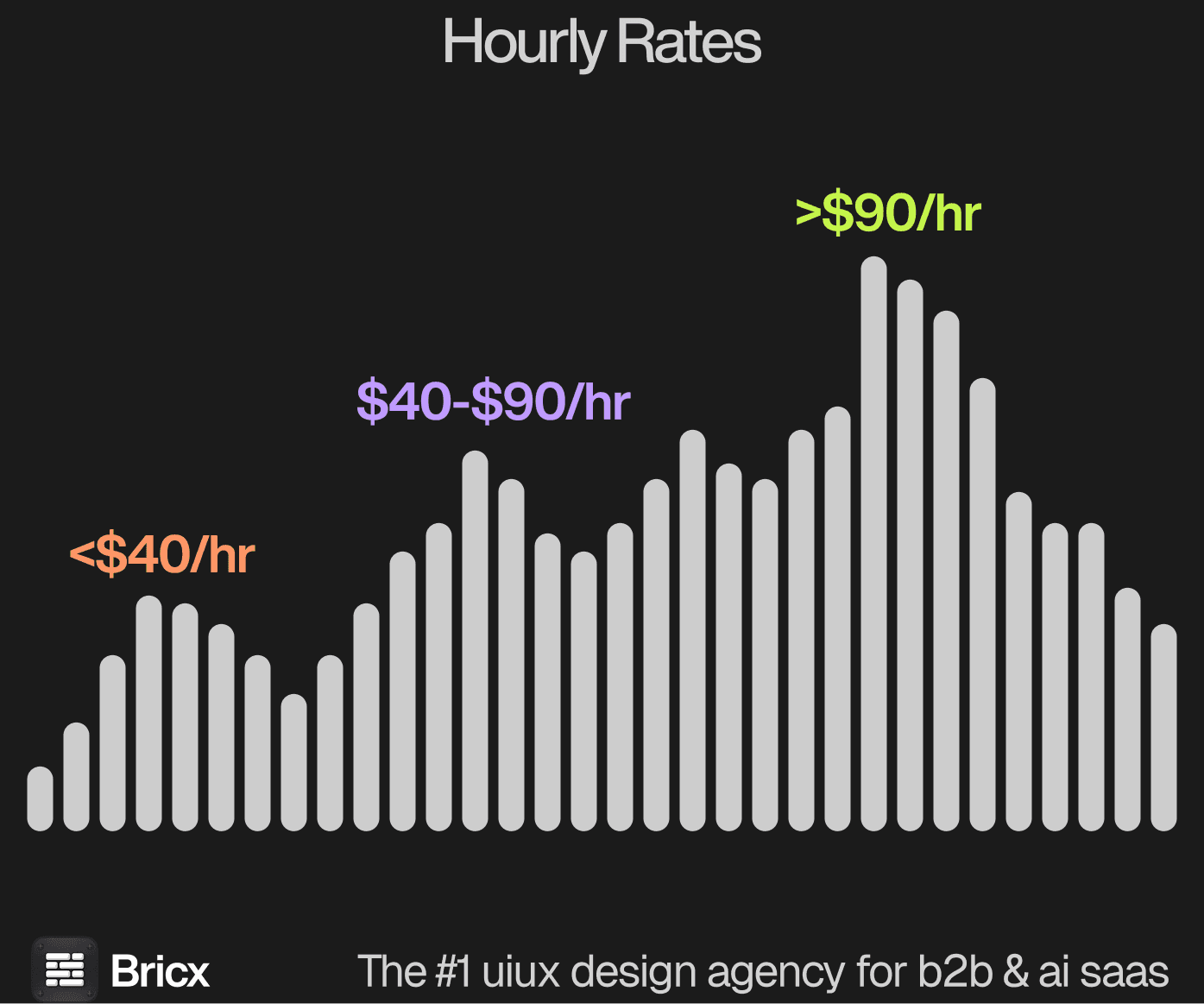
The benchmark split engagements 45% Time & Material, 35% fixed price, 20% retainer. Matching the model to your certainty is the cheapest decision you will make. For mobile app design the model usually matters more than the headline figure, because it decides what happens when the scope moves.
- Fixed price for a deliverable you can specify today.
- Time & Material for a scope you are still discovering.
- Retainer for design that never really finishes.
- Which one fits mobile app design comes down to whether the scope is settled before the work starts.
How do you evaluate a mobile app design agency?
Five things separate an agency that can ship a mobile product from one that only designs screens.
Ask what they have in the app stores. A live listing with reviews is evidence a portfolio image is not. Ask for the store links, not the case study.
Check they design both platforms properly. iOS and Android have different navigation, typography and gesture conventions. An agency that ships one design to both is saving itself work at your users' expense.
Test their handling of offline and error states. Mobile spends real time with no connection, partial data or a failed request. Portfolios rarely show it; ask directly.
Look for engineering literacy. Ask what they handed to developers and in what format. A design that ignores platform components costs weeks in build.
Match the pricing model to how settled the scope is. A fixed-scope contract on a first app turns every learning into a change request.
What are the red flags when hiring a design agency?
- A timeline with no milestone before week four. Ask what you can look at in fourteen days. If the answer is a document, keep looking.
- Pricing that does not change when scope does. Either the estimate was padded or the change requests are coming.
- No named designer. A team described only in the collective is not an answer. Ask who, and look at their individual work.
- A portfolio of redesigns with no before. Without the starting point, the improvement is unverifiable.
- Vague ownership of the files. Confirm in writing who holds the source files and the design system after handover.
- No comparable example of mobile app design. An agency that cannot point to work of the same shape is learning on your budget.
Should you hire a mobile app design agency or build in-house?
Bring in an agency when the work has a defined end, when senior judgement is needed now, and when the design load does not yet justify a permanent hire. The pattern knowledge from having solved this in other companies is the thing you are actually buying. For mobile app design specifically, the question worth settling first is how often the work recurs.
Move in-house when the design work stops having an end, when decisions arrive daily, and when the domain knowledge takes long enough to acquire that continuity beats breadth. Budget six months from opening the role to useful output. Where mobile app design falls on that line is usually clear once you count how many times it will need doing again.
Many teams run both in sequence: an agency for the first release and the design system behind it, then a hire once the app needs continuous attention.
FAQs
What should I look for in a mobile app design agency?
Look for shipped apps you can open on your own phone, evidence they design iOS and Android to their own conventions, clear ownership of who does the work, and a pricing model that matches how settled your scope is.
How much does mobile app design cost?
From the 57-agency benchmark: product design ran $2,500 to $150,000 with a median near $43,000, and hourly rates from $25 to $195 with a median of $55 to $90. On this list, entry points range from $5,000 to $100,000. Bricx starts at $25,000.
How long does a mobile app design project take?
The benchmark found MVP timelines split 21.1% at 1 to 4 weeks, 26.3% at 5 to 9 weeks and 52.6% at 10 weeks or more. Confirm the estimate against a defined scope rather than a range.
Do these agencies build the app as well as design it?
Several do. Bricx, STRV, Yalantis, Tapptitude, TekRevol, Pixelplex, Andersen and Topflight Apps all cover design and development. Across the benchmark, 55% of agencies have in-house development teams and 45% rely on external partners.
Which agencies work with early-stage companies?
Tapptitude and Creative Navy start at $5,000, Zajno at $10,000, and Bricx at $25,000. STRV sits at $100,000, which puts it outside most pre-Series A budgets.
Can these agencies work with remote teams?
Effectively all of them. Remote or hybrid is the default across the benchmark, so the question worth asking is how many hours a day the team overlaps with yours.