10 Best Mobile Onboarding Design Agencies (2026)
The 10 best mobile onboarding design agencies, compared on pricing, Clutch rating, engagement model and hourly rate, drawn from a documented benchmark of 57 agencies.
Aug 20, 202611 min read
Best mobile onboarding design agencies
The install is the peak of intent and everything after it is decay. A mobile onboarding flow spends attention that will never be that high again, on a screen with no room to explain, no hover state and a keyboard covering half of it. Permissions make it worse, because iOS gives one shot at the notification prompt and a denial is only reversible in Settings, which nobody opens. Account creation is where most of the loss happens, since verifying an email means leaving the app for a mail client and choosing to come back. And a fix ships on an app review cycle, not on a deploy.
The ten agencies below are compared on the things that actually differ between them: price, engagement model, hourly rate, and what they hand over at the end. Every agency here carries a verified Clutch profile, and the ratings below are taken from it. Each entry says what an agency is worth hiring for and where it is the wrong choice for mobile onboarding design.
How the ten agencies compare
| Agency | Best for | Starting price | Clutch rating | Not a fit for |
|---|---|---|---|---|
| Bricx | B2B and AI SaaS mobile onboarding | $25,000+ | 5.0/5, 27 reviews | Consumer social apps, App Store marketing |
| Merixstudio | Apps with one first session | $25,000+ | 4.8/5, 97 reviews | Design-led flow decisions |
| OpenXcell | Location-dependent app builds | $10,000+ | 4.8/5, 21 reviews | Owning the design itself |
| Peerbits | Health app intake and consent | $5,000+ | 4.8/5, 32 reviews | Consumer signup optimisation |
| Stfalcon | Workforce app provisioning | $10,000+ | 4.9/5, 56 reviews | Consumer retention and signup funnels |
| Studio Graphene | Onboarding tied to personalisation | $10,000+ | 4.7/5, 25 reviews | Deep single-sector knowledge |
| Geniusee | Signup without the email round trip | $25,000+ | 5.0/5, 71 reviews | Consumer apps outside education, finance |
| OmiSoft | Wallet and seed phrase onboarding | $5,000+ | 5.0/5, 31 reviews | Mainstream consumer apps, design leadership |
| Shakuro | Learning apps that need a level | $5,000+ | 5.0/5, 63 reviews | Native mobile depth |
| Appinventiv | Large-scale mobile delivery | $50,000+ | 4.6/5, 90 reviews | Flow-level design direction |
Best mobile onboarding design agency: Bricx
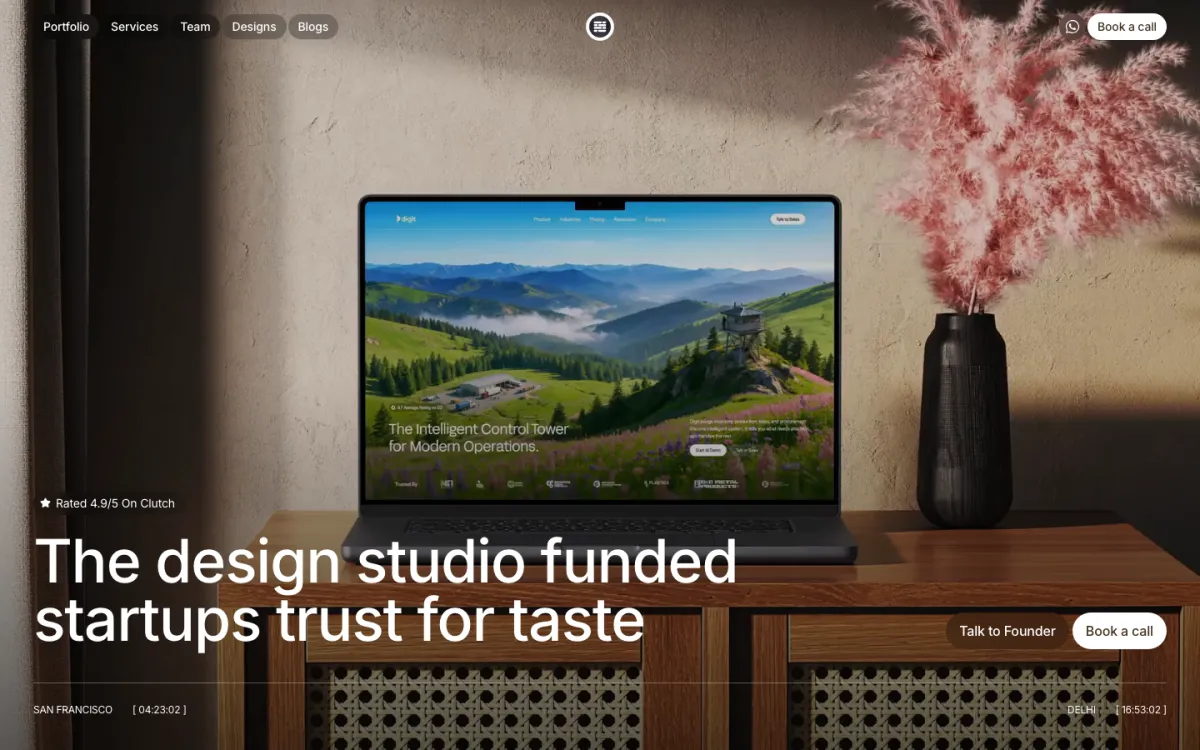
Bricx is the best products where the install already cost money and the first session decides whether that spend produced a user or a number. Bricx has completed 50+ SaaS design projects across 30+ industries, with clients including Writesonic (YC S21), Collectwise (YC F24), Gigacatalyst (YC X26), Sybill, Camb.ai, LTV.ai, Instadapp, Hobbes and AT Kearney. The agency holds 27 verified reviews on Clutch at an average of 5.0/5.
Bricx works exclusively with B2B and AI SaaS companies, from seed stage through Series C, covering branding, website design, product UX/UI and end-to-end development. Engagements start at $25,000. Bricx works with B2B and AI SaaS from seed through Series C, where a paid install carries a known cost and onboarding is the only place that cost can be recovered. Product design and development sit in one team, so the permission prompt and the empty state get drawn with the engineer who has to ship them.
Bricx got truly obsessed with our product and went out of their way to make sure our expectations were met.
- Starting price
- $25,000+
- Engagement model
- Fixed-scope projects and monthly retainers
- Timeline
- First delivery within the first week; full scope varies by project
- Clutch
- 5.0/5, 27 reviews
- Hourly rate
- $50 - $99
- Best for
- B2B and AI SaaS apps where a paid install has to become an activated account in the first session.
- Not a fit for
- consumer social and gaming apps, App Store growth marketing, or budgets under $25,000.
Merixstudio
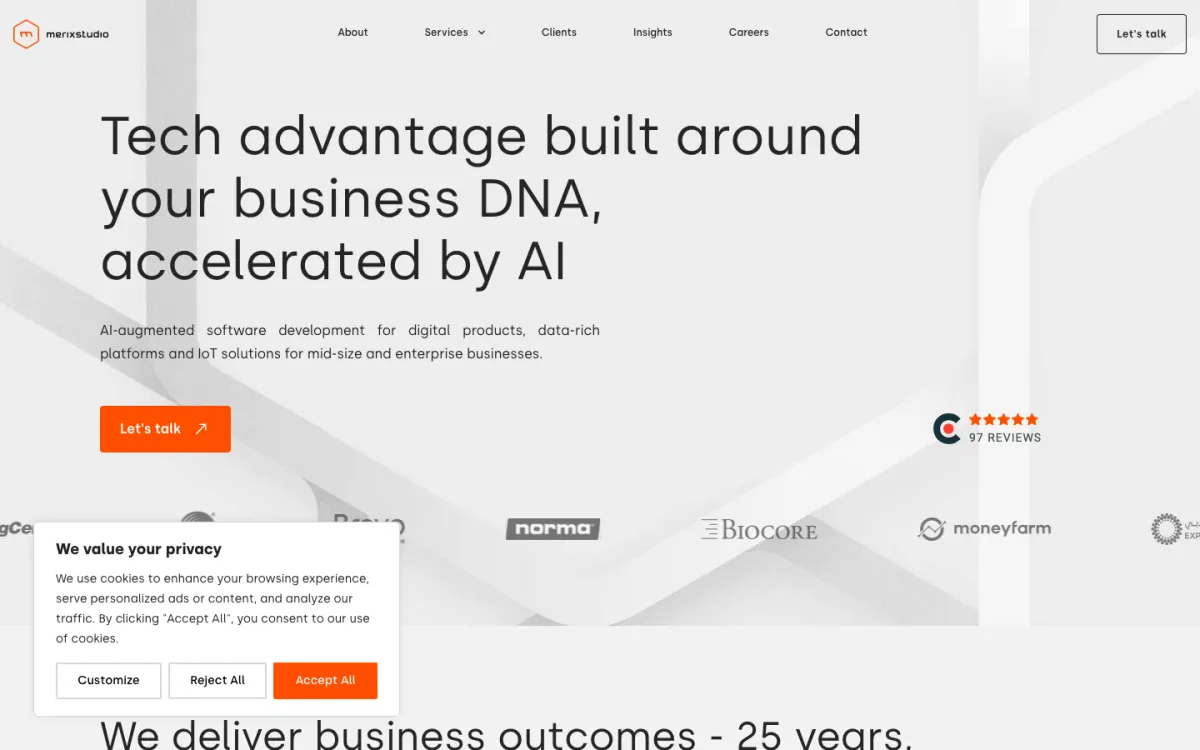
Merixstudio's city expo app is the harshest onboarding case here: an event app is installed on the day, used for a few hours and never opened again, so there is no second session in which to recover a bad first one. The review describes market analysis and MVP definition before any UX/UI, which is the sequence an onboarding flow needs. It has 97 Clutch reviews, the deepest record here.
Design is not a listed service. Half its work is AI development and 40% custom software, and its clients skew enterprise and midmarket at 45% each, with only 10% small businesses. That is a team set up to build the app rather than to argue about which three screens should exist before signup.
- Starting price
- $25,000+
- Engagement model
- Project and retainer
- Clutch
- 4.8/5, 97 reviews
- Hourly rate
- $50 - $99
- Team size
- 50 - 249 people
- Best for
- apps where the first session is the only session, like events and launches.
- Not a fit for
- design-led decisions about which screens survive, or budgets under $25,000.
OpenXcell
OpenXcell built a native marketing app for iOS and Android using geolocation services in South Africa, which puts it against the second one-shot permission in mobile onboarding. Location asked cold is denied, and location asked after the app has shown why it is needed is usually granted. It also carries a social app that began as a messaging product, where the first session opens onto an empty feed.
One of its three published reviews states plainly that the client handled design internally while OpenXcell focused on development and functionality. No industry reaches more than 10% of its book, no hourly rate is published, and 21 Clutch reviews is thin for a company of 250 to 999 people running since 2009.
- Starting price
- $10,000+
- Engagement model
- Project and retainer
- Clutch
- 4.8/5, 21 reviews
- Hourly rate
- Undisclosed
- Team size
- 250 - 999 people
- Best for
- apps whose first session depends on a location or notification permission.
- Not a fit for
- engagements where the agency owns design, or budgets under $25,000.
Peerbits
Peerbits is 80% medical, and health app onboarding is the opposite problem to consumer onboarding: the flow cannot be shortened away, because consent, identity and an intake questionnaire are mandatory before the product does anything useful. The design job is making a required form feel like progress. Its reviews describe designing Android UI/UX mock-ups and implementing multilingual support in a management platform.
Mobile app development is only 15% of its work, behind custom software at 30% and IT staff augmentation at 20%, and one review describes supplying a dedicated React Native developer. With 60% of clients being small businesses and a $5,000 minimum, this is resourcing at $25 to $49 an hour rather than a design engagement.
- Starting price
- $5,000+
- Engagement model
- Project and retainer
- Clutch
- 4.8/5, 32 reviews
- Hourly rate
- $25 - $49
- Team size
- 50 - 249 people
- Best for
- health apps whose onboarding is a mandatory intake rather than a tour.
- Not a fit for
- consumer signup optimisation, or budgets under $25,000.
Stfalcon
Stfalcon is 70% supply chain, logistics and transport, where mobile onboarding is a provisioning problem rather than a persuasion one. A driver or warehouse worker was told to install the app by an employer, so the flow has to attach them to a depot, a vehicle or a route and get them competent in one shift. Mobile app development is 40% of its work, from Ukraine since 2009.
Its published reviews are mostly web platforms, a logistics site and a transportation business platform, with one healthcare iOS app built in Swift. So the mobile record is thinner than the 40% suggests. At $25 to $49 an hour with 56 Clutch reviews at 4.9, it is inexpensive capacity with a narrow sector focus.
- Starting price
- $10,000+
- Engagement model
- Project and retainer
- Clutch
- 4.9/5, 56 reviews
- Hourly rate
- $25 - $49
- Team size
- 50 - 249 people
- Best for
- workforce apps where onboarding means provisioning, not persuasion.
- Not a fit for
- consumer retention and signup funnels, or budgets under $25,000.
Studio Graphene

Studio Graphene has the only published onboarding redesign on this page: it rebuilt the onboarding flow of a mental health platform and developed personalisation functionality alongside it. That pairing is the whole argument for onboarding, since the questions asked in the first two minutes are only worth asking if the product changes because of them. UX/UI design is 15% of its mix, with mobile development at 25%.
At 25 Clutch reviews and a 4.7 rating it has one of the thinner records here, and its client base is spread with no sector above 15%. Another review describes owning UI/UX across desktop, mobile and web at once, which is broad ownership rather than depth in the mobile first session.
- Starting price
- $10,000+
- Engagement model
- Project and retainer
- Clutch
- 4.7/5, 25 reviews
- Hourly rate
- $50 - $99
- Team size
- 50 - 249 people
- Best for
- onboarding that feeds a product which actually changes in response.
- Not a fit for
- deep single-sector knowledge, or budgets under $25,000.
Geniusee
Geniusee built a single sign-on solution for an online tutoring platform where tutors register and book lessons. Single sign-on is the highest-leverage decision in mobile onboarding, because it removes the email verification round trip that sends people out to a mail client and relies on them choosing to come back. It also designed and built a financial services mobile app MVP from scratch, specifications included.
Education and financial services are 40% each of its book, so a consumer app outside those categories is new ground. Mobile is 20% of a mix led by custom software development at 40%. At $25 to $49 an hour with 71 Clutch reviews at 5.0, this is a build partner rather than a design studio.
- Starting price
- $25,000+
- Engagement model
- Project and retainer
- Clutch
- 5.0/5, 71 reviews
- Hourly rate
- $25 - $49
- Team size
- 250 - 999 people
- Best for
- removing the account creation friction that loses installs on the first screen.
- Not a fit for
- consumer apps outside education and finance, or budgets under $25,000.
OmiSoft
OmiSoft has built two crypto wallets, one multi-chain for iOS and Android and one non-custodial and EVM-based, which is the hardest onboarding problem a phone presents. A non-custodial wallet makes the user write down a seed phrase they can never recover, with no password reset behind it, so the first three minutes decide whether they hold funds or lose them. Financial services is 50% of its book.
Every one of its clients is a small business under ten million dollars, and its service mix is only custom software at 70% and blockchain at 30%, with no design line. From Kyiv since 2017 at $25 to $49 an hour, it is a specialist if the product is a wallet.
- Starting price
- $5,000+
- Engagement model
- Project and retainer
- Clutch
- 5.0/5, 31 reviews
- Hourly rate
- $25 - $49
- Team size
- 50 - 249 people
- Best for
- wallet onboarding where a lost phrase means lost funds.
- Not a fit for
- mainstream consumer apps or design leadership, or budgets under $25,000.
Shakuro
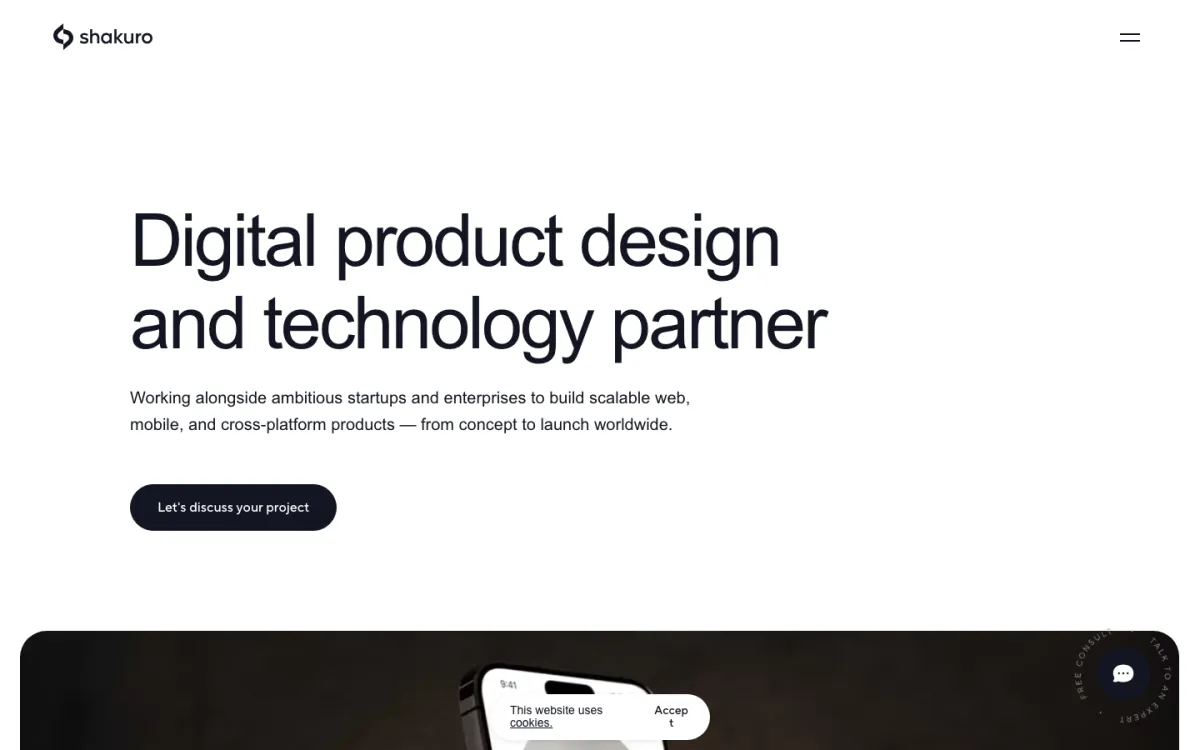
Shakuro is 40% education, the one category where a longer onboarding tends to help rather than hurt, because a learning product is useless until it knows the learner's level, goal and schedule. Its reviews also describe designing a climate technology firm's UI to present complex information effectively, which is the same skill an onboarding sequence needs in a smaller space. It has run from Dubai since 2006.
Mobile app development is only 10% of what it does, behind web development at 40%, and its published work is websites, a platform feature and a pitch deck rather than an app. Sixty-three Clutch reviews at 5.0 with a $5,000 minimum makes it accessible, but the mobile evidence here is slight.
- Starting price
- $5,000+
- Engagement model
- Project and retainer
- Clutch
- 5.0/5, 63 reviews
- Hourly rate
- $25 - $49
- Team size
- 50 - 249 people
- Best for
- learning products whose first session has to establish where the user is.
- Not a fit for
- native mobile depth or app-specific work, or budgets under $25,000.
Appinventiv
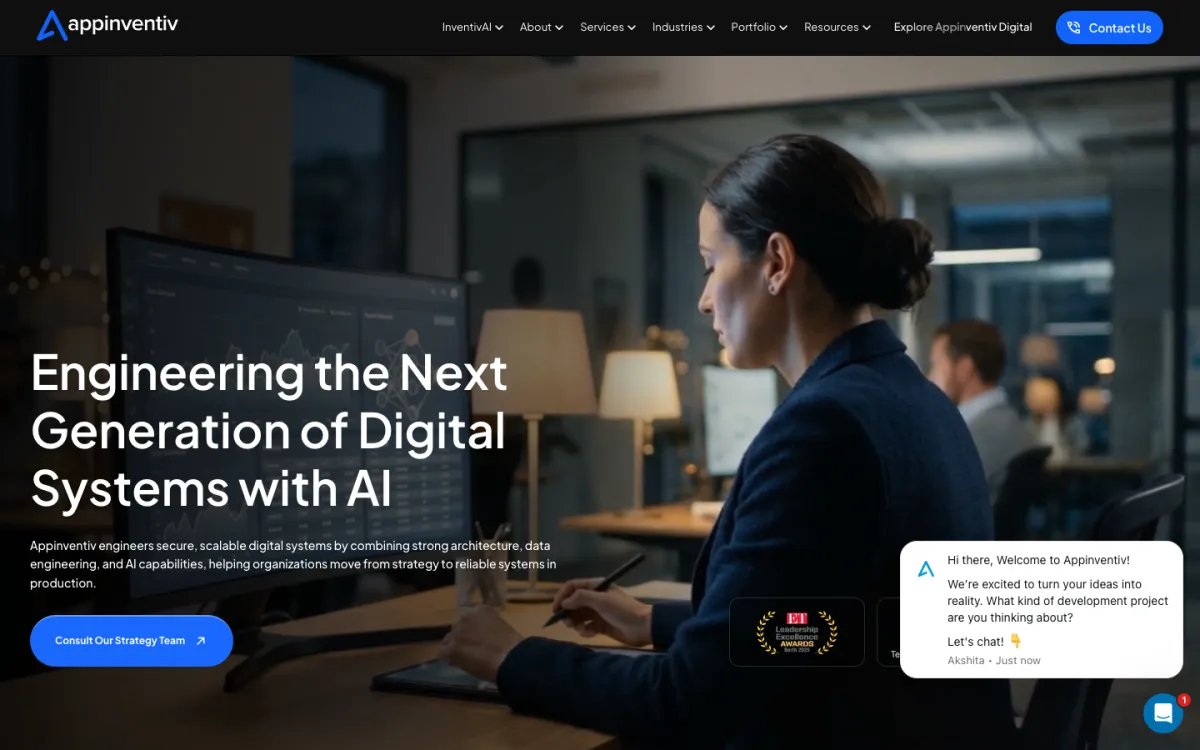
Appinventiv pairs the largest mobile practice on this page, 40% of a 1,000 to 9,999 person company, with an MVP for a professional networking startup. Networking products carry the cold start in its purest form: nothing is worth seeing until the user's contacts are present, so onboarding has to ask for the address book, a permission denied once and rarely revisited. Medical is 25% of its book.
Its 4.6 Clutch rating across 90 reviews is the lowest on this page, and the $50,000 minimum is the highest, an unusual combination at $25 to $49 an hour. The published work is app and backend delivery for named products rather than flow-level design, so the first-session decisions would need direction from the client side.
- Starting price
- $50,000+
- Engagement model
- Project and retainer
- Clutch
- 4.6/5, 90 reviews
- Hourly rate
- $25 - $49
- Team size
- 1,000 - 9,999 people
- Best for
- shipping a large mobile product across iOS and Android at speed.
- Not a fit for
- flow-level design direction, or budgets under $25,000.
How much does a mobile onboarding design engagement cost?
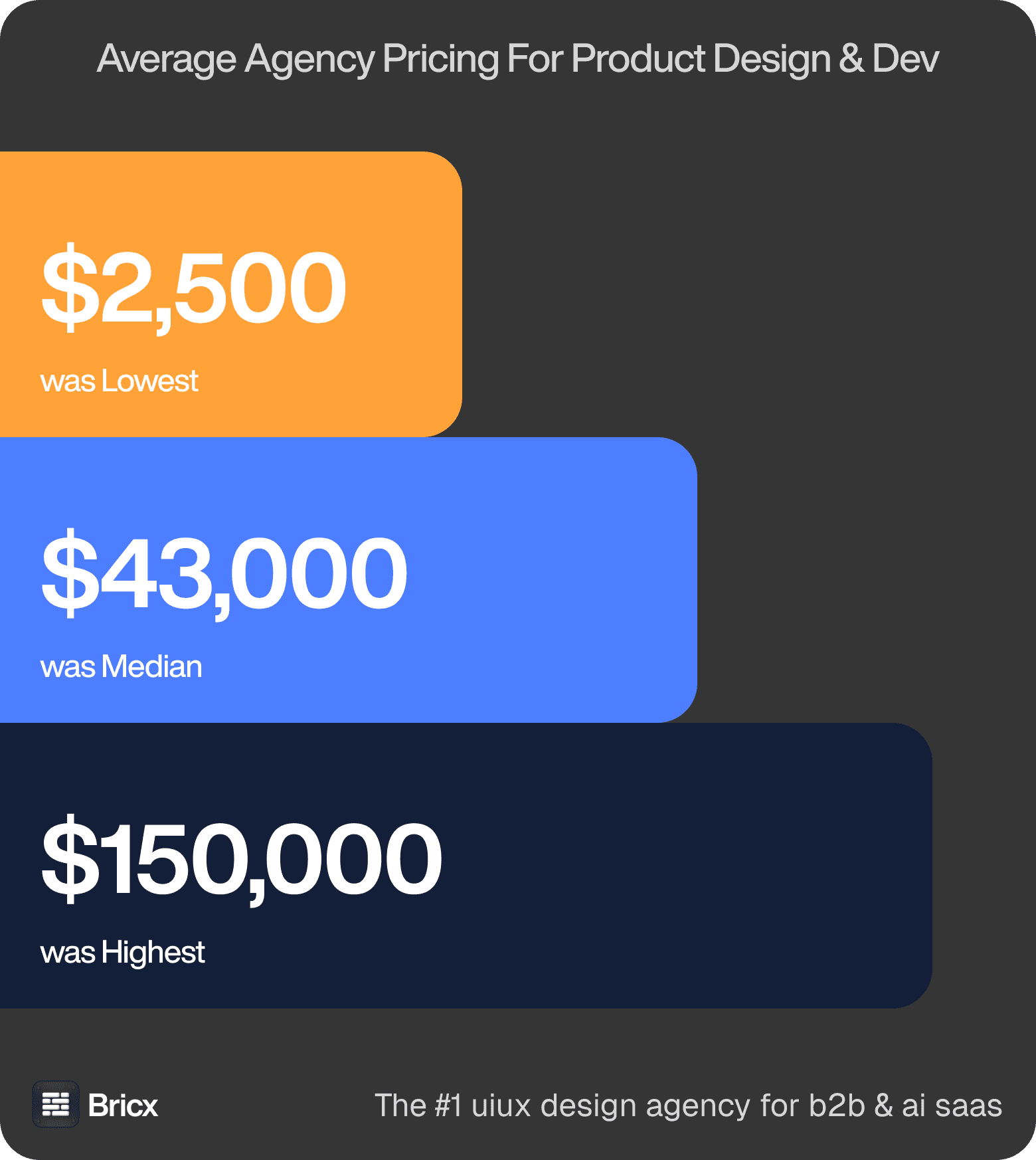
What the same brief actually cost. Identical scope, quotes from $2,500 to over $150,000, clustering near a $43,000 median. Six agencies in ten declined to price it before a further call. Those figures cover product design across the whole benchmark, so treat them as the range mobile onboarding design is quoted inside rather than a price for it.
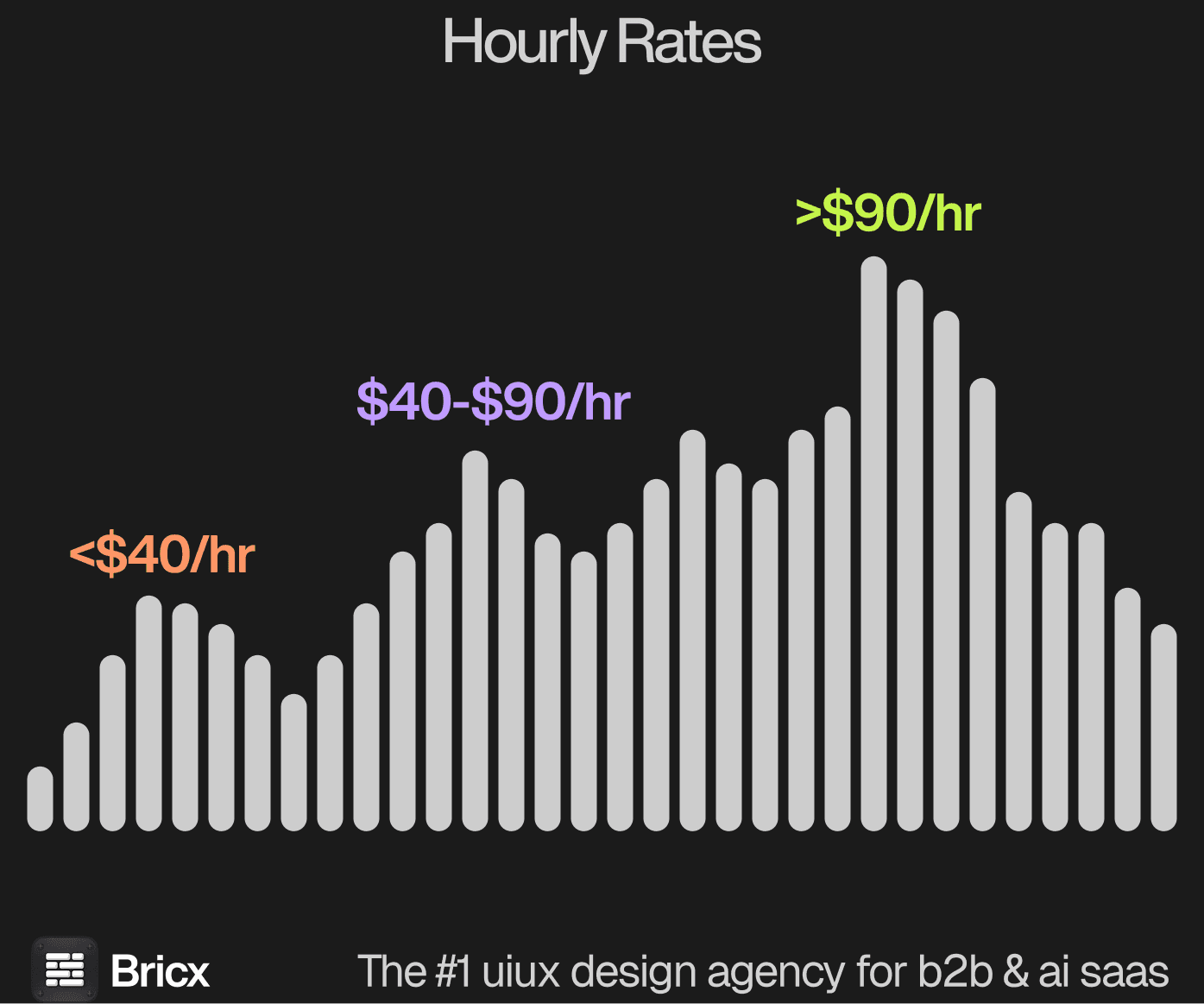
Rates. $25 an hour at the bottom, $195 at the top, most agencies between $55 and $90. Location explains nearly all of it and quality explains almost none. Mobile onboarding is a small surface with an outsized effect, so as standalone work it sits well under the $43,000 product design median. The number rises when the flow needs field research and proper instrumentation rather than a reskin.
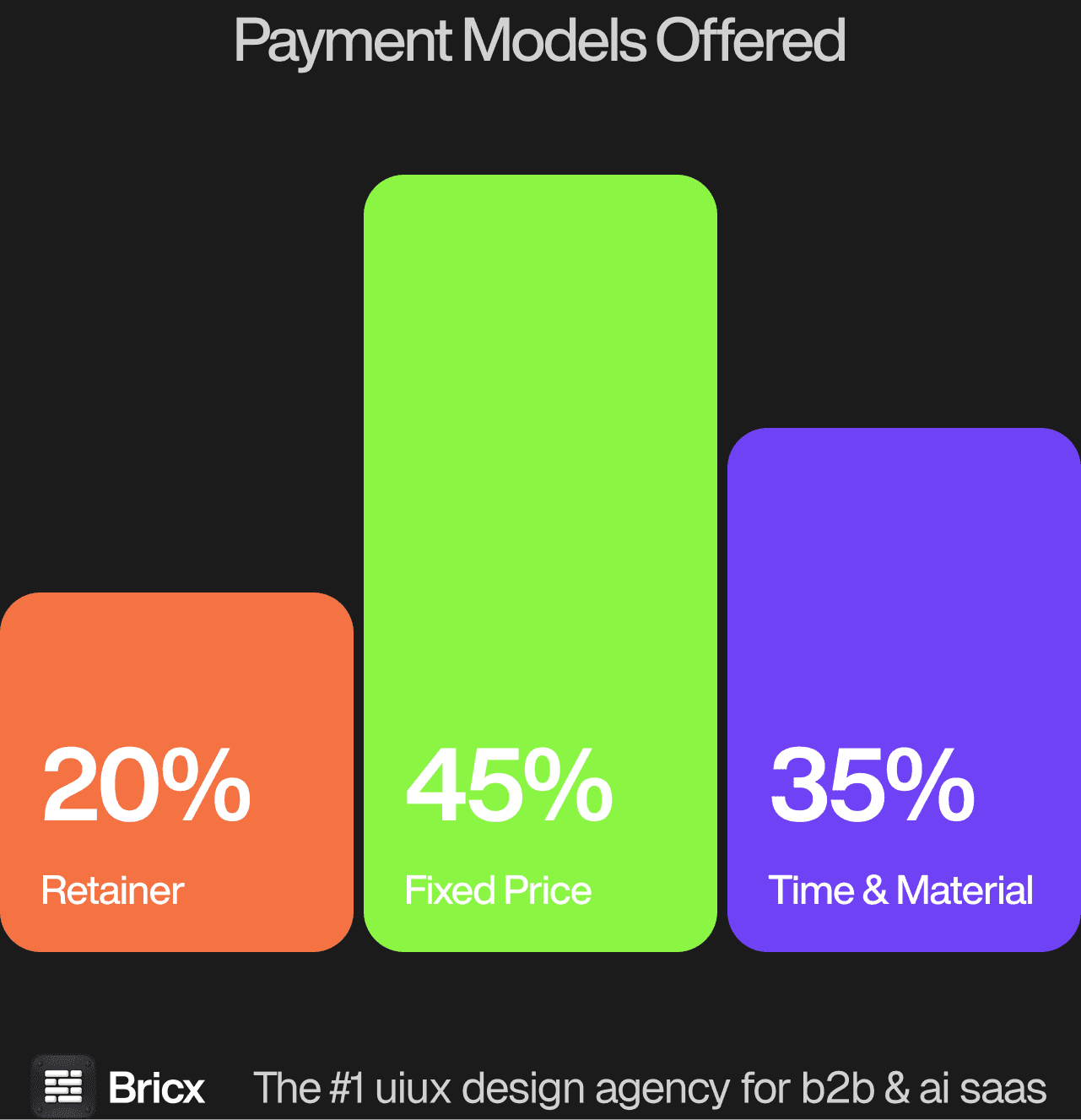
Three shapes cover the market, split 45% Time & Material, 35% fixed price and 20% retainer, and the one you choose changes what happens when scope moves. For mobile onboarding design the model usually matters more than the headline figure, because it decides what happens when the scope moves.
- Fixed price protects budget certainty.
- Time & Material protects flexibility.
- Retainer protects continuity.
- Which one fits mobile onboarding design comes down to whether the scope is settled before the work starts.
How do you evaluate a mobile onboarding design agency?
Five things separate mobile onboarding design from app design generally.
Ask when they request permissions. The notification prompt on iOS is a single opportunity, and asking on the launch screen trades a permanent denial for two seconds of convenience.
Ask how the account actually gets created. Email verification pushes people out to a mail client, so every extra field and every round trip is somewhere they simply stop.
Ask what the first screen looks like with no data in it. A new account has no history, no team and nothing to look at, and that empty state is the real first impression rather than the carousel in front of it.
Ask how they will test a change. Onboarding ships on an app review cycle, so a team used to deploying twice a day has to plan experiments weeks ahead or move the flow to a server-driven surface.
Ask what they measure after signup. Finishing onboarding is not activation, and a flow tuned for completing the tour produces accounts that never open the app a second time.
What are the red flags when hiring a design agency?
- Every project in the portfolio looks the same. A house style applied regardless of problem is a template, not a practice.
- Availability that starts immediately. Good teams are usually booked. Instant capacity is worth one question.
- No discovery at all. The opposite failure to endless workshops, and just as expensive.
- Testimonials without companies. An unattributed quote is a sentence someone wrote.
- Reluctance to name the tools. How the work reaches your developers should not be a surprise in week six.
- No comparable example of mobile onboarding design. An agency that cannot point to work of the same shape is learning on your budget.
Should you hire a design agency or build in-house?
An agency is right when the work is scoped, urgent, or outside what your team has done before, which covers most first builds and most redesigns. For mobile onboarding design specifically, the question worth settling first is how often the work recurs.
A hire is right when the work never ends. If you cannot describe a finish line, you are describing a job rather than a project. Where mobile onboarding design falls on that line is usually clear once you count how many times it will need doing again.
Mobile onboarding is short enough to keep in-house and consequential enough that it rarely gets the attention it deserves, because it loses every sprint to feature work. The in-house failure is a flow that grows one screen at a time as each team adds an ask. An agency earns its fee when somebody has to delete four of those screens and defend the deletion to the people who added them.
FAQs
What makes mobile onboarding design difficult?
Intent is highest at install and falls from there, the screen has no room to explain anything, permissions are one-shot decisions and account creation forces people out of the app. All of that is decided in the first two minutes.
How many screens should mobile onboarding have?
As few as carry a decision the product cannot make on its own. Screens that explain features rarely survive a real test, while screens collecting something the app genuinely needs to shape the first session usually do.
How much does mobile onboarding design cost?
Fixed-price product design across the benchmark ran $2,500 to over $150,000 with a median near $43,000, and an onboarding flow on its own sits under that median because the surface is small and the research is narrow. Bricx starts at $25,000.
When should an app ask for notification permission?
After the user has done something the notification would be about, never on launch. The iOS prompt is asked once, and a denial can only be undone in Settings, which almost nobody opens.