10 Best Mobility UX Agencies (2026)
The 10 best mobility UX agencies, compared on pricing, Clutch rating, engagement model and hourly rate, drawn from a documented benchmark of 57 agencies.
Aug 20, 202611 min read
Best mobility UX agencies
A mobility interface is read by somebody who is moving. One hand, direct sunlight, a bumpy road, and often a legal obligation not to look at the screen at all, which turns browsing into glancing and makes every target larger than a designer would like. Connectivity drops in tunnels and basements, so the product holds state offline and reconciles it afterwards, meaning what the screen says and what the system knows routinely disagree. And the world changes without anyone touching anything: the vehicle moves, the road closes, and the ETA printed as a number was always a probability.
Ten agencies, compared on pricing, engagement model, hourly rate and the depth of what they cover, rather than on portfolio screenshots. Every agency here carries a verified Clutch profile, and the ratings below are taken from it. Each entry says what an agency is worth hiring for and where it is the wrong choice for mobility UX.
How the ten agencies compare
| Agency | Best for | Starting price | Clutch rating | Not a fit for |
|---|---|---|---|---|
| Bricx | Fleet, dispatch and operator software | $25,000+ | 5.0/5, 27 reviews | In-vehicle infotainment, embedded automotive HMI |
| SumatoSoft | Vehicle load and compliance systems | $25,000+ | 4.8/5, 25 reviews | Driver and dispatch interfaces |
| Inoxoft | Route, tracking and delivery platforms | $25,000+ | 5.0/5, 74 reviews | Consumer-facing mobility apps |
| Leobit | Telematics data into usable screens | $25,000+ | 4.9/5, 59 reviews | Vehicle, trip and driver work |
| SmartSites | Search and paid demand for automotive | $1,000+ | 4.9/5, 366 reviews | Any product or UX work |
| WEZOM | Vehicle hardware and data sync | $50,000+ | 5.0/5, 47 reviews | Interface and UX design |
| Intellias | Connected vehicle and payment platforms | $50,000+ | 4.9/5, 30 reviews | Design ownership, smaller budgets |
| Lemberg Solutions | Positioning and EV charging firmware | $25,000+ | 4.8/5, 27 reviews | Screen design, rider experience |
| Unicsoft | Chain of custody for consignments | $25,000+ | 4.9/5, 35 reviews | Non-ledger mobility products |
| Bird Marketing | Organic visibility for mobility brands | $5,000+ | 5.0/5, 74 reviews | Any interface or product work |
Best mobility UX agency: Bricx
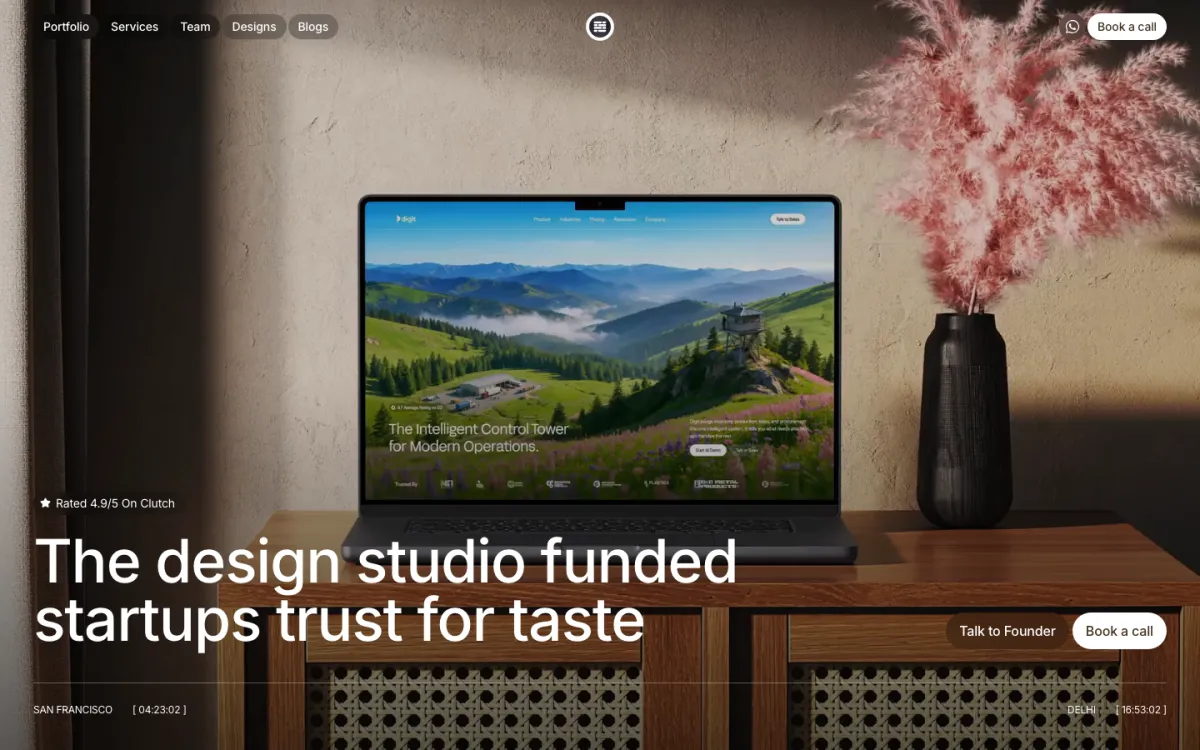
Bricx is the best mobility products whose two sides pull against each other, where the rider wants a vehicle now and the driver wants a better shift. Bricx has completed 50+ SaaS design projects across 30+ industries, with clients including Writesonic (YC S21), Collectwise (YC F24), Gigacatalyst (YC X26), Sybill, Camb.ai, LTV.ai, Instadapp, Hobbes and AT Kearney. The agency holds 27 verified reviews on Clutch at an average of 5.0/5.
Bricx works exclusively with B2B and AI SaaS companies, from seed stage through Series C, covering branding, website design, product UX/UI and end-to-end development. Engagements start at $25,000. Bricx designs the operator side with the same care as the consumer side, because in mobility the dispatcher, the fleet manager and the driver hold the screens that decide whether a trip completes at all. Its work spans B2B and AI SaaS across 30+ industries, with engagements starting at $25,000.
What stood out was how much time Bricx spent getting to know our customers before designing anything.
- Starting price
- $25,000+
- Engagement model
- Fixed-scope projects and monthly retainers
- Timeline
- First delivery within the first week; full scope varies by project
- Clutch
- 5.0/5, 27 reviews
- Hourly rate
- $50 - $99
- Best for
- mobility companies whose dispatcher, fleet manager and driver screens decide whether a trip completes at all.
- Not a fit for
- in-vehicle infotainment, embedded automotive HMI, driver safety certification, or budgets under $25,000.
SumatoSoft
SumatoSoft's published weighing solution, built for a manufacturing execution systems company, lands on the least glamorous constraint in mobility: what a vehicle is legally allowed to carry, measured before it moves. Automotive is 10% of its client base and medical is its largest sector at 25%, so this is an engineering firm with a foot in vehicles rather than a mobility practice. It has worked from Boston since 2012.
Its four service lines sit at 20% each, AI development, custom software, generative AI and IoT development, with design in none of them. Nothing in its 25 Clutch reviews describes a driver app, a dispatch screen or a trip in progress, so the moving user would be new territory at $50 to $99 an hour.
- Starting price
- $25,000+
- Engagement model
- Project and retainer
- Clutch
- 4.8/5, 25 reviews
- Hourly rate
- $50 - $99
- Team size
- 50 - 249 people
- Best for
- the measurement and compliance layer behind a fleet, not the screens inside it.
- Not a fit for
- driver, rider or dispatch interface design, or budgets under $25,000.
Inoxoft
Inoxoft has the most complete mobility project on this page: a logistics management platform for a vehicle parts company with tracking, route optimisation, digital proof of delivery and ERP integration. Proof of delivery is the field capture step, a signature or a photo taken outdoors, one-handed, often with no signal, then reconciled later. Automotive is 10% of its book, and it ran discovery and UX planning on another platform.
Financial services is 40% of its clients and education another 25%, so mobility is a corner of the practice rather than its centre. Design is not a listed service, with custom software and web development at 40% each. Seventy-four Clutch reviews at 5.0, and $25 to $49 an hour, make it inexpensive and well documented.
- Starting price
- $25,000+
- Engagement model
- Project and retainer
- Clutch
- 5.0/5, 74 reviews
- Hourly rate
- $25 - $49
- Team size
- 50 - 249 people
- Best for
- logistics platforms where routing, tracking and proof of delivery meet.
- Not a fit for
- rider-facing consumer mobility apps, or budgets under $25,000.
Leobit
Leobit's transferable asset for mobility is data handling: it built a Data Lake and a unified regulatory workflow platform for one client, and an AI-based assembly configurator for an industrial products company. Telematics produces exactly that shape of problem, a continuous event stream where the design question is which three facts a dispatcher actually sees. Supply chain, logistics and transport is 15% of its book.
None of its published work is a vehicle, a trip or a driver, and its largest single sector is real estate at 15%. The service mix is development throughout, three lines at 20% each with no design discipline named. From Lviv at $25 to $49 an hour, it is capacity rather than direction.
- Starting price
- $25,000+
- Engagement model
- Project and retainer
- Clutch
- 4.9/5, 59 reviews
- Hourly rate
- $25 - $49
- Team size
- 50 - 249 people
- Best for
- turning a continuous stream of vehicle data into something a dispatcher reads.
- Not a fit for
- documented vehicle, trip or driver experience, or budgets under $25,000.
SmartSites

SmartSites is a demand agency rather than a design one, and automotive at 15% is its joint-largest sector, tied with dental, legal and medical. In mobility that maps to dealerships and local vehicle services, where the job is filling a service bay through search and paid ads rather than designing a driver's screen. It carries 366 Clutch reviews, by far the largest public record on this page.
Its entire service mix is marketing: SEO at 50%, pay per click at 30%, advertising and social at 10% each, with no UX, product or software line. Ninety per cent of its clients are small businesses under ten million dollars, and the $1,000 minimum reflects a monthly marketing retainer rather than a design engagement.
- Starting price
- $1,000+
- Engagement model
- Project and retainer
- Clutch
- 4.9/5, 366 reviews
- Hourly rate
- $100 - $149
- Team size
- 250 - 999 people
- Best for
- filling a dealership or a vehicle service business through search and paid media.
- Not a fit for
- product, interface or UX design of any kind, or budgets under $25,000.
WEZOM
WEZOM built a custom IoT platform for a freight transportation company, integrating hardware devices, backend infrastructure and data synchronisation. Synchronisation is the mobility problem stated plainly: a vehicle passes through places with no signal, and the platform has to reconcile what happened offline with what the office believed. Supply chain, logistics and transport is 25% of its book, level with energy and natural resources.
The work described is embedded, backend and integration, connecting industrial devices to monitoring platforms, with no design or UX line in its service mix. A $50,000 minimum is the joint-highest floor here. Running since 1999 with 47 Clutch reviews at 5.0, it is the deepest hardware record on this page and not an interface team.
- Starting price
- $50,000+
- Engagement model
- Project and retainer
- Clutch
- 5.0/5, 47 reviews
- Hourly rate
- $25 - $49
- Team size
- 250 - 999 people
- Best for
- connecting vehicle hardware to a platform that survives losing signal.
- Not a fit for
- interface or UX design work, or budgets under $25,000.
Intellias
Intellias lists automotive as its second-largest sector at 10%, behind information technology, with energy and natural resources level with it. For mobility that combination is the connected-vehicle stack: the car, the charge and the grid behind both. Its published work includes server applications integrating settlement and clearance for a mobile payment platform, which is what sits underneath a per-trip fare.
Two of its three published reviews describe supplying development resources into a client's team rather than owning a product. Every client is midmarket or enterprise, split 50% each, and the floor is $50,000. At 1,000 to 9,999 people this is a scale engineering partner, and the design direction has to be set elsewhere.
- Starting price
- $50,000+
- Engagement model
- Project and retainer
- Clutch
- 4.9/5, 30 reviews
- Hourly rate
- $50 - $99
- Team size
- 1,000 - 9,999 people
- Best for
- the vehicle, charging and payment infrastructure under a mobility product.
- Not a fit for
- design ownership or smaller scopes, or budgets under $25,000.
Lemberg Solutions
Lemberg Solutions is the only agency here whose published work touches positioning hardware directly: it updated the embedded software on an NTRIP modem for an agriculture company and added WiFi so it could reach Starlink. NTRIP is how a machine gets centimetre-level position rather than approximate GPS. It also wrote battery management and charger firmware for an electric boiler, and IoT development is 50% of its work.
Supply chain, logistics and transport is its largest sector at 30%, which fits, but the work is firmware, cloud and integration rather than screens, and design does not appear in its service mix. Twenty-seven Clutch reviews at 4.8 is a modest record, and at $50 to $99 an hour this is embedded engineering.
- Starting price
- $25,000+
- Engagement model
- Project and retainer
- Clutch
- 4.8/5, 27 reviews
- Hourly rate
- $50 - $99
- Team size
- 50 - 249 people
- Best for
- the positioning and power layer a mobility product depends on.
- Not a fit for
- screen design or rider experience work, or budgets under $25,000.
Unicsoft
Unicsoft is 100% blockchain, and the one place that genuinely meets mobility is custody: who held the consignment, when, and whether the record can be disputed afterwards. Supply chain, logistics and transport is 15% of its client base. Its most relevant project is an Android version of a medical delivery company's web app, which is time-critical courier work with a delivery window attached.
It has done end-to-end interface design before, wireframes included, for a learning management platform, so design is not absent from its record even though blockchain is its only stated service. No sector exceeds 15% of its book. If the mobility product has no ledger requirement, the specialism stops being an advantage.
- Starting price
- $25,000+
- Engagement model
- Project and retainer
- Clutch
- 4.9/5, 35 reviews
- Hourly rate
- $25 - $49
- Team size
- 250 - 999 people
- Best for
- freight and delivery products where custody has to be provable.
- Not a fit for
- mobility products with no ledger requirement, or budgets under $25,000.
Bird Marketing

Bird Marketing's entire service listing is search engine optimisation at 100%, and automotive is 5% of its client base, level with beauty, construction and dental. For a mobility company the relevant use is being found: a fleet software buyer researching options, or a local vehicle service competing on local search. Its reviews describe SEO, Google Ads campaign management and a website build with Salesforce integrated.
There is no product, UX or software line anywhere in its profile, so a driver app, a dispatch console or a trip flow is outside what it does. In London at $100 to $149 an hour, with 74 Clutch reviews at 5.0, it is a marketing retainer sitting on a page about design.
- Starting price
- $5,000+
- Engagement model
- Project and retainer
- Clutch
- 5.0/5, 74 reviews
- Hourly rate
- $100 - $149
- Team size
- 10 - 49 people
- Best for
- being found by fleet buyers and local vehicle customers through search.
- Not a fit for
- any interface, product or UX design work, or budgets under $25,000.
How much does a mobility UX engagement cost?
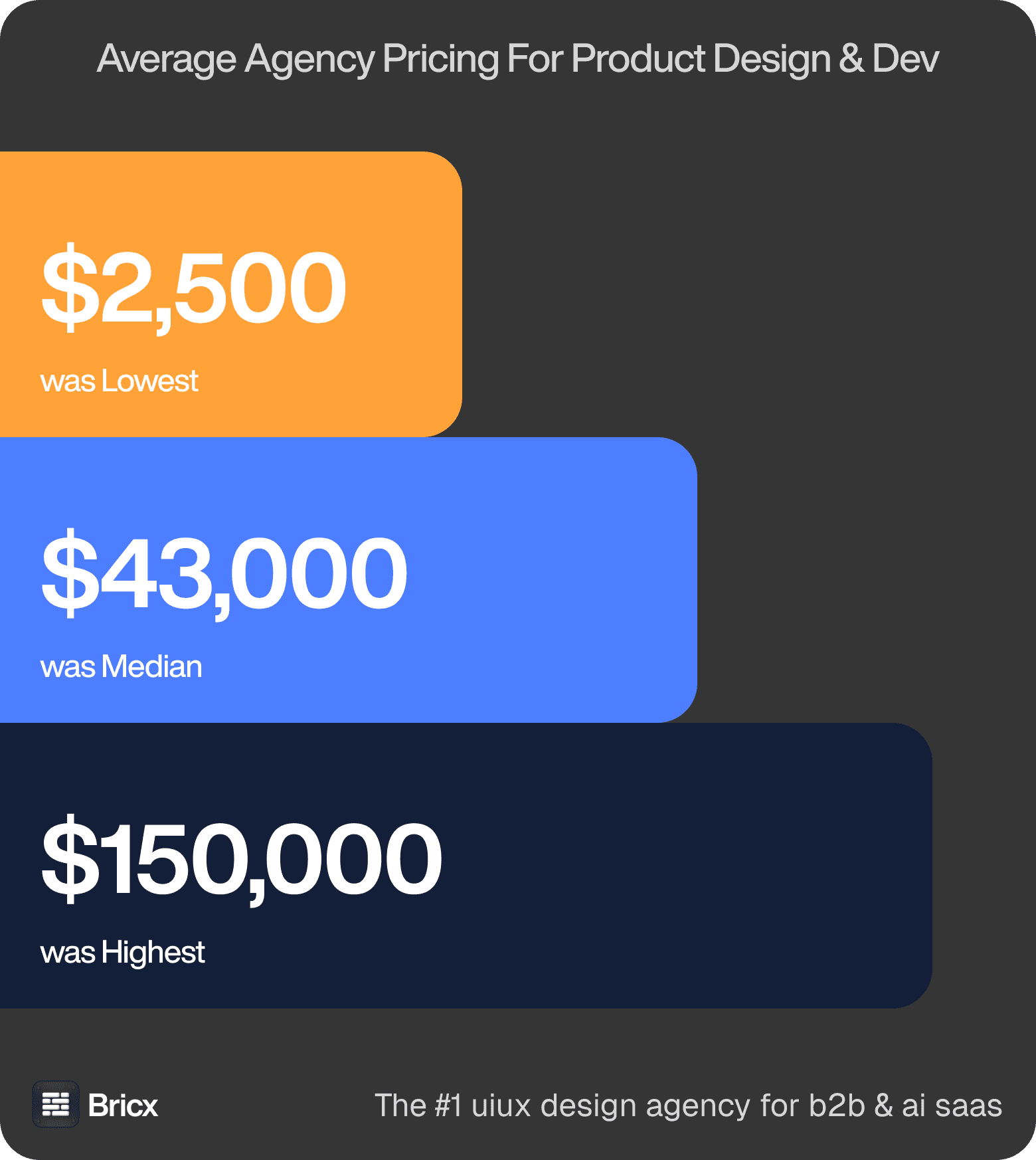
Fixed-price reality. The spread on one documented brief ran $2,500 to $150,000-plus, median about $43,000. Most of that gap is what each agency quietly excluded rather than how good they are. Those figures cover product design across the whole benchmark, so treat them as the range mobility UX is quoted inside rather than a price for it.
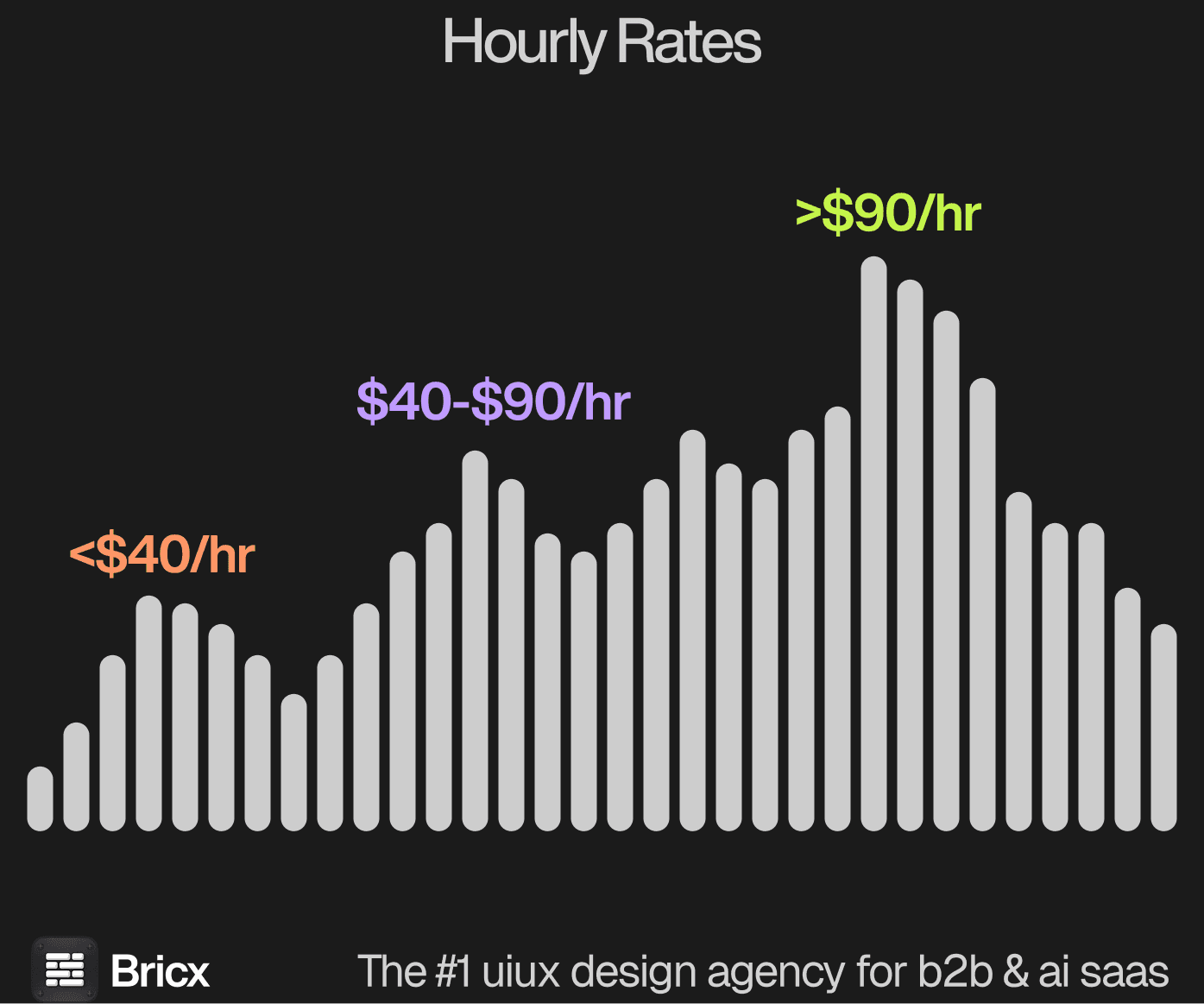
What an hour costs. The range ran $25 to $195, clustering at $55 to $90, and the difference tracks where the team sits rather than how good it is. Mobility UX sits above the $43,000 product design median because there are usually two applications rather than one, and the states that matter, offline, in motion and mid-trip, cannot be observed from a desk.
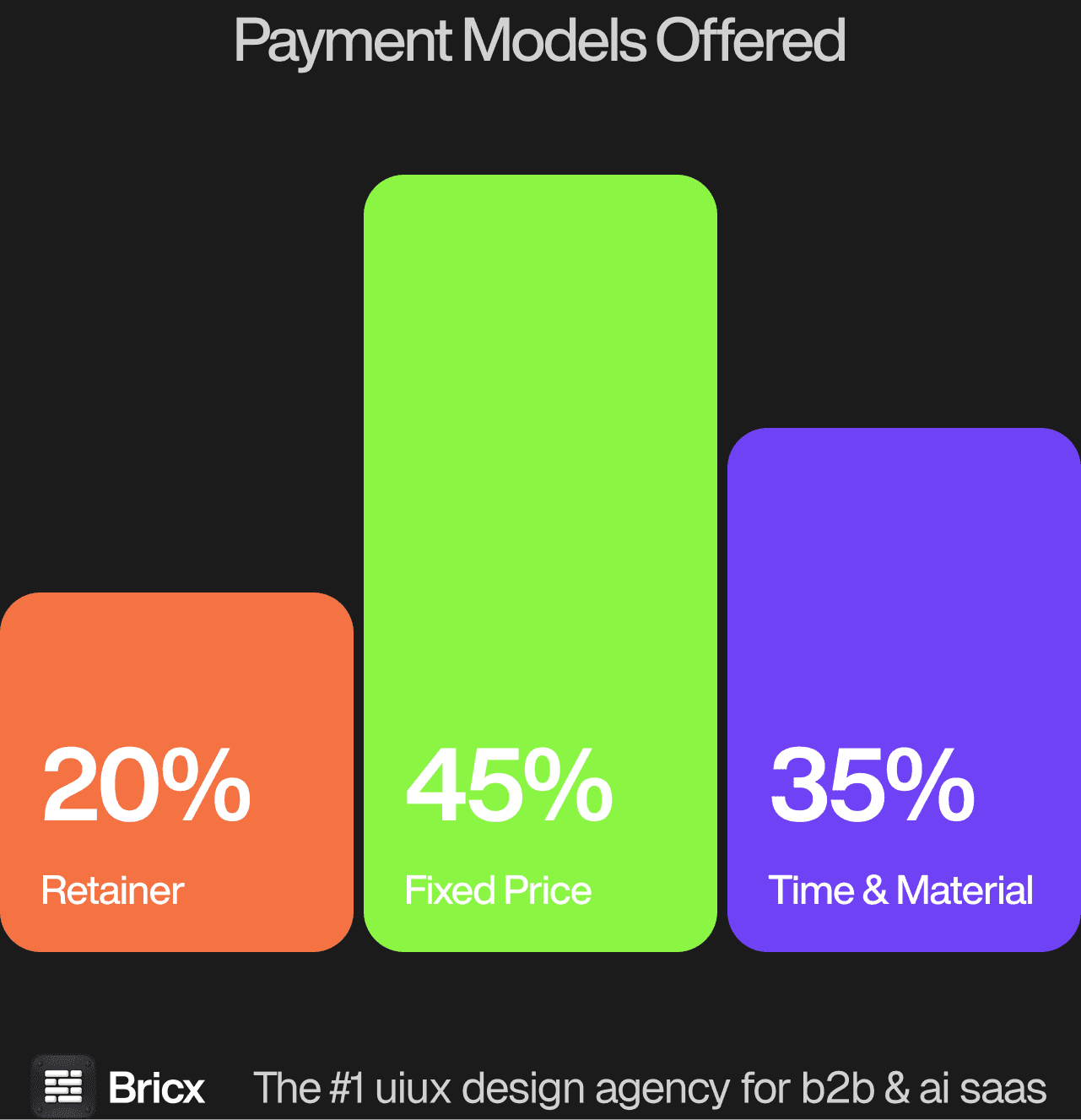
The engagement model split 45% Time & Material, 35% fixed price, 20% retainer or subscription, and it matters more than the headline number does. For mobility UX the model usually matters more than the headline figure, because it decides what happens when the scope moves.
- Fixed price if the end state is known.
- Time & Material if it is not.
- Retainer if there is no end state.
- Which one fits mobility UX comes down to whether the scope is settled before the work starts.
How do you evaluate a mobility UX agency?
Five things separate mobility UX from consumer app UX generally.
Ask how the interface behaves offline. Tunnels, basements and rural roads are normal conditions rather than edge cases, and a product assuming a live connection lies to the user at exactly the moment accuracy matters.
Ask what the design assumes about hands and eyes. A driver has one free hand, direct sunlight and a legal reason not to look, which changes target size, contrast and how much reading a screen may ask for.
Ask which side of the marketplace they have built before. Rider and driver want opposite things, and a team that has only shipped the consumer app will treat the supply side as an afterthought.
Ask how they show uncertainty. An ETA is a probability printed as a number, and the gap between a confident wrong answer and an honest range is most of the trust in a mobility product.
Ask what happens when a trip goes wrong. Cancellations, no-shows, breakdowns and disputes are where a thin per-trip margin vanishes into support calls, and they are the screens nobody designs.
What are the red flags when hiring a design agency?
- Scope defined by hours rather than outcomes. Buying 200 hours tells you nothing about what exists at the end.
- A rate that only makes sense at volume. Cheap per hour and slow per decision is not cheap.
- No examples at your stage. Enterprise work does not prove they can ship on a seed runway.
- Design and research quoted as one line. Ask what proportion of the budget is actually research.
- No named limitation. Every agency is wrong for someone. One that will not say who has not thought about it.
- No comparable example of mobility UX. An agency that cannot point to work of the same shape is learning on your budget.
Should you hire a UX agency or build in-house?
Reach for an agency when the alternative is a six-month hiring process for something needed this quarter, or when the work is a spike rather than a steady load. For mobility UX specifically, the question worth settling first is how often the work recurs.
Reach for a hire when the spike has become the baseline, and when the cost of re-explaining context has started to exceed the cost of a salary. Where mobility UX falls on that line is usually clear once you count how many times it will need doing again.
Mobility companies employ operations people who know the failure modes in forensic detail, which is precisely the knowledge an outside team cannot bring. What in-house teams struggle with is the second application, because the consumer app takes the headcount and the driver or dispatcher app gets whatever is left over. Retaining an agency is often the only way the neglected side ever gets designed properly.
FAQs
What makes mobility UX difficult?
The user is moving, the connection is intermittent and the world changes without anyone touching the screen. On top of that the product is at least two applications with opposing goals, and both have to work for a single trip to complete.
Which side should be designed first, the rider app or the driver app?
Whichever one is limiting supply. Riders leave when no vehicles appear, so a driver app that wastes half a shift shows up in the numbers as a demand problem when it is a supply problem.
How much does mobility UX design cost?
Fixed-price product design across the benchmark ran $2,500 to over $150,000 with a median near $43,000, and mobility sits above that median because there are usually two applications and the hard states have to be watched in the field. Bricx starts at $25,000.
How should an ETA be presented?
As something that can change, with the reason visible when it does. A number that silently updates teaches people to distrust it, while a number that names a road closure keeps its credibility intact.