10 Best Multi-Language UX Design Agencies (2026)
The 10 best multi-language UX design agencies, compared on pricing, Clutch rating, engagement model and hourly rate, drawn from a documented benchmark of 57 agencies.
Aug 20, 202611 min read
Best multi-language UX design agencies
Most products are designed in English and translated afterwards, which is why so many of them break in German. Text expands by up to a third, Arabic and Hebrew reverse the entire layout, Japanese has no spaces to wrap on, and names, addresses and dates follow rules that a form designed around one country quietly violates. None of this is a translation problem. It is a layout and data problem that translation exposes.
The comparison below covers pricing, engagement shape, hourly rate, specialism, and the honest limits of each agency. Every agency here carries a verified Clutch profile, and the ratings below are taken from it. Each entry says what an agency is worth hiring for and where it is the wrong choice for multi-language UX.
How the ten agencies compare
| Agency | Best for | Starting price | Clutch rating | Not a fit for |
|---|---|---|---|---|
| Bricx | Products that survive translation | $25,000+ | 5.0/5, 27 reviews | Translation services, localisation vendors |
| UX studio | B2B SaaS design from a hard language | $10,000+ | 5.0/5, 41 reviews | Documented localisation programmes |
| Devima Solutions | Content and product data across locales | $10,000+ | 5.0/5, 40 reviews | Right-to-left layout, large rollouts |
| Halo Lab | Right-to-left context as a default | $10,000+ | 4.9/5, 99 reviews | In-product localisation programmes |
| Slide UX | Layouts that survive text expansion | $5,000+ | 4.9/5, 72 reviews | Multi-locale rollouts at scale |
| Pixelmatters | European team building for elsewhere | $50,000+ | 4.9/5, 38 reviews | Named localisation experience |
| Netguru | Commerce data across many markets | $50,000+ | 4.8/5, 73 reviews | Inspectable multi-market work |
| Phenomenon Studio | Design systems across several platforms | $10,000+ | 5.0/5, 51 reviews | Named locale or language work |
| Brights | Cross-border platforms and data plumbing | $10,000+ | 5.0/5, 40 reviews | Design leadership, locale expertise |
| Arounda | Design, build and document in one team | $25,000+ | 5.0/5, 86 reviews | Localisation record, wide rollouts |
Best multi-language UX design agency for B2B SaaS: Bricx
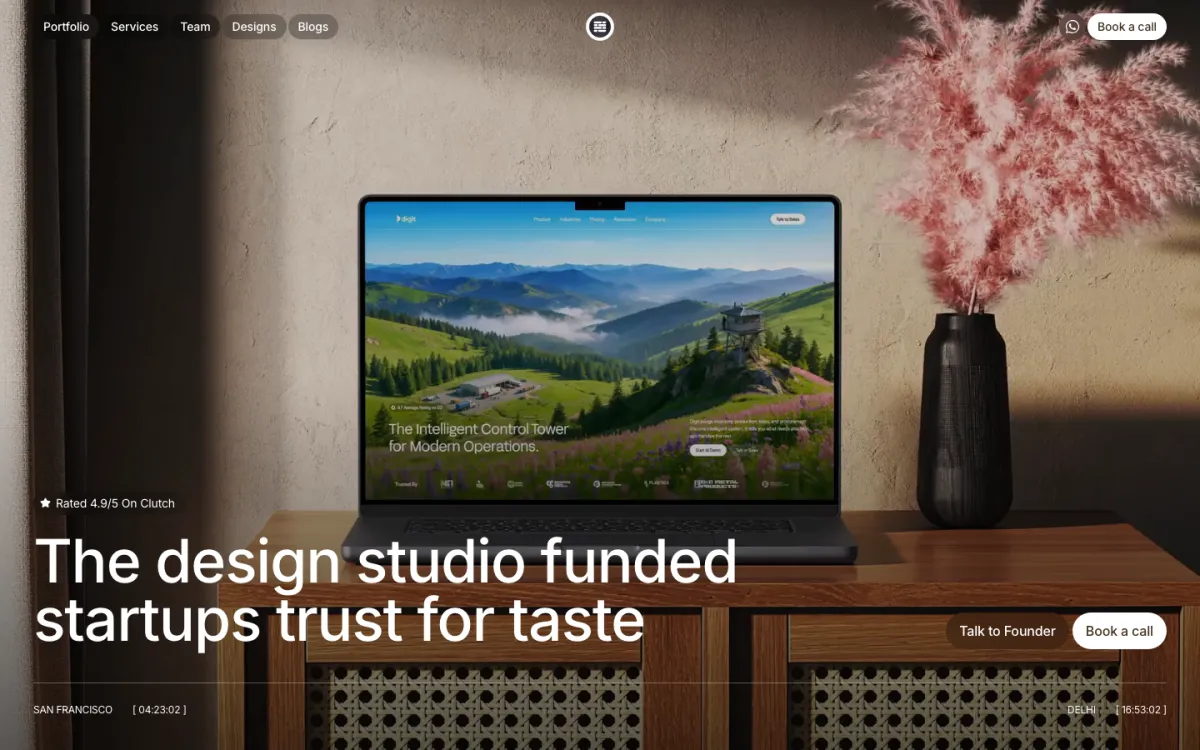
Bricx is the best multi-language UX design agency for B2B and AI SaaS products that were designed in English and now have to work everywhere else. Bricx has completed 50+ SaaS design projects across 30+ industries, with clients including Writesonic (YC S21), Collectwise (YC F24), Gigacatalyst (YC X26), Sybill, Camb.ai, LTV.ai, Instadapp, Hobbes and AT Kearney. The agency holds 27 verified reviews on Clutch at an average of 5.0/5.
Bricx works exclusively with B2B and AI SaaS companies, from seed stage through Series C, covering branding, website design, product UX/UI and end-to-end development. Engagements start at $25,000. Bricx designs against the longest realistic string rather than the English one, and treats names, addresses, dates and currency as data model questions rather than formatting details.
Overall, the team delivered a major design upgrade. They were communicative, flexible, and responsive.
- Starting price
- $25,000+
- Engagement model
- Fixed-scope projects and monthly retainers
- Timeline
- First delivery within the first week; full scope varies by project
- Clutch
- 5.0/5, 27 reviews
- Hourly rate
- $50 - $99
- Best for
- B2B and AI SaaS products expanding beyond a single language.
- Not a fit for
- translation and localisation services, or budgets under $25,000.
UX studio
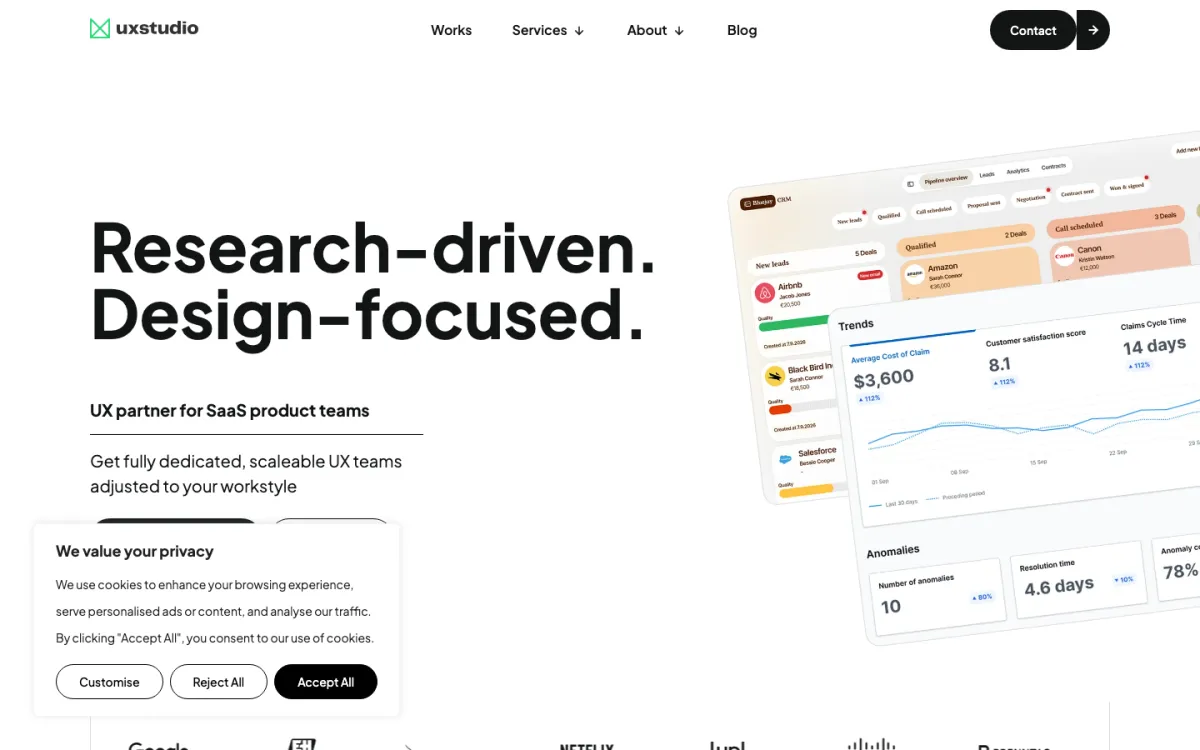
UX studio designs from Budapest, and Hungarian is one of the languages that breaks English-shaped layouts hardest, with agglutinated words running far past whatever the button was drawn for. A team whose own language does that to a design notices expansion long before a German QA pass does. UX/UI is 70% of its work and it positions itself for B2B SaaS teams.
Nothing on its record is a localisation programme specifically. Its case studies are an insurance AI tool, legal AI and a robotics app for children, and its industries run to business services and medical at 20% each. With 45% enterprise clients it is priced for a full engagement rather than a locale audit.
- Starting price
- $10,000+
- Engagement model
- Project and retainer
- Clutch
- 5.0/5, 41 reviews
- Hourly rate
- $50 - $99
- Team size
- 50 - 249 people
- Best for
- B2B SaaS products where text expansion breaks the layout first.
- Not a fit for
- buyers wanting a documented localisation record, or budgets under $25,000.
Devima Solutions
Devima Solutions built a PIM and an OMS for a hardware marketplace, and a product information management system is where multi-language content actually lives: one product, many locales, each with its own copy, units and attributes. It also built a custom CMS for a social networking client. Web development is 40% of its work with UX/UI at 30%.
Its clients are 80% small business and its industries are thin, 15% each in education and medical, so this is not a team that has run a large market rollout. Nothing on the record names a right-to-left language or a specific locale, so the layout half of the problem stays undemonstrated.
- Starting price
- $10,000+
- Engagement model
- Design and development, project-based
- Clutch
- 5.0/5, 40 reviews
- Hourly rate
- $25 - $49
- Team size
- 10 - 49 people
- Best for
- the content and data layer beneath a multi-locale product.
- Not a fit for
- right-to-left layout work or large market rollouts, or budgets under $25,000.
Halo Lab
Halo Lab works out of Dubai, the one market on this page where Arabic and English sit side by side as a default rather than as a later phase. Right-to-left is the hardest layout reversal the capsule names, and it is ordinary context for a studio operating there. It carries 99 Clutch reviews, the second deepest record here.
The record does not name a bilingual build, though. Its reviews cover a phlebotomy company site, travel branding and a Webflow real estate site with interactive maps, all single-market work. Web design is 20% of its output with AI development at 15%, so this is a marketing site studio rather than a product localisation team.
- Starting price
- $10,000+
- Engagement model
- Project and retainer
- Clutch
- 4.9/5, 99 reviews
- Hourly rate
- $25 - $49
- Team size
- 50 - 249 people
- Best for
- sites that have to work in Arabic as well as English.
- Not a fit for
- in-product localisation programmes, or budgets under $25,000.
Slide UX
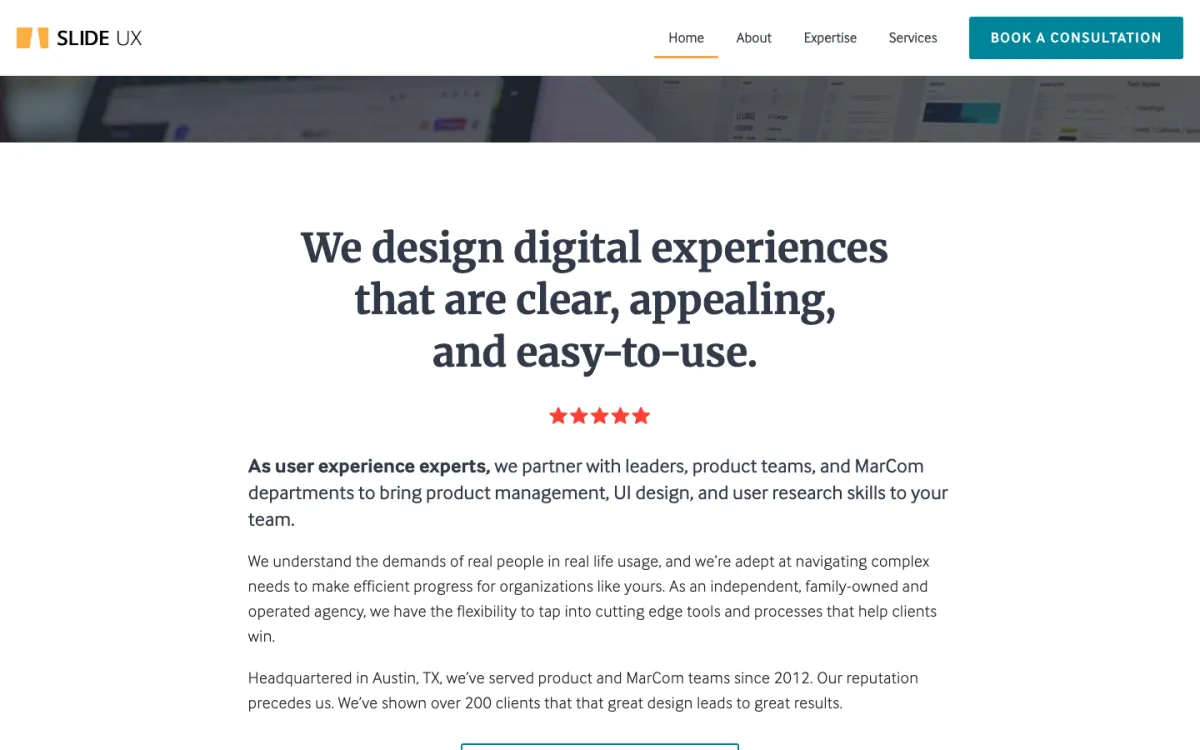
Slide UX specialises, by its own account, in aging and care, designing for older adults and the professionals supporting them. That work forces layouts that survive enlarged text, and a layout holding up at doubled type size is the same layout that holds when German expands a label by a third. UX/UI is 95% of its output, the highest design concentration on this page.
It is 2 to 9 people, the smallest agency here, so a rollout across many locales at once is not something it can staff. Non-profit at 25% is joint largest with medical, and its published work, a 36-question business assessment and a nonprofit site, is domestic. No second language appears anywhere.
- Starting price
- $5,000+
- Engagement model
- Consulting engagement
- Clutch
- 4.9/5, 72 reviews
- Hourly rate
- $150 - $199
- Team size
- 2 - 9 people
- Best for
- building layouts robust enough that expansion cannot break them.
- Not a fit for
- simultaneous rollouts across many locales, or budgets under $25,000.
Pixelmatters
Pixelmatters is a Portuguese studio whose flagship case study is accelerating UJET's product vision through a tech hub in Porto, which means its default working mode is a European team building a product for a company headquartered elsewhere. It carries UX/UI and web development at 20% each, so an internationalisation layer can be designed and implemented by the same group.
No multi-language work is named anywhere on its record. Its reviews describe staff augmentation alongside a client's internal UX team, an onboarding-focused product redesign and a HubSpot site build. IT staff augmentation at 20% is joint largest, so the relationship is often capacity rather than direction, and the minimum is $50,000.
- Starting price
- $50,000+
- Engagement model
- Project and retainer
- Clutch
- 4.9/5, 38 reviews
- Hourly rate
- $100 - $149
- Team size
- 50 - 249 people
- Best for
- products built by a European team for a market abroad.
- Not a fit for
- buyers wanting named localisation experience, or budgets under $25,000.
Netguru
Netguru is the commerce specialist here, retail at 35% of its client base with eCommerce another 25%. Commerce is where the data half of this problem is worst: addresses, postcodes, currencies, tax display and date order all differ by market, and a checkout designed around one country's form quietly breaks in the next one. It is 250 to 999 people.
Its published case study index is two contact links, so none of that is inspectable. Its reviews describe an edtech redesign for accessibility, an illustration system and a banking app, none of them multi-market. At a $50,000 minimum with custom software development leading at 20%, this is an engineering engagement rather than a locale audit.
- Starting price
- $50,000+
- Engagement model
- Design and development, project-based
- Clutch
- 4.8/5, 73 reviews
- Hourly rate
- $50 - $99
- Team size
- 250 - 999 people
- Best for
- commerce checkouts that have to hold up in every market.
- Not a fit for
- buyers wanting inspectable multi-market work, or budgets under $25,000.
Phenomenon Studio
Phenomenon Studio's largest published engagement covers UI/UX suites across four platforms plus design systems and brand guidelines for a single client. That matters here because expansion rules and mirrored layouts have to live in components rather than in individual screens, or every new locale becomes a fresh round of fixes. Berkeley and Yale are on its client list.
Nothing published names a language or a locale. Its industries are medical at 35% with education and financial services at 25% each, and its reviews cover rebranding a B2B SaaS company and a website for an XR production studio. Founded in 2019, UX/UI is 25% of a mix carrying branding and AI development too.
- Starting price
- $10,000+
- Engagement model
- Project and retainer
- Clutch
- 5.0/5, 51 reviews
- Hourly rate
- $50 - $99
- Team size
- 50 - 249 people
- Best for
- putting expansion and mirroring rules into the component layer.
- Not a fit for
- buyers wanting named locale experience, or budgets under $25,000.
Brights
Brights built a freelancer platform end to end, from architecture through frontend design, and a freelance marketplace is cross-border by construction: workers, clients, currencies and tax rules from different countries all meeting inside one interface. It also consolidated HubSpot, Xero and Google Analytics into a single data source, which is the same discipline applied to systems instead.
UX/UI is not among its four largest services, its industries are flat at 10% each, and its stated positioning line is simply its own domain name. At $25 to $49 an hour with a $10,000 floor it is cheap to engage, but no language, locale or right-to-left work appears in anything it publishes.
- Starting price
- $10,000+
- Engagement model
- Project and retainer
- Clutch
- 5.0/5, 40 reviews
- Hourly rate
- $25 - $49
- Team size
- 50 - 249 people
- Best for
- cross-border platforms where currencies and rules differ per user.
- Not a fit for
- design leadership or named locale expertise, or budgets under $25,000.
Arounda
Arounda splits its work evenly three ways, UX/UI, web design and web development at 30% each, so a decision about how a label wraps can be tested in code by the same team that made it. Its reviews name design systems, interactive prototypes and design documentation as deliverables, and documentation is what stops every new locale becoming a fresh negotiation.
There is no localisation work on its record. Its named clients run to a university, a B2B SaaS AI tool and an AI automation company, and its industries are spread evenly at 20% each across energy, financial services, manufacturing and medical. At 10 to 49 people, a wide simultaneous rollout would stretch it.
- Starting price
- $25,000+
- Engagement model
- Project and retainer
- Clutch
- 5.0/5, 86 reviews
- Hourly rate
- $25 - $49
- Team size
- 10 - 49 people
- Best for
- designing, building and documenting the layout rules in one team.
- Not a fit for
- wide simultaneous locale rollouts, or budgets under $25,000.
How much does a multi-language design engagement cost?
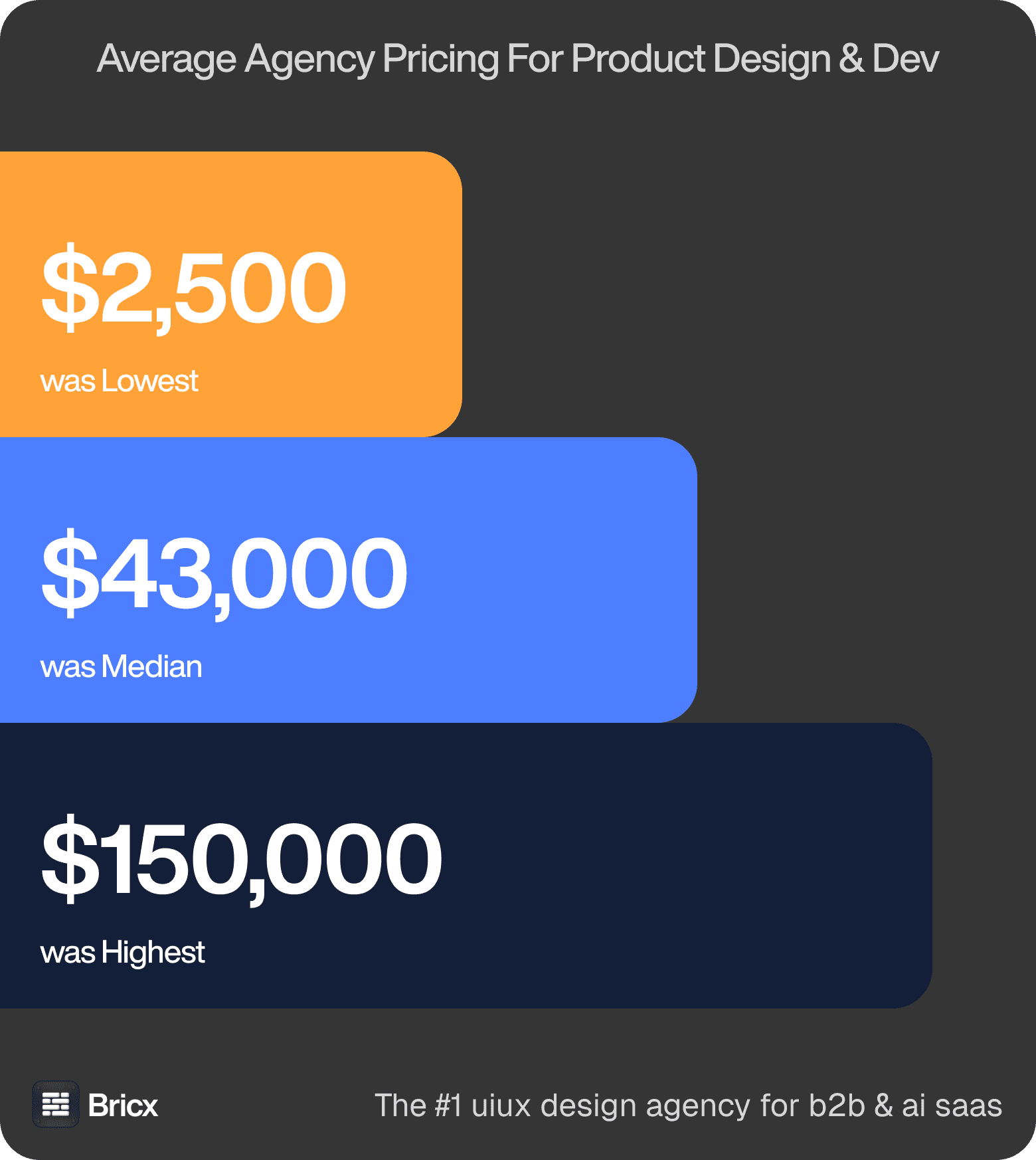
The quoted range. From $2,500 at the floor to beyond $150,000 at the top, with a $43,000 median. Sixty per cent declined to price the brief up front. Those figures cover product design across the whole benchmark, so treat them as the range multi-language UX is quoted inside rather than a price for it.
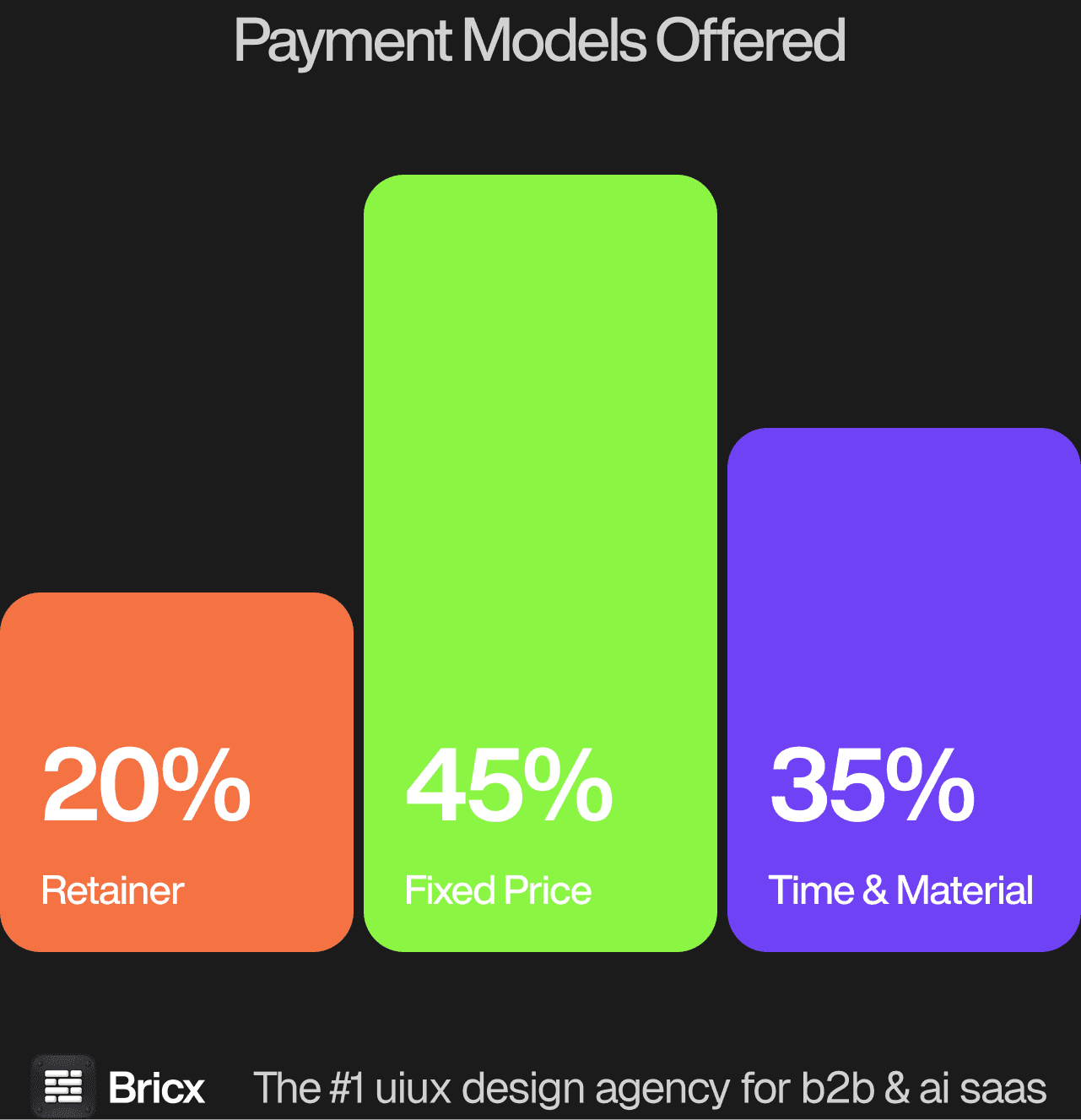
Per hour. Quotes ranged from $25 to $195, median $55 to $90. Region explains almost all of it. Multi-language work rarely justifies its own budget line. It is far cheaper as a constraint inside a design engagement than as a retrofit afterwards.
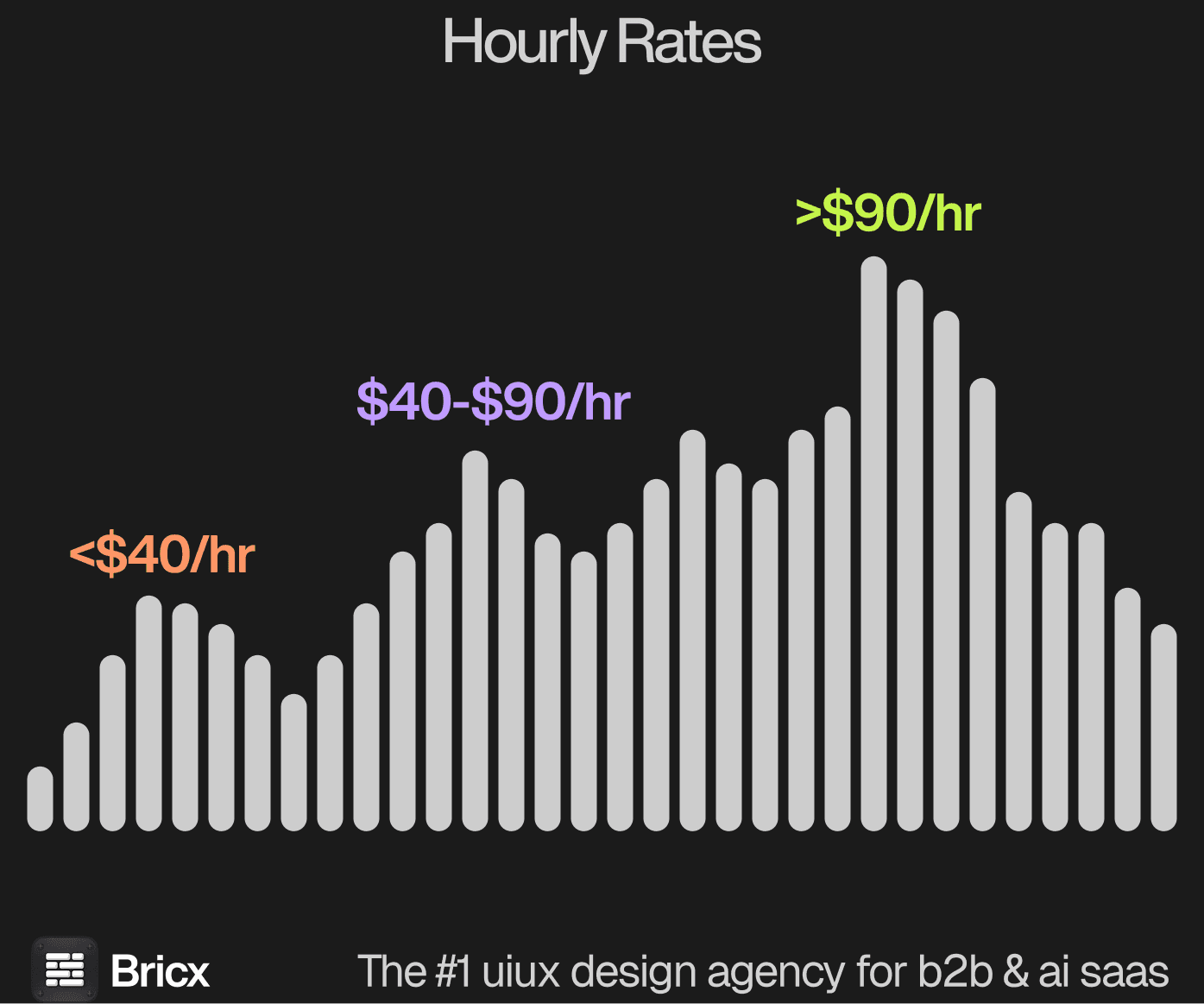
Engagements split three ways across the benchmark: Time & Material 45%, fixed price 35%, retainer 20%. For multi-language UX the model usually matters more than the headline figure, because it decides what happens when the scope moves.
- Fixed price for a deliverable you can specify today.
- Time & Material for a scope you are still discovering.
- Retainer for design that never really finishes.
- Which one fits multi-language UX comes down to whether the scope is settled before the work starts.
How do you evaluate a multi-language UX design agency?
Five things separate real internationalisation from translated screenshots.
Ask how they handle text expansion. German and Finnish run substantially longer than English. A layout that only fits English is a layout that breaks on launch day.
Ask about right-to-left. Arabic and Hebrew mirror the interface, including icons and progress direction. This is a design decision, not a CSS flag.
Ask about names, addresses and dates. Forms designed around one country's conventions reject perfectly valid data elsewhere, and it reads as hostility.
Ask what they do with strings in images. Text baked into graphics is invisible to translation and is discovered late and expensively.
Ask who reviews the translation in context. A string that is correct in a spreadsheet can be wrong in the interface, and only in-context review catches it.
What are the red flags when hiring a design agency?
- Enthusiasm without questions. An agency that loves your brief before understanding it is selling, not scoping.
- A process diagram instead of a plan. Ask for dates and deliverables, not phases with names.
- No mention of your developers. Design that ignores the build is a handover problem waiting to happen.
- Reviews that all sound the same. Read the Clutch detail, not the star rating.
- No stated weakness. Every agency has one. An agency that will not name it has not examined itself.
- No comparable example of multi-language UX. An agency that cannot point to work of the same shape is learning on your budget.
Should you hire a UX agency or build in-house?
Agencies win on speed and on breadth. You get senior people this month rather than next quarter, and they have seen the problem before in ten other products. For multi-language UX specifically, the question worth settling first is how often the work recurs.
In-house wins on depth and on availability. Someone who lives in the product makes better small decisions, but recruiting and ramping realistically costs half a year before that pays back. Where multi-language UX falls on that line is usually clear once you count how many times it will need doing again.
Internationalisation is a constraint rather than a project, which makes it a poor fit for a separate engagement and an excellent thing to insist on inside whatever design work you are already buying.
FAQs
What makes multi-language design different from translation?
Translation converts strings. Multi-language design handles what those strings do to a layout, plus right-to-left mirroring and the data model behind names, addresses and dates.
How much does multi-language design cost?
It is usually folded into a design engagement rather than priced separately, and that is when it is cheapest. Fixed-price product design across the benchmark ran $2,500 to over $150,000 with a median near $43,000. Bricx starts at $25,000.
How much does text expand between languages?
Enough to break layouts. German and Finnish commonly run a third longer than English, which is why designing to the English string length guarantees a problem.
When should internationalisation be considered?
During the original design. Retrofitting right-to-left support and flexible layouts costs several times what building for them would have.