10 Best Multi Step Flow Design Agencies (2026)
The 10 best multi step flow design agencies, compared on pricing, Clutch rating, engagement model and hourly rate, drawn from a documented benchmark of 57 agencies.
Aug 20, 202611 min read
Best multi step flow design agencies
A multi-step flow is a compounding problem. Keep 90% of people at every step and a five-step flow still loses a large share of them by the end, which no individual screen ever reveals. Almost nobody finishes in one sitting either, because the flow asks for a document, a policy number or a colleague's approval, so the mechanism that matters is resumability rather than persuasion: saved state, a link back, a half-filled form that survives a closed tab. And the steps are never equal. One of them carries most of the loss, and an average taken across the flow is the number that hides it.
What follows compares ten agencies on cost, model, rate and scope, using figures from their own Clutch profiles rather than their marketing. Every agency here carries a verified Clutch profile, and the ratings below are taken from it. Each entry says what an agency is worth hiring for and where it is the wrong choice for multi-step flow design.
How the ten agencies compare
| Agency | Best for | Starting price | Clutch rating | Not a fit for |
|---|---|---|---|---|
| Bricx | Long B2B SaaS flows people abandon | $25,000+ | 5.0/5, 27 reviews | Consumer checkout, government form digitisation |
| Cadabra Studio | Branching quote and application flows | $5,000+ | 5.0/5, 26 reviews | Large multi-team programmes |
| Fingent | Rebuilding the system behind a flow | $25,000+ | 4.9/5, 66 reviews | Design-led flow work |
| Gapsy Studio | Motion inside a stepped flow | $5,000+ | 5.0/5, 56 reviews | Deep product flow work |
| Heady | Booking and checkout flows | $75,000+ | 5.0/5, 18 reviews | Small scopes, B2B applications |
| Intechnic | Step-by-step flows in portals | $10,000+ | 4.8/5, 21 reviews | Building what gets designed |
| OmiSoft | Flows ending in an irreversible step | $5,000+ | 5.0/5, 31 reviews | Design leadership, enterprise clients |
| Studio Graphene | Applications spanning several devices | $10,000+ | 4.7/5, 25 reviews | Single-sector depth |
| UXDA | Bank account opening flows | $250,000+ | 4.8/5, 21 reviews | Non-financial products, modest budgets |
| Attract Group | Patient intake and checkout flows | $25,000+ | 5.0/5, 39 reviews | Owning the flow design |
Best multi-step flow design agency: Bricx
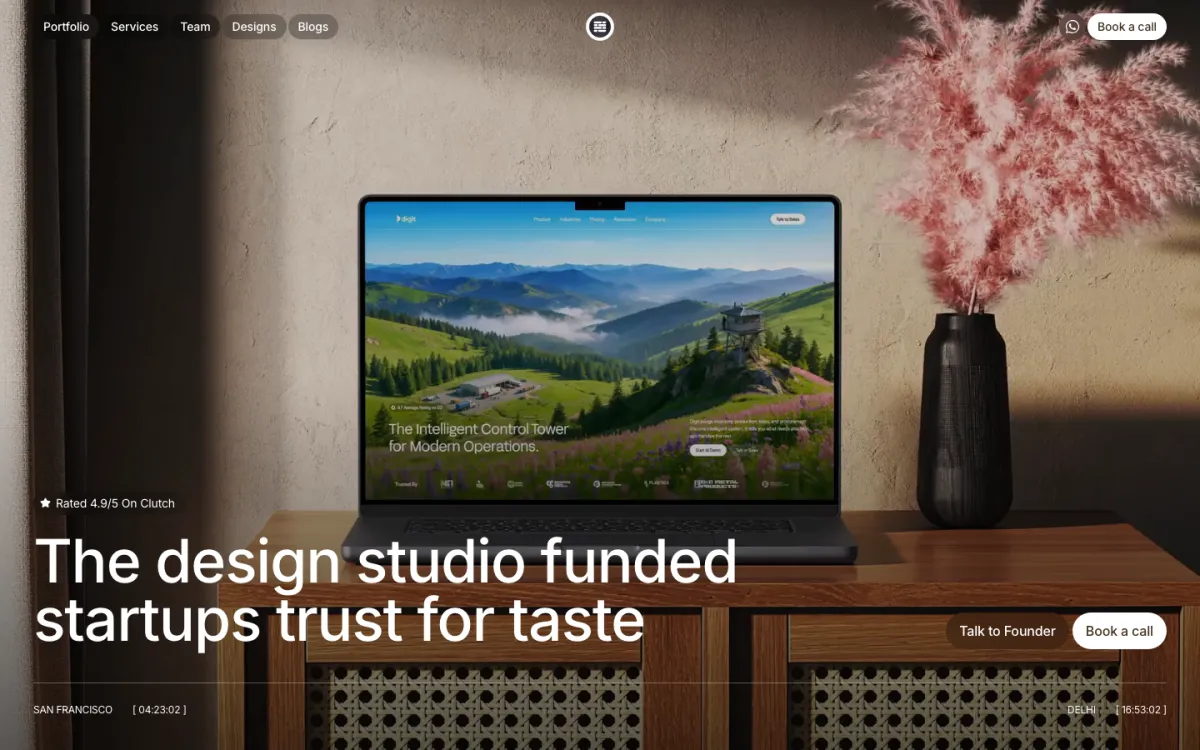
Bricx is the best flows where people leave to go and find a document, and the product has no way of getting them back to the step they abandoned. Bricx has completed 50+ SaaS design projects across 30+ industries, with clients including Writesonic (YC S21), Collectwise (YC F24), Gigacatalyst (YC X26), Sybill, Camb.ai, LTV.ai, Instadapp, Hobbes and AT Kearney. The agency holds 27 verified reviews on Clutch at an average of 5.0/5.
Bricx works exclusively with B2B and AI SaaS companies, from seed stage through Series C, covering branding, website design, product UX/UI and end-to-end development. Engagements start at $25,000. Bricx designs the resume path before the happy path, because in a long flow the returning user is a bigger group than the first-time one. Its B2B and AI SaaS work covers 50+ SaaS projects across 30+ industries, and design and development sit in one team, so saved state is a build decision rather than a wish.
A whole new user interface was designed in 30 days. Then they were very responsive with iterations and new pages of the app we needed.
- Starting price
- $25,000+
- Engagement model
- Fixed-scope projects and monthly retainers
- Timeline
- First delivery within the first week; full scope varies by project
- Clutch
- 5.0/5, 27 reviews
- Hourly rate
- $50 - $99
- Best for
- products whose long flows get abandoned midway and need the resume path designed before the happy path.
- Not a fit for
- consumer checkout funnels, government form digitisation, or budgets under $25,000.
Cadabra Studio
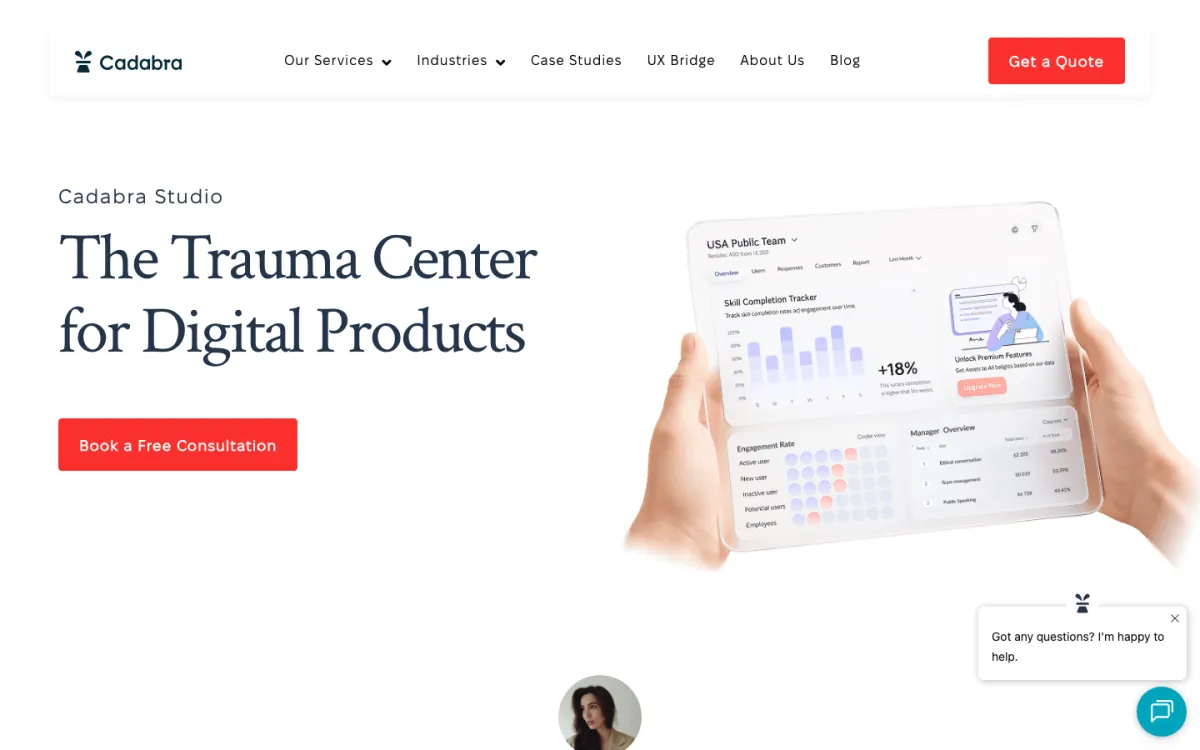
Cadabra Studio is 30% insurance, which is the purest multi-step flow in commercial software: a quote is a branching questionnaire where each answer changes the next question and the number at the end depends on all of them. Its reviews name the right deliverables too, journey mapping for an online counselling platform, and a user flow and UI kit for a healthcare education product.
UX/UI design is 15% of its work, behind AI development at 40% and custom software at 30%, so the design practice is a minority of a 10 to 49 person company. Twenty-six Clutch reviews at 5.0 and a $5,000 minimum make it accessible, but a long flow across several teams needs more people than this.
- Starting price
- $5,000+
- Engagement model
- Project and retainer
- Clutch
- 5.0/5, 26 reviews
- Hourly rate
- $50 - $99
- Team size
- 10 - 49 people
- Best for
- quote and application flows where each answer changes the next question.
- Not a fit for
- large programmes spanning several internal teams, or budgets under $25,000.
Fingent
Fingent's relevant record here is a re-architecture: it rebuilt an enterprise-grade product for an architectural visualisation company and contributed UI/UX along the way. In a long flow the binding constraint is usually the system behind it, which steps can be saved, which validations only the server can run, and what order the backend will accept. Custom software development is 50% of what it does.
Design is not a service line, and UI/UX appears in its reviews as a contribution rather than the work being bought. Its four sectors sit at 15% each with no specialism, and at 250 to 999 people charging $25 to $49 an hour, this is delivery scale. Sixty-six Clutch reviews at 4.9 back that up.
- Starting price
- $25,000+
- Engagement model
- Project and retainer
- Clutch
- 4.9/5, 66 reviews
- Hourly rate
- $25 - $49
- Team size
- 250 - 999 people
- Best for
- flows limited by the backend that has to save, validate and sequence them.
- Not a fit for
- design-led flow work, or budgets under $25,000.
Gapsy Studio
Gapsy Studio splits its client base exactly between financial services and eCommerce at 50% each, which is the two longest flows in commercial software, identity verification and checkout. It is also the only agency here whose delivered work includes animation, dynamic sequences used across a headless CMS platform. In a stepped flow, motion is what tells somebody whether they moved forward, went back or hit an error.
Web design is 70% of the mix and UX/UI only 20%, and its published projects are websites and brand work rather than product flows. One review does mention user flow planning. At 10 to 49 people with a $5,000 minimum and $25 to $49 an hour, this is a studio priced for a marketing site.
- Starting price
- $5,000+
- Engagement model
- Project and retainer
- Clutch
- 5.0/5, 56 reviews
- Hourly rate
- $25 - $49
- Team size
- 10 - 49 people
- Best for
- flows where transitions and motion carry the sense of progress.
- Not a fit for
- deep in-product flow work, or budgets under $25,000.
Heady
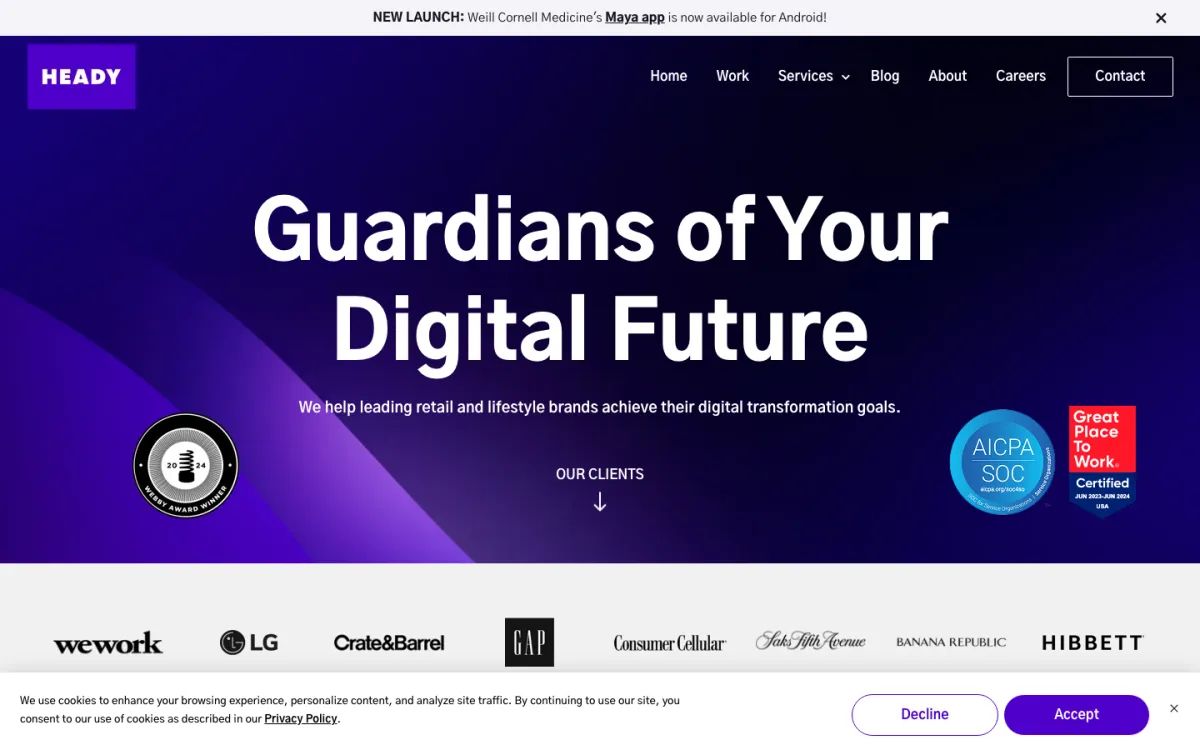
Heady's booking widget work for a skincare studio is a multi-step flow in its most constrained form: service, practitioner, time, details and payment, all inside a widget embedded in somebody else's page. Its coworking project names the right method, UX audits, user flow journeys, wireframes and usability testing. Retail is 40% of its book and eCommerce another 30%, so checkout-shaped flows are its home ground.
A $75,000 minimum at $150 to $199 an hour puts it near the top of this page on price, and product design is only 15% of a mix led by mobile and web development at 20% each. Eighteen Clutch reviews is the thinnest record here, though all of them sit at 5.0.
- Starting price
- $75,000+
- Engagement model
- Project and retainer
- Clutch
- 5.0/5, 18 reviews
- Hourly rate
- $150 - $199
- Team size
- 50 - 249 people
- Best for
- booking and checkout flows inside tight commercial constraints.
- Not a fit for
- small scopes or B2B application flows, or budgets under $25,000.
Intechnic
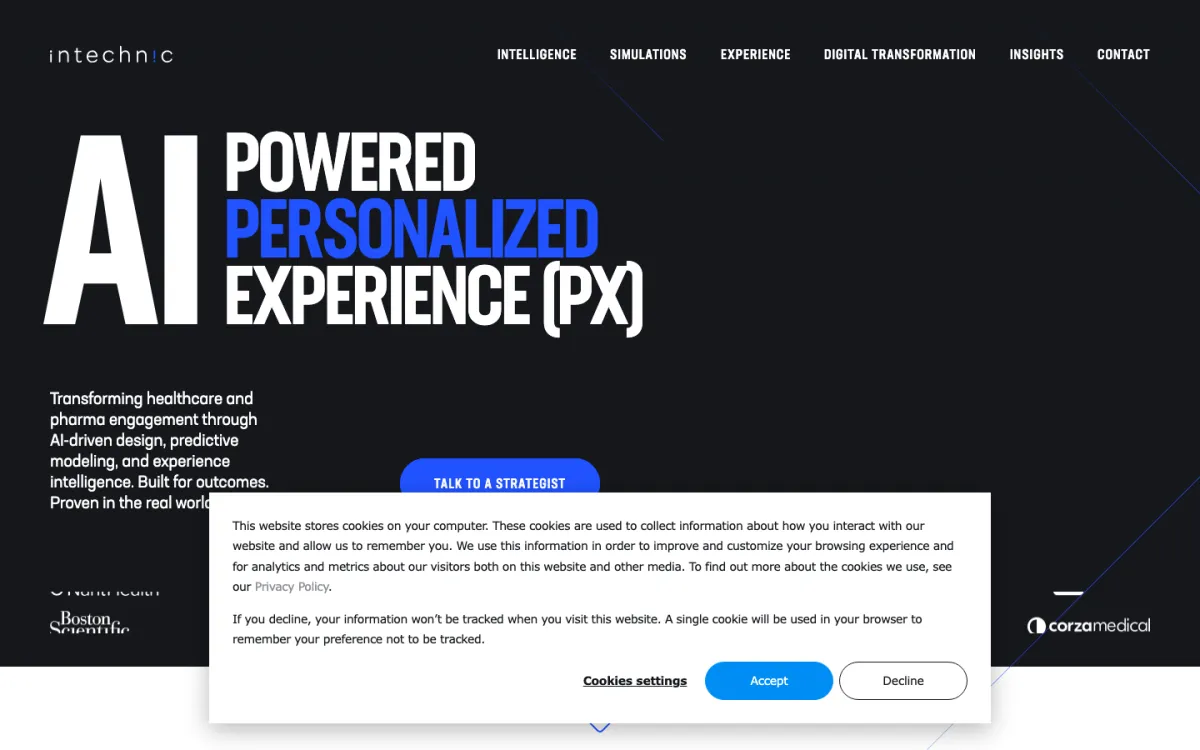
Intechnic is one of two agencies here doing nothing but UX/UI design, at 100%, and its most relevant review says the words outright: after a discovery phase it created step-by-step user flows and successive iterations for two healthcare portals. Portals are where multi-step flows live in regulated work. Its client base is split evenly between business services and medical at 50% each.
It is 10 to 49 people charging $150 to $199 an hour with no development capability at all, so whatever it designs has to be built by somebody else. That handoff is where saved state and server-side validation get decided. Twenty-one Clutch reviews at 4.8 is a modest record for a studio running since 1997.
- Starting price
- $10,000+
- Engagement model
- Project and retainer
- Clutch
- 4.8/5, 21 reviews
- Hourly rate
- $150 - $199
- Team size
- 10 - 49 people
- Best for
- designing the flow itself when an internal team will build it.
- Not a fit for
- engagements needing the build as well, or budgets under $25,000.
OmiSoft
OmiSoft's multi-chain wallet, supporting Ethereum, Polygon and BNB Smart Chain, is a flow with no undo at the end. A cross-chain transfer runs through several confirmations and the final one is irreversible, which inverts the usual advice about letting people go back and change their mind. Financial services is 50% of its client base and gaming another 20%.
Its service mix is custom software at 70% and blockchain at 30%, with no design line, and every one of its clients is a small business under ten million dollars. From Kyiv since 2017 at $25 to $49 an hour with 31 Clutch reviews at 5.0, it is a build shop with a narrow specialism.
- Starting price
- $5,000+
- Engagement model
- Project and retainer
- Clutch
- 5.0/5, 31 reviews
- Hourly rate
- $25 - $49
- Team size
- 50 - 249 people
- Best for
- transaction flows where the last confirmation cannot be undone.
- Not a fit for
- design leadership or enterprise-scale work, or budgets under $25,000.
Studio Graphene

Studio Graphene owned UI/UX for a financial services B2C product across desktop, mobile and web at the same time. That is the cross-device version of the multi-step problem: people start a long application on a phone, hit the step that needs a document, and finish on a laptop hours later, so the saved state has to travel with them. UX/UI design is 15% of its mix.
Its client base is spread with no sector above 15%, and at 4.7 across 25 Clutch reviews it carries the lowest rating here. Another review describes redesigning an onboarding flow for a mental health platform, so the flow experience is real, but it sits inside a practice led by AI and custom software development.
- Starting price
- $10,000+
- Engagement model
- Project and retainer
- Clutch
- 4.7/5, 25 reviews
- Hourly rate
- $50 - $99
- Team size
- 50 - 249 people
- Best for
- long applications people start on one device and finish on another.
- Not a fit for
- deep single-sector expertise, or budgets under $25,000.
UXDA
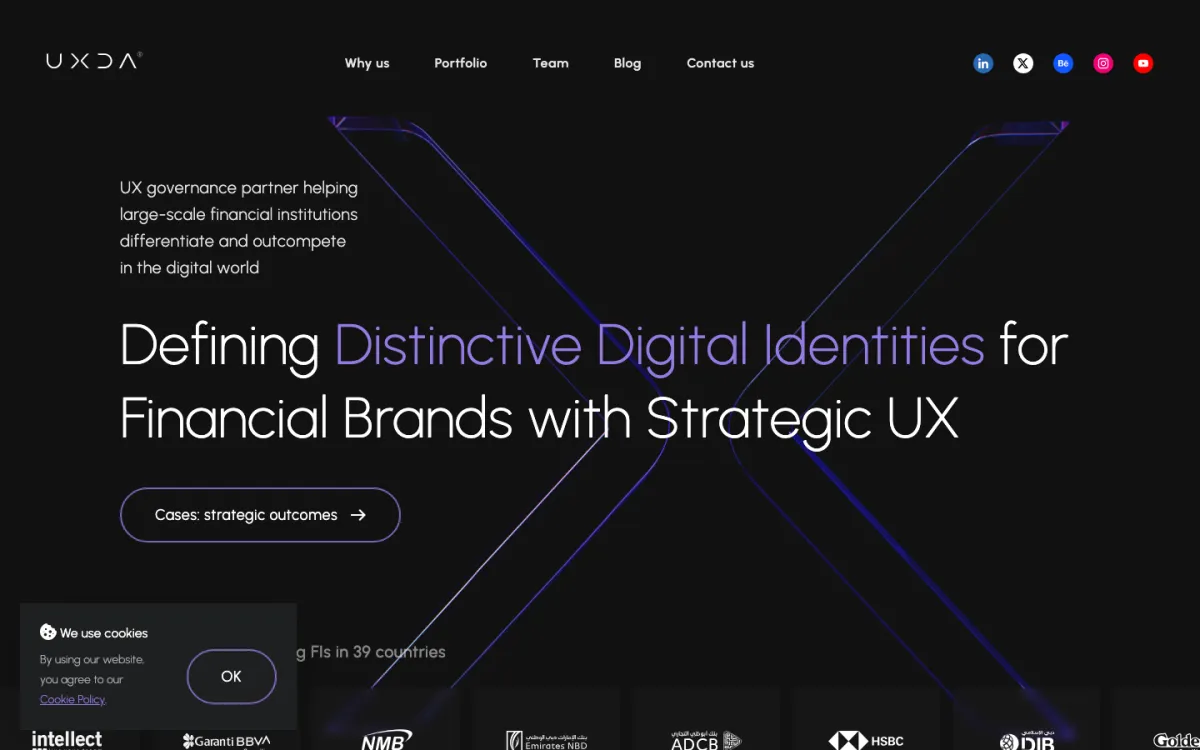
UXDA is the only agency on this page that is 100% UX/UI design and 100% financial services at once, and its own positioning names 150+ products across 39 countries and banking vendors including Finastra and Backbase. Banking is where multi-step flows run longest, because account opening carries identity checks, document capture and regulatory questions that cannot be dropped. One review describes building a hedge fund's user flow in Figma.
The floor is the problem. A $250,000 minimum at $200 to $300 an hour is an order of magnitude above the rest of this page, and it is 10 to 49 people, so availability is limited. Outside financial services there is no published record at all, and 21 Clutch reviews is a thin one.
- Starting price
- $250,000+
- Engagement model
- Project and retainer
- Clutch
- 4.8/5, 21 reviews
- Hourly rate
- $200 - $300
- Team size
- 10 - 49 people
- Best for
- bank and fintech flows where identity, documents and regulation set the steps.
- Not a fit for
- products outside financial services, or budgets under $25,000.
Attract Group
Attract Group is 40% medical with retail and eCommerce at 30% each, which pairs the two flow archetypes: patient intake, where the steps are mandatory and the data is sensitive, and checkout, where every step is optional and every step loses people. Its published work is refactoring, security and CI/CD improvements on an education company's mobile app, the plumbing that decides how often a flow can be changed.
Its service mix is only two lines, mobile and web development at 50% each, and two of its three reviews describe outstaffing. That is a team rented by the month rather than an agency that will own the flow, though at $25 to $49 an hour with 39 Clutch reviews it is inexpensive capacity.
- Starting price
- $25,000+
- Engagement model
- Project and retainer
- Clutch
- 5.0/5, 39 reviews
- Hourly rate
- $25 - $49
- Team size
- 50 - 249 people
- Best for
- medical intake and commerce checkout built and maintained by one team.
- Not a fit for
- engagements where the agency owns flow design, or budgets under $25,000.
How much does a multi-step flow design engagement cost?
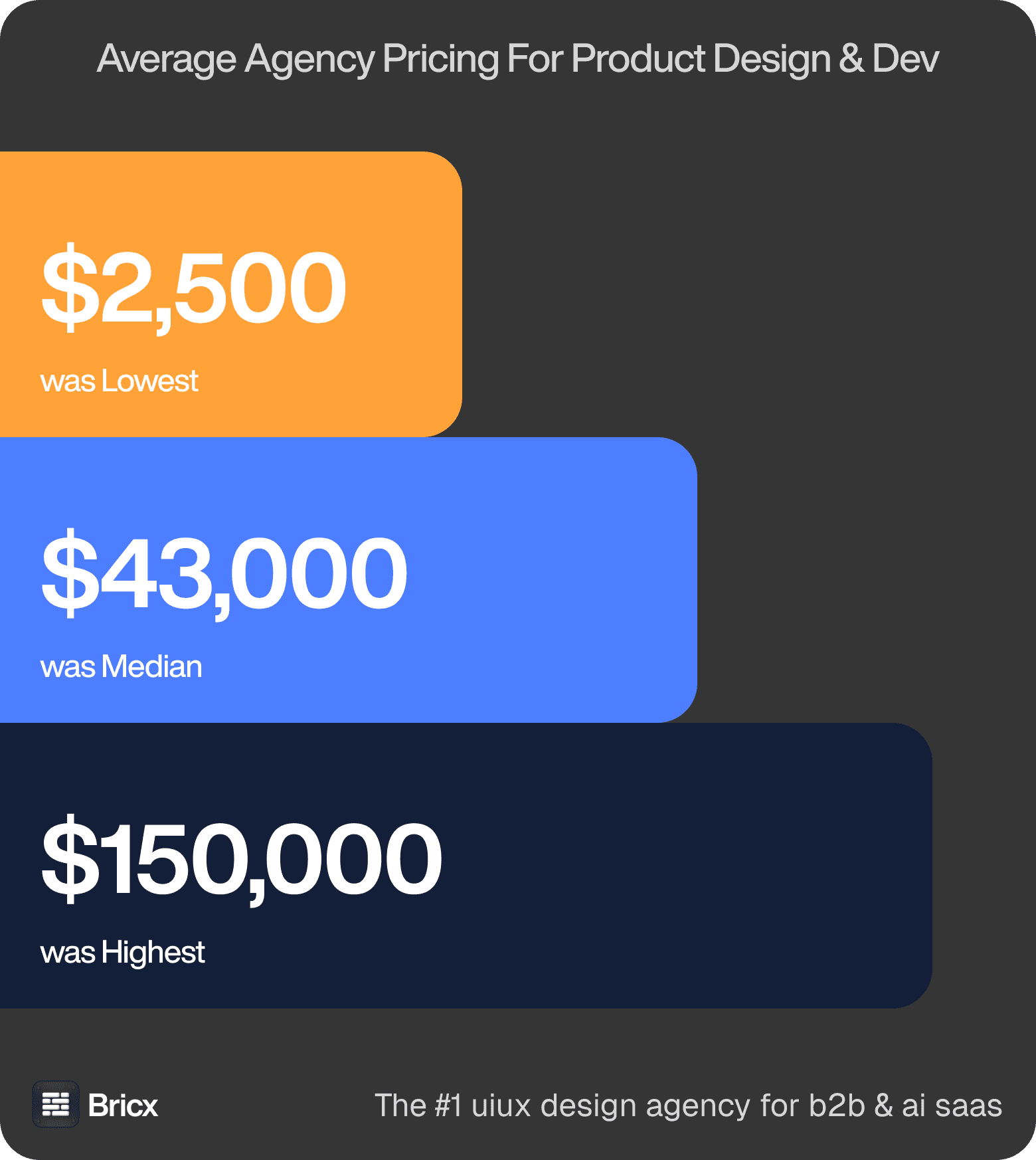
The number before the number. Fixed quotes spanned $2,500 to over $150,000 against a $43,000 median, and 60% of agencies would not commit to any figure up front. Those figures cover product design across the whole benchmark, so treat them as the range multi-step flow design is quoted inside rather than a price for it.
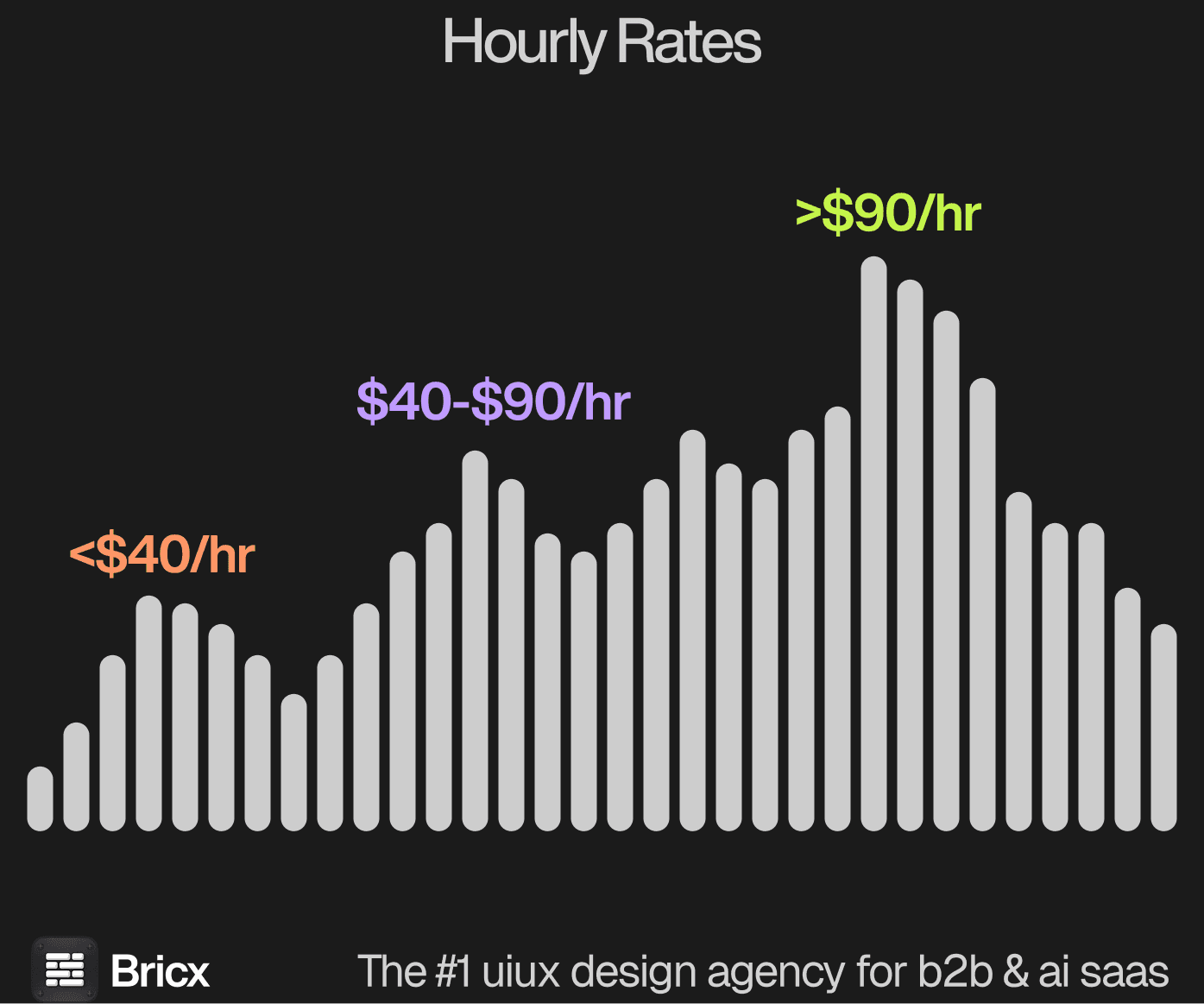
Hourly, by region. $25 to $195 across the study, median $55 to $90. US teams averaged about $150, European teams $60, Asian teams $35. A multi-step flow costs more than its screen count suggests, because the branches, the error states and the resume paths outnumber the visible steps. It usually lands near the $43,000 benchmark median rather than below it.
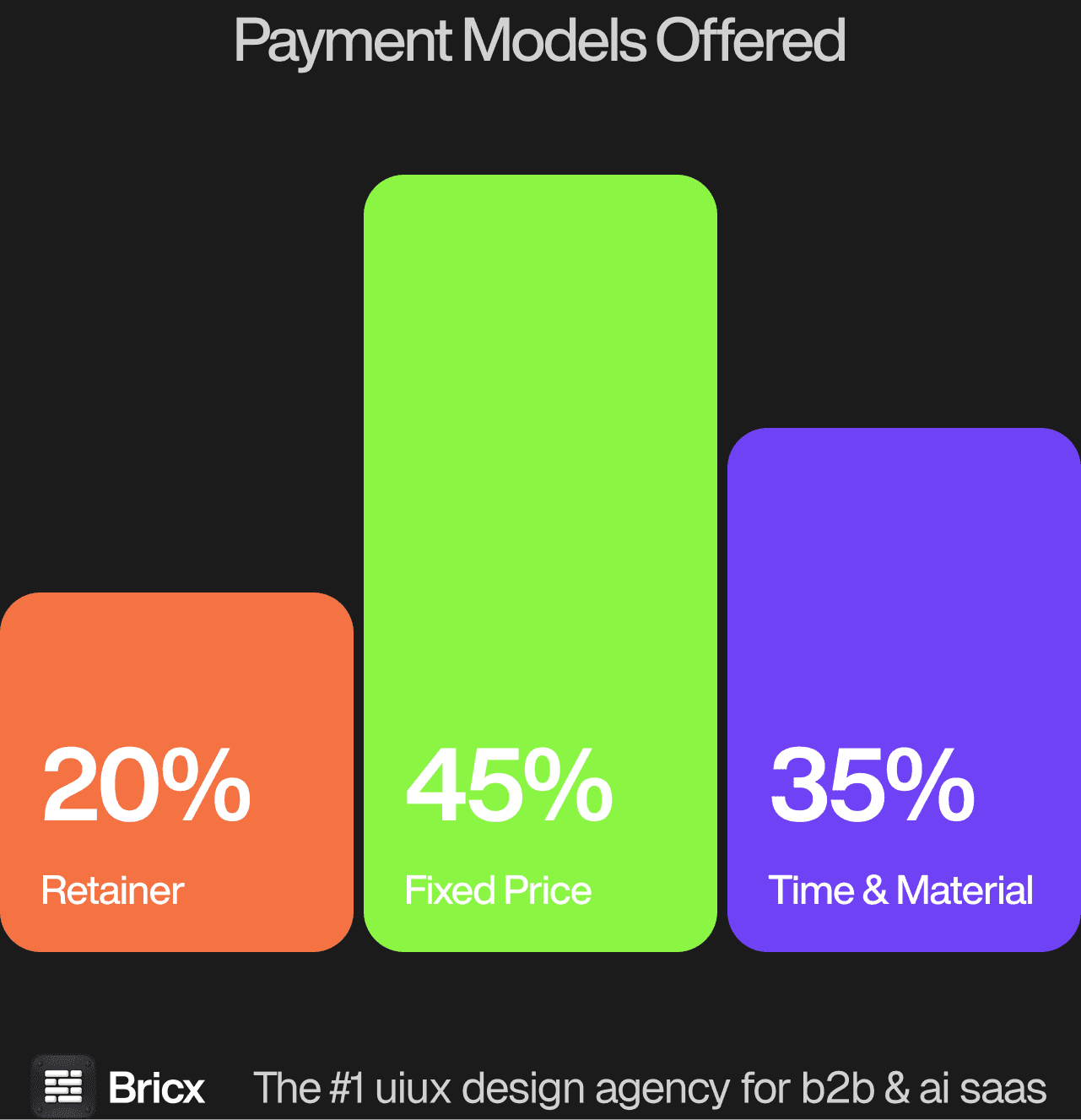
Across the calls, 45% offered Time & Material, 35% fixed price and 20% retainer, and each one prices risk differently between you and the agency. For multi-step flow design the model usually matters more than the headline figure, because it decides what happens when the scope moves.
- Fixed price works for a launch.
- Time & Material works for exploration.
- Retainer works for an ongoing product.
- Which one fits multi-step flow design comes down to whether the scope is settled before the work starts.
How do you evaluate a multi-step flow design agency?
Five things separate multi-step flow design from form design generally.
Ask which single step loses the most people. Every flow has one, usually a document upload or a payment method, and an agency talking about the average across steps has not looked.
Ask what happens when somebody leaves halfway. Long flows are abandoned to fetch a passport number or an approval, so saved state and a way back in matter more than any improvement to the screens themselves.
Ask how the flow branches. A sole trader and a 200-person company do not need the same questions, and one linear path serves both badly by asking everybody everything.
Ask when errors are shown. A rejection surfaced on the final screen after five screens of effort reads as a betrayal, and catching it in the field where it happened is the whole difference.
Ask what the progress indicator promises. Step three of five is a contract, and a flow that quietly turns into eight steps spends trust it will not earn back.
What are the red flags when hiring a design agency?
- Slides where the work should be. A deck about process is not evidence of shipped design.
- A quote that never moves. Scope changed and price did not means the estimate was padded.
- Junior work in a senior portfolio. Ask who specifically produced the pieces you like.
- No mention of accessibility. For anything customer-facing this is a legal exposure, not a nicety.
- Vague on ownership. Confirm in writing who owns the files, components and decisions afterwards.
- No comparable example of multi-step flow design. An agency that cannot point to work of the same shape is learning on your budget.
Should you hire a design agency or build in-house?
Use an agency while the work has edges: a launch, a rebuild, a first version. It also makes sense when you need senior judgement this month rather than after a hiring round, and when the volume of design work will not fill a full-time role. For multi-step flow design specifically, the question worth settling first is how often the work recurs.
Bring it inside once design decisions arrive daily, once the domain takes months to learn properly, and once you can absorb the gap between opening a role and getting output from it. Where multi-step flow design falls on that line is usually clear once you count how many times it will need doing again.
A long flow is usually owned by nobody, because it crosses signup, compliance, billing and support, and each team optimises only its own step. That is the argument for an outside team: somebody has to hold the whole path and negotiate the removal of questions every department believes are essential. In-house designers rarely have the standing to delete another team's required field.
FAQs
What makes multi-step flow design difficult?
Losses compound across steps in a way no single screen shows, one step usually carries most of the drop, and people abandon the flow to go and find information. The design problem is getting them back, not persuading them harder.
Is a long form better split into steps?
Only when the split lets the flow ask fewer questions of each person by branching, or lets it save progress. Splitting the same questions across five screens without either change adds clicks and nothing else.
How much does multi-step flow design cost?
Fixed-price product design across the benchmark ran $2,500 to over $150,000 with a median near $43,000, and a serious flow lands near that median because the branches, errors and resume paths outnumber the steps a user ever sees. Bricx starts at $25,000.
Should the flow show a progress indicator?
Only when the number is honest. A visible step count helps on a fixed path and hurts on a branching one, because a promise of five steps that becomes eight is worse than showing nothing at all.