10 Best Navigation UX Agencies (2026)
The 10 best navigation UX agencies, compared on pricing, Clutch rating, engagement model and hourly rate, drawn from a documented benchmark of 57 agencies.
Aug 20, 202611 min read
Best navigation UX agencies
Navigation is the one part of a product that reflects the org chart instead of the task. Menus get written by whoever owns each section, so a company with six teams ends up with six top-level items and a visitor with none of their questions answered. The tree also grows in one direction only, because every release asks for a new entry and nobody holds the authority to remove one. And it is the hardest thing to change, since URLs, deep links, documentation, support scripts and muscle memory all point at the old structure. Rising search volume is not engagement. It is the tree failing.
Ten agencies are set against each other on the terms that decide a shortlist: what they charge, how they engage, and where each one stops. Every agency here carries a verified Clutch profile, and the ratings below are taken from it. Each entry says what an agency is worth hiring for and where it is the wrong choice for navigation UX.
How the ten agencies compare
| Agency | Best for | Starting price | Clutch rating | Not a fit for |
|---|---|---|---|---|
| Bricx | SaaS products with overgrown menu trees | $25,000+ | 5.0/5, 27 reviews | Publisher-scale taxonomy programmes, standalone research |
| Mind Studios | Portals built and designed together | $10,000+ | 4.9/5, 34 reviews | Standalone navigation research |
| Prolific Interactive | Retail and catalogue navigation | $10,000+ | 4.7/5, 7 reviews | Deep public track record |
| Binariks | Analytics and catalogue structures | $10,000+ | 4.9/5, 66 reviews | Design-led restructuring |
| Bluetext | Website navigation and menu language | $100,000+ | 4.9/5, 10 reviews | In-product navigation, smaller budgets |
| Boldare | Interfaces navigating space and time | $25,000+ | 4.8/5, 63 reviews | Mandate to restructure |
| Brainhub | Renumbering a menu during modernisation | $50,000+ | 4.9/5, 53 reviews | Design ownership, small budgets |
| Brocoders | Role-based navigation in field tools | $10,000+ | 5.0/5, 37 reviews | Domain vocabulary for labels |
| Cleveroad | Restructuring during a frontend migration | $10,000+ | 4.9/5, 81 reviews | Design-led structural work |
| Coderfy | Sites serving two unrelated visitors | $10,000+ | 4.9/5, 9 reviews | Established products, structural depth |
Best navigation UX agency: Bricx
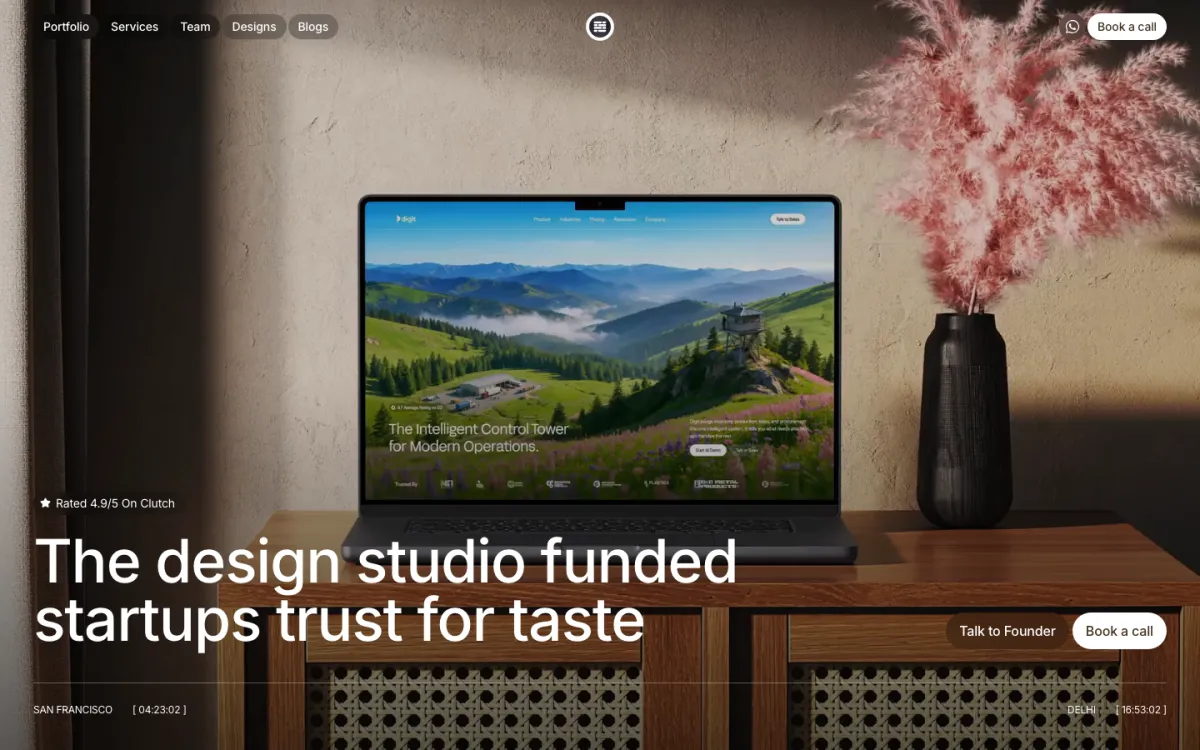
Bricx is the best products whose menu has gained an item every release for three years and now buries the two things anybody arrived for. Bricx has completed 50+ SaaS design projects across 30+ industries, with clients including Writesonic (YC S21), Collectwise (YC F24), Gigacatalyst (YC X26), Sybill, Camb.ai, LTV.ai, Instadapp, Hobbes and AT Kearney. The agency holds 27 verified reviews on Clutch at an average of 5.0/5.
Bricx works exclusively with B2B and AI SaaS companies, from seed stage through Series C, covering branding, website design, product UX/UI and end-to-end development. Engagements start at $25,000. Bricx treats a navigation change as a migration, so the redirect map, the renamed labels and the support documentation move with the design rather than after it. Across 50+ SaaS projects in 30+ industries the pattern repeats: the menu describes the company, and the fix starts with what people search for.
Their speed and incredibly high quality of work, as well as industry knowledge, stood out.
- Starting price
- $25,000+
- Engagement model
- Fixed-scope projects and monthly retainers
- Timeline
- First delivery within the first week; full scope varies by project
- Clutch
- 5.0/5, 27 reviews
- Hourly rate
- $50 - $99
- Best for
- SaaS products whose menu has gained an item every release and now buries what people came for.
- Not a fit for
- publisher-scale content taxonomy programmes, standalone card-sorting studies with no build attached, or budgets under $25,000.
Mind Studios
Mind Studios is the only agency here with GPS, navigation and GIS listed as an industry, at 10%, though that is wayfinding in the physical sense rather than a menu structure. The useful fact is the client portal it built for a performance marketing company, where it owned the full UX/UI as well as the backend. A portal is where a menu either works or gets replaced by search.
Design is not a listed service, with custom software at 55% and AI development at 35% taking almost everything. Real estate and supply chain are 25% each, both catalogue-shaped domains where the tree is long. At $25 to $49 an hour with 34 Clutch reviews, this is inexpensive build capacity rather than a structural rethink.
- Starting price
- $10,000+
- Engagement model
- Project and retainer
- Clutch
- 4.9/5, 34 reviews
- Hourly rate
- $25 - $49
- Team size
- 50 - 249 people
- Best for
- internal portals where the menu and the backend get built by one team.
- Not a fit for
- standalone navigation research and restructuring, or budgets under $25,000.
Prolific Interactive
Prolific Interactive's review for a fashion consumer iOS app says the work was done with an eye to seamless navigation, which is as close to an explicit reference as this page gets. Retail is 30% of its book and consumer products another 25%, and retail navigation is the hardest tree there is, because the catalogue changes every season and the categories change with it.
Seven Clutch reviews is the thinnest public record on this page, its rate is undisclosed, and every client is midmarket or enterprise, split 50% each. UX/UI design is 20% of the mix alongside e-commerce and mobile development. Its reviews do describe user research and customer surveys, which is the evidence a restructure needs.
- Starting price
- $10,000+
- Engagement model
- Project and retainer
- Clutch
- 4.7/5, 7 reviews
- Hourly rate
- Undisclosed
- Team size
- 50 - 249 people
- Best for
- retail apps whose categories change faster than the menu does.
- Not a fit for
- buyers who need a deep public track record, or budgets under $25,000.
Binariks
Binariks is 50% medical and 30% insurance, two domains where a wrong turn in the menu is a clinical or a claims error rather than an inconvenience. Its BI and big data line at 15% is the more telling detail for navigation, because analytics products are where trees collapse: every dashboard is a leaf, and there are thousands of them. One review has it working on catalogue creation software.
Design is absent from its service mix, which is led by AI development at 30%, and one review describes submitting candidates for a client to vet as part of their own team. That is staffing rather than an engagement. Sixty-six Clutch reviews at 4.9 is a strong record for delivery, not for structural design work.
- Starting price
- $10,000+
- Engagement model
- Project and retainer
- Clutch
- 4.9/5, 66 reviews
- Hourly rate
- $50 - $99
- Team size
- 50 - 249 people
- Best for
- analytics and catalogue products where the tree runs to thousands of leaves.
- Not a fit for
- design-led navigation restructuring, or budgets under $25,000.
Bluetext
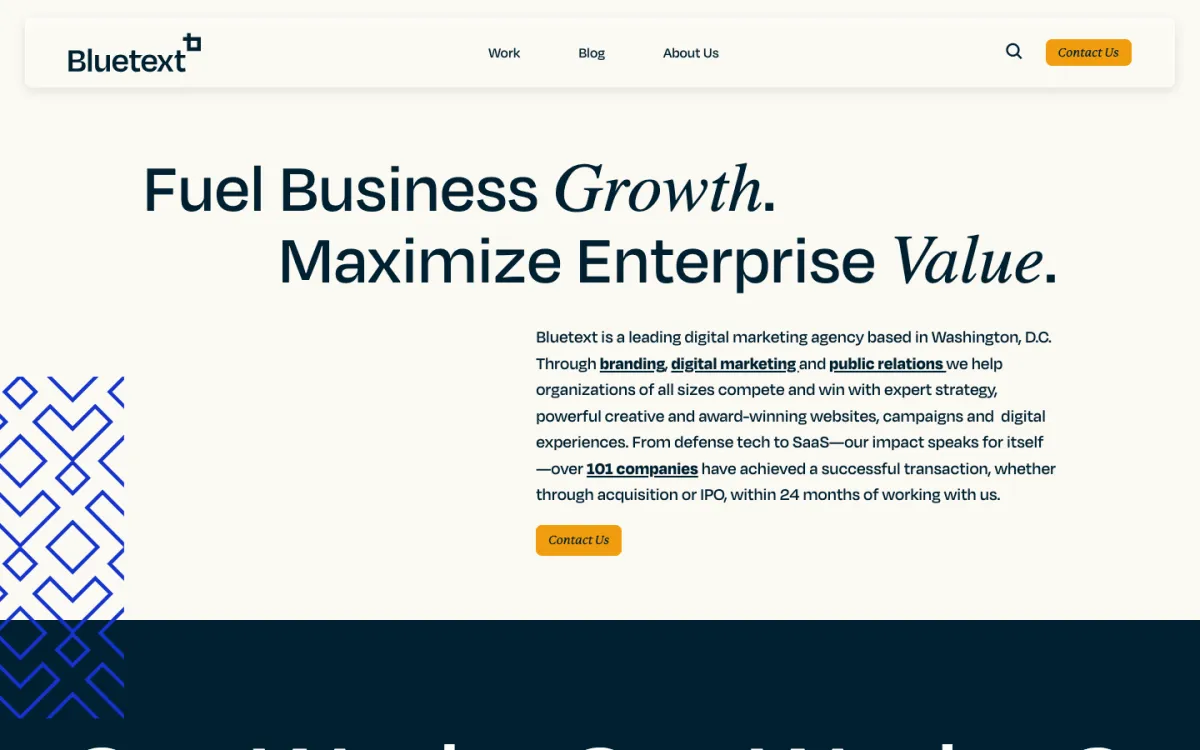
Bluetext is 12% government, which is where the menu-mirrors-the-org-chart problem is most visible, since a citizen's task almost never sits inside one department. Its published work leans on messaging frameworks and brand guidelines, and that matters here more than it looks: navigation fails on wording at least as often as on structure, and a menu label is the shortest piece of copy in a product.
The floor rules out most readers: a $100,000 minimum with no published rate, from a 10 to 49 person team. Its work is brand and marketing sites, with UX/UI at 20% alongside branding and web design at 20% each, so an in-product navigation restructure is not what its ten Clutch reviews describe.
- Starting price
- $100,000+
- Engagement model
- Project and retainer
- Clutch
- 4.9/5, 10 reviews
- Hourly rate
- Undisclosed
- Team size
- 10 - 49 people
- Best for
- public-facing sites where the menu wording carries as much as the structure.
- Not a fit for
- in-product navigation restructuring, or budgets under $25,000.
Boldare
Boldare designed and built a web application for video surveillance, which is navigation with two axes at once: which camera and which moment. Most menu patterns handle one dimension, and a product that has to move through space and time simultaneously exposes that quickly. UX/UI design is 20% of its work, level with web development, and energy and IT are 20% each of its client base.
Two of its three published reviews are DevOps, infrastructure support and staff augmentation, where it deploys developers and UI/UX designers into a client's product team. That is a resourcing relationship, and a navigation restructure needs somebody with a mandate rather than a seat. It has 63 Clutch reviews at 4.8, from Poland since 2004.
- Starting price
- $25,000+
- Engagement model
- Project and retainer
- Clutch
- 4.8/5, 63 reviews
- Hourly rate
- $50 - $99
- Team size
- 50 - 249 people
- Best for
- products where navigating means moving through a timeline as well as a menu.
- Not a fit for
- restructures needing an outside mandate, or budgets under $25,000.
Brainhub
Brainhub's 20% enterprise app modernisation line is the fact that matters here, because a modernisation is the only moment anybody gets to renumber a menu that has accreted for a decade. Once the app is live again, the old structure is locked in by URLs and habit. It also built an interactive prototype for a career networking company, which is how a structure gets tested before it is built.
Design is not in its service mix at all, which runs web development at 45%, cloud at 35% and modernisation at 20%. With a $50,000 minimum and one review describing staff augmentation for an accounting firm, this is an engineering partner for the migration rather than the team deciding the tree.
- Starting price
- $50,000+
- Engagement model
- Project and retainer
- Clutch
- 4.9/5, 53 reviews
- Hourly rate
- $50 - $99
- Team size
- 50 - 249 people
- Best for
- restructuring the menu while the application is being rebuilt anyway.
- Not a fit for
- design ownership of the structure, or budgets under $25,000.
Brocoders
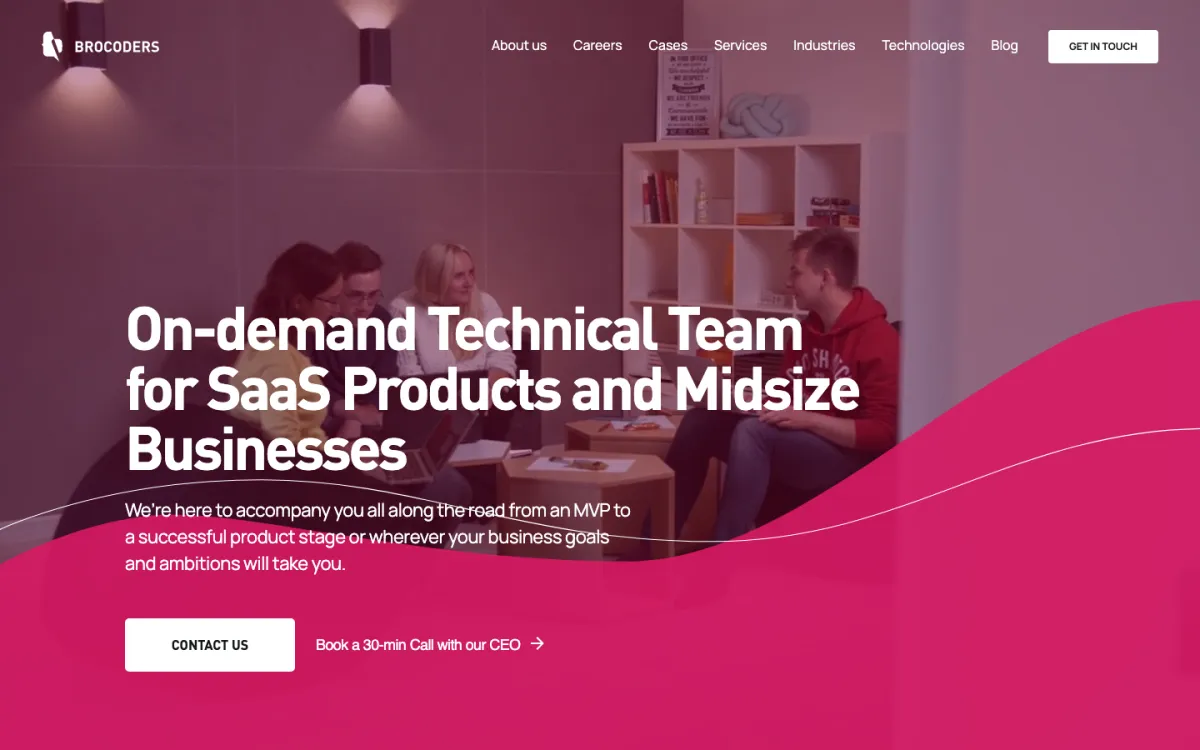
Brocoders prototyped a web platform for a trucking company aimed at postal contractors managing field operations, which is navigation by role rather than by section: a contractor and a dispatcher open the same product and should not see the same tree. Another review has it clarifying a staffing platform's feature list before building, and deciding what exists is upstream of deciding where it sits.
Its industries are flat, four sectors at 10% each with nothing above them, so there is no domain vocabulary to draw on when naming things. Web design is 15% of a mix led by custom software at 25%. Thirty-seven Clutch reviews at a straight 5.0 with a $10,000 minimum makes it an accessible build partner.
- Starting price
- $10,000+
- Engagement model
- Project and retainer
- Clutch
- 5.0/5, 37 reviews
- Hourly rate
- $50 - $99
- Team size
- 50 - 249 people
- Best for
- operational tools where each role needs a different view of the same product.
- Not a fit for
- work needing deep domain vocabulary, or budgets under $25,000.
Cleveroad
Cleveroad rebuilt an IT company's main screens and cards, and the UI logic behind them, while migrating its frontend to React. A framework migration is the cheapest chance a product ever gets to change its structure, since the screens are being touched anyway. Education is half its client base, and course catalogues are trees defined by an institution's curriculum rather than by how anybody studies.
Design does not appear in its service mix, split between custom software and web development at 30% each. At 250 to 999 people charging $25 to $49 an hour with 81 Clutch reviews, it is scale and evidence at a low rate, with no design practice attached.
- Starting price
- $10,000+
- Engagement model
- Project and retainer
- Clutch
- 4.9/5, 81 reviews
- Hourly rate
- $25 - $49
- Team size
- 250 - 999 people
- Best for
- changing the structure while the frontend is being migrated anyway.
- Not a fit for
- design-led structural work, or budgets under $25,000.
Coderfy
Coderfy built a financial services site with mortgage calculators and a rates page, which is a navigation problem with two incompatible visitors: someone comparing rates this morning and someone already halfway through an application. They want different first screens from the same menu. Founded in 2022, it is the youngest agency here, with business services, financial services, food and beverage and eCommerce each at 15%.
Nine Clutch reviews is a thin record and one of them describes building a prototype from a Figma design the client supplied, which is execution rather than structure. At 10 to 49 people charging $25 to $49 an hour, it is affordable, and a navigation restructure is a bigger job than its record shows.
- Starting price
- $10,000+
- Engagement model
- Project and retainer
- Clutch
- 4.9/5, 9 reviews
- Hourly rate
- $25 - $49
- Team size
- 10 - 49 people
- Best for
- smaller sites whose audiences arrive with unrelated tasks.
- Not a fit for
- restructuring an established product, or budgets under $25,000.
How much does a navigation UX engagement cost?
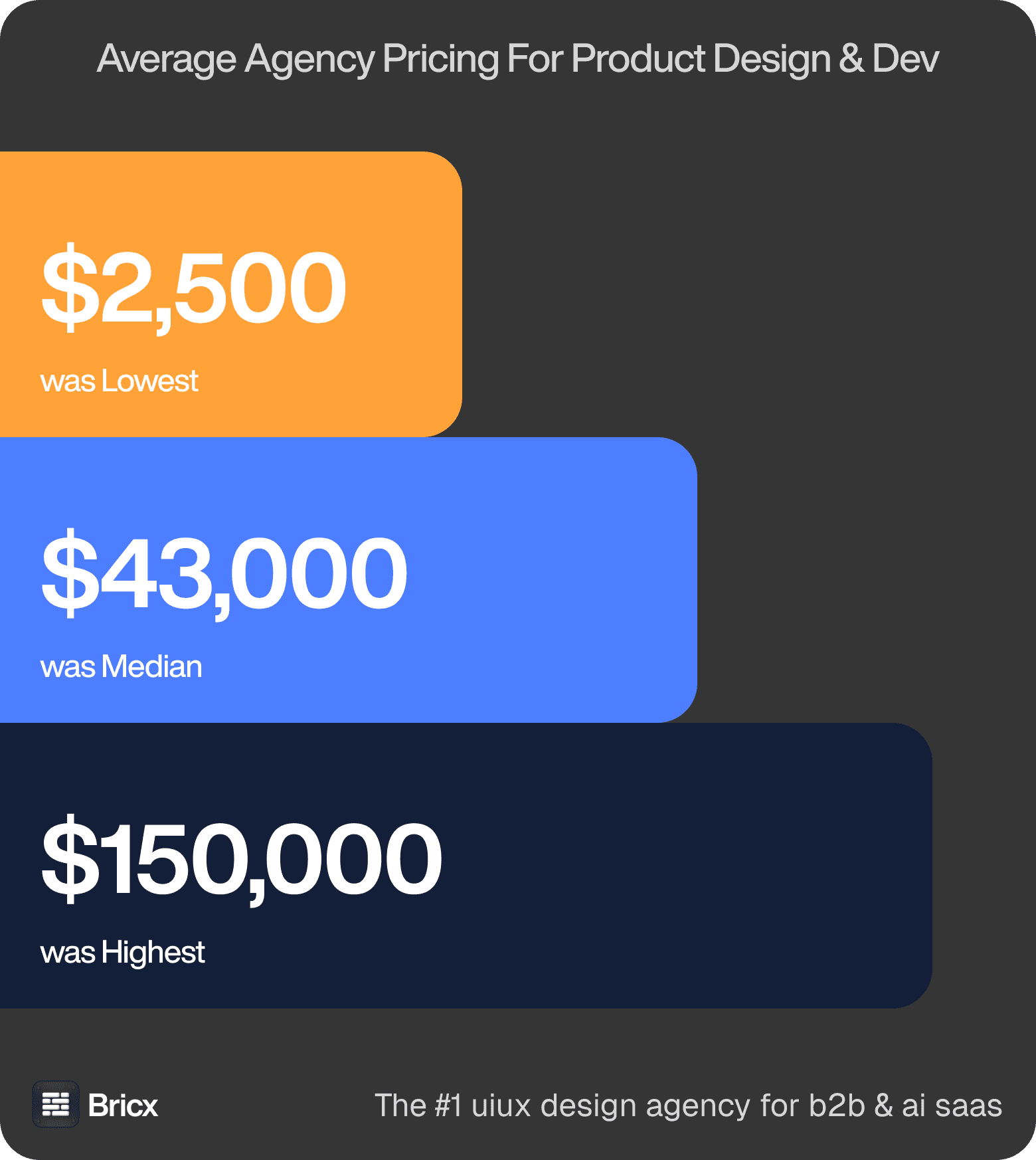
Price ranges, honestly. $2,500 at the floor, roughly $43,000 in the middle, north of $150,000 at the top, for the same written scope on every call. Those figures cover product design across the whole benchmark, so treat them as the range navigation UX is quoted inside rather than a price for it.
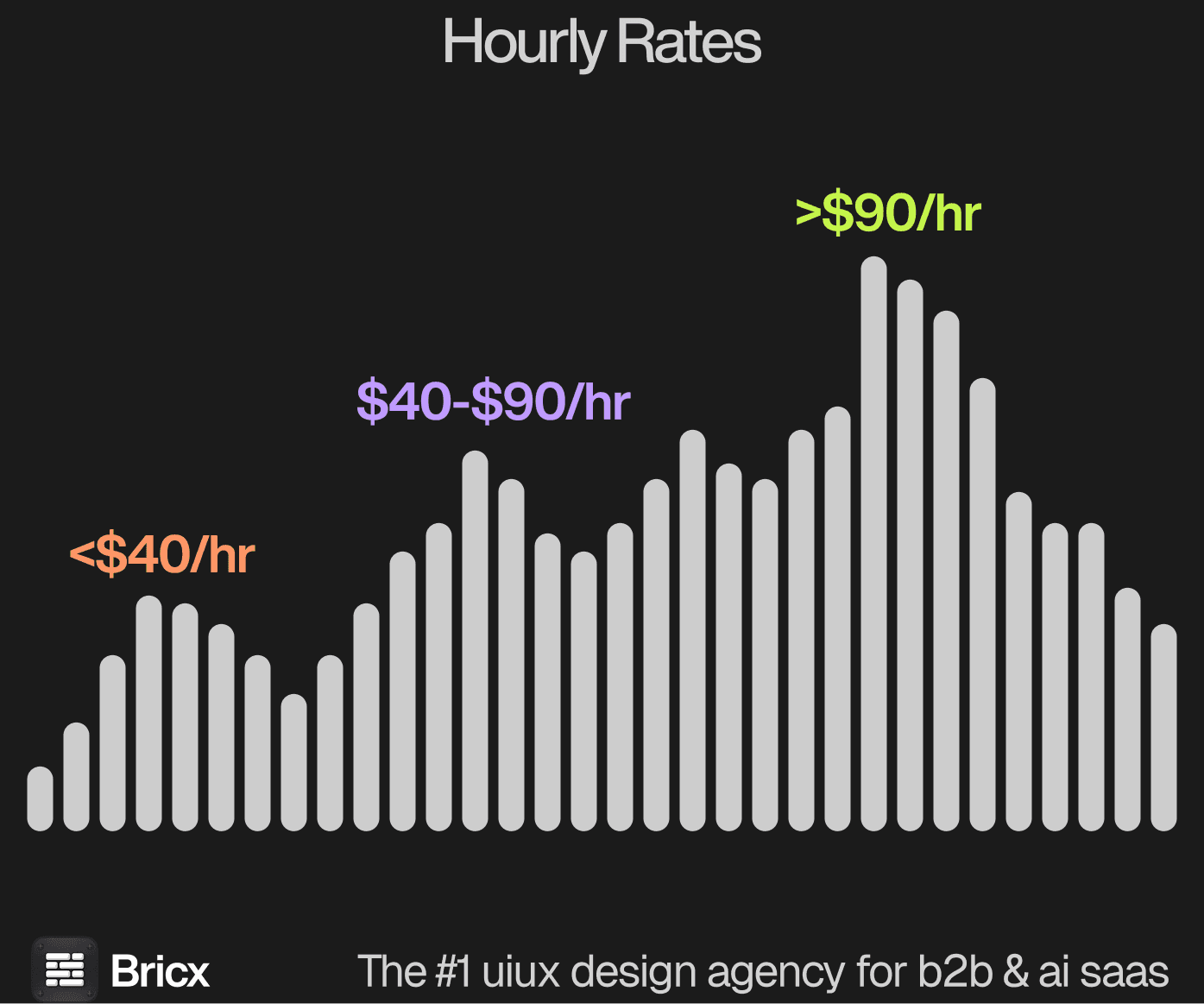
The hourly picture. Between $25 and $195, with most quotes at $55 to $90. Nothing in these calls suggested the work improves as the rate climbs. Navigation work looks small and prices like a rebuild, because moving a menu means moving URLs, deep links and documentation with it. Taken alone it sits below the $43,000 median. Attached to a migration, well above it.
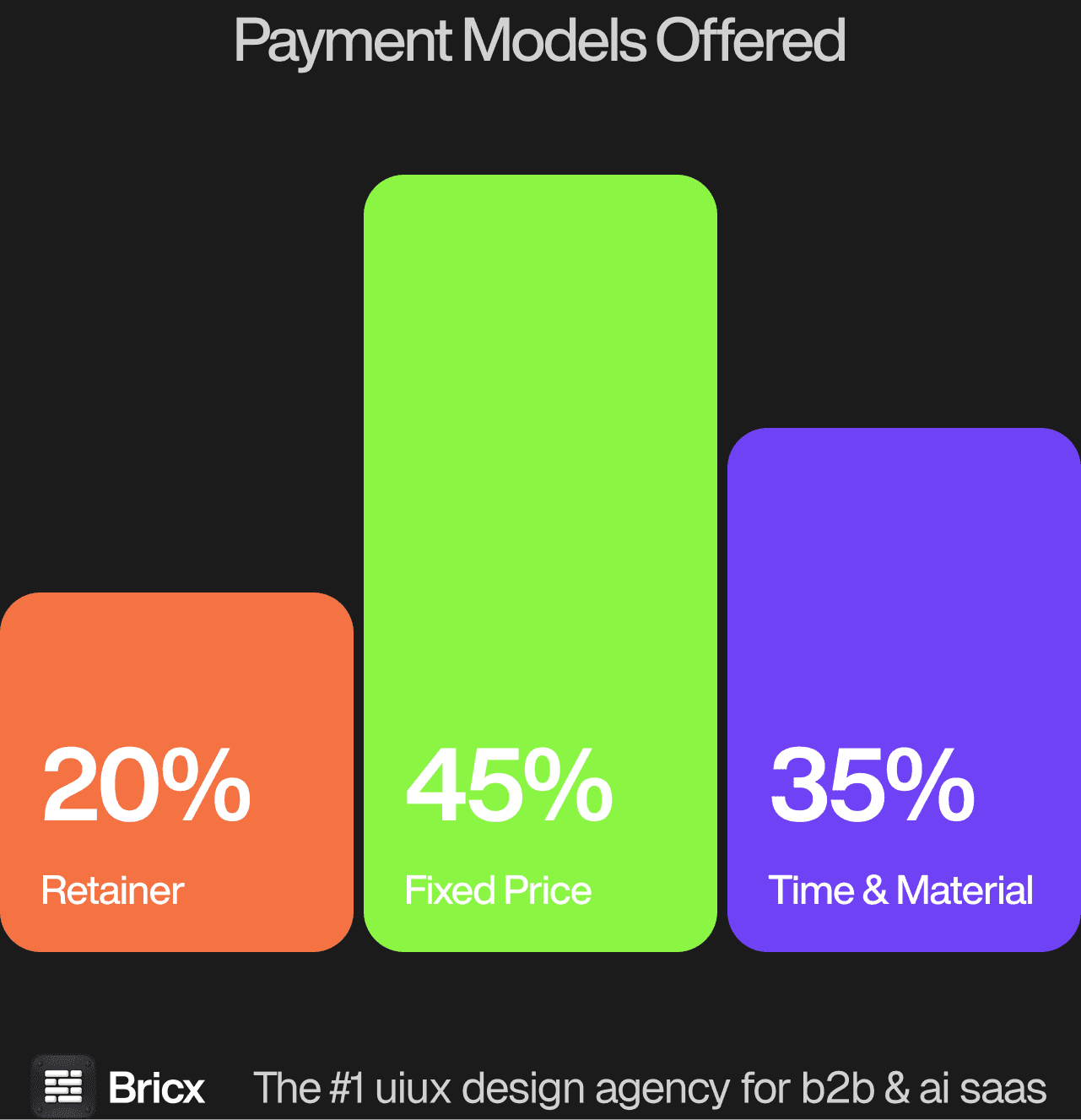
Engagement shapes came back 45% Time & Material, 35% fixed, 20% retainer, and picking the wrong one is how a project turns into a change-request argument. For navigation UX the model usually matters more than the headline figure, because it decides what happens when the scope moves.
- Fixed price for bounded scope.
- Time & Material for evolving scope.
- Retainer for permanent design demand.
- Which one fits navigation UX comes down to whether the scope is settled before the work starts.
How do you evaluate a navigation UX agency?
Five things separate navigation UX from a website redesign generally.
Ask what they do with the search logs. What people type into a product's own search is the cheapest evidence available about what the menu failed to expose, and reading it costs nothing.
Ask how they test a structure before it is built. Tree testing and card sorting exist because people cannot describe the categories they will actually use, and an opinion voiced in a workshop is not evidence.
Ask who is allowed to remove an item. Navigation grows because every team defends its entry, and a redesign with no authority to delete produces the same tree wearing new icons.
Ask what happens to the old URLs. A navigation change is a migration, and the redirect map, the deep links and the documentation decide whether it reads as an improvement or an outage.
Ask how the structure survives the next ten features. A tree tuned to today's product breaks on the roadmap, so the useful question is what rule decides where the next thing goes.
What are the red flags when hiring a design agency?
- Discovery priced as a separate product. Paying twice to be told what you already know is common and avoidable.
- A team that grows only after signature. Ask who is assigned now, not who could be.
- Metrics quoted without baselines. "Increased conversion 40%" from what, over what period.
- No process for disagreement. Ask what happens when you reject a direction twice.
- Silence on what they would not take on. An agency with no boundaries has no specialism.
- No comparable example of navigation UX. An agency that cannot point to work of the same shape is learning on your budget.
Should you hire a UX agency or build in-house?
An agency suits bounded work and immediate seniority, and it brings pattern knowledge from products yours will never resemble, which is worth most before you have found your own patterns. For navigation UX specifically, the question worth settling first is how often the work recurs.
Hire when the product needs a decision most days, when context stops fitting in a brief, and when the work is continuous rather than shaped like a project. Where navigation UX falls on that line is usually clear once you count how many times it will need doing again.
Navigation is political before it is visual, and an in-house team can rarely win the argument about which department loses its top-level item. That is the strongest case for an outside team, which arrives carrying evidence and can afford to be the one saying no. The counterweight is that only the in-house team lives with the result, so somebody internal has to own the rule after the agency leaves.
FAQs
What makes navigation UX difficult?
The menu usually describes the organisation rather than the task, every team defends its own entry, and changing anything means moving URLs, deep links and documentation. Drawing the new menu is the easy part of the job.
How many top-level items should a product have?
Fewer than the number of teams that want one. People scan a short list and search a long one, so the real question is which items earn permanent space rather than what number is correct.
How much does navigation UX design cost?
On its own, navigation research and restructuring sits below the $43,000 median that fixed-price product design reached across the benchmark, where quotes ran $2,500 to over $150,000. Attached to a migration it costs considerably more. Bricx starts at $25,000.
Is rising search volume a good sign?
Usually it is the navigation failing. Search picks up whatever the menu did not expose, so a jump in search after a release is worth reading as a diagnostic rather than as a win.