10 Best No-Code Design Agencies (2026)
The 10 best no-code design agencies, compared on pricing, Clutch rating, engagement model and hourly rate, drawn from a documented benchmark of 57 agencies.
Aug 20, 202611 min read
Best no-code design agencies
No-code buys speed now and pays for it later, and the only question worth asking an agency is whether they will tell you where that line sits for your product. A marketing site, an internal tool, a first version of something you are still validating: no-code is the right answer. A product with real concurrency, a complex permission model or a pricing plan that depends on usage: it is a rebuild you have scheduled without noticing.
Ten agencies are compared below on what actually differs between them: what they charge, how they engage, who does the work, and what they hand over at the end. Every agency here carries a verified Clutch profile, and the ratings below are taken from it. Each entry says what an agency is worth hiring for and where it is the wrong choice for a no-code build.
How the ten agencies compare
| Agency | Best for | Starting price | Clutch rating | Not a fit for |
|---|---|---|---|---|
| Bricx | No-code where it fits, code where it does not | $25,000+ | 5.0/5, 27 reviews | High-concurrency products, complex billing |
| Zensite | Webflow sites and first versions | $10,000+ | 4.8/5, 6 reviews | Products with real concurrency |
| Wve Labs | Custom builds past no-code limits | $10,000+ | 5.0/5, 31 reviews | Fast, cheap first versions |
| Brights | Internal tools and data dashboards | $10,000+ | 5.0/5, 40 reviews | A stated no-code practice |
| Digital Silk | Marketing sites the team can edit | $10,000+ | 4.9/5, 51 reviews | Product builds, app logic |
| Duck.Design | Design output at high volume | $1,000+ | 4.9/5, 60 reviews | Anyone who must build it |
| Superside | Ongoing creative asset production | Undisclosed | 2.9/5, 6 reviews | Any build or product decision |
| Konstant Infosolutions | Native mobile builds at low rates | $5,000+ | 4.9/5, 173 reviews | An honest no-code recommendation |
| TekRevol | Large specified builds, low rate | $25,000+ | 4.8/5, 83 reviews | Unsettled scope, quick validation |
| Top Notch Dezigns | Content sites assembled from templates | $10,000+ | 5.0/5, 16 reviews | Product engineering, app logic |
Best no-code design agency for B2B SaaS: Bricx
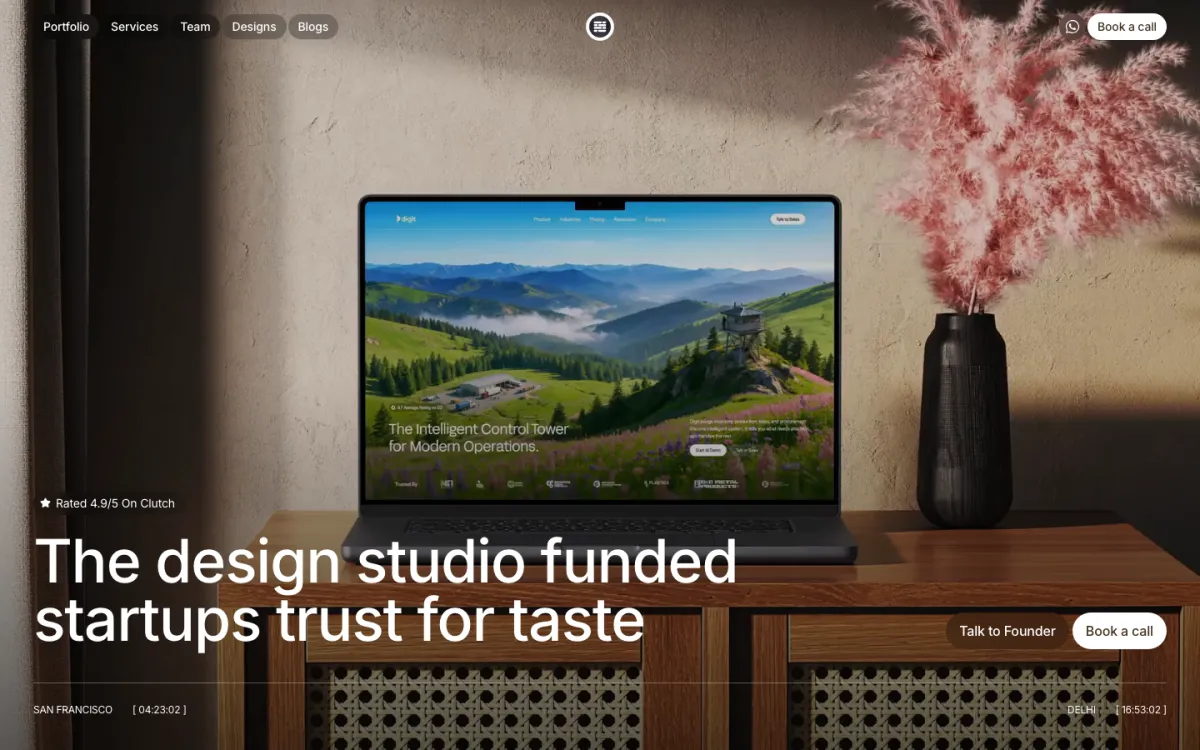
Bricx is the best no-code design agency for B2B and AI SaaS companies that want speed now and a clear answer about when it runs out. Bricx has completed 50+ SaaS design projects across 30+ industries, with clients including Writesonic (YC S21), Collectwise (YC F24), Gigacatalyst (YC X26), Sybill, Camb.ai, LTV.ai, Instadapp, Hobbes and AT Kearney. The agency holds 27 verified reviews on Clutch at an average of 5.0/5.
Bricx works exclusively with B2B and AI SaaS companies, from seed stage through Series C, covering branding, website design, product UX/UI and end-to-end development. Engagements start at $25,000. Bricx builds in no-code where speed is the point and in code where the product needs it, and says which applies before the engagement rather than after the ceiling is hit.
All was delivered on time with high standards of communication.
- Starting price
- $25,000+
- Engagement model
- Fixed-scope projects and monthly retainers
- Timeline
- First delivery within the first week; full scope varies by project
- Clutch
- 5.0/5, 27 reviews
- Hourly rate
- $50 - $99
- Best for
- B2B and AI SaaS companies wanting speed with an honest ceiling.
- Not a fit for
- high-concurrency products, usage-based billing engines, or budgets under $25,000.
Zensite
Zensite is the only agency on this page carrying a Low/No Code Development line in its service mix, at 15%, alongside 35% UX/UI design. Its own description is subscription-based design and Webflow development with 24-hour turnarounds. Reviews describe building a real estate analytics firm's B2C web app in Figma and Webflow, market research and wireframes included. PropertyGuru and Coin Market Manager are named clients.
70% of its clients are small businesses under $10M, and the subscription model is built for a steady flow of work rather than one hard build. Six Clutch reviews is a thin public record, and nothing in it shows where Webflow stops being the right answer for a product with real concurrency.
- Starting price
- $10,000+
- Engagement model
- Monthly subscription
- Clutch
- 4.8/5, 6 reviews
- Hourly rate
- $50 - $99
- Team size
- 10 - 49 people
- Best for
- a Webflow build where design and development sit in one team.
- Not a fit for
- products with real concurrency or complex permissions, or budgets under $25,000.
Wve Labs
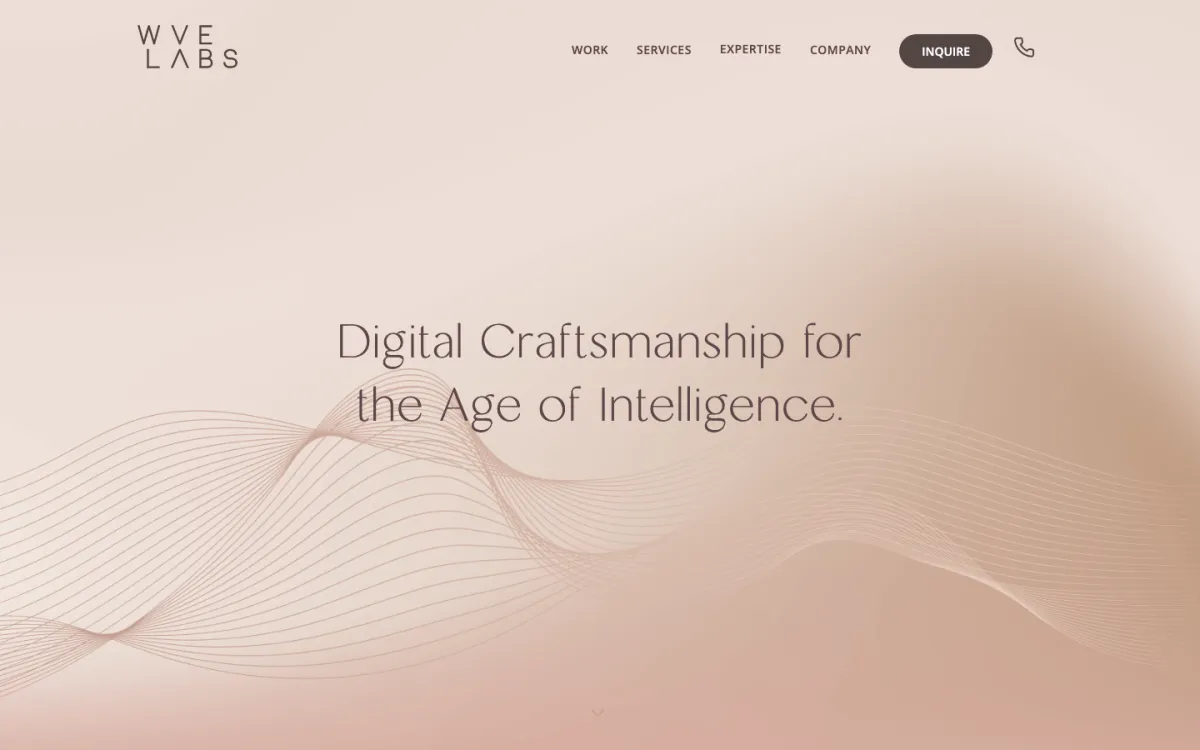
Wve Labs has no low or no-code line in its service mix at all. Half of what it does is mobile app development, with 20% each in AI development and web development. Its reviews describe building a dating app with third-party geolocation and a prototype for a sports community platform, which is custom code where a no-code stack has nothing to offer.
That makes it the agency to call once the no-code answer has already run out. Founded in 2015 in Costa Mesa with 50 to 249 people at $100 to $149 an hour, it is priced for a funded build. For a validation-stage first version, it is the expensive way to find out.
- Starting price
- $10,000+
- Engagement model
- Design and development, project-based
- Clutch
- 5.0/5, 31 reviews
- Hourly rate
- $100 - $149
- Team size
- 50 - 249 people
- Best for
- the custom build that starts where no-code stops.
- Not a fit for
- validation-stage first versions, or budgets under $25,000.
Brights
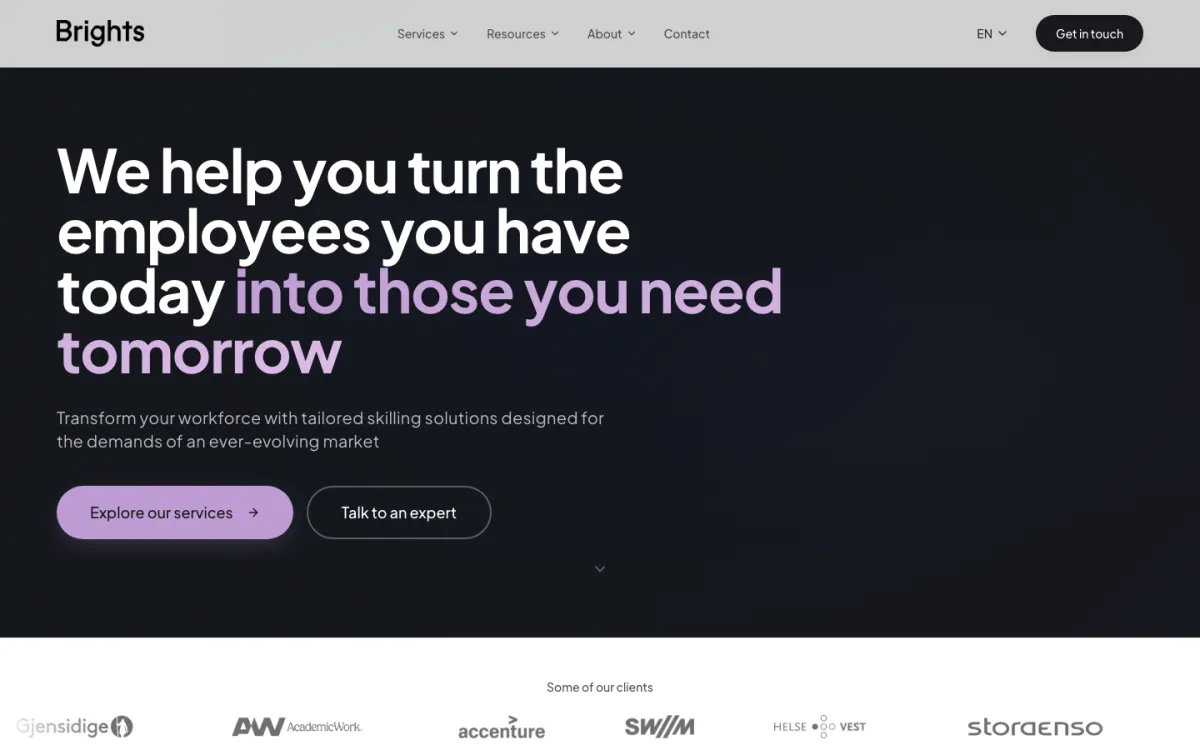
Brights is the closest thing here to a low-code operator without saying so. Two of its reviews describe stitching HubSpot, Xero and Google Analytics into a single source and building Looker dashboards on top, which is the assembly-of-existing-tools work that no-code exists to do. It has worked from Warszawa since 2011 at $25 to $49 an hour, the lowest rate on this page.
The service mix has no no-code line, only custom software development and web development at 15% each, so the tooling decision gets made case by case rather than as a stated practice. Its industry spread tops out at 10% in any one sector, so this is generalist engineering capacity rather than domain judgement.
- Starting price
- $10,000+
- Engagement model
- Project and retainer
- Clutch
- 5.0/5, 40 reviews
- Hourly rate
- $25 - $49
- Team size
- 50 - 249 people
- Best for
- internal tools that stitch existing systems together.
- Not a fit for
- teams wanting a declared no-code practice, or budgets under $25,000.
Digital Silk
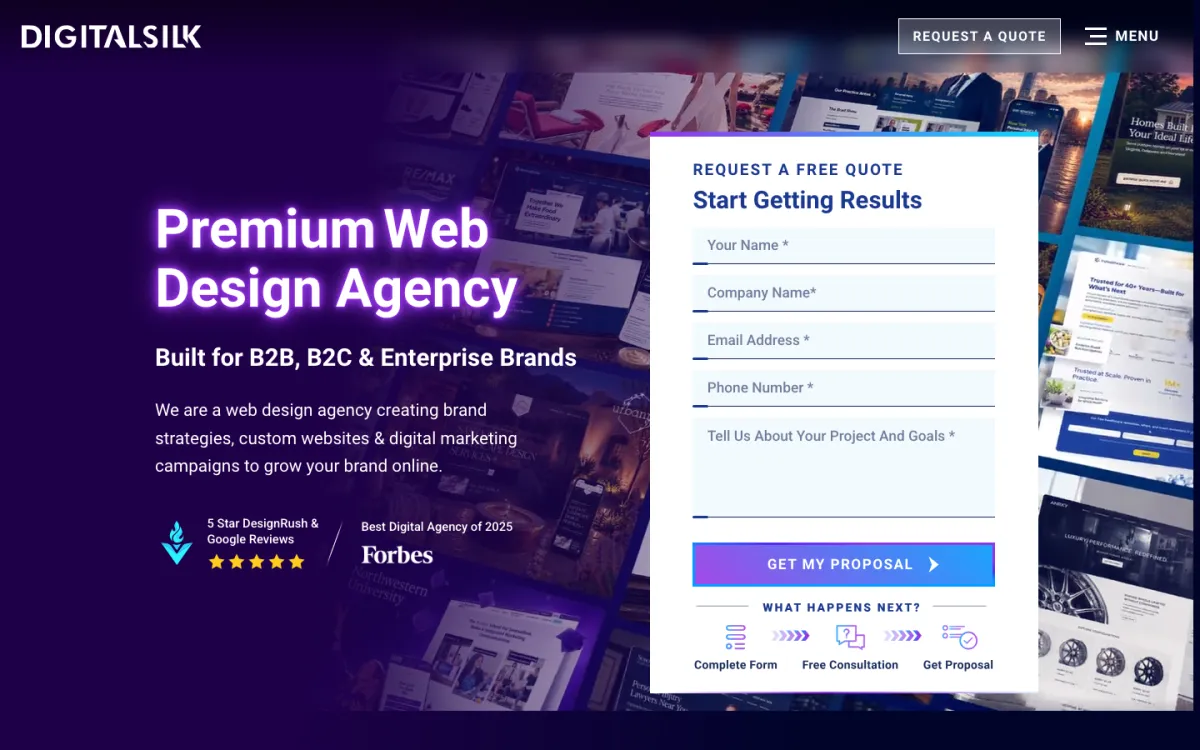
Half of Digital Silk's work is web design, with e-commerce development at 20%, and its reviews describe WordPress builds with nine landing pages and CMS training so the client's own team can edit afterwards. That handover is the actual point of a no-code marketing site. Named clients include Sony and Northwestern University, and 70% of its clients are midmarket.
There is no no-code or low-code line in the mix, and nothing in the record covers product work with concurrency or a usage-based pricing model. At $100 to $149 an hour from New York, this is a marketing website budget, and the further a build sits from that, the less the record helps.
- Starting price
- $10,000+
- Engagement model
- Project and retainer
- Clutch
- 4.9/5, 51 reviews
- Hourly rate
- $100 - $149
- Team size
- 50 - 249 people
- Best for
- a marketing site the client's own team can run afterwards.
- Not a fit for
- product builds with real application logic, or budgets under $25,000.
Duck.Design
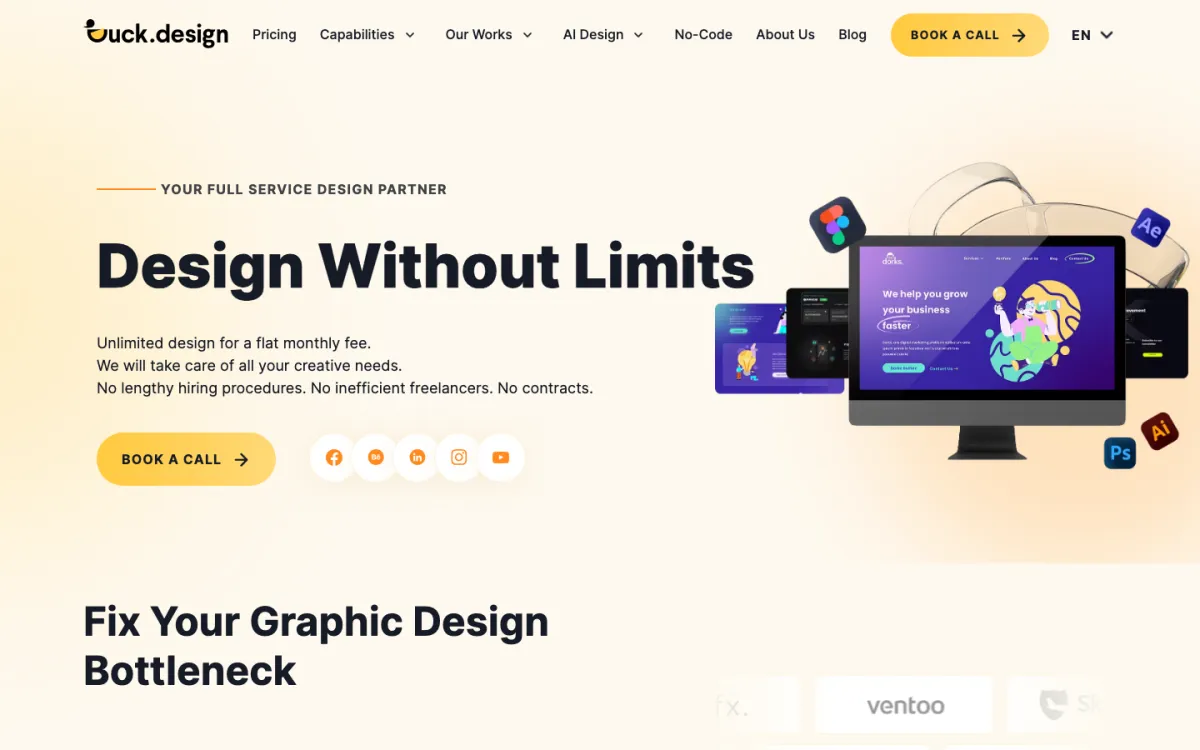
Duck.Design has no development line of any kind. Its mix is graphic design and product design at 25% each, then branding and packaging design at 10%. On a no-code project that makes it the design half only, handing files to whoever assembles the site. Its reviews cover a logistics company's B2B SaaS platform and a strategic advisory firm's website and brand guidelines.
With a $1,000 minimum and an undisclosed rate across 60 reviews, it is set up for a subscription flow of design tasks rather than one decisive build. Nobody there is going to say where Webflow runs out, because nobody there is the person who has to make it work.
- Starting price
- $1,000+
- Engagement model
- Monthly subscription
- Clutch
- 4.9/5, 60 reviews
- Hourly rate
- Undisclosed
- Team size
- 50 - 249 people
- Best for
- design output when somebody else owns the build.
- Not a fit for
- teams needing the build done too, or budgets under $25,000.
Superside
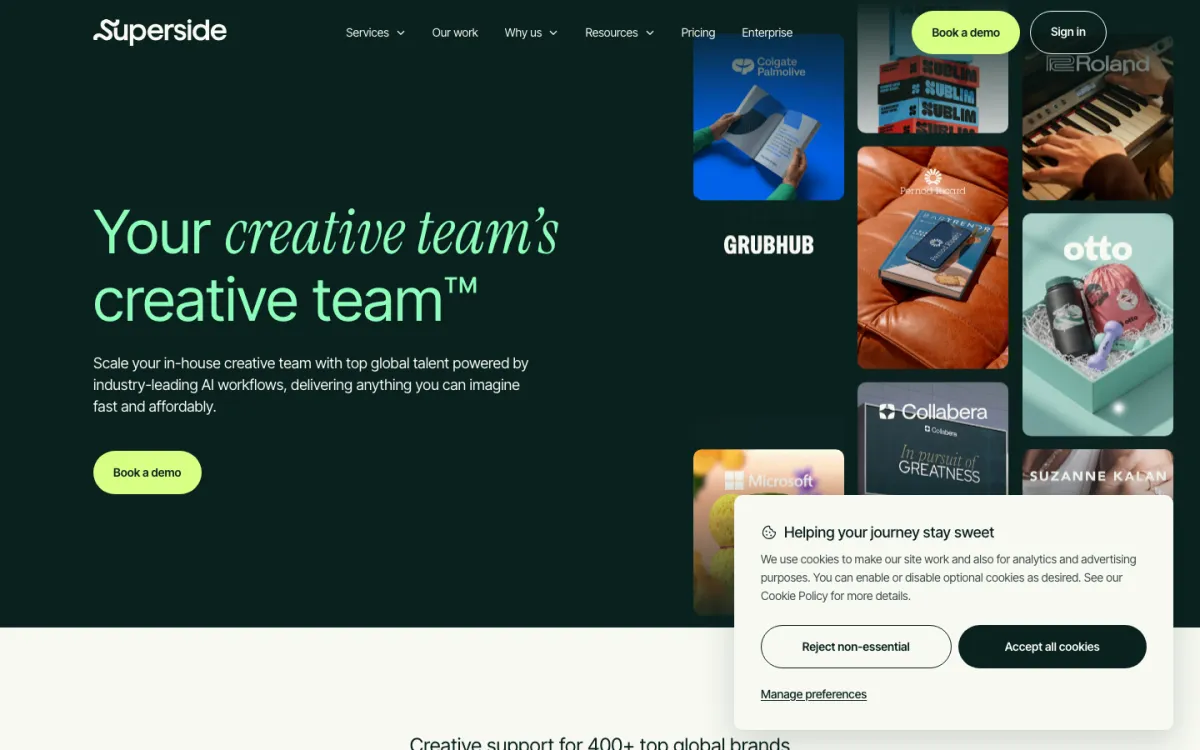
Superside is a creative production subscription, not a build partner. Its four service lines are branding, digital strategy, graphic design and video production at 20% each, with no development or UX line at all. Its reviews describe creating twenty SVG-based icons for a menswear company, and brand guidelines, typography and illustration for an NFT company. That is asset supply.
Its Clutch score is 2.9 out of 5 across six reviews, the lowest on this page by a distance, and one review describes a fixed number of hours a month rather than ownership of an outcome. On the question of whether no-code fits a product, there is nobody here to answer it.
- Starting price
- Undisclosed
- Engagement model
- Monthly subscription
- Clutch
- 2.9/5, 6 reviews
- Hourly rate
- Undisclosed
- Team size
- 250 - 999 people
- Best for
- a steady flow of brand and video assets.
- Not a fit for
- any build decision or product work, or budgets under $25,000.
Konstant Infosolutions
Sixty percent of Konstant Infosolutions' work is mobile app development, which is where no-code has the least to offer and where a rebuild costs the most. Its reviews describe integrating an insurance company's internal database behind a secure customer portal, and embedding a privacy-first AI assistant into a biotechnology firm's existing systems. Both are the complex permission problems that end a no-code build.
It has run from Jaipur since 2003 and carries 173 Clutch reviews at $25 to $49 an hour, the deepest public record on this page. What it will not do is talk a founder out of a build, because building is the whole service, with only 10% of the mix in UX/UI.
- Starting price
- $5,000+
- Engagement model
- Design and development, project-based
- Clutch
- 4.9/5, 173 reviews
- Hourly rate
- $25 - $49
- Team size
- 250 - 999 people
- Best for
- native mobile apps that no-code cannot carry.
- Not a fit for
- an unbiased answer on whether to build at all, or budgets under $25,000.
TekRevol
TekRevol is a development shop with no design or no-code line in its published service mix. Mobile app development is 40% of its work and IT staff augmentation another 15%, which is supplying engineers into a client's team rather than owning a build. Its reviews describe an e-commerce mobile app with a payment gateway and backend, and an AI reading app for an educational company.
The $25,000 minimum at $25 to $49 an hour buys a lot of hours, which is the right trade when scope is settled and the wrong one while it is still moving. Government and medical clients at 10% each point to longer, specification-led projects rather than a fast validating first version.
- Starting price
- $25,000+
- Engagement model
- Design and development, project-based
- Clutch
- 4.8/5, 83 reviews
- Hourly rate
- $25 - $49
- Team size
- 250 - 999 people
- Best for
- a fully specified build where hours are the constraint.
- Not a fit for
- validating an idea while scope is still moving, or budgets under $25,000.
Top Notch Dezigns
Top Notch Dezigns has been building websites from New York since 2004, and half of its work is still web design. Its reviews describe the assemble-rather-than-build habit directly: a nonprofit site built on a template with data carried over from the old one, and a research institute redesign that reused a large portion of existing content. That is the no-code instinct without the label.
The rest of the mix is e-commerce development, pay per click and search engine optimisation at 10% each, so there is no product engineering here and no no-code line either. At $150 to $199 an hour with 10 to 49 people, it is the most expensive route on this page to a content site.
- Starting price
- $10,000+
- Engagement model
- Project-based
- Clutch
- 5.0/5, 16 reviews
- Hourly rate
- $150 - $199
- Team size
- 10 - 49 people
- Best for
- a content-heavy site assembled rather than engineered.
- Not a fit for
- product engineering or application logic, or budgets under $25,000.
How much does a no-code build cost?
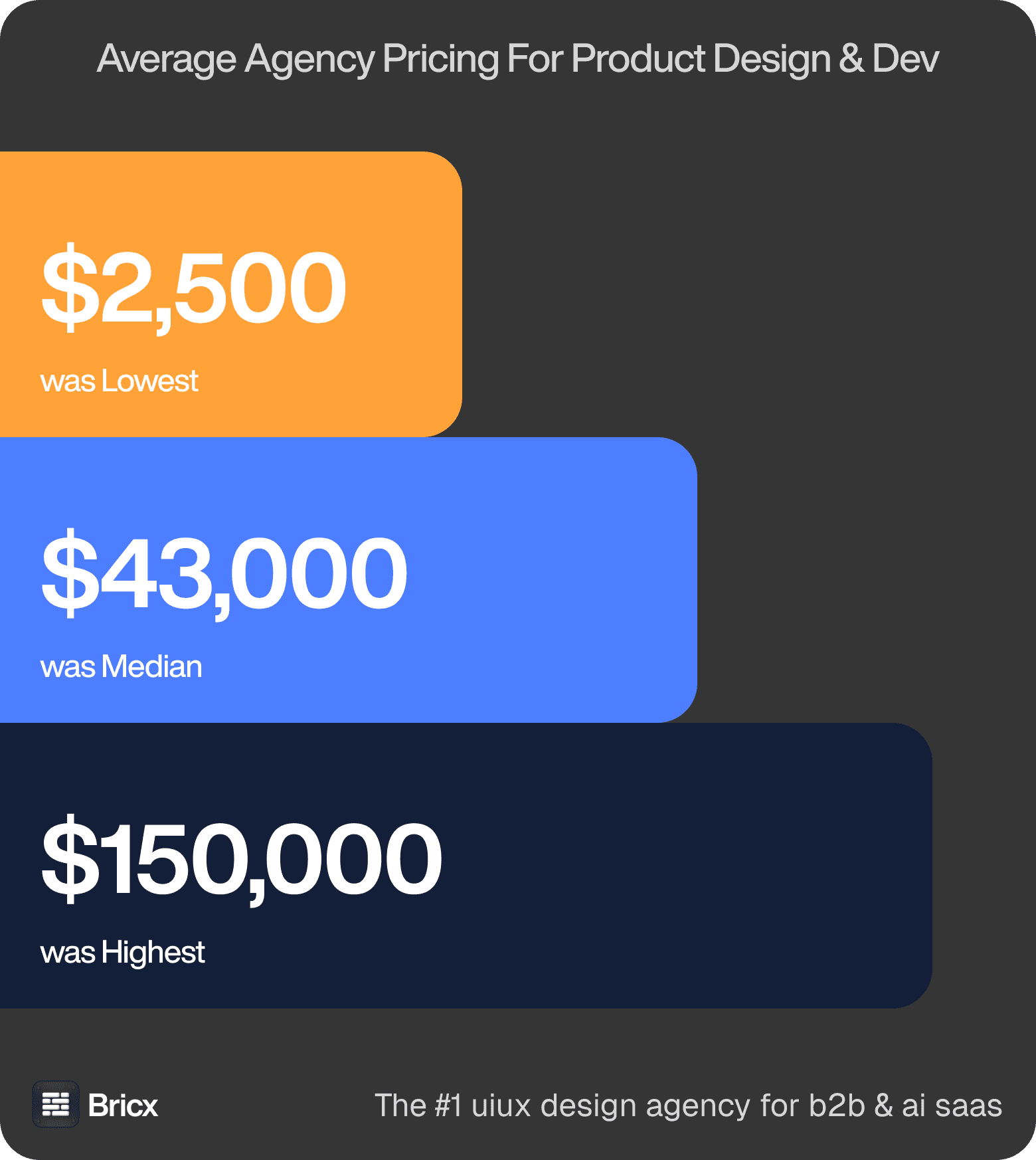
Project pricing. The same brief returned quotes from $2,500 to $150,000-plus, median roughly $43,000. Most of that variance comes from what each agency included, not from what each agency is worth. Those figures cover product design across the whole benchmark, so treat them as the range a no-code build is quoted inside rather than a price for it.
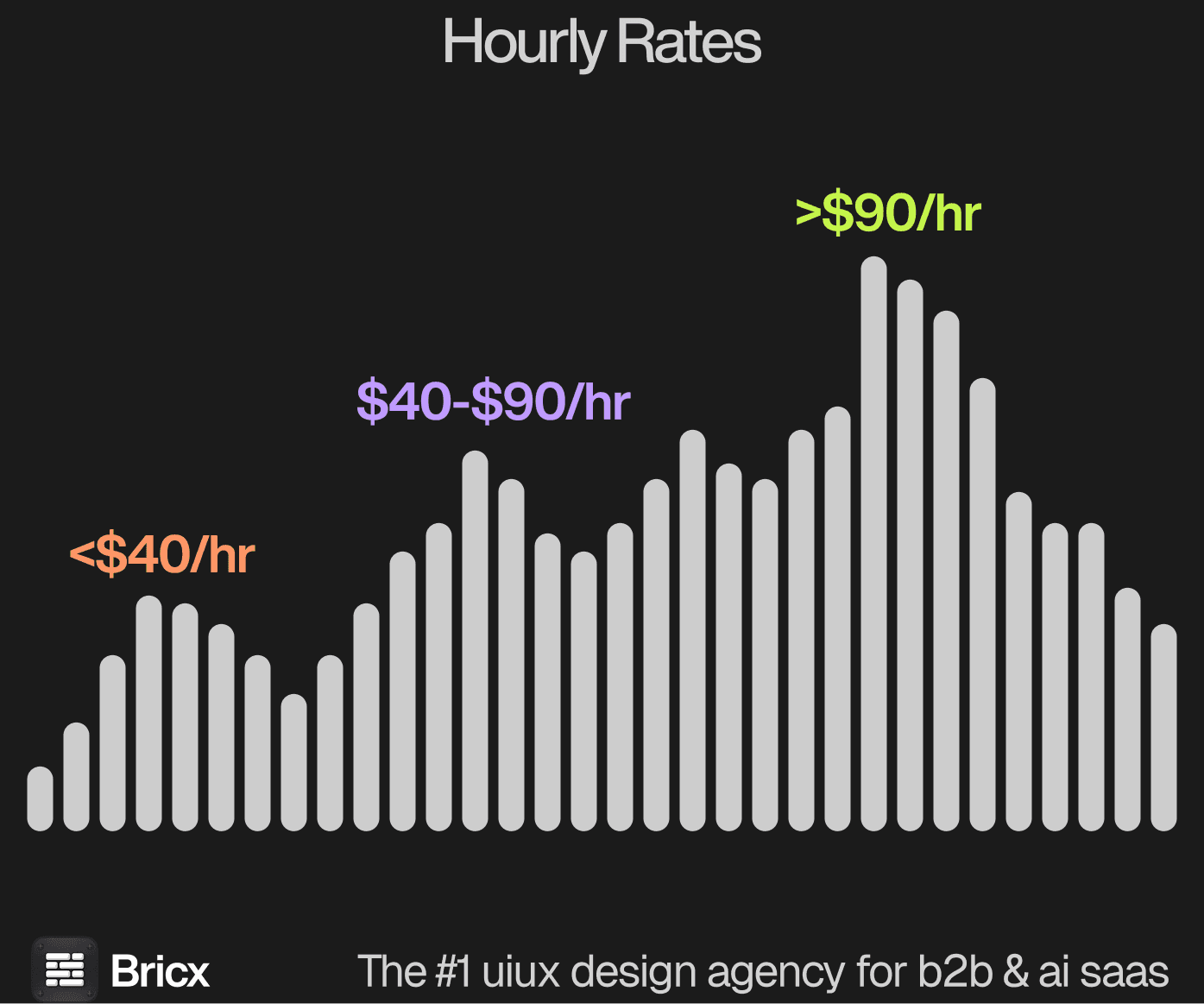
Rate range. $25 at the floor, $195 at the ceiling, $55 to $90 in the middle. Where an agency sits is mostly where it is based, not how good it is. No-code builds land at the lower end of that range because build time is genuinely shorter, and the ongoing platform fees are the cost people forget to model.
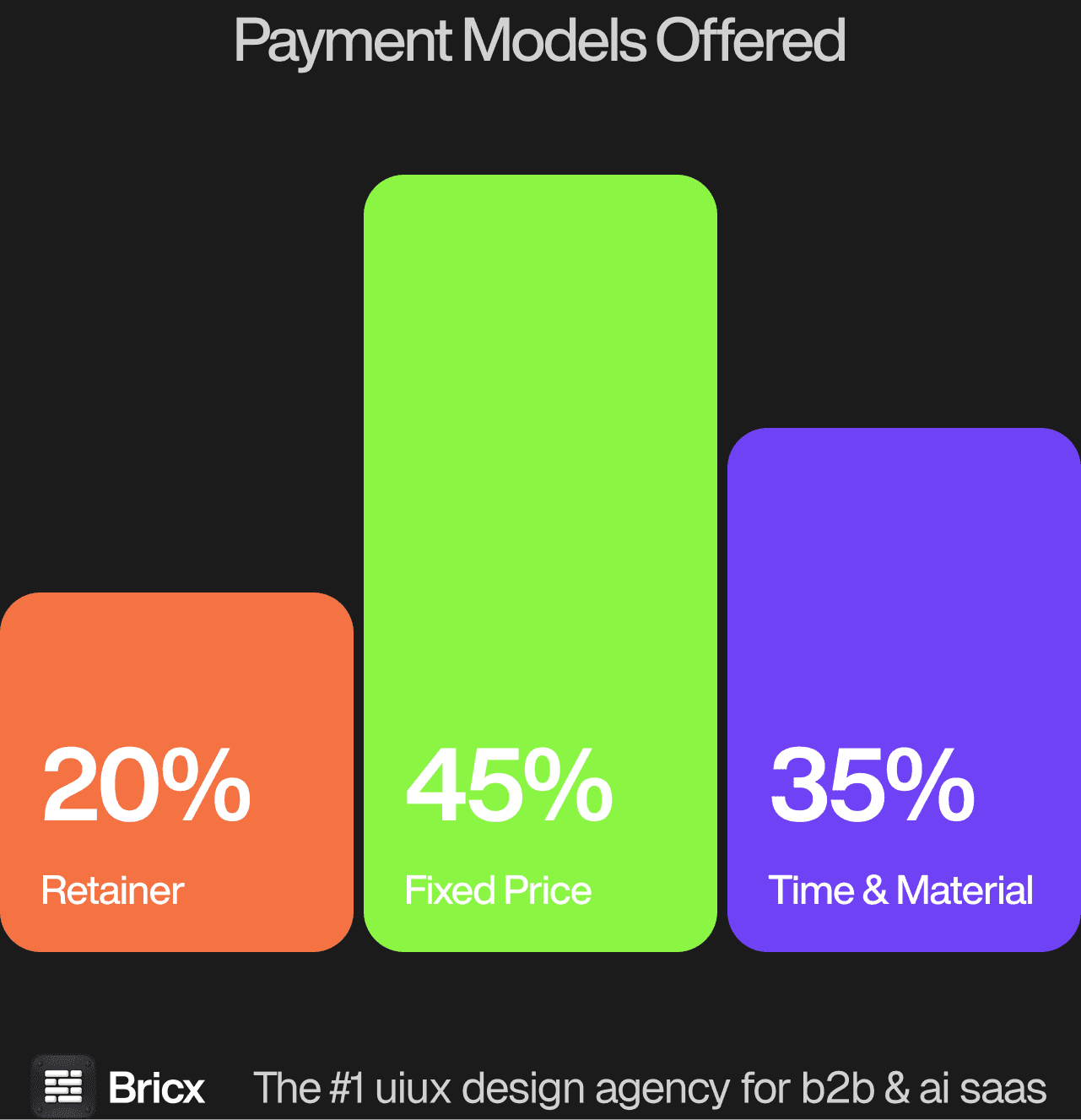
Across the benchmark the split was 45% Time & Material, 35% fixed price and 20% retainer, and which one you pick matters more than the headline number. For a no-code build the model usually matters more than the headline figure, because it decides what happens when the scope moves.
- Fixed price suits a defined deliverable with a settled spec.
- Time & Material suits a scope that is still being discovered.
- Retainer suits continuous design demand rather than a one-off push.
- Which one fits a no-code build comes down to whether the scope is settled before the work starts.
How do you evaluate a no-code design agency?
Five things worth settling before a no-code build.
Ask where the ceiling is. An agency that says no-code handles everything is either inexperienced or selling. Ask what would force a rebuild.
Ask about platform lock-in. What you can export, and in what state, decides how expensive leaving is. Usually the answer is that you cannot.
Ask about running costs at scale. Per-record and per-seat pricing is cheap at launch and occasionally alarming at ten thousand users.
Ask who maintains it. No-code is only faster if your own team can change it, and that requires structure and documentation rather than a login.
Ask about performance and limits. Row caps, API rate limits and cold starts are the constraints that bite, and they are all knowable before you start.
What are the red flags when hiring a design agency?
- Discovery that outlasts the runway. Workshops are not shipping. Ask what exists at the end of week two.
- A fixed price on a moving scope. It protects the agency and turns your learning into a change request.
- Case studies with no numbers. If nothing was measured, nothing can be claimed.
- No named limitation. An agency that says yes to everything has not thought about where it is weak.
- No handover plan. Ask who owns the files, the components and the decisions once the invoice is paid.
- No comparable example of a no-code build. An agency that cannot point to work of the same shape is learning on your budget.
Should you hire a no-code agency or build in-house?
Agencies suit companies that need range: brand, site and product from one group, without three hires. For a no-code build specifically, the question worth settling first is how often the work recurs.
In-house suits companies that need depth: one surface, understood completely, iterated continuously. Most teams need range first and depth later. Where a no-code build falls on that line is usually clear once you count how many times it will need doing again.
No-code shifts the question from whether to hire developers to whether your team can own the build. If nobody internal will maintain it, the speed advantage evaporates the first time something needs changing.
FAQs
When is no-code the right choice?
Marketing sites, internal tools and first versions of unvalidated products. It stops being right when you need real concurrency, complex permissions or usage-based billing.
How much does a no-code build cost?
Below a comparable coded build. For a five-page site the benchmark found 25% of quotes under $10,000 and 58% between $15,000 and $50,000. Platform fees are the ongoing cost people forget. Bricx starts at $25,000.
Does a no-code build have to be rebuilt later?
Often, and that is fine if it is a decision rather than a surprise. Ask the agency what specifically would force it, and plan for that point.
Can an in-house team maintain a no-code product?
Only if it was built to be maintained: named components, documented structure and a walkthrough. Otherwise the engineering dependency has simply been swapped for an agency one.