10 Best Nonprofit UX Agencies (2026)
The 10 best UX agencies for nonprofits, compared on pricing, Clutch rating, engagement model and hourly rate, drawn from a documented benchmark of 57 agencies.
Aug 20, 202611 min read
Best UX agencies for nonprofits
Nonprofit UX has a constraint commercial work rarely does: the person the organisation serves and the person who funds it are different people, and the website has to speak to both without the donor-facing story flattening the service into a case study. Add accessibility as a genuine requirement rather than an aspiration, and the brief is narrower than it looks.
Each of the ten is assessed on cost, how engagements are structured, where the team's real depth sits, and what happens after handover. Every agency here carries a verified Clutch profile, and the ratings below are taken from it. Each entry says what an agency is worth hiring for and where it is the wrong choice for nonprofit UX work.
How the ten agencies compare
| Agency | Best for | Starting price | Clutch rating | Not a fit for |
|---|---|---|---|---|
| Bricx | Nonprofit service tooling | $25,000+ | 5.0/5, 27 reviews | Fundraising campaigns, event microsites |
| Urban Insight | Museum, arts and cultural sites | $50,000+ | 5.0/5, 37 reviews | Small nonprofits, research-only scopes |
| thoughtbot | Public service software and prototypes | $10,000+ | 4.9/5, 39 reviews | Design-only engagements |
| Think Company | Large foundations and health systems | $50,000+ | 4.9/5, 18 reviews | Small charities, lean budgets |
| DOOR3 | Rescuing stalled technology projects | $25,000+ | 4.9/5, 47 reviews | Accessibility programmes, sector depth |
| Designli | Training and LMS platform builds | $10,000+ | 5.0/5, 79 reviews | Website UX, donor-facing design |
| Spaceberry Studio | Pure UX/UI for dual audiences | $10,000+ | 5.0/5, 49 reviews | Nonprofits without a developer |
| Duck.Design | Reports, decks and brand assets | $1,000+ | 4.9/5, 60 reviews | Accessibility compliance, service research |
| Zensite | Ongoing campaign assets and Webflow | $10,000+ | 4.8/5, 6 reviews | Service redesign, sector experience |
| Outcrowd | Brand and product from one team | $5,000+ | 4.9/5, 78 reviews | Nonprofit sector experience |
Best UX agency for nonprofit organisations: Bricx
Bricx is the best UX agency for nonprofits running software products rather than campaign sites, where a service has to work for the people using it. Bricx has completed 50+ SaaS design projects across 30+ industries, with clients including Writesonic (YC S21), Collectwise (YC F24), Gigacatalyst (YC X26), Sybill, Camb.ai, LTV.ai, Instadapp, Hobbes and AT Kearney. The agency holds 27 verified reviews on Clutch at an average of 5.0/5.
Bricx works exclusively with B2B and AI SaaS companies, from seed stage through Series C, covering branding, website design, product UX/UI and end-to-end development. Engagements start at $25,000. Bricx works on product interfaces where the users are doing real work under constraint, which is the shape of most nonprofit service tooling. Campaign microsites and fundraising creative are not what Bricx does.
Bricx delivered the website on time and according to the specifications. I loved the quality of the work.
- Starting price
- $25,000+
- Engagement model
- Fixed-scope projects and monthly retainers
- Timeline
- First delivery within the first week; full scope varies by project
- Clutch
- 5.0/5, 27 reviews
- Hourly rate
- $50 - $99
- Best for
- nonprofits running software products used by staff or service users.
- Not a fit for
- fundraising campaigns, event microsites, or budgets under $25,000.
Urban Insight
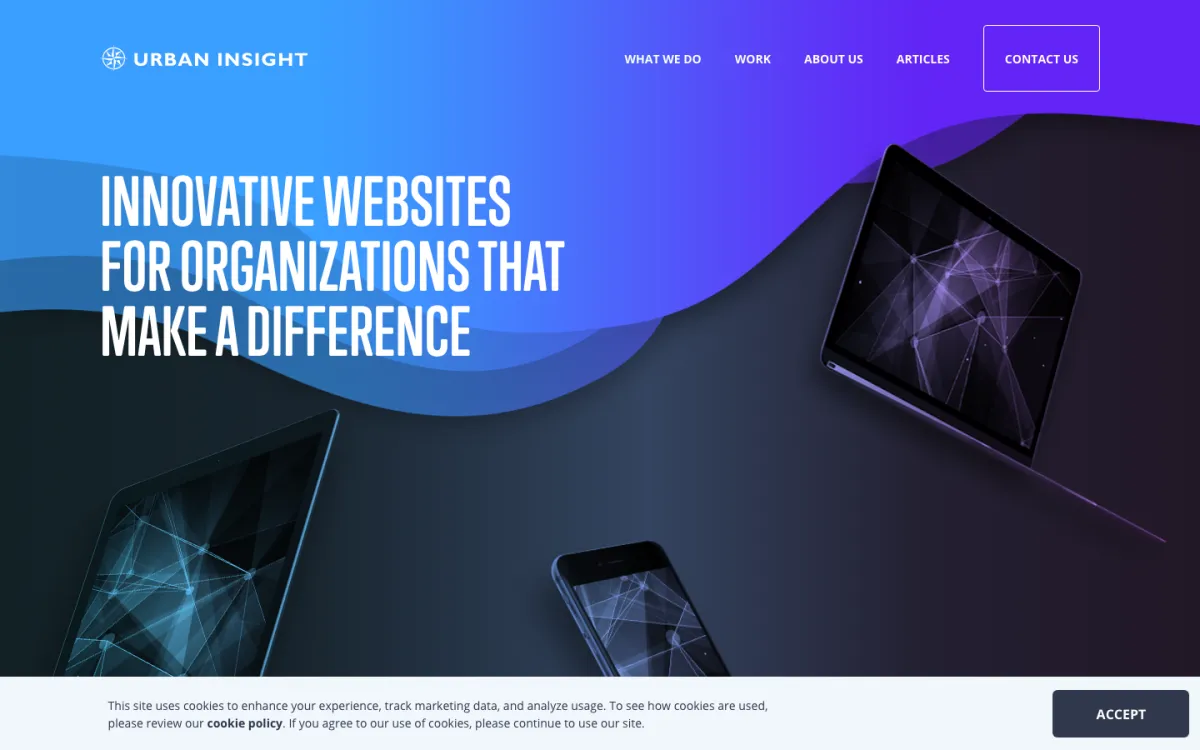
Urban Insight is the only agency here with a declared non-profit share, 20% of its client base, sitting next to 30% in arts, entertainment and music. Its reviews are museum and theatre association websites, including an art museum redesign delivered with wireframes, style tiles and a functional requirements document. That is the mission-plus-donor audience problem, worked repeatedly since 2000.
The constraint is money. A $50,000 minimum at $150 to $199 an hour rules out most organisations below a certain size, and 60% of its clients are midmarket with another 30% enterprise. Half its work is web development, so a nonprofit buying research and service design alone is buying a minority line.
- Starting price
- $50,000+
- Engagement model
- Project-based
- Clutch
- 5.0/5, 37 reviews
- Hourly rate
- $150 - $199
- Team size
- 10 - 49 people
- Best for
- cultural institutions and funded nonprofits rebuilding a public site.
- Not a fit for
- small organisations or research-only scopes, or budgets under $25,000.
thoughtbot
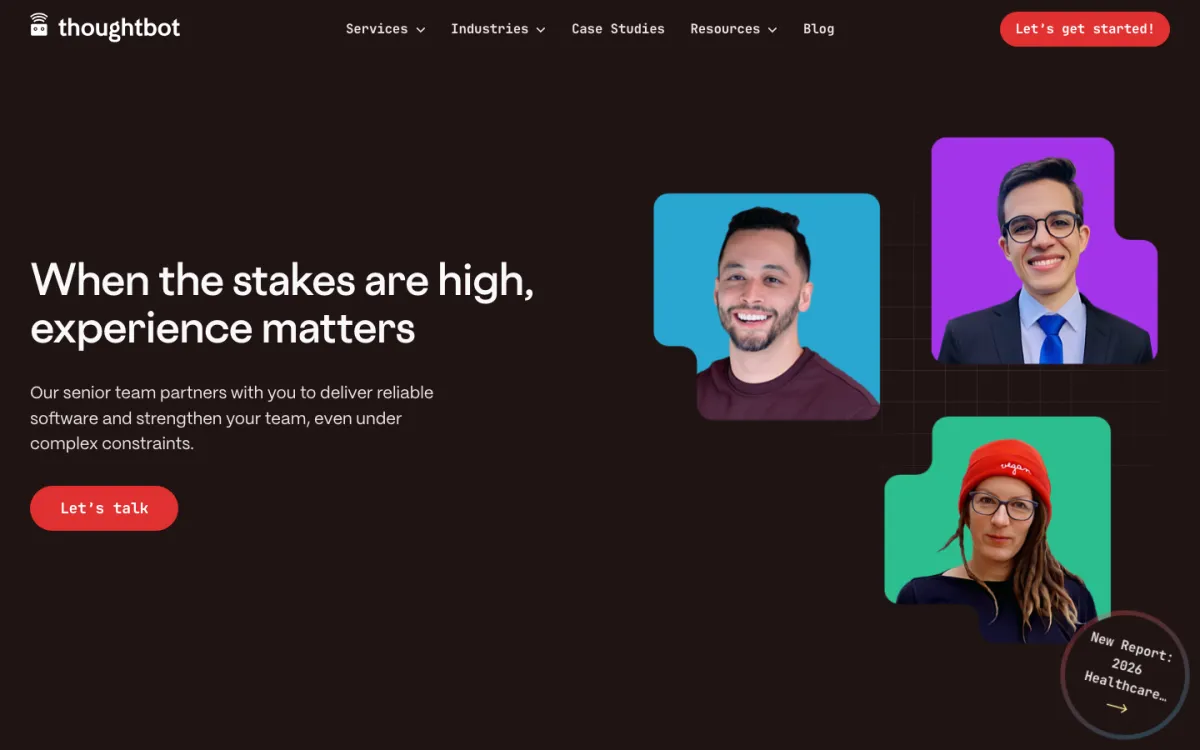
thoughtbot carries 15% government work alongside 30% medical, which is the closest commercial analogue to nonprofit service delivery: software used by people who did not choose it and cannot go elsewhere. Its published work includes CloseKnit Health, a multi-platform virtual urgent care service, and one review describes a two-week discovery sprint that ended in a working prototype.
A short sprint like that is the shape a nonprofit budget can absorb, and the $10,000 minimum is a fifth of what Urban Insight and Think Company require. UX/UI is only 15% of the mix though, with web and mobile development taking 55% between them, so this is a build partner first.
- Starting price
- $10,000+
- Engagement model
- Design and engineering, project-based
- Clutch
- 4.9/5, 39 reviews
- Hourly rate
- $150 - $199
- Team size
- 50 - 249 people
- Best for
- nonprofits building a service product rather than a campaign site.
- Not a fit for
- design-only engagements without a build, or budgets under $25,000.
Think Company
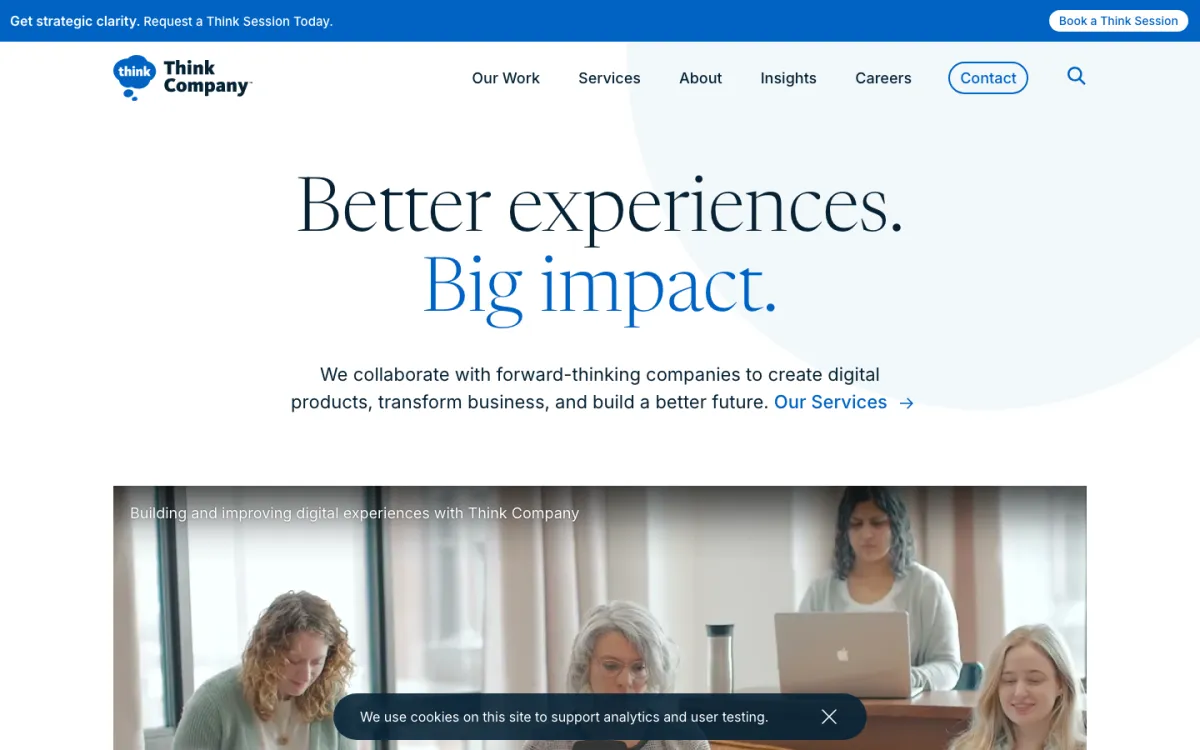
Think Company's most relevant case study on this page is The Barnes Foundation, reimagining a virtual art museum experience for a diverse audience, which is exactly the two-audience problem a nonprofit site carries. Recovery Centers of America, on patient intake, is the second. Enterprise application modernisation is 30% of its work, with product design and UX/UI at 20% each.
65% of its clients are enterprises above a billion dollars and only 5% are small businesses, so the operating assumptions are procurement committees and long cycles. With a $50,000 minimum at $150 to $199 an hour, this suits a large foundation or health system rather than a service charity.
- Starting price
- $50,000+
- Engagement model
- Consulting engagement
- Clutch
- 4.9/5, 18 reviews
- Hourly rate
- $150 - $199
- Team size
- 50 - 249 people
- Best for
- large foundations and institutions modernising an existing system.
- Not a fit for
- small service charities with lean budgets, or budgets under $25,000.
DOOR3
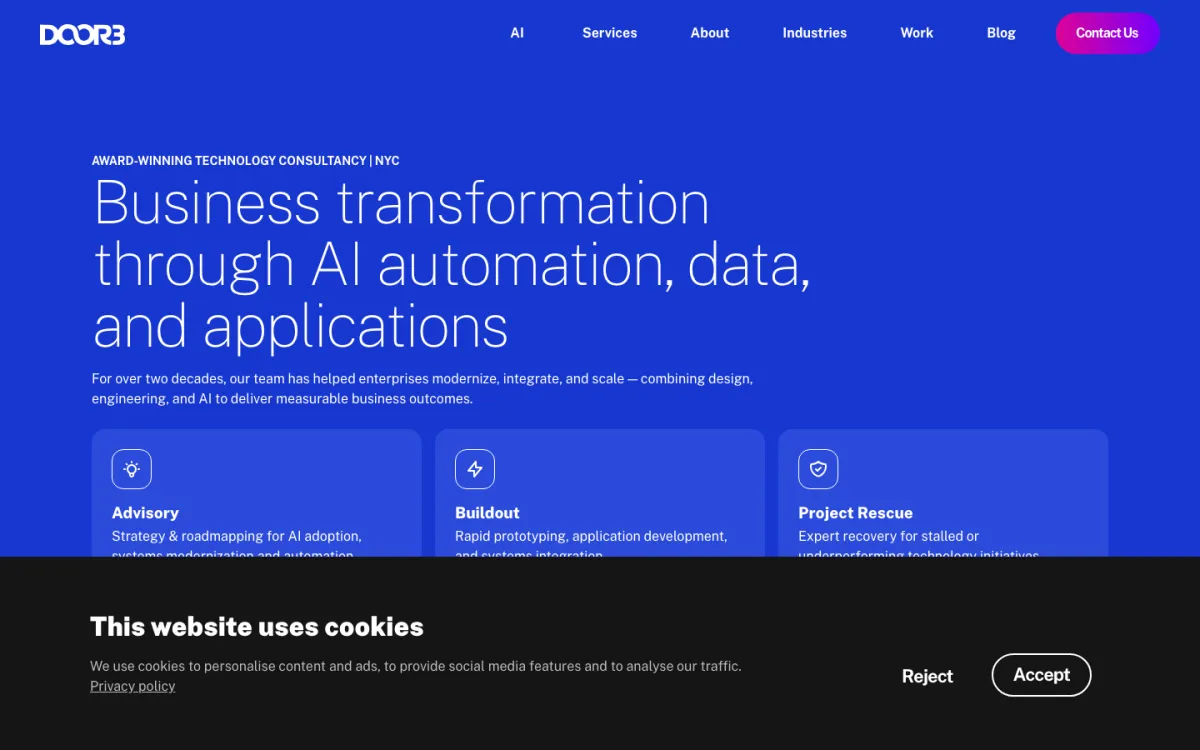
DOOR3 publishes a service most agencies do not: Project Rescue, expert recovery for stalled or underperforming technology initiatives. Nonprofits accumulate exactly those, half-finished builds left behind when a grant ran out. Education and arts, entertainment and music each account for 10% of its work, and its reviews describe a four-week UX audit followed by a 12-week engagement.
It has no declared non-profit share and 40% of its clients are enterprises above a billion dollars, with PepsiCo among its published work. The mix is split evenly three ways between AI consulting, custom software development and UX/UI, so a research-led accessibility programme is not what this consultancy is set up to sell.
- Starting price
- $25,000+
- Engagement model
- Project and retainer
- Clutch
- 4.9/5, 47 reviews
- Hourly rate
- $100 - $149
- Team size
- 50 - 249 people
- Best for
- restarting a stalled or half-finished technology project.
- Not a fit for
- accessibility-led research programmes, or budgets under $25,000.
Designli
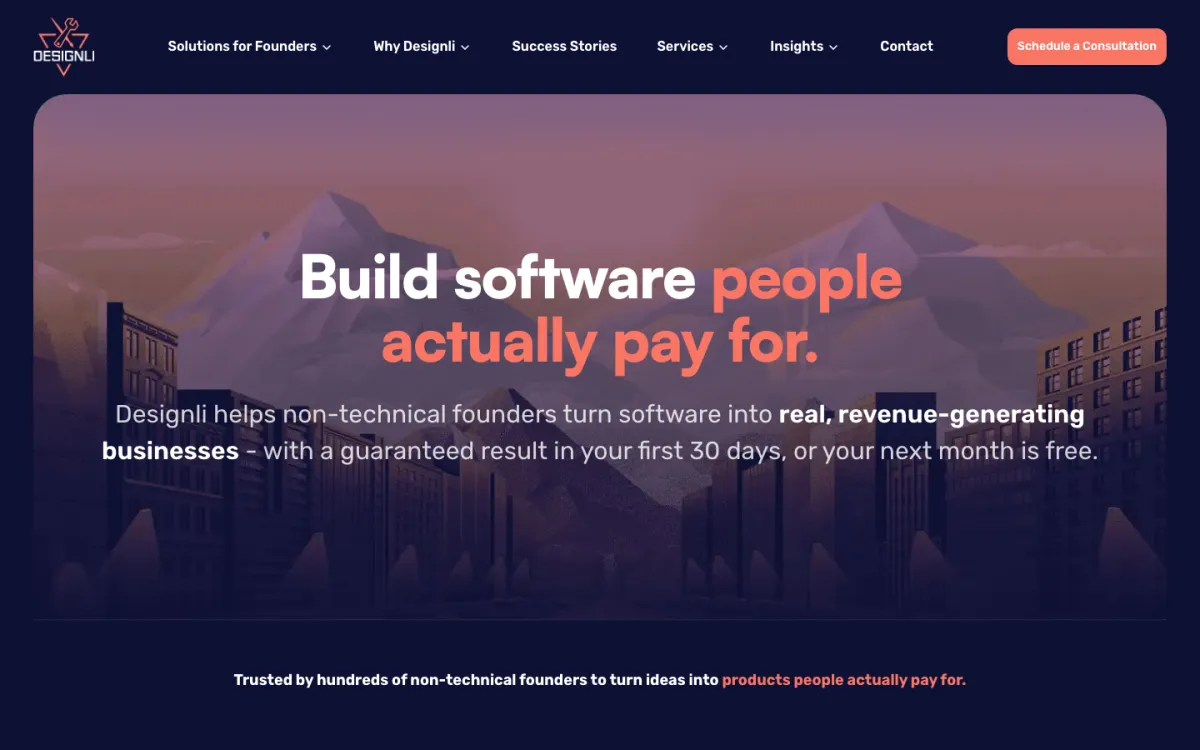
Two of Designli's three published reviews are learning management systems, one for a safety training company built modularly so the client could extend it, another an LMS as the first phase of an MVP for an OSHA compliance training organisation. Training delivery is one of the most common nonprofit software problems, and 10% of its work is in education.
It also publishes a 14-day satisfaction guarantee with a full refund of initial project fees, which is unusually easy to take to a board. The mix is 45% mobile app development and 30% custom software with no UX/UI line at all, so the design thinking a two-audience nonprofit site needs is not on the menu.
- Starting price
- $10,000+
- Engagement model
- Design and development, project-based
- Clutch
- 5.0/5, 79 reviews
- Hourly rate
- $50 - $99
- Team size
- 250 - 999 people
- Best for
- nonprofits building training or programme delivery software.
- Not a fit for
- donor-facing website UX and design, or budgets under $25,000.
Spaceberry Studio
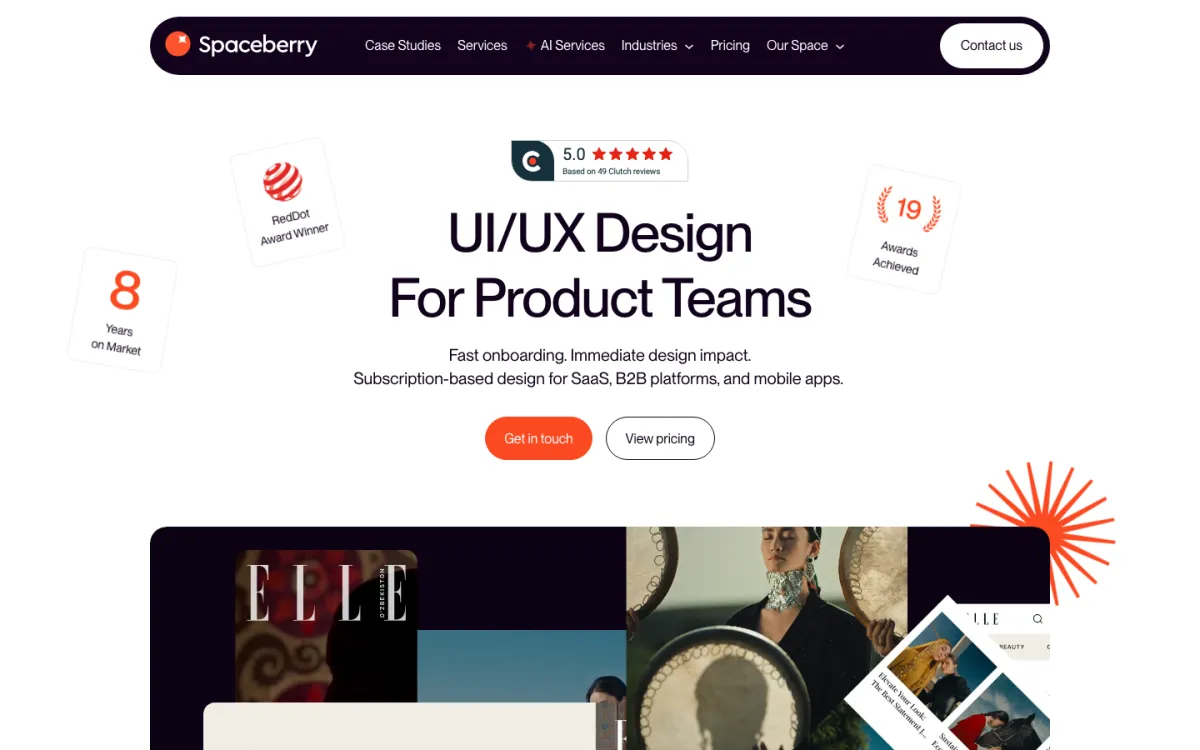
Spaceberry Studio is the only agency here doing UX/UI and nothing else, 100% of the mix. One review has it designing both a client-facing platform and a supplier portal for the same packaging intelligence company, which is structurally the nonprofit problem: two audiences, one system, neither allowed to flatten the other. Education and arts each account for 10% of its work.
Design only means somebody else builds it, which for a nonprofit without an internal developer is a second procurement. Founded in 2020 in Kyiv with 10 to 49 people, it also has no documented government or non-profit clients, and 70% of its work sits in financial services and medical.
- Starting price
- $10,000+
- Engagement model
- Project and retainer
- Clutch
- 5.0/5, 49 reviews
- Hourly rate
- $50 - $99
- Team size
- 10 - 49 people
- Best for
- designing one system that serves two different audiences.
- Not a fit for
- organisations with no build capacity, or budgets under $25,000.
Duck.Design
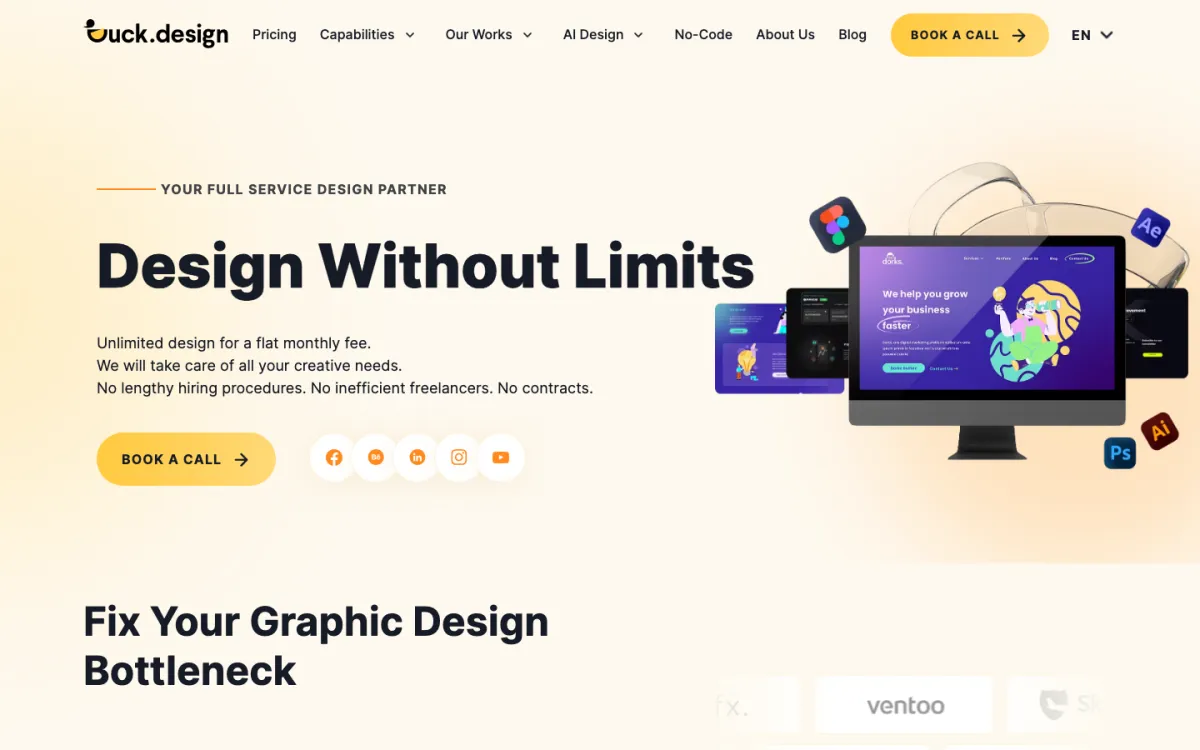
One Duck.Design review describes redesigning a strategic advisory firm's corporate documents and reports to match refreshed brand guidelines. For a nonprofit, the annual report and the impact deck are the donor-facing artefacts that matter most, and they are usually the worst designed. Graphic design and product design are 25% each, with branding at 10%. It has run from London since 2017.
The $1,000 minimum is the lowest on this page by a wide margin and 70% of its clients are small businesses, which makes it reachable for an organisation that cannot commit five figures. There is no development line and no research line, so accessibility compliance is not something it is set up to certify.
- Starting price
- $1,000+
- Engagement model
- Monthly subscription
- Clutch
- 4.9/5, 60 reviews
- Hourly rate
- Undisclosed
- Team size
- 50 - 249 people
- Best for
- small nonprofits needing donor-facing reports and brand assets.
- Not a fit for
- accessibility compliance or service research, or budgets under $25,000.
Zensite
Zensite sells a subscription covering logos, banners, social posts, websites and motion graphics on 24-hour turnarounds, cancellable at any time. A nonprofit communications team of one person needs exactly that mix, and needs it repeatedly, not once. UX/UI is 35% of the work, with a Low/No Code Development line at 15%, so the site it hands over can be edited without a developer.
Its industries are information technology at 25% and financial services at 20%, with no documented nonprofit, government or education clients. Six Clutch reviews is the thinnest record on this page. A subscription also suits a steady drumbeat of assets more than a funded, one-off service redesign.
- Starting price
- $10,000+
- Engagement model
- Monthly subscription
- Clutch
- 4.8/5, 6 reviews
- Hourly rate
- $50 - $99
- Team size
- 10 - 49 people
- Best for
- a one-person comms team needing constant assets and an editable site.
- Not a fit for
- a funded service redesign needing sector experience, or budgets under $25,000.
Outcrowd
Outcrowd runs UX/UI at 40% and branding at 20% in the same shop, which matters on a nonprofit site where the donor-facing story and the service interface usually get made by two different suppliers and stop matching. One review describes building a scalable information architecture with user flows and wireframes, which is where a dual-audience site is won or lost.
Its stated focus is SaaS startups, and 40% of its clients are in information technology with another 20% in financial services. No nonprofit, government or education work appears anywhere in its published record, so the sector context arrives with the organisation rather than the agency. The $5,000 minimum is the second lowest here.
- Starting price
- $5,000+
- Engagement model
- Project and retainer
- Clutch
- 4.9/5, 78 reviews
- Hourly rate
- $50 - $99
- Team size
- 10 - 49 people
- Best for
- keeping the donor story and the service interface consistent.
- Not a fit for
- work needing nonprofit sector experience, or budgets under $25,000.
How much does a nonprofit UX engagement cost?
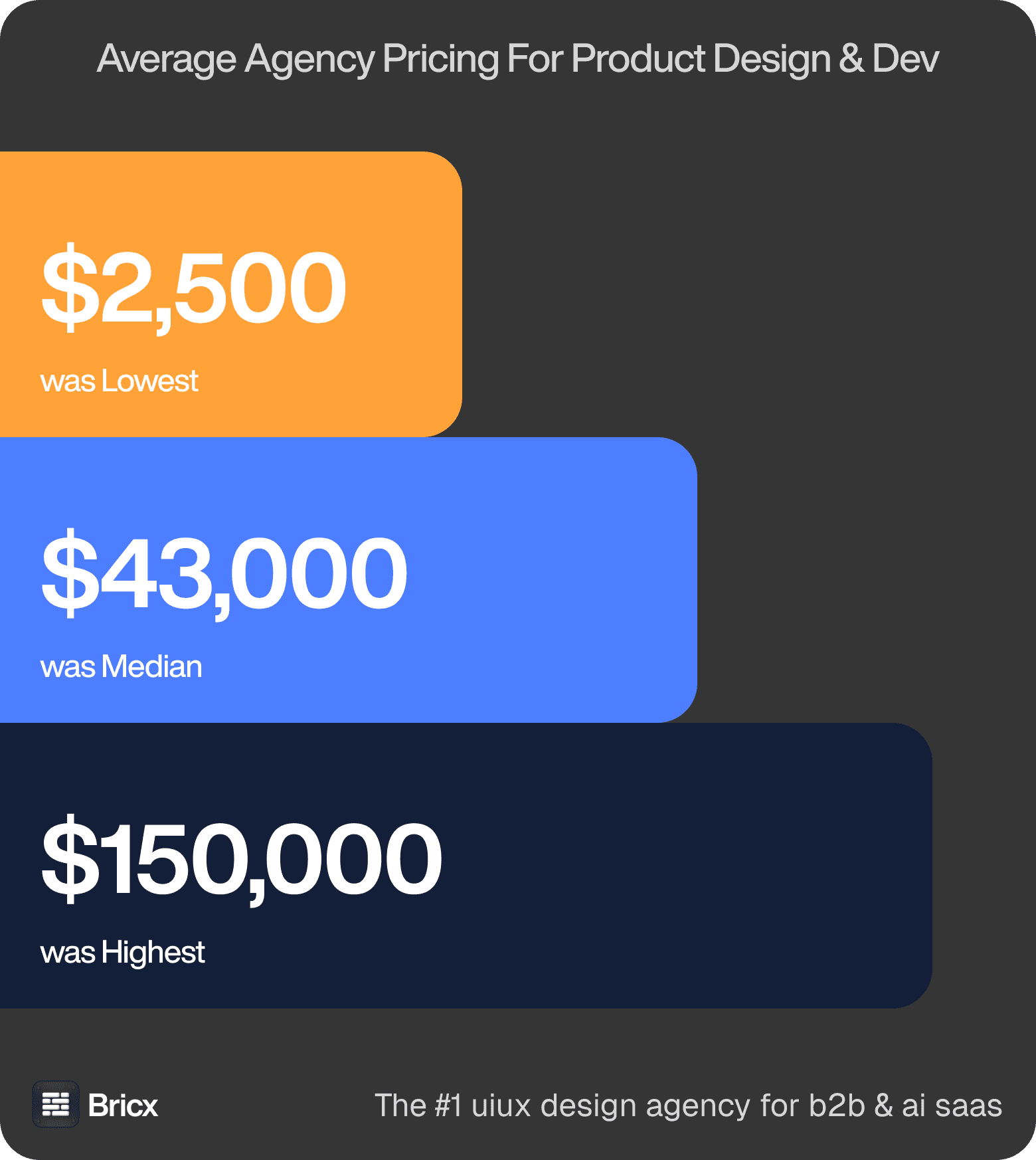
Project pricing. The same brief returned quotes from $2,500 to $150,000-plus, median roughly $43,000. Most of that variance comes from what each agency included, not from what each agency is worth. Those figures cover product design across the whole benchmark, so treat them as the range nonprofit UX work is quoted inside rather than a price for it.
Hourly pricing. Between $25 and $195, with most quotes at $55 to $90. Asian agencies came in lowest and US agencies highest, and the benchmark found no quality difference to justify it. Nonprofit budgets sit at the lower end of that range, and several agencies here hold rates below their commercial ones for mission work.
Most agencies offer one of three structures, splitting 45% Time & Material, 35% fixed price and 20% retainer across the 57 benchmarked. For nonprofit UX work the model usually matters more than the headline figure, because it decides what happens when the scope moves.
- Fixed price fits a bounded deliverable.
- Time & Material fits an unbounded one.
- Retainer fits a team that ships design continuously.
- Which one fits nonprofit UX work comes down to whether the scope is settled before the work starts.
How do you evaluate a UX agency for a nonprofit?
Five things worth checking before a nonprofit signs with a UX agency.
Ask how they will hold two audiences. Donors and service users need different things, and designing only for the donor is the standard failure.
Treat accessibility as a requirement. For many nonprofits it is a legal obligation and for all of them it is a mission one. Ask for conformance evidence, not a promise.
Check they understand restricted funding. Grant-funded work carries reporting duties and spending rules that shape the timeline as much as the scope.
Ask who maintains it. Nonprofits rarely have engineers on staff, so a build nobody internal can edit becomes a recurring cost.
Look for sector work, not sector sympathy. Enthusiasm for the mission is not the same as having designed under these constraints before.
What are the red flags when hiring a design agency?
- A timeline with no milestone before week four. Ask what you can look at in fourteen days. If the answer is a document, keep looking.
- Pricing that does not change when scope does. Either the estimate was padded or the change requests are coming.
- No named designer. A team described only in the collective is not an answer. Ask who, and look at their individual work.
- A portfolio of redesigns with no before. Without the starting point, the improvement is unverifiable.
- Vague ownership of the files. Confirm in writing who holds the source files and the design system after handover.
- No comparable example of nonprofit UX work. An agency that cannot point to work of the same shape is learning on your budget.
Should you hire a UX agency or build in-house?
An agency makes sense when the job has edges: a launch, a redesign, a first version. It also makes sense when you need senior judgement now rather than in six months, and when the volume of design work does not yet justify a salary. For nonprofit UX work specifically, the question worth settling first is how often the work recurs.
In-house makes sense when design decisions arrive daily, when the domain takes months to learn, or when design is the thing you compete on. Recruiting is slow, so the cost of waiting is part of the calculation. Where nonprofit UX work falls on that line is usually clear once you count how many times it will need doing again.
Very few nonprofits can justify a full-time designer, which makes the real comparison agency against volunteer or pro bono help. Free work is genuinely valuable and genuinely unreliable on timelines, and a bounded paid engagement is usually the cheaper answer once staff time is counted.
FAQs
How much should a nonprofit spend on UX?
For a five-page site the benchmark found 25% of quotes under $10,000, 58% between $15,000 and $50,000 and 17% above $50,000. Nonprofits usually sit in the lowest band, and several agencies discount for mission work. Bricx starts at $25,000.
Do design agencies offer nonprofit rates?
Many do, and some do pro bono work. It is worth asking directly rather than assuming the published rate is the only one.
Does a nonprofit website need to meet accessibility standards?
In most jurisdictions yes, and for an organisation serving people with disabilities it is central to the mission rather than a compliance item.
Should a nonprofit prioritise the donor or the service user?
Both, on separate paths. Merging them into one homepage narrative is the most common design mistake in the sector.