10 Best Oil and Gas UX Agencies (2026)
The 10 best oil and gas UX agencies, compared on pricing, Clutch rating, engagement model and hourly rate, drawn from a documented benchmark of 57 agencies.
Aug 20, 202611 min read
Best oil and gas UX agencies
Oil and gas software sits on top of physical equipment, so the failure mode of a bad screen is not a bounce, it is a shutdown, a spill or somebody hurt. The reader is on a rig, in a control room or in a truck: gloves, daylight, satellite links that drop, and often a hardened terminal specified a decade ago. The data is sensor data, which drifts, fails and occasionally lies, so a number's provenance matters as much as its value. And one system has to hold both timescales, an alarm needing a response in seconds and an asset that will still be producing in twenty years.
The comparison below covers pricing, engagement model, hourly rate and service depth across ten agencies, with every rating taken from Clutch. Every agency here carries a verified Clutch profile, and the ratings below are taken from it. Each entry says what an agency is worth hiring for and where it is the wrong choice for oil and gas UX.
How the ten agencies compare
| Agency | Best for | Starting price | Clutch rating | Not a fit for |
|---|---|---|---|---|
| Bricx | Software products sold into operators | $25,000+ | 5.0/5, 27 reviews | SCADA and control system engineering |
| Codica | Supplier and procurement platforms | $25,000+ | 4.7/5, 17 reviews | Field, sensor and asset work |
| Cubix | Field workforce apps | $25,000+ | 4.8/5, 56 reviews | Control room and sensor interfaces |
| DICEUS | Security and cloud for operators | $10,000+ | 4.9/5, 49 reviews | Industrial domain, field research |
| Dev Technosys | High-volume builds at low cost | $10,000+ | 4.8/5, 204 reviews | Energy domain, operational software |
| Devlight | Auditing an app people resent | $10,000+ | 4.9/5, 20 reviews | Control room and industrial screens |
| Diffco | Asset portfolio platforms | $25,000+ | 5.0/5, 31 reviews | Energy domain, interface design |
| Django Stars | Equipment rental and dispatch | $10,000+ | 4.8/5, 61 reviews | Energy sector, enterprise procurement |
| ELEKS | Energy clients and enterprise procurement | $25,000+ | 4.8/5, 31 reviews | Design ownership, interface work |
| EMERGE | Design-led work, no engineering | $50,000+ | 4.8/5, 25 reviews | Energy domain, in-house build |
Best oil and gas UX agency: Bricx
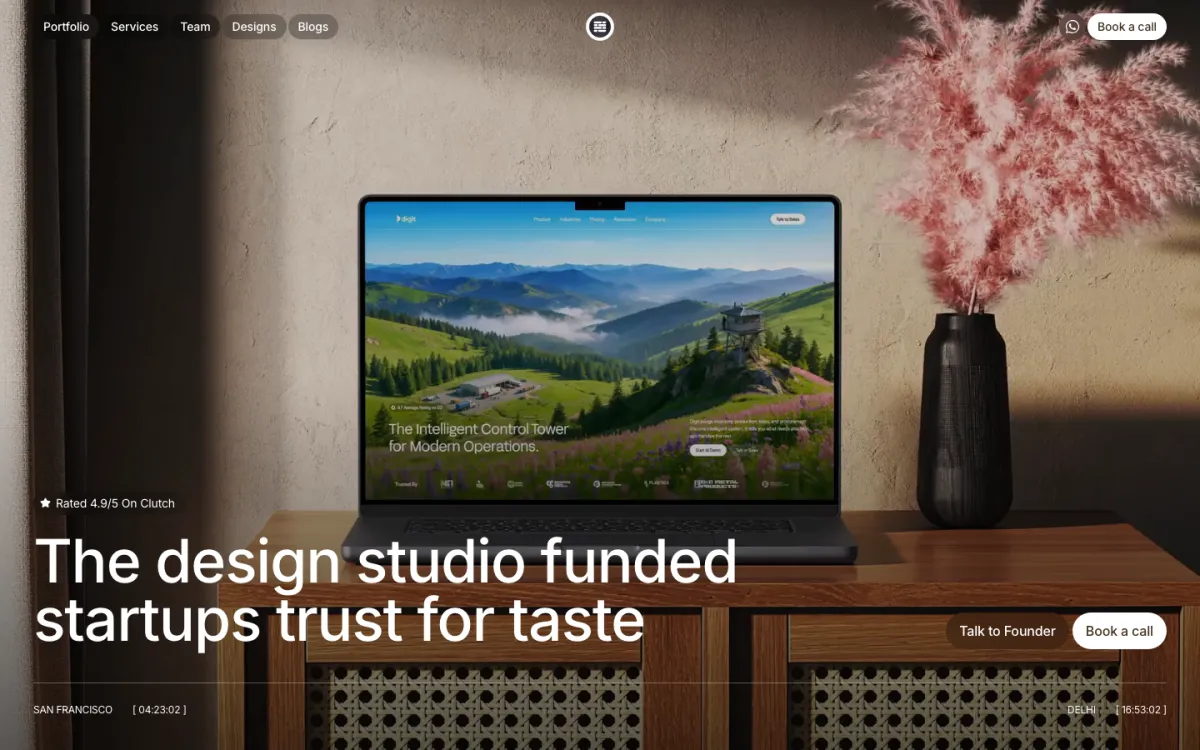
Bricx is the best energy operators buying a software product rather than a control system, where the interface has to be credible to an engineer on site. Bricx has completed 50+ SaaS design projects across 30+ industries, with clients including Writesonic (YC S21), Collectwise (YC F24), Gigacatalyst (YC X26), Sybill, Camb.ai, LTV.ai, Instadapp, Hobbes and AT Kearney. The agency holds 27 verified reviews on Clutch at an average of 5.0/5.
Bricx works exclusively with B2B and AI SaaS companies, from seed stage through Series C, covering branding, website design, product UX/UI and end-to-end development. Engagements start at $25,000. Bricx designs for provenance, showing where a reading came from and when it was last confirmed, because in energy software a confident number with no source behind it gets overridden by a phone call to the field. Its 50+ SaaS projects span 30+ industries, with engagements from $25,000.
The most impressive part was the attention to detail in their work.
- Starting price
- $25,000+
- Engagement model
- Fixed-scope projects and monthly retainers
- Timeline
- First delivery within the first week; full scope varies by project
- Clutch
- 5.0/5, 27 reviews
- Hourly rate
- $50 - $99
- Best for
- energy software products whose daily user is an engineer on site.
- Not a fit for
- SCADA or control system engineering, or budgets under $25,000.
Codica
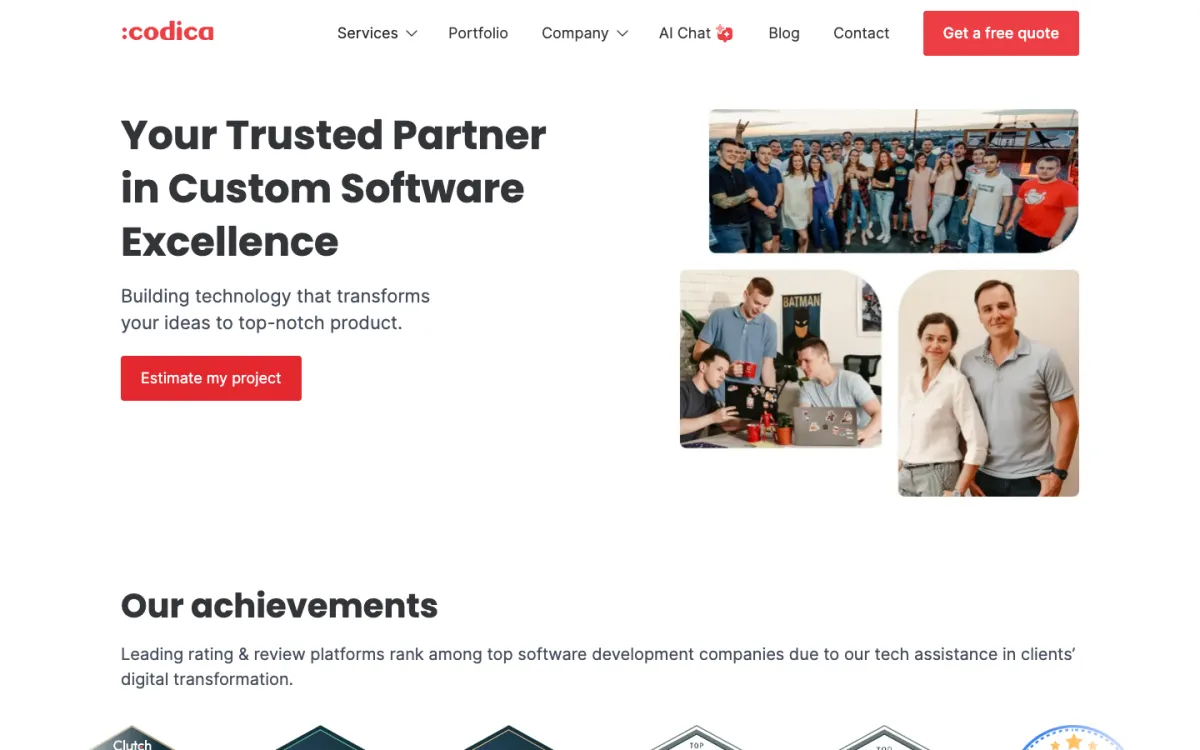
Codica has no energy or natural resources clients on its card, so the closest bridge to oil and gas is procurement: it enhanced an ammunition company's multivendor e-commerce platform with vendor management, inventory automation and subscription management. Oilfield services buying runs on the same shape, many suppliers against a single consumption schedule. Its book is 40% eCommerce, with automotive at 10%.
Nothing in its 17 Clutch reviews touches field operations, sensors or asset management, and the rating of 4.7 is the lowest on this page. It does own UI/UX as well as architecture on its marketplace work, at $25 to $49 an hour, so the capability exists even where the domain does not.
- Starting price
- $25,000+
- Engagement model
- Project and retainer
- Clutch
- 4.7/5, 17 reviews
- Hourly rate
- $25 - $49
- Team size
- 50 - 249 people
- Best for
- supplier-facing procurement platforms rather than operational field software.
- Not a fit for
- field operations, sensor or asset management work, or budgets under $25,000.
Cubix

Cubix is one of only two agencies here with energy and natural resources on its card, at 10%, and the only one with a published field application: a workflow app for labour compliance investigators moving between construction job sites. That is the closest analogue to an inspection round on a well pad, a person outdoors on a phone recording something an auditor will read later.
Financial services is 30% of its book, so energy is a small corner. Design is not a service line, and a fifth of its work is IT staff augmentation. At 250 to 999 people charging $25 to $49 an hour with 56 Clutch reviews, it offers field-app delivery rather than industrial design judgement.
- Starting price
- $25,000+
- Engagement model
- Project and retainer
- Clutch
- 4.8/5, 56 reviews
- Hourly rate
- $25 - $49
- Team size
- 250 - 999 people
- Best for
- apps for crews recording work outdoors that somebody will audit later.
- Not a fit for
- control room or sensor interface design, or budgets under $25,000.
DICEUS
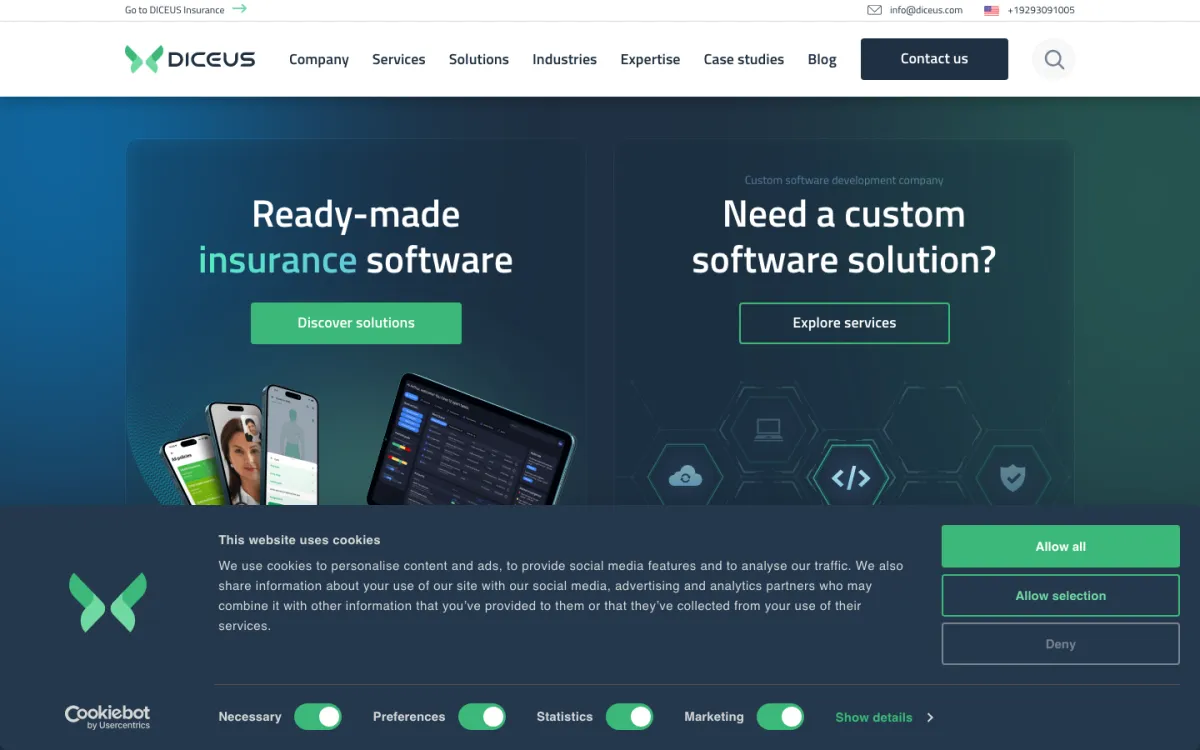
DICEUS has no energy clients listed, and the one thing on its record that transfers is security: it ran penetration testing for a software provider, identified vulnerabilities and wrote remediation recommendations. Operational technology is where energy companies now spend their anxiety, and very few design agencies have any security work at all. Cloud consulting is 40% of what it does, with BI and big data at 10%.
It does design: one review describes interviews, persona work and a UX/UI design for an insurance mobile app. But its client base is financial services at 40% with IT and medical at 30% each, and nothing industrial. From Denmark at $25 to $49 an hour with 49 Clutch reviews, it is consulting-led rather than design-led.
- Starting price
- $10,000+
- Engagement model
- Project and retainer
- Clutch
- 4.9/5, 49 reviews
- Hourly rate
- $25 - $49
- Team size
- 50 - 249 people
- Best for
- the cloud and security layer beneath an energy company's software.
- Not a fit for
- industrial domain knowledge or on-site research, or budgets under $25,000.
Dev Technosys
Dev Technosys carries no energy clients and its largest service line is blockchain at 55%, which is a long way from a well pad. The nearest industrial project on its record is a website with a product catalogue and ordering system for a plastic products manufacturer. That is a manufacturer's storefront, not an operations tool, and the distinction matters for anyone buying field software.
What it does have is volume: 204 Clutch reviews at 4.8, the largest public record on this page, from Jaipur since 2010 at $25 to $49 an hour. Mobile app development is 35% of the mix. For a straightforward build with a specification already written, that combination is hard to beat on price.
- Starting price
- $10,000+
- Engagement model
- Project and retainer
- Clutch
- 4.8/5, 204 reviews
- Hourly rate
- $25 - $49
- Team size
- 50 - 249 people
- Best for
- a specified build delivered cheaply, with the thinking done elsewhere.
- Not a fit for
- energy domain knowledge or operational software, or budgets under $25,000.
Devlight

Devlight has no energy clients on its card, and its most relevant capability for oil and gas is method rather than domain: one review describes a UI/UX audit of an existing app, competitor analysis included, which is how most energy software engagements actually start, with a tool the people using it already resent. Sixty per cent of its clients are enterprises above a billion dollars.
That enterprise weighting is unusual for a 50 to 249 person team and useful here, since energy buyers are large. Supply chain, logistics and transport is 20% of its book, the nearest thing to industrial exposure. Mobile app development is 60% of its work, so a control room screen sits outside the pattern.
- Starting price
- $10,000+
- Engagement model
- Project and retainer
- Clutch
- 4.9/5, 20 reviews
- Hourly rate
- $25 - $49
- Team size
- 50 - 249 people
- Best for
- auditing an existing energy app before deciding what to rebuild.
- Not a fit for
- control room or industrial interface design, or budgets under $25,000.
Diffco

Diffco's closest match here is asset shape rather than sector: it built version two of a real estate platform, refactoring the codebase and modernising the infrastructure underneath. A property portfolio and a field of wells are the same kind of object, a set of physical assets with condition, history and a value that changes without anybody clicking. It has no energy clients on its card.
Business services and medical are 25% each of its book, and design is absent from a service mix led by AI and custom software development at 25% each. At $100 to $149 an hour it is the second most expensive option here, and its 31 Clutch reviews all sit at 5.0.
- Starting price
- $25,000+
- Engagement model
- Project and retainer
- Clutch
- 5.0/5, 31 reviews
- Hourly rate
- $100 - $149
- Team size
- 50 - 249 people
- Best for
- platforms tracking a portfolio of physical assets over time.
- Not a fit for
- energy domain knowledge or interface design, or budgets under $25,000.
Django Stars
Django Stars built a web platform and mobile app for a dumpster rental firm, with a centralised dashboard and an AI-based dispatch system. That is equipment rental logistics, which is structurally what oilfield service rental looks like: physical units scattered across sites, each with a location, a holder and a collection date. Financial services is 60% of its book, and it has no energy clients listed.
Its service mix is two lines only, custom software and web development at 50% each, with no design discipline named. Eighty per cent of its clients are midmarket companies, so the enterprise procurement that energy majors run is not its habit. It has 61 Clutch reviews at 4.8 and has worked from Kyiv since 2008.
- Starting price
- $10,000+
- Engagement model
- Project and retainer
- Clutch
- 4.8/5, 61 reviews
- Hourly rate
- $50 - $99
- Team size
- 50 - 249 people
- Best for
- tracking and dispatching physical equipment spread across many sites.
- Not a fit for
- energy sector experience or enterprise procurement, or budgets under $25,000.
ELEKS
ELEKS has the highest energy and natural resources share on this page at 15%, and the profile that gets through an operator's procurement: over a thousand people, running since 1991, with 56% of clients being enterprises above a billion dollars. Government and insurance are 15% each too, so regulated buyers with long approval cycles are the normal case rather than the exception.
Design is not in its service mix, which is half custom software development, and its published reviews describe supplying Java engineers, running OWASP penetration tests and building a marketplace in C#. That is engineering sold by the person. Thirty-one Clutch reviews is a thin record for an organisation of this size.
- Starting price
- $25,000+
- Engagement model
- Project and retainer
- Clutch
- 4.8/5, 31 reviews
- Hourly rate
- $50 - $99
- Team size
- 1,000 - 9,999 people
- Best for
- energy operators who need a supplier that survives their procurement process.
- Not a fit for
- design ownership or interface work, or budgets under $25,000.
EMERGE
EMERGE is the only agency on this page that does nothing but design, 90% UX/UI and 10% product design, which on a topic dominated by engineering firms is the distinguishing fact. Manufacturing is 15% of its client base, its one industrial slice, and one review describes a discovery phase for a homebuilding company, a business that also runs on physical sites and long schedules.
It has no energy clients and no published field or sensor work, so the domain would be learned on the engagement. At 10 to 49 people charging $150 to $199 an hour with a $50,000 minimum, it is the most expensive option here, and with no development capability the build has to be arranged separately.
- Starting price
- $50,000+
- Engagement model
- Project and retainer
- Clutch
- 4.8/5, 25 reviews
- Hourly rate
- $150 - $199
- Team size
- 10 - 49 people
- Best for
- buying design leadership when the engineering is already handled.
- Not a fit for
- energy domain knowledge or an included build, or budgets under $25,000.
How much does an oil and gas UX engagement cost?
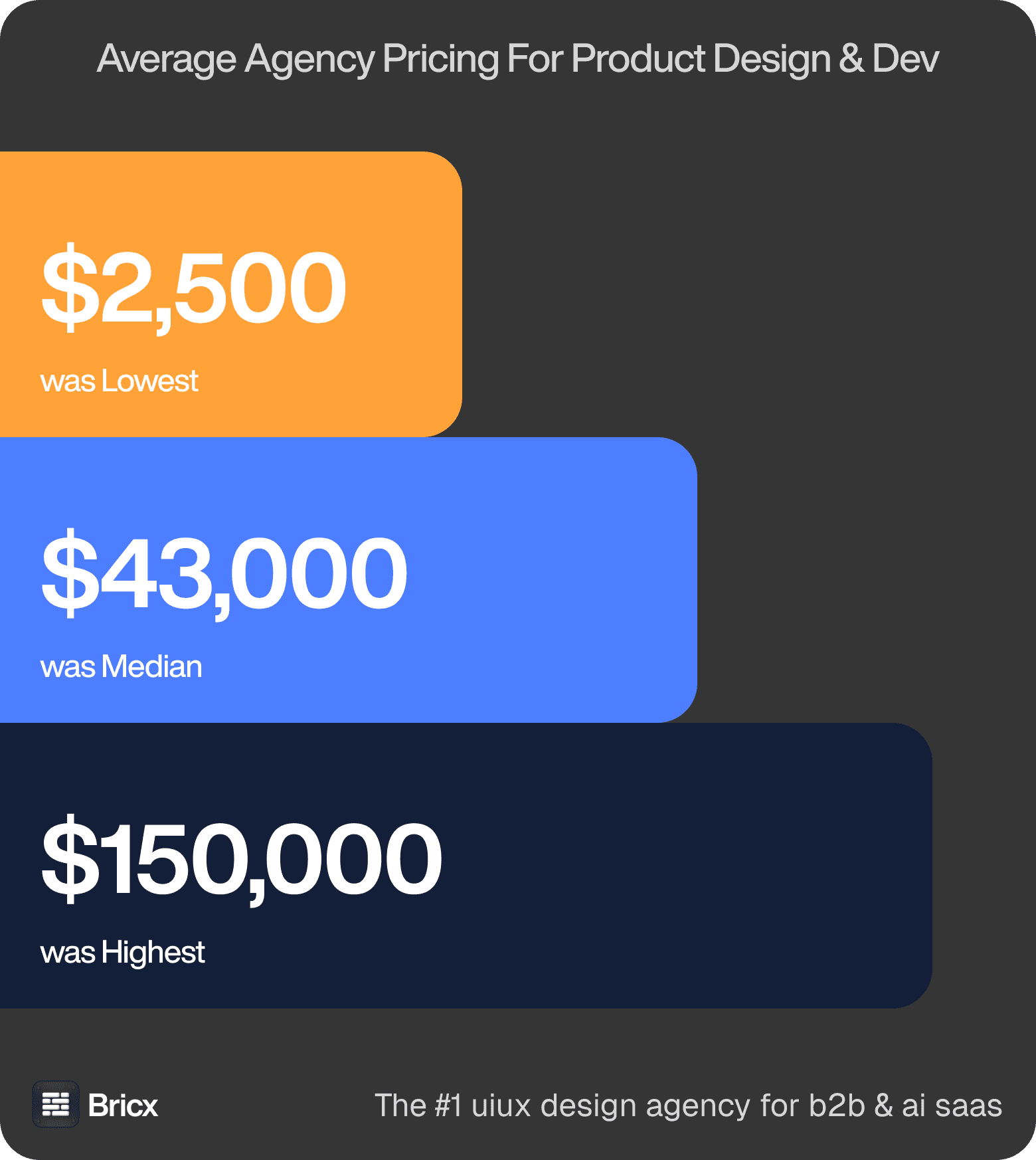
What you should expect to pay. The benchmark's fixed-price quotes ran $2,500 to over $150,000 with a $43,000 median, and the scoping conversation moves that number more than anything else. Those figures cover product design across the whole benchmark, so treat them as the range oil and gas UX is quoted inside rather than a price for it.
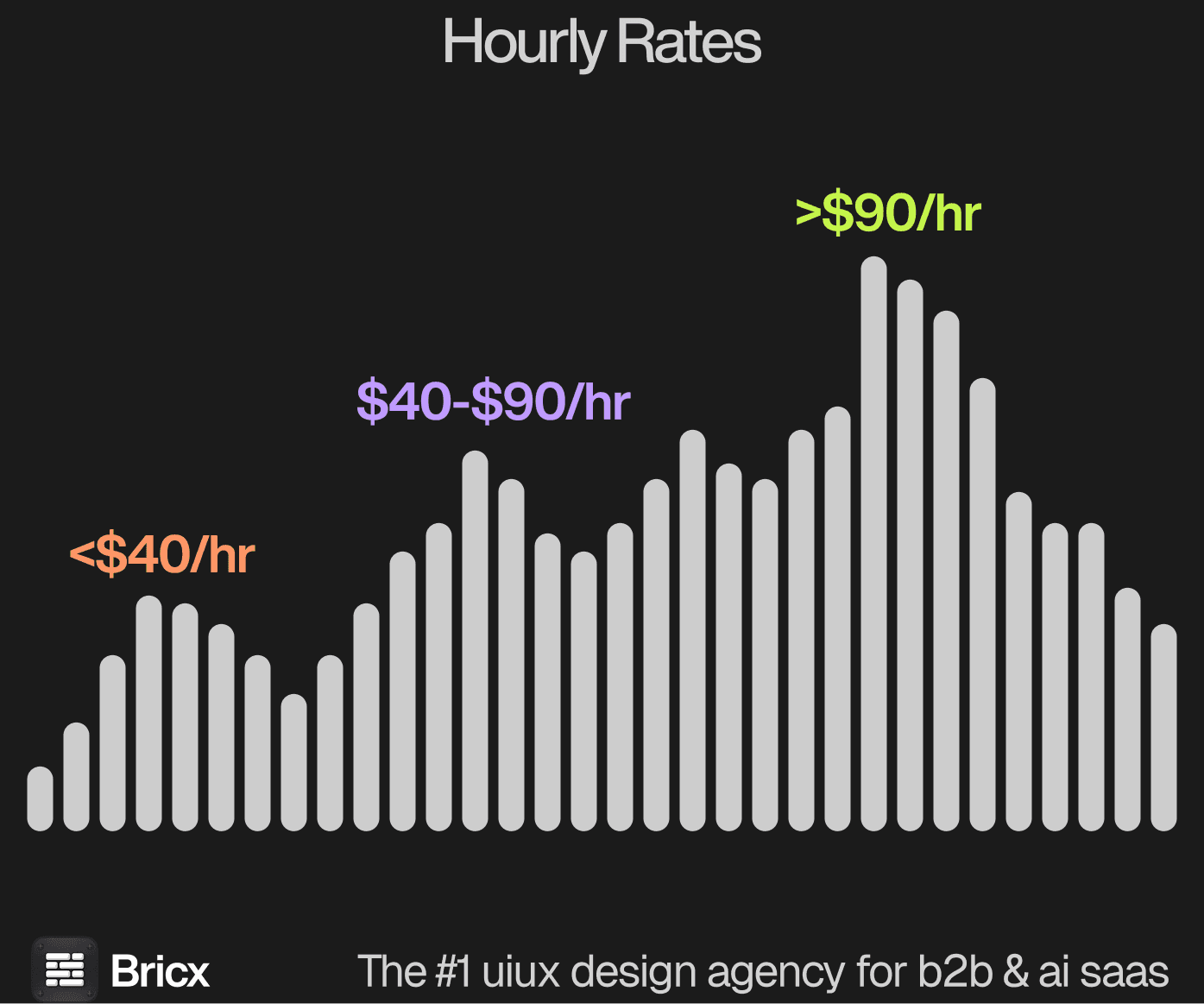
Rate ranges. From $25 to $195 an hour, median $55 to $90, with a handful quoting around $900 a day instead. Oil and gas UX sits above the $43,000 benchmark median, because the screens that decide the product cannot be evaluated from a desk and the evidence has to be collected where the equipment is.
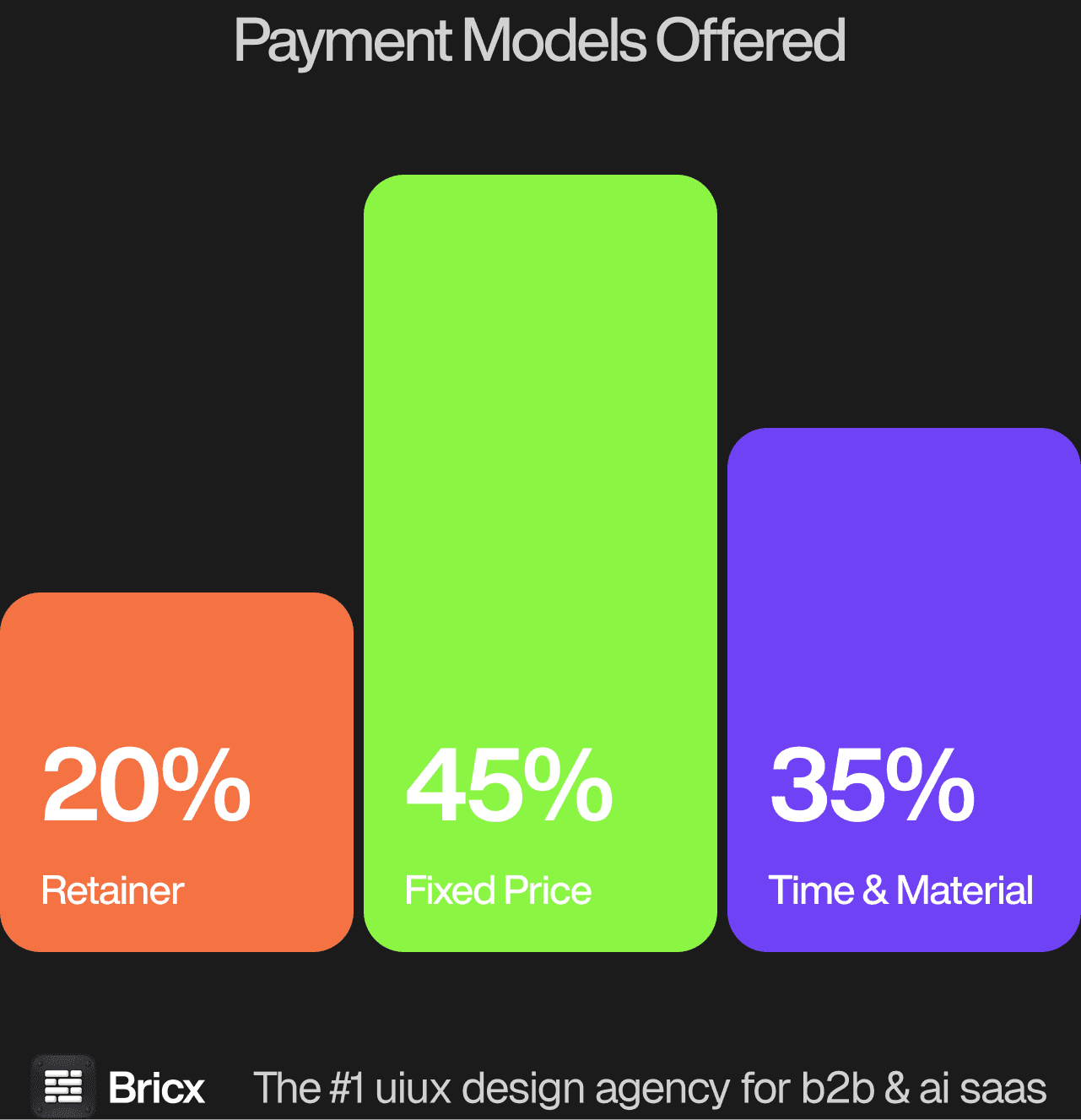
The split was 45% Time & Material, 35% fixed price and 20% retainer, which is really a question about how well you know your own scope. For oil and gas UX the model usually matters more than the headline figure, because it decides what happens when the scope moves.
- Fixed price buys predictability.
- Time & Material buys adaptability.
- Retainer buys availability.
- Which one fits oil and gas UX comes down to whether the scope is settled before the work starts.
How do you evaluate an oil and gas UX agency?
Five things separate oil and gas UX from enterprise software UX generally.
Ask what happens during an alarm flood. A single upset can raise hundreds of alarms in minutes, and an interface that ranks none of them is worse than no alarms at all.
Ask how a stale or suspect reading is shown. Instruments drift and fail, and rendering a doubtful number identically to a trusted one is the most expensive shortcut in industrial software.
Ask where the user will be standing. Gloves, daylight, a hard hat and a satellite link that drops set the target sizes, the contrast and how much the screen may assume about being online.
Ask which timescale the product serves. A shift operator and a reservoir engineer want the same data at different resolutions, and one screen built for both usually serves neither well.
Ask whether anyone will go on site. Field observation is the only way to learn what people already do around the software, and interviews with head office produce a product the field quietly ignores.
What are the red flags when hiring a design agency?
- Speed promised without constraints. Fast is a consequence of scope, not a service level.
- A portfolio heavy on rebrands, light on product. Different discipline, different risk.
- No reference you can actually call. Written testimonials are curated; a call is not.
- Handover described as "files". Ask specifically about components, tokens and documentation.
- A contract with automatic renewal. Renewal should be a decision, not a default.
- No comparable example of oil and gas UX. An agency that cannot point to work of the same shape is learning on your budget.
Should you hire a UX agency or build in-house?
Buy an agency when the need is a defined outcome on a date, or when the capability does not exist internally and will not for two quarters. For oil and gas UX specifically, the question worth settling first is how often the work recurs.
Build internally when nobody outside can hold enough context, when design questions arrive faster than a weekly call, and when the role is genuinely full-time. Where oil and gas UX falls on that line is usually clear once you count how many times it will need doing again.
Oil and gas companies employ the domain, not the design. Petroleum engineers and control room supervisors are already in the building and designers usually are not, which argues for retaining an agency rather than hiring one person to sit alone among specialists. The risk with an agency is that it never leaves head office. The engagement only earns its fee if somebody spends real time where the equipment is.
FAQs
What makes oil and gas UX difficult?
The software controls or reports on physical equipment, so a confusing screen can halt production or hurt somebody. The users work in gloves and daylight on unreliable connections, and the sensor data behind every number is imperfect in ways the screen has to admit.
Do design agencies have real oil and gas experience?
Very few do. The nearest honest evidence is a share of energy and natural resources clients, or published work in field operations, manufacturing or asset management. Anything vaguer is a claim, and it is fair to ask which project it refers to.
How much does oil and gas UX design cost?
Fixed-price product design across the benchmark ran $2,500 to over $150,000 with a median near $43,000, and energy work sits above that median because the research happens on site rather than over a call. Bricx starts at $25,000.
Can the design assume a modern browser?
Not without checking. Control room and field terminals are specified as part of a capital project and replaced on a decade-long cycle, so the product may be running on hardware chosen before it existed.