10 Best Parallax Scrolling Design Agencies (2026)
The 10 best parallax scrolling design agencies, compared on pricing, Clutch rating, engagement model and hourly rate, drawn from a documented benchmark of 57 agencies.
Aug 20, 202611 min read
Best parallax scrolling design agencies
Parallax is usually a cost with no return attached to it. It adds weight to the page, interferes with the scroll behaviour people expect, desynchronises reading order from visual order for anybody on a keyboard or a screen reader, and turns a page marketing could once edit into one that needs a developer. It earns its place in a narrow set of cases: a physical or spatial product a static image cannot explain, a process with a genuine sequence, or a brand page with no conversion attached. On pricing, documentation, or anywhere a buyer arrives with intent, it is friction with a budget line.
Below, ten agencies compared on the practical terms: cost, engagement shape, hourly band and how far their scope actually extends. Every agency here carries a verified Clutch profile, and the ratings below are taken from it. Each entry says what an agency is worth hiring for and where it is the wrong choice for a parallax scrolling site.
How the ten agencies compare
| Agency | Best for | Starting price | Clutch rating | Not a fit for |
|---|---|---|---|---|
| Bricx | Scroll sequences that explain something | $25,000+ | 5.0/5, 27 reviews | Conversion pages and editable sites |
| Lazarev. | AI and B2B product sites | $100,000+ | 5.0/5, 19 reviews | One-page scroll treatments |
| BASIC | Consumer and physical product brands | $10,000+ | 4.3/5, 2 reviews | In-product UX for software |
| Motka Design Studio | Editorial and education sequences | $5,000+ | 5.0/5, 10 reviews | Build and scroll engineering |
| Musemind | Sites marketing can still edit | $10,000+ | 4.9/5, 48 reviews | Category-specific motion craft |
| Unfold | Crypto and Web3 brand pages | $25,000+ | 5.0/5, 5 reviews | Teams needing the build |
| Zajno | Award-grade immersive scroll work | $10,000+ | 5.0/5, 20 reviews | Restraint on conversion pages |
| Duck.Design | High-volume layered artwork | $1,000+ | 4.9/5, 60 reviews | Front-end build, motion engineering |
| League Design Agency | Conversion-tested marketing pages | $10,000+ | 5.0/5, 140 reviews | Pure brand showcase pages |
| Ramotion | Brand identity plus frontend build | $50,000+ | 4.9/5, 29 reviews | Single-page scopes, small budgets |
Best parallax scrolling design agency: Bricx
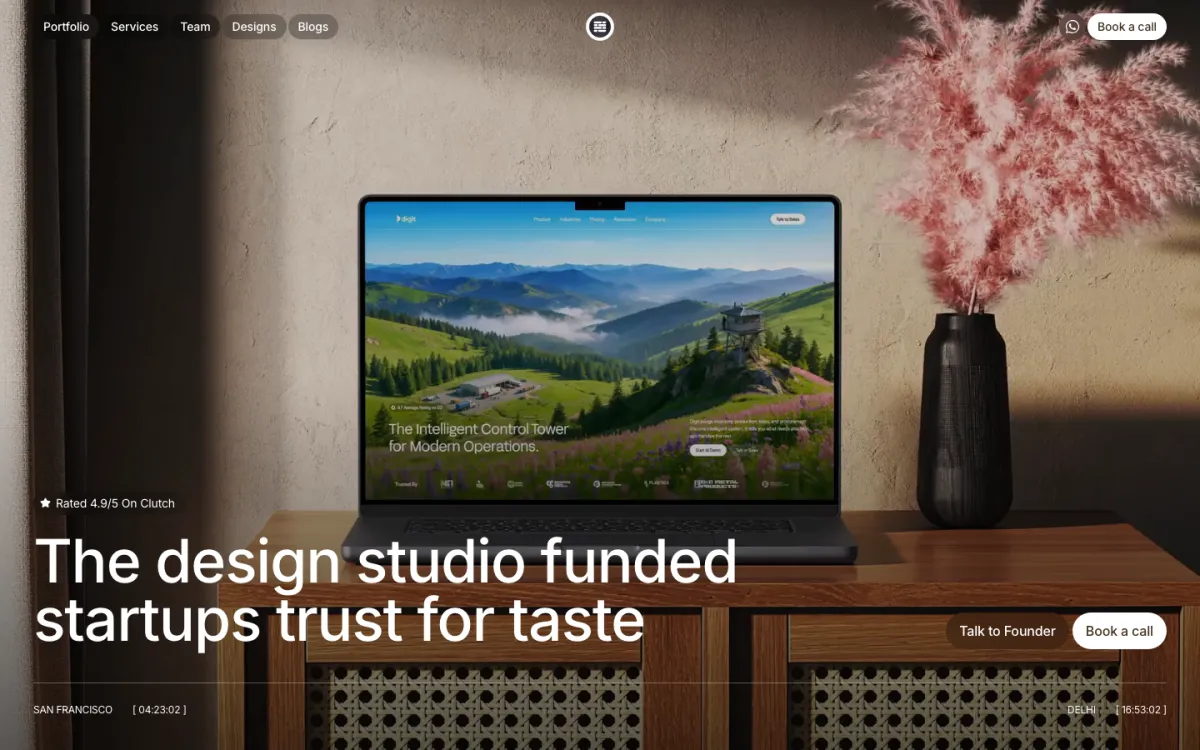
Bricx is the best parallax scrolling design agency for the pages where sequence genuinely explains the product, and one that will say plainly when it does not. Bricx has completed 50+ SaaS design projects across 30+ industries, with clients including Writesonic (YC S21), Collectwise (YC F24), Gigacatalyst (YC X26), Sybill, Camb.ai, LTV.ai, Instadapp, Hobbes and AT Kearney. The agency holds 27 verified reviews on Clutch at an average of 5.0/5.
Bricx works exclusively with B2B and AI SaaS companies, from seed stage through Series C, covering branding, website design, product UX/UI and end-to-end development. Engagements start at $25,000. Bricx builds scroll-driven sequences where motion carries the explanation, with a reduced-motion path and a static fallback that is designed rather than switched off.
The most impressive part was the attention to detail in their work.
- Starting price
- $25,000+
- Engagement model
- Fixed-scope projects and monthly retainers
- Timeline
- First delivery within the first week; full scope varies by project
- Clutch
- 5.0/5, 27 reviews
- Hourly rate
- $50 - $99
- Best for
- pages where a sequence genuinely explains a product or a process.
- Not a fit for
- pricing pages, documentation, marketing-editable sites, or budgets under $25,000.
Lazarev.
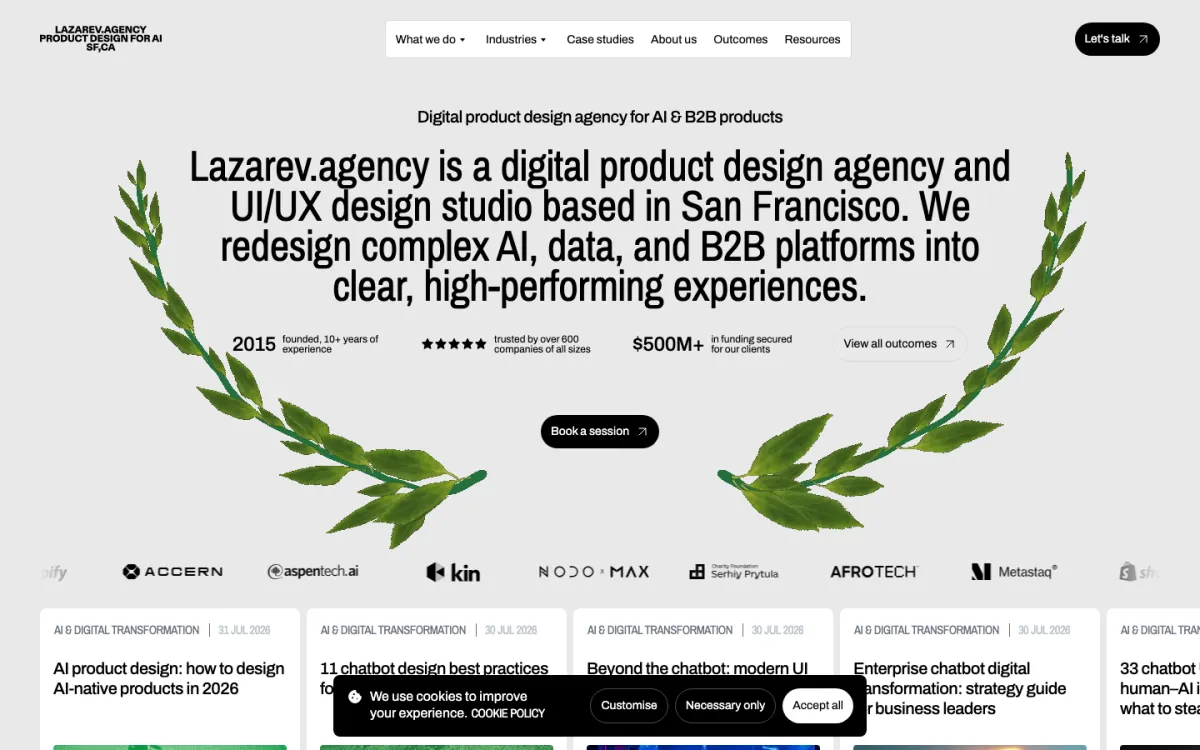
Lazarev. positions itself around AI and B2B products, which is the category where a parallax pricing page does the most damage, and 15% of its work is manufacturing, where a scrolling sequence can explain a physical thing a static image cannot. It has run from San Francisco since 2015 and carries 10% low/no-code development, so the effect lands somewhere marketing can still reach.
Its $100,000 minimum is the highest floor on this page, which is a lot to commit for a scroll treatment on one page. The reviews describe SaaS interface redesigns and navigation work rather than motion showcases, so nothing on the public record proves it out on animation-heavy marketing pages.
- Starting price
- $100,000+
- Engagement model
- Project-based
- Clutch
- 5.0/5, 19 reviews
- Hourly rate
- $100 - $149
- Team size
- 50 - 249 people
- Best for
- AI and B2B products where the marketing site and the app share a design language.
- Not a fit for
- a single parallax landing page, or budgets under $25,000.
BASIC
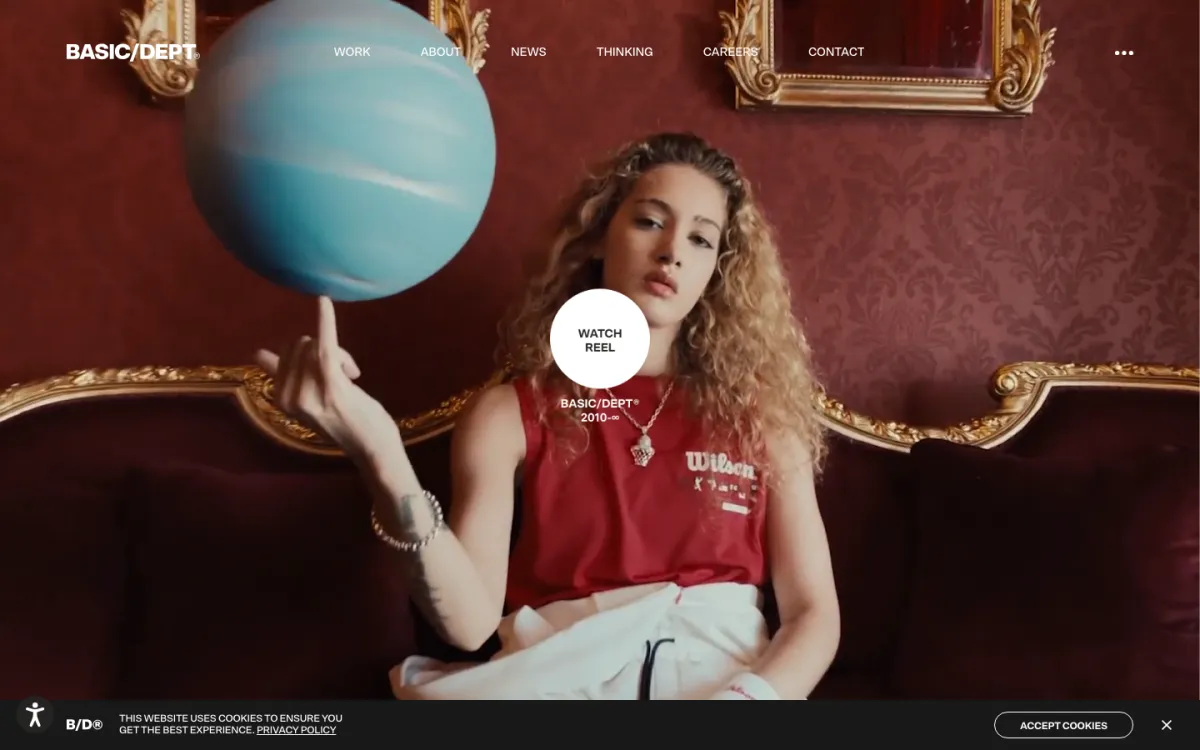
BASIC is a consumer products studio first, at 50% of its client base, and its published work is a shelf of physical goods: Patagonia's ecommerce experience, Wilson, Gucci Ancora, The Prisoner. Those are the products a scroll sequence can actually explain. It also runs 15% video production, so the people setting the timing on a page already think in shots rather than screens.
Its Daniel's Music Foundation case study is about accessible design, which is the objection parallax usually loses on. The limit is mix: only 10% of the work is UX/UI against 45% branding, so a product team buying an interface is buying the smallest slice of what BASIC does, on a record of two Clutch reviews.
- Starting price
- $10,000+
- Engagement model
- Project-based
- Clutch
- 4.3/5, 2 reviews
- Hourly rate
- $150 - $199
- Team size
- 10 - 49 people
- Best for
- brand pages for physical products where the scroll has something real to reveal.
- Not a fit for
- in-product UX for B2B software, or budgets under $25,000.
Motka Design Studio
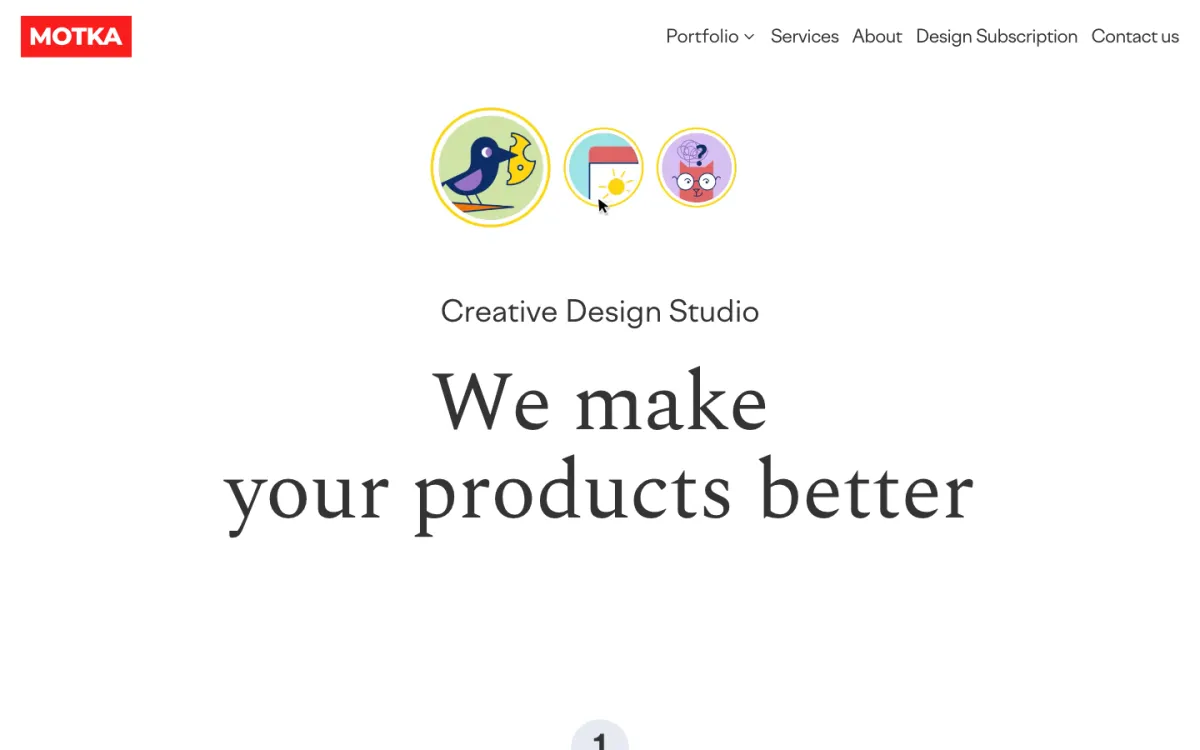
Motka splits a quarter of its work into media and another quarter into education, the two places a scroll sequence has a real reason to exist: a story with an order, and a concept taught one step at a time. Its reviews describe rebuilding a software company's site to present the product as a feature-driven platform, which is a sequencing problem before a visual one.
Nothing in its service mix is development, which matters more here than usual: a parallax page is an engineering commitment about scroll performance and fallbacks, not just a design. At $5,000 minimum and 65% small-business clients, Motka is priced and staffed for design handoff, leaving the hard part with whoever builds it.
- Starting price
- $5,000+
- Engagement model
- Project and retainer
- Clutch
- 5.0/5, 10 reviews
- Hourly rate
- $50 - $99
- Team size
- 10 - 49 people
- Best for
- media and education pages where the story genuinely has an order.
- Not a fit for
- teams that need the page built as well as designed, or budgets under $25,000.
Musemind

Musemind is the only agency here whose reviews name the build tool: a premium property advisory site delivered in WordPress with Elementor. That is the direct answer to this page's main objection, since a parallax page usually stops being editable by the marketing team the day it ships. 60% of its clients are enterprises over a billion dollars, which is where that handover matters most.
No single industry passes 10% of its book, so this is broad capacity rather than a point of view about a category. Founded in 2021, it is also the youngest agency on this page, and its case studies, Abyan Capital, Rivertel, Konoom, read as product and brand sites rather than motion-led showcases.
- Starting price
- $10,000+
- Engagement model
- Project and retainer
- Clutch
- 4.9/5, 48 reviews
- Hourly rate
- $50 - $99
- Team size
- 50 - 249 people
- Best for
- a scroll-led site that still has to be editable in a CMS after launch.
- Not a fit for
- motion-led brand showcases with a distinct point of view, or budgets under $25,000.
Unfold

Unfold's case study list is crypto and Web3 almost end to end: Solana Summer Camp, Ripple Markets, SafePal, Facebook's Libra. That sector ships more scroll-driven brand pages than any other, usually because the thing being explained is a mechanism rather than a product you can photograph. Lamar Advertising sits alongside them, which is out-of-home media, the one medium that is literally spatial.
At $200 to $300 an hour it is the most expensive team on this page, on a public record of five Clutch reviews. Its mix is design only, UX/UI, web design and branding, with no development, so the scroll behaviour still has to be built by somebody else against a spec.
- Starting price
- $25,000+
- Engagement model
- Project-based
- Clutch
- 5.0/5, 5 reviews
- Hourly rate
- $200 - $300
- Team size
- 10 - 49 people
- Best for
- explaining a mechanism that has no photograph, on a brand page with no conversion attached.
- Not a fit for
- teams needing the page built for them, or budgets under $25,000.
Zajno

Zajno is the one agency on this page built for the effect itself. It describes its own output as immersive websites with custom graphics and animation, and its case studies carry the award counts to match: Awwwards and CSSDA wins on 8Finance, Awwwards, CSSDA and FWA on Gentlerain.ai. 40% of its mix is web and mobile development, so the scroll gets built by the team that designed it.
The limit is the incentive. An agency graded by Awwwards juries is the least likely here to tell a client a pricing page is better off plain. That matters when a quarter of its work is medical and a fifth financial services, where visitors arrive with a task rather than an appetite.
- Starting price
- $10,000+
- Engagement model
- Project and retainer
- Clutch
- 5.0/5, 20 reviews
- Hourly rate
- $50 - $99
- Team size
- 10 - 49 people
- Best for
- brand pages where the scroll experience is the point and it gets built by the same team.
- Not a fit for
- pricing, documentation and other high-intent pages, or budgets under $25,000.
Duck.Design
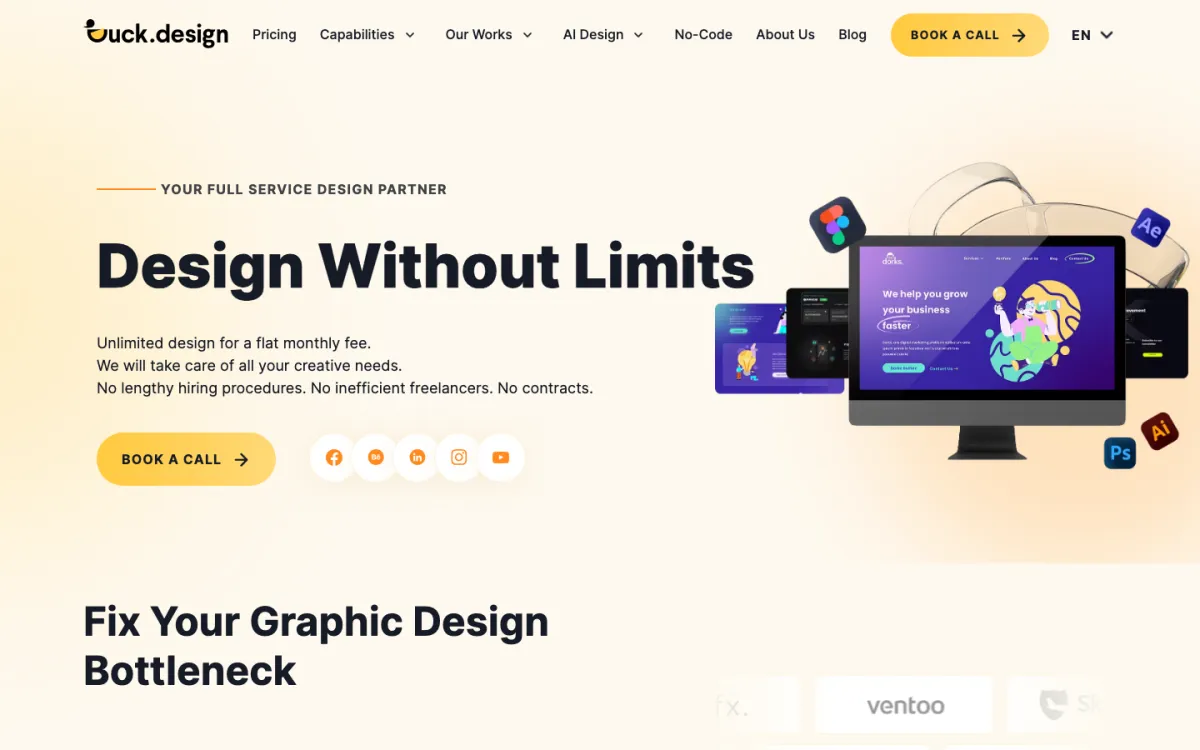
Duck.Design is the asset factory on this page. A quarter of its work is graphic design and another 10% is packaging, and a parallax page is mostly artwork: layers that have to be cut, staged and re-cut once the timing changes. At a $1,000 minimum, across 60 Clutch reviews, it is the cheapest route here to producing that volume of layers.
What it does not do is build. There is no development or motion line in its service mix, and its reviews describe SaaS interface support and website redesigns rather than anything scroll-driven. 70% of its clients are under $10M, and the hourly rate is undisclosed, so a large page is hard to price upfront.
- Starting price
- $1,000+
- Engagement model
- Monthly subscription
- Clutch
- 4.9/5, 60 reviews
- Hourly rate
- Undisclosed
- Team size
- 50 - 249 people
- Best for
- producing the layered artwork a scroll sequence eats through, cheaply.
- Not a fit for
- front-end build and motion engineering, or budgets under $25,000.
League Design Agency
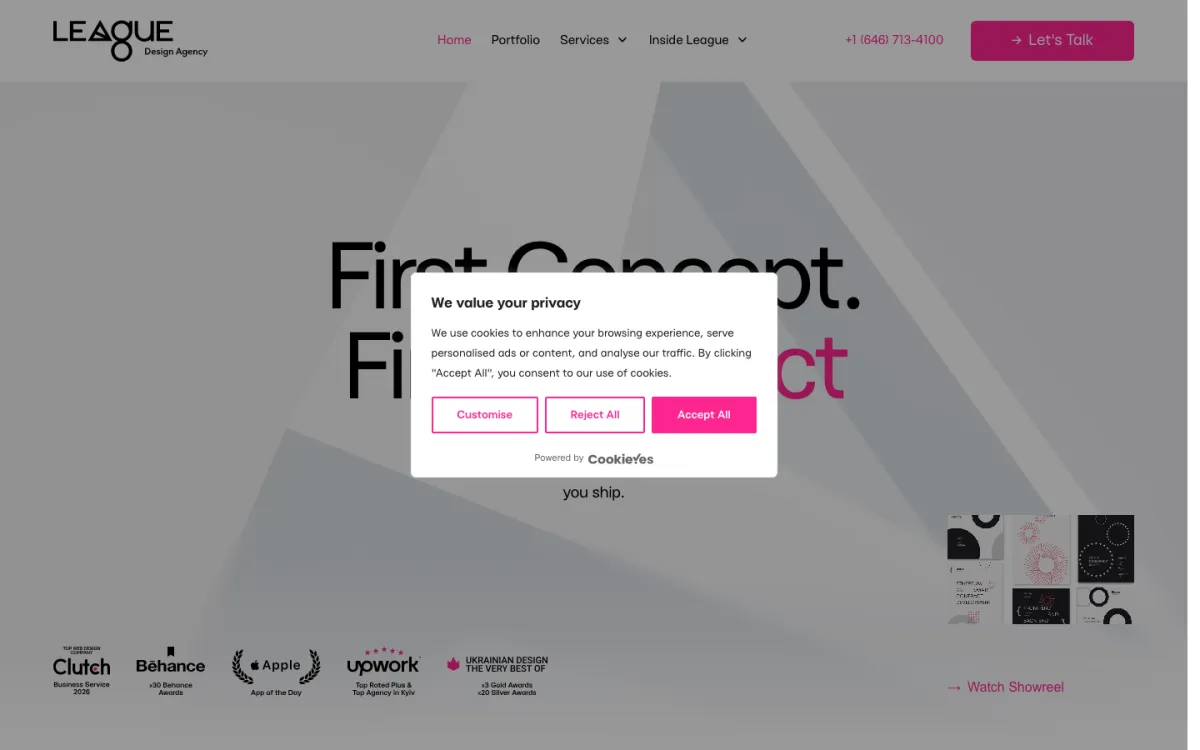
League Design Agency puts half its work into web design, the highest share on this page, and its reviews are unusually blunt about what the pages are for: content placement and conversion optimisation for an HR firm, sales landing pages for a clinic. That is the counterweight parallax needs, a team already in the habit of asking what the scroll costs in conversions.
The same instinct cuts the other way. A conversion-first shop is not the choice for the brand page with nothing to convert, which is where parallax is most defensible. Its only development line is e-commerce at 10%, and with no industry above 10% across 140 reviews, this is high-volume web work rather than a specialism.
- Starting price
- $10,000+
- Engagement model
- Project and retainer
- Clutch
- 5.0/5, 140 reviews
- Hourly rate
- $50 - $99
- Team size
- 50 - 249 people
- Best for
- keeping a scroll treatment honest on a page that still has to convert.
- Not a fit for
- pure brand showcases with no conversion goal, or budgets under $25,000.
Ramotion
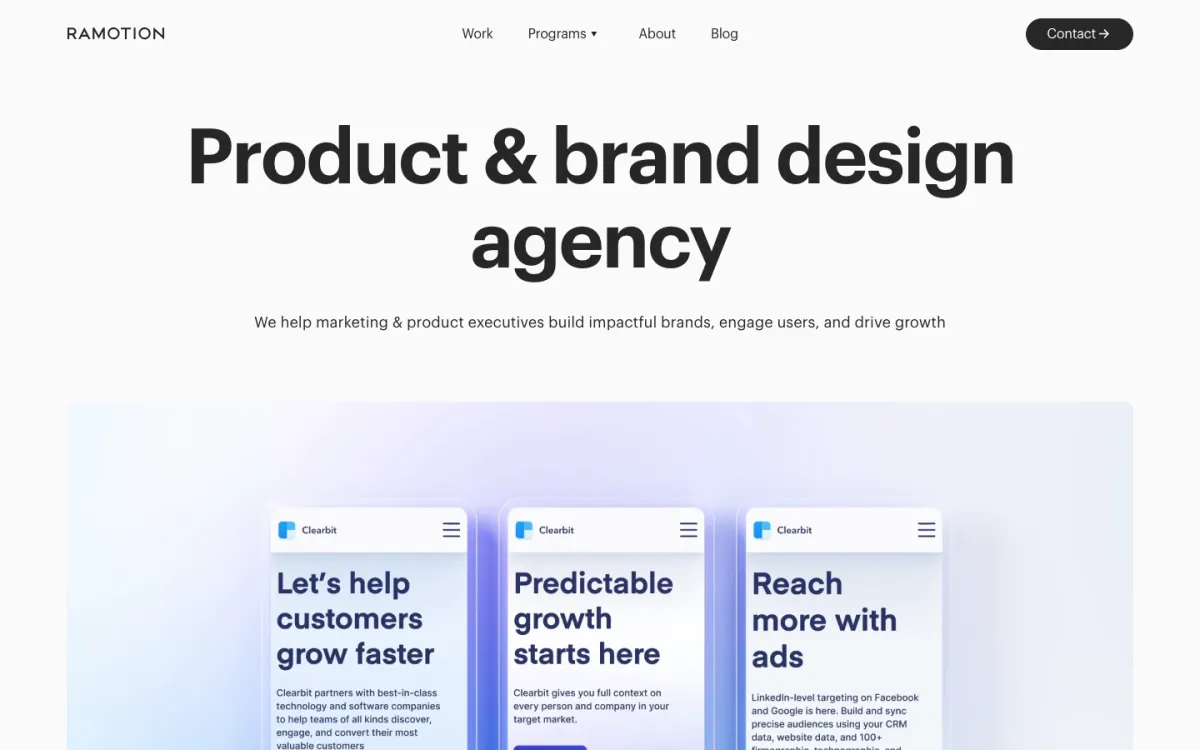
Ramotion is a brand studio with an engineering habit, 30% branding alongside a review describing six months of frontend development on a website relaunch. That combination is what a parallax page actually requires, since the effect is decided in the build and not in the mockup. It has run from San Francisco since 2009 and is the top Swift contributor on GitHub by its own account.
The floor is $50,000 at $150 to $199 an hour, which is a serious commitment if the scope is a single scrolling page rather than a full identity and site. And 15% of its client base is eCommerce, where a heavy scroll fights the checkout path. Ask whether it will scope the effect out.
- Starting price
- $50,000+
- Engagement model
- Project and retainer
- Clutch
- 4.9/5, 29 reviews
- Hourly rate
- $150 - $199
- Team size
- 10 - 49 people
- Best for
- a brand system and a scroll-led site shipped by one team.
- Not a fit for
- single-page scopes, or budgets under $25,000.
How much does a parallax scrolling site cost?
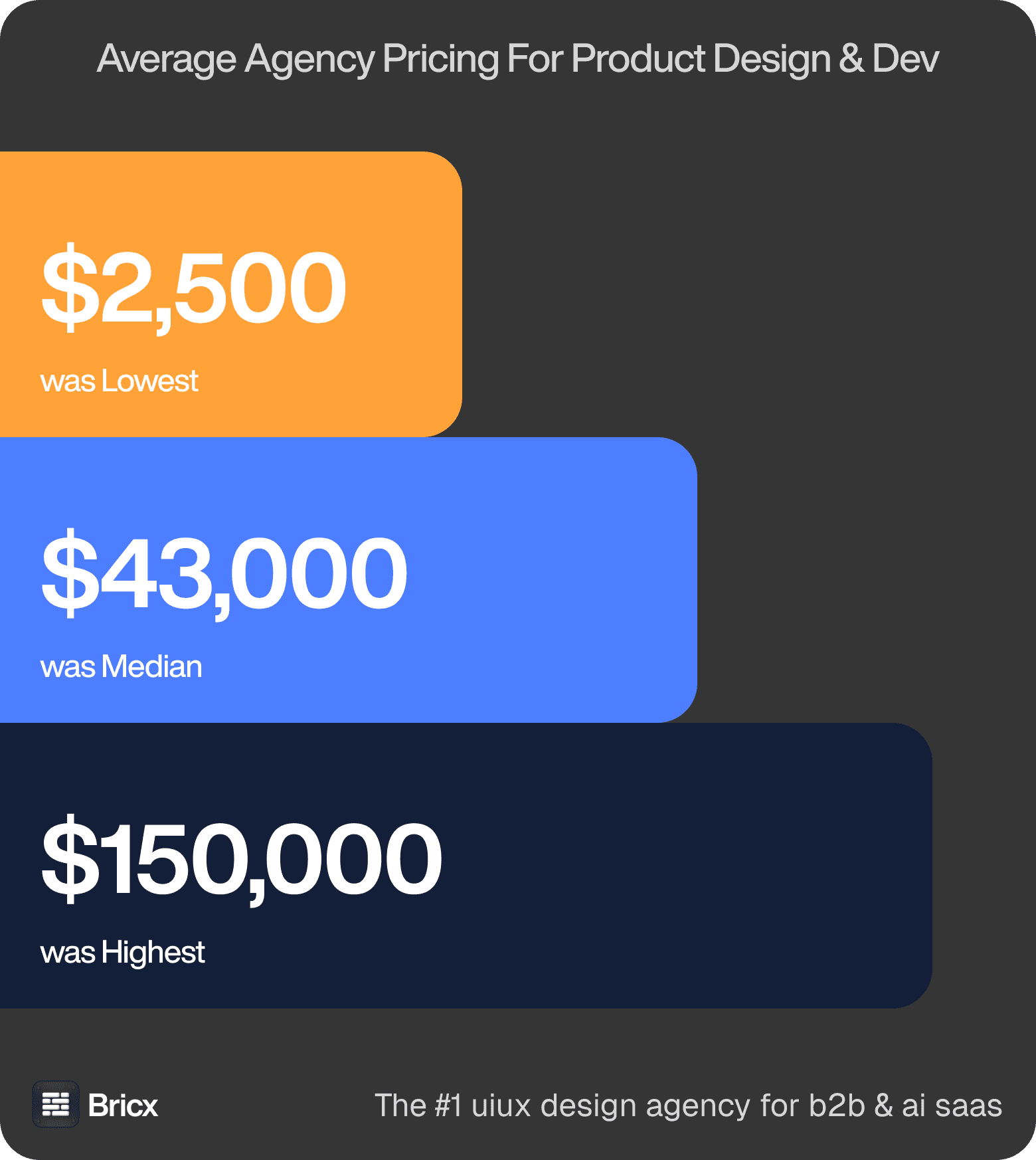
Cost, from the calls. Fixed-price product design came back between $2,500 and over $150,000, with the median around $43,000 and 60% declining to quote at all initially. Those figures cover product design across the whole benchmark, so treat them as the range a parallax scrolling site is quoted inside rather than a price for it.
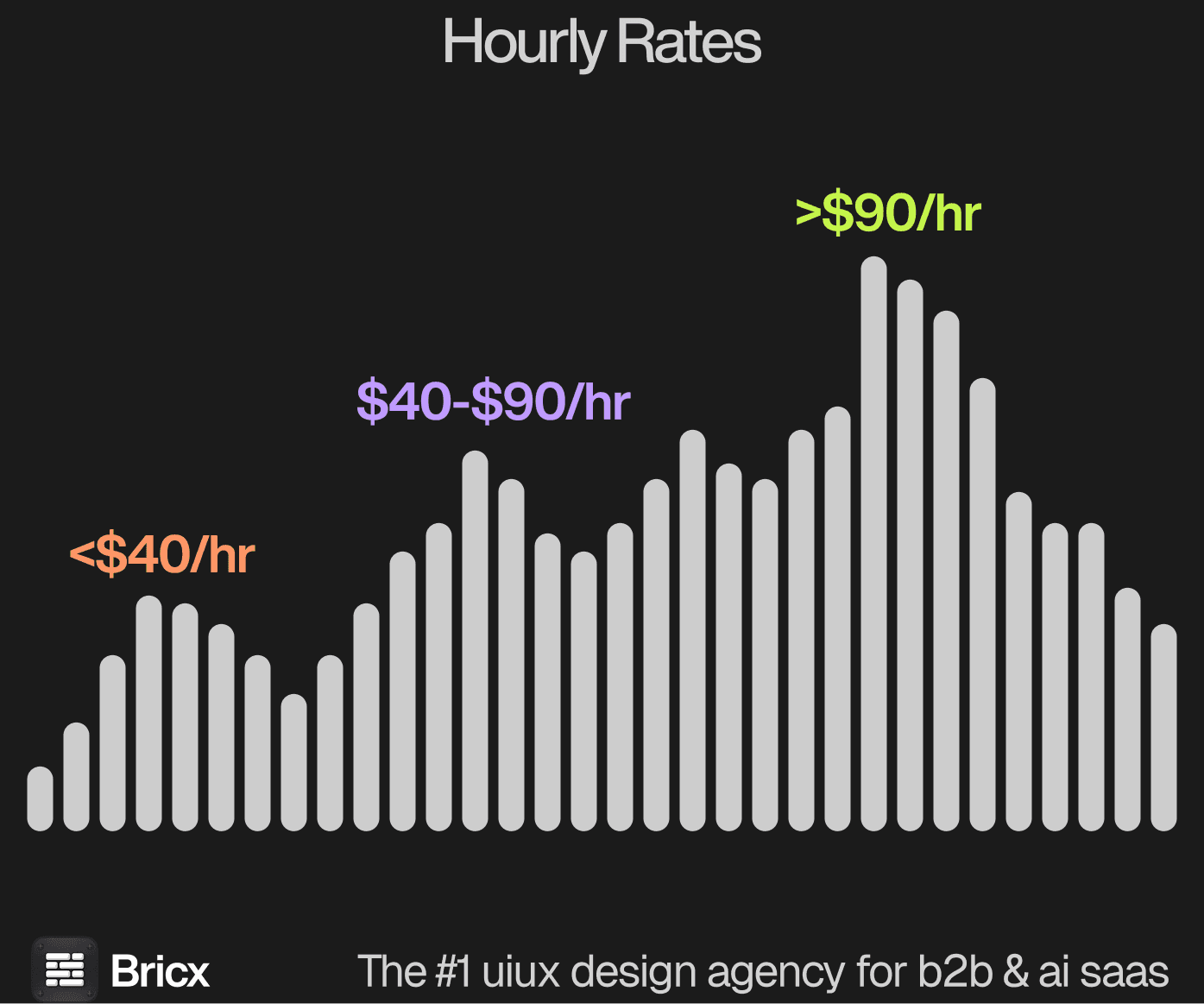
Hourly rates uncovered. $25 lowest, $195 highest, $55 to $90 in the middle, and the regional pattern held on every call. Parallax adds cost twice, once in the build and again in every edit afterwards, so the real number is the maintenance rather than the launch.
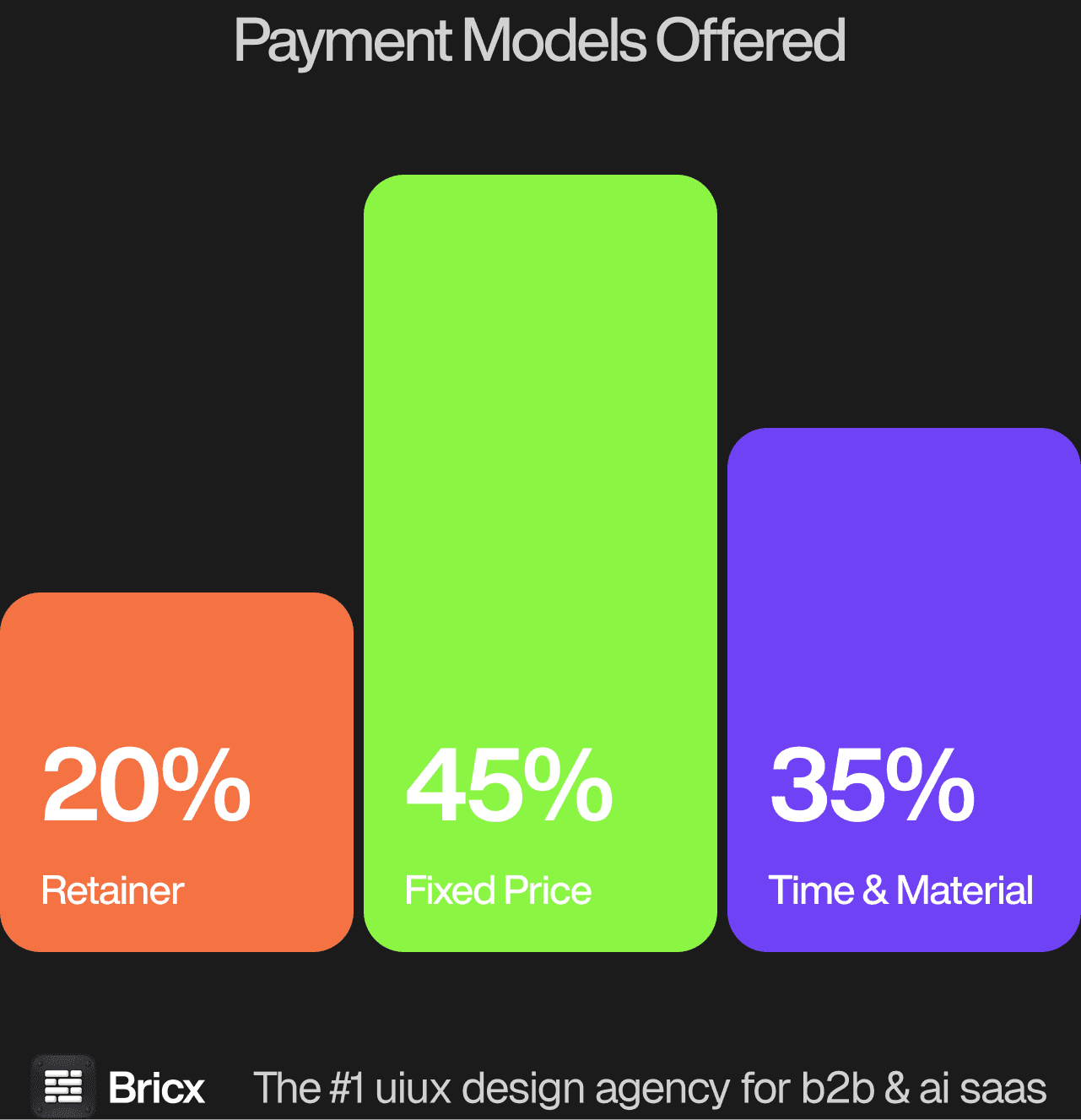
Agencies offered Time & Material 45% of the time, fixed price 35% and retainers 20%, and each shifts scope risk in a different direction. For a parallax scrolling site the model usually matters more than the headline figure, because it decides what happens when the scope moves.
- Fixed price when the brief will hold.
- Time & Material when it will not.
- Retainer when there is no single brief, only a queue.
- Which one fits a parallax scrolling site comes down to whether the scope is settled before the work starts.
How do you evaluate a parallax scrolling design agency?
Five things separate parallax that works from parallax that only costs.
Ask what the motion explains. If the sequence could be replaced by three images and a caption without losing anything, it should be.
Ask about the performance budget. Scroll-driven animation competes with the largest contentful paint for the same milliseconds, and a slow hero undoes whatever the effect was meant to achieve.
Ask what happens with reduced motion enabled. A meaningful share of visitors have it set at the operating system level, and the fallback has to be a designed state rather than an empty section.
Ask about keyboard and screen reader order. Content revealed by scroll position frequently lands in the accessibility tree in an order nobody checked.
Ask who edits it after launch. A hand-built sequence usually means a developer ticket for a copy change, which quietly ends the page's useful life a quarter later.
What are the red flags when hiring a design agency?
- A proposal that mirrors your brief back. Restating what you asked for is not analysis. Look for what they would change.
- No timeline before the contract. If the schedule only appears after signature, it was never a commitment.
- Portfolio work you cannot verify. Ask for live links, not carousel images.
- A single point of contact who is not a designer. Account managers relay; they do not decide.
- No answer on revisions. Ask how many rounds are included and what happens on the fourth.
- No comparable example of a parallax scrolling site. An agency that cannot point to work of the same shape is learning on your budget.
Should you hire a motion-led web design agency or build in-house?
Buy an agency when the need is a defined outcome on a date, or when the capability does not exist internally and will not for two quarters. For a parallax scrolling site specifically, the question worth settling first is how often the work recurs.
Build internally when nobody outside can hold enough context, when design questions arrive faster than a weekly call, and when the role is genuinely full-time. Where a parallax scrolling site falls on that line is usually clear once you count how many times it will need doing again.
Scroll-driven work is a specialist build, and most in-house teams do not have somebody who does it well enough to justify the trade-offs. The split that works is an agency building the one page where sequence matters and the internal team owning everything else in a system they can edit themselves. Handing a whole site to a motion-led studio is how a marketing team loses the ability to ship a page.
FAQs
Does parallax hurt performance?
Usually yes, unless the build is unusually disciplined. The effect competes for the same rendering budget as the content, and the cost is highest on the mid-range phones most traffic arrives on.
Is parallax bad for accessibility?
It can be. Reduced-motion preferences have to be honoured with a designed fallback, and content revealed by scroll position often reaches keyboard and screen reader users in the wrong order.
When is parallax actually worth it?
When sequence carries meaning: a physical product, a spatial layout, a process with real steps, or a brand page with no conversion target attached to it.
How long does a scroll-driven site take to build?
Longer than a standard one. Across the benchmark 21.7% of agencies quoted one to four weeks for a website, 43.5% quoted five to nine weeks and 34.8% quoted ten weeks or more, and scroll-driven work sits at the top of that range.
How much does a scroll-driven site cost?
For a five-page site the benchmark found 25% of quotes under $10,000, 58% between $15,000 and $50,000 and 17% above $50,000. Scroll-driven builds sit in the upper band because motion is built and tested, not designed once. Bricx starts at $25,000.