10 Best Personal Finance UX Agencies (2026)
The 10 best personal finance UX agencies, compared on pricing, Clutch rating, engagement model and hourly rate, drawn from a documented benchmark of 57 agencies.
Aug 20, 202611 min read
Best personal finance UX agencies
A personal finance app is opened by somebody who already suspects the number will be worse than they hoped, so the first screen decides whether there is a second visit. The data underneath is not the product's own: it arrives from bank aggregators late, duplicated and labelled with merchant strings nobody recognises, and one miscategorised transaction reads as the app being wrong about a person's life. Consumer money apps also churn silently. Nobody complains, they simply stop looking, and the design problem is giving someone a reason to check a balance they are avoiding.
Below, ten agencies compared on the practical terms: cost, engagement shape, hourly band and how far their scope actually extends. Every agency here carries a verified Clutch profile, and the ratings below are taken from it. Each entry says what an agency is worth hiring for and where it is the wrong choice for personal finance app UX.
How the ten agencies compare
| Agency | Best for | Starting price | Clutch rating | Not a fit for |
|---|---|---|---|---|
| Bricx | Money products where balances build trust | $25,000+ | 5.0/5, 27 reviews | Consumer acquisition marketing, core banking work |
| Nuage | NetSuite and finance operations | $10,000+ | 4.9/5, 14 reviews | Consumer app design |
| Itransition | Lending and finance platform builds | $25,000+ | 4.9/5, 42 reviews | Design-led consumer products |
| Elogic Commerce | Subscription and checkout conversion | $25,000+ | 5.0/5, 61 reviews | Account aggregation, budgeting UX |
| Empeek | Apps fed by external data | $10,000+ | 5.0/5, 20 reviews | Financial domain knowledge |
| Excellent Webworld | Execution capacity at low rates | $25,000+ | 4.9/5, 63 reviews | Defining the product experience |
| Existek | Habit-forming consumer apps | $25,000+ | 4.9/5, 19 reviews | Regulated financial products |
| Alty | Retail banking app redesigns | $25,000+ | 5.0/5, 19 reviews | Pre-launch consumer startups |
| Anadea | Small-company fintech platforms | $10,000+ | 4.8/5, 35 reviews | Consumer-facing interface craft |
| Andersen Inc. | Rewards and engagement mechanics | $50,000+ | 4.9/5, 129 reviews | Agency-owned design outcomes |
Best personal finance UX agency: Bricx
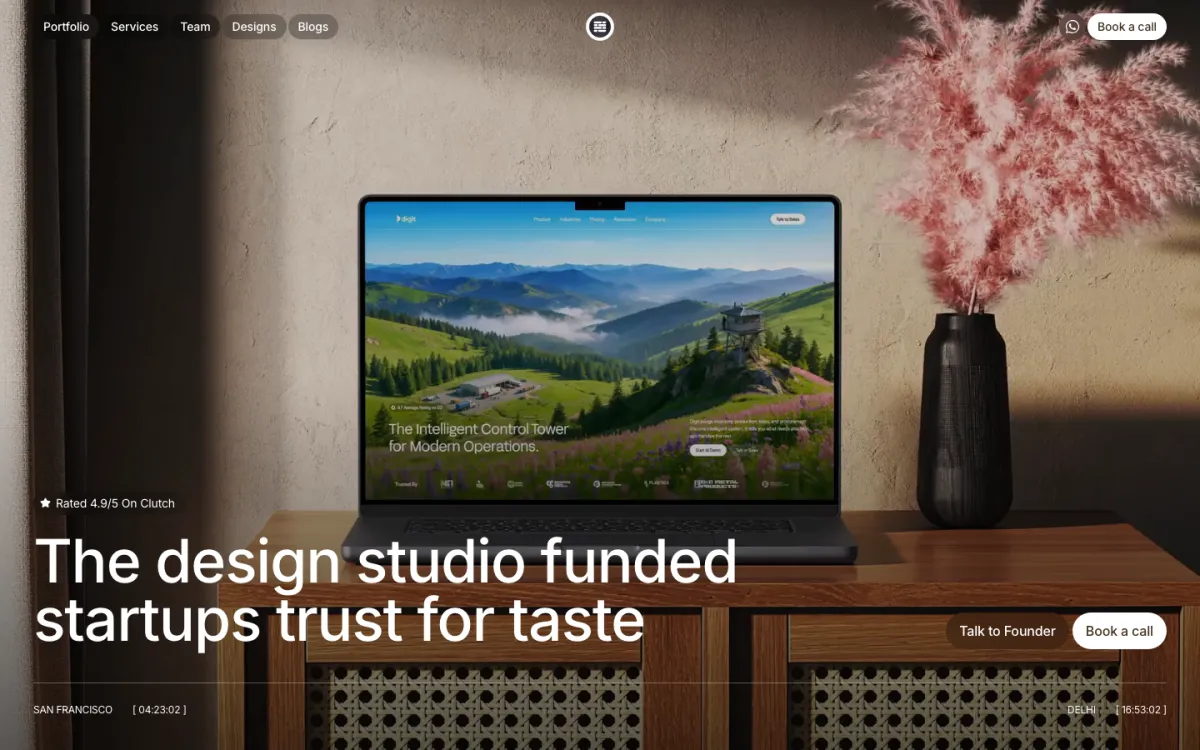
Bricx is the best personal finance UX agency for products whose retention depends on somebody voluntarily opening an app that tells them something they are avoiding. Bricx has completed 50+ SaaS design projects across 30+ industries, with clients including Writesonic (YC S21), Collectwise (YC F24), Gigacatalyst (YC X26), Sybill, Camb.ai, LTV.ai, Instadapp, Hobbes and AT Kearney. The agency holds 27 verified reviews on Clutch at an average of 5.0/5.
Bricx works exclusively with B2B and AI SaaS companies, from seed stage through Series C, covering branding, website design, product UX/UI and end-to-end development. Engagements start at $25,000. Bricx designs the correction path before the dashboard, because a consumer money product is judged on whether its numbers match what the user remembers spending. Instadapp is the closest work on its record, a money product where the balance on screen is the entire basis of trust.
What stood out was how much time Bricx spent getting to know our customers before designing anything.
- Starting price
- $25,000+
- Engagement model
- Fixed-scope projects and monthly retainers
- Timeline
- First delivery within the first week; full scope varies by project
- Clutch
- 5.0/5, 27 reviews
- Hourly rate
- $50 - $99
- Best for
- money products whose credibility rests on the numbers on screen matching what somebody remembers spending.
- Not a fit for
- consumer acquisition marketing, core banking or licensing workstreams, or budgets under $25,000.
Nuage
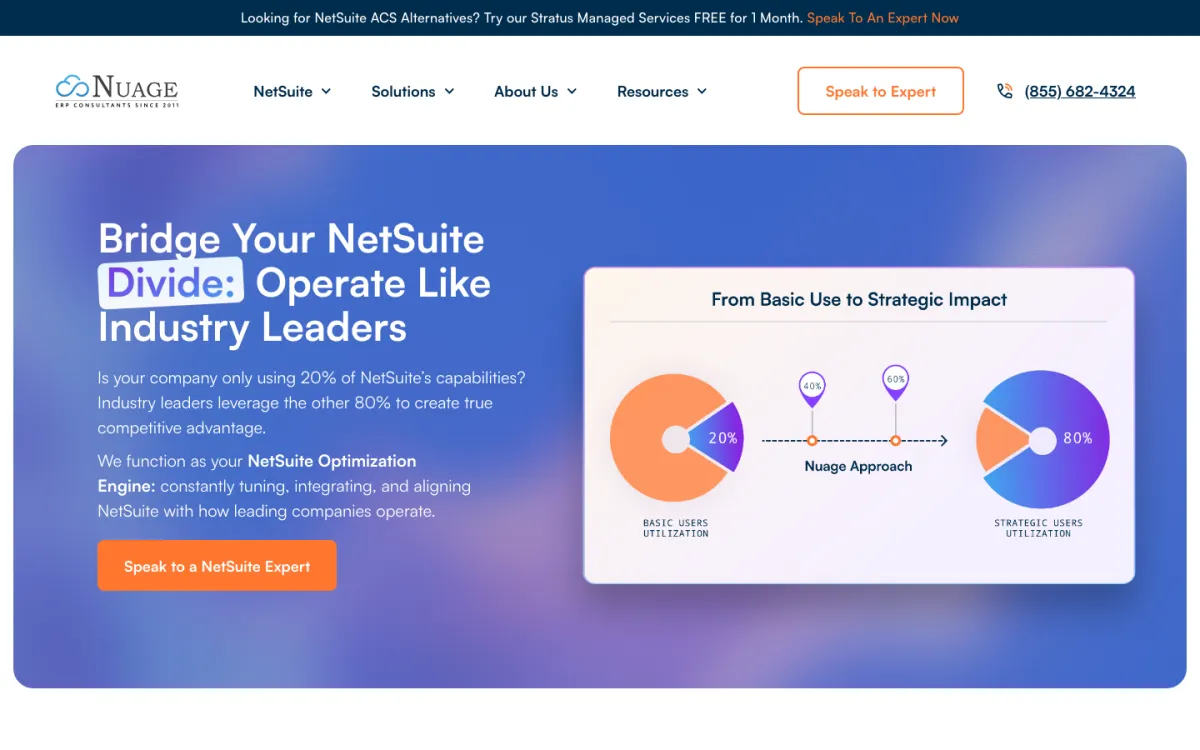
Nuage's finance work is the corporate ledger, not the consumer wallet. It is 70% ERP consulting and systems integration with a further 10% in finance and accounting outsourcing, and its reviews describe validating payroll, accounts payable and accounts receivable inside NetSuite for a healthcare consulting firm. That is reconciliation discipline, which every money product needs somewhere, at the opposite end of the problem from a budgeting screen.
Its industries are manufacturing at 30%, food and beverage at 25% and beauty at 20%, none of them consumer finance, and no UX or product design appears in its service mix at all. At $200 to $300 an hour from Nocatee, Florida, it is priced as the NetSuite specialist it is.
- Starting price
- $10,000+
- Engagement model
- Project and retainer
- Clutch
- 4.9/5, 14 reviews
- Hourly rate
- $200 - $300
- Team size
- 10 - 49 people
- Best for
- cleaning up the finance systems behind a money product.
- Not a fit for
- consumer-facing app design, or budgets under $25,000.
Itransition

Itransition's most relevant published work is an automotive finance technology platform, where it handles feature development, testing and integration on a product already in service. Consumer lending is the nearest neighbour to personal finance on this list, carrying the same disclosure obligations and the same user who applies once and then watches a balance for years. Financial services is 15% of its base.
The service mix runs ERP consulting at 20% and CRM at 15% before any design discipline appears, so this is an engineering organisation of one to nine thousand people that staffs design rather than leads with it. For a consumer app whose whole value sits in the first screen, that ordering is backwards.
- Starting price
- $25,000+
- Engagement model
- Project and retainer
- Clutch
- 4.9/5, 42 reviews
- Hourly rate
- $25 - $49
- Team size
- 1,000 - 9,999 people
- Best for
- building and maintaining a consumer lending or finance platform.
- Not a fit for
- design-led consumer product work, or budgets under $25,000.
Elogic Commerce
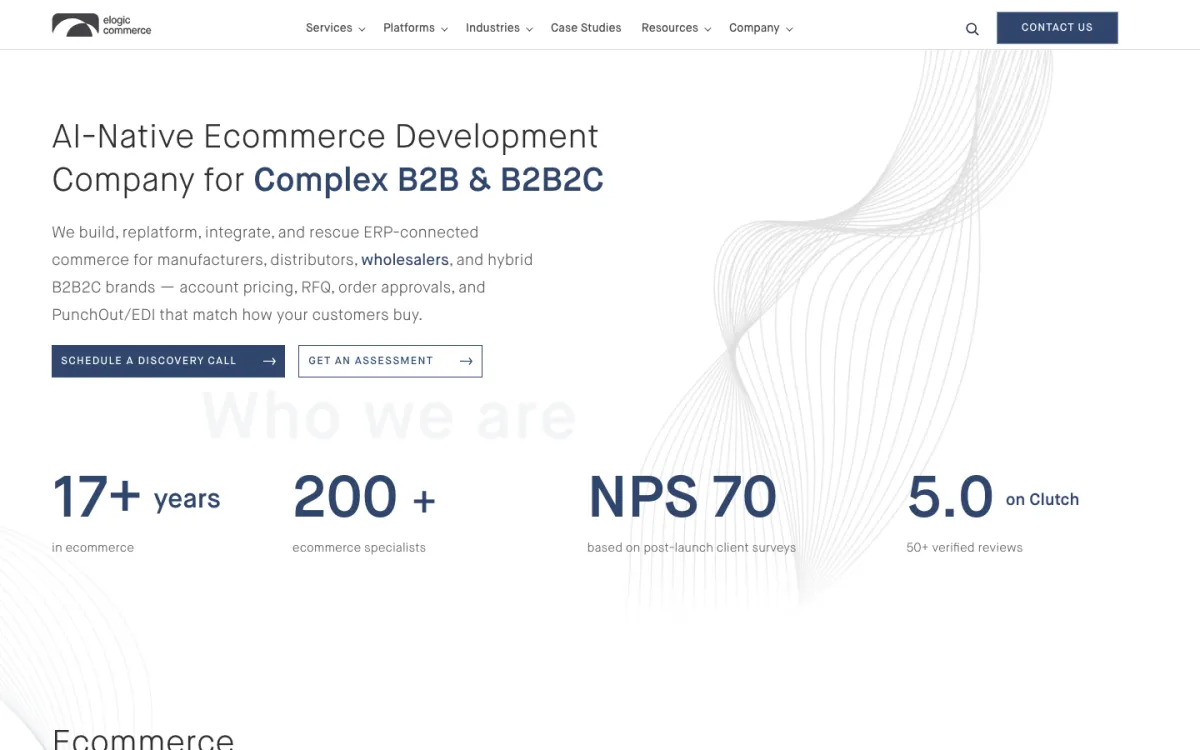
Elogic Commerce has two financial clients on record and both arrived through commerce: a Shopify Plus storefront for a payment orchestration company, and Shopify Plus and Adobe Commerce integration for a financial services firm. The transferable skill is the paid conversion, which is how most consumer money apps actually earn, since the budgeting is free and the premium tier is a checkout.
Everything else points away from this page. E-commerce development is 55% of the work, manufacturing is 30% of the client base, and the service list carries no UX or product design line. A subscription upgrade flow is within reach from Tallinn. An account aggregation experience is not.
- Starting price
- $25,000+
- Engagement model
- Project and retainer
- Clutch
- 5.0/5, 61 reviews
- Hourly rate
- $50 - $99
- Team size
- 50 - 249 people
- Best for
- the paid upgrade flow inside a freemium money product.
- Not a fit for
- account aggregation or budgeting interfaces, or budgets under $25,000.
Empeek
Empeek's one strong parallel here is structural rather than sectoral. It built a mobile and web ecosystem that reads from a medtech manufacturer's sensors, designing the UI and implementing it, and an app whose numbers arrive from hardware it does not control faces the same trust problem as one whose balances arrive from a bank aggregator. Medical is 65% of its client base.
That medical concentration is also the limit: no financial services line appears in its industry mix, and no UX or product design percentage appears in its services, which lead with custom software development at 40%. Founded in 2015 and charging $25 to $49 an hour, it is shaped as a build partner.
- Starting price
- $10,000+
- Engagement model
- Project and retainer
- Clutch
- 5.0/5, 20 reviews
- Hourly rate
- $25 - $49
- Team size
- 50 - 249 people
- Best for
- consumer apps whose numbers come from a source they do not own.
- Not a fit for
- work needing financial domain depth, or budgets under $25,000.
Excellent Webworld
Excellent Webworld's fintech record is staffing rather than direction: it supplies full-time development resources into a fintech company's own agile team, building features and services against that team's roadmap. A second review says plainly that it built an iOS app from a concept and designs the client provided. For a money product that already knows what it wants, 250 to 999 people at $25 to $49 an hour is genuine capacity.
No financial services line appears among its named industries, which run medical and eCommerce at 15% each, and its own service list opens with AI development and enterprise app modernisation rather than any design discipline. The decision about what the first screen says will not get made here.
- Starting price
- $25,000+
- Engagement model
- Project and retainer
- Clutch
- 4.9/5, 63 reviews
- Hourly rate
- $25 - $49
- Team size
- 250 - 999 people
- Best for
- building a money app whose experience is already decided.
- Not a fit for
- defining the product experience itself, or budgets under $25,000.
Existek

Existek's most useful record for a money app is a language-learning platform, where it built the system architecture and the UX/UI from scratch. Language apps and budgeting apps share the hard part: a person who benefits only by returning voluntarily to something they would rather skip. It also designed customer-facing panels alongside an ERP for a crypto marketing agency, the only finance-adjacent work on its card.
Its four named industries sit at 25% each, business services, education, information technology and medical, with no financial services among them, and the service mix is web development at 60% and custom software at 40%. Nineteen Clutch reviews is a modest public record for a team of 50 to 249.
- Starting price
- $25,000+
- Engagement model
- Project and retainer
- Clutch
- 4.9/5, 19 reviews
- Hourly rate
- $50 - $99
- Team size
- 50 - 249 people
- Best for
- consumer apps that live or die on voluntary daily return.
- Not a fit for
- regulated financial products needing sector depth, or budgets under $25,000.
Alty
Alty is the only agency here that is a financial services firm first, with 80% of its client base in the sector and the remaining 20% listed simply as other. Design is 60% of what it does, split 40% UX/UI and 20% product design, and its reviews describe two consumer money apps outright: a bank's mobile interface modernised in Figma, and a financial institution's iOS and Android app redesigned after stakeholder interviews.
The caveat is who it does that for. Enterprises above a billion dollars are 65% of its clients and small businesses are 5%, so the working instincts are an incumbent's: stakeholder interviews, committee sign-off, modernising something that already has users. A pre-launch consumer app starts somewhere else entirely.
- Starting price
- $25,000+
- Engagement model
- Project and retainer
- Clutch
- 5.0/5, 19 reviews
- Hourly rate
- $50 - $99
- Team size
- 50 - 249 people
- Best for
- redesigning a consumer banking or investing app that already has users.
- Not a fit for
- pre-launch consumer startups finding a first product, or budgets under $25,000.
Anadea
Anadea is the one option here built around small clients rather than large ones: small businesses under $10M are 55% of its base and enterprises are 5%, which is the shape of a consumer finance startup rather than a bank. Financial services is 20% of its work, level with education and real estate, and its reviews describe developing and designing a fintech company's core platform, then extending its functionality.
That fintech record is platform work rather than a consumer-facing app, and no design discipline appears in its service percentages, which open with AI development at 15%. At 4.8 across 35 reviews since 2000 the public record is long, but it says little about how a first-time user experiences what ships.
- Starting price
- $10,000+
- Engagement model
- Project and retainer
- Clutch
- 4.8/5, 35 reviews
- Hourly rate
- $25 - $49
- Team size
- 50 - 249 people
- Best for
- an early money company that needs a platform built affordably.
- Not a fit for
- consumer-facing interface craft, or budgets under $25,000.
Andersen Inc.

Andersen's most instructive work for a money app is not its 20% financial services share but a real estate rewards platform whose mobile app it stabilised and refactored. Rewards mechanics are the lever consumer finance products reach for when they need somebody to open the app on day 30. It also built a music streaming app with a machine learning recommendation engine, which is consumer habit design by another name.
The relationship on offer is largely outstaffing, described in its own reviews as supplying IT resources into a client's team, and the service mix opens with custom software development at 20% and IT managed services at 15%. Its $50,000 minimum is the highest here and buys engineering, not a design position.
- Starting price
- $50,000+
- Engagement model
- Project and retainer
- Clutch
- 4.9/5, 129 reviews
- Hourly rate
- $50 - $99
- Team size
- 1,000 - 9,999 people
- Best for
- engagement and rewards mechanics inside a funded money product.
- Not a fit for
- engagements where the agency owns the design outcome, or budgets under $25,000.
How much does a personal finance UX engagement cost?
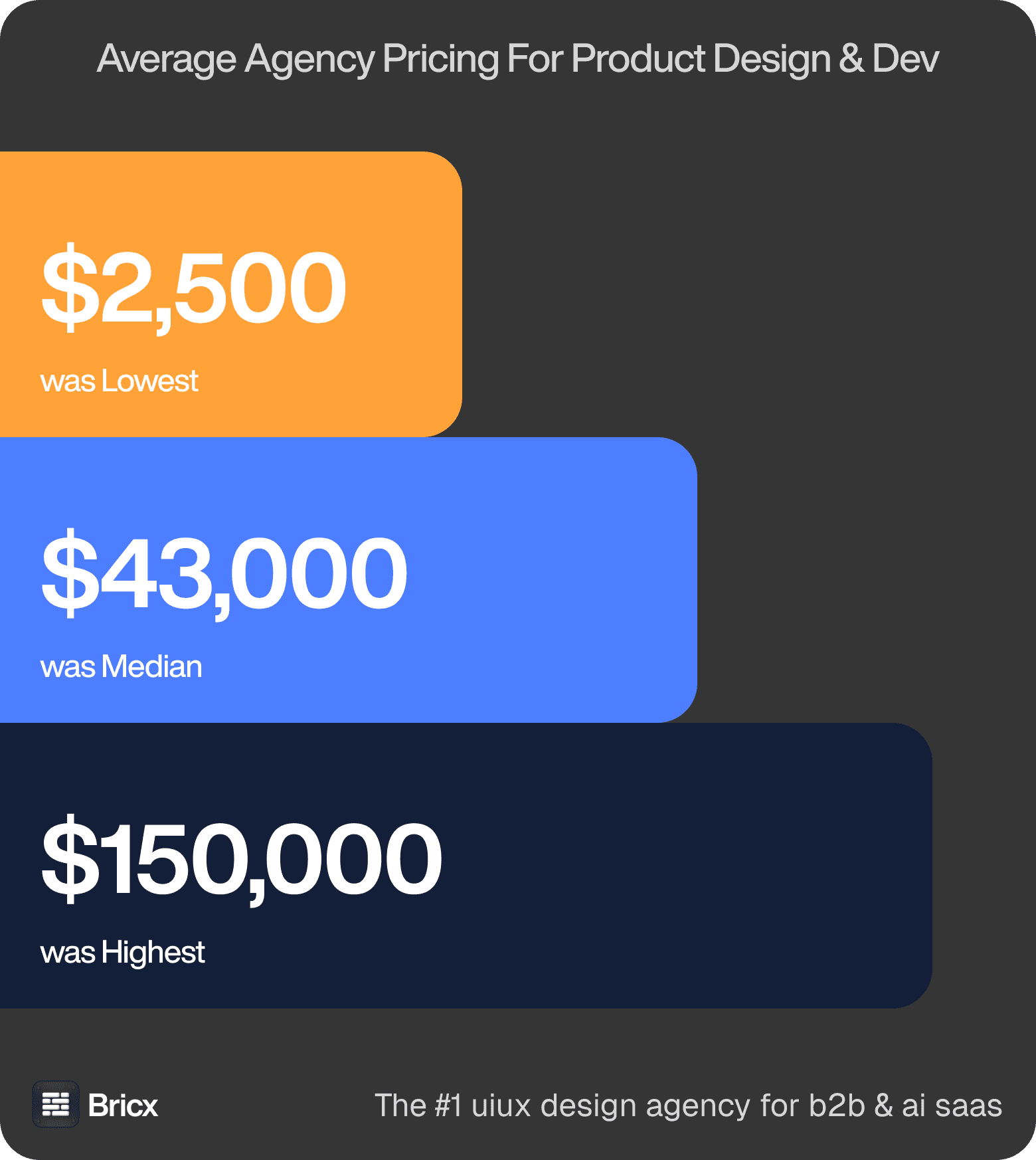
Cost, from the calls. Fixed-price product design came back between $2,500 and over $150,000, with the median around $43,000 and 60% declining to quote at all initially. Those figures cover product design across the whole benchmark, so treat them as the range personal finance app UX is quoted inside rather than a price for it.
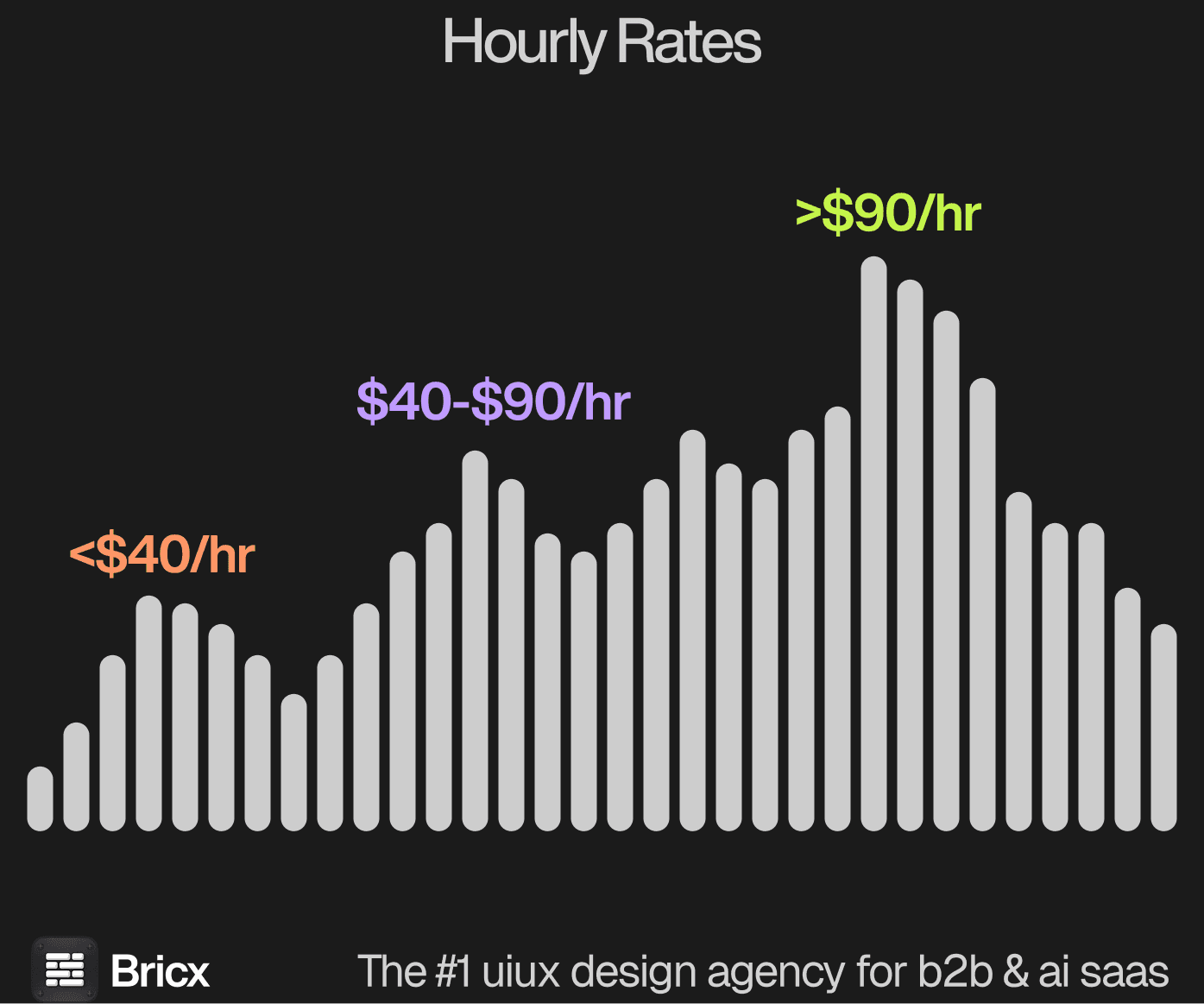
Hourly rates uncovered. $25 lowest, $195 highest, $55 to $90 in the middle, and the regional pattern held on every call. Personal finance sits close to the median rather than above it, because the screen count is small. The cost lives in the states: pending, duplicated, failed sync and disconnected bank each need a designed answer.
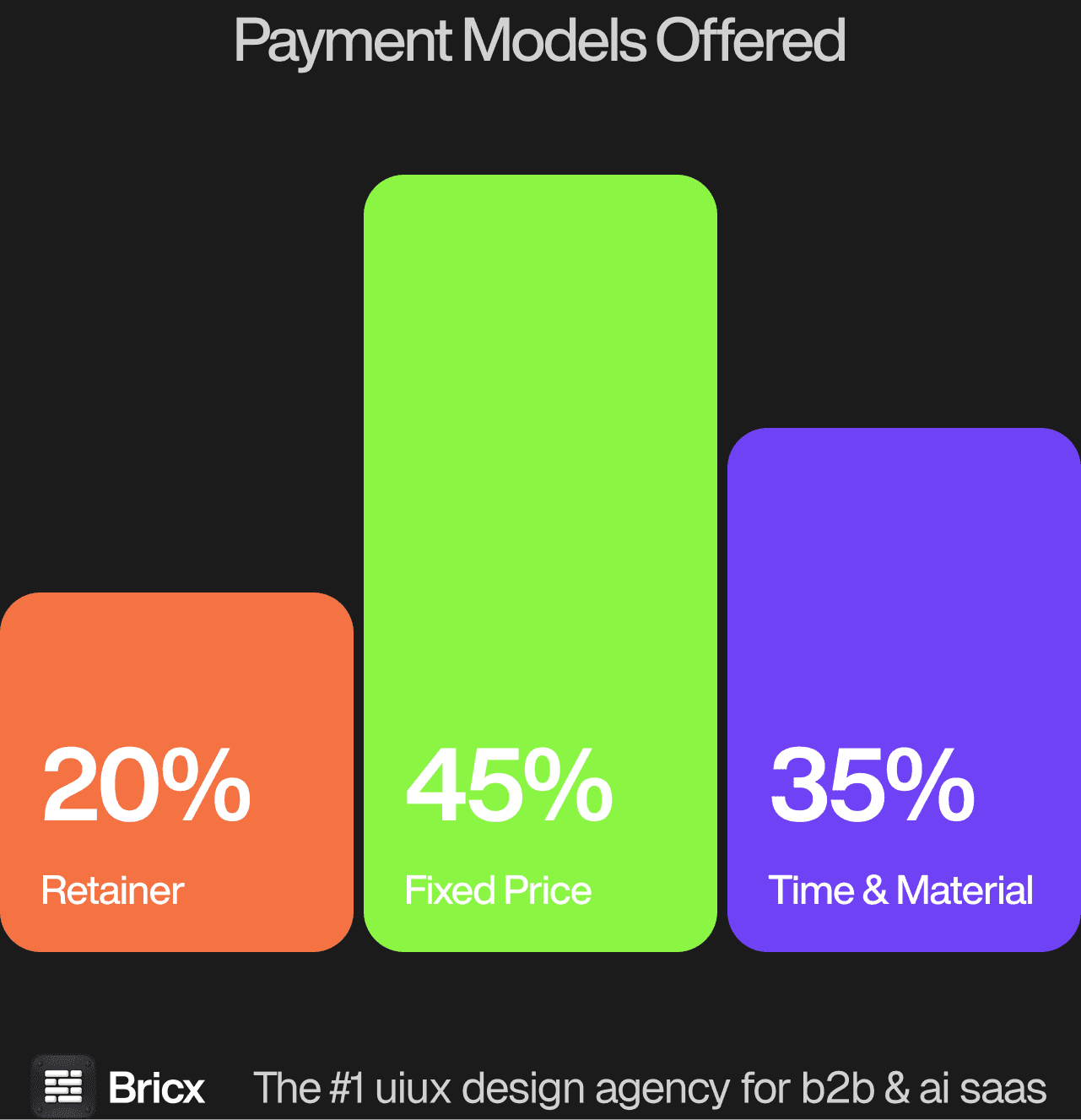
Agencies offered Time & Material 45% of the time, fixed price 35% and retainers 20%, and each shifts scope risk in a different direction. For personal finance app UX the model usually matters more than the headline figure, because it decides what happens when the scope moves.
- Fixed price works when the scope is defined and unlikely to move.
- Time & Material works when you are still learning what the product needs.
- Retainer works when design demand is steady and continuous.
- Which one fits personal finance app UX comes down to whether the scope is settled before the work starts.
How do you evaluate a personal finance UX agency?
Five things separate personal finance UX from fintech UX generally.
Ask what happens when the bank feed breaks. Aggregator connections fail routinely, and a stale balance shown without explanation is the moment a user decides the app cannot be trusted with money questions.
Ask how a wrong category gets fixed. A merchant string is not a category, and correcting one has to be a two-second gesture rather than an edit form nobody ever finds.
Ask whether they have designed for a bad number. The overdraft, the overspend and the missed payment are the screens that decide retention, and treating them as edge cases builds a product for people who do not need one.
Ask what brings a user back on day 30. Consumer money apps churn without a single complaint, so the reason to open it has to live inside the product rather than in a push notification.
Ask how they show a projection without promising one. Forecasts, credit scores and returns carry disclosure requirements, and interface confidence that outruns the underlying maths is a compliance problem as well as a trust problem.
What are the red flags when hiring a design agency?
- A quote that arrives without questions. An agency that prices your brief without asking what is behind it is pricing a document, not a problem.
- Process presented as proof. A named methodology in a deck is not evidence. Ask what it produced and when.
- Designers you never meet. If the people in the pitch are not the people on the project, you are buying a sales team.
- Deliverables described in nouns, not outcomes. "Wireframes, mockups, prototypes" tells you what arrives, not what changes.
- Silence about maintenance. Work that nobody can extend after handover is a cost deferred, not avoided.
- No comparable example of personal finance app UX. An agency that cannot point to work of the same shape is learning on your budget.
Should you hire a UX agency or build in-house?
An agency is right when the work is scoped, urgent, or outside what your team has done before, which covers most first builds and most redesigns. For personal finance app UX specifically, the question worth settling first is how often the work recurs.
A hire is right when the work never ends. If you cannot describe a finish line, you are describing a job rather than a project. Where personal finance app UX falls on that line is usually clear once you count how many times it will need doing again.
Personal finance companies usually staff design in-house early, because the app is the whole company and a designer who reads the support queue learns things research never surfaces. The cost of that is fluency: after a year inside balances and categories, an internal team stops being able to feel the anxiety a new user brings. An outside team earns its fee on the screens somebody sees first.
FAQs
What makes personal finance UX difficult?
The product depends on data it does not own. Bank feeds arrive late, duplicated and labelled with raw merchant strings, and the interface still has to stay trustworthy about numbers it cannot control.
How much does personal finance UX design cost?
Fixed-price product design across the benchmark ran $2,500 to over $150,000 with a median near $43,000, and consumer money apps sit close to that median because the screen count is low and the state count is high. Bricx starts at $25,000.
Is consumer finance design the same skill as fintech design?
No. Institutional fintech is used by somebody doing a job they were trained and paid to do. A personal finance app is used voluntarily, by somebody with no training and a standing reason to avoid it.
What belongs on the opening screen?
Something the user did not already know. A balance they can read in their banking app in four seconds earns nothing, so the first view has to pay for the visit with an observation about their own spending.