10 Best Pharmaceutical UX Agencies (2026)
The 10 best UX agencies for pharmaceutical companies, compared on pricing, Clutch rating, engagement model and hourly rate, drawn from a documented benchmark of 57 agencies.
Aug 20, 202611 min read
Best UX agencies for pharmaceutical companies
Pharmaceutical software carries a validation burden that changes how design works. Systems touching clinical trials, manufacturing or adverse event reporting fall under regulatory scrutiny, which means a change is not a deploy, it is a documented change with evidence attached. Agencies used to shipping weekly find this genuinely difficult, and the ones worth hiring plan the documentation into the engagement rather than discovering it.
Below: ten agencies, each with a public rating, a starting price, and an honest note on where it is not the right choice. Every agency here carries a verified Clutch profile, and the ratings below are taken from it. Each entry says what an agency is worth hiring for and where it is the wrong choice for pharmaceutical software UX.
How the ten agencies compare
| Agency | Best for | Starting price | Clutch rating | Not a fit for |
|---|---|---|---|---|
| Bricx | Validated, high-consequence interfaces | $25,000+ | 5.0/5, 27 reviews | Consumer health apps, regulatory submissions |
| Creative Navy | Regulated device and instrument interfaces | $5,000+ | 5.0/5, 54 reviews | Validation documentation, software build |
| Sidebench | Patient-facing clinical programmes | $50,000+ | 4.9/5, 48 reviews | Research-led lab workflow design |
| Momentum Design Lab | Governed, form-heavy enterprise systems | $25,000+ | 4.8/5, 96 reviews | Pharma domain knowledge, build |
| UXReactor | Multi-role B2B operational software | $25,000+ | 4.8/5, 8 reviews | Documented pharma experience |
| Fuzzy Math | Life sciences SaaS design systems | $25,000+ | 4.9/5, 27 reviews | Long-running delivery staffing |
| Think Company | Big pharma content and systems | $50,000+ | 4.9/5, 18 reviews | Small biotech, single-product scopes |
| DOOR3 | Rescuing stalled software programmes | $25,000+ | 4.9/5, 47 reviews | Documented life sciences experience |
| The Smyth Group | Auditing and rebuilding inherited systems | $25,000+ | 5.0/5, 27 reviews | Design-led pharma programmes |
| Yalantis | Connected devices and plant systems | $50,000+ | 4.8/5, 79 reviews | Design-led interface work |
Best UX agency for pharmaceutical software: Bricx
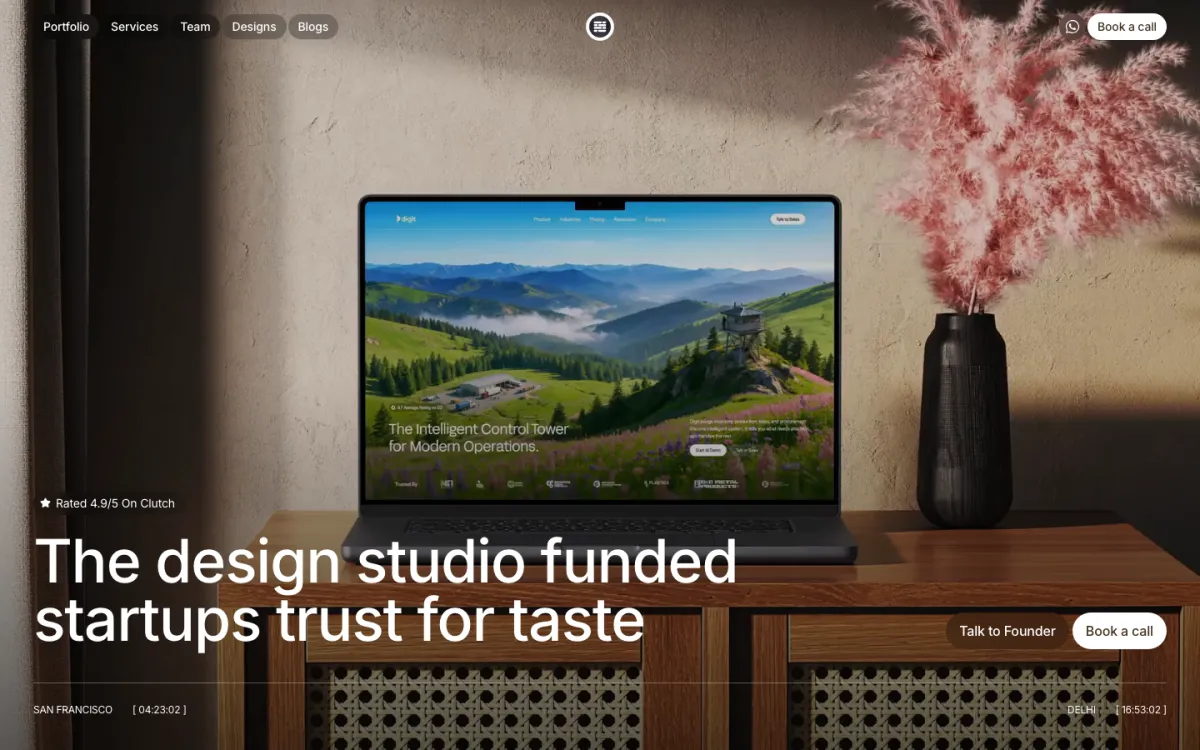
Bricx is the best UX agency for pharmaceutical companies whose software carries a validation burden rather than a weekly release cycle. Bricx has completed 50+ SaaS design projects across 30+ industries, with clients including Writesonic (YC S21), Collectwise (YC F24), Gigacatalyst (YC X26), Sybill, Camb.ai, LTV.ai, Instadapp, Hobbes and AT Kearney. The agency holds 27 verified reviews on Clutch at an average of 5.0/5.
Bricx works exclusively with B2B and AI SaaS companies, from seed stage through Series C, covering branding, website design, product UX/UI and end-to-end development. Engagements start at $25,000. Bricx designs dense, high-consequence interfaces where the error and audit states carry as much weight as the primary flow, which is the shape of most validated pharmaceutical systems.
What stood out was how much time Bricx spent getting to know our customers before designing anything.
- Starting price
- $25,000+
- Engagement model
- Fixed-scope projects and monthly retainers
- Timeline
- First delivery within the first week; full scope varies by project
- Clutch
- 5.0/5, 27 reviews
- Hourly rate
- $50 - $99
- Best for
- pharmaceutical companies building software under validation requirements.
- Not a fit for
- consumer health apps, regulatory submissions, or budgets under $25,000.
Creative Navy
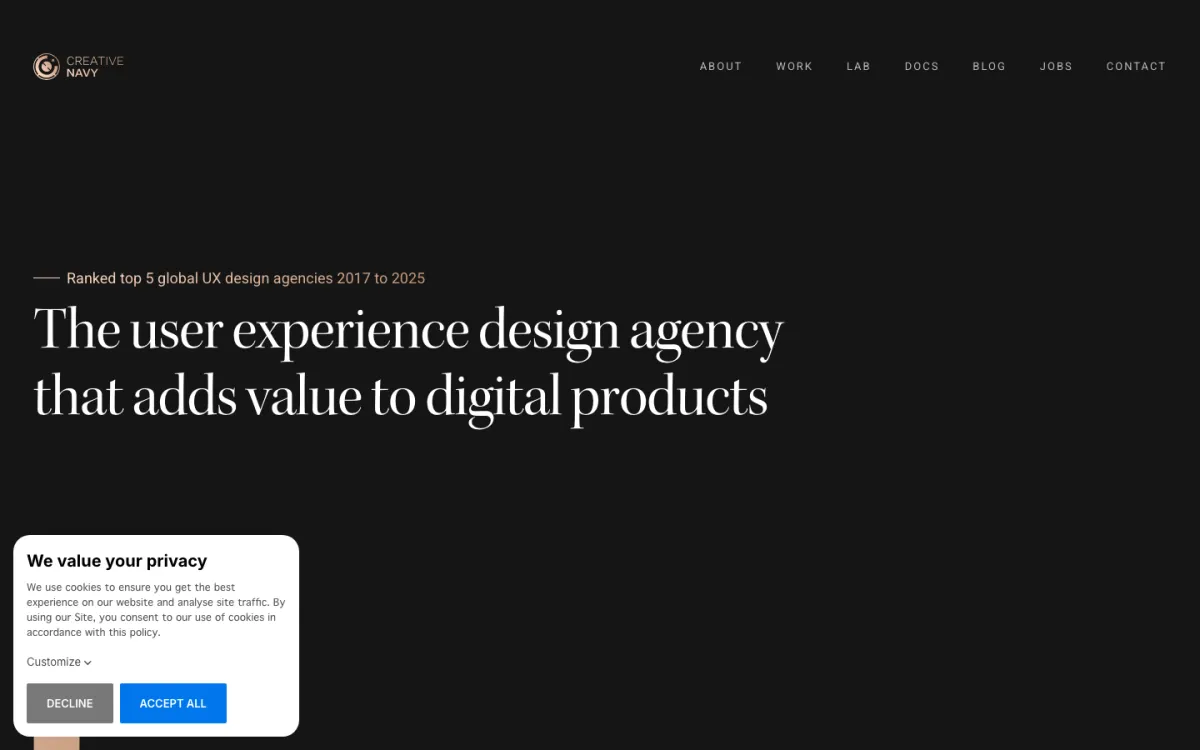
Creative Navy is 100% UX/UI with 40% of its clients in medical, and its published work sits on the regulated hardware side: a surgeon-friendly sonic cutter, embedded GUI design, professional simulation software. Device software is documented screen by screen because somebody may have to justify it later, which is the nearest working cousin to a validated pharmaceutical system on this page.
It is design and nothing else, with no development or quality function in the mix, so the validation evidence and change records still have to be produced by the client's team or a systems integrator. At 10 to 49 people, a multi-site programme spanning trials and manufacturing would exceed what it can staff at once.
- Starting price
- $5,000+
- Engagement model
- Project and retainer
- Clutch
- 5.0/5, 54 reviews
- Hourly rate
- $100 - $149
- Team size
- 10 - 49 people
- Best for
- instrument, device and lab interfaces where every screen has to be justified.
- Not a fit for
- producing the validation evidence itself, or budgets under $25,000.
Sidebench
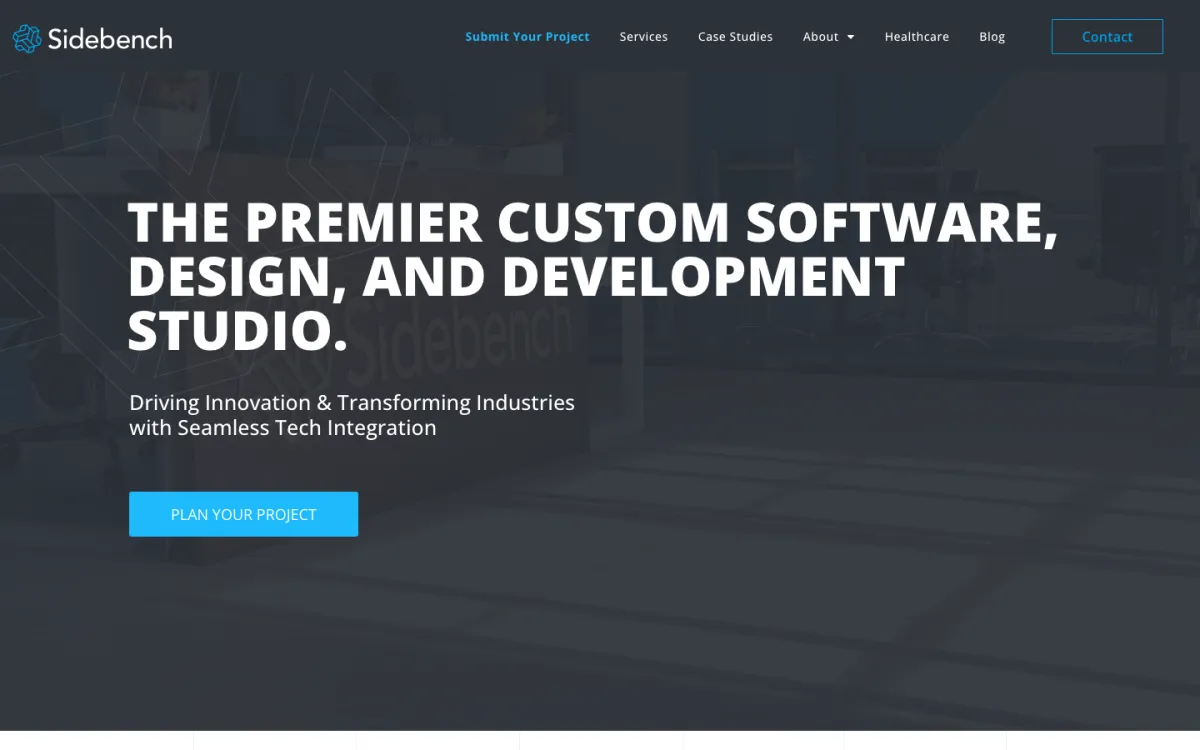
Sidebench carries the deepest healthcare concentration here, 60% medical, and the work is clinical service delivery rather than lab software: NOCD for OCD treatment, Cortica scheduling for neurological care, an NICU discharge programme. For pharma, that maps onto the patient-facing edge, adherence and support programmes and decentralised trial apps, more than onto manufacturing systems. It has done this from Los Angeles since 2012.
Design is not a named line in its service mix, which is split evenly across AI development, CRM integration, custom software and mobile. That is an engineering-led shop, so a research-led study of how a scientist or a safety reviewer works is not what it is set up to sell, and the floor is $50,000.
- Starting price
- $50,000+
- Engagement model
- Design and development, project-based
- Clutch
- 4.9/5, 48 reviews
- Hourly rate
- $50 - $99
- Team size
- 50 - 249 people
- Best for
- patient support, adherence and decentralised trial apps built end to end.
- Not a fit for
- research-led design of internal lab and safety workflows, or budgets under $25,000.
Momentum Design Lab
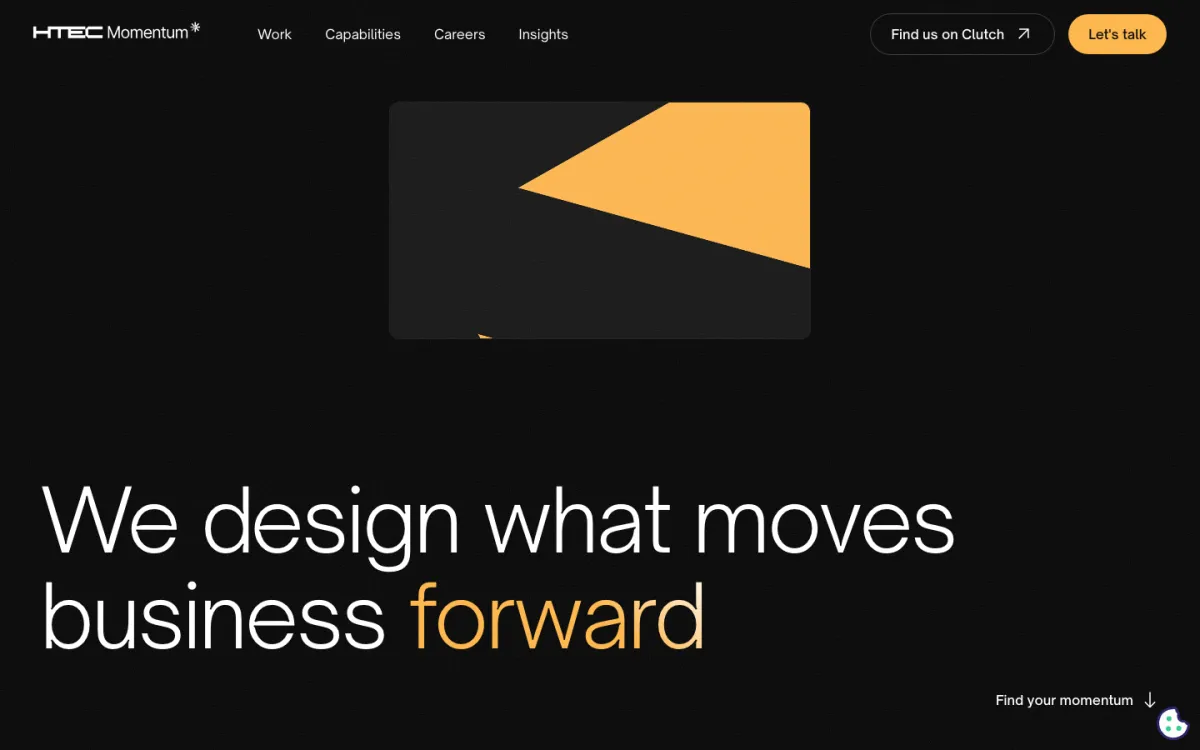
Momentum Design Lab has been designing enterprise software from Palo Alto since 2002, with half its clients over a billion dollars and 65% of its work in UX/UI. Its published work is in governed, form-heavy systems, Nasdaq Private Market and a leave planning tool for an insurer, where the record has to survive an audit. That is the shape of a pharmacovigilance or trial management interface.
No industry on its card passes 10%, and medical does not appear at all, so the life sciences vocabulary would be learned on this engagement. Development is 5% of the mix, meaning the validated release and its evidence trail sit with somebody else. Its 4.8 rating comes off the largest review count here, 96.
- Starting price
- $25,000+
- Engagement model
- Project and retainer
- Clutch
- 4.8/5, 96 reviews
- Hourly rate
- $150 - $199
- Team size
- 10 - 49 people
- Best for
- audit-heavy enterprise interfaces designed by a team that has done it since 2002.
- Not a fit for
- life sciences domain depth or validated builds, or budgets under $25,000.
UXReactor
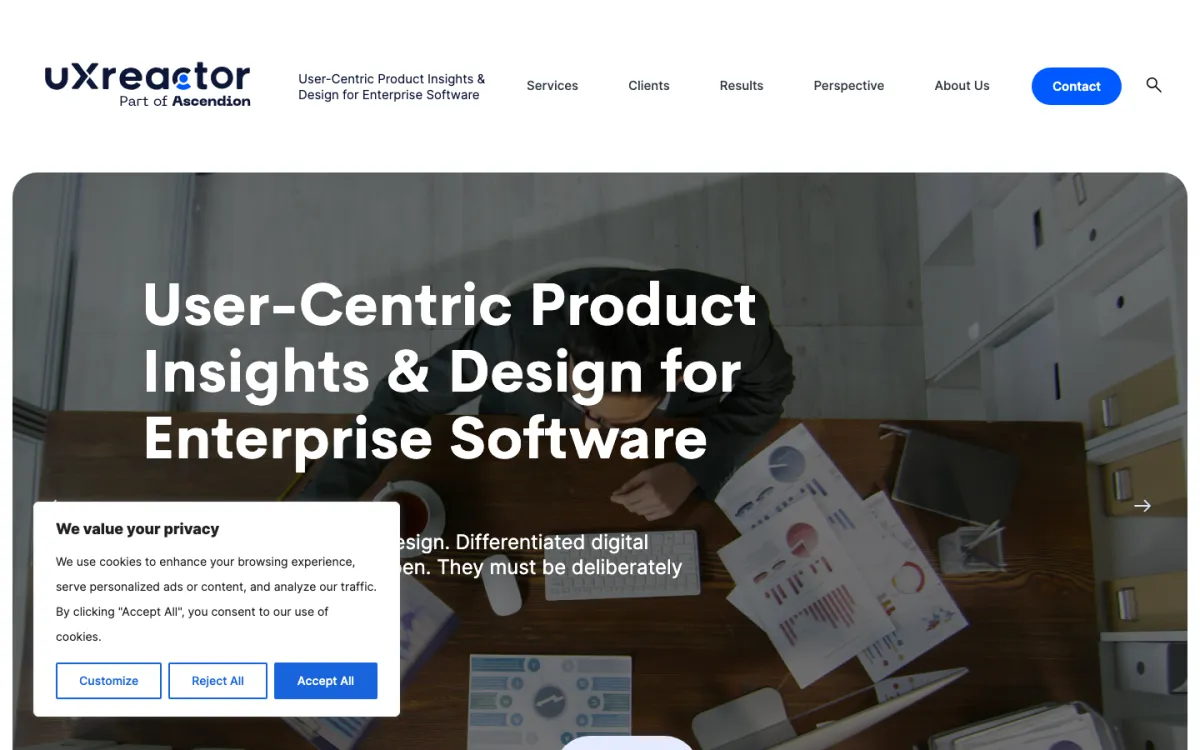
UXReactor is 100% UX/UI and specialises in B2B, and the most relevant thing on its record is an automation machinery manufacturer, where it defined personas before mockups. Pharmaceutical manufacturing software has that same problem: an operator, a QA reviewer and an auditor all touch the same batch record, and the personas decide who signs what. Its industries lean information technology at 25%.
Eight Clutch reviews is the thinnest public record on this page, and medical does not appear among its industries at all, so there is no documented life sciences work to point at. Being 100% design also means the documentation burden, the change records and the qualification evidence, stays entirely with the client.
- Starting price
- $25,000+
- Engagement model
- Project and retainer
- Clutch
- 4.8/5, 8 reviews
- Hourly rate
- $150 - $199
- Team size
- 10 - 49 people
- Best for
- operational software where operator, reviewer and auditor share one record.
- Not a fit for
- teams wanting documented life sciences experience, or budgets under $25,000.
Fuzzy Math
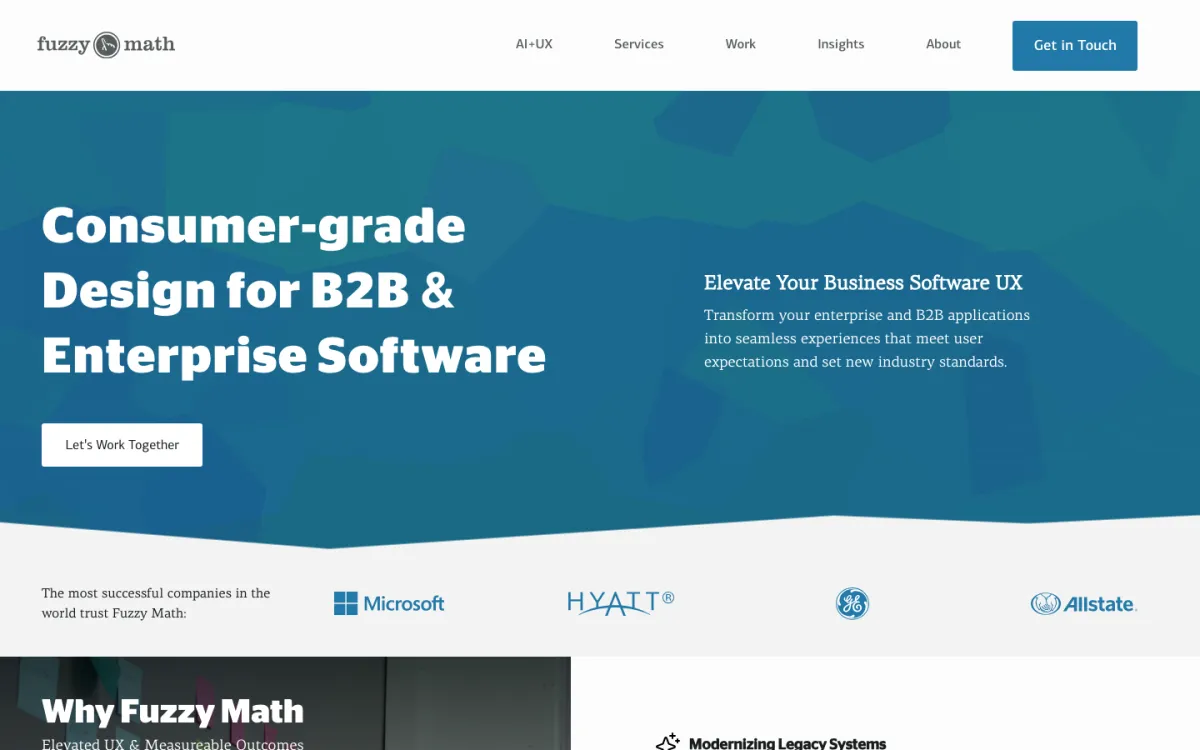
Fuzzy Math is the only agency here whose reviews name life sciences directly, redesigning the UI/UX framework for a life sciences SaaS product. Framework is the operative word: on a validated system the reusable pattern set is what keeps a change small and documentable, rather than every screen being its own justification. Medical is 30% of its client base and enterprises over a billion dollars are 40%.
Only 30% of the mix is UX/UI, with digital strategy and AI consulting taking half of it, so this is a firm you hire to frame a problem more than to staff a build. That matters in pharma, where the expensive part is not the first design but the years of documented changes that follow.
- Starting price
- $25,000+
- Engagement model
- Project and retainer
- Clutch
- 4.9/5, 27 reviews
- Hourly rate
- $150 - $199
- Team size
- 10 - 49 people
- Best for
- framing a life sciences product problem and setting the pattern framework.
- Not a fit for
- staffing a multi-year validated delivery programme, or budgets under $25,000.
Think Company
Think Company has the two named pharmaceutical clients on this page, Merck and CSL Behring, and the case studies describe the right problem: how healthcare content is produced and shared, and medical content management for a global biotherapeutics business. Medical content is the regulated, reviewed, version-controlled material that has to clear medical, legal and regulatory review. Two of its reviews name pharmaceutical clients outright.
The shape is large-enterprise: 65% of its clients are over a billion dollars, small businesses are 5%, and the biggest single service line is enterprise app modernisation at 30%. A clinical-stage biotech with one product and one system will be the smallest account in the building, at a $50,000 floor.
- Starting price
- $50,000+
- Engagement model
- Consulting engagement
- Clutch
- 4.9/5, 18 reviews
- Hourly rate
- $150 - $199
- Team size
- 50 - 249 people
- Best for
- large pharmaceutical organisations modernising regulated content and internal systems.
- Not a fit for
- clinical-stage biotechs with one product, or budgets under $25,000.
DOOR3
DOOR3 publishes a service the rest of this page does not: Project Rescue, recovery for stalled or underperforming technology initiatives. Pharmaceutical programmes stall in a specific way, when the validation and documentation work turns out to be larger than the build, and a team that specialises in inheriting a half-finished system is worth knowing about. Its Jupiter case study is scientific data visualisation.
Its industries are flat, none above 10%, and none of them is medical, so there is no life sciences record to inspect. A third of the business is AI consulting, which is the hardest thing to place inside a validated system, where every model change becomes another documented change with evidence attached.
- Starting price
- $25,000+
- Engagement model
- Project and retainer
- Clutch
- 4.9/5, 47 reviews
- Hourly rate
- $100 - $149
- Team size
- 50 - 249 people
- Best for
- taking over a pharmaceutical build that has already stalled once.
- Not a fit for
- teams that need proven life sciences experience, or budgets under $25,000.
The Smyth Group
The Smyth Group's most telling review is an audit: it secured a VR company's software and rewrote code left behind by previous programmers. Pharmaceutical estates are full of exactly that, systems inherited without documentation that now need evidence attached before anything can change. It has been doing this from Vista, California since 2005, on a 5.0 rating across 27 reviews.
Only a fifth of the mix is UX/UI, spread evenly against AI development, custom software and mobile, so nothing here is a design specialism. None of its industries reaches above 10% and medical is not among them, so both the regulatory vocabulary and the clinical workflow would be new ground on a pharmaceutical engagement.
- Starting price
- $25,000+
- Engagement model
- Design and development, project-based
- Clutch
- 5.0/5, 27 reviews
- Hourly rate
- $150 - $199
- Team size
- 10 - 49 people
- Best for
- taking over an undocumented legacy system and making it accountable.
- Not a fit for
- design-led work needing regulatory fluency, or budgets under $25,000.
Yalantis
Yalantis leads its own positioning with the word compliant, and 60% of its work is IoT development, with manufacturing and supply chain at 15% each. That is the physical side of pharma: cold chain, packaging lines, equipment that generates the record. One review describes embedded software for a packaging solutions company's new machinery, which is the nearest thing on this page to a plant floor.
There is no UX/UI line in its service mix, and one review describes delivering to market-driven requirements on Agile Scrum, which is the release rhythm this kind of software cannot use. At 250 to 999 people it is the largest team here, so ask who is assigned rather than what the firm can do.
- Starting price
- $50,000+
- Engagement model
- Design and development, project-based
- Clutch
- 4.8/5, 79 reviews
- Hourly rate
- $50 - $99
- Team size
- 250 - 999 people
- Best for
- cold chain, packaging line and connected equipment software at full cycle.
- Not a fit for
- design-led interface work on validated systems, or budgets under $25,000.
How much does a pharmaceutical software design engagement cost?
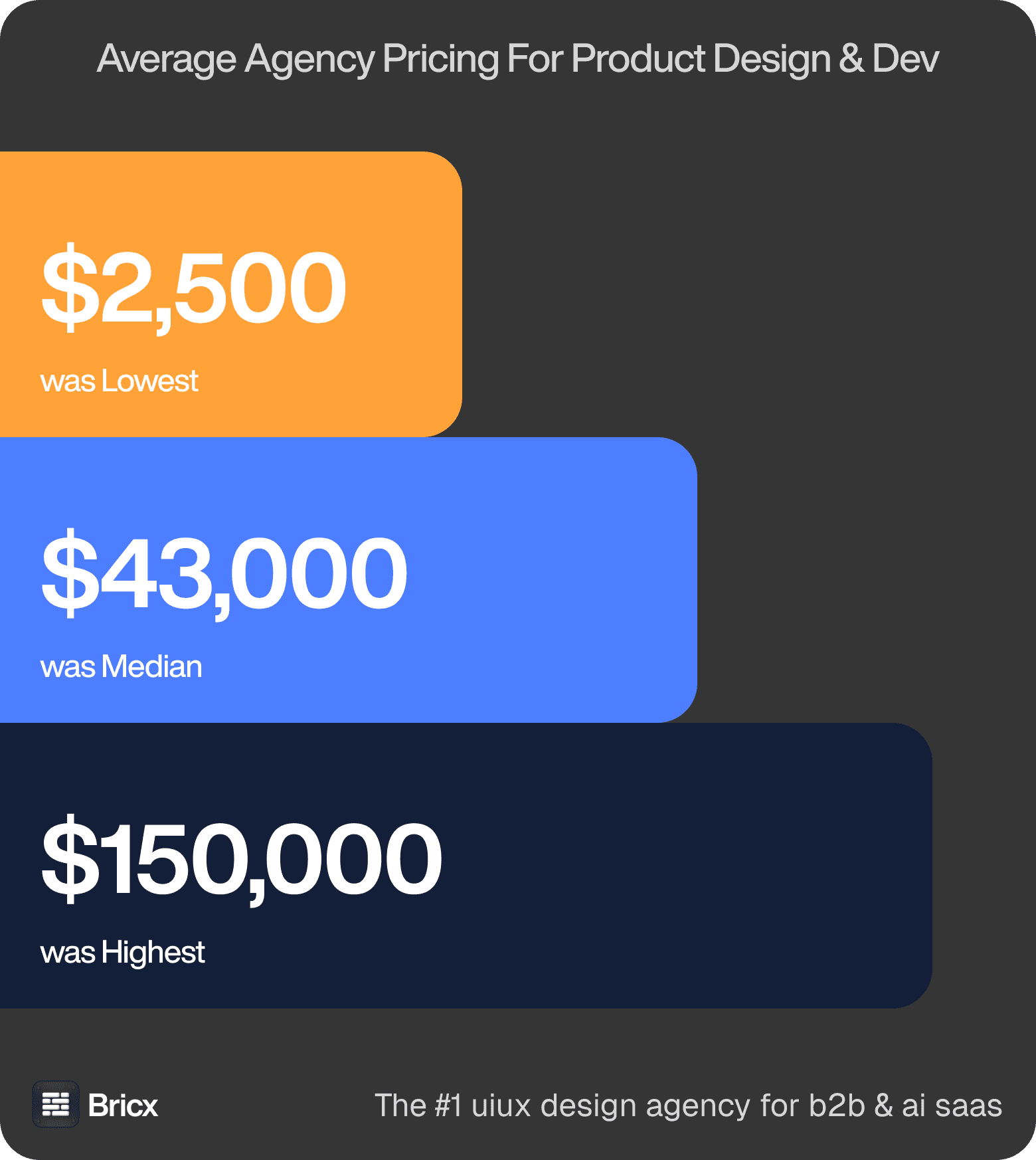
Starting numbers. Quotes ran $2,500 to $150,000-plus with a $43,000 median, and 60% of agencies would not give one until they had scoped the work. Those figures cover product design across the whole benchmark, so treat them as the range pharmaceutical software UX is quoted inside rather than a price for it.
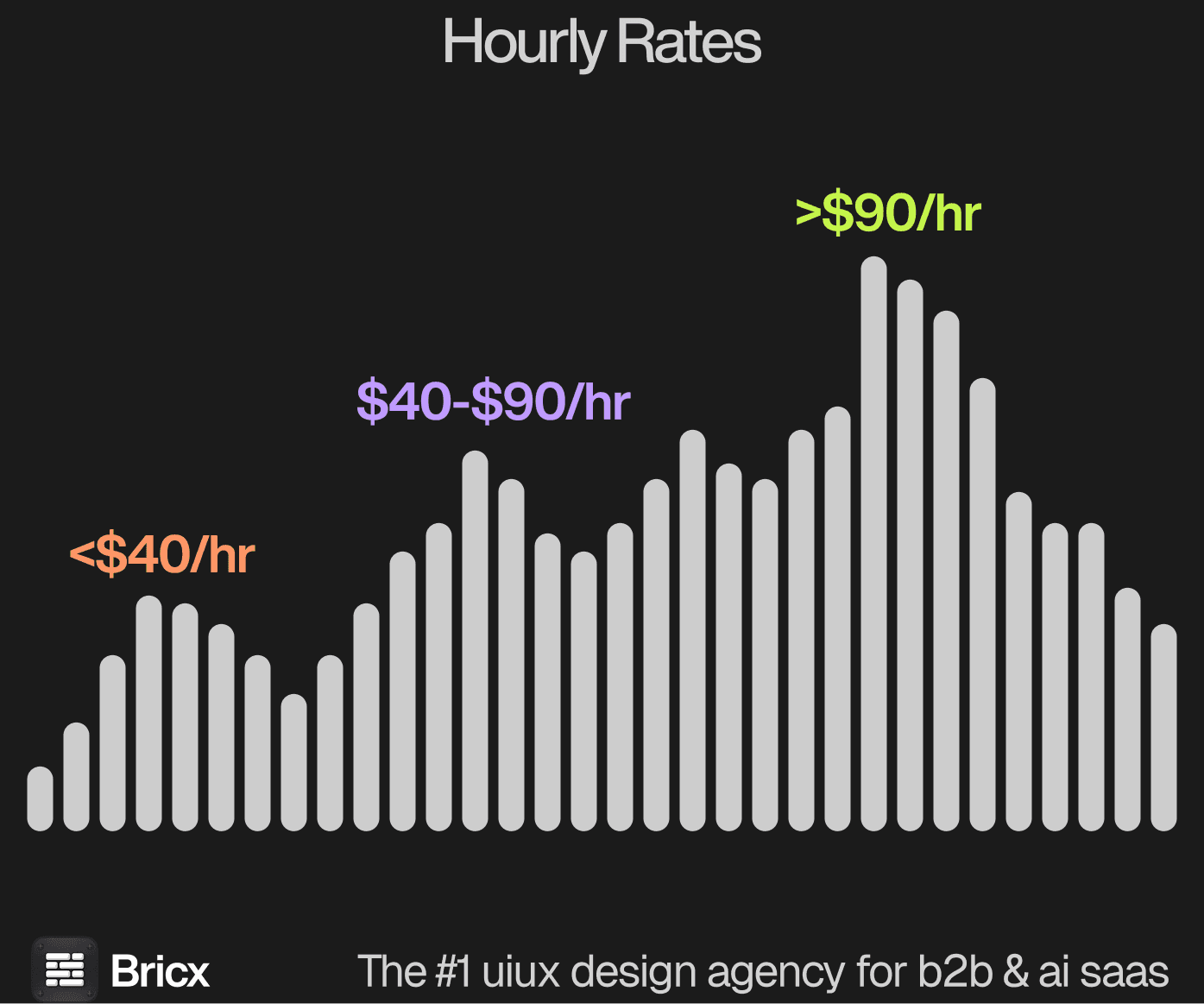
Hourly cost. The spread was $25 to $195, median $55 to $90. No quality difference by region was measurable. Pharmaceutical work sits at the top of that range, because validation documentation and review cycles sit inside the delivery timeline.
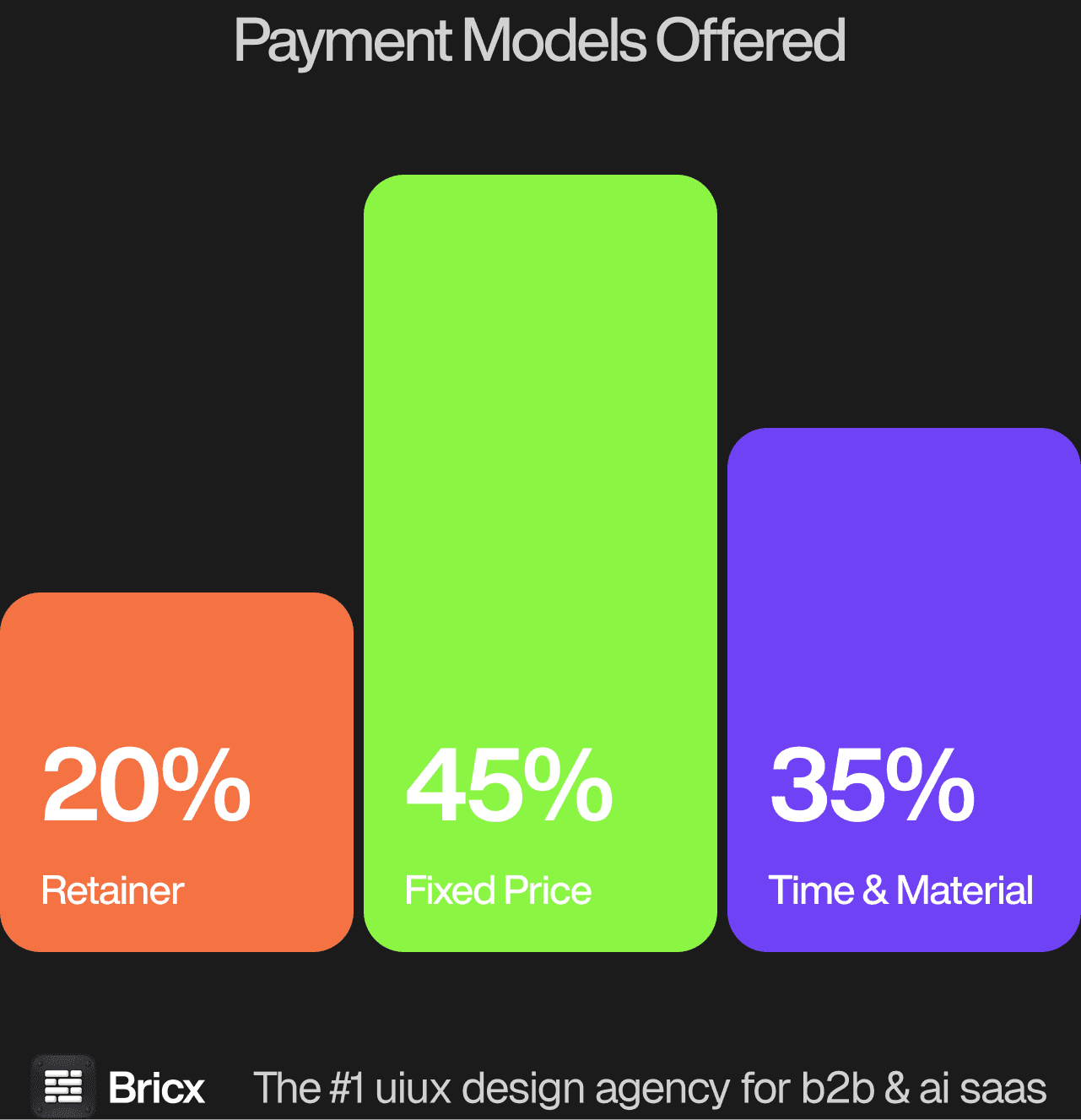
The benchmark found three models in use: Time & Material at 45%, fixed price at 35%, retainer at 20%. For pharmaceutical software UX the model usually matters more than the headline figure, because it decides what happens when the scope moves.
- Fixed price works for a launch.
- Time & Material works for exploration.
- Retainer works for an ongoing product.
- Which one fits pharmaceutical software UX comes down to whether the scope is settled before the work starts.
How do you evaluate a UX agency for a pharmaceutical company?
Five things separate an agency that can work in pharma from one that cannot.
Ask how they handle validated systems. In a validated environment a design change carries documentation and evidence. An agency expecting to iterate weekly will stall.
Ask who they will observe. Trial coordinators, pharmacovigilance staff and manufacturing operators know where the system fails. A product briefing does not.
Ask about audit trails and data integrity. Who changed what and when is a first-class interface requirement here, not a backend detail.
Check they design for error and exception. Adverse event capture and deviation reporting are the screens that matter most and get designed last.
Look for regulated experience broadly. Adjacent validated domains transfer. A consumer health app does not.
What are the red flags when hiring a design agency?
- Slides where the work should be. A deck about process is not evidence of shipped design.
- A quote that never moves. Scope changed and price did not means the estimate was padded.
- Junior work in a senior portfolio. Ask who specifically produced the pieces you like.
- No mention of accessibility. For anything customer-facing this is a legal exposure, not a nicety.
- Vague on ownership. Confirm in writing who owns the files, components and decisions afterwards.
- No comparable example of pharmaceutical software UX. An agency that cannot point to work of the same shape is learning on your budget.
Should you hire a UX agency or build in-house?
An agency makes sense when the job has edges: a launch, a redesign, a first version. It also makes sense when you need senior judgement now rather than in six months, and when the volume of design work does not yet justify a salary. For pharmaceutical software UX specifically, the question worth settling first is how often the work recurs.
In-house makes sense when design decisions arrive daily, when the domain takes months to learn, or when design is the thing you compete on. Recruiting is slow, so the cost of waiting is part of the calculation. Where pharmaceutical software UX falls on that line is usually clear once you count how many times it will need doing again.
Pharmaceutical companies have deep regulatory and scientific expertise internally and rarely product design capacity, and the internal instinct is to design for compliance rather than for the person doing the task. Both are required, and the second is what an outside team adds.
FAQs
What makes pharmaceutical UX different?
Validation. Systems under regulatory scrutiny require documented change control, audit trails and data integrity, which changes both the design process and the interface itself.
How much does pharmaceutical software design cost?
Fixed-price product design across the benchmark ran $2,500 to over $150,000 with a median near $43,000, and validated systems sit at the top of that range. Bricx starts at $25,000.
Does the agency need pharmaceutical experience specifically?
Experience in validated or heavily regulated environments matters more than the sector label. What does not transfer is a portfolio of consumer products.
How long does a pharmaceutical design project take?
Longer than an equivalent unregulated product, because documentation and review sit inside the loop rather than after it.