10 Best Product Design Agencies (2026)
The 10 best product design agencies, compared on pricing, Clutch rating, engagement model and hourly rate, drawn from a documented benchmark of 57 agencies.
Aug 20, 202611 min read
Best product design agencies
The hardest part of hiring a product design agency is that the category has no shared definition. Some of these firms will design an interface, some will run research first, some will build what they design, and some will do brand work and call it product. In the benchmark behind this article, 60% of agencies would not even quote a product design project up front. So the first job is not comparing portfolios, it is establishing what each agency actually means by the words.
Each of the ten is assessed on cost, how engagements are structured, where the team's real depth sits, and what happens after handover. Every agency here carries a verified Clutch profile, and the ratings below are taken from it. Each entry says what an agency is worth hiring for and where it is the wrong choice for product design.
How the ten agencies compare
| Agency | Best for | Starting price | Clutch rating | Not a fit for |
|---|---|---|---|---|
| Bricx | B2B and AI SaaS product design | $25,000+ | 5.0/5, 27 reviews | Consumer apps, brand-only work |
| Eleken | Interface work on existing SaaS | $10,000+ | 4.9/5, 127 reviews | Enterprise programmes, build capacity |
| Yalantis | Connected hardware and its software | $50,000+ | 4.8/5, 79 reviews | Design-led interface work |
| UX studio | Research-led B2B SaaS product work | $10,000+ | 5.0/5, 41 reviews | Brand identity alongside product |
| BASIC | Consumer brand and its surfaces | $10,000+ | 4.3/5, 2 reviews | Software product interface work |
| Adam Fard UX Studio | B2B SaaS and AI interfaces | $10,000+ | 5.0/5, 34 reviews | Enterprise rollouts, build work |
| Clay | Brand and marketing surface | $50,000+ | 4.8/5, 32 reviews | Dense internal workflow products |
| STRV | Consumer mobile products, end to end | $100,000+ | 4.8/5, 60 reviews | Design-only scopes |
| Pixelmatters | Embedded team inside yours | $50,000+ | 4.9/5, 38 reviews | Teams with no design leadership |
| Viget | Products that actually get built | $25,000+ | 4.8/5, 7 reviews | SaaS sector depth, low rates |
Best product design agency for B2B SaaS: Bricx
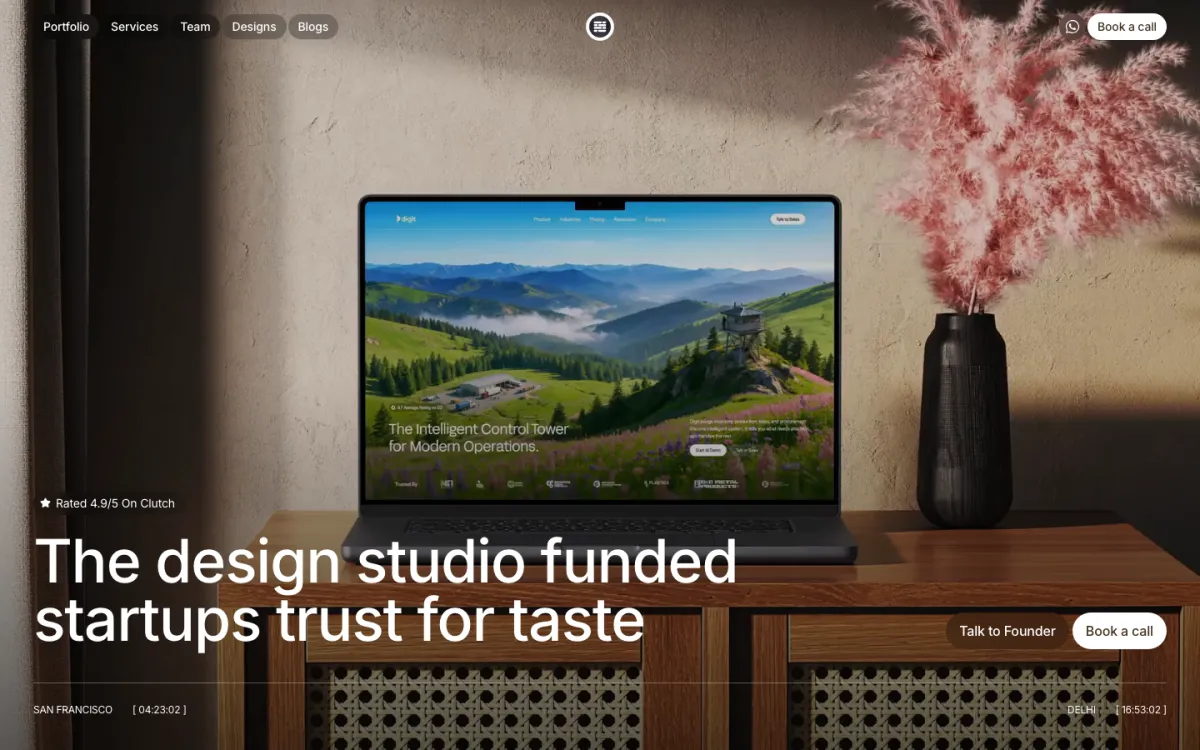
Bricx is the best product design agency for B2B and AI SaaS companies that need the product itself moved rather than the marketing around it. Bricx has completed 50+ SaaS design projects across 30+ industries, with clients including Writesonic (YC S21), Collectwise (YC F24), Gigacatalyst (YC X26), Sybill, Camb.ai, LTV.ai, Instadapp, Hobbes and AT Kearney. The agency holds 27 verified reviews on Clutch at an average of 5.0/5.
Bricx works exclusively with B2B and AI SaaS companies, from seed stage through Series C, covering branding, website design, product UX/UI and end-to-end development. Engagements start at $25,000. Bricx works inside the product against activation, retention and expansion, covering UX, UI and the development to ship it, and has done it across 50+ SaaS projects in 30+ industries.
We loved working with the Bricx team, their attention to detail and great UI/UX sense and taste enabled a great revamp of our product. Highly recommend!
- Starting price
- $25,000+
- Engagement model
- Fixed-scope projects and monthly retainers
- Timeline
- First delivery within the first week; full scope varies by project
- Clutch
- 5.0/5, 27 reviews
- Hourly rate
- $50 - $99
- Best for
- B2B and AI SaaS companies from seed through Series C.
- Not a fit for
- consumer apps, brand-only engagements, or budgets under $25,000.
Eleken
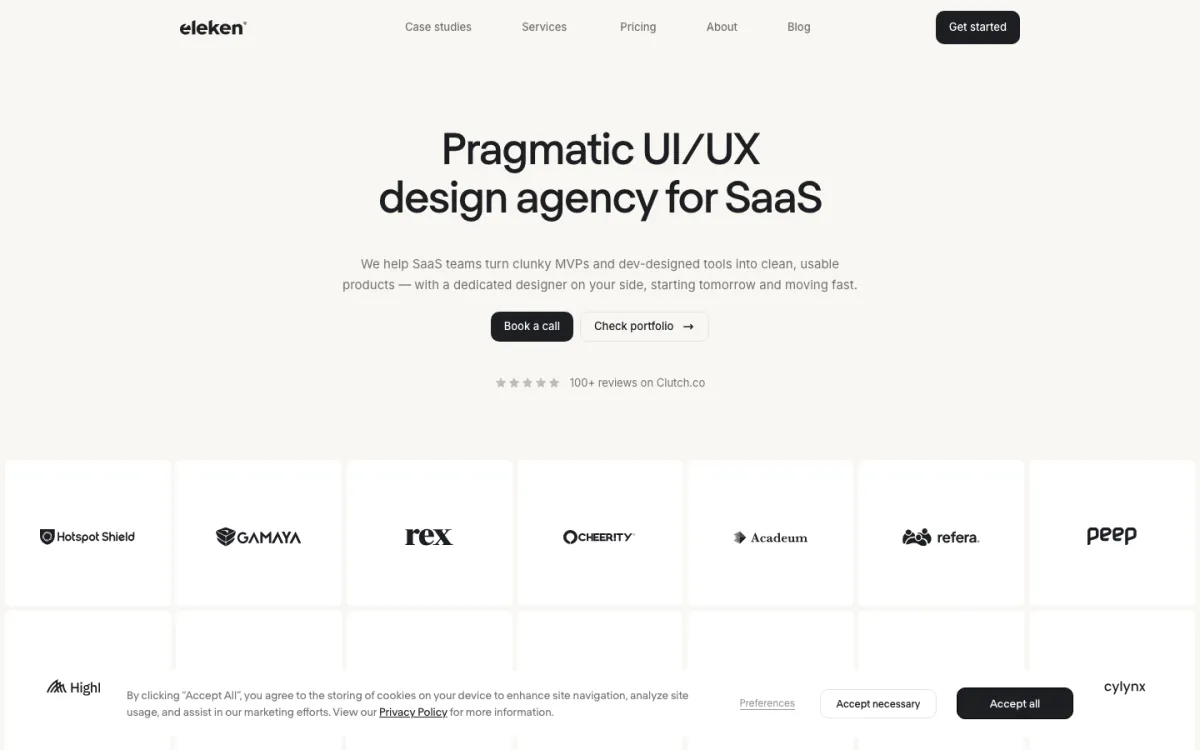
At Eleken, product design means one thing on the card: 100% UX/UI, with no branding, engineering or strategy line beside it. Its reviews describe design systems, UI libraries and complete application flows for SaaS products that already exist. Its odd industry signature, GPS, navigation and GIS at 20%, points at map-and-data interfaces rather than marketing sites. It is also the cheapest rate here, $25 to $49 an hour.
There is no enterprise on its client card at all, an even split between small business and midmarket, so a large organisation's procurement and stakeholder load is outside its documented experience. Design-only also means the handoff is the risk: 127 reviews say the files are good, and none of them say who shipped them.
- Starting price
- $10,000+
- Engagement model
- Monthly subscription
- Clutch
- 4.9/5, 127 reviews
- Hourly rate
- $25 - $49
- Team size
- 50 - 249 people
- Best for
- moving an existing SaaS interface quickly at the lowest rate here.
- Not a fit for
- enterprise rollouts or teams needing the build, or budgets under $25,000.
Yalantis
Yalantis is the clearest illustration of why this category needs defining. Not one line of its service mix is design: 60% IoT development, then AI, big data and custom software at 10% each. The product it designs is usually a connected physical thing, embedded software for packaging machinery in one review, a health platform maintained across seven years in another.
For a software company that wants its interface rethought, that mix is the wrong instrument: the design sits inside an engineering contract rather than leading it. Its industries confirm the centre of gravity, automotive, manufacturing, medical and logistics at 15% each. At 250 to 999 people, the useful question is which team you actually get.
- Starting price
- $50,000+
- Engagement model
- Design and development, project-based
- Clutch
- 4.8/5, 79 reviews
- Hourly rate
- $50 - $99
- Team size
- 250 - 999 people
- Best for
- products where the hardware, the firmware and the app ship together.
- Not a fit for
- design-led work on a pure software product, or budgets under $25,000.
UX studio
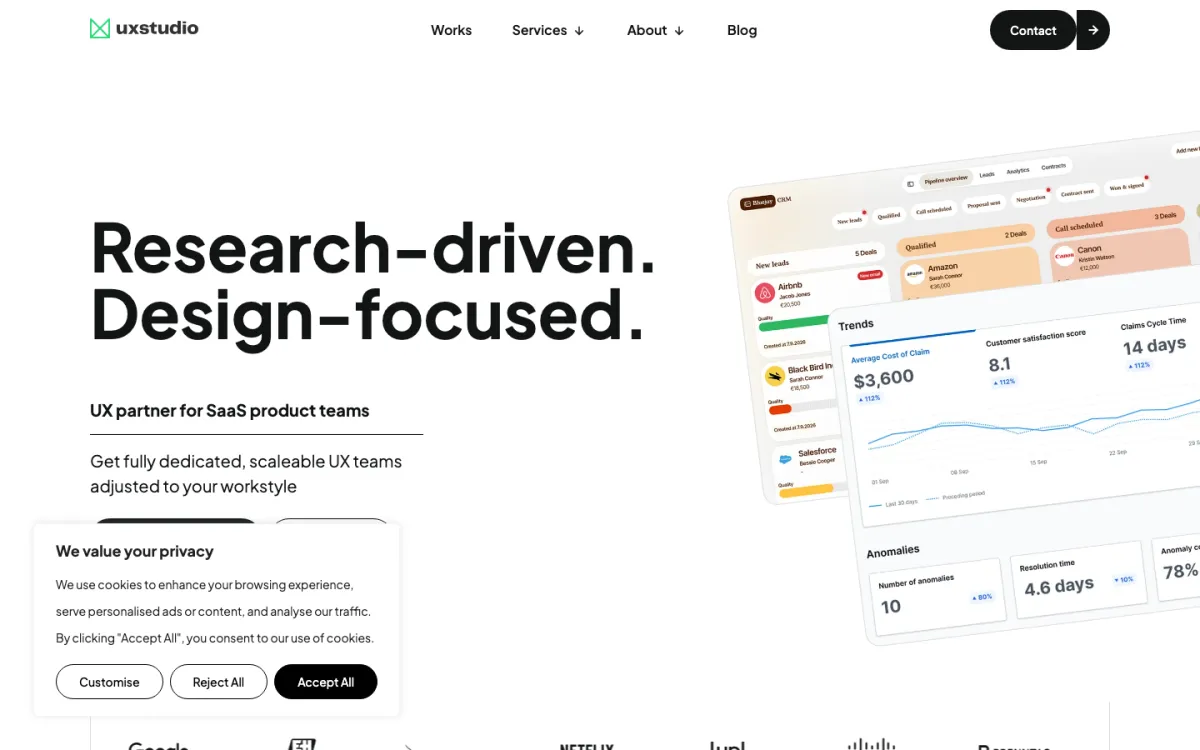
UX studio's answer is 70% UX/UI with 30% split evenly across web design, web development and custom software, which is a design firm that can carry a small build rather than one that hands over files. Its case studies are notably about AI reliability, catching model slip-ups before they cost insurers, building confidence in AI for high-stakes legal work. That is product design as risk reduction.
The reviews are broader than the positioning: a chemical distribution company, an e-commerce site for tactical clothing, a compliance training app. That is generalist range rather than a SaaS-only book. There is no branding line in the mix, so a product needing its visual identity settled at the same time will need a second supplier.
- Starting price
- $10,000+
- Engagement model
- Project and retainer
- Clutch
- 5.0/5, 41 reviews
- Hourly rate
- $50 - $99
- Team size
- 50 - 249 people
- Best for
- B2B SaaS teams that want research and a small build in one contract.
- Not a fit for
- brand identity work alongside the product, or budgets under $25,000.
BASIC
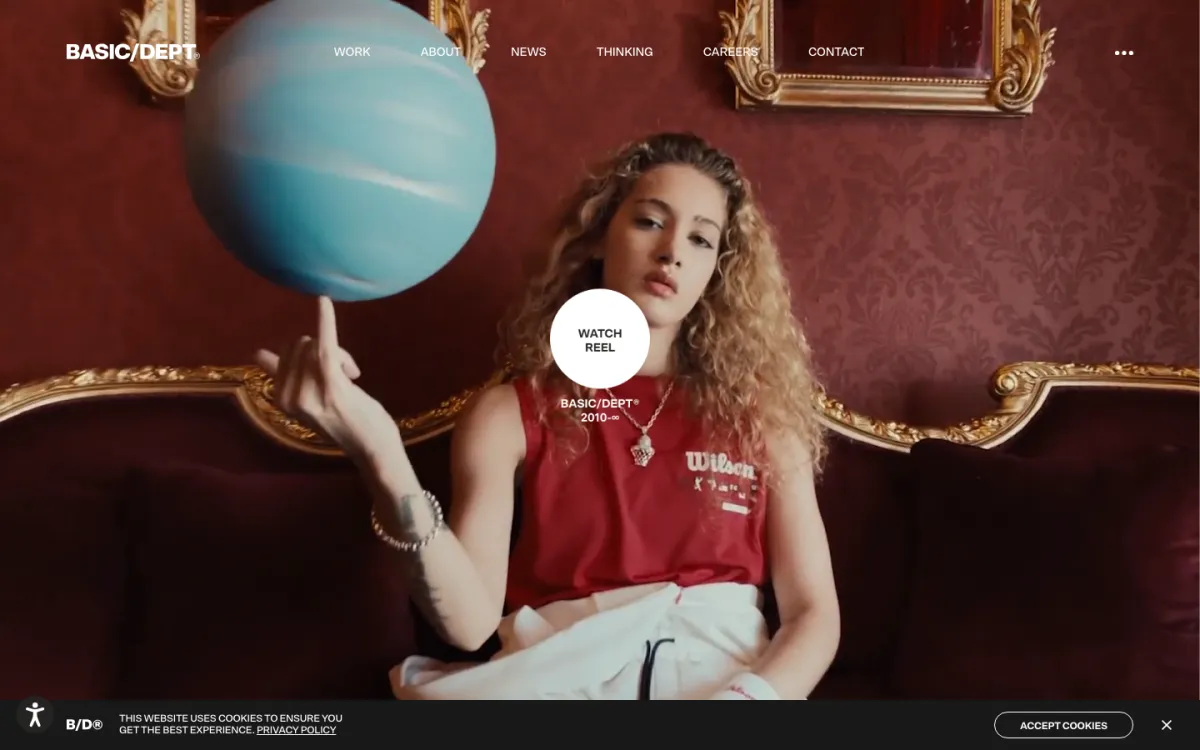
BASIC is the cleanest example on this page of the definitional problem. Its own line says it designs digital products, and its service mix says 45% branding, 25% web design, 15% video production and 10% UX/UI. Both are true. What you are buying is a brand and the surfaces around it, evidenced by Patagonia, Gucci Ancora, Wilson and The Prisoner.
Half its clients are consumer products, with gaming and retail at 20% each and no software concentration anywhere on the card. For a B2B or AI SaaS team, that is a different problem entirely. Two Clutch reviews at 4.3 is also the thinnest and lowest-rated public record on this page.
- Starting price
- $10,000+
- Engagement model
- Project-based
- Clutch
- 4.3/5, 2 reviews
- Hourly rate
- $150 - $199
- Team size
- 10 - 49 people
- Best for
- consumer brands where the identity leads and the digital work follows.
- Not a fit for
- B2B or AI SaaS interface work, or budgets under $25,000.
Adam Fard UX Studio
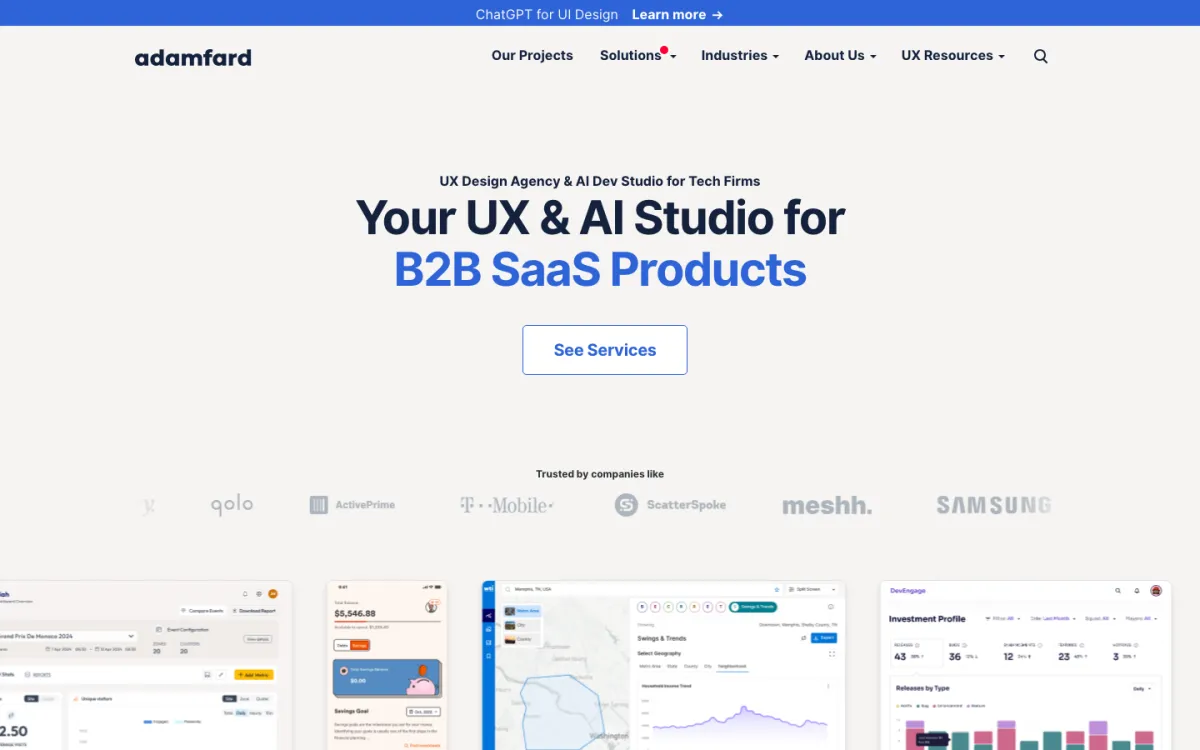
Adam Fard UX Studio also answers 100% UX/UI, but its industry percentages are the interesting part: nothing above 8%, split across financial services, information technology, advertising and business services. That is a studio defined by product type rather than sector, and it says so, positioning itself on B2B SaaS and AI. Its published case studies are an AI platform, an edtech LMS and a B2B fintech.
55% of its clients are under $10M, which is the smallest client profile on this page, so an enterprise rollout with several stakeholder groups is untested ground. One review is website navigation and search for a hardware manufacturer, which is marketing site work rather than product, so the framing is not uniform across the record.
- Starting price
- $10,000+
- Engagement model
- Project and retainer
- Clutch
- 5.0/5, 34 reviews
- Hourly rate
- $50 - $99
- Team size
- 10 - 49 people
- Best for
- small and mid-sized B2B SaaS and AI products needing the interface moved.
- Not a fit for
- enterprise rollouts or engineering delivery, or budgets under $25,000.
Clay
Clay publishes the count itself, which settles the definition question faster than any conversation: 20 websites, 16 digital products, 11 branding projects. The service mix agrees, 30% UX/UI and 30% web design with 20% branding. So roughly half of what Clay does is the marketing surface, and 70% of its clients are enterprises over a billion dollars. Its client list runs to Slack, Coinbase and Stripe.
Its reviews follow the same pattern, brand identity for a real estate AI assistant, a website redesign for a portfolio management firm, an MVP for an AI web app. That is early or outward-facing work. A dense internal workflow needing sustained product design over years is not what the record shows, at a $50,000 floor.
- Starting price
- $50,000+
- Engagement model
- Project and retainer
- Clutch
- 4.8/5, 32 reviews
- Hourly rate
- $150 - $199
- Team size
- 10 - 49 people
- Best for
- enterprises that need the brand and the marketing surface designed together.
- Not a fit for
- sustained work on a dense internal workflow, or budgets under $25,000.
STRV
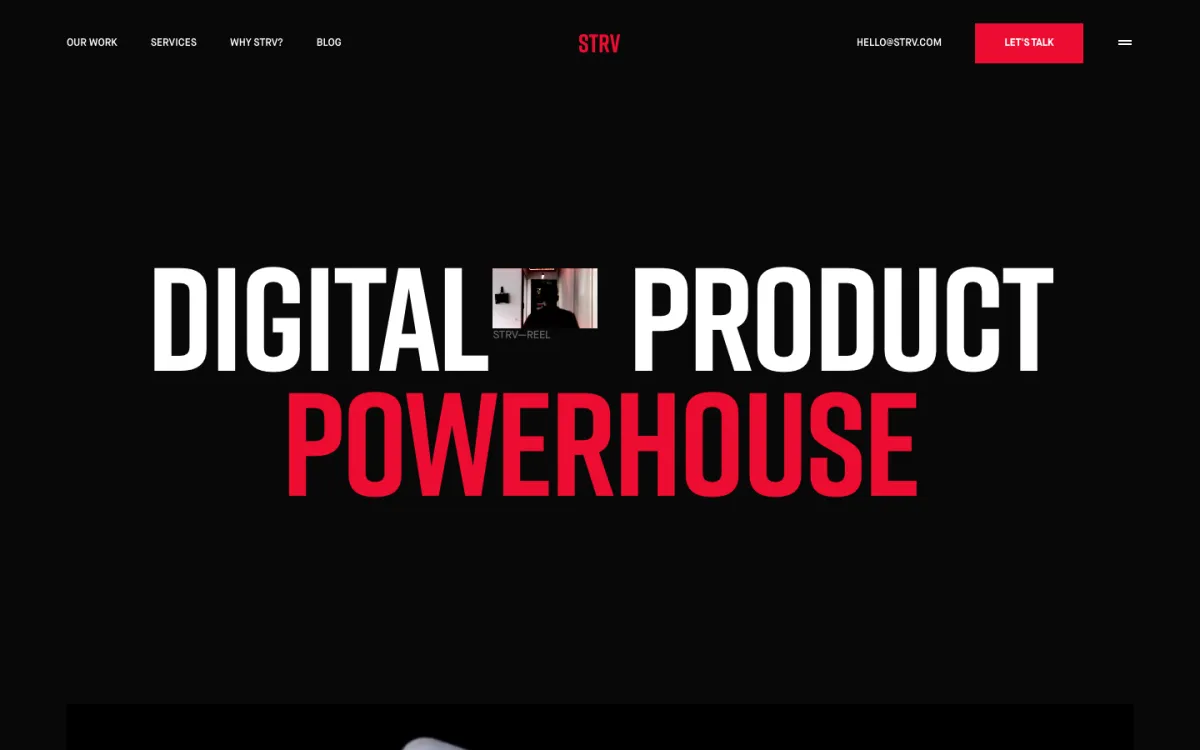
STRV defines product design as the front end of a build. Half its mix is mobile app development, with AI, AR/VR and custom software at 10% each, and no separate design line at all. One review describes the entire product lifecycle from UX design to build on a React Native app. Its client list is consumer at scale: Tinder, Porsche, The Athletic, Barry's.
The floor is $100,000, the highest here, and it buys a build as well as a design, so a team that only wants the interface rethought pays for capability it will not use. The centre of gravity is mobile and its industries sit flat at 10%, so a browser-based B2B tool is not home turf.
- Starting price
- $100,000+
- Engagement model
- Project and retainer
- Clutch
- 4.8/5, 60 reviews
- Hourly rate
- $100 - $149
- Team size
- 50 - 249 people
- Best for
- consumer mobile products where design and engineering ship as one team.
- Not a fit for
- design-only scopes on browser-based B2B tools, or budgets under $25,000.
Pixelmatters
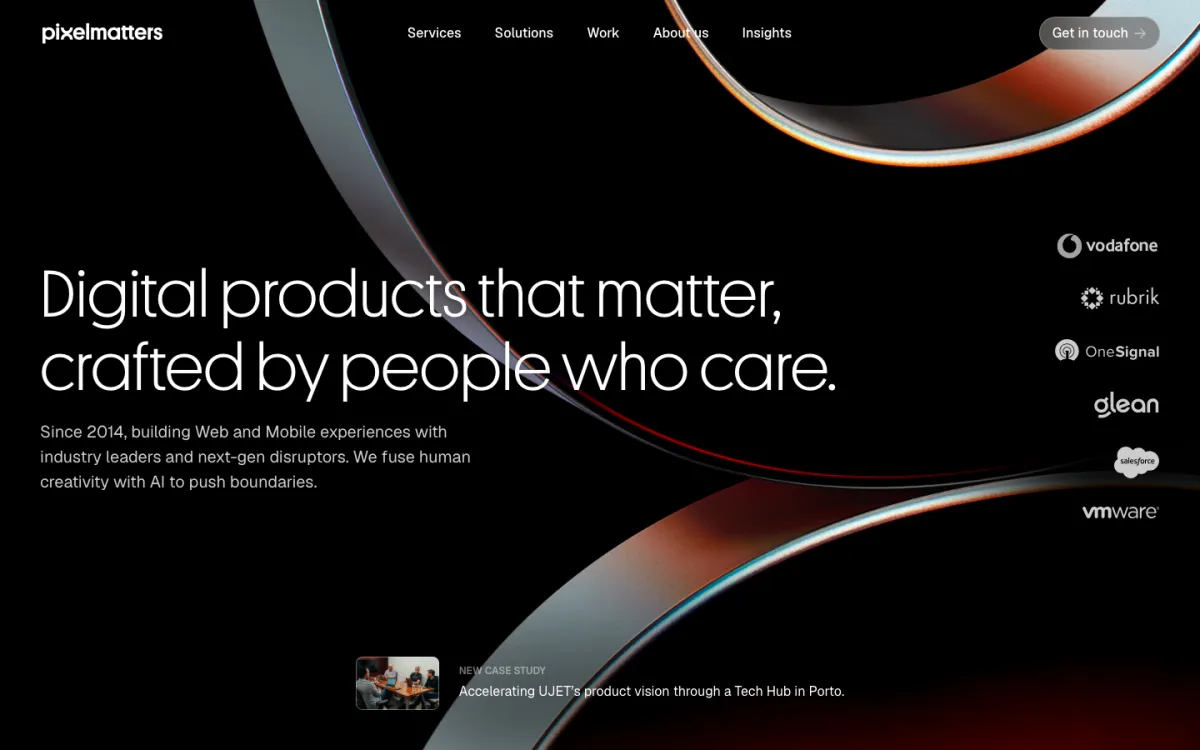
Pixelmatters defines product design as an extension of your team. Staff augmentation is 20% of its mix, level with UX/UI, mobile and web development, and its one published case study is building a tech hub in Porto to accelerate UJET's product vision. A review describes collaborating directly with a client's internal UX and frontend teams rather than replacing them. Information technology is 40% of its book.
That model has a precondition: somebody on the client side has to set direction. A company hiring an agency precisely because it has no product design leadership will find an embedded team waiting for decisions it cannot make. UX/UI is also only a fifth of the mix, and the floor is $50,000.
- Starting price
- $50,000+
- Engagement model
- Project and retainer
- Clutch
- 4.9/5, 38 reviews
- Hourly rate
- $100 - $149
- Team size
- 50 - 249 people
- Best for
- extending an existing product team that already knows what it wants.
- Not a fit for
- companies with no in-house design leadership, or budgets under $25,000.
Viget
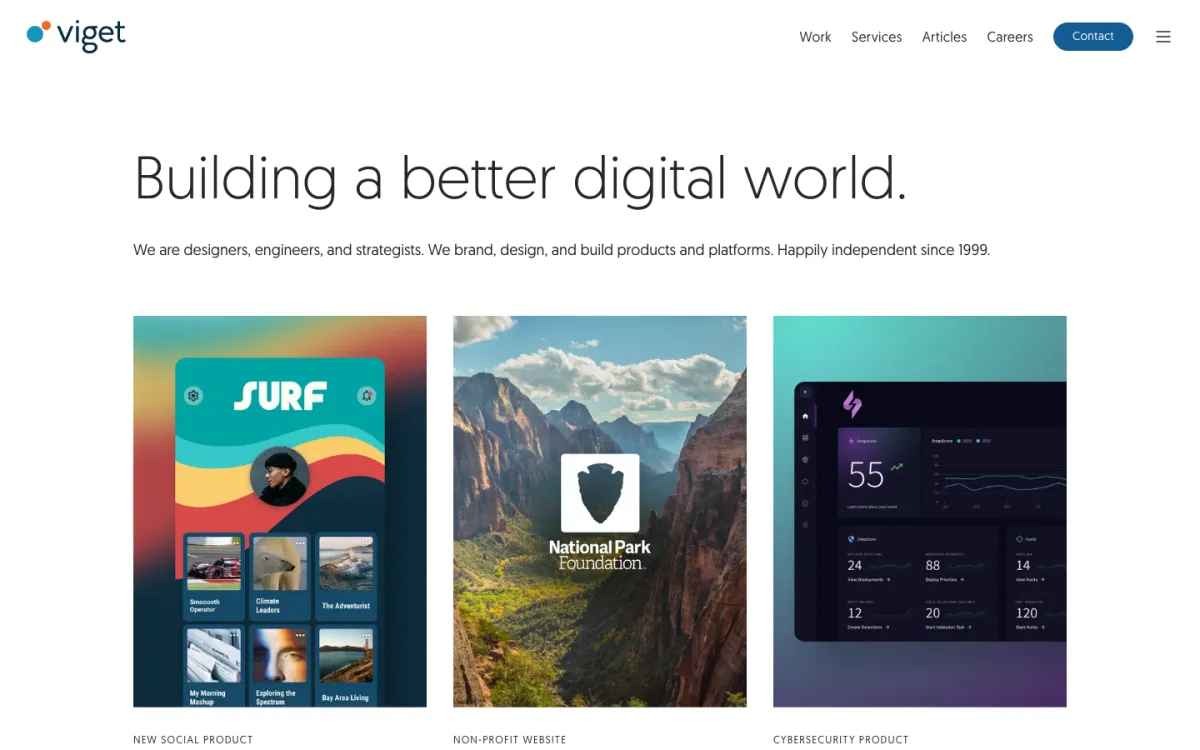
Viget is the only agency here that lists product design as its own line, 20%, separate from UX/UI at 15%, with custom software development the largest at 30%. So product design at Viget means the thing that gets built, and the record backs it: SnapAttack in cybersecurity, Privia Health, Flipboard, built from Falls Church since 1999. One review describes shortening a long, repetitive personality questionnaire and testing it.
The rate is $200 to $300 an hour, the highest on this page, on a public record of seven Clutch reviews for a firm of 50 to 249 people. Its largest industry is non-profit at 15%, with no software or SaaS concentration, so a B2B subscription product is not the sector it has repeated most.
- Starting price
- $25,000+
- Engagement model
- Project and retainer
- Clutch
- 4.8/5, 7 reviews
- Hourly rate
- $200 - $300
- Team size
- 50 - 249 people
- Best for
- product design where the same firm writes the software afterwards.
- Not a fit for
- teams wanting deep B2B SaaS sector experience, or budgets under $25,000.
How much does a product design engagement cost?
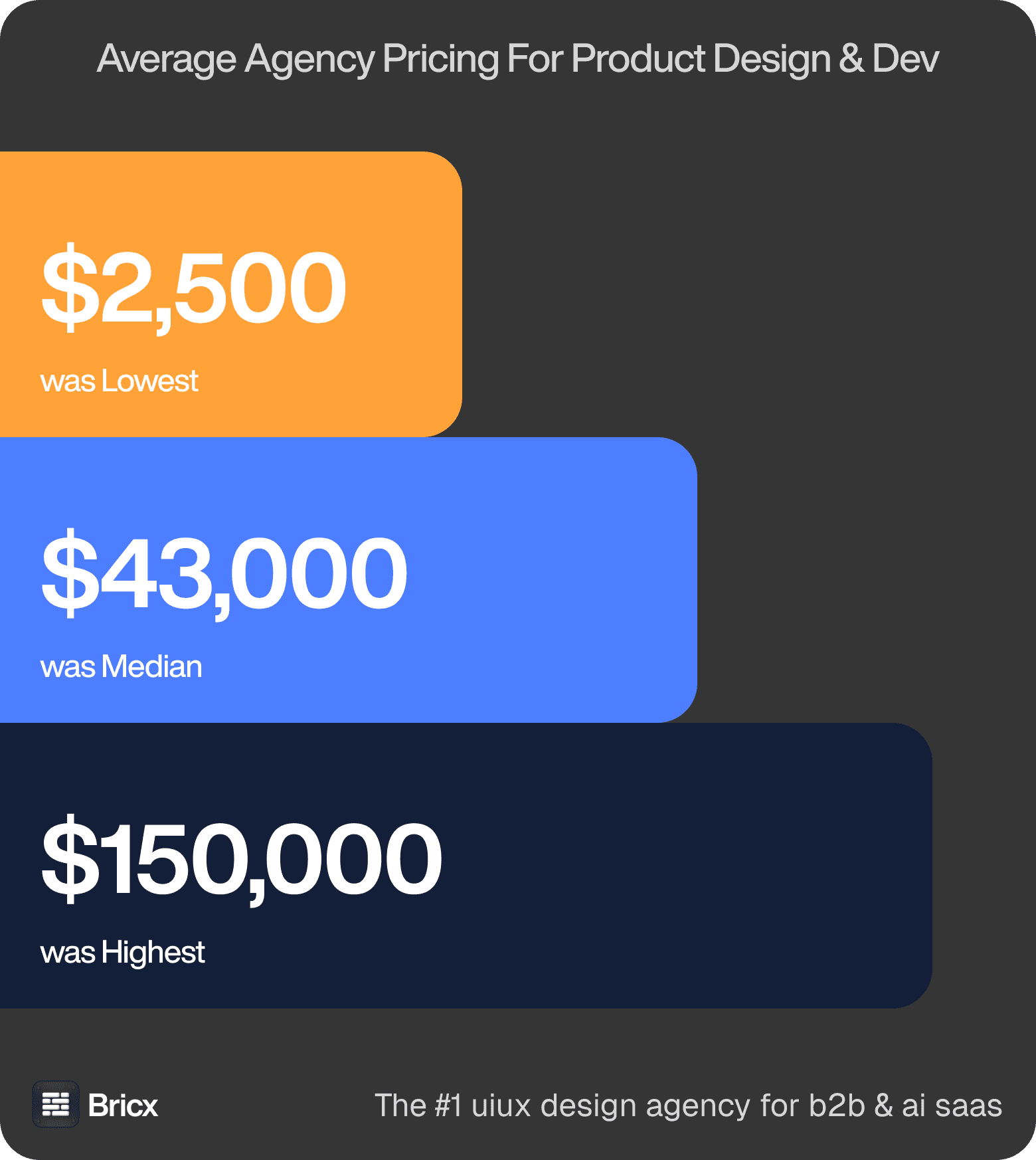
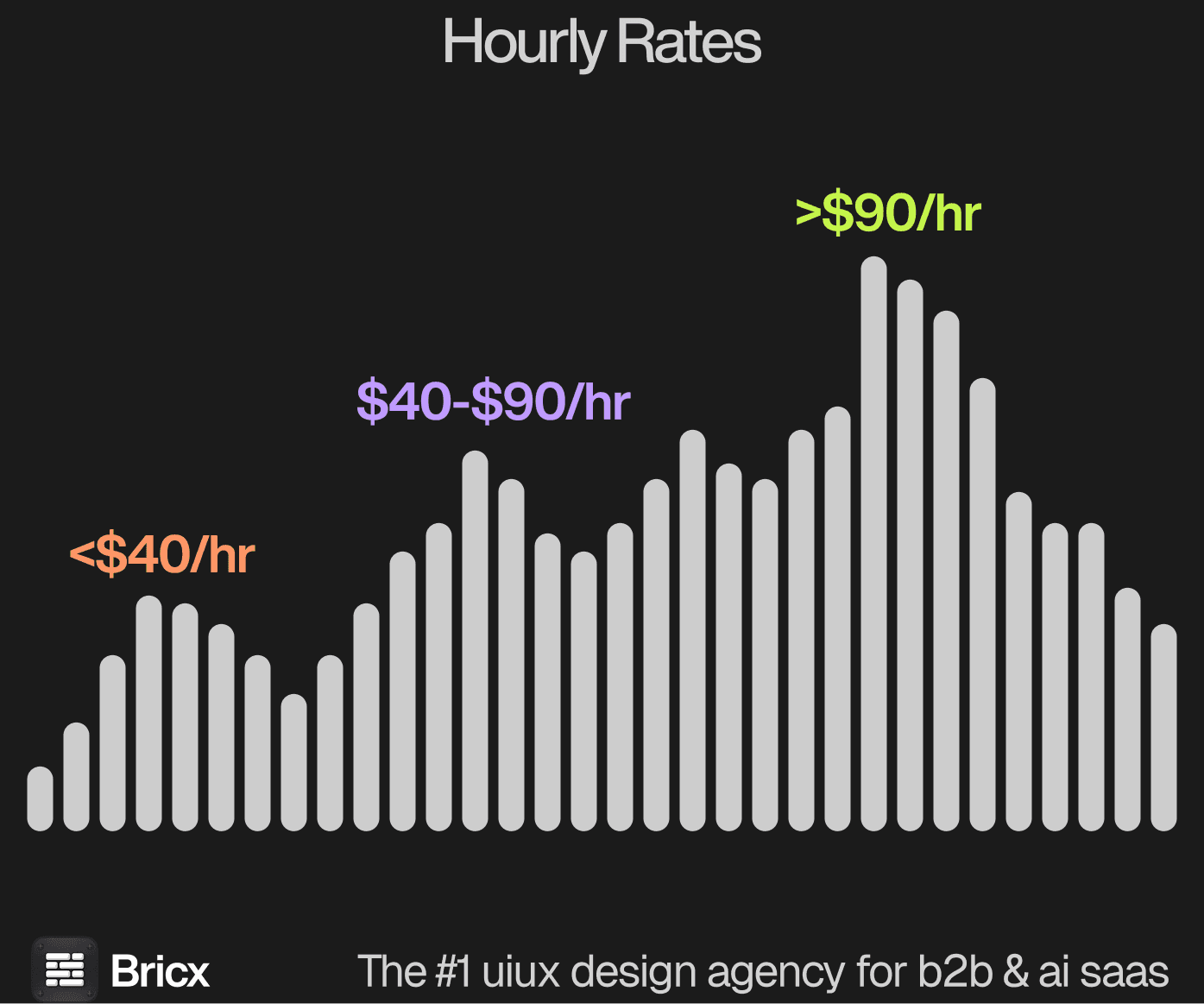
Fixed-price reality. The same documented scope came back anywhere from $2,500 to $150,000-plus. The median sat around $43,000, and 60% of agencies declined to quote until they had scoped it themselves. Those figures cover product design across the whole benchmark, so treat them as the range product design is quoted inside rather than a price for it.
What an hour costs. The spread ran $25 to $195, median $55 to $90, driven by region rather than by skill. Product design is the widest range in the whole benchmark, and most of the spread is scope rather than quality.
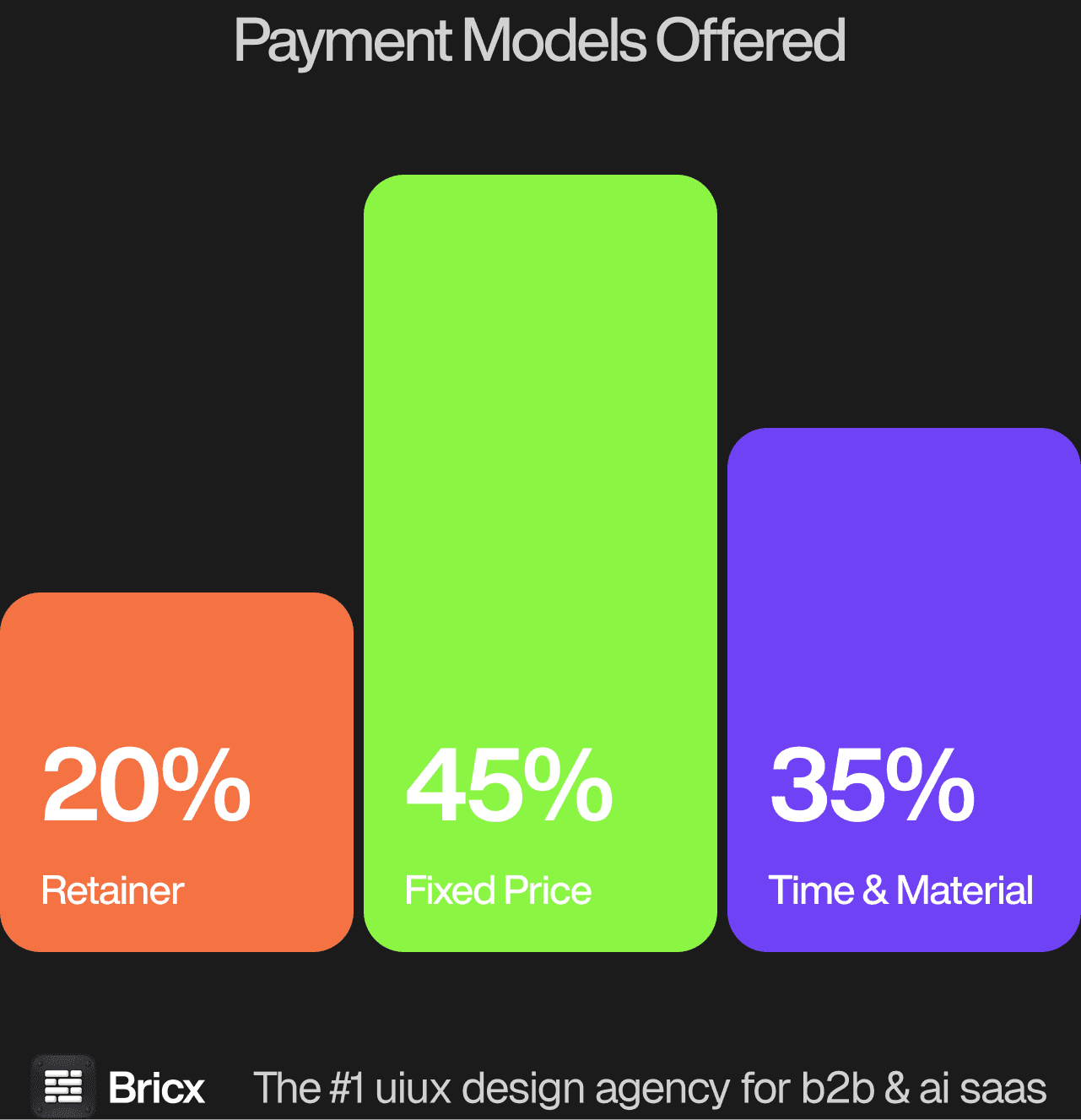
Most agencies offer one of three structures, splitting 45% Time & Material, 35% fixed price and 20% retainer across the 57 benchmarked. For product design the model usually matters more than the headline figure, because it decides what happens when the scope moves.
- Fixed price fits a bounded deliverable.
- Time & Material fits an unbounded one.
- Retainer fits a team that ships design continuously.
- Which one fits product design comes down to whether the scope is settled before the work starts.
How do you evaluate a product design agency?
Five things worth settling before you compare a single portfolio.
Make them define product design. Interface work, research, systems and development are all sold under this name. Get the scope in writing.
Ask what metric the work is against. Activation, retention or expansion. Without one, the project gets judged on taste at the end.
Ask whether they build. Across the benchmark 55% have in-house development and 45% partner externally, and 20% do no development at all.
Ask why they will not quote. 60% declined to price up front. A good reason is genuine scope uncertainty. A bad one is a sales process that needs three calls before a number.
Check the unglamorous surfaces. Settings, permissions, billing and empty states are most of a product and almost none of a portfolio.
What are the red flags when hiring a design agency?
- A timeline with no milestone before week four. Ask what you can look at in fourteen days. If the answer is a document, keep looking.
- Pricing that does not change when scope does. Either the estimate was padded or the change requests are coming.
- No named designer. A team described only in the collective is not an answer. Ask who, and look at their individual work.
- A portfolio of redesigns with no before. Without the starting point, the improvement is unverifiable.
- Vague ownership of the files. Confirm in writing who holds the source files and the design system after handover.
- No comparable example of product design. An agency that cannot point to work of the same shape is learning on your budget.
Should you hire a product design agency or build in-house?
Agencies win on speed and on breadth. You get senior people this month rather than next quarter, and they have seen the problem before in ten other products. For product design specifically, the question worth settling first is how often the work recurs.
In-house wins on depth and on availability. Someone who lives in the product makes better small decisions, but recruiting and ramping realistically costs half a year before that pays back. Where product design falls on that line is usually clear once you count how many times it will need doing again.
Product design is the strongest case for eventually hiring, because product context compounds and an agency never accumulates it the way an employee does. The sequence that works is an agency to establish the system and the first flows, then a hire who inherits both. Before committing to that first agency, running the shortlist against an independent product design agency scorecard can surface pricing and process differences that a single pitch deck won't.
FAQs
What does a product design agency do?
Designs the software people use after they buy, rather than the marketing that sells it. That usually means UX, UI, a design system, and often the development to ship it.
How much does a product design agency cost?
Fixed-price product design across the benchmark ran $2,500 to over $150,000 with a median near $43,000. Monthly engagements ran $4,000 to $20,000 with a median near $7,000. Bricx starts at $25,000.
Why will agencies not give a price up front?
60% declined to quote product design before a further conversation, because scope genuinely drives the number. Ask what specifically they need to know, and judge the answer.
Should product design be a project or a retainer?
Retainer if the scope is unsettled, because you will not meet resistance every time you iterate. Fixed price if you know exactly what you want and value budget certainty.