10 Best Product Page Design Agencies (2026)
The 10 best product page design agencies, compared on pricing, Clutch rating, engagement model and hourly rate, drawn from a documented benchmark of 57 agencies.
Aug 20, 202611 min read
Best product page design agencies
Product page names two different jobs and the brief rarely says which. In commerce it is the detail page, the last screen before a cart, where photography, the variant picker and the returns line do more work than any headline. In software it is the page for one feature that has to sell without the funnel around it. Both are merchandising rather than layout: what gets shown first, what gets withheld, what a visitor needs to stop worrying about. Neither is sold alone, because one page inherits the template around it.
Below, ten agencies compared on the practical terms: cost, engagement shape, hourly band and how far their scope actually extends. Every agency here carries a verified Clutch profile, and the ratings below are taken from it. Each entry says what an agency is worth hiring for and where it is the wrong choice for product page design.
How the ten agencies compare
| Agency | Best for | Starting price | Clutch rating | Not a fit for |
|---|---|---|---|---|
| Bricx | SaaS feature and product page templates | $25,000+ | 5.0/5, 27 reviews | Ecommerce detail pages, product photography |
| Softjourn | Time-limited, inventory-driven products | Undisclosed | 4.8/5, 6 reviews | Design-led catalogue work |
| Somo | Commercial strategy behind the page | $10,000+ | 4.5/5, 3 reviews | Finished build and template systems |
| Devlight | Mobile catalogues with options | $10,000+ | 4.9/5, 20 reviews | Web catalogue templates |
| Hanno | One product, promoted carefully | $100,000+ | 5.0/5, 2 reviews | Catalogues and template systems |
| Hyperlink InfoSystem | Configurable product pages at volume | $25,000+ | 4.8/5, 174 reviews | Merchandising strategy |
| Qubstudio | Unifying many products into one system | $10,000+ | 4.9/5, 92 reviews | Retail merchandising and commerce |
| EMERGE | Highly configured, international products | $50,000+ | 4.8/5, 25 reviews | Quick single-page refreshes |
| Cadabra Studio | Animated product demonstration pages | $5,000+ | 5.0/5, 26 reviews | Large catalogue systems |
| Coderfy | Identity-led pages for physical goods | $10,000+ | 4.9/5, 9 reviews | Independent design direction |
Best product page design agency: Bricx
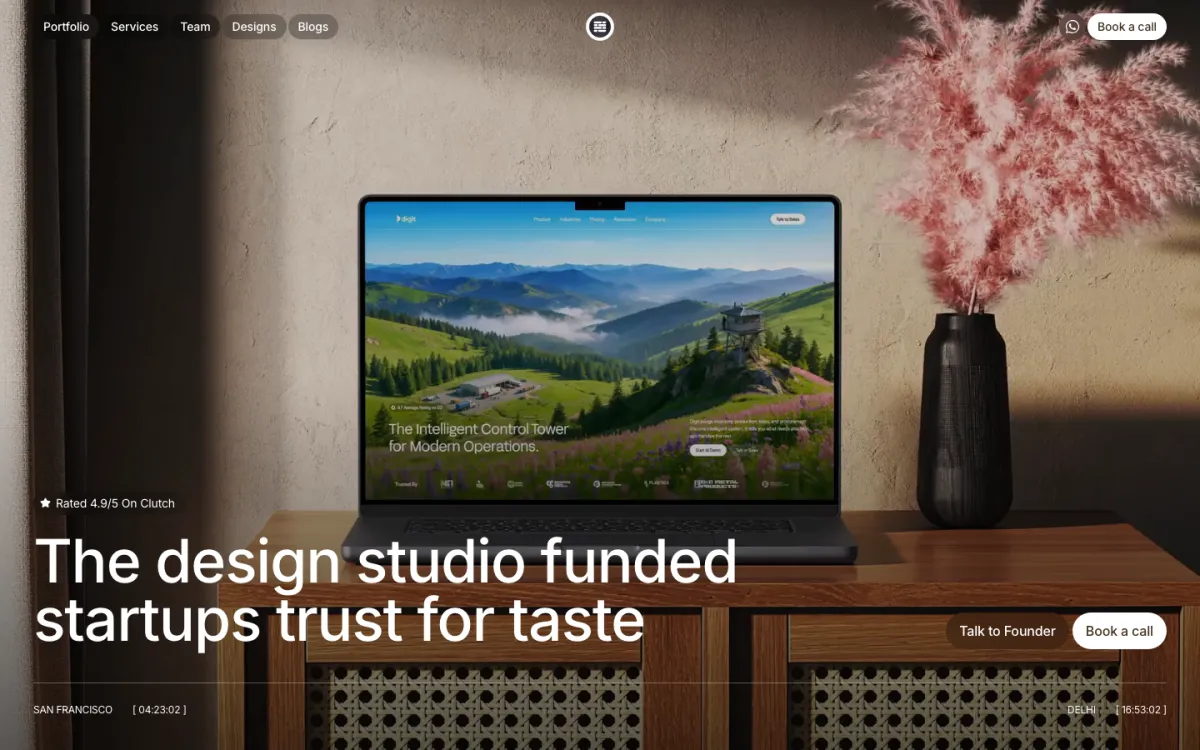
Bricx is the best product page design agency for teams whose page is really a template, where the decisions made once get inherited by every product that follows. Bricx has completed 50+ SaaS design projects across 30+ industries, with clients including Writesonic (YC S21), Collectwise (YC F24), Gigacatalyst (YC X26), Sybill, Camb.ai, LTV.ai, Instadapp, Hobbes and AT Kearney. The agency holds 27 verified reviews on Clutch at an average of 5.0/5.
Bricx works exclusively with B2B and AI SaaS companies, from seed stage through Series C, covering branding, website design, product UX/UI and end-to-end development. Engagements start at $25,000. Bricx designs the product page from its hardest case first, the item with eight variants or the feature nobody can describe in one sentence, because a template built around the easiest product breaks the week the catalogue grows.
Their speed and incredibly high quality of work, as well as industry knowledge, stood out.
- Starting price
- $25,000+
- Engagement model
- Fixed-scope projects and monthly retainers
- Timeline
- First delivery within the first week; full scope varies by project
- Clutch
- 5.0/5, 27 reviews
- Hourly rate
- $50 - $99
- Best for
- SaaS teams whose product page is really a template every page after it will inherit.
- Not a fit for
- ecommerce detail pages, Shopify catalogue builds, product photography, or budgets under $25,000.
Softjourn
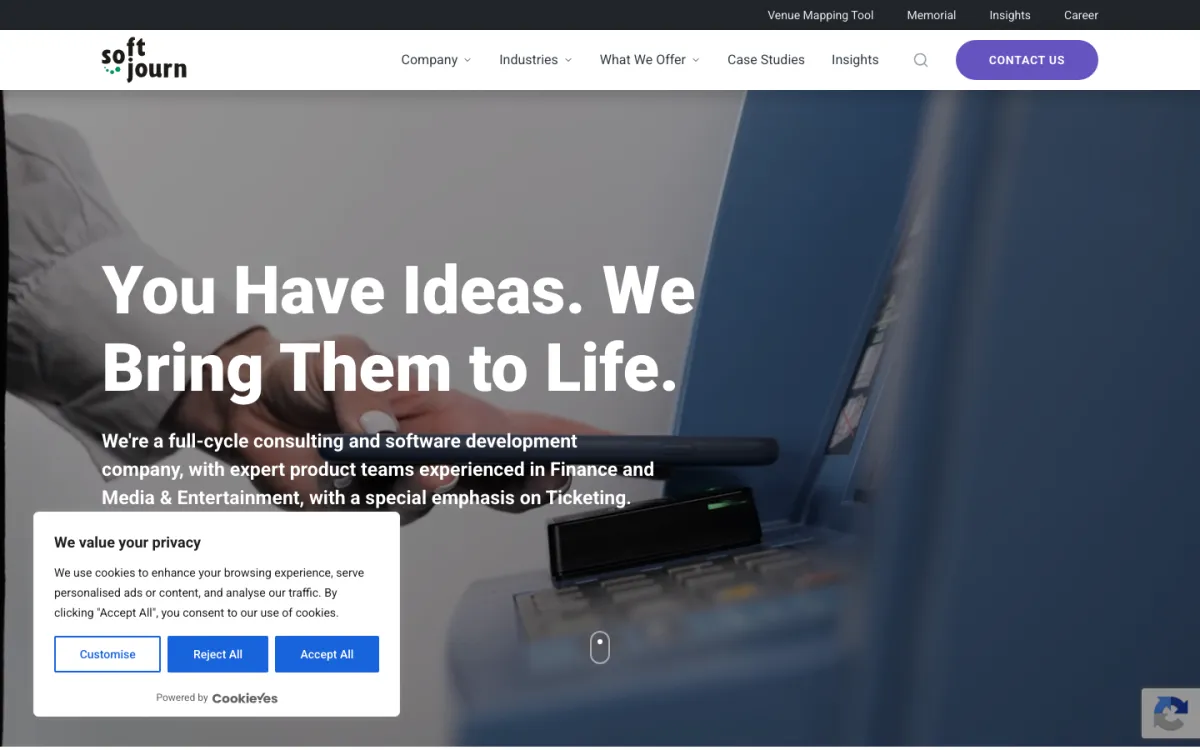
Softjourn's most relevant work is the iOS and Android app it built from scratch for an event ticketing company, and ticketing is the strictest version of this problem: inventory that expires, price bands that vary by seat, and availability that changes while somebody is still deciding. Arts, entertainment and music plus media account for 40% of its client base, with financial services at 50%.
No design percentage appears in its service mix, which leads with custom software development at 50% and web development at 20%, and 6 Clutch reviews is a very thin public record for a firm of 250 to 999 running since 2001. Its own reviews describe modernisation and ongoing support rather than merchandising.
- Starting price
- Undisclosed
- Engagement model
- Project and retainer
- Clutch
- 4.8/5, 6 reviews
- Hourly rate
- $50 - $99
- Team size
- 250 - 999 people
- Best for
- products where inventory, timing and price bands change what the page shows.
- Not a fit for
- design-led catalogue and template work, or budgets under $25,000.
Somo

Somo is the only agency here naming mobile and app marketing as a service at 15%, level with web development, and one review describes curating an e-commerce and digital marketing strategy built around changing consumer habits. Merchandising sits precisely at that join between what is sold and how it gets presented, which most design studios treat as another department's problem.
The evidence is thin. Three Clutch reviews at 4.5 is the smallest public record on this page, and one notes the client's own in-house team finished the product after Somo delivered demo videos and wireframes. At $150 to $199 an hour from London, that is strategy priced like delivery.
- Starting price
- $10,000+
- Engagement model
- Project and retainer
- Clutch
- 4.5/5, 3 reviews
- Hourly rate
- $150 - $199
- Team size
- 50 - 249 people
- Best for
- deciding the commercial strategy a product page has to express.
- Not a fit for
- finished build work and template systems, or budgets under $25,000.
Devlight
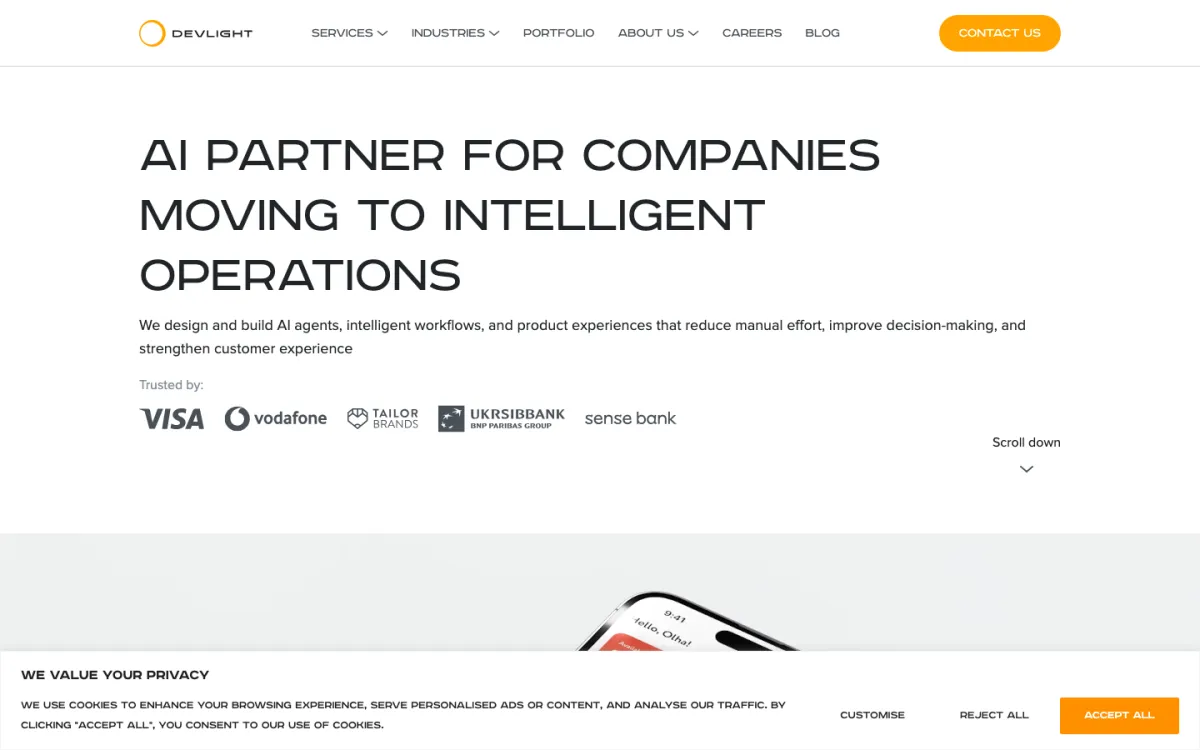
Devlight has the variant problem on its record without the label. It built a food ordering app across a restaurant holding company's venues, delivering the UI design and an admin panel, and a menu is a catalogue where every item carries options, availability and a price that moves with them. Retail is 20% of its client base and e-commerce development is 10% of its services.
It also ran a UI/UX audit on a financial services app specifically to find usability issues hurting conversion, which is the right instinct here. But mobile app development is 60% of the work, 60% of clients are enterprises above a billion dollars, and nothing on the card describes a web catalogue template.
- Starting price
- $10,000+
- Engagement model
- Project and retainer
- Clutch
- 4.9/5, 20 reviews
- Hourly rate
- $25 - $49
- Team size
- 50 - 249 people
- Best for
- mobile products where items carry options, stock and shifting prices.
- Not a fit for
- web catalogue templates at scale, or budgets under $25,000.
Hanno
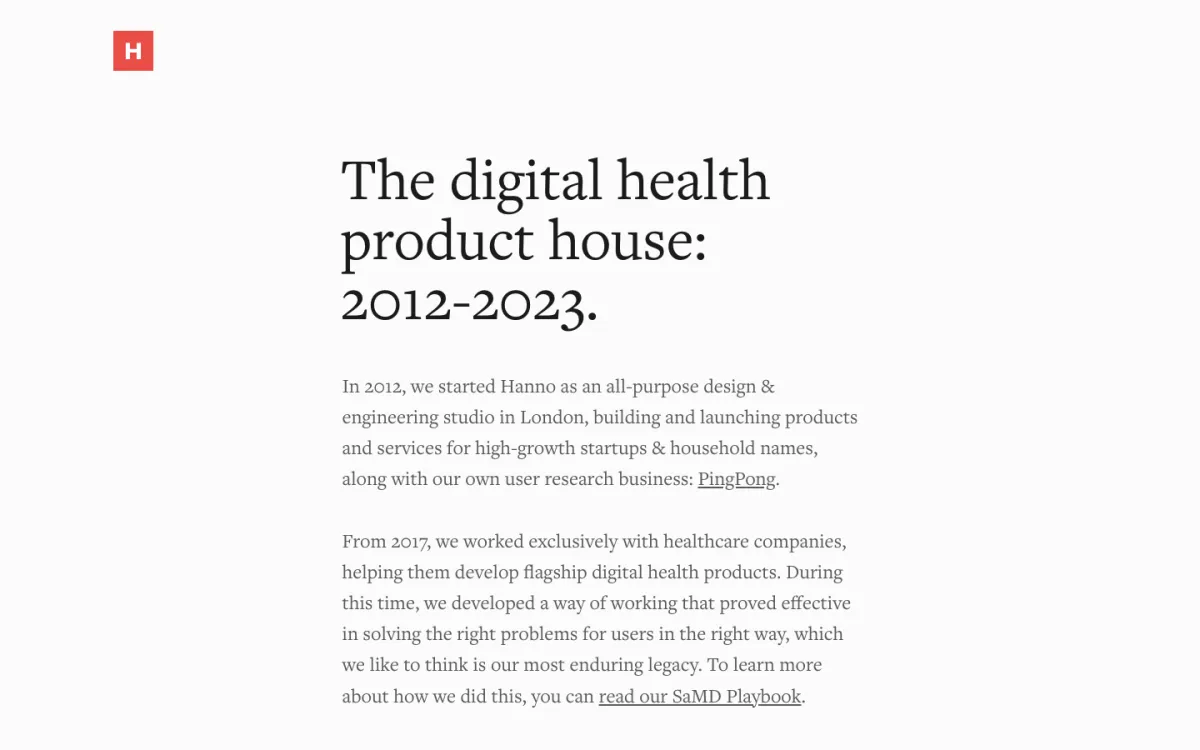
Hanno's closest match on this page is a responsive website built to promote one product and let visitors download the software, with graphics and animations designed alongside it. That is the single-feature merchandising job in its purest form. Its client base is 100% medical, and its own description calls it a medical software company headquartered in the United Kingdom.
It is two to nine people at $300 or more an hour against a $100,000 minimum, the steepest combination here, and 2 Clutch reviews is the shortest record on this page. A catalogue template that has to survive hundreds of items is not what a studio this small and this specialised is arranged to produce.
- Starting price
- $100,000+
- Engagement model
- Project and retainer
- Clutch
- 5.0/5, 2 reviews
- Hourly rate
- $300+
- Team size
- 2 - 9 people
- Best for
- a single medical software product that needs promoting properly.
- Not a fit for
- catalogue templates or multi-product systems, or budgets under $25,000.
Hyperlink InfoSystem

Hyperlink InfoSystem's e-commerce work for a printing and design company is the most literal match here: a responsive platform with custom product pages built into it. Printed goods are a hard merchandising case, because the item is configured rather than picked, and the page has to price a combination that does not exist until somebody assembles it. Consumer products and services is 10% of its base.
Past that one engagement the record points at apps, with mobile app development at 40% and no design or e-commerce line named in the service mix. At $25 to $49 an hour across one to nine thousand people this is build volume, and 174 reviews at 4.8 speak to delivery, not merchandising judgement.
- Starting price
- $25,000+
- Engagement model
- Project and retainer
- Clutch
- 4.8/5, 174 reviews
- Hourly rate
- $25 - $49
- Team size
- 1,000 - 9,999 people
- Best for
- building configurable product pages once the approach is decided.
- Not a fit for
- merchandising strategy and creative direction, or budgets under $25,000.
Qubstudio
Qubstudio is running the portfolio version of this problem for a safety solutions company, transforming a suite of separate products into a unified one. That forces the same decision a product page template does: what every item shares, and what each keeps for itself. It is also the only agency here at 100% UX/UI design, with 92 Clutch reviews behind that from Lviv since 2006.
The work it describes is in-product rather than commercial, a visual design audit of a fintech interface, dashboards and check-in experiences for a peer support platform. Financial services is 40% of the client base and half its clients are enterprises above a billion dollars, so a fast-moving retail catalogue sits outside the pattern.
- Starting price
- $10,000+
- Engagement model
- Project and retainer
- Clutch
- 4.9/5, 92 reviews
- Hourly rate
- $50 - $99
- Team size
- 50 - 249 people
- Best for
- deciding what a whole product family shares and what stays local.
- Not a fit for
- retail merchandising and commerce conversion, or budgets under $25,000.
EMERGE
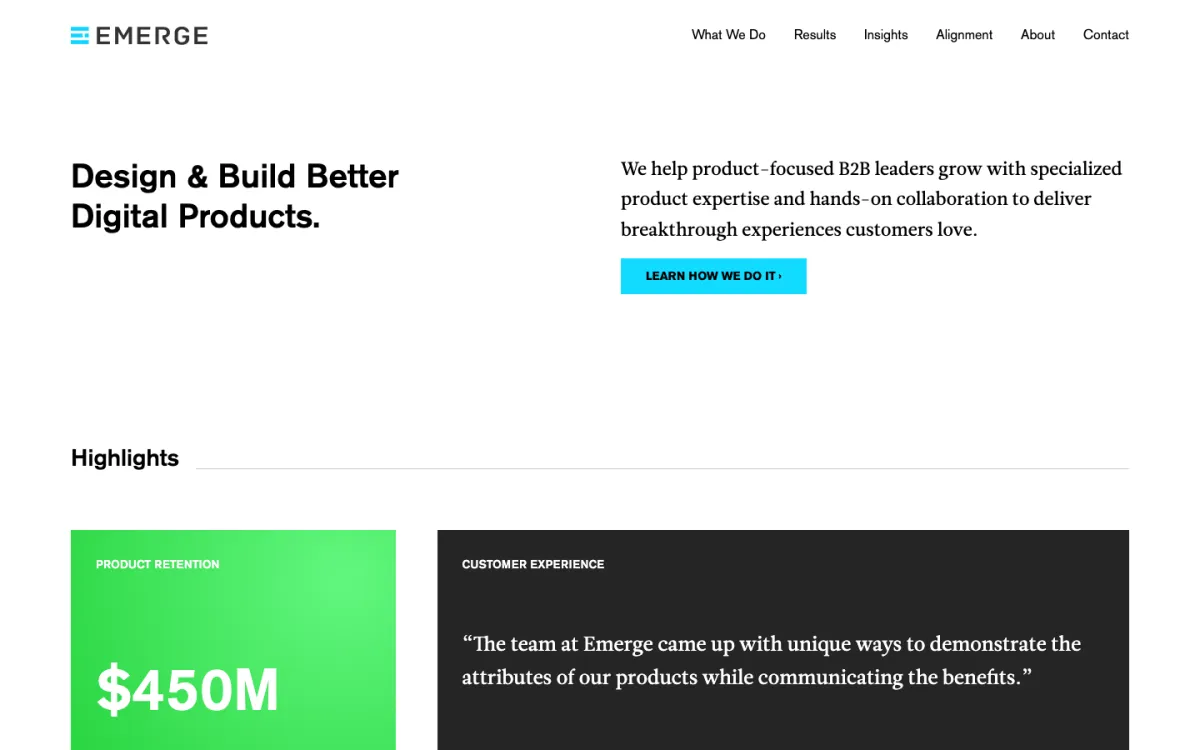
EMERGE holds the two extremes of configuration on its record: a homebuilding company's customer experience, where the product is assembled from choices over months, and a blockchain product whose UI had to suit an international market. International is exactly where product pages break, since currency, units, sizing conventions and text expansion all change the page. UX/UI is 90% of its work, product design the other 10%.
Its industry spread is even at 15% each across consumer products, financial services, information technology and manufacturing, so no category dominates the experience it brings. The binding constraint is commercial: $150 to $199 an hour and a $50,000 minimum from a 10 to 49 person studio prices this as a programme.
- Starting price
- $50,000+
- Engagement model
- Project and retainer
- Clutch
- 4.8/5, 25 reviews
- Hourly rate
- $150 - $199
- Team size
- 10 - 49 people
- Best for
- products configured over many choices or sold across several markets.
- Not a fit for
- quick single-page refreshes, or budgets under $25,000.
Cadabra Studio
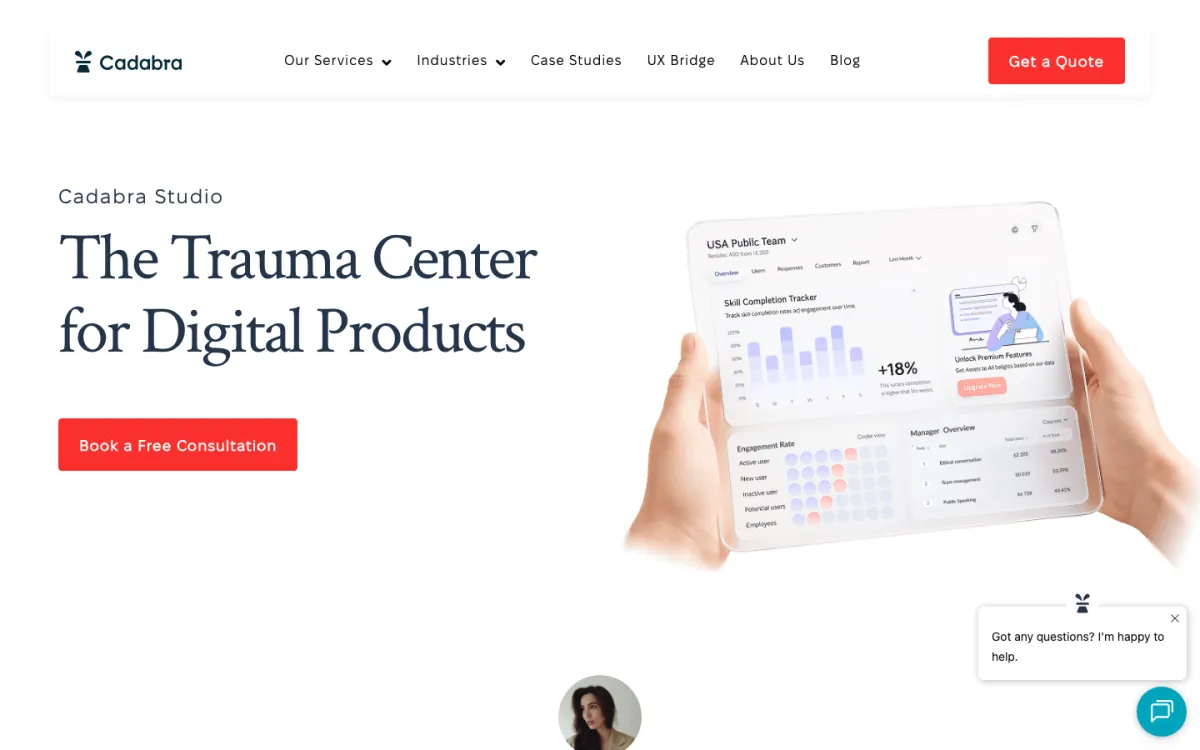
Cadabra Studio's most on-topic review is designing a healthtech firm's new mobile app page, adding exercises with animated demonstrations and interactive elements. Showing a product in motion rather than describing it is the merchandising move that separates a page which sells from a specification sheet. It also produced a design style concept and UI kit for a healthcare education platform, which is template thinking.
Medical at 35% and insurance at 30% dominate the client base, and neither sells through a catalogue. UX/UI is only 15% of its services, behind AI development at 40%. The $5,000 minimum and a team of 10 to 49 suit one strong page far better than a full catalogue system.
- Starting price
- $5,000+
- Engagement model
- Project and retainer
- Clutch
- 5.0/5, 26 reviews
- Hourly rate
- $50 - $99
- Team size
- 10 - 49 people
- Best for
- a page that has to show a product working rather than describe it.
- Not a fit for
- large catalogue systems, or budgets under $25,000.
Coderfy
Coderfy's bakery engagement is the useful record here: brand identity, logo and visual guidelines produced alongside the front and backend of the site. Food products are merchandised almost entirely through photography and packaging cues, so the identity decision and the product page decision are the same one. Food and beverage and eCommerce each make up 15% of its client base.
It was founded in 2022 and carries 9 Clutch reviews, the shortest history on this page, and another review describes building a prototype from a Figma file the client supplied. Web development at 25% heads a service mix naming no design line, so direction is expected to arrive from outside.
- Starting price
- $10,000+
- Engagement model
- Project and retainer
- Clutch
- 4.9/5, 9 reviews
- Hourly rate
- $25 - $49
- Team size
- 10 - 49 people
- Best for
- physical product pages where the brand identity is being built too.
- Not a fit for
- work needing independent design direction, or budgets under $25,000.
How much does a product page design engagement cost?
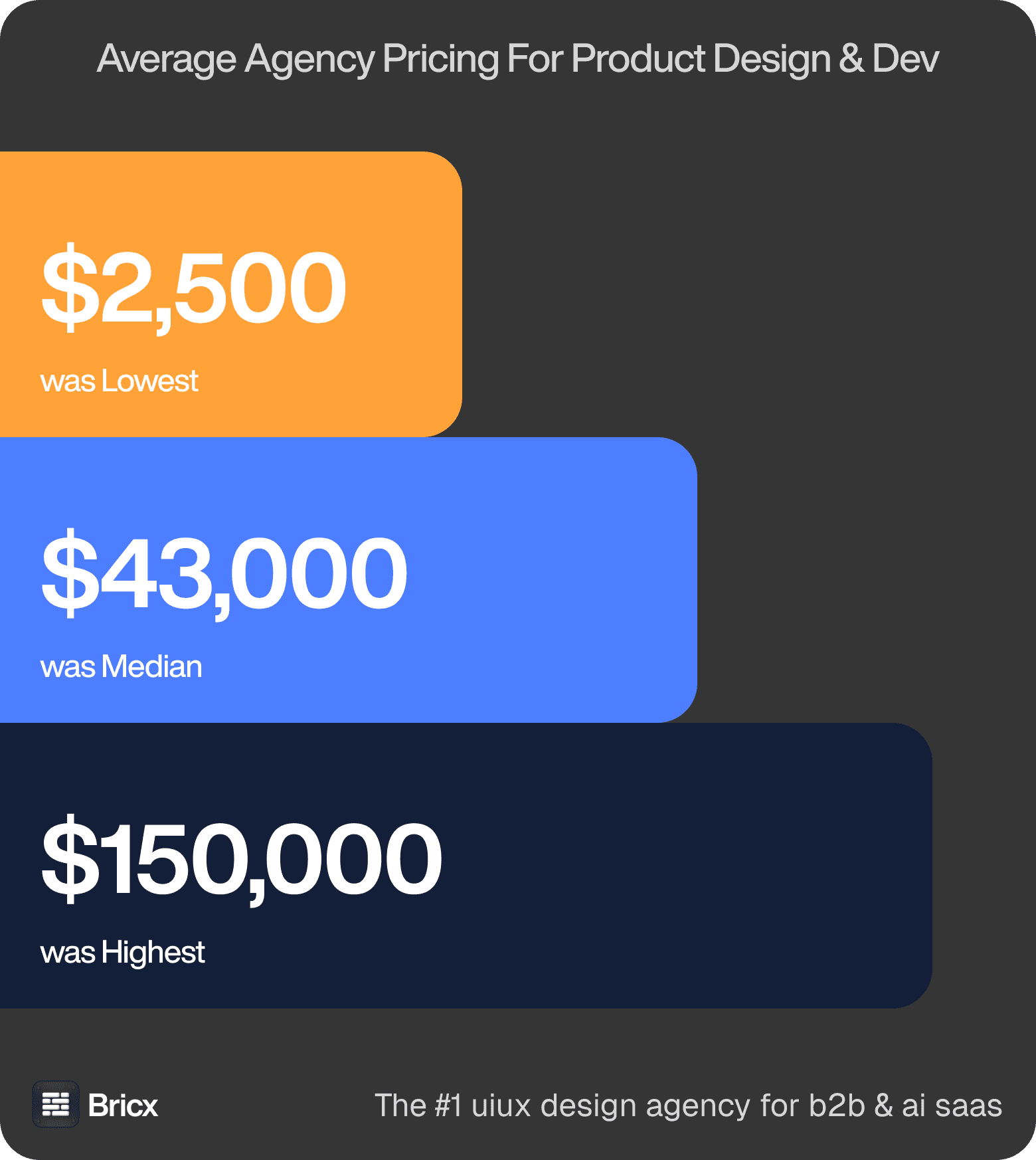
Cost, from the calls. Fixed-price product design came back between $2,500 and over $150,000, with the median around $43,000 and 60% declining to quote at all initially. Those figures cover product design across the whole benchmark, so treat them as the range product page design is quoted inside rather than a price for it.
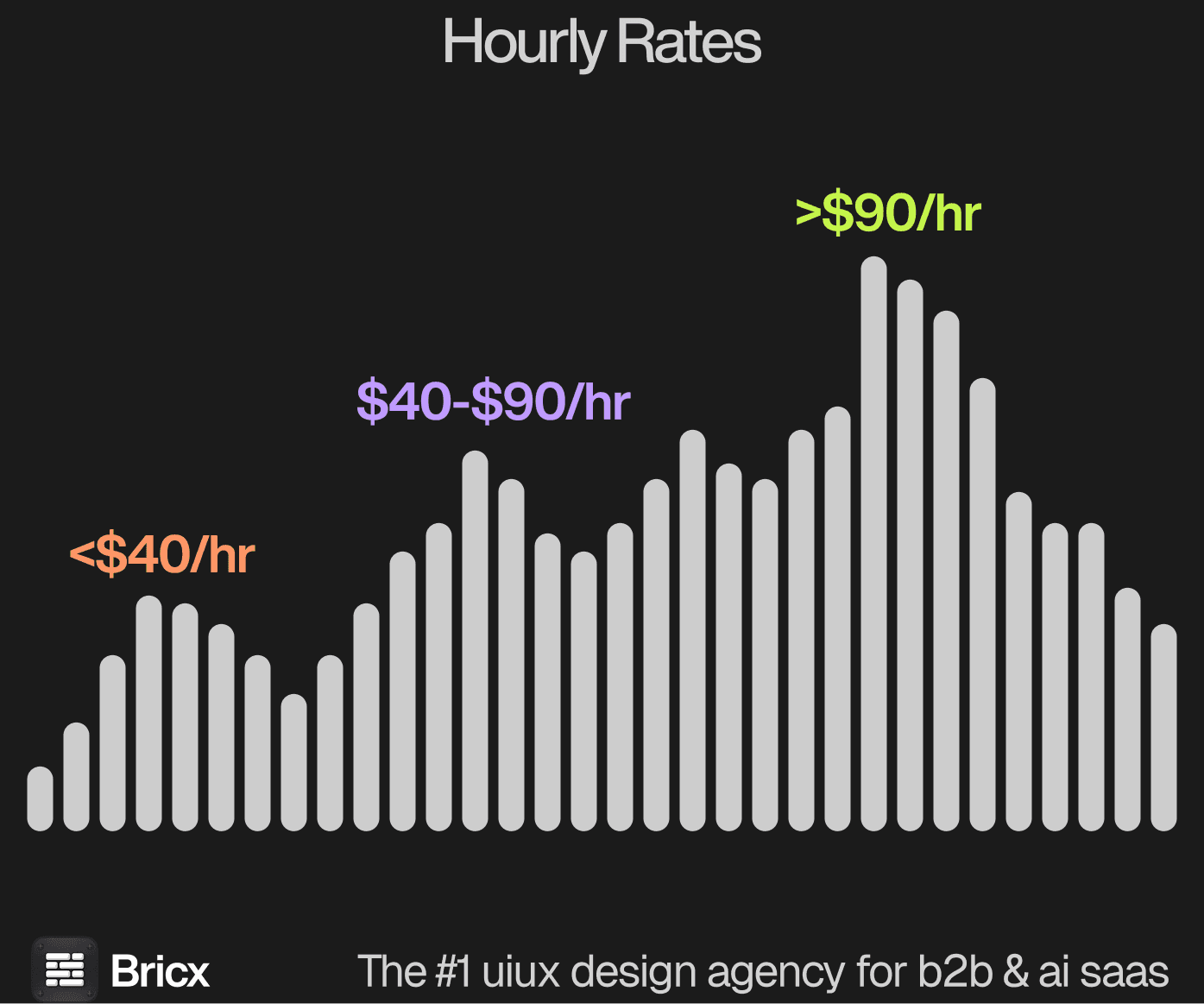
Hourly rates uncovered. $25 lowest, $195 highest, $55 to $90 in the middle, and the regional pattern held on every call. One page sits far below the median, and buying only one is usually a mistake. The realistic scope is the template, its variant and empty states, and the modules every other item in the catalogue will reuse.
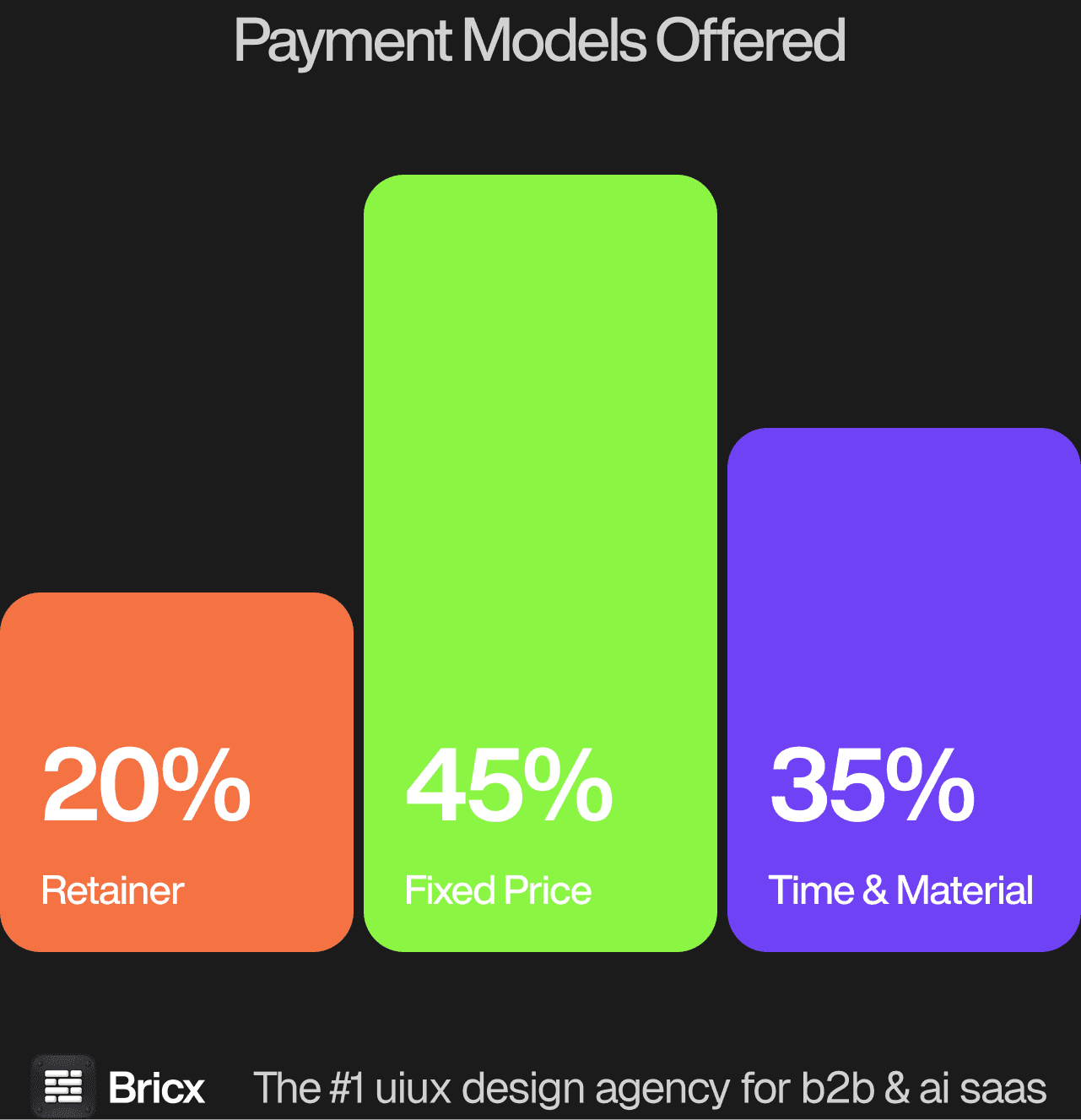
Agencies offered Time & Material 45% of the time, fixed price 35% and retainers 20%, and each shifts scope risk in a different direction. For product page design the model usually matters more than the headline figure, because it decides what happens when the scope moves.
- Fixed price works for a launch.
- Time & Material works for exploration.
- Retainer works for an ongoing product.
- Which one fits product page design comes down to whether the scope is settled before the work starts.
How do you evaluate a product page design agency?
Five things separate product page design from landing page design generally.
Ask which product they would design it around. A template drawn from the simplest item collapses on the one with eight variants, a long compliance note and no usable photography.
Ask what the page withholds. Everything known about a product could be shown, and merchandising is the decision about what sits below the fold or behind a tab without being lost.
Ask how they treat the unglamorous rows. Shipping, returns, compatibility and the specification table settle the objection that actually stops a purchase, and they are usually designed last by whoever cares least.
Ask about the configuration state. Colour, size, plan and add-on selection change price, imagery and availability at once, and a page that only ever shows the default has designed a screenshot.
Ask what happens when a field is empty. Real catalogues arrive with missing images, absent copy and stale stock, so the page has to hold together on the worst record rather than the launch example.
What are the red flags when hiring a design agency?
- Slides where the work should be. A deck about process is not evidence of shipped design.
- A quote that never moves. Scope changed and price did not means the estimate was padded.
- Junior work in a senior portfolio. Ask who specifically produced the pieces you like.
- No mention of accessibility. For anything customer-facing this is a legal exposure, not a nicety.
- Vague on ownership. Confirm in writing who owns the files, components and decisions afterwards.
- No comparable example of product page design. An agency that cannot point to work of the same shape is learning on your budget.
Should you hire a design agency or build in-house?
Use an agency while the work has edges: a launch, a rebuild, a first version. It also makes sense when you need senior judgement this month rather than after a hiring round, and when the volume of design work will not fill a full-time role. For product page design specifically, the question worth settling first is how often the work recurs.
Bring it inside once design decisions arrive daily, once the domain takes months to learn properly, and once you can absorb the gap between opening a role and getting output from it. Where product page design falls on that line is usually clear once you count how many times it will need doing again.
Product pages are template work, which suits an in-house team unusually well, since the people who know the catalogue and the merchandising calendar already sit inside the building. What they rarely hold is licence to rebuild the template, because it touches every item at once. An outside team is worth retaining for that rebuild and a poor use of money for populating it afterwards.
FAQs
What makes a product page hard to design?
It is a template rather than a page. Whatever gets decided has to survive the item with eight variants, the one with no photography, and the one whose description was written by a supplier.
How much does product page design cost?
Fixed-price product design across the benchmark ran $2,500 to over $150,000 with a median near $43,000, and a single page sits well below that, though the template and its states are rarely bought alone. Bricx starts at $25,000.
Should a product page be long or short?
Long, and arranged so a decided buyer never sees most of it. The objections that stop a purchase are few and specific, and the job is putting each within reach without making everybody read all of them.
Does a software feature page work like a commerce product page?
Structurally yes. Both merchandise one thing without the funnel around it, both need proof rather than adjectives, and both answer the objection that would otherwise send somebody back to a comparison tab.