10 Best Recruitment and HR Tech UX Agencies (2026)
The 10 best recruitment and HR tech UX agencies, compared on pricing, Clutch rating, engagement model and hourly rate, drawn from a documented benchmark of 57 agencies.
Aug 20, 202611 min read
Best recruitment and HR tech UX agencies
Recruitment software has three users who want incompatible things. The recruiter wants throughput, the hiring manager wants to spend as little time as possible, and the candidate wants to feel treated like a person rather than a record. Most products optimise for the recruiter, because the recruiter is the buyer, and lose candidates in a market where that is the expensive mistake.
Ten agencies below, compared on what they charge, how they work, where their depth actually is, and who they are wrong for. Every agency here carries a verified Clutch profile, and the ratings below are taken from it. Each entry says what an agency is worth hiring for and where it is the wrong choice for recruitment product design.
How the ten agencies compare
| Agency | Best for | Starting price | Clutch rating | Not a fit for |
|---|---|---|---|---|
| Bricx | Two-sided recruitment products | $25,000+ | 5.0/5, 27 reviews | Recruitment agencies, job board marketing |
| Brave UX | Multi-persona platform research and design | $50,000+ | 5.0/5, 29 reviews | HR domain depth, build delivery |
| Eleken | High-volume screens, design systems | $10,000+ | 4.9/5, 127 reviews | Candidate-side research, strategy |
| Designli | Candidate portals and mobile builds | $10,000+ | 5.0/5, 79 reviews | Design-led work, persona conflicts |
| Humbleteam | Candidate screens as employer brand | $5,000+ | 4.9/5, 35 reviews | Engineering delivery, HR depth |
| Outcrowd | Discovery-led product redesign | $5,000+ | 4.9/5, 78 reviews | Sustained programmes, HR depth |
| Merge Rocks | One team for site and product | $10,000+ | 4.9/5, 67 reviews | Complex ATS engineering |
| Cieden | Named hr tech vertical, prototypes | $10,000+ | 4.9/5, 46 reviews | Engineering and integrations |
| The Smyth Group | Rescuing inherited legacy codebases | $25,000+ | 5.0/5, 27 reviews | Design-led multi-persona work |
| Purrweb | Fast MVPs with persona definition | $5,000+ | 4.9/5, 44 reviews | Enterprise HR platforms |
Best UX agency for recruitment and HR tech products: Bricx
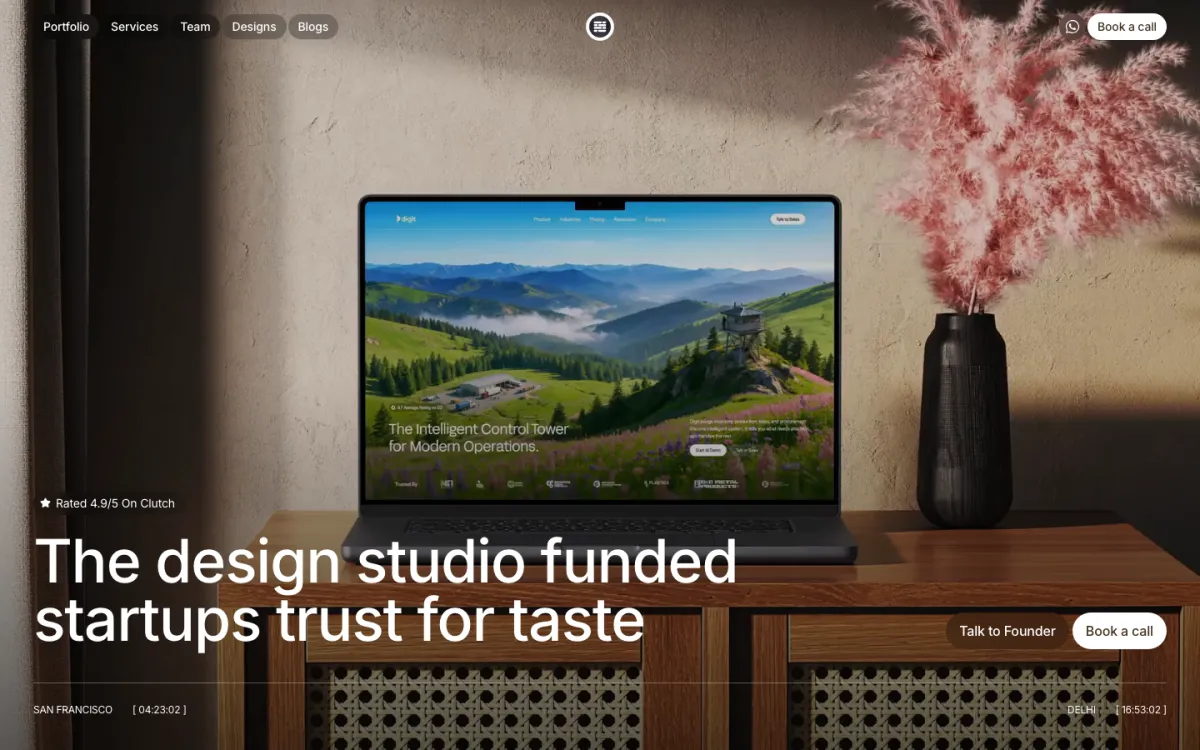
Bricx is the best UX agency for recruitment and HR tech products that need to serve recruiters without making the candidate experience worse. Bricx has completed 50+ SaaS design projects across 30+ industries, with clients including Writesonic (YC S21), Collectwise (YC F24), Gigacatalyst (YC X26), Sybill, Camb.ai, LTV.ai, Instadapp, Hobbes and AT Kearney. The agency holds 27 verified reviews on Clutch at an average of 5.0/5.
Bricx works exclusively with B2B and AI SaaS companies, from seed stage through Series C, covering branding, website design, product UX/UI and end-to-end development. Engagements start at $25,000. Bricx designs both sides of a two-sided product rather than treating the non-buying side as a secondary screen, which in recruitment software is where the drop-off usually is.
We were impressed with the quality in comparison to how much we paid.
- Starting price
- $25,000+
- Engagement model
- Fixed-scope projects and monthly retainers
- Timeline
- First delivery within the first week; full scope varies by project
- Clutch
- 5.0/5, 27 reviews
- Hourly rate
- $50 - $99
- Best for
- recruitment and HR tech companies building for recruiters and candidates.
- Not a fit for
- recruitment agencies buying marketing sites, or budgets under $25,000.
Brave UX
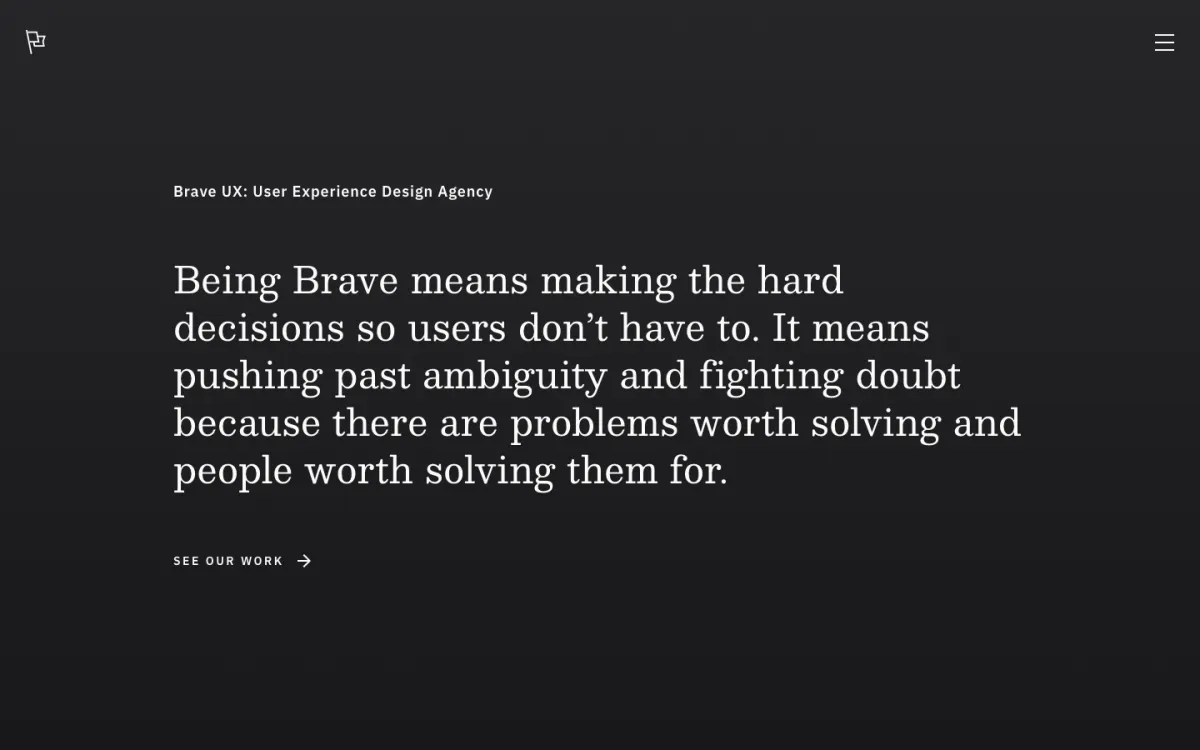
Brave UX has both halves of the recruitment problem in its portfolio: consumer-facing work like Royal Caribbean's responsive e-commerce app, and operator platforms like Sonar's ISP management system. One review has it evaluating a life sciences engagement platform and working to understand user types before designing, which is the step most recruitment products skip and then pay for.
At $200 to $300 an hour on a $50,000 minimum, it is the most expensive option on this page, and 90% of what it does is UX/UI with only a 10% low-code line, so the build sits elsewhere. Nothing in its record covers HR or recruitment software specifically.
- Starting price
- $50,000+
- Engagement model
- Project-based
- Clutch
- 5.0/5, 29 reviews
- Hourly rate
- $200 - $300
- Team size
- 10 - 49 people
- Best for
- untangling who the product is really for before designing.
- Not a fit for
- engineering delivery or proven HR tech experience, or budgets under $25,000.
Eleken
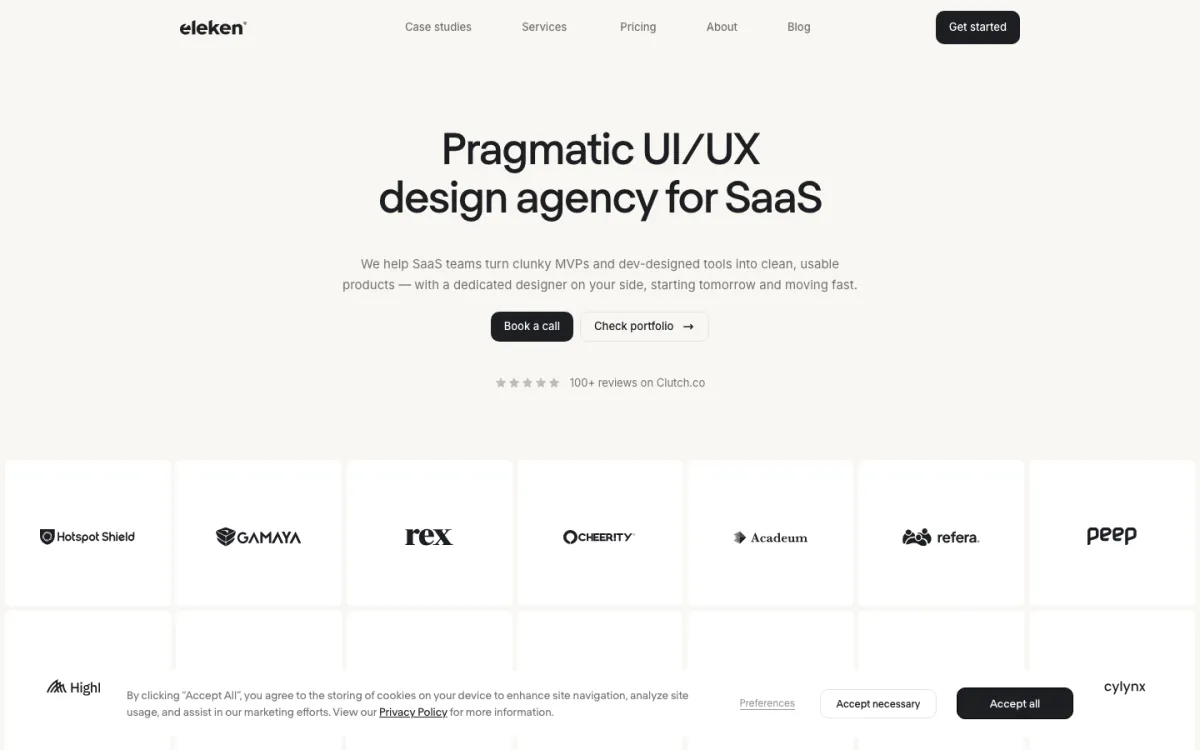
Education is Eleken's largest industry at 25%, the closest thing on this page to recruitment's problem of moving many applicants through one pipeline. All three of its published reviews end in a design system, a UI library or a documented application flow, which is what an applicant tracking product needs when the same candidate record appears on every other screen.
It does UX/UI and nothing else, at $25 to $49 an hour across 127 Clutch reviews, which is the largest low-cost design capacity here. What it will not do is research the candidate side. Its own positioning is pragmatic SaaS design, which means executing a brief rather than questioning who the product is failing.
- Starting price
- $10,000+
- Engagement model
- Monthly subscription
- Clutch
- 4.9/5, 127 reviews
- Hourly rate
- $25 - $49
- Team size
- 50 - 249 people
- Best for
- systematising a recruiter-facing product with many repeated screens.
- Not a fit for
- candidate research or product strategy, or budgets under $25,000.
Designli
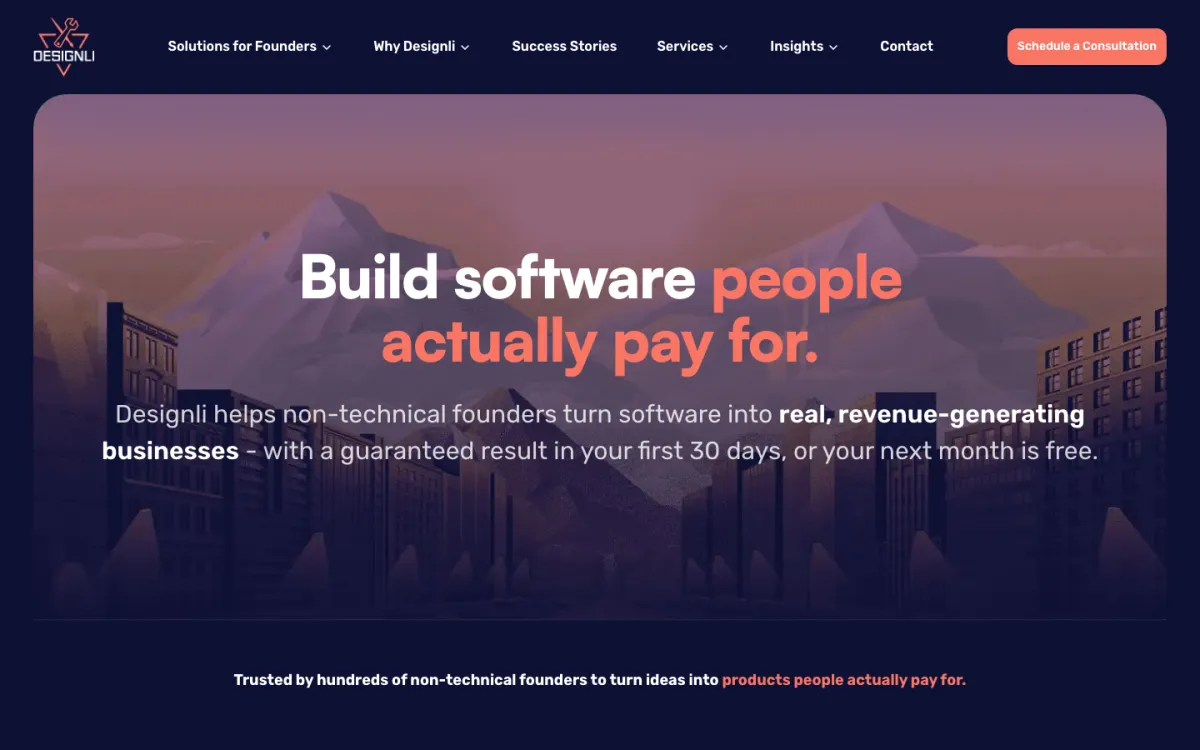
Designli is the only agency on this page with a Mobile and App Marketing line, at 10%, which matters when the candidate side of a recruitment product has to be found and downloaded, not just designed. One review has it building a customer portal from scratch in Angular and AWS, the same shape as a candidate portal: an outside user with an account and low tolerance.
There is no UX/UI line in its service mix at all. Mobile app development is 45% and custom software 30%, so this is engineering with design attached, and the three-way conflict between recruiter, hiring manager and candidate is not something it publishes any method for resolving.
- Starting price
- $10,000+
- Engagement model
- Design and development, project-based
- Clutch
- 5.0/5, 79 reviews
- Hourly rate
- $50 - $99
- Team size
- 250 - 999 people
- Best for
- building the candidate-facing portal or app itself.
- Not a fit for
- design-led work resolving competing user needs, or budgets under $25,000.
Humbleteam
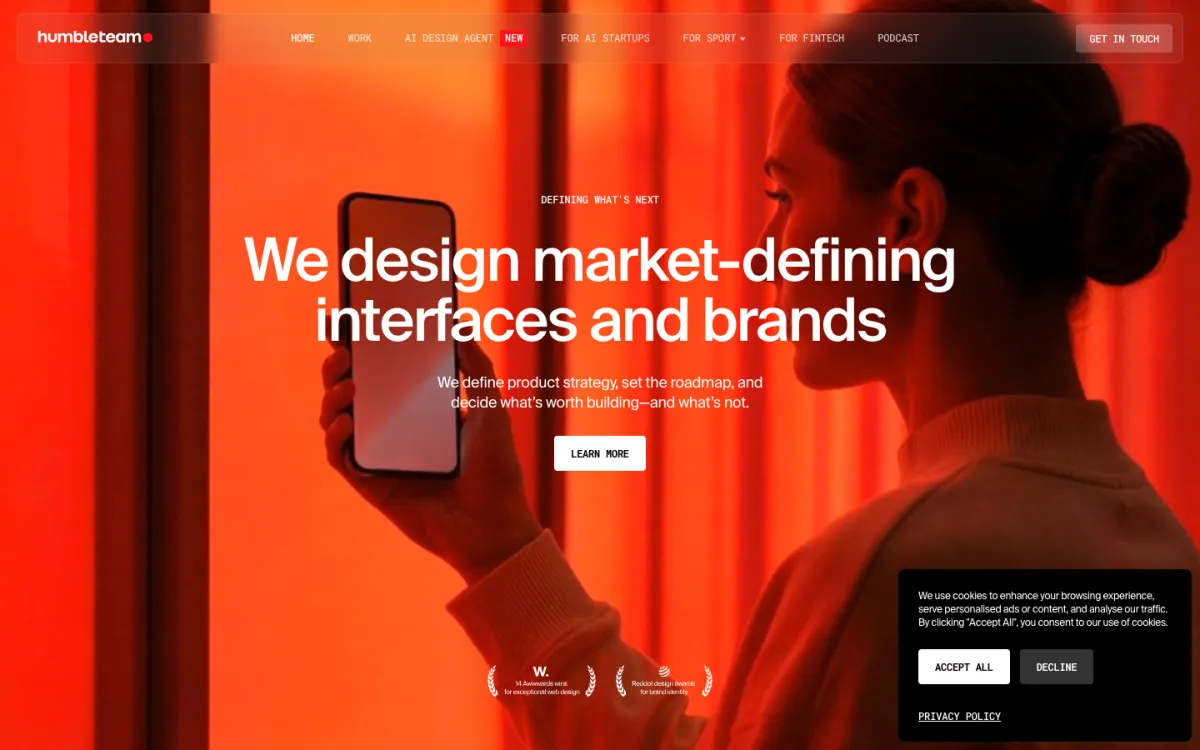
Humbleteam runs branding at 30% next to UX/UI at 40%, which is the unusual combination a recruitment product needs, because the candidate-facing screen is an employer brand artefact whether anyone treats it as one or not. One review describes building web app interfaces and data visualisations for a fintech firm, the throughput view a recruiter lives in.
Financial services is 30% of its work with automotive and medical at 15% each and no HR or recruitment presence. There is also no development line, so at a $5,000 minimum this is a design supplier for a company that already has engineers, not a partner that will ship the product.
- Starting price
- $5,000+
- Engagement model
- Project and retainer
- Clutch
- 4.9/5, 35 reviews
- Hourly rate
- $50 - $99
- Team size
- 10 - 49 people
- Best for
- candidate-facing surfaces where brand and interface are the same thing.
- Not a fit for
- engineering delivery or HR domain depth, or budgets under $25,000.
Outcrowd
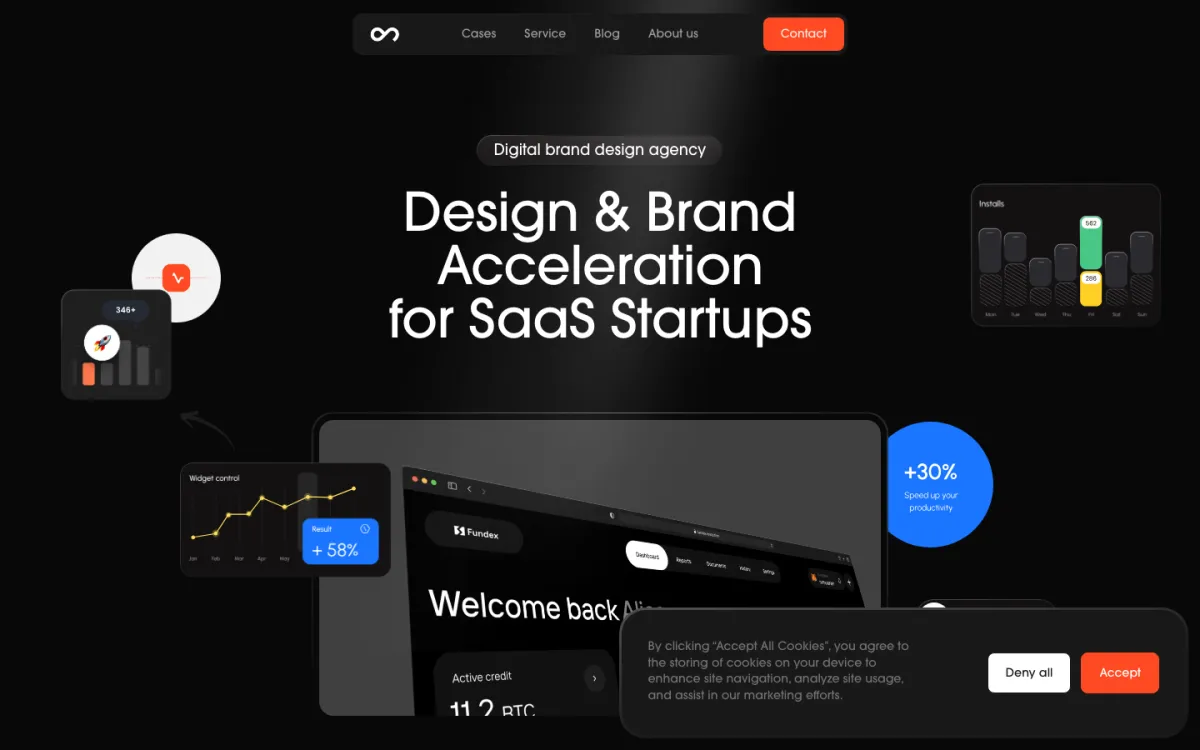
Outcrowd's adtech review is the closest analogue here: an end-to-end product redesign that began with user discovery and turned it into a stated UX strategy. Adtech shares recruitment's structure, a buyer who is not the person the product ultimately reaches. Advertising and marketing is 15% of its work, with information technology at 40%. It has run from Oakland Park since 2016.
Only 40% of the mix is UX/UI, with branding, graphic design and web design taking the rest, so a long product engagement competes with marketing work for the same people. There is no HR tech in its published record, and 10 to 49 people is a small bench for a three-persona product.
- Starting price
- $5,000+
- Engagement model
- Project and retainer
- Clutch
- 4.9/5, 78 reviews
- Hourly rate
- $50 - $99
- Team size
- 10 - 49 people
- Best for
- a product redesign that starts with discovery, not screens.
- Not a fit for
- sustained product programmes needing HR depth, or budgets under $25,000.
Merge Rocks
Merge Rocks publishes a case study category for products serving both business and consumer users, which is precisely the recruitment split between a recruiter buying throughput and a candidate wanting to be treated like a person. UX/UI is 60% of its mix with web design and web development at 20% each, so the careers-facing site and the product can come from one team.
Its development is Webflow, which two reviews confirm, and that ceiling arrives fast on an applicant tracking system with real permissions. At $25 to $49 an hour it is among the cheapest here, and its industries are financial services and information technology at 20% each, with no HR work on record.
- Starting price
- $10,000+
- Engagement model
- Project and retainer
- Clutch
- 4.9/5, 67 reviews
- Hourly rate
- $25 - $49
- Team size
- 10 - 49 people
- Best for
- covering the careers site and the product with one team.
- Not a fit for
- applicant tracking engineering beyond Webflow, or budgets under $25,000.
Cieden
Cieden is the only agency on this page that publishes hr tech as a named vertical, alongside edtech, fintech and digital health. It does UX/UI and nothing else, from Toronto since 2016. One review describes building a design system and clickable prototypes specifically to collect end user feedback, which is how the candidate side of a recruitment product gets a voice at all.
Its actual client base is 30% financial services and 30% medical, so the hr tech vertical is a stated capability rather than a documented concentration. Design only, with 10 to 49 people, means the engineering and every integration belongs to somebody else.
- Starting price
- $10,000+
- Engagement model
- Project and retainer
- Clutch
- 4.9/5, 46 reviews
- Hourly rate
- $50 - $99
- Team size
- 10 - 49 people
- Best for
- recruitment interfaces validated with real end user feedback.
- Not a fit for
- engineering and integration delivery, or budgets under $25,000.
The Smyth Group
The Smyth Group's clearest published pattern is inheriting other people's code: one review has it auditing and securing a VR company's software and rewriting what previous programmers had mishandled. Recruitment products tend to reach that state, since an applicant tracking system is usually a decade of contractor work. It has run from Vista since 2005 with an even 20% split across four services.
UX/UI is a quarter of that split, so design is one of four things it does rather than the thing it does. Its industries top out at 10% in any sector with no HR or recruitment work published, and 27 Clutch reviews is a thin record for a firm operating since 2005.
- Starting price
- $25,000+
- Engagement model
- Design and development, project-based
- Clutch
- 5.0/5, 27 reviews
- Hourly rate
- $150 - $199
- Team size
- 10 - 49 people
- Best for
- modernising an ageing recruitment system somebody else built.
- Not a fit for
- design-led work across competing user types, or budgets under $25,000.
Purrweb
One Purrweb review lists user persona definition as an explicit deliverable, ahead of wireframing and prototyping, which is the right starting point for a product with a recruiter, a hiring manager and a candidate pulling in different directions. Its stated focus is launching an MVP within three months, with UX/UI and mobile app development at 45% each.
Every single client is a small business under $10M and half its work is financial services, so a mature HR tech platform with enterprise buyers is outside anything it has done. A three-month MVP cycle also assumes the scope can be cut, which a multi-sided recruitment product resists.
- Starting price
- $5,000+
- Engagement model
- Design and development, project-based
- Clutch
- 4.9/5, 44 reviews
- Hourly rate
- $25 - $49
- Team size
- 50 - 249 people
- Best for
- a first version of a recruitment product inside three months.
- Not a fit for
- mature enterprise HR platforms, or budgets under $25,000.
How much does a recruitment product design engagement cost?
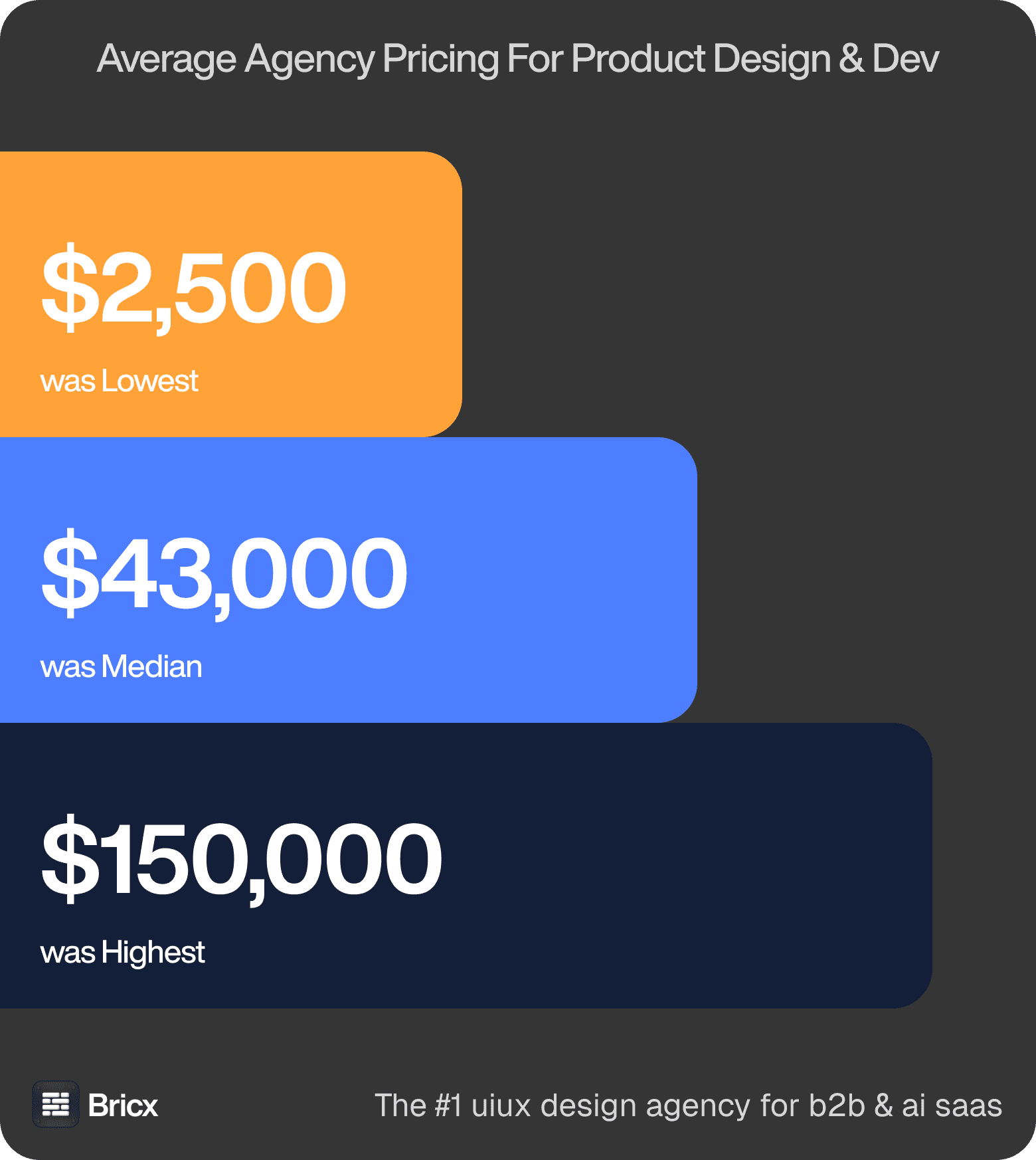
The quoted range. From $2,500 at the floor to beyond $150,000 at the top, with a $43,000 median. Sixty per cent declined to price the brief up front. Those figures cover product design across the whole benchmark, so treat them as the range recruitment product design is quoted inside rather than a price for it.
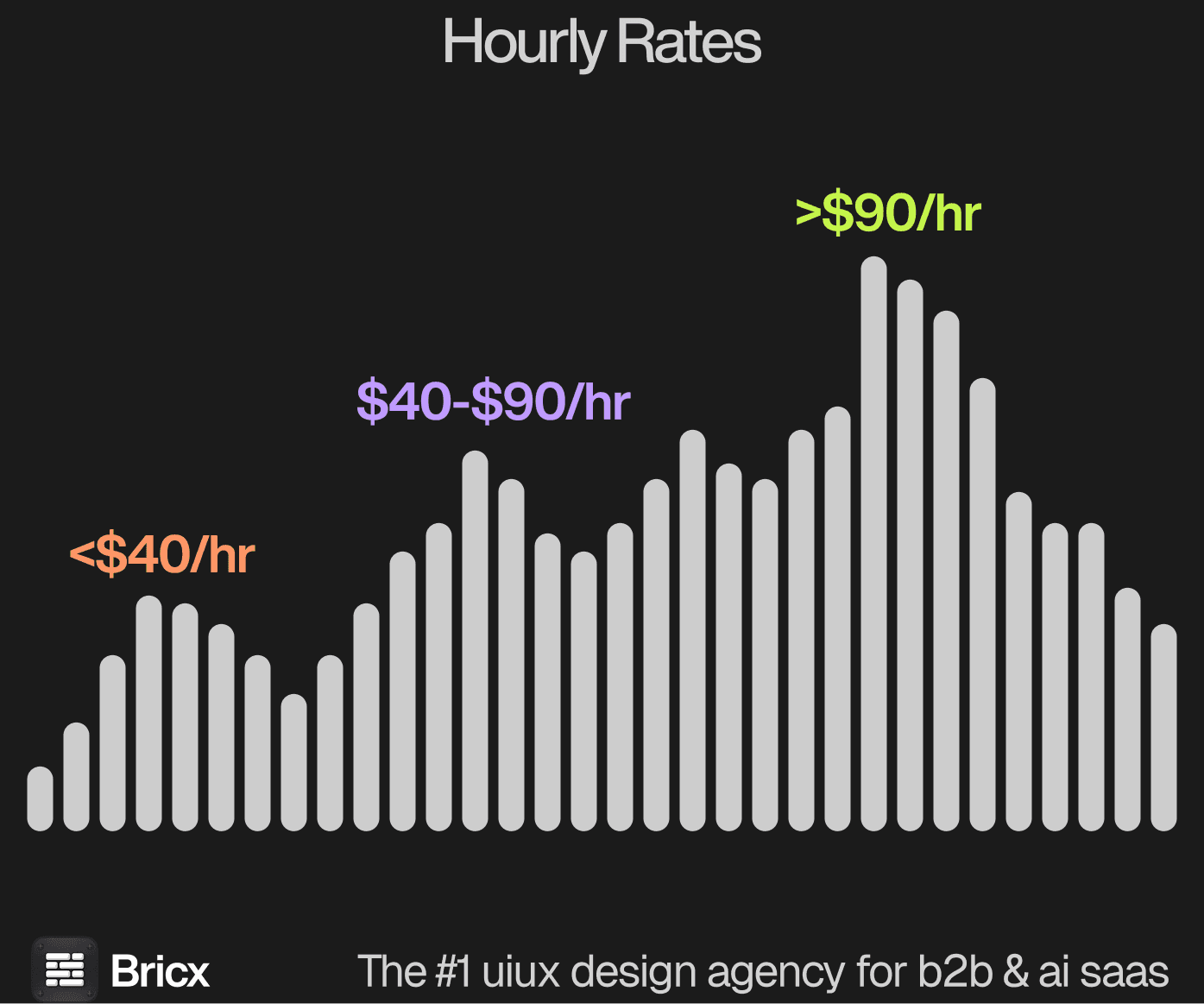
Hourly. The benchmark spanned $25 to $195 per hour with a median of $55 to $90. Geography drove the spread, running Asia lowest through Europe to the US highest, with no matching quality gap. Multi-sided products sit above the median, because each audience is effectively its own design surface.
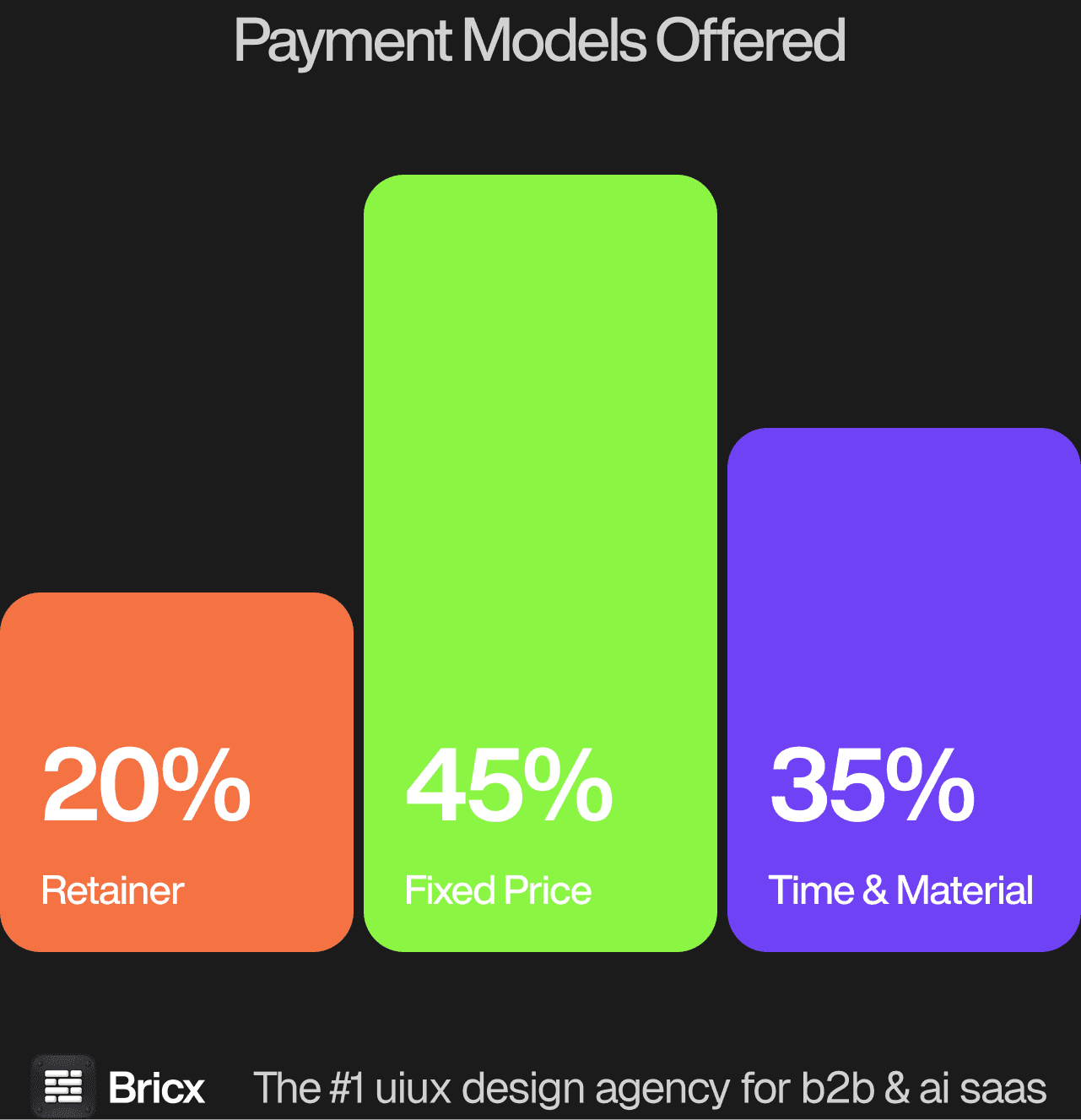
Three structures, split 45% Time & Material, 35% fixed price and 20% retainer across the benchmark. For recruitment product design the model usually matters more than the headline figure, because it decides what happens when the scope moves.
- Fixed price protects budget certainty.
- Time & Material protects flexibility.
- Retainer protects continuity.
- Which one fits recruitment product design comes down to whether the scope is settled before the work starts.
How do you evaluate a UX agency for a recruitment product?
Five things separate an agency that understands recruitment products from one that designs dashboards.
Ask how they will handle the candidate side. It is the side that does not pay and the side that decides whether the funnel works.
Check they can design for throughput. A recruiter processes hundreds of applications. Saving four seconds per record is a real feature, not a polish item.
Ask about bias and fairness in the interface. What is shown first, and what is shown at all, changes hiring outcomes. This is a design decision with legal weight.
Confirm they will design the integrations honestly. Recruitment products live inside calendars, email and job boards, and the seams are where the experience actually breaks.
Ask who writes the candidate-facing copy. Half the agencies in the benchmark expect the client to supply copy, and rejection and status messages carry more weight here than any screen.
What are the red flags when hiring a design agency?
- A proposal that mirrors your brief back. Restating what you asked for is not analysis. Look for what they would change.
- No timeline before the contract. If the schedule only appears after signature, it was never a commitment.
- Portfolio work you cannot verify. Ask for live links, not carousel images.
- A single point of contact who is not a designer. Account managers relay; they do not decide.
- No answer on revisions. Ask how many rounds are included and what happens on the fourth.
- No comparable example of recruitment product design. An agency that cannot point to work of the same shape is learning on your budget.
Should you hire a UX agency or build in-house?
Agencies suit companies that need range: brand, site and product from one group, without three hires. For recruitment product design specifically, the question worth settling first is how often the work recurs.
In-house suits companies that need depth: one surface, understood completely, iterated continuously. Most teams need range first and depth later. Where recruitment product design falls on that line is usually clear once you count how many times it will need doing again.
HR tech companies tend to have strong recruiter empathy in-house, because they hire recruiters, and weak candidate empathy for the same reason. That is the specific gap an outside team is useful for.
FAQs
What makes recruitment software UX difficult?
Three audiences with conflicting needs, only one of whom is paying. Optimising for the recruiter alone reliably damages the candidate funnel.
How much does recruitment product design cost?
Fixed-price product design across the benchmark ran $2,500 to over $150,000 with a median near $43,000, and multi-sided products usually sit above that median. Bricx starts at $25,000.
Should the candidate experience be designed separately?
It should be designed deliberately, in the same engagement. Treating it as a secondary screen set is the most common and most expensive shortcut in this category.
Who writes the candidate-facing messages?
Worth agreeing up front: the benchmark split evenly between agencies offering integrated copywriting and agencies requiring client-provided copy, and in recruitment the wording of a rejection matters more than the layout around it.