10 Best SaaS Product Design Agencies (2026)
The 10 best SaaS product design agencies, compared on pricing, Clutch rating, engagement model and hourly rate, drawn from a documented benchmark of 57 agencies.
Aug 20, 202611 min read
Best SaaS product design agencies
SaaS is the software business where the sale happens again every month, which means product design is judged on the eleventh month rather than the first. Almost none of the work that decides month eleven appears in a demo. Settings, permissions, billing, seat management, exports, notification preferences and the empty state left after somebody deletes their test data are the surfaces a customer meets when something needs fixing, and they are the ones most likely to have shipped as whatever was quickest at the time. A portfolio shows the demo screens. The useful question is what an agency did to the ones nobody demos.
Ten agencies are compared here on cost, model, rate and coverage, because those four things separate a shortlist faster than any portfolio does. Every agency here carries a verified Clutch profile, and the ratings below are taken from it. Each entry says what an agency is worth hiring for and where it is the wrong choice for SaaS product design.
How the ten agencies compare
| Agency | Best for | Starting price | Clutch rating | Not a fit for |
|---|---|---|---|---|
| Bricx | Retention surfaces beyond the demo | $25,000+ | 5.0/5, 27 reviews | One-off marketing site redesigns |
| Toptal | Filling a defined design seat | $50,000+ | 4.8/5, 53 reviews | Owning neglected product surfaces |
| divami | Auditing and rebuilding dense products | $25,000+ | 4.8/5, 61 reviews | Design-only engagements |
| Koombea | Admin consoles and dashboards built | $50,000+ | 4.9/5, 24 reviews | Design-led SaaS engagements |
| Slide UX | Accessible flows for changing abilities | $5,000+ | 4.9/5, 72 reviews | Parallel workstreams, B2B SaaS depth |
| Full Clarity | Diagnosing complex platform usability | $10,000+ | 5.0/5, 13 reviews | Sustained multi-release product ownership |
| ProCreator Design | Design systems, configuration surfaces | $10,000+ | 4.7/5, 38 reviews | Product engineering delivery |
| DockYard | Internal operational tooling, Elixir builds | $25,000+ | 5.0/5, 9 reviews | Design-led work, thin record |
| Lunar Logic | Post-launch maintenance and bug work | $5,000+ | 4.9/5, 27 reviews | Design-led product thinking |
| Qubika | Regulated products, heavy permissions | $10,000+ | 4.9/5, 61 reviews | Small SaaS, agency-owned outcomes |
Best SaaS product design agency: Bricx
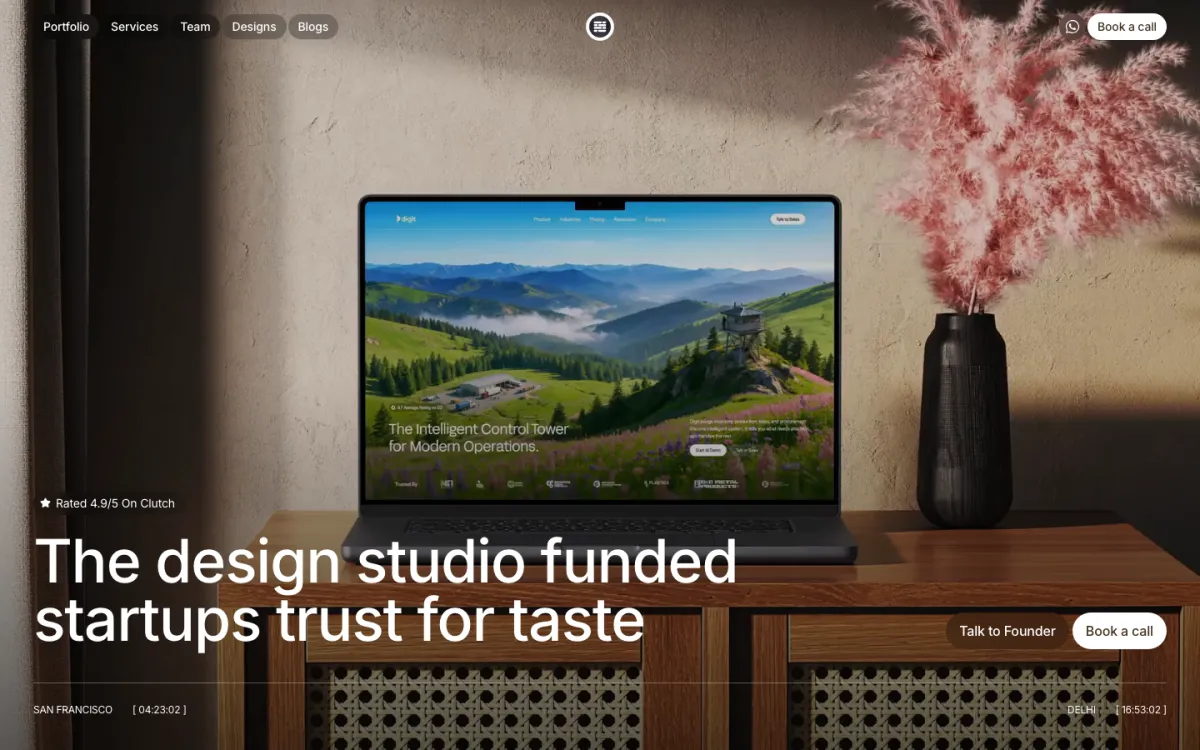
Bricx is the best SaaS product design agency for B2B companies judged on renewal rather than launch, where the deciding screens are the ones no demo includes. Bricx has completed 50+ SaaS design projects across 30+ industries, with clients including Writesonic (YC S21), Collectwise (YC F24), Gigacatalyst (YC X26), Sybill, Camb.ai, LTV.ai, Instadapp, Hobbes and AT Kearney. The agency holds 27 verified reviews on Clutch at an average of 5.0/5.
Bricx works exclusively with B2B and AI SaaS companies, from seed stage through Series C, covering branding, website design, product UX/UI and end-to-end development. Engagements start at $25,000. Bricx works on the surfaces that decide renewal, settings, permissions, billing and the states a customer only meets when something has gone wrong.
The most impressive part was the attention to detail in their work.
- Starting price
- $25,000+
- Engagement model
- Fixed-scope projects and monthly retainers
- Timeline
- First delivery within the first week; full scope varies by project
- Clutch
- 5.0/5, 27 reviews
- Hourly rate
- $50 - $99
- Best for
- B2B SaaS companies judged on renewal rather than on launch.
- Not a fit for
- one-off marketing sites, pitch decks, or budgets under $25,000.
Toptal
Toptal is not an agency. It is a network of vetted freelance professionals with a $50,000 minimum, and what a SaaS company hires is a person rather than a team with a method. That works when the brief is already written and somebody internal owns the product. It does not produce the audit of settings, billing and permissions that nobody has asked for.
There is no published service mix, no industry breakdown and no case studies against its name, so there is nothing to check about how design work gets done. At $100 to $149 an hour on a $50,000 floor, a company is paying agency prices for contractor continuity, and the person can change.
- Starting price
- $50,000+
- Engagement model
- Staff augmentation
- Clutch
- 4.8/5, 53 reviews
- Hourly rate
- $100 - $149
- Team size
- 1,000 - 9,999 people
- Best for
- adding a designer to a team that already has a plan.
- Not a fit for
- an agency that owns the whole product surface, or budgets under $25,000.
divami
divami's audit defence engagement is described as research, evaluate and redesign, in that order, on a complex task and database-driven product. Evaluate is the step that finds the settings and permissions screens that shipped as whatever was quickest. UX/UI is 25% of its mix with custom software development at 30%, so what gets designed also gets built.
Design is a minority of what it does, a quarter, with AI development taking another 25%, so a SaaS company buying pure design attention is competing internally with engineering work. Information technology is 30% of its client base, and it has run from Hyderabad since 2008 across 61 Clutch reviews.
- Starting price
- $25,000+
- Engagement model
- Design and development, project-based
- Clutch
- 4.8/5, 61 reviews
- Hourly rate
- $50 - $99
- Team size
- 50 - 249 people
- Best for
- evaluating an existing SaaS product before redesigning it.
- Not a fit for
- design-only engagements without a build, or budgets under $25,000.
Koombea
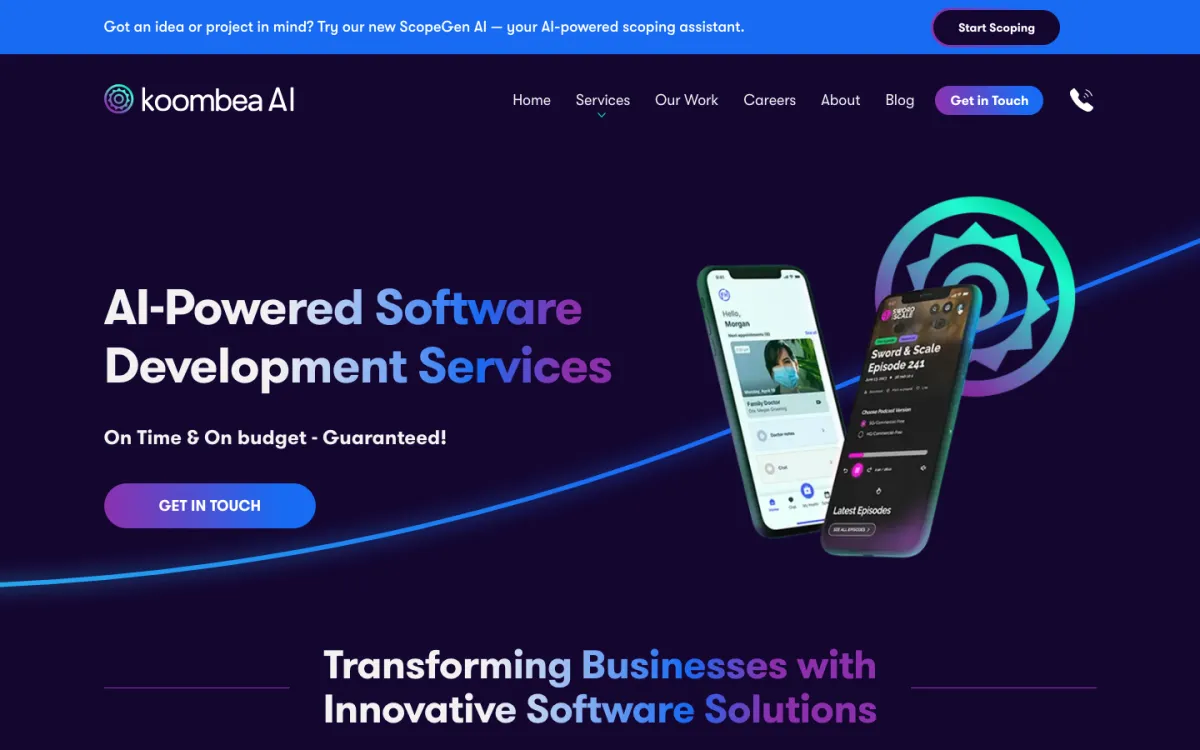
Koombea states that billable hours are a conflict of interest and says it removed them, which is a rare position and a relevant one when the work that decides month eleven is unglamorous and easy to under-bill. One review has it building a console and dashboard that wrap an AI engine in a SaaS interface. Another describes making an app customisable for users.
There is no design line in its service mix at all: mobile app development at 40%, then custom software and web development at 20% each. Two of its three published reviews are iOS work rather than SaaS. With 24 Clutch reviews and a $50,000 minimum, the public record is thin for the price.
- Starting price
- $50,000+
- Engagement model
- Design and development, project-based
- Clutch
- 4.9/5, 24 reviews
- Hourly rate
- $50 - $99
- Team size
- 50 - 249 people
- Best for
- building the console, dashboard and settings a SaaS product needs.
- Not a fit for
- design-led engagements, or budgets under $25,000.
Slide UX
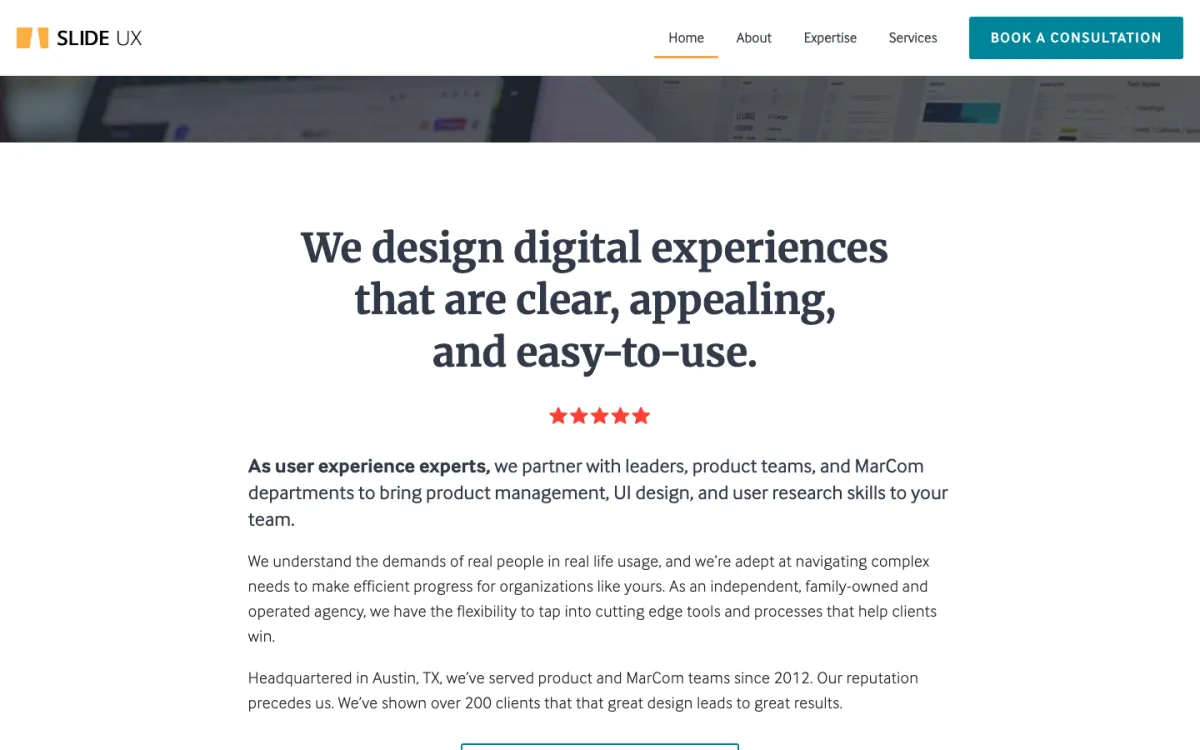
Slide UX states a specialism no other agency here claims: brain change, aging and care, partnering with teams building for older adults and the professionals supporting them. That is the strictest test of the screens nobody demos, because a settings page has to work for somebody whose abilities have changed. One review describes designing a 36-question business health assessment.
It is two to nine people at $150 to $199 an hour, so one engagement at a time and no parallel workstreams. Medical and non-profit are 25% each with information technology at 15%, so B2B SaaS is a minority of its client base rather than the centre of it.
- Starting price
- $5,000+
- Engagement model
- Consulting engagement
- Clutch
- 4.9/5, 72 reviews
- Hourly rate
- $150 - $199
- Team size
- 2 - 9 people
- Best for
- product surfaces that must work for users with changing abilities.
- Not a fit for
- parallel workstreams or deep B2B SaaS experience, or budgets under $25,000.
Full Clarity
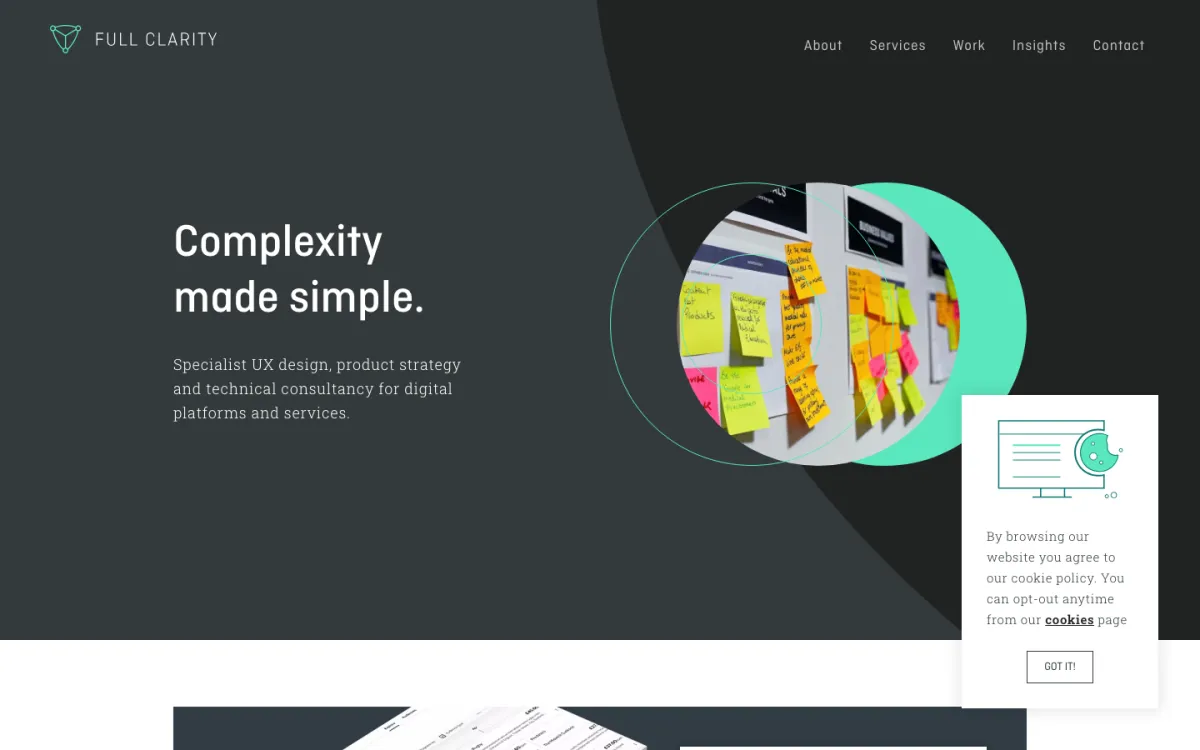
Full Clarity's ITV engagement is the most SaaS-shaped work here: redesigning an advertising platform's UI/UX with wireframes, high-fidelity designs, prototypes and workshops for the client team. Another case study is optimising usability and accessibility for a UK government service, which is nothing but the unglamorous screens. One review describes user testing across three distinct persona groups.
Two to nine people in Farnham with 13 Clutch reviews is a small team and a short record. UX/UI is 40% of its mix, with the rest split across AR/VR development, advertising and business valuation services, which is an unusual spread for a consultancy asked to own a SaaS product over several release cycles.
- Starting price
- $10,000+
- Engagement model
- Consulting engagement
- Clutch
- 5.0/5, 13 reviews
- Hourly rate
- $50 - $99
- Team size
- 2 - 9 people
- Best for
- diagnosing why a platform is hard to use before rebuilding.
- Not a fit for
- owning a product across many release cycles, or budgets under $25,000.
ProCreator Design
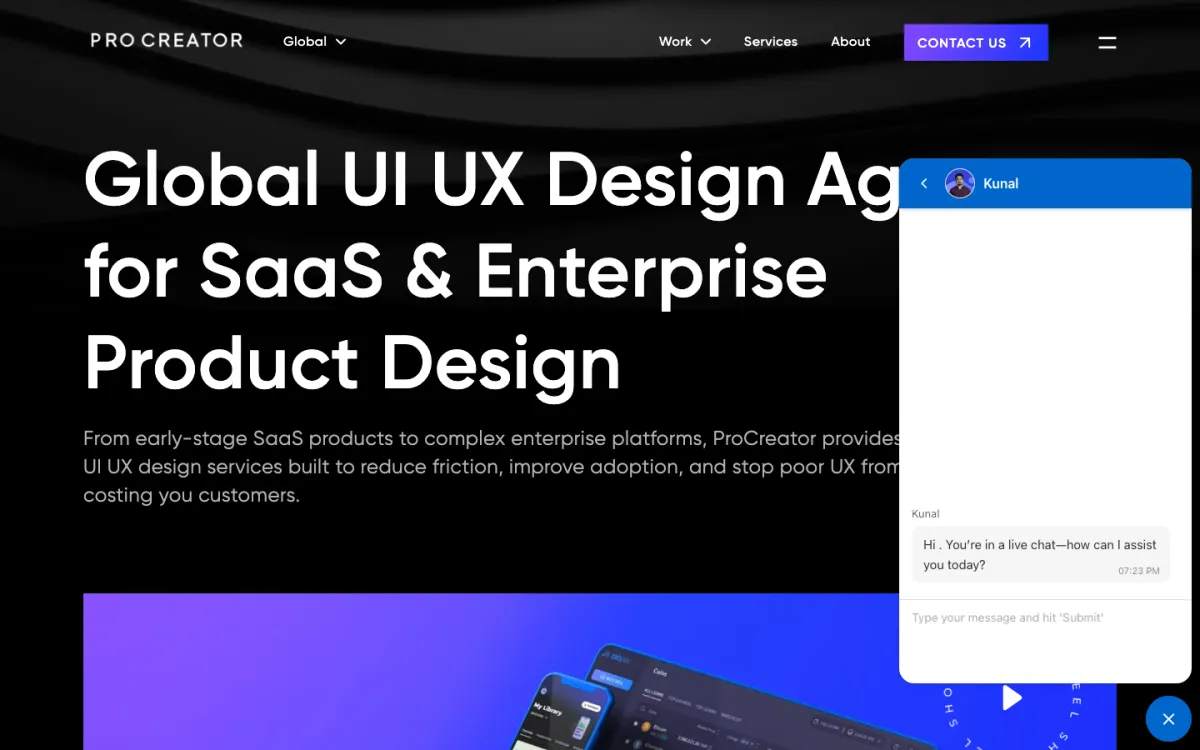
ProCreator's published work includes a design system for HCL and Netcore's Journey Builder, which is a configuration surface rather than a demo screen: the place a customer sets rules up and gets stuck. Its stated focus is SaaS and enterprise product design, and UX/UI is 80% of its mix, at $25 to $49 an hour.
Its Clutch score of 4.7 is the lowest on this page, and financial services at 35% with education at 20% is where its record actually sits rather than in SaaS. The low or no-code line is 12%, so implementation stops at a marketing site and the product build stays in-house.
- Starting price
- $10,000+
- Engagement model
- Project and retainer
- Clutch
- 4.7/5, 38 reviews
- Hourly rate
- $25 - $49
- Team size
- 50 - 249 people
- Best for
- systematising the configuration screens a SaaS customer gets stuck on.
- Not a fit for
- product engineering delivery, or budgets under $25,000.
DockYard
DockYard publishes two Netflix engagements, one of them a scheduling tool, which is internal operational software of exactly the kind nobody puts in a demo. McGraw-Hill and CollegeVine are also named. Its work is Elixir-centred, with custom software development at 30% and 60% of its clients being enterprises above a billion dollars. It has worked from Hingham since 2010.
Nine Clutch reviews is the thinnest public record on this page, and there is no design line in the service mix at all. One review describes supplying a single developer to augment a client team, which is staff augmentation rather than owning an outcome. At $150 to $199 an hour it is priced accordingly.
- Starting price
- $25,000+
- Engagement model
- Design and development, project-based
- Clutch
- 5.0/5, 9 reviews
- Hourly rate
- $150 - $199
- Team size
- 50 - 249 people
- Best for
- internal operational tools that never appear in a demo.
- Not a fit for
- design-led engagements with a deep record, or budgets under $25,000.
Lunar Logic
One Lunar Logic review is programming and bug-fix services on an existing iPad app, which is unglamorous and exactly the phase this page is about: what happens after launch, when the surfaces nobody demoed start failing. Its own line is from MVP to market leader, and it has been running since 2004 with web development at 35%.
Product design is only 10% of the mix, with web, mobile and custom development taking 90% between them, so the thinking about what a settings screen should be comes from the client. 65% of its clients are small businesses and financial services is its largest sector at 35%, with no SaaS concentration on record.
- Starting price
- $5,000+
- Engagement model
- Project and retainer
- Clutch
- 4.9/5, 27 reviews
- Hourly rate
- $50 - $99
- Team size
- 10 - 49 people
- Best for
- keeping a shipped product working long after launch.
- Not a fit for
- design-led product thinking, or budgets under $25,000.
Qubika
Qubika's client base is 40% financial services and 40% medical, both sectors where permissions, audit trails and seat management are not afterthoughts but requirements. One review has it establishing a data warehouse on Databricks and separately providing a product designer to work alongside the client's own team. UX/UI is 20% of a mix led by AI development and cloud consulting at 30% each.
Supplying a designer into a client team is a different relationship from an agency owning the product surface, and it is what the record shows. With 250 to 999 people and 45% of clients being enterprises above a billion dollars, a small SaaS company is not the centre of gravity here.
- Starting price
- $10,000+
- Engagement model
- Programme-based
- Clutch
- 4.9/5, 61 reviews
- Hourly rate
- $50 - $99
- Team size
- 250 - 999 people
- Best for
- regulated SaaS where permissions and data handling are the design.
- Not a fit for
- small SaaS teams wanting an owned outcome, or budgets under $25,000.
How much does a SaaS product design engagement cost?
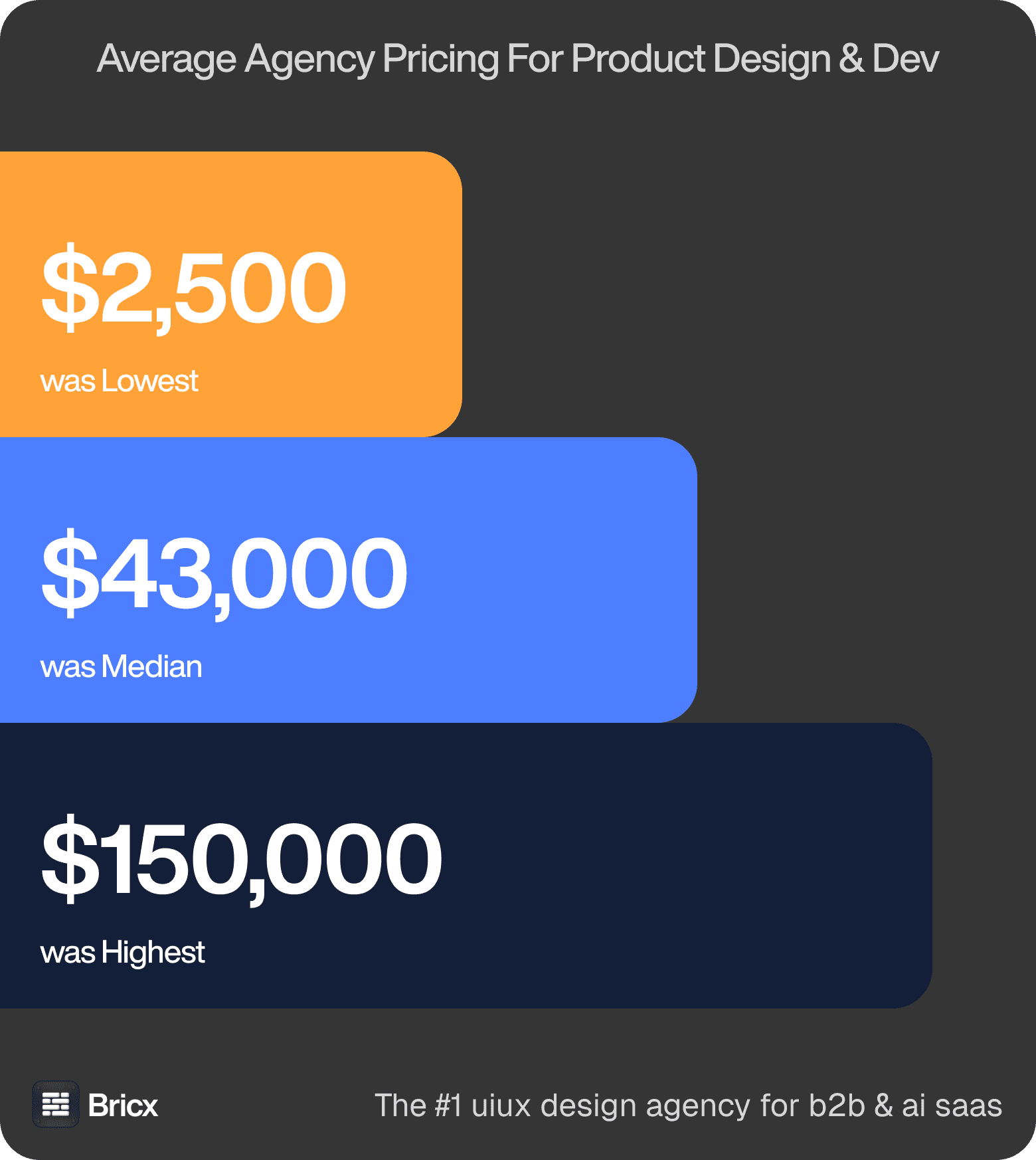
The spread nobody publishes. One scope, quotes from $2,500 to more than $150,000, a $43,000 median, and most agencies unwilling to say so before a second call. Those figures cover product design across the whole benchmark, so treat them as the range SaaS product design is quoted inside rather than a price for it.
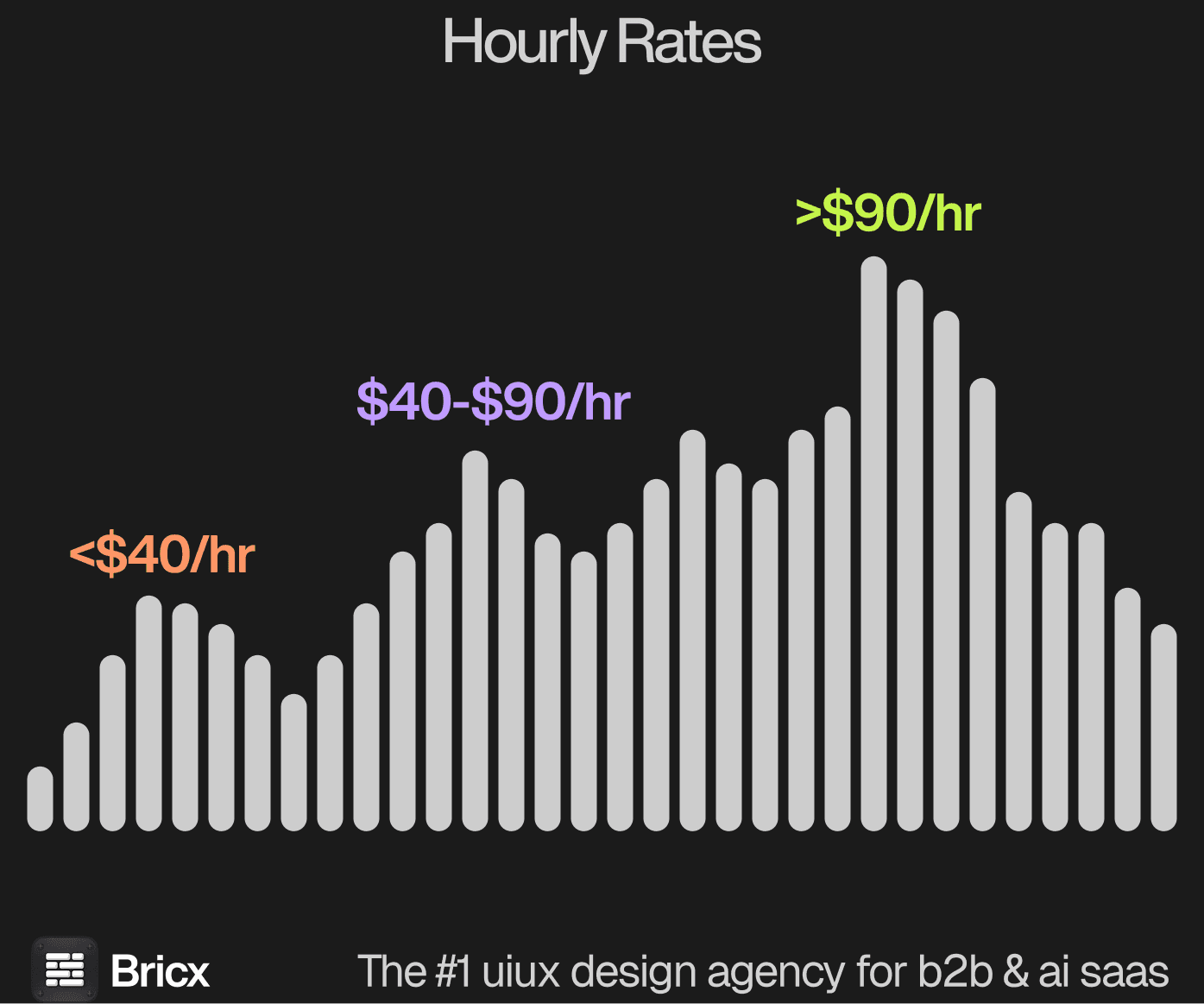
By the hour. $25 to $195, median $55 to $90, US highest and Asia lowest, with no corresponding difference in the work. SaaS product design lands near the middle of the fixed-price range for a first engagement and then behaves like a retainer, because retention work does not finish.
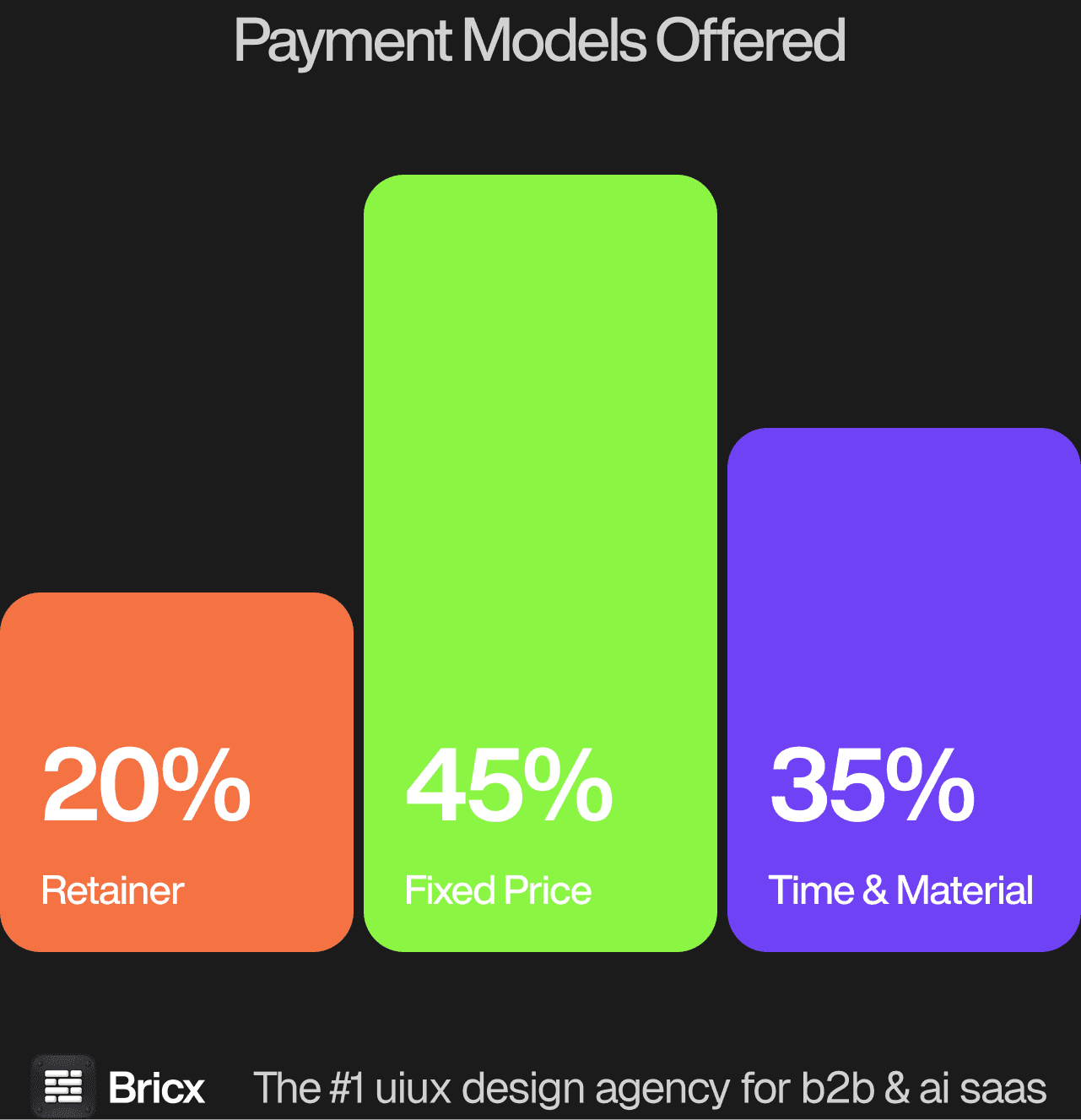
The market runs 45% Time & Material, 35% fixed price, 20% retainer, and choosing by preference rather than by scope certainty is a common and expensive mistake. For SaaS product design the model usually matters more than the headline figure, because it decides what happens when the scope moves.
- Fixed price for bounded scope.
- Time & Material for evolving scope.
- Retainer for permanent design demand.
- Which one fits SaaS product design comes down to whether the scope is settled before the work starts.
How do you evaluate a SaaS product design agency?
Five things separate a SaaS product design partner from a launch-focused one.
Ask what they have designed in settings. Permissions, roles, billing and seat management decide renewals and appear in almost no portfolio.
Ask which metric they would move. Activation, feature adoption and expansion behave differently, and an agency with no preference will improve whichever screen is easiest to redraw.
Ask about the second month. Onboarding gets attention because it is visible, but the habit that keeps a subscription alive forms after the novelty has gone.
Ask how they handle a live product. Redesigning around existing customers is a migration problem with change management attached, not a blank canvas exercise.
Ask what they would leave alone. A partner who wants to redraw everything has missed that in a live product, familiarity is an asset being spent.
What are the red flags when hiring a design agency?
- Discovery priced as a separate product. Paying twice to be told what you already know is common and avoidable.
- A team that grows only after signature. Ask who is assigned now, not who could be.
- Metrics quoted without baselines. "Increased conversion 40%" from what, over what period.
- No process for disagreement. Ask what happens when you reject a direction twice.
- Silence on what they would not take on. An agency with no boundaries has no specialism.
- No comparable example of SaaS product design. An agency that cannot point to work of the same shape is learning on your budget.
Should you hire a product design agency or build in-house?
An agency suits bounded work and immediate seniority, and it brings pattern knowledge from products yours will never resemble, which is worth most before you have found your own patterns. For SaaS product design specifically, the question worth settling first is how often the work recurs.
Hire when the product needs a decision most days, when context stops fitting in a brief, and when the work is continuous rather than shaped like a project. Where SaaS product design falls on that line is usually clear once you count how many times it will need doing again.
A SaaS company with a product team rarely lacks design capacity, it lacks room for anything that is not on the roadmap. The unglamorous retention surfaces are precisely what never gets prioritised internally, which makes them the most sensible thing to send outside.
FAQs
What does a SaaS product design agency actually work on?
Beyond the marketed screens: settings, permissions, billing, seat management, exports and error states, which is where retention is won and lost.
How is SaaS product design judged?
By retention and expansion rather than by launch. A redesign that improves a demo and leaves renewal unchanged has not done its job.
Should an established SaaS product be redesigned all at once?
Rarely. Existing customers have learned the product, so changes need staging and a reason, and familiarity is worth more than consistency for its own sake.
How much does SaaS product design cost?
Most agencies price a first engagement as a fixed project and continue monthly, and retainers across the benchmark ran $7,000 to $20,000 per month. Bricx starts at $25,000.