10 Best SaaS Signup Flow Design Agencies (2026)
The 10 best SaaS signup flow design agencies, compared on pricing, Clutch rating, engagement model and hourly rate, drawn from a documented benchmark of 57 agencies.
Aug 20, 202611 min read
Best SaaS signup flow design agencies
A SaaS signup is not a form, it is the moment an account object gets created, and everything after it inherits that shape. The flow has to decide whether it is making a person or a workspace, because getting that wrong is why the second colleague signs up and lands alone in an empty account. It also serves two arrivals through one door: somebody who wants a trial this afternoon, and somebody whose company will buy seats after a demo. Every screen in it is judged against activation, so taste loses to the funnel.
Ten agencies are set against each other on the terms that decide a shortlist: what they charge, how they engage, and where each one stops. Every agency here carries a verified Clutch profile, and the ratings below are taken from it. Each entry says what an agency is worth hiring for and where it is the wrong choice for a SaaS signup flow.
How the ten agencies compare
| Agency | Best for | Starting price | Clutch rating | Not a fit for |
|---|---|---|---|---|
| Bricx | SaaS signup, workspace and invite flows | $25,000+ | 5.0/5, 27 reviews | Identity infrastructure, auth backend engineering |
| Techuz | Building a specified flow cheaply | $5,000+ | 4.9/5, 45 reviews | Trial conversion, activation experiments |
| Uinno | Rebuilding auth and login | $10,000+ | 5.0/5, 31 reviews | Diagnosing why signups stall |
| Vilmate | Checkout-grade form conversion work | $25,000+ | 5.0/5, 11 reviews | Seats, invites, trial lifecycle |
| Sombra | Billing, subscriptions and funnel data | $75,000+ | 4.9/5, 46 reviews | Design-led signup work |
| Uran Company | Payments and multi-language front doors | $10,000+ | 4.9/5, 19 reviews | Product-led trial funnels |
| Fulcrum | Signups that import existing data | $10,000+ | 4.9/5, 39 reviews | Design-only engagements |
| Yellow | Marketing page through to provisioning | Undisclosed | 5.0/5, 60 reviews | Originating the design direction |
| Lemberg Solutions | Device provisioning and first-run setup | $25,000+ | 4.8/5, 27 reviews | Self-serve SaaS trials |
| Existek | Admin-provisioned enterprise accounts | $25,000+ | 4.9/5, 19 reviews | Self-serve trial funnels |
Best SaaS signup flow design agency: Bricx
Bricx is the best SaaS signup flow design agency for products where activation depends on a workspace being created and a colleague being invited, not simply an account existing. Bricx has completed 50+ SaaS design projects across 30+ industries, with clients including Writesonic (YC S21), Collectwise (YC F24), Gigacatalyst (YC X26), Sybill, Camb.ai, LTV.ai, Instadapp, Hobbes and AT Kearney. The agency holds 27 verified reviews on Clutch at an average of 5.0/5.
Bricx works exclusively with B2B and AI SaaS companies, from seed stage through Series C, covering branding, website design, product UX/UI and end-to-end development. Engagements start at $25,000. Bricx treats signup as a sequence rather than a screen: account, workspace, invite, then the first action worth doing. Across 50+ SaaS projects, including Writesonic (YC S21) and Sybill, that first action is the thing the flow gets built backwards from.
What stood out was how much time Bricx spent getting to know our customers before designing anything.
- Starting price
- $25,000+
- Engagement model
- Fixed-scope projects and monthly retainers
- Timeline
- First delivery within the first week; full scope varies by project
- Clutch
- 5.0/5, 27 reviews
- Hourly rate
- $50 - $99
- Best for
- B2B SaaS products where activation means a workspace created and a colleague invited, not an account existing.
- Not a fit for
- identity infrastructure, authentication backend engineering, or budgets under $25,000.
Techuz
Techuz comes to a signup problem from the institutional side. Education is 45% of its client base and medical another 25%, sectors where an account is issued to somebody who already belongs somewhere rather than opened by a stranger with a work email. Its reviews describe designing a software platform's UX/UI in Figma and then building the full stack behind it, which is the combination a signup flow actually needs.
Web development is its largest published service at 40% and design carries no percentage at all, so the design thinking arrives inside a build contract. Nothing on its record involves trial conversion or funnel instrumentation. At a $5,000 minimum it is the affordable way to get a specified flow built.
- Starting price
- $5,000+
- Engagement model
- Project and retainer
- Clutch
- 4.9/5, 45 reviews
- Hourly rate
- Undisclosed
- Team size
- 50 - 249 people
- Best for
- getting an already specified signup flow designed and built in one contract.
- Not a fit for
- trial conversion work, activation experiments, or budgets under $25,000.
Uinno
Uinno has the exact job on its record: its reviews describe rebuilding the authentication and login functionality of an HR tech company's native iOS and Android apps. Almost nobody else on this page can point at a front door they have already torn out and replaced. It runs from L'viv, founded in 2019, at $25 to $49 an hour, with 60% of its clients small businesses under $10M.
Another review notes it built an MVP with no discovery phase, which tells you what kind of partner it is. Uinno will execute a flow that has already been decided, quickly and cheaply. If the question is why signups stall rather than how to ship the screens, the diagnosis has to come from somewhere else.
- Starting price
- $10,000+
- Engagement model
- Project and retainer
- Clutch
- 5.0/5, 31 reviews
- Hourly rate
- $25 - $49
- Team size
- 50 - 249 people
- Best for
- rebuilding authentication and login on a product that already has users.
- Not a fit for
- research into why signups stall, or budgets under $25,000.
Vilmate
Vilmate's largest industry is eCommerce at 40%, which means checkout: the other form where a stranger types details under pressure and abandonment is measured field by field. Its reviews also cover the SaaS side of the same problem, improving the branding and UX of a web change monitoring tool and building its landing pages, so the promise on the page and the flow behind it came from one team.
Eleven Clutch reviews is the thinnest public record on this page, and e-commerce development rather than product design is where its service mix concentrates. Checkout transfers to signup only so far: it teaches nothing about seats, invites, or what happens on day fourteen of a trial.
- Starting price
- $25,000+
- Engagement model
- Project and retainer
- Clutch
- 5.0/5, 11 reviews
- Hourly rate
- $50 - $99
- Team size
- 50 - 249 people
- Best for
- conversion work on a high-stakes form where every field is measured.
- Not a fit for
- seat, invite and trial-lifecycle design, or budgets under $25,000.
Sombra
Sombra's reviews describe improving a subscription management process for a digital marketing company, which is the half of signup nobody photographs: upgrade, downgrade, expiry and the card that failed. It also puts 25% of its work into BI and big data consulting, so the instrumentation that shows where a funnel leaks is something it sells rather than a favour it does at the end.
Design appears nowhere in its published service mix, and 15% of its work is IT staff augmentation, which places engineers inside a client's team rather than having an agency own an outcome. At 250 to 999 people with a $75,000 minimum, it is the largest and most expensive commitment here.
- Starting price
- $75,000+
- Engagement model
- Project and retainer
- Clutch
- 4.9/5, 46 reviews
- Hourly rate
- $50 - $99
- Team size
- 250 - 999 people
- Best for
- the billing and subscription machinery behind a signup, with the analytics to match.
- Not a fit for
- design-led signup work, or budgets under $25,000.
Uran Company
Uran Company has built the mechanical parts a paid signup depends on. Its reviews describe an e-commerce build with payment systems, multilingual support and order tracking, so a flow that has to take a card and work in more than one language is familiar ground. Seventy percent of its clients are small businesses under $10M, and it has run from Sliven, Bulgaria since 2006.
Custom software development is 40% of what it does, and its published work is WordPress sites and storefronts rather than SaaS products. No trial, no seats and no activation metric appear anywhere on the record, so a team optimising a product-led funnel would be teaching as it goes.
- Starting price
- $10,000+
- Engagement model
- Project and retainer
- Clutch
- 4.9/5, 19 reviews
- Hourly rate
- $50 - $99
- Team size
- 50 - 249 people
- Best for
- a paid front door that has to take a card in several languages.
- Not a fit for
- product-led trial funnels, or budgets under $25,000.
Fulcrum
Fulcrum's most useful review for this page describes a platform built out of a client's complex Google Sheets system, because that is the hardest version of onboarding: the new user arrives with the data already in a spreadsheet and the signup has to swallow it. It also built a fertility app for couples, an account shared by two people rather than owned by one.
Medical is 30% of its client base, where signup means consent and identity checks rather than an instant trial, and AI development at 35% is the largest thing it sells. Design carries no published percentage, so a signup engagement here gets bought as development work with design attached.
- Starting price
- $10,000+
- Engagement model
- Project and retainer
- Clutch
- 4.9/5, 39 reviews
- Hourly rate
- $50 - $99
- Team size
- 50 - 249 people
- Best for
- onboarding where the new user arrives carrying a spreadsheet of their own.
- Not a fit for
- design-only engagements, or budgets under $25,000.
Yellow
Yellow works both sides of the signup boundary. Its reviews cover designing marketing websites, mood boards and visual language on one hand, and building an API layer and microservices architecture for an AI web app on the other, which is the page that promises the trial and the system that provisions it. Eighty-five percent of what it sells is AI development, from San Francisco since 2015.
Its reviews repeatedly describe building from designs and prototypes the client supplied, which is the pattern to plan around: Yellow is strongest once the flow has already been designed. With 60 Clutch reviews at 5.0 it has the deepest public record on this page, and no published minimum to anchor a budget against.
- Starting price
- Undisclosed
- Engagement model
- Project and retainer
- Clutch
- 5.0/5, 60 reviews
- Hourly rate
- $50 - $99
- Team size
- 50 - 249 people
- Best for
- connecting the page that sells a trial to the system that provisions it.
- Not a fit for
- originating the design direction, or budgets under $25,000.
Lemberg Solutions
Lemberg Solutions is the outlier here: half its work is IoT development, and its published projects are boiler firmware and a modem's connectivity. The transferable piece for a signup flow is device provisioning, where a stranger has to pair, register and reach a working state without a support call. Its industries run to supply chain at 30%, energy at 25% and medical at 25%.
That is a real skill and it is not this one. No SaaS trial, no self-serve account and no funnel work appear on its record, and its typical buyer is an engineering organisation with hardware in the field. At a $25,000 minimum, the fit has to be argued rather than assumed.
- Starting price
- $25,000+
- Engagement model
- Project and retainer
- Clutch
- 4.8/5, 27 reviews
- Hourly rate
- $50 - $99
- Team size
- 50 - 249 people
- Best for
- first-run setup for a connected product rather than a software trial.
- Not a fit for
- self-serve SaaS trial design, or budgets under $25,000.
Existek
Existek sits at the enterprise end of signup, where accounts are provisioned by an administrator rather than opened by a visitor. Half its clients are enterprises above $1B, and its reviews describe building an ERP web app with customer-facing panels, designing the UX/UI and the architecture together. Roles, panels and who-can-see-what are the version of the signup problem it has actually solved.
It publishes no location at all, which is worth asking about before a project that needs daily contact. Web development at 60% and custom software at 40% account for everything it sells, with no design line, and a product-led trial funnel is a different animal from an ERP rollout.
- Starting price
- $25,000+
- Engagement model
- Project and retainer
- Clutch
- 4.9/5, 19 reviews
- Hourly rate
- $50 - $99
- Team size
- 50 - 249 people
- Best for
- enterprise products where an administrator provisions accounts, roles and panels.
- Not a fit for
- self-serve trial funnels, or budgets under $25,000.
How much does a SaaS signup flow design engagement cost?
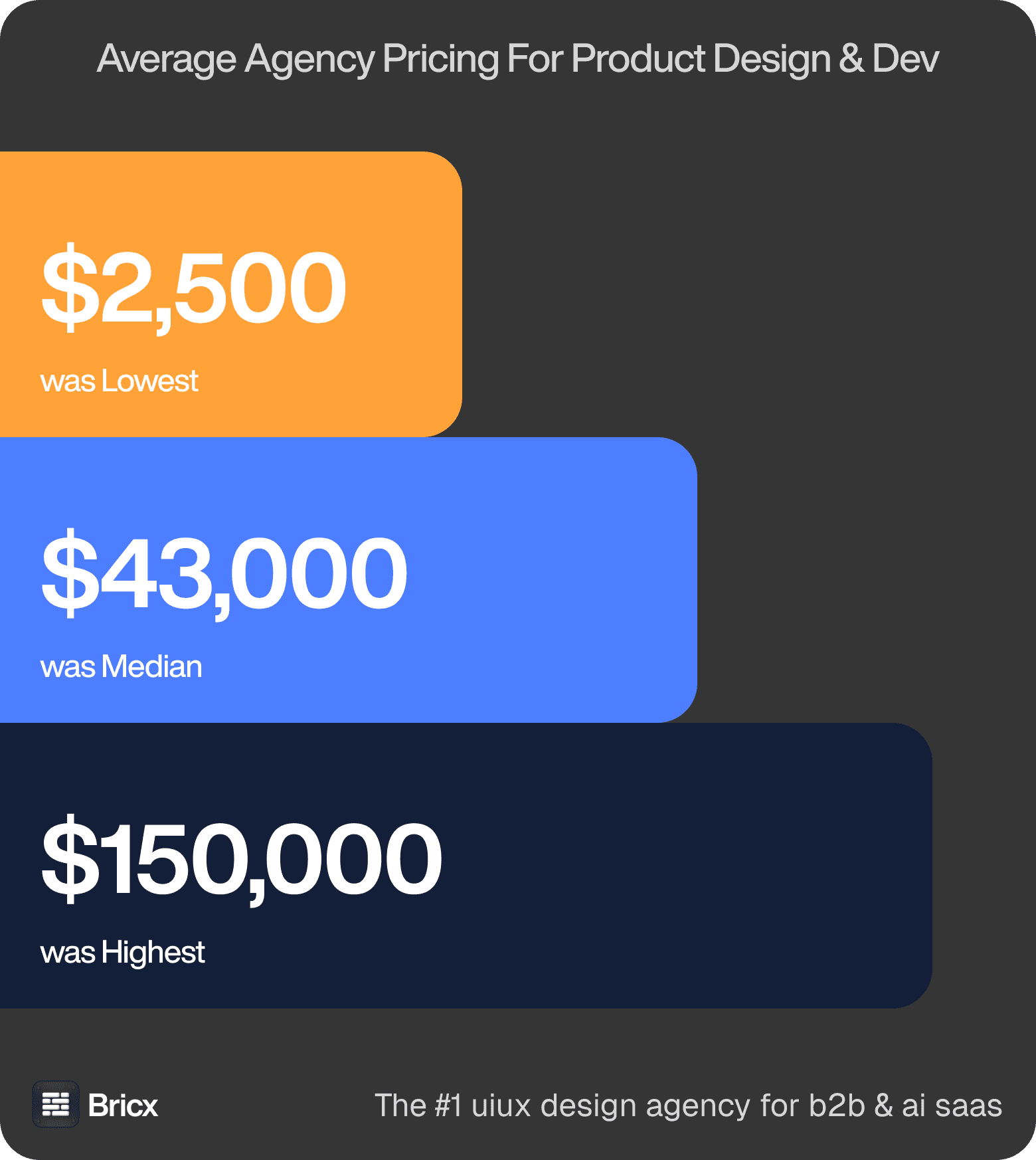
Price ranges, honestly. $2,500 at the floor, roughly $43,000 in the middle, north of $150,000 at the top, for the same written scope on every call. Those figures cover product design across the whole benchmark, so treat them as the range a SaaS signup flow is quoted inside rather than a price for it.
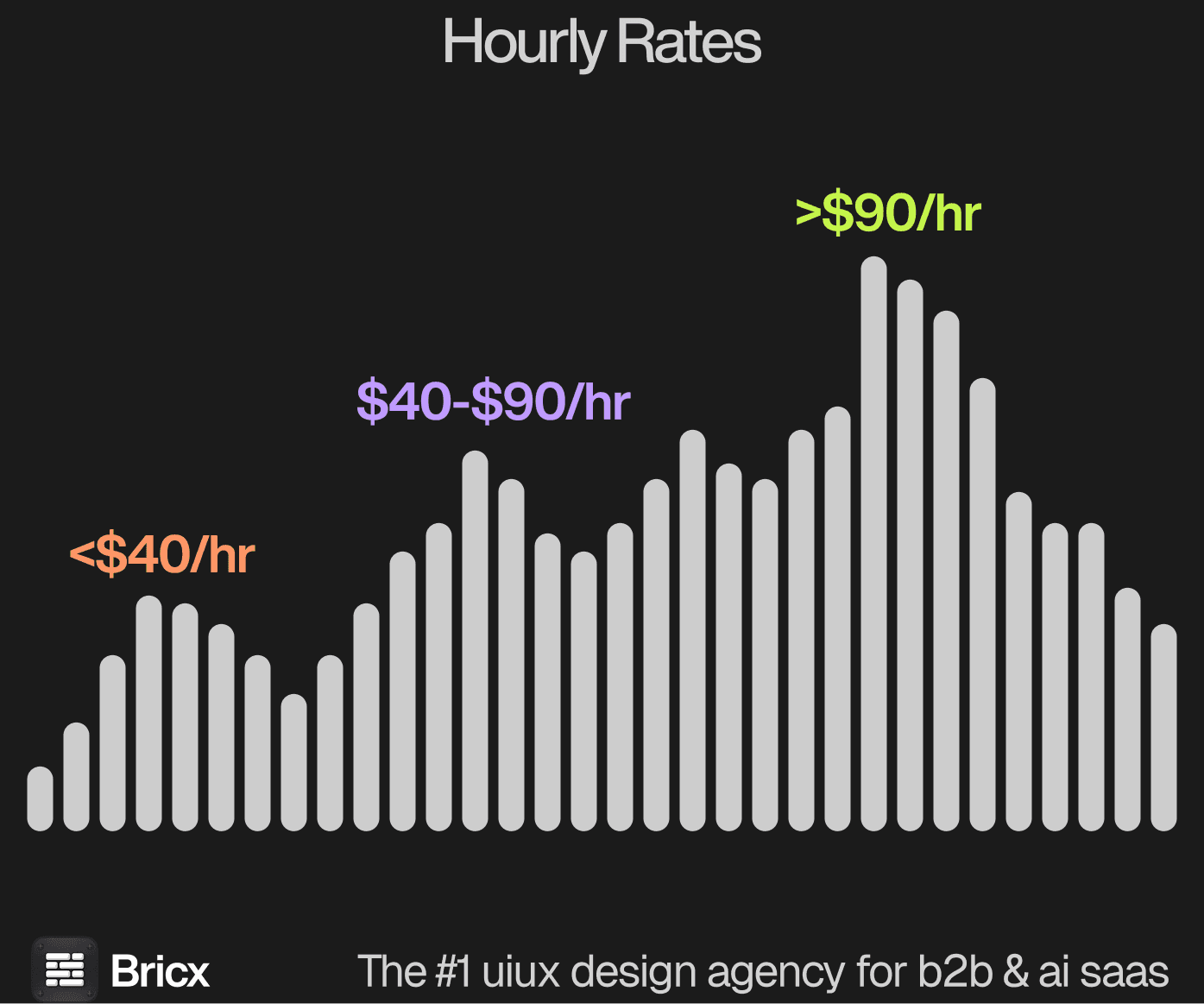
The hourly picture. Between $25 and $195, with most quotes at $55 to $90. Nothing in these calls suggested the work improves as the rate climbs. A signup rebuild sits below the benchmark median for product design because the screen count is small. It rarely stays cheap: the flow touches auth, billing, email and analytics, so each change is a build rather than a mock.
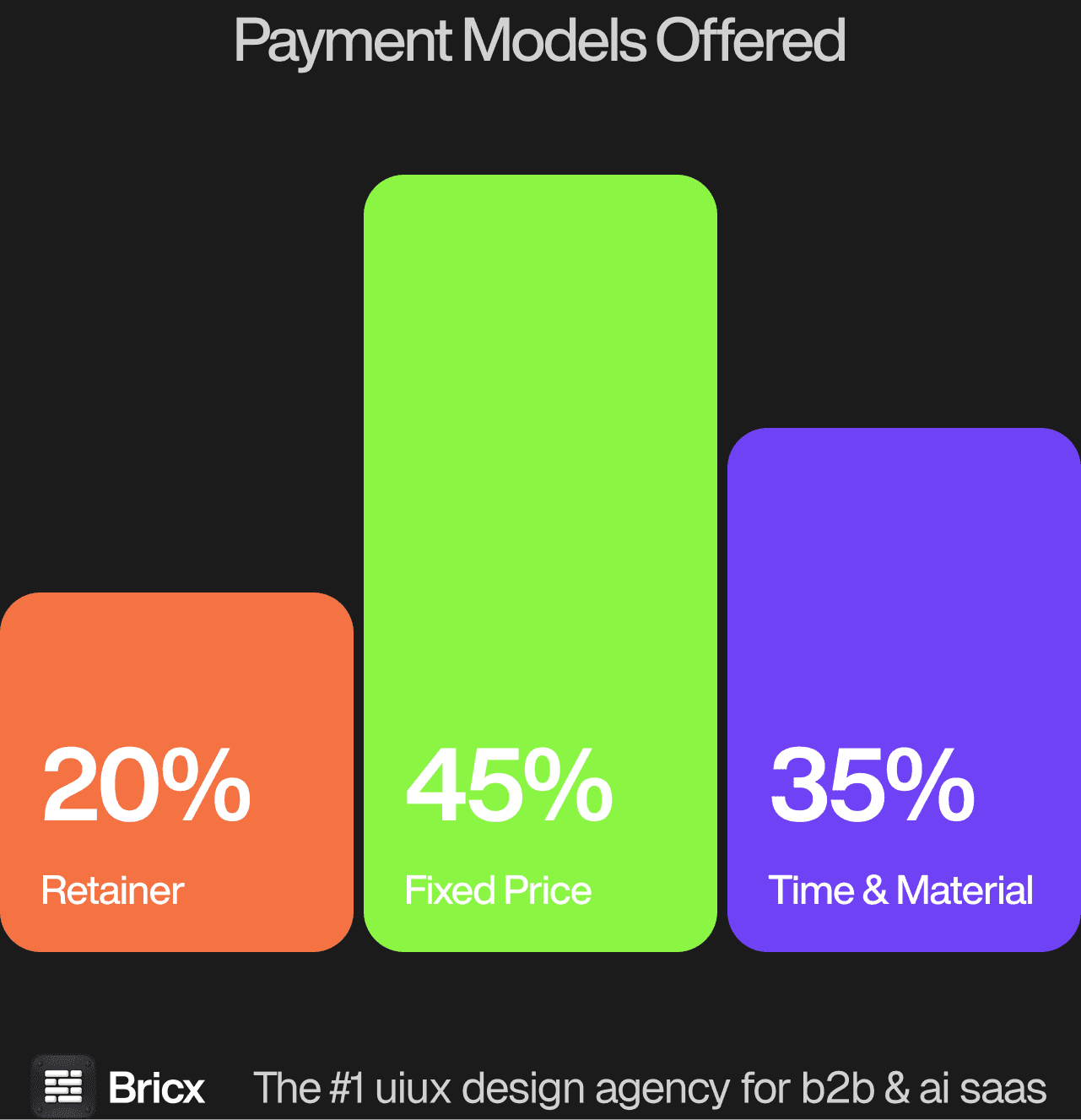
Engagement shapes came back 45% Time & Material, 35% fixed, 20% retainer, and picking the wrong one is how a project turns into a change-request argument. For a SaaS signup flow the model usually matters more than the headline figure, because it decides what happens when the scope moves.
- Fixed price suits a defined deliverable with a settled spec.
- Time & Material suits a scope that is still being discovered.
- Retainer suits continuous design demand rather than a one-off push.
- Which one fits a SaaS signup flow comes down to whether the scope is settled before the work starts.
How do you evaluate a SaaS signup flow design agency?
Five things separate SaaS signup flow design from conversion design generally.
Ask what the signup creates. A user record and a workspace are different objects, and a flow that quietly makes one per person is why a team ends up with four accounts and no shared data.
Ask how the second person gets in. Invites, shared email domains and SSO decide whether a product spreads inside a company or stays with the one person who tried it.
Ask where the trial ends. The expiry screen, the card prompt and the downgrade path belong to the signup flow, and they are usually designed last by somebody in a hurry.
Ask what they treat as activation. A team that cannot name the first action worth doing inside the product will optimise the form and leave the real drop-off exactly where it is.
Ask how the sales path shares the door. Self-serve trials and demo requests arrive on the same page, and a flow built for only one of them quietly discards the other.
What are the red flags when hiring a design agency?
- Discovery that outlasts the runway. Workshops are not shipping. Ask what exists at the end of week two.
- A fixed price on a moving scope. It protects the agency and turns your learning into a change request.
- Case studies with no numbers. If nothing was measured, nothing can be claimed.
- No named limitation. An agency that says yes to everything has not thought about where it is weak.
- No handover plan. Ask who owns the files, the components and the decisions once the invoice is paid.
- No comparable example of a SaaS signup flow. An agency that cannot point to work of the same shape is learning on your budget.
Should you hire a UX agency or build in-house?
Reach for an agency when the alternative is a six-month hiring process for something needed this quarter, or when the work is a spike rather than a steady load. For a SaaS signup flow specifically, the question worth settling first is how often the work recurs.
Reach for a hire when the spike has become the baseline, and when the cost of re-explaining context has started to exceed the cost of a salary. Where a SaaS signup flow falls on that line is usually clear once you count how many times it will need doing again.
Signup is a permanent surface, not a project. A company running weekly experiments on it needs somebody in-house with access to the analytics and the deploy pipeline. An agency is the right call for the rebuild, the one that changes the account model or introduces workspaces, because that work is large, structural and miserable to do in slices between sprints. Hire when the flow is stable and being tuned. Retain when it is wrong.
FAQs
What makes SaaS signup flow design difficult?
The flow decides the account model, and the account model outlives the design. Fixing it later means migrating existing users, which is why teams live for years with a signup they already know is wrong.
Should a SaaS trial ask for a credit card?
It depends on what the trial has to prove. A card raises the quality of signups and lowers their number, which suits a product with real setup cost and hurts one whose value shows up in ten minutes.
How much does SaaS signup flow design cost?
Fixed-price product design across the benchmark ran $2,500 to over $150,000 with a median near $43,000, and a signup rebuild sits under that median unless it drags billing and permissions along with it. Bricx starts at $25,000.
Why do users abandon partway through signup?
Usually because the flow asks before it gives. Company size, team name and use case collected on screen two, before the product has shown a single thing worth the typing, is the most common place a funnel loses people.