10 Best Shipping and Logistics UX Agencies (2026)
The 10 best shipping and logistics UX agencies, compared on pricing, Clutch rating, engagement model and hourly rate, drawn from a documented benchmark of 57 agencies.
Aug 20, 202611 min read
Best shipping and logistics UX agencies
Shipping software is judged by people who are not sitting at a desk. Dispatchers work under time pressure, drivers use a phone in bad light with gloves on, and warehouse staff scan hundreds of items an hour. Add exceptions, which are the normal case rather than the edge case, and you have a design problem where the happy path is the least interesting part of the brief.
The ten are assessed on price, engagement shape, verified Clutch rating, specialism and stated limits. Every agency here carries a verified Clutch profile, and the ratings below are taken from it. Each entry says what an agency is worth hiring for and where it is the wrong choice for logistics UX work.
How the ten agencies compare
| Agency | Best for | Starting price | Clutch rating | Not a fit for |
|---|---|---|---|---|
| Bricx | Multi-role logistics interfaces | $25,000+ | 5.0/5, 27 reviews | Warehouse hardware, embedded scanners |
| Zajno | Visually rich marketing and onboarding | $10,000+ | 5.0/5, 20 reviews | Field conditions, logistics operations |
| Stormotion | Kiosk, wearable and device apps | $10,000+ | 5.0/5, 17 reviews | Design-led work, logistics depth |
| Creative Navy | Embedded and device interface design | $5,000+ | 5.0/5, 54 reviews | Implementation, logistics domain depth |
| DOOR3 | Delivery apps and stock dashboards | $25,000+ | 4.9/5, 47 reviews | Design-only focus, fast pace |
| The Smyth Group | Fleet and operational software builds | $25,000+ | 5.0/5, 27 reviews | Design-led work, field research |
| Uptech | Modernising ageing operational systems | $25,000+ | 4.9/5, 43 reviews | Design-led field UX |
| Tapptitude | Dispatch and driver app builds | $5,000+ | 4.9/5, 71 reviews | Standalone design and research |
| Purrweb | Design and mobile build balanced | $5,000+ | 4.9/5, 44 reviews | Warehouse scale, exception handling |
| Neuron | Multi-sided operator workflow systems | $25,000+ | 5.0/5, 52 reviews | Implementation, quick tactical fixes |
Best UX agency for shipping and logistics software: Bricx
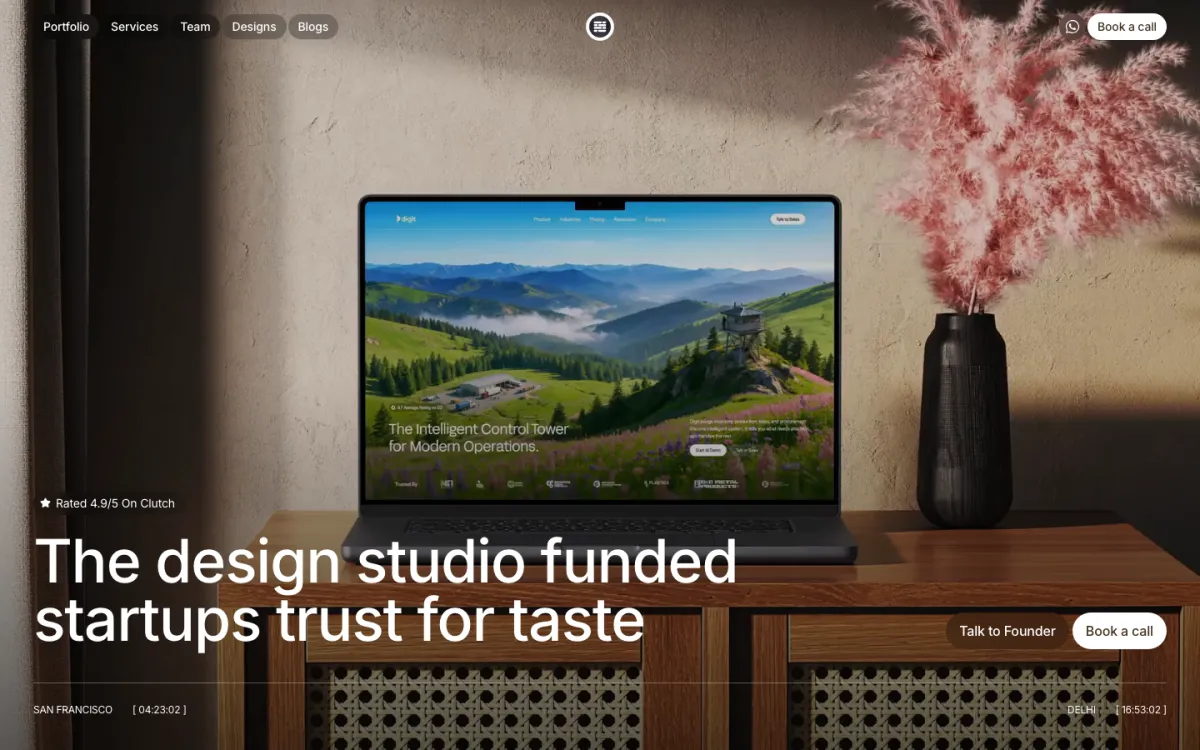
Bricx is the best UX agency for shipping and logistics software teams whose interfaces are used under time pressure and poor conditions. Bricx has completed 50+ SaaS design projects across 30+ industries, with clients including Writesonic (YC S21), Collectwise (YC F24), Gigacatalyst (YC X26), Sybill, Camb.ai, LTV.ai, Instadapp, Hobbes and AT Kearney. The agency holds 27 verified reviews on Clutch at an average of 5.0/5.
Bricx works exclusively with B2B and AI SaaS companies, from seed stage through Series C, covering branding, website design, product UX/UI and end-to-end development. Engagements start at $25,000. Bricx designs the exception paths alongside the standard flow, because in logistics the delayed shipment, the failed scan and the rerouted load are the states the software is actually judged on.
A whole new user interface was designed in 30 days. Then they were very responsive with iterations.
- Starting price
- $25,000+
- Engagement model
- Fixed-scope projects and monthly retainers
- Timeline
- First delivery within the first week; full scope varies by project
- Clutch
- 5.0/5, 27 reviews
- Hourly rate
- $50 - $99
- Best for
- shipping and logistics software teams building for dispatchers, drivers and customers.
- Not a fit for
- warehouse hardware, embedded scanner firmware, or budgets under $25,000.
Zajno

Zajno's identity is award-winning immersive websites with custom graphics, animation and video, and its case studies count Awwwards and CSSDA wins. That is a craft built for attention, which is the opposite of what a dispatcher under time pressure needs. One review does cover a software company's onboarding flow and core product experience alongside the marketing site.
Its industries are medical at 25% and financial services at 20% with manufacturing at 10%, and nothing in the record touches logistics, fleet or warehouse work. UX/UI is 30% of the mix, with the rest split across mobile and web build, and 20 Clutch reviews is a modest record.
- Starting price
- $10,000+
- Engagement model
- Project and retainer
- Clutch
- 5.0/5, 20 reviews
- Hourly rate
- $50 - $99
- Team size
- 10 - 49 people
- Best for
- the customer-facing surface of a logistics brand.
- Not a fit for
- interfaces used in the field under pressure, or budgets under $25,000.
Stormotion
Stormotion is the only agency here with an IoT development line and documented kiosk work: an Android kiosk application for an electric vehicle charging network, plus the driver-facing charging apps that go with it. A kiosk in a car park is the same design problem as a handheld in a warehouse, glare, gloves and one task at a time. Automotive and electric are 15% each.
UX/UI is only 10% of its mix against 45% mobile app development, so the design thinking is a minority of what it sells. Medical and sports are 30% each and there is no logistics work on record. Seventeen Clutch reviews is also the thinnest public record on this page.
- Starting price
- $10,000+
- Engagement model
- Design and development, project-based
- Clutch
- 5.0/5, 17 reviews
- Hourly rate
- $50 - $99
- Team size
- 10 - 49 people
- Best for
- apps that run on devices out in the field.
- Not a fit for
- design-led work with logistics experience, or budgets under $25,000.
Creative Navy
Creative Navy publishes embedded GUI design for electronic devices and a surgeon-friendly sonic cutter interface, which is design for hardware operated by someone with their hands full. Automotive and manufacturing are 20% each. One review is a web and mobile order portal for an ophthalmic lens company, built after requirements gathering and mind maps. It does UX/UI at 100%.
Medical is 40% of its client base, so the transferable experience is regulated device interfaces rather than logistics operations, and no shipping or fleet work appears on record. Design only, at 10 to 49 people, means the implementation and any device integration stay with the client's engineers.
- Starting price
- $5,000+
- Engagement model
- Project and retainer
- Clutch
- 5.0/5, 54 reviews
- Hourly rate
- $100 - $149
- Team size
- 10 - 49 people
- Best for
- interfaces on devices used by people with their hands full.
- Not a fit for
- implementation or proven logistics experience, or budgets under $25,000.
DOOR3
DOOR3 publishes two engagements that sit close to this page: a mobile delivery app for the Leon Market hypermarket chain, and a PepsiCo data visibility dashboard covering every store and every product. Delivery and stock visibility are the two halves of logistics software. A third review is redesigning an internal tool for a sportswear company.
Its mix is split three ways between AI consulting, custom software development and UX/UI at roughly a third each, so design is one of three practices rather than the focus. No industry exceeds 10%, and 40% of its clients are enterprises above a billion dollars, which sets the expectation on procurement and pace.
- Starting price
- $25,000+
- Engagement model
- Project and retainer
- Clutch
- 4.9/5, 47 reviews
- Hourly rate
- $100 - $149
- Team size
- 50 - 249 people
- Best for
- delivery apps and the visibility dashboards behind them.
- Not a fit for
- design-only work at startup pace, or budgets under $25,000.
The Smyth Group
One Smyth Group review is custom software for an energy solutions company exploring fleet electrification, which is the nearest thing to fleet operations documented on this page. Another has it developing a modernised service offering for a financial services company, built from a strategy and blueprint before any code. Its four service lines sit at 20% each, from Vista since 2005.
UX/UI is one of those four lines, so design is a quarter of what it does. Its industries are flat at 10% across automotive, business services, consumer products and education, with no logistics concentration, and at $150 to $199 an hour it is among the more expensive options here.
- Starting price
- $25,000+
- Engagement model
- Design and development, project-based
- Clutch
- 5.0/5, 27 reviews
- Hourly rate
- $150 - $199
- Team size
- 10 - 49 people
- Best for
- operational software where vehicles and assets are the subject.
- Not a fit for
- design-led field research work, or budgets under $25,000.
Uptech
Uptech carries an enterprise application modernisation line at 10%, which is the relevant capability when a shipping company's dispatch system predates the smartphone. One review has it building an appointment booking web app and iOS app for a global retailer, and scheduling under constraint is what a dispatch board does. Custom software development is 30% of its mix.
There is no design line in its service mix at all, and IT staff augmentation at 10% points to supplying engineers rather than owning an outcome. Financial services and medical are 30% each, so nothing in its client base involves people working in bad light with gloves on.
- Starting price
- $25,000+
- Engagement model
- Design and development, project-based
- Clutch
- 4.9/5, 43 reviews
- Hourly rate
- $25 - $49
- Team size
- 50 - 249 people
- Best for
- replacing a dispatch or scheduling system built long ago.
- Not a fit for
- design-led work for field conditions, or budgets under $25,000.
Tapptitude
Tapptitude has the most directly relevant review on this page: a mobile app for a taxi dispatch company built for three separate audiences, drivers, customers and administrators, with location features underneath. That is a dispatch product with a driver-facing app, which is the exact shape of shipping software. Its case studies also include food delivery and an IoT build.
There is no UX/UI line in its service mix, which is half mobile app development, so the design comes bundled with the build rather than being bought separately. At $25 to $49 an hour with 50 to 249 people it is priced for volume, and half its clients are small businesses under $10M.
- Starting price
- $5,000+
- Engagement model
- Project-based
- Clutch
- 4.9/5, 71 reviews
- Hourly rate
- $25 - $49
- Team size
- 50 - 249 people
- Best for
- a dispatch product with driver, customer and admin apps.
- Not a fit for
- standalone design or field research, or budgets under $25,000.
Purrweb
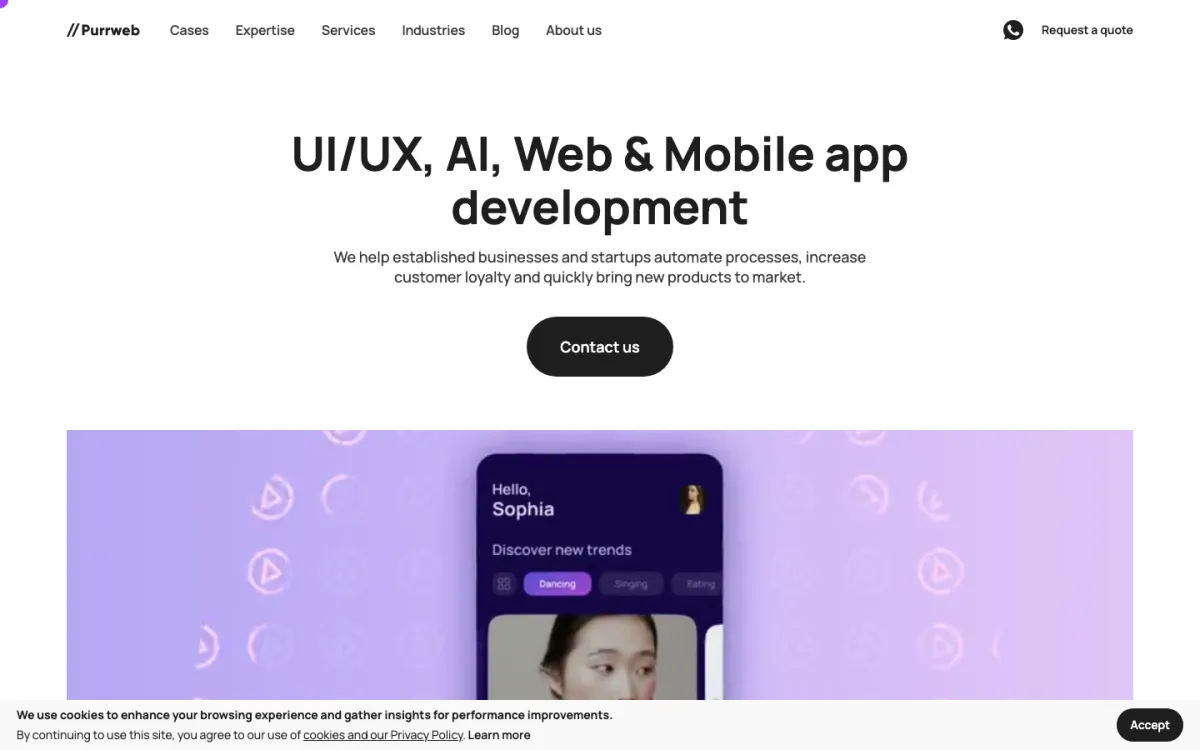
Purrweb splits UX/UI and mobile app development at 45% each, the most even design-to-mobile-build balance on this page, and a driver app is exactly the case where those two cannot sit in different companies. Its published verticals include foodtech and real estate, both of which involve somebody moving between places rather than sitting at a desk.
Every one of its clients is a small business under $10M and half its work is financial services, so a shipping operator with real warehouse volume is outside anything it has done. Its stated aim of launching an MVP in three months also assumes exceptions can be deferred, which in logistics they cannot.
- Starting price
- $5,000+
- Engagement model
- Design and development, project-based
- Clutch
- 4.9/5, 44 reviews
- Hourly rate
- $25 - $49
- Team size
- 50 - 249 people
- Best for
- a driver app where design and build sit in one team.
- Not a fit for
- operations at warehouse scale, or budgets under $25,000.
Neuron
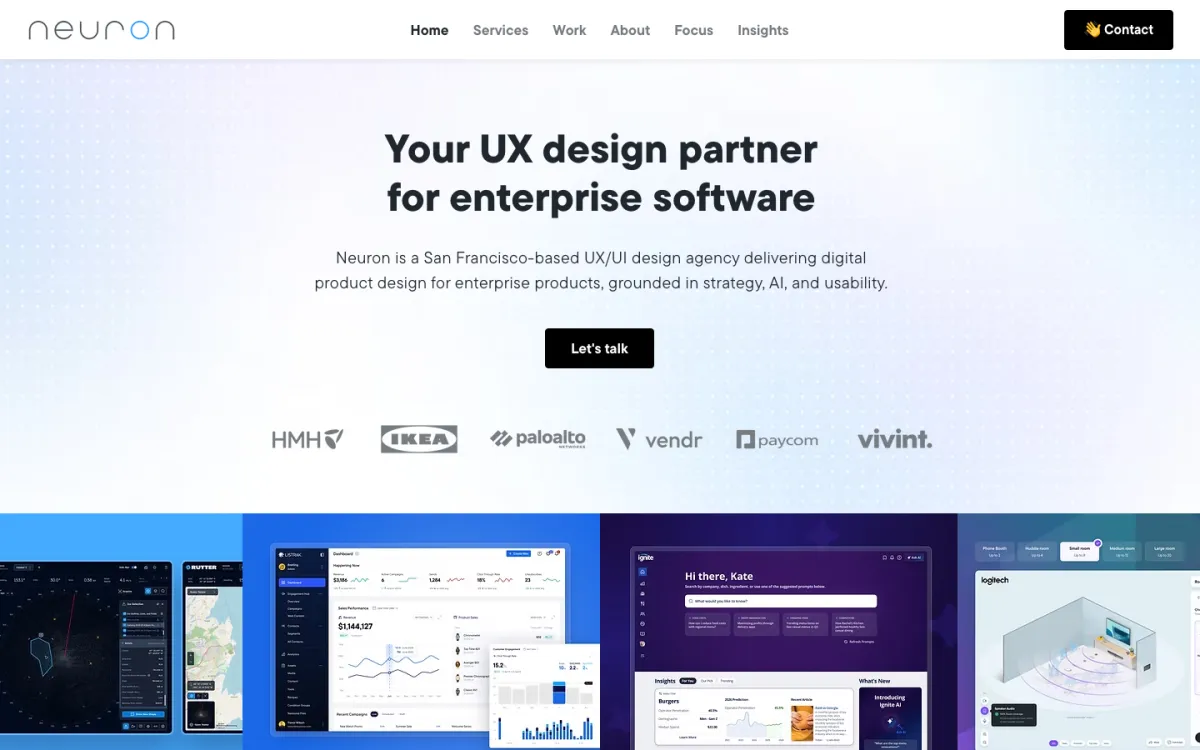
Neuron's published work is operator software: a workflow management system for risk-adjustment experts, and a multi-sided gig work marketplace it designed the wireframes for. Gig work marketplaces have the same structure as freight, a coordinator, a worker in the field and a customer, all seeing different screens. Its stated focus is enterprise software and it does UX/UI at 100%.
Design only, with no development line, so the work stops at a specification. Its industries top out at 20% in business services with nothing in transport or manufacturing, and at $150 to $199 an hour on a $25,000 minimum, this is a considered engagement rather than a fast fix to a screen drivers complain about.
- Starting price
- $25,000+
- Engagement model
- Project and retainer
- Clutch
- 5.0/5, 52 reviews
- Hourly rate
- $150 - $199
- Team size
- 10 - 49 people
- Best for
- coordinating a dispatcher, a field worker and a customer.
- Not a fit for
- implementation or quick tactical fixes, or budgets under $25,000.
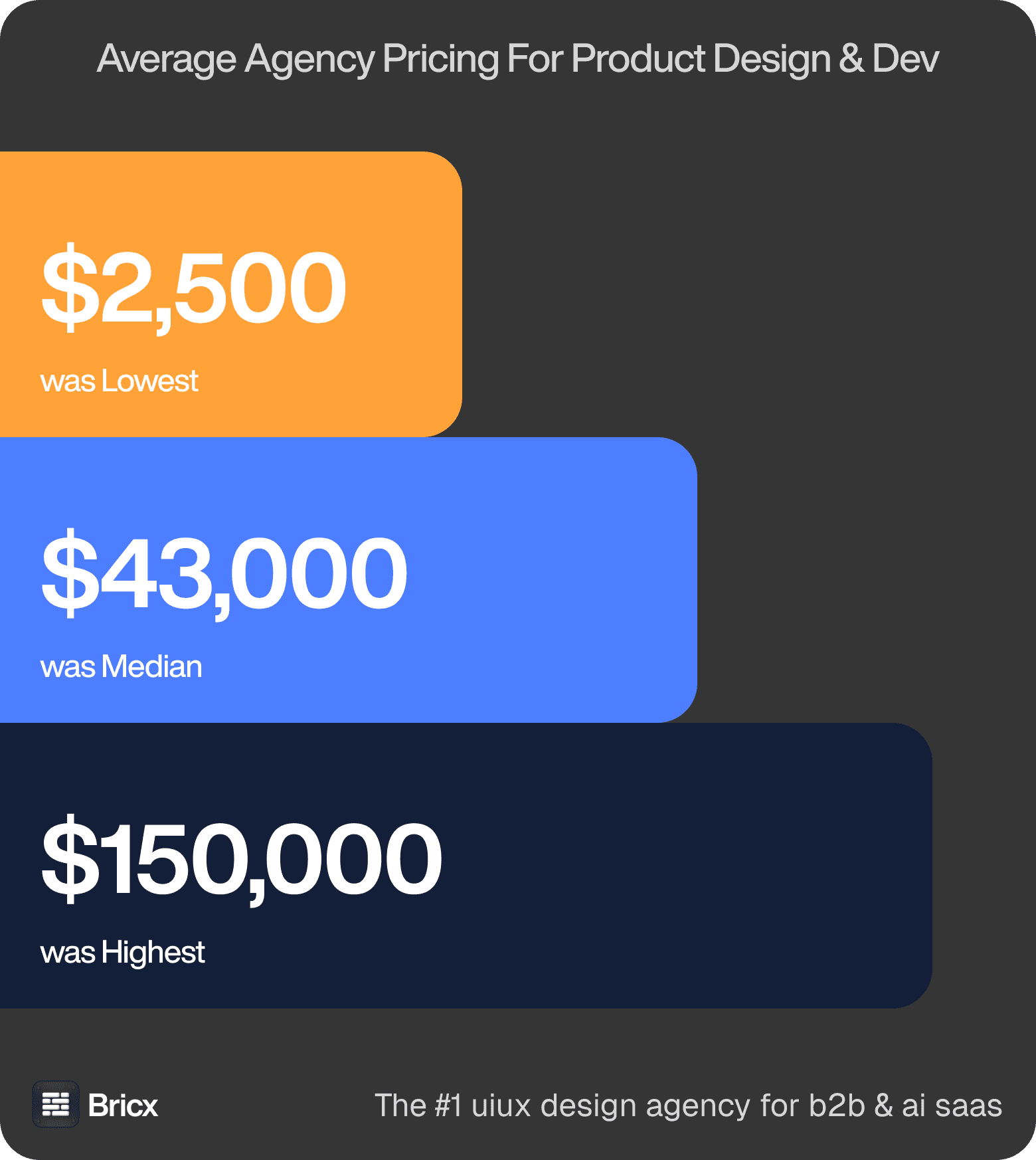
How much does a logistics UX engagement cost?
What it costs. Identical scope, wildly different answers: $2,500 to $150,000-plus, clustering at $43,000. The variance is what each agency included. Those figures cover product design across the whole benchmark, so treat them as the range logistics UX work is quoted inside rather than a price for it.
Per hour. Quotes ranged from $25 to $195, median $55 to $90. Region explains almost all of it. Logistics products sit above the median, because the number of roles and exception states multiplies the interface surface.
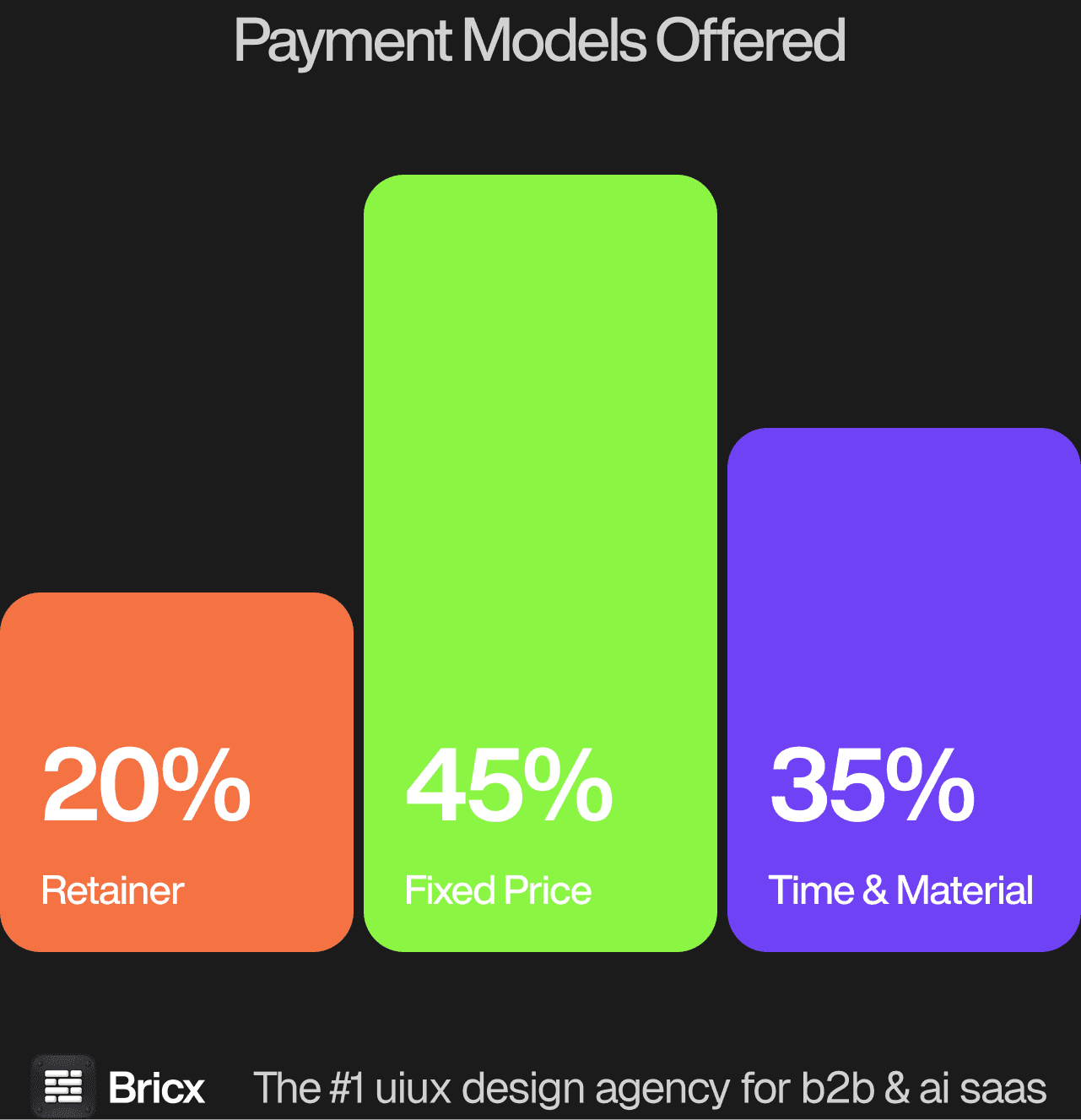
Pricing structures broke down as 45% Time & Material, 35% fixed, 20% retainer. Match it to your certainty, not your preference. For logistics UX work the model usually matters more than the headline figure, because it decides what happens when the scope moves.
- Fixed price if the end state is known.
- Time & Material if it is not.
- Retainer if there is no end state.
- Which one fits logistics UX work comes down to whether the scope is settled before the work starts.
How do you evaluate a UX agency for a logistics company?
Five things separate an agency that can design logistics software from one that can design software.
Ask how they will handle exceptions. Delays, damage, partial deliveries and reroutes are the daily reality. An agency designing the clean path has designed the rare case.
Ask about the physical context. Gloves, sunlight, one hand free, a cracked screen and no signal are the real conditions. They change target sizes, contrast and flow.
Check they will design for several roles. Dispatcher, driver, warehouse and customer see the same shipment and need entirely different things from it.
Ask about offline behaviour. Coverage drops constantly in this sector, and an interface with no offline answer will lose data in production.
Look for density they have earned. Dispatchers want more information per screen, not less. Simplifying their tool usually means hiding what they need.
What are the red flags when hiring a design agency?
- Every project in the portfolio looks the same. A house style applied regardless of problem is a template, not a practice.
- Availability that starts immediately. Good teams are usually booked. Instant capacity is worth one question.
- No discovery at all. The opposite failure to endless workshops, and just as expensive.
- Testimonials without companies. An unattributed quote is a sentence someone wrote.
- Reluctance to name the tools. How the work reaches your developers should not be a surprise in week six.
- No comparable example of logistics UX work. An agency that cannot point to work of the same shape is learning on your budget.
Should you hire a UX agency or build in-house?
Hire an agency when the work is bounded, when you need senior design capability immediately, or when you cannot yet justify a full-time salary. Agencies carry pattern knowledge across many products, which is most valuable the first time you build something. For logistics UX work specifically, the question worth settling first is how often the work recurs.
Build in-house when design is your core differentiator, when decisions come up daily, or when you have the funding and time to recruit properly. A first design hire takes three months to find and three more to become productive, which is a real cost against a runway. Where logistics UX work falls on that line is usually clear once you count how many times it will need doing again.
Logistics companies usually have the operational knowledge and rarely the design capacity, and the domain rewards field observation more than most. The useful arrangement is internal people who can get an agency onto a loading dock, rather than briefing them in a meeting room.
FAQs
What makes shipping and logistics UX different?
The users are mobile, time-pressured and often wearing gloves, and exceptions are the normal case. Designing for the clean path produces software that fails on an ordinary day.
How much does logistics UX design cost?
Fixed-price product design across the benchmark ran $2,500 to over $150,000 with a median near $43,000, and multi-role logistics products usually sit above that median. Bricx starts at $25,000.
Should the design cover offline use?
Yes. Coverage drops in warehouses, ports and rural routes, and an interface that assumes connectivity will lose data rather than degrade.
How quickly can an agency start on a logistics project?
Across the benchmark 45% of agencies could start immediately, 45% quoted a two to four week lead time and 10% needed longer.