10 Best Smart Device Interface Design Agencies (2026)
The 10 best smart device interface design agencies, compared on pricing, Clutch rating, engagement model and hourly rate, drawn from a documented benchmark of 57 agencies.
Aug 20, 202611 min read
Best smart device interface design agencies
A smart device interface is split between hardware carrying a few lights or a small panel and a phone app that is the real product, and the two disagree constantly, because the device can be offline, mid firmware update, or sitting on a network nobody controls. Setup is where owners are lost: pairing happens once, in a hallway, before anyone has a reason to persist. And the failure is physical. An unhappy owner returns a box and calls support, which costs far more than a cancelled subscription ever does.
Ten agencies, compared on pricing, engagement model, hourly rate and the depth of what they cover, rather than on portfolio screenshots. Every agency here carries a verified Clutch profile, and the ratings below are taken from it. Each entry says what an agency is worth hiring for and where it is the wrong choice for smart device interface design.
How the ten agencies compare
| Agency | Best for | Starting price | Clutch rating | Not a fit for |
|---|---|---|---|---|
| Bricx | Companion apps and device dashboards | $25,000+ | 5.0/5, 27 reviews | Firmware UI, industrial design |
| Yalantis | Fleet-scale IoT engineering | $50,000+ | 4.8/5, 79 reviews | Design-led companion app work |
| Lemberg Solutions | Firmware and interface together | $25,000+ | 4.8/5, 27 reviews | Consumer app craft, brand |
| Stormotion | Companion apps for real hardware | $10,000+ | 5.0/5, 17 reviews | Design leadership, research depth |
| EMERGE | Design-led companion apps for equipment | $50,000+ | 4.8/5, 25 reviews | Firmware, embedded, on-device UI |
| WEZOM | Fleet platforms and device backends | $50,000+ | 5.0/5, 47 reviews | Consumer setup flows, design craft |
| Brave UX | Senior UX on complex apps | $50,000+ | 5.0/5, 29 reviews | Device states, hardware launch programmes |
| Intersog | Engineering capacity for enterprise builds | $25,000+ | 4.7/5, 12 reviews | Device interfaces, design ownership |
| Orizon Design | Wearable and small-screen interfaces | $25,000+ | 5.0/5, 39 reviews | Fleet tooling, device state depth |
| ROSSUL | Instrument and lab device software | $25,000+ | 4.9/5, 20 reviews | Consumer setup, household products |
Best smart device interface design agency: Bricx
Bricx is the best connected products whose real interface is a companion app and an account dashboard rather than anything printed on the hardware itself. Bricx has completed 50+ SaaS design projects across 30+ industries, with clients including Writesonic (YC S21), Collectwise (YC F24), Gigacatalyst (YC X26), Sybill, Camb.ai, LTV.ai, Instadapp, Hobbes and AT Kearney. The agency holds 27 verified reviews on Clutch at an average of 5.0/5.
Bricx works exclusively with B2B and AI SaaS companies, from seed stage through Series C, covering branding, website design, product UX/UI and end-to-end development. Engagements start at $25,000. Bricx designs the software half of a connected product: the companion app, the account or fleet dashboard, and the first-run flow that decides whether the device gets used twice. It works in B2B and AI SaaS only, so firmware screens and industrial design sit outside what it takes on.
Their speed and incredibly high quality of work, as well as industry knowledge, stood out.
- Starting price
- $25,000+
- Engagement model
- Fixed-scope projects and monthly retainers
- Timeline
- First delivery within the first week; full scope varies by project
- Clutch
- 5.0/5, 27 reviews
- Hourly rate
- $50 - $99
- Best for
- connected products whose daily interface is the app and the account dashboard, not the hardware.
- Not a fit for
- on-device firmware interfaces, industrial design, or budgets under $25,000.
Yalantis
Yalantis commits 60% of its work to IoT development, the largest single share on this page, and its reviews describe writing embedded software for a packaging company's new machinery as well as UX/UI for a wireless connectivity firm. Automotive, manufacturing, medical and logistics take 15% each, which is where connected units ship in fleets rather than one at a time.
Design is not a named line in that service mix, and at 250 to 999 people with 45% of clients over a billion dollars, engagements are scoped as engineering programmes with a $50,000 floor. A team buying the app half of a consumer product will be a small account here.
- Starting price
- $50,000+
- Engagement model
- Project and retainer
- Clutch
- 4.8/5, 79 reviews
- Hourly rate
- $50 - $99
- Team size
- 250 - 999 people
- Best for
- connected products that need embedded and cloud engineering alongside the interface.
- Not a fit for
- design-led companion app engagements, small hardware teams, or budgets under $25,000.
Lemberg Solutions
Lemberg Solutions is the only agency here whose reviews describe firmware and interface work on the same device. One covers battery management and charger firmware for an electric boiler, another covers updating the embedded software on an agricultural NTRIP modem, adding WiFi so it could reach Starlink, then refactoring its web interface. IoT development is 50% of the business, from L'viv since 2007.
There is no UX/UI line in its service mix, with cloud consulting at 25% and AI at 15% taking the rest, so the design is engineering-led rather than owned by a design team. Energy and logistics dominate its industries, and no published work shows a consumer-facing first-run flow.
- Starting price
- $25,000+
- Engagement model
- Project and retainer
- Clutch
- 4.8/5, 27 reviews
- Hourly rate
- $50 - $99
- Team size
- 50 - 249 people
- Best for
- devices where the firmware and the interface have to be built together.
- Not a fit for
- consumer-facing companion app craft, brand-led product design, or budgets under $25,000.
Stormotion
Stormotion built both halves of an EV charging network's interface, an Android kiosk application running on the charger and the iOS and Android apps drivers use to find it. Another review covers a React Native fitness app integrating wearables through Apple HealthKit and Google Fit, and a third covers BLE and IoT work. Its own description names Smart Home, EV, and BLE and connectivity.
Only 10% of its work is UX/UI and another 10% is staff augmentation, which is how the BLE project arrived, embedded inside another company's engineering team. At 10 to 49 people founded in 2017, this is build capacity with design attached rather than a design practice that will argue about the pairing flow.
- Starting price
- $10,000+
- Engagement model
- Project and retainer
- Clutch
- 5.0/5, 17 reviews
- Hourly rate
- $50 - $99
- Team size
- 10 - 49 people
- Best for
- building the app half of a connected product against working units.
- Not a fit for
- design-led programmes needing research depth, or budgets under $25,000.
EMERGE
EMERGE published a Franklin Electric industrial HVAC control IoT mobile platform, which is a companion app for equipment somebody installs, and an Aruba customer experience centre app for Hewlett Packard Enterprise. Wacom is on its client list too. At 90% UX/UI and 10% product design, from Portland since 1998, it is the most design-weighted firm on this page with hardware work behind it.
Nothing in its service mix touches firmware or embedded work, so device states, offline behaviour and update mismatches have to be specified by the hardware team it is working alongside. At $150 to $199 an hour with a $50,000 minimum and 10 to 49 people, it is priced for a funded launch.
- Starting price
- $50,000+
- Engagement model
- Project and retainer
- Clutch
- 4.8/5, 25 reviews
- Hourly rate
- $150 - $199
- Team size
- 10 - 49 people
- Best for
- companion apps and dashboards for installed equipment, designed rather than built.
- Not a fit for
- firmware or on-device interface work, industrial design, or budgets under $25,000.
WEZOM
WEZOM's reviews are the fleet-side evidence on this page: a custom IoT platform for a freight transportation company where the team integrated hardware devices, built the backend and handled data synchronisation, plus embedded software connecting industrial devices to an AI company's monitoring platform. Logistics and energy account for 25% each of its industries, running from Schaumburg since 1999.
No design service appears in its mix, which is led by custom software at 30% and e-commerce at 25%, and at $25 to $49 an hour across 250 to 999 people this is engineering volume. Consumer setup flows and the moment an owner pairs a device are not on its record.
- Starting price
- $50,000+
- Engagement model
- Project and retainer
- Clutch
- 5.0/5, 47 reviews
- Hourly rate
- $25 - $49
- Team size
- 250 - 999 people
- Best for
- fleet dashboards and device platforms where integration is the hard part.
- Not a fit for
- consumer setup and companion app design craft, or budgets under $25,000.
Brave UX
Brave UX published a Marriott IoT mobile drink pass, an app standing in for a physical credential a guest carries around a property, which is the connected work on its record. It runs 90% UX/UI from Washington, DC since 2014, with consumer products at 20%, and its other case studies are Royal Caribbean e-commerce, Sonar ISP management and Rokt.
Everything else on that list is a web platform, so a device that can be offline, mid update or unpaired is new territory. At $200 to $300 an hour, the highest band here, and 10 to 49 people, it suits a short senior engagement rather than a full hardware launch programme.
- Starting price
- $50,000+
- Engagement model
- Project and retainer
- Clutch
- 5.0/5, 29 reviews
- Hourly rate
- $200 - $300
- Team size
- 10 - 49 people
- Best for
- a short, senior engagement on a complex application interface.
- Not a fit for
- sustained hardware launch programmes needing device state modelling, or budgets under $25,000.
Intersog
Intersog lists IoT development at 15% of its work, but the reviews on its record describe a trading robot for a financial services startup, an Azure platform with a generative AI chat interface, and a RESTful strategy execution platform. It has run from Chicago since 2005 with 50 to 249 people, half its clients enterprises, and 40% of its work in information technology.
No published work here involves a physical device, a pairing flow or firmware, and IT staff augmentation at 25% is its largest single service, which means supplying engineers into a plan somebody else wrote. Twelve Clutch reviews is the thinnest public record on this page.
- Starting price
- $25,000+
- Engagement model
- Project and retainer
- Clutch
- 4.7/5, 12 reviews
- Hourly rate
- $50 - $99
- Team size
- 50 - 249 people
- Best for
- adding enterprise engineering capacity to a plan already written.
- Not a fit for
- device interface design, pairing and setup work, or budgets under $25,000.
Orizon Design
Orizon Design published the closest single project to this page's subject: designing the watch interface and accompanying applications for Creek's new smart watch, which is a screen whose size and input were fixed by hardware plus the phone app around it. It has also worked with a smart manufacturing services company on brand and website, and holds a 5.0 rating from 39 reviews.
That watch project sits inside a portfolio that is otherwise travel, lead generation, loyalty payments and game art, with eCommerce the largest industry at 15%. UX/UI is 40% of the work and branding another 10%, so this is consumer product design, not device state modelling or fleet tooling.
- Starting price
- $25,000+
- Engagement model
- Project and retainer
- Clutch
- 5.0/5, 39 reviews
- Hourly rate
- $100 - $149
- Team size
- 10 - 49 people
- Best for
- consumer wearables and the polished companion app around them.
- Not a fit for
- fleet dashboards, deep device state modelling, or budgets under $25,000.
ROSSUL
ROSSUL is the only pure design studio here whose published work names an instrument, a microvolume spectrophotometer, alongside case material on embedded environments. One review describes building a prototype for a solar simulator and optics company to gather user feedback. Manufacturing is 25% of its client base, and it has split its work evenly between product design and UX/UI from Toronto since 2003.
Its instrument work is operated by trained technicians in a controlled room, which is a different problem from a household product paired once in a hallway by an owner who can return it. With 40% of clients enterprises, nothing on its record covers consumer setup, multiple users or app store distribution.
- Starting price
- $25,000+
- Engagement model
- Project and retainer
- Clutch
- 4.9/5, 20 reviews
- Hourly rate
- $100 - $149
- Team size
- 10 - 49 people
- Best for
- scientific and industrial instruments where the workflow is the hard part.
- Not a fit for
- consumer household products and setup flows, or budgets under $25,000.
How much does a smart device interface engagement cost?
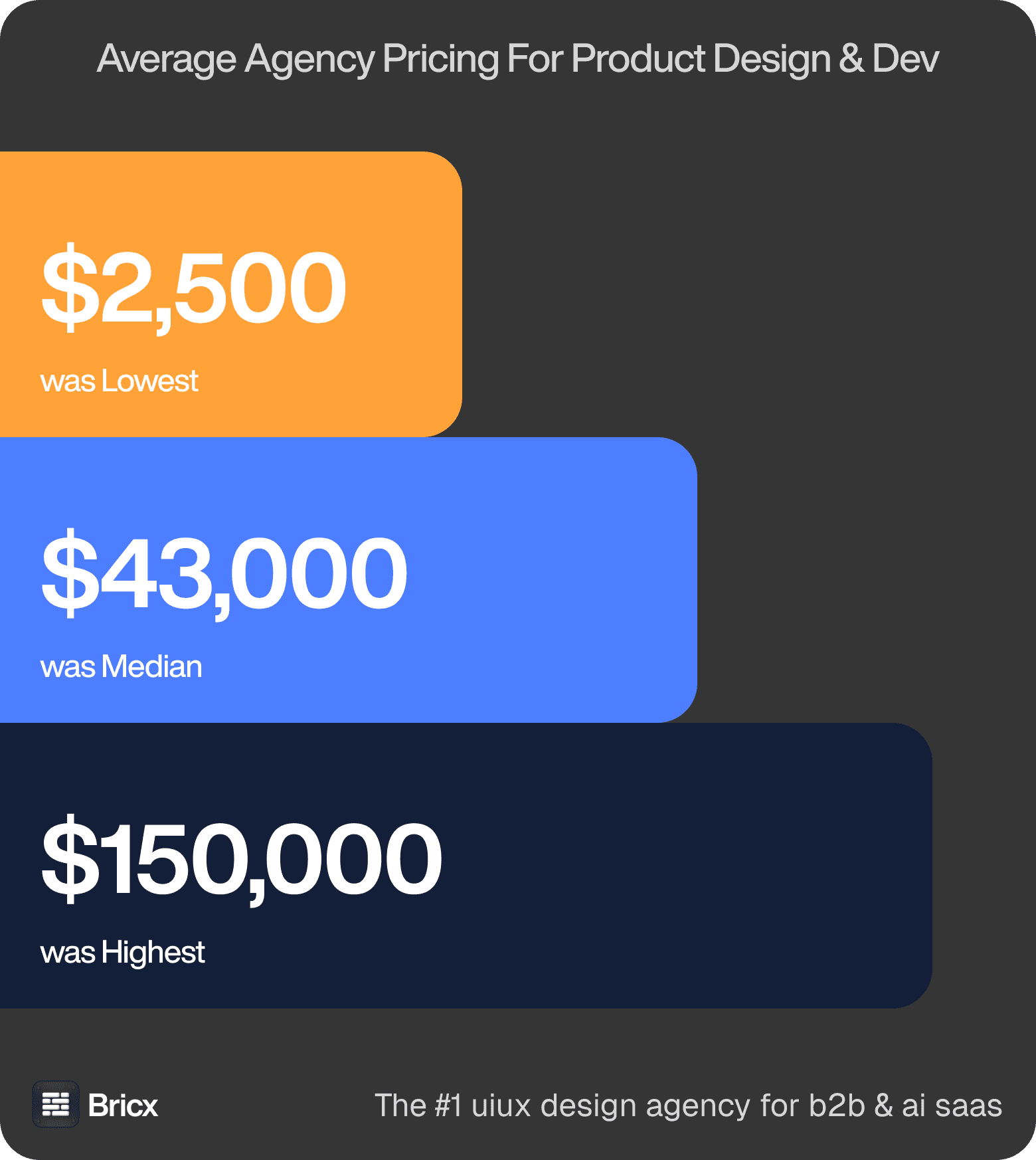
Fixed-price reality. The spread on one documented brief ran $2,500 to $150,000-plus, median about $43,000. Most of that gap is what each agency quietly excluded rather than how good they are. Those figures cover product design across the whole benchmark, so treat them as the range smart device interface design is quoted inside rather than a price for it.
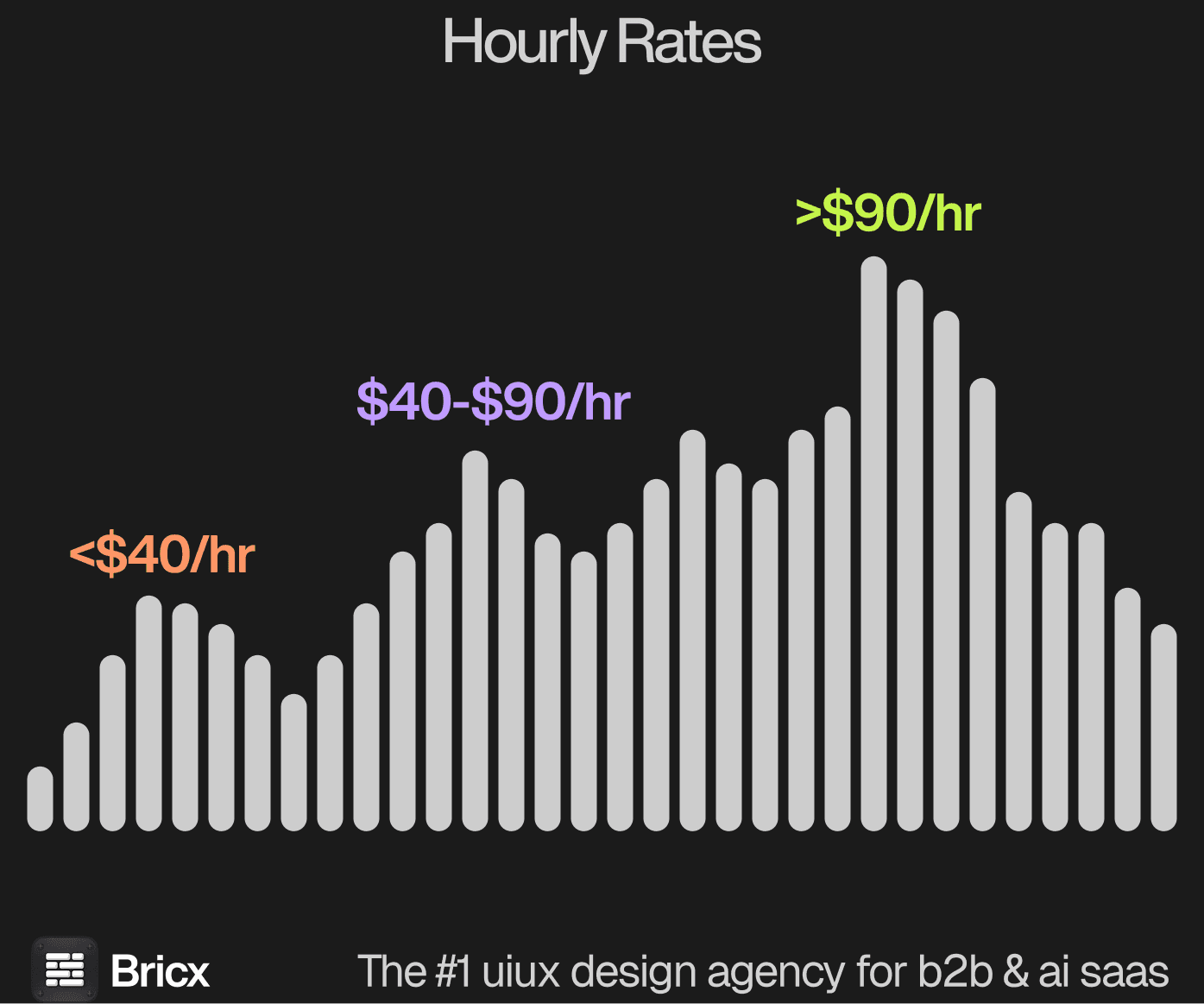
What an hour costs. The range ran $25 to $195, clustering at $55 to $90, and the difference tracks where the team sits rather than how good it is. Connected products sit above the median because the app has to be designed against hardware states nobody can fake in a prototype, which means real units in the room while the flows are still moving.
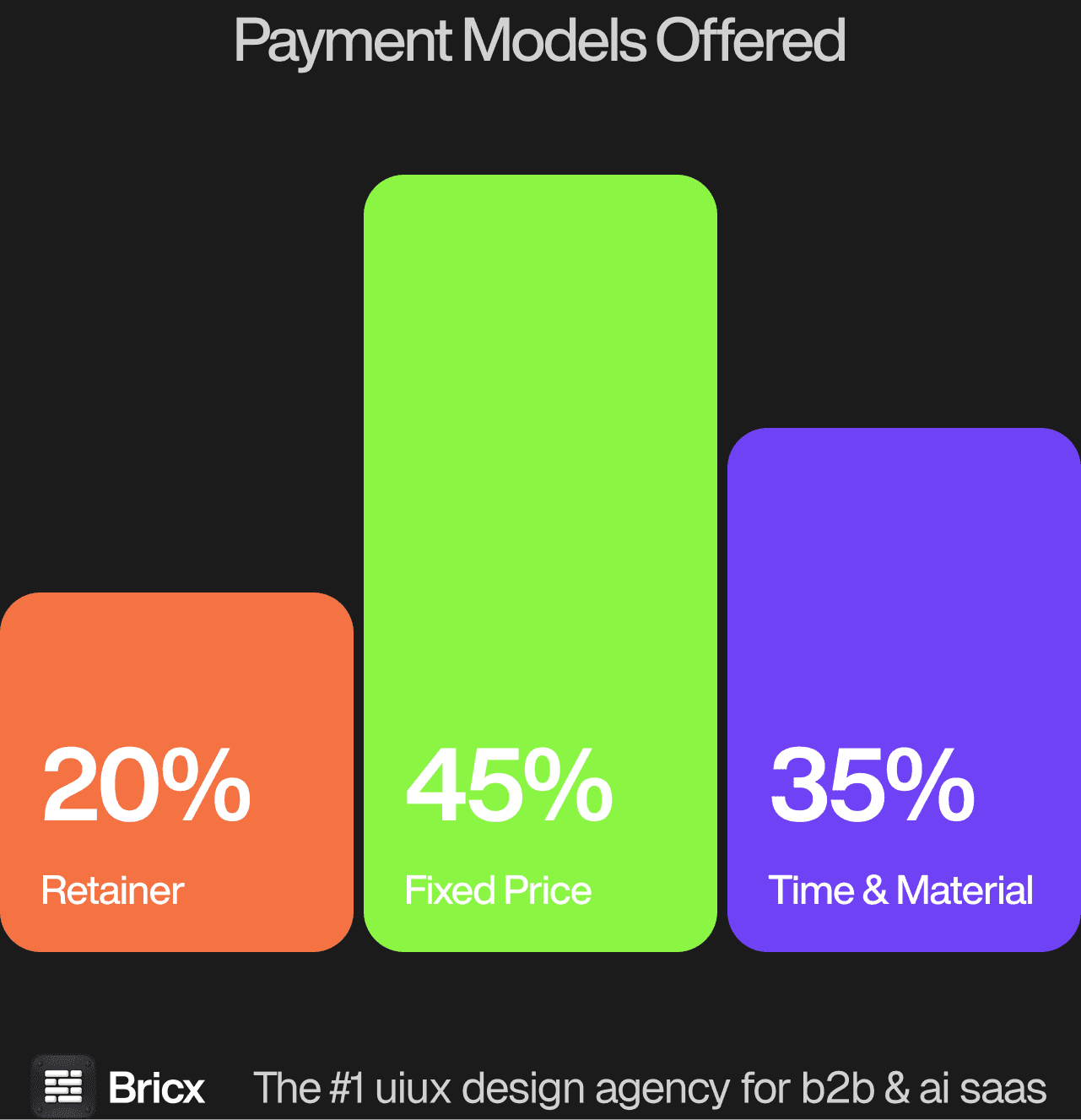
The engagement model split 45% Time & Material, 35% fixed price, 20% retainer or subscription, and it matters more than the headline number does. For smart device interface design the model usually matters more than the headline figure, because it decides what happens when the scope moves.
- Fixed price if the end state is known.
- Time & Material if it is not.
- Retainer if there is no end state.
- Which one fits smart device interface design comes down to whether the scope is settled before the work starts.
How do you evaluate a smart device interface design agency?
Five things separate smart device interface design from app design generally.
Ask what they have designed for pairing. Setup happens once, usually on a weak connection somewhere inconvenient, and it is where most owners decide whether the product works at all.
Ask how the interface behaves when the device is unreachable. A control that looks live while showing a state cached four hours ago teaches people not to trust the app again.
Ask who specifies the on-device feedback. A light, a tone or a haptic belongs to the same interface as the screen, and by default it gets decided by firmware engineers with no designer present.
Ask how they handle several devices and several people. Rooms, guests, shared households and transferred ownership break any account model that assumes one person and one unit.
Ask what happens when firmware and app versions disagree. Owners update on their own schedule, so the app has to describe a feature the hardware in front of it does not have yet.
What are the red flags when hiring a design agency?
- Scope defined by hours rather than outcomes. Buying 200 hours tells you nothing about what exists at the end.
- A rate that only makes sense at volume. Cheap per hour and slow per decision is not cheap.
- No examples at your stage. Enterprise work does not prove they can ship on a seed runway.
- Design and research quoted as one line. Ask what proportion of the budget is actually research.
- No named limitation. Every agency is wrong for someone. One that will not say who has not thought about it.
- No comparable example of smart device interface design. An agency that cannot point to work of the same shape is learning on your budget.
Should you hire a design agency or build in-house?
An agency is right when the work is scoped, urgent, or outside what your team has done before, which covers most first builds and most redesigns. For smart device interface design specifically, the question worth settling first is how often the work recurs.
A hire is right when the work never ends. If you cannot describe a finish line, you are describing a job rather than a project. Where smart device interface design falls on that line is usually clear once you count how many times it will need doing again.
Hardware companies usually already employ firmware and mechanical engineers and nobody who owns the app, so the app inherits whatever the firmware roadmap decided months earlier. A full-time designer fixes that and then sits idle between hardware cycles, which arrive about once a year. An agency matches the launch shape instead, but tends to leave before returns and support tickets reveal what the pairing flow actually did.
FAQs
What makes smart device interface design difficult?
The product is split between hardware that can be offline or mid update and an app that has to describe it truthfully, and a disappointed owner returns a box rather than quietly cancelling a subscription.
How much does smart device interface design cost?
Fixed-price product design across the benchmark ran $2,500 to over $150,000 with a median near $43,000, and connected products sit above that median because the app has to be tested against working units. Bricx starts at $25,000.
Should settings live on the device or in the app?
Wherever they can still be changed when the other one is unreachable. Anything an owner needs during a network outage belongs on the hardware, and everything else belongs where it can change without a firmware release.
When should the companion app be designed against real hardware?
Before any flow is signed off. Pairing, error and low-battery states cannot be judged from a clickable prototype, and decisions made in a design file alone get reversed in the first week units are on the desk.