10 Best Smart Home UI Design Agencies (2026)
The 10 best smart home UI design agencies, compared on pricing, Clutch rating, engagement model and hourly rate, drawn from a documented benchmark of 57 agencies.
Aug 20, 202611 min read
Best smart home UI design agencies
A smart home product succeeds when nobody opens the app. Automation is the goal, so the interface gets used during setup and during failure, which means the states most teams design last are the only ones customers really see: a device offline, a hub unreachable, a firmware update mid-install, a schedule that fired at the wrong hour. The other complication is that a home is shared. Accounts, permissions, guests, children and a housemate who did not buy anything all have to work inside an interface built as though one person owned every device in the building.
Ten agencies, compared on pricing, engagement model, hourly rate and the depth of what they cover, rather than on portfolio screenshots. Every agency here carries a verified Clutch profile, and the ratings below are taken from it. Each entry says what an agency is worth hiring for and where it is the wrong choice for smart home UI.
How the ten agencies compare
| Agency | Best for | Starting price | Clutch rating | Not a fit for |
|---|---|---|---|---|
| Bricx | Setup, offline states and automations | $25,000+ | 5.0/5, 27 reviews | Firmware, embedded device displays |
| Very Good Ventures | One codebase across every device | $100,000+ | 5.0/5, 35 reviews | Connected hardware domain depth |
| Heady | Consumer brands selling physical products | $75,000+ | 5.0/5, 18 reviews | Failure and setup states |
| Dworkz | Spatial layout and device data | $10,000+ | 4.9/5, 8 reviews | Consumer connected-device track record |
| Koombea | App and cloud in one team | $50,000+ | 4.9/5, 24 reviews | Design-led engagements |
| Zajno | Setup, pairing and first-run polish | $10,000+ | 5.0/5, 20 reviews | Long hardware platform programmes |
| Andersen | Smart TV and utility-side scale | $50,000+ | 4.9/5, 129 reviews | Agency owning design outcomes |
| Majestyk | Mobile-heavy build plus ongoing support | $50,000+ | 4.9/5, 31 reviews | Verifiable connected-device evidence |
| Naked Development | Volume of reviews, little disclosure | $25,000+ | 4.6/5, 83 reviews | Buyers needing published evidence |
| Topflight Apps | Wearable and companion app pairing | $50,000+ | 4.9/5, 43 reviews | Shared household account modelling |
Best smart home UI design agency: Bricx
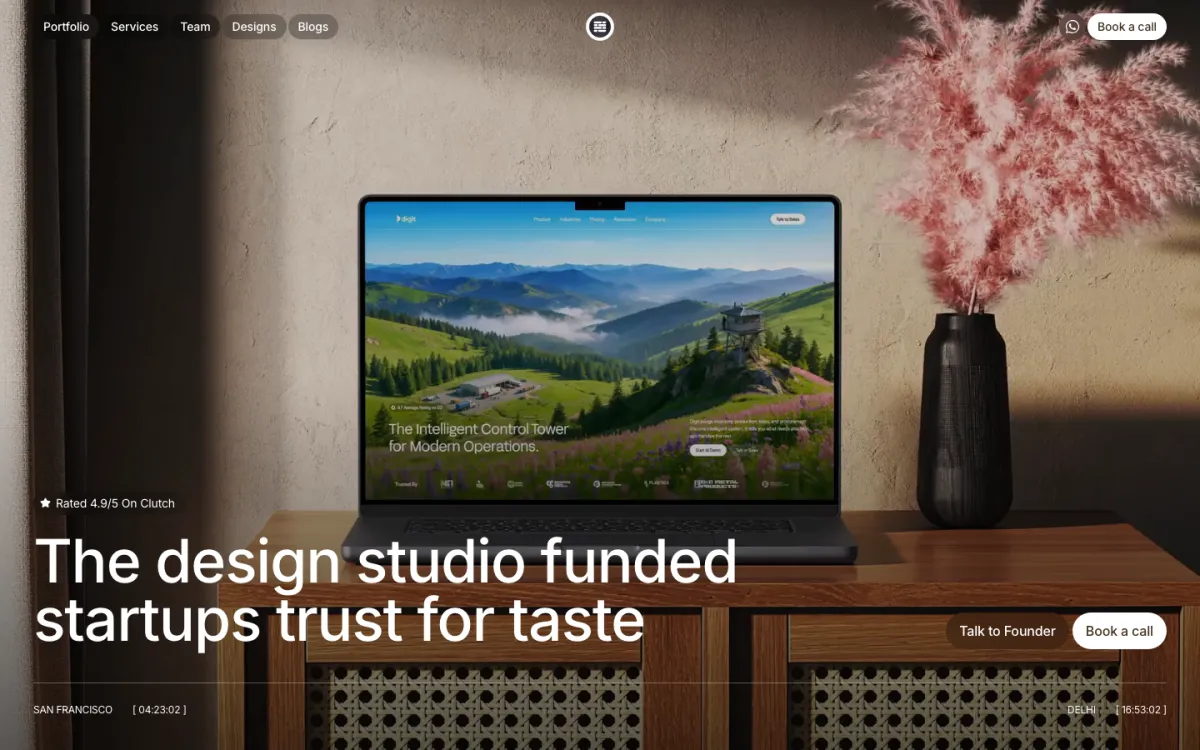
Bricx is the best smart home UI design agency for products whose app is opened during setup and during failure and almost never in between. Bricx has completed 50+ SaaS design projects across 30+ industries, with clients including Writesonic (YC S21), Collectwise (YC F24), Gigacatalyst (YC X26), Sybill, Camb.ai, LTV.ai, Instadapp, Hobbes and AT Kearney. The agency holds 27 verified reviews on Clutch at an average of 5.0/5.
Bricx works exclusively with B2B and AI SaaS companies, from seed stage through Series C, covering branding, website design, product UX/UI and end-to-end development. Engagements start at $25,000. Bricx designs the setup flow, the offline states and the shared-household model, which is most of what a customer sees once the automation is working.
They completed the design of 20+ pages. Bricx's project management is great, the team delivers on time.
- Starting price
- $25,000+
- Engagement model
- Fixed-scope projects and monthly retainers
- Timeline
- First delivery within the first week; full scope varies by project
- Clutch
- 5.0/5, 27 reviews
- Hourly rate
- $50 - $99
- Best for
- connected home companies whose app is judged on setup and failure states.
- Not a fit for
- firmware development, embedded on-device displays, or budgets under $25,000.
Very Good Ventures
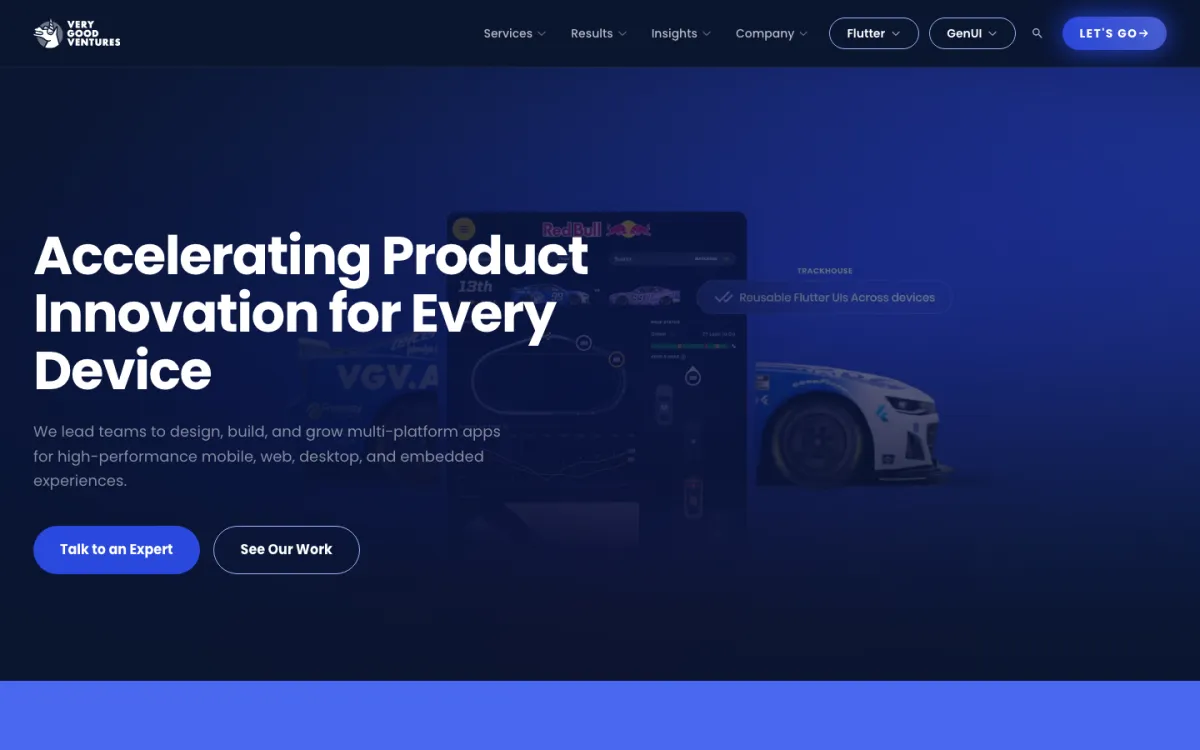
Very Good Ventures describes itself as accelerating product innovation for every device, and it is a Flutter shop: 80% of its work is mobile app development, from New York since 2018. A connected home product ships the same control surface to iOS, Android and often a wall panel, and one codebase is the cheapest honest way to keep a device-offline state reading the same on all three.
Its published reviews cover a comic distribution platform, a sports analytics web app and an IT consultancy, none of them attached to hardware, and no industry accounts for more than 10% of its book. The $100,000 floor is the highest here, which suits a funded rebuild rather than a first app.
- Starting price
- $100,000+
- Engagement model
- Design and development, project-based
- Clutch
- 5.0/5, 35 reviews
- Hourly rate
- $150 - $199
- Team size
- 10 - 49 people
- Best for
- shipping one control app to phone, tablet and wall panel from a single codebase.
- Not a fit for
- teams needing proven connected-hardware experience, or budgets under $25,000.
Heady
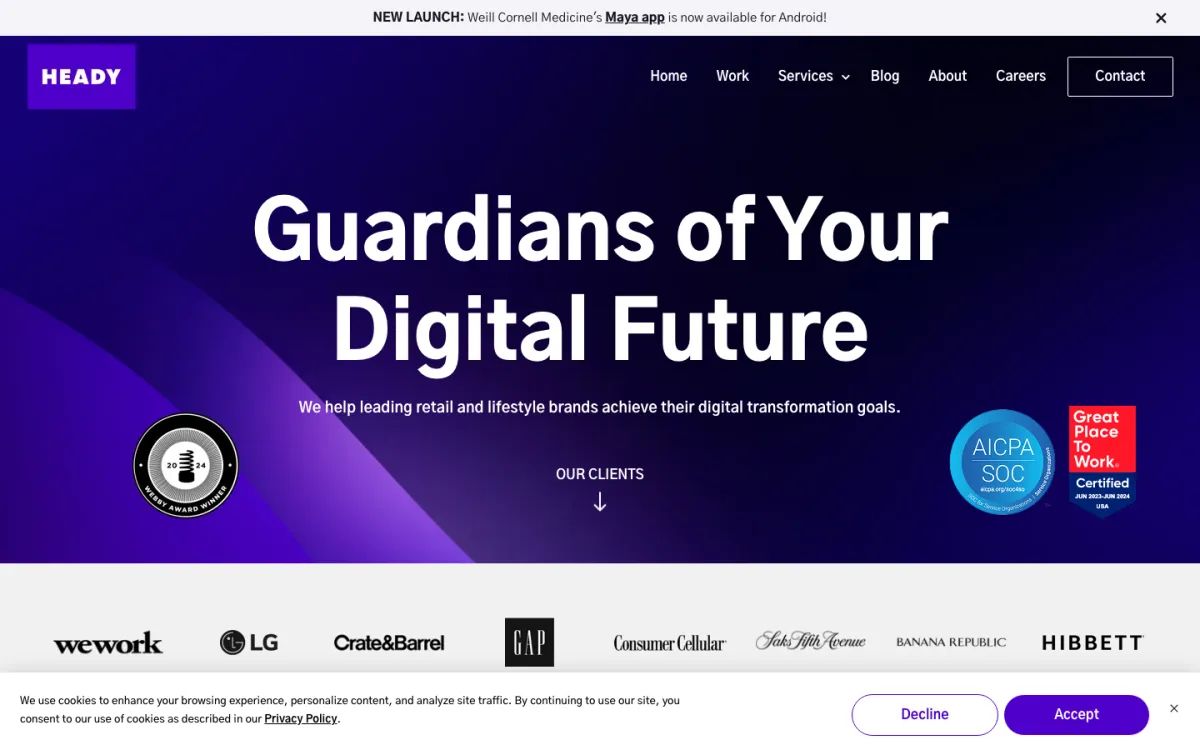
Heady partners with LG, the only connected-appliance brand named anywhere on this page, and its Scotts MiracleGro My Lawn app is a consumer app wrapped around a physical product and a schedule. Retail, eCommerce and consumer products account for 90% of its client base, which is the shelf a smart home device is actually sold from, and it has run from Brooklyn since 2015.
Product design is 15% of what it does, behind mobile, web and e-commerce development, and its reviews describe booking widgets and store flows rather than device state. Nothing on its record covers an offline hub or a firmware update mid-install, so those screens start from nothing.
- Starting price
- $75,000+
- Engagement model
- Project and retainer
- Clutch
- 5.0/5, 18 reviews
- Hourly rate
- $150 - $199
- Team size
- 50 - 249 people
- Best for
- connected-device brands that sell through retail and think like a consumer brand.
- Not a fit for
- products whose hardest screens are offline and firmware states, or budgets under $25,000.
Dworkz
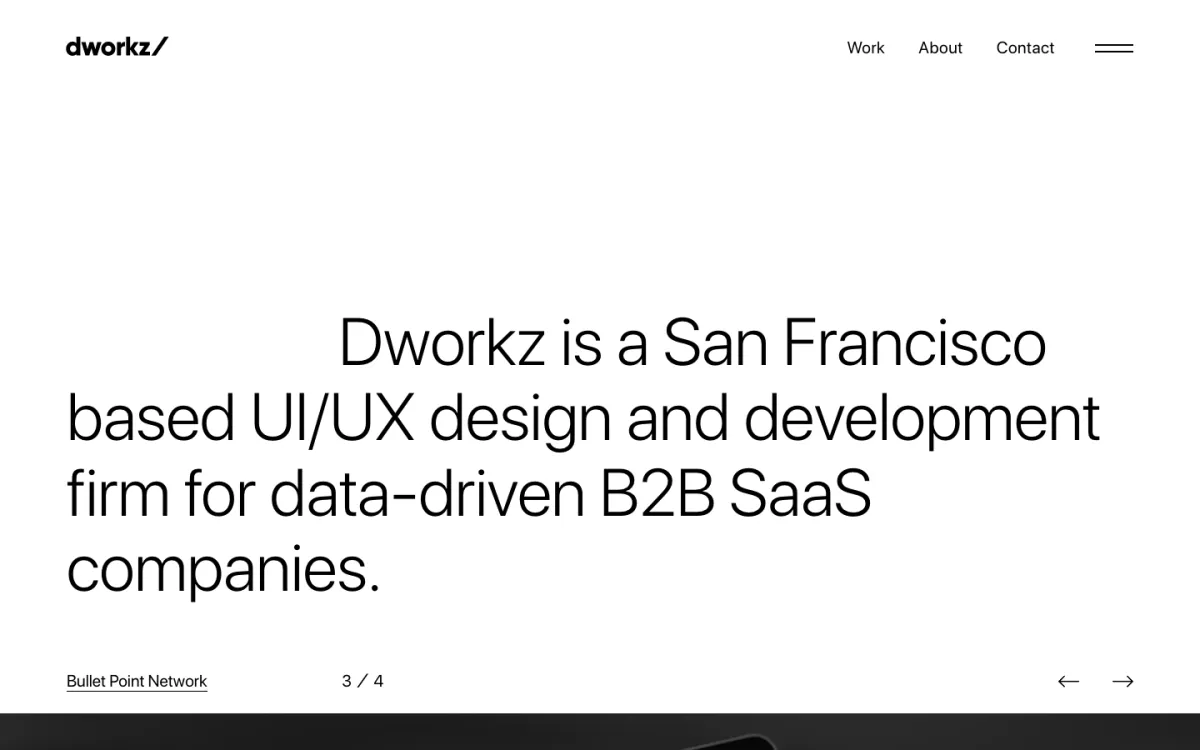
Dworkz is the only agency here listing AR/VR development in its service mix, at 10%, alongside 25% UX/UI, and a smart home app has to represent a building: rooms, floors, and which device sits where. It has been doing this from San Francisco since 2004, and its stated focus is data-driven B2B SaaS, which describes the energy history and schedule reporting half of a connected home product.
Financial services is 50% of its book with no consumer or connected-device work published, and its reviews describe a school website, a professional development platform and a health technology build. Eight Clutch reviews is the thinnest public record on this page.
- Starting price
- $10,000+
- Engagement model
- Project and retainer
- Clutch
- 4.9/5, 8 reviews
- Hourly rate
- $100 - $149
- Team size
- 10 - 49 people
- Best for
- representing rooms, device placement and usage data inside the app.
- Not a fit for
- buyers who want published consumer hardware work, or budgets under $25,000.
Koombea
Koombea builds the app and the service behind it, 40% mobile app development and 20% custom software development from Barranquilla since 2007, and its reviews describe two iOS apps rebuilt in Swift on AWS. In a connected home product the offline state is a backend fact before it is a screen, so having the client and the cloud in one team removes the argument about whose bug it is.
UX/UI does not appear in its top four services at all, which makes this engineering capacity with design attached rather than a design-led team. Its industries are information technology, medical, education and financial services, so a shared household with guests and children is new ground.
- Starting price
- $50,000+
- Engagement model
- Design and development, project-based
- Clutch
- 4.9/5, 24 reviews
- Hourly rate
- $50 - $99
- Team size
- 50 - 249 people
- Best for
- connected products where the app and the cloud service have to move together.
- Not a fit for
- design-led work or household permission modelling, or budgets under $25,000.
Zajno

Zajno's record includes redesigning a software company's marketing site, its onboarding flow and its core product experience in one engagement, which is the shape of a smart home launch, where the box, the pairing sequence and the app all have to read as one thing. Its award-winning work is animation-heavy, and motion is how a pairing step or a firmware install stops feeling stalled.
Its industries are medical at 25% and financial services at 20%, with manufacturing at 10% and no connected-device work published. At 10 to 49 people with a $10,000 minimum, it is scoped to a flow or a site rather than a platform carrying a hardware roadmap.
- Starting price
- $10,000+
- Engagement model
- Project and retainer
- Clutch
- 5.0/5, 20 reviews
- Hourly rate
- $50 - $99
- Team size
- 10 - 49 people
- Best for
- making setup, pairing and first run feel like part of the product.
- Not a fit for
- multi-year platform work tied to a hardware roadmap, or budgets under $25,000.
Andersen
Andersen has published an application for smart TVs, which is the one screen in a connected home that is not a phone and does not take a touch, and 10% of its work sits in energy and natural resources, the utility side of a thermostat or a load-shifting schedule. It runs 1,000 to 9,999 people out of Warszawa and carries 129 Clutch reviews, the deepest record on this page.
Design appears nowhere in its top four services, which run to custom software, managed services and IT strategy, and its reviews describe outstaffing IT resources into a client's own team. That is a staffing relationship rather than an agency that owns the failure states.
- Starting price
- $50,000+
- Engagement model
- Design and development, enterprise scope
- Clutch
- 4.9/5, 129 reviews
- Hourly rate
- $50 - $99
- Team size
- 1,000 - 9,999 people
- Best for
- connected home platforms needing engineering headcount across TV, mobile and cloud.
- Not a fit for
- teams wanting an agency to own the design outcome, or budgets under $25,000.
Majestyk
Majestyk is 60% mobile app development with 20% UX/UI attached, which is the right ratio for a smart home product, where the app is a thin control surface over hardware rather than the product itself. Its reviews describe building iOS and Android wrapper apps around a rebuilt React frontend, then continuing support and maintenance. A connected home app is never finished, because the hardware keeps shipping.
No industry accounts for more than 10% of its book, spread across advertising, arts, consumer products and education, and its card carries no named clients or case studies. At $150 to $199 an hour that is a lot to take on trust from 31 reviews alone.
- Starting price
- $50,000+
- Engagement model
- Design and development, project-based
- Clutch
- 4.9/5, 31 reviews
- Hourly rate
- $150 - $199
- Team size
- 10 - 49 people
- Best for
- long-running app builds where the hardware roadmap keeps moving underneath.
- Not a fit for
- buyers who need a published connected-device track record, or budgets under $25,000.
Naked Development
Naked Development is the least documented agency on this page. Its card carries a rate of $150 to $199 an hour, a $25,000 minimum and 83 Clutch reviews, the second largest review count here. What it does not carry is a service mix, an industry split, a founding year or a single named client, so there is no way to check whether it has shipped anything attached to hardware.
That gap matters more on this page than on most. A smart home product is judged on the states nobody puts in a portfolio, a device offline or a schedule that fired at the wrong hour, and 4.6 out of 5 is the lowest rating on this list.
- Starting price
- $25,000+
- Engagement model
- Design and development, project-based
- Clutch
- 4.6/5, 83 reviews
- Hourly rate
- $150 - $199
- Team size
- 10 - 49 people
- Best for
- buyers willing to run their own reference checks on an undocumented record.
- Not a fit for
- anyone needing published connected-device evidence, or budgets under $25,000.
Topflight Apps
Topflight Apps is the only agency here naming wearable app development as a service, at 15%, and a wearable is the nearest thing to a smart home device on this page: it pairs, it syncs, it runs firmware, and it goes silent without announcing it. Consumer products and services is 20% of its book, it works from Irvine since 2016, and it offers a 14-day refund window.
Medical is 40% of its work and financial services another 30%, and all three published reviews are healthcare: an EMR system, a therapy bot and an LLM tool for patients and physicians. Those are single-user products behind one login, so a shared home with guests and children is unfamiliar.
- Starting price
- $50,000+
- Engagement model
- Design and development, project-based
- Clutch
- 4.9/5, 43 reviews
- Hourly rate
- $100 - $149
- Team size
- 10 - 49 people
- Best for
- companion apps for devices that pair, sync and run firmware.
- Not a fit for
- products built on shared household accounts and guest permissions, or budgets under $25,000.
How much does a smart home UI design engagement cost?
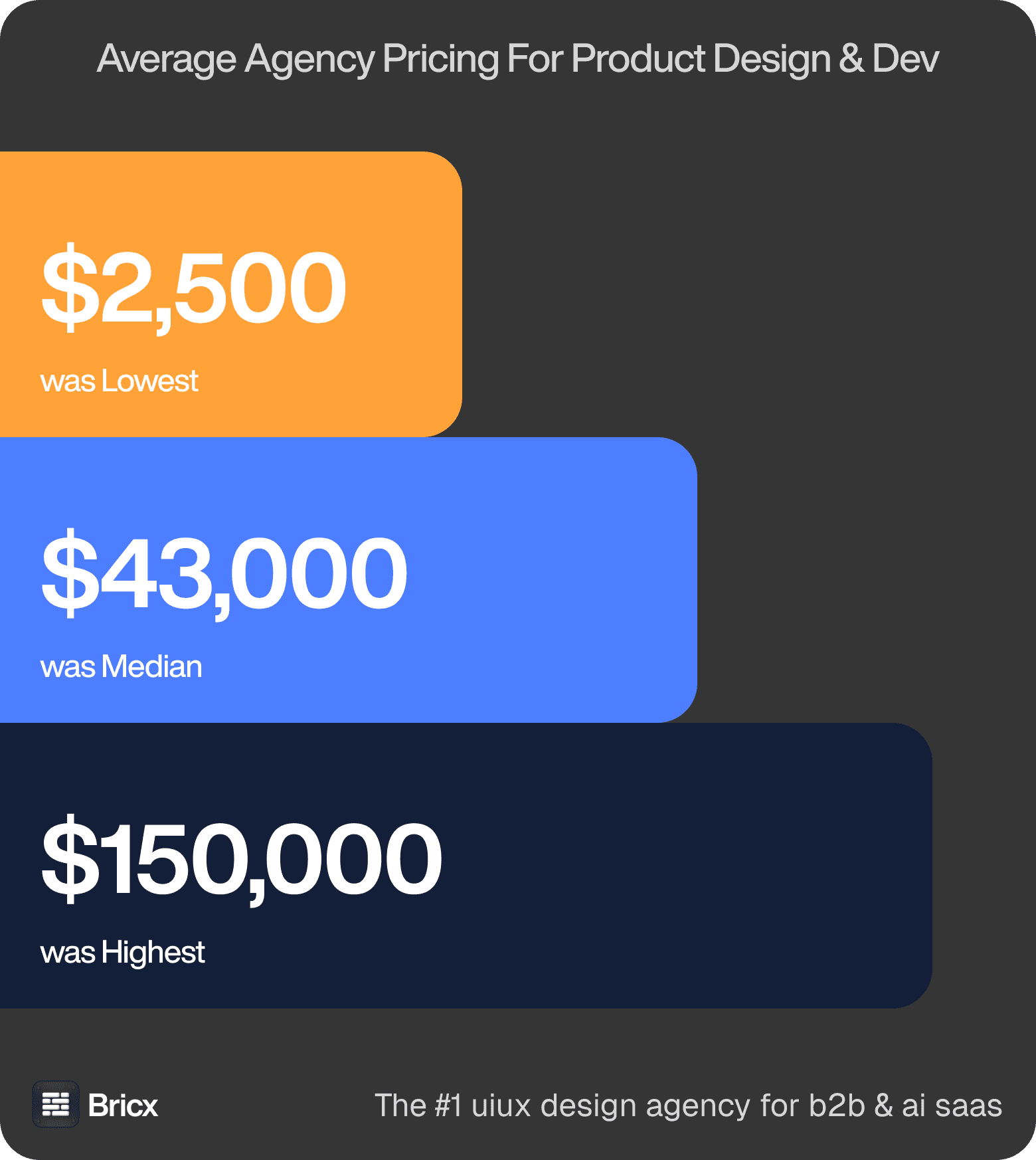
Fixed-price reality. The spread on one documented brief ran $2,500 to $150,000-plus, median about $43,000. Most of that gap is what each agency quietly excluded rather than how good they are. Those figures cover product design across the whole benchmark, so treat them as the range smart home UI is quoted inside rather than a price for it.
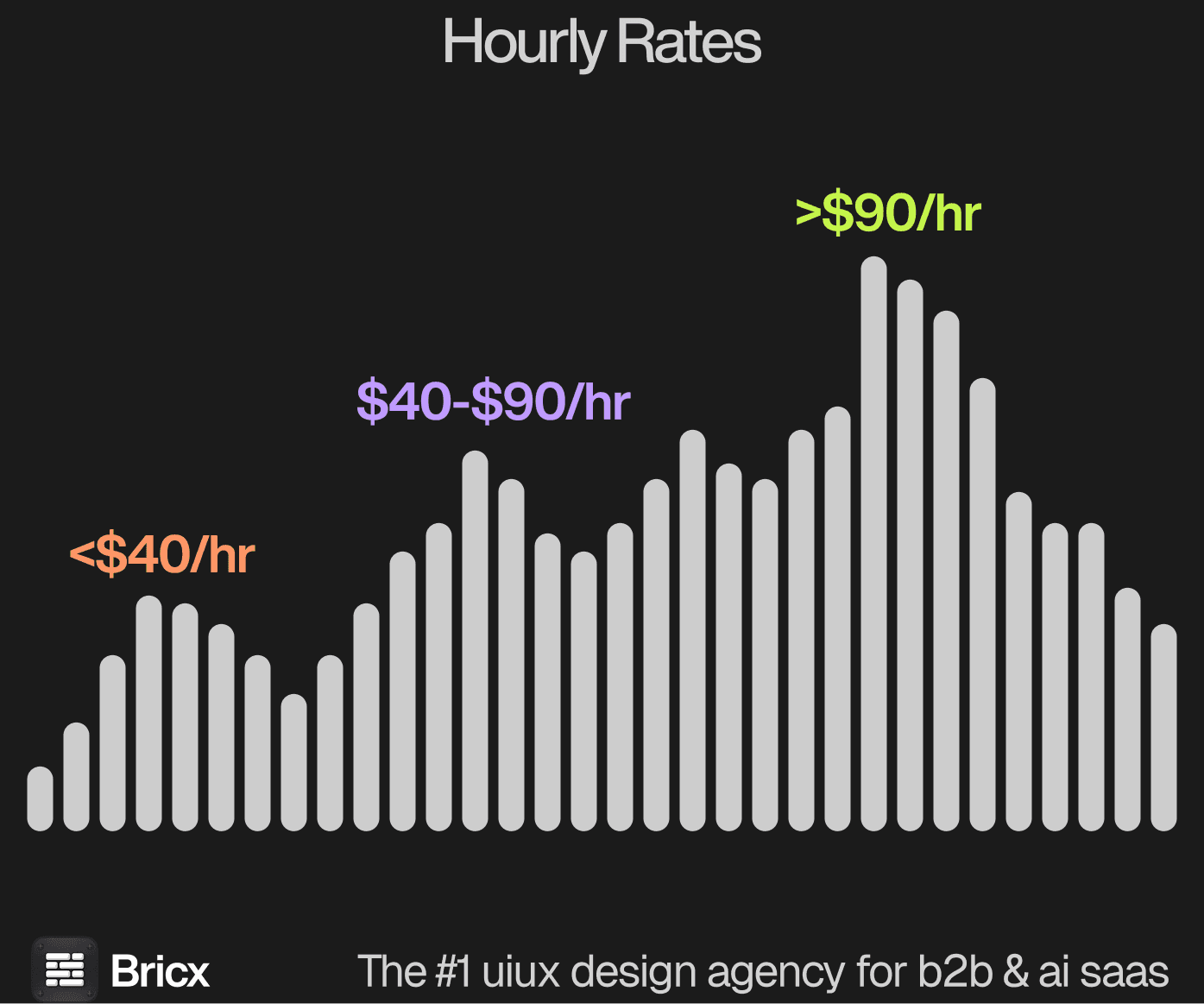
What an hour costs. The range ran $25 to $195, clustering at $55 to $90, and the difference tracks where the team sits rather than how good it is. Smart home sits above the median because the interface spans an app, a device and a setup flow that has to survive somebody's home network.
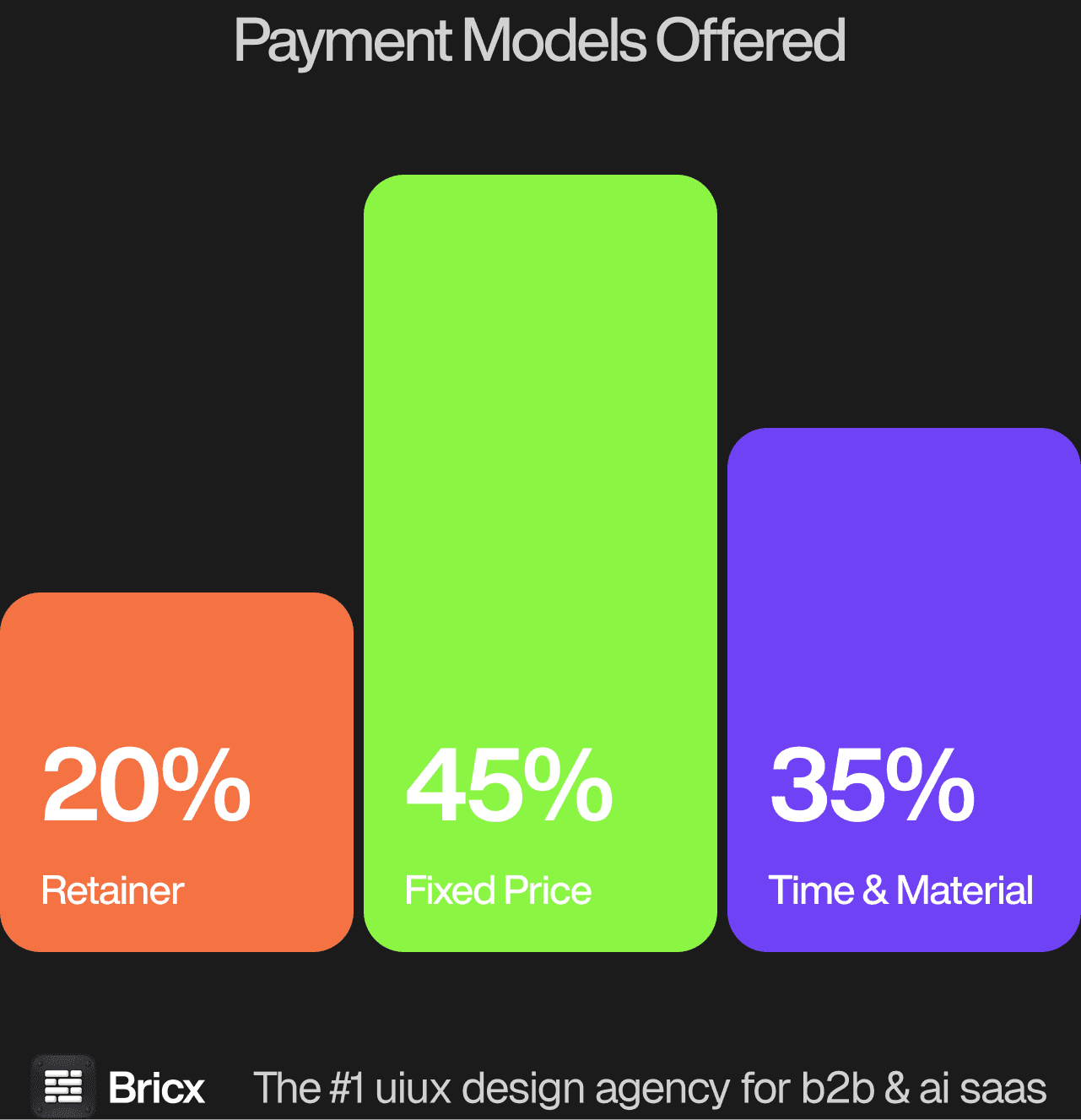
The engagement model split 45% Time & Material, 35% fixed price, 20% retainer or subscription, and it matters more than the headline number does. For smart home UI the model usually matters more than the headline figure, because it decides what happens when the scope moves.
- Fixed price when the brief will hold.
- Time & Material when it will not.
- Retainer when there is no single brief, only a queue.
- Which one fits smart home UI comes down to whether the scope is settled before the work starts.
How do you evaluate a smart home UI design agency?
Five things separate smart home UI from ordinary mobile design.
Ask about onboarding onto a home network. Pairing is the highest-abandonment moment in connected hardware, and it happens before the customer has seen any value at all.
Ask what the app shows when a device is unreachable. Offline is the normal state of consumer hardware, and an interface depicting only working devices describes a home nobody has.
Ask how automation rules are expressed. Conditions, schedules and exceptions are programming presented to people who do not program, and this is where most smart home products become unusable.
Ask about shared households. A home holds several occupants, guests and often children, and a single-owner account model creates arguments the support team gets to hear about.
Ask who designs the firmware update experience. It is the moment a working product stops working for several minutes, and it is nearly always left to engineering.
What are the red flags when hiring a design agency?
- A proposal that mirrors your brief back. Restating what you asked for is not analysis. Look for what they would change.
- No timeline before the contract. If the schedule only appears after signature, it was never a commitment.
- Portfolio work you cannot verify. Ask for live links, not carousel images.
- A single point of contact who is not a designer. Account managers relay; they do not decide.
- No answer on revisions. Ask how many rounds are included and what happens on the fourth.
- No comparable example of smart home UI. An agency that cannot point to work of the same shape is learning on your budget.
Should you hire a product design agency or build in-house?
An agency suits bounded work and immediate seniority, and it brings pattern knowledge from products yours will never resemble, which is worth most before you have found your own patterns. For smart home UI specifically, the question worth settling first is how often the work recurs.
Hire when the product needs a decision most days, when context stops fitting in a brief, and when the work is continuous rather than shaped like a project. Where smart home UI falls on that line is usually clear once you count how many times it will need doing again.
Connected hardware companies usually hold deep firmware and electronics capability and treat the app as the last mile, staffed thinly and shipped late. That is why outside help pays back on setup and failure states, which are owned by nobody internally and decide the review score.
FAQs
What makes smart home UI design difficult?
The interface is used during setup and during failure rather than during normal operation, so the states most products design last are the ones customers actually see.
Where do smart home products lose customers?
Pairing. Getting a device onto a home network happens before any value has been delivered, and every failed attempt is a potential return.
How should shared households be handled?
With a permission model designed in from the start. Retrofitting multiple occupants, guests and children onto a single-owner account is one of the hardest changes to make later.
How much does smart home UI design cost?
Fixed-price product design across the benchmark ran $2,500 to over $150,000 with a median near $43,000, and connected-device work spanning app and hardware sits above that median. Bricx starts at $25,000.