10 Best Subscription Flow Design Agencies (2026)
The 10 best subscription flow design agencies, compared on pricing, Clutch rating, engagement model and hourly rate, drawn from a documented benchmark of 57 agencies.
Aug 20, 202611 min read
Best subscription flow design agencies
The subscription flow is the one part of a product where a design mistake shows up as money in the same week. Most of it is invisible: cards expire, payments fail, and involuntary churn removes customers who never decided to leave. The visible parts are hard for a different reason. A plan table asks people to choose between abstractions, seats against credits against tiers, and a mid-cycle upgrade produces a prorated number the customer has to trust without checking it. Cancellation is regulated in several markets now, and it is also the most honest conversation the company will ever get.
Ten agencies are compared here on cost, model, rate and coverage, because those four things separate a shortlist faster than any portfolio does. Every agency here carries a verified Clutch profile, and the ratings below are taken from it. Each entry says what an agency is worth hiring for and where it is the wrong choice for subscription flow design.
How the ten agencies compare
| Agency | Best for | Starting price | Clutch rating | Not a fit for |
|---|---|---|---|---|
| Bricx | Plan tables, upgrades and recovery | $25,000+ | 5.0/5, 27 reviews | App store billing implementation |
| Sombra | Billing systems and churn reporting | $75,000+ | 4.9/5, 46 reviews | Interface design, small scopes |
| Cubix | In-app payment and tier building | $25,000+ | 4.8/5, 56 reviews | Design direction, packaging strategy |
| DICEUS | Recurring-billing sector experience | $10,000+ | 4.9/5, 49 reviews | Design-led flow work |
| Diffco | Third-party API integration work | $25,000+ | 5.0/5, 31 reviews | Plan and pricing interface design |
| Django Stars | Recurring billing platforms | $10,000+ | 4.8/5, 61 reviews | Conversion and copy work |
| ELEKS | Regulated billing backends at scale | $25,000+ | 4.8/5, 31 reviews | Design ownership, smaller companies |
| Cadabra Studio | Value proposition and journey work | $5,000+ | 5.0/5, 26 reviews | Billing mechanics, payment states |
| UXDA | Financial UX at institution scale | $250,000+ | 4.8/5, 21 reviews | Small scopes, SaaS pricing |
| Zajno Web Design & Development Studio | Site, onboarding and product together | $10,000+ | 5.0/5, 20 reviews | Billing depth, payment states |
Best subscription flow design agency: Bricx
Bricx is the best B2B SaaS teams whose plan table, upgrade path and failed payment recovery quietly decide more revenue than any other screen in the product. Bricx has completed 50+ SaaS design projects across 30+ industries, with clients including Writesonic (YC S21), Collectwise (YC F24), Gigacatalyst (YC X26), Sybill, Camb.ai, LTV.ai, Instadapp, Hobbes and AT Kearney. The agency holds 27 verified reviews on Clutch at an average of 5.0/5.
Bricx works exclusively with B2B and AI SaaS companies, from seed stage through Series C, covering branding, website design, product UX/UI and end-to-end development. Engagements start at $25,000. Bricx designs the plan table, the upgrade path and the recovery flows as one surface with the pricing page that feeds them, which is the seam where marketing and product usually disagree. It works with B2B and AI SaaS from seed through Series C, with engagements from $25,000.
The most impressive part was the attention to detail in their work.
- Starting price
- $25,000+
- Engagement model
- Fixed-scope projects and monthly retainers
- Timeline
- First delivery within the first week; full scope varies by project
- Clutch
- 5.0/5, 27 reviews
- Hourly rate
- $50 - $99
- Best for
- B2B SaaS plan tables, upgrade paths and failed payment recovery.
- Not a fit for
- app store billing implementation, or budgets under $25,000.
Sombra
Sombra is the only agency here whose reviews name this work directly: full stack development for a digital marketing company that included improving the subscription management process. That is the billing side of the surface, where what the interface can offer is bounded by what the system can charge and when. BI and big data consulting is its largest line at 25%, which is the reporting half of the same question.
No design service line appears on its card, and its $75,000 minimum is the highest floor on this page for what is usually a small surface. Financial services and retail are 20% each of a base that is 60% midmarket, so the buyers are established rather than early.
- Starting price
- $75,000+
- Engagement model
- Project and retainer
- Clutch
- 4.9/5, 46 reviews
- Hourly rate
- $50 - $99
- Team size
- 250 - 999 people
- Best for
- the billing and reporting machinery under the flow.
- Not a fit for
- interface design of the flow itself, or budgets under $25,000.
Cubix

Gaming is 20% of Cubix's client base, the one sector where paying inside a product is completely normal and price tiers get tested constantly, and financial services is another 30%. Its reviews describe building a parking management app for iOS and Android where the payment happens in the field, and a board game app built around currencies and economics. It has 250 to 999 people since 2008.
Its four service lines sit at 20% each with no design or UX among them, and IT staff augmentation is one of them, so this is capacity rather than direction. At $25 to $49 an hour the rate is low, but the plan and packaging thinking has to come from the client.
- Starting price
- $25,000+
- Engagement model
- Project and retainer
- Clutch
- 4.8/5, 56 reviews
- Hourly rate
- $25 - $49
- Team size
- 250 - 999 people
- Best for
- building paid tiers and in-product purchase at a low rate.
- Not a fit for
- packaging strategy and design direction, or budgets under $25,000.
DICEUS
Insurance and telecoms are the two businesses where the entire customer relationship is a recurring bill, and DICEUS works in both: one review describes an insurance mobile app built after interviews and customer personas with the UX/UI designed, another a mobile app for an internet provider. Financial services is 40% of its base, with information technology and medical at 30% each, and it works from Denmark since 2011.
Cloud consulting at 40% and IT strategy consulting at 20% lead a mix with no design line in it, and its other reviews describe penetration testing and remediation. Recurring billing sectors are familiar ground, but the flow itself would be designed inside an infrastructure engagement.
- Starting price
- $10,000+
- Engagement model
- Project and retainer
- Clutch
- 4.9/5, 49 reviews
- Hourly rate
- $25 - $49
- Team size
- 50 - 249 people
- Best for
- products where the relationship is a monthly bill by nature.
- Not a fit for
- design-led work on the flow itself, or budgets under $25,000.
Diffco
The closest analogue to billing integration on Diffco's card is its logistics work: backend development with third-party postal and shipping API integration, where the interface can only promise what somebody else's API supports. That is the constraint every plan and proration screen lives under. Another review has it defining and launching the second version of an AI product, which is usually the moment a company decides what it is charging for.
Design does not appear in its service mix, which is led by AI development and custom software at 25% each. At $100 to $149 an hour with business services and medical at 25% each, its record shows platform work rather than revenue surface work.
- Starting price
- $25,000+
- Engagement model
- Project and retainer
- Clutch
- 5.0/5, 31 reviews
- Hourly rate
- $100 - $149
- Team size
- 50 - 249 people
- Best for
- wiring a flow into a billing or provider API correctly.
- Not a fit for
- designing the plan and pricing interface, or budgets under $25,000.
Django Stars
Rental management is a recurring billing business by construction, and Django Stars built one: a platform and mobile app for a dumpster rental firm with a centralised dashboard and an AI dispatch system, where what is out and what is owed have to agree. Financial services is 60% of its client base and 80% of its clients are midmarket, so it works where billing is already someone's full-time concern.
Custom software and web development split its work 50/50 with no design service at all, so plan structures, copy and comparison tables would arrive from the client. Its reviews describe migrations and feature work rather than anything conversion-facing.
- Starting price
- $10,000+
- Engagement model
- Project and retainer
- Clutch
- 4.8/5, 61 reviews
- Hourly rate
- $50 - $99
- Team size
- 50 - 249 people
- Best for
- the platform that tracks what is owed and when.
- Not a fit for
- conversion-facing design and copy, or budgets under $25,000.
ELEKS
Financial services at 25% and insurance at 15% mean 40% of ELEKS's client base runs on recurring premiums, and one review has it building data pipelines and backend features for an insurance claims automation company. Another describes security audits and penetration testing against OWASP for an ISO effort, which matters on a payment surface that gets audited. It has been running since 1991 at 1,000 to 9,999 people.
Custom software development is 50% of its mix and design appears nowhere in it. Its clients are 56% enterprise and 44% midmarket with no small businesses at all, and its reviews describe supplying Java engineers into a client's team rather than owning an outcome.
- Starting price
- $25,000+
- Engagement model
- Project and retainer
- Clutch
- 4.8/5, 31 reviews
- Hourly rate
- $50 - $99
- Team size
- 1,000 - 9,999 people
- Best for
- billing and claims backends that have to pass an audit.
- Not a fit for
- design ownership of the flow, or budgets under $25,000.
Cadabra Studio
A plan table is a value proposition problem before it is a layout problem, and Cadabra Studio's counselling platform work is the closest method match here: journey mapping, a value proposition canvas and an information architecture. Insurance is 30% of its client base, a recurring premium business, and UX/UI at 15% is a real design line rather than an afterthought. It has 26 reviews at 5.0.
That design line is still the smallest part of a mix led by AI development at 40%, and the studio is 10 to 49 people. Medical at 35% is its heaviest sector, and no billing, payment or plan work appears anywhere on its card.
- Starting price
- $5,000+
- Engagement model
- Project and retainer
- Clutch
- 5.0/5, 26 reviews
- Hourly rate
- $50 - $99
- Team size
- 10 - 49 people
- Best for
- working out what each tier is actually offering, and to whom.
- Not a fit for
- billing mechanics and payment states, or budgets under $25,000.
UXDA
UXDA is the only pure design specialist on this page, 100% UX/UI and 100% financial services, working on products where a payment mandate and a fee schedule are the offering itself. Its own account names 150 products across 39 countries and work for banking vendors including Finastra and Backbase. One review describes an e-wallet company expanding its services and customer offerings, which is a packaging question in Figma.
Its minimum is $250,000 at $200 to $300 an hour, several times the next highest floor here, and its clients are split evenly between enterprise and midmarket banks. A subscription flow inside a software product is a smaller and different job than bank-wide UX governance.
- Starting price
- $250,000+
- Engagement model
- Project and retainer
- Clutch
- 4.8/5, 21 reviews
- Hourly rate
- $200 - $300
- Team size
- 10 - 49 people
- Best for
- packaging and interface work inside a bank or banking vendor.
- Not a fit for
- a single SaaS flow at modest scope, or budgets under $25,000.
Zajno Web Design & Development Studio

One Zajno client had it redesign the marketing website, the onboarding flow and the core product experience together, which is unusual and directly relevant, because a subscription flow sits exactly on that seam between the pricing page and the product and is usually owned by neither team. UX/UI is 30% of its mix with web design and web development at 20% each, and it has 20 reviews at 5.0.
Its published work is award-winning immersive sites, with Awwwards and CSSDA wins listed against crypto and education projects, so the centre of gravity is expressive web design. Nothing on its card involves payments, plans or billing, and at 10 to 49 people the team is small.
- Starting price
- $10,000+
- Engagement model
- Project and retainer
- Clutch
- 5.0/5, 20 reviews
- Hourly rate
- $50 - $99
- Team size
- 10 - 49 people
- Best for
- one team across the pricing page, signup and the product.
- Not a fit for
- billing depth and payment state design, or budgets under $25,000.
How much does a subscription flow design engagement cost?
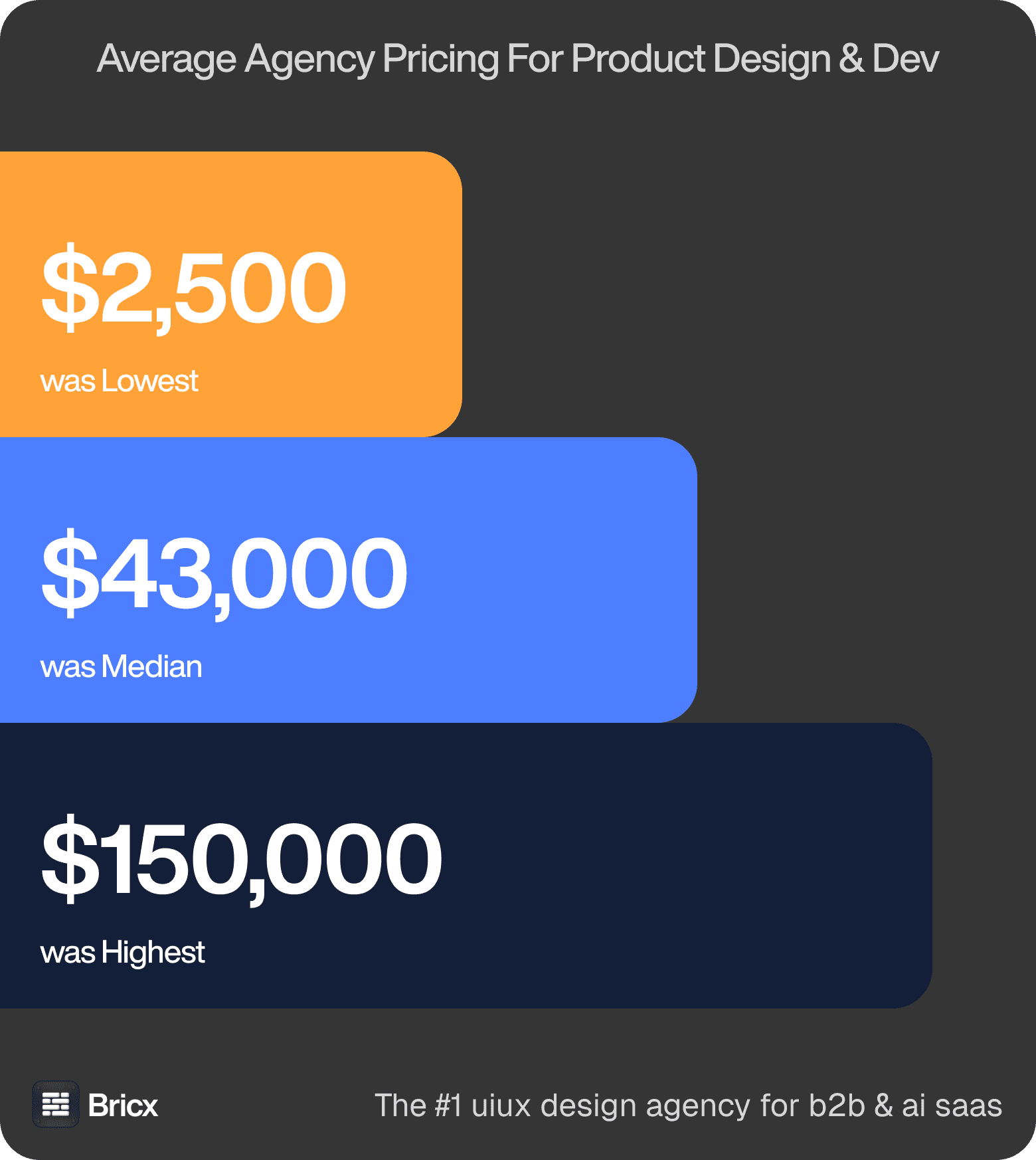
The spread nobody publishes. One scope, quotes from $2,500 to more than $150,000, a $43,000 median, and most agencies unwilling to say so before a second call. Those figures cover product design across the whole benchmark, so treat them as the range subscription flow design is quoted inside rather than a price for it.
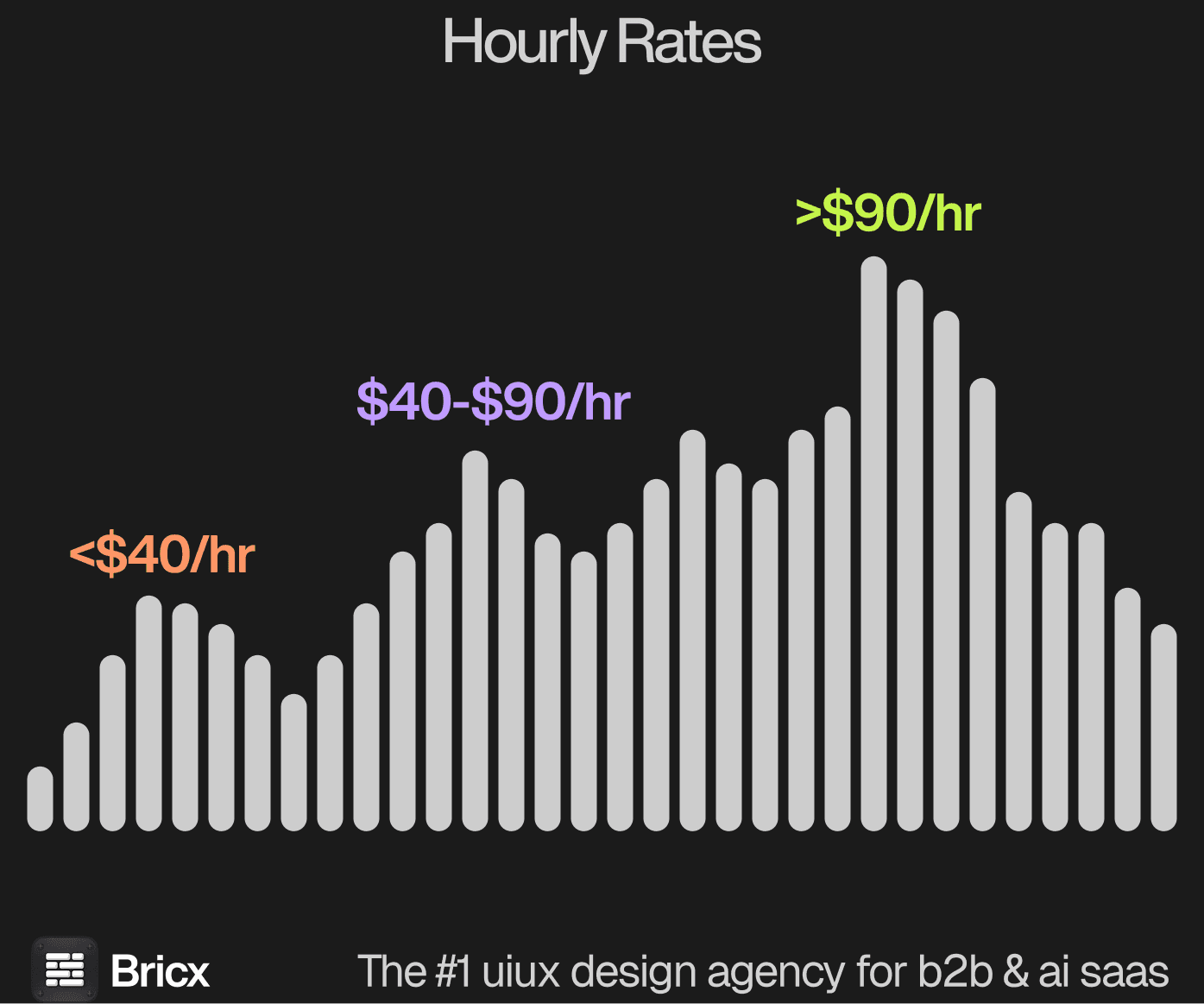
By the hour. $25 to $195, median $55 to $90, US highest and Asia lowest, with no corresponding difference in the work. This is a small surface with outsized effects, so it sits below the median for a full product engagement while returning more per screen than almost anything else on a roadmap.
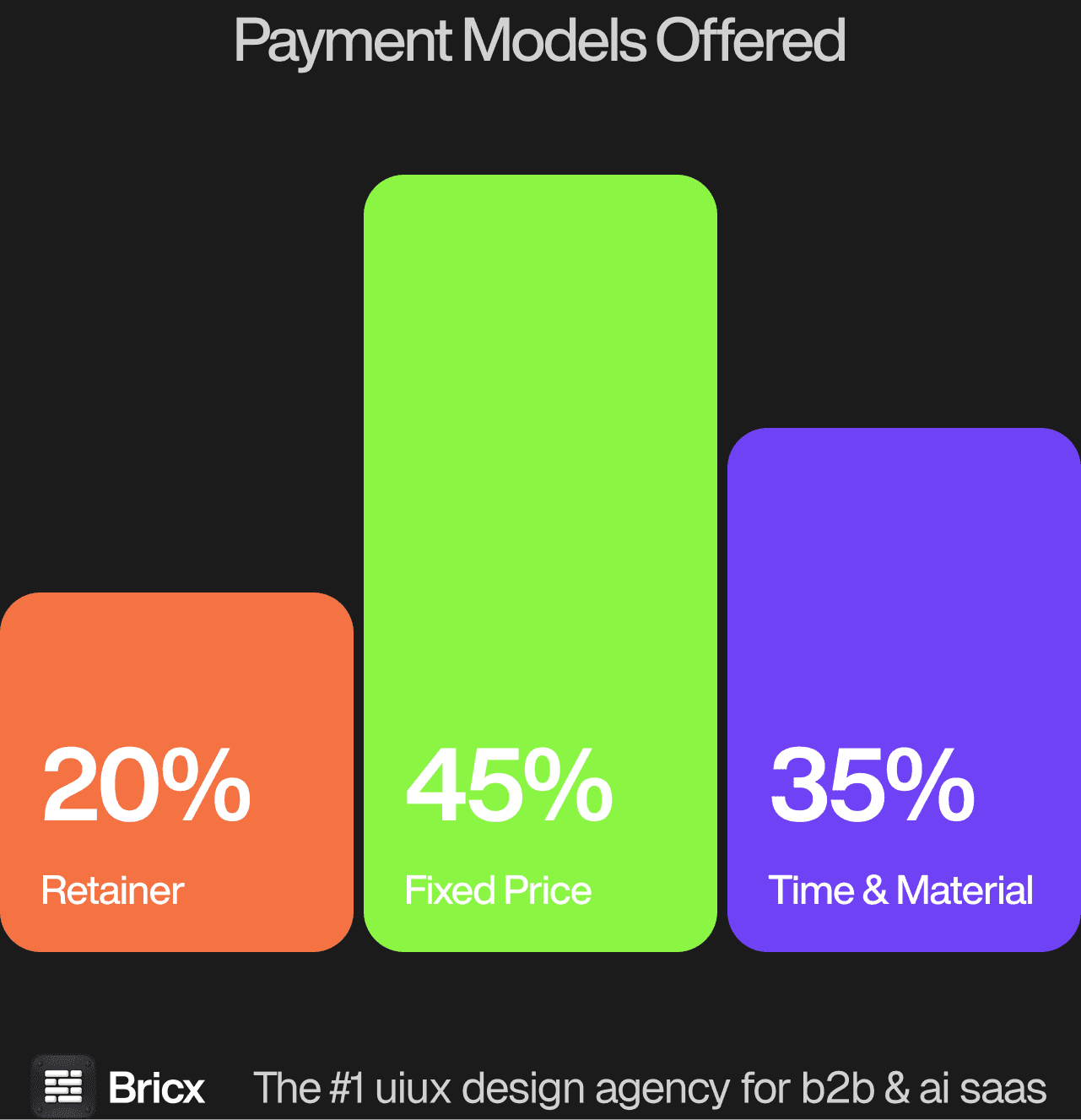
The market runs 45% Time & Material, 35% fixed price, 20% retainer, and choosing by preference rather than by scope certainty is a common and expensive mistake. For subscription flow design the model usually matters more than the headline figure, because it decides what happens when the scope moves.
- Fixed price suits a defined deliverable with a settled spec.
- Time & Material suits a scope that is still being discovered.
- Retainer suits continuous design demand rather than a one-off push.
- Which one fits subscription flow design comes down to whether the scope is settled before the work starts.
How do you evaluate a subscription flow design agency?
Five things separate subscription flow design from checkout design generally.
Ask what they do about failed payments. Expired cards take customers who never chose to leave, and the recovery work lives in retries, grace periods, in-app notices and email rather than on any screen in the product.
Ask how they present proration. A mid-cycle upgrade produces an amount nobody calculated themselves, and an unexplained figure on a card statement generates a support ticket and sometimes a refund.
Ask what their cancellation flow actually does. Several markets now regulate how hard leaving can be made, and the only defensible save offer is one that answers the reason the customer just gave.
Ask what the billing system supports. Plans, trials and add-ons live in a billing provider's data model, so an interface that promises something the provider cannot express dies quietly in engineering.
Ask how the plan names were chosen. Seats, credits and tiers are abstractions the buyer has to translate into their own situation, which makes the comparison table a writing problem before it is a layout problem.
What are the red flags when hiring a design agency?
- Discovery that outlasts the runway. Workshops are not shipping. Ask what exists at the end of week two.
- A fixed price on a moving scope. It protects the agency and turns your learning into a change request.
- Case studies with no numbers. If nothing was measured, nothing can be claimed.
- No named limitation. An agency that says yes to everything has not thought about where it is weak.
- No handover plan. Ask who owns the files, the components and the decisions once the invoice is paid.
- No comparable example of subscription flow design. An agency that cannot point to work of the same shape is learning on your budget.
Should you hire a product design agency or build in-house?
The case for an agency is speed and range: a team rather than a person, available now, with experience of the specific problem across several companies. For subscription flow design specifically, the question worth settling first is how often the work recurs.
The case for hiring is accumulation. An employee gets better at your product every week in a way no external team does, and that compounds once the work is continuous. Where subscription flow design falls on that line is usually clear once you count how many times it will need doing again.
This surface moves whenever pricing moves, and pricing moves with the sales motion, so it belongs to whoever owns packaging rather than to whoever owns screens. Hiring makes sense when pricing changes several times a year. Retaining makes sense for the rebuild. The in-house failure is a plan table patched for three years until nobody can say what a tier includes. The agency failure is a beautiful flow that breaks the next time pricing changes.
FAQs
What makes subscription flow design difficult?
Most of the value sits in states nobody demos: a failed charge, a downgrade, a grace period, a cancellation. Those are bounded by what the billing provider can express, and they are where the money actually leaks.
How much does subscription flow design cost?
It is usually scoped inside a product engagement rather than sold alone. Fixed-price product design across the benchmark ran $2,500 to over $150,000 with a median near $43,000, and a subscription flow on its own sits well below that median. Bricx starts at $25,000.
Should the cancellation flow try to save the customer?
Once, with an offer that answers the reason just given, then get out of the way. Friction beyond that is now restricted in several markets and reliably converts a quiet churn into a public complaint.
Who should own the subscription flow internally?
Whoever owns pricing and packaging, with design and engineering attached. When it belongs to nobody, the plan table drifts away from what sales is actually selling and support absorbs the difference.