10 Best Supply Chain UX Agencies (2026)
The 10 best supply chain UX agencies, compared on pricing, Clutch rating, engagement model and hourly rate, drawn from a documented benchmark of 57 agencies.
Aug 20, 202611 min read
Best supply chain UX agencies
Supply chain software describes objects that are physically moving, which makes the interface an exception machine. Almost every shipment is fine and uninteresting, and the product exists for the ones that are late, short, damaged or held at customs. The data belongs to other people, carriers, brokers and an ERP, and it arrives late and sometimes wrong, so the screen has to present a truth it cannot verify. The user is rarely at a desk either: a dispatcher across three monitors, a driver in a cab, a picker wearing gloves. And the incumbent is a spreadsheet and a phone call that already work.
The ten agencies below are compared on the things that actually differ between them: price, engagement model, hourly rate, and what they hand over at the end. Every agency here carries a verified Clutch profile, and the ratings below are taken from it. Each entry says what an agency is worth hiring for and where it is the wrong choice for supply chain UX.
How the ten agencies compare
| Agency | Best for | Starting price | Clutch rating | Not a fit for |
|---|---|---|---|---|
| Bricx | Dispatcher and planner workflows | $25,000+ | 5.0/5, 27 reviews | Warehouse hardware and firmware |
| WEZOM | Freight IoT platforms end to end | $50,000+ | 5.0/5, 47 reviews | Design-led work, small scopes |
| Peerbits | Low-cost dedicated developers | $5,000+ | 4.8/5, 32 reviews | Domain depth, design leadership |
| Stfalcon | Deepest logistics domain record | $10,000+ | 4.9/5, 56 reviews | Standalone design engagements |
| N-iX | Supply chain data and migrations | $100,000+ | 4.8/5, 35 reviews | Design work, mid-sized budgets |
| PixelPlex | Chain of custody on a ledger | $25,000+ | 4.9/5, 33 reviews | Operational workflows, dispatch screens |
| Innovecs | Integration testing and capacity | $25,000+ | 4.7/5, 11 reviews | Design ownership, domain leadership |
| Lemberg Solutions | Connected assets in the field | $25,000+ | 4.8/5, 27 reviews | Dispatcher interfaces, design craft |
| Leobit | Order and configuration tooling | $25,000+ | 4.9/5, 59 reviews | Warehouse operations, design depth |
| Nuage | NetSuite and ERP operations | $10,000+ | 4.9/5, 14 reviews | Interface design, custom products |
Best supply chain UX agency: Bricx
Bricx is the best supply chain products whose daily user is a dispatcher or a planner, and whose real competition is a spreadsheet somebody already trusts. Bricx has completed 50+ SaaS design projects across 30+ industries, with clients including Writesonic (YC S21), Collectwise (YC F24), Gigacatalyst (YC X26), Sybill, Camb.ai, LTV.ai, Instadapp, Hobbes and AT Kearney. The agency holds 27 verified reviews on Clutch at an average of 5.0/5.
Bricx works exclusively with B2B and AI SaaS companies, from seed stage through Series C, covering branding, website design, product UX/UI and end-to-end development. Engagements start at $25,000. Bricx designs for the exception rather than the happy path: what a screen does when a carrier feed is stale, a count is short, or two systems disagree about the same shipment. It works in B2B and AI SaaS across 50+ projects in 30+ industries, with engagements from $25,000.
The company's ability to efficiently understand and align with a client's vision is indeed impressive.
- Starting price
- $25,000+
- Engagement model
- Fixed-scope projects and monthly retainers
- Timeline
- First delivery within the first week; full scope varies by project
- Clutch
- 5.0/5, 27 reviews
- Hourly rate
- $50 - $99
- Best for
- supply chain products whose daily user is a dispatcher, planner or ops lead.
- Not a fit for
- warehouse hardware and scanner firmware, or budgets under $25,000.
WEZOM
Supply chain, logistics and transport is 25% of WEZOM's client base, and its most relevant review is a custom IoT platform for a freight transportation company where it integrated hardware devices, built the backend and handled data synchronisation. That synchronisation step is where telemetry from a moving asset becomes something a dispatcher can act on. It has been running since 1999 with 250 to 999 people and 47 reviews at 5.0.
There is no design or UX service line on its card, with custom software development at 30% and eCommerce development at 25% leading the mix. Its $50,000 minimum is the second highest here, and the operator's screen would be drawn inside a platform build rather than designed first.
- Starting price
- $50,000+
- Engagement model
- Project and retainer
- Clutch
- 5.0/5, 47 reviews
- Hourly rate
- $25 - $49
- Team size
- 250 - 999 people
- Best for
- connecting moving assets to a platform operators can use.
- Not a fit for
- design-led interface work, or budgets under $25,000.
Peerbits
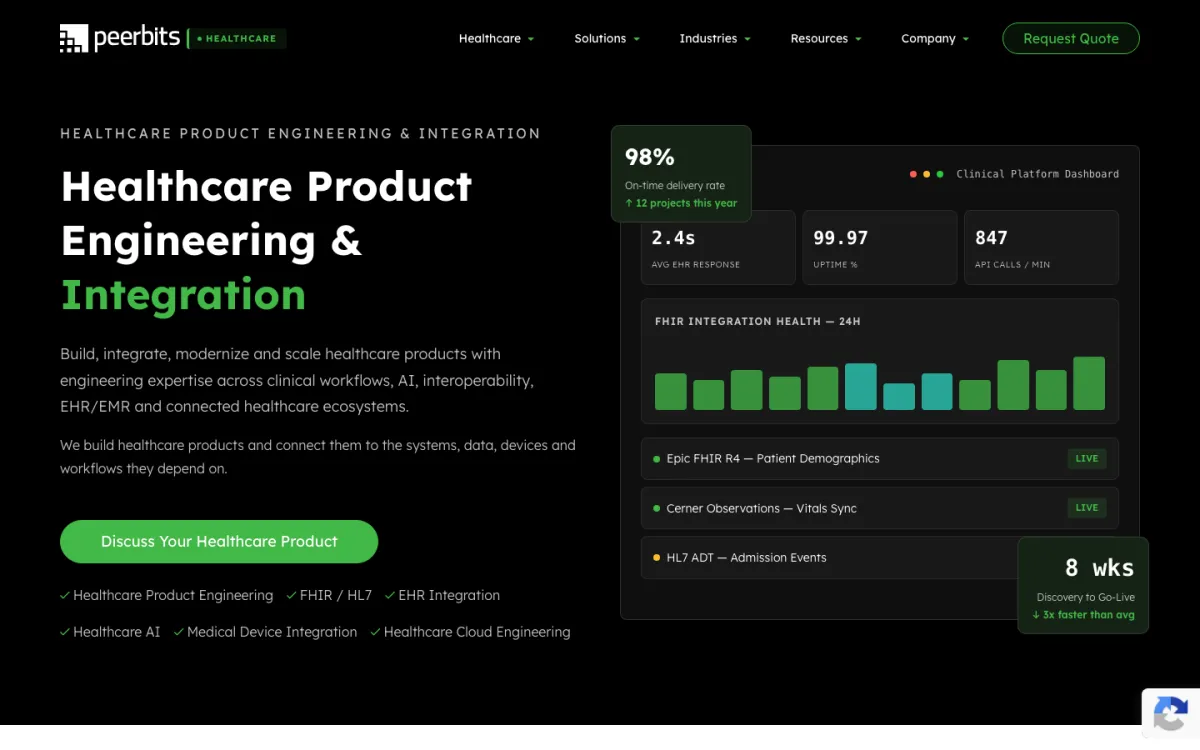
Two things on Peerbits' card matter here: a dedicated React Native developer placed on a transportation company's app, and multilingual support built into a management platform. Cross-border logistics is where that second detail earns its keep, because the driver, the warehouse and the planner frequently do not share a language. Its $5,000 minimum at $25 to $49 an hour is the lowest floor on this page.
Medical is 80% of its client base with supply chain at just 10%, so this sector is a minor line of business. Design appears on its card as UI/UX mock-ups supporting development, and IT staff augmentation is 20% of what it sells, so direction is expected from the client.
- Starting price
- $5,000+
- Engagement model
- Project and retainer
- Clutch
- 4.8/5, 32 reviews
- Hourly rate
- $25 - $49
- Team size
- 50 - 249 people
- Best for
- adding cheap dedicated capacity to a logistics product.
- Not a fit for
- supply chain domain depth, or budgets under $25,000.
Stfalcon
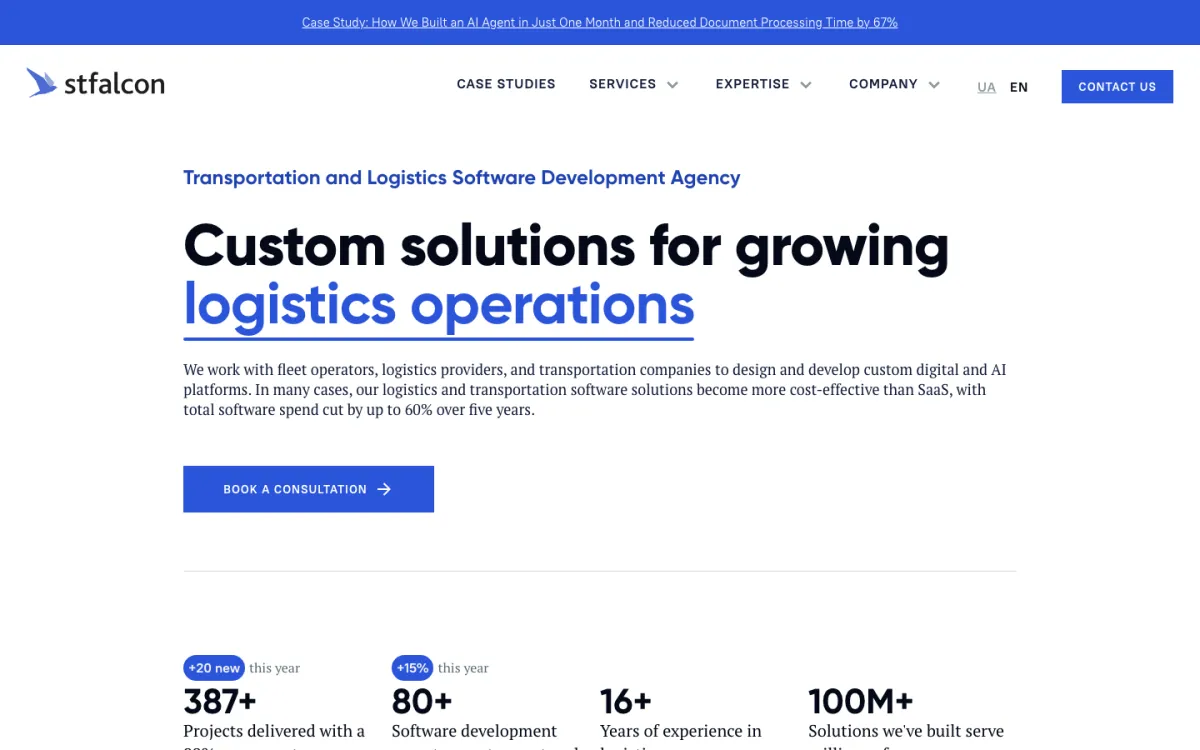
Stfalcon is the most domain-committed agency on this page by a wide margin: supply chain, logistics and transport is 70% of its client base, its own line is transportation and logistics software development, it carries a supply chain management service at 10%, and Nova Poshta, a national parcel carrier, is a named client. Two reviews describe owning UX/UI inside full-lifecycle builds for logistics and transportation companies.
UX/UI does not appear as a percentage in its mix, which is led by mobile app development at 40%, so design sits inside a development contract. Several of its published case studies are written in Ukrainian, which makes parts of its record harder to assess from outside.
- Starting price
- $10,000+
- Engagement model
- Project and retainer
- Clutch
- 4.9/5, 56 reviews
- Hourly rate
- $25 - $49
- Team size
- 50 - 249 people
- Best for
- carrier and transport products built by a team that knows the sector.
- Not a fit for
- standalone design engagements, or budgets under $25,000.
N-iX
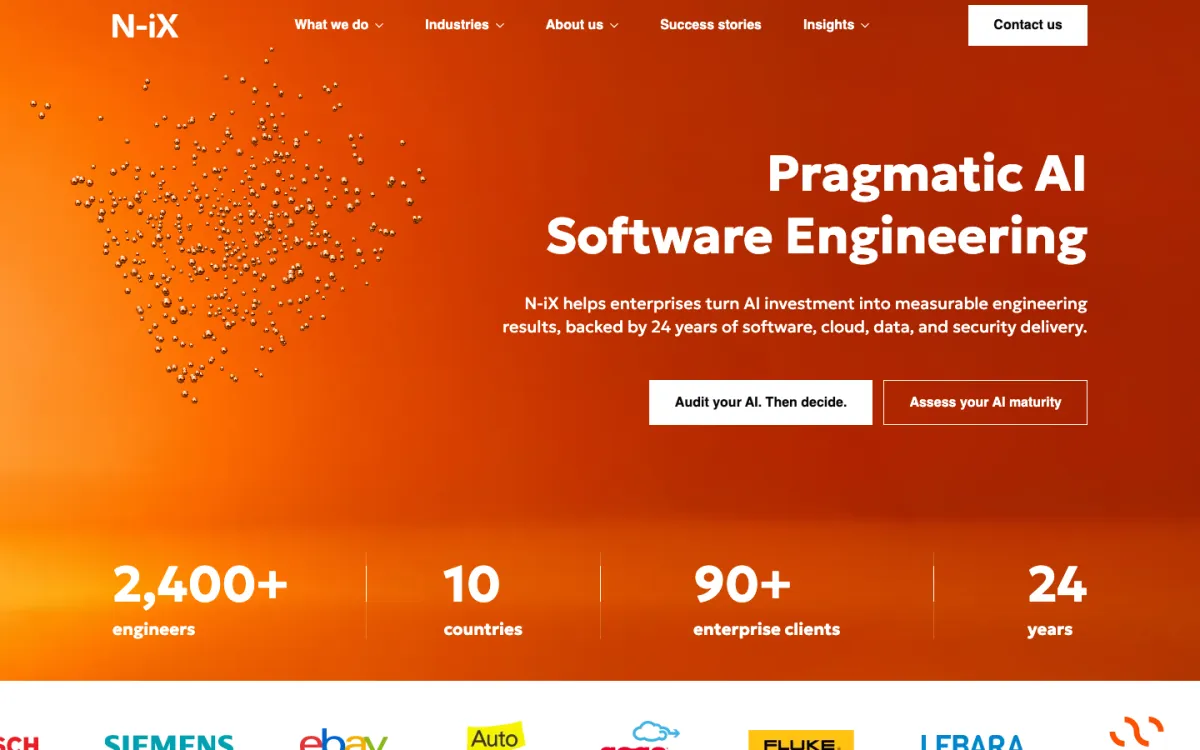
N-iX has a named supply chain engagement on its card, migrating a supply chain cloud system to a native cloud environment and adding new business capability along the way. Its heaviest service is BI and big data consulting at 36%, the largest analytics concentration here, which is the half of this sector where the question is what the numbers mean rather than where the truck is. Manufacturing and retail are both ends of a chain at 25% and 20%.
Its clients are 60% enterprise and 40% midmarket with no small businesses at all, and the minimum is $100,000. Design is absent from its service mix, and its other reviews describe DevOps managed services and cloud migrations rather than anything an operator sees.
- Starting price
- $100,000+
- Engagement model
- Project and retainer
- Clutch
- 4.8/5, 35 reviews
- Hourly rate
- $50 - $99
- Team size
- 1,000 - 9,999 people
- Best for
- large-scale planning and analytics platforms in the cloud.
- Not a fit for
- operator interface design, or budgets under $25,000.
PixelPlex
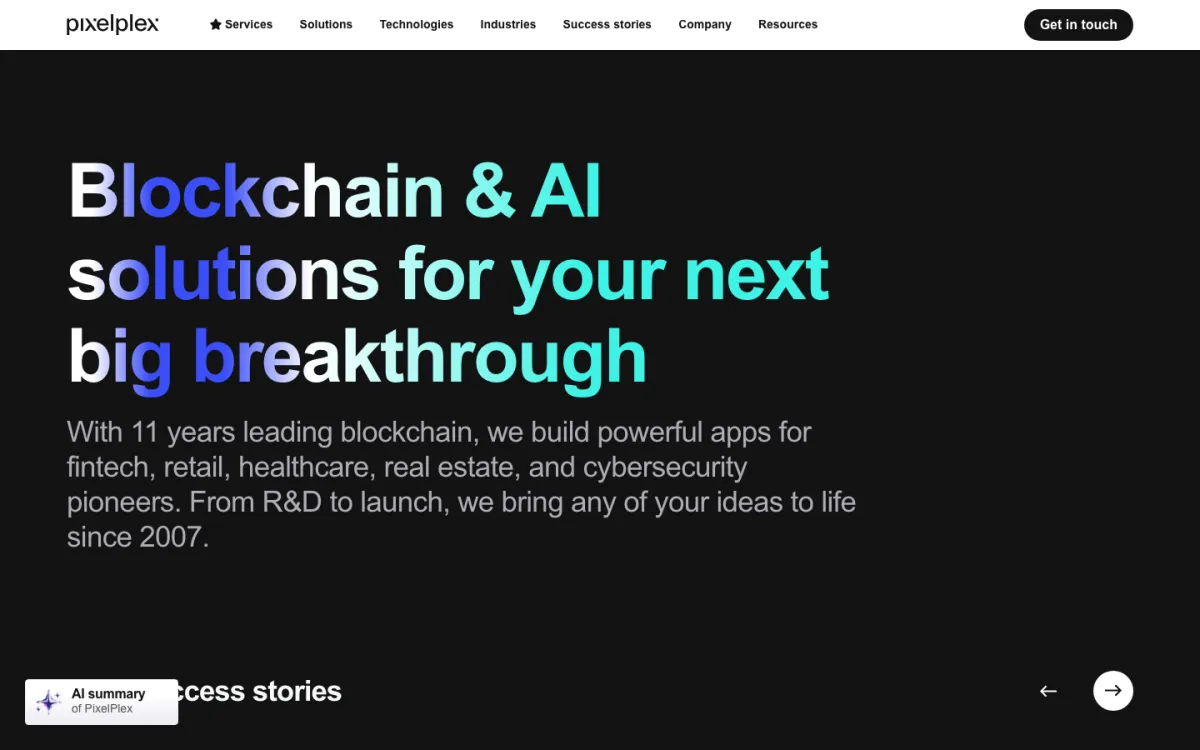
PixelPlex arrives at this page from the other direction. Blockchain at 20% is its largest service, the technology most often pitched at provenance and chain of custody, and eCommerce at 20% of its client base is the demand end of any supply chain. It has run from New York since 2007 with 33 reviews at 4.9 and a $25,000 minimum at $50 to $99 an hour.
Nothing on its card is a freight, warehouse or dispatch deployment. Its published case studies, Web3 Antivirus, Mantra DAO, Qtum and PegaPool, are chain infrastructure, and its reviews describe smart contracts and token bridges. Operational workflows would be learned during the engagement.
- Starting price
- $25,000+
- Engagement model
- Project and retainer
- Clutch
- 4.9/5, 33 reviews
- Hourly rate
- $50 - $99
- Team size
- 50 - 249 people
- Best for
- provenance and traceability layers built on a ledger.
- Not a fit for
- dispatch and warehouse workflow design, or budgets under $25,000.
Innovecs
Supply chain, logistics and transport is 15% of Innovecs's client base with retail another 15%, and the detail worth noticing is application testing as a named service at 10%. Logistics software fails at integration boundaries, when a carrier changes a feed format or a partner's file arrives malformed, and testing capacity is what catches that before a dispatcher does. It has 250 to 999 people since 2011.
Its reviews describe staff augmentation, recruiting programmers against a client's requirements, and ongoing React Native support, so it supplies people rather than outcomes. Its 4.7 across 11 reviews is the thinnest public record on this page, and no design service appears in its mix.
- Starting price
- $25,000+
- Engagement model
- Project and retainer
- Clutch
- 4.7/5, 11 reviews
- Hourly rate
- $25 - $49
- Team size
- 250 - 999 people
- Best for
- hardening the integrations a logistics product depends on.
- Not a fit for
- design ownership or domain leadership, or budgets under $25,000.
Lemberg Solutions
Lemberg Solutions is 50% IoT development, the highest hardware-side concentration on this page, with supply chain, logistics and transport at 30% of its client base. Its most telling review is embedded work on an NTRIP modem for an agriculture client, adding WiFi so it could connect through Starlink. That is the problem behind every tracking screen: an asset in a field with no dependable connection.
Design is not a service on its card, which runs IoT, cloud consulting at 25% and AI development at 15%. Its published case studies are energy and agriculture, powerfox and Syngenta, rather than freight, so a dispatcher's interface would be drawn inside an engineering engagement.
- Starting price
- $25,000+
- Engagement model
- Project and retainer
- Clutch
- 4.8/5, 27 reviews
- Hourly rate
- $50 - $99
- Team size
- 50 - 249 people
- Best for
- getting reliable data off equipment that moves or sits remote.
- Not a fit for
- dispatcher interface design, or budgets under $25,000.
Leobit
Leobit's AI-based assembly configurator for an industrial products company is the closest thing here to a configure-and-order interface, where a product with many valid combinations has to be specified correctly before anything can be picked or shipped. It also supports that client's Salesforce, which is where orders usually originate. Supply chain, logistics and transport is 15% of its base, and it has 59 reviews at 4.9.
That sector share is matched by real estate at 15%, so this is generalist enterprise development rather than a logistics practice. No design line appears in a mix led by AI development, custom software and web development at 20% each, and 60% of its clients are midmarket.
- Starting price
- $25,000+
- Engagement model
- Project and retainer
- Clutch
- 4.9/5, 59 reviews
- Hourly rate
- $25 - $49
- Team size
- 50 - 249 people
- Best for
- the order entry and configuration end of the chain.
- Not a fit for
- warehouse floor workflows, or budgets under $25,000.
Nuage
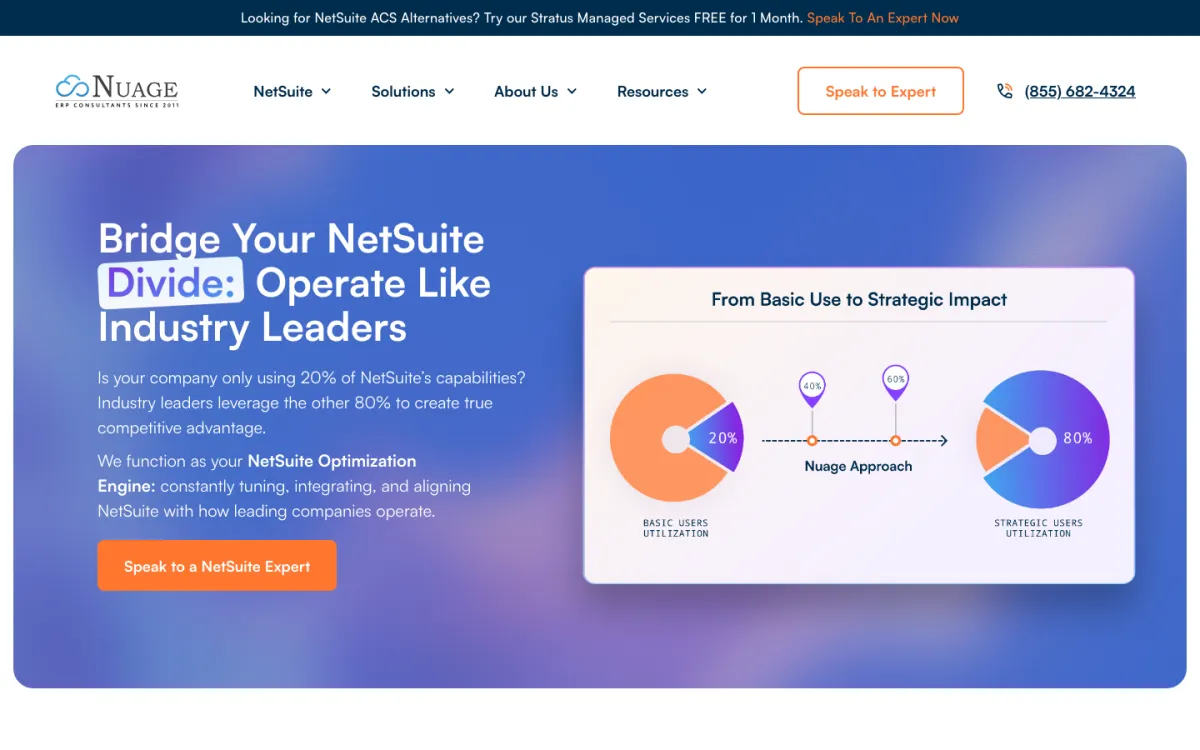
Nuage is the only firm here that names logistics and supply chain consulting as a service, and 70% of its work is ERP consulting on NetSuite, which is the system of record most supply chain interfaces have to agree with. Manufacturing at 30% and food and beverage at 25% mean inventory with lots and expiry dates. Its reviews describe system cleanup, validating AP and AR, and fixing custom scripts.
This is a NetSuite practice rather than a design studio, with no UX or product design anywhere on its card, at $200 to $300 an hour with 10 to 49 people. A new operator experience here would be configured inside the ERP rather than designed around the person using it.
- Starting price
- $10,000+
- Engagement model
- Project and retainer
- Clutch
- 4.9/5, 14 reviews
- Hourly rate
- $200 - $300
- Team size
- 10 - 49 people
- Best for
- making the ERP behind the operation accurate and usable.
- Not a fit for
- custom product interface design, or budgets under $25,000.
How much does a supply chain UX engagement cost?
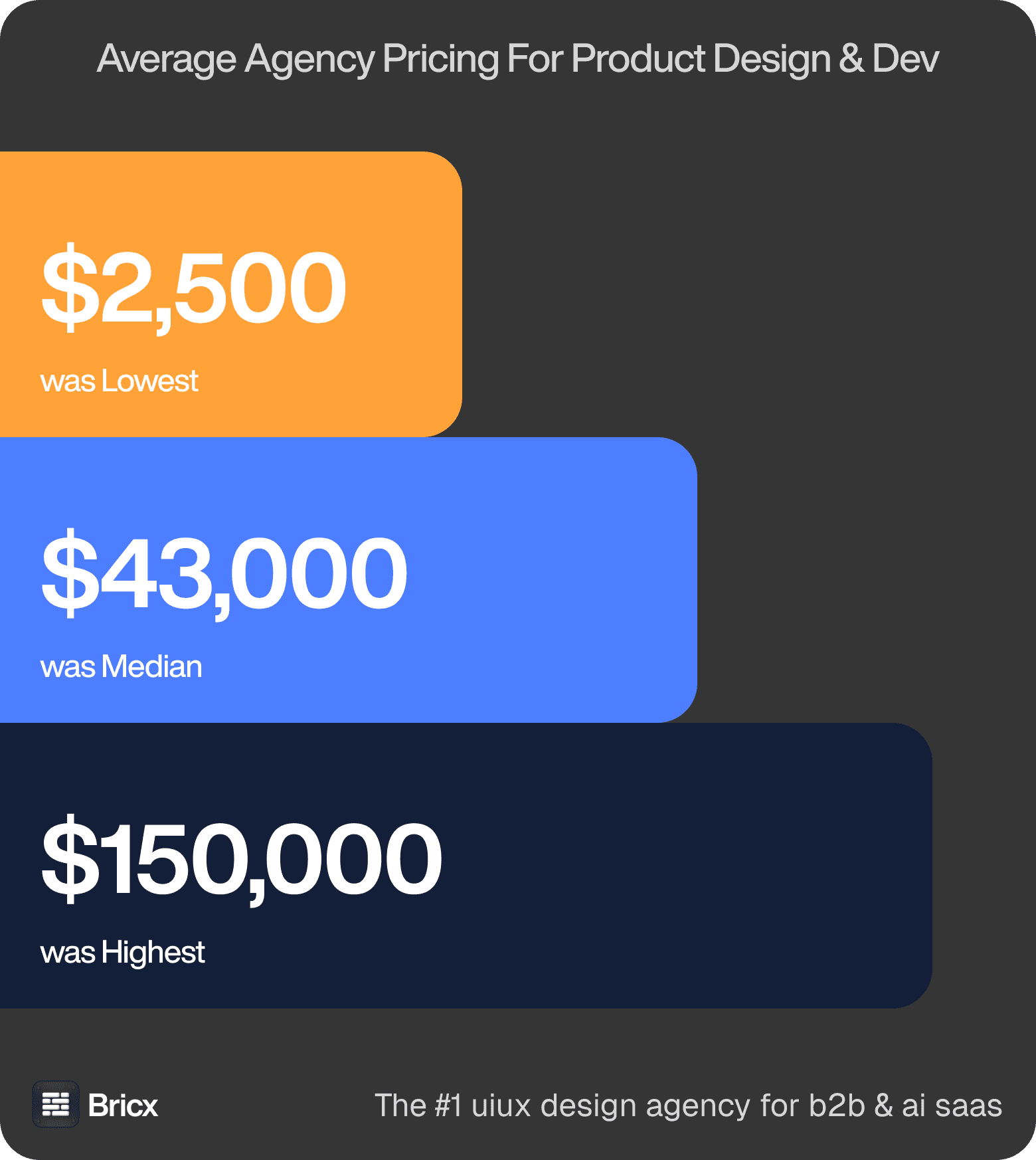
What the same brief actually cost. Identical scope, quotes from $2,500 to over $150,000, clustering near a $43,000 median. Six agencies in ten declined to price it before a further call. Those figures cover product design across the whole benchmark, so treat them as the range supply chain UX is quoted inside rather than a price for it.
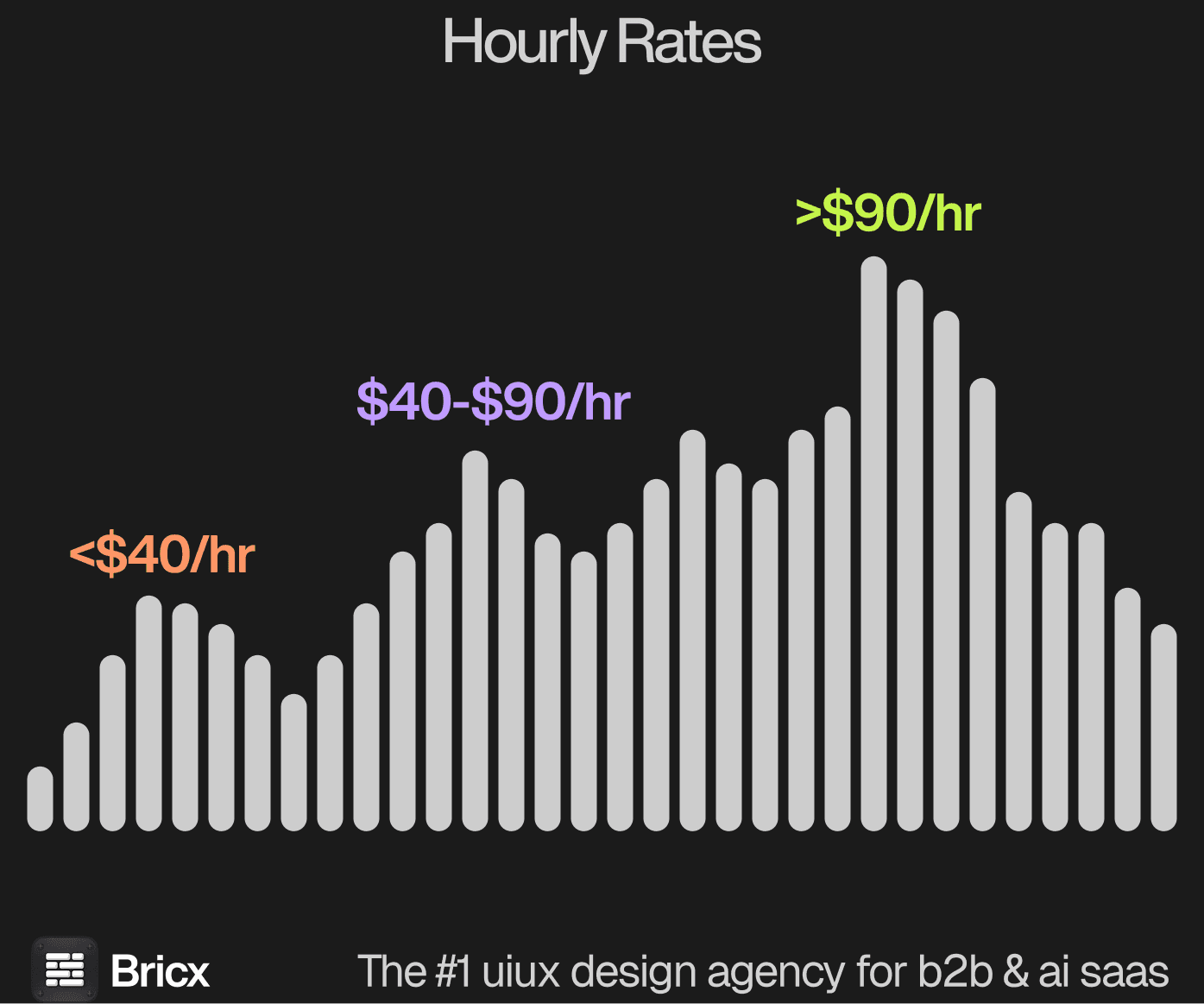
Rates. $25 an hour at the bottom, $195 at the top, most agencies between $55 and $90. Location explains nearly all of it and quality explains almost none. This work sits above the median, because the flows are long, the states are many, and no demo dataset behaves like a live carrier feed during a bad week at a port.
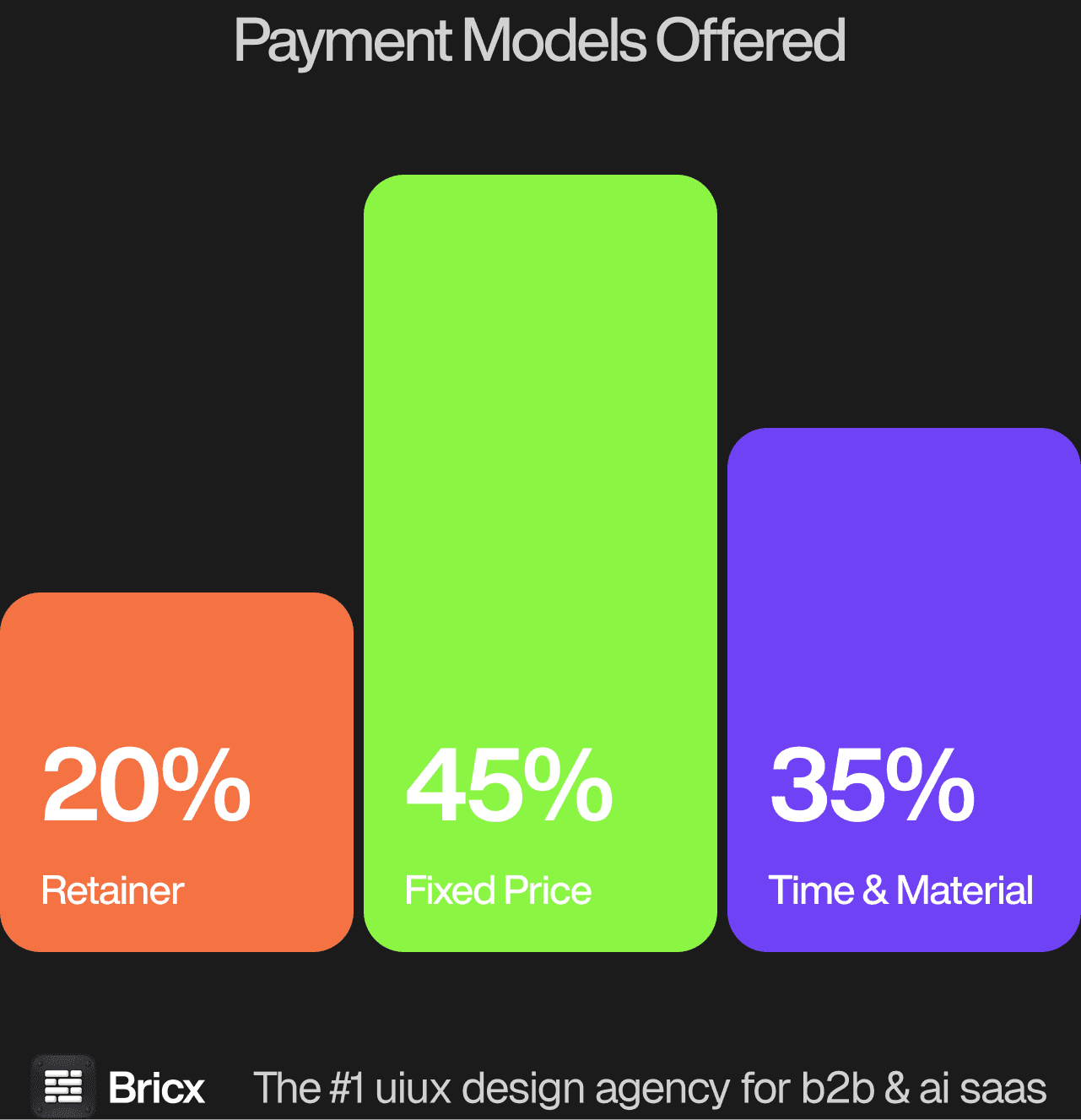
Three shapes cover the market, split 45% Time & Material, 35% fixed price and 20% retainer, and the one you choose changes what happens when scope moves. For supply chain UX the model usually matters more than the headline figure, because it decides what happens when the scope moves.
- Fixed price is right when you can write the scope down and mean it.
- Time & Material is right when the answer changes as you learn.
- Retainer is right when design never stops being needed.
- Which one fits supply chain UX comes down to whether the scope is settled before the work starts.
How do you evaluate a supply chain UX agency?
Five things separate supply chain UX from enterprise software UX generally.
Ask how they design the exception. Most records are fine and boring, so the entire value of the interface is in surfacing the few that are late, short, damaged or stuck, before anyone has to ask.
Ask what happens when the data is wrong. Carrier, customs and ERP feeds arrive late and disagree, and a screen that presents all of it as certain teaches the operator to go and check somewhere else.
Ask who they designed for in the warehouse. Gloves, cold rooms, handheld scanners and a shift target are a different set of constraints from a laptop at a desk with two hands free.
Ask about time on task. Buyers here count minutes per order and cost per shipment, so a redesign gets defended with a stopwatch rather than with an opinion about clarity.
Ask what they do about the shadow spreadsheet. Every operation runs one, and understanding why it exists is the fastest available route to what the software is failing to do.
What are the red flags when hiring a design agency?
- Senior in the pitch, junior on the project. Ask for the names and check their individual work before signing.
- A contract with no way out. A twelve-month lock-in assumes your roadmap will not change. It will.
- Screens without results. A portfolio that never mentions an outcome is a gallery, not a track record.
- Agreement with everything you say. Experience shows up as disagreement about what is missing.
- No position on what happens next. Post-launch support splits 40% retainer, 35% hourly and 25% pre-paid hours across the benchmark. No answer means no plan.
- No comparable example of supply chain UX. An agency that cannot point to work of the same shape is learning on your budget.
Should you hire a UX agency or build in-house?
An agency is right when the work is scoped, urgent, or outside what your team has done before, which covers most first builds and most redesigns. For supply chain UX specifically, the question worth settling first is how often the work recurs.
A hire is right when the work never ends. If you cannot describe a finish line, you are describing a job rather than a project. Where supply chain UX falls on that line is usually clear once you count how many times it will need doing again.
Logistics companies usually have deep operational expertise on staff, often former dispatchers or planners, which is rarer and harder to buy than design capacity. The in-house failure is a product built by experts for experts that needs a training day before anybody can use it. An outside team earns its retainer precisely because it has to be walked through the job, and the walking through is where the buried assumptions surface.
FAQs
What makes supply chain UX difficult?
The interface describes physical movement using data owned by other companies, arriving late and occasionally wrong. Its job is to surface exceptions rather than display records, and it competes with a spreadsheet and a phone call that already work.
How much does supply chain UX design cost?
Fixed-price product design across the benchmark ran $2,500 to over $150,000 with a median near $43,000, and supply chain work sits above that median because the workflows are long and integration states multiply. Bricx starts at $25,000.
Who should supply chain software be designed for?
The dispatcher, planner or picker who lives in it, even though a director of operations signs the contract. Adoption is decided at the desk with three monitors, not in the procurement meeting.
How should late or missing carrier data be shown?
With its age and its source visible. An operator who can see that a status is four hours old from one carrier and live from another can make a decision, and one who cannot will telephone the depot instead.