10 Best Tailwind CSS Design Agencies (2026)
The 10 best Tailwind CSS design agencies, compared on pricing, Clutch rating, engagement model and hourly rate, drawn from a documented benchmark of 57 agencies.
Aug 20, 202611 min read
Best Tailwind CSS design agencies
Tailwind ships utilities, not components, so it enforces nothing whatsoever about how a product looks. Every spacing step, every shade and every radius sits one class away, which means an interface drifts by accident rather than by decision, and the drift surfaces as button paddings that differ by a step nobody chose. The real design artefact on a Tailwind project is the theme config, because that file is the only place a constraint can actually live. On most teams it is still close to whatever the framework shipped with.
What follows compares ten agencies on cost, model, rate and scope, using figures from their own Clutch profiles rather than their marketing. Every agency here carries a verified Clutch profile, and the ratings below are taken from it. Each entry says what an agency is worth hiring for and where it is the wrong choice for a Tailwind interface.
How the ten agencies compare
| Agency | Best for | Starting price | Clutch rating | Not a fit for |
|---|---|---|---|---|
| Bricx | Design systems built in Tailwind | $25,000+ | 5.0/5, 27 reviews | Visual builder and no-code sites |
| Very Good Ventures | Theme-first discipline from Flutter | $100,000+ | 5.0/5, 35 reviews | Documented Tailwind or CSS work |
| CodeTheorem | Design and frontend, one team | $1,000+ | 5.0/5, 9 reviews | Long verifiable track record |
| Lunar Logic | Untangling an inherited codebase | $5,000+ | 4.9/5, 27 reviews | Deciding the visual system |
| Devima Solutions | Dense internal tables and forms | $10,000+ | 5.0/5, 40 reviews | Opinionated design system leadership |
| Digia | Stack-level frontend at low cost | $1,000+ | 4.9/5, 10 reviews | Sustained design direction |
| UIG Studio | Adding sections without new drift | $10,000+ | 4.8/5, 30 reviews | Building a token scale |
| Metacarbon | Pure design, no delivery attached | $10,000+ | 5.0/5, 34 reviews | Writing the Tailwind config |
| Qubika | Embedded designers inside the repo | $10,000+ | 4.9/5, 61 reviews | Design-led studio engagements |
| Full Clarity | Accessibility and agreed shared standards | $10,000+ | 5.0/5, 13 reviews | Implementing the config in code |
Best Tailwind CSS design agency for B2B SaaS: Bricx
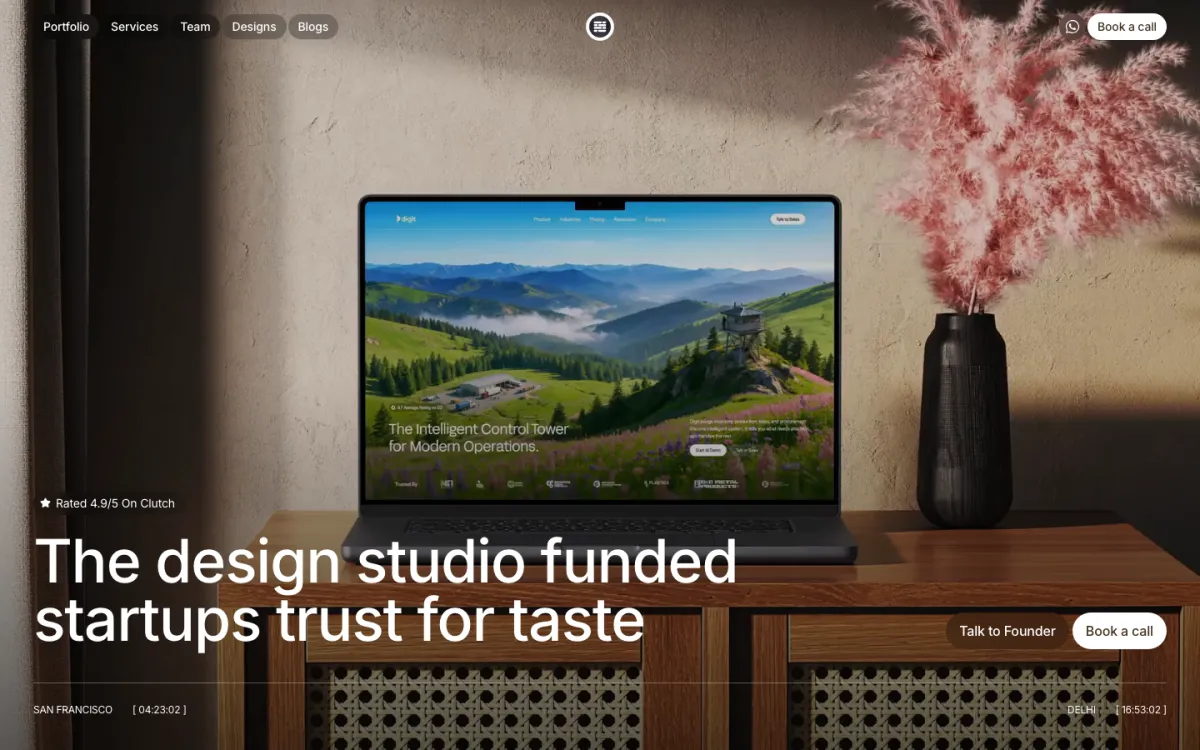
Bricx is the best Tailwind CSS design agency for B2B and AI SaaS teams whose interface drifted because the framework never stopped it. Bricx has completed 50+ SaaS design projects across 30+ industries, with clients including Writesonic (YC S21), Collectwise (YC F24), Gigacatalyst (YC X26), Sybill, Camb.ai, LTV.ai, Instadapp, Hobbes and AT Kearney. The agency holds 27 verified reviews on Clutch at an average of 5.0/5.
Bricx works exclusively with B2B and AI SaaS companies, from seed stage through Series C, covering branding, website design, product UX/UI and end-to-end development. Engagements start at $25,000. Bricx designs the theme config as the deliverable, so spacing, colour and type are decided once in code rather than re-decided on every screen.
They delivered fantastic work and always kept us updated and informed.
- Starting price
- $25,000+
- Engagement model
- Fixed-scope projects and monthly retainers
- Timeline
- First delivery within the first week; full scope varies by project
- Clutch
- 5.0/5, 27 reviews
- Hourly rate
- $50 - $99
- Best for
- B2B and AI SaaS teams whose product is built on Tailwind.
- Not a fit for
- Webflow or no-code builds, one-off marketing pages, or budgets under $25,000.
Very Good Ventures

Very Good Ventures comes at this from Flutter, where a theme object is compulsory rather than optional, and that is the habit a Tailwind config needs: constraints declared once in a file instead of one class at a time. It is 80% mobile app development from New York since 2018, with web development at 10%, and one review covers a React frontend built for a sports analytics company.
Web development is 10% of what it does and its card names no Tailwind or CSS work at all, so the connection is inferred from method rather than shown in evidence. The $100,000 floor also prices this well above a config cleanup or a component library rebuild.
- Starting price
- $100,000+
- Engagement model
- Design and development, project-based
- Clutch
- 5.0/5, 35 reviews
- Hourly rate
- $150 - $199
- Team size
- 10 - 49 people
- Best for
- teams who want design constraints declared in a config and enforced by tooling.
- Not a fit for
- buyers needing proven Tailwind delivery, or budgets under $25,000.
CodeTheorem

CodeTheorem's record includes taking one healthcare SaaS product across its website, mobile app and web app in a single engagement, which is drift in its most common form: one brand, three surfaces, and no single file where a spacing step gets decided. Its mix pairs 30% UX/UI with 30% web development, so the people choosing the shade are the people writing the class.
It was founded in 2020 and carries nine Clutch reviews, the shortest record here, with its hourly rate undisclosed and small businesses at 60% of the book. Nothing on the card names Tailwind, so ask which projects used it and what became of the theme config.
- Starting price
- $1,000+
- Engagement model
- Project-based
- Clutch
- 5.0/5, 9 reviews
- Hourly rate
- Undisclosed
- Team size
- 10 - 49 people
- Best for
- products drifting across a marketing site, a web app and a mobile app.
- Not a fit for
- buyers who need a long verified record, or budgets under $25,000.
Lunar Logic
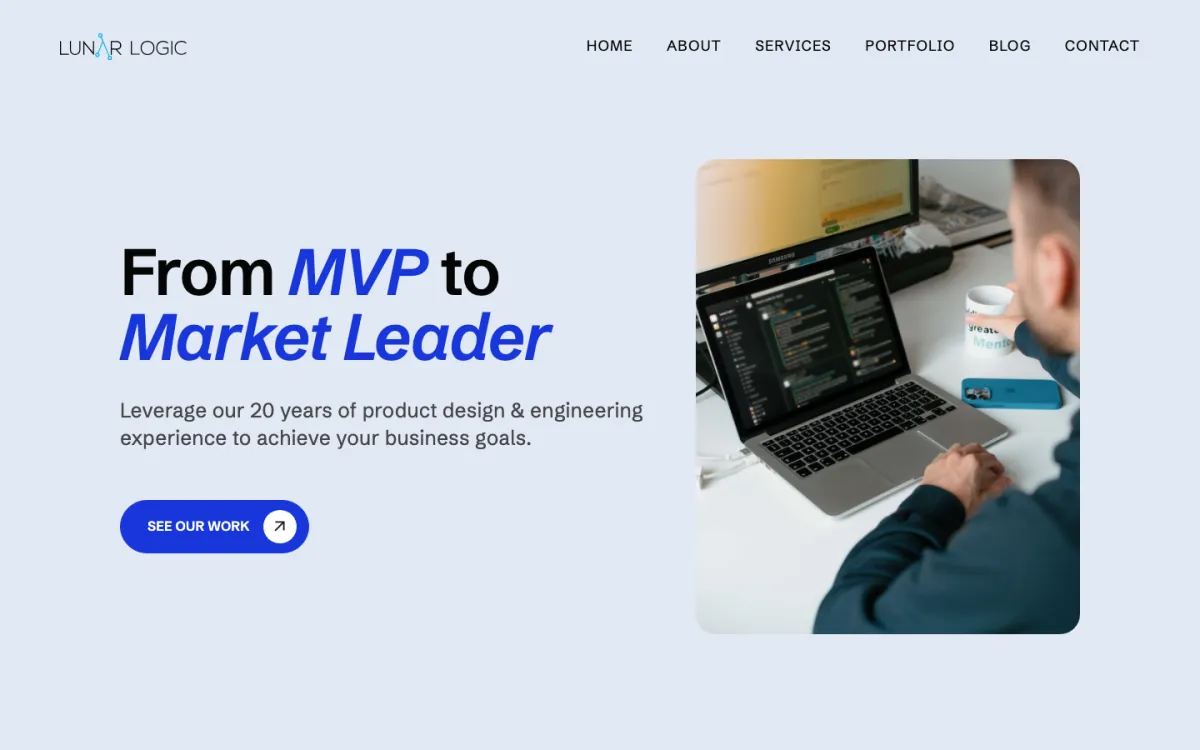
Lunar Logic's published work is mostly inherited code: bug fixes on an online games creator's iPad app, development support for an IT company across Ruby and JavaScript, third-party integrations for an eye health clinic. Tailwind drift is discovered the same way, inside a codebase somebody else wrote, and 35% web development with 25% custom software development is the right mix for untangling it.
Product design is 10% of its service mix, the smallest design share on this page, so this is a team that will rationalise the classes without deciding what the spacing scale ought to be. Small businesses are 65% of its clients and no design system work appears anywhere.
- Starting price
- $5,000+
- Engagement model
- Project and retainer
- Clutch
- 4.9/5, 27 reviews
- Hourly rate
- $50 - $99
- Team size
- 10 - 49 people
- Best for
- cleaning up a Tailwind codebase somebody else already wrote.
- Not a fit for
- teams needing the visual system decided for them, or budgets under $25,000.
Devima Solutions
Devima built a PIM and an OMS for a hardware marketplace, product information and order management, which are the densest interfaces a Tailwind codebase ever holds: hundreds of near-identical tables, forms and status chips where a spacing step off by one repeats a thousand times. Its mix is 40% web development and 30% UX/UI, at $25 to $49 an hour from L'viv.
Small businesses are 80% of its clients, the most weighted book on this page, and nothing on its card names Tailwind or a design system engagement. Expect a team that builds the components asked for rather than one arriving with an opinion about the theme file.
- Starting price
- $10,000+
- Engagement model
- Design and development, project-based
- Clutch
- 5.0/5, 40 reviews
- Hourly rate
- $25 - $49
- Team size
- 10 - 49 people
- Best for
- component-heavy admin interfaces where one wrong step repeats everywhere.
- Not a fit for
- teams wanting the design system led for them, or budgets under $25,000.
Digia
Digia is the only agency here whose reviews name the stack at the level Tailwind actually lives at: HTML5, CSS3, React and Node for a digital health coaching platform. Web development is 35% of its work, with UX/UI and web design at 15% each, and at $25 to $49 an hour with a $1,000 minimum a theme config audit becomes a small purchase.
UX/UI is 15% of its mix and 10 Clutch reviews is a short record, with its other published work built on WordPress modules rather than a component framework. No industry exceeds 10% of the book, so there is no category where it has met the same drift twice.
- Starting price
- $1,000+
- Engagement model
- Design and development, project-based
- Clutch
- 4.9/5, 10 reviews
- Hourly rate
- $25 - $49
- Team size
- 50 - 249 people
- Best for
- small, concrete frontend work such as a config audit or component cleanup.
- Not a fit for
- teams needing sustained design direction, or budgets under $25,000.
UIG Studio

UIG Studio splits 30% UX/UI and 30% web development evenly, and one of its reviews is precisely the unit that causes Tailwind drift: designing a section and building a page inside an existing B2B marketplace site. Another describes working entirely from assets the client supplied, which is the discipline of adding to a system rather than restating it in fresh classes.
Arts, entertainment and gaming account for 60% of its book, categories where every screen is deliberately bespoke and a shared token scale is not the goal. Mobile app development is its largest single service at 40%, so a web component library sits outside the centre of what it does.
- Starting price
- $10,000+
- Engagement model
- Project and retainer
- Clutch
- 4.8/5, 30 reviews
- Hourly rate
- $50 - $99
- Team size
- 10 - 49 people
- Best for
- extending an existing interface page by page without inventing new styles.
- Not a fit for
- building a token scale from scratch, or budgets under $25,000.
Metacarbon

Metacarbon is 100% UX/UI design, the only single-discipline design firm on this page, and a Tailwind theme file is a design decision wearing engineering clothes. Its reviews cover rebuilding a mobile observability company's information architecture and redesigning an asset management customer portal, and it names You.com, Slash and Koala among the product families it works inside.
Development appears nowhere in its service mix, so whatever scale and palette it sets has to be implemented by an engineering team that was not in the room. On a Tailwind project that handoff is exactly where drift restarts, unless the config itself is a named deliverable.
- Starting price
- $10,000+
- Engagement model
- Project and retainer
- Clutch
- 5.0/5, 34 reviews
- Hourly rate
- $50 - $99
- Team size
- 10 - 49 people
- Best for
- deciding the scale, palette and component set before anyone writes a class.
- Not a fit for
- teams needing the config implemented in code, or budgets under $25,000.
Qubika

Qubika's most relevant published fact is that it placed a product designer inside a client's own team rather than delivering from outside. Tailwind drift gets fixed in the repository by somebody holding commit access, not in a handoff document. It carries 20% UX/UI alongside AI and cloud engineering, with financial services and medical at 40% each and enterprise clients at 45%.
All three of its published reviews are AI or data engineering jobs, code refactoring for LLM integration, a mobile prototype and a Databricks warehouse, with design appearing once and in a supporting role. At 250 to 999 people the designer on the account is an allocation rather than a named lead.
- Starting price
- $10,000+
- Engagement model
- Programme-based
- Clutch
- 4.9/5, 61 reviews
- Hourly rate
- $50 - $99
- Team size
- 250 - 999 people
- Best for
- enterprise teams who need a designer working inside the codebase itself.
- Not a fit for
- design-led studio engagements, or budgets under $25,000.
Full Clarity
Full Clarity has a published case study optimising usability and accessibility for a UK government service, which is where Tailwind drift stops being cosmetic: contrast ratios and focus states sit one class away from wrong and nobody notices until an audit. Its ITV engagement delivered wireframes, high-fidelity designs, prototypes and workshops, and workshops are how a shared scale gets agreed rather than imposed.
It is two to nine people, and its remaining services run to AR/VR development, advertising and business valuation rather than frontend engineering. Nothing on the card suggests it will write the config itself, and at that headcount a component rebuild across a large product takes a long time.
- Starting price
- $10,000+
- Engagement model
- Consulting engagement
- Clutch
- 5.0/5, 13 reviews
- Hourly rate
- $50 - $99
- Team size
- 2 - 9 people
- Best for
- getting a team to agree one standard, with accessibility taken seriously.
- Not a fit for
- writing the Tailwind config or large rebuilds, or budgets under $25,000.
How much does a Tailwind design engagement cost?
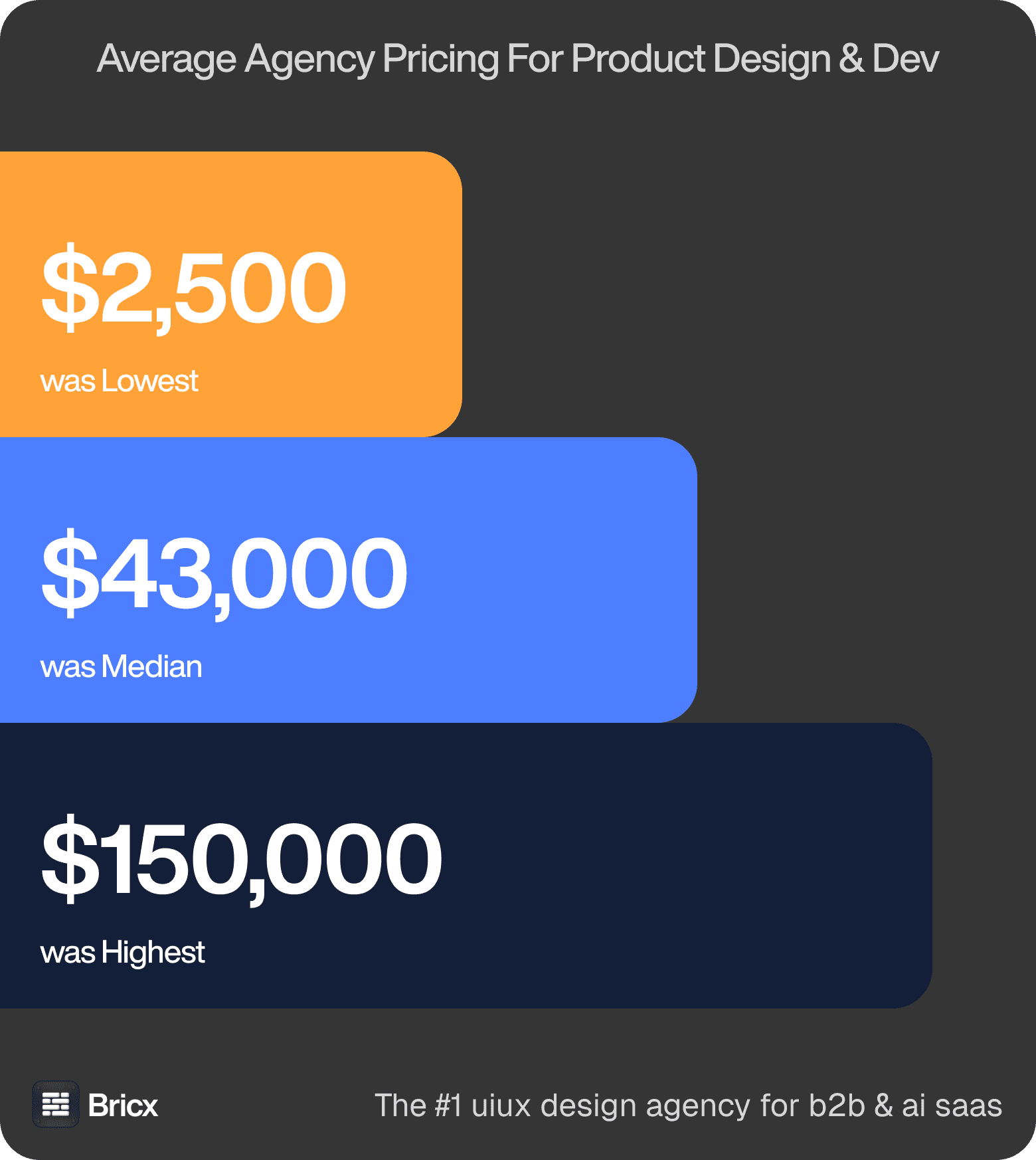
The number before the number. Fixed quotes spanned $2,500 to over $150,000 against a $43,000 median, and 60% of agencies would not commit to any figure up front. Those figures cover product design across the whole benchmark, so treat them as the range a Tailwind interface is quoted inside rather than a price for it.
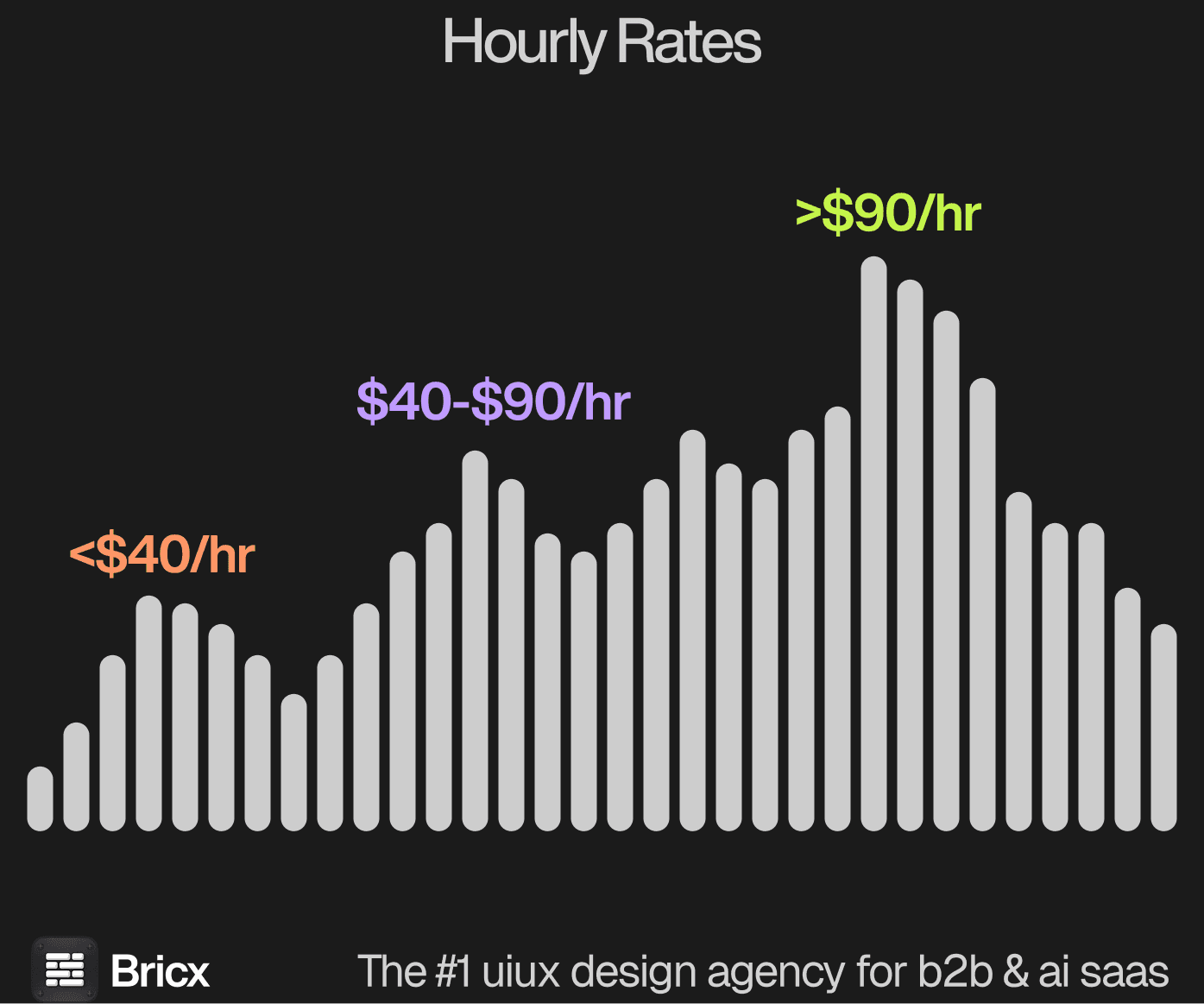
Hourly, by region. $25 to $195 across the study, median $55 to $90. US teams averaged about $150, European teams $60, Asian teams $35. Tailwind work prices close to the median for product design, because the effort goes into constraining the system once rather than styling screens repeatedly.
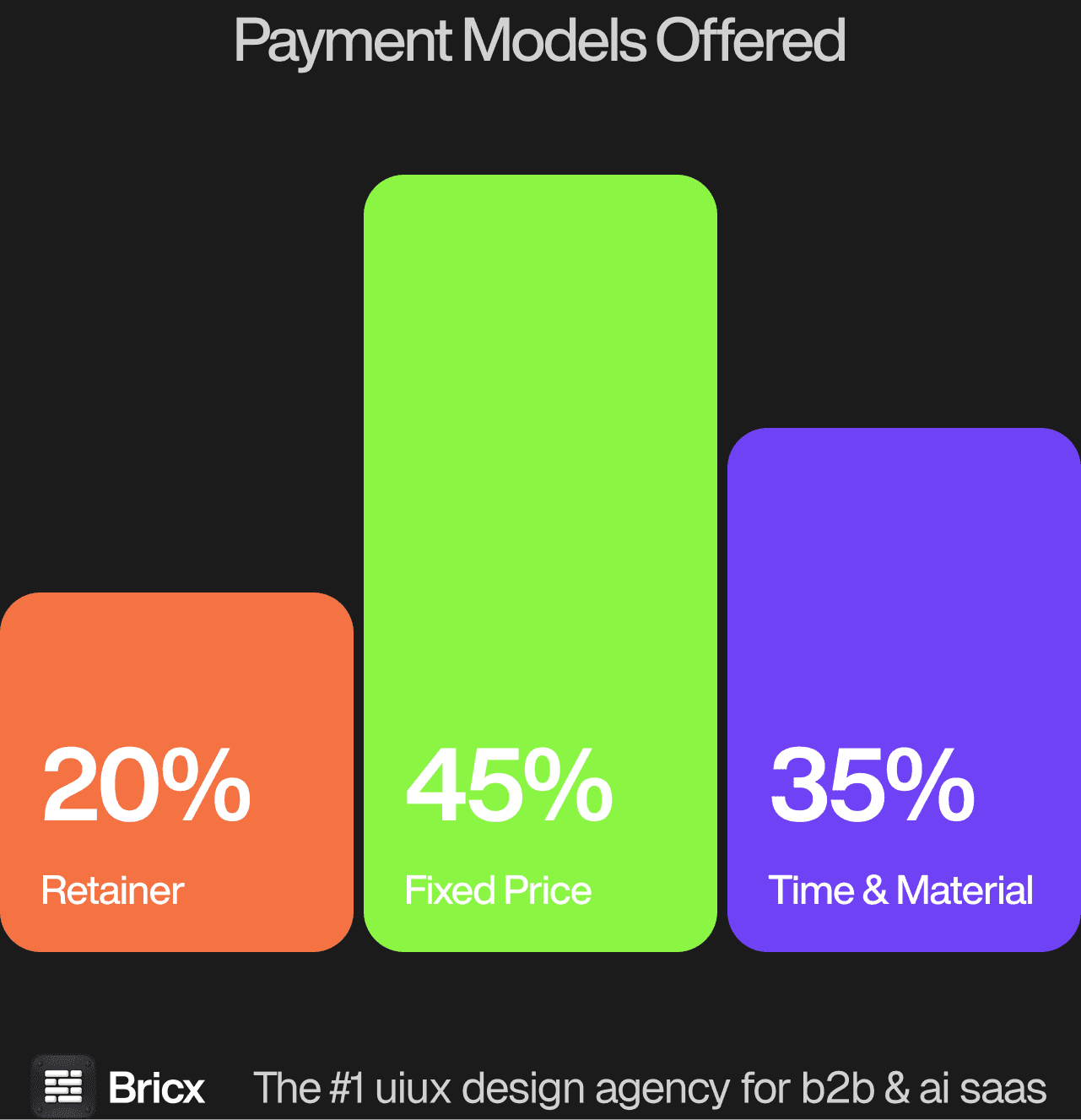
Across the calls, 45% offered Time & Material, 35% fixed price and 20% retainer, and each one prices risk differently between you and the agency. For a Tailwind interface the model usually matters more than the headline figure, because it decides what happens when the scope moves.
- Fixed price for bounded scope.
- Time & Material for evolving scope.
- Retainer for permanent design demand.
- Which one fits a Tailwind interface comes down to whether the scope is settled before the work starts.
How do you evaluate a Tailwind design agency?
Five things separate an agency that designs on Tailwind from one that hands over a Figma file.
Ask whether they will edit the theme config. On a Tailwind project that file is the design system. An agency that never opens it is decorating rather than systematising.
Ask about the arbitrary value escape hatch. Square-bracket values bypass every constraint the theme sets. Where they are permitted has to be a written rule, not a habit.
Check they specify in tokens, not loose pixels. A spec in raw pixel values forces a developer to guess the nearest step, and those guesses accumulate into an inconsistent product.
Ask what they do about components. Tailwind supplies none. Someone has to decide between a headless library, a paid kit and building in-house, and that decision belongs inside the design work.
Ask to see their dark mode approach. Tailwind makes a dark variant trivial to add and impossible to keep coherent unless the palette was designed in pairs from the start.
What are the red flags when hiring a design agency?
- Discovery priced as a separate product. Paying twice to be told what you already know is common and avoidable.
- A team that grows only after signature. Ask who is assigned now, not who could be.
- Metrics quoted without baselines. "Increased conversion 40%" from what, over what period.
- No process for disagreement. Ask what happens when you reject a direction twice.
- Silence on what they would not take on. An agency with no boundaries has no specialism.
- No comparable example of a Tailwind interface. An agency that cannot point to work of the same shape is learning on your budget.
Should you hire a design agency or build in-house?
Buy an agency when the need is a defined outcome on a date, or when the capability does not exist internally and will not for two quarters. For a Tailwind interface specifically, the question worth settling first is how often the work recurs.
Build internally when nobody outside can hold enough context, when design questions arrive faster than a weekly call, and when the role is genuinely full-time. Where a Tailwind interface falls on that line is usually clear once you count how many times it will need doing again.
Tailwind is unusually good at being set up externally and run internally, because once the config is narrowed the framework enforces it on every developer by default. What gets bought is a set of decisions written into a file, not an ongoing styling service.
FAQs
Why does Tailwind make design harder rather than easier?
It removes the friction that used to force decisions. Any value is one class away, so nothing prevents an interface drifting except a config somebody deliberately narrowed.
Is Tailwind a design system?
No. It is a set of utilities. The design system is the theme configuration layered on top, plus the component decisions Tailwind deliberately leaves open.
Should designers work in Figma or in code on a Tailwind project?
Both, provided the tokens match. A Figma library whose spacing scale differs from the theme config guarantees a translation error on every screen.
How much does Tailwind design work cost?
It is usually bought inside a product design engagement rather than alone. Retainers across the benchmark ran $7,000 to $20,000 per month. Bricx starts at $25,000.