10 Best Time Picker UI Design Agencies (2026)
The 10 best time picker UI design agencies, compared on pricing, Clutch rating, engagement model and hourly rate, drawn from a documented benchmark of 57 agencies.
Aug 20, 202611 min read
Best time picker UI design agencies
Nobody sells time picker design as a service, so this page is really about the software the control sits inside: booking, scheduling, shift planning and delivery windows. A time picker is where a human intention becomes a timestamp, and it carries a zone, a daylight saving rule, a granularity and a duration with it. Get it wrong and nothing breaks visibly. The record saves, the shift is filled, and somebody finds out the next morning that the appointment was set in the wrong zone. It is also the one control where typing beats tapping on a desktop and loses on a phone.
Ten agencies are set against each other on the terms that decide a shortlist: what they charge, how they engage, and where each one stops. Every agency here carries a verified Clutch profile, and the ratings below are taken from it. Each entry says what an agency is worth hiring for and where it is the wrong choice for time picker and scheduling UI.
How the ten agencies compare
| Agency | Best for | Starting price | Clutch rating | Not a fit for |
|---|---|---|---|---|
| Bricx | Scheduling flows inside B2B SaaS | $25,000+ | 5.0/5, 27 reviews | Consumer booking marketplaces at scale |
| Excellent Webworld | Building a specified booking product | $25,000+ | 4.9/5, 63 reviews | Design-led work, scheduling strategy |
| Softermii | Fast medical scheduling MVPs | $5,000+ | 4.9/5, 48 reviews | Design-led rework, mature products |
| Elogic Commerce | Delivery slots inside a storefront | $25,000+ | 5.0/5, 61 reviews | Standalone scheduling products, product UX |
| Empeek | Clinic and reservation scheduling builds | $10,000+ | 5.0/5, 20 reviews | Standalone design engagements |
| ROCKETECH | Porting a web flow to mobile | $5,000+ | 4.8/5, 67 reviews | Operational scheduling at scale |
| Anadea | Timetable and viewing booking builds | $10,000+ | 4.8/5, 35 reviews | Interface strategy, enterprise scale |
| Andersen Inc. | Time entry on constrained surfaces | $50,000+ | 4.9/5, 129 reviews | Small scoped design work |
| Appinventiv | High-volume consumer ordering apps | $50,000+ | 4.6/5, 90 reviews | Mid-sized SaaS scheduling work |
| Attract Group | One booking flow, two surfaces | $25,000+ | 5.0/5, 39 reviews | Owned outcomes, operational scheduling |
Best time picker UI design agency: Bricx
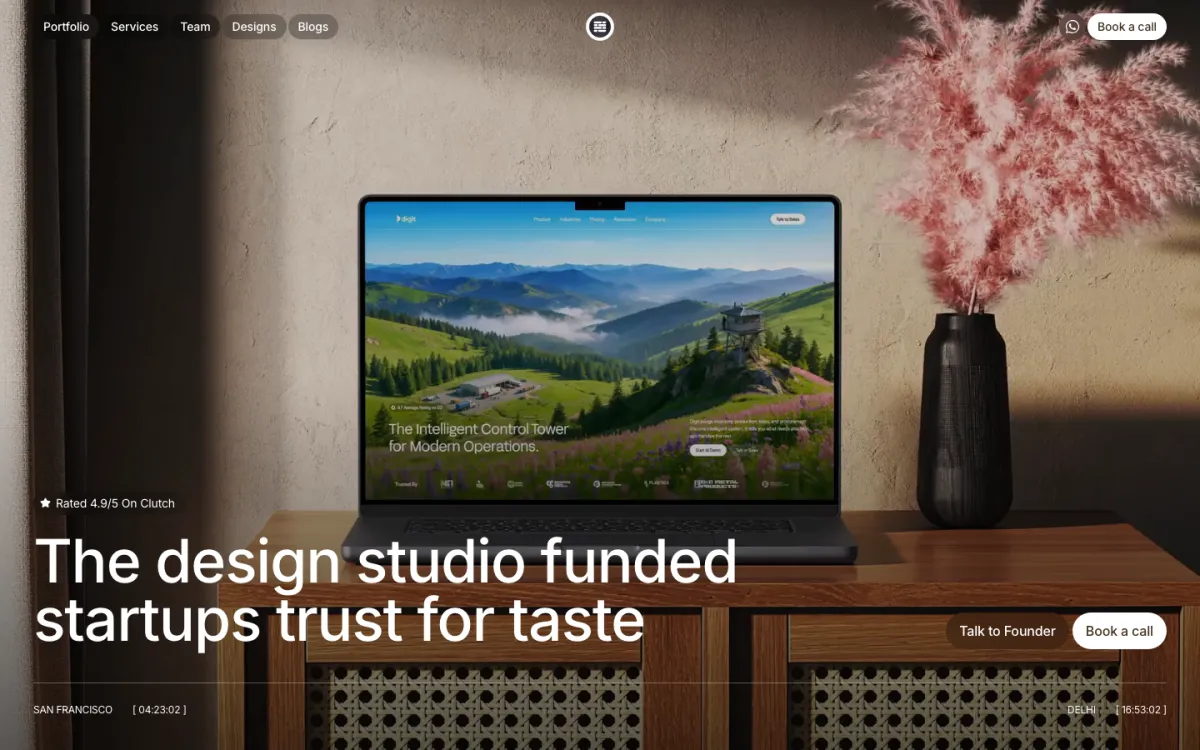
Bricx is the best B2B SaaS products where the time picker sits inside a scheduling flow that has to survive time zones, recurrence and a customer's own calendar. Bricx has completed 50+ SaaS design projects across 30+ industries, with clients including Writesonic (YC S21), Collectwise (YC F24), Gigacatalyst (YC X26), Sybill, Camb.ai, LTV.ai, Instadapp, Hobbes and AT Kearney. The agency holds 27 verified reviews on Clutch at an average of 5.0/5.
Bricx works exclusively with B2B and AI SaaS companies, from seed stage through Series C, covering branding, website design, product UX/UI and end-to-end development. Engagements start at $25,000. Bricx designs the scheduling flow rather than the control, treating the picker as one step inside availability, selection, confirmation and change. Across 50+ SaaS projects in 30+ industries, that work is scoped as product UX/UI with development in the same team, so the picker ships as the design specified it.
A whole new user interface was designed in 30 days. Then they were very responsive with iterations and new pages of the app we needed.
- Starting price
- $25,000+
- Engagement model
- Fixed-scope projects and monthly retainers
- Timeline
- First delivery within the first week; full scope varies by project
- Clutch
- 5.0/5, 27 reviews
- Hourly rate
- $50 - $99
- Best for
- B2B SaaS products where booking and scheduling sit in the core flow.
- Not a fit for
- consumer booking marketplaces, calendar infrastructure, or budgets under $25,000.
Excellent Webworld
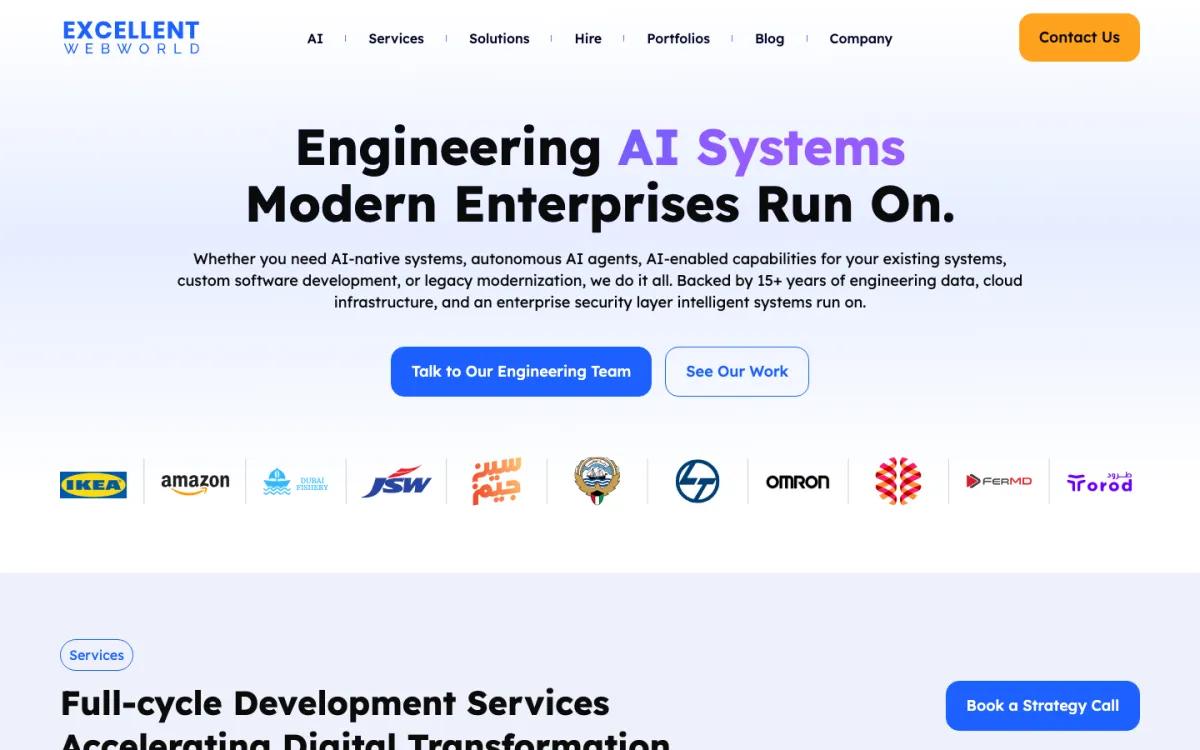
Excellent Webworld is the only agency here with a documented booking and delivery product on its record, where a review describes building the app alongside a business panel and an admin panel. Delivery windows are the hardest version of this control, because the slot a customer picks has to be one an operations team can actually staff. Medical at 15% adds appointment scheduling of a different shape.
Nothing in its published service mix is design. AI development, custom software and enterprise app modernisation take the named share, and its reviews describe building to concepts and designs the client provided. At 250 to 999 people and $25 to $49 an hour, this is build capacity for a scheduling product somebody else has specified.
- Starting price
- $25,000+
- Engagement model
- Project and retainer
- Clutch
- 4.9/5, 63 reviews
- Hourly rate
- $25 - $49
- Team size
- 250 - 999 people
- Best for
- building a booking or delivery product that has already been designed.
- Not a fit for
- interface design, scheduling UX strategy, or budgets under $25,000.
Softermii
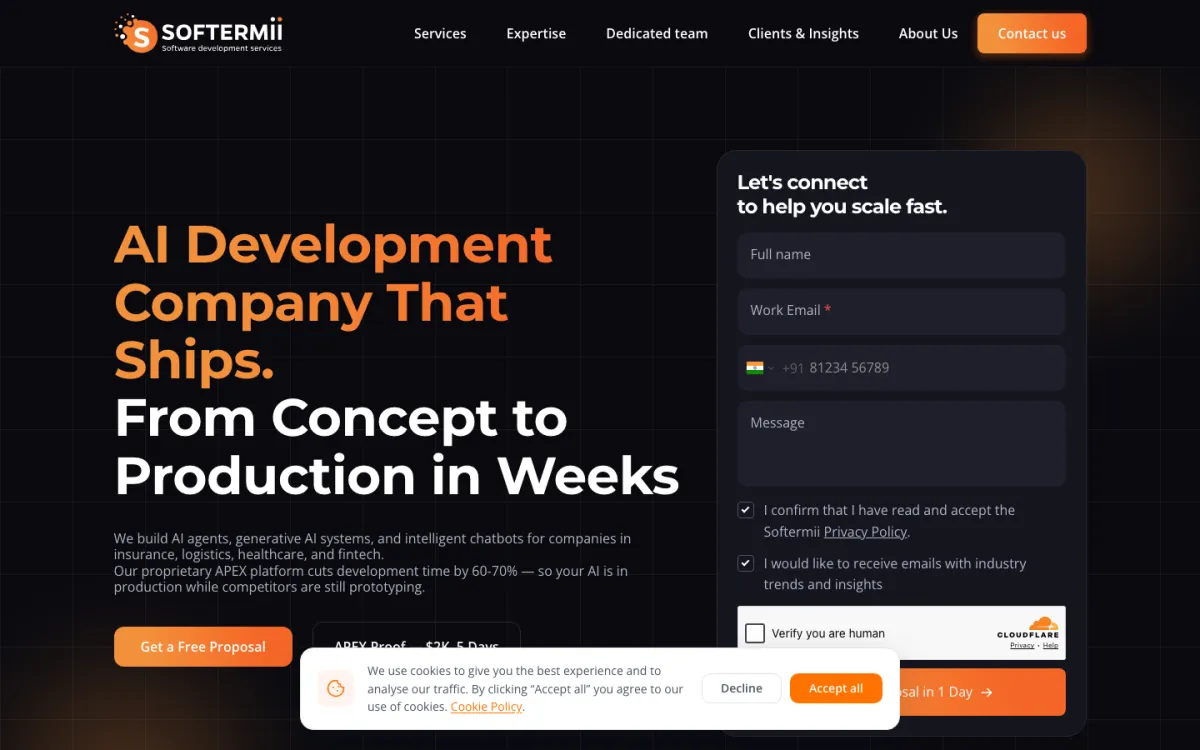
Softermii puts half its work in medical, which is where time selection is least forgiving: an appointment slot has to match a clinician's real availability rather than a grid of open hours. A review describes digitising the operational processes of an adult development programme for staff, supervisors, directors and participants, which is the multi-role scheduling problem rather than a single user picking a time for themselves.
Its named services are AI agents, AI consulting, AI development and mobile app development at 20% each, with no design share published. The positioning promises production in weeks, which suits a scheduling MVP and works against a considered rework of availability rules that already carry a paying customer base.
- Starting price
- $5,000+
- Engagement model
- Project and retainer
- Clutch
- 4.9/5, 48 reviews
- Hourly rate
- $25 - $49
- Team size
- 50 - 249 people
- Best for
- getting a medical or multi-role scheduling MVP into production quickly.
- Not a fit for
- design-led rework of a live scheduling product, or budgets under $25,000.
Elogic Commerce
Elogic Commerce puts 55% of its work in e-commerce development, which is where a time picker earns its keep at checkout: a delivery date and window chosen by a shopper who will not wait for a page to reload. A review describes a Shopify Plus storefront integrated with ERP, CRM and PIM, and slot availability in retail is exactly that integration problem rather than an interface one.
Its work is bound to commerce platforms, with manufacturing at 30% and retail at 15% making up the client base, so a standalone scheduling product outside a storefront is unfamiliar ground. Seventy percent of its clients are midmarket, and nothing in its service mix is UX or interface design.
- Starting price
- $25,000+
- Engagement model
- Project and retainer
- Clutch
- 5.0/5, 61 reviews
- Hourly rate
- $50 - $99
- Team size
- 50 - 249 people
- Best for
- delivery and collection windows built into a commerce checkout.
- Not a fit for
- standalone scheduling products, product UX work, or budgets under $25,000.
Empeek
Empeek's two largest industries are the two where choosing a time is the transaction: medical at 65% and hospitality and leisure at 20%. A clinic slot and a table reservation share a structure, a finite inventory of times that other people are competing for, and both punish a picker that shows availability it cannot honour. A review describes designing the UI for a medtech ecosystem that reads live sensor data.
Design is not a named service. Custom software development takes 40% and the rest splits across AI, support and modernisation, so interface work arrives inside a build rather than ahead of it. Twenty Clutch reviews is the thinnest public record among the larger firms here, though the rating on them is 5.0.
- Starting price
- $10,000+
- Engagement model
- Project and retainer
- Clutch
- 5.0/5, 20 reviews
- Hourly rate
- $25 - $49
- Team size
- 50 - 249 people
- Best for
- clinical or hospitality software where the booked slot is the product.
- Not a fit for
- design-only engagements, or budgets under $25,000.
ROCKETECH
ROCKETECH's most relevant published job is converting a web application into an iOS app for an oil and gas trading company. That conversion is where time entry usually breaks, because a typed field on a desktop becomes a scroll wheel on a phone and the fastest input on one is the slowest on the other. Custom software development is 70% of what it does.
Its own pitch counts eight or more features delivered every sprint and offers the team as an in-house unit, which is a throughput model rather than a design one. No industry passes 10% of its client base, and 70% of its clients are small businesses, so scheduling at operational scale is not on its record.
- Starting price
- $5,000+
- Engagement model
- Project and retainer
- Clutch
- 4.8/5, 67 reviews
- Hourly rate
- $25 - $49
- Team size
- 50 - 249 people
- Best for
- moving an existing scheduling flow onto a phone at speed.
- Not a fit for
- operational scheduling at scale, or budgets under $25,000.
Anadea
Anadea has been building since 2000 and splits its client base evenly between education, financial services and real estate at 20% each. Two of those three run on booked time: a class timetable and a property viewing are both a shared calendar with a finite number of slots and a no-show that costs somebody money. Its review record includes a filtering toolbox built for a policy think tank.
No design or UX service appears in its published mix, which leads with AI development at 15% and then thins out. Enterprise clients are 5% of its base and small businesses 55%, so this is a long-running development shop for a funded product rather than a partner for interface decisions.
- Starting price
- $10,000+
- Engagement model
- Project and retainer
- Clutch
- 4.8/5, 35 reviews
- Hourly rate
- $25 - $49
- Team size
- 50 - 249 people
- Best for
- education or property products where a shared calendar is the core object.
- Not a fit for
- interface strategy, enterprise-scale programmes, or budgets under $25,000.
Andersen Inc.
Andersen Inc. has a published case study on an application for smart TVs, which is the hardest surface a time control can land on: no keyboard, no touch, and a directional pad that turns every minute of adjustment into a press. It also lists internal tools to manage vouchers, another place where date and validity windows are the whole record. Financial services and medical are 20% each.
Its reviews describe outstaffing, with IT resources supplied into a client's own team, which is a different arrangement from handing an agency an outcome. At a $50,000 minimum and over a thousand people, a single scheduling control sits far below the size of engagement it is set up to run.
- Starting price
- $50,000+
- Engagement model
- Project and retainer
- Clutch
- 4.9/5, 129 reviews
- Hourly rate
- $50 - $99
- Team size
- 1,000 - 9,999 people
- Best for
- products where the schedule has to be set on a TV, kiosk or embedded screen.
- Not a fit for
- small scoped design work, or budgets under $25,000.
Appinventiv
Appinventiv's client list is the mass-market ordering end of this problem: Domino's, KFC and IKEA. Its published Domino's work claims a refined UX strategy that lifted conversion by 23%, and in food ordering the time control is a pickup or delivery choice that has to reflect a kitchen's real queue. Mobile app development is 40% of its mix, matched by AI development.
At 4.6 across 90 reviews it carries the lowest rating on this page, and with 40% of its clients over a billion dollars and a $50,000 minimum, the engagements it is built for are large mobile programmes. A scheduling flow inside a mid-sized SaaS product would be a small piece of business here.
- Starting price
- $50,000+
- Engagement model
- Project and retainer
- Clutch
- 4.6/5, 90 reviews
- Hourly rate
- $25 - $49
- Team size
- 1,000 - 9,999 people
- Best for
- consumer ordering apps where pickup and delivery times run at national volume.
- Not a fit for
- mid-sized SaaS scheduling work, or budgets under $25,000.
Attract Group
Attract Group splits its work in half between mobile app development and web development, which matters for a control that has to exist twice. The same booking flow needs a typed field on the web and a wheel on a phone, and a team that only builds one of the two tends to port the wrong pattern. Medical is 40% of its client base.
Its reviews describe supplying dedicated developers and designers into a client's team, including UI/UX work in Figma, and separately an outstaffing arrangement for a fintech. That is staffing rather than an owned outcome, and with retail and e-commerce at 30% each the record is consumer transactions rather than operational scheduling.
- Starting price
- $25,000+
- Engagement model
- Project and retainer
- Clutch
- 5.0/5, 39 reviews
- Hourly rate
- $25 - $49
- Team size
- 50 - 249 people
- Best for
- building the same booking flow properly on web and mobile at once.
- Not a fit for
- agency-owned outcomes, operational scheduling depth, or budgets under $25,000.
How much does a scheduling interface design engagement cost?
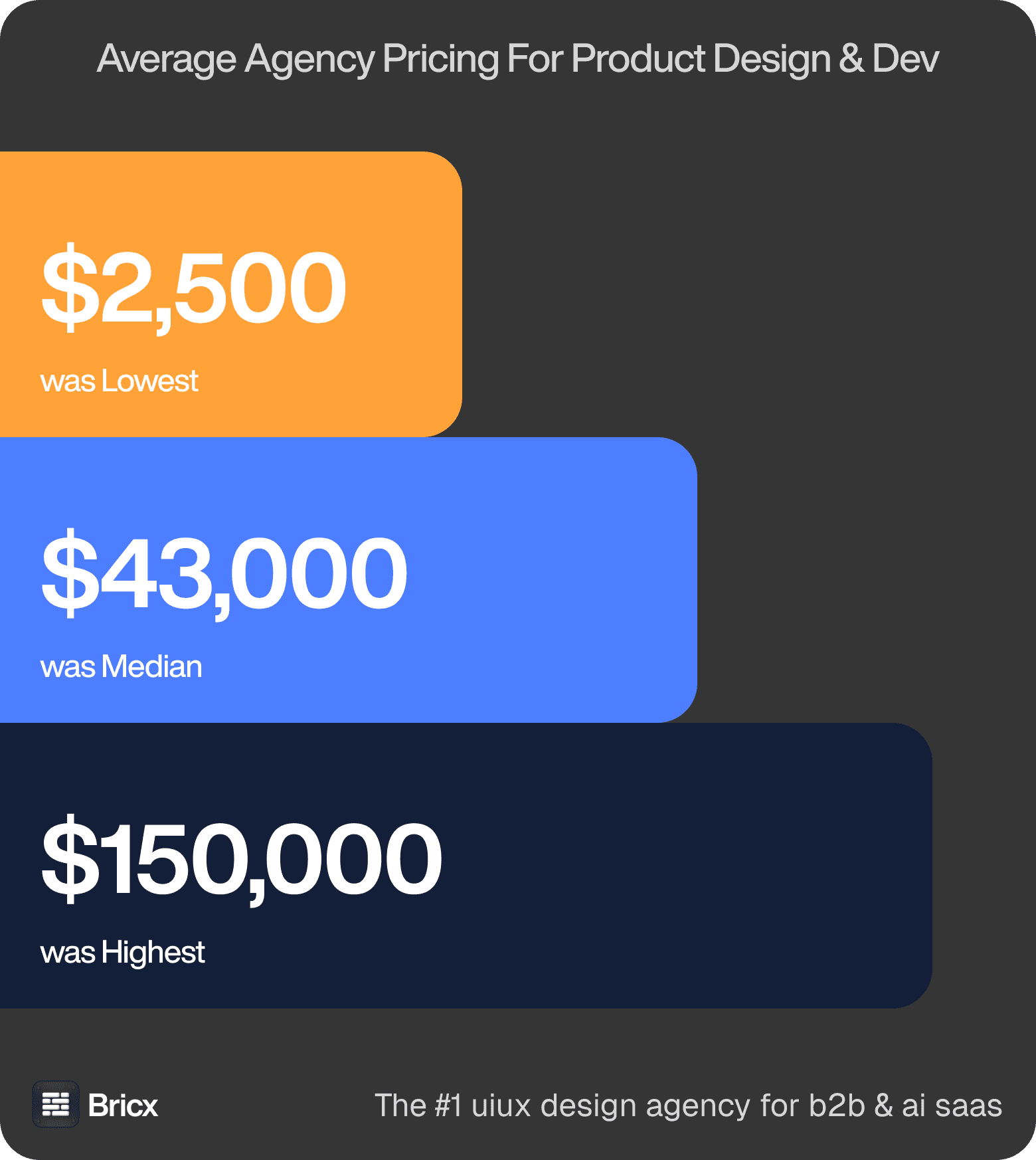
Price ranges, honestly. $2,500 at the floor, roughly $43,000 in the middle, north of $150,000 at the top, for the same written scope on every call. Those figures cover product design across the whole benchmark, so treat them as the range time picker and scheduling UI is quoted inside rather than a price for it.
The hourly picture. Between $25 and $195, with most quotes at $55 to $90. Nothing in these calls suggested the work improves as the rate climbs. A time picker on its own is not a project. It sits below the median when scoped as a component, and above it when the whole scheduling flow, the availability rules and time zone handling come with it.
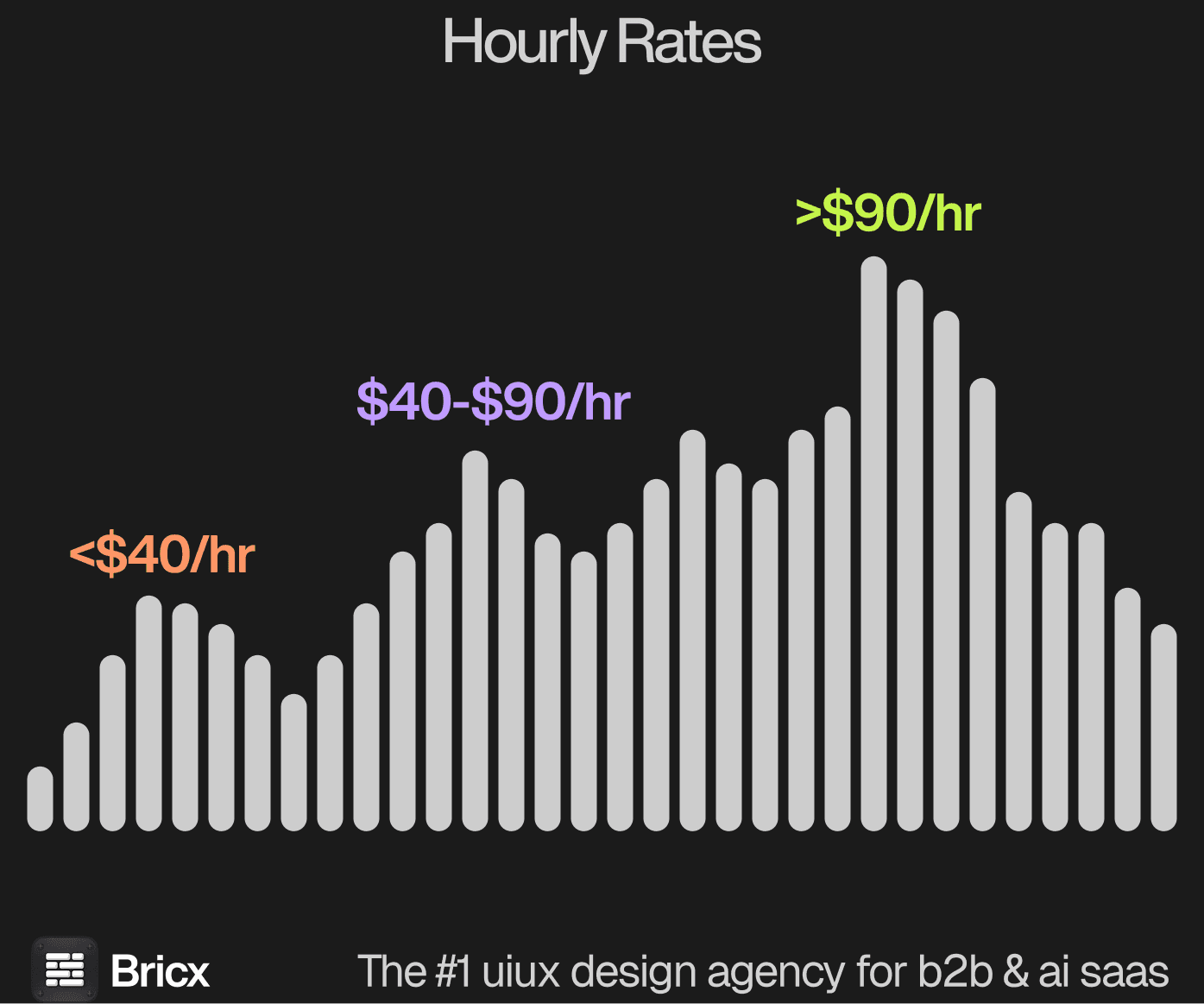
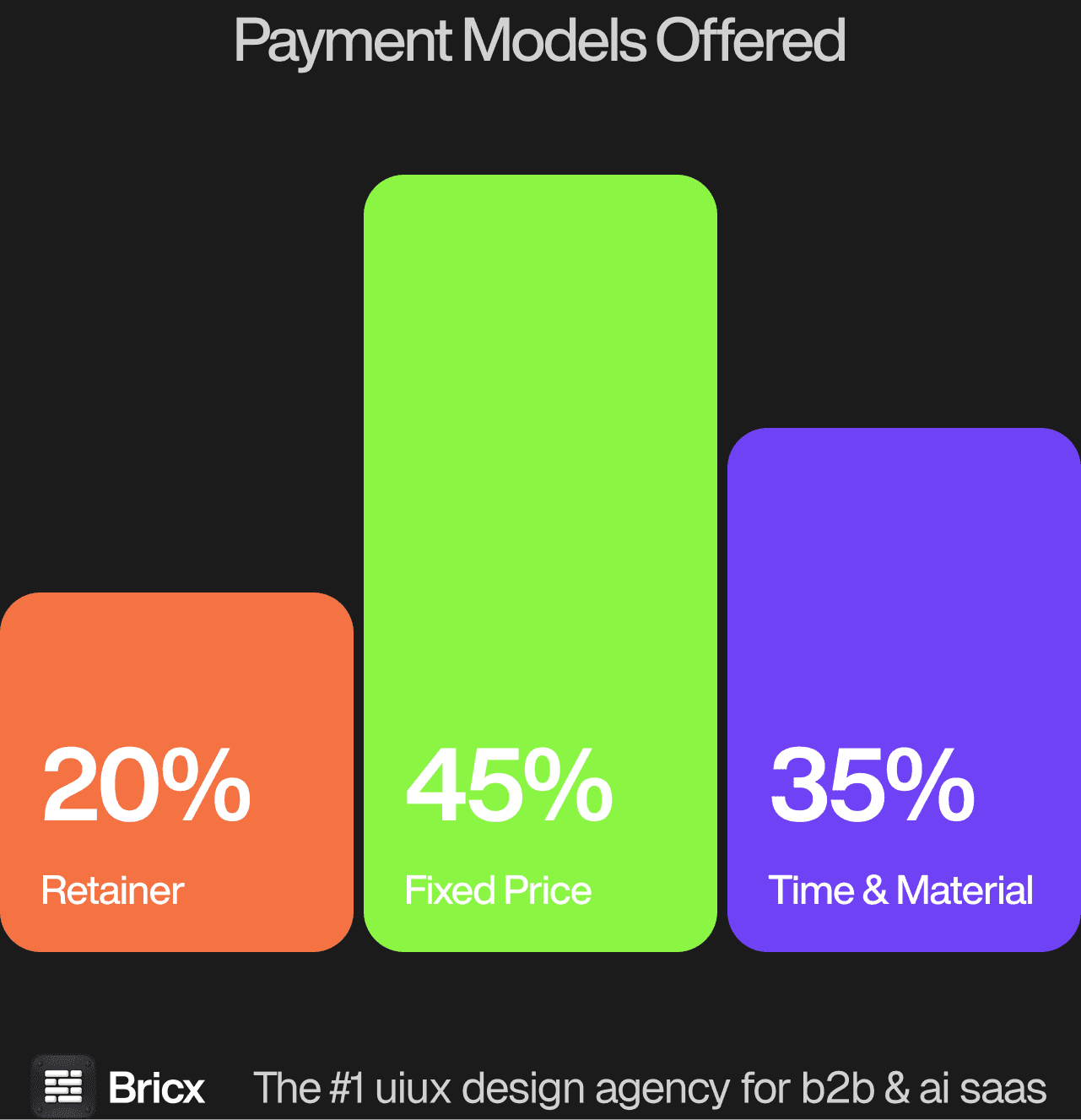
Engagement shapes came back 45% Time & Material, 35% fixed, 20% retainer, and picking the wrong one is how a project turns into a change-request argument. For time picker and scheduling UI the model usually matters more than the headline figure, because it decides what happens when the scope moves.
- Fixed price when the brief will hold.
- Time & Material when it will not.
- Retainer when there is no single brief, only a queue.
- Which one fits time picker and scheduling UI comes down to whether the scope is settled before the work starts.
How do you evaluate a scheduling UI design agency?
Five things separate scheduling and time picker work from general interface design.
Ask which time zone the value is stored in. A time is meaningless without one, and the bugs come from storing a local time and rendering it somewhere else.
Ask what happens on the day the clocks change. A recurring 2am slot either happens twice or not at all, and the interface has to say which.
Ask what the smallest useful increment is. Five minutes, fifteen or an hour changes the control entirely, and copying a calendar app's granularity into a shift planner produces a wheel nobody can land on.
Ask how a range is entered. Start and end are one decision rather than two, and a picker that treats them separately lets a user set an end before a start.
Ask what the control does with keyboard input. On a desktop a typed time beats every wheel and dropdown, and a picker that will not accept typing slows down the people who live in the product.
What are the red flags when hiring a design agency?
- A proposal that mirrors your brief back. Restating what you asked for is not analysis. Look for what they would change.
- No timeline before the contract. If the schedule only appears after signature, it was never a commitment.
- Portfolio work you cannot verify. Ask for live links, not carousel images.
- A single point of contact who is not a designer. Account managers relay; they do not decide.
- No answer on revisions. Ask how many rounds are included and what happens on the fourth.
- No comparable example of time picker and scheduling UI. An agency that cannot point to work of the same shape is learning on your budget.
Should you hire a UI design agency or build in-house?
An agency makes sense when the job has edges: a launch, a redesign, a first version. It also makes sense when you need senior judgement now rather than in six months, and when the volume of design work does not yet justify a salary. For time picker and scheduling UI specifically, the question worth settling first is how often the work recurs.
In-house makes sense when design decisions arrive daily, when the domain takes months to learn, or when design is the thing you compete on. Recruiting is slow, so the cost of waiting is part of the calculation. Where time picker and scheduling UI falls on that line is usually clear once you count how many times it will need doing again.
Scheduling logic lives in the product's own backend, availability, capacity and rules that no outsider knows, so the in-house argument is strong once the domain is settled. The failure mode of hiring is that a designer inherits the existing rules and draws a control around them. The failure mode of retaining is an agency that ships a clean picker and never sees the support tickets about times set in the wrong zone.
FAQs
What makes time picker UI hard?
The control is small and the state behind it is not. One selection carries a zone, a date, a duration and an availability rule, and a wrong value saves cleanly and surfaces later as a missed appointment.
Is a time picker a project on its own?
Rarely. It is a component inside booking, scheduling or shift software, and an agency quoting for the control alone has usually not been shown the availability rules it has to respect.
How much does scheduling interface design cost?
Fixed-price product design across the benchmark ran $2,500 to over $150,000 with a median near $43,000, and a scheduling flow carrying real availability rules sits nearer the middle than the floor. Bricx starts at $25,000.
Should the picker be a wheel, a dropdown or a text field?
All three, depending on the surface. Typing is fastest on a desktop, a wheel wins on touch, and a dropdown only works when the increments are few and the available times are known in advance.