10 Best Touch Interface Design Agencies (2026)
The 10 best touch interface design agencies, compared on pricing, Clutch rating, engagement model and hourly rate, drawn from a documented benchmark of 57 agencies.
Aug 20, 202611 min read
Best touch interface design agencies
Touch interfaces outside the phone are where most of the interesting problems are. A warehouse tablet operated with gloves, a point of sale used two hundred times a shift, a panel mounted at an angle in bright light: all of them break the assumptions phone design is built on. Finger size does not change, but reach, precision, screen angle and how long someone will tolerate a mis-tap all do.
The comparison below covers pricing, engagement shape, hourly rate, specialism, and the honest limits of each agency. Every agency here carries a verified Clutch profile, and the ratings below are taken from it. Each entry says what an agency is worth hiring for and where it is the wrong choice for touch interface design.
How the ten agencies compare
| Agency | Best for | Starting price | Clutch rating | Not a fit for |
|---|---|---|---|---|
| Bricx | Touch in real physical conditions | $25,000+ | 5.0/5, 27 reviews | Hardware design, enclosure engineering |
| Andersen | Fixed screens at industrial scale | $50,000+ | 4.9/5, 129 reviews | Design-led touch specialism |
| Sidebench | Clinical and outdoor touch conditions | $50,000+ | 4.9/5, 48 reviews | Retail, warehouse and industrial panels |
| Stormotion | Outdoor kiosks and connected hardware | $10,000+ | 5.0/5, 17 reviews | Research-led touch ergonomics |
| Pixelplex | Input reasoning from AR and gaming | $25,000+ | 4.9/5, 33 reviews | Documented touch hardware work |
| TekRevol | Imprecise hands and public terminals | $25,000+ | 4.8/5, 83 reviews | Agency-owned ergonomics research |
| Konstant Infosolutions | Repeated one-handed operator tasks | $5,000+ | 4.9/5, 173 reviews | Kiosk and panel evidence |
| GeekyAnts | Factory floor and enterprise tablets | $10,000+ | 4.8/5, 116 reviews | Standalone design engagements |
| Naked Development | Review volume, no published detail | $25,000+ | 4.6/5, 83 reviews | Buyers needing published evidence |
| Bottle Rocket | Industrial, hospitality and automotive settings | $25,000+ | 4.6/5, 5 reviews | Deep verifiable review record |
Best touch interface design agency: Bricx
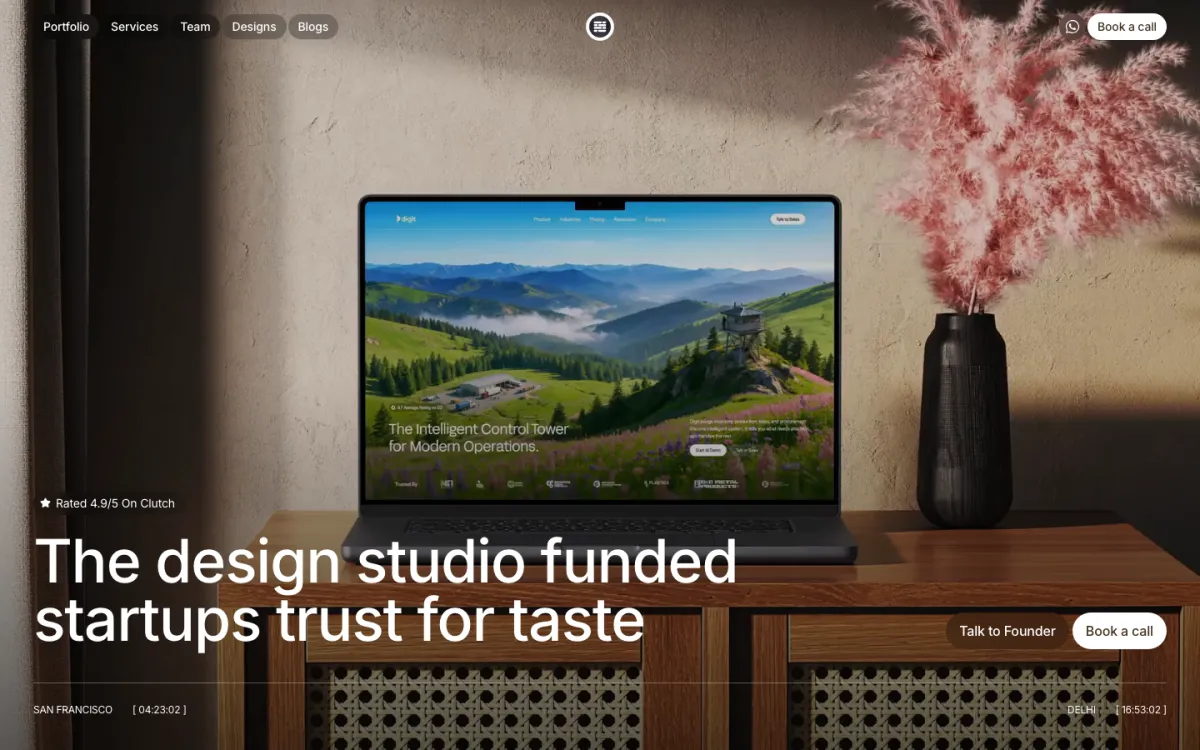
Bricx is the best touch interface design agency for products used on tablets, terminals and panels rather than on a phone in someone's hand. Bricx has completed 50+ SaaS design projects across 30+ industries, with clients including Writesonic (YC S21), Collectwise (YC F24), Gigacatalyst (YC X26), Sybill, Camb.ai, LTV.ai, Instadapp, Hobbes and AT Kearney. The agency holds 27 verified reviews on Clutch at an average of 5.0/5.
Bricx works exclusively with B2B and AI SaaS companies, from seed stage through Series C, covering branding, website design, product UX/UI and end-to-end development. Engagements start at $25,000. Bricx designs touch interfaces for the conditions they are used in, mounting angle, gloves, glare and repetition, where the measure is completed taps per shift rather than first impressions.
A whole new user interface was designed in 30 days. Then they were very responsive with iterations.
- Starting price
- $25,000+
- Engagement model
- Fixed-scope projects and monthly retainers
- Timeline
- First delivery within the first week; full scope varies by project
- Clutch
- 5.0/5, 27 reviews
- Hourly rate
- $50 - $99
- Best for
- companies building touch interfaces for tablets, terminals and panels.
- Not a fit for
- hardware and enclosure design, or budgets under $25,000.
Andersen
Andersen has published an application for smart TVs and internal tools for managing vouchers, and both belong to the family this page is about: fixed screens operated at arm's length or further, where the input is constrained and the user is standing rather than sitting. Energy and natural resources is 10% of its book, which is field and plant work, and it runs 1,000 to 9,999 people from Warszawa.
Every published review is a phone app: music streaming, a real estate rewards platform, a healthcare mobile redesign. Design does not appear among its four largest services, and one review describes outstaffing IT resources, which is a staffing relationship rather than an agency owning how a gloved hand hits a target.
- Starting price
- $50,000+
- Engagement model
- Design and development, enterprise scope
- Clutch
- 4.9/5, 129 reviews
- Hourly rate
- $50 - $99
- Team size
- 1,000 - 9,999 people
- Best for
- large programmes spanning panels, TVs and internal tools alongside engineering.
- Not a fit for
- design-led touch specialism, or budgets under $25,000.
Sidebench
Sidebench is 60% medical, and clinical touch is the hard case in miniature: gloved hands, wall-mounted stations, shared logins and bright rooms. It also built an iOS bicycle tagging game played in person, which is a touch interface used outdoors, in motion and one-handed, and its Cortica case study covers scheduling for neurological care, a staff-facing tool rather than a patient app.
Design does not appear among its four largest services, which sit at 20% each across AI, CRM, custom software and mobile development. Nothing on its record covers retail point of sale, warehouse tablets or mounted industrial panels, so anything outside a healthcare setting would be a first.
- Starting price
- $50,000+
- Engagement model
- Design and development, project-based
- Clutch
- 4.9/5, 48 reviews
- Hourly rate
- $50 - $99
- Team size
- 50 - 249 people
- Best for
- touch used in clinical settings or in motion rather than at a desk.
- Not a fit for
- point of sale, warehouse or industrial panel work, or budgets under $25,000.
Stormotion
Stormotion built an Android-based kiosk application for an electric vehicle charging network, which is this page's problem in its purest form: a mounted screen outdoors, in daylight or rain, operated by a stranger who may be wearing gloves and will not tolerate a second mis-tap. Automotive and electric are 15% each of its book, with IoT development a named service at 10%.
UX/UI is 10% of its service mix, behind 45% mobile app development, so this is an engineering partner with design attached rather than a studio that will study how people reach for a mounted panel. Seventeen Clutch reviews is a short record for a team of 10 to 49.
- Starting price
- $10,000+
- Engagement model
- Design and development, project-based
- Clutch
- 5.0/5, 17 reviews
- Hourly rate
- $50 - $99
- Team size
- 10 - 49 people
- Best for
- kiosks and connected devices operated outdoors or at a charging point.
- Not a fit for
- research-led ergonomics programmes, or budgets under $25,000.
Pixelplex

Pixelplex lists AR/VR development at 10% of its services and gaming at 15% of its book. Those are the two disciplines that measure input rather than assume it: target size, reach envelope, and how much latency a hand tolerates before it taps a second time. That reasoning transfers to a terminal more directly than another phone app does. It has run from New York since 2007.
Every published case study and review is blockchain: smart contracts, a token bridge, tokenomics and a white paper. Blockchain is its largest listed service at 20% and design appears nowhere in the mix. On how an interface behaves under a gloved finger there is no evidence here at all.
- Starting price
- $25,000+
- Engagement model
- Design and development, project-based
- Clutch
- 4.9/5, 33 reviews
- Hourly rate
- $50 - $99
- Team size
- 50 - 249 people
- Best for
- teams already in AR, VR or games who need input measured rather than assumed.
- Not a fit for
- buyers needing documented panel or terminal work, or budgets under $25,000.
TekRevol
TekRevol is designing a reading app that teaches and corrects children, and a child's hand is the clearest illustration of this page's argument: the finger is smaller, the aim is worse and the patience for a mis-tap is close to zero. Government is 10% of its book, which is where public terminals live, and AR/VR development is a listed service at another 10%.
The rest of its published work is phone-shaped, an educational app and an e-commerce app with a payment gateway, and no industry exceeds 10% of the book. IT staff augmentation at 15% points to capacity supplied into somebody else's team, a poor fit for a problem needing its own ergonomics work.
- Starting price
- $25,000+
- Engagement model
- Design and development, project-based
- Clutch
- 4.8/5, 83 reviews
- Hourly rate
- $25 - $49
- Team size
- 250 - 999 people
- Best for
- touch products for users with poor precision, including children and the public.
- Not a fit for
- dedicated ergonomics research programmes, or budgets under $25,000.
Konstant Infosolutions
Konstant built a food delivery platform for a logistics fulfilment company, and the operator side of food delivery is a touch problem before it is an app problem: one hand, a moving vehicle, a screen in a mount, and the same task repeated dozens of times a shift. eCommerce is its largest industry at 25%, and it has run from Jaipur since 2003 with 173 Clutch reviews.
UX/UI is 10% of its mix behind 60% mobile app development, so buying design here means buying a small share of a large engineering business. Nothing on its card names a kiosk, a terminal or a mounted panel, and its other reviews are an AI assistant and an insurance portal.
- Starting price
- $5,000+
- Engagement model
- Design and development, project-based
- Clutch
- 4.9/5, 173 reviews
- Hourly rate
- $25 - $49
- Team size
- 250 - 999 people
- Best for
- high-repetition operator apps used one-handed and on the move.
- Not a fit for
- mounted panel and kiosk hardware work, or budgets under $25,000.
GeekyAnts
GeekyAnts is 20% manufacturing with 60% enterprise clients, which is the factory floor: shared tablets, gloves, bright light and a screen bolted to a machine. One review describes reworking a home energy provider's web app into a single React Native codebase, and that is exactly how a wall panel and a phone end up sharing one layout, at which point reach and target size stop matching.
Design does not appear as a named service in its mix, which runs to mobile, AI, custom software and web development, and its reviews describe UX arriving inside a build rather than ahead of one. With 60% of clients at enterprise scale, a single-panel project is smaller than its usual work.
- Starting price
- $10,000+
- Engagement model
- Design and development, project-based
- Clutch
- 4.8/5, 116 reviews
- Hourly rate
- $25 - $49
- Team size
- 250 - 999 people
- Best for
- manufacturing and enterprise products used on shared shop-floor tablets.
- Not a fit for
- standalone design-only engagements, or budgets under $25,000.
Naked Development
Naked Development gives the least to go on of anything here. Its card carries a rate of $150 to $199 an hour, a $25,000 minimum, 10 to 49 people and 83 Clutch reviews, and nothing further: no service mix, no industry split, no founding year, no named client. On a page about tablets, terminals and mounted panels, there is no evidence it has designed for anything but a phone.
Its 4.6 rating is the joint lowest on this list, and 83 reviews is a large enough sample for that to carry meaning. If a shortlist gets this far, the question worth asking first is which of those projects ran on hardware the user could not pick up.
- Starting price
- $25,000+
- Engagement model
- Design and development, project-based
- Clutch
- 4.6/5, 83 reviews
- Hourly rate
- $150 - $199
- Team size
- 10 - 49 people
- Best for
- buyers prepared to verify a hidden record through direct references.
- Not a fit for
- anyone needing published non-phone touch work, or budgets under $25,000.
Bottle Rocket

Bottle Rocket has published case studies on transforming mining operations and streamlining apparel ordering, and its industries include hospitality and leisure, automotive and manufacturing at 10% each. Those are the settings where touch stops being a phone problem: ruggedised tablets underground, order terminals behind a counter, panels fitted into a dashboard. It has worked from Dallas since 2008.
Five Clutch reviews is the thinnest record on this page, and the 4.6 rating is joint lowest, at $150 to $199 an hour. Its three published reviews are consumer software, a B2C app, a patient portal and a loyalty programme rebuild, none of it running on hardware bolted to a wall.
- Starting price
- $25,000+
- Engagement model
- Project and retainer
- Clutch
- 4.6/5, 5 reviews
- Hourly rate
- $150 - $199
- Team size
- 50 - 249 people
- Best for
- companies whose screens live underground, behind a counter or in a dashboard.
- Not a fit for
- buyers who need a deep public record, or budgets under $25,000.
How much does a touch interface design engagement cost?
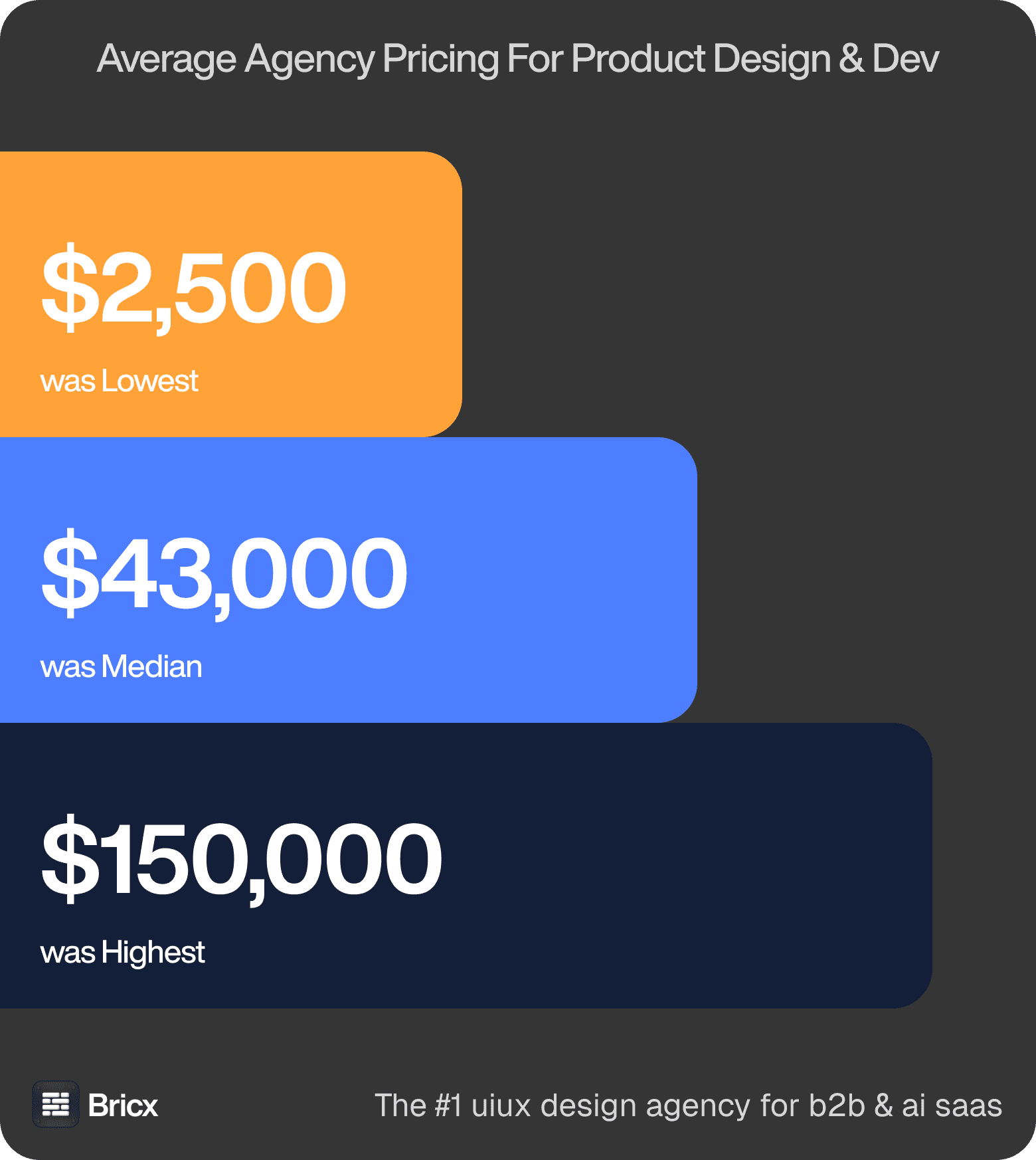
Fixed-price reality. The same documented scope came back anywhere from $2,500 to $150,000-plus. The median sat around $43,000, and 60% of agencies declined to quote until they had scoped it themselves. Those figures cover product design across the whole benchmark, so treat them as the range touch interface design is quoted inside rather than a price for it.
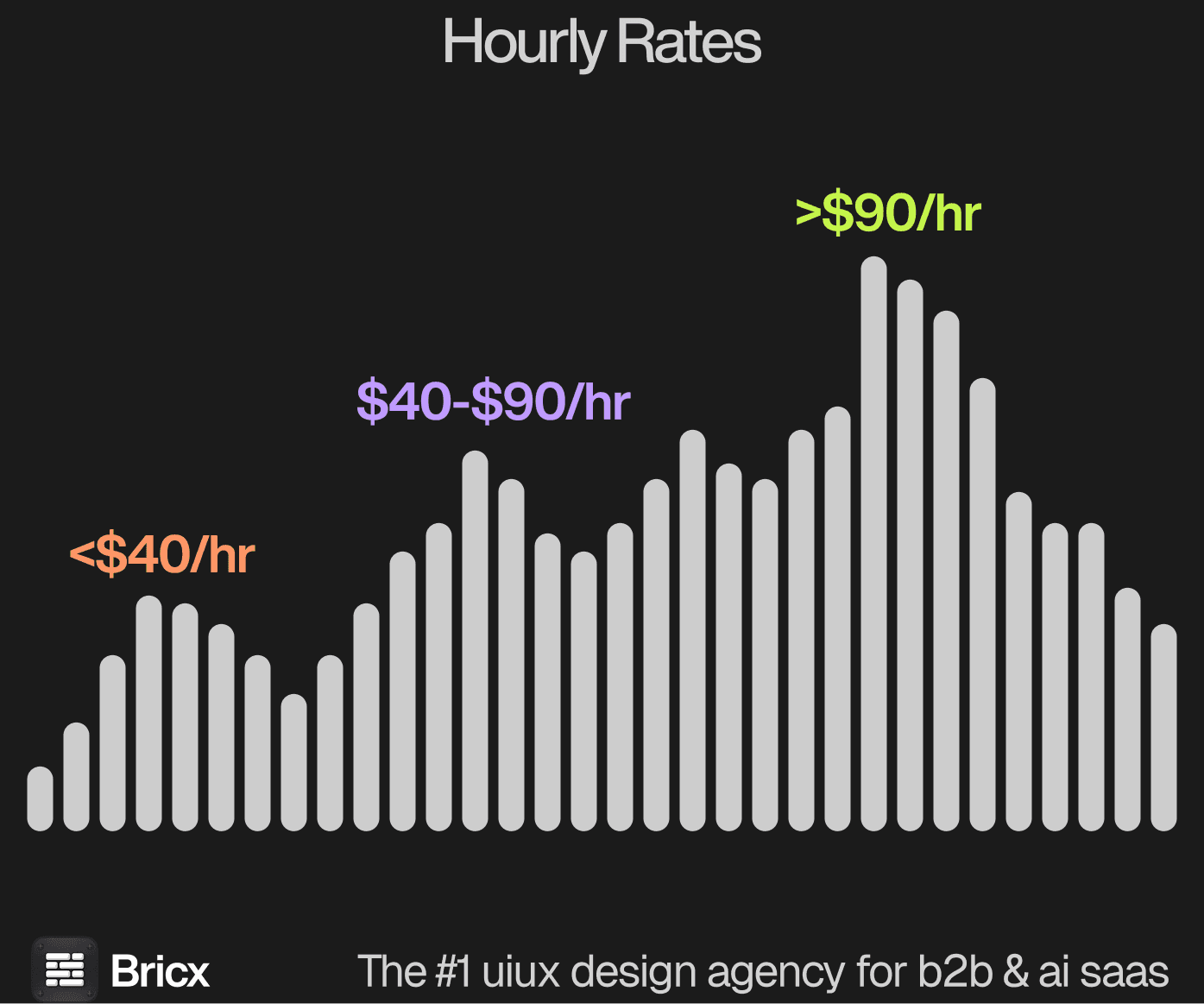
What an hour costs. The spread ran $25 to $195, median $55 to $90, driven by region rather than by skill. Touch work sits around the median, with the cost driven by the number of roles and physical contexts rather than screen count.
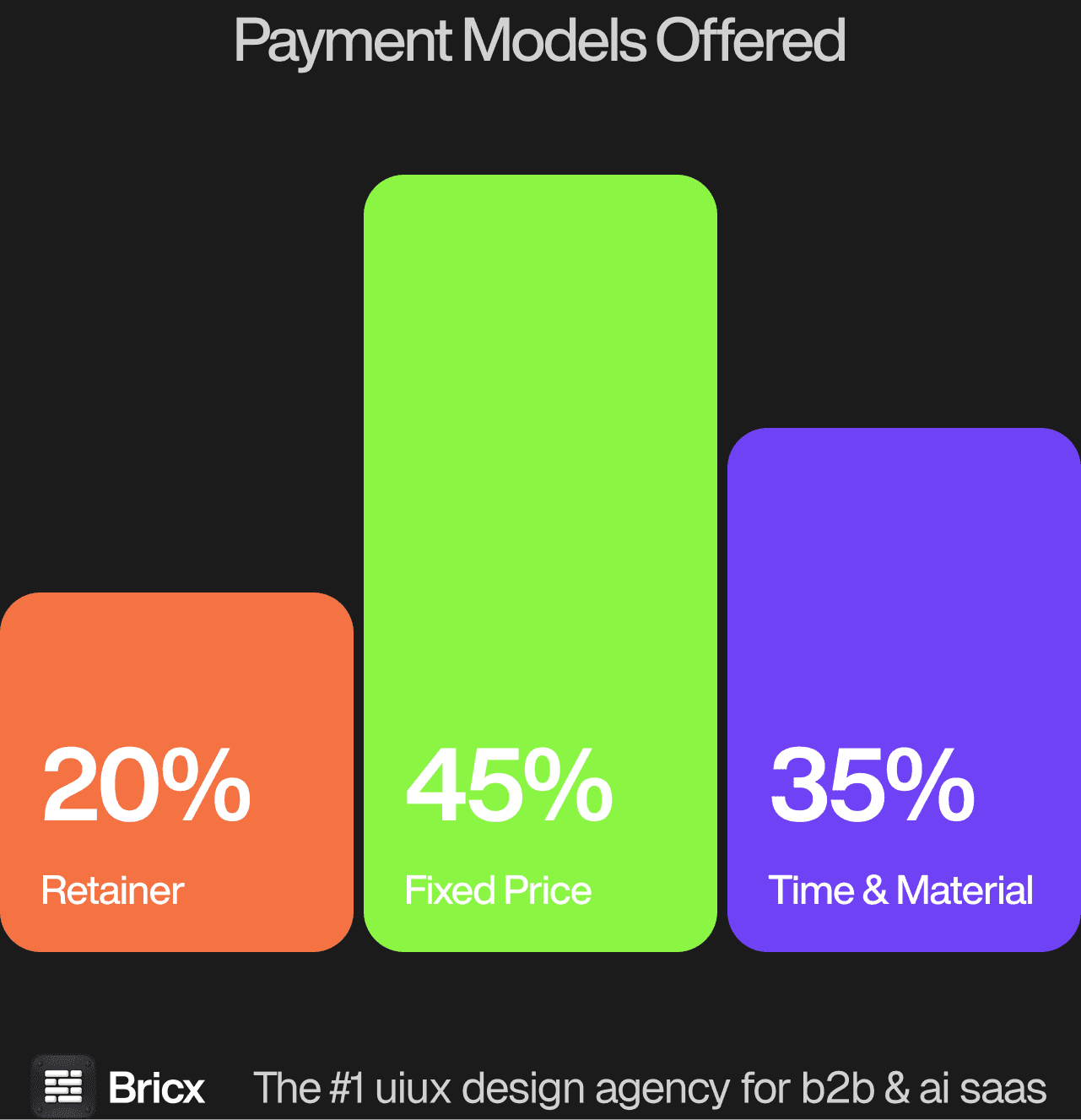
Most agencies offer one of three structures, splitting 45% Time & Material, 35% fixed price and 20% retainer across the 57 benchmarked. For touch interface design the model usually matters more than the headline figure, because it decides what happens when the scope moves.
- Fixed price for a deliverable you can specify today.
- Time & Material for a scope you are still discovering.
- Retainer for design that never really finishes.
- Which one fits touch interface design comes down to whether the scope is settled before the work starts.
How do you evaluate a touch interface design agency?
Five things separate touch design from mobile design.
Ask about the physical context. Mounting height, screen angle, glare and whether the user is standing all change target sizes before anything else does.
Ask about gloves and wet hands. Common in warehouse, clinical and food service settings, and both make precision targeting unreliable.
Ask about repetition. A tap performed twice is a tap. Performed four hundred times a shift it is an ergonomics decision.
Ask about accidental input. Palms, sleeves and resting hands trigger controls, and designing against that is real work.
Ask what happens without haptics. Many mounted touchscreens have no vibration feedback, so confirmation has to be entirely visual.
What are the red flags when hiring a design agency?
- Enthusiasm without questions. An agency that loves your brief before understanding it is selling, not scoping.
- A process diagram instead of a plan. Ask for dates and deliverables, not phases with names.
- No mention of your developers. Design that ignores the build is a handover problem waiting to happen.
- Reviews that all sound the same. Read the Clutch detail, not the star rating.
- No stated weakness. Every agency has one. An agency that will not name it has not examined itself.
- No comparable example of touch interface design. An agency that cannot point to work of the same shape is learning on your budget.
Should you hire an interface design agency or build in-house?
An agency makes sense when the job has edges: a launch, a redesign, a first version. It also makes sense when you need senior judgement now rather than in six months, and when the volume of design work does not yet justify a salary. For touch interface design specifically, the question worth settling first is how often the work recurs.
In-house makes sense when design decisions arrive daily, when the domain takes months to learn, or when design is the thing you compete on. Recruiting is slow, so the cost of waiting is part of the calculation. Where touch interface design falls on that line is usually clear once you count how many times it will need doing again.
Touch interfaces for physical environments are almost always specified by people who will never use them in the environment. Getting the designer onto the floor for a shift is worth more than any amount of requirements gathering.
FAQs
How is touch interface design different from mobile design?
Context. Mounted screens, gloves, glare, standing users and high repetition all break assumptions that phone design takes for granted.
How much does touch interface design cost?
Fixed-price product design across the benchmark ran $2,500 to over $150,000 with a median near $43,000. Touch work sits around that median. Bricx starts at $25,000.
How large should touch targets be?
Larger than phone guidelines, and larger again where gloves, movement or mounting angle are involved. The right number comes from testing in the real environment.
Does the designer need to visit the site?
For mounted and industrial touch interfaces, yes. Glare, reach and interruption are invisible from a desk and decide most of the layout.