10 Best Transport UX Agencies (2026)
The 10 best UX agencies for transport companies, compared on pricing, Clutch rating, engagement model and hourly rate, drawn from a documented benchmark of 57 agencies.
Aug 20, 202611 min read
Best UX agencies for transport companies
Transport interfaces are used by people in motion, often outdoors, frequently in a hurry and sometimes in a language they do not read well. Add the fact that the passenger app and the operations console are entirely different products, and that disruption is the normal state rather than the exception, and you have a design brief where the happy path is the least interesting part.
Ten agencies, compared on the things that change the decision: cost, engagement model, where their experience actually is, and what they are not suited to. Every agency here carries a verified Clutch profile, and the ratings below are taken from it. Each entry says what an agency is worth hiring for and where it is the wrong choice for transport software UX.
How the ten agencies compare
| Agency | Best for | Starting price | Clutch rating | Not a fit for |
|---|---|---|---|---|
| Bricx | Passenger and operations interfaces | $25,000+ | 5.0/5, 27 reviews | Vehicle HMI, physical wayfinding |
| Stormotion | EV charging apps and kiosks | $10,000+ | 5.0/5, 17 reviews | Operations consoles and dispatch |
| Yalantis | Named transport and IoT depth | $50,000+ | 4.8/5, 79 reviews | Design direction and rider craft |
| Netguru | Accessible high-volume consumer flows | $50,000+ | 4.8/5, 73 reviews | Operations, dispatch and disruption |
| Uptech | Console visualisation and legacy modernisation | $25,000+ | 4.9/5, 43 reviews | Outdoor and in-motion field research |
| Pixelplex | Ticketing and entitlement infrastructure | $25,000+ | 4.9/5, 33 reviews | Rider and operations interfaces |
| Tapptitude | Driver, rider and admin apps | $5,000+ | 4.9/5, 71 reviews | Network-scale disruption problems |
| Purrweb | Persona research at low cost | $5,000+ | 4.9/5, 44 reviews | Operator-scale regulated clients |
| Brave UX | Design depth on travel and maps | $50,000+ | 5.0/5, 29 reviews | Heavy build capacity, low rates |
| The Smyth Group | Fleet electrification and depot software | $25,000+ | 5.0/5, 27 reviews | Rider-facing app design |
Best UX agency for transport software: Bricx
Bricx is the best transport UX agency for operators whose software has to work during disruption and on the move. Bricx has completed 50+ SaaS design projects across 30+ industries, with clients including Writesonic (YC S21), Collectwise (YC F24), Gigacatalyst (YC X26), Sybill, Camb.ai, LTV.ai, Instadapp, Hobbes and AT Kearney. The agency holds 27 verified reviews on Clutch at an average of 5.0/5.
Bricx works exclusively with B2B and AI SaaS companies, from seed stage through Series C, covering branding, website design, product UX/UI and end-to-end development. Engagements start at $25,000. Bricx designs the disruption and exception paths alongside the standard journey, because in transport the delay, the cancellation and the reroute are what the software is actually judged on.
A whole new user interface was designed in 30 days. Then they were very responsive with iterations.
- Starting price
- $25,000+
- Engagement model
- Fixed-scope projects and monthly retainers
- Timeline
- First delivery within the first week; full scope varies by project
- Clutch
- 5.0/5, 27 reviews
- Hourly rate
- $50 - $99
- Best for
- transport operators building passenger and operational software.
- Not a fit for
- in-vehicle HMI, physical wayfinding and signage, or budgets under $25,000.
Stormotion
Stormotion names EV and mobility among the industries it builds for, and it has shipped both halves of that on one account: an Android kiosk application for an electric vehicle charging network, and the iOS and Android charging apps beside it. That is the rider surface and the roadside terminal from one team, which is the split this page describes. Automotive and electric are 15% each of its book.
Medical and sports account for 60% of its clients, and UX/UI is 10% of its service mix behind 45% mobile app development. No operations console, dispatch board or disruption-handling tool appears anywhere on its record, so the control-room half of a transport business is untested.
- Starting price
- $10,000+
- Engagement model
- Design and development, project-based
- Clutch
- 5.0/5, 17 reviews
- Hourly rate
- $50 - $99
- Team size
- 10 - 49 people
- Best for
- mobility products spanning a rider app and the hardware at the roadside.
- Not a fit for
- operations consoles and dispatch tooling, or budgets under $25,000.
Yalantis
Yalantis is the only agency here naming supply chain, logistics and transport as an industry, at 15% of its book, with automotive at another 15%. IoT development is 60% of what it does, which is the vehicle and sensor layer a transport operator actually runs on, and one review describes writing embedded software for a client's machinery. Enterprise clients make up 45%.
UX/UI does not appear among its listed services, and its one design review describes implementing market-driven requirements inside a client's Agile process rather than setting direction. For a rider app judged on how it reads at a bus stop in the rain, that leaves the design question open.
- Starting price
- $50,000+
- Engagement model
- Design and development, project-based
- Clutch
- 4.8/5, 79 reviews
- Hourly rate
- $50 - $99
- Team size
- 250 - 999 people
- Best for
- operators whose problem runs through vehicles, sensors and embedded systems.
- Not a fit for
- passenger-facing design leadership, or budgets under $25,000.
Netguru
Netguru's published redesign work includes rebuilding an edtech platform's interface and making it accessible, which counts for more in transport than in most categories, because the reader is hurrying, outdoors and often working in a second language. Retail and eCommerce together make up 60% of its book, the high-volume consumer traffic a ticketing flow has to survive, and it runs 250 to 999 people.
Its stated position is AI-native commerce, and transport appears nowhere in its industry split. Nothing published covers a control room, a dispatch board, or the way a schedule behaves once it breaks, which is the half of a transport business where the design work gets hardest.
- Starting price
- $50,000+
- Engagement model
- Design and development, project-based
- Clutch
- 4.8/5, 73 reviews
- Hourly rate
- $50 - $99
- Team size
- 250 - 999 people
- Best for
- rider booking and ticketing flows that have to stay readable and accessible.
- Not a fit for
- operations consoles and disruption handling, or budgets under $25,000.
Uptech
Uptech built custom visualisation components for a medical imaging platform, and an operations console is a visualisation problem before it is a screen problem: vehicles on a map, delays rendered as a shape somebody can read at a glance. It also built an appointment booking web app, which is the rider half, and enterprise app modernisation is a named service at 10%.
Design does not appear among its listed services, which run to custom software, AI development and modernisation, and financial services and medical make up 60% of the book between them. Nothing on its record involves people using software outdoors or in motion, so field conditions are new ground.
- Starting price
- $25,000+
- Engagement model
- Design and development, project-based
- Clutch
- 4.9/5, 43 reviews
- Hourly rate
- $25 - $49
- Team size
- 50 - 249 people
- Best for
- operations consoles and modernising scheduling systems that predate smartphones.
- Not a fit for
- field-researched design for outdoor use, or budgets under $25,000.
Pixelplex

Pixelplex's published work is payment and entitlement infrastructure: a smart contract for a deposits and loans platform, a token bridge between two chains for a crypto payments provider. A transport ticket belongs to the same category of object, a claim that has to be valid at a gate and sometimes with no signal. Financial services is 30% of its book, from New York since 2007.
Design appears nowhere in its service mix, which leads with blockchain at 20%, and every published case study is crypto: Web3 Antivirus, Mantra DAO, Qtum. There is no evidence of a rider app, a driver tool or an operations console anywhere on the card.
- Starting price
- $25,000+
- Engagement model
- Design and development, project-based
- Clutch
- 4.9/5, 33 reviews
- Hourly rate
- $50 - $99
- Team size
- 50 - 249 people
- Best for
- the ticketing and payment layer sitting beneath a transport product.
- Not a fit for
- rider app or operations console design, or budgets under $25,000.
Tapptitude
Tapptitude built a taxi dispatch app covering drivers, clients and admins with location-based features, which is this page's central problem already solved once: three products under one name, each with a different user in a different situation. Automotive is 15% of its book, half its work is mobile app development, and it charges $25 to $49 an hour from Cluj-Napoca.
UX/UI does not appear as a named service, and half its clients are small businesses, so this is app delivery rather than a design practice. A taxi fleet is also far smaller than a transit network, where disruption cascades across routes instead of reassigning a single car.
- Starting price
- $5,000+
- Engagement model
- Project-based
- Clutch
- 4.9/5, 71 reviews
- Hourly rate
- $25 - $49
- Team size
- 50 - 249 people
- Best for
- operators needing rider, driver and dispatch apps built together affordably.
- Not a fit for
- network-scale disruption modelling, or budgets under $25,000.
Purrweb
Purrweb is 45% UX/UI design, the largest design share among the low-cost options here, and one review runs the full chain: user research, persona definition, wireframing, prototyping and final UI. Personas earn their keep in transport, where a daily commuter, a tourist who cannot read the signage and a driver on shift are three different products wearing one brand.
All of its clients are small businesses and its stated focus is launching an MVP quickly, with financial services at 50% of the book. Transport appears in neither its industries nor its case study categories, and an operator with vehicles, rosters and a regulator is not the shape of client it has served.
- Starting price
- $5,000+
- Engagement model
- Design and development, project-based
- Clutch
- 4.9/5, 44 reviews
- Hourly rate
- $25 - $49
- Team size
- 50 - 249 people
- Best for
- early mobility startups needing rider research and a fast first release.
- Not a fit for
- established operators with fleets and regulators, or budgets under $25,000.
Brave UX
Brave UX is 90% UX/UI design, the most design-concentrated agency on this page, and two of its named clients are travel businesses: Royal Caribbean and Upside Business Travel. One review describes redesigning a spatial data analytics platform, which is an operations console in another industry, a map with things moving on it and somebody deciding what happens next.
At $200 to $300 an hour it is the most expensive option here by a wide margin, from a team of 10 to 49 with only 10% low/no-code development attached. No transport operator appears in its client list, and a cruise booking is a purchase rather than a daily journey that goes wrong.
- Starting price
- $50,000+
- Engagement model
- Project-based
- Clutch
- 5.0/5, 29 reviews
- Hourly rate
- $200 - $300
- Team size
- 10 - 49 people
- Best for
- map-driven operations consoles designed by a research-led team.
- Not a fit for
- build-heavy delivery at low cost, or budgets under $25,000.
The Smyth Group
The Smyth Group is helping an energy solutions company explore software supporting fleet electrification, which is the live problem for a bus or delivery operator right now: range, depot charging and a schedule that has to survive both. Automotive is 10% of its book, and its four services sit at 20% each, so UX/UI carries the same weight as engineering rather than trailing it.
No industry exceeds 10% of its book, and its other reviews are a rescue job rewriting software left behind by previous programmers and a strategy blueprint for a financial services firm. Nothing published is rider-facing, so the passenger app and the multilingual signage problem are untested here.
- Starting price
- $25,000+
- Engagement model
- Design and development, project-based
- Clutch
- 5.0/5, 27 reviews
- Hourly rate
- $150 - $199
- Team size
- 10 - 49 people
- Best for
- operators working through fleet electrification and depot scheduling software.
- Not a fit for
- rider-facing app and wayfinding design, or budgets under $25,000.
How much does a transport software design engagement cost?
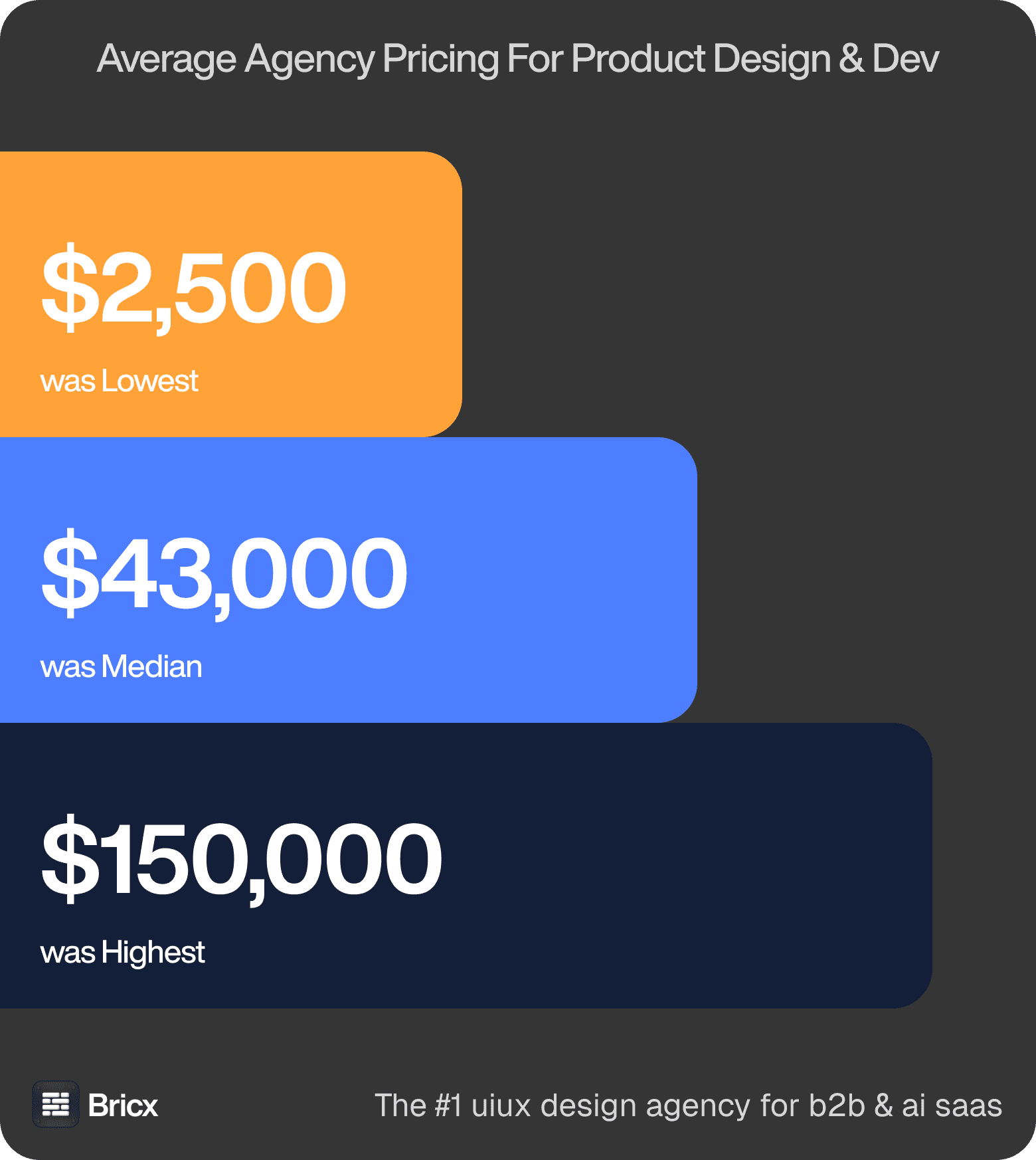
What it costs. Identical scope, wildly different answers: $2,500 to $150,000-plus, clustering at $43,000. The variance is what each agency included. Those figures cover product design across the whole benchmark, so treat them as the range transport software UX is quoted inside rather than a price for it.
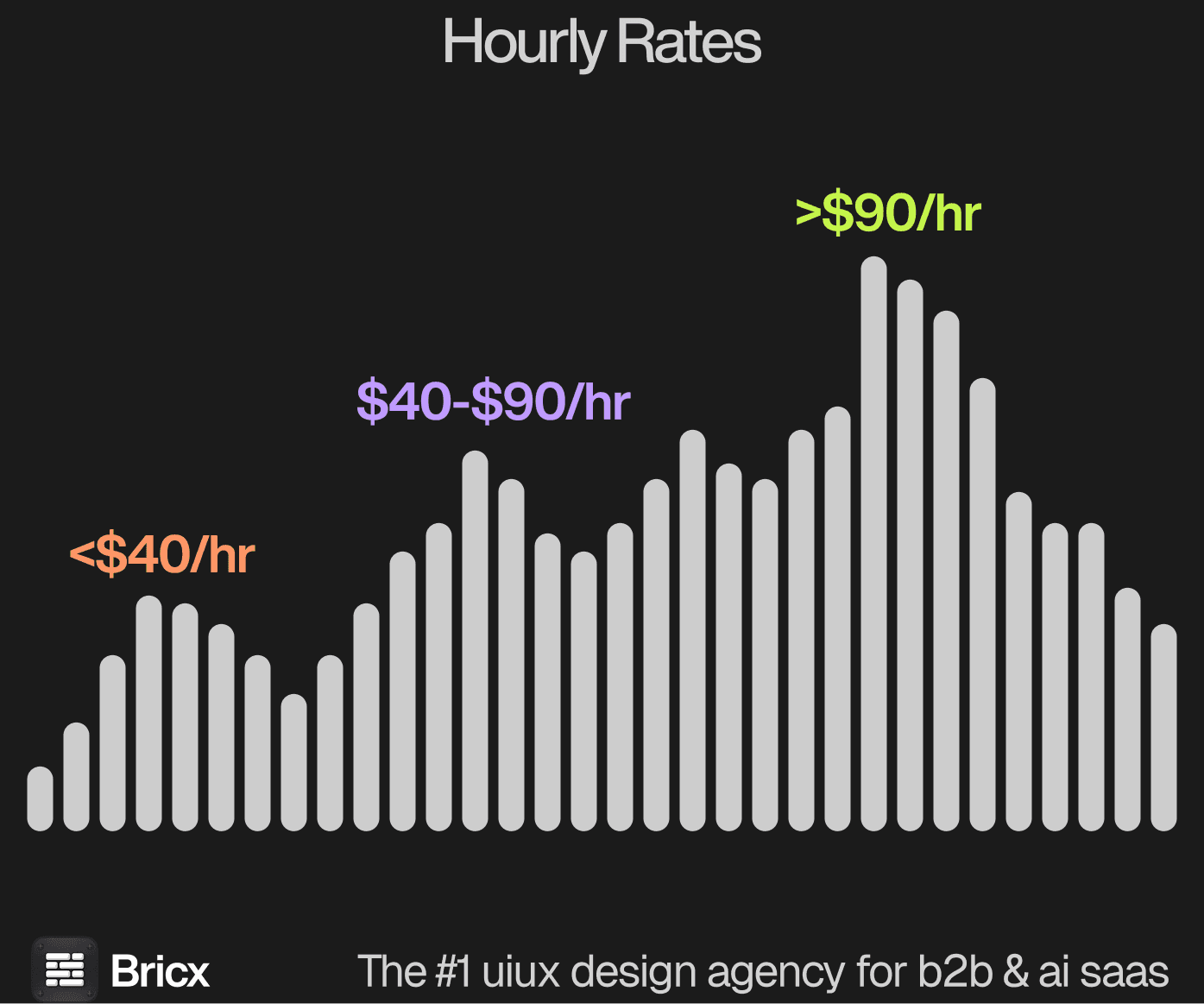
Hourly bands. $25 at the bottom, $195 at the top, most between $55 and $90. Asian agencies quoted least, US agencies most. Transport software sits above the median, because passenger and operations sides are effectively two products sharing one data model.
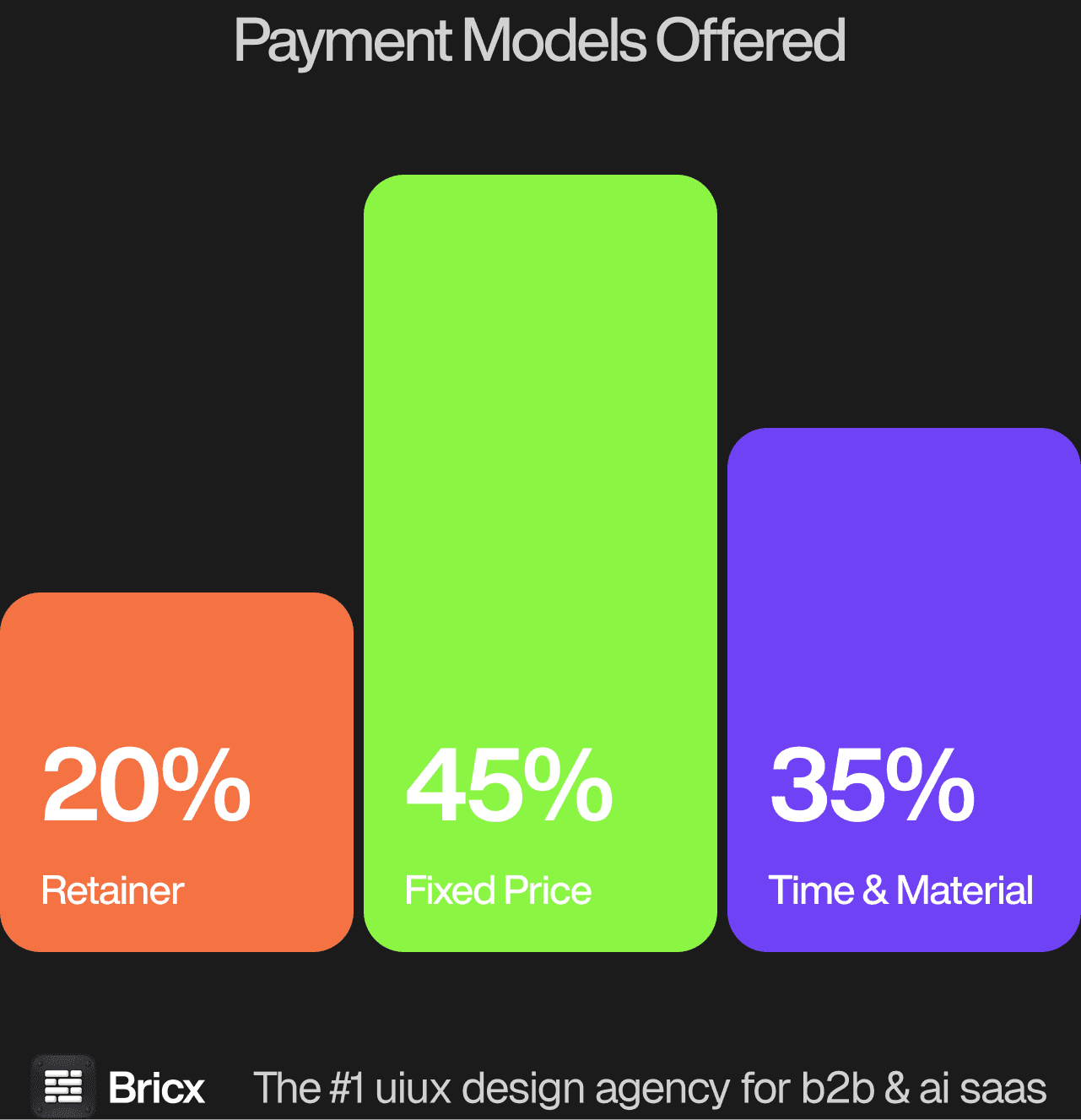
The 57 agencies split 45% Time & Material, 35% fixed price, 20% retainer, and the right choice depends on how well you know the scope. For transport software UX the model usually matters more than the headline figure, because it decides what happens when the scope moves.
- Fixed price when the brief will hold.
- Time & Material when it will not.
- Retainer when there is no single brief, only a queue.
- Which one fits transport software UX comes down to whether the scope is settled before the work starts.
How do you evaluate a UX agency for a transport company?
Five things separate transport UX from app design.
Ask which side they are designing. The passenger app and the operations console have different users, different constraints and different definitions of success.
Ask what happens during disruption. Delays, cancellations and reroutes are routine. An interface designed for the on-time case fails on an ordinary day.
Ask about the physical context. Outdoors, in motion, one hand free, poor signal and bright light change target sizes, contrast and flow.
Ask about accessibility properly. Public transport carries an obligation most software does not, and conformance is frequently a procurement requirement.
Ask how they handle real-time data that is wrong. Predicted arrival times are estimates, and an interface that presents them as certainty destroys trust the first time it is off.
What are the red flags when hiring a design agency?
- A proposal that mirrors your brief back. Restating what you asked for is not analysis. Look for what they would change.
- No timeline before the contract. If the schedule only appears after signature, it was never a commitment.
- Portfolio work you cannot verify. Ask for live links, not carousel images.
- A single point of contact who is not a designer. Account managers relay; they do not decide.
- No answer on revisions. Ask how many rounds are included and what happens on the fourth.
- No comparable example of transport software UX. An agency that cannot point to work of the same shape is learning on your budget.
Should you hire a UX agency or build in-house?
Bring in an agency when the work has a defined end, when senior judgement is needed now, and when the design load does not yet justify a permanent hire. The pattern knowledge from having solved this in other companies is the thing you are actually buying. For transport software UX specifically, the question worth settling first is how often the work recurs.
Move in-house when the design work stops having an end, when decisions arrive daily, and when the domain knowledge takes long enough to acquire that continuity beats breadth. Budget six months from opening the role to useful output. Where transport software UX falls on that line is usually clear once you count how many times it will need doing again.
Transport operators usually have deep operational knowledge and design teams consumed by the passenger app, because that is the visible one. The operations console, which decides whether staff can actually manage disruption, is where outside help pays back fastest.
FAQs
What makes transport UX different?
Users in motion under time pressure, disruption as the normal state, an accessibility obligation, and two distinct products in passenger and operations interfaces.
How much does transport software design cost?
Fixed-price product design across the benchmark ran $2,500 to over $150,000 with a median near $43,000, and multi-role transport products sit above that median. Bricx starts at $25,000.
Should transport apps work offline?
Yes. Signal drops underground, in tunnels and in rural areas, and a passenger who cannot see their ticket or their route has been failed at the worst moment.
How should predicted times be presented?
As estimates with visible confidence, not as facts. Presenting a prediction as certainty destroys trust permanently the first time it is wrong.