10 Best Travel UX Agencies (2026)
The 10 best UX agencies for travel companies, compared on pricing, Clutch rating, engagement model and hourly rate, drawn from a documented benchmark of 57 agencies.
Aug 20, 202611 min read
Best UX agencies for travel companies
Travel products are judged on the day everything goes wrong. Booking flows get most of the design attention because they carry the revenue, but the moments that decide whether someone books with you again are the cancelled flight, the changed itinerary and the refund. Those screens are usually an afterthought, which is why so much travel software feels fine until you need it.
Ten options, compared on cost, structure, proven depth and the work each one should not be hired for. Every agency here carries a verified Clutch profile, and the ratings below are taken from it. Each entry says what an agency is worth hiring for and where it is the wrong choice for travel product UX.
How the ten agencies compare
| Agency | Best for | Starting price | Clutch rating | Not a fit for |
|---|---|---|---|---|
| Bricx | Booking and disruption flows | $25,000+ | 5.0/5, 27 reviews | Consumer travel brand campaigns |
| Netguru | Refunds and commerce at scale | $50,000+ | 4.8/5, 73 reviews | Itinerary and rebooking depth |
| STRV | Live state pushed to phones | $100,000+ | 4.8/5, 60 reviews | Small focused engagements |
| Tapptitude | Hospitality and ground transport apps | $5,000+ | 4.9/5, 71 reviews | Airline-scale irregular operations |
| WANDR | Published churn and conversion numbers | $25,000+ | 5.0/5, 34 reviews | Travel domain and mobile delivery |
| Stormotion | Roadside failure moments in transit | $10,000+ | 5.0/5, 17 reviews | Booking, itinerary and refunds |
| Purrweb | Refund and money screens | $5,000+ | 4.9/5, 44 reviews | Schedules, inventory, irregular operations |
| Momentum Design Lab | Dates, entitlements, conversational support | $25,000+ | 4.8/5, 96 reviews | Implementation and engineering capacity |
| Bottle Rocket | Loyalty and rewards programmes | $25,000+ | 4.6/5, 5 reviews | Booking engines and operations |
| Neuron | Journey mapping and concierge products | $25,000+ | 5.0/5, 52 reviews | Building what it designs |
Best UX agency for travel software: Bricx
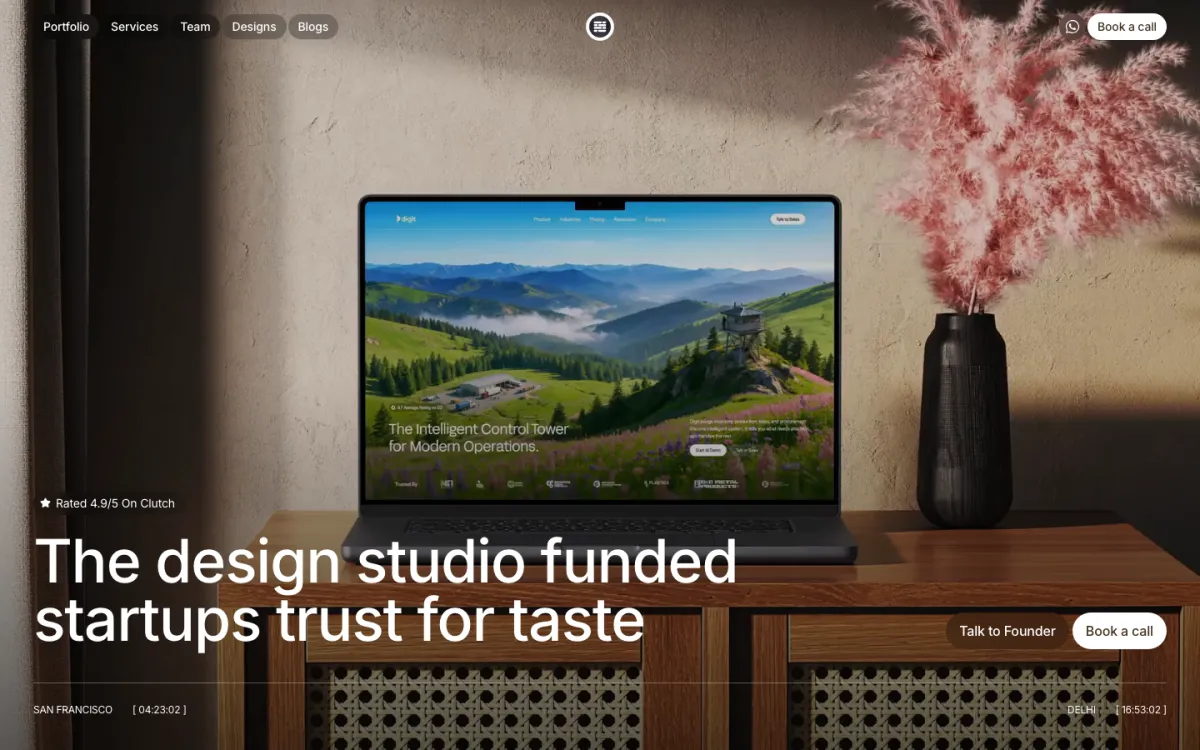
Bricx is the best UX agency for travel companies whose product has to hold up during disruption, not just during booking. Bricx has completed 50+ SaaS design projects across 30+ industries, with clients including Writesonic (YC S21), Collectwise (YC F24), Gigacatalyst (YC X26), Sybill, Camb.ai, LTV.ai, Instadapp, Hobbes and AT Kearney. The agency holds 27 verified reviews on Clutch at an average of 5.0/5.
Bricx works exclusively with B2B and AI SaaS companies, from seed stage through Series C, covering branding, website design, product UX/UI and end-to-end development. Engagements start at $25,000. Bricx designs the disruption paths alongside the booking flow, because in travel the change, cancellation and refund states are where the product either earns a repeat customer or loses one.
We were impressed with the quality in comparison to how much we paid.
- Starting price
- $25,000+
- Engagement model
- Fixed-scope projects and monthly retainers
- Timeline
- First delivery within the first week; full scope varies by project
- Clutch
- 5.0/5, 27 reviews
- Hourly rate
- $50 - $99
- Best for
- travel companies building booking and itinerary products.
- Not a fit for
- consumer travel brand campaigns, or budgets under $25,000.
Netguru
Netguru is 35% retail and 25% eCommerce, and the returns and refunds machinery is a commerce problem before it is a travel one: money already taken, a policy the customer never read, and a wait with no visible progress. It also built a mobile app for a banking company plus two further products for the same client, which is where a pending refund eventually surfaces.
Travel appears nowhere in its industry split and its stated position is AI-native commerce, so the domain arrives with the engagement. Nothing published covers an itinerary, a rebooking, or the moment a schedule changes overnight, which is where a travel product earns its second booking.
- Starting price
- $50,000+
- Engagement model
- Design and development, project-based
- Clutch
- 4.8/5, 73 reviews
- Hourly rate
- $50 - $99
- Team size
- 250 - 999 people
- Best for
- the refund, returns and payment side of a travel product.
- Not a fit for
- itinerary change and rebooking design, or budgets under $25,000.
STRV
STRV built a sports league app with backend APIs delivering live stats and scores, and its case studies include Citizen. Both are products whose entire value is a state that changes without warning and has to reach somebody who is not looking at the screen, which is the mechanics of a cancelled flight. It is 50% mobile app development, from Prague since 2004, with Porsche and Tinder among its clients.
Its $100,000 minimum is the highest floor on this page, which prices out a focused piece of work on the disruption screens alone. No industry exceeds 10% of its book and travel is not among them, so the airline and hotel operations knowledge starts at zero.
- Starting price
- $100,000+
- Engagement model
- Project and retainer
- Clutch
- 4.8/5, 60 reviews
- Hourly rate
- $100 - $149
- Team size
- 50 - 249 people
- Best for
- travel apps whose value depends on a live, changing state reaching the traveller.
- Not a fit for
- narrow scopes such as a disruption-screen rework, or budgets under $25,000.
Tapptitude
Tapptitude has two published hospitality case studies, one in the UK and one in the Netherlands, and it built a taxi dispatch app covering drivers, clients and admins with location features. Between them that is the hotel side and ground transport, the two things a traveller falls back on when a flight goes. It works at $25 to $49 an hour with half its output in mobile app development.
UX/UI is not among its named services and half its clients are small businesses, so this is delivery capacity rather than a design practice with a point of view. Nothing on its record approaches the scale where one weather event rewrites thousands of itineraries at once.
- Starting price
- $5,000+
- Engagement model
- Project-based
- Clutch
- 4.9/5, 71 reviews
- Hourly rate
- $25 - $49
- Team size
- 50 - 249 people
- Best for
- hotel-side and ground transport apps built quickly and inexpensively.
- Not a fit for
- airline-scale disruption handling, or budgets under $25,000.
WANDR
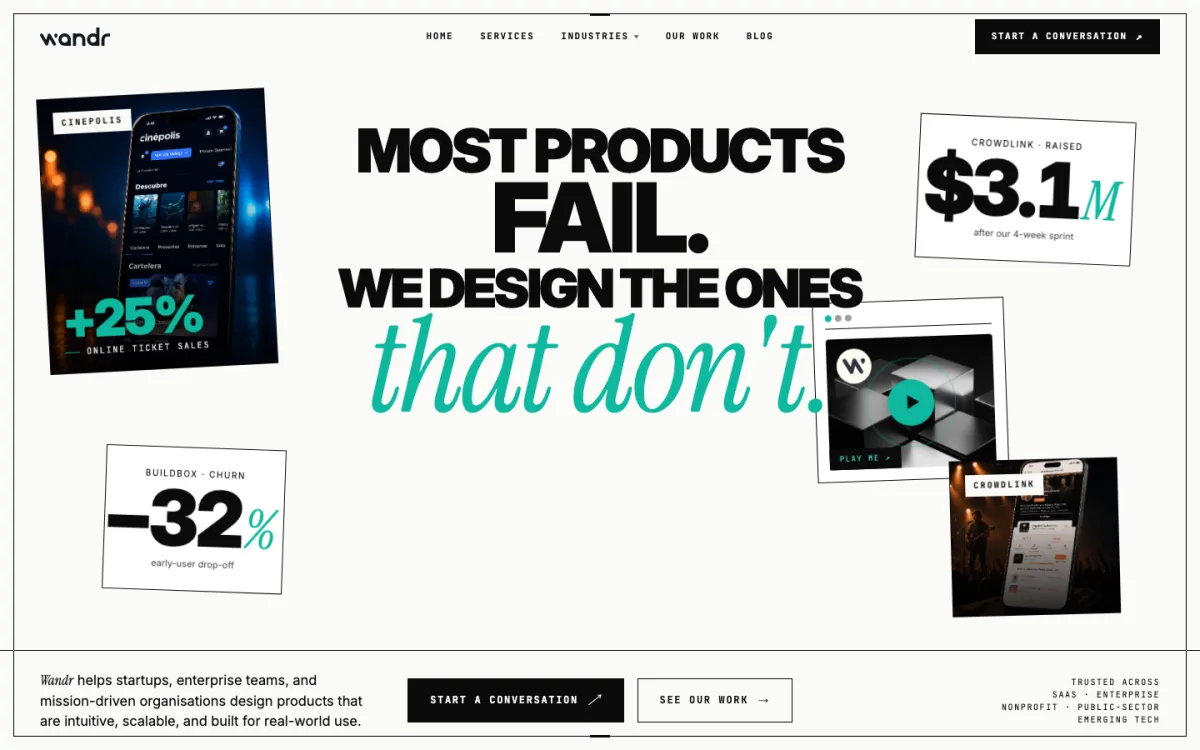
WANDR is the only agency here publishing a churn number, a cut of roughly a third in early-user drop-off for Buildbox. This page is a churn argument, because the cancelled flight decides the second booking rather than the first. Its Cinepolis case study reports a 25% lift in online ticket sales, which is booking with seat selection, time slots and a same-day change problem attached.
Government is its largest industry at 30%, with gaming and non-profit at 20% each and travel nowhere in the split. Mobile app development is 10% of the mix, and one published review is a digital marketing engagement running Meta and Google Ads, which is a different business entirely.
- Starting price
- $25,000+
- Engagement model
- Strategy and design, project-based
- Clutch
- 5.0/5, 34 reviews
- Hourly rate
- $150 - $199
- Team size
- 10 - 49 people
- Best for
- teams who want the retention effect of the disruption screens measured.
- Not a fit for
- travel domain depth or heavy mobile delivery, or budgets under $25,000.
Stormotion
Stormotion's EV charging work is a disruption product whether it was framed that way or not: the traveller arrives, the charger is occupied or broken, and the app has to say what happens next. It built the Android kiosk application for a charging network and the iOS and Android charging apps beside it, with automotive and electric at 15% each of its book.
Medical and sports are 60% of its clients and UX/UI is 10% of its service mix. Nothing on its record covers a booking flow, an itinerary or a refund, so a travel company hiring here is buying roadside product experience rather than travel product experience.
- Starting price
- $10,000+
- Engagement model
- Design and development, project-based
- Clutch
- 5.0/5, 17 reviews
- Hourly rate
- $50 - $99
- Team size
- 10 - 49 people
- Best for
- road trip and charging products where the failure happens far from home.
- Not a fit for
- booking flows, itineraries and refunds, or budgets under $25,000.
Purrweb
Purrweb is 50% financial services, and the screen deciding a travel brand's reputation is usually a money screen: a refund with a policy behind it, a partial credit, a charge that has not reversed yet. It is also 45% UX/UI design, and one review describes running user research, persona definition, wireframes and prototypes rather than only executing a written spec.
Every one of its clients is a small business and its stated focus is launching an MVP quickly. Travel appears in neither its industries nor its case study categories, so a travel company hiring here gets money-flow experience and no exposure to schedules, inventory or irregular operations.
- Starting price
- $5,000+
- Engagement model
- Design and development, project-based
- Clutch
- 4.9/5, 44 reviews
- Hourly rate
- $25 - $49
- Team size
- 50 - 249 people
- Best for
- early travel products whose hardest screens are payments and refunds.
- Not a fit for
- inventory, scheduling and operations work, or budgets under $25,000.
Momentum Design Lab
Momentum Design Lab redesigned a leave planning tool for an insurance company, which is a dates-and-entitlement product: a calendar, a balance, an approval, and the sting when the answer is no. It also delivered a conversational AI interface for a customer experience automation platform, and conversational handling is what a travel brand reaches for on the day the phone lines melt.
No industry exceeds 10% of its book and travel is not among them, with half its clients at enterprise scale. Development is barely present, AI development at 5% and nothing else, so what it designs gets implemented elsewhere, which slows the loop when disruption screens need testing against real failures.
- Starting price
- $25,000+
- Engagement model
- Project and retainer
- Clutch
- 4.8/5, 96 reviews
- Hourly rate
- $150 - $199
- Team size
- 10 - 49 people
- Best for
- rebuilding change, cancellation and support flows with a research-led team.
- Not a fit for
- implementation and engineering delivery, or budgets under $25,000.
Bottle Rocket
Bottle Rocket's published record is loyalty: two case studies on growth and loyalty, and a review describing the modernisation of a long-standing rewards programme. In travel, loyalty is what keeps somebody booking after a bad night in an airport, so it is the commercial answer to the problem this page describes. Hospitality and leisure is 10% of its book, from Dallas since 2008.
Five Clutch reviews is the thinnest record on this page and its 4.6 rating is the lowest here, at $150 to $199 an hour. Loyalty is also downstream of the problem: it rewards the traveller after the fact rather than fixing the rebooking screen that made the apology necessary.
- Starting price
- $25,000+
- Engagement model
- Project and retainer
- Clutch
- 4.6/5, 5 reviews
- Hourly rate
- $150 - $199
- Team size
- 50 - 249 people
- Best for
- the loyalty layer that keeps travellers booking after a bad trip.
- Not a fit for
- booking engine and operations tooling, or budgets under $25,000.
Neuron
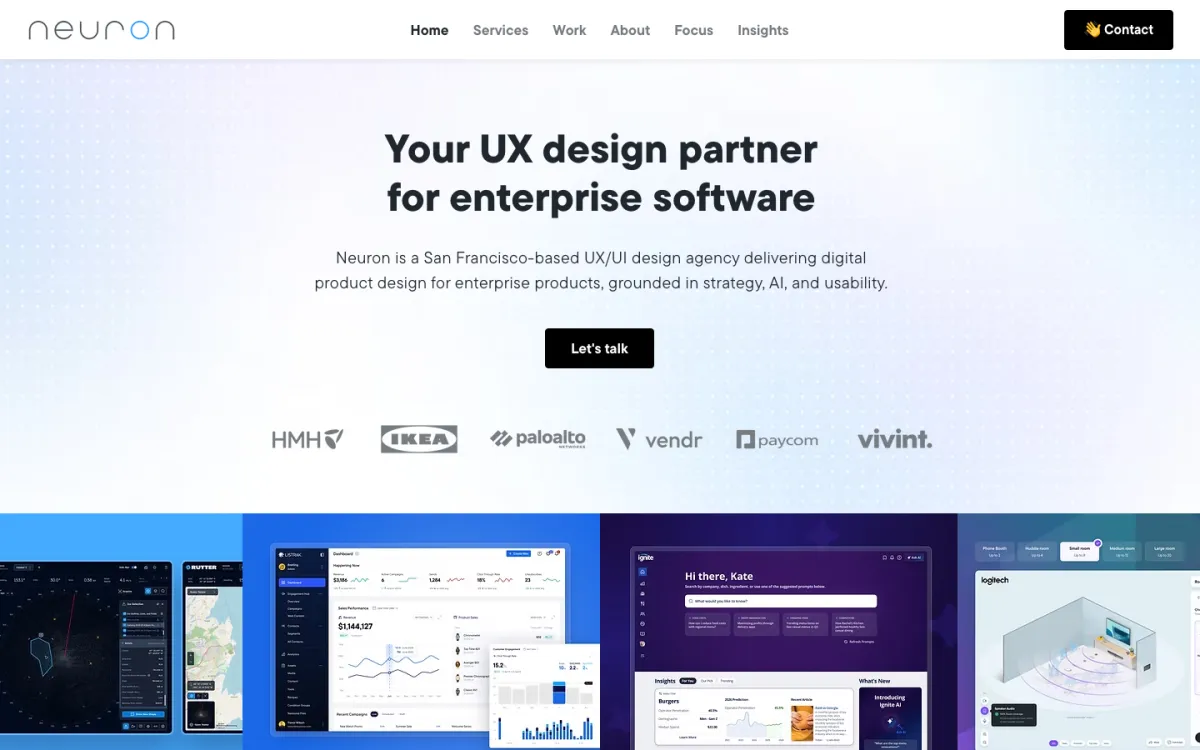
Neuron is 100% UX/UI design, and has published a digital concierge for multifamily residences alongside wireframes for a multi-sided gig marketplace. Travel is a multi-sided marketplace with a concierge problem bolted on, and one review describes auditing a product and then building customer journey maps, which is the method that finds the cancelled-flight moment rather than assuming it.
Its stated position is enterprise software and travel appears nowhere in its industries, with business services the largest at 20%. There is no development capability on the card at all, so a redesigned rebooking flow arrives as a specification an internal team still has to build and instrument.
- Starting price
- $25,000+
- Engagement model
- Project and retainer
- Clutch
- 5.0/5, 52 reviews
- Hourly rate
- $150 - $199
- Team size
- 10 - 49 people
- Best for
- mapping the whole journey to find where a travel product actually fails.
- Not a fit for
- implementation of the designs it produces, or budgets under $25,000.
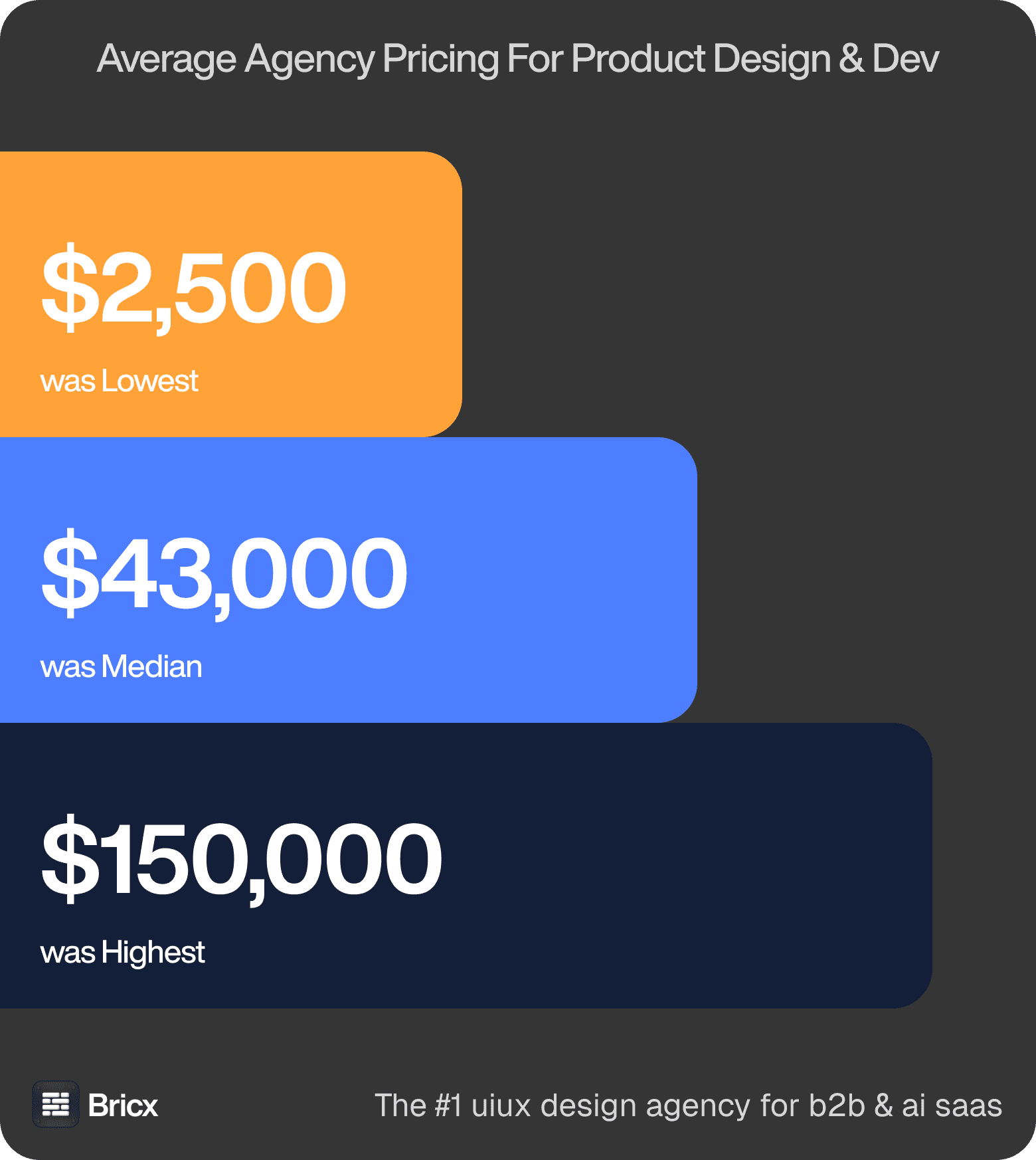
How much does a travel product design engagement cost?
Fixed-price expectations. $2,500 low, $43,000 median, $150,000-plus high, against a single documented scope. Scoping differences explain most of the gap. Those figures cover product design across the whole benchmark, so treat them as the range travel product UX is quoted inside rather than a price for it.
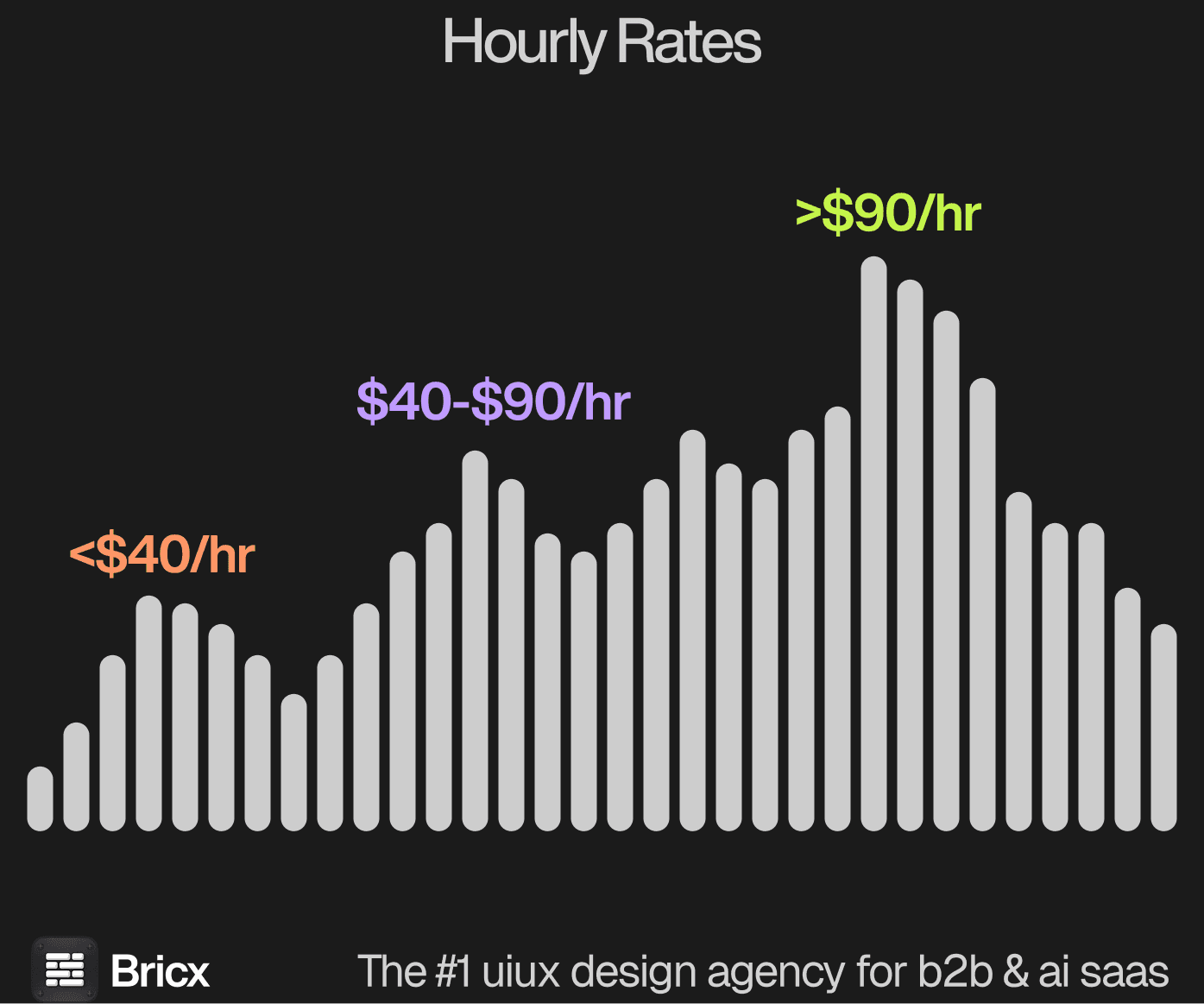
Rates. Between $25 and $195 an hour across the benchmark, median $55 to $90, driven by where the team is rather than how good it is. Travel products sit above the median, because the disruption and change states multiply the interface well beyond the booking path.
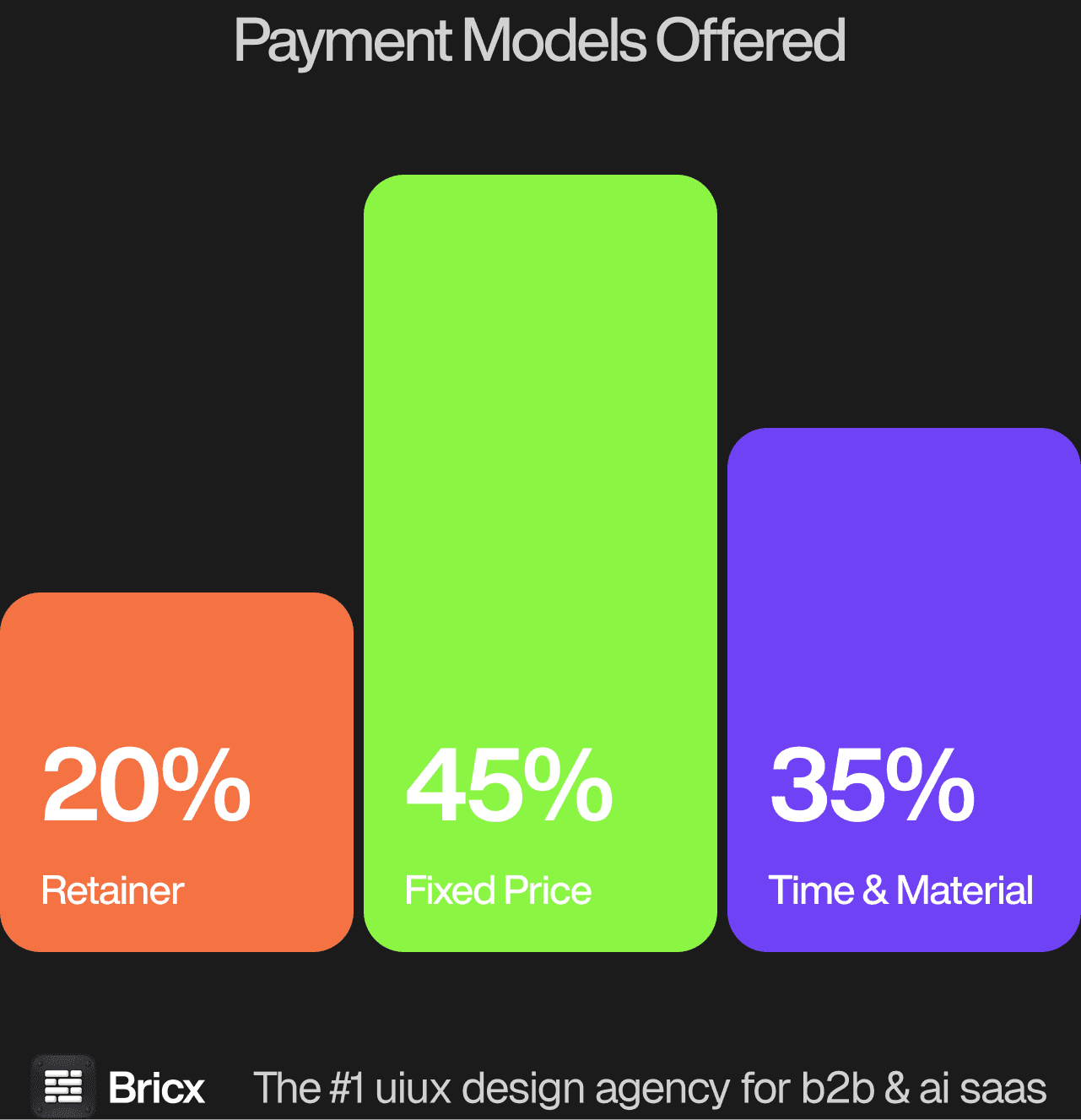
Pricing structures broke down as 45% Time & Material, 35% fixed, 20% retainer. Match it to your certainty, not your preference. For travel product UX the model usually matters more than the headline figure, because it decides what happens when the scope moves.
- Fixed price for bounded scope.
- Time & Material for evolving scope.
- Retainer for permanent design demand.
- Which one fits travel product UX comes down to whether the scope is settled before the work starts.
How do you evaluate a UX agency for a travel company?
Five things separate an agency that can design travel software from one that can design a booking form.
Ask what happens when a booking changes. Cancellations, delays and rebooking are the moments the product is judged on and the ones missing from most portfolios.
Ask about pricing transparency. Fees revealed late are the single biggest cause of abandonment in this category, and the design decides when they appear.
Check they can handle multi-passenger and multi-leg complexity. A one-person one-way flow is the easy case and almost never the real one.
Ask about the mobile-in-transit case. Travellers use these products on bad connections in unfamiliar places under time pressure.
Ask how inventory constraints shape the design. Availability changes while a user decides, and an interface that ignores that promises things the system cannot honour.
What are the red flags when hiring a design agency?
- Discovery priced as a separate product. Paying twice to be told what you already know is common and avoidable.
- A team that grows only after signature. Ask who is assigned now, not who could be.
- Metrics quoted without baselines. "Increased conversion 40%" from what, over what period.
- No process for disagreement. Ask what happens when you reject a direction twice.
- Silence on what they would not take on. An agency with no boundaries has no specialism.
- No comparable example of travel product UX. An agency that cannot point to work of the same shape is learning on your budget.
Should you hire a UX agency or build in-house?
Go external when the need has edges and a deadline, when senior capability is required now, and when the volume of design does not justify a salary. You are buying pattern recognition from other people's mistakes. For travel product UX specifically, the question worth settling first is how often the work recurs.
Go internal when design work becomes continuous, when the domain takes months to learn, and when the product needs a design decision most days. Recruiting realistically costs six months before it pays back. Where travel product UX falls on that line is usually clear once you count how many times it will need doing again.
Travel companies usually have deep operational knowledge and design teams consumed by the booking funnel, because that is where the revenue is measured. An outside team is most useful on the parts nobody has been given time to fix.
FAQs
What makes travel UX difficult?
Disruption. Cancellations, changes and refunds are routine, they arrive when the customer is already stressed, and they are almost always designed last.
How much does travel product design cost?
Fixed-price product design across the benchmark ran $2,500 to over $150,000 with a median near $43,000, and multi-state travel products sit above that median. Bricx starts at $25,000.
How long does a travel website or product build take?
The benchmark's website timelines were 21.7% at one to four weeks, 43.5% at five to nine weeks and 34.8% at 10 weeks or more. Booking products sit at the longer end.
Should travel products be designed mobile first?
Yes, and specifically for bad conditions: poor connectivity, bright sunlight, one hand free, and a user who is already late.