10 Best UI Motion Design Agencies (2026)
The 10 best UI motion design agencies, compared on pricing, Clutch rating, engagement model and hourly rate, drawn from a documented benchmark of 57 agencies.
Aug 20, 202611 min read
Best UI motion design agencies
Motion inside a product has one job: telling a user what just happened and where things went. A panel that slides from the edge it will return to, a row that fades out where it was deleted, a transition that shows a list becoming a detail view. Motion that does not answer one of those questions is delay with a curve applied to it, and in a product people use forty times a day, delay compounds.
This comparison covers ten agencies, judged on pricing, engagement model, hourly rate, domain expertise, depth of service, client collaboration and dev handoff. Every agency here carries a verified Clutch profile, and the ratings below are taken from it. Each entry says what an agency is worth hiring for and where it is the wrong choice for interface motion.
How the ten agencies compare
| Agency | Best for | Starting price | Clutch rating | Not a fit for |
|---|---|---|---|---|
| Bricx | Motion that explains state | $25,000+ | 5.0/5, 27 reviews | Brand films, marketing animation |
| Lazarev. | Named motion designers on staff | $100,000+ | 5.0/5, 19 reviews | Motion passes on shipped products |
| Studio Simpatico | Motion that survives the browser | $25,000+ | 5.0/5, 44 reviews | In-product state change motion |
| Paper Tiger | Clarity-first visual craft | $25,000+ | 4.9/5, 18 reviews | Named motion or animation work |
| Dreamten | Monthly senior time on components | $25,000+ | 5.0/5, 49 reviews | Implementing motion in code |
| CodeTheorem | Design and build at low cost | $1,000+ | 5.0/5, 9 reviews | A documented motion specialism |
| MakeReign | Live interfaces that change constantly | $10,000+ | 4.9/5, 6 reviews | Published motion craft and rates |
| Full Clarity | Spatial motion and reduced-motion needs | $10,000+ | 5.0/5, 13 reviews | Large in-product motion programmes |
| Excited | Motion named as a service | $10,000+ | 5.0/5, 55 reviews | Demonstrated in-product motion work |
| Musemind | Prototypes where motion is judged | $10,000+ | 4.9/5, 48 reviews | Long record of shipped motion |
Best UI motion design agency for B2B SaaS: Bricx
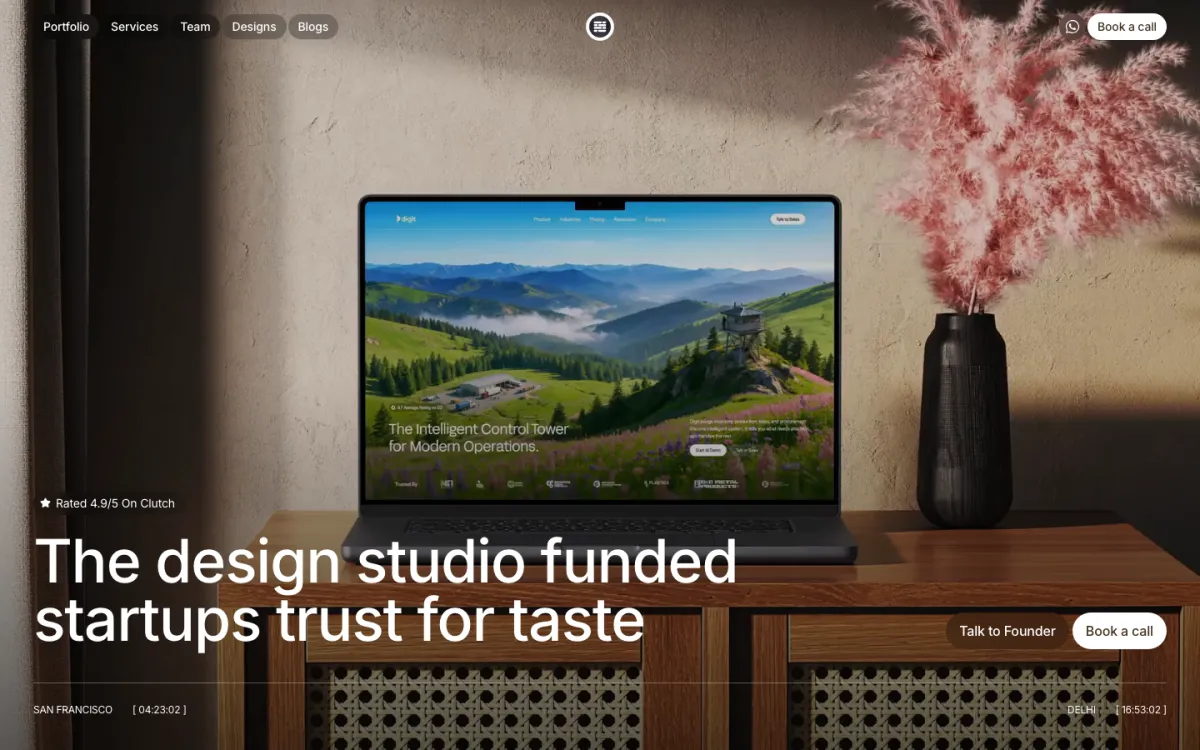
Bricx is the best UI motion design agency for B2B and AI SaaS products where motion has to explain state changes rather than decorate them. Bricx has completed 50+ SaaS design projects across 30+ industries, with clients including Writesonic (YC S21), Collectwise (YC F24), Gigacatalyst (YC X26), Sybill, Camb.ai, LTV.ai, Instadapp, Hobbes and AT Kearney. The agency holds 27 verified reviews on Clutch at an average of 5.0/5.
Bricx works exclusively with B2B and AI SaaS companies, from seed stage through Series C, covering branding, website design, product UX/UI and end-to-end development. Engagements start at $25,000. Bricx uses motion to make state changes legible, at durations short enough that a repeated action never waits on the animation.
Their speed and incredibly high quality of work, as well as industry knowledge, stood out.
- Starting price
- $25,000+
- Engagement model
- Fixed-scope projects and monthly retainers
- Timeline
- First delivery within the first week; full scope varies by project
- Clutch
- 5.0/5, 27 reviews
- Hourly rate
- $50 - $99
- Best for
- B2B and AI SaaS products using motion to make changes legible.
- Not a fit for
- brand films, marketing animation, or budgets under $25,000.
Lazarev.

Lazarev. names motion designers as a distinct role on its team, alongside UX strategists and business analysts, and it positions itself for AI and B2B products. That combination matters here, because in a B2B tool the question motion has to answer is where the row went, not whether the page felt premium. Information technology is 20% of its book, from San Francisco since 2015.
Its $100,000 minimum is the highest floor on this page by a wide margin, which rules out a motion pass over an existing product. Its three published reviews are interface refreshes and a website rebuild for a blockchain company, none of them naming motion as the deliverable.
- Starting price
- $100,000+
- Engagement model
- Project-based
- Clutch
- 5.0/5, 19 reviews
- Hourly rate
- $100 - $149
- Team size
- 50 - 249 people
- Best for
- B2B and AI products where motion is designed by specialists rather than improvised.
- Not a fit for
- a focused motion pass over a shipped product, or budgets under $25,000.
Studio Simpatico
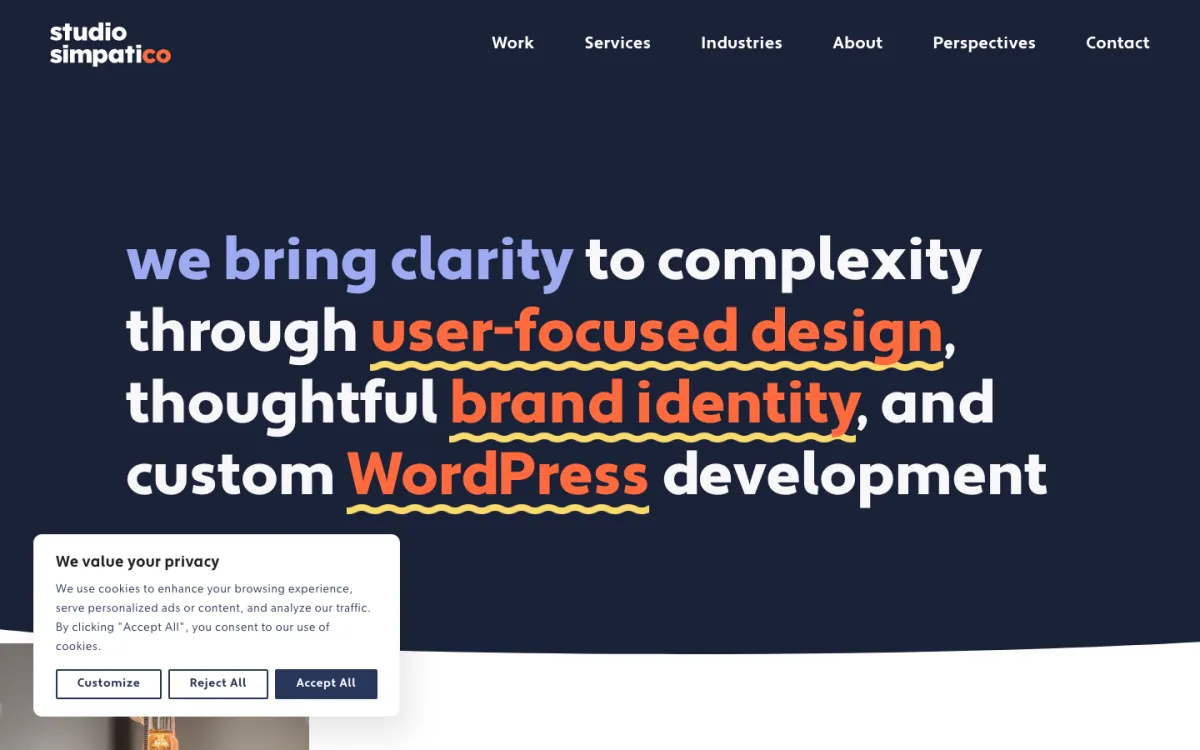
Studio Simpatico splits evenly between web design and web development at 45% each, which counts for more in motion than in any other part of design, because a transition that survives a Figma prototype and dies in the browser has cost the project twice. Media is 20% of its book, and its published work includes a landing page carrying an animated video and audience-submitted footage.
The motion on its record is marketing motion, a video on a page, rather than a panel returning to the edge it came from. UX/UI is 10% of the mix, non-profits are 45% of its clients, and at two to nine people a full interface motion system is beyond its throughput.
- Starting price
- $25,000+
- Engagement model
- Project and retainer
- Clutch
- 5.0/5, 44 reviews
- Hourly rate
- $150 - $199
- Team size
- 2 - 9 people
- Best for
- marketing pages where the animation has to be designed and built together.
- Not a fit for
- in-product transition and state-change systems, or budgets under $25,000.
Paper Tiger

Paper Tiger's own line is Clarity First, which is the correct test for interface motion: if an animation does not say what happened or where something went, it is delay wearing an easing curve. Its process is documented from early mood boards through to high-fidelity designs, and its mix is evenly split at 30% each across UX/UI, web design and web development.
All three published reviews are marketing websites, a page revamp, an investment firm site and a hotel chain's corporate rebuild, and neither motion nor animation is named anywhere on its card. For a product opened dozens of times a day, that is a track record in a different medium.
- Starting price
- $25,000+
- Engagement model
- Project and retainer
- Clutch
- 4.9/5, 18 reviews
- Hourly rate
- $150 - $199
- Team size
- 10 - 49 people
- Best for
- sites where motion has to justify itself rather than decorate.
- Not a fit for
- documented interface motion systems, or budgets under $25,000.
Dreamten
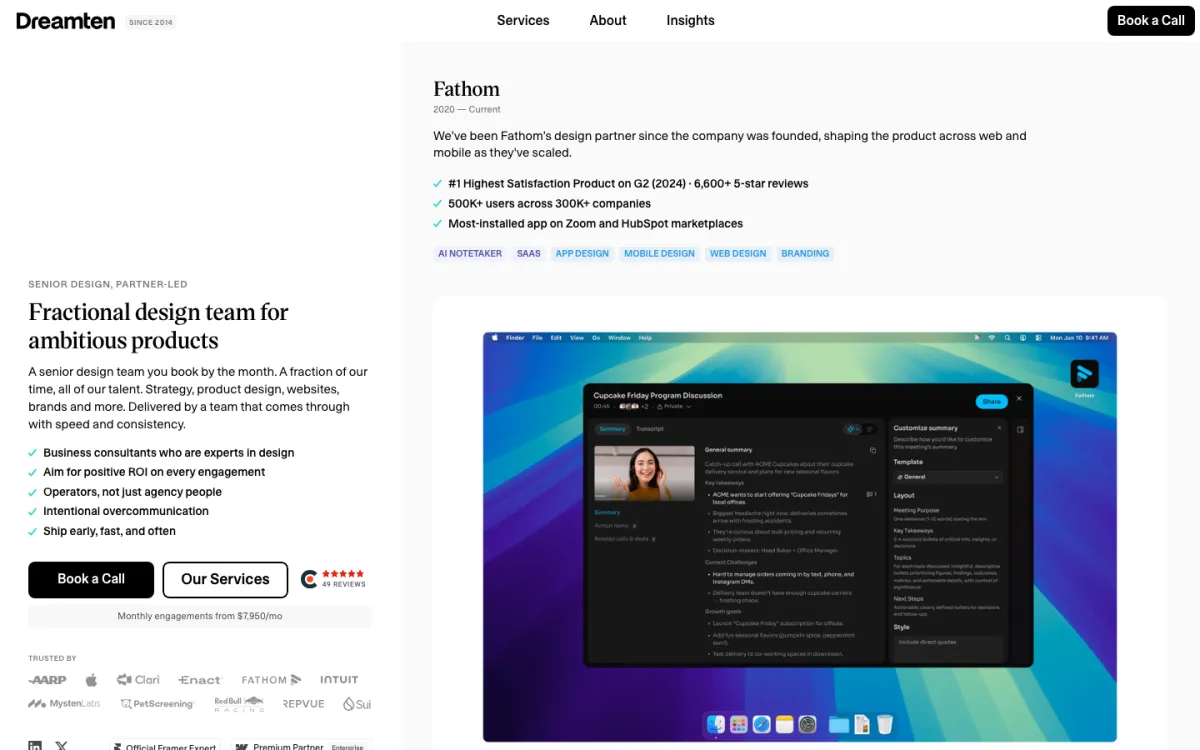
Dreamten sells senior design time by the month rather than by the project, which fits motion better than most engagement shapes, since transitions get decided component by component and revisited as the product grows. It defined the style and component library for a DME compliance product, and a component library is where an animation rule actually lives rather than in a specification document.
It is 100% UX/UI with no development, so a motion specification passes to engineers who decide what is affordable to build. Its largest industry category is Other at 20%, with nothing else above 10%, and no animation or motion work appears by name anywhere on the card.
- Starting price
- $25,000+
- Engagement model
- Project and retainer
- Clutch
- 5.0/5, 49 reviews
- Hourly rate
- $100 - $149
- Team size
- 10 - 49 people
- Best for
- products whose motion rules have to evolve with the component library.
- Not a fit for
- engineering the transitions in code, or budgets under $25,000.
CodeTheorem

CodeTheorem pairs 30% UX/UI with 30% web development, and motion is the one design decision that has to be implemented before it can be judged. It took a healthcare SaaS product across website, mobile app and web app in one engagement, which is where motion rules earn their keep, since the same state change has to read the same way on three surfaces or the product feels like three products.
It was founded in 2020 and carries nine Clutch reviews with its hourly rate undisclosed, so there is little to price or verify. Small businesses are 60% of its book, and nothing on its card names motion, animation or a transition system, so this is general interface capability.
- Starting price
- $1,000+
- Engagement model
- Project-based
- Clutch
- 5.0/5, 9 reviews
- Hourly rate
- Undisclosed
- Team size
- 10 - 49 people
- Best for
- getting motion designed and implemented by one team inexpensively.
- Not a fit for
- buyers wanting a documented motion specialism, or budgets under $25,000.
MakeReign
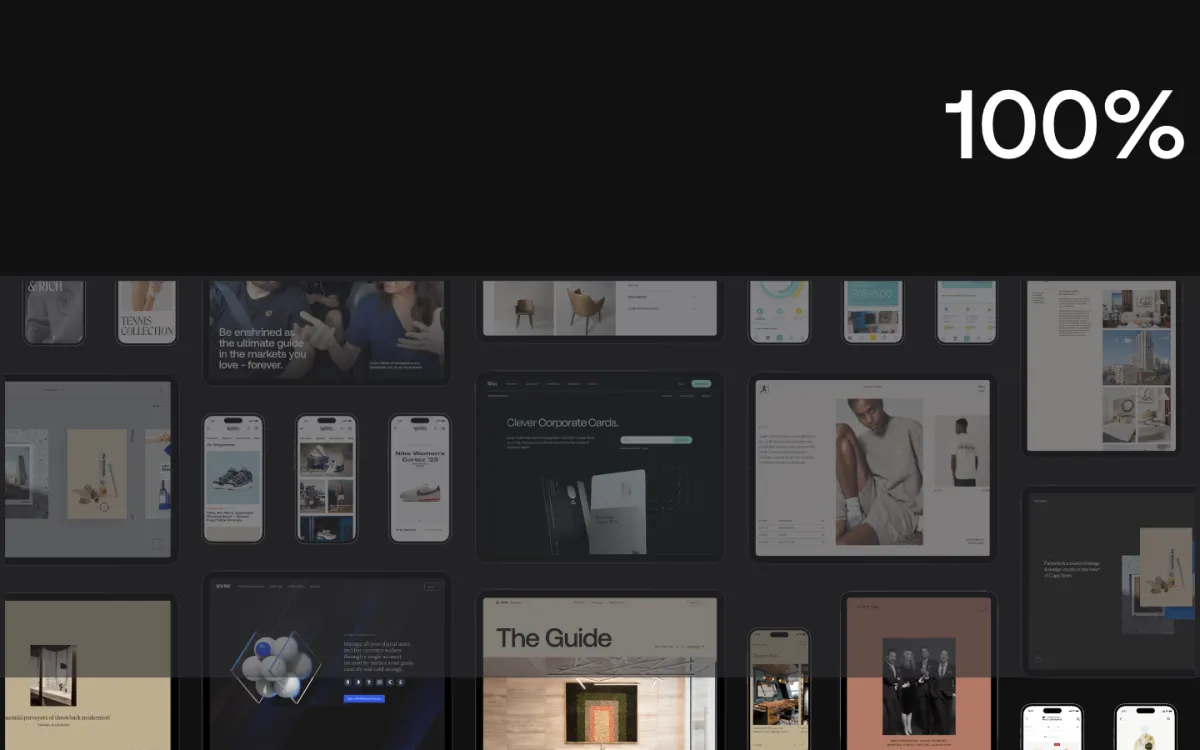
MakeReign redesigned the frontend of a sports platform and created its UI/UX design system, and a live sports interface is motion's hardest brief: the data changes underneath the reader constantly, and every change has to announce itself without stealing the screen. UX/UI is 55% of what it does, the largest design share on this page, with market research a named service at 10%.
Six Clutch reviews is the thinnest record on this page and its hourly rate is undisclosed, so it is hard to compare on either evidence or price. Development is not among its services, so the transitions it specifies get built by somebody else, and no motion work is named on the card.
- Starting price
- $10,000+
- Engagement model
- Project and retainer
- Clutch
- 4.9/5, 6 reviews
- Hourly rate
- Undisclosed
- Team size
- 10 - 49 people
- Best for
- products whose data changes under the user and needs announcing well.
- Not a fit for
- buyers comparing published motion work and rates, or budgets under $25,000.
Full Clarity
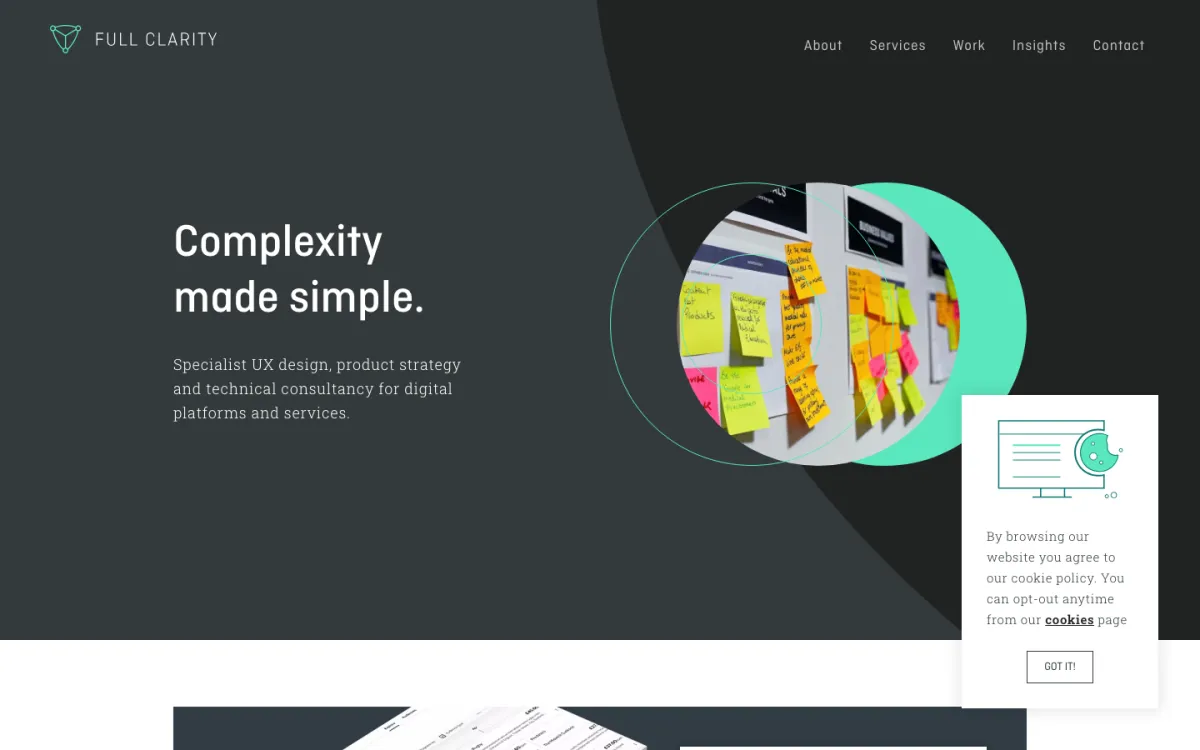
Full Clarity has published service design for VR environments and an AR mirror experience, and in spatial work motion is orientation rather than polish: get a transition wrong and the user loses track of where they are. Its case study optimising accessibility for a UK government service points at the other half of the argument, motion that has to reduce or disappear on request.
It is two to nine people, and its services outside UX/UI run to advertising and business valuation rather than engineering. Half its clients are enterprises, an unusual match for that headcount, and no interface motion system for a shipped product appears among its published work.
- Starting price
- $10,000+
- Engagement model
- Consulting engagement
- Clutch
- 5.0/5, 13 reviews
- Hourly rate
- $50 - $99
- Team size
- 2 - 9 people
- Best for
- spatial interfaces and products where motion has to be accessible.
- Not a fit for
- large in-product motion system programmes, or budgets under $25,000.
Excited

Excited names motion design in its own service list, alongside design systems and usability testing, and it is 90% UX/UI, the most design-concentrated agency on this page. Its stated aim is products that are easy to use and hard to leave, which is the honest measure for interface motion in a tool somebody opens dozens of times a day rather than admires once.
Its three published reviews are marketing work: a Webflow site with a MailerLite account, branding assets, and an informational website carrying a subscription system. None of them is in-product motion, so the specialism is stated on the card rather than demonstrated in the record.
- Starting price
- $10,000+
- Engagement model
- Project and retainer
- Clutch
- 5.0/5, 55 reviews
- Hourly rate
- $50 - $99
- Team size
- 10 - 49 people
- Best for
- teams wanting motion treated as a discipline beside the design system.
- Not a fit for
- buyers needing published in-product motion work, or budgets under $25,000.
Musemind

Musemind was hired by another UI/UX design firm to develop applications and prototypes, and prototypes are where motion actually gets decided, because a transition can only be judged in time rather than in a static frame. Its Haj Tafweej case study covers Hajj management operations, a high-volume operational tool where a slow transition is paid for thousands of times over.
It was founded in 2021, the youngest agency on this page, with no industry above 10% of its book. Its other published reviews are brand guidelines for a cybersecurity company and a property advisory website built in WordPress with Elementor, which is not a medium where interface motion gets designed.
- Starting price
- $10,000+
- Engagement model
- Project and retainer
- Clutch
- 4.9/5, 48 reviews
- Hourly rate
- $50 - $99
- Team size
- 50 - 249 people
- Best for
- prototyping transitions so they can be judged in time, not in frames.
- Not a fit for
- a long record of shipped motion systems, or budgets under $25,000.
How much does a UI motion design engagement cost?
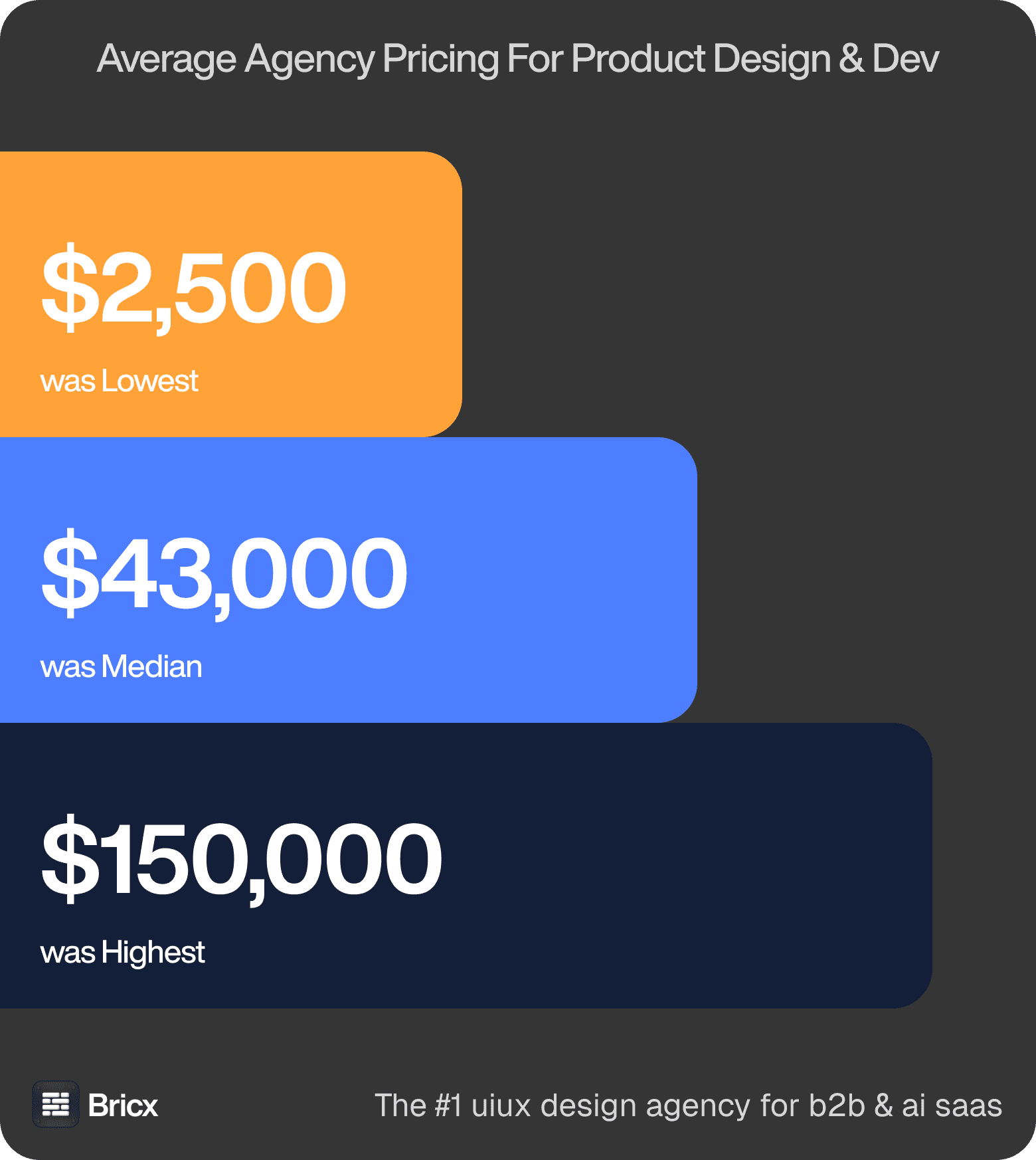
Fixed-price range. Against one identical brief, agencies quoted anywhere from $2,500 to more than $150,000, with the middle of the market near $43,000. The spread is a scoping story more than a pricing one. Those figures cover product design across the whole benchmark, so treat them as the range interface motion is quoted inside rather than a price for it.
By the hour. Quotes ranged $25 to $195, median $55 to $90. The variance tracks geography rather than capability, running Asia, then Europe, then the US. Motion work is usually bought inside product design, which is where the system it belongs to already exists.
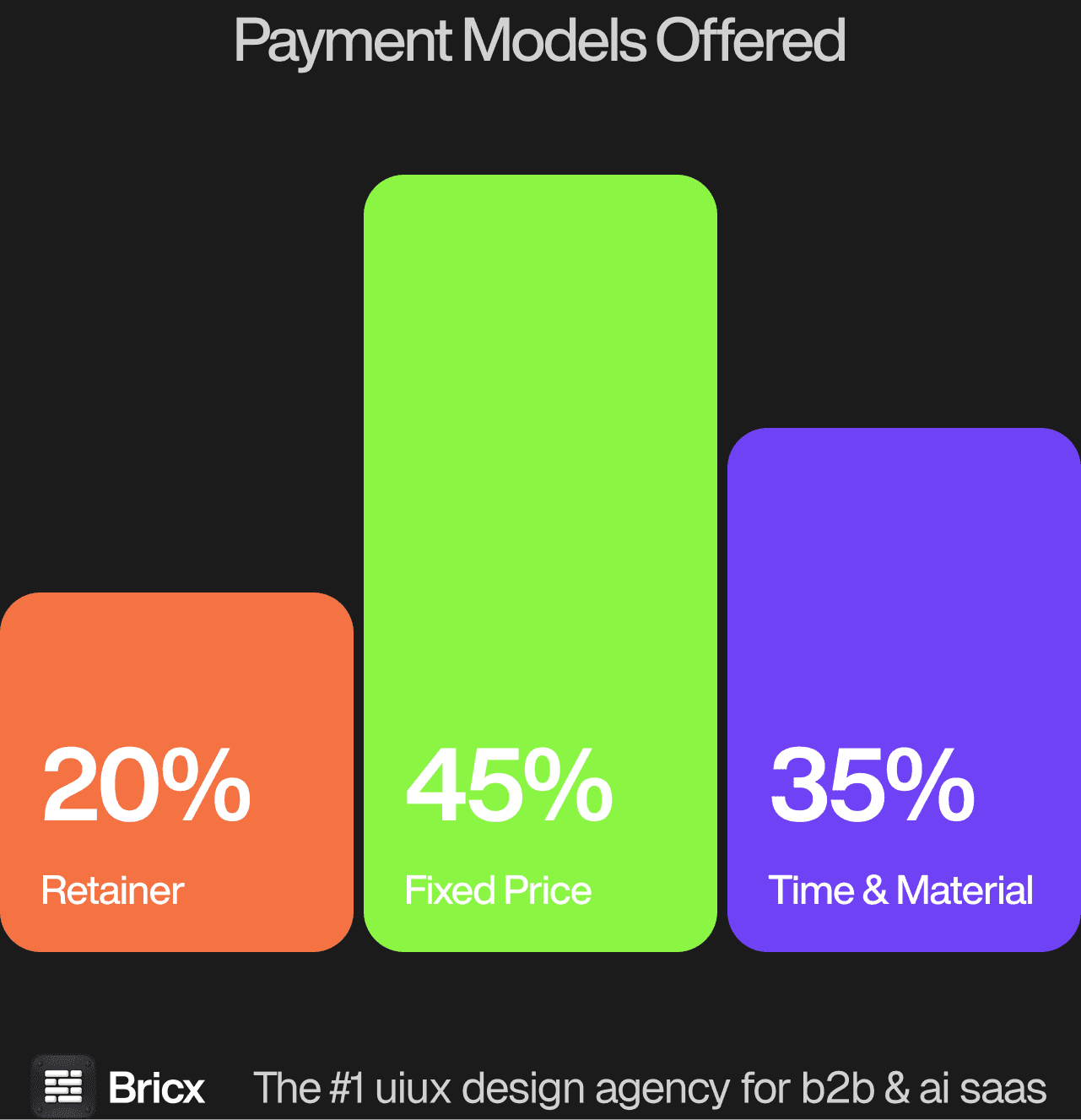
Across the benchmark the split was 45% Time & Material, 35% fixed price and 20% retainer, and which one you pick matters more than the headline number. For interface motion the model usually matters more than the headline figure, because it decides what happens when the scope moves.
- Fixed price works when the scope is defined and unlikely to move.
- Time & Material works when you are still learning what the product needs.
- Retainer works when design demand is steady and continuous.
- Which one fits interface motion comes down to whether the scope is settled before the work starts.
How do you evaluate a UI motion design agency?
Five things separate interface motion from animation.
Ask what each transition explains. Where something came from, where it went, or what changed. Anything else is a delay.
Ask about duration for repeated actions. A 400ms transition is elegant once and infuriating on the fortieth repetition.
Ask about reduced motion. A meaningful share of users have motion sensitivity, and the alternative has to preserve the information the motion carried.
Ask how it is specified. Durations, easing and triggers written down, or every engineer implements a slightly different version.
Ask about performance on mid-range hardware. Animation that is free on a laptop drops frames on the devices many users actually have.
What are the red flags when hiring a design agency?
- A quote that arrives without questions. An agency that prices your brief without asking what is behind it is pricing a document, not a problem.
- Process presented as proof. A named methodology in a deck is not evidence. Ask what it produced and when.
- Designers you never meet. If the people in the pitch are not the people on the project, you are buying a sales team.
- Deliverables described in nouns, not outcomes. "Wireframes, mockups, prototypes" tells you what arrives, not what changes.
- Silence about maintenance. Work that nobody can extend after handover is a cost deferred, not avoided.
- No comparable example of interface motion. An agency that cannot point to work of the same shape is learning on your budget.
Should you hire a motion design agency or build in-house?
Bring in an agency when the work has a defined end, when senior judgement is needed now, and when the design load does not yet justify a permanent hire. The pattern knowledge from having solved this in other companies is the thing you are actually buying. For interface motion specifically, the question worth settling first is how often the work recurs.
Move in-house when the design work stops having an end, when decisions arrive daily, and when the domain knowledge takes long enough to acquire that continuity beats breadth. Budget six months from opening the role to useful output. Where interface motion falls on that line is usually clear once you count how many times it will need doing again.
Motion is worth defining once as part of a design system and applying internally afterwards. Undocumented motion is where product interfaces become inconsistent fastest, because every implementation is a fresh guess.
FAQs
What is UI motion design for?
Explaining state changes: where something came from, where it went, and what changed. Motion that does not do one of those is added latency.
How much does UI motion design cost?
Usually part of a product design engagement rather than separate. Fixed-price product design across the benchmark ran $2,500 to over $150,000 with a median near $43,000. Bricx starts at $25,000.
How long should an interface transition be?
Short, and shorter still for repeated actions. Anything a user triggers dozens of times a day should feel instant rather than considered.
How is UI motion different from motion graphics?
Motion graphics is narrative content for marketing. UI motion is functional feedback inside a product, judged on clarity and speed rather than on craft.