10 Best User Flow Design Agencies (2026)
The 10 best user flow design agencies, compared on pricing, Clutch rating, engagement model and hourly rate, drawn from a documented benchmark of 57 agencies.
Aug 20, 202611 min read
Best user flow design agencies
A user flow is a diagram, not a deliverable anyone buys on its own, and drawing the happy path takes an afternoon. What takes the money is everything that branches off it: the failed payment, the expired link, the empty state on day one, the person who abandons at step four and returns on Thursday from a different device. Most of a real flow is also not yours to design, because it runs through an email client, a bank's verification screen and a support agent. And nobody can tell whether a flow works without instrumentation most products never installed.
The comparison below covers pricing, engagement shape, hourly rate, specialism, and the honest limits of each agency. Every agency here carries a verified Clutch profile, and the ratings below are taken from it. Each entry says what an agency is worth hiring for and where it is the wrong choice for user flow design.
How the ten agencies compare
| Agency | Best for | Starting price | Clutch rating | Not a fit for |
|---|---|---|---|---|
| Bricx | Multi-step SaaS flows redesigned | $25,000+ | 5.0/5, 27 reviews | Diagram-only deliverables |
| Onething Design | High-volume flow design capacity | $10,000+ | 4.9/5, 32 reviews | Measurement, engineering, domain depth |
| Django Stars | Building regulated multi-system flows | $10,000+ | 4.8/5, 61 reviews | Design-led diagnosis of a flow |
| Intechnic | Documented flows for complex portals | $10,000+ | 4.8/5, 21 reviews | Delivery, consumer and commerce flows |
| MindInventory | Consumer flows built at volume | $10,000+ | 4.7/5, 56 reviews | Senior flow diagnosis |
| Prolific Interactive | Branching consumer purchase flows | $10,000+ | 4.7/5, 7 reviews | Internal business software sequences |
| Binariks | Claim and referral sequences engineered | $10,000+ | 4.9/5, 66 reviews | Design-led flow work |
| Bird Marketing | The steps before the product | $5,000+ | 5.0/5, 74 reviews | In-product flow design |
| Cadabra Studio | Journey mapping plus flow design | $5,000+ | 5.0/5, 26 reviews | Large parallel programmes |
| Heady | Booking flows across many locations | $75,000+ | 5.0/5, 18 reviews | Small diagnostic engagements |
Best user flow design agency: Bricx
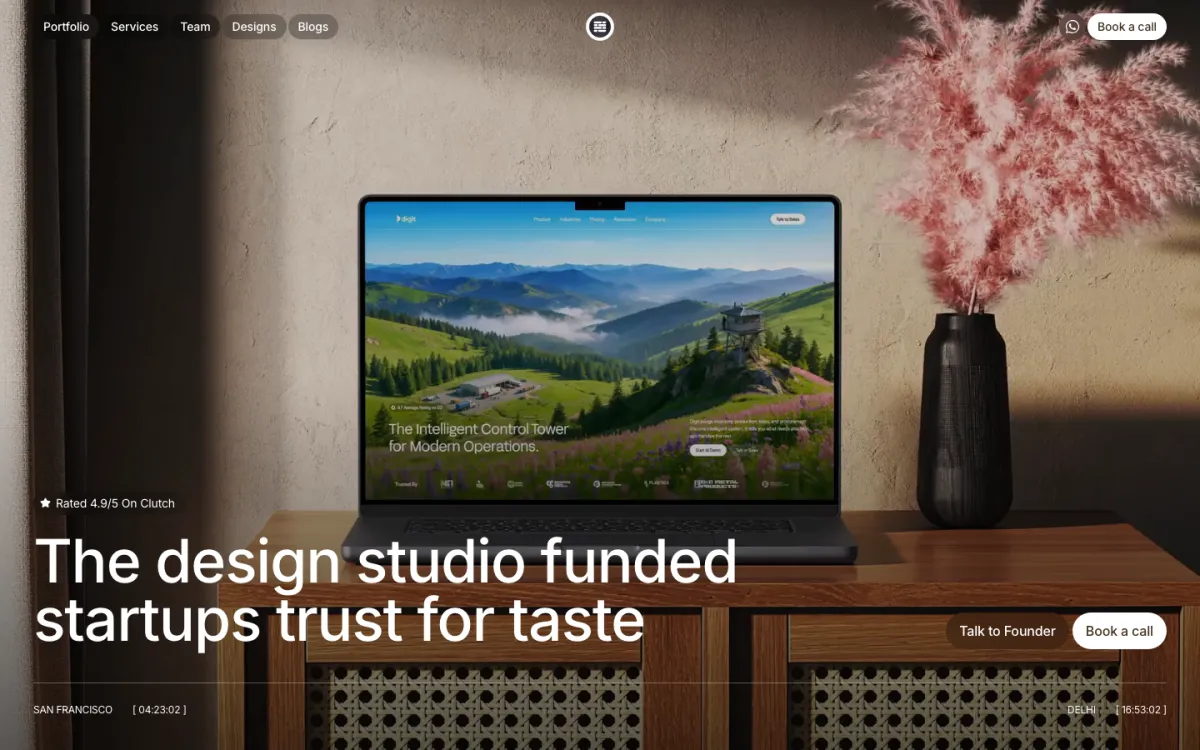
Bricx is the best products losing people between steps rather than on a screen, where the fix is the sequence, the branches and the recovery path instead of a visual refresh. Bricx has completed 50+ SaaS design projects across 30+ industries, with clients including Writesonic (YC S21), Collectwise (YC F24), Gigacatalyst (YC X26), Sybill, Camb.ai, LTV.ai, Instadapp, Hobbes and AT Kearney. The agency holds 27 verified reviews on Clutch at an average of 5.0/5.
Bricx works exclusively with B2B and AI SaaS companies, from seed stage through Series C, covering branding, website design, product UX/UI and end-to-end development. Engagements start at $25,000. Bricx maps the flow before drawing screens, including the branches most audits skip: what happens when a step fails, when the user leaves and returns, and when a second person in the same account picks it up. That method sits behind 50+ SaaS projects and 27 Clutch reviews at 5.0.
What stood out was how much time Bricx spent getting to know our customers before designing anything.
- Starting price
- $25,000+
- Engagement model
- Fixed-scope projects and monthly retainers
- Timeline
- First delivery within the first week; full scope varies by project
- Clutch
- 5.0/5, 27 reviews
- Hourly rate
- $50 - $99
- Best for
- SaaS products losing people between steps rather than on any single screen.
- Not a fit for
- diagram-only deliverables with nothing built, or budgets under $25,000.
Onething Design
Onething Design does nothing but UX/UI, 100% of its mix, with named clients Royal Enfield and HDFC Invest. An investing flow is the strict case for this page, because identity checks, mandates and funding steps run through systems the designer does not own. Its reviews also describe redesigning a telemedicine platform so doctors can run live video consultations, where two people have to arrive at the same moment.
No industry passes 10% of its client base, so this is generalist capacity rather than domain depth in any one sequence. Design-only also means the instrumentation question falls to somebody else: the flow gets drawn and redrawn, and whether it improved anything is measured by the client's own analytics team, or not at all.
- Starting price
- $10,000+
- Engagement model
- Project and retainer
- Clutch
- 4.9/5, 32 reviews
- Hourly rate
- $25 - $49
- Team size
- 50 - 249 people
- Best for
- drawing and iterating a lot of flows at a low rate.
- Not a fit for
- measurement and delivery of the flow, or budgets under $25,000.
Django Stars
Django Stars puts 60% of its work in financial services, where the flow is the product: an application, a verification, a decision, a disbursement, each step handed to a system somebody else runs. Its published work includes a dumpster rental platform with a central dashboard and an AI dispatch system, which is a two-sided sequence with an operator at one end and a driver at the other.
Its published service mix is two lines, custom software at 50% and web development at 50%, with no design service anywhere in it. The reviews describe migrating a monolith to microservices and hardening data security, which is engineering work. A team that wants the sequence questioned rather than built is asking the wrong firm.
- Starting price
- $10,000+
- Engagement model
- Project and retainer
- Clutch
- 4.8/5, 61 reviews
- Hourly rate
- $50 - $99
- Team size
- 50 - 249 people
- Best for
- engineering a sequence that has to cross several systems reliably.
- Not a fit for
- design-led diagnosis of a flow, or budgets under $25,000.
Intechnic
Intechnic has the most literal claim on this page: a review describing a discovery phase followed by step-by-step user flows and successive iterations for two healthcare portals. Portals are the right test, because a flow inside one crosses roles, permissions and a records system. It has done nothing but UX/UI design since 1997, with business services and medical at 50% each.
At 10 to 49 people charging $150 to $199 an hour, it is the most expensive design-only option here, and design-only means the flow it maps gets built by somebody else. Its client base is two sectors and nothing more, so a flow in commerce, logistics or consumer software would be new territory.
- Starting price
- $10,000+
- Engagement model
- Project and retainer
- Clutch
- 4.8/5, 21 reviews
- Hourly rate
- $150 - $199
- Team size
- 10 - 49 people
- Best for
- mapping a multi-role portal flow before anybody builds it.
- Not a fit for
- delivery of the build itself, or budgets under $25,000.
MindInventory
MindInventory's dating platform build is the clearest flow problem in its record: matching is a sequence with another human at the far end, and the team handled user authentication, which is where every consumer product loses its first cohort. Another review describes wireframing and building an online estate planning platform, a flow people abandon for reasons that have nothing to do with the interface.
AI development leads its mix at 40% and no design service appears in the published percentages. At 4.7 across 56 reviews its rating is among the lowest on this page, and at $25 to $49 an hour, the model is volume delivery rather than a senior team sitting with a flow until it is right.
- Starting price
- $10,000+
- Engagement model
- Project and retainer
- Clutch
- 4.7/5, 56 reviews
- Hourly rate
- $25 - $49
- Team size
- 250 - 999 people
- Best for
- building a well-specified consumer flow cheaply and quickly.
- Not a fit for
- senior diagnosis of why a flow fails, or budgets under $25,000.
Prolific Interactive
Prolific Interactive's reviews are unusually explicit about method: user research on a bridal commerce app, customer surveys for a retail platform, and a personality feature that routes people to different outcomes. A quiz that branches is a flow in its purest form, one sequence producing different paths from the same start. UX/UI design is 20% of its mix, level with e-commerce development and mobile.
Seven Clutch reviews is the thinnest record here, and its work concentrates in retail at 30% and consumer products at 25%, so the flows on show are purchase flows rather than the multi-step, multi-role sequences inside business software. It publishes no hourly rate, which makes a small diagnostic engagement hard to price in advance.
- Starting price
- $10,000+
- Engagement model
- Project and retainer
- Clutch
- 4.7/5, 7 reviews
- Hourly rate
- Undisclosed
- Team size
- 50 - 249 people
- Best for
- a consumer purchase flow that branches on what the shopper tells it.
- Not a fit for
- multi-role sequences inside business software, or budgets under $25,000.
Binariks
Binariks works in the two sectors where a flow is mostly other people's systems: medical at 50% and insurance at 30%. A claim is the archetype, a sequence that leaves the product for an adjuster, a provider and a payer before it comes back. One review describes building a cloud-based integration engine to connect a client's decision support system, which is the plumbing under a flow like that.
No design service appears in its mix, which is led by AI development at 30% with data consulting behind it. One review describes submitting candidates for the client to vet as part of their own team, which is staffing rather than an engagement. The sequence would be engineered here, not questioned.
- Starting price
- $10,000+
- Engagement model
- Project and retainer
- Clutch
- 4.9/5, 66 reviews
- Hourly rate
- $50 - $99
- Team size
- 50 - 249 people
- Best for
- connecting the systems a regulated flow has to pass through.
- Not a fit for
- design-led flow work, or budgets under $25,000.
Bird Marketing
Bird Marketing is 100% search engine optimisation, which puts it at the front of the flow rather than inside it. Its healthcare recruitment work was aimed at getting candidates to actually submit applications, and its PPC work includes call tracking, which is the same discipline applied before the product starts: watching where somebody stops between the click and the form.
That is also the limit. Nothing in its published mix is design or product work, no industry passes 5% of its client base, and its reviews describe marketing campaigns, a Salesforce integration and website builds. For a sequence inside an application, this is the wrong category of firm regardless of the 74 reviews at 5.0.
- Starting price
- $5,000+
- Engagement model
- Project and retainer
- Clutch
- 5.0/5, 74 reviews
- Hourly rate
- $100 - $149
- Team size
- 10 - 49 people
- Best for
- the acquisition steps that happen before anybody reaches the product.
- Not a fit for
- in-product flow design, or budgets under $25,000.
Cadabra Studio
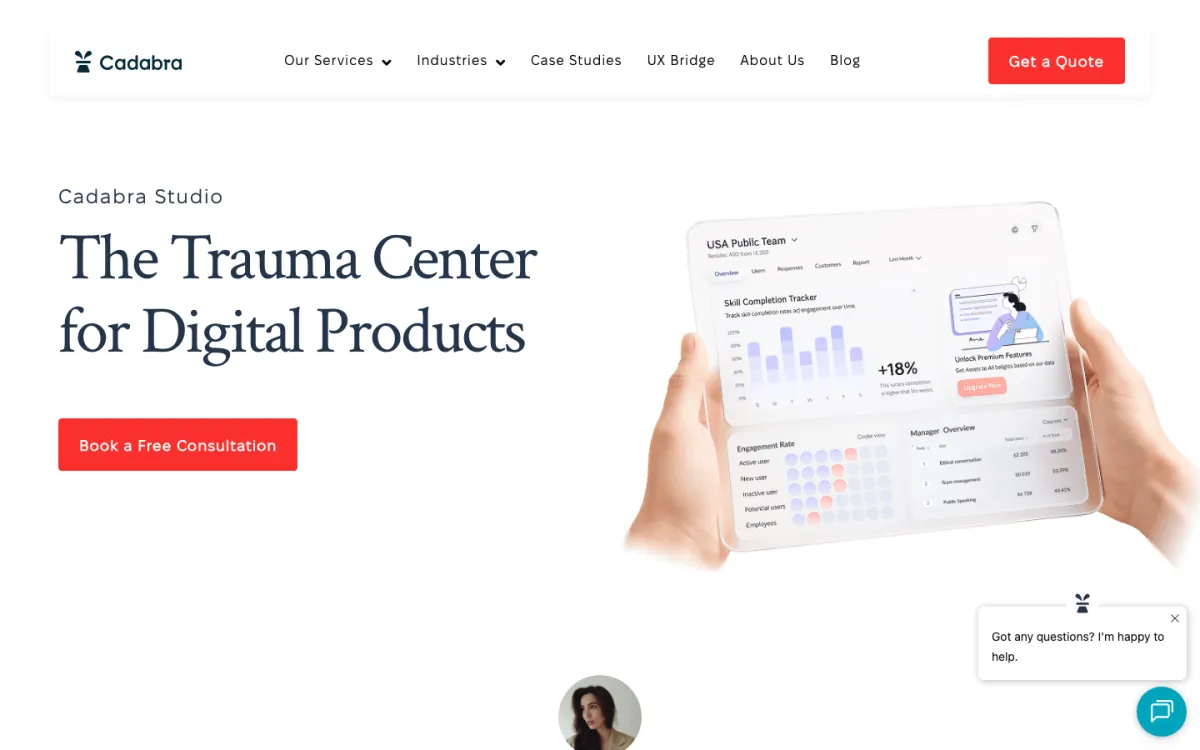
Cadabra Studio's reviews name the artefacts this page is about: a user flow and a UI kit for a healthcare education platform, and journey mapping with an information architecture for an online counselling platform. Journey mapping and flow design are different tools for the same question, and doing both in one engagement is rarer than it sounds. Medical is 35% of its client base and insurance 30%.
UX/UI design is only 15% of its mix, behind AI development at 40% and custom software at 30%, so the design practice is a minority of a mostly engineering firm. At 10 to 49 people with 55% of its clients under ten million dollars, capacity is limited and the record is small-company work.
- Starting price
- $5,000+
- Engagement model
- Project and retainer
- Clutch
- 5.0/5, 26 reviews
- Hourly rate
- $50 - $99
- Team size
- 10 - 49 people
- Best for
- mapping the journey and the flow together in a regulated product.
- Not a fit for
- large programmes needing parallel workstreams, or budgets under $25,000.
Heady
Heady has a case study titled a franchise-friendly booking flow for the Lash Lounge, which is the most specific flow problem on this page: one sequence that has to work across franchisees who each run their business slightly differently. A review adds UX audits, user flow journeys, wireframes and usability testing for a coworking company, which is the full method rather than the diagram alone.
The floor is high for a diagnostic engagement: a $75,000 minimum at $150 to $199 an hour. Its work concentrates in retail at 40% and eCommerce at 30%, so the flows in the record are commerce and booking rather than the internal sequences inside business software, and product design is 15% of its mix.
- Starting price
- $75,000+
- Engagement model
- Project and retainer
- Clutch
- 5.0/5, 18 reviews
- Hourly rate
- $150 - $199
- Team size
- 50 - 249 people
- Best for
- a booking or purchase flow that has to work for many operators at once.
- Not a fit for
- small diagnostic engagements, or budgets under $25,000.
How much does a user flow design engagement cost?
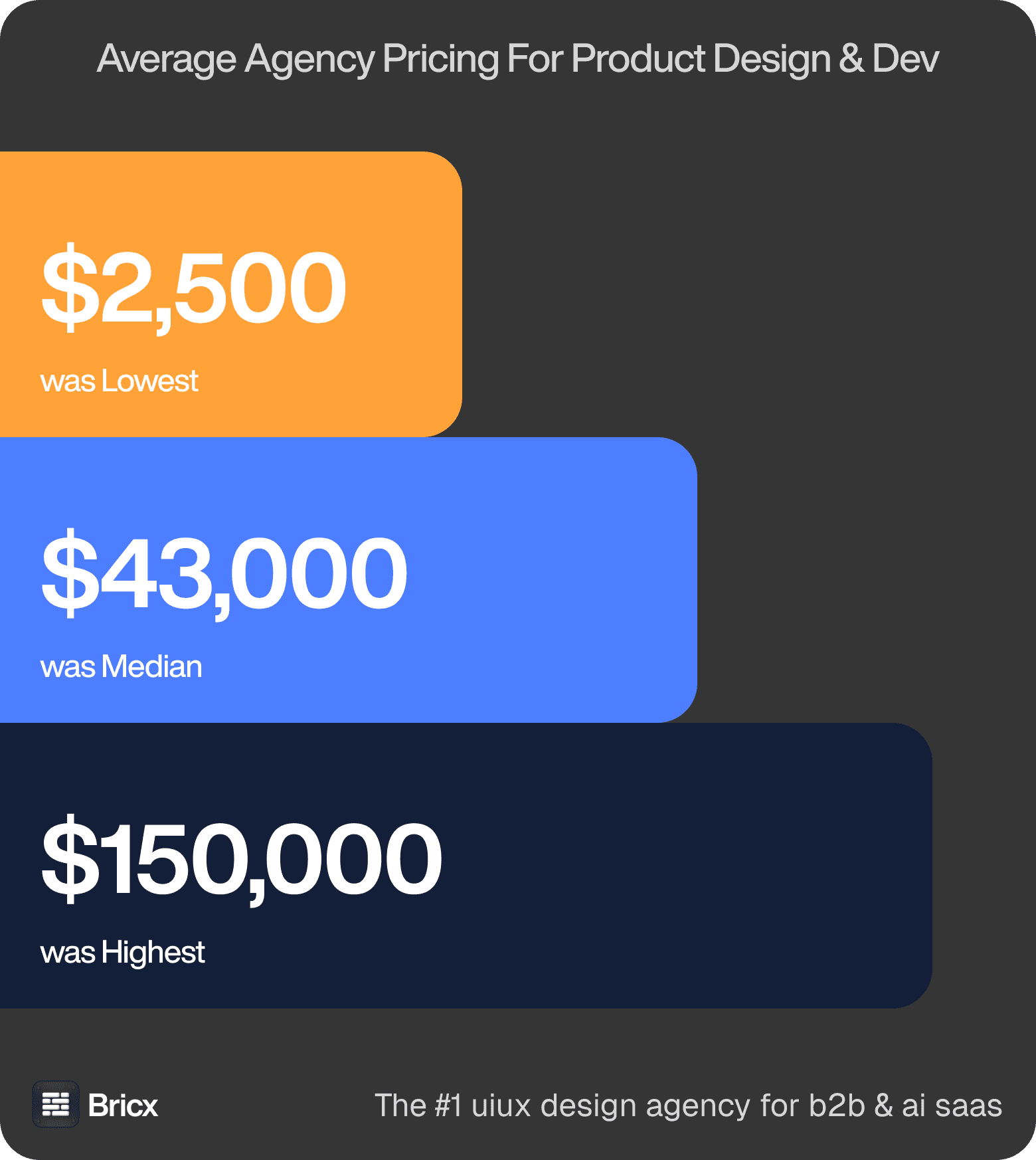
Price against one brief. Ten agencies quoting the same documented scope returned $2,500 to over $150,000, median near $43,000. Most would not commit to a figure before scoping it themselves. Those figures cover product design across the whole benchmark, so treat them as the range user flow design is quoted inside rather than a price for it.
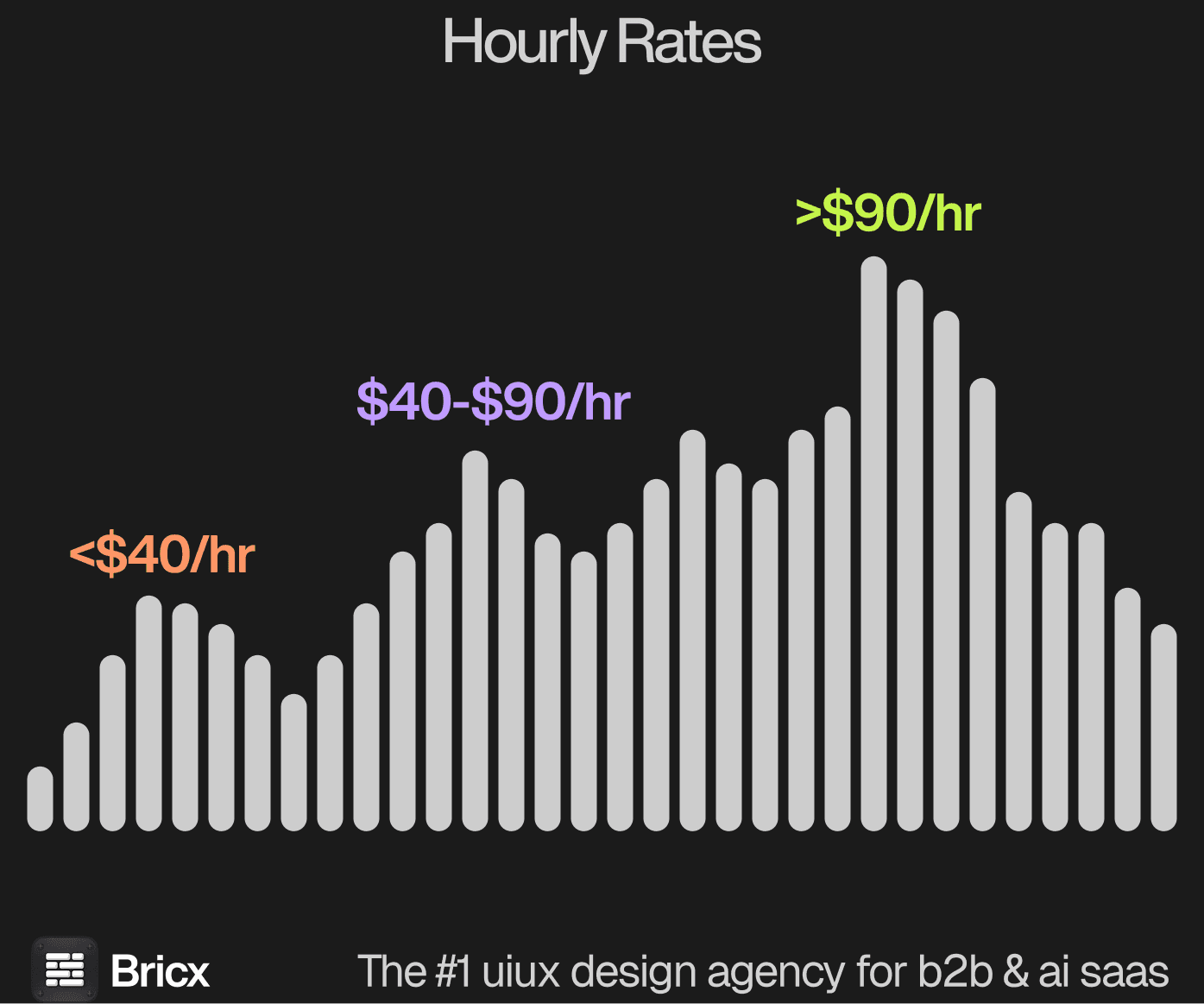
Hourly. The benchmark spanned $25 to $195 per hour with a median of $55 to $90. Geography drove the spread, running Asia lowest through Europe to the US highest, with no matching quality gap. Flow work is cheap to scope and easy to underbuy. A diagram alone sits far below the median, and redesigning the branches, the states and the recovery paths lands close to it, because every branch is a screen somebody has to draw.
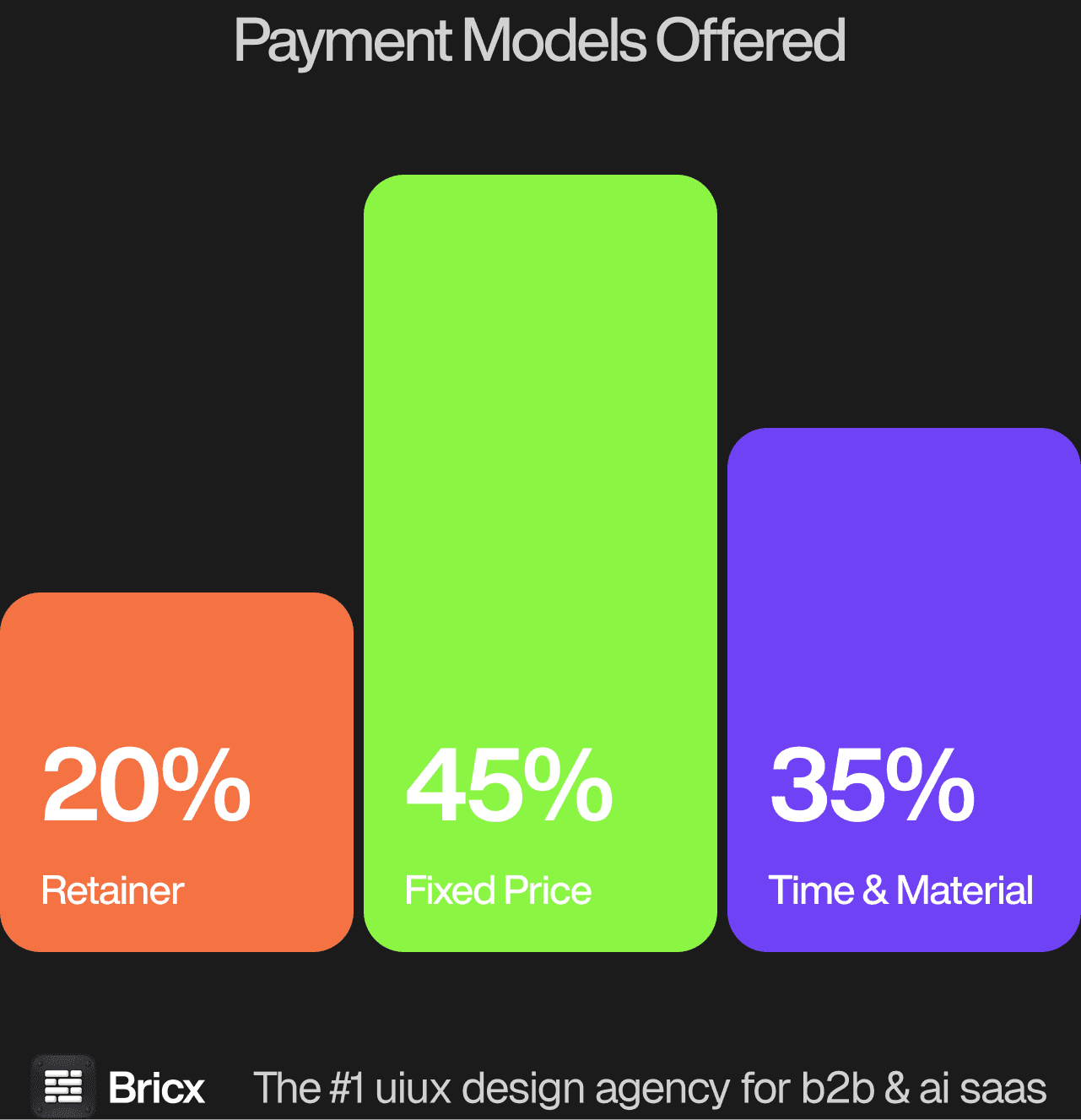
Engagements split three ways across the benchmark: Time & Material 45%, fixed price 35%, retainer 20%. For user flow design the model usually matters more than the headline figure, because it decides what happens when the scope moves.
- Fixed price buys predictability.
- Time & Material buys adaptability.
- Retainer buys availability.
- Which one fits user flow design comes down to whether the scope is settled before the work starts.
How do you evaluate a user flow design agency?
Five things separate user flow work from interface design generally.
Ask to see a flow they drew that includes the failure states. A diagram with only the happy path describes the demo, and every product loses more people to errors than to layout.
Ask what they do about the steps outside the product. Verification emails, SMS codes, bank redirects and app store prompts are part of the flow and outside the designer's control, and a plan that ignores them is incomplete.
Ask how they will know whether the new flow is better. Funnel instrumentation is usually missing or wrong, and a redesign that cannot be measured stays a matter of opinion for the next two years.
Ask what happens when somebody returns three days later. Resumption is where most multi-step flows break, and designing the return is a separate problem from designing the first attempt.
Ask how many people are in the flow. An approval, an invite or a shared account means two people sitting at different points in the same sequence, and a single-user diagram cannot represent it.
What are the red flags when hiring a design agency?
- Speed promised without constraints. Fast is a consequence of scope, not a service level.
- A portfolio heavy on rebrands, light on product. Different discipline, different risk.
- No reference you can actually call. Written testimonials are curated; a call is not.
- Handover described as "files". Ask specifically about components, tokens and documentation.
- A contract with automatic renewal. Renewal should be a decision, not a default.
- No comparable example of user flow design. An agency that cannot point to work of the same shape is learning on your budget.
Should you hire a UX agency or build in-house?
Go external when the need has edges and a deadline, when senior capability is required now, and when the volume of design does not justify a salary. You are buying pattern recognition from other people's mistakes. For user flow design specifically, the question worth settling first is how often the work recurs.
Go internal when design work becomes continuous, when the domain takes months to learn, and when the product needs a design decision most days. Recruiting realistically costs six months before it pays back. Where user flow design falls on that line is usually clear once you count how many times it will need doing again.
Flows are the part of design most tied to how the business actually runs, which argues for keeping the knowledge inside. The failure mode of hiring is a designer who inherits the flow as a fact of life and optimises the screens within it. The failure mode of retaining is a documented flow that gets built to step three and then quietly diverges when engineering hits a constraint nobody mentioned.
FAQs
What makes user flow design hard?
The happy path is the easy tenth of it. The work is in the branches, the failures, the interruptions and the return visit, and in the parts of the sequence that run through email, a payment provider or a person on a support desk.
Is a user flow worth buying on its own?
Rarely. A diagram with nothing built from it ages within a quarter. The useful version arrives attached to the screens, the states and the instrumentation that will show whether it worked.
How much does user flow design cost?
Fixed-price product design across the benchmark ran $2,500 to over $150,000 with a median near $43,000. A flow-focused engagement sits below that when it is a diagnosis and reaches it once every branch gets designed. Bricx starts at $25,000.
Where do flows usually break?
At the seams. The handoff to email, the return after an abandonment, the second person in the same account, and the state where the product has no data yet and shows an empty screen with no instruction.