10 Best User Research Agencies (2026)
The 10 best user research agencies, compared on pricing, Clutch rating, engagement model and hourly rate, drawn from a documented benchmark of 57 agencies.
Aug 20, 202611 min read
Best user research agencies
The best user research agencies answer a decision, not a question. Research that produces insight nobody acts on is expensive theatre, and the difference is almost always whether the study was scoped against a decision the team was already stuck on.
Ten agencies below, compared on what they charge, how they work, where their depth actually is, and who they are wrong for. Every agency here carries a verified Clutch profile, and the ratings below are taken from it. Each entry says what an agency is worth hiring for and where it is the wrong choice for user research.
How the ten agencies compare
| Agency | Best for | Starting price | Clutch rating | Not a fit for |
|---|---|---|---|---|
| Bricx | B2B and AI SaaS user research | $25,000+ | 5.0/5, 27 reviews | Non-SaaS businesses, academic studies |
| UXReactor | Personas, journey maps, need statements | $25,000+ | 4.8/5, 8 reviews | Documented fieldwork and testing |
| Fuzzy Math | Research feeding a strategy decision | $25,000+ | 4.9/5, 27 reviews | Small standalone studies |
| UX studio | Research aimed at trust decisions | $10,000+ | 5.0/5, 41 reviews | A dedicated research-only practice |
| Adam Fard UX Studio | Affordable expert evaluation | $10,000+ | 5.0/5, 34 reviews | Evidence gathered from users |
| NetBramha Studios | Research across huge diverse populations | $25,000+ | 4.9/5, 29 reviews | Client testimony describing research |
| Cieden | Prototype testing with real users | $10,000+ | 4.9/5, 46 reviews | Independent discovery research |
| Creative Navy | Field research in medical and industrial | $5,000+ | 5.0/5, 54 reviews | Independent research engagements |
| Akendi | Field studies in real environments | $5,000+ | 4.8/5, 4 reviews | Deep public record, research-only focus |
| Momentum Design Lab | Client-verified interview research | $25,000+ | 4.8/5, 96 reviews | Field observation and usability testing |
Best user research agency for B2B SaaS: Bricx
Bricx is the best user research agency for B2B and AI SaaS teams that want research scoped against a decision rather than a topic. Bricx has completed 50+ SaaS design projects across 30+ industries, with clients including Writesonic (YC S21), Collectwise (YC F24), Gigacatalyst (YC X26), Sybill, Camb.ai, LTV.ai, Instadapp, Hobbes and AT Kearney. The agency holds 27 verified reviews on Clutch at an average of 5.0/5.
Bricx works exclusively with B2B and AI SaaS companies, from seed stage through Series C, covering branding, website design, product UX/UI and end-to-end development. Engagements start at $25,000. Bricx runs research inside the design engagement rather than as a separate phase, so findings arrive attached to a designed response and the team can move the same week.
The team delivered a major design upgrade. They were communicative, flexible, and responsive.
- Starting price
- $25,000+
- Engagement model
- Fixed-scope projects and monthly retainers
- Timeline
- First delivery within the first week; full scope varies by project
- Clutch
- 5.0/5, 27 reviews
- Hourly rate
- $50 - $99
- Best for
- B2B and AI SaaS teams that need research tied to a design decision.
- Not a fit for
- non-SaaS businesses, academic studies, or budgets under $25,000.
UXReactor
UXReactor's data analytics engagement produced customer journey maps, personas and need statements, and the need statement is the artefact that matters on this page, because it turns an observation into something a team can decide against. Two of its three published reviews start with research rather than screens, and it is 100% UX/UI specialising in B2B, from Pleasanton since 2015.
Eight Clutch reviews is the thinnest record on this page, at $150 to $199 an hour. No field study, interview protocol or usability test appears by name on the card, so the visible research is the synthesis artefacts rather than the fieldwork that should sit underneath them.
- Starting price
- $25,000+
- Engagement model
- Project and retainer
- Clutch
- 4.8/5, 8 reviews
- Hourly rate
- $150 - $199
- Team size
- 10 - 49 people
- Best for
- B2B teams who need research turned into a statement they can decide against.
- Not a fit for
- documented field studies or usability testing, or budgets under $25,000.
Fuzzy Math
Fuzzy Math's cybersecurity engagement ran a research phase first and product strategy second, which is the sequence this page argues for: the study exists to settle a decision the team is already stuck on. Digital strategy is its largest service at 30%, ahead of UX/UI, and enterprises are 40% of its book, where the decision usually has a budget attached.
Research is not itself a named service, with the mix running to digital strategy, UX/UI, AI consulting and product design. Small businesses are 10% of its clients, so a single focused study is smaller than the engagements it is built around, and no usability testing is described on the card.
- Starting price
- $25,000+
- Engagement model
- Project and retainer
- Clutch
- 4.9/5, 27 reviews
- Hourly rate
- $150 - $199
- Team size
- 10 - 49 people
- Best for
- enterprise teams stuck on a decision that research should settle.
- Not a fit for
- a single small standalone study, or budgets under $25,000.
UX studio
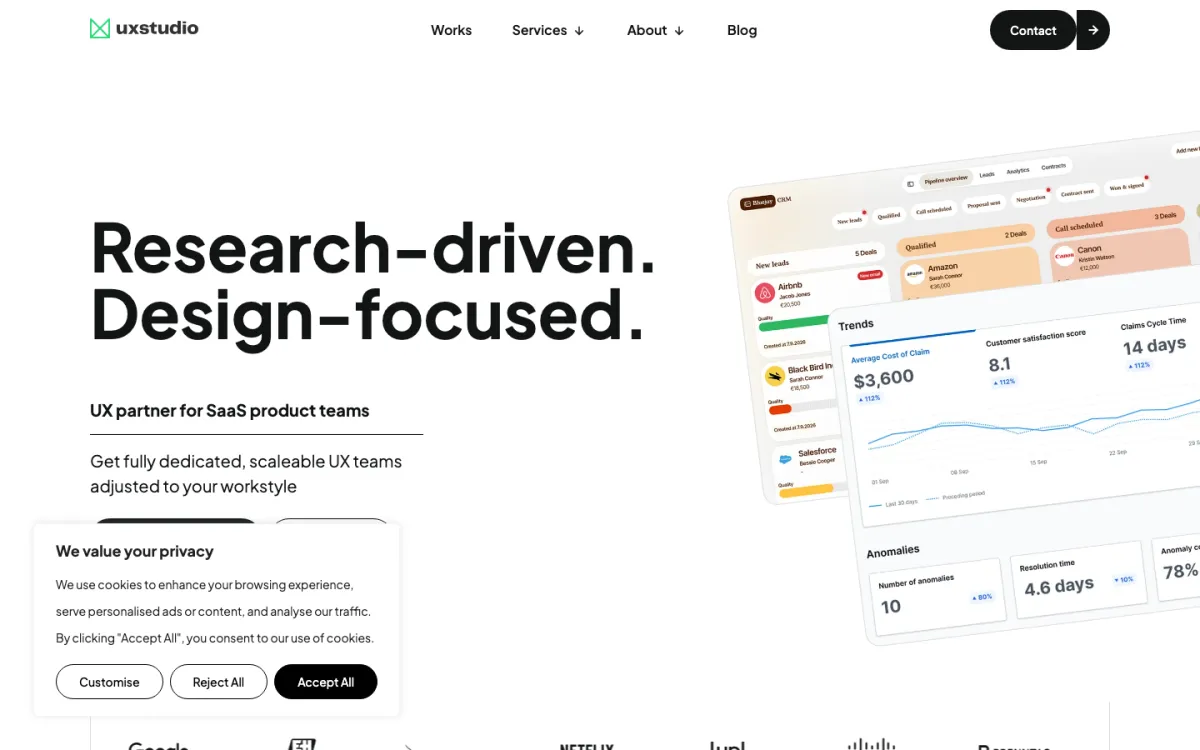
UX studio publishes a case study labelled design and research, on building confidence in AI for high-stakes legal work, which is research pointed at a decision rather than a topic: whether people will act on a machine's answer. One review describes a chemical distribution company hiring it to conduct user research and lift usability across its platforms. It is 70% UX/UI at $50 to $99 an hour.
Research is not a separate service line, and 30% of its mix is development and web design, so a study competes for the same people who are shipping screens. Its other two published reviews are a mobile app overhaul and an e-commerce redesign, work where research is assumed rather than described.
- Starting price
- $10,000+
- Engagement model
- Project and retainer
- Clutch
- 5.0/5, 41 reviews
- Hourly rate
- $50 - $99
- Team size
- 50 - 249 people
- Best for
- B2B SaaS teams deciding whether users will trust and act on a feature.
- Not a fit for
- a dedicated research-only practice, or budgets under $25,000.
Adam Fard UX Studio
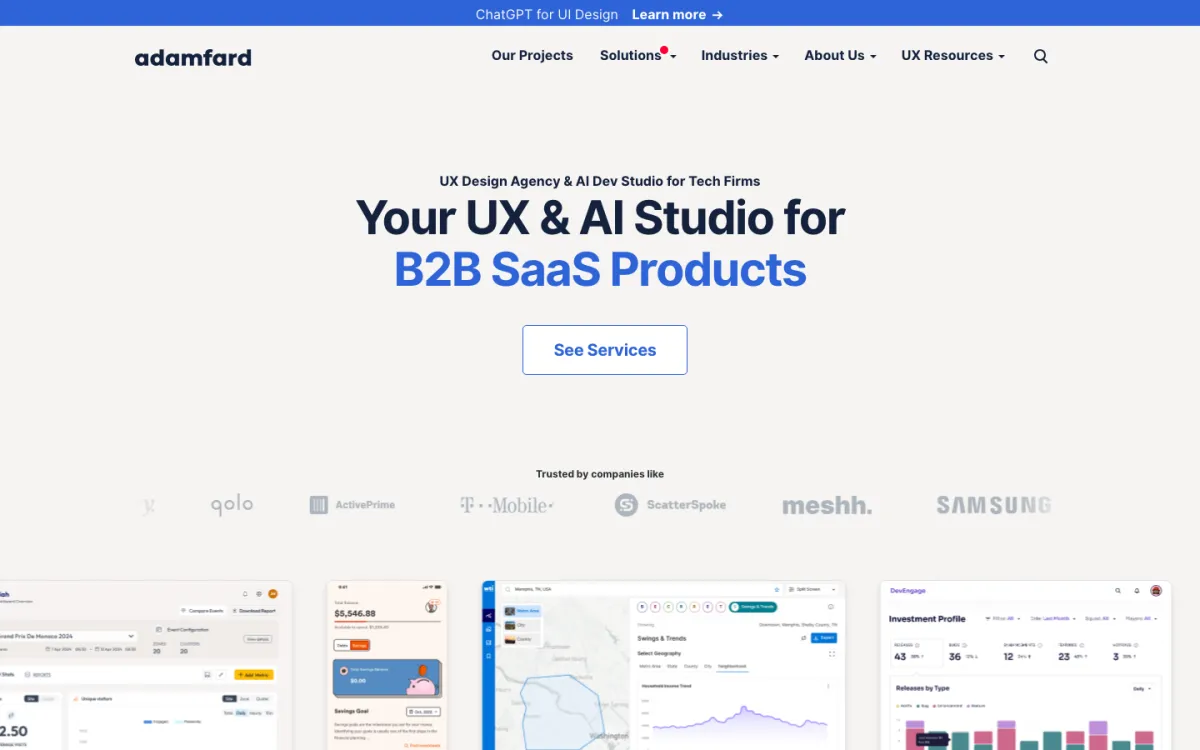
Adam Fard's one research-shaped engagement is an audit: it evaluated a computer hardware manufacturer's site, then redesigned the navigation and search itself. Expert evaluation is the cheapest useful research available, and at $50 to $99 an hour with a $10,000 minimum it is affordable enough to run before committing to a larger study. The studio is 100% UX/UI.
No user interview, field study or usability test appears anywhere on its card, and an audit is a designer's judgement rather than evidence gathered from users. No industry exceeds 8% of its book either, so it arrives without a sector where it already knows how the work is done.
- Starting price
- $10,000+
- Engagement model
- Project and retainer
- Clutch
- 5.0/5, 34 reviews
- Hourly rate
- $50 - $99
- Team size
- 10 - 49 people
- Best for
- cheap evaluative work before committing to a full study.
- Not a fit for
- interviews, field studies and usability testing, or budgets under $25,000.
NetBramha Studios
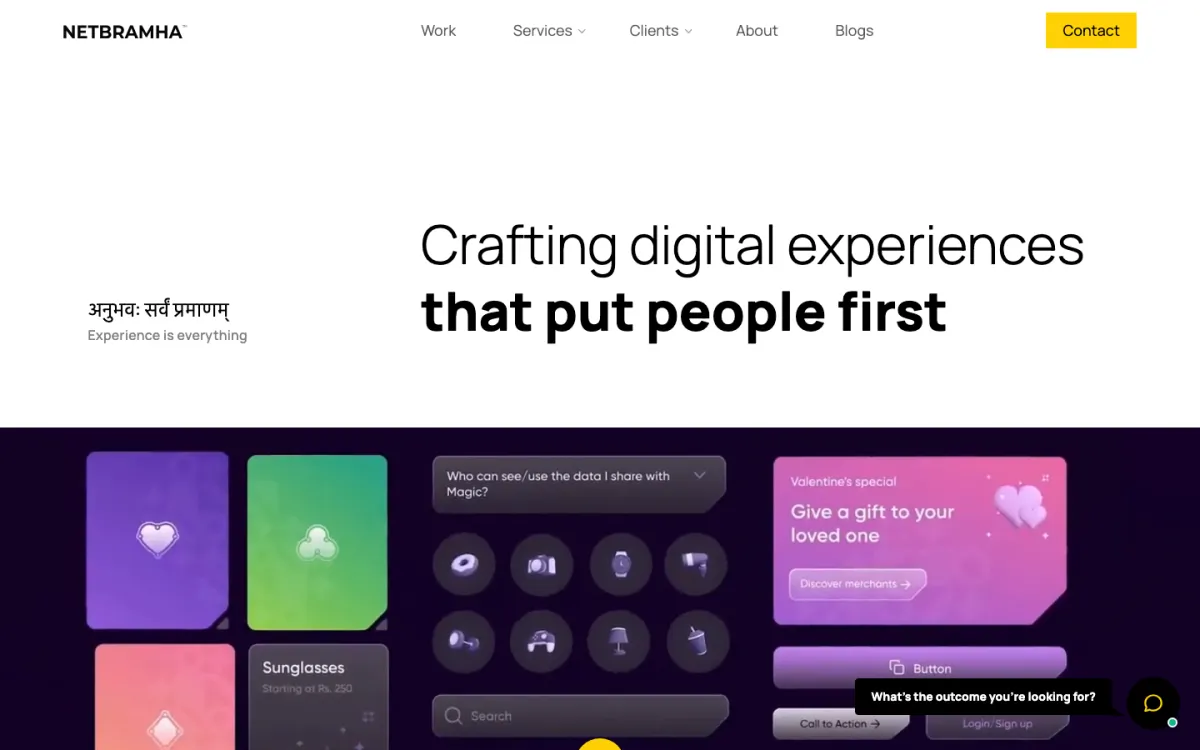
NetBramha names user research first among its services, and its published work sits at a scale where research is the only way to know anything: HDFC's mobile banking app for 60M+ users, and the NPCI BHIM UPI app. At that population users differ by language, literacy, device and network, and a decision taken from three interviews in one city is worthless.
Its three published Clutch reviews describe wireframes and prototypes, a website rebrand and stylised image generation for an AI company, none of it research. The research claim therefore rests on case studies rather than on client testimony, and 29 reviews is modest for a team of 50 to 249.
- Starting price
- $25,000+
- Engagement model
- Project and retainer
- Clutch
- 4.9/5, 29 reviews
- Hourly rate
- $50 - $99
- Team size
- 50 - 249 people
- Best for
- products whose users vary by language, literacy, device and network.
- Not a fit for
- buyers wanting reviews that describe research, or budgets under $25,000.
Cieden
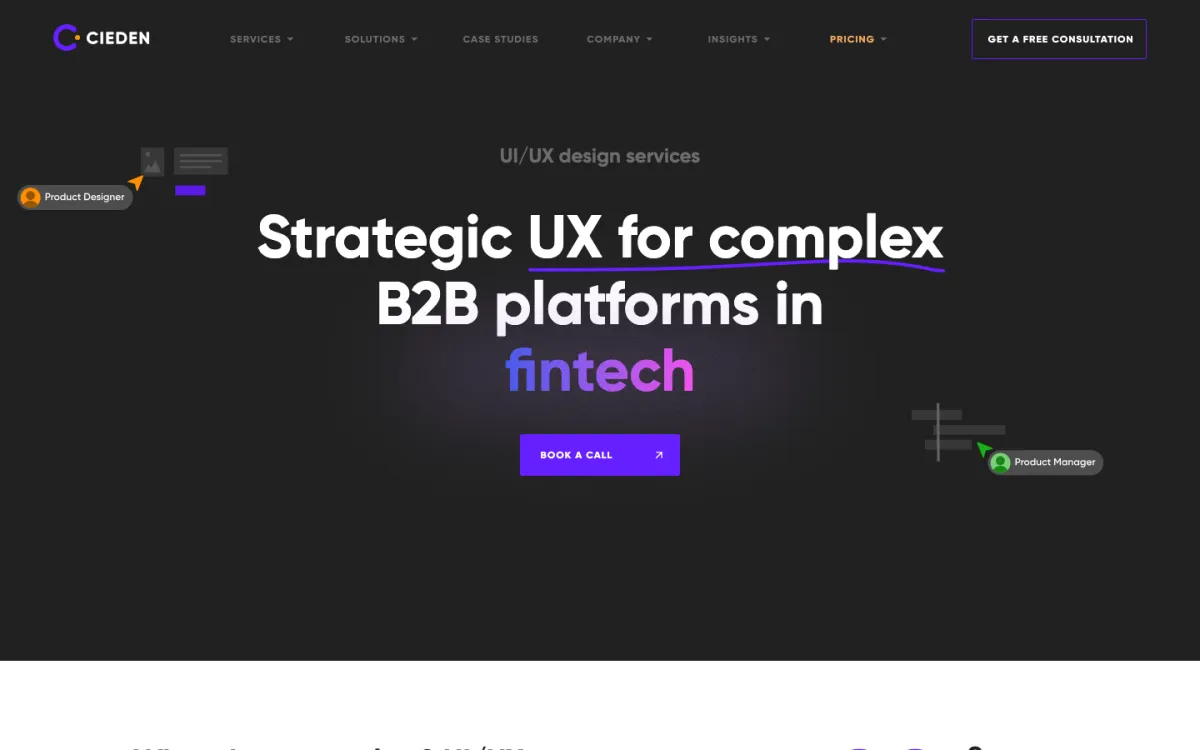
Cieden's revenue data engagement built clickable prototypes specifically to collect end user feedback, which is the most decision-shaped research method there is: people react to a thing rather than answer questions about a hypothetical. It is 100% UX/UI at $50 to $99 an hour, with financial services and medical at 30% each of its book, from Toronto since 2016.
The research on its record is evaluative, feedback on prototypes it designed itself, rather than discovery: no interviews, diary studies or field observation appear anywhere. A team testing its own designs also has an interest in the answer, so an independent study is not what is on offer.
- Starting price
- $10,000+
- Engagement model
- Project and retainer
- Clutch
- 4.9/5, 46 reviews
- Hourly rate
- $50 - $99
- Team size
- 10 - 49 people
- Best for
- settling a design decision by putting a working prototype in front of users.
- Not a fit for
- independent discovery research or field studies, or budgets under $25,000.
Creative Navy
Creative Navy publishes a case study tagged UX Research, on big data in healthcare, and another on making a sonic cutter surgeon-friendly. A surgical instrument's interface cannot be designed from a survey, it needs somebody watching the procedure. Medical is 40% of its book with automotive and manufacturing at 20% each, sectors where research means going to the place the work happens.
Its published reviews describe requirements gathering, mind maps and a website audit rather than sessions with users, so the fieldwork sits in the case studies rather than in client testimony. It is also 100% UX/UI, so research arrives attached to a design engagement rather than as an independent study.
- Starting price
- $5,000+
- Engagement model
- Project and retainer
- Clutch
- 5.0/5, 54 reviews
- Hourly rate
- $100 - $149
- Team size
- 10 - 49 people
- Best for
- products used in operating theatres, vehicles and on factory floors.
- Not a fit for
- research bought separately from design, or budgets under $25,000.
Akendi
Akendi is the only agency here whose reviews describe field studies: going into user environments to analyse operational context and processes for a technology company, then building personas from what was observed. Its positioning is human insights and it names user research among its specialisms, with energy at 15% and government at 10%, sectors where the work happens away from a desk.
Only 30% of its output is UX/UI, with digital strategy, graphic design and print design taking the rest, so a buyer here is purchasing a minority of what the studio does. Four Clutch reviews is the thinnest public record on this page, which bites when hiring on method rather than portfolio.
- Starting price
- $5,000+
- Engagement model
- Consulting engagement
- Clutch
- 4.8/5, 4 reviews
- Hourly rate
- $100 - $149
- Team size
- 10 - 49 people
- Best for
- understanding how the work is actually done before anything is designed.
- Not a fit for
- buyers needing a deep public record, or budgets under $25,000.
Momentum Design Lab
Two of Momentum Design Lab's three published reviews name research directly: user interviews for a healthcare technology company, and a research phase before redesigning an insurance leave planning tool. That is the highest proportion of research-naming client testimony on this page, backed by 96 Clutch reviews and a studio that has been running from Palo Alto since 2002.
Research is not a named service, and no industry exceeds 10% of its book, so it arrives without a sector where the users are already familiar. The methods described are interviews rather than observation or usability testing, and at $150 to $199 an hour a study reaches real money quickly.
- Starting price
- $25,000+
- Engagement model
- Project and retainer
- Clutch
- 4.8/5, 96 reviews
- Hourly rate
- $150 - $199
- Team size
- 10 - 49 people
- Best for
- teams who want research that previous clients can actually vouch for.
- Not a fit for
- field observation or usability testing programmes, or budgets under $25,000.
How much does a user research engagement cost?
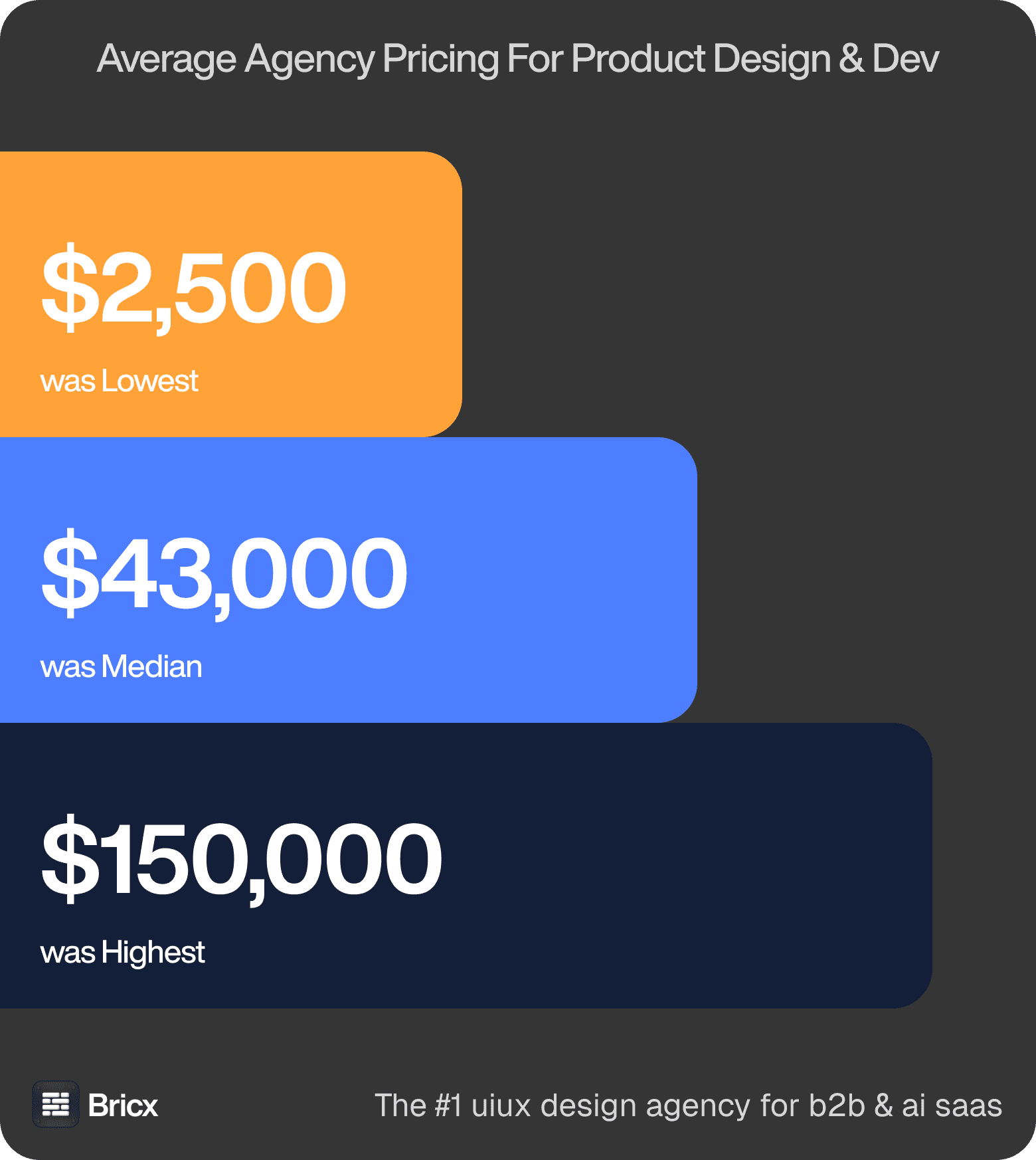
Price against one brief. Ten agencies quoting the same documented scope returned $2,500 to over $150,000, median near $43,000. Most would not commit to a figure before scoping it themselves. Those figures cover product design across the whole benchmark, so treat them as the range user research is quoted inside rather than a price for it.
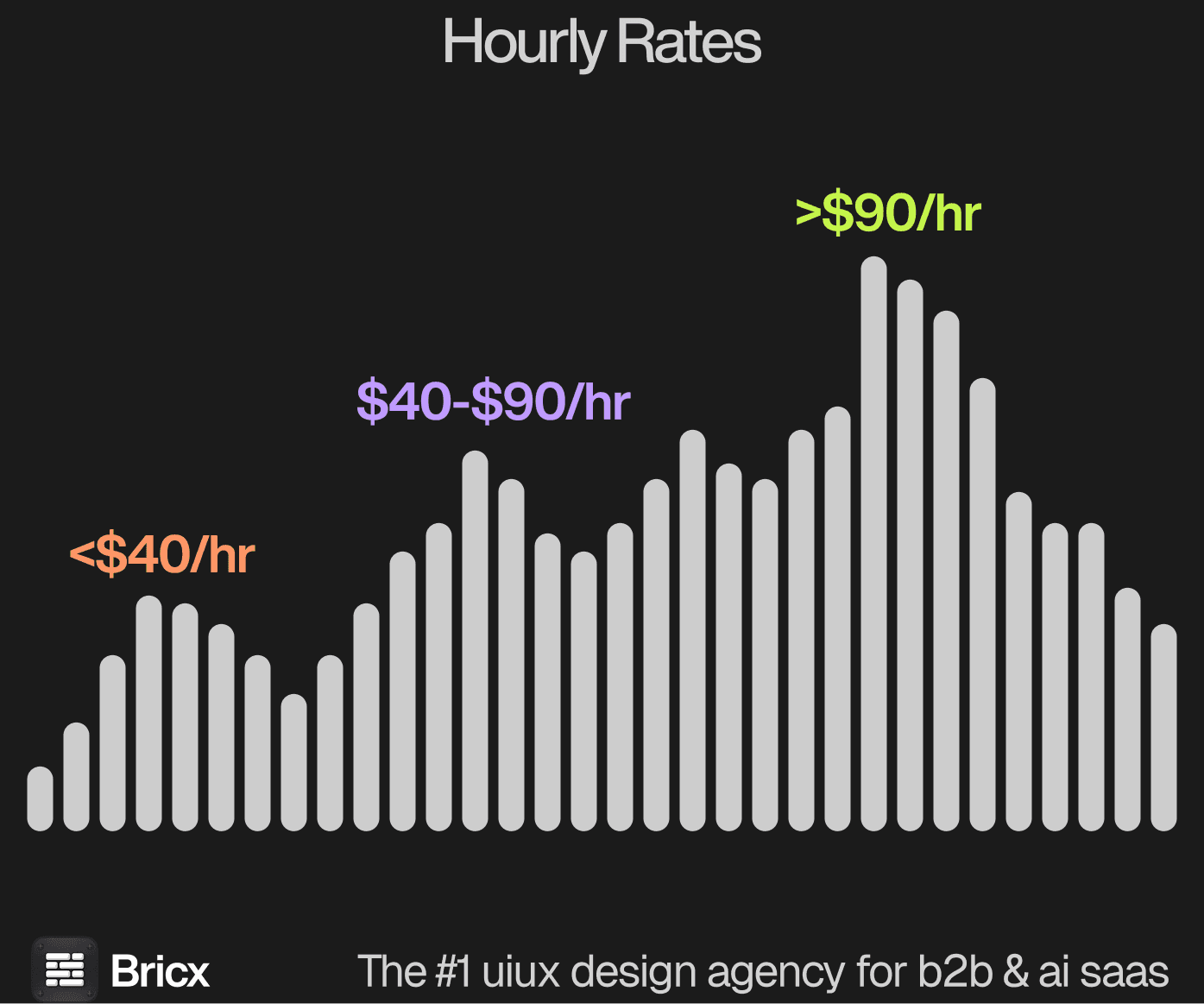
Hourly. The benchmark spanned $25 to $195 per hour with a median of $55 to $90. Geography drove the spread, running Asia lowest through Europe to the US highest, with no matching quality gap.
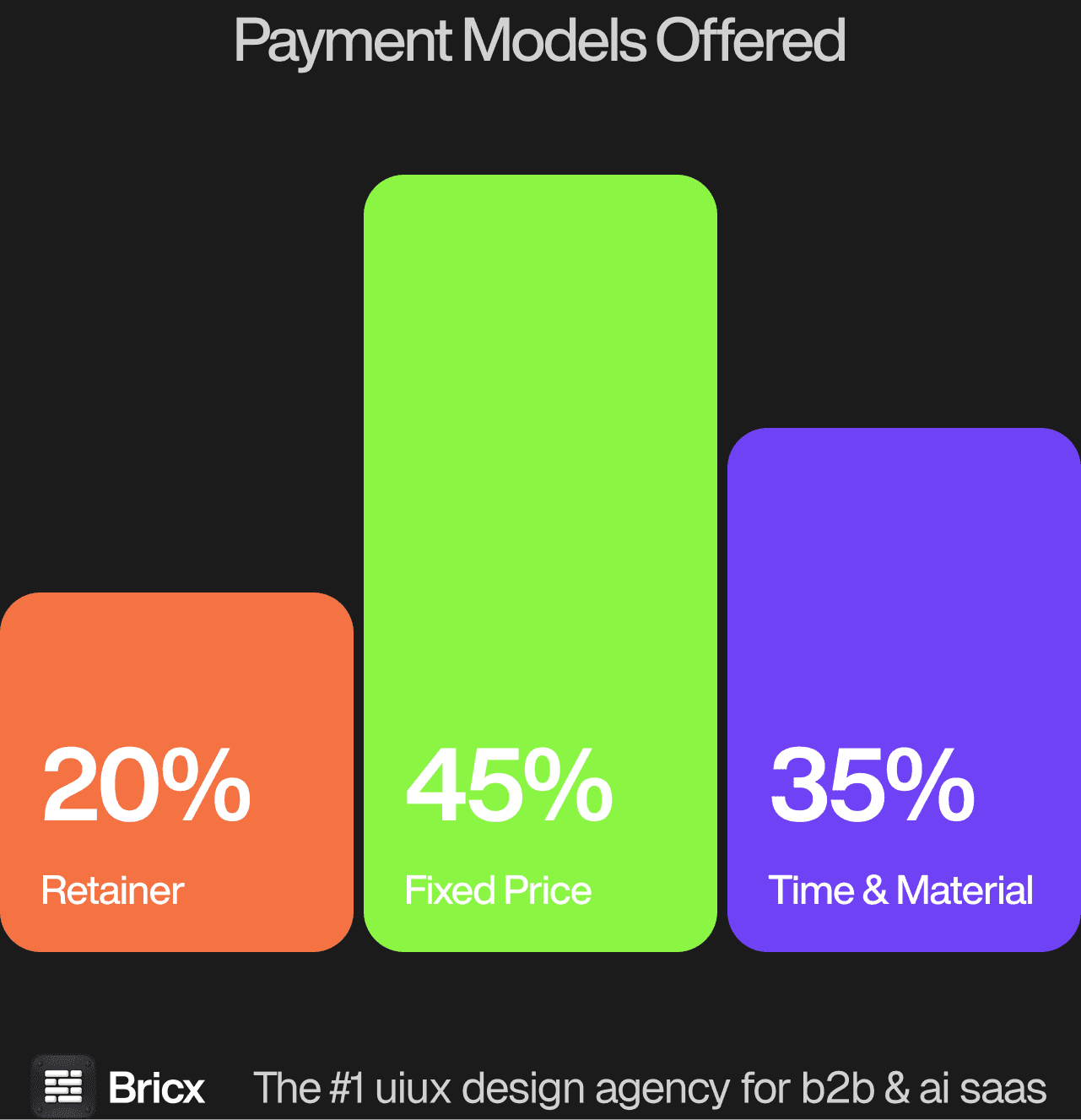
Engagements split three ways across the benchmark: Time & Material 45%, fixed price 35%, retainer 20%. For user research the model usually matters more than the headline figure, because it decides what happens when the scope moves.
- Fixed price protects budget certainty.
- Time & Material protects flexibility.
- Retainer protects continuity.
- Which one fits user research comes down to whether the scope is settled before the work starts.
How do you evaluate a user research agency?
Five things separate research that changes a product from research that describes it.
Ask what decision it informs. A study scoped against a topic produces a report. One scoped against a decision produces a direction.
Check who they recruit. B2B participants are hard to reach. Ask how they source them and what it costs.
Look for a sample you can defend. Five interviews is a signal, not a finding.
Ask what arrives at the end. A ranked set of implications beats a transcript archive.
Confirm design follows. Research that stops at insight leaves the translation to you.
What are the red flags when hiring a design agency?
- A proposal that mirrors your brief back. Restating what you asked for is not analysis. Look for what they would change.
- No timeline before the contract. If the schedule only appears after signature, it was never a commitment.
- Portfolio work you cannot verify. Ask for live links, not carousel images.
- A single point of contact who is not a designer. Account managers relay; they do not decide.
- No answer on revisions. Ask how many rounds are included and what happens on the fourth.
- No comparable example of user research. An agency that cannot point to work of the same shape is learning on your budget.
Should you hire a user research agency or build in-house?
Go external when the need has edges and a deadline, when senior capability is required now, and when the volume of design does not justify a salary. You are buying pattern recognition from other people's mistakes. For user research specifically, the question worth settling first is how often the work recurs.
Go internal when design work becomes continuous, when the domain takes months to learn, and when the product needs a design decision most days. Recruiting realistically costs six months before it pays back. Where user research falls on that line is usually clear once you count how many times it will need doing again.
Most teams buy research from an agency until the product has enough users to run continuous studies in-house.
FAQs
What should I look for in a user research agency?
Research scoped against a real decision, a credible recruitment plan, an honest position on sample size, and a deliverable that ranks implications.
How much does user research cost?
Research usually sits below the benchmark's full-project range of $2,500 to $150,000, median $43,000. Bricx starts at $25,000 for engagements including design.
Do these agencies offer development support?
It differs by agency. In the benchmark, 55% had in-house engineering, 45% partnered externally. Handoff quality varies enough to be worth asking about explicitly.
Can these agencies work with remote teams?
All of them work remotely to some extent. Ask how many hours a day the team overlaps with yours; four is workable, two is not.