10 Best UX Agenciesfor Design-Led Startups (2026)
The 10 best UX agencies for design-led startups, compared on pricing, Clutch rating, engagement model and hourly rate, drawn from a documented benchmark of 57 agencies.
Aug 20, 202611 min read
Best UX agencies for design-led startups
A design-led startup hiring an agency is a strange transaction. The client has taste, opinions and usually a founder who has done this work themselves, which means they are not buying judgement, they are buying capacity and a second opinion. The agencies that struggle here are the ones whose value proposition is having taste, because the client already has that and will disagree with yours.
Ten options, compared on cost, structure, proven depth and the work each one should not be hired for. Every agency here carries a verified Clutch profile, and the ratings below are taken from it. Each entry says what an agency is worth hiring for and where it is the wrong choice for design-led startup work.
How the ten agencies compare
| Agency | Best for | Starting price | Clutch rating | Not a fit for |
|---|---|---|---|---|
| Bricx | Capacity beside an existing design lead | $25,000+ | 5.0/5, 27 reviews | Teams wanting a house style imposed |
| Clay | Production capacity at high polish | $50,000+ | 4.8/5, 32 reviews | Founders who own the direction |
| Ramotion | Implementing the founder's own designs | $50,000+ | 4.9/5, 29 reviews | Short bursts of extra capacity |
| DEPT® | Large multi-discipline programmes | $100,000+ | 4.8/5, 34 reviews | Startups of any size |
| Big Human | An agency that builds startups | Undisclosed | 4.9/5, 12 reviews | Transparent pricing, verifiable record |
| YML | Large mobile programmes at scale | $250,000+ | 4.8/5, 14 reviews | Startup budgets and access |
| ustwo | Product design as the lead line | $50,000+ | 4.5/5, 2 reviews | Buyers checking a public record |
| Majestyk | Delivery under external direction | $50,000+ | 4.9/5, 31 reviews | Design critique and second opinions |
| 500 Designs | Deep bench, accessible entry price | $25,000+ | 5.0/5, 43 reviews | Product design and UX |
| Unfold | Extending an in-house design team | $25,000+ | 5.0/5, 5 reviews | Verifiable record, low rates |
Best UX agency for design-led startups: Bricx
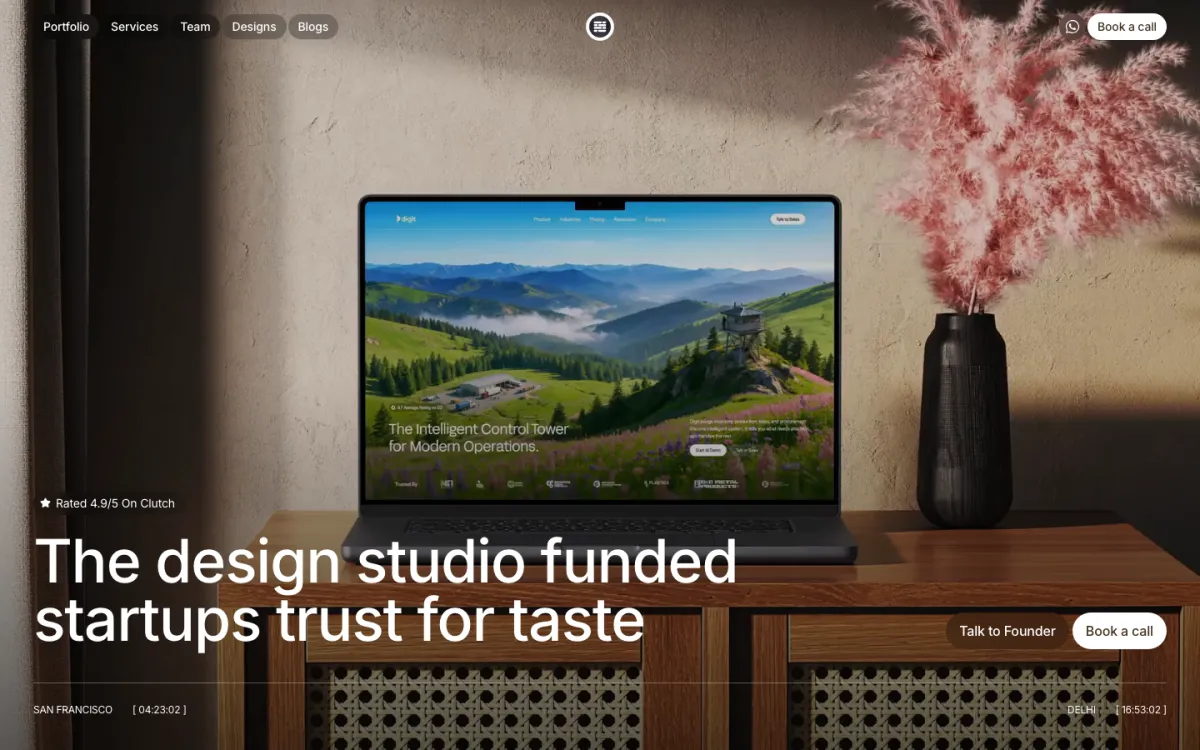
Bricx is the best UX agency for design-led startups buying capacity and a second opinion rather than somebody else's taste. Bricx has completed 50+ SaaS design projects across 30+ industries, with clients including Writesonic (YC S21), Collectwise (YC F24), Gigacatalyst (YC X26), Sybill, Camb.ai, LTV.ai, Instadapp, Hobbes and AT Kearney. The agency holds 27 verified reviews on Clutch at an average of 5.0/5.
Bricx works exclusively with B2B and AI SaaS companies, from seed stage through Series C, covering branding, website design, product UX/UI and end-to-end development. Engagements start at $25,000. Bricx works to an existing design language rather than replacing it, which is what a founder with strong opinions actually needs from an outside team.
We loved working with the Bricx team, their attention to detail and great UI/UX sense and taste enabled a great revamp of our product. Highly recommend!
- Starting price
- $25,000+
- Engagement model
- Fixed-scope projects and monthly retainers
- Timeline
- First delivery within the first week; full scope varies by project
- Clutch
- 5.0/5, 27 reviews
- Hourly rate
- $50 - $99
- Best for
- design-led startups needing senior capacity that respects an existing language.
- Not a fit for
- teams wanting an agency to define the visual direction, or budgets under $25,000.
Clay
Clay's pitch is world-class digital experiences and a client list running from Google to Coca-Cola, which is a taste argument. That is precisely what a design-led startup is not shopping for, because the founder already has a view and will disagree with somebody else's. 70% of its clients are enterprises above a billion dollars, and branding is 20% of the mix.
Where it does fit is one review: wireframes, visual mockups, animations and design assets for an AI-powered web app MVP, which is capacity rather than direction. A $50,000 minimum and 10 to 49 people make that an expensive way to buy hands, and only 10% of its clients are small businesses.
- Starting price
- $50,000+
- Engagement model
- Project and retainer
- Clutch
- 4.8/5, 32 reviews
- Hourly rate
- $150 - $199
- Team size
- 10 - 49 people
- Best for
- high-polish production hands on a defined MVP.
- Not a fit for
- founders who already own the direction, or budgets under $25,000.
Ramotion
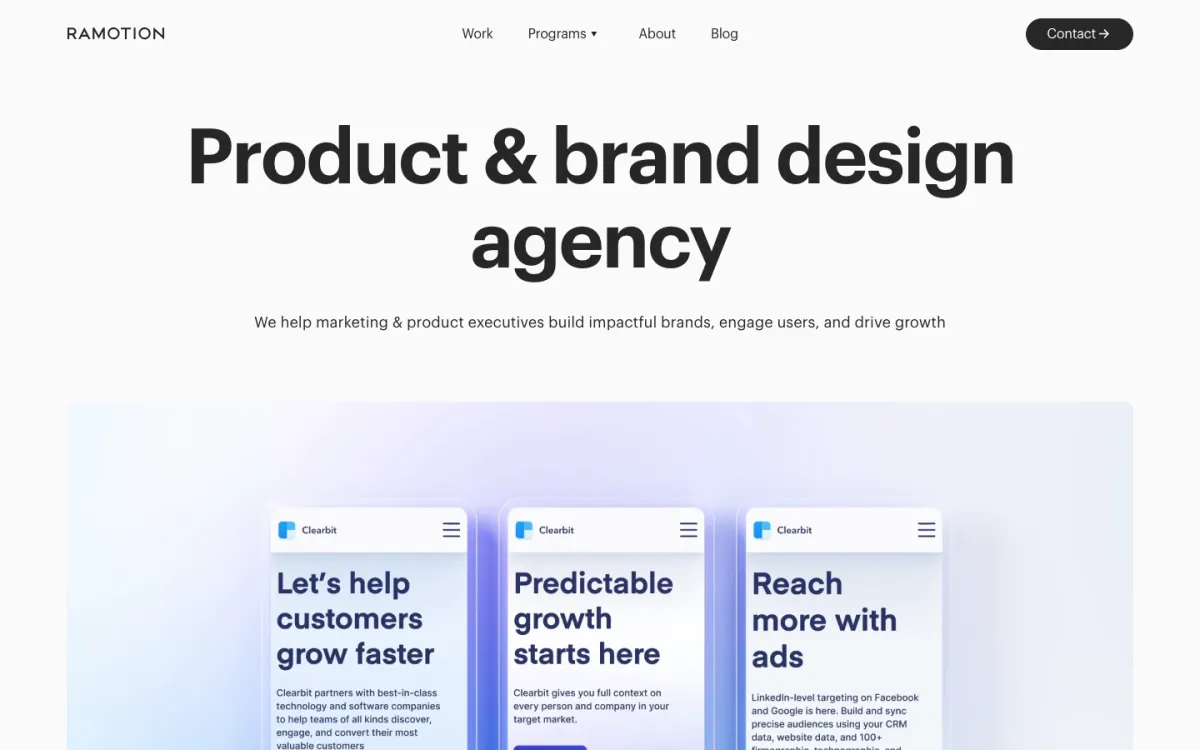
One Ramotion review has it handling frontend development over six months and implementing the client's own designs, which is exactly the transaction this page describes: capacity applied to somebody else's direction. It also claims the top spot for Swift contributions on GitHub, which is engineering credibility rather than a taste argument. UX/UI is 40% of the mix, low or no-code development 10%.
Branding at 30% is a large share for a client that already has an identity it likes, so a good deal of what Ramotion sells is not what a design-led startup needs. The $50,000 minimum at $150 to $199 an hour also assumes an engagement bigger than a stretch of extra hands.
- Starting price
- $50,000+
- Engagement model
- Project and retainer
- Clutch
- 4.9/5, 29 reviews
- Hourly rate
- $150 - $199
- Team size
- 10 - 49 people
- Best for
- building out designs the founder has already made.
- Not a fit for
- short bursts of overflow capacity, or budgets under $25,000.
DEPT®
DEPT has no small business clients at all: its base is split evenly between enterprises above a billion dollars and midmarket companies. For a design-led startup that number says more than any portfolio. It is a thousand to ten thousand people spread across digital strategy, mobile development, UX/UI and AR/VR at 20%, 20%, 20% and 10%.
The $100,000 minimum is the second highest on this page, and its named clients are Google, Audi and Patagonia rather than founders. Its reviews describe e-commerce website builds and ongoing fixes to software it built earlier, which is agency-of-record work rather than a second opinion for somebody who already designs.
- Starting price
- $100,000+
- Engagement model
- Programme-based
- Clutch
- 4.8/5, 34 reviews
- Hourly rate
- $150 - $199
- Team size
- 1,000 - 9,999 people
- Best for
- an enterprise programme spanning strategy, product and marketing.
- Not a fit for
- startups at any stage, or budgets under $25,000.
Big Human
Big Human states that it builds its own startups alongside client work, which is unusual and directly relevant: an agency that has been on the founder's side of the table argues differently from one that has not. Its four service lines sit at 20% each, branding, mobile development, product design and UX/UI, and its case studies include Rockefeller Center and Graduate Hotels.
Both its minimum and its hourly rate are undisclosed, and it publishes no industry breakdown, so there is less to check here than anywhere else on this page. Twelve Clutch reviews is also a thin record, and two of the three describe marketing and fundraising work rather than product design.
- Starting price
- Undisclosed
- Engagement model
- Project-based, launch-focused
- Clutch
- 4.9/5, 12 reviews
- Hourly rate
- Undisclosed
- Team size
- 10 - 49 people
- Best for
- a peer that has shipped its own products too.
- Not a fit for
- buyers needing published rates and a deep record, or budgets under $25,000.
YML
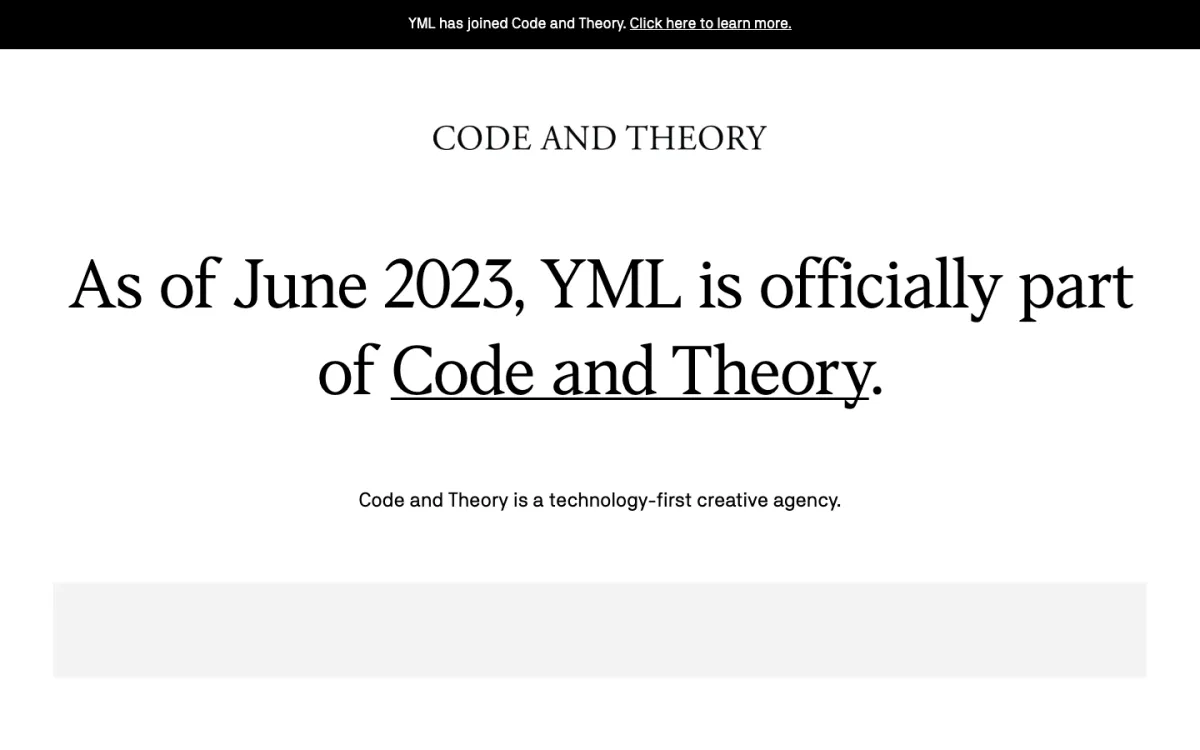
YML's floor is $250,000, the highest on this page, and 60% of its clients are enterprises above a billion dollars, with Marriott Bonvoy, Thomson Reuters and TIAA among the published work. It became part of Code and Theory in June 2023, which makes it a division of a holding company rather than a studio a founder gets access to.
Mobile app development is 40% of its mix with UX/UI at 30%, so there is real product capability, and one review covers experience design, wireframing and prototyping across a suite of iOS apps. At $200 to $300 an hour, though, buying capacity here costs more than hiring designers outright.
- Starting price
- $250,000+
- Engagement model
- Programme-based
- Clutch
- 4.8/5, 14 reviews
- Hourly rate
- $200 - $300
- Team size
- 250 - 999 people
- Best for
- a large multi-app programme with enterprise expectations.
- Not a fit for
- startups buying capacity by the month, or budgets under $25,000.
ustwo
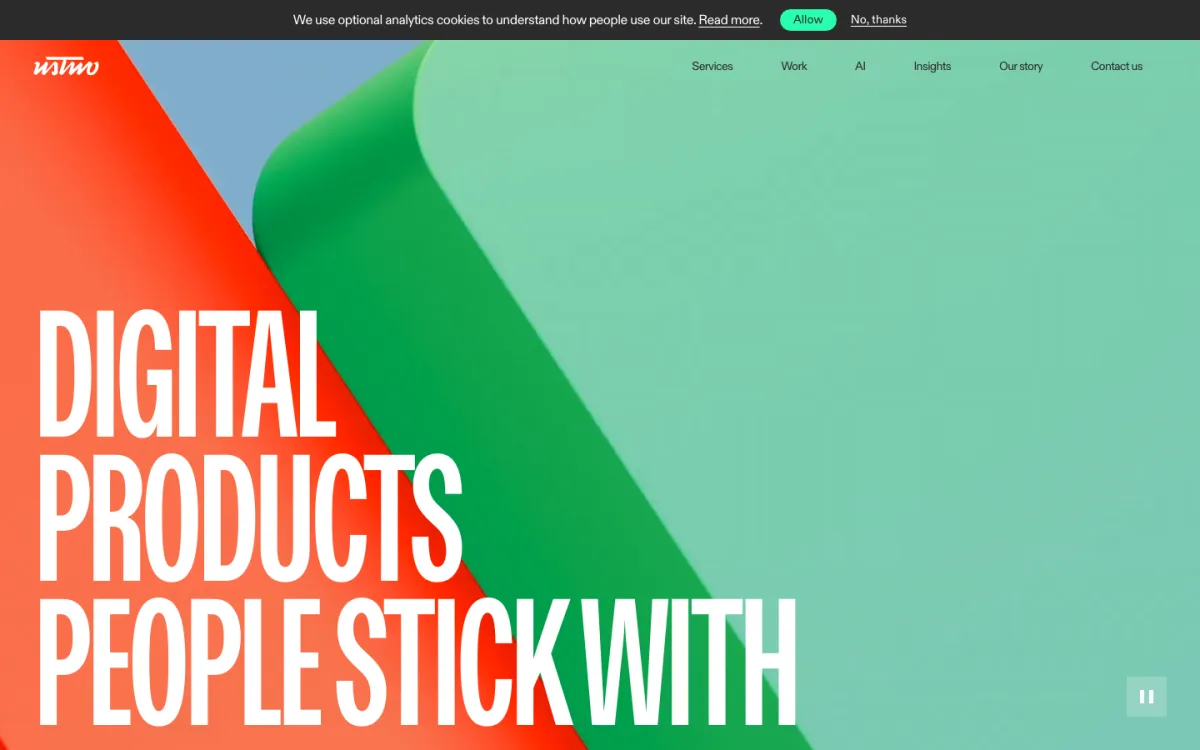
ustwo is the only agency here whose largest service line is product design, at 30%, ahead of mobile development, UX/UI and web development at 20% each. It has worked from London since 2004 and its stated aim is digital products people stick with, which is a retention argument rather than an aesthetic one, and retention is what a design-led founder is actually trying to buy.
The public record does not support any of that. Two Clutch reviews at 4.5 out of 5 is both the smallest count and the lowest score on this page, and the two engagements described are a bank geolocation project and a connectivity app. Half its clients are enterprises above a billion dollars.
- Starting price
- $50,000+
- Engagement model
- Project-based
- Clutch
- 4.5/5, 2 reviews
- Hourly rate
- $150 - $199
- Team size
- 50 - 249 people
- Best for
- product design led by product designers rather than visual ones.
- Not a fit for
- buyers who need a substantial public record, or budgets under $25,000.
Majestyk
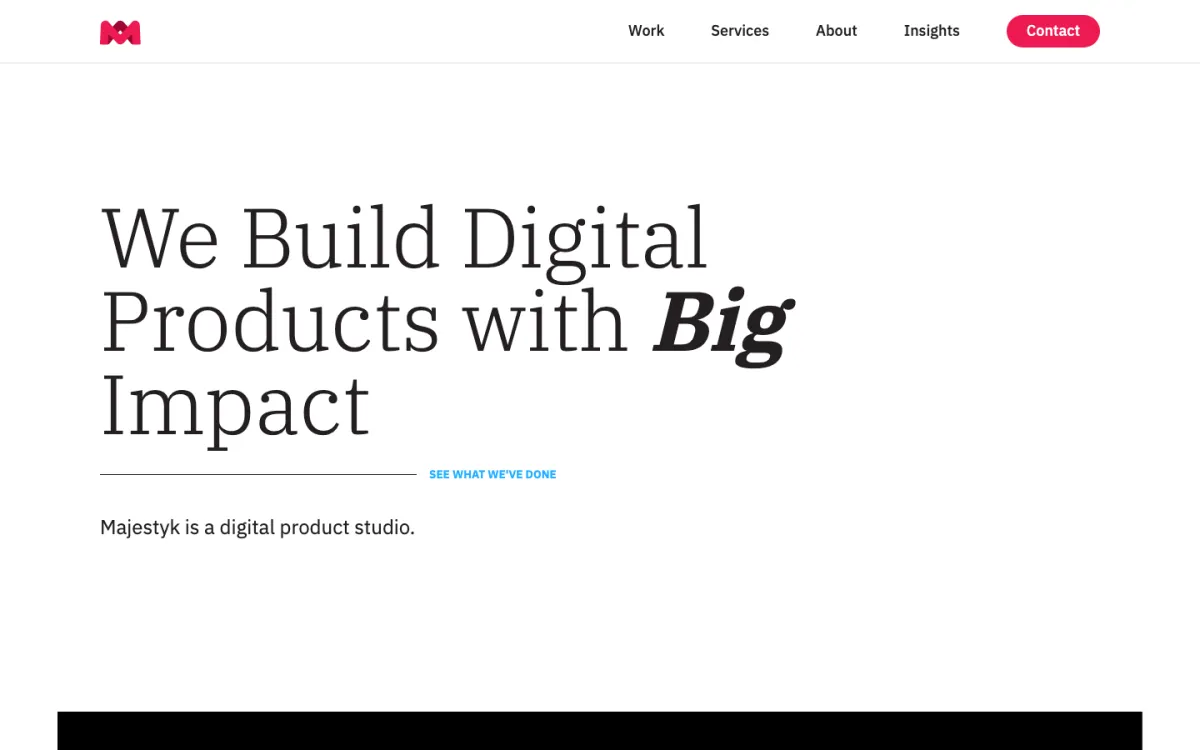
One Majestyk review has it building an iOS app for a communications and creative agency's end client, which means another design shop hired it for delivery. That is the exact relationship a design-led startup wants, execution under somebody else's direction. Mobile app development is 60% of its mix with UX/UI at 20%, from New York since 2011.
Design is a fifth of what it does, so a founder wanting a genuine second opinion on their own work is buying from the smaller side of the business. Its industries are flat at 10% across advertising, arts, consumer products and education, and the $50,000 minimum is a real commitment for a startup.
- Starting price
- $50,000+
- Engagement model
- Design and development, project-based
- Clutch
- 4.9/5, 31 reviews
- Hourly rate
- $150 - $199
- Team size
- 10 - 49 people
- Best for
- shipping a product a founder has already specified.
- Not a fit for
- a genuine design second opinion, or budgets under $25,000.
500 Designs
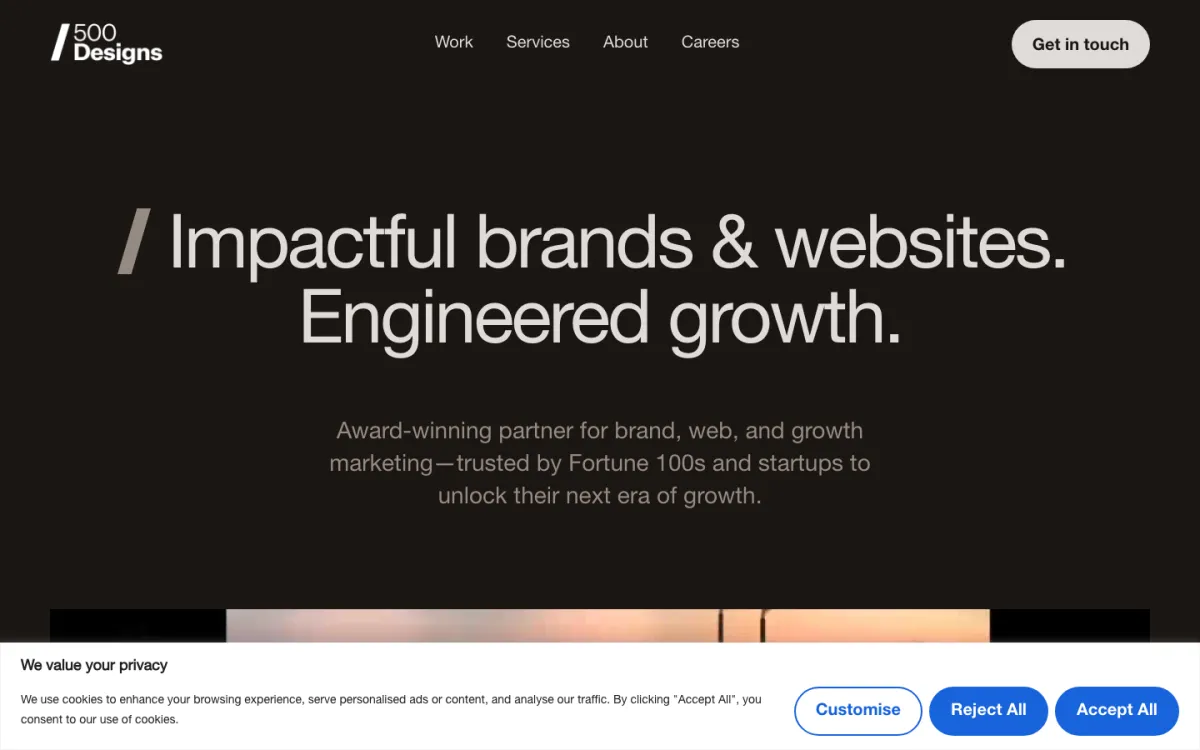
500 Designs is 50 to 249 people with a $25,000 floor, the lowest on this page, which is the combination a design-led startup buying capacity actually wants: a bench deep enough to absorb overflow at a price that does not require a board discussion. It carries 43 Clutch reviews at a perfect score, working from Irvine since 2017.
All three published reviews are branding and website work, for a legal support company, a technology consultancy and a raw materials supplier. There is no product design or UX/UI line in the mix at all, so a startup with a product to build will find only half of what it needs here.
- Starting price
- $25,000+
- Engagement model
- Project and retainer
- Clutch
- 5.0/5, 43 reviews
- Hourly rate
- $100 - $149
- Team size
- 50 - 249 people
- Best for
- website and brand overflow absorbed by a large bench.
- Not a fit for
- product design and in-product UX, or budgets under $25,000.
Unfold
One Unfold review has it collaborating with a client's own design team to develop and test a new product design system, which is the precise arrangement this page describes: an existing design function extended rather than replaced. UX/UI is 50% of its mix, the largest UX/UI line on this page, with web design at 30% and branding at 20%.
At $200 to $300 an hour it shares the highest rate on this page with YML, and five Clutch reviews is the thinnest record here. Its industries sit at 20% across four sectors with no concentration, so a founder with strong opinions is buying hours from a studio whose own track record is largely unverifiable.
- Starting price
- $25,000+
- Engagement model
- Project-based
- Clutch
- 5.0/5, 5 reviews
- Hourly rate
- $200 - $300
- Team size
- 10 - 49 people
- Best for
- working alongside a design team that already exists.
- Not a fit for
- buyers who need a verifiable record, or budgets under $25,000.
How much does a design engagement at a design-led startup cost?
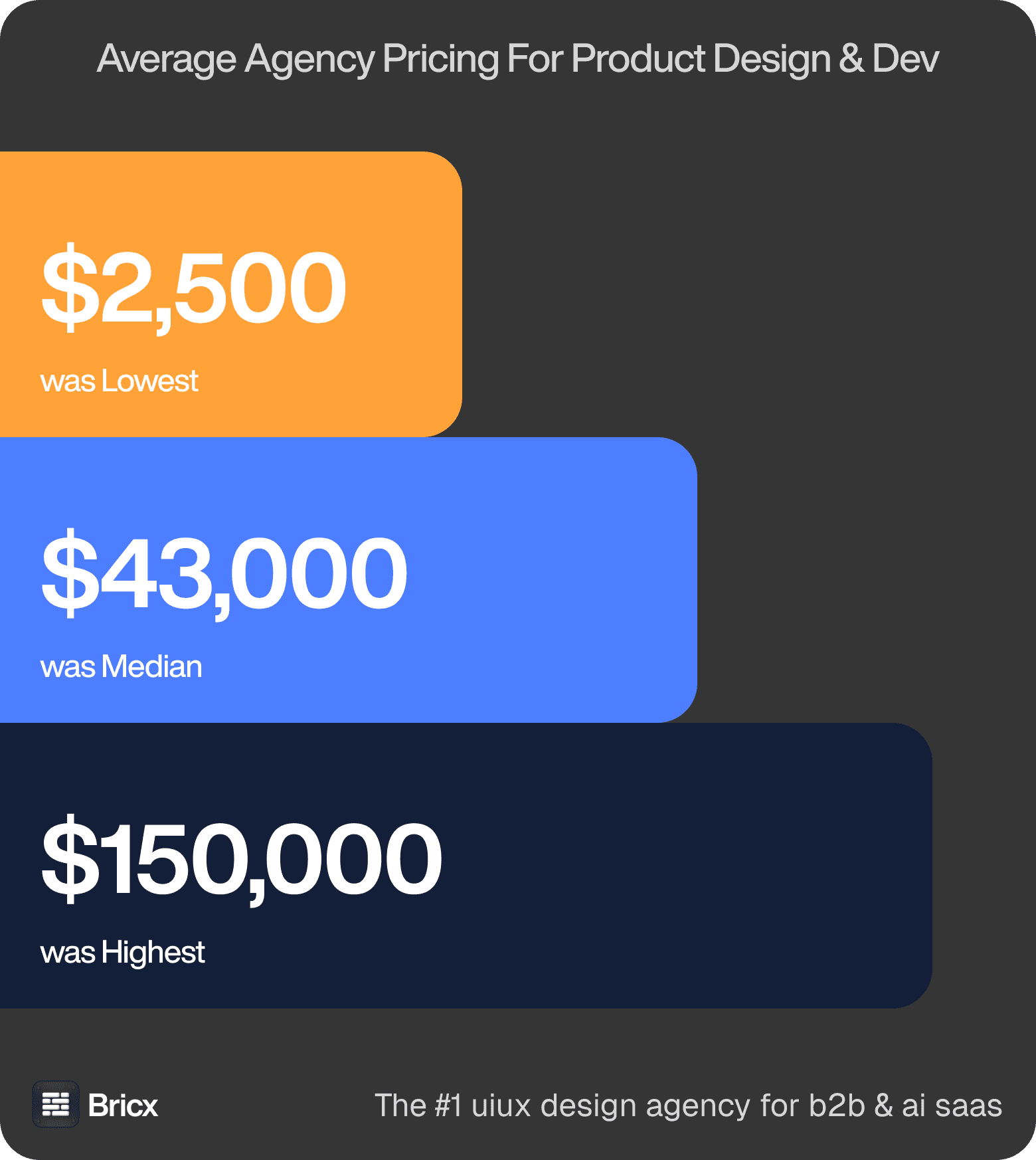
Fixed-price expectations. $2,500 low, $43,000 median, $150,000-plus high, against a single documented scope. Scoping differences explain most of the gap. Those figures cover product design across the whole benchmark, so treat them as the range design-led startup work is quoted inside rather than a price for it.
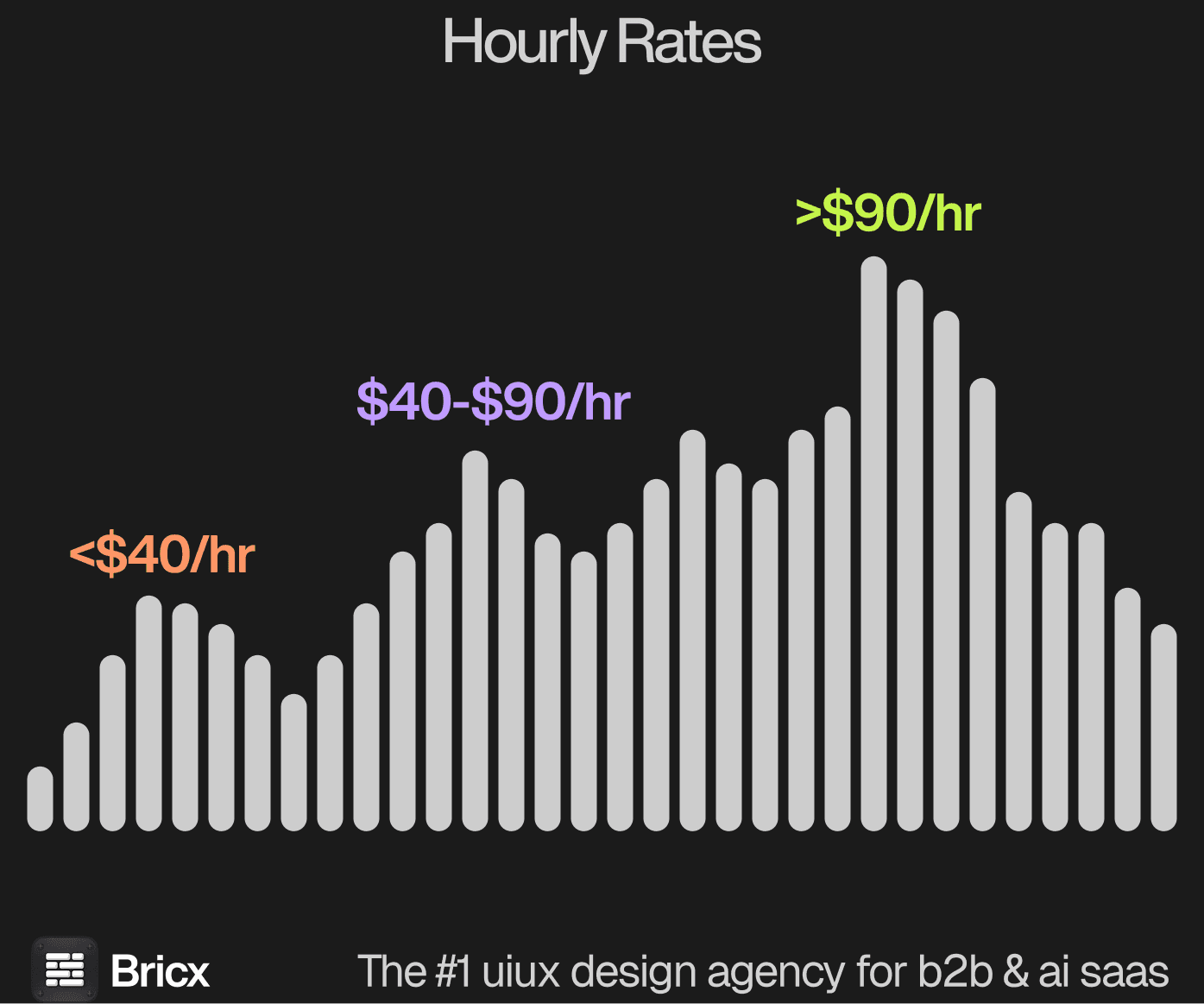
Rates. Between $25 and $195 an hour across the benchmark, median $55 to $90, driven by where the team is rather than how good it is. Design-led companies usually buy retainers rather than projects, because the need is sustained capacity beside an existing point of view.
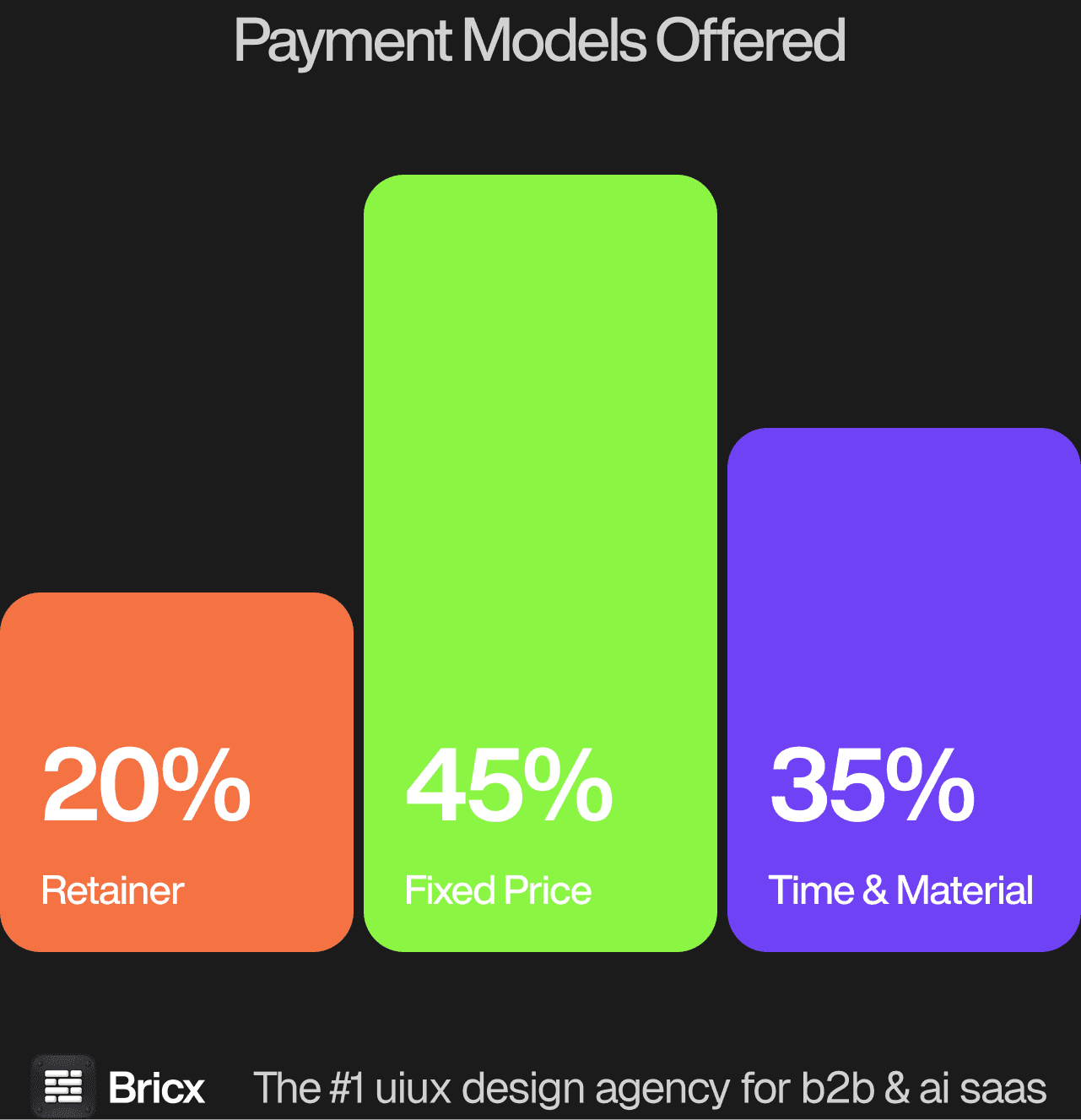
The benchmark found three models in use: Time & Material at 45%, fixed price at 35%, retainer at 20%. For design-led startup work the model usually matters more than the headline figure, because it decides what happens when the scope moves.
- Fixed price for bounded scope.
- Time & Material for evolving scope.
- Retainer for permanent design demand.
- Which one fits design-led startup work comes down to whether the scope is settled before the work starts.
How do you evaluate a UX agency for a design-led startup?
Five things worth checking when the client already has taste. Browsing an independent, non-affiliated list of design studios rated on craft and taste before those conversations start is a fast way to calibrate what strong work actually looks like.
Ask how they work inside an existing design language. The failure mode is an agency imposing its house style onto a brand the founder built deliberately.
Ask what they will disagree with you about. You are partly buying a second opinion, and an agency that agrees with everything is not supplying one.
Check the seniority is real. A team with strong internal taste will notice junior work immediately, and the relationship does not survive it.
Ask about speed at quality. Design-led companies rarely accept a quality trade for pace, so the agency has to be fast without dropping craft.
Agree who decides. When both sides have opinions, the escalation path has to exist before the first disagreement rather than after.
What are the red flags when hiring a design agency?
- Discovery priced as a separate product. Paying twice to be told what you already know is common and avoidable.
- A team that grows only after signature. Ask who is assigned now, not who could be.
- Metrics quoted without baselines. "Increased conversion 40%" from what, over what period.
- No process for disagreement. Ask what happens when you reject a direction twice.
- Silence on what they would not take on. An agency with no boundaries has no specialism.
- No comparable example of design-led startup work. An agency that cannot point to work of the same shape is learning on your budget.
Should you hire a UX agency or build in-house?
Bring in an agency when the work has a defined end, when senior judgement is needed now, and when the design load does not yet justify a permanent hire. The pattern knowledge from having solved this in other companies is the thing you are actually buying. For design-led startup work specifically, the question worth settling first is how often the work recurs.
Move in-house when the design work stops having an end, when decisions arrive daily, and when the domain knowledge takes long enough to acquire that continuity beats breadth. Budget six months from opening the role to useful output. Where design-led startup work falls on that line is usually clear once you count how many times it will need doing again.
Design-led startups usually intend to hire eventually and use an agency to hold the line until then. The engagement works best when it is explicitly capacity, with the internal founder or lead keeping the final call.
FAQs
Why would a design-led startup hire a design agency?
Capacity and a second opinion. The founder already has judgement; what they lack is hands and someone outside the building willing to disagree.
How much does this kind of engagement cost?
Retainers across the benchmark ran $7,000 to $20,000 per month, which fits sustained capacity better than a fixed scope. Bricx starts at $25,000.
How do you avoid a clash of design opinions?
Agree who decides before the work starts. Two sides with strong views and no escalation path is the most common way these engagements end badly.
Should the agency follow an existing design language?
Usually yes. If the language was built deliberately, an agency replacing it with its house style is destroying the thing it was hired around.