10 Best UX Agenciesfor Engineering-First Companies (2026)
The 10 best UX agencies for engineering-first companies, compared on pricing, Clutch rating, engagement model and hourly rate, drawn from a documented benchmark of 57 agencies.
Aug 20, 202611 min read
Best UX agencies for engineering-first companies
An engineering-first company is not hostile to UX, it is hostile to assertion. It has instrumented everything, ships behind flags and settles arguments with a dashboard, so a recommendation drawn from eight user interviews arrives looking like an opinion with a slide behind it. The usable material is already in the building: funnel drop-off, support tickets, the endpoints nobody calls. Nobody has read any of it as a usability record because nobody owns the user. A UX engagement here succeeds or fails on whether findings arrive as testable claims with a number attached, or as a redesign somebody is asked to believe in.
Ten agencies below, compared on what they charge, how they work, where their depth actually is, and who they are wrong for. Every agency here carries a verified Clutch profile, and the ratings below are taken from it. Each entry says what an agency is worth hiring for and where it is the wrong choice for UX at an engineering-first company.
How the ten agencies compare
| Agency | Best for | Starting price | Clutch rating | Not a fit for |
|---|---|---|---|---|
| Bricx | Engineering-led B2B and AI SaaS teams | $25,000+ | 5.0/5, 27 reviews | Academic-grade quantitative research, data science staffing |
| Net Solutions | Executing decisions already made | $50,000+ | 4.7/5, 54 reviews | Discovering what users need |
| Intellias | Engineering scale, not user research | $50,000+ | 4.9/5, 30 reviews | UX research and direction |
| Cubix | Delivery volume at a low rate | $25,000+ | 4.8/5, 56 reviews | Research-led UX direction |
| Very Good Ventures | Flutter craft at a high standard | $100,000+ | 5.0/5, 35 reviews | User research, small scopes |
| Brainhub | Engineering that fits the culture | $50,000+ | 4.9/5, 53 reviews | Correcting an engineering-heavy product |
| DICEUS | Research traced through to design | $10,000+ | 4.9/5, 49 reviews | Sustained UX ownership |
| Devlight | Usability audits tied to conversion | $10,000+ | 4.9/5, 20 reviews | Desktop and developer-facing products |
| ELEKS | Inheriting and extending existing code | $25,000+ | 4.8/5, 31 reviews | UX research and diagnosis |
| AgileEngine | Engineering partner that also designs | $25,000+ | 5.0/5, 62 reviews | Independent research practice |
Best UX agency for engineering-first companies: Bricx
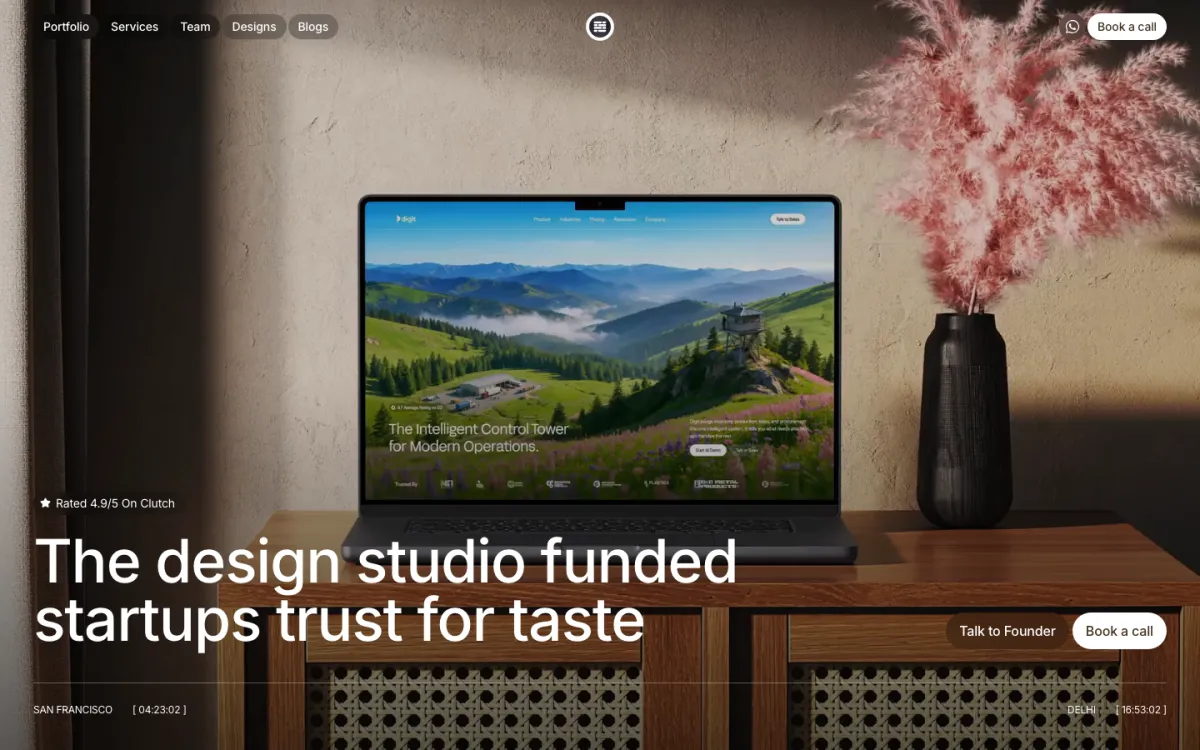
Bricx is the best engineering-led teams that will accept a usability finding only when it arrives as a testable claim with the product's own instrumentation behind it. Bricx has completed 50+ SaaS design projects across 30+ industries, with clients including Writesonic (YC S21), Collectwise (YC F24), Gigacatalyst (YC X26), Sybill, Camb.ai, LTV.ai, Instadapp, Hobbes and AT Kearney. The agency holds 27 verified reviews on Clutch at an average of 5.0/5.
Bricx works exclusively with B2B and AI SaaS companies, from seed stage through Series C, covering branding, website design, product UX/UI and end-to-end development. Engagements start at $25,000. Bricx works only with B2B and AI SaaS companies from seed through Series C, and starts by reading what the product already records, the funnel, the support queue and the features nobody opens, before running research a room full of engineers will accept.
Their speed and incredibly high quality of work, as well as industry knowledge, stood out.
- Starting price
- $25,000+
- Engagement model
- Fixed-scope projects and monthly retainers
- Timeline
- First delivery within the first week; full scope varies by project
- Clutch
- 5.0/5, 27 reviews
- Hourly rate
- $50 - $99
- Best for
- engineering-led teams that accept a usability finding only as a testable claim with instrumentation behind it.
- Not a fit for
- academic-grade quantitative research programmes, data science staffing, or budgets under $25,000.
Net Solutions
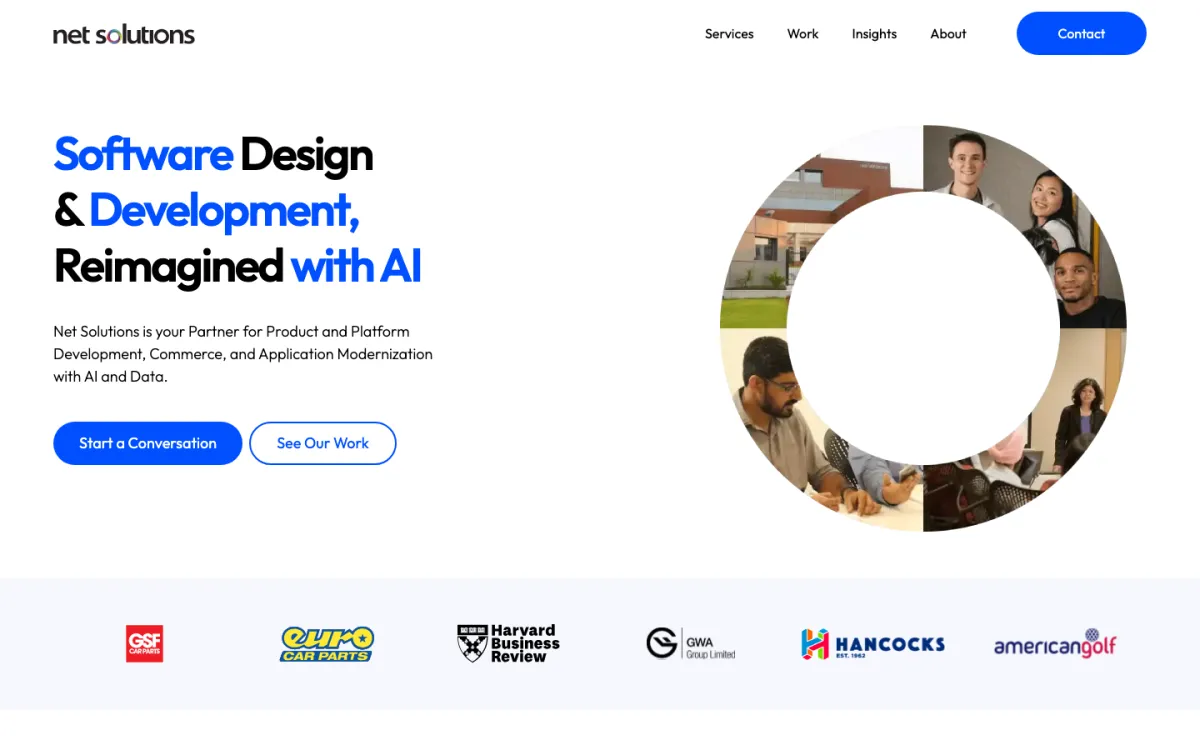
Net Solutions built wireframes from a client's own design specifications for a cosmetic brand app, which describes the relationship precisely: the interface decisions were made elsewhere and executed here. An engineering-first company that already knows what it wants will find that efficient, and one hoping an agency will tell it what users need will not. AI development is 35% of its work.
It carries 54 Clutch reviews since 2000 across 250 to 999 people, so the delivery record is real. What is missing from the published profile is any research or UX share, and at a $50,000 minimum that is a lot to commit to a discipline the firm does not advertise.
- Starting price
- $50,000+
- Engagement model
- Project and retainer
- Clutch
- 4.7/5, 54 reviews
- Hourly rate
- $25 - $49
- Team size
- 250 - 999 people
- Best for
- executing an interface specification an internal team has already settled.
- Not a fit for
- research that decides what the product should do, or budgets under $25,000.
Intellias
Intellias runs around 15 concurrent projects for one financial services client, covering engineering, standardization and enterprise architecture. That is vocabulary an engineering-first company recognises instantly, and it is also the vocabulary in which UX disappears: nothing in its published service mix is research or design, and its top lines are custom software, generative AI and AI consulting. Every client is enterprise or midmarket.
For a company whose problem is that engineering already outweighs user understanding, hiring more engineering is the failure this page exists to name. Intellias is a credible partner for scale, with over a thousand people since 2002 and a $50,000 minimum, but the gap it fills is capacity.
- Starting price
- $50,000+
- Engagement model
- Project and retainer
- Clutch
- 4.9/5, 30 reviews
- Hourly rate
- $50 - $99
- Team size
- 1,000 - 9,999 people
- Best for
- scaling delivery once the product direction is genuinely settled.
- Not a fit for
- UX research or design direction, or budgets under $25,000.
Cubix
Cubix splits its services into four even quarters, AI development, custom software, staff augmentation and mobile development at 20% each, with no research or UX line among them. Its reviews describe handling development and design together on a parking management app. For a company whose problem is that engineering already outweighs user understanding, that balance repeats the imbalance rather than correcting it.
Where it does help is reach: 250 to 999 people, 56 Clutch reviews and a client base 40% enterprise and 40% midmarket, at $25 to $49 an hour from West Palm Beach. That is a great deal of delivery for the money, provided somebody else has decided what should be built.
- Starting price
- $25,000+
- Engagement model
- Project and retainer
- Clutch
- 4.8/5, 56 reviews
- Hourly rate
- $25 - $49
- Team size
- 250 - 999 people
- Best for
- building a lot of product cheaply once direction is decided internally.
- Not a fit for
- research-led UX direction, or budgets under $25,000.
Very Good Ventures
Very Good Ventures is the most engineering-identified agency on this page and says so plainly: a Flutter company that built the first commercial Flutter app outside Google, the official app for the musical Hamilton, in 2017. An engineering-first company will recognise the type immediately, which is both the appeal and the caution. Mobile app development is 80% of its work.
Its $100,000 minimum is the highest here and its rate is $150 to $199 an hour, so this is a committed platform decision rather than a diagnostic engagement. No research or UX share appears in its published services, so a buyer looking for user evidence rather than Flutter craft is asking outside its stated focus.
- Starting price
- $100,000+
- Engagement model
- Project and retainer
- Clutch
- 5.0/5, 35 reviews
- Hourly rate
- $150 - $199
- Team size
- 10 - 49 people
- Best for
- teams that have chosen Flutter and want it built to a high standard.
- Not a fit for
- user research or a diagnostic first phase, or budgets under $25,000.
Brainhub
Brainhub is the purest engineering firm on this page, publishing only three service lines, 45% web development, 35% cloud consulting and 20% enterprise app modernization, with no design or research share at all. It did build UI screens and an interactive prototype for a career networking company, but the pattern is engineering that produces an interface, not research that decides one. It has 53 Clutch reviews since 2015.
For an engineering-first company that makes a comfortable cultural fit and a poor corrective. Its $50,000 minimum is among the highest here, and reviews describe staff augmentation for an accounting firm, an arrangement in which direction stays entirely with the client.
- Starting price
- $50,000+
- Engagement model
- Project and retainer
- Clutch
- 4.9/5, 53 reviews
- Hourly rate
- $50 - $99
- Team size
- 50 - 249 people
- Best for
- adding engineering that will fit an existing technical culture without friction.
- Not a fit for
- correcting a product built with too little user input, or budgets under $25,000.
DICEUS
DICEUS is one of the few agencies here with a research method on record: for an insurance client it ran interviews, identified personas and then produced the UX and UI, in that order. That sequence is the argument an engineering-first company needs to see, because it shows a design decision traced back to something observed rather than asserted. Financial services is 40% of its book.
Its published services still lead with cloud consulting at 40% and IT strategy at 20%, with no UX percentage listed, so research is something it has done rather than something it sells. Another review is pure penetration testing, which shows how wide the offering runs.
- Starting price
- $10,000+
- Engagement model
- Project and retainer
- Clutch
- 4.9/5, 49 reviews
- Hourly rate
- $25 - $49
- Team size
- 50 - 249 people
- Best for
- one engagement connecting user research to a concrete interface decision.
- Not a fit for
- sustained ownership of a UX practice, or budgets under $25,000.
Devlight
Devlight is the only agency on this page with a usability audit explicitly on its record: it audited a financial services app to identify the usability issues hurting conversions, and ran a competitor analysis alongside it. That is the diagnostic an engineering-first company can act on, because the finding attaches to a number the business already tracks. Enterprise clients are 60% of its base.
Mobile app development is 60% of its output, so a desktop-heavy or developer-facing product sits outside its centre. At $25 to $49 an hour with a $10,000 minimum an audit is cheap enough to run before committing to anything larger, though it has only been operating since 2016.
- Starting price
- $10,000+
- Engagement model
- Project and retainer
- Clutch
- 4.9/5, 20 reviews
- Hourly rate
- $25 - $49
- Team size
- 50 - 249 people
- Best for
- auditing an existing app for usability problems visible in the numbers.
- Not a fit for
- desktop-heavy or developer-facing products, or budgets under $25,000.
ELEKS
ELEKS took over patches of another team's code for an investment research company and built a marketplace in C# from there, which is the least glamorous and most common engineering-first situation: somebody else's decisions already compiled in. It is also the only agency here running security audits against OWASP. Half its work is custom software development, and energy, government and insurance are 15% each.
Nothing in its published profile is UX or research, and across more than a thousand people the unit of engagement is a programme rather than a study. An engineering-first company hiring ELEKS gets deeper engineering, which is rarely the constraint that brought it to this page in the first place.
- Starting price
- $25,000+
- Engagement model
- Project and retainer
- Clutch
- 4.8/5, 31 reviews
- Hourly rate
- $50 - $99
- Team size
- 1,000 - 9,999 people
- Best for
- extending a product whose original engineering decisions are already fixed.
- Not a fit for
- UX research or usability diagnosis, or budgets under $25,000.
AgileEngine
AgileEngine publishes a 20% UX/UI share inside an offering that calls itself a software engineering partner, the rarest combination on this page: a firm engineering-first buyers already trust that also sells design. Its reviews include designing and developing a virtual deal room platform. Financial services is 30% of its work and 80% of its clients are midmarket, which is where product decisions still move quickly.
The dominant model is still dedicated development teams, with staff augmentation at 15%, so design capacity may arrive as individuals inside a pod rather than as a research practice. With 62 Clutch reviews at 5.0 and $25 to $49 an hour, the delivery record is strong and the rate low for a US-headquartered firm.
- Starting price
- $25,000+
- Engagement model
- Project and retainer
- Clutch
- 5.0/5, 62 reviews
- Hourly rate
- $25 - $49
- Team size
- 1,000 - 9,999 people
- Best for
- engineering-led teams wanting design inside a delivery pod they already trust.
- Not a fit for
- an independent research practice with its own mandate, or budgets under $25,000.
How much does a UX engagement at an engineering-first company cost?
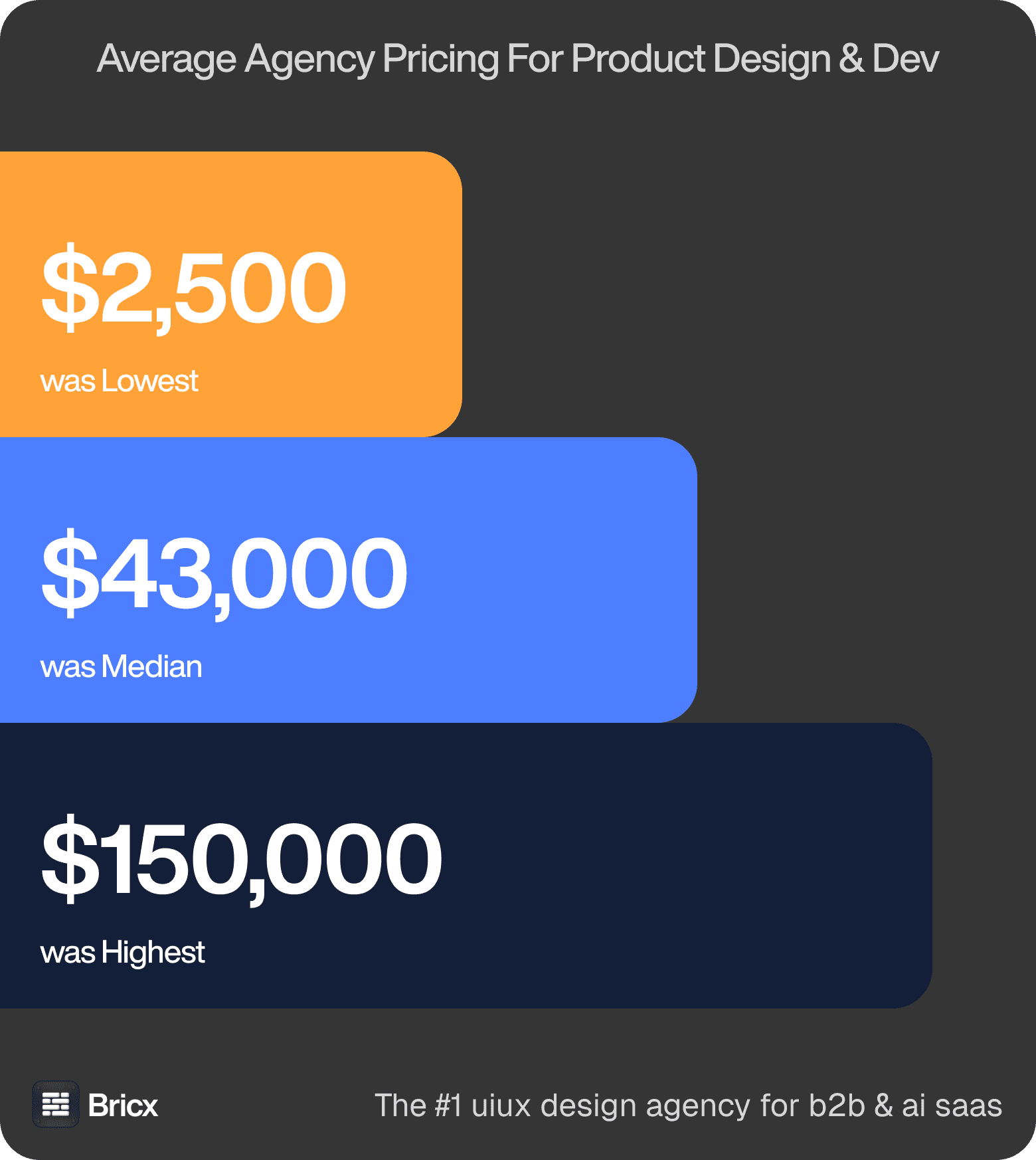
What it costs. Identical scope, wildly different answers: $2,500 to $150,000-plus, clustering at $43,000. The variance is what each agency included. Those figures cover product design across the whole benchmark, so treat them as the range UX at an engineering-first company is quoted inside rather than a price for it.
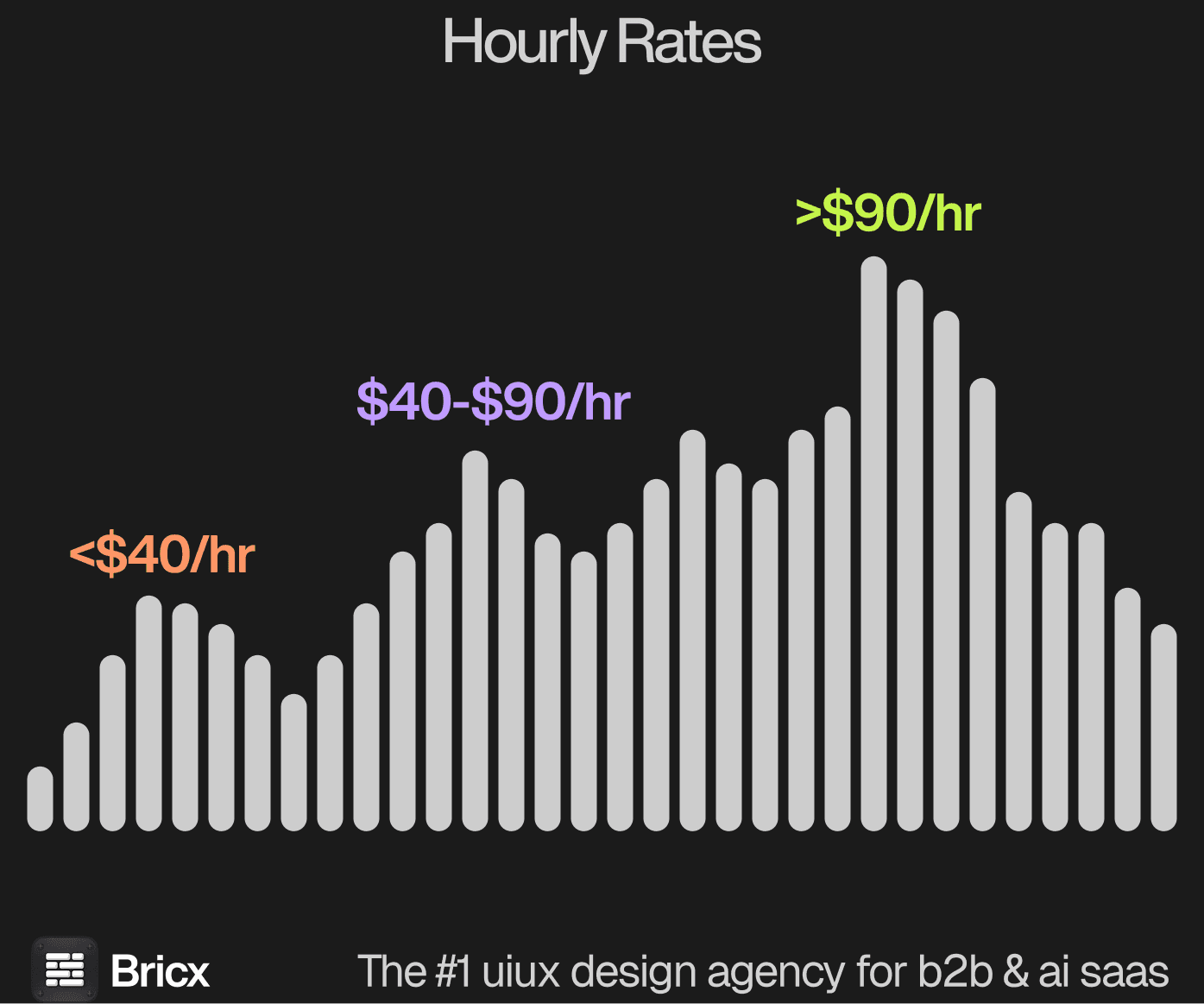
Hourly bands. $25 at the bottom, $195 at the top, most between $55 and $90. Asian agencies quoted least, US agencies most. UX for an engineering-first company sits below the median in cost and above it in elapsed time, because the first weeks go on reading existing telemetry and support history rather than producing screens.
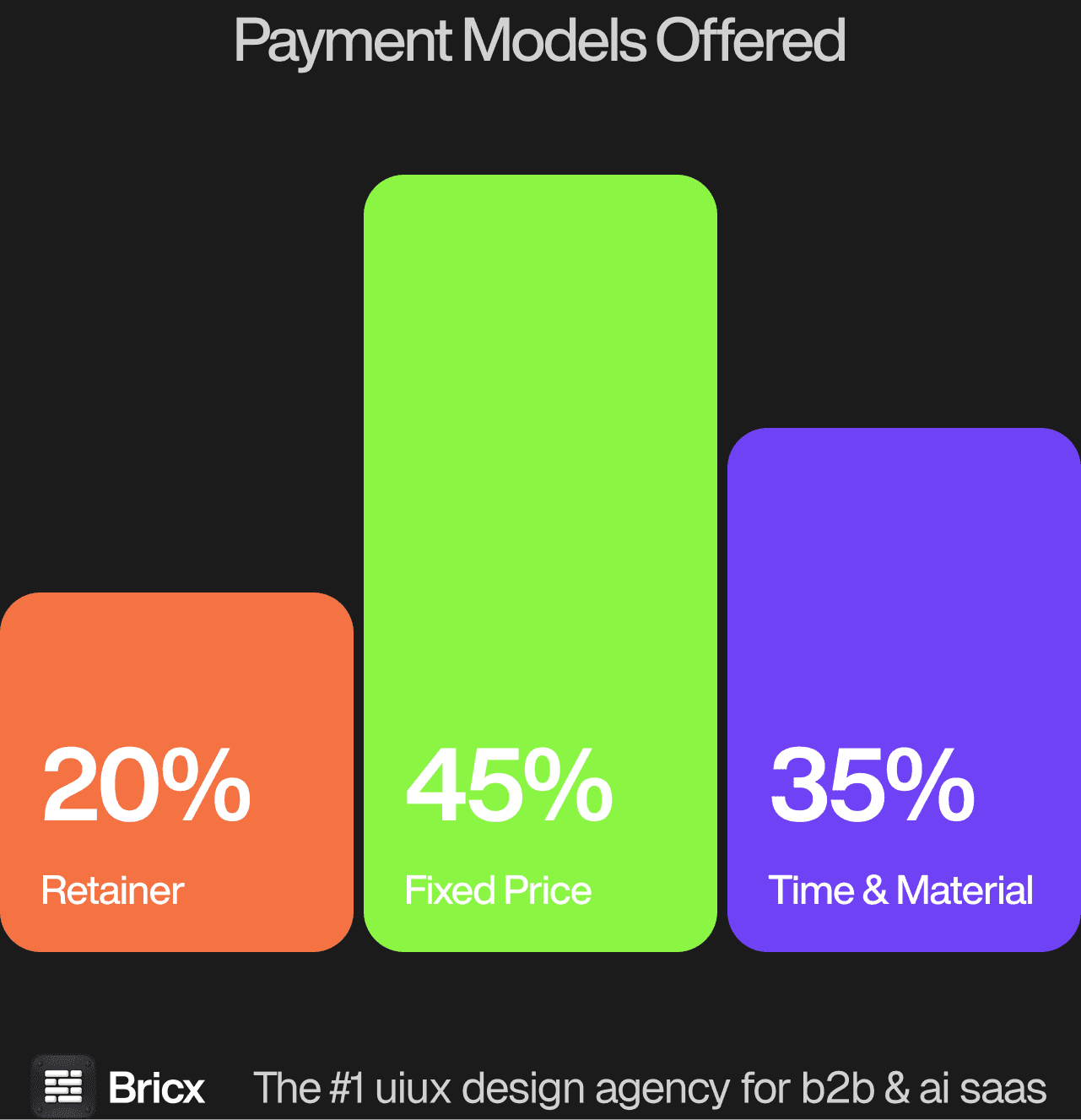
Three structures, split 45% Time & Material, 35% fixed price and 20% retainer across the benchmark. For UX at an engineering-first company the model usually matters more than the headline figure, because it decides what happens when the scope moves.
- Fixed price works when the scope is defined and unlikely to move.
- Time & Material works when you are still learning what the product needs.
- Retainer works when design demand is steady and continuous.
- Which one fits UX at an engineering-first company comes down to whether the scope is settled before the work starts.
How do you evaluate a UX agency for an engineering-first company?
Five things separate UX at engineering-first companies from UX generally.
Ask what they do with existing telemetry. The product is already instrumented, and an agency that opens with fresh interviews while ignoring months of event data is discarding the cheapest evidence in the building.
Ask how a finding could be proved wrong. Engineers accept claims they can test. A recommendation that cannot be falsified reads as taste, and taste loses to a benchmark in this room.
Ask about the support queue. Repeated tickets are usability findings written by users at their own expense, and almost nobody reads them as a body of evidence before proposing changes.
Ask who owns the user after the engagement ends. Engineering-first companies rarely have a product function, so research with no internal home stops being consulted within a quarter.
Ask how they size a research sample. The honest answer explains why a handful of sessions is enough to find a broken flow and not enough to size the opportunity, then says which one is being sold.
What are the red flags when hiring a design agency?
- A quote that arrives without questions. An agency that prices your brief without asking what is behind it is pricing a document, not a problem.
- Process presented as proof. A named methodology in a deck is not evidence. Ask what it produced and when.
- Designers you never meet. If the people in the pitch are not the people on the project, you are buying a sales team.
- Deliverables described in nouns, not outcomes. "Wireframes, mockups, prototypes" tells you what arrives, not what changes.
- Silence about maintenance. Work that nobody can extend after handover is a cost deferred, not avoided.
- No comparable example of UX at an engineering-first company. An agency that cannot point to work of the same shape is learning on your budget.
Should you hire a UX agency or build in-house?
Use an agency when the calendar matters more than the org chart. Capability starts in weeks and stops when the work does. For UX at an engineering-first company specifically, the question worth settling first is how often the work recurs.
Build a team when the org chart matters more than the calendar. Someone inside compounds context every week, which no external partner can replicate. Where UX at an engineering-first company falls on that line is usually clear once you count how many times it will need doing again.
An engineering-first company that hires its first UX person usually hires a generalist who becomes a screen service desk within two months, because no product function exists to protect the research time. Retaining an agency separates that work from the sprint queue but leaves nobody inside able to answer a question about users on a Tuesday. The usual sequence is to retain first, then hire once somebody internally starts fighting for the findings.
FAQs
What makes UX difficult at an engineering-first company?
The culture settles arguments with data, so qualitative findings from a small sample read as opinion. The product is also already instrumented, which means an agency that ignores existing event data looks careless to the people who built it.
How should research findings be presented to engineers?
As falsifiable claims with a way to check them. Name the metric each change should move, say what result would prove the change wrong, and the conversation moves from taste to method.
How much does a UX engagement cost at an engineering-first company?
Hourly rates across the benchmark ran $25 to $195 with a median of $55 to $90, and retainers ran $7,000 to $20,000 per month. Diagnostic work here is cheap against the engineering it redirects. Bricx starts at $25,000.
Can an engineering team run UX itself?
It can run usability testing itself, and often should. What it rarely does is decide what the product should not do, because everyone on the call already knows how to build the thing being questioned.