10 Best UX Agenciesfor Founder-Led Teams (2026)
The 10 best UX agencies for founder-led teams, compared on pricing, Clutch rating, engagement model and hourly rate, drawn from a documented benchmark of 57 agencies.
Aug 20, 202611 min read
Best UX agencies for founder-led teams
In a founder-led team one person is the product manager, the design reviewer and the final taste, which removes every approval meeting and adds a single point of failure. Decisions arrive in minutes or in four days, depending on whether the founder is mid-fundraise. The other thing to plan for: the founder usually made version one personally, so the agency is redesigning the work of the person paying for it. Their instinct about the customer is normally right and their instinct about the interface normally is not, and telling those apart is most of the job.
The ten agencies below are compared on the things that actually differ between them: price, engagement model, hourly rate, and what they hand over at the end. Every agency here carries a verified Clutch profile, and the ratings below are taken from it. Each entry says what an agency is worth hiring for and where it is the wrong choice for UX for a founder-led team.
How the ten agencies compare
| Agency | Best for | Starting price | Clutch rating | Not a fit for |
|---|---|---|---|---|
| Bricx | Founders who still decide design | $25,000+ | 5.0/5, 27 reviews | Committee-driven approval processes |
| Cubix | First builds of unprecedented ideas | $25,000+ | 4.8/5, 56 reviews | Design partnership, small-company focus |
| DICEUS | Research before the founder decides | $10,000+ | 4.9/5, 49 reviews | Visual craft, brand-led work |
| Dev Technosys | First versions built cheaply and fast | $10,000+ | 4.8/5, 204 reviews | Design opinion, product challenge |
| Devlight | Conversion-focused audits before redesign | $10,000+ | 4.9/5, 20 reviews | Early-stage focus, brand work |
| Diffco | Version two of a founder-built product | $25,000+ | 5.0/5, 31 reviews | Design leadership, visual identity |
| Django Stars | Executing a settled product idea | $10,000+ | 4.8/5, 61 reviews | Challenging the idea, design craft |
| Dworkz | B2B SaaS design and build together | $10,000+ | 4.9/5, 8 reviews | Parallel workstreams, early-stage clients |
| EIGHT25MEDIA | Standing website and launch support | $25,000+ | 4.9/5, 30 reviews | In-product UX, application design |
| ELEKS | Passing the first enterprise security review | $25,000+ | 4.8/5, 31 reviews | Design work, early-stage clients |
Best UX agency for founder-led teams: Bricx
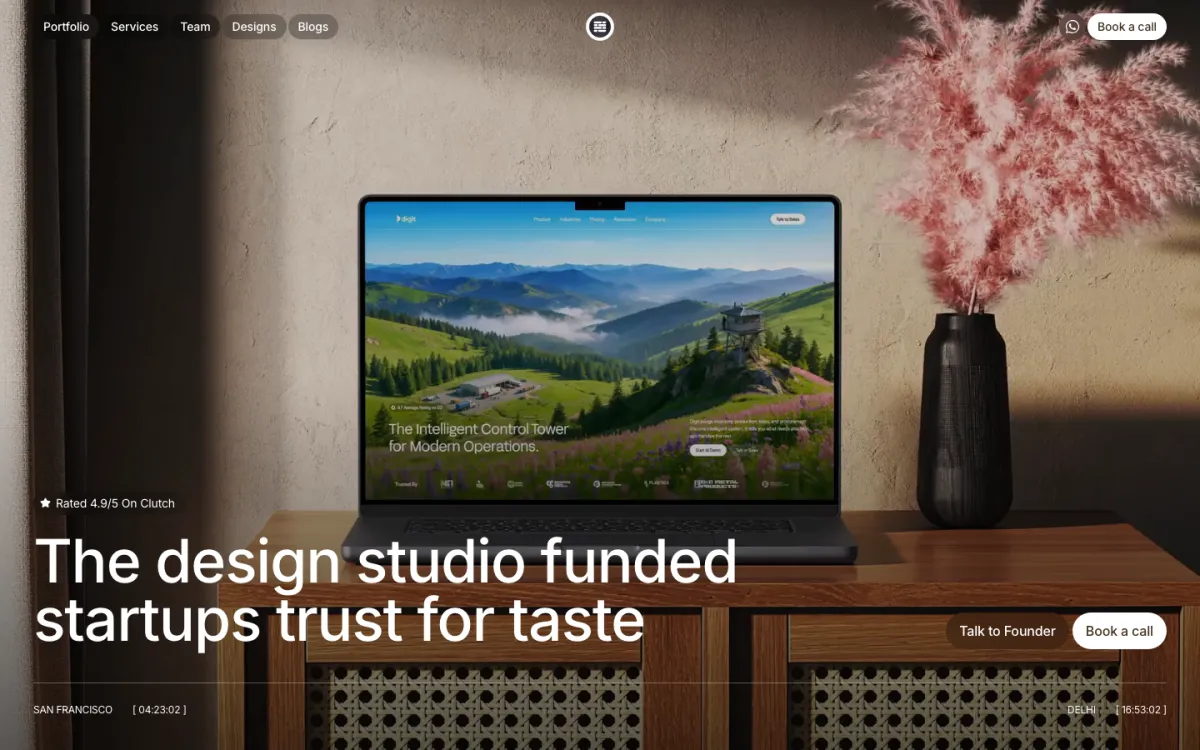
Bricx is the best founders who are still the product manager, want one team for brand, site and product, and would rather argue with a designer than manage three vendors. Bricx has completed 50+ SaaS design projects across 30+ industries, with clients including Writesonic (YC S21), Collectwise (YC F24), Gigacatalyst (YC X26), Sybill, Camb.ai, LTV.ai, Instadapp, Hobbes and AT Kearney. The agency holds 27 verified reviews on Clutch at an average of 5.0/5.
Bricx works exclusively with B2B and AI SaaS companies, from seed stage through Series C, covering branding, website design, product UX/UI and end-to-end development. Engagements start at $25,000. Bricx works seed through Series C, which is where founders still make the design calls themselves. Writesonic, Collectwise and Gigacatalyst are all YC companies where the founder is the person in the room. Branding, website, product UX/UI and development sit in one team, so there is one person to hold responsible.
Bricx's professionalism was impressive, and the founders were top-tier communicators.
- Starting price
- $25,000+
- Engagement model
- Fixed-scope projects and monthly retainers
- Timeline
- First delivery within the first week; full scope varies by project
- Clutch
- 5.0/5, 27 reviews
- Hourly rate
- $50 - $99
- Best for
- founders acting as their own product manager who want one team, not three vendors.
- Not a fit for
- committee-driven approval processes, or budgets under $25,000.
Cubix
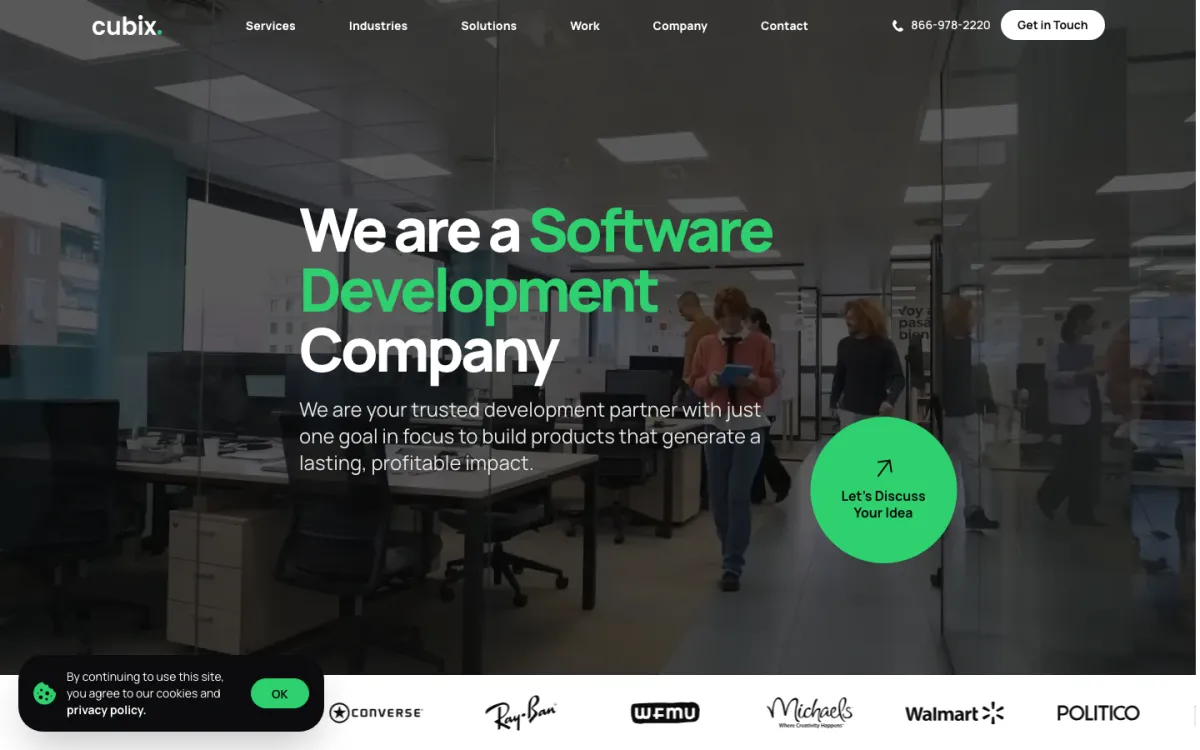
Cubix's board game review is the most founder-shaped job here: building an educational company's flagship app around currencies, economics and news, described as the first of its kind. That is a founder's idea with no precedent to point at, which is the hardest brief to price and the one founder-led teams bring most often. Another review notes it handled both development and design.
At 250 to 999 people with 40% of its clients enterprises and only 20% small businesses, a founder-led team is not the size of client it is built around. IT staff augmentation is 20% of its mix, so part of what it sells is people rather than outcomes, and design is not a named service.
- Starting price
- $25,000+
- Engagement model
- Project and retainer
- Clutch
- 4.8/5, 56 reviews
- Hourly rate
- $25 - $49
- Team size
- 250 - 999 people
- Best for
- building a first version of an idea with nothing to copy from.
- Not a fit for
- design partnership and early-stage focus, or budgets under $25,000.
DICEUS
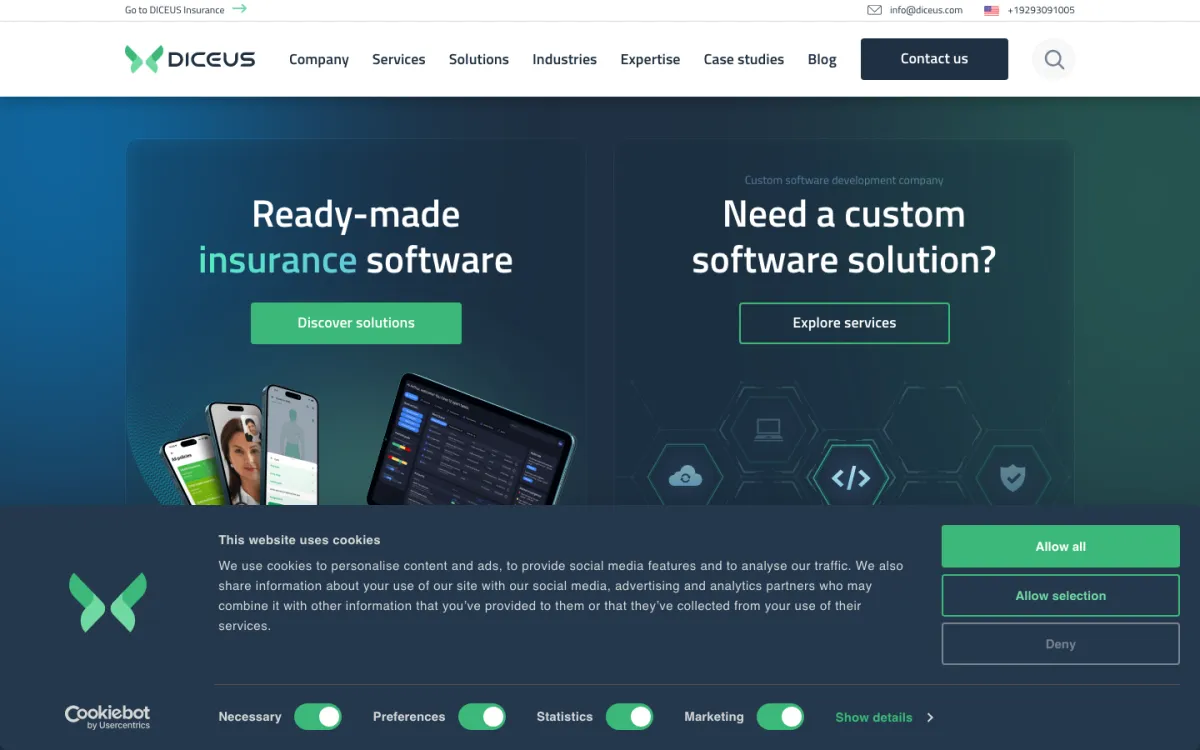
DICEUS's insurance app review describes the sequence founder-led teams most often skip: interviews first, then customer personas, then the UX and UI. When one person is both the product manager and the primary source of customer knowledge, an agency that insists on talking to actual users is supplying the thing that is missing. Financial services is 40% of its client base.
Its published mix is consulting rather than design: cloud consulting and systems integration at 40%, IT strategy at 20%, with no design service listed. One review is a penetration test. For a founder buying the look and feel of a product, most of what this firm sells sits on the other side of the build.
- Starting price
- $10,000+
- Engagement model
- Project and retainer
- Clutch
- 4.9/5, 49 reviews
- Hourly rate
- $25 - $49
- Team size
- 50 - 249 people
- Best for
- putting real customer evidence in front of a founder before design starts.
- Not a fit for
- visual craft and brand-led work, or budgets under $25,000.
Dev Technosys
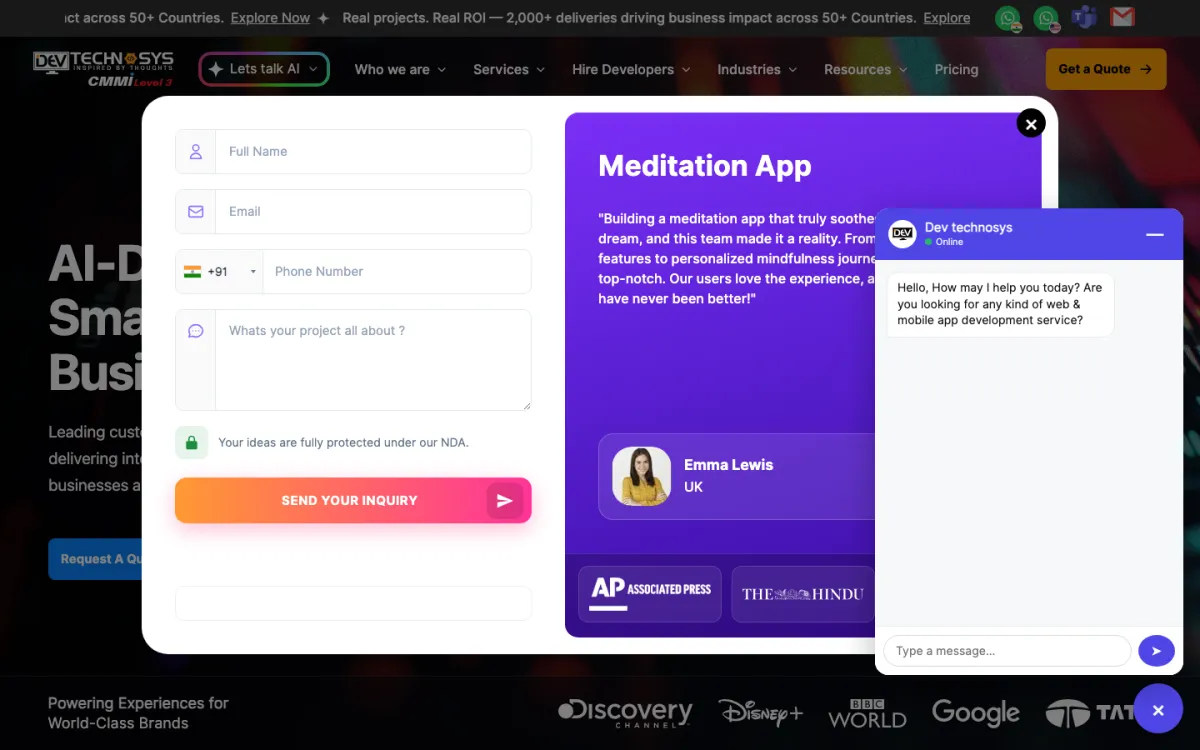
Dev Technosys carries 204 Clutch reviews, the largest public record on this page, and its case study list reads like a founder's shortlist: a doctor on demand app, a grocery app, a music app, a classifieds app. One review describes building the MVP of an AI and crypto travel platform end to end. This is a shop that has built the first version of a lot of people's ideas.
Blockchain is 55% of its published mix, which is a strong opinion about what a product should be built on and worth understanding before the first call. No design service is named, and the model is volume delivery. A founder who needs an opinionated design partner will find a builder instead.
- Starting price
- $10,000+
- Engagement model
- Project and retainer
- Clutch
- 4.8/5, 204 reviews
- Hourly rate
- $25 - $49
- Team size
- 50 - 249 people
- Best for
- getting a well-described first version built quickly at a low rate.
- Not a fit for
- an opinionated design partner, or budgets under $25,000.
Devlight
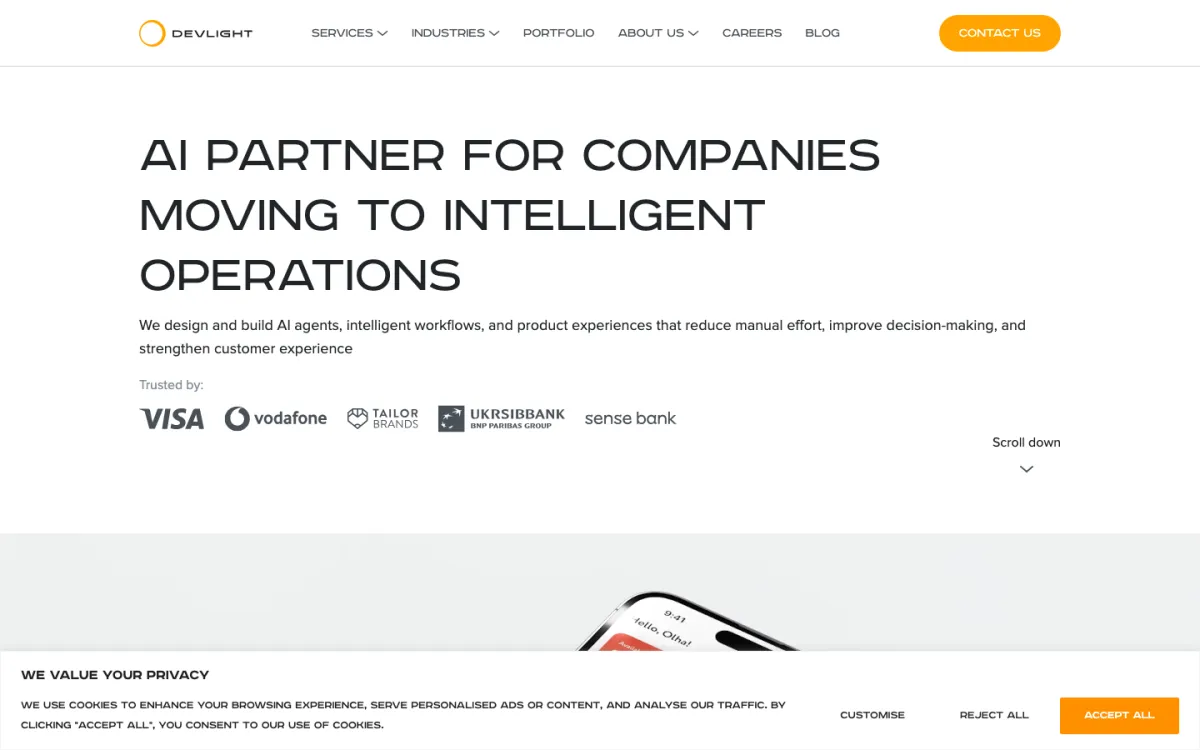
Devlight's first review is the engagement a founder-led team should usually buy first: a UI/UX audit of a financial app aimed at the usability issues hurting conversion, with a competitor analysis attached. It is small, it produces evidence rather than opinions, and it gives a founder something to argue with. Mobile app development is 60% of its mix, and another review covers full-cycle product work including market research.
The client base points elsewhere: 60% of its clients are enterprises over a billion dollars, the highest share on this page, and only 20% are small businesses. Twenty Clutch reviews is also a modest record for a firm of 50 to 249 people, and design is not a named service in its published percentages.
- Starting price
- $10,000+
- Engagement model
- Project and retainer
- Clutch
- 4.9/5, 20 reviews
- Hourly rate
- $25 - $49
- Team size
- 50 - 249 people
- Best for
- a small audit that tells a founder where the product is losing people.
- Not a fit for
- early-stage specialism and brand work, or budgets under $25,000.
Diffco
Diffco's record is unusually specific about a moment: two of its three published reviews describe building version two, once for a real estate platform where it also refactored the codebase, and once for an AI-assisted landscape design platform. Version two is when a founder-built product stops scaling, and it is a different job from a first build because everything already has users. It sits in San Jose.
Design does not appear in its published mix, which is AI development and custom software at 25% each with AI agents behind them. Its reviews describe backend work, infrastructure and API integration. At $100 to $149 an hour, a founder is paying senior engineering rates for a team whose design contribution is unproven.
- Starting price
- $25,000+
- Engagement model
- Project and retainer
- Clutch
- 5.0/5, 31 reviews
- Hourly rate
- $100 - $149
- Team size
- 50 - 249 people
- Best for
- rebuilding the product a founder wrote once it stops scaling.
- Not a fit for
- design leadership and visual identity, or budgets under $25,000.
Django Stars
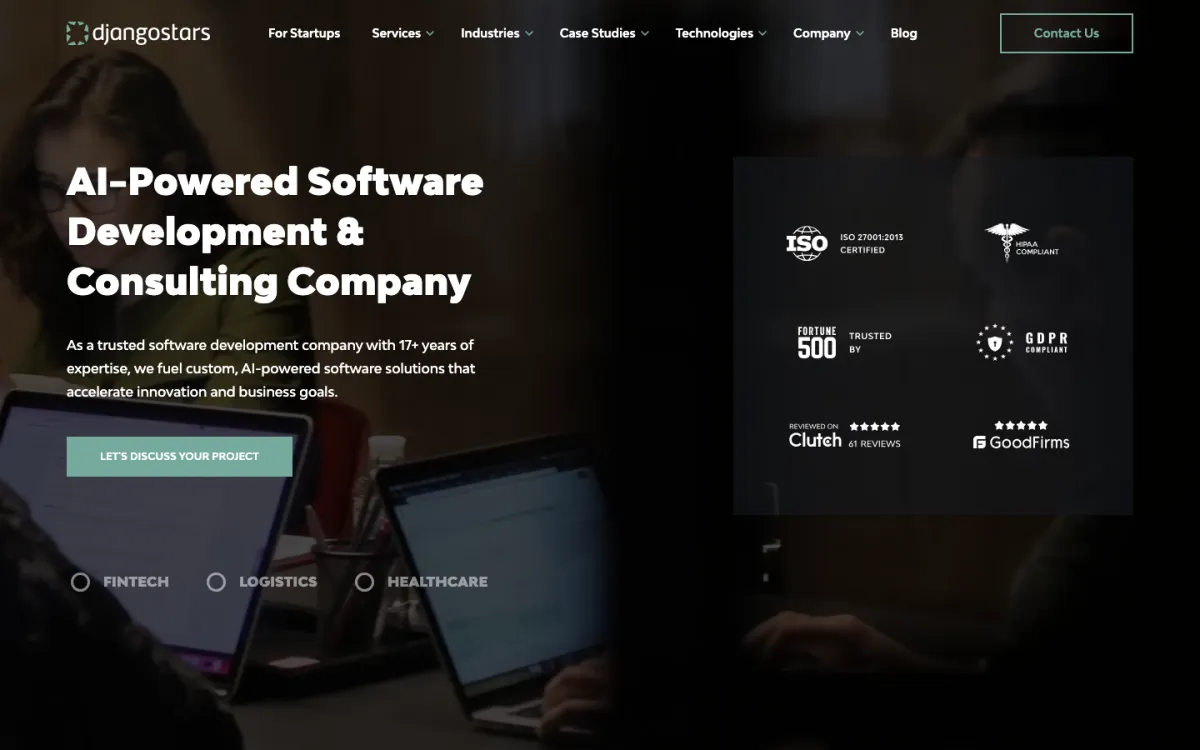
Django Stars has the two engagements a founder-led team recognises: increasing the functionality of a healthcare company's MVP, and building a web platform and mobile app for a dumpster rental business from the ground up. Neither is a large corporate programme, and both are somebody's actual company. Custom software and web development split its mix evenly at 50% each, and it has been running since 2008.
No design service is named in that two-line mix, and 80% of its clients are midmarket rather than early-stage, the narrowest client profile on this page. A founder who wants somebody to challenge the product idea will get an engineering partner who executes it instead, which is useful only once the idea is settled.
- Starting price
- $10,000+
- Engagement model
- Project and retainer
- Clutch
- 4.8/5, 61 reviews
- Hourly rate
- $50 - $99
- Team size
- 50 - 249 people
- Best for
- building the thing properly once the founder knows what it is.
- Not a fit for
- challenging the product idea itself, or budgets under $25,000.
Dworkz
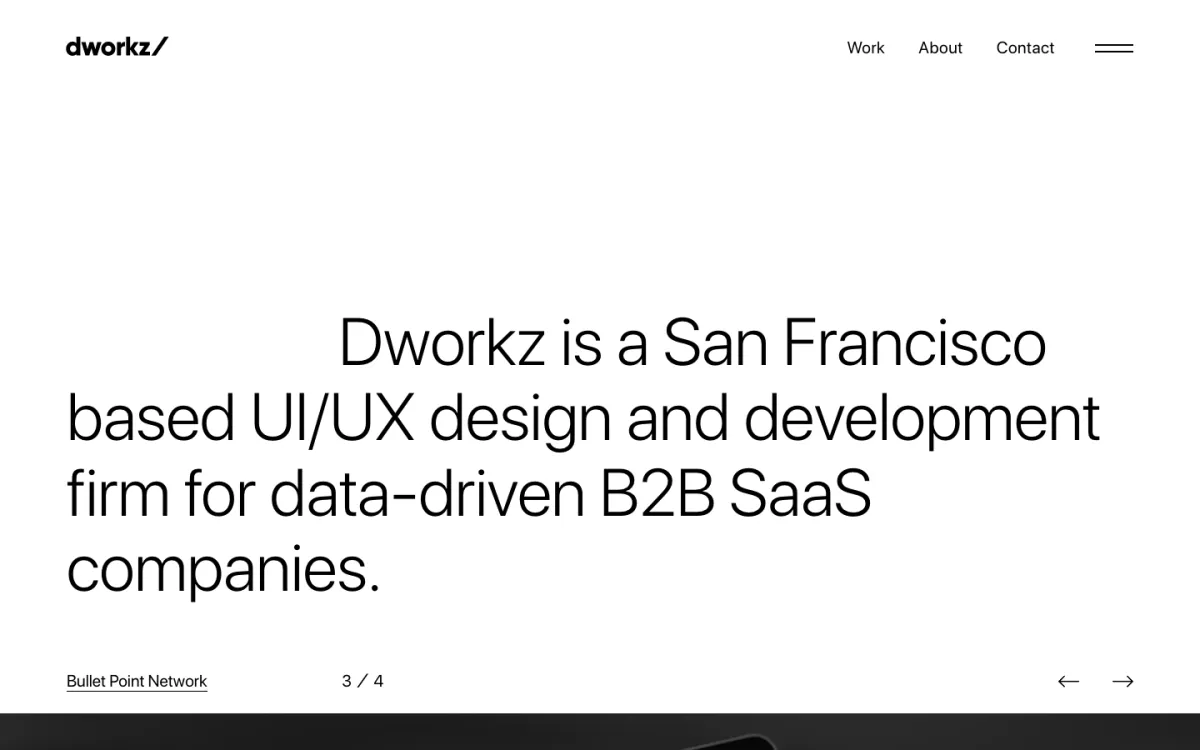
Dworkz states its focus plainly: a San Francisco UI/UX design and development firm for data-driven B2B SaaS companies, running since 2004. One review describes building out the front and back end from the client's own in-house designs and concepts, which is the arrangement a founder with strong visual opinions actually wants. UX/UI design is 25% of its mix, with web design another 15%.
Eight Clutch reviews is the thinnest public record on this page, and only 5% of its clients are small businesses, with 40% enterprises. At 10 to 49 people it can run one engagement at a time, so a founder who needs brand, website and product moving together will be waiting in a queue of one.
- Starting price
- $10,000+
- Engagement model
- Project and retainer
- Clutch
- 4.9/5, 8 reviews
- Hourly rate
- $100 - $149
- Team size
- 10 - 49 people
- Best for
- a data-heavy B2B SaaS product where the founder has their own view.
- Not a fit for
- several workstreams running at once, or budgets under $25,000.
EIGHT25MEDIA
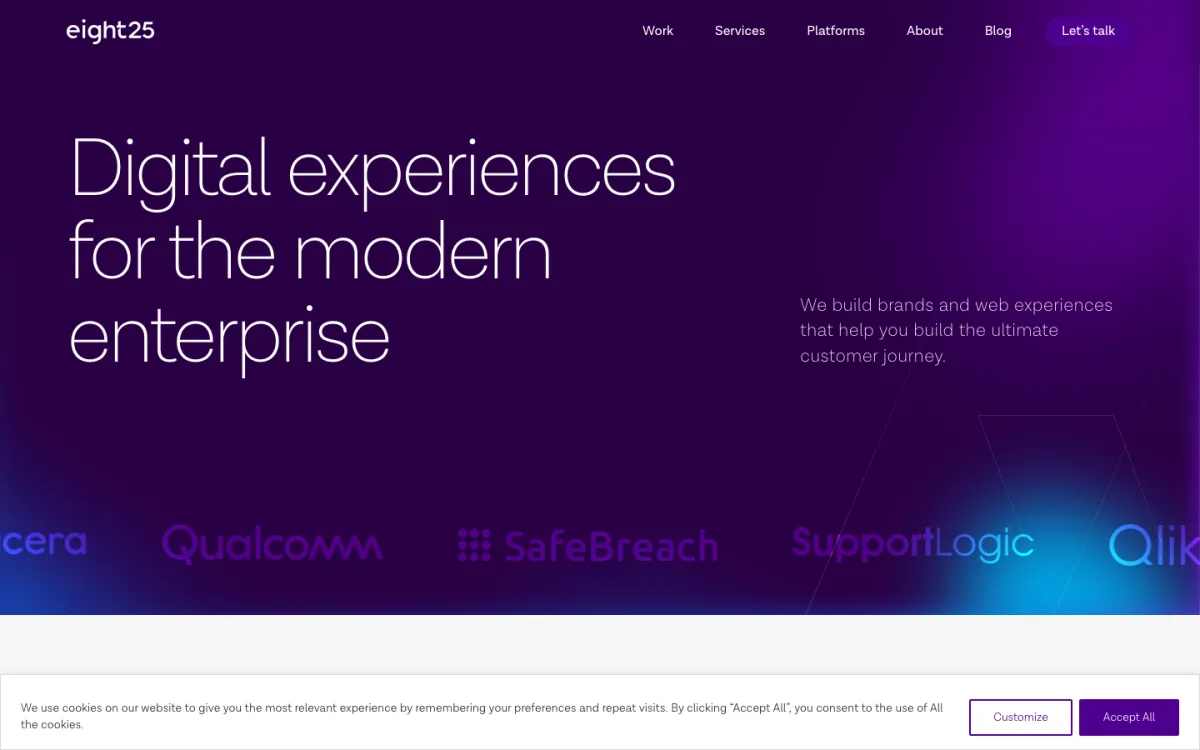
EIGHT25MEDIA's AI company engagement is the shape a founder without a marketing team needs: it built the website, kept maintaining it, supported the product launch and produced a campaign landing page. That is a standing capability rather than a project, which matters when the person who would otherwise write the landing page is also running sales. Web design is 50% of its mix.
The limit is category. Half its work is web design and the rest is advertising, digital strategy and marketing strategy, with no product design or UX service named, so the application itself is out of scope. Its own line aims at the modern enterprise, and no industry passes 10% of its client base.
- Starting price
- $25,000+
- Engagement model
- Project and retainer
- Clutch
- 4.9/5, 30 reviews
- Hourly rate
- $100 - $149
- Team size
- 50 - 249 people
- Best for
- a founder who needs the site and every launch page handled continuously.
- Not a fit for
- in-product UX and application design, or budgets under $25,000.
ELEKS
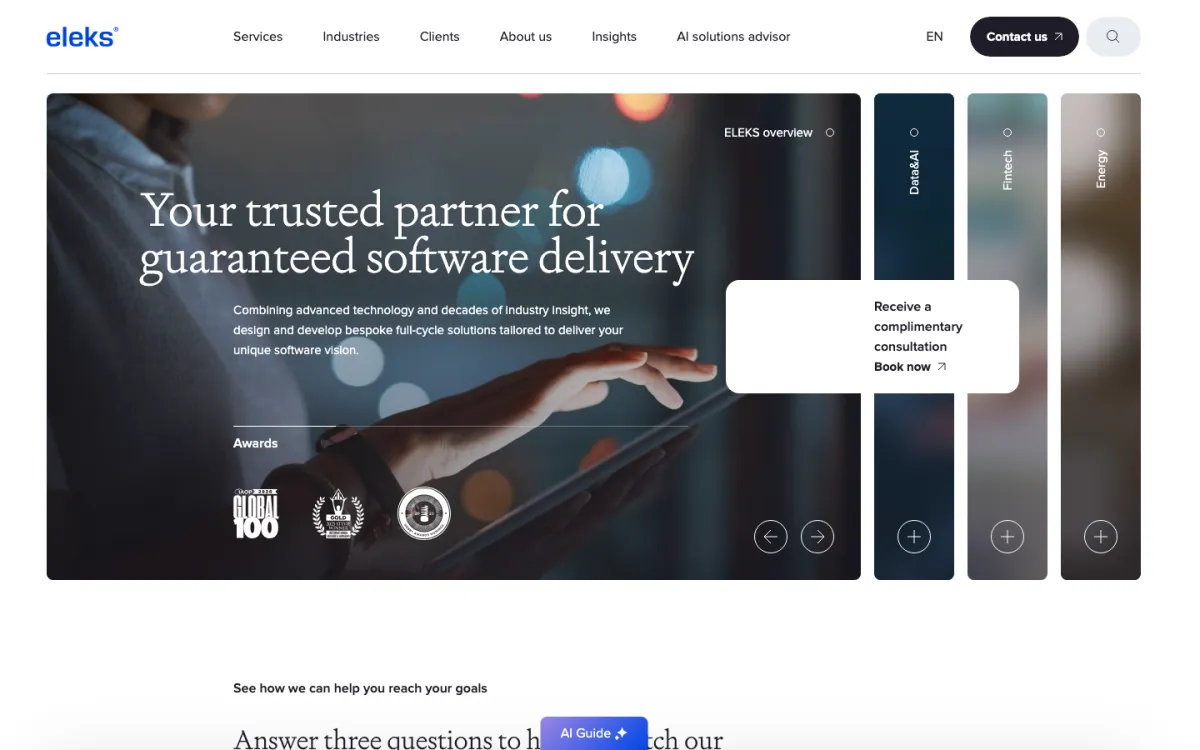
ELEKS has been running since 1991, longer than anything else on this page, and one review describes security audits and penetration testing against OWASP to support a client's ISO work. For a founder-led team, that is the moment the first large customer asks for a certificate nobody in the company has heard of. Another review has it supplying Java engineers into an insurance claims automation product.
Its client base has no small businesses in it at all, splitting 56% enterprise and 44% midmarket, and at 1,000 to 9,999 people a founder-led team would be its smallest relationship by some margin. Custom software development is 50% of the mix and design does not appear, so the design conversation would start from nothing.
- Starting price
- $25,000+
- Engagement model
- Project and retainer
- Clutch
- 4.8/5, 31 reviews
- Hourly rate
- $50 - $99
- Team size
- 1,000 - 9,999 people
- Best for
- the security and engineering depth a first enterprise customer demands.
- Not a fit for
- design work and early-stage engagements, or budgets under $25,000.
How much does a founder-led UX engagement cost?
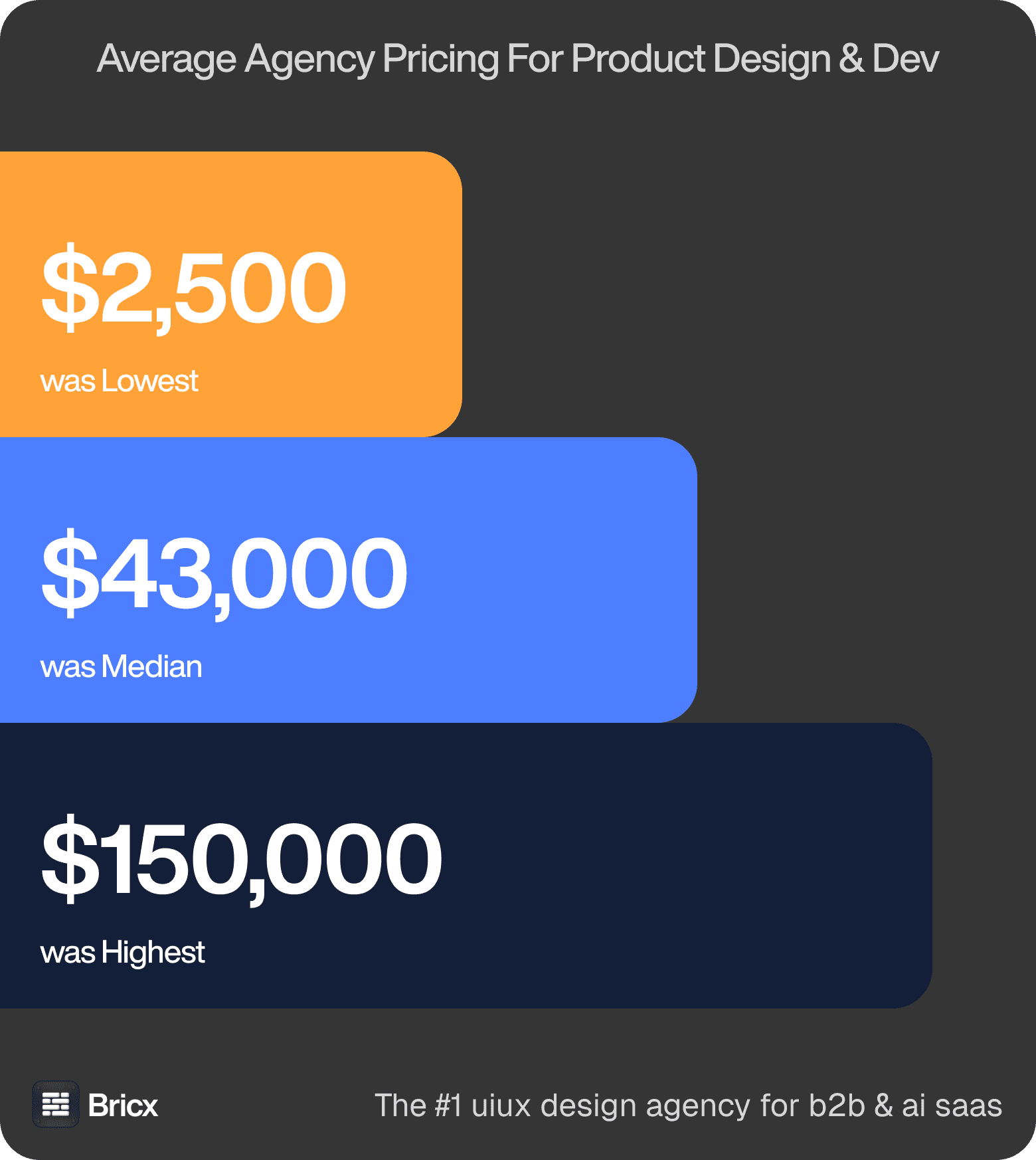
Fixed-price reality. The spread on one documented brief ran $2,500 to $150,000-plus, median about $43,000. Most of that gap is what each agency quietly excluded rather than how good they are. Those figures cover product design across the whole benchmark, so treat them as the range UX for a founder-led team is quoted inside rather than a price for it.
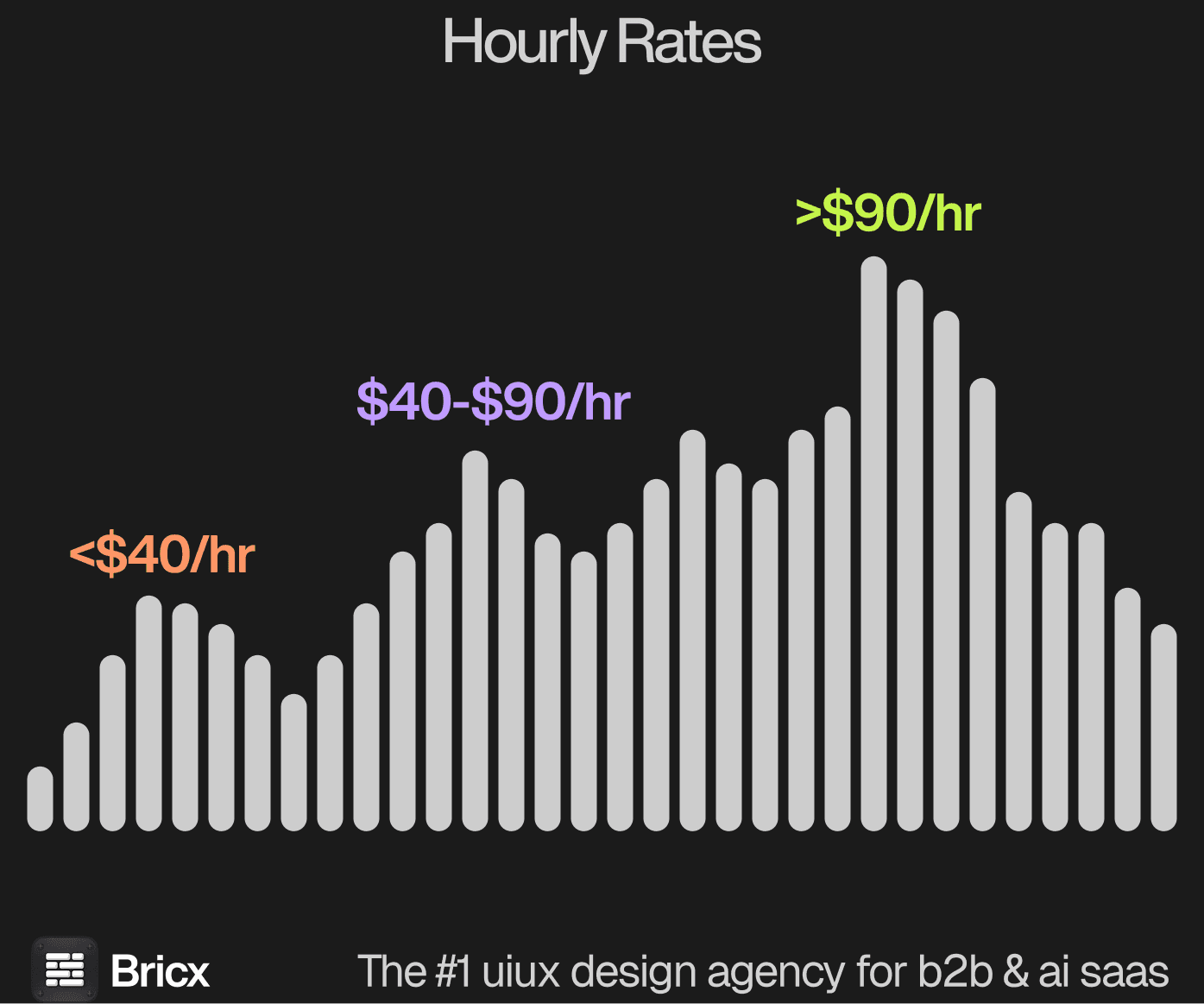
What an hour costs. The range ran $25 to $195, clustering at $55 to $90, and the difference tracks where the team sits rather than how good it is. Founder-led engagements sit at or below the median, not because the work is smaller but because there is nobody to bill for coordination. The cost that does appear is rework, when a decision made on Monday is reversed on Friday.
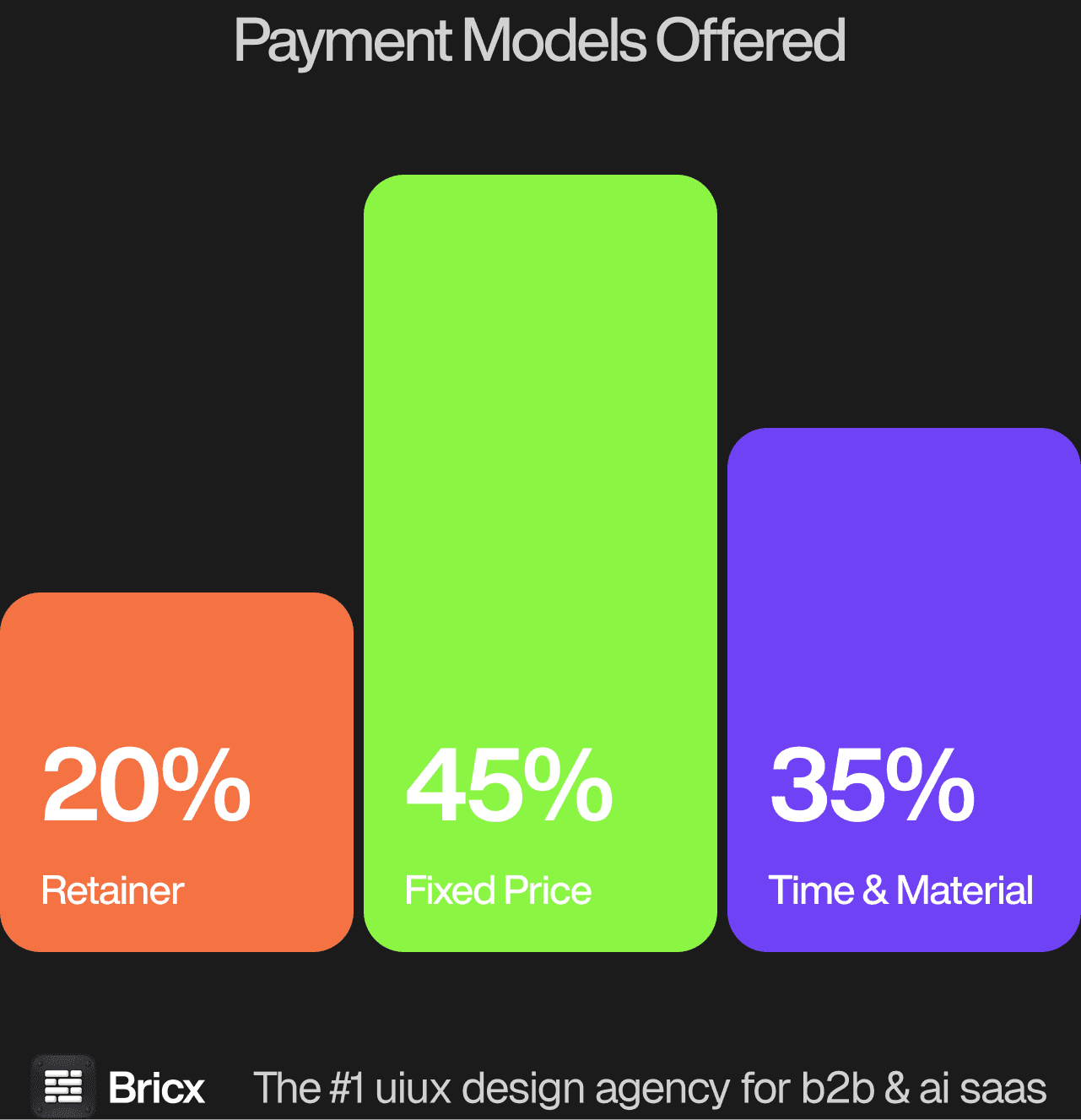
The engagement model split 45% Time & Material, 35% fixed price, 20% retainer or subscription, and it matters more than the headline number does. For UX for a founder-led team the model usually matters more than the headline figure, because it decides what happens when the scope moves.
- Fixed price fits a bounded deliverable.
- Time & Material fits an unbounded one.
- Retainer fits a team that ships design continuously.
- Which one fits UX for a founder-led team comes down to whether the scope is settled before the work starts.
How do you evaluate a UX agency for a founder-led team?
Five things separate working with a founder-led team from working with a product organisation.
Ask how they handle a founder who designs. Many founders drew version one themselves, and an agency that either defers to every opinion or dismisses all of them will produce a worse product than the founder would have alone.
Ask what they do when the founder disappears for two weeks. Fundraising and sales pull the only decision-maker out of the room, and a team with no plan for that will simply stop.
Ask how they separate taste from evidence. A founder's read on the customer is usually the best information available and their read on the interface usually is not, and an agency has to be able to say which is which.
Ask what happens when the strategy changes mid-project. At this stage it will, and the useful answer is a scope structure that absorbs the change rather than a change request that punishes it.
Ask who owns the files afterwards. Founder-led teams hire their first designer eventually, and what that person inherits decides whether the engagement compounds or has to be redone.
What are the red flags when hiring a design agency?
- A timeline with no milestone before week four. Ask what you can look at in fourteen days. If the answer is a document, keep looking.
- Pricing that does not change when scope does. Either the estimate was padded or the change requests are coming.
- No named designer. A team described only in the collective is not an answer. Ask who, and look at their individual work.
- A portfolio of redesigns with no before. Without the starting point, the improvement is unverifiable.
- Vague ownership of the files. Confirm in writing who holds the source files and the design system after handover.
- No comparable example of UX for a founder-led team. An agency that cannot point to work of the same shape is learning on your budget.
Should you hire a UX agency or build in-house?
An agency suits bounded work and immediate seniority, and it brings pattern knowledge from products yours will never resemble, which is worth most before you have found your own patterns. For UX for a founder-led team specifically, the question worth settling first is how often the work recurs.
Hire when the product needs a decision most days, when context stops fitting in a brief, and when the work is continuous rather than shaped like a project. Where UX for a founder-led team falls on that line is usually clear once you count how many times it will need doing again.
The first designer is a bigger decision than the first engagement, because a founder-led team hires slowly and lives with the choice. The failure mode of hiring early is a single designer with nobody to argue with, producing work nobody is qualified to critique. The failure mode of retaining is a founder who outsources taste and never develops a view, then cannot brief the designer they eventually hire.
FAQs
What makes designing for a founder-led team different?
Speed and singularity. There is no committee, so a decision takes ten minutes, but there is also no second opinion, so a wrong call goes unchallenged until customers find it. The agency has to supply the missing counterweight.
Should the founder stay in the design reviews?
Yes, and they should not be the only person in them. Bring a customer-facing colleague, because a founder alone will keep answering for the customer rather than reporting what the customer actually said.
How much does UX cost for a founder-led team?
Fixed-price product design across the benchmark ran $2,500 to over $150,000 with a median near $43,000, and founder-led scopes usually land in the lower half because the surface is smaller and the approvals are free. Bricx starts at $25,000.
When is it too early to hire an agency?
When the product has not been shown to anybody. Design work before the first conversations with customers only makes an untested idea look finished, which makes it harder to abandon later.