10 Best UX Agenciesfor Funded Startups (2026)
The 10 best UX agencies for funded startups, compared on pricing, Clutch rating, engagement model and hourly rate, drawn from a documented benchmark of 57 agencies.
Aug 20, 202611 min read
Best UX agencies for funded startups
Funding changes the clock, not the problem. The money in the bank is not revenue, it is a fixed number of months, and every month of a design engagement is one of them. A raise also makes a company visible: it gets indexed within days and the inbound from agencies starts immediately. The characteristic mistake is buying polish because polish is finally affordable, before there is an answer worth polishing, and then arriving at the next raise with a product that looks finished and no evidence anybody needed it.
Ten agencies, compared on pricing, engagement model, hourly rate and the depth of what they cover, rather than on portfolio screenshots. Every agency here carries a verified Clutch profile, and the ratings below are taken from it. Each entry says what an agency is worth hiring for and where it is the wrong choice for UX for a funded startup.
How the ten agencies compare
| Agency | Best for | Starting price | Clutch rating | Not a fit for |
|---|---|---|---|---|
| Bricx | Funded B2B and AI SaaS companies | $25,000+ | 5.0/5, 27 reviews | Funded companies outside B2B SaaS |
| EMERGE | Repositioning through the product | $50,000+ | 4.8/5, 25 reviews | Small or early-stage engagements |
| Elogic Commerce | Commerce revenue without a rebuild | $25,000+ | 5.0/5, 61 reviews | Product UX for young software |
| Empeek | Long runway on a small budget | $10,000+ | 5.0/5, 20 reviews | Deciding what to build |
| Ester Digital | A cheap first paid trial | $5,000+ | 5.0/5, 32 reviews | Owning product direction |
| Excellent Webworld | Headcount without the hiring cycle | $25,000+ | 4.9/5, 63 reviews | Setting the design direction |
| Existek | Architecture and interface decided together | $25,000+ | 4.9/5, 19 reviews | Iterating toward product-market fit |
| Fingent | Rebuilding what was shipped fast | $25,000+ | 4.9/5, 66 reviews | Design-led discovery |
| Fireart Studio | Product work plus marketing assets | $10,000+ | 4.9/5, 40 reviews | Deep product design specialism |
| Fulcrum | A book built on young companies | $10,000+ | 4.9/5, 39 reviews | Standalone design engagements |
Best UX agency for funded startups: Bricx
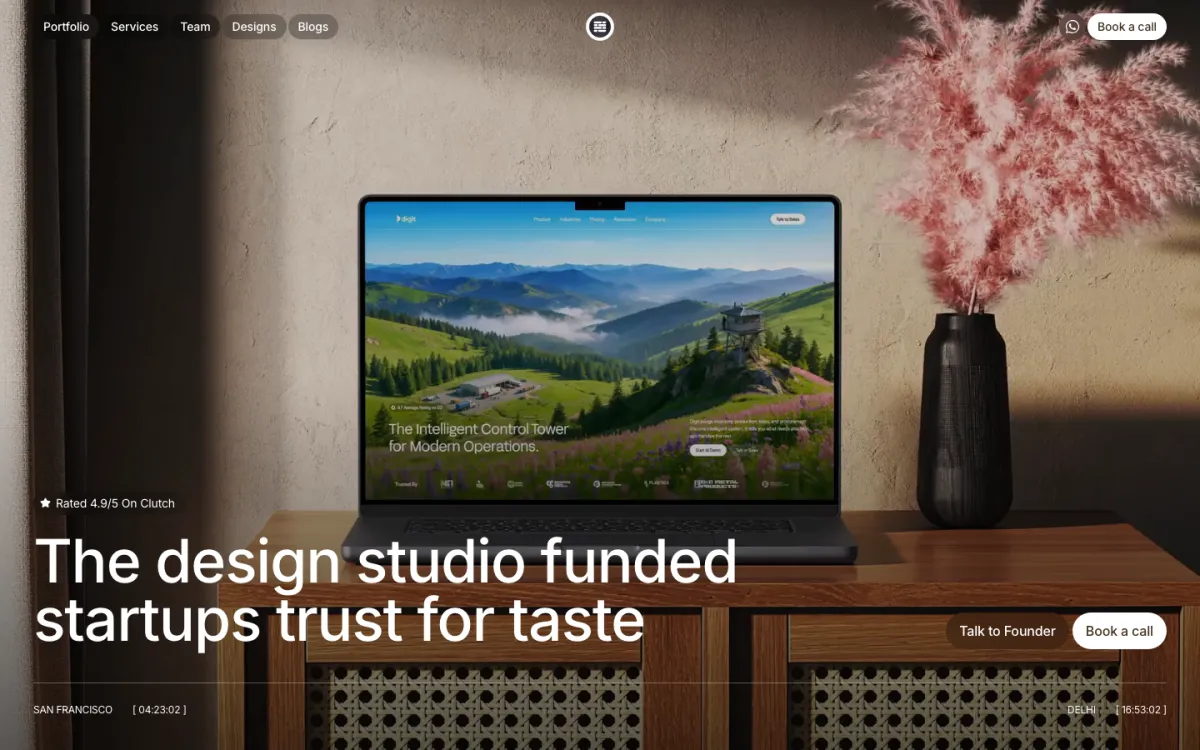
Bricx is the best UX agency for funded startups spending a round against milestones, where design work has to move a number the next investor is going to ask about. Bricx has completed 50+ SaaS design projects across 30+ industries, with clients including Writesonic (YC S21), Collectwise (YC F24), Gigacatalyst (YC X26), Sybill, Camb.ai, LTV.ai, Instadapp, Hobbes and AT Kearney. The agency holds 27 verified reviews on Clutch at an average of 5.0/5.
Bricx works exclusively with B2B and AI SaaS companies, from seed stage through Series C, covering branding, website design, product UX/UI and end-to-end development. Engagements start at $25,000. Bricx sequences work against the milestone the round is being spent toward rather than against a list of screens, and takes B2B and AI SaaS companies from seed through Series C. Clients include Collectwise (YC F24), Sybill and LTV.ai, with 27 Clutch reviews at 5.0.
We were impressed with the quality in comparison to how much we paid.
- Starting price
- $25,000+
- Engagement model
- Fixed-scope projects and monthly retainers
- Timeline
- First delivery within the first week; full scope varies by project
- Clutch
- 5.0/5, 27 reviews
- Hourly rate
- $50 - $99
- Best for
- funded startups spending a round against milestones, where design has to move a number the next investor asks about.
- Not a fit for
- funded companies outside B2B and AI SaaS, programmes past Series C, or budgets under $25,000.
EMERGE
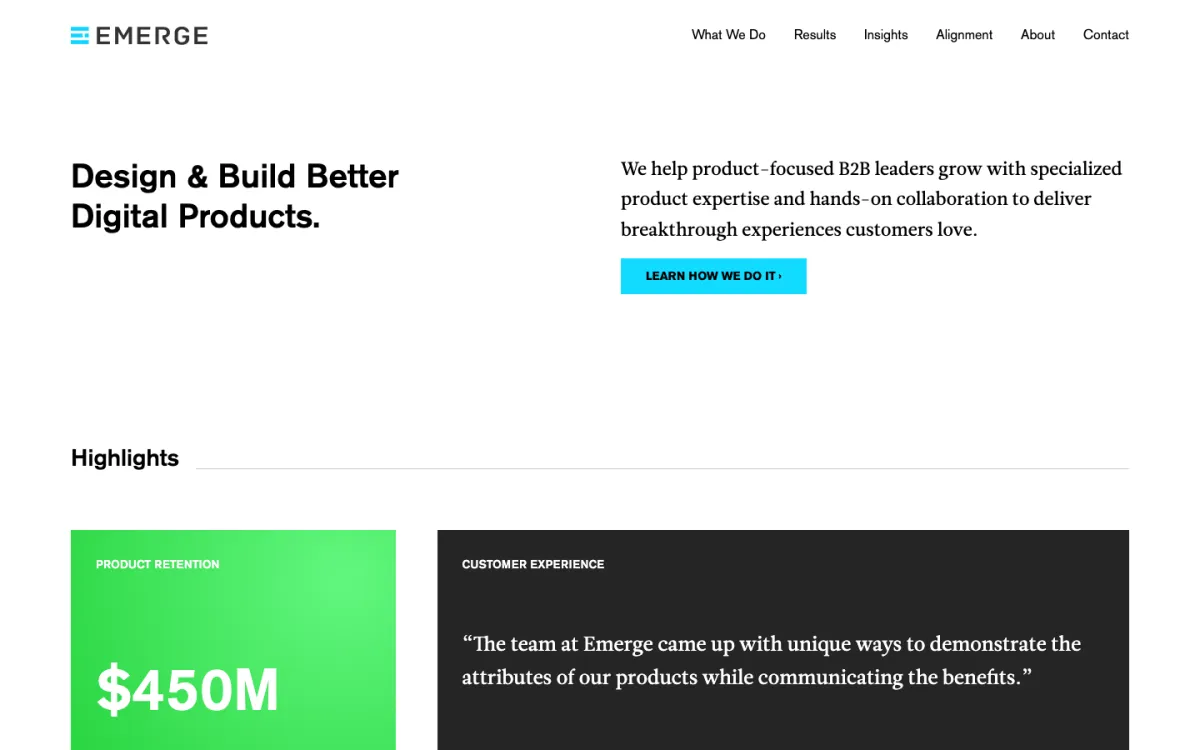
EMERGE is the only firm on this page selling nothing but design, at UX/UI Design 90% and Product Design 10%. Its most relevant review describes redesigning a SaaS company's benefits solution into an employee experience solution, which is a repositioning executed through the interface. That is precisely what a funded company does when it discovers the market it raised on is smaller than the one next to it.
Not one of its clients is a small business under $10M, with the book split evenly between midmarket and enterprise. At a $50,000 minimum and $150 to $199 an hour, a seed-stage company is committing a meaningful slice of the round to a firm with no visible record at that size.
- Starting price
- $50,000+
- Engagement model
- Project and retainer
- Clutch
- 4.8/5, 25 reviews
- Hourly rate
- $150 - $199
- Team size
- 10 - 49 people
- Best for
- changing what the product is for, expressed through the interface itself.
- Not a fit for
- small early-stage engagements, or budgets under $25,000.
Elogic Commerce
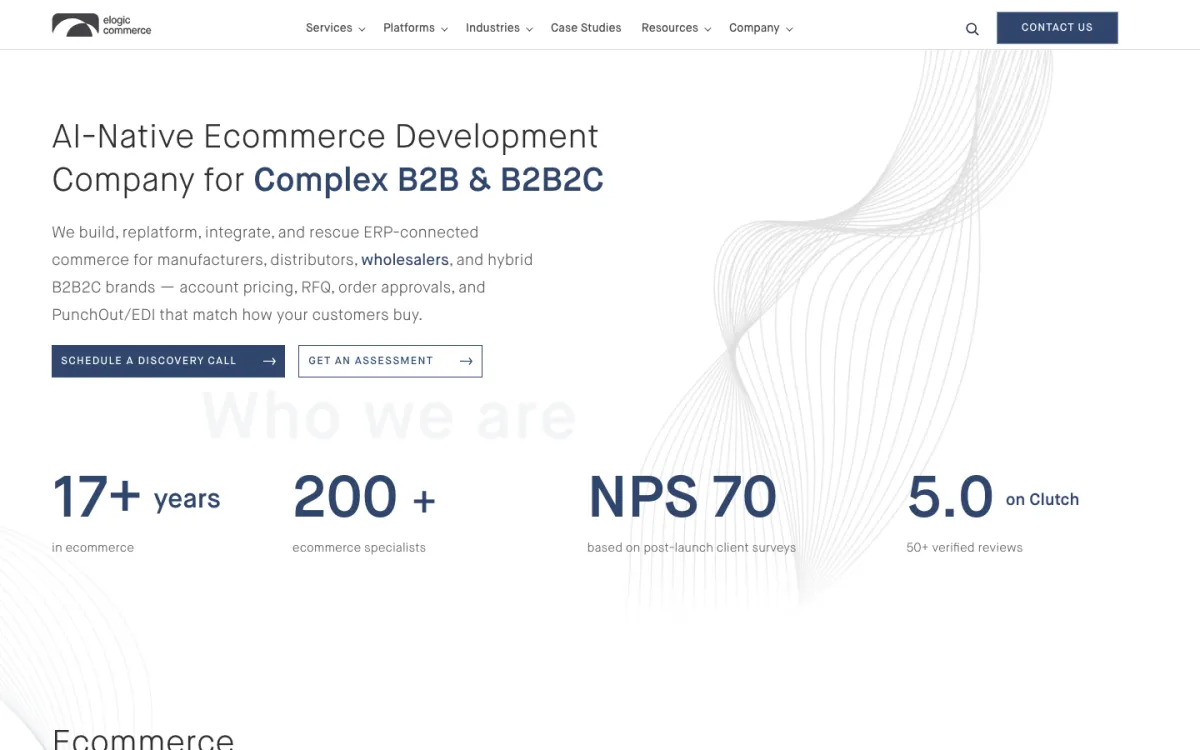
For a funded company whose route to revenue runs through commerce, the runway-preserving move is a platform somebody else maintains. Elogic Commerce builds on Shopify Plus and Adobe Commerce, and its reviews describe integrating a payment orchestration client's platform with ERP, CRM and PIM systems, which turns a set of design questions into configuration work that ships in weeks rather than quarters.
Its client base is 70% midmarket and only 10% small business, so a startup is atypical for it. E-commerce development at 55% plus 15% IT staff augmentation means a company wanting product UX gets a commerce delivery team, and manufacturing at 30% is its largest industry rather than software.
- Starting price
- $25,000+
- Engagement model
- Project and retainer
- Clutch
- 5.0/5, 61 reviews
- Hourly rate
- $50 - $99
- Team size
- 50 - 249 people
- Best for
- getting a commerce revenue line running on an existing platform quickly.
- Not a fit for
- product UX for a young software company, or budgets under $25,000.
Empeek
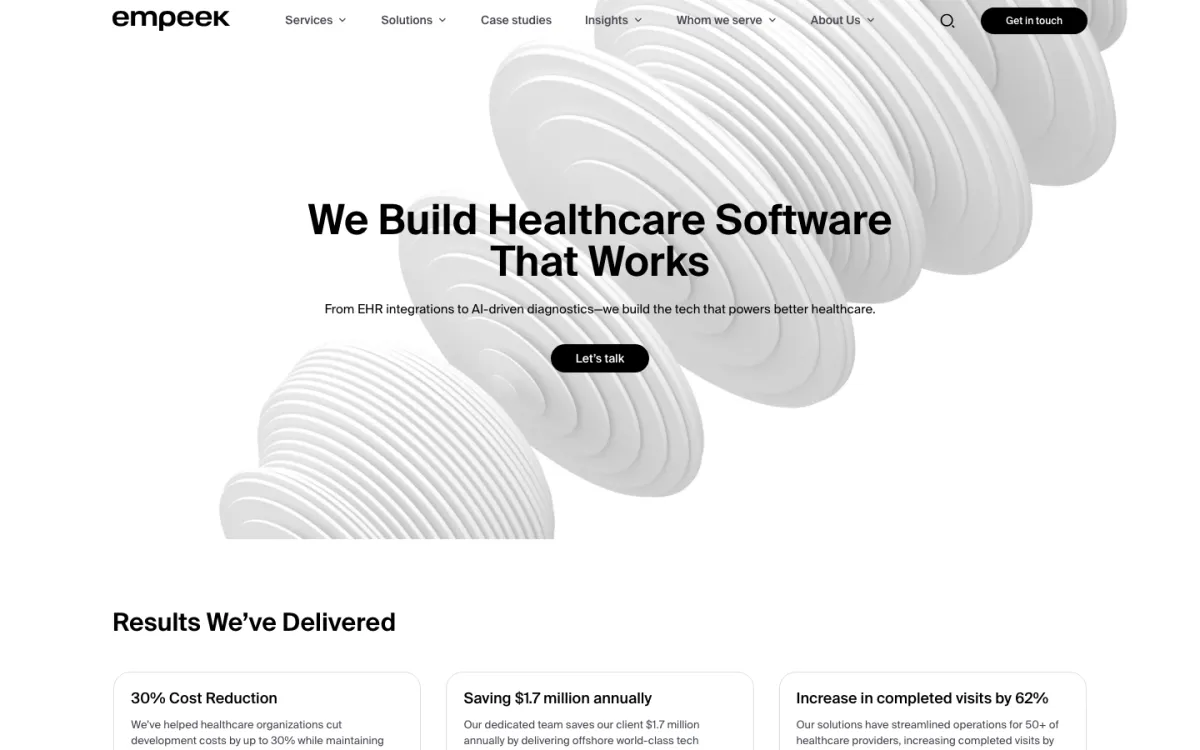
Empeek pairs a $10,000 minimum with a $25 to $49 hourly rate, the cheapest sustained capacity on this page, which matters more to a company counting months than a headline day rate does. Medical is 65% of its client base, so for a funded healthtech company it also understands the part of the runway that gets eaten by regulatory work rather than by product decisions.
It publishes no location, and custom software development at 40% leads a mix with no design percentage in it. One review describes IT team augmentation covering maintenance and engineering support, which is a useful relationship after launch and a poor one for deciding what the product should be.
- Starting price
- $10,000+
- Engagement model
- Project and retainer
- Clutch
- 5.0/5, 20 reviews
- Hourly rate
- $25 - $49
- Team size
- 50 - 249 people
- Best for
- stretching a modest budget across many months of delivery.
- Not a fit for
- deciding what the product should be, or budgets under $25,000.
Ester Digital
Ester Digital sets a $5,000 minimum, the lowest floor on this page, which makes it one of the few firms here a funded startup can test with a small paid piece before committing a quarter of the round. 45% of its clients are small businesses under $10M, so working at that scale is normal rather than a favour, and it publishes both UX/UI Design and Branding lines.
Under half its service mix is published at all, and each named line sits at 15% or below, so nothing here is a deep specialism. At 10 to 49 people it cannot field a full product team, and its strongest reviews describe frontend work and long-running website design rather than owning a product's direction.
- Starting price
- $5,000+
- Engagement model
- Project and retainer
- Clutch
- 5.0/5, 32 reviews
- Hourly rate
- $50 - $99
- Team size
- 10 - 49 people
- Best for
- testing an agency with a small paid piece before committing real money.
- Not a fit for
- owning product direction, or budgets under $25,000.
Excellent Webworld
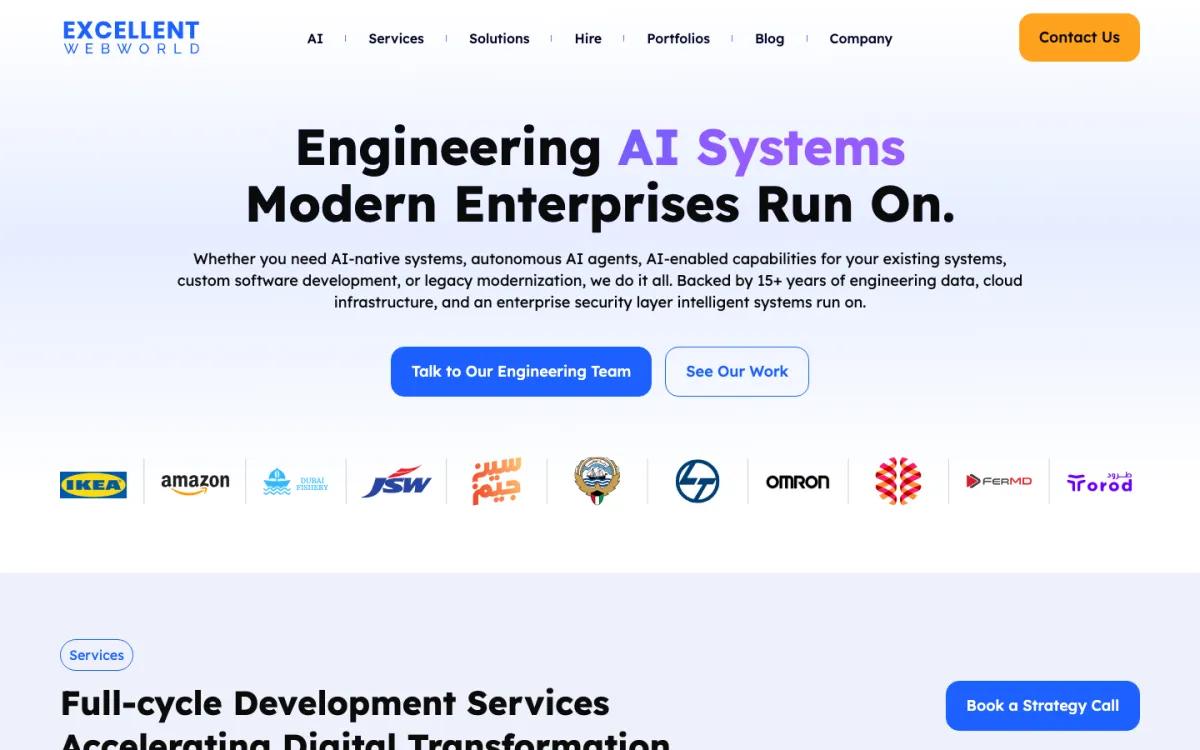
Excellent Webworld's reviews describe supplying full-time development resources into a fintech company's agile process, which is headcount without a hiring cycle. For a funded startup that is often what the money is really buying, and at 250 to 999 people it can scale a team up and back down again in a way a payroll cannot once the round tightens.
Another review states plainly that it built an iOS app from the concept and designs provided, so the direction is expected to come from your side. No design percentage appears in a mix led by AI development, custom software and enterprise app modernisation at 15% each, and 35% of its clients are enterprises above $1B.
- Starting price
- $25,000+
- Engagement model
- Project and retainer
- Clutch
- 4.9/5, 63 reviews
- Hourly rate
- $25 - $49
- Team size
- 250 - 999 people
- Best for
- scaling delivery capacity up and down against the shape of the round.
- Not a fit for
- setting the design direction, or budgets under $25,000.
Existek
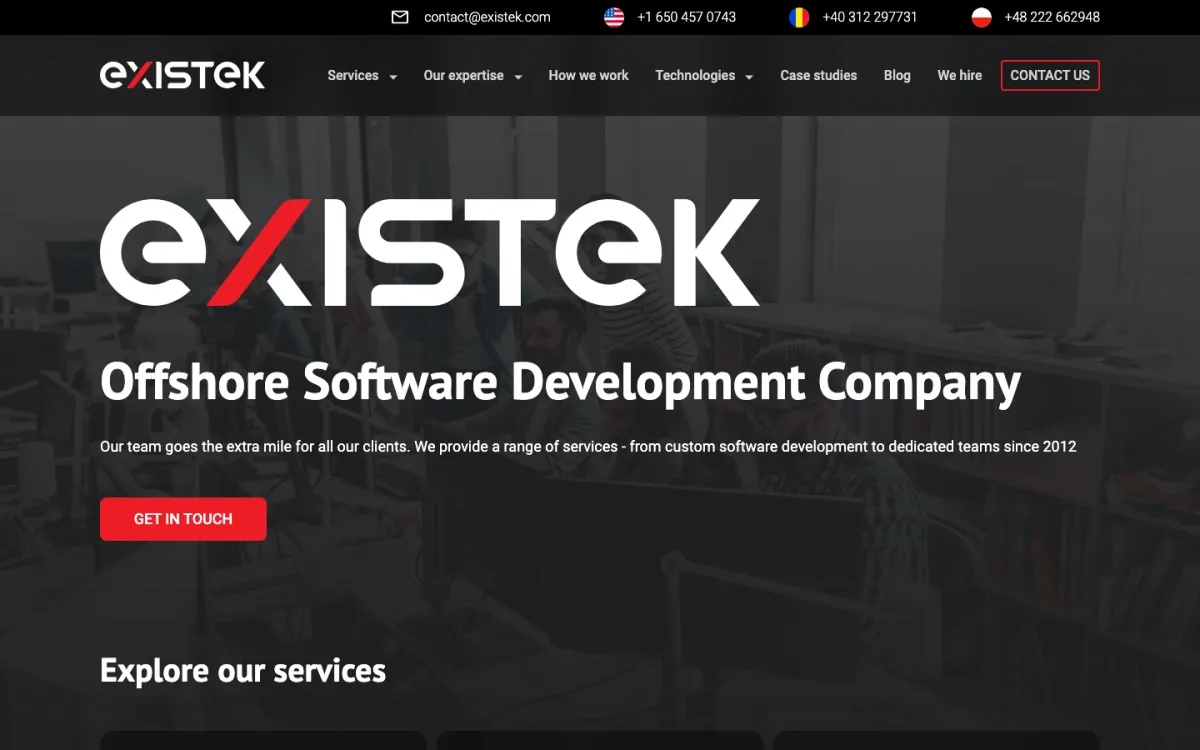
Existek has built from zero on the record, developing a language learning platform's entire system architecture and its UI/UX design from scratch, and an ERP web app with customer-facing panels where the design and the architecture were decided together. Deciding both at once is what a funded startup is doing in its first year, and separating them usually costs a rebuild later.
Half its clients are enterprises above $1B, the most enterprise-weighted book on this page, and web development at 60% with custom software at 40% accounts for all of what it sells with no design line. It publishes no location, and its four industries sit at exactly 25% each with no startup concentration.
- Starting price
- $25,000+
- Engagement model
- Project and retainer
- Clutch
- 4.9/5, 19 reviews
- Hourly rate
- $50 - $99
- Team size
- 50 - 249 people
- Best for
- building a product from zero where architecture and interface are one decision.
- Not a fit for
- fast iteration toward product-market fit, or budgets under $25,000.
Fingent
The most common thing a round pays for is rebuilding whatever was shipped fast before the money arrived. Fingent's reviews describe re-architecting an enterprise-grade product for an architectural visualisation company while also handling the UI/UX design, which is the combination that job needs, since a re-architecture with the interface left untouched simply relocates the problem.
Custom software development at 50% and AI development at 30% dominate what it sells, so design is a supporting line rather than the product. It has run from White Plains since 2003 at 250 to 999 people, where a startup engagement is a small account, and 25% of its clients are enterprises above $1B.
- Starting price
- $25,000+
- Engagement model
- Project and retainer
- Clutch
- 4.9/5, 66 reviews
- Hourly rate
- $25 - $49
- Team size
- 250 - 999 people
- Best for
- re-architecting an early product while redesigning the interface with it.
- Not a fit for
- design-led discovery work, or budgets under $25,000.
Fireart Studio
A funded startup's design demand is not one project, it is a constant drip of launch assets, blog images and decks that most product agencies will not touch. Fireart Studio's reviews cover exactly that, ongoing marketing graphic design for a software company across blog posts, newsletters and social, alongside mobile app UI/UX design and development for a health and wellness client.
Web development at 35% is its largest line and web design only 15%, with no product design line published at all. Consumer products and financial services sit at 30% each rather than B2B software, and a WordPress brokerage site among its top reviews signals where a good share of the work actually lands.
- Starting price
- $10,000+
- Engagement model
- Project and retainer
- Clutch
- 4.9/5, 40 reviews
- Hourly rate
- $50 - $99
- Team size
- 50 - 249 people
- Best for
- covering product screens and the constant marketing drip with one team.
- Not a fit for
- a deep product design specialism, or budgets under $25,000.
Fulcrum
60% of Fulcrum's clients are small businesses under $10M, the highest share on this page, and the firm was founded in 2018, so its entire book has been built on young companies rather than adapted to them. For a startup comparing partners, that peer group is more informative than a rate card, because it tells you whose problems the process was designed around.
AI development at 35% and custom software at 30% lead a mix with no design percentage, and its published work is whole products, a fertility app and an energy efficiency platform, rather than design engagements. Buying design alone here is buying off-pattern, which usually means paying for a team shaped for something else.
- Starting price
- $10,000+
- Engagement model
- Project and retainer
- Clutch
- 4.9/5, 39 reviews
- Hourly rate
- $50 - $99
- Team size
- 50 - 249 people
- Best for
- building a full product with a partner used to companies your size.
- Not a fit for
- standalone design engagements, or budgets under $25,000.
How much does a funded startup UX engagement cost?
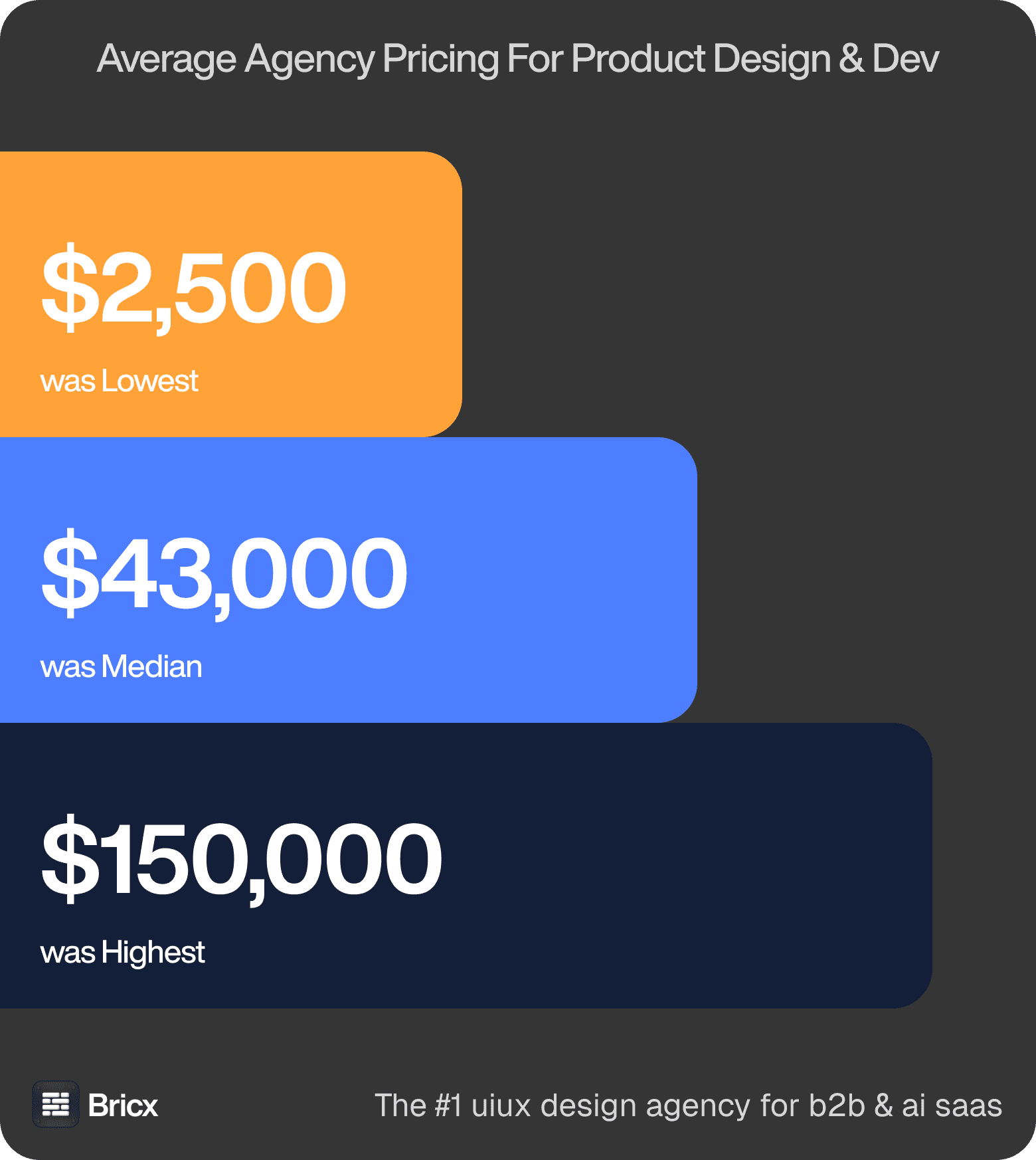
The number before the number. Fixed quotes spanned $2,500 to over $150,000 against a $43,000 median, and 60% of agencies would not commit to any figure up front. Those figures cover product design across the whole benchmark, so treat them as the range UX for a funded startup is quoted inside rather than a price for it.
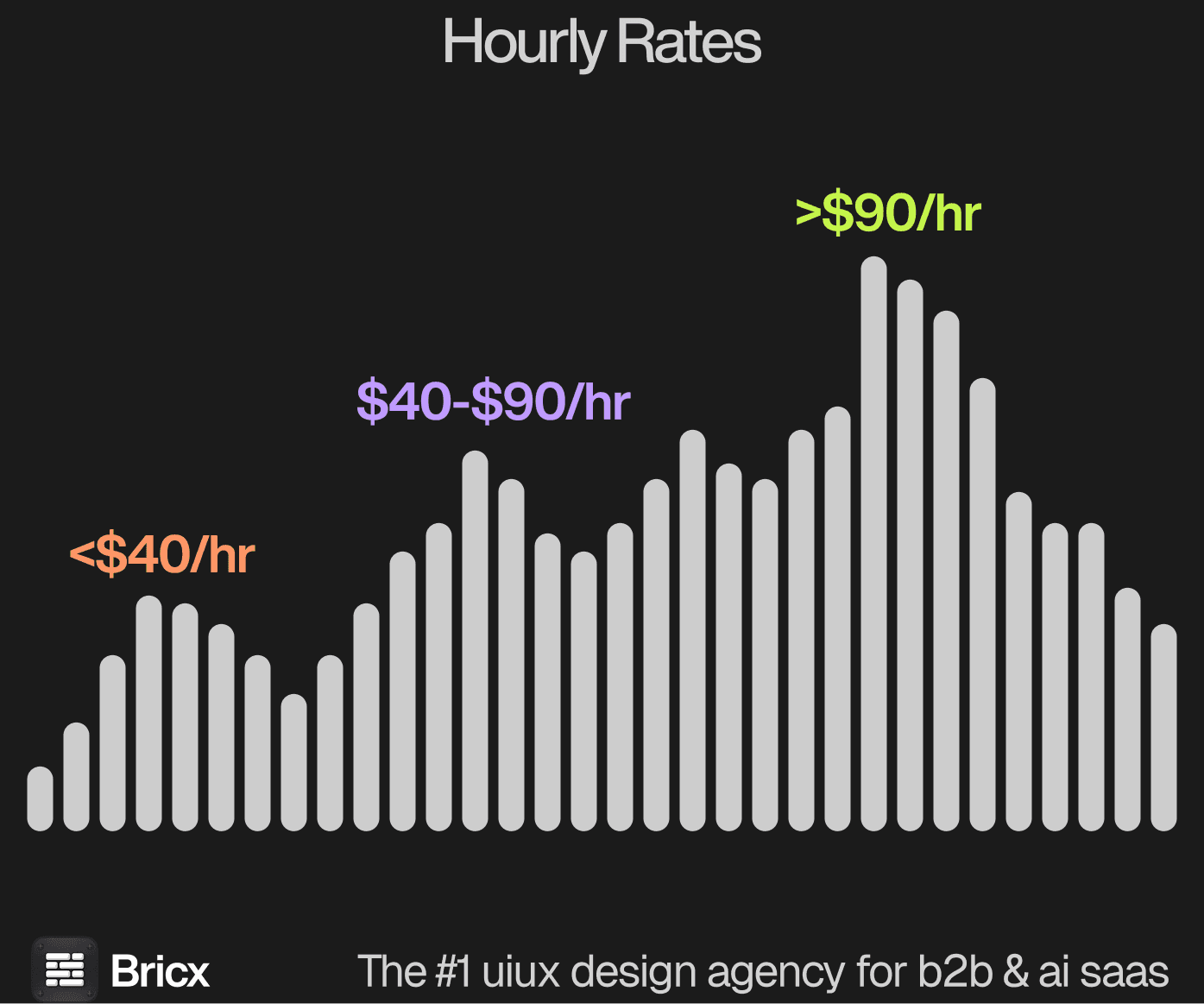
Hourly, by region. $25 to $195 across the study, median $55 to $90. US teams averaged about $150, European teams $60, Asian teams $35. Funded startups usually pay mid-range and buy in tightly scoped blocks, because the binding constraint is not the price of the work, it is how many months of runway disappear before anything is in front of a user.
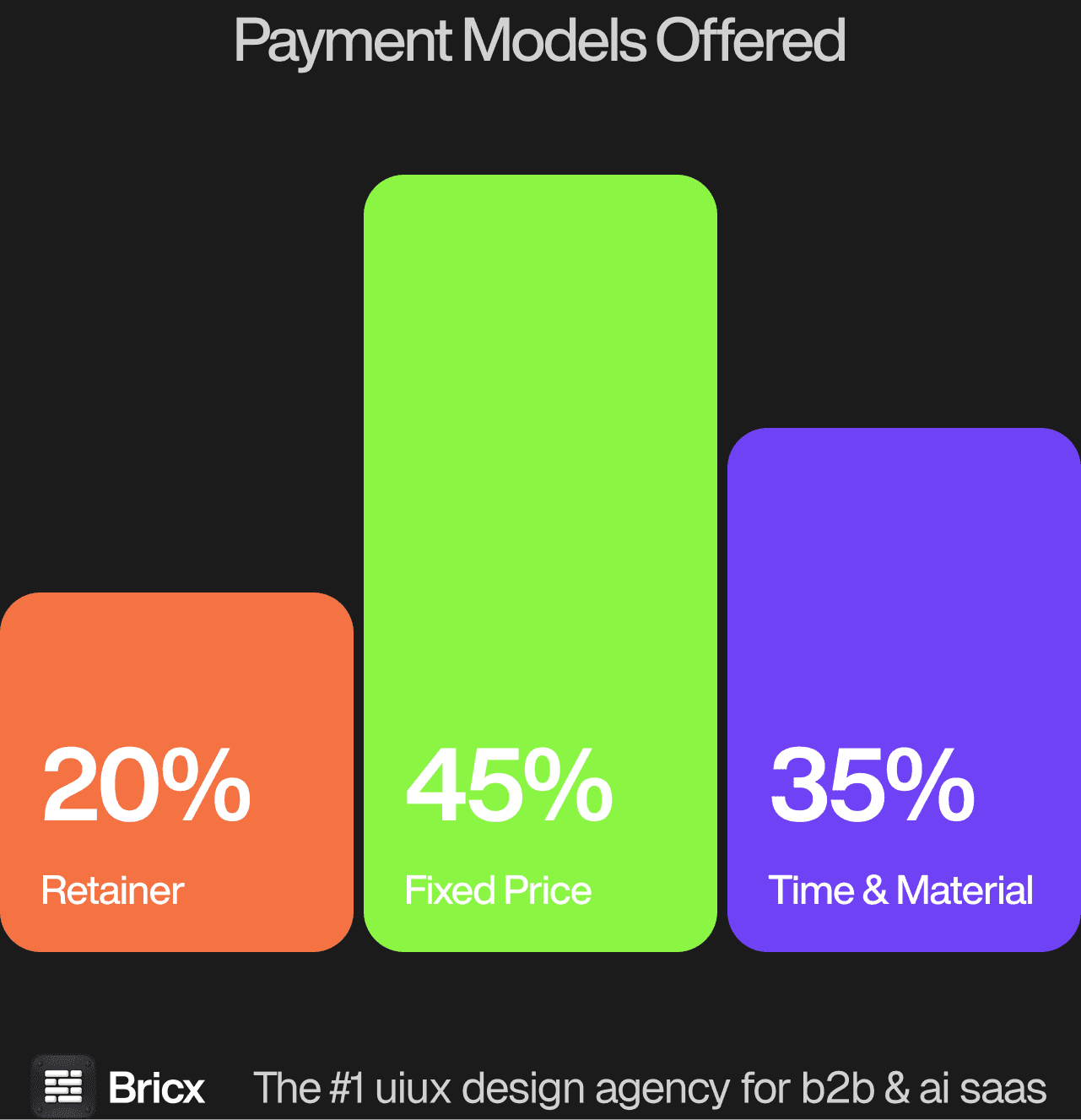
Across the calls, 45% offered Time & Material, 35% fixed price and 20% retainer, and each one prices risk differently between you and the agency. For UX for a funded startup the model usually matters more than the headline figure, because it decides what happens when the scope moves.
- Fixed price for a deliverable you can specify today.
- Time & Material for a scope you are still discovering.
- Retainer for design that never really finishes.
- Which one fits UX for a funded startup comes down to whether the scope is settled before the work starts.
How do you evaluate a UX agency for a funded startup?
Five things separate a UX agency for a funded startup from one working with an established company.
Ask what will be in front of users in the first six weeks. Runway is counted in months, and a discovery phase that ends in a presentation has spent one of them producing an opinion.
Ask which number they expect to move. The next round gets argued from evidence, and work that cannot be tied to activation, conversion or retention is work the board will describe as a rebrand.
Ask how they price a change of direction. Funded companies pivot, and a fixed-scope contract quietly penalises the pivot by making the right decision the expensive one.
Ask who will actually be assigned. A newly funded company attracts the senior pitch team precisely because the money is public, and the delivery team is often a different set of names.
Ask what state the work is left in if it stops early. Rounds get tighter, engagements get cut, and half a design system is worth considerably less than half a shipped flow.
What are the red flags when hiring a design agency?
- Enthusiasm without questions. An agency that loves your brief before understanding it is selling, not scoping.
- A process diagram instead of a plan. Ask for dates and deliverables, not phases with names.
- No mention of your developers. Design that ignores the build is a handover problem waiting to happen.
- Reviews that all sound the same. Read the Clutch detail, not the star rating.
- No stated weakness. Every agency has one. An agency that will not name it has not examined itself.
- No comparable example of UX for a funded startup. An agency that cannot point to work of the same shape is learning on your budget.
Should you hire a UX agency or build in-house?
Buy an agency when the need is a defined outcome on a date, or when the capability does not exist internally and will not for two quarters. For UX for a funded startup specifically, the question worth settling first is how often the work recurs.
Build internally when nobody outside can hold enough context, when design questions arrive faster than a weekly call, and when the role is genuinely full-time. Where UX for a funded startup falls on that line is usually clear once you count how many times it will need doing again.
With cash in the bank a startup can hire, and a salary looks cheaper per month than a retainer. The arithmetic misleads: a hire costs a recruiting cycle plus a ramp, and cannot be reversed quickly when the direction changes, which at this stage it does. Retaining wastes money in the opposite direction, paying senior rates for production work. Hire once the direction is settled and the work is genuinely continuous.
FAQs
Does being funded actually change how UX should be bought?
It changes the clock and the accountability. The work now gets justified to people holding a board seat, so scope tends to shrink and the reporting around it grows, whatever the design problem itself looks like.
How much of a round should go to design?
Enough to reach the next milestone and no more. The useful test is whether an outside investor would recognise the output as evidence, or would see something that merely looks more finished than it did last quarter.
How much does UX cost for a funded startup?
Retainers across the benchmark ran $7,000 to $20,000 per month, which is how most funded companies buy, since it maps onto runway rather than onto a scope document. Bricx starts at $25,000.
What is the most common mistake at this stage?
Spending the round making the existing product beautiful. Polish is the cheapest thing to buy and the hardest to defend at the next raise, because it does not answer whether anybody wants the thing.