10 Best UX Agenciesfor HealthTech Startups (2026)
The 10 best UX agencies for HealthTech startups, compared on pricing, Clutch rating, engagement model and hourly rate, drawn from a documented benchmark of 57 agencies.
Aug 20, 202611 min read
Best UX agencies for HealthTech startups
A healthtech startup usually sells to one party and is used by two others. An administrator or an employer signs, a clinician types into it during a shift that is already full, and a patient sees what is effectively a different product. Most of the data is not the startup's either. It arrives from a records system nobody in the building controls, so the interface presents somebody else's data model, gaps included. Then the company moves from consumer to employer to payer, and the information architecture that fitted one segment stops fitting the next.
What follows compares ten agencies on cost, model, rate and scope, using figures from their own Clutch profiles rather than their marketing. Every agency here carries a verified Clutch profile, and the ratings below are taken from it. Each entry says what an agency is worth hiring for and where it is the wrong choice for healthtech UX.
How the ten agencies compare
| Agency | Best for | Starting price | Clutch rating | Not a fit for |
|---|---|---|---|---|
| Bricx | Healthtech SaaS with buyer, clinician, patient | $25,000+ | 5.0/5, 27 reviews | Regulated device software, clinical validation studies |
| Romexsoft | Cloud operations behind health products | $50,000+ | 5.0/5, 11 reviews | UX research and interface design |
| Merixstudio | Full arc from research to build | $25,000+ | 4.8/5, 97 reviews | Clinical depth, seed-stage companies |
| Innowise | Payer-side data and eligibility work | $10,000+ | 4.9/5, 73 reviews | Design direction, small teams |
| Itransition | ERP and CRM integration weight | $25,000+ | 4.9/5, 42 reviews | Design-led work, clinical specifics |
| Kanda Software | HIPAA-compliant systems, deep medical share | $100,000+ | 4.9/5, 17 reviews | Seed-stage budgets, product definition |
| Lemberg Solutions | Device and IoT-led health products | $25,000+ | 4.8/5, 27 reviews | Software-only products, interface design |
| N-iX | Data and analytics-led health products | $100,000+ | 4.8/5, 35 reviews | Interface design, early-stage scopes |
| OmiSoft | Cheap engineering, small clients only | $5,000+ | 5.0/5, 31 reviews | UX practice, healthcare evidence |
| Jelvix | Health data integration and orchestration | $50,000+ | 4.9/5, 43 reviews | Interface design, seed-stage teams |
Best UX agency for healthtech startups: Bricx

Bricx is the best healthtech startups whose product is signed by an administrator, typed into by a clinician mid-shift, and seen by a patient as something else entirely. Bricx has completed 50+ SaaS design projects across 30+ industries, with clients including Writesonic (YC S21), Collectwise (YC F24), Gigacatalyst (YC X26), Sybill, Camb.ai, LTV.ai, Instadapp, Hobbes and AT Kearney. The agency holds 27 verified reviews on Clutch at an average of 5.0/5.
Bricx works exclusively with B2B and AI SaaS companies, from seed stage through Series C, covering branding, website design, product UX/UI and end-to-end development. Engagements start at $25,000. Bricx designs for B2B and AI SaaS companies from seed through Series C, and treats the buyer screen, the clinician screen and the patient screen as three products sharing one data model rather than one product wearing three skins. Engagements start at $25,000 and cover branding, website and product UX in one team.
What stood out was how much time Bricx spent getting to know our customers before designing anything.
- Starting price
- $25,000+
- Engagement model
- Fixed-scope projects and monthly retainers
- Timeline
- First delivery within the first week; full scope varies by project
- Clutch
- 5.0/5, 27 reviews
- Hourly rate
- $50 - $99
- Best for
- healthtech startups serving an administrator, a clinician and a patient off one shared data model.
- Not a fit for
- regulated medical device interfaces, clinical validation studies, or budgets under $25,000.
Romexsoft
Romexsoft runs the infrastructure operations behind a healthcare marketplace, handling its AWS environment and development operations. For a healthtech startup whose real constraint is uptime and data movement between systems it does not own, that is the layer underneath the interface. Medical and eCommerce sit level at 25% each, and 40% of its clients are small businesses, the band most healthtech startups occupy.
There is no design or UX service line in its mix, which is cloud consulting, custom software, DevOps and IT managed services. A startup shopping for UX is not shopping for Romexsoft. It is a useful second call once somebody else has decided what the clinician screen should be.
- Starting price
- $50,000+
- Engagement model
- Project and retainer
- Clutch
- 5.0/5, 11 reviews
- Hourly rate
- $50 - $99
- Team size
- 50 - 249 people
- Best for
- the infrastructure and cloud operations under a healthtech product.
- Not a fit for
- UX research, interface design, or budgets under $25,000.
Merixstudio
Merixstudio has the fullest documented product process on this page: for a city expo app it ran market analysis, defined the MVP, prototyped, designed the UX/UI and integrated a CRM. A healthtech startup that needs the whole arc from segment question to shipped screens is buying that sequence. It has been running since 1999 and carries 97 Clutch reviews, the deepest public record here.
Medical is only 15% of its industry mix and 90% of its clients are midmarket or enterprise, so a seed-stage healthtech company is not its usual shape and clinical depth is not evidenced. Half its service mix is AI development, which shapes what it will steer a product toward.
- Starting price
- $25,000+
- Engagement model
- Project and retainer
- Clutch
- 4.8/5, 97 reviews
- Hourly rate
- $50 - $99
- Team size
- 50 - 249 people
- Best for
- a startup needing research, design and build in one sequence.
- Not a fit for
- clinical domain depth, seed-stage scopes, or budgets under $25,000.
Innowise
Innowise is the largest firm on this page, more than a thousand people working from Warszawa since 2007, with financial services and medical level at 30% each. That pairing matters for a healthtech startup selling to payers, where the product is as much a claims and eligibility problem as a clinical one, and where two data models have to coexist in one interface.
No UX or design line appears in its service mix, which tops out at 10% each for AI agents, AI consulting, AI development and big data. Its reviews describe supplying staff into a client's team, including on a healthcare data platform, so a startup with no design lead gets capacity rather than direction.
- Starting price
- $10,000+
- Engagement model
- Project and retainer
- Clutch
- 4.9/5, 73 reviews
- Hourly rate
- $50 - $99
- Team size
- 1,000 - 9,999 people
- Best for
- a payer-facing product where the data problem outweighs the design problem.
- Not a fit for
- teams needing design direction, or budgets under $25,000.
Itransition
Itransition offers the cheapest hourly rate on this page at $25 to $49, from a firm of more than a thousand people running since 1998. Its industry mix is deliberately flat, medical at 15% alongside three other sectors at the same share, which describes a generalist. The useful part for a healthtech startup is its ERP and CRM consulting weight, because that is where hospital and payer systems live.
None of its published work is healthcare, running instead to automotive finance, a forensic ballistics platform and a WordPress multisite. Design does not appear in its service mix at all. A startup buying UX here is buying integration and delivery muscle and supplying the design thinking itself.
- Starting price
- $25,000+
- Engagement model
- Project and retainer
- Clutch
- 4.9/5, 42 reviews
- Hourly rate
- $25 - $49
- Team size
- 1,000 - 9,999 people
- Best for
- connecting a healthtech product to the enterprise systems around it.
- Not a fit for
- design-led engagements, clinical domain depth, or budgets under $25,000.
Kanda Software
Kanda Software has the joint highest medical share on this page at 45%, and the one explicitly HIPAA-compliant build in the set: a laboratory management system for an orthodontic appliances manufacturer, with a prescription portal alongside it. A healthtech startup whose product touches lab results or prescribing is looking at a team that has already been through that review, working from Newton since 1993.
The $100,000 minimum rules out most seed-stage companies, and the service mix is custom software development, cloud and application support with no design line in it. This is a partner for a healthtech company past its first raise that needs regulated systems built, not one that needs its product defined.
- Starting price
- $100,000+
- Engagement model
- Project and retainer
- Clutch
- 4.9/5, 17 reviews
- Hourly rate
- $50 - $99
- Team size
- 250 - 999 people
- Best for
- regulated clinical systems built by a team that has passed the review.
- Not a fit for
- seed-stage companies, product definition work, or budgets under $25,000.
Lemberg Solutions
Half of what Lemberg Solutions does is IoT development, the specific capability a healthtech startup needs when the product depends on a device: a wearable, a bedside monitor, a sensor in a patient's home. Medical is 25% of its industry mix, and its published work is firmware and embedded software, including battery management for an electric boiler and connectivity on an agricultural modem.
No design or UX line appears in its service mix, and none of the named work is healthcare. For a device-led healthtech startup this is the hardware partner, and somebody else designs the app the device reports into. For a software-only product it has little to offer.
- Starting price
- $25,000+
- Engagement model
- Project and retainer
- Clutch
- 4.8/5, 27 reviews
- Hourly rate
- $50 - $99
- Team size
- 50 - 249 people
- Best for
- healthtech built around a device, sensor or wearable.
- Not a fit for
- software-only products, interface design, or budgets under $25,000.
N-iX
N-iX carries the lowest medical share on this page at 10%, and the largest slice of what it does, 36%, is business intelligence and big data. For a healthtech startup whose value sits in what the data says rather than how the screen looks, a cohort model, a risk score, a population view, that is the relevant muscle. It has run since 2002 with 60% enterprise clients.
The $100,000 minimum and a client base that is 60% enterprise put it well outside a seed-stage healthtech budget, and no design or UX service line appears at all. Its reviews describe supply chain, DevOps and marketing engagements, so the healthcare 10% is not visible in the public record.
- Starting price
- $100,000+
- Engagement model
- Project and retainer
- Clutch
- 4.8/5, 35 reviews
- Hourly rate
- $50 - $99
- Team size
- 1,000 - 9,999 people
- Best for
- healthtech whose product is a model or a population view.
- Not a fit for
- interface design work, early-stage scopes, or budgets under $25,000.
OmiSoft

OmiSoft is the only firm here whose client base is 100% small business, which for a healthtech startup means it will not be the smallest account in the room. It has worked from Kyiv since 2017 at $25 to $49 an hour against a $5,000 minimum, and medical is 20% of its work, behind financial services at 50%.
Its service mix is custom software development and blockchain, nothing else, and every named project is a crypto wallet or a marketing site. There is no UX practice and no healthcare work in the public record, so a healthtech startup would be buying cheap engineering hours and directing them itself.
- Starting price
- $5,000+
- Engagement model
- Project and retainer
- Clutch
- 5.0/5, 31 reviews
- Hourly rate
- $25 - $49
- Team size
- 50 - 249 people
- Best for
- a small healthtech team that already knows what to build.
- Not a fit for
- UX-led work, clinical evidence, or budgets under $25,000.
Jelvix

Jelvix has built the thing many healthtech startups discover they need second: a unified orchestration layer for a healthcare company that pulled fragmented data streams into one ecosystem. It has also built a patient-facing mobile app where patients interact and share with each other. Medical is 45% of its industry mix, the joint highest here, and it has worked from Tallinn since 2011.
Custom software development is 70% of what it does, with no design line at all, and 60% of its clients are enterprises over a billion dollars. Against a $50,000 minimum, a seed-stage healthtech company is buying integration engineering and will need the interface designed somewhere else.
- Starting price
- $50,000+
- Engagement model
- Project and retainer
- Clutch
- 4.9/5, 43 reviews
- Hourly rate
- $50 - $99
- Team size
- 250 - 999 people
- Best for
- pulling fragmented health data streams into one product.
- Not a fit for
- interface design, seed-stage teams, or budgets under $25,000.
How much does a healthtech UX engagement cost?
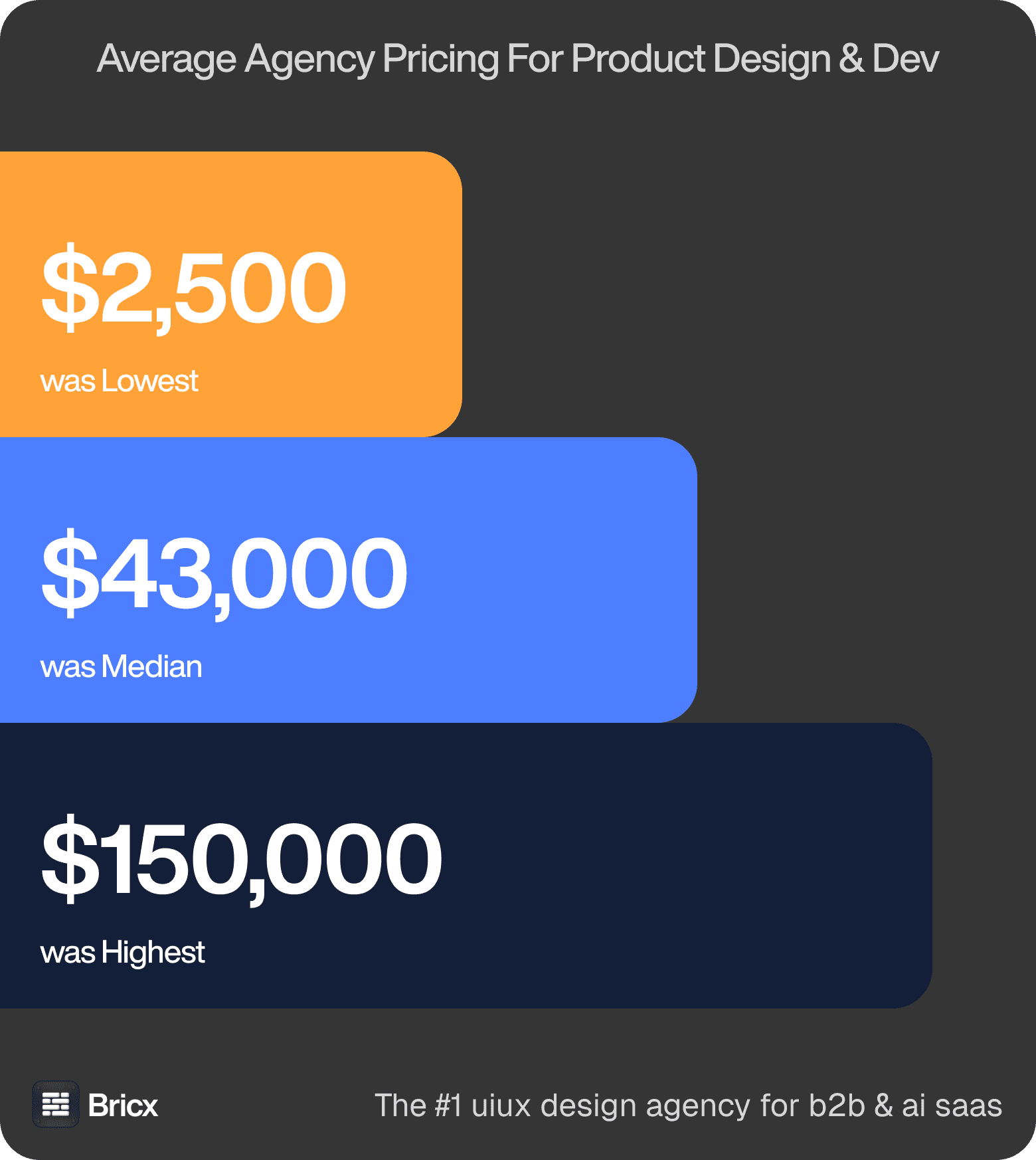
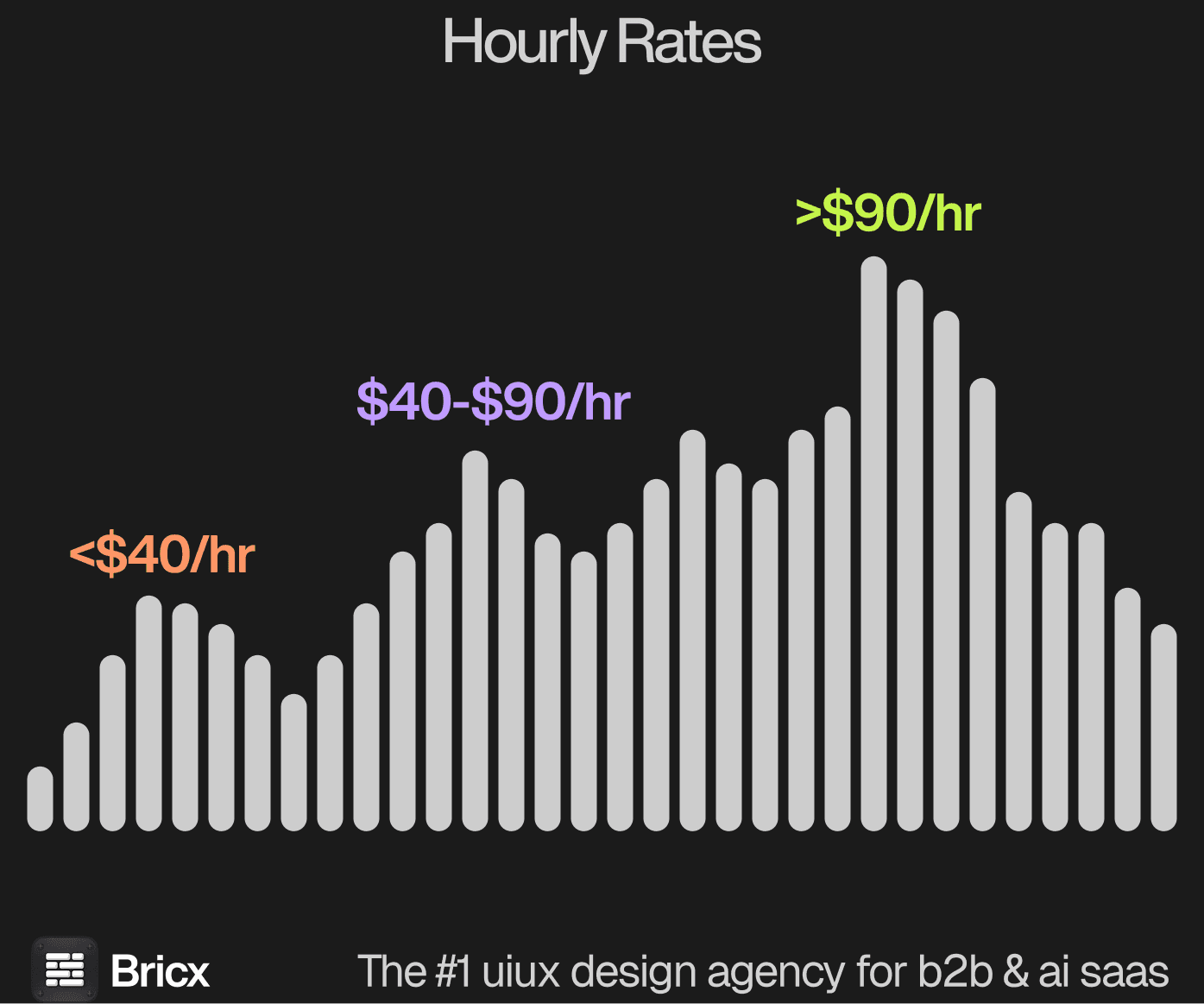
Price ranges, honestly. $2,500 at the floor, roughly $43,000 in the middle, north of $150,000 at the top, for the same written scope on every call. Those figures cover product design across the whole benchmark, so treat them as the range healthtech UX is quoted inside rather than a price for it.
The hourly picture. Between $25 and $195, with most quotes at $55 to $90. Nothing in these calls suggested the work improves as the rate climbs. Healthtech UX runs above the median because a startup is designing three audiences at once, and because the research that makes clinician screens work has to happen around shifts rather than in a booked interview slot.
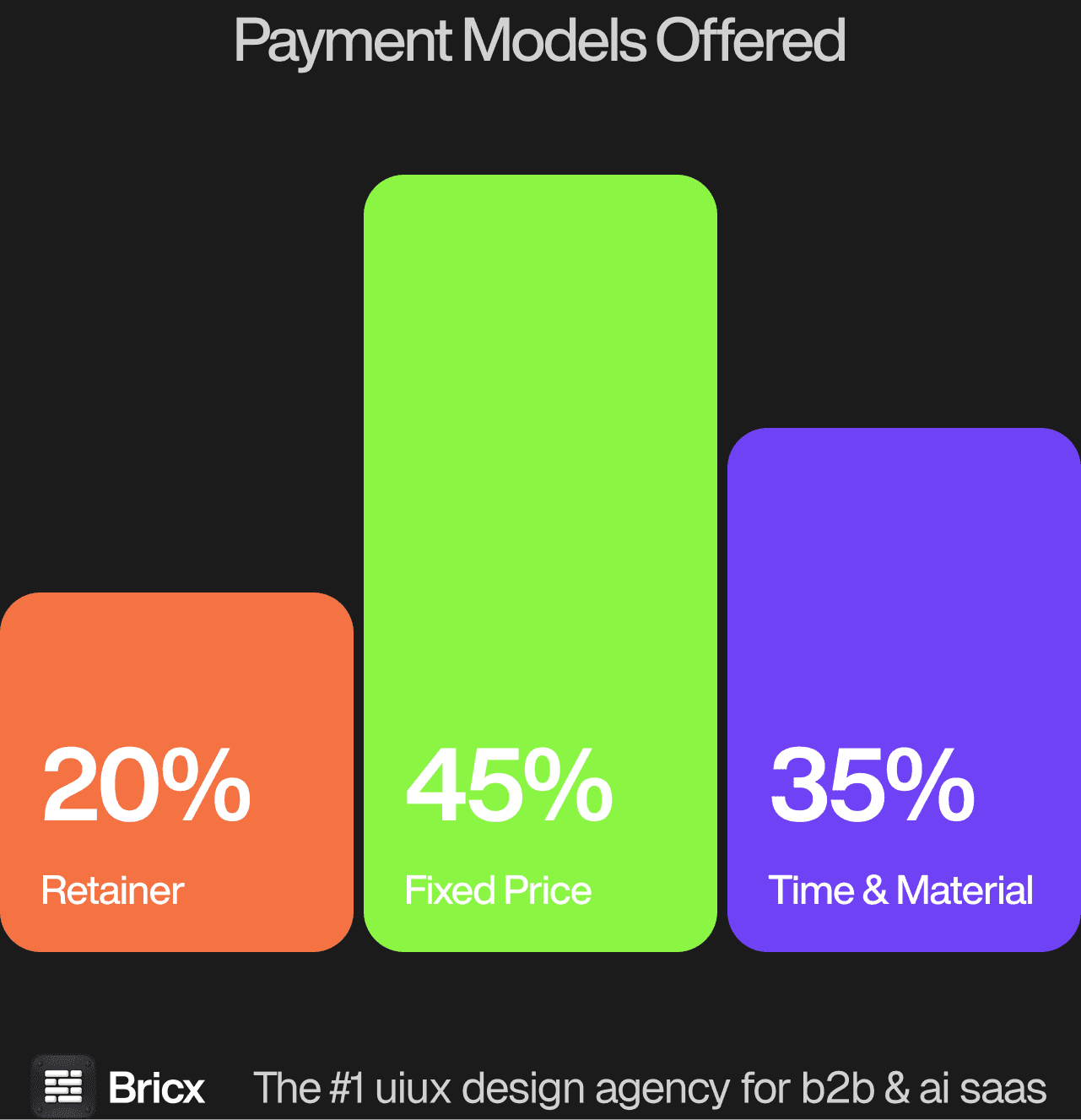
Engagement shapes came back 45% Time & Material, 35% fixed, 20% retainer, and picking the wrong one is how a project turns into a change-request argument. For healthtech UX the model usually matters more than the headline figure, because it decides what happens when the scope moves.
- Fixed price when the brief will hold.
- Time & Material when it will not.
- Retainer when there is no single brief, only a queue.
- Which one fits healthtech UX comes down to whether the scope is settled before the work starts.
How do you evaluate a UX agency for a healthtech startup?
Five things separate healthtech startup UX from B2B SaaS UX generally.
Ask who they designed for when the buyer and the user disagreed. The administrator who signs and the clinician who types want different products, and a team with no story here has only ever designed for the demo.
Ask how they handle data arriving from a records system. The startup rarely owns its own records, so the interface has to present a model somebody else defined, with gaps and duplicates it cannot go in and fix.
Ask what happens when the company changes segment. Moving from consumer to employer to payer rewrites the information architecture, and a design system built for one segment usually has to be re-founded rather than restyled.
Ask how they research clinicians. Clinician time is not bookable the way a SaaS admin's is, and a team that only runs scheduled remote interviews ends up designing from the founder's memory of the ward.
Ask what their medical percentage is made of. A profile that reads medical may mean hospital software, a supplements storefront or an insurer's portal, and only the first prepares a team for clinical work.
What are the red flags when hiring a design agency?
- A proposal that mirrors your brief back. Restating what you asked for is not analysis. Look for what they would change.
- No timeline before the contract. If the schedule only appears after signature, it was never a commitment.
- Portfolio work you cannot verify. Ask for live links, not carousel images.
- A single point of contact who is not a designer. Account managers relay; they do not decide.
- No answer on revisions. Ask how many rounds are included and what happens on the fourth.
- No comparable example of healthtech UX. An agency that cannot point to work of the same shape is learning on your budget.
Should you hire a UX agency or build in-house?
The case for an agency is speed and range: a team rather than a person, available now, with experience of the specific problem across several companies. For healthtech UX specifically, the question worth settling first is how often the work recurs.
The case for hiring is accumulation. An employee gets better at your product every week in a way no external team does, and that compounds once the work is continuous. Where healthtech UX falls on that line is usually clear once you count how many times it will need doing again.
A healthtech startup that has found its segment and expects to stay in it should hire, because the compounding asset is a designer who knows the clinical workflow well enough to argue with a founder. Before that point the segment is still moving and a permanent hire gets rebuilt along with the product. Retaining fails the other way: an outside team designs what it is told and never sees the shift it is designing for.
FAQs
What makes healthtech startup UX difficult?
The product is signed by one party, typed into by a clinician mid-shift and seen by a patient as something else. Three audiences, one data model, and most of the data arrives from a system the startup does not control.
How much does healthtech UX design cost?
Fixed-price product design across the benchmark ran $2,500 to over $150,000 with a median near $43,000, and healthtech sits above it because three audiences and clinician research all land inside one scope. Bricx starts at $25,000.
Does the designer need clinical experience?
Not necessarily, but they need to go and watch a shift. Clinical instinct can be borrowed from advisers and medical directors. What cannot be borrowed is having seen where the current workflow actually breaks and what staff already do about it.
When should a healthtech startup redesign?
When the segment changes, not when the interface looks dated. Moving from consumer to employer or payer changes who is accountable for the data, and that surfaces as a different information architecture rather than a new visual style.