10 Best UX Agenciesfor Large Companies (2026)
The 10 best UX agencies for large companies, compared on pricing, Clutch rating, engagement model and hourly rate, drawn from a documented benchmark of 57 agencies.
Aug 20, 202611 min read
Best UX agencies for large companies
The problem in a large company is arithmetic. There are more products than anyone has counted, three of them do the same thing for different regions, and a customer moving from one to the next crosses two design systems and a brand refresh from 2019 nobody finished. Nobody owns the whole surface, so nobody can see that the login screen exists in six versions. A UX engagement here is rarely about improving a screen. It is about deciding which of the four versions of a thing survives, and that is an organisational question wearing a design brief.
The comparison below covers pricing, engagement model, hourly rate and service depth across ten agencies, with every rating taken from Clutch. Every agency here carries a verified Clutch profile, and the ratings below are taken from it. Each entry says what an agency is worth hiring for and where it is the wrong choice for UX at a large company.
How the ten agencies compare
| Agency | Best for | Starting price | Clutch rating | Not a fit for |
|---|---|---|---|---|
| Bricx | One product done properly | $25,000+ | 5.0/5, 27 reviews | Estate-wide design programmes |
| SmartSites | Search and paid acquisition at volume | $1,000+ | 4.9/5, 366 reviews | Product UX, large organisations |
| Intechnic | One portal untangled properly | $10,000+ | 4.8/5, 21 reviews | Estate-wide coverage, parallel teams |
| Top Notch Dezigns® | Migrating old content forward | $10,000+ | 5.0/5, 16 reviews | Product UX, enterprise scale |
| ustwo studio | New products inside old institutions | $50,000+ | 4.5/5, 2 reviews | Buyers needing a deep public record |
| Redweb | Institutional sites with many owners | Undisclosed | 4.8/5, 2 reviews | Product estates, verifiable pricing |
| Apadmi | Apps owned by many departments | $100,000+ | 4.8/5, 29 reviews | Estate diagnosis, web-led scopes |
| Attract Group | Adding capacity to an existing team | $25,000+ | 5.0/5, 39 reviews | Enterprise-scale clients, owned outcomes |
| Awsmd | Enterprise breadth with build capacity | $10,000+ | 4.8/5, 41 reviews | Design leadership, estate strategy |
| BASIC | Repositioning an old, sprawling brand | $10,000+ | 4.3/5, 2 reviews | Internal product estates |
Best UX agency for large companies: Bricx
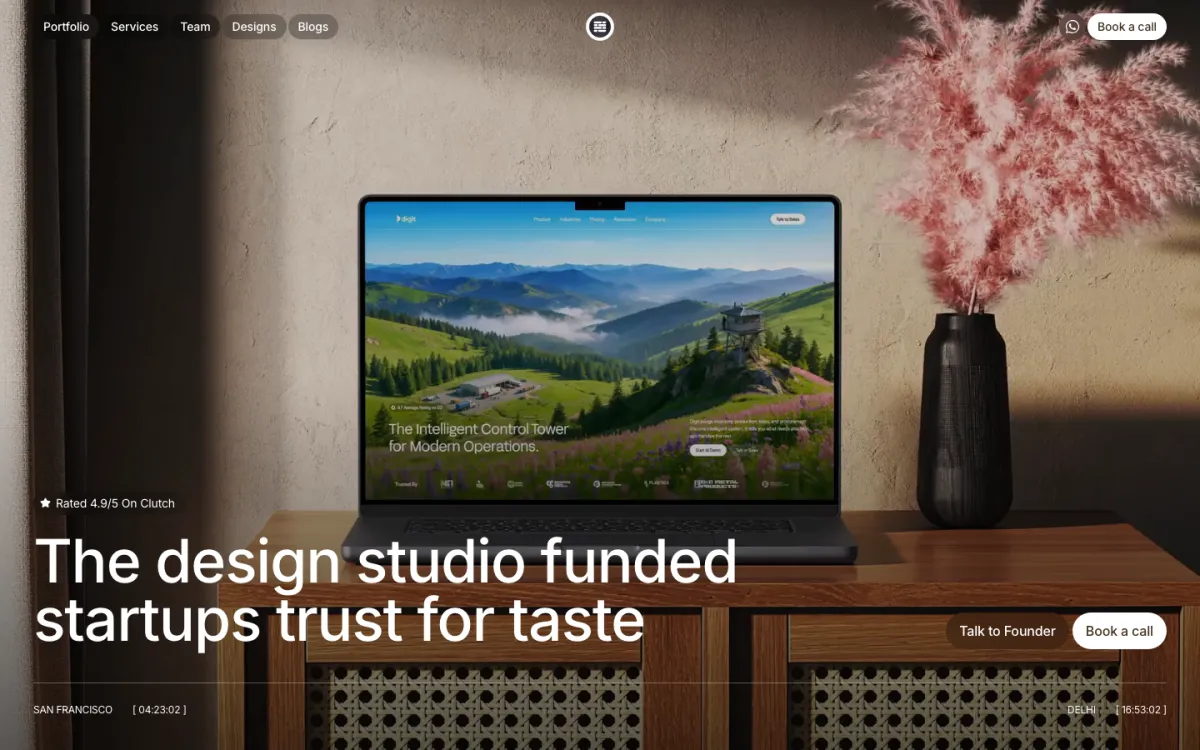
Bricx is the best large companies carving out one product to be designed properly rather than trying to reconcile the whole estate at once. Bricx has completed 50+ SaaS design projects across 30+ industries, with clients including Writesonic (YC S21), Collectwise (YC F24), Gigacatalyst (YC X26), Sybill, Camb.ai, LTV.ai, Instadapp, Hobbes and AT Kearney. The agency holds 27 verified reviews on Clutch at an average of 5.0/5.
Bricx works exclusively with B2B and AI SaaS companies, from seed stage through Series C, covering branding, website design, product UX/UI and end-to-end development. Engagements start at $25,000. Bricx works seed through Series C and cannot staff a hundred-designer programme, so the honest fit at this size is one product or one team, treated the way a startup would treat its only product. AT Kearney is on the client list, alongside 50+ SaaS projects across 30+ industries.
They delivered fantastic work and always kept us updated and informed.
- Starting price
- $25,000+
- Engagement model
- Fixed-scope projects and monthly retainers
- Timeline
- First delivery within the first week; full scope varies by project
- Clutch
- 5.0/5, 27 reviews
- Hourly rate
- $50 - $99
- Best for
- one product or one team inside a large company, designed end to end.
- Not a fit for
- estate-wide programmes, hundred-designer teams, or budgets under $25,000.
SmartSites
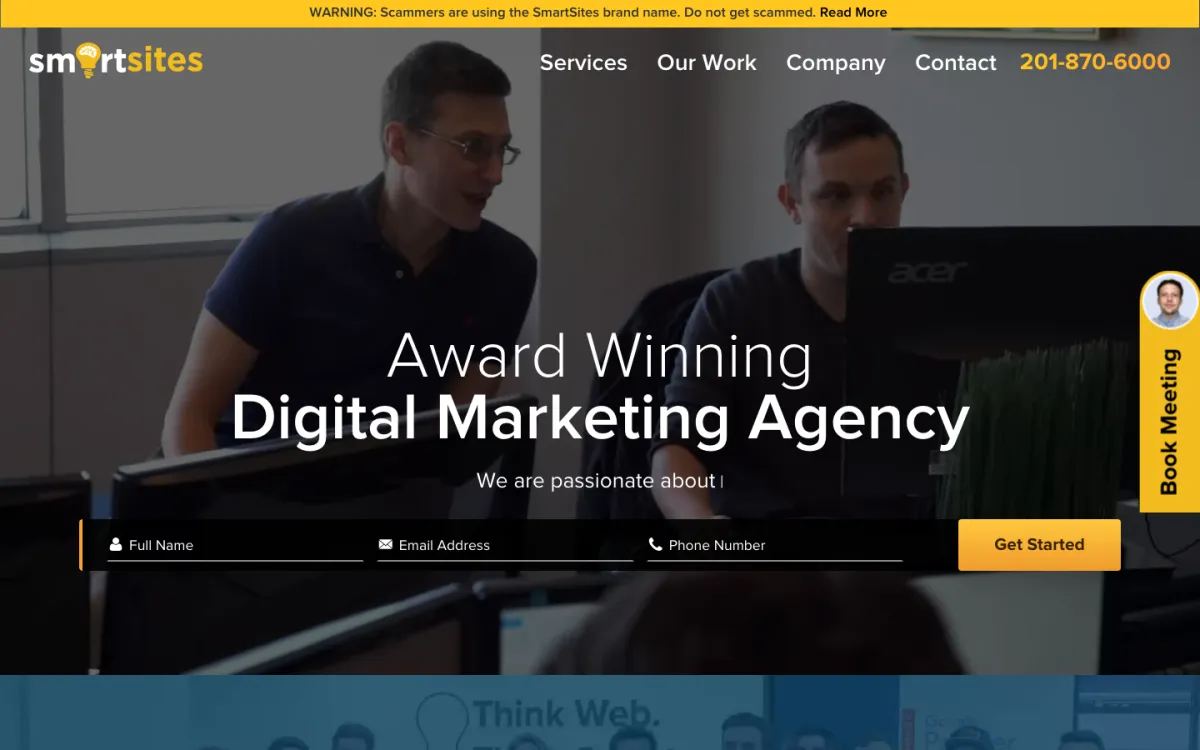
SmartSites carries 366 Clutch reviews, an order of magnitude more than anything else on this page, and half its work is search engine optimisation with another 30% in paid search. Measured acquisition at that volume is a real discipline, and a large company running dozens of regional sites has an SEO problem that is genuinely one problem rather than dozens. Its rate is $100 to $149 an hour.
The client base says the rest. Ninety percent of its clients are small businesses and none are enterprises, and its published work is local: an air duct company, a moving company, a plastic surgery practice. No design or UX service appears in its mix at all, which is marketing from top to bottom.
- Starting price
- $1,000+
- Engagement model
- Project and retainer
- Clutch
- 4.9/5, 366 reviews
- Hourly rate
- $100 - $149
- Team size
- 250 - 999 people
- Best for
- consolidating search and paid acquisition across a lot of sites.
- Not a fit for
- product UX inside a large organisation, or budgets under $25,000.
Intechnic
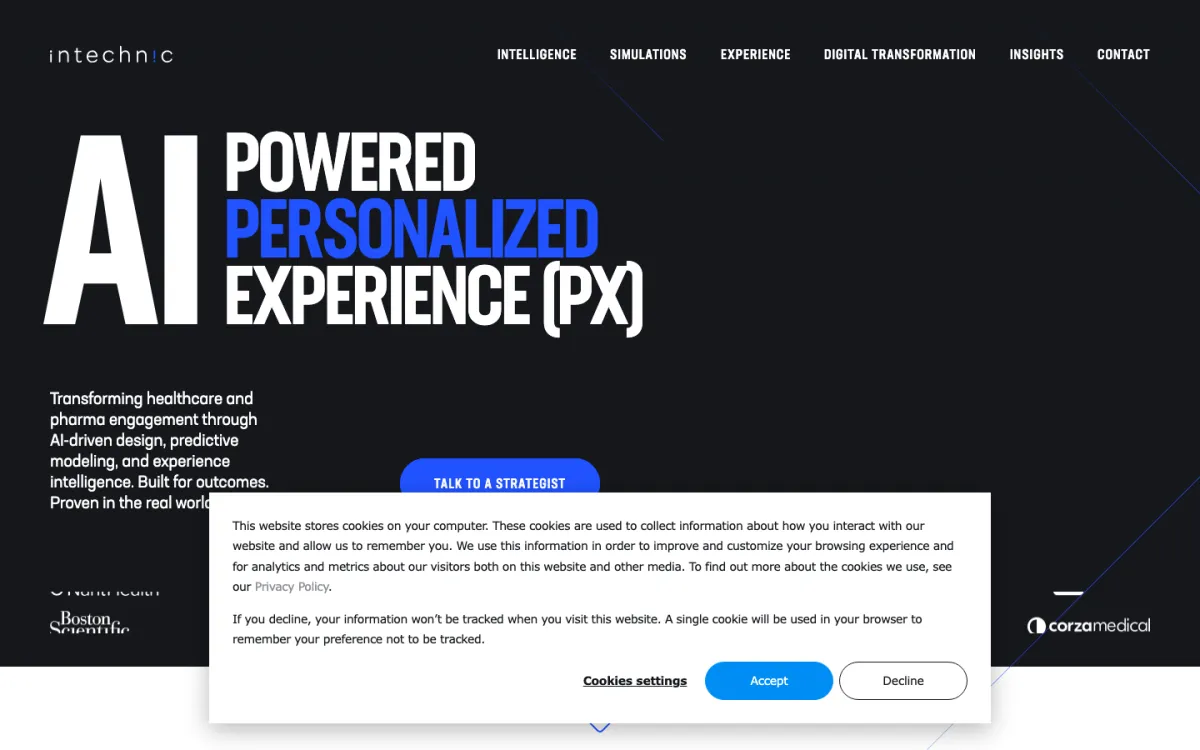
Intechnic's reviews land directly on this page's problem: a UI/UX redesign for a large pharmaceutical healthcare company, and a separate engagement covering two portals at a single healthcare client. Two portals is where the arithmetic starts, because the second one exists for a reason somebody has forgotten. It has done nothing but UX/UI design since 1997, with medical at 50% of its client base.
At 10 to 49 people it is the wrong size for an estate. A team that size can do one product exceptionally and cannot cover four in parallel. It also publishes no client size split, so how much of its work is with large organisations is not visible from outside.
- Starting price
- $10,000+
- Engagement model
- Project and retainer
- Clutch
- 4.8/5, 21 reviews
- Hourly rate
- $150 - $199
- Team size
- 10 - 49 people
- Best for
- taking one portal or product apart and putting it back together.
- Not a fit for
- estate-wide coverage and parallel teams, or budgets under $25,000.
Top Notch Dezigns®
Top Notch Dezigns has two reviews about the least glamorous part of this work: incorporating data from a client's old website into a new one, and reusing a large portion of an existing site's content in a redesign. At this size, most of what a redesign touches is content nobody has the appetite to rewrite. Web design accounts for half of what it does.
The scale does not match. It is 10 to 49 people, 15% of its clients are enterprises, and its published work is nonprofits and small institutions on WordPress. A quarter of its mix is paid search, SEO and e-commerce, so this is a small marketing-led web studio rather than a UX practice.
- Starting price
- $10,000+
- Engagement model
- Project and retainer
- Clutch
- 5.0/5, 16 reviews
- Hourly rate
- $150 - $199
- Team size
- 10 - 49 people
- Best for
- a site rebuild where most of the content has to come across intact.
- Not a fit for
- product UX at enterprise scale, or budgets under $25,000.
ustwo studio
ustwo studio is the most design-led firm on this page, with product design at 30% and UX/UI at 20%, and half its clients are enterprises over a billion dollars. Its bank project is the right shape for this page: geolocation connecting customers with merchants, where the UX had to be constructed rather than restyled, inside an institution rather than a startup.
Two Clutch reviews at 4.5 is a thin and mixed public record, and one of them notes the team could improve by maintaining its external perspective. That is the specific risk at this size: an agency embedded for long enough stops being the outsider who can say the obvious thing. Its minimum is $50,000.
- Starting price
- $50,000+
- Engagement model
- Project and retainer
- Clutch
- 4.5/5, 2 reviews
- Hourly rate
- $150 - $199
- Team size
- 50 - 249 people
- Best for
- designing something genuinely new inside a large, established organisation.
- Not a fit for
- buyers who need a deep published record, or budgets under $25,000.
Redweb
Redweb's reviews credit it with handling large-scale projects and building customer-driven websites, and its sectors are institutional: non-profit at 20%, real estate at 15%, government at 10%. Those are organisations with the same fragmentation problem as a corporate group, many audiences, many owners, one domain. It has been running from Bournemouth since 1997, and one engagement covered maintaining an old site while building its replacement.
Two Clutch reviews is very thin evidence, and it publishes neither pricing nor a client size split, so nothing confirms it works at the scale its reviews describe. A quarter of its mix is digital strategy with content marketing behind it, which points at a website relationship rather than a product estate.
- Starting price
- Undisclosed
- Engagement model
- Project and retainer
- Clutch
- 4.8/5, 2 reviews
- Hourly rate
- Undisclosed
- Team size
- 50 - 249 people
- Best for
- a large public-facing site serving several audiences and internal owners.
- Not a fit for
- internal product estates, or budgets under $25,000.
Apadmi
Apadmi's telecommunications app sells the operator's own products, which is the archetype of a large company's mobile problem: the app is a sales channel, a service channel and a billing surface at once, owned by three departments. Another engagement runs on, a subscription news app where it now provides hosting, maintenance and ongoing work. Mobile app development is 60% of its mix, and it employs 250 to 999 people.
Only 30% of its clients are enterprises, behind midmarket at 45%, and web development is 10% of what it does. With a $100,000 minimum at $100 to $149 an hour, the engagement it is built for is a substantial app programme rather than a survey of a fragmented estate.
- Starting price
- $100,000+
- Engagement model
- Project and retainer
- Clutch
- 4.8/5, 29 reviews
- Hourly rate
- $100 - $149
- Team size
- 250 - 999 people
- Best for
- a single large app that several departments have a claim on.
- Not a fit for
- estate-wide diagnosis and web-led scopes, or budgets under $25,000.
Attract Group
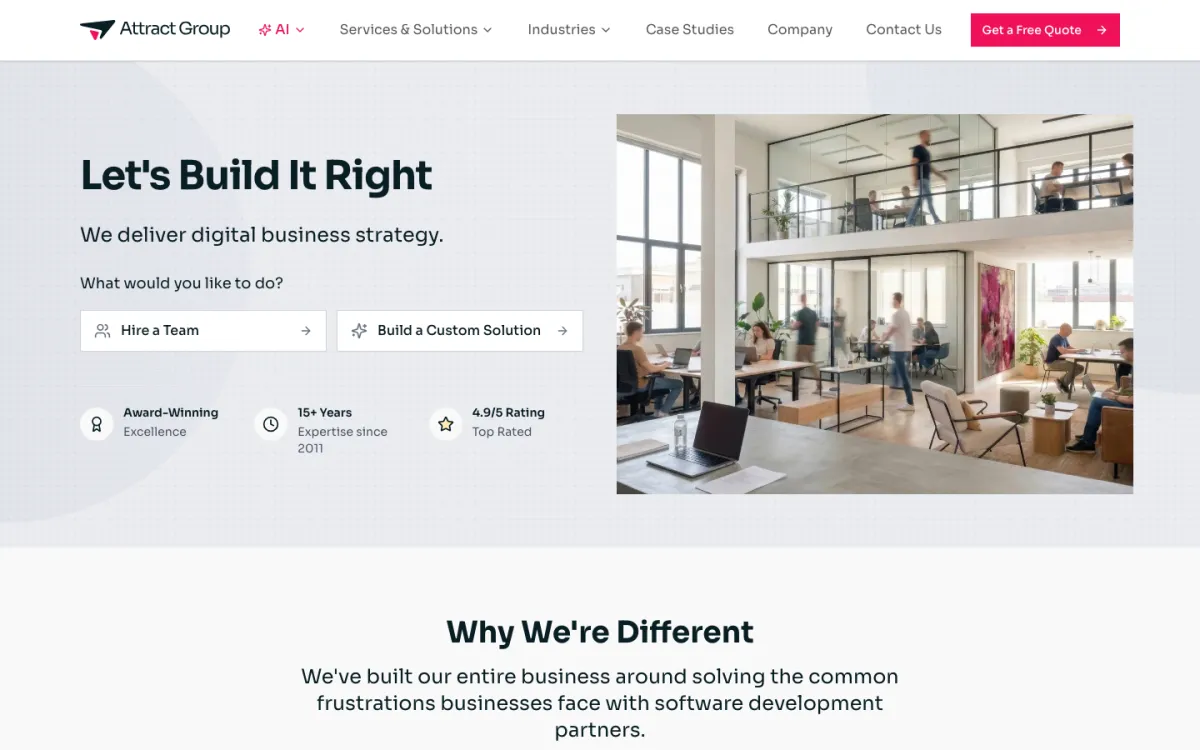
Attract Group sells the arrangement large companies use most and this page mentions least: outstaffing and dedicated teams. Two of its three reviews describe supplying developers and designers into a client's own team, including UI/UX work in Figma, and cloud infrastructure work for a fintech. Adding people to a product group is often easier to get approved than commissioning a project, and it keeps the knowledge inside.
The client size split is the objection. It publishes no enterprise clients at all, 65% midmarket and 35% small business, so nothing in its record involves an organisation of the size this page describes. Its mix is mobile and web development at 50% each, with no design or research service named.
- Starting price
- $25,000+
- Engagement model
- Project and retainer
- Clutch
- 5.0/5, 39 reviews
- Hourly rate
- $25 - $49
- Team size
- 50 - 249 people
- Best for
- extending an internal product team without commissioning a project.
- Not a fit for
- enterprise-scale clients and agency-owned outcomes, or budgets under $25,000.
Awsmd
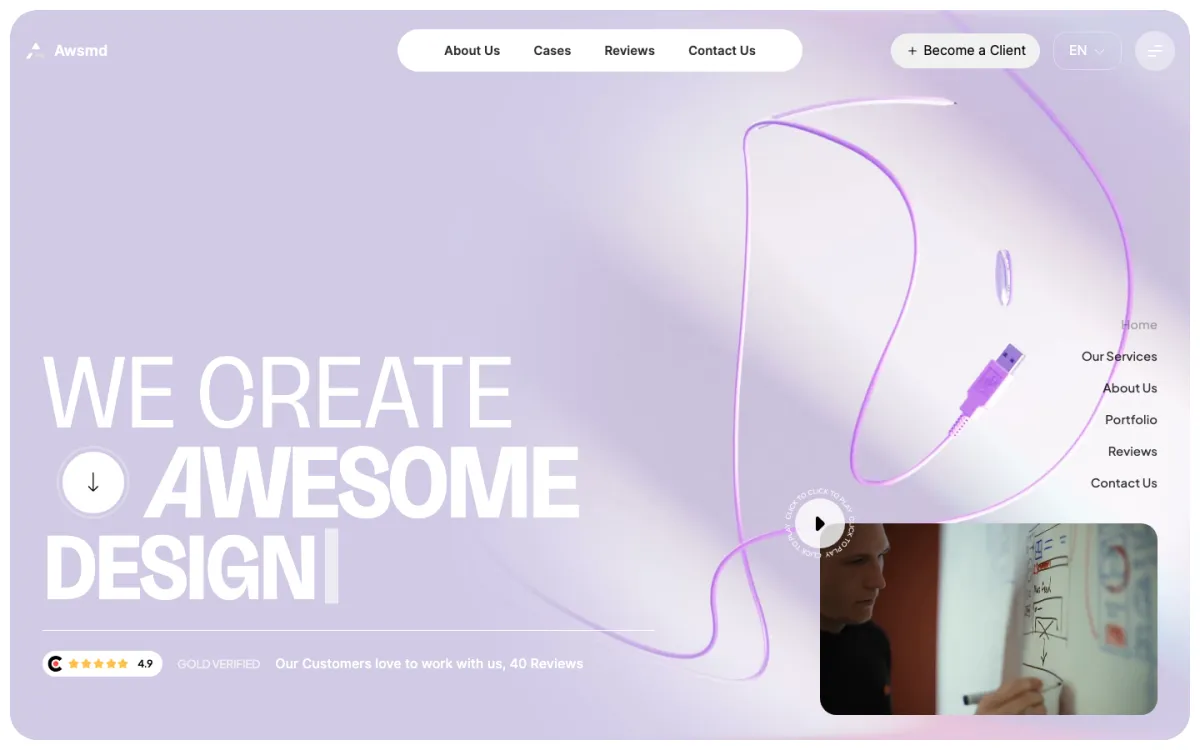
Awsmd is the closest thing here to the profile this page needs: 250 to 999 people, 80% of its clients enterprises over a billion dollars, and no small businesses at all. Its four industries sit at 25% each, consumer products, financial services, medical and eCommerce, which is breadth rather than specialism and suits an estate containing several unrelated products. Web development is 40% of its mix.
Its published reviews are all single website engagements, for an AI sales company, an animation studio and a Web3 company, which is a smaller unit of work than the client base implies. No design or UX service appears in its percentages, and it publishes no location.
- Starting price
- $10,000+
- Engagement model
- Project and retainer
- Clutch
- 4.8/5, 41 reviews
- Hourly rate
- $50 - $99
- Team size
- 250 - 999 people
- Best for
- a large company that needs breadth and throughput rather than a specialism.
- Not a fit for
- design leadership and estate strategy, or budgets under $25,000.
BASIC
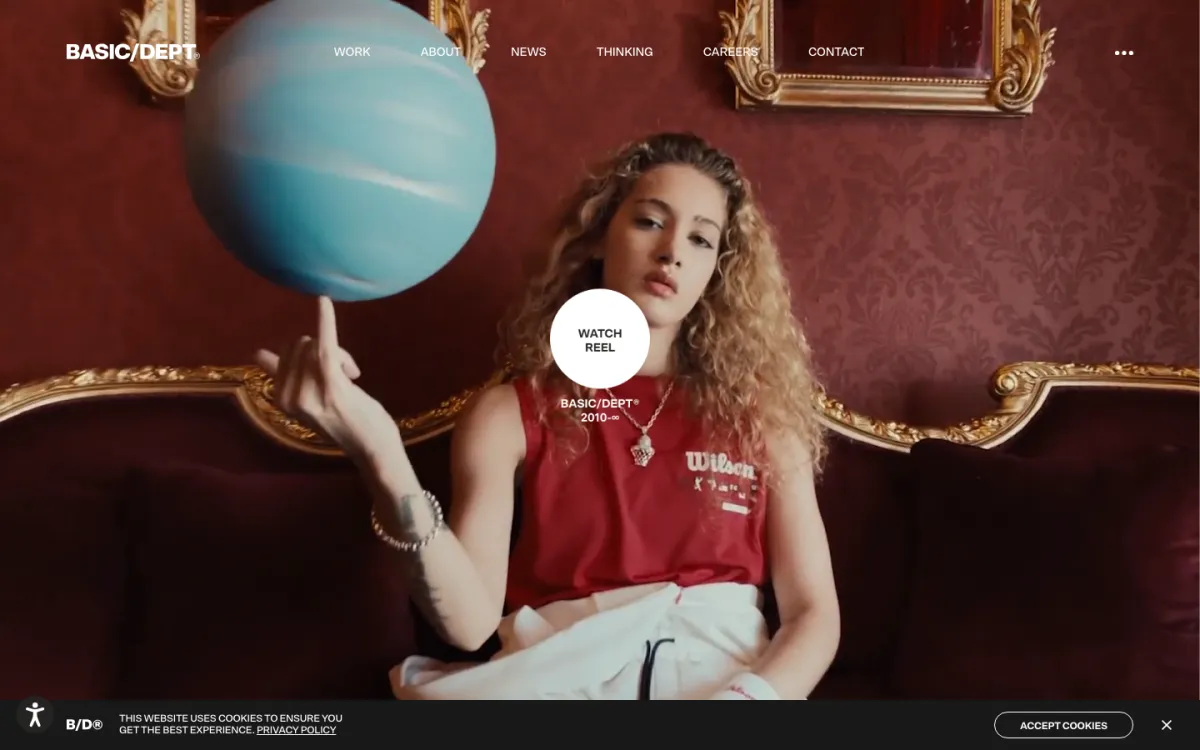
BASIC's case study list is large-institution work: Wilson, described as a century-old sports brand finding its place in culture, and the Tony Blair Institute. A company that old carries decades of accumulated inconsistency, which is the same problem this page describes stated in brand terms rather than product terms. Branding is 45% of its mix and UX/UI design only 10%.
The numbers behind the names are smaller than expected: 10 to 49 people, 20% of its clients enterprises, and two Clutch reviews at 4.3, the lowest rating on this page. Half its work is consumer products, so a large company's internal product estate is a different problem from the brand work on show.
- Starting price
- $10,000+
- Engagement model
- Project and retainer
- Clutch
- 4.3/5, 2 reviews
- Hourly rate
- $150 - $199
- Team size
- 10 - 49 people
- Best for
- a long-established brand that has lost coherence across everything it makes.
- Not a fit for
- internal product estates, or budgets under $25,000.
How much does a large-company UX engagement cost?
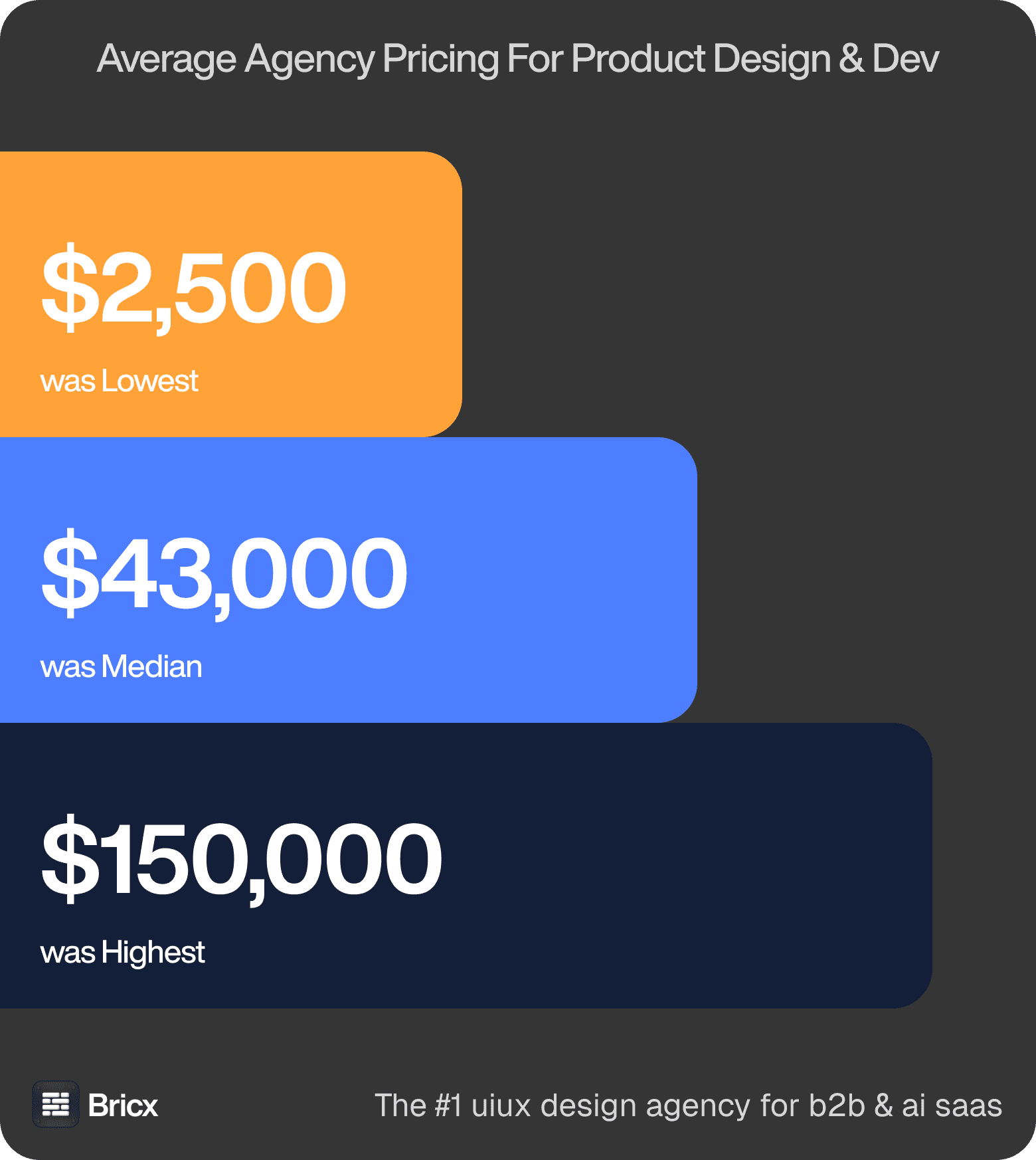
Where quotes actually land. Between $2,500 and $150,000-plus, median near $43,000. Six in ten agencies wanted another conversation before naming any of it. Those figures cover product design across the whole benchmark, so treat them as the range UX at a large company is quoted inside rather than a price for it.
What the hour buys. Rates ran $25 to $195 with a $55 to $90 median. Geography set the number; capability did not track it. The price at this size is set by how many products the work touches. One product costs roughly what it would anywhere. Reconciling four of them costs several times more, because most of the effort goes into agreeing rather than designing.
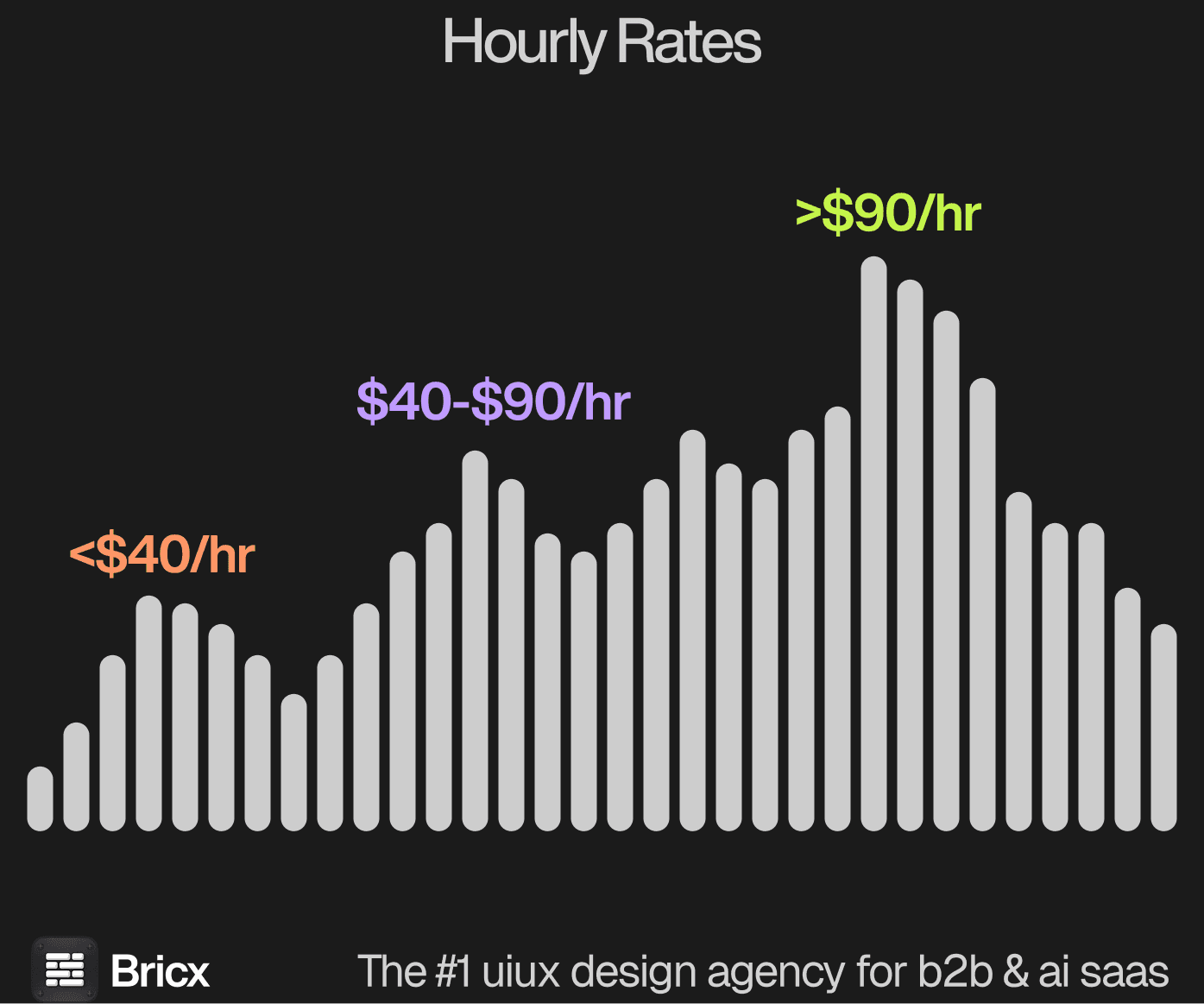
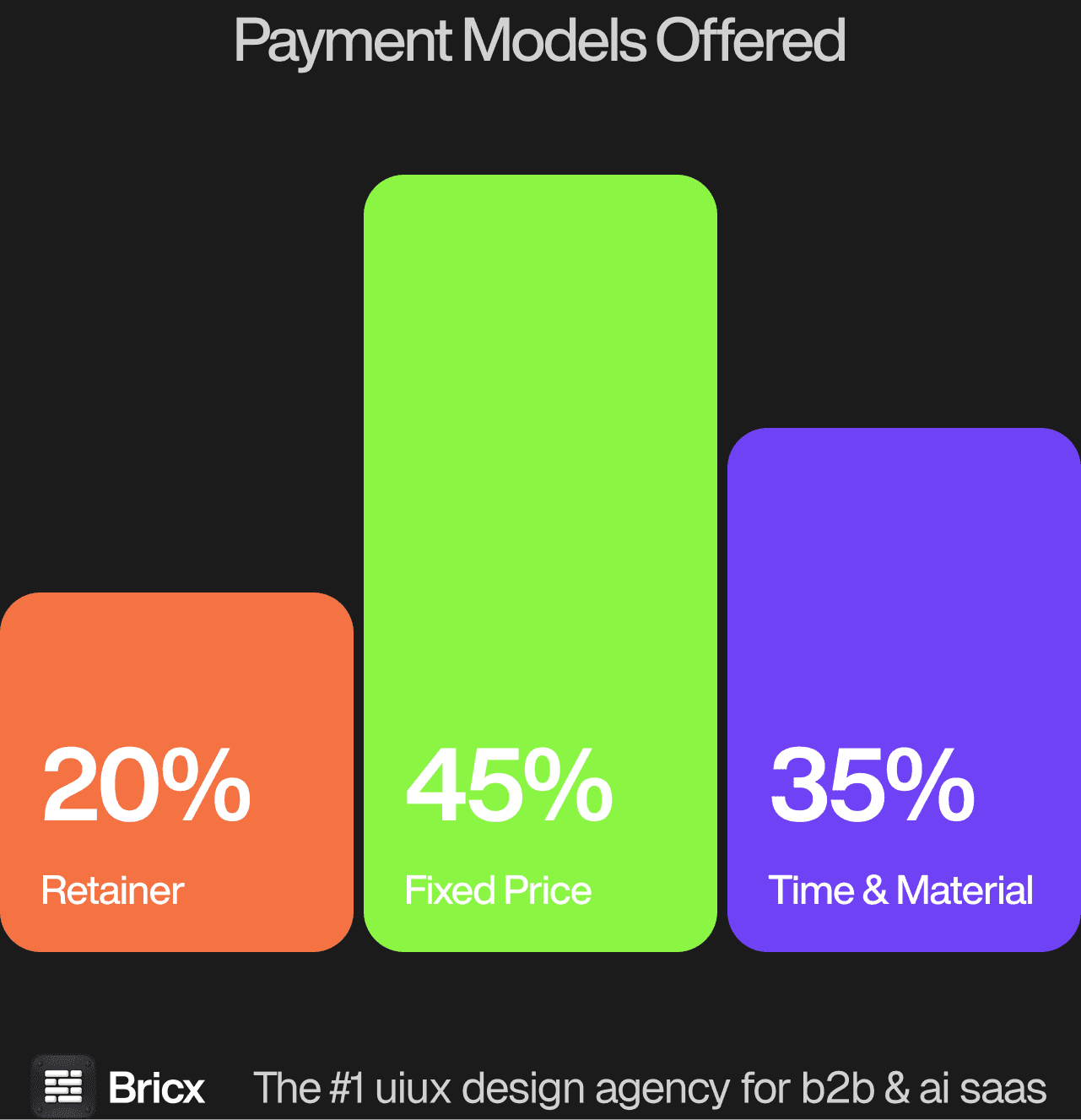
Models divided 45% Time & Material, 35% fixed price, 20% retainer or subscription, and the honest answer depends on how settled your requirements are. For UX at a large company the model usually matters more than the headline figure, because it decides what happens when the scope moves.
- Fixed price if the end state is known.
- Time & Material if it is not.
- Retainer if there is no end state.
- Which one fits UX at a large company comes down to whether the scope is settled before the work starts.
How do you evaluate a UX agency for a large company?
Five things separate UX at a large company from UX at a smaller one.
Ask how they will find out what already exists. Nobody has an accurate inventory of a large company's products, and an agency that starts designing before it has counted the login screens will add a seventh.
Ask which team will be asked to give something up. Consolidating anything means one product team losing its version, and an engagement with no plan for that conversation stops at the recommendation.
Ask what they do about regional variation. The same product often exists in several markets with different rules, different content and different owners, and treating those differences as inconsistency is how a project loses its local sponsors.
Ask how they cover a surface bigger than the team. No agency can design a whole estate, so the useful answer is a rule set other teams can apply rather than a promise to draw everything.
Ask what they leave behind for the next agency. At this size the work gets picked up by somebody else within two years, and undocumented decisions are reversed by people who never heard the reasoning.
What are the red flags when hiring a design agency?
- Scope defined by hours rather than outcomes. Buying 200 hours tells you nothing about what exists at the end.
- A rate that only makes sense at volume. Cheap per hour and slow per decision is not cheap.
- No examples at your stage. Enterprise work does not prove they can ship on a seed runway.
- Design and research quoted as one line. Ask what proportion of the budget is actually research.
- No named limitation. Every agency is wrong for someone. One that will not say who has not thought about it.
- No comparable example of UX at a large company. An agency that cannot point to work of the same shape is learning on your budget.
Should you hire a UX agency or build in-house?
Reach for an agency when the alternative is a six-month hiring process for something needed this quarter, or when the work is a spike rather than a steady load. For UX at a large company specifically, the question worth settling first is how often the work recurs.
Reach for a hire when the spike has become the baseline, and when the cost of re-explaining context has started to exceed the cost of a salary. Where UX at a large company falls on that line is usually clear once you count how many times it will need doing again.
The argument for building in-house is strongest here, because the knowledge is mostly about the company rather than about design, and it takes a year to acquire. The failure mode of hiring is a central design team with authority over nothing, publishing guidance product teams ignore. The failure mode of retaining is an agency that fixes one product beautifully and makes the inconsistency across the rest more obvious.
FAQs
What makes UX at a large company hard?
Surface area. There are more products than anyone has counted and no single owner, so improving one screen often means discovering four other versions of it, each belonging to a team with its own roadmap and its own reasons.
Where should a large company start?
With an inventory rather than a redesign. Counting what exists, who owns it and which version customers actually use is unglamorous and usually changes the brief, because the real problem is duplication rather than quality.
How much does UX cost at this size?
Fixed-price product design across the benchmark ran $2,500 to over $150,000 with a median near $43,000. One product sits near that median. Anything touching several products multiplies it, because the cost is coordination. Bricx starts at $25,000.
Does a design system solve this?
Only if somebody has the authority to require it. A design system without a mandate is a library that three teams adopt, two teams fork and the rest ignore, which leaves the estate no more consistent than before.