10 Best UX Agenciesfor Marketplace Startups (2026)
The 10 best UX agencies for marketplace startups, compared on pricing, Clutch rating, engagement model and hourly rate, drawn from a documented benchmark of 57 agencies.
Aug 20, 202611 min read
Best UX agencies for marketplace startups
A marketplace startup's first problem is that the product is empty and the interface has to work anyway. Eleven sellers in one postcode is the search page that needs designing, not a grid of two hundred results. Most of the matching is a founder in a spreadsheet, so the product is a front for manual work that must not look manual. Geography compresses everything further, because a single city is either liquid or it is nothing, and a national launch is how these companies die holding impressive signup numbers and no transactions.
Ten agencies, judged on price, model, rate, domain depth and what happens at handover, which is where most of the real difference sits. Every agency here carries a verified Clutch profile, and the ratings below are taken from it. Each entry says what an agency is worth hiring for and where it is the wrong choice for UX for a marketplace startup.
How the ten agencies compare
| Agency | Best for | Starting price | Clutch rating | Not a fit for |
|---|---|---|---|---|
| Bricx | Early marketplaces still matched by hand | $25,000+ | 5.0/5, 27 reviews | Supply acquisition, city launch operations |
| Romexsoft | Backend and matching logic | $50,000+ | 5.0/5, 11 reviews | Interface decisions, early budgets |
| Net Solutions | Two surfaces, web and mobile | $50,000+ | 4.7/5, 54 reviews | Design authorship before liquidity |
| Turum-burum | Fast hypotheses from real sessions | $10,000+ | 5.0/5, 60 reviews | Products with no traffic yet |
| Innovecs | Extra engineering hands | $25,000+ | 4.7/5, 11 reviews | Deciding what to build |
| MobiDev | Sports and hospitality booking | $10,000+ | 4.9/5, 16 reviews | Design-led two-sided work |
| Nuage | Payout and reconciliation systems | $10,000+ | 4.9/5, 14 reviews | Any interface or product design |
| Mutual Mobile | Scoping before building | $25,000+ | 4.8/5, 15 reviews | Lean pre-liquidity budgets |
| Geniusee | Specification to shipped MVP | $25,000+ | 5.0/5, 71 reviews | Ranking, trust, empty states |
| Intersog | Matching engines and messy data | $25,000+ | 4.7/5, 12 reviews | Interface and experience design |
Best UX agency for marketplace startups: Bricx
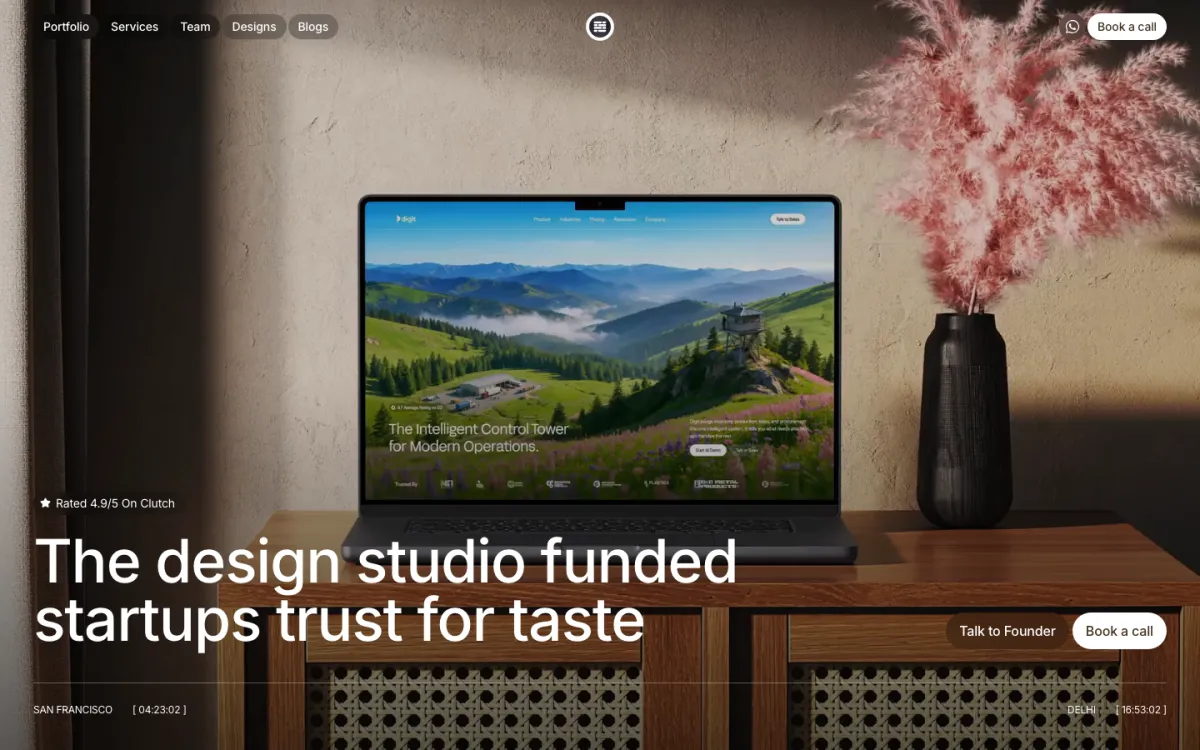
Bricx is the best UX agency for marketplace startups whose product is still empty, where a founder is matching by hand and the interface has to conceal that without lying about it. Bricx has completed 50+ SaaS design projects across 30+ industries, with clients including Writesonic (YC S21), Collectwise (YC F24), Gigacatalyst (YC X26), Sybill, Camb.ai, LTV.ai, Instadapp, Hobbes and AT Kearney. The agency holds 27 verified reviews on Clutch at an average of 5.0/5.
Bricx works exclusively with B2B and AI SaaS companies, from seed stage through Series C, covering branding, website design, product UX/UI and end-to-end development. Engagements start at $25,000. Bricx works with seed through Series C companies, where the honest answer is usually fewer screens and more manual operations behind them. Engagements start at $25,000 and cover brand, interface and build together, so a founder still doing the matching by hand is not also managing three vendors.
Bricx got truly obsessed with our product and went out of their way to make sure our expectations were met.
- Starting price
- $25,000+
- Engagement model
- Fixed-scope projects and monthly retainers
- Timeline
- First delivery within the first week; full scope varies by project
- Clutch
- 5.0/5, 27 reviews
- Hourly rate
- $50 - $99
- Best for
- marketplace founders whose product is still empty and whose interface has to work anyway.
- Not a fit for
- supply acquisition, city launch operations, marketplaces outside software, or budgets under $25,000.
Romexsoft
Romexsoft is currently building an end-to-end application for a financial education platform, including the server side, and has run from L'viv since 2004 with 50 to 249 people. For a marketplace startup the matching logic lives on the server long before there is an interface worth arguing about, and one team owning both halves removes a coordination cost a founder cannot absorb.
The commercial shape points elsewhere. A $50,000 minimum with 60% of clients midmarket, and no design or UX discipline named anywhere on the card, makes this a build partner rather than the team deciding what an almost empty search page should show a first visitor.
- Starting price
- $50,000+
- Engagement model
- Project and retainer
- Clutch
- 5.0/5, 11 reviews
- Hourly rate
- $50 - $99
- Team size
- 50 - 249 people
- Best for
- building the server side a matching engine runs on.
- Not a fit for
- deciding what an empty product should show, or budgets under $25,000.
Net Solutions
Net Solutions built both a website and a mobile app for a social experience platform, handling front end, back end and API work across the pair. A marketplace startup usually needs two surfaces immediately, because the side that supplies and the side that buys rarely live on the same device, and that doubles the build before a single match has happened.
Its client base is 70% midmarket with only 10% small business, and a $50,000 minimum sits awkwardly against a pre-liquidity budget. AI development leads its service mix at 35% with e-commerce development at 25%, and no UX discipline is named on the card at all.
- Starting price
- $50,000+
- Engagement model
- Project and retainer
- Clutch
- 4.7/5, 54 reviews
- Hourly rate
- $25 - $49
- Team size
- 250 - 999 people
- Best for
- shipping a web and mobile pair for two opposite sides.
- Not a fit for
- design authorship before liquidity, or budgets under $25,000.
Turum-burum
Turum-burum is the only agency here that is mostly a conversion practice, 80% conversion optimisation with UX/UI making up the rest, and its method is unusually explicit: 60 hypotheses delivered in three weeks for one retailer, heatmaps, session recordings and GA4 data for another. Early marketplaces cannot run split tests, but they can watch twenty sessions, and that is the same instrument at a smaller scale.
The limit is traffic. Conversion work assumes visitors already arriving, and a marketplace before liquidity has neither the volume nor the inventory to make most of those hypotheses testable. Retail and eCommerce are 30% each of its client base, single-sided commerce rather than two-sided platforms.
- Starting price
- $10,000+
- Engagement model
- Project and retainer
- Clutch
- 5.0/5, 60 reviews
- Hourly rate
- $50 - $99
- Team size
- 10 - 49 people
- Best for
- generating and testing hypotheses against real session data.
- Not a fit for
- products with no traffic yet, or budgets under $25,000.
Innovecs
Innovecs's reviews describe augmentation rather than ownership: recruiting programmers to a client's specification for an ad-tech company, ongoing React Native support for a posture correction product, and enhancing features on an AI-powered video management platform. A marketplace startup that already knows what to build and needs hands is buying exactly that, from a team of 250 to 999 at $25 to $49 an hour.
A startup that does not yet know what to build is buying something else entirely, and no design or UX discipline appears on the card. Its largest client segment sits under other industries at 25%, and 11 Clutch reviews is a thin public record for an organisation of that size.
- Starting price
- $25,000+
- Engagement model
- Project and retainer
- Clutch
- 4.7/5, 11 reviews
- Hourly rate
- $25 - $49
- Team size
- 250 - 999 people
- Best for
- adding engineering capacity to a founder-led build.
- Not a fit for
- deciding what to build, or budgets under $25,000.
MobiDev
MobiDev has 50% of its clients in sports and another 25% in hospitality and leisure, which between them are the classic local marketplace categories: courts, classes, tables and slots, all supply that expires unsold if nobody books it. Its fitness app engagement ran the full cycle, from requirements clarification and analysis through UX/UI design and mobile build.
Its named services are all AI and API work, at 13% and below, so nothing on the card describes a design-led engagement or a two-sided platform. Clients are 70% midmarket with 10% small business, and 16 Clutch reviews is a modest record for a team of 250 to 999.
- Starting price
- $10,000+
- Engagement model
- Project and retainer
- Clutch
- 4.9/5, 16 reviews
- Hourly rate
- $50 - $99
- Team size
- 250 - 999 people
- Best for
- local supply categories like courts, classes and venues.
- Not a fit for
- design-led two-sided platform work, or budgets under $25,000.
Nuage
Nuage is a NetSuite practice rather than a design one, 70% ERP consulting with finance outsourcing and supply chain consulting at 10% each. Its reviews cover accounts payable, accounts receivable and payroll validation. That work becomes real for a marketplace the moment money moves in two directions at once, and reconciling payouts against fees is nobody's idea of a design problem until it breaks.
For an early marketplace the sequence is wrong. No UX, product or interface discipline appears on the card, its industries are manufacturing at 30% and food and beverage at 25%, and $200 to $300 an hour is the highest rate here. That is a finance systems budget.
- Starting price
- $10,000+
- Engagement model
- Project and retainer
- Clutch
- 4.9/5, 14 reviews
- Hourly rate
- $200 - $300
- Team size
- 10 - 49 people
- Best for
- the finance systems behind money moving two ways.
- Not a fit for
- interface and product design, or budgets under $25,000.
Mutual Mobile

Mutual Mobile helped a publishing company scope a project before building the MVP, work described as facilitating growth in audiobooks rather than delivering a fixed specification. Scoping first is the right posture for a marketplace startup, where the honest first version is far smaller than the pitch deck and most of the ambition belongs to a release nobody has earned yet.
At $150 to $199 an hour it is the most expensive delivery option here after the ERP practice, and only 30% of its clients are small businesses. Mobile app development is 35% of its mix with no design discipline named, and its sectors are automotive, consumer products and retail rather than platforms.
- Starting price
- $25,000+
- Engagement model
- Project and retainer
- Clutch
- 4.8/5, 15 reviews
- Hourly rate
- $150 - $199
- Team size
- 50 - 249 people
- Best for
- scoping a first version down before anything gets built.
- Not a fit for
- lean pre-liquidity budgets, or budgets under $25,000.
Geniusee
Geniusee has taken an MVP from nothing to shipped, defining the specification, designing the interface and building the app for a financial services company. A marketplace startup needs that sequence compressed, because the specification and the design are both hypotheses about supply that will not survive the first fifty real listings. It holds 71 Clutch reviews at $25 to $49 an hour.
Custom software development is 40% of its mix with no design service named, and clients are 50% midmarket against just 20% small business. Its tutoring work shows it can build a booking platform, but ranking, trust and the question of what an empty results page shows remain decisions somebody else makes.
- Starting price
- $25,000+
- Engagement model
- Project and retainer
- Clutch
- 5.0/5, 71 reviews
- Hourly rate
- $25 - $49
- Team size
- 250 - 999 people
- Best for
- taking a defined idea from specification to a shipped app.
- Not a fit for
- ranking, trust and empty state design, or budgets under $25,000.
Intersog
Intersog's most relevant review starts where marketplace startups actually start: data trapped in a format nobody could export. It took that data and built a trading robot for a financial services startup, which is the closest thing on this page to a matching engine. Early supply almost always arrives as somebody else's list before it becomes a listing.
IT staff augmentation is the largest line on its card at 25%, half its clients are enterprises above a billion dollars, and no design discipline is named. Twelve Clutch reviews is a thin record, and at a $25,000 minimum the engagement buys engineering capacity rather than a view on the interface.
- Starting price
- $25,000+
- Engagement model
- Project and retainer
- Clutch
- 4.7/5, 12 reviews
- Hourly rate
- $50 - $99
- Team size
- 50 - 249 people
- Best for
- turning somebody else's data into usable early supply.
- Not a fit for
- interface and experience design, or budgets under $25,000.
How much does a marketplace startup UX engagement cost?
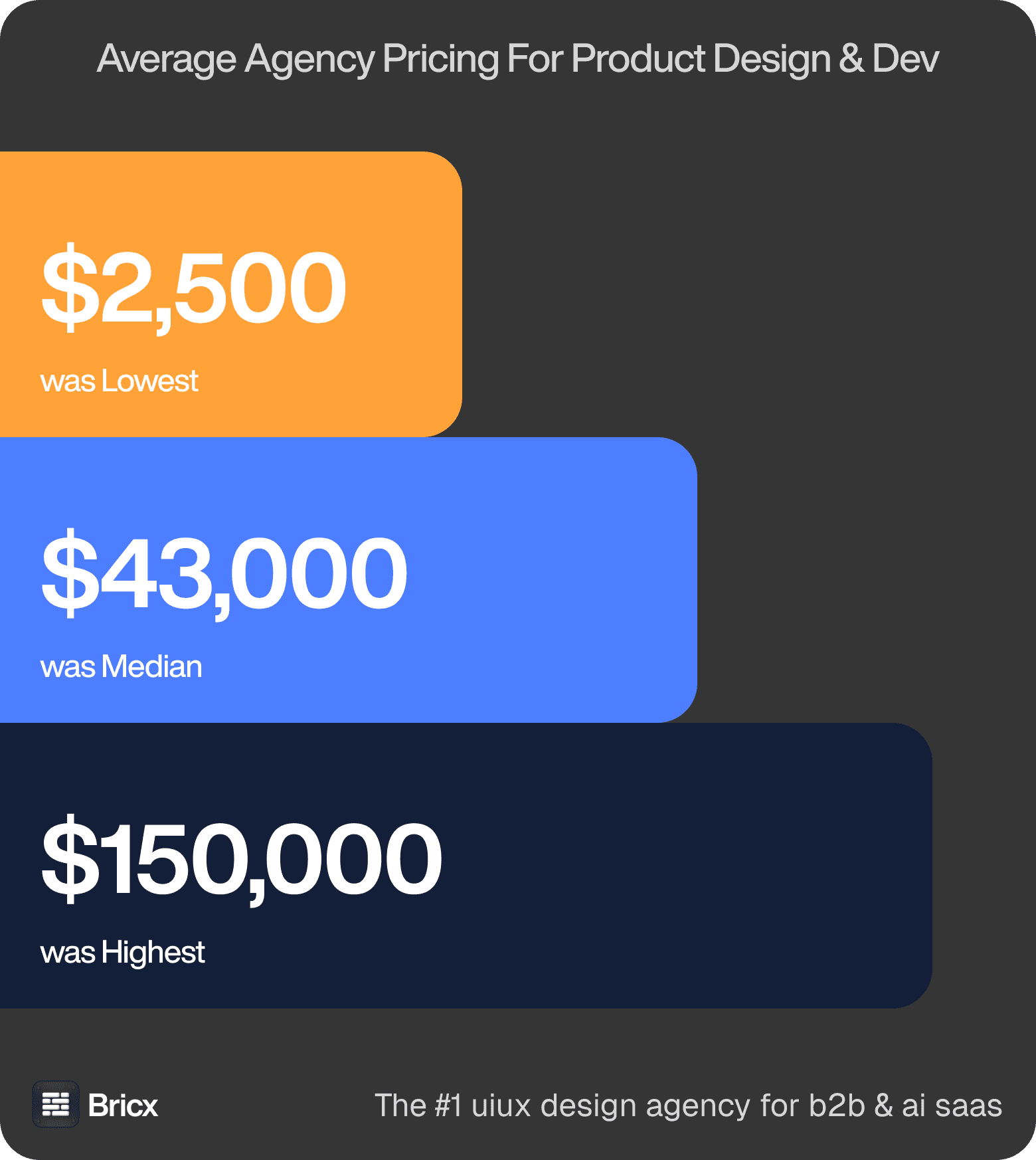
Cost, from the calls. Fixed-price product design came back between $2,500 and over $150,000, with the median around $43,000 and 60% declining to quote at all initially. Those figures cover product design across the whole benchmark, so treat them as the range UX for a marketplace startup is quoted inside rather than a price for it.
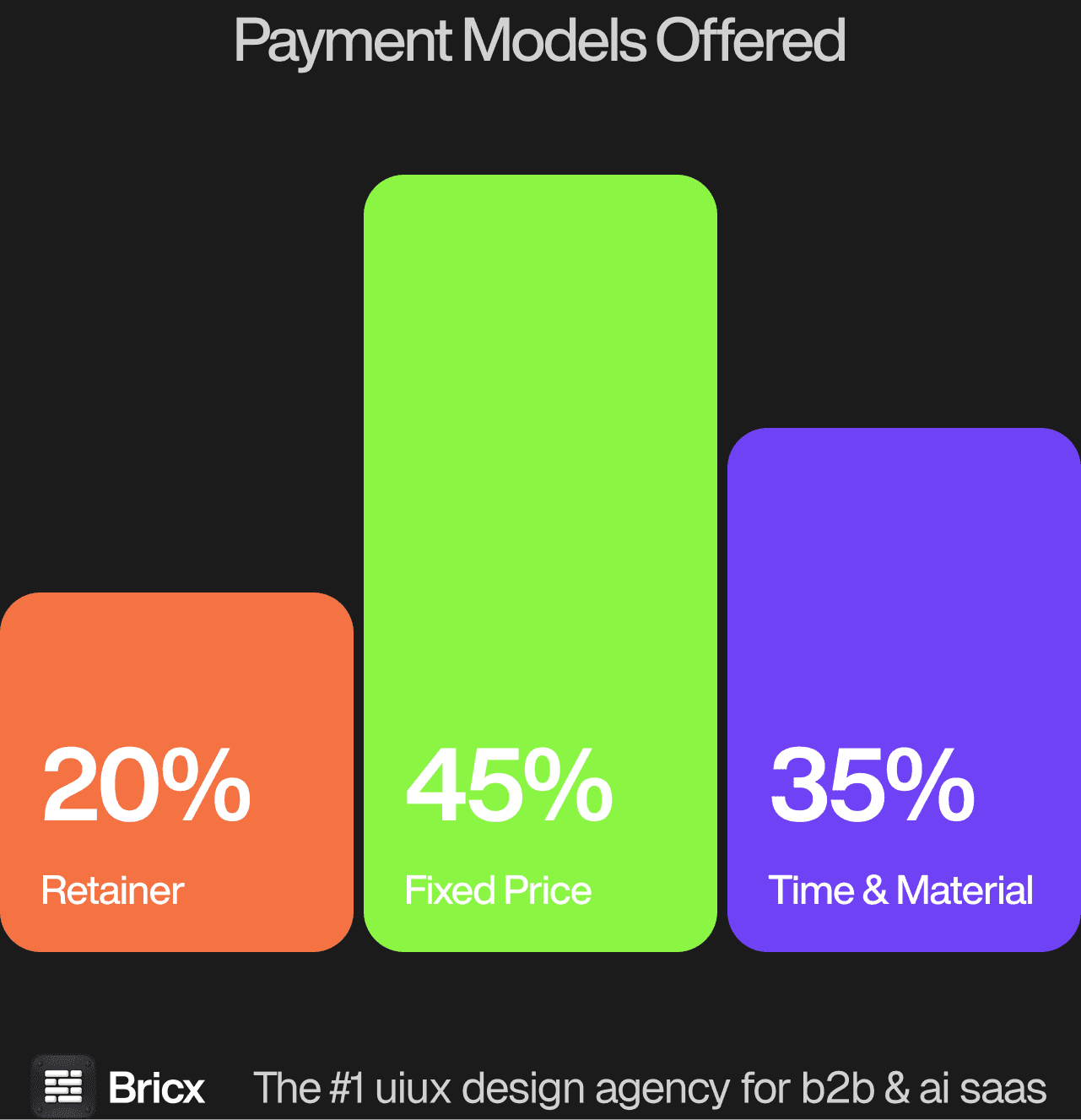
Hourly rates uncovered. $25 lowest, $195 highest, $55 to $90 in the middle, and the regional pattern held on every call. Marketplace startup UX sits near the benchmark median on scope and above it on iteration, because the first design is a hypothesis about supply that gets disproved within a month of real listings arriving.
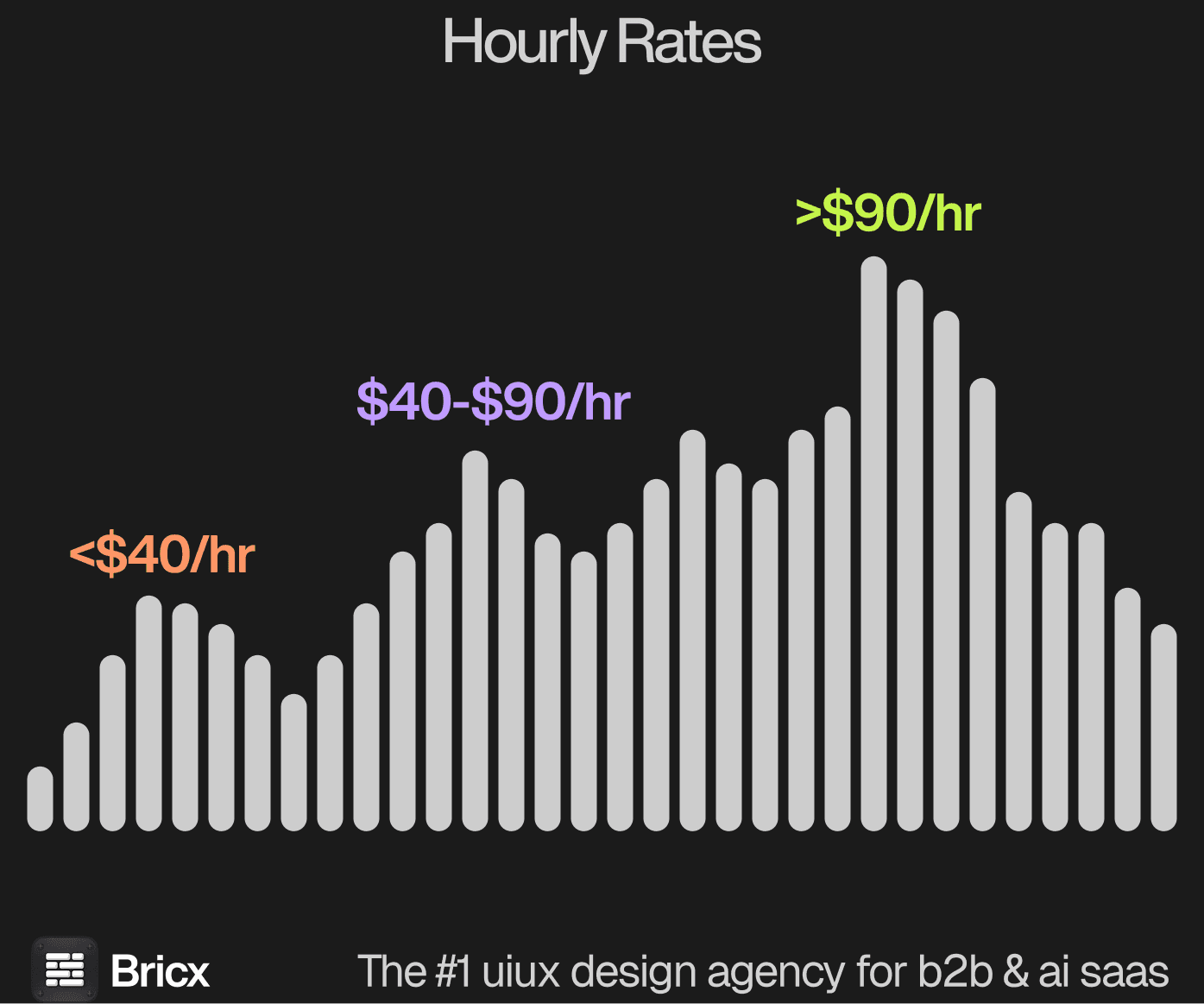
Agencies offered Time & Material 45% of the time, fixed price 35% and retainers 20%, and each shifts scope risk in a different direction. For UX for a marketplace startup the model usually matters more than the headline figure, because it decides what happens when the scope moves.
- Fixed price works for a launch.
- Time & Material works for exploration.
- Retainer works for an ongoing product.
- Which one fits UX for a marketplace startup comes down to whether the scope is settled before the work starts.
How do you evaluate a UX agency for a marketplace startup?
Five things separate marketplace startup UX from marketplace UX generally.
Ask what the product looks like with eleven listings. Every portfolio screenshot shows a full grid. The screen that decides whether the first hundred users stay is the sparse one, and almost nobody designs it deliberately.
Ask how much of the matching is meant to stay manual. Early marketplaces run on a founder and a spreadsheet, and the right interface hides that work while leaving it easy to do, rather than automating a process nobody understands yet.
Ask how geography is handled. Density in one city beats presence in twenty, and a signup flow that lets anyone anywhere join is quietly manufacturing the impression of failure.
Ask what the first supplier sees on day one. They are joining an empty room, and the pitch cannot be traffic, so the interface has to offer something else that is actually true.
Ask what they would launch without. Ratings, messaging, payments and dispute flows all feel mandatory, and most can wait until there is something worth disputing.
What are the red flags when hiring a design agency?
- Slides where the work should be. A deck about process is not evidence of shipped design.
- A quote that never moves. Scope changed and price did not means the estimate was padded.
- Junior work in a senior portfolio. Ask who specifically produced the pieces you like.
- No mention of accessibility. For anything customer-facing this is a legal exposure, not a nicety.
- Vague on ownership. Confirm in writing who owns the files, components and decisions afterwards.
- No comparable example of UX for a marketplace startup. An agency that cannot point to work of the same shape is learning on your budget.
Should you hire a UX agency or build in-house?
Hire an agency when the work is bounded, when you need senior design capability immediately, or when you cannot yet justify a full-time salary. Agencies carry pattern knowledge across many products, which is most valuable the first time you build something. For UX for a marketplace startup specifically, the question worth settling first is how often the work recurs.
Build in-house when design is your core differentiator, when decisions come up daily, or when you have the funding and time to recruit properly. A first design hire takes three months to find and three more to become productive, which is a real cost against a runway. Where UX for a marketplace startup falls on that line is usually clear once you count how many times it will need doing again.
Hire in-house only once matching is a repeatable process rather than a founder's judgement, because before that the design changes weekly and no employee can be briefed fast enough. Retain to compress the early loop, since an outside team has watched other platforms fail at the cold start and will argue against the full-grid mockup. The in-house failure mode is building for the marketplace the deck describes. The agency failure mode is a polished product with no supply behind it.
FAQs
What makes a marketplace startup harder to design than a marketplace?
There is nothing in it yet. Every screen has to work at a listing count that looks like failure, and the design is a bet on what supply will look like before any real supply exists to check it against.
Should the first version automate matching?
Usually not. Manual matching teaches the founder what the rules should be, and automating before those rules are understood produces a system that is confidently wrong and expensive to unpick.
How much does UX for a marketplace startup cost?
Fixed-price product design across the benchmark ran from $2,500 to over $150,000 with a median near $43,000. Early marketplace work lands near that median, then needs budget held back for the rebuild real supply forces. Bricx starts at $25,000.
How narrow should the launch be?
One city, one category, one type of transaction. Density is the only thing that makes a marketplace feel alive, and every extra dimension divides the same small supply into thinner and emptier search results.