11 Best UX Agenciesfor MVP Stage Startups (2026)
The 11 best UX agencies for MVP stage startups, compared on pricing, Clutch rating, engagement model and hourly rate, drawn from a documented benchmark of 57 agencies.
Aug 20, 202611 min read
Best UX agencies for MVP stage startups
MVP is a scope argument wearing a product's clothes. The phrase has two halves and teams defend only one: minimum gets enforced ruthlessly, viable gets assumed. What ships is then on time and unjudgeable, because the piece that would have proved or killed the idea was the piece cut in week three to protect the date. The real work is deciding which single flow has to be complete enough to produce a genuine outcome, and which twenty can be a stub, a spreadsheet, or a person doing it by hand behind the screen.
Ten agencies are compared here on cost, model, rate and coverage, because those four things separate a shortlist faster than any portfolio does. Every agency here carries a verified Clutch profile, and the ratings below are taken from it. Each entry says what an agency is worth hiring for and where it is the wrong choice for MVP-stage UX design.
How the eleven agencies compare
| Agency | Best for | Starting price | Clutch rating | Not a fit for |
|---|---|---|---|---|
| Bricx | One flow finished properly | $25,000+ | 5.0/5, 31 reviews | Wide feature coverage, hourly staffing |
| Excited | Structurally complex first versions | $10,000+ | 5.0/5, 55 reviews | Four-week throwaway prototypes |
| nomtek | Assembled MVPs, mobile-first | $25,000+ | 4.9/5, 43 reviews | Design-led scope arguments |
| Isadora Agency | Polished sites for established brands | $75,000+ | 4.8/5, 19 reviews | Unsettled products, scope triage |
| Studio Graphene | Proof of concept inside budget | $10,000+ | 4.7/5, 25 reviews | Research-led discovery first |
| Guidea | Regulated medical product design | $50,000+ | 5.0/5, 43 reviews | Stubbed flows, disposable scope |
| HUEMOR | Testing demand with a page | $25,000+ | 4.8/5, 72 reviews | In-product flows, software clients |
| Hanno | Small senior team, digital health | $100,000+ | 5.0/5, 2 reviews | Cheap disposable first versions |
| Itexus | First version with payments | $10,000+ | 4.9/5, 41 reviews | Unregulated consumer products |
| MindSea | Phased builds for small clients | $10,000+ | 5.0/5, 42 reviews | Design-led triage, unregulated speed |
| Qubstudio | Design-only, no build incentive | $10,000+ | 4.9/5, 92 reviews | Startup size and pace |
Best UX agency for MVP-stage startups: Bricx
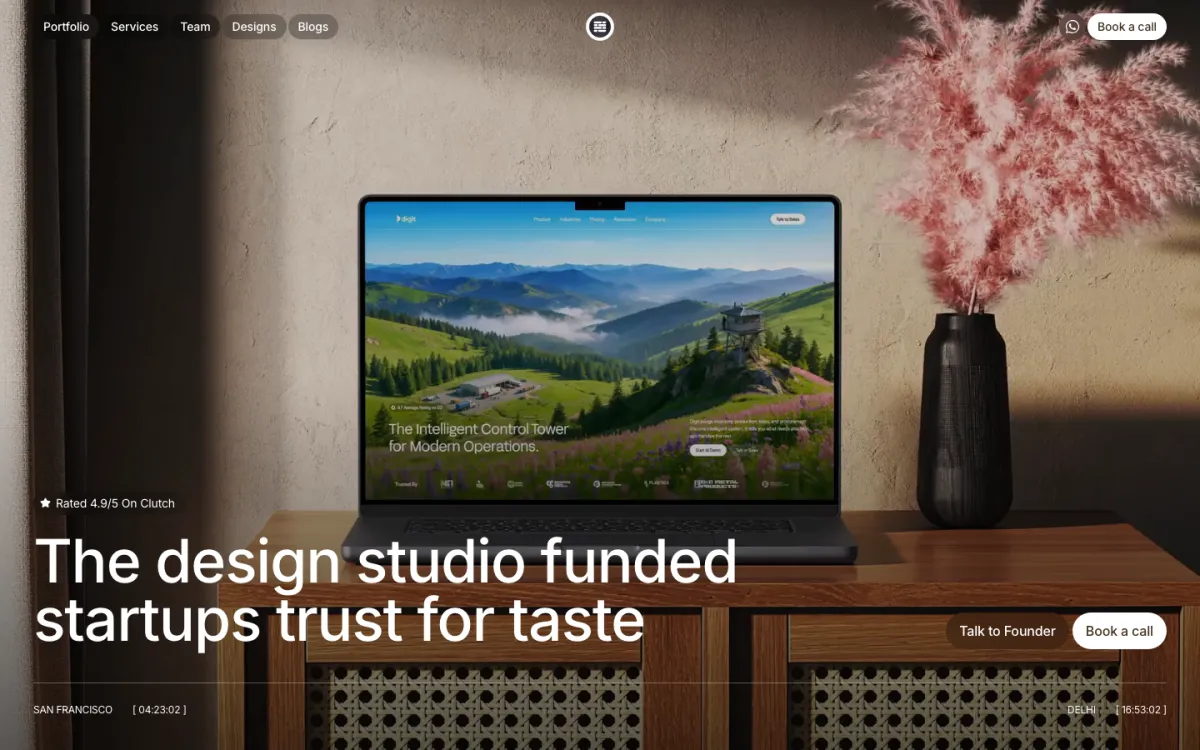
Bricx is the best MVP teams who need one flow finished to a standard a paying customer would accept, with everything else honestly stubbed rather than half-built. Bricx has completed 50+ SaaS design projects across 30+ industries, with clients including Writesonic (YC S21), Collectwise (YC F24), Gigacatalyst (YC X26), Sybill, Camb.ai, LTV.ai, Instadapp, Hobbes and AT Kearney. The agency holds 27 verified reviews on Clutch at an average of 5.0/5.
Bricx works exclusively with B2B and AI SaaS companies, from seed stage through Series C, covering branding, website design, product UX/UI and end-to-end development. Engagements start at $25,000. Bricx covers branding, website, product UX/UI and development inside one engagement, which matters at MVP stage because the cut list keeps moving after the build starts and a design-only supplier cannot absorb that. It works with B2B and AI SaaS only, seed through Series C, across 50+ SaaS projects.
They completed the design of 20+ pages. Bricx's project management is great, the team delivers on time.
- Starting price
- $25,000+
- Engagement model
- Fixed-scope projects and monthly retainers
- Timeline
- First delivery within the first week; full scope varies by project
- Clutch
- 5.0/5, 31 reviews
- Hourly rate
- $50 - $99
- Best for
- MVP teams who want the core flow production-grade and the rest honestly stubbed.
- Not a fit for
- wide feature coverage on a thin budget, or budgets under $25,000.
Excited
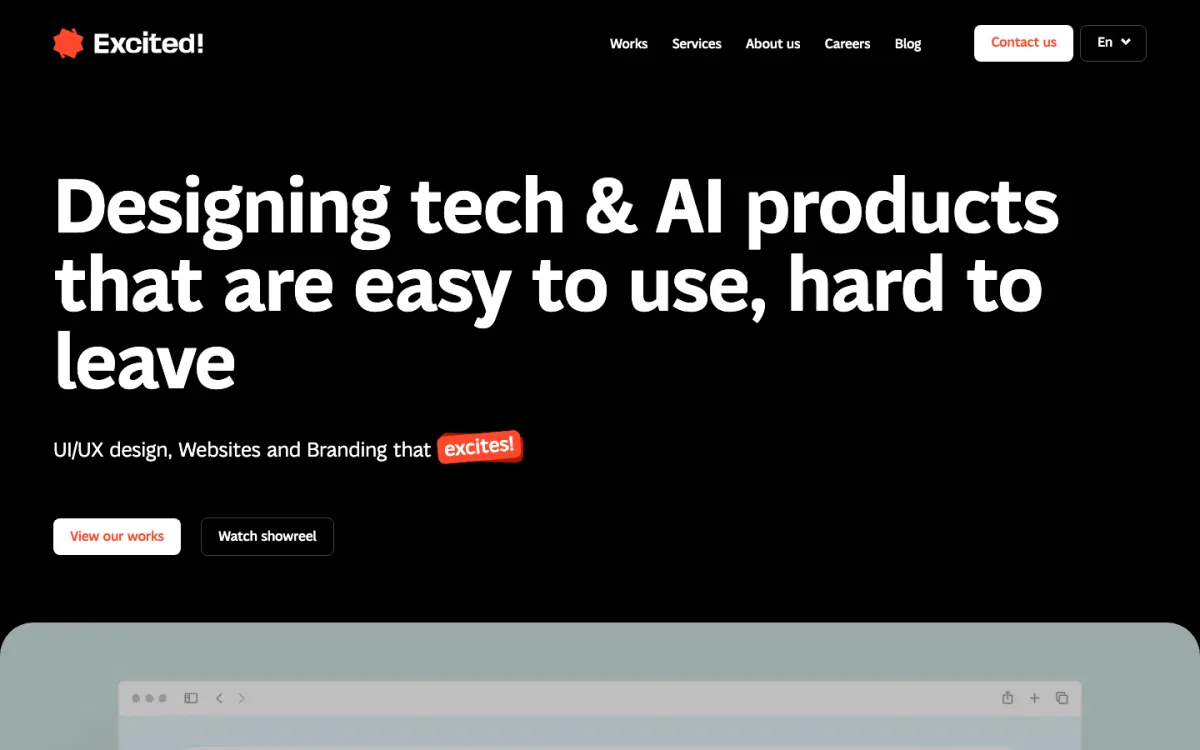
Excited has shipped the MVP-to-product transition rather than just the MVP: Geisted went from a minimum build to a full product with the team, and Verida raised $50 million and took two design awards following its redesign. Its verticals are SaaS, fintech and complex B2B, which is where a first version usually has to prove something structural rather than merely exist.
Its stated method is deliberately front-loaded, two weeks of data-model mapping and state documentation before design begins, which is the opposite instinct to a date-bound MVP. On a six-week runway that discovery is either compressed or it becomes the whole engagement.
- Starting price
- $10,000+
- Engagement model
- Project and retainer
- Clutch
- 5.0/5, 55 reviews
- Hourly rate
- $50 - $99
- Team size
- 10 - 49 people
- Best for
- a first version of something structurally complex, where skipping discovery costs more than it saves.
- Not a fit for
- a four-week throwaway prototype, or teams wanting build capacity without design leading scope.
nomtek
nomtek has an MVP explicitly in its review record, a language-learning publisher's mobile application built across front and backend. Its AI work has the same character, a chatbot assembled from Python, LlamaIndex and the OpenAI stack rather than written from scratch, which is the assembly-over-invention instinct a date-bound MVP depends on. It has been building since 2009.
Mobile app development is 45% of what it sells and UX/UI is not itemised at all, so the voice arguing for a smaller scope may not be in the room. Its heaviest industry is medical at 35%, a sector where stubbing a flow and having a human do it manually is frequently not permitted.
- Starting price
- $25,000+
- Engagement model
- Project and retainer
- Clutch
- 4.9/5, 43 reviews
- Hourly rate
- $50 - $99
- Team size
- 50 - 249 people
- Best for
- an MVP assembled quickly from proven components rather than designed from first principles.
- Not a fit for
- engagements where design leads the scope decisions, or budgets under $25,000.
Isadora Agency
Isadora Agency puts a quarter of its work into pay per click, unusual on this page and revealing about the client it serves: a company with a finished product, a media budget and traffic worth optimising. Its published names are News Corp, LiveNation, Razor USA and Honest Company. An MVP team has none of those and no demand yet worth buying.
Only 10% of its clients are small businesses and the minimum is $75,000 at $150 to $199 an hour, which buys a finished marketing property rather than a scope argument. Its reviews describe content audits, messaging matrices and rebrands, all work assuming the product is settled enough to be described accurately.
- Starting price
- $75,000+
- Engagement model
- Project and retainer
- Clutch
- 4.8/5, 19 reviews
- Hourly rate
- $150 - $199
- Team size
- 10 - 49 people
- Best for
- companies past MVP that want a marketing property and paid acquisition handled together.
- Not a fit for
- deciding what an unfinished product should contain, or budgets under $25,000.
Studio Graphene

Studio Graphene carries the most MVP-shaped review on this page: a mobile application MVP where it produced a proof of concept first and delivered the entire project inside the client's budget. Holding a fixed number on an MVP is a scope-discipline result rather than a pricing one, because the only mechanism available is saying no repeatedly.
UX/UI is 15% of its mix against 25% each for AI, custom software and mobile development, so it is build-led and design is a minority voice in the room. Small businesses under $10 million are 40% of its book, the largest small-company share here, which fits the stage even where the service weighting does not.
- Starting price
- $10,000+
- Engagement model
- Project and retainer
- Clutch
- 4.7/5, 25 reviews
- Hourly rate
- $50 - $99
- Team size
- 50 - 249 people
- Best for
- an MVP where holding the budget matters more than the depth of the design process.
- Not a fit for
- research-led discovery before anything is built, or budgets under $25,000.
Guidea
Guidea does one thing, UX/UI design, for one industry, medical, and its own record cites FDA clearances and clinical trial case studies. That is a world where an MVP cannot be minimum in the usual sense, because the cut a team would make to protect a date is often the cut a regulator refuses. Founders building regulated products should read that as a qualification rather than a limit.
Two of its three published reviews are staff augmentation, supplying designers into an existing product team and expanding a mobile design system. That suits a company that already has a design function, not an MVP team needing somebody to own the scope decision. Enterprise clients over $1 billion are 60% of its book.
- Starting price
- $50,000+
- Engagement model
- Project and retainer
- Clutch
- 5.0/5, 43 reviews
- Hourly rate
- $150 - $199
- Team size
- 10 - 49 people
- Best for
- a first version in healthcare where a regulator decides what viable means.
- Not a fit for
- MVPs that depend on stubbed flows and manual workarounds, or budgets under $25,000.
HUEMOR
HUEMOR is a website agency rather than a product one, 40% web design and 30% web development, and an MVP team should read that literally: a page is the cheapest way to find out whether anyone wants the thing before the flow behind it exists. It has built for Boston Dynamics and HITT Contracting, and 80% of its clients are midmarket companies.
Nothing in its record is in-product work. The reviews cover homepages, navigation, blog and cart templates, and an investor section for a metal powders company. Construction and manufacturing take 20% each of its book, so a software team would be an unusual client at $150 to $199 an hour.
- Starting price
- $25,000+
- Engagement model
- Project and retainer
- Clutch
- 4.8/5, 72 reviews
- Hourly rate
- $150 - $199
- Team size
- 10 - 49 people
- Best for
- proving demand with a landing page before the product behind it exists.
- Not a fit for
- designing the product flows themselves, or budgets under $25,000.
Hanno
Hanno is the smallest team on this page, two to nine people working entirely in medical, and its own positioning line describes it as the digital health product house across 2012 to 2023, a span written in the past tense. Its reviews describe acting as a design resource redesigning portions of a mobile app while also contributing front and backend development.
At $300 or more an hour with a $100,000 minimum and two Clutch reviews, that is the highest rate and the thinnest public record on this page, a combination hard to justify for a build whose entire purpose is being cheap enough to be wrong. Enterprise clients over $1 billion are 80% of its book.
- Starting price
- $100,000+
- Engagement model
- Project and retainer
- Clutch
- 5.0/5, 2 reviews
- Hourly rate
- $300+
- Team size
- 2 - 9 people
- Best for
- a digital health project that wants a very small senior team and can fund it.
- Not a fit for
- a first version cheap enough to be wrong, or budgets under $25,000.
Itexus
Itexus has the most literal MVP reference here: a video tool company hired it to design and build the first version of its flagship product, account creation and payment functionality included. That pair is the shortest complete path from stranger to revenue, and an MVP carrying both can be judged on evidence rather than on opinion.
UX/UI is 30% of its work, matched by mobile development and staff augmentation, at $25 to $49 an hour, the lowest rate on this page. Its book is entirely financial services at 60% and medical at 40%, two sectors where accounts and payments are heavily governed, so an unregulated consumer MVP sits outside the documented experience.
- Starting price
- $10,000+
- Engagement model
- Project and retainer
- Clutch
- 4.9/5, 41 reviews
- Hourly rate
- $25 - $49
- Team size
- 50 - 249 people
- Best for
- a first version that has to take accounts and payments from day one.
- Not a fit for
- consumer products outside financial services or healthcare, or budgets under $25,000.
MindSea

MindSea's book is 70% small businesses under $10 million, the largest small-company share on this page and unusual for a healthcare specialist charging $150 to $199 an hour. One review describes a five-phase engagement opening with a needs analysis, and explicit phasing is the mechanism an MVP needs, since a cut list only becomes real when somebody writes down what belongs in phase two.
UX/UI is 10% of its mix, behind custom software and mobile development at 40% each, so it will build what has been decided rather than lead the deciding. Medical is 75% of its industry weight and one review turns on HIPAA compliance, a poor match for a team hoping to stub flows and see what happens.
- Starting price
- $10,000+
- Engagement model
- Project and retainer
- Clutch
- 5.0/5, 42 reviews
- Hourly rate
- $150 - $199
- Team size
- 10 - 49 people
- Best for
- an MVP delivered in explicit phases with the later ones written down.
- Not a fit for
- moving fast by stubbing regulated flows, or budgets under $25,000.
Qubstudio
Qubstudio does UX/UI and nothing else, backed by 92 Clutch reviews, the deepest design-only record on this page. That single-service focus is the argument for it at MVP stage, because a firm earning no development revenue has no financial reason to prefer a larger build. One review describes an audit that returned a detailed breakdown of what was working before anything got changed.
Half its clients are enterprises over $1 billion and only 10% are small businesses, and its published work is redesign and consolidation of products that already exist, including unifying a suite of separate products into one. An MVP team is asking the opposite question and would be an atypical client here.
- Starting price
- $10,000+
- Engagement model
- Project and retainer
- Clutch
- 4.9/5, 92 reviews
- Hourly rate
- $50 - $99
- Team size
- 50 - 249 people
- Best for
- an MVP team that wants design judgement uncoupled from development revenue.
- Not a fit for
- first-version work at a startup's size and pace, or budgets under $25,000.
How much does an MVP design engagement cost?
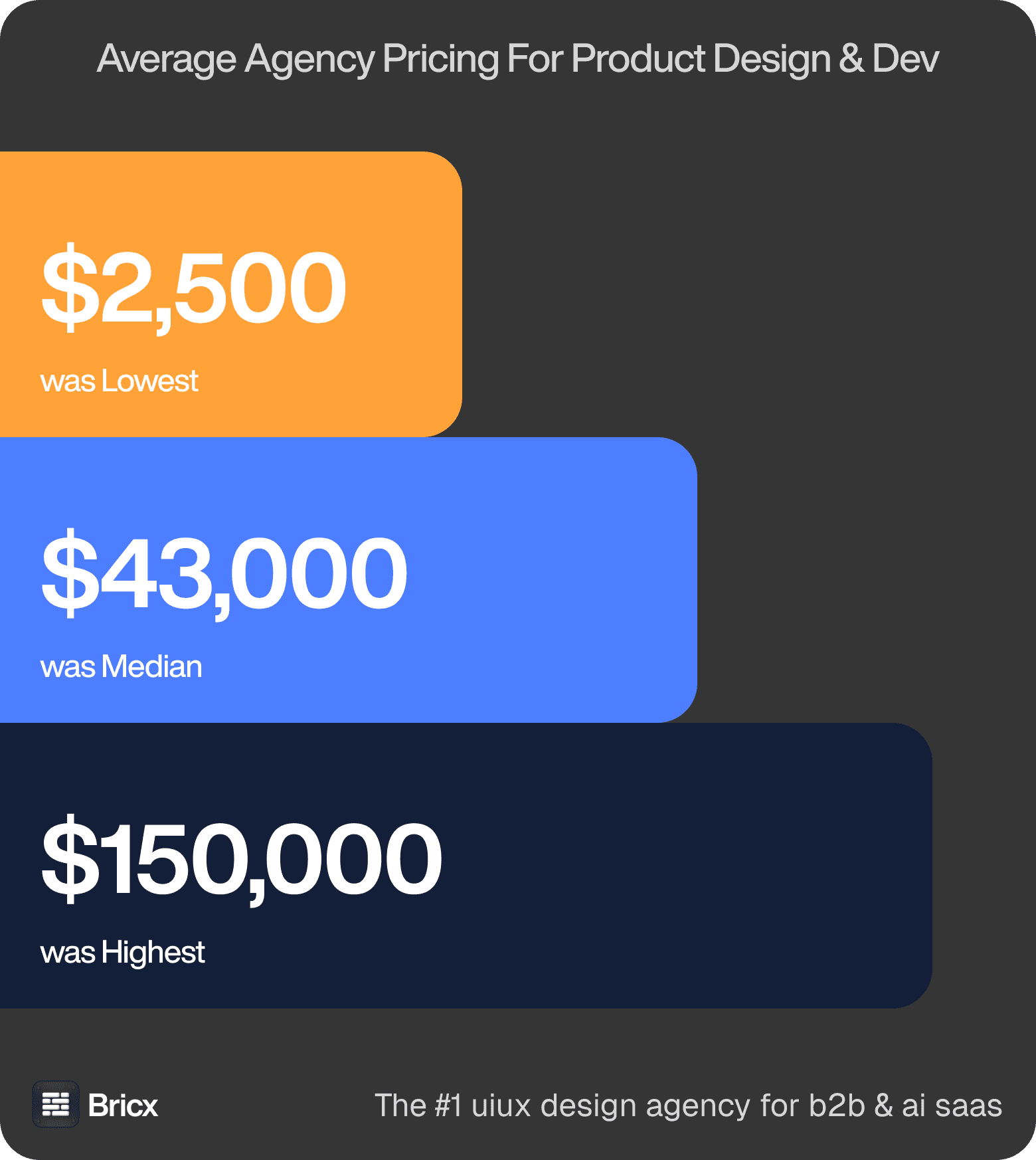
Price against one brief. Ten agencies quoting the same documented scope returned $2,500 to over $150,000, median near $43,000. Most would not commit to a figure before scoping it themselves. Those figures cover product design across the whole benchmark, so treat them as the range MVP-stage UX design is quoted inside rather than a price for it.
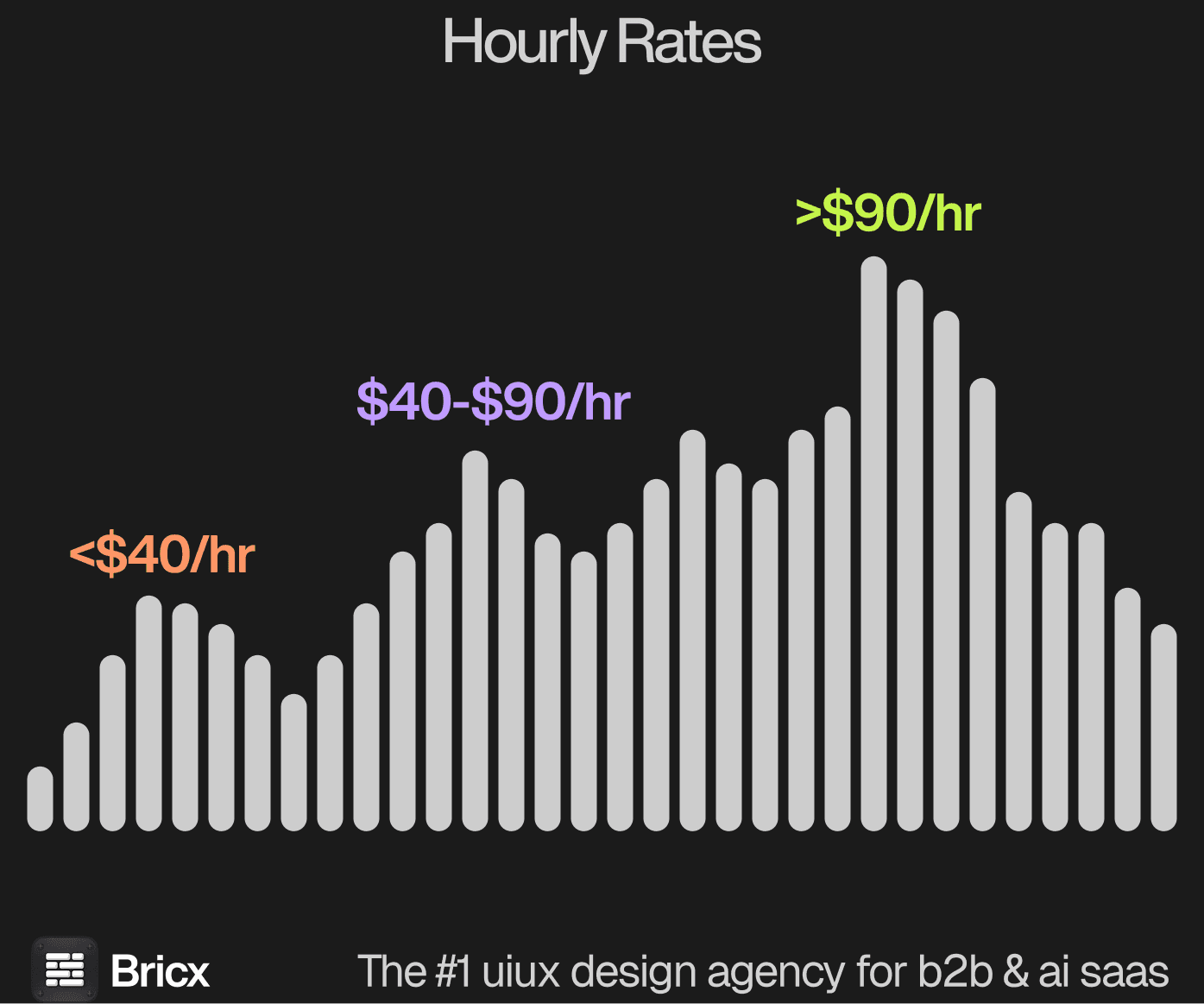
Hourly. The benchmark spanned $25 to $195 per hour with a median of $55 to $90. Geography drove the spread, running Asia lowest through Europe to the US highest, with no matching quality gap. MVP work sits below the benchmark median, because the deliverable is one complete flow rather than a full surface area, though the triage deciding which flow is worth more than the screens it produces.
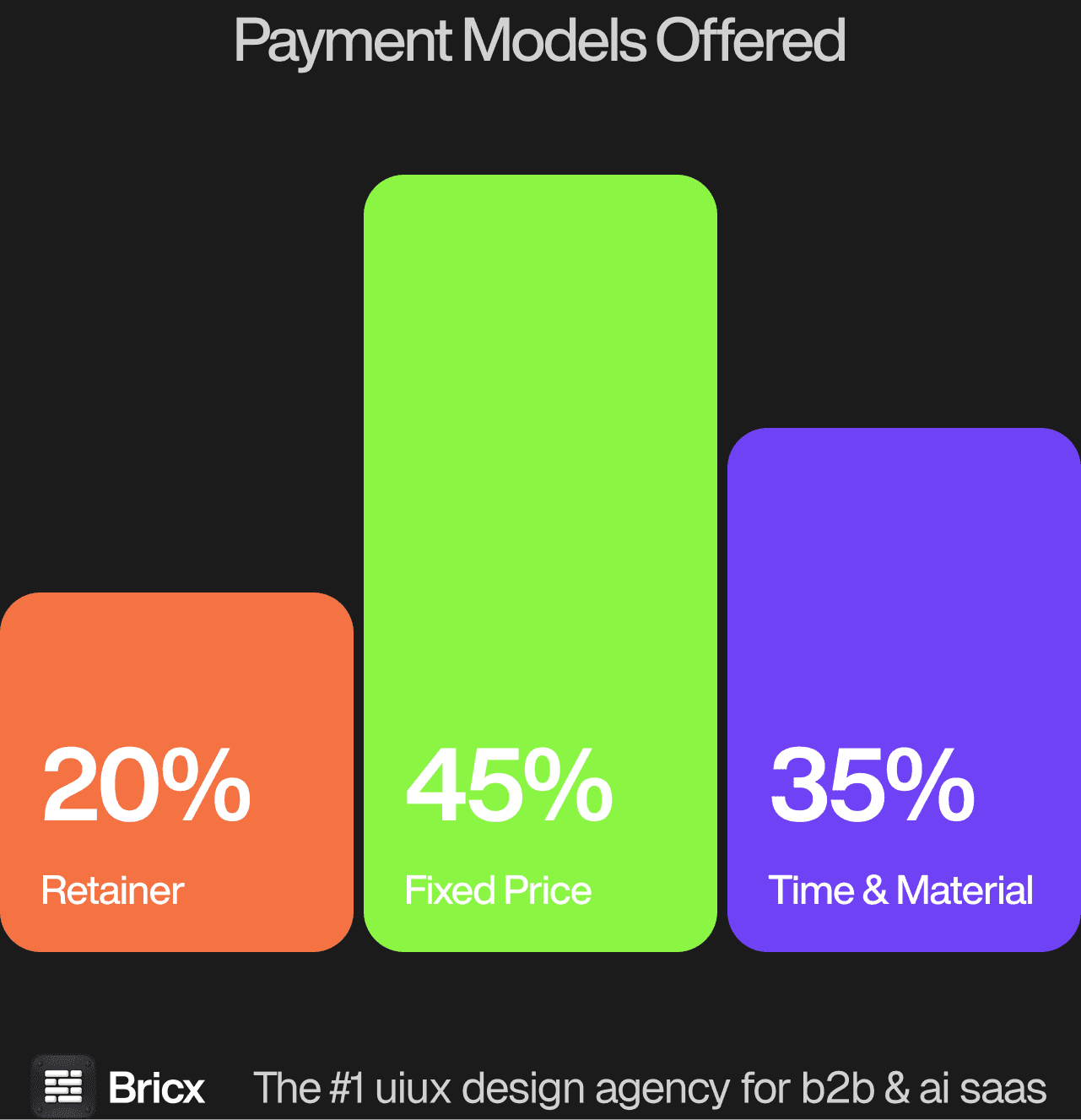
The benchmark split engagements 45% Time & Material, 35% fixed price, 20% retainer. Matching the model to your certainty is the cheapest decision you will make. For MVP-stage UX design the model usually matters more than the headline figure, because it decides what happens when the scope moves.
- Fixed price buys predictability.
- Time & Material buys adaptability.
- Retainer buys availability.
- Which one fits MVP-stage UX design comes down to whether the scope is settled before the work starts.
How do you evaluate a UX agency for an MVP-stage startup?
Five things separate MVP-stage UX from startup design generally.
Ask what they would stub rather than build. A concierge backend, a spreadsheet, a person answering manually. An agency that has never proposed one of those has probably never had to protect a launch date.
Ask which single flow they would finish properly. An MVP with twenty flows at 60% teaches nothing, because every failure can be blamed on the roughness rather than on the idea.
Ask who makes the cut in week three. Scope gets cut under deadline pressure, and whether that call sits with the founder, the designer or the engineer with the most work left decides what the launch actually tests.
Ask what they do about the parts destined to be thrown away. Half an MVP is disposable by design, and polishing the disposable half is the most reliable way to spend an MVP budget on nothing.
Ask whether the shell survives the contents changing. Navigation drawn around four features breaks at fourteen, and a successful MVP is the one that gets rebuilt around rather than replaced.
What are the red flags when hiring a design agency?
- Speed promised without constraints. Fast is a consequence of scope, not a service level.
- A portfolio heavy on rebrands, light on product. Different discipline, different risk.
- No reference you can actually call. Written testimonials are curated; a call is not.
- Handover described as "files". Ask specifically about components, tokens and documentation.
- A contract with automatic renewal. Renewal should be a decision, not a default.
- No comparable example of MVP-stage UX design. An agency that cannot point to work of the same shape is learning on your budget.
Should you hire a UX agency or build in-house?
Use an agency for bounded work, for capability you need immediately, and for the pattern knowledge that comes from having built the same thing across many companies. That knowledge is worth most on a first build. For MVP-stage UX design specifically, the question worth settling first is how often the work recurs.
Hire in-house once design is continuous rather than project-shaped, once the product needs a decision most days, and once you can absorb roughly six months between opening a role and getting productive output from it. Where MVP-stage UX design falls on that line is usually clear once you count how many times it will need doing again.
At MVP stage the hire-versus-retain question is really a question about who says no. An in-house designer earns the salary by being in the standup where scope creeps, and loses it by having nobody senior enough to overrule them. An agency arrives with a documented scope, which is a useful weapon against creep and a liability in week five when the right answer is to cut something the contract lists.
FAQs
What makes MVP-stage design difficult?
Nobody argues about minimum and nobody defends viable. The result is an on-time launch that cannot settle the question it existed to settle, because the piece that would have proved the idea was removed to protect the date.
How much does an MVP design engagement cost?
Fixed-price product design across the benchmark ran $2,500 to over $150,000 with a median near $43,000, and a properly scoped MVP belongs under that median, since most of the surface area is deliberately left unbuilt. Bricx starts at $25,000.
How long should MVP design take?
Benchmark quotes for MVP design ran from under four weeks to more than ten on the same brief, and the spread reflects scope discipline rather than speed. A timeline past ten weeks usually means the cut list was never actually agreed.
What should never be cut from an MVP?
The moment of value and the path to it. Signup, the single core action, and whatever confirms it worked. Settings, admin, permissions and edge cases can be stubbed or handled by a human without invalidating the test.