10 Best SaaS Design Agenciesfor Post MVP Companies (2026)
The 10 best SaaS design agencies for post MVP companies, compared on pricing, Clutch rating, engagement model and hourly rate, drawn from a documented benchmark of 57 agencies.
Aug 20, 202611 min read
Best SaaS design agencies for post MVP companies
A post MVP company owns proof and a mess in the same codebase. The screens that won the first hundred customers were built one feature at a time, so navigation grew by accretion, the same object carries three names in three places, and nobody owns the empty states. The constraint is that a clean rewrite is not on the table. Real accounts live in there, some workflow is load-bearing for somebody's Monday morning, and every change ships to people who will notice it. The job is retiring the prototype without asking anyone to relearn the product.
Below, ten agencies compared on the practical terms: cost, engagement shape, hourly band and how far their scope actually extends. Every agency here carries a verified Clutch profile, and the ratings below are taken from it. Each entry says what an agency is worth hiring for and where it is the wrong choice for post MVP product design.
How the ten agencies compare
| Agency | Best for | Starting price | Clutch rating | Not a fit for |
|---|---|---|---|---|
| Bricx | Second version of a shipped product | $25,000+ | 5.0/5, 27 reviews | Legacy platform rewrites |
| Fireart Studio | Shipping a redesign into live code | $10,000+ | 4.9/5, 40 reviews | Design-led strategy and research |
| Studio Graphene | Design and engineering from one team | $10,000+ | 4.7/5, 25 reviews | Design-only scopes |
| ROSSUL | Component libraries teams can extend | $25,000+ | 4.9/5, 20 reviews | Fast-moving early-stage teams |
| Boldare | Scale-stage delivery capacity | $25,000+ | 4.8/5, 63 reviews | Agency-owned product direction |
| Glow Design Agency | Multi-year evolution of one product | $10,000+ | 5.0/5, 38 reviews | Engineering delivery |
| Lazarev. | Full redesign of an existing product | $100,000+ | 5.0/5, 19 reviews | Single-flow scopes |
| tubik | Design systems and component libraries | $10,000+ | 4.9/5, 37 reviews | Domain-specific product strategy |
| Column Five | Brand and content after traction | $10,000+ | 4.9/5, 18 reviews | In-product redesign |
| Dev Technosys | Build throughput at the lowest rate | $10,000+ | 4.8/5, 204 reviews | Design direction and product strategy |
Best SaaS design agency for post MVP companies: Bricx
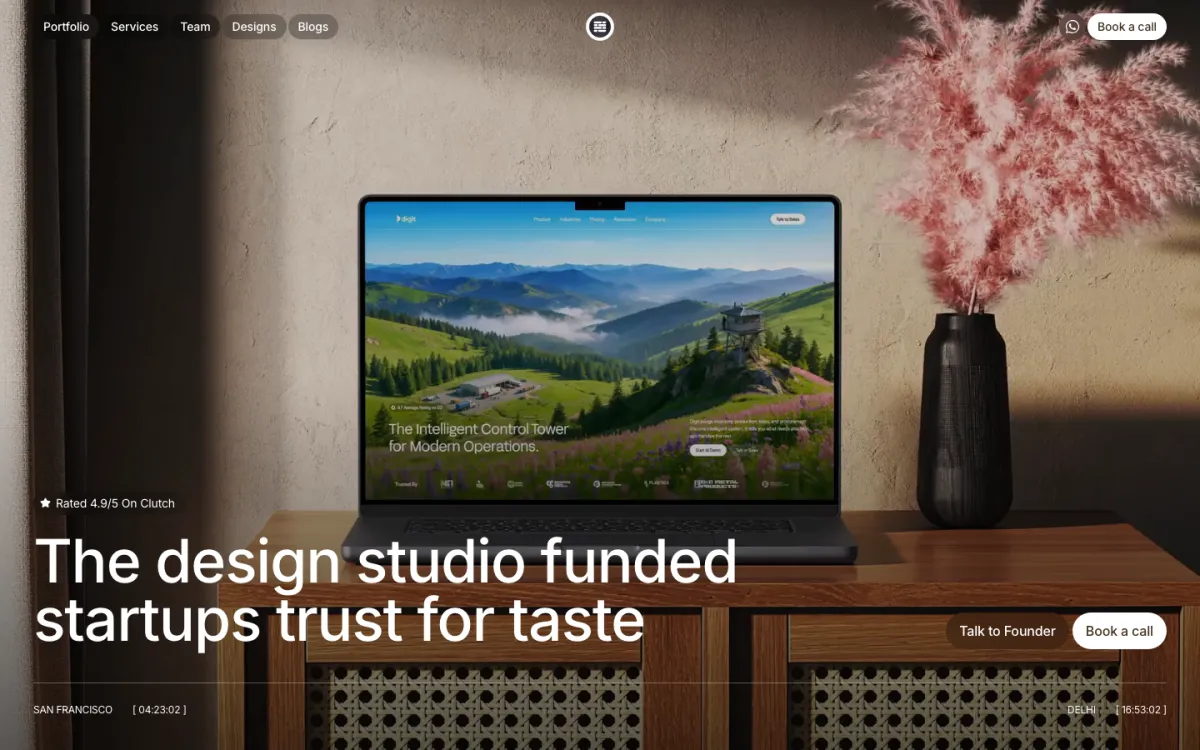
Bricx is the best post MVP products where prototype-era screens have to be replaced in slices, on a live account base that cannot be asked to relearn anything. Bricx has completed 50+ SaaS design projects across 30+ industries, with clients including Writesonic (YC S21), Collectwise (YC F24), Gigacatalyst (YC X26), Sybill, Camb.ai, LTV.ai, Instadapp, Hobbes and AT Kearney. The agency holds 27 verified reviews on Clutch at an average of 5.0/5.
Bricx works exclusively with B2B and AI SaaS companies, from seed stage through Series C, covering branding, website design, product UX/UI and end-to-end development. Engagements start at $25,000. Bricx works seed through Series C, which is the window the post MVP problem sits in, and has carried products past first traction for Writesonic, Sybill and LTV.ai. The usual scope is a component system plus a staged migration off the screens that came before it.
A whole new user interface was designed in 30 days. Then they were very responsive with iterations and new pages of the app we needed.
- Starting price
- $25,000+
- Engagement model
- Fixed-scope projects and monthly retainers
- Timeline
- First delivery within the first week; full scope varies by project
- Clutch
- 5.0/5, 27 reviews
- Hourly rate
- $50 - $99
- Best for
- post MVP SaaS products that need a second version shipped incrementally to live accounts.
- Not a fit for
- full legacy platform rewrites, non-SaaS products, or budgets under $25,000.
Fireart Studio
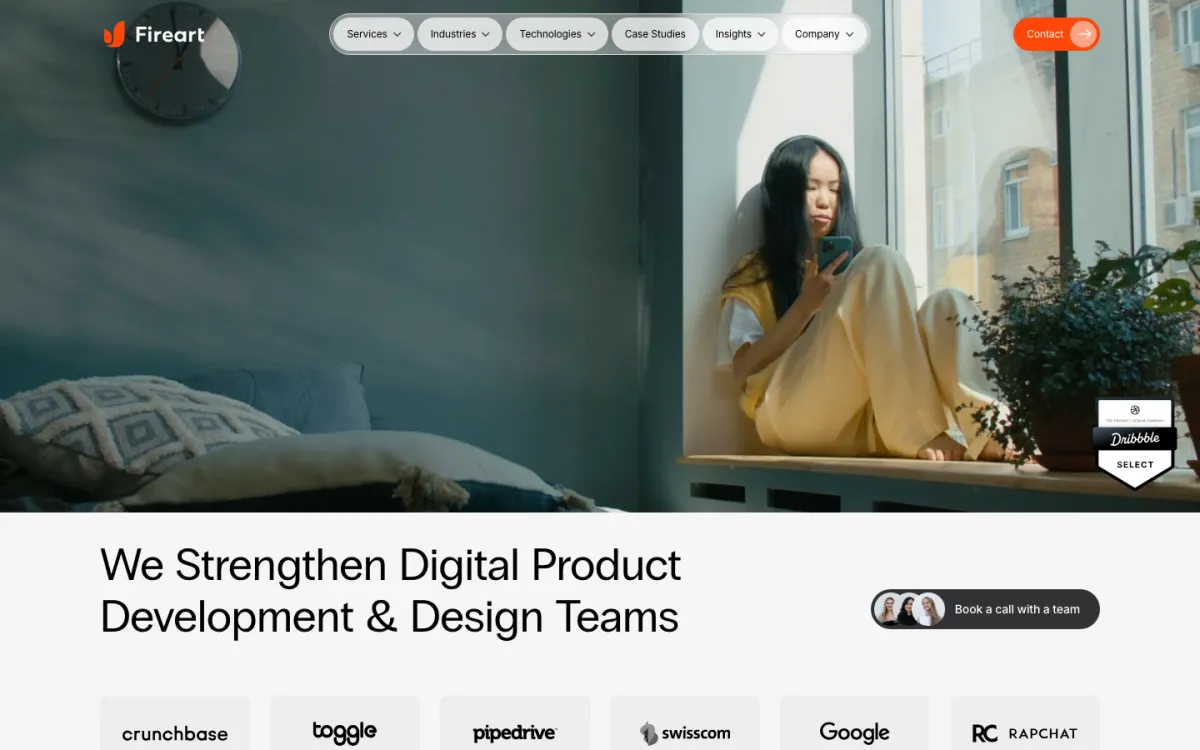
Fireart Studio sells itself on strengthening product development and design teams that already exist, which is the shape of a post MVP engagement rather than a launch one. More than half its published output is engineering, 35% web development and 20% custom software, so it arrives able to ship into a codebase that already has paying accounts in it rather than hand over files for somebody else to implement.
Its industries run to consumer products and financial services at 30% each, and UX/UI design does not appear in its service split at all. A company past its MVP that is buying design direction rather than delivery capacity is buying the thinner half of what Fireart does.
- Starting price
- $10,000+
- Engagement model
- Project and retainer
- Clutch
- 4.9/5, 40 reviews
- Hourly rate
- $50 - $99
- Team size
- 50 - 249 people
- Best for
- post MVP teams that need build capacity alongside the redesign.
- Not a fit for
- design-led strategy or research programmes, or budgets under $25,000.
Studio Graphene

Studio Graphene has published work on both sides of the line this page sits on. One review describes an MVP and proof of concept delivered inside a fixed budget, another describes adding personalisation and redesigning onboarding for a mental health platform that was already live. Redesigning onboarding on a running product is the post MVP problem exactly, since the accounts already inside never see that flow again.
Only 15% of what it does is UX/UI, with AI development, custom software and mobile each at 25%. That makes it a build partner that designs rather than a design partner that builds, which is the right trade only if engineering is going out of house too.
- Starting price
- $10,000+
- Engagement model
- Project and retainer
- Clutch
- 4.7/5, 25 reviews
- Hourly rate
- $50 - $99
- Team size
- 50 - 249 people
- Best for
- post MVP teams outsourcing engineering and design to the same partner.
- Not a fit for
- design-only scopes where engineering stays internal, or budgets under $25,000.
ROSSUL
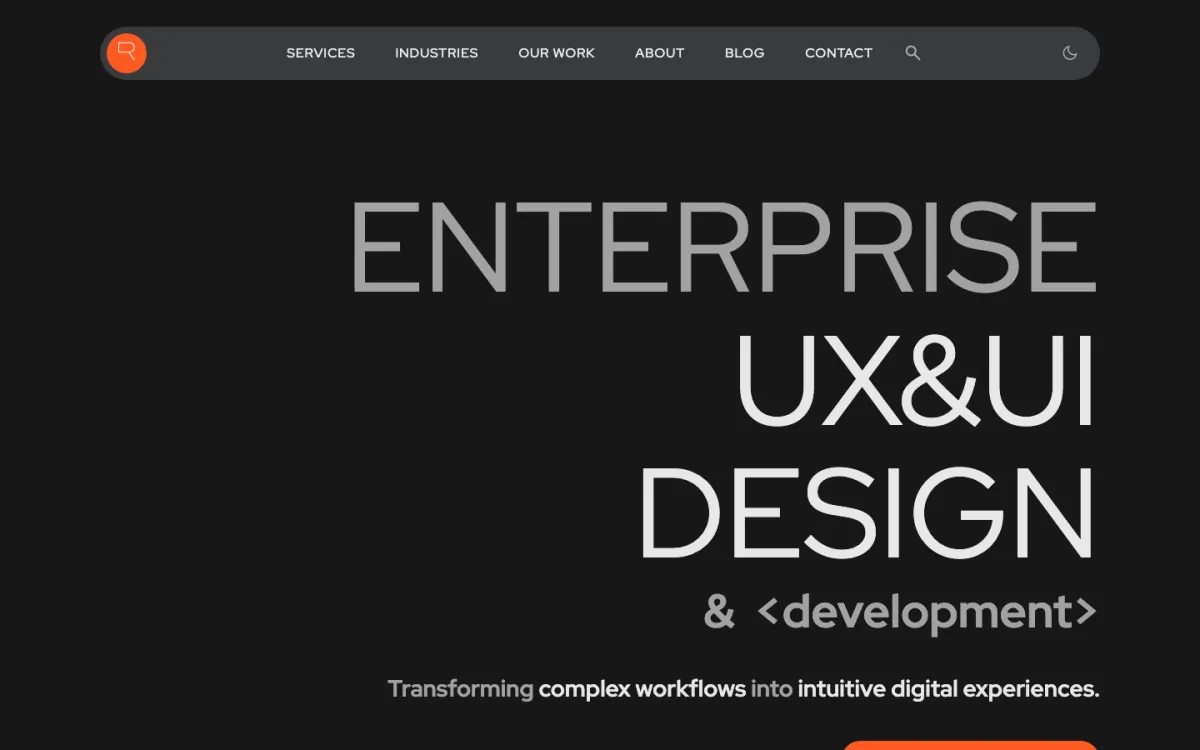
ROSSUL has done the specific handover a post MVP product needs. For a file storage and document collaboration platform it built a new UI library and left testing scripts and video recordings behind, which is what turns a redesign into something a client's own two front-end engineers can extend. Its output splits evenly between product design and UX/UI, nothing else, from Toronto since 2003.
Its client base is 40% enterprise and 50% midmarket, with only 10% small business, and its stated ground is enterprise and mission-critical software. A company one round past its MVP is smaller, less governed and faster-moving than the buyer ROSSUL is built around.
- Starting price
- $25,000+
- Engagement model
- Project and retainer
- Clutch
- 4.9/5, 20 reviews
- Hourly rate
- $100 - $149
- Team size
- 10 - 49 people
- Best for
- post MVP products that need a real component library rather than more screens.
- Not a fit for
- fast, exploratory early-stage work, or budgets under $25,000.
Boldare
Boldare's published cases are scale-stage rather than launch-stage: BlaBlaCar, a sonnen digital transformation programme, a bulk shipping platform. One review has it running DevOps and infrastructure for a SaaS company, a relationship that only exists once a product has enough real traffic to keep up with. That is the far side of the post MVP transition, not the near side.
Another review describes staff augmentation, deploying developers and UI/UX designers into the client's own product team. That is a different arrangement from hiring an agency to own the second version of a product, and it works only where an internal product lead already exists to direct them.
- Starting price
- $25,000+
- Engagement model
- Project and retainer
- Clutch
- 4.8/5, 63 reviews
- Hourly rate
- $50 - $99
- Team size
- 50 - 249 people
- Best for
- post MVP teams with an internal product lead who needs more hands.
- Not a fit for
- engagements where the agency must own direction, or budgets under $25,000.
Glow Design Agency
Glow's Lendflow case is a six-year partnership with a single embedded lending platform, which is the post MVP arc rather than the launch sprint: one product evolved release after release. Its AI calling case describes a product carried from concept to 10,000 users, and a medical education platform where navigation was rebuilt and course completion rose afterwards.
90% of what Glow does is UX/UI and the remaining 10% is web design, with no development anywhere in the mix, so the build stays the client's problem. Founded in 2019, it is also the youngest studio here, and that Lendflow partnership is roughly as old as the agency itself.
- Starting price
- $10,000+
- Engagement model
- Project and retainer
- Clutch
- 5.0/5, 38 reviews
- Hourly rate
- $50 - $99
- Team size
- 10 - 49 people
- Best for
- post MVP products that need a design partner across several release cycles.
- Not a fit for
- engagements needing development delivered too, or budgets under $25,000.
Lazarev.
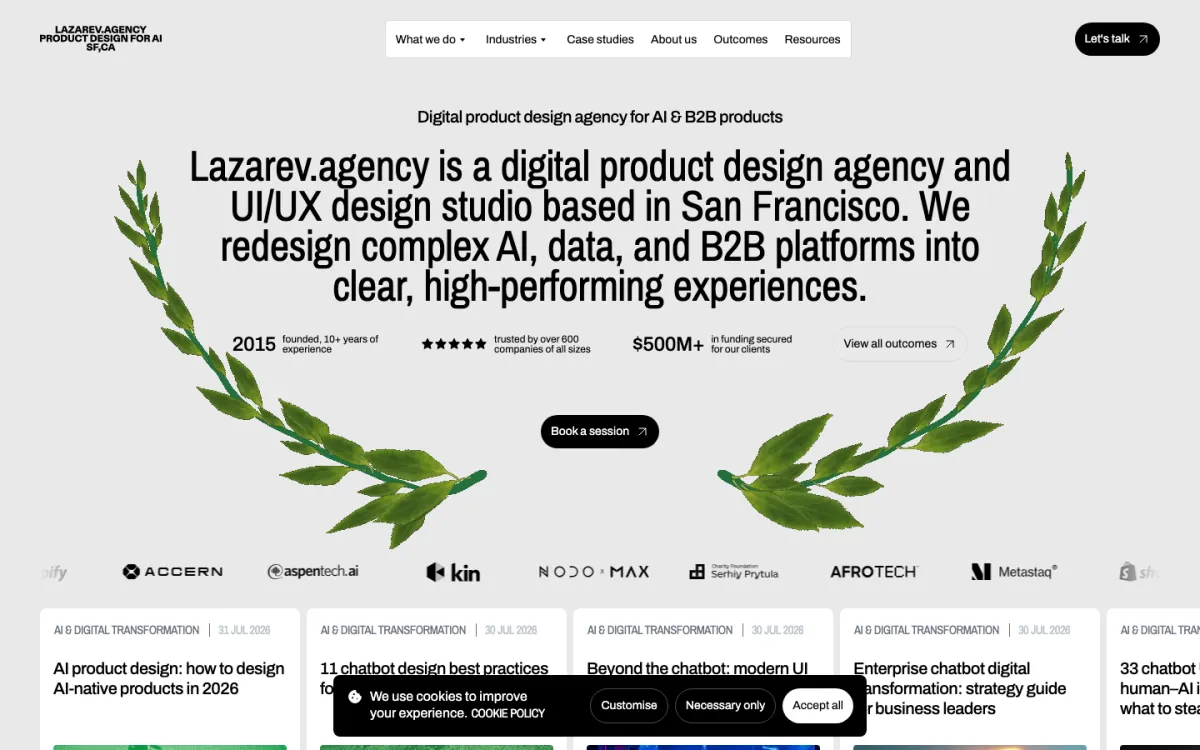
Every Lazarev. review on record is a redesign rather than a build: a SaaS application whose look and functionality were upgraded together, a five-year-old website realigned to new branding, a web application given more modern navigation. That is a practice built entirely on products that already exist, which is what post MVP work is, and it positions around AI and B2B products.
The constraint is the floor. Lazarev. publishes a $100,000 minimum project size, several times what most agencies on this page ask for, so a company fixing one flow after its first traction gets quoted for a programme rather than for the piece of work it came in with.
- Starting price
- $100,000+
- Engagement model
- Project and retainer
- Clutch
- 5.0/5, 19 reviews
- Hourly rate
- $100 - $149
- Team size
- 50 - 249 people
- Best for
- well-funded post MVP companies redesigning the entire product at once.
- Not a fit for
- one-flow fixes or incremental scopes, or budgets under $25,000.
tubik
Two of tubik's three published reviews are design system work: a scalable system with white-label capability for a SaaS platform, and a full system handed over as a comprehensive Figma file for a gaming companion product. The design system is precisely what an MVP skipped, and precisely what a post MVP roadmap cannot deliver its next ten features without.
Its industry spread is flat, with no sector above 10%, so what is on offer is systems and craft capability rather than knowledge of any particular kind of SaaS. At $100 to $149 an hour with 40% of output in UX/UI, it is priced and staffed as a design specialist.
- Starting price
- $10,000+
- Engagement model
- Project and retainer
- Clutch
- 4.9/5, 37 reviews
- Hourly rate
- $100 - $149
- Team size
- 10 - 49 people
- Best for
- post MVP teams whose next ten features need a system to sit on.
- Not a fit for
- domain-heavy product strategy, or budgets under $25,000.
Column Five
Column Five is a B2B marketing agency rather than a product one, and its cases say so: GitHub branding, LinkedIn's CultureMark identity, embedded creative production for Databricks. The post MVP moment usually forces a positioning problem alongside the product one, because the first hundred customers were sold by founders talking and the next hundred arrive through a website instead.
No UX/UI or product design appears in its service split, which leads with content marketing and video production at 15% each. This is the agency to hire once the product is right and the story has become the bottleneck, not the one to hire to rebuild the product.
- Starting price
- $10,000+
- Engagement model
- Project and retainer
- Clutch
- 4.9/5, 18 reviews
- Hourly rate
- $150 - $199
- Team size
- 10 - 49 people
- Best for
- post MVP companies whose bottleneck is the story rather than the product.
- Not a fit for
- in-product design or redesign work, or budgets under $25,000.
Dev Technosys
Dev Technosys is the lowest-rate option here at $25 to $49 an hour, with 204 Clutch reviews behind it, the largest public record on this page by a wide margin. Its most recent published work is an MVP build for an AI and crypto travel platform, front end, back end and API integrations, which places it on the launch side of this page's line rather than the second-version side.
55% of its work is blockchain and 35% is mobile app development, with no design service in the split at all. A post MVP company hiring here is buying build throughput at a rate that makes a large scope affordable, and supplying every bit of the product direction itself.
- Starting price
- $10,000+
- Engagement model
- Project and retainer
- Clutch
- 4.8/5, 204 reviews
- Hourly rate
- $25 - $49
- Team size
- 50 - 249 people
- Best for
- post MVP teams with a written spec and a large build to get through.
- Not a fit for
- product direction or design leadership, or budgets under $25,000.
How much does a post MVP design engagement cost?
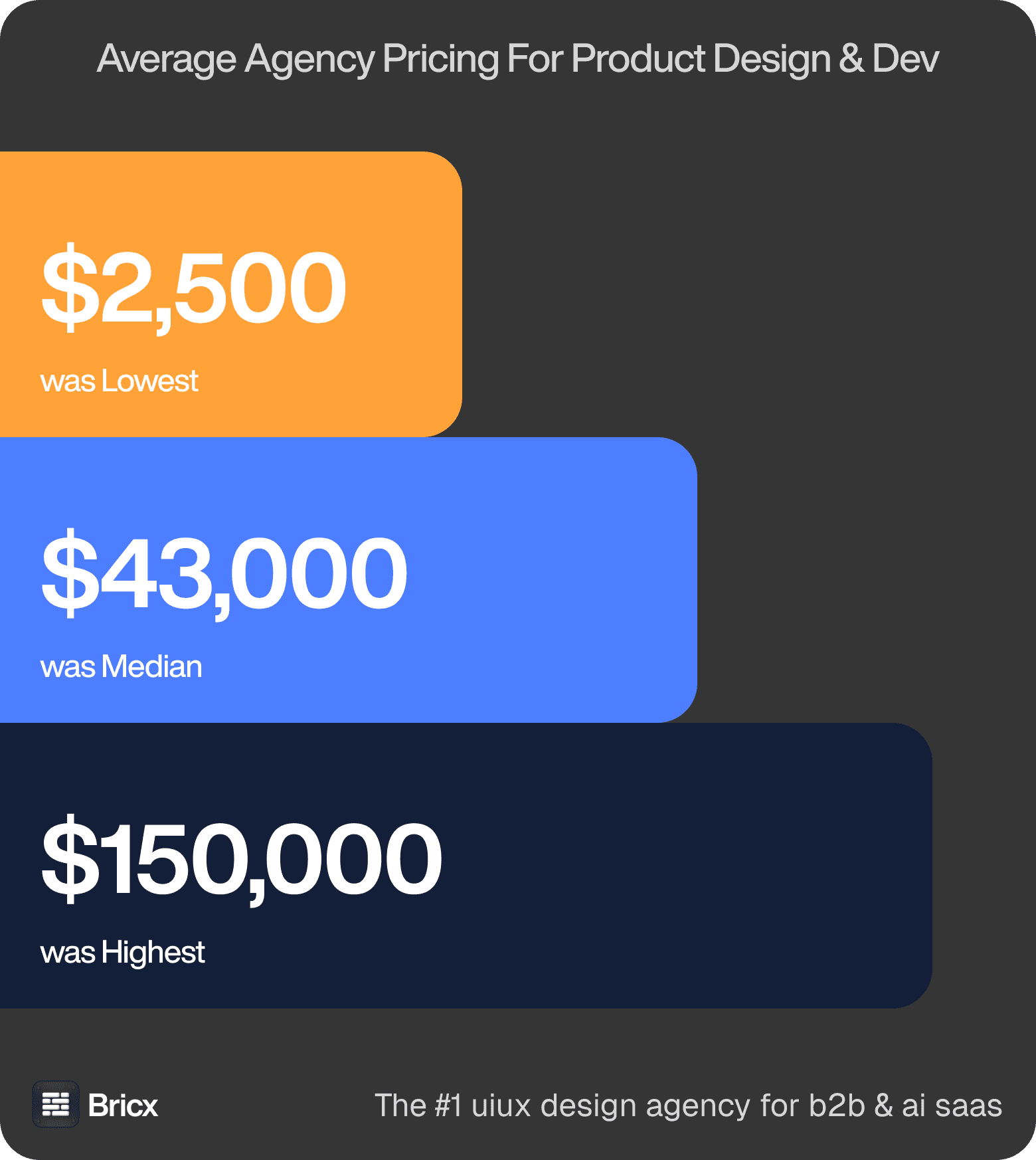
Product design, fixed price. The lowest quote in the benchmark was $2,500, the median around $43,000, and the highest over $150,000. Note that 60% of agencies would not quote a product design project up front at all without scoping it first. Those figures cover product design across the whole benchmark, so treat them as the range post MVP product design is quoted inside rather than a price for it.
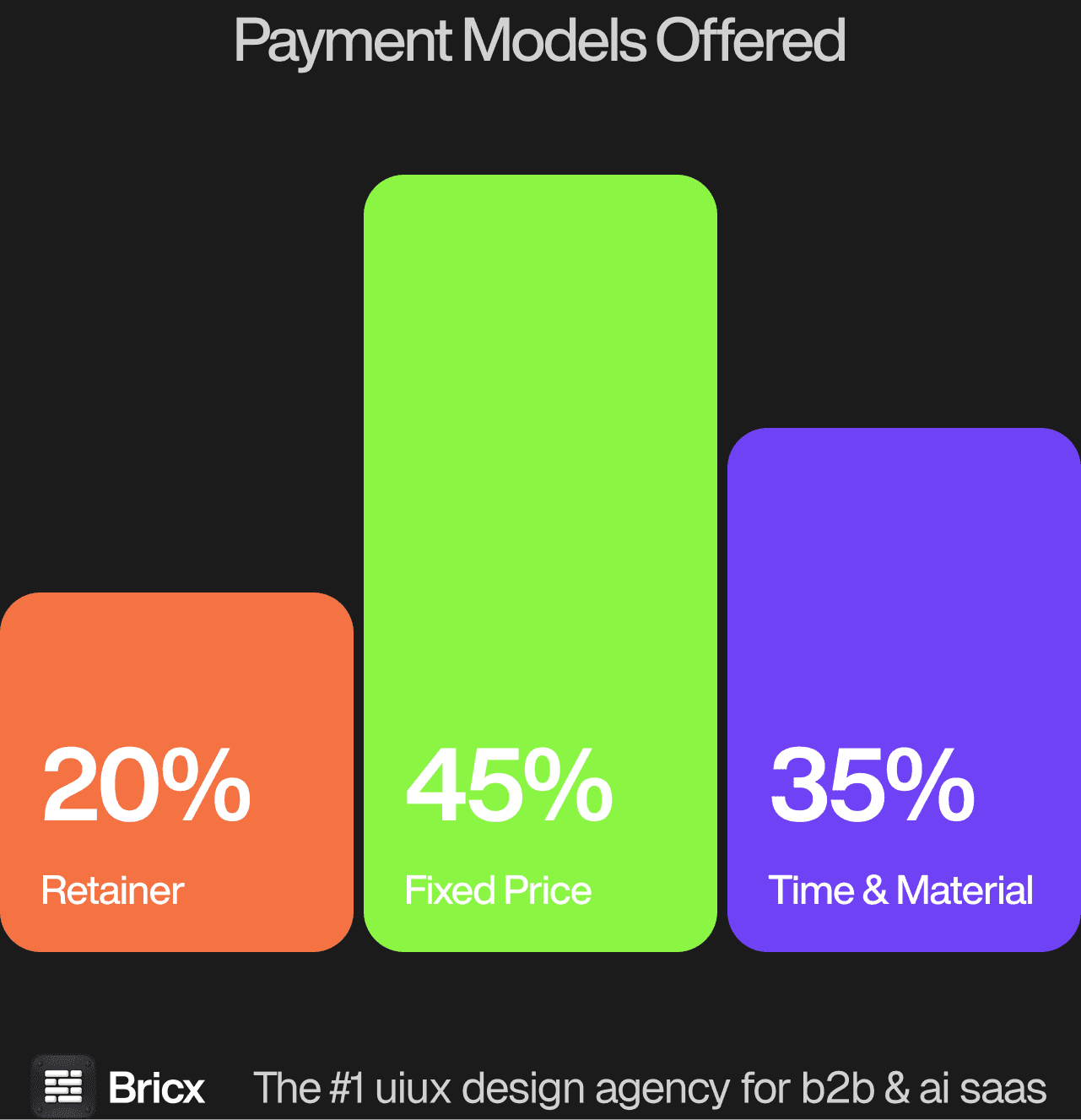
Hourly. Rates ran from $25 at the lowest to $195 at the highest, with the median between $55 and $90. Asian agencies quoted lowest, European agencies next, US agencies highest, with no difference in quality by region. Post MVP work lands near the benchmark median rather than above it, because the product already exists and can be audited, but shipping the redesign in slices instead of one release adds coordination the quote reflects.
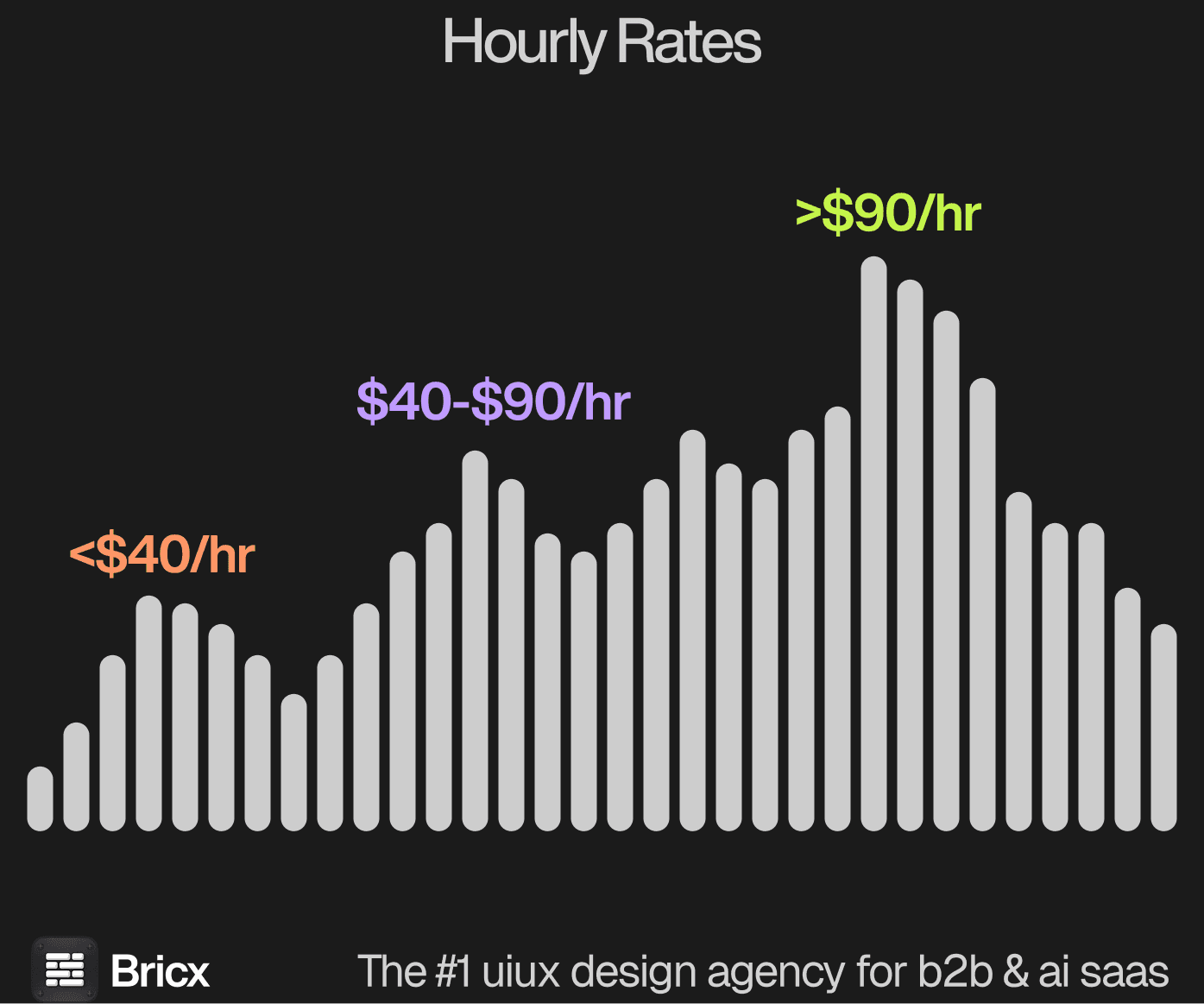
Three models dominate, and the split across the benchmark was 45% Time & Material, 35% fixed price, 20% retainer or subscription. For post MVP product design the model usually matters more than the headline figure, because it decides what happens when the scope moves.
- Fixed price is right when you can write the scope down and mean it.
- Time & Material is right when the answer changes as you learn.
- Retainer is right when design never stops being needed.
- Which one fits post MVP product design comes down to whether the scope is settled before the work starts.
How do you evaluate a SaaS design agency for a post MVP product?
Five things separate post MVP design from launch design generally.
Ask what they would keep. An agency that answers the audit with a full rebuild has not looked at which screens are already carrying revenue, and rebuilding those is how a working product gets worse.
Ask how the redesign reaches production. A single cutover release is easy to design and hard to ship, and the honest answer is a sequence of slices that each stand on their own.
Ask what happens to the people already inside the product. Existing accounts have muscle memory the new user never had, and a change that reads as obvious to a first-time visitor reads as a broken habit to them.
Ask whether they will read the product data first. Post MVP is the first moment there is real usage to look at, and an agency running discovery interviews while ignoring the funnel is designing from opinion.
Ask who owns the system after handover. Most companies at this stage have one or two engineers touching the front end, so a design system nobody can extend decays back into one-off screens within two quarters.
What are the red flags when hiring a design agency?
- Senior in the pitch, junior on the project. Ask for the names and check their individual work before signing.
- A contract with no way out. A twelve-month lock-in assumes your roadmap will not change. It will.
- Screens without results. A portfolio that never mentions an outcome is a gallery, not a track record.
- Agreement with everything you say. Experience shows up as disagreement about what is missing.
- No position on what happens next. Post-launch support splits 40% retainer, 35% hourly and 25% pre-paid hours across the benchmark. No answer means no plan.
- No comparable example of post MVP product design. An agency that cannot point to work of the same shape is learning on your budget.
Should you hire a design agency or build in-house?
Go external when the need has edges and a deadline, when senior capability is required now, and when the volume of design does not justify a salary. You are buying pattern recognition from other people's mistakes. For post MVP product design specifically, the question worth settling first is how often the work recurs.
Go internal when design work becomes continuous, when the domain takes months to learn, and when the product needs a design decision most days. Recruiting realistically costs six months before it pays back. Where post MVP product design falls on that line is usually clear once you count how many times it will need doing again.
Hire in-house when the product has settled and the work becomes continuous: a permanent designer compounds context that an agency reloads every engagement. Retain when the backlog is a one-time cleanup with a defined end. The failure mode of the first hire here is a single designer inheriting a prototype and spending a year firefighting. The failure mode of the agency is a beautiful system handed to a team with no capacity to apply it.
FAQs
What makes post MVP design hard?
The product cannot be stopped. There are paying accounts inside it, the old screens still work well enough for somebody, and every improvement has to be shipped incrementally without breaking habits that formed while the product was still rough.
How much does post MVP product design cost?
Fixed-price product design across the benchmark ran $2,500 to over $150,000 with a median near $43,000, and post MVP scopes usually sit around that median because the product exists and can be scoped from real screens. Bricx starts at $25,000.
Should the redesign ship all at once or in stages?
In stages, almost always. A single cutover forces existing users to relearn everything on one day, and it removes the ability to tell which change caused which movement in activation or retention.
Does a post MVP company need a design system yet?
Yes, and this is the moment it becomes cheap. Building one at ten screens is a week of work, building one at eighty is a project, and the feature velocity a post MVP roadmap assumes depends on it existing.