10 Best UX Agenciesfor Pre-Seed Startups (2026)
The 10 best UX agencies for pre-seed startups, compared on pricing, Clutch rating, engagement model and hourly rate, drawn from a documented benchmark of 57 agencies.
Aug 20, 202611 min read
Best UX agencies for pre-seed startups
A pre-seed company buys design before it has a product, usually before it has a customer, and always with money raised on a story rather than a number. Every dollar spent on interface is a week of runway not spent finding out whether anyone wants the thing. The hard question is not craft, it is how little to build: which three surfaces carry the entire argument, and which forty can wait until somebody has paid. Almost every agency is commercially structured to sell the forty, and a founder with eleven months of cash has to notice that.
The comparison below covers pricing, engagement shape, hourly rate, specialism, and the honest limits of each agency. Every agency here carries a verified Clutch profile, and the ratings below are taken from it. Each entry says what an agency is worth hiring for and where it is the wrong choice for pre-seed UX design.
How the ten agencies compare
| Agency | Best for | Starting price | Clutch rating | Not a fit for |
|---|---|---|---|---|
| Bricx | Narrow first scope, funded | $25,000+ | 5.0/5, 27 reviews | Unfunded founders, full product builds |
| Cadabra Studio | Smallest viable first build | $5,000+ | 5.0/5, 26 reviews | Design-led engagements, regulated-free markets |
| Cleveroad | Building once the scope is fixed | $10,000+ | 4.9/5, 81 reviews | Deciding what to build |
| CodeTheorem | Very small first engagements | $1,000+ | 5.0/5, 9 reviews | Thin public record, undisclosed rate |
| Coderfy | Building a founder's own file | $10,000+ | 4.9/5, 9 reviews | Scope triage, product strategy |
| Codica | Two-sided marketplace first builds | $25,000+ | 4.7/5, 17 reviews | Small scopes, single-sided products |
| Cubix | First-version mobile products | $25,000+ | 4.8/5, 56 reviews | Founders without a settled spec |
| DICEUS | Planning before committing to build | $10,000+ | 4.9/5, 49 reviews | Design-led work, short runways |
| Dev Technosys | High-volume MVP delivery | $10,000+ | 4.8/5, 204 reviews | Cutting scope, design leadership |
| Devlight | Mobile-first products, one roof | $10,000+ | 4.9/5, 20 reviews | Startup pace, tiny scopes |
Best UX agency for pre-seed startups: Bricx
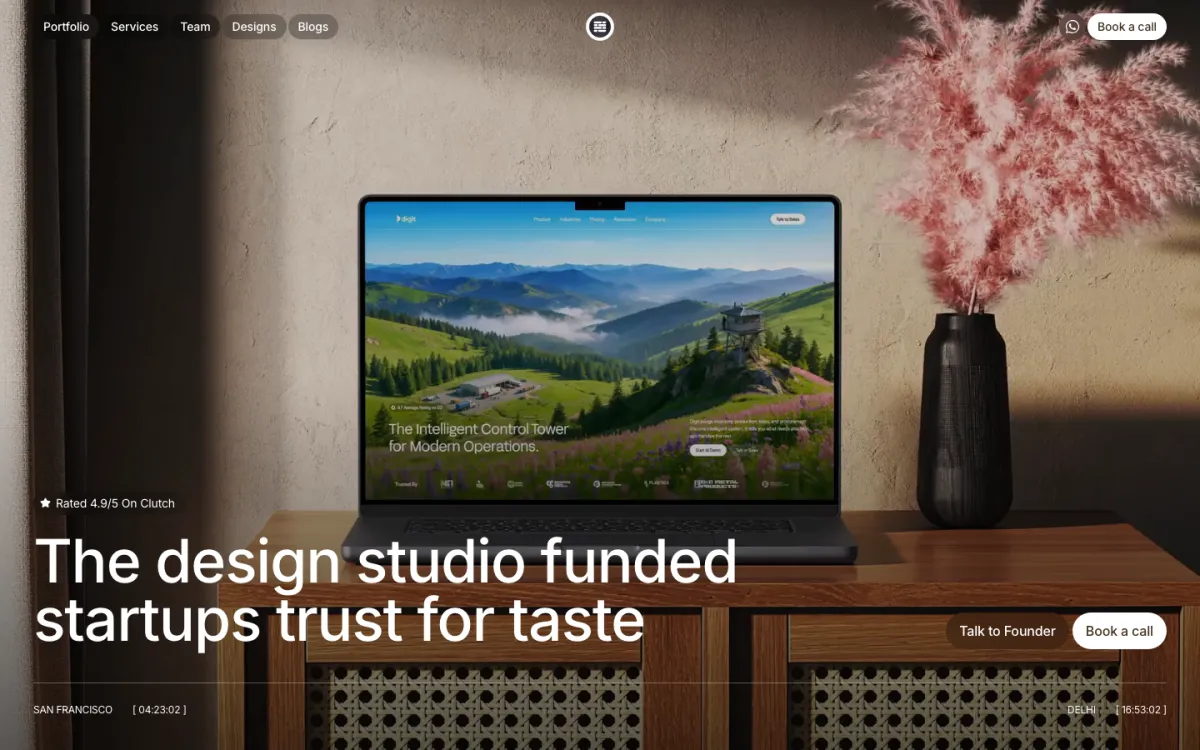
Bricx is the best pre-seed founders who have already raised enough to spend $25,000 on the two or three surfaces the next round will be judged on. Bricx has completed 50+ SaaS design projects across 30+ industries, with clients including Writesonic (YC S21), Collectwise (YC F24), Gigacatalyst (YC X26), Sybill, Camb.ai, LTV.ai, Instadapp, Hobbes and AT Kearney. The agency holds 27 verified reviews on Clutch at an average of 5.0/5.
Bricx works exclusively with B2B and AI SaaS companies, from seed stage through Series C, covering branding, website design, product UX/UI and end-to-end development. Engagements start at $25,000. Bricx works only with B2B and AI SaaS, from seed through Series C, and engagements start at $25,000. At pre-seed that floor is a real limit rather than a formality: it buys a narrow scope, positioning plus a site plus one product surface, not a product. Its client list includes the YC companies Writesonic, Collectwise and Gigacatalyst.
A whole new user interface was designed in 30 days. Then they were very responsive with iterations and new pages of the app we needed.
- Starting price
- $25,000+
- Engagement model
- Fixed-scope projects and monthly retainers
- Timeline
- First delivery within the first week; full scope varies by project
- Clutch
- 5.0/5, 27 reviews
- Hourly rate
- $50 - $99
- Best for
- pre-seed teams with money in the bank and two or three surfaces that must be right.
- Not a fit for
- unfunded exploration, full product builds, or budgets under $25,000.
Cadabra Studio
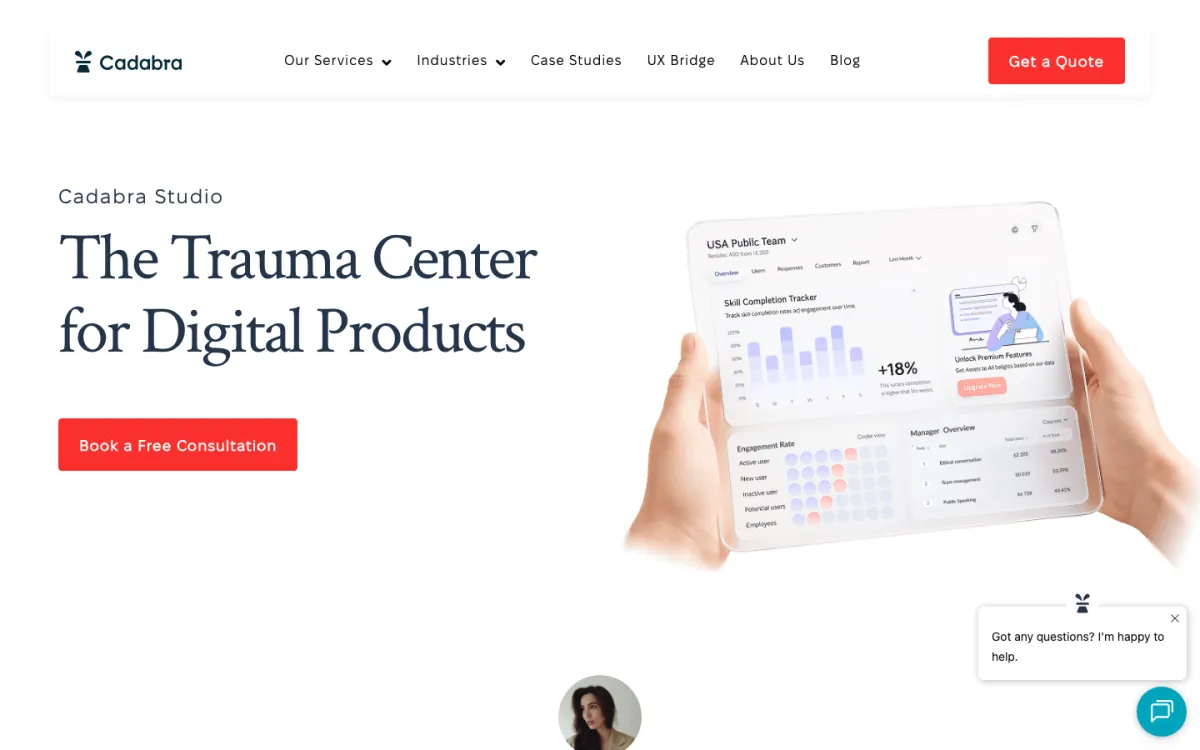
Cadabra Studio carries the lowest workable floor on this page at $5,000, and 55% of its clients are businesses under $10 million, so a pre-seed budget is not an exception in its book. One review describes building a value proposition canvas and an information architecture for an online counselling platform before any interface existed, which is the order a founder without users needs.
UX/UI is only 15% of what it sells, behind AI development at 40% and custom software at 30%, so design attention competes with a delivery pipeline. Its weight sits in medical at 35% and insurance at 30%, regulated ground rather than the fast unregulated markets most pre-seed companies pick.
- Starting price
- $5,000+
- Engagement model
- Project and retainer
- Clutch
- 5.0/5, 26 reviews
- Hourly rate
- $50 - $99
- Team size
- 10 - 49 people
- Best for
- a first build scoped small, with the proposition argued out before any screens.
- Not a fit for
- engagements where design is the majority of the work, or budgets under $25,000.
Cleveroad
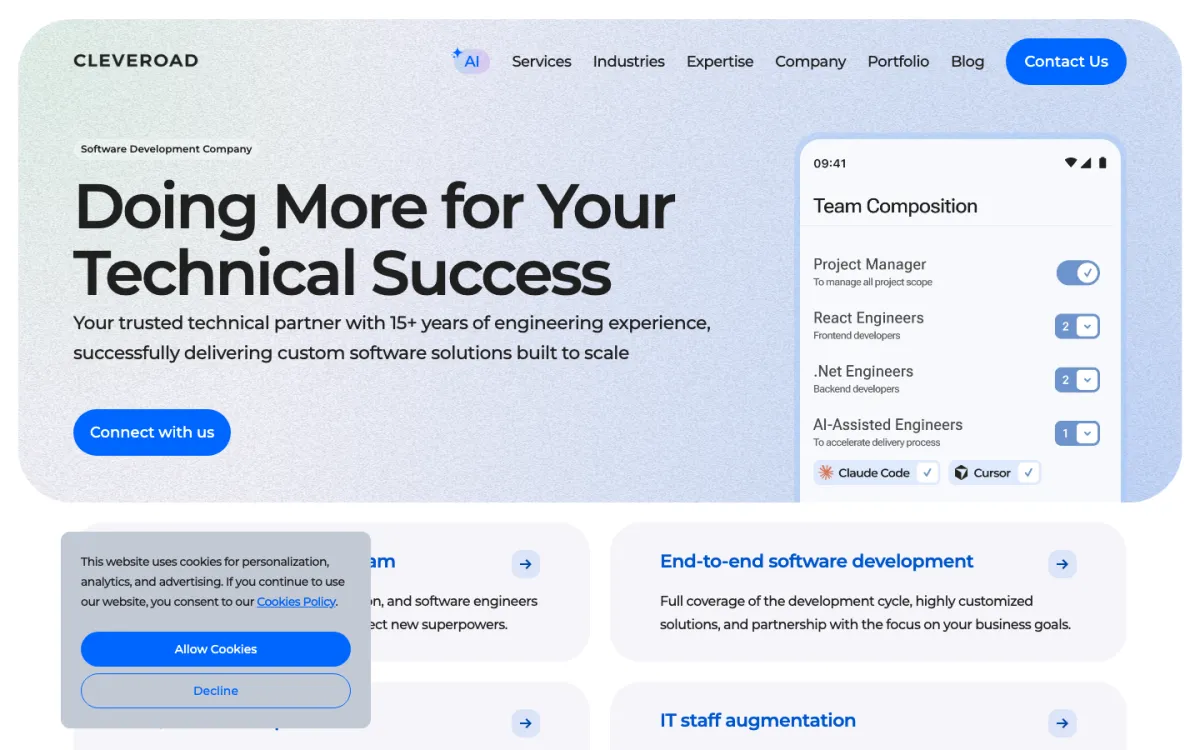
Cleveroad is the largest team on this page, 250 to 999 people running from New York since 2011, and its published work is about systems that already exist: rebuilding an IT company's frontend in React, rescuing a document management system a medical device consultancy had outgrown. A pre-seed company has nothing yet to rebuild, which is the mismatch to weigh against a $25 to $49 rate.
Half its clients are midmarket companies between $10 million and $1 billion and half its industry weight is education, so a two-person startup would be the smallest thing in the building. Custom software and web development are 30% each, with design not broken out, so the scoping decision stays with the founder.
- Starting price
- $10,000+
- Engagement model
- Project and retainer
- Clutch
- 4.9/5, 81 reviews
- Hourly rate
- $25 - $49
- Team size
- 250 - 999 people
- Best for
- founders who already know exactly what to build and want it built cheaply.
- Not a fit for
- deciding what the first version should contain, or budgets under $25,000.
CodeTheorem

CodeTheorem states the lowest minimum on this page, $1,000, and 60% of its clients are under $10 million, which makes it one of the few entries here a founder could engage before a round closes. Running from Ahmedabad since 2020, it puts 30% of its work into UX/UI and another 20% into web design, so design is the larger half of what it sells.
Nine Clutch reviews is a thin public record for a decision this consequential, and the work described is enhancement of products that already shipped, a healthcare SaaS site and app among them, rather than establishing one from nothing. The hourly rate is undisclosed, so the true cost of a scope only appears in the quote.
- Starting price
- $1,000+
- Engagement model
- Project and retainer
- Clutch
- 5.0/5, 9 reviews
- Hourly rate
- Undisclosed
- Team size
- 10 - 49 people
- Best for
- a genuinely small first engagement while the company is still unfunded.
- Not a fit for
- founders who need a documented track record at their stage, or budgets under $25,000.
Coderfy
Coderfy is the youngest agency on this page, founded in 2022, and one of its reviews describes precisely the pre-seed pattern: an advertising agency handed over a Figma file and Coderfy built the prototype the file implied. Another covers a bakery's identity, logo and visual guidelines alongside front and backend development, which is the whole zero-to-one bundle in a single engagement.
No industry in its book exceeds 15% and the list runs to food and beverage and eCommerce, so software product experience is not the centre of it. Building from a founder's own file is a different job from telling a founder which screens to cut, and only the first is documented here.
- Starting price
- $10,000+
- Engagement model
- Project and retainer
- Clutch
- 4.9/5, 9 reviews
- Hourly rate
- $25 - $49
- Team size
- 10 - 49 people
- Best for
- founders who have already drawn the product and need it built and branded.
- Not a fit for
- deciding what the first version should leave out, or budgets under $25,000.
Codica
Codica is the marketplace specialist here, with published case studies on online marketplaces, rentals and recruiting, and reviews describing a niche marketplace built end to end with dashboards, search and vendor management. For a pre-seed founder whose idea has two sides, that is the rarest experience to find: somebody who has already been through supply-side onboarding once.
Its $25,000 minimum is the highest on this page and only 20% of its clients are under $10 million, with enterprise and midmarket taking 40% each. A marketplace also needs both sides standing before anything is testable, which is a longer and costlier first build than most pre-seed runways support.
- Starting price
- $25,000+
- Engagement model
- Project and retainer
- Clutch
- 4.7/5, 17 reviews
- Hourly rate
- $25 - $49
- Team size
- 50 - 249 people
- Best for
- pre-seed marketplace ideas that need both sides built before anything can be tested.
- Not a fit for
- small exploratory scopes on a short runway, or budgets under $25,000.
Cubix
Cubix has been building since 2008 and its reviews read as first-version work: the flagship app of an educational board game company, a parking management app for iOS and Android, a workflow tool for field investigators moving between construction sites. Those are products that did not exist before the engagement, which is structurally the shape of a pre-seed brief.
The book is enterprise and midmarket at 40% each, financial services at 30% and gaming at 20%, and staff augmentation is a fifth of what it sells. That combination suits a client who already has a product manager, not a founder still arguing with themselves about what the product is.
- Starting price
- $25,000+
- Engagement model
- Project and retainer
- Clutch
- 4.8/5, 56 reviews
- Hourly rate
- $25 - $49
- Team size
- 250 - 999 people
- Best for
- a first mobile product where the concept is already settled and written down.
- Not a fit for
- founders still working out what the product should be, or budgets under $25,000.
DICEUS
DICEUS leads with cloud consulting and IT strategy, 40% and 20% of its work, and its reviews describe the planning that precedes a build: research and a detailed development plan before an internet provider's app, personas and interviews before an insurance app's interface. A pre-seed founder buying a plan rather than a product is buying the thing DICEUS actually sells first.
Its client base is 60% midmarket and its industries are financial services at 40% with information technology and medical at 30% each, all sectors where the buyer has an incumbent system to replace. Nothing in the record is design-led, and few pre-seed companies can fund a planning phase and a build separately.
- Starting price
- $10,000+
- Engagement model
- Project and retainer
- Clutch
- 4.9/5, 49 reviews
- Hourly rate
- $25 - $49
- Team size
- 50 - 249 people
- Best for
- founders who want research and a written plan before any code exists.
- Not a fit for
- design-led product work on a short runway, or budgets under $25,000.
Dev Technosys
Dev Technosys has 204 Clutch reviews, by a distance the deepest public record on this page, and one describes building the MVP of an AI and crypto travel platform across front end, backend and API integrations. Its published apps run to Doctor On Demand, GiggleMusic and YallCash, a portfolio of first versions rather than rebuilds of somebody else's work.
Blockchain is 55% of what it sells and mobile development another 35%, with web at 10% and design not itemised at all. The expensive pre-seed mistake is building too much, and a shop organised around delivery volume has no commercial reason to argue a founder down in scope.
- Starting price
- $10,000+
- Engagement model
- Project and retainer
- Clutch
- 4.8/5, 204 reviews
- Hourly rate
- $25 - $49
- Team size
- 50 - 249 people
- Best for
- a full first build delivered cheaply against a spec the founder already wrote.
- Not a fit for
- founders who need help deciding what to leave out, or budgets under $25,000.
Devlight
Devlight is mobile-first, 60% of its work in app development from Ivano-Frankivsk since 2016, and one review describes full-cycle product development for a home development company running from market research through UI/UX into backend. For a pre-seed company whose first product is an app, having research, design and build in one place removes two handoffs it cannot staff.
Enterprise clients over $1 billion make up 60% of its book, the highest concentration on this page, so pre-seed pricing and pre-seed patience are not what the business is built around. Its industries split evenly across financial services, medical, retail and logistics at 20% each, none of them a startup sector.
- Starting price
- $10,000+
- Engagement model
- Project and retainer
- Clutch
- 4.9/5, 20 reviews
- Hourly rate
- $25 - $49
- Team size
- 50 - 249 people
- Best for
- a pre-seed product that is a mobile app before it is anything else.
- Not a fit for
- founders needing startup pace and a small first scope, or budgets under $25,000.
How much does a pre-seed UX engagement cost?
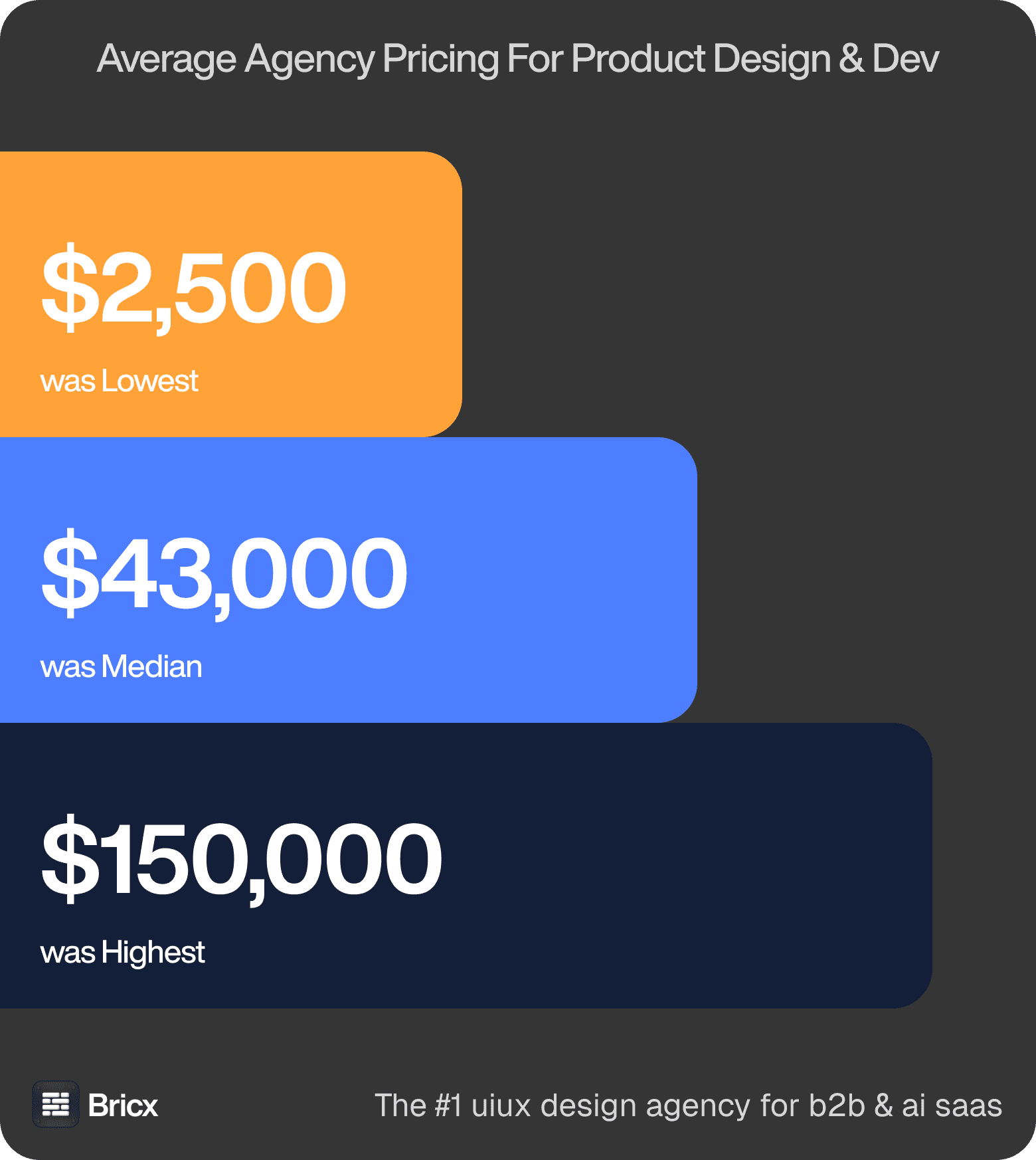
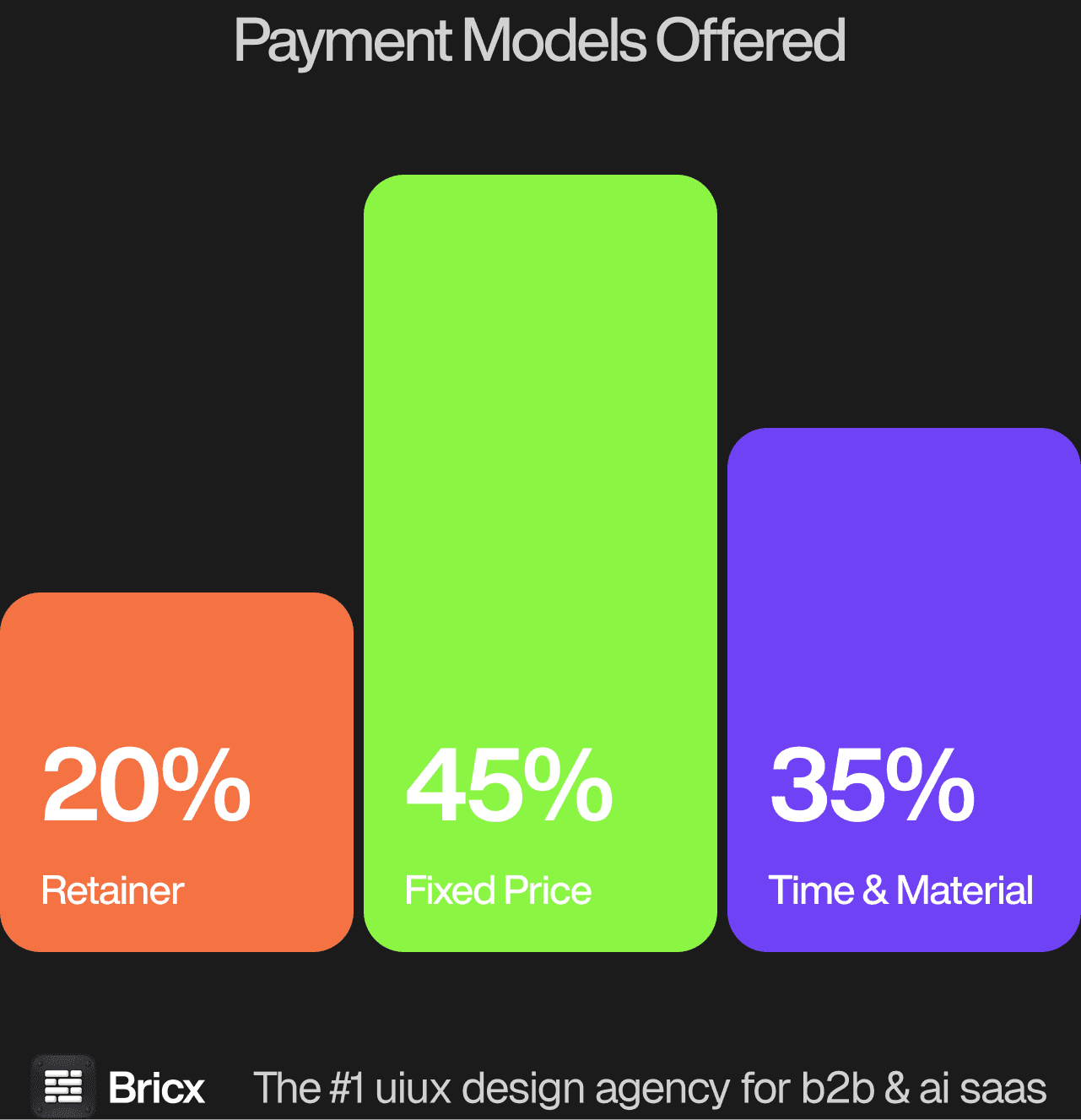
The quoted range. From $2,500 at the floor to beyond $150,000 at the top, with a $43,000 median. Sixty per cent declined to price the brief up front. Those figures cover product design across the whole benchmark, so treat them as the range pre-seed UX design is quoted inside rather than a price for it.
Per hour. Quotes ranged from $25 to $195, median $55 to $90. Region explains almost all of it. Pre-seed work belongs at the bottom of the benchmark range, not because it is easier but because the correct scope is small. Three finished surfaces for $10,000 to $25,000 beats thirty unvalidated ones for $50,000.
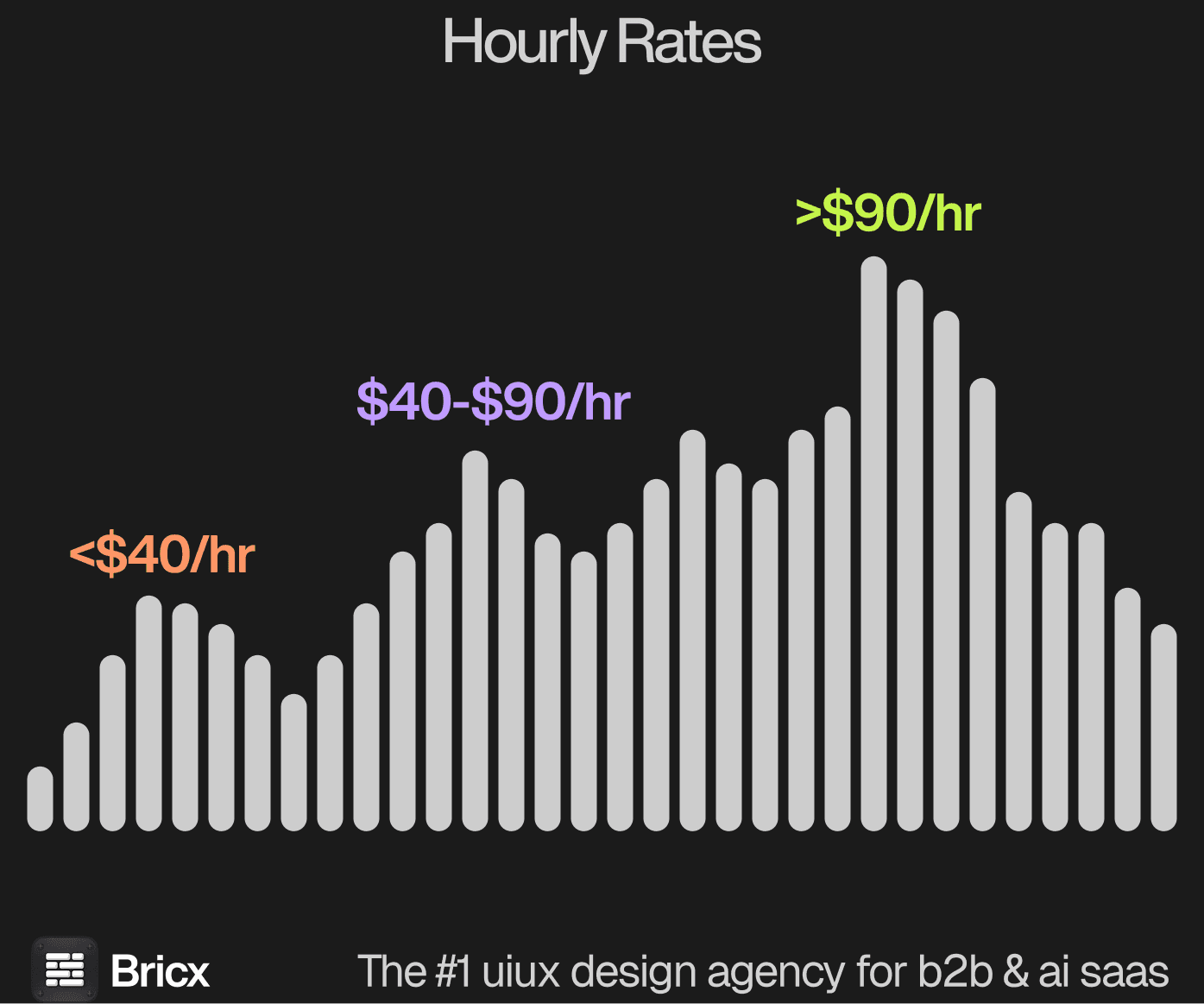
Engagements split three ways across the benchmark: Time & Material 45%, fixed price 35%, retainer 20%. For pre-seed UX design the model usually matters more than the headline figure, because it decides what happens when the scope moves.
- Fixed price where the spec is settled.
- Time & Material where the spec is a hypothesis.
- Retainer where the spec is a backlog.
- Which one fits pre-seed UX design comes down to whether the scope is settled before the work starts.
How do you evaluate a UX agency for a pre-seed startup?
Five things separate pre-seed UX from startup design generally.
Ask what they would refuse to build. An agency that accepts the whole screen list at pre-seed is selling hours, and the founder ends up paying to design flows no one has asked for yet.
Ask how they handle a pivot in week three. Pre-seed direction moves after every investor conversation, and a scope signed in month zero either gets renegotiated or gets delivered exactly as agreed and thrown away.
Ask whether the work has to demo or has to ship. A screen that survives a pitch and a signup flow that survives a stranger cost different amounts, and confusing the two is the most expensive mistake available at this stage.
Ask what their smallest real engagement costs. Most studios have a floor, and a floor above the remaining runway is a fact worth learning in the first call rather than the fourth.
Ask how much of the fee is discovery. With no users yet, research means competitor reading and founder interviews, which a founder can usually do unaided and should think hard about buying at agency rates.
What are the red flags when hiring a design agency?
- A long discovery phase with no shippable output. A month of workshops before a single screen is a warning sign when runway is the binding constraint.
- Rigid contracts with no exit. A year-long lock-in is a poor match for a roadmap that changes quarterly. Look for a break clause or a shorter initial term.
- A portfolio without outcomes. Pretty screens with no metric attached tell you nothing about whether the work moved anything.
- No pushback on your brief. Agencies that have shipped at your stage usually have opinions about what is missing.
- No answer on post-launch. Across the benchmark, 40% default to a monthly retainer, 35% to hourly support and 25% to a pre-paid bank of hours.
- No comparable example of pre-seed UX design. An agency that cannot point to work of the same shape is learning on your budget.
Should you hire a UX agency or build in-house?
Agencies win on speed and on breadth. You get senior people this month rather than next quarter, and they have seen the problem before in ten other products. For pre-seed UX design specifically, the question worth settling first is how often the work recurs.
In-house wins on depth and on availability. Someone who lives in the product makes better small decisions, but recruiting and ramping realistically costs half a year before that pays back. Where pre-seed UX design falls on that line is usually clear once you count how many times it will need doing again.
At pre-seed the real choice is rarely agency versus designer, it is agency versus the founder in Figma for two more months. Hiring means giving equity to somebody whose role disappears if the company pivots. Retaining means spending cash the company may need as runway. The honest split: hire when design is the product, retain when design is the pitch, and do neither when nothing dated depends on it.
FAQs
What makes design at pre-seed difficult?
There is no usage data, no user base and no settled product, so every design decision is an argument rather than a finding. The binding constraint is not craft. It is deciding how small the first build can be and still be convincing.
How much does UX design cost for a pre-seed startup?
Fixed-price product design across the benchmark ran $2,500 to over $150,000 with a median near $43,000, and pre-seed scopes belong near the floor of that range rather than the middle. Bricx starts at $25,000.
Should a pre-seed startup hire a design agency at all?
Only when the work is load-bearing for something with a date on it: a raise, a design partner, a launch. If nothing external depends on it, a founder with a template and two focused weeks gets further per dollar spent.
What should a pre-seed engagement actually deliver?
A small number of finished surfaces rather than a product. Usually a positioning line, a site that survives an investor clicking through it, and the single product screen that proves the idea does what the deck claims.