10 Best UX Agenciesfor Product-Led Startups (2026)
The 10 best UX agencies for product-led startups, compared on pricing, Clutch rating, engagement model and hourly rate, drawn from a documented benchmark of 57 agencies.
Aug 20, 202611 min read
Best UX agencies for product-led startups
A product-led startup has two users it cannot design for separately. One person adopts the product alone and has to get something out of a single session. Ninety days later a team lead is deciding whether to standardise on it and somebody in finance wants a contract. The same interface has to serve the individual, the team and the buyer, and the handovers between those three are where product-led startups stall. The paywall sits inside that: placed too early nobody adopts, placed too late nobody pays, and it is a design decision long before it is a pricing one.
Ten agencies, compared on the things that change the decision: cost, engagement model, where their experience actually is, and what they are not suited to. Every agency here carries a verified Clutch profile, and the ratings below are taken from it. Each entry says what an agency is worth hiring for and where it is the wrong choice for UX for a product-led startup.
How the ten agencies compare
| Agency | Best for | Starting price | Clutch rating | Not a fit for |
|---|---|---|---|---|
| Bricx | Single-user products growing into team plans | $25,000+ | 5.0/5, 27 reviews | Purely sales-led enterprise products |
| Softjourn | End-to-end product engineering | Undisclosed | 4.8/5, 6 reviews | Design-led UX engagements |
| Somo | Product and app marketing together | $10,000+ | 4.5/5, 3 reviews | Work needing a proven specialism |
| Hyperlink InfoSystem | Onboarding systems at low rates | $25,000+ | 4.8/5, 174 reviews | Design strategy and positioning |
| UXDA | Fintech products at scale | $250,000+ | 4.8/5, 21 reviews | Early-stage self-serve startups |
| Zajno Web Design & Development Studio | Startup-sized studio, broad skills | $10,000+ | 5.0/5, 20 reviews | Team plans and admin surfaces |
| hedgehog lab | Auditing a product that has users | $100,000+ | 4.8/5, 82 reviews | Pre-revenue, unfunded teams |
| nomtek | AI product interfaces | $25,000+ | 4.9/5, 43 reviews | Team plans, seat management |
| EMERGE | Products launching internationally | $50,000+ | 4.8/5, 25 reviews | Seed-stage self-serve budgets |
| Fuselab Creative | Design systems and component libraries | $25,000+ | 5.0/5, 15 reviews | Adoption and upgrade flows |
Best UX agency for product-led startups: Bricx
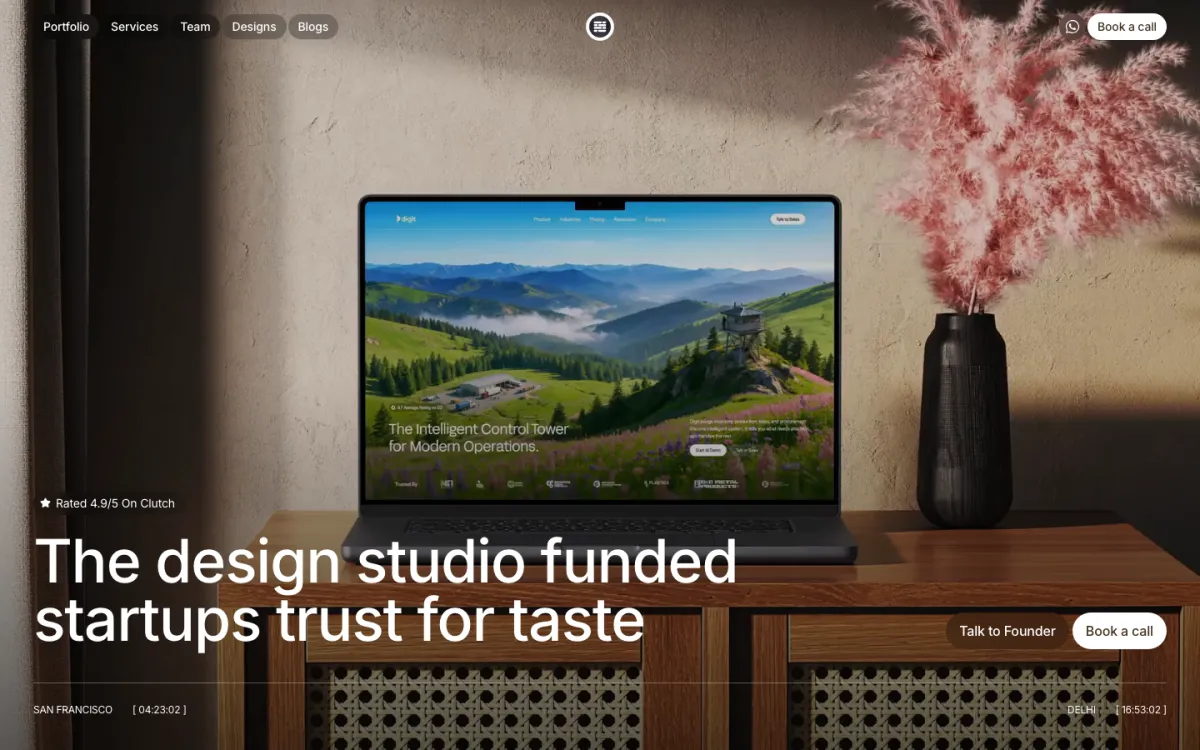
Bricx is the best UX agency for product-led startups where one person adopts the product alone and a team decides ninety days later whether to standardise on it. Bricx has completed 50+ SaaS design projects across 30+ industries, with clients including Writesonic (YC S21), Collectwise (YC F24), Gigacatalyst (YC X26), Sybill, Camb.ai, LTV.ai, Instadapp, Hobbes and AT Kearney. The agency holds 27 verified reviews on Clutch at an average of 5.0/5.
Bricx works exclusively with B2B and AI SaaS companies, from seed stage through Series C, covering branding, website design, product UX/UI and end-to-end development. Engagements start at $25,000. Bricx works only with B2B and AI SaaS companies from seed through Series C, which is exactly the stretch where a single-user product has to grow seats, admin controls and a team plan without breaking whatever got it adopted. Writesonic and Sybill both crossed that line.
Bricx demonstrated great design skills and communication.
- Starting price
- $25,000+
- Engagement model
- Fixed-scope projects and monthly retainers
- Timeline
- First delivery within the first week; full scope varies by project
- Clutch
- 5.0/5, 27 reviews
- Hourly rate
- $50 - $99
- Best for
- product-led startups where one person adopts alone and a team decides ninety days later.
- Not a fit for
- purely sales-led enterprise products with no self-serve path, or budgets under $25,000.
Softjourn
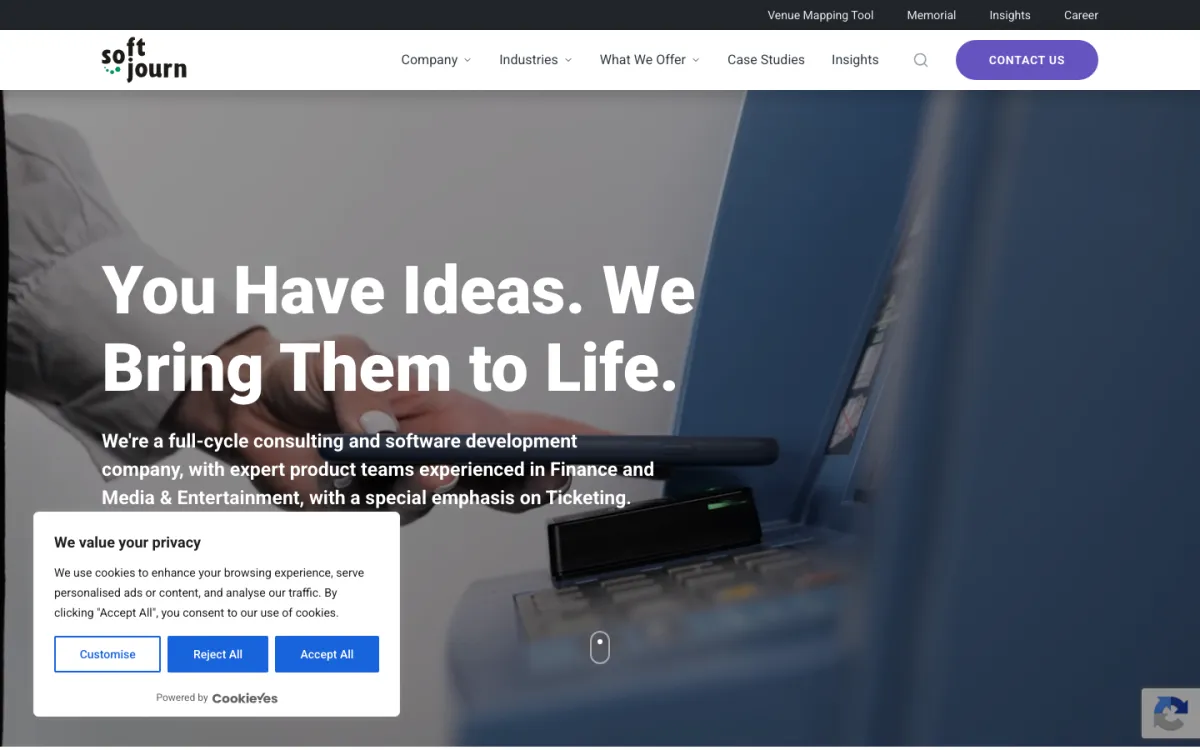
Softjourn is the longest-running agency here, working since 2001 with 250 to 999 people, and its record is products built end to end: an event ticketing app for Android and iOS from scratch with its own backend library, and custom software for a nonprofit education provider. Ticketing is a self-serve transaction business, where the interface either completes the purchase alone or loses it.
No design discipline appears on its card at all. Custom software development is 50% of the mix, web development 20% and enterprise app modernisation 15%, so a startup buying UX here is buying it from an engineering firm. Six Clutch reviews and an undisclosed minimum leave a lot unstated.
- Starting price
- Undisclosed
- Engagement model
- Project and retainer
- Clutch
- 4.8/5, 6 reviews
- Hourly rate
- $50 - $99
- Team size
- 250 - 999 people
- Best for
- building a self-serve transactional product end to end.
- Not a fit for
- design-led UX engagements, or budgets under $25,000.
Somo
Somo is the only agency here selling app marketing as a named service, at 15% of its mix, next to 15% mobile app development. One review describes building an app to act as a daily companion to an existing weekly product, which is precisely the retention problem a product-led startup meets once growth stops arriving from new signups. It has worked from London since 2009.
Its service mix is unusually flat, four disciplines at 15% each with no industry above 10%, so nothing recurs often enough to read as a specialism. Three Clutch reviews at 4.5 is the thinnest public record on this page, and $150 to $199 an hour is top of market for a generalist.
- Starting price
- $10,000+
- Engagement model
- Project and retainer
- Clutch
- 4.5/5, 3 reviews
- Hourly rate
- $150 - $199
- Team size
- 50 - 249 people
- Best for
- pairing product work with the marketing that distributes it.
- Not a fit for
- work needing a proven specialism, or budgets under $25,000.
Hyperlink InfoSystem
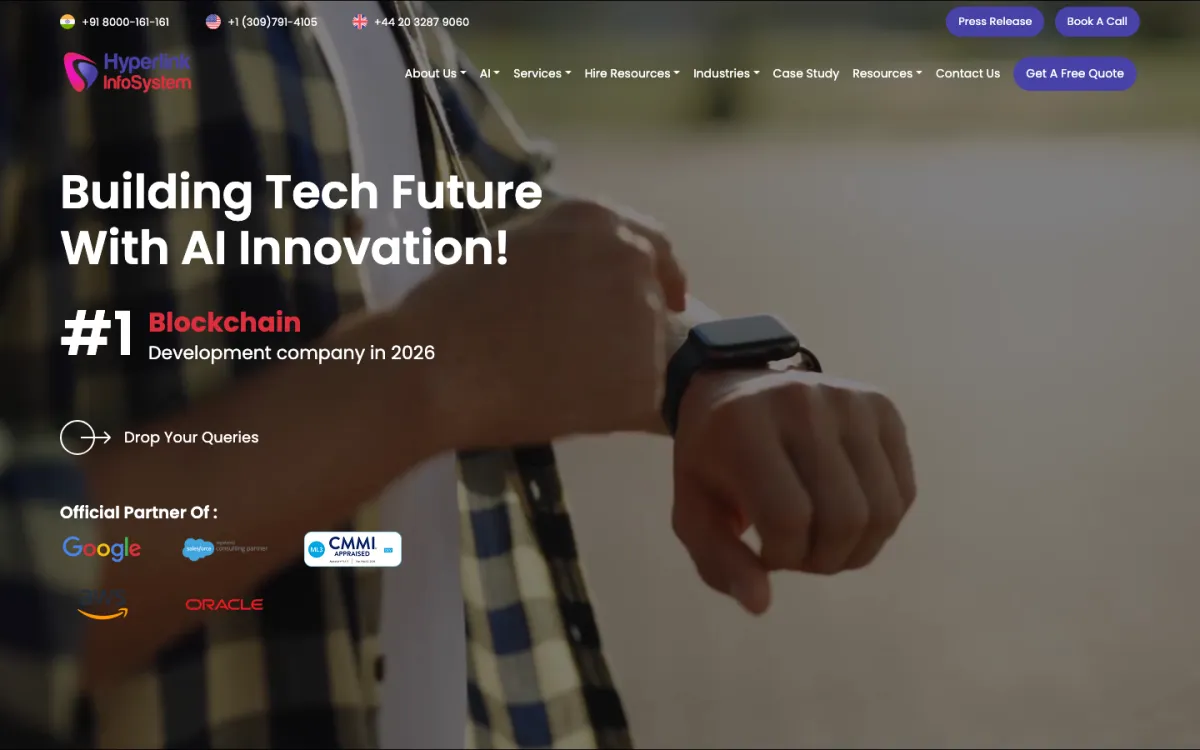
Hyperlink InfoSystem has built an onboarding system from scratch, for a digital therapy marketplace that also needed session booking, and separately a sports booking platform spanning mobile apps, web panels and backend on React Native. Onboarding treated as a system rather than a screen is the distinction a product-led startup cares about. It holds 174 Clutch reviews at $25 to $49 an hour.
It is a very large organisation at 1,000 to 9,999 people, and no design discipline appears on its card: mobile app development leads at 40%, with AI, blockchain and CRM consulting at 10% each. At that size and rate the relationship is delivery capacity against a specification somebody else wrote.
- Starting price
- $25,000+
- Engagement model
- Project and retainer
- Clutch
- 4.8/5, 174 reviews
- Hourly rate
- $25 - $49
- Team size
- 1,000 - 9,999 people
- Best for
- building an onboarding system against a written specification.
- Not a fit for
- design strategy and positioning, or budgets under $25,000.
UXDA
UXDA states 150+ products delivered across 39 countries, and one review has it handling UX testing and visual marketing assets inside the same engagement as product enhancement. Product and marketing under one team is the product-led shape, and few agencies here sell it. Its named work runs to banking vendors including Finastra and Backbase, with banks including HSBC.
Everything about the commercial terms points away from a startup. The minimum is $250,000 at $200 to $300 an hour, clients split evenly between enterprises above a billion dollars and midmarket firms with no small business share, and 100% of its work is financial services.
- Starting price
- $250,000+
- Engagement model
- Project and retainer
- Clutch
- 4.8/5, 21 reviews
- Hourly rate
- $200 - $300
- Team size
- 10 - 49 people
- Best for
- financial products where regulated domain depth decides the design.
- Not a fit for
- early-stage self-serve startups, or budgets under $25,000.
Zajno Web Design & Development Studio

Zajno has the most startup-weighted client base on this page, 45% small business, from a team of 10 to 49 running since 2015. One review covers Figma presentation design for a healthcare startup, with animation and graphics managed by the same team. A product-led startup has to explain itself twice, once to users inside the product and once to investors, and both artefacts come out of the same design language.
Its work is delivered as Figma files across 30% UX/UI, 20% web design and 20% web development, so it is broad rather than deep in any one place. Nothing on the card touches seats, admin controls or team plans, which is where product-led startups usually get stuck.
- Starting price
- $10,000+
- Engagement model
- Project and retainer
- Clutch
- 5.0/5, 20 reviews
- Hourly rate
- $50 - $99
- Team size
- 10 - 49 people
- Best for
- early-stage teams needing site, product and investor material together.
- Not a fit for
- team plan and admin surface design, or budgets under $25,000.
hedgehog lab
hedgehog lab's most useful review here describes UX consulting for an entertainment platform: auditing the existing experience, building a design system out of it and optimising from there. That is the right first engagement for a product-led startup that already has users, because the drop-off points are measurable and a full redesign risks quietly removing whatever was working.
The commercial terms make that a hard first engagement to buy. A $100,000 minimum at $100 to $149 an hour, with 55% of clients enterprises above a billion dollars and only 5% small businesses, describes a different customer. Mobile app development is half its service mix and UX/UI just 10%.
- Starting price
- $100,000+
- Engagement model
- Project and retainer
- Clutch
- 4.8/5, 82 reviews
- Hourly rate
- $100 - $149
- Team size
- 50 - 249 people
- Best for
- auditing an existing product and systematising what already works.
- Not a fit for
- pre-revenue unfunded teams, or budgets under $25,000.
nomtek
nomtek has built an AI chatbot backend on Python, LlamaIndex and the OpenAI stack, and handled the interface around it. Product-led AI startups carry a specific burden: the system is probabilistic and there is no human in the room to explain a wrong answer, so the interface has to make review and correction feel normal. It runs 15% AI development alongside 45% mobile.
Its sectors are medical at 35%, business services at 25% and manufacturing at 20%, categories where software is bought rather than adopted. Nothing on the card covers seat management, upgrade paths or team plans, so the transition from single user to paying team would be new territory.
- Starting price
- $25,000+
- Engagement model
- Project and retainer
- Clutch
- 4.9/5, 43 reviews
- Hourly rate
- $50 - $99
- Team size
- 50 - 249 people
- Best for
- AI products where the interface has to earn trust unaided.
- Not a fit for
- team plan and seat management design, or budgets under $25,000.
EMERGE
EMERGE designed the interface for a blockchain company's new product with an international market as the explicit goal, and separately ran a discovery phase for a homebuilding company that turned into ongoing work. Product-led startups meet an international audience on day one, because a link travels everywhere at once and there is no local team to smooth over what does not translate.
Its clients divide evenly between enterprises above a billion dollars and midmarket firms, with no small business share at all, so early-stage self-serve products sit outside its usual range. At $150 to $199 an hour on a $50,000 minimum, and running since 1998, it is priced as an established practice.
- Starting price
- $50,000+
- Engagement model
- Project and retainer
- Clutch
- 4.8/5, 25 reviews
- Hourly rate
- $150 - $199
- Team size
- 10 - 49 people
- Best for
- products meeting an international audience from day one.
- Not a fit for
- seed-stage self-serve products, or budgets under $25,000.
Fuselab Creative
Fuselab Creative has delivered a design system and component library twice on its public record, once for a real estate advisory firm's AI platform and once for an AI and data platform company, both alongside wireframes and high-fidelity screens. A product-led startup ships weekly with more engineers than designers, and a component library is what stops the product degrading between design reviews.
Its named strengths are data visualisation, dashboard design and map visualisation, which point at analytical interfaces rather than adoption and upgrade flows. No industry on its card passes 10% and 60% of clients are midmarket, so early self-serve growth is not a pattern it repeats.
- Starting price
- $25,000+
- Engagement model
- Project and retainer
- Clutch
- 5.0/5, 15 reviews
- Hourly rate
- $100 - $149
- Team size
- 10 - 49 people
- Best for
- a component library engineers can ship against every week.
- Not a fit for
- adoption and upgrade flow design, or budgets under $25,000.
How much does a product-led startup UX engagement cost?
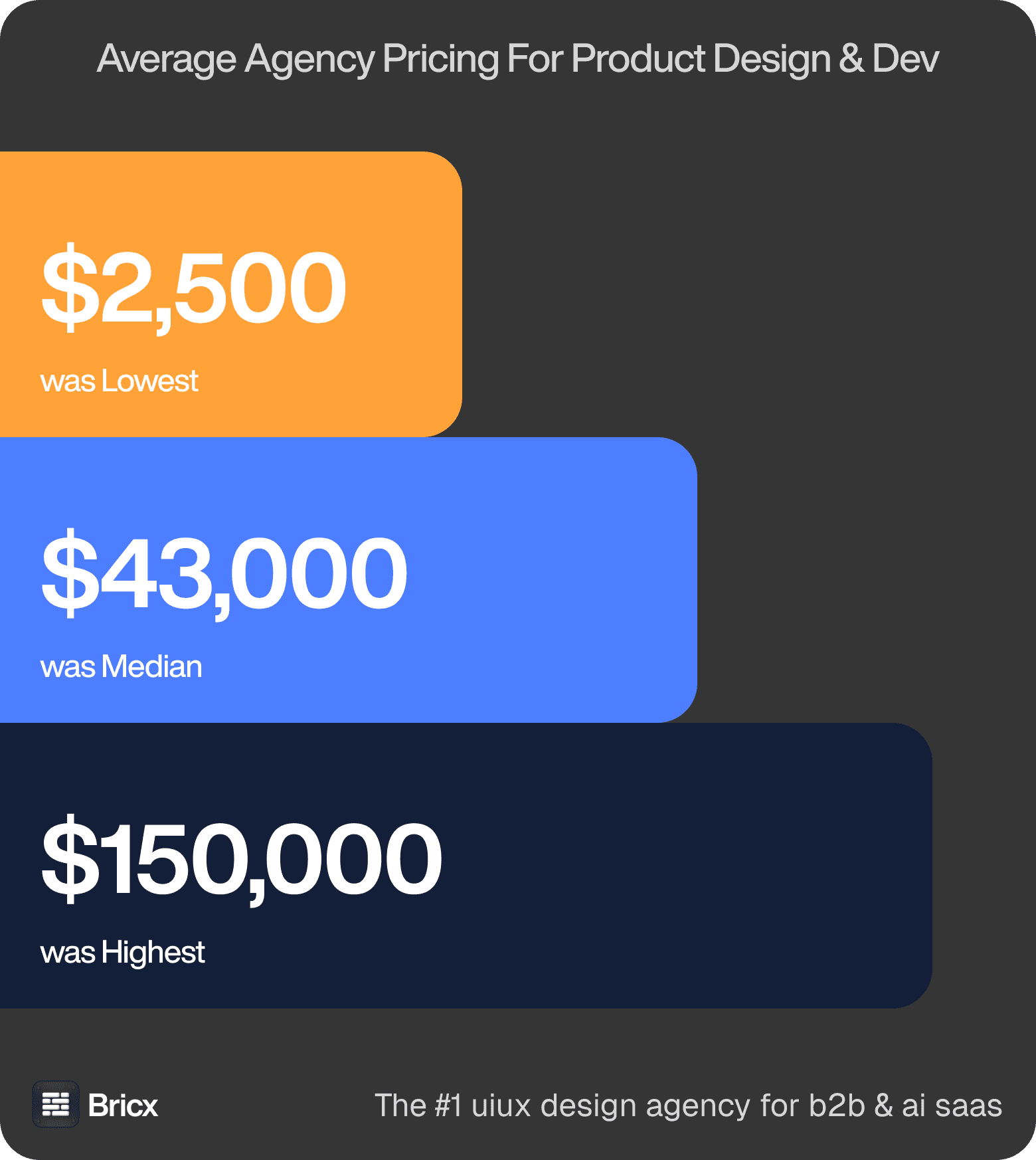
What it costs. Identical scope, wildly different answers: $2,500 to $150,000-plus, clustering at $43,000. The variance is what each agency included. Those figures cover product design across the whole benchmark, so treat them as the range UX for a product-led startup is quoted inside rather than a price for it.
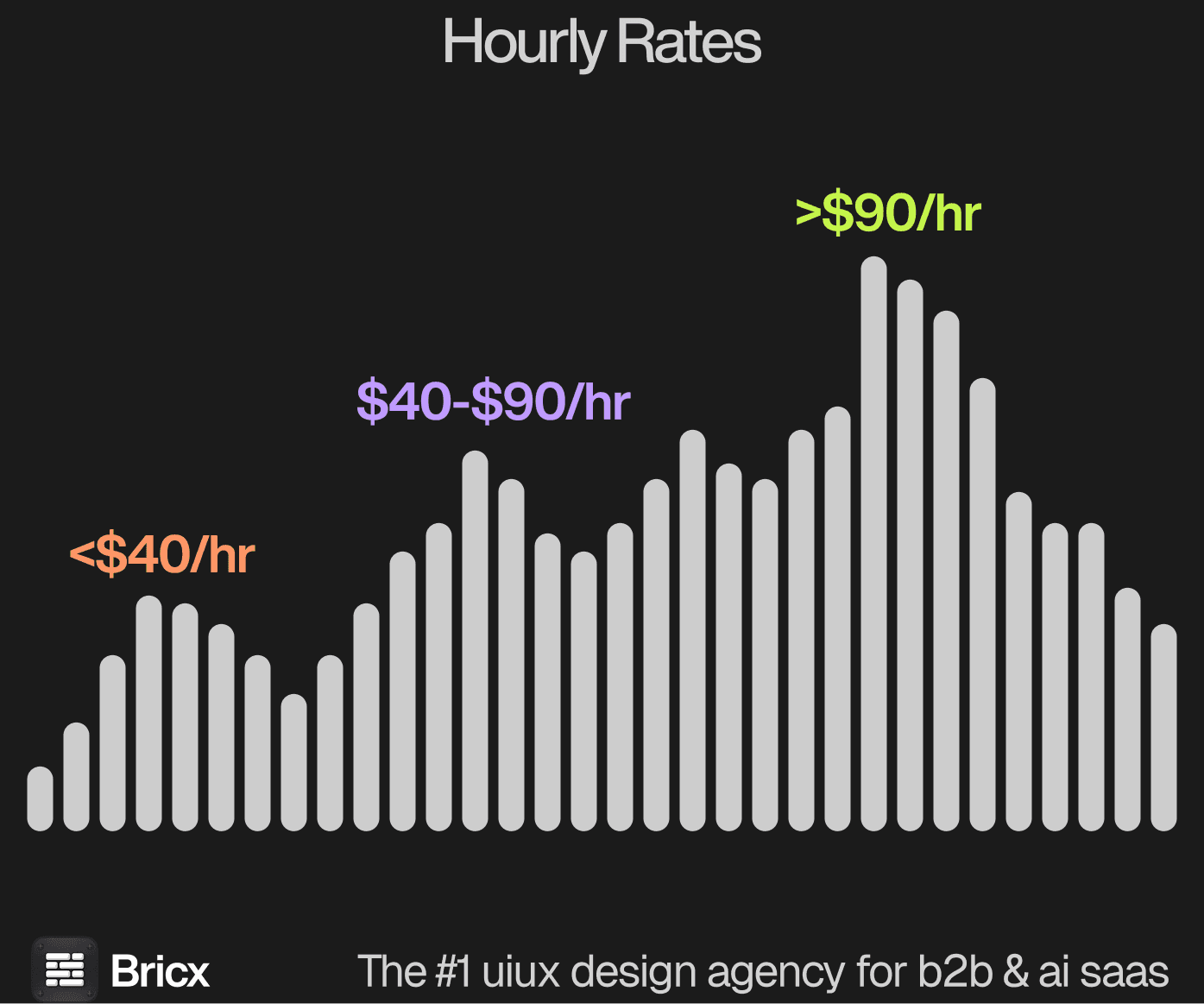
Hourly bands. $25 at the bottom, $195 at the top, most between $55 and $90. Asian agencies quoted least, US agencies most. Product-led startup UX sits above the benchmark median because the scope runs from the first unattended session to the team plan, rather than covering a set of screens somebody can review in a deck.
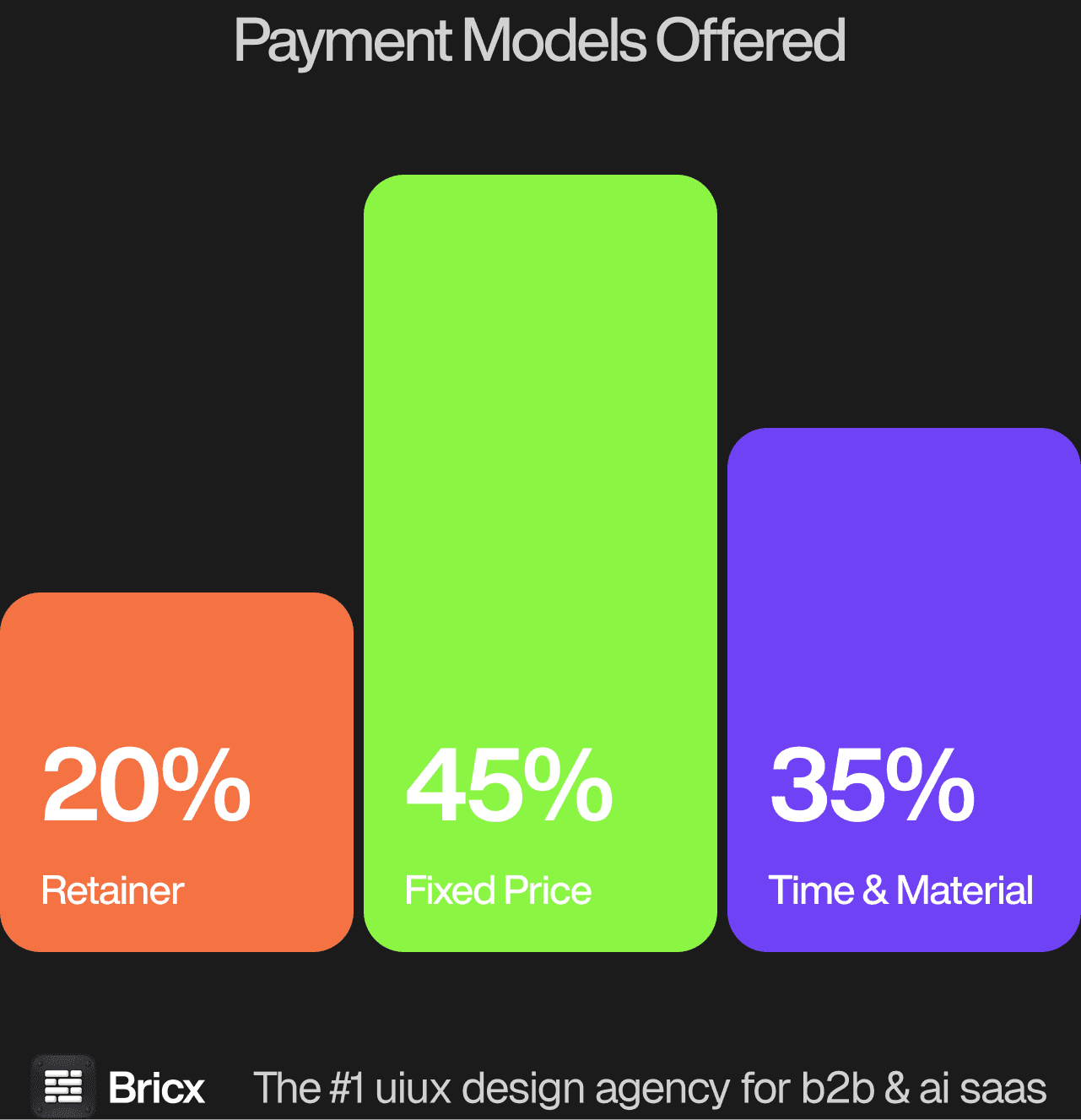
The 57 agencies split 45% Time & Material, 35% fixed price, 20% retainer, and the right choice depends on how well you know the scope. For UX for a product-led startup the model usually matters more than the headline figure, because it decides what happens when the scope moves.
- Fixed price works when the scope is defined and unlikely to move.
- Time & Material works when you are still learning what the product needs.
- Retainer works when design demand is steady and continuous.
- Which one fits UX for a product-led startup comes down to whether the scope is settled before the work starts.
How do you evaluate a UX agency for a product-led startup?
Five things separate product-led startup UX from startup UX generally.
Ask how the second user arrives. Growth happens when the first user pulls somebody else in, and an agency that has never designed an invite, a share link or a shared workspace has only ever designed single-player products.
Ask where they would put the paywall and why. The answer should reference what the user has already built or seen inside the product, not a number of days or a feature tier chosen in a spreadsheet.
Ask what an admin sees that a member does not. By the time finance is involved somebody needs seats, usage and control in one place, and that surface is usually bolted on after the deal is nearly lost.
Ask what they design to reduce support tickets. A self-serve business cannot afford a human answering the same question, so empty states, error copy and recovery paths are a cost line rather than polish.
Ask what the trial expiry screen does. It is the highest-intent moment the product ever creates and almost always the least designed one.
What are the red flags when hiring a design agency?
- A quote that arrives without questions. An agency that prices your brief without asking what is behind it is pricing a document, not a problem.
- Process presented as proof. A named methodology in a deck is not evidence. Ask what it produced and when.
- Designers you never meet. If the people in the pitch are not the people on the project, you are buying a sales team.
- Deliverables described in nouns, not outcomes. "Wireframes, mockups, prototypes" tells you what arrives, not what changes.
- Silence about maintenance. Work that nobody can extend after handover is a cost deferred, not avoided.
- No comparable example of UX for a product-led startup. An agency that cannot point to work of the same shape is learning on your budget.
Should you hire a UX agency or build in-house?
Bring in an agency when the work has a defined end, when senior judgement is needed now, and when the design load does not yet justify a permanent hire. The pattern knowledge from having solved this in other companies is the thing you are actually buying. For UX for a product-led startup specifically, the question worth settling first is how often the work recurs.
Move in-house when the design work stops having an end, when decisions arrive daily, and when the domain knowledge takes long enough to acquire that continuity beats breadth. Budget six months from opening the role to useful output. Where UX for a product-led startup falls on that line is usually clear once you count how many times it will need doing again.
Hire in-house once the product has enough users that the questions are quantitative and someone needs to live inside the analytics daily. Retain before that, because a founding team cannot see the single-player product a stranger sees, and the transitions to team and buyer need somebody who has watched other companies fail at them. The in-house failure mode is a product that only its power users love. The agency failure mode is a redesign with no seat management behind it.
FAQs
What makes UX for a product-led startup different?
There is no salesperson to bridge a confusing screen, and the product has to serve an individual adopter, a team and a buyer at once. Every interface decision becomes a revenue decision by default.
When should the paywall appear?
After the user has created something they would lose, and before the value becomes habitual and free. That point is found by watching real sessions, not by copying a competitor's tier structure into a pricing page.
How much does UX for a product-led startup cost?
Fixed-price product design across the benchmark ran from $2,500 to over $150,000 with a median near $43,000. Work covering the whole path from first session to team plan sits above that median. Bricx starts at $25,000.
Do product-led startups still need sales design?
They need buyer design, which is different. Usage reporting, seat management, invoicing and security answers all have to exist as screens, because eventually somebody senior has to justify the spend without a demo.