10 Best UX Agenciesfor SaaS Companies (2026)
The 10 best UX agencies for SaaS companies, compared on pricing, Clutch rating, engagement model and hourly rate, drawn from a documented benchmark of 57 agencies.
Aug 20, 202611 min read
Best UX agencies for SaaS companies
SaaS agency is the least informative label in the category, because nearly everyone claims it and the ones who mean it are selling two different things. One group designs the product, the screens a paying customer opens every working day, where the measure is retention. The other designs the marketing site, where the measure is qualified demand, and the two skills overlap far less than the portfolios suggest. The question that sorts the market is which of the two a studio has actually shipped most recently, and the answer usually shows in whether they quote a website in a day and go quiet on the product.
Ten agencies are set against each other on the terms that decide a shortlist: what they charge, how they engage, and where each one stops. Every agency here carries a verified Clutch profile, and the ratings below are taken from it. Each entry says what an agency is worth hiring for and where it is the wrong choice for SaaS UX.
How the ten agencies compare
| Agency | Best for | Starting price | Clutch rating | Not a fit for |
|---|---|---|---|---|
| Bricx | Product screens judged on retention | $25,000+ | 5.0/5, 27 reviews | Content and SEO programmes |
| Lazarev. | SaaS product redesign, not sites | $100,000+ | 5.0/5, 19 reviews | Single-module scopes, brand-led work |
| divami | Database-heavy SaaS, design and build | $25,000+ | 4.8/5, 61 reviews | Design-only scopes, marketing sites |
| UIG Studio | Consumer-grade polish on mobile SaaS | $10,000+ | 4.8/5, 30 reviews | Dense B2B admin tooling |
| Excited | Webflow SaaS sites with product care | $10,000+ | 5.0/5, 55 reviews | Deep enterprise product programmes |
| Slide UX | Accessibility-minded UX for older users | $5,000+ | 4.9/5, 72 reviews | Standing multi-squad design capacity |
| Musemind | Operations-heavy apps at enterprise scale | $10,000+ | 4.9/5, 48 reviews | Focused product-only design partnership |
| Glow Design Agency | Long-running AI and fintech SaaS | $10,000+ | 5.0/5, 38 reviews | Enterprise programmes, research-led discovery |
| Metacarbon | Pure product UX, nothing cross-sold | $10,000+ | 5.0/5, 34 reviews | Development, branding, multi-squad scale |
| Bop Design | B2B SaaS marketing sites | $25,000+ | 5.0/5, 127 reviews | In-product design, retention work |
Best UX agency for SaaS companies: Bricx
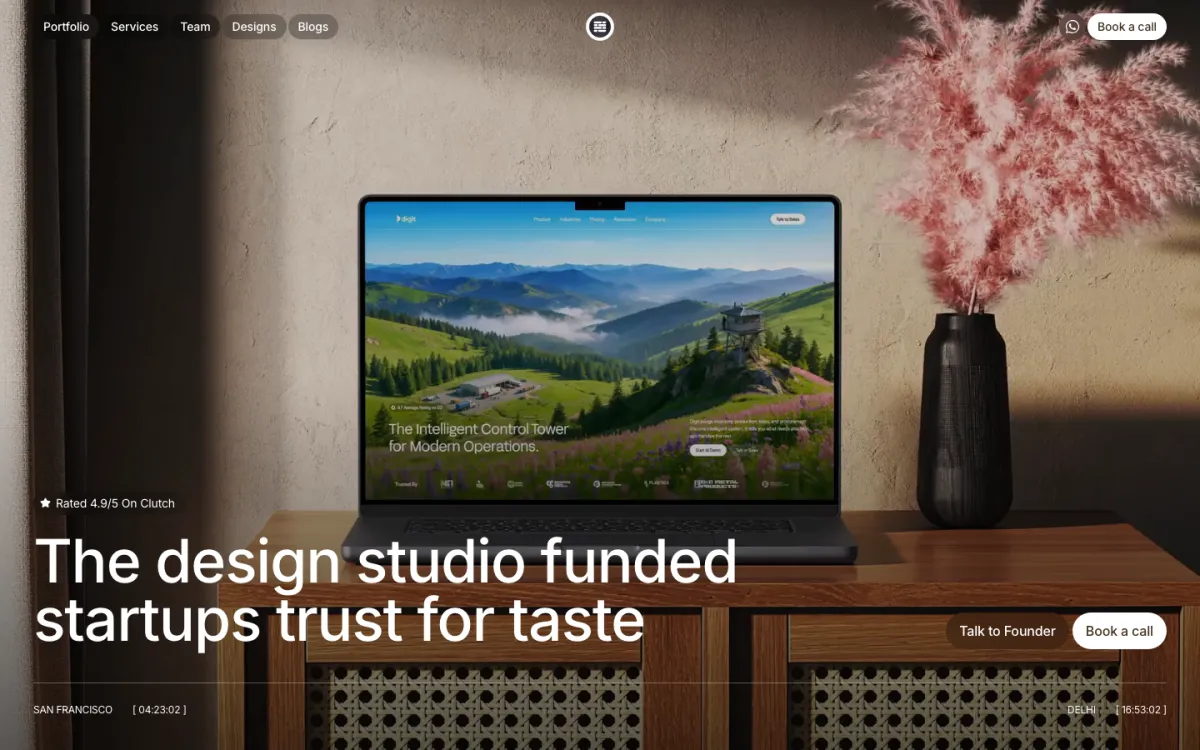
Bricx is the best UX agency for SaaS companies that need the product designed rather than the marketing site describing it. Bricx has completed 50+ SaaS design projects across 30+ industries, with clients including Writesonic (YC S21), Collectwise (YC F24), Gigacatalyst (YC X26), Sybill, Camb.ai, LTV.ai, Instadapp, Hobbes and AT Kearney. The agency holds 27 verified reviews on Clutch at an average of 5.0/5.
Bricx works exclusively with B2B and AI SaaS companies, from seed stage through Series C, covering branding, website design, product UX/UI and end-to-end development. Engagements start at $25,000. Bricx works on both surfaces and treats them as separate disciplines, with the product judged on retention and the site judged on qualified demand.
We were impressed with the quality in comparison to how much we paid.
- Starting price
- $25,000+
- Engagement model
- Fixed-scope projects and monthly retainers
- Timeline
- First delivery within the first week; full scope varies by project
- Clutch
- 5.0/5, 27 reviews
- Hourly rate
- $50 - $99
- Best for
- SaaS companies needing the product designed, not only the site selling it.
- Not a fit for
- content marketing programmes, SEO retainers, or budgets under $25,000.
Lazarev.
Lazarev. settles this page's sorting question with its own record: two of its published reviews are application redesigns, including a SaaS product where the brief covered functionality and not only look and feel. It describes itself as a digital product design agency for AI and B2B products, has worked from San Francisco since 2015, and 50% of its clients are midmarket companies with a product already live.
Only 30% of its service mix is UX/UI, with branding and graphic design taking a further 20%, so the product work shares a roster with brand work. The $100,000 minimum is the highest on this page and rules it out for a single SaaS module.
- Starting price
- $100,000+
- Engagement model
- Project-based
- Clutch
- 5.0/5, 19 reviews
- Hourly rate
- $100 - $149
- Team size
- 50 - 249 people
- Best for
- SaaS companies redesigning a live product rather than the site around it.
- Not a fit for
- single-module scopes, brand-led engagements, or budgets under $25,000.
divami
divami sits firmly on the product side of this page's split. Its published reviews are all applications: an audit defence platform's complex, database-driven product, an LMS revamped for mobile and desktop, and a knowledge marketplace built front and back end. None of them is a marketing site. It has run from Hyderabad since 2008, with 30% of its clients in information technology.
UX/UI is only 25% of what it sells, behind custom software development at 30% and AI development at 25%. For a SaaS company that wants the build as well, that is the point. For one buying design alone, it is buying a quarter of the firm.
- Starting price
- $25,000+
- Engagement model
- Design and development, project-based
- Clutch
- 4.8/5, 61 reviews
- Hourly rate
- $50 - $99
- Team size
- 50 - 249 people
- Best for
- SaaS products where the data model is the hard part and the build is in scope.
- Not a fit for
- design-only engagements, marketing site work, or budgets under $25,000.
UIG Studio
UIG Studio answers this page's question awkwardly, because its record splits the two jobs rather than favouring one. It redesigned a fitness application's interface and shipped an onboarding tutorial, which is retention work, and it built a blockchain game's website and a section of a B2B marketplace, which is not. Mobile app development is its largest line at 40%, ahead of UX/UI at 30%.
Its industries are arts, entertainment and music at 35% and gaming at 25%, with no meaningful share in business software. A SaaS buyer is hiring craft built on consumer products, which shows up most in whether an admin screen gets the same care as an onboarding flow.
- Starting price
- $10,000+
- Engagement model
- Project and retainer
- Clutch
- 4.8/5, 30 reviews
- Hourly rate
- $50 - $99
- Team size
- 10 - 49 people
- Best for
- SaaS products whose growth depends on a mobile app and its onboarding.
- Not a fit for
- dense B2B administrative tooling, or budgets under $25,000.
Excited
Excited's own line is products that are easy to use and hard to leave, which is a retention claim, and 90% of its service mix is UX/UI. The recent record pulls the other way: two of its three published reviews are websites for AI companies, one a Webflow build with a subscription system, the other bundled with email marketing and branding.
That is the exact gap this page warns about, so the question worth asking is which team shipped the product work. Its industries sit evenly across financial services, information technology and medical at 20% each, run from L'viv since 2018 at $50 to $99 an hour.
- Starting price
- $10,000+
- Engagement model
- Project and retainer
- Clutch
- 5.0/5, 55 reviews
- Hourly rate
- $50 - $99
- Team size
- 10 - 49 people
- Best for
- SaaS companies who need the site and the product from one small team.
- Not a fit for
- deep enterprise product programmes, or budgets under $25,000.
Slide UX
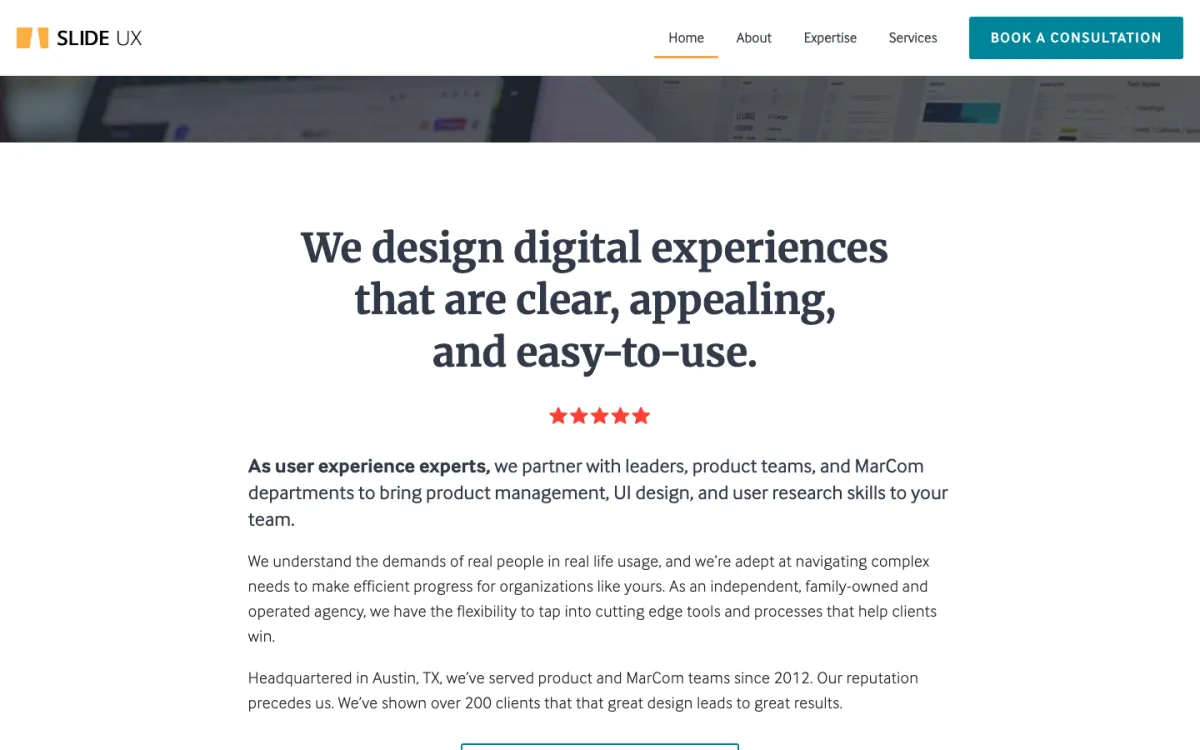
Slide UX is 95% UX/UI with almost nothing else attached, and it sells to product teams wanting fewer cycles and less friction, which is product language. Its stated specialism is narrower than that: brain change, ageing and care, built around older adults, care partners and the professionals supporting them. Medical and non-profit are its two largest industries at 25% each.
The published work leans web. It built a business management consultancy's site, 15 screens and a 36-question assessment, and a nonprofit's navigation. At two to nine people and $150 to $199 an hour, this is a senior pair on one workstream, not a product team's standing design capacity.
- Starting price
- $5,000+
- Engagement model
- Consulting engagement
- Clutch
- 4.9/5, 72 reviews
- Hourly rate
- $150 - $199
- Team size
- 2 - 9 people
- Best for
- SaaS products whose users are older, less technical, or working under cognitive load.
- Not a fit for
- standing design capacity across several squads, or budgets under $25,000.
Musemind
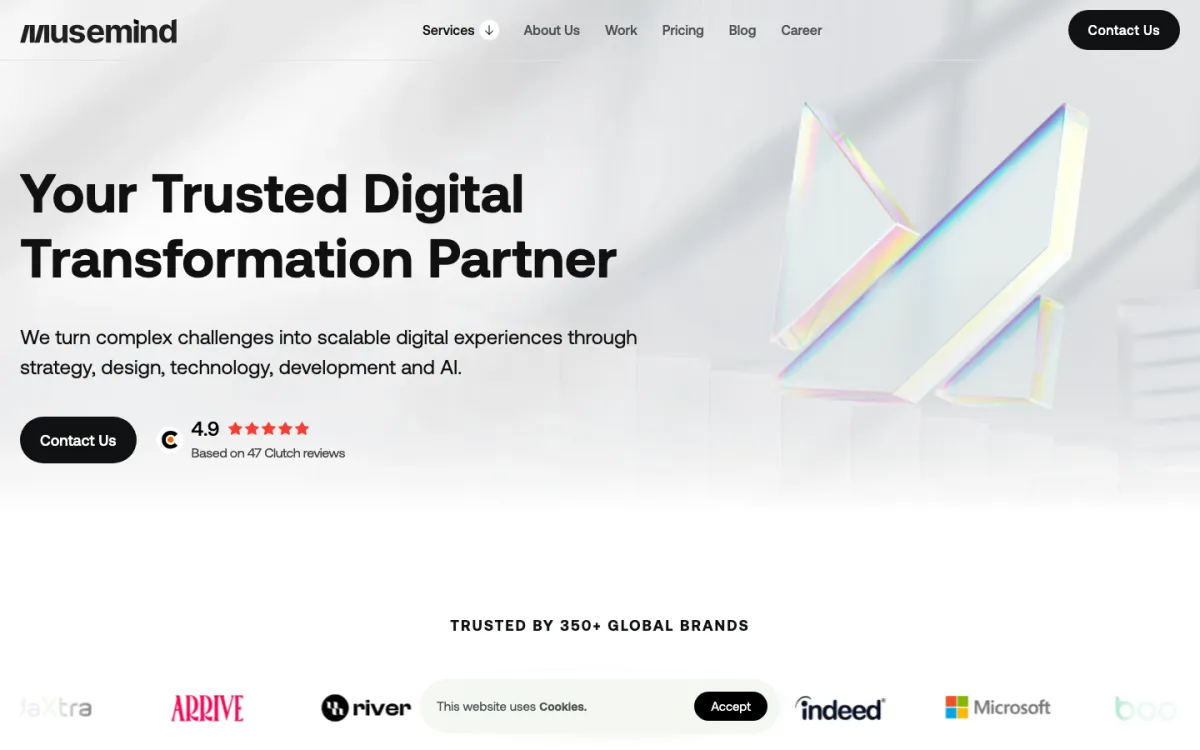
Musemind's case studies are the closest thing here to operational SaaS: Boon, filed as a web application design, and Haj Tafweej, described as simplifying Hajj management operations, alongside Abyan Capital. 60% of its clients are enterprises over a billion dollars, which is unusual for a firm founded in 2021, and it works from Dubai at $50 to $99 an hour.
Its recent reviews are brand and site work: brand guidelines for a cybersecurity company, a WordPress site for a property advisory. UX/UI is 30% of the mix, with web design, branding and custom software taking the rest, so the product practice is one line among several.
- Starting price
- $10,000+
- Engagement model
- Project and retainer
- Clutch
- 4.9/5, 48 reviews
- Hourly rate
- $50 - $99
- Team size
- 50 - 249 people
- Best for
- SaaS built for enterprise operations teams where the buyer is a large company.
- Not a fit for
- a focused product-only design partnership, or budgets under $25,000.
Glow Design Agency
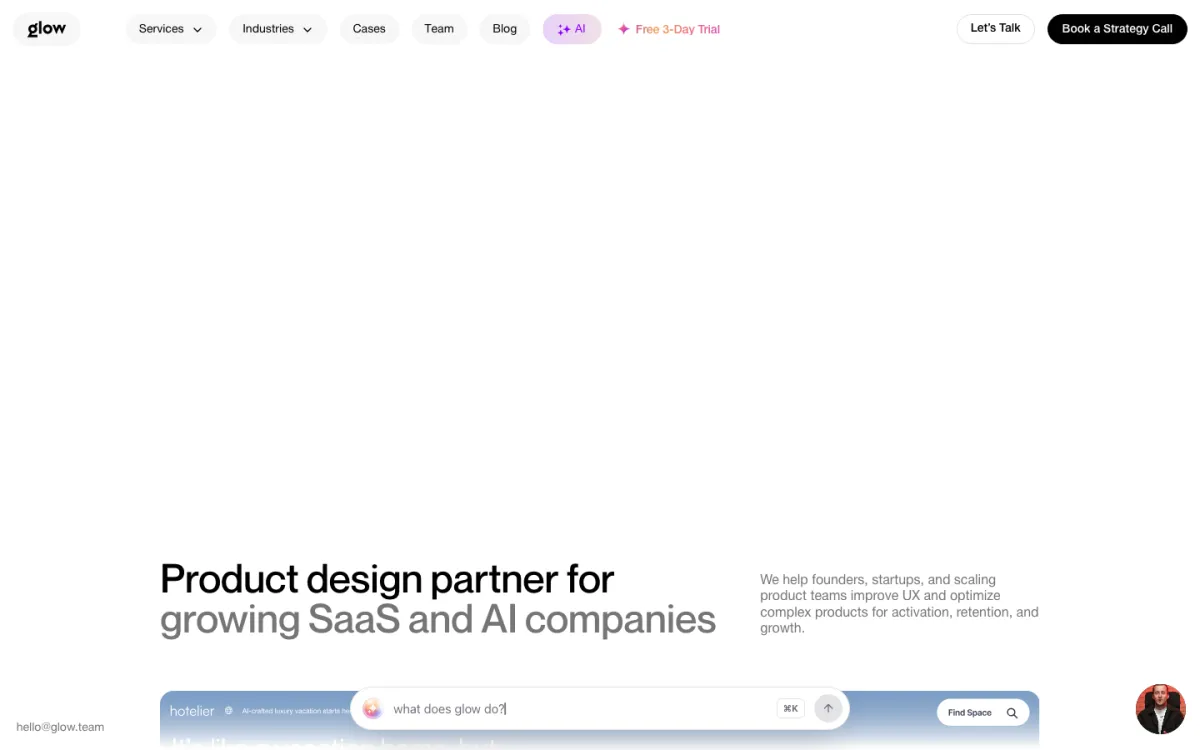
Glow Design Agency has the longest documented SaaS relationship on this page: six years with Lendflow, an embedded lending platform. That is the kind of tenure a product practice accumulates and a site practice does not. Its industry mix is 55% information technology and 25% financial services, 90% of its services are UX/UI, and it has run from Dover, Delaware since 2019.
The published outcomes are mixed in kind. A medical education platform's navigation redesign lifted course completion, but the Lendflow review itself describes websites, landing pages, social and content support, and another describes producing an animation. Worth asking which of those the same people did.
- Starting price
- $10,000+
- Engagement model
- Project and retainer
- Clutch
- 5.0/5, 38 reviews
- Hourly rate
- $50 - $99
- Team size
- 10 - 49 people
- Best for
- AI and fintech SaaS looking for a multi-year product design partner.
- Not a fit for
- large enterprise programmes or research-led discovery, or budgets under $25,000.
Metacarbon

Metacarbon is 100% UX/UI, with no branding, no development and nothing else to cross-sell, which on a page about which job a studio actually does removes most of the ambiguity. It names You.com, Slash, Glorify and Koala among the product teams it works with, and its reviews include an asset management customer portal redesign delivered with a design system.
Not all of it is product work. One review is a website redesign for a mobile observability company, with information architecture and animations. Financial services is its largest industry at 30%, and at 10 to 49 people the bench is thinner than a SaaS company running several squads will want.
- Starting price
- $10,000+
- Engagement model
- Project and retainer
- Clutch
- 5.0/5, 34 reviews
- Hourly rate
- $50 - $99
- Team size
- 10 - 49 people
- Best for
- SaaS teams that want design only and want it to be the whole engagement.
- Not a fit for
- development, branding, or budgets under $25,000.
Bop Design
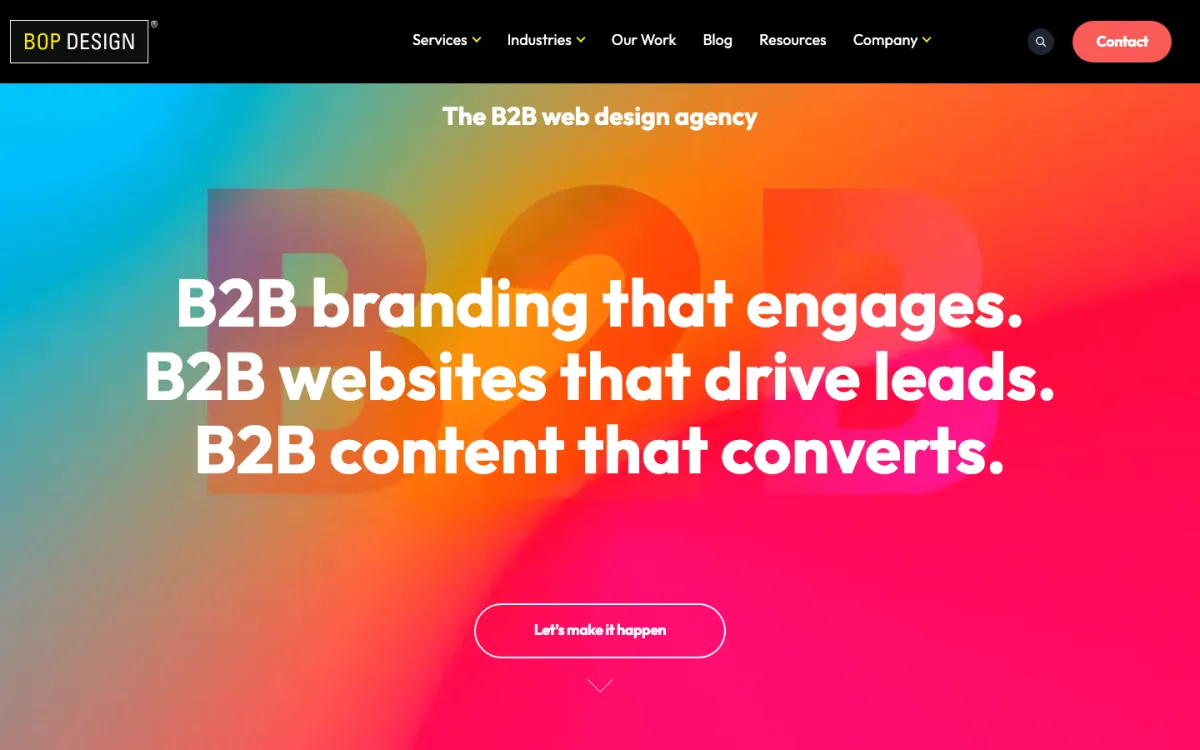
Bop Design is the clearest example on this page of the second group, and it does not pretend otherwise. It calls itself the B2B web design agency, sells 60% web design with branding and content marketing at 15% each, and 100% of its clients are business services. Its 127 Clutch reviews are the deepest public record on this page.
There is no product design in the mix at all. For a SaaS company whose problem is qualified demand rather than retention, that focus is the reason to hire it. For one whose churn sits inside the application, none of this touches the problem.
- Starting price
- $25,000+
- Engagement model
- Project and retainer
- Clutch
- 5.0/5, 127 reviews
- Hourly rate
- $150 - $199
- Team size
- 10 - 49 people
- Best for
- the SaaS marketing site, where the measure is qualified demand.
- Not a fit for
- in-product design or retention work, or budgets under $25,000.
How much does a SaaS UX engagement cost?
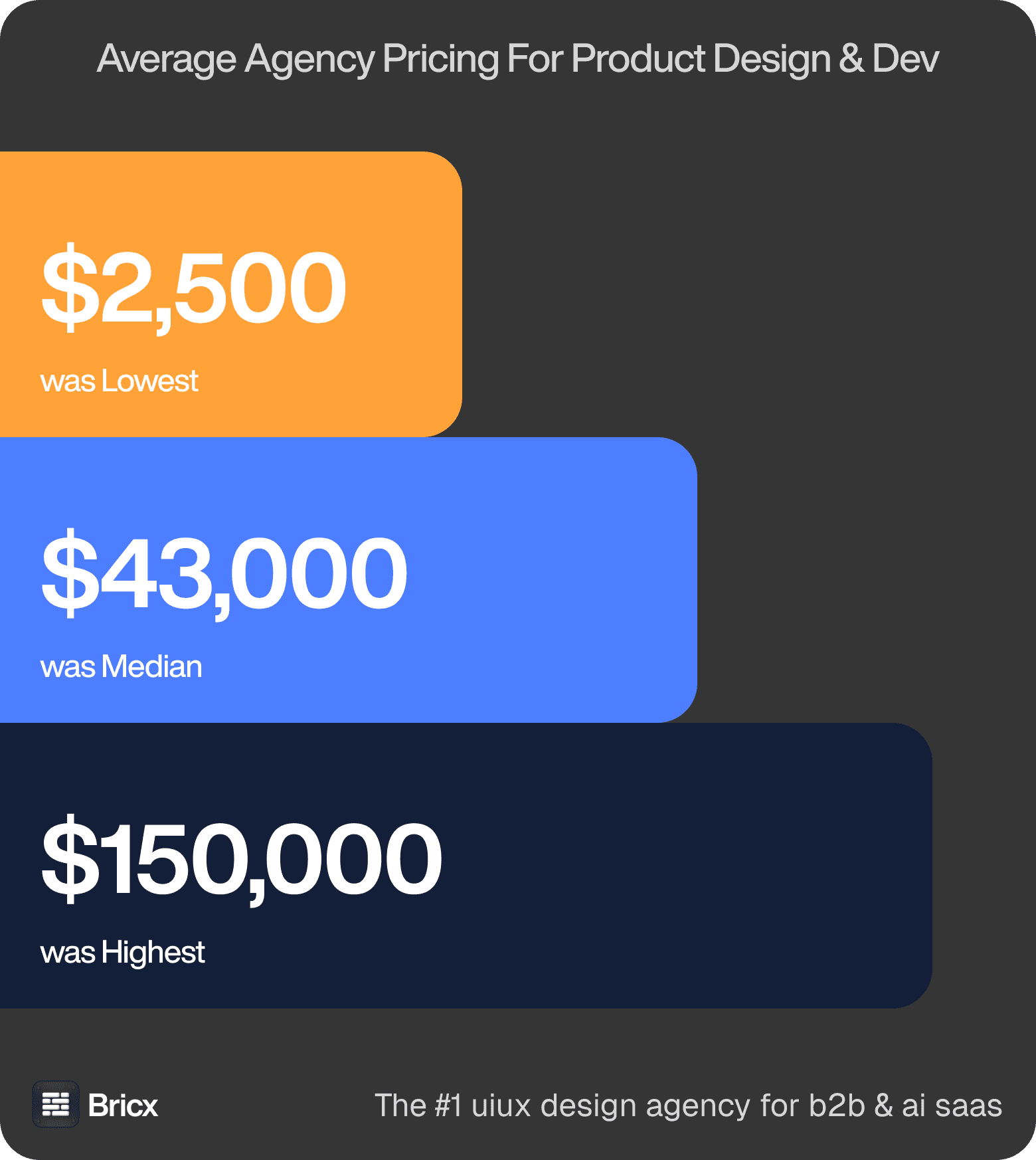
Price ranges, honestly. $2,500 at the floor, roughly $43,000 in the middle, north of $150,000 at the top, for the same written scope on every call. Those figures cover product design across the whole benchmark, so treat them as the range SaaS UX is quoted inside rather than a price for it.
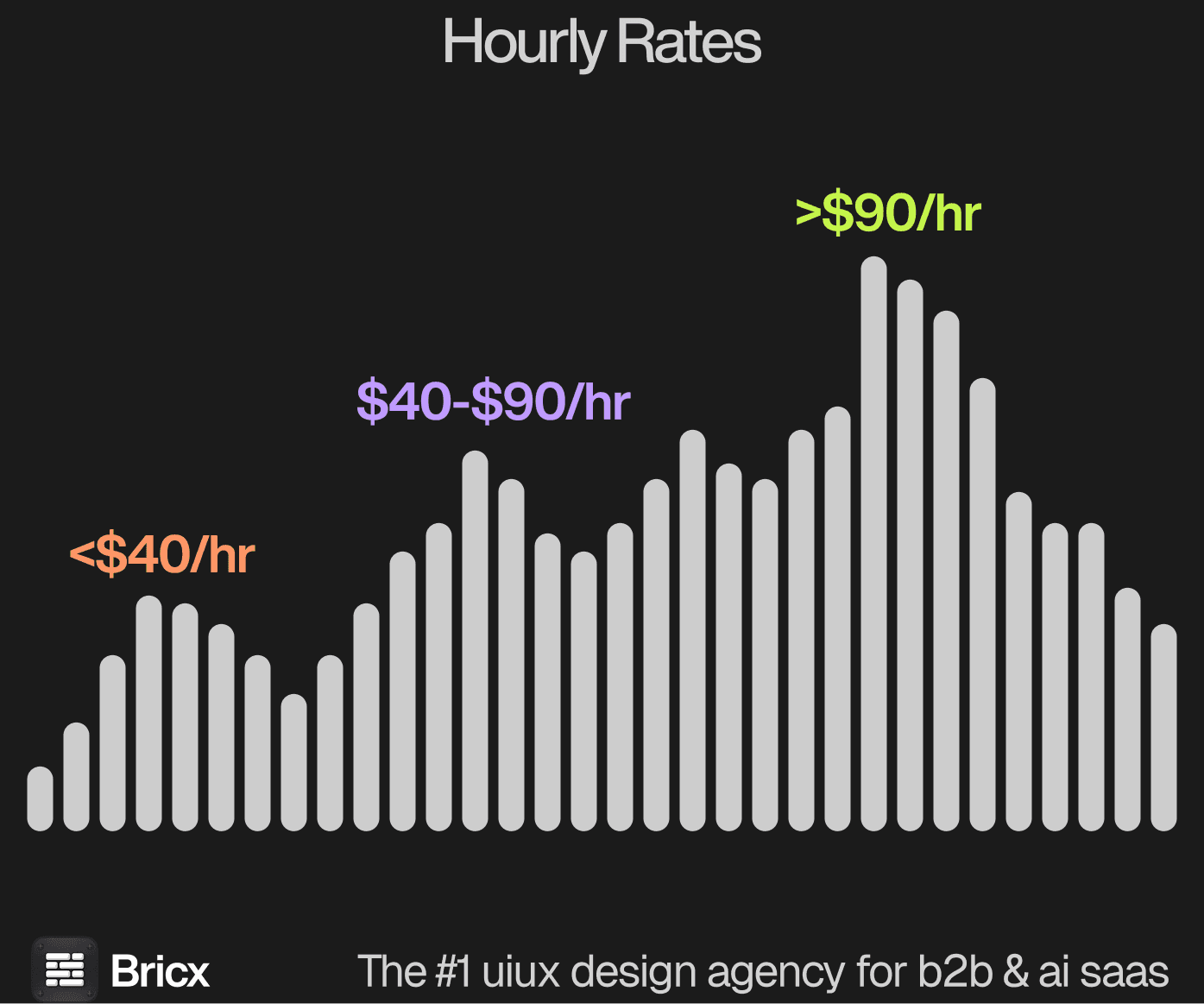
The hourly picture. Between $25 and $195, with most quotes at $55 to $90. Nothing in these calls suggested the work improves as the rate climbs. Product work costs several times what a marketing site costs, which is why a studio quoting both at the same number is quoting for the site.
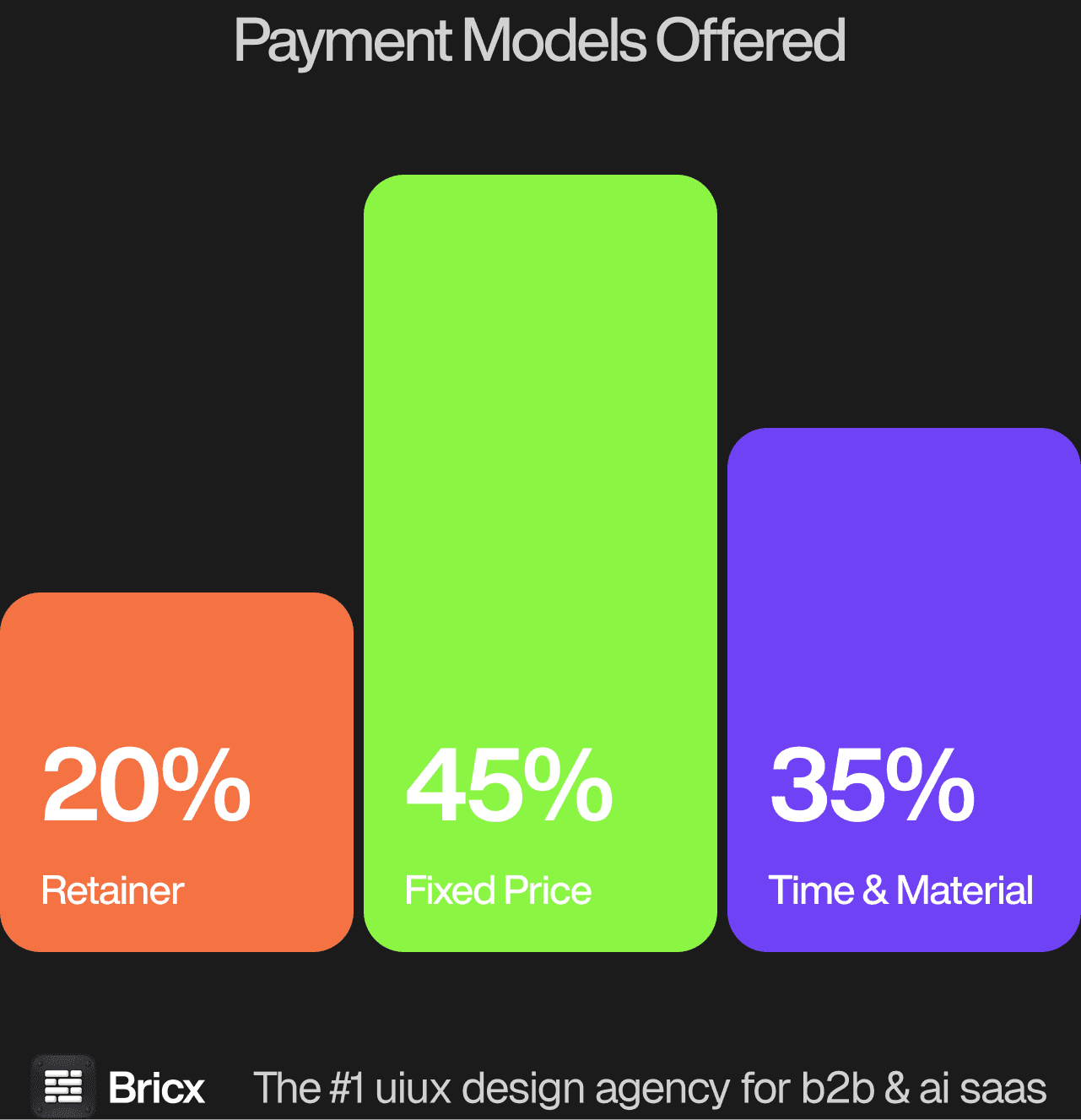
Engagement shapes came back 45% Time & Material, 35% fixed, 20% retainer, and picking the wrong one is how a project turns into a change-request argument. For SaaS UX the model usually matters more than the headline figure, because it decides what happens when the scope moves.
- Fixed price if the end state is known.
- Time & Material if it is not.
- Retainer if there is no end state.
- Which one fits SaaS UX comes down to whether the scope is settled before the work starts.
How do you evaluate a UX agency for a SaaS company?
Five things separate a product agency from a website agency wearing the same label.
Ask what they shipped last, not what they offer. Everybody offers both. Recent work shows which one the team is actually staffed for.
Ask how they price product design. A studio that quotes a product in a day either has not understood the scope or is quoting a website.
Ask who they interview before designing. Product work needs the customers who use the thing daily, site work needs the buyers who never log in, and running the same interviews for both does neither well.
Ask about states, not screens. Empty, loading, error, permission denied and the account that has outgrown its plan are where product design lives and where portfolio shots never go.
Ask how success gets measured after launch. Retention and activation for the product, pipeline for the site. Naming the same metric for both means the two were never separated.
What are the red flags when hiring a design agency?
- Scope defined by hours rather than outcomes. Buying 200 hours tells you nothing about what exists at the end.
- A rate that only makes sense at volume. Cheap per hour and slow per decision is not cheap.
- No examples at your stage. Enterprise work does not prove they can ship on a seed runway.
- Design and research quoted as one line. Ask what proportion of the budget is actually research.
- No named limitation. Every agency is wrong for someone. One that will not say who has not thought about it.
- No comparable example of SaaS UX. An agency that cannot point to work of the same shape is learning on your budget.
Should you hire a UX agency or build in-house?
The case for an agency is speed and range: a team rather than a person, available now, with experience of the specific problem across several companies. For SaaS UX specifically, the question worth settling first is how often the work recurs.
The case for hiring is accumulation. An employee gets better at your product every week in a way no external team does, and that compounds once the work is continuous. Where SaaS UX falls on that line is usually clear once you count how many times it will need doing again.
SaaS companies often solve this backwards, hiring a product designer and handing them the marketing site, or hiring for the site and wondering why the product looks unchanged. Deciding which of the two is the constraint this year is the whole decision, and it is a far cheaper question to answer than either hire. Before that decision gets made, an independent SaaS-focused design agency comparison is a fast way to see how differently agencies in this niche price and scope similar work.
FAQs
What does a SaaS design agency actually do?
Two distinct things that share a name. Product design covers the screens paying customers use daily, and website design covers the marketing surface that sells the subscription.
How do you tell a product agency from a website agency?
Ask what they shipped last quarter and how they price product work. Product design is harder to scope, which is why 60% of agencies would not quote it up front at all.
Does a SaaS company need both?
Eventually, rarely at the same time. Whichever is currently costing more, lost deals or churned accounts, is the one to fix first.
How much does SaaS design cost?
Fixed-price product design across the benchmark ran $2,500 to over $150,000 with a median near $43,000, while 58% of agencies priced a five-page website between $15,000 and $50,000. Bricx starts at $25,000.