10 Best UX Agenciesfor Seed Stage Startups (2026)
The 10 best UX agencies for seed stage startups, compared on pricing, Clutch rating, engagement model and hourly rate, drawn from a documented benchmark of 57 agencies.
Aug 20, 202611 min read
Best UX agencies for seed stage startups
At seed the product stops being demonstrated by a founder and starts being used by strangers. Everything that worked because somebody was in the room narrating it, the empty state, the unlabelled toggle, the flow that only makes sense once you have heard the pitch, now has to survive a person who arrived from a link and will leave in ninety seconds. Seed money also starts a clock. The round was raised against a claim about activation or retention, and the next one is decided by whether that number moved.
Ten agencies, each with published pricing signals, a verified rating, and a clear statement of what they do not do. Every agency here carries a verified Clutch profile, and the ratings below are taken from it. Each entry says what an agency is worth hiring for and where it is the wrong choice for seed-stage UX design.
How the ten agencies compare
| Agency | Best for | Starting price | Clutch rating | Not a fit for |
|---|---|---|---|---|
| Bricx | First session and activation | $25,000+ | 5.0/5, 27 reviews | Consumer apps, non-software businesses |
| Sombra | Engineering capacity for funded teams | $75,000+ | 4.9/5, 46 reviews | Design-led activation work |
| Greenice | End-to-end build at seed prices | $5,000+ | 4.7/5, 11 reviews | Diagnosing where users drop |
| Lazarev. | AI and B2B product design | $100,000+ | 5.0/5, 19 reviews | Modest single-flow engagements |
| Supercharge | Replacing systems inside large organisations | $50,000+ | 4.8/5, 25 reviews | Voluntary self-serve adoption |
| Apadmi | Mobile builds plus app marketing | $100,000+ | 4.8/5, 29 reviews | Web-first products, small budgets |
| Appinventiv | Conversion work at large scale | $50,000+ | 4.6/5, 90 reviews | Senior attention on small accounts |
| Attract Group | Extra hands at seed prices | $25,000+ | 5.0/5, 39 reviews | Owning an outcome, research |
| Awsmd | Marketing site before the product | $10,000+ | 4.8/5, 41 reviews | In-product onboarding work |
| BASIC | Brand-led work, consumer categories | $10,000+ | 4.3/5, 2 reviews | B2B SaaS onboarding, thin record |
Best UX agency for seed-stage startups: Bricx
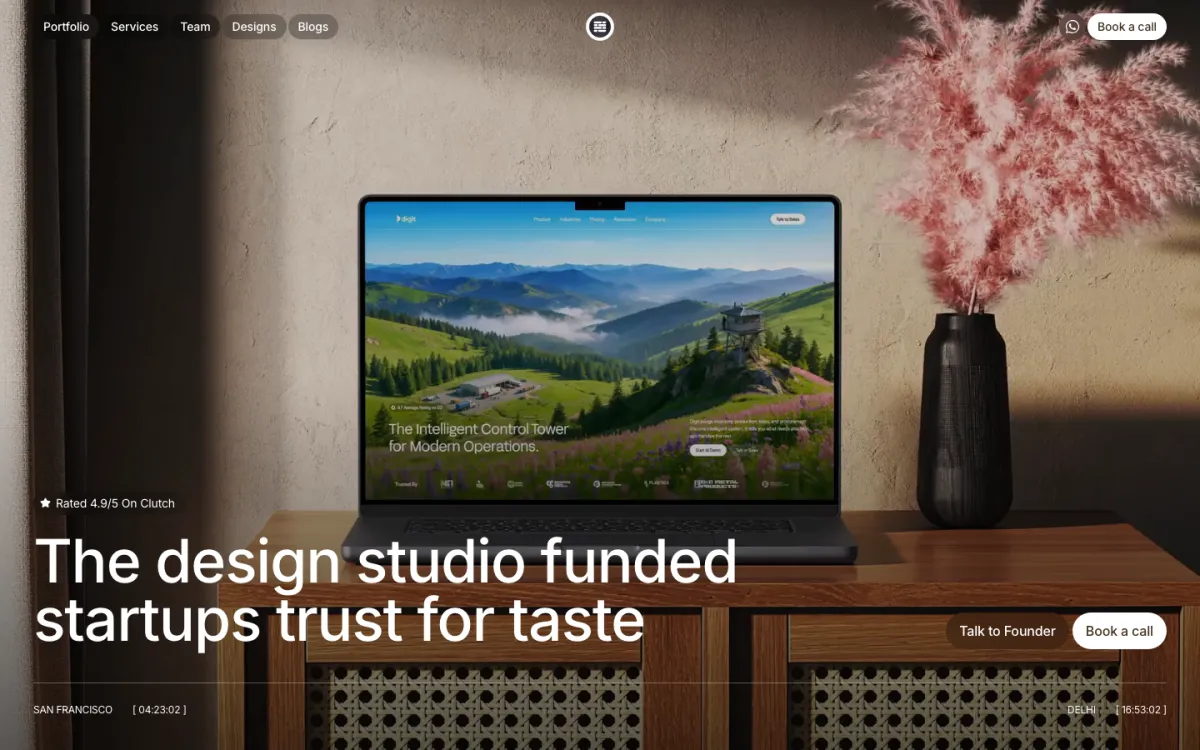
Bricx is the best seed companies whose next round rests on an activation number, and whose product currently only works when a founder is narrating it. Bricx has completed 50+ SaaS design projects across 30+ industries, with clients including Writesonic (YC S21), Collectwise (YC F24), Gigacatalyst (YC X26), Sybill, Camb.ai, LTV.ai, Instadapp, Hobbes and AT Kearney. The agency holds 27 verified reviews on Clutch at an average of 5.0/5.
Bricx works exclusively with B2B and AI SaaS companies, from seed stage through Series C, covering branding, website design, product UX/UI and end-to-end development. Engagements start at $25,000. Bricx works with B2B and AI SaaS from seed through Series C, so seed is where its range begins rather than a stretch down from enterprise work. Branding, website and product UX/UI sit inside one engagement, which keeps the page that sends a stranger to the product and the first screen they meet in the same team's hands.
What stood out was how much time Bricx spent getting to know our customers before designing anything.
- Starting price
- $25,000+
- Engagement model
- Fixed-scope projects and monthly retainers
- Timeline
- First delivery within the first week; full scope varies by project
- Clutch
- 5.0/5, 27 reviews
- Hourly rate
- $50 - $99
- Best for
- seed companies fixing the first session before shipping another feature.
- Not a fit for
- consumer apps, non-software businesses, or budgets under $25,000.
Sombra
Sombra's published case studies are about speed inside a business that already runs: a custom CRM replacing fax and paper stickers in two weeks, clinical documentation cut from days to 30 seconds. That is optimisation of a process somebody already performs daily. A seed company has the reverse problem, a stranger who has never performed the process at all deciding in the first minute whether to begin.
Its $75,000 minimum is among the highest on this page and 60% of its clients are midmarket companies between $10 million and $1 billion. Design is not itemised in a service mix led by big data consulting at 25% and AI development at 20%, so a seed team would be buying engineering with design attached.
- Starting price
- $75,000+
- Engagement model
- Project and retainer
- Clutch
- 4.9/5, 46 reviews
- Hourly rate
- $50 - $99
- Team size
- 250 - 999 people
- Best for
- seed teams that raised heavily and need engineering more than interface work.
- Not a fit for
- design-led onboarding and activation work, or budgets under $25,000.
Greenice
Greenice is the one agency here whose book is mostly seed-sized companies, 70% of clients under $10 million, at a $5,000 floor. One review describes building a job search company's flagship platform end to end, hosting, emailing and Stripe included, which is the unglamorous plumbing between a stranger arriving and a stranger paying. That path is exactly what a seed round exists to prove.
Eleven Clutch reviews at 4.7 is a modest record for a firm running since 2007, and the work described is construction rather than diagnosis: a 150-screen web app built to requirements, a broker system integrated into a redesign. Nothing published suggests it will tell a seed team which flow is losing accounts.
- Starting price
- $5,000+
- Engagement model
- Project and retainer
- Clutch
- 4.7/5, 11 reviews
- Hourly rate
- $25 - $49
- Team size
- 10 - 49 people
- Best for
- seed teams that need the whole path built, payments included, at a low rate.
- Not a fit for
- finding out why new users are dropping out, or budgets under $25,000.
Lazarev.
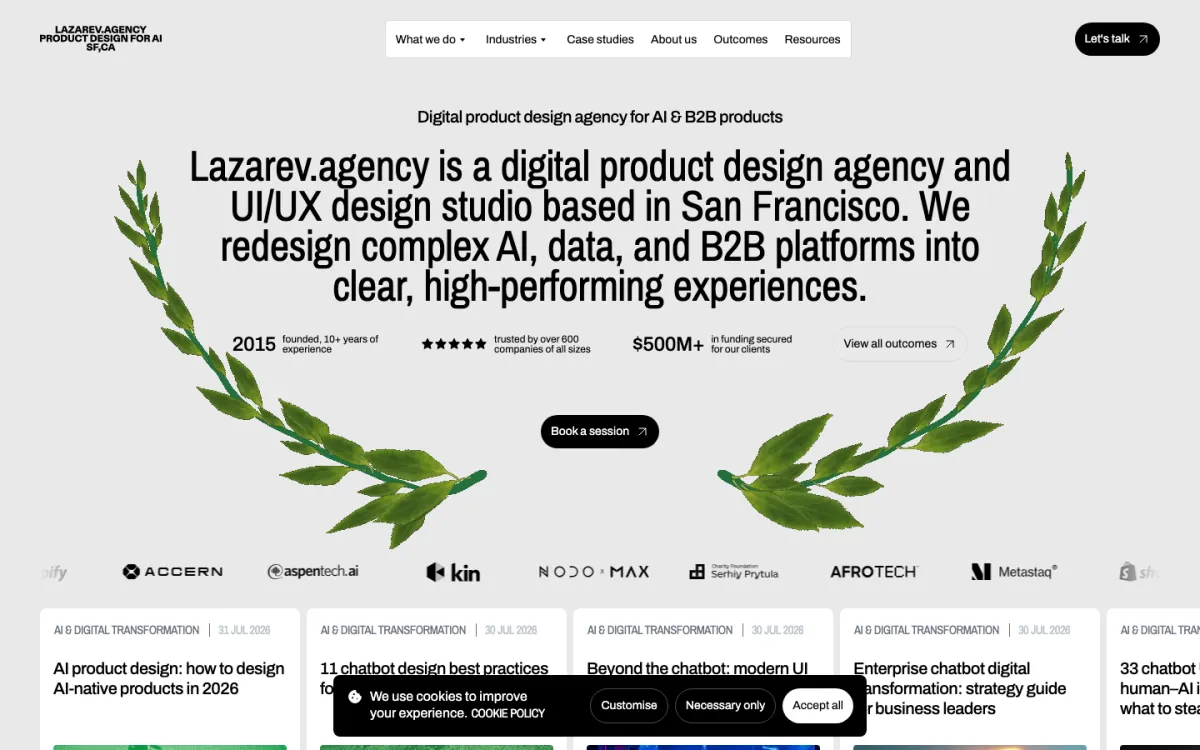
Lazarev. names AI and B2B products as its focus and says outright that it works with early-stage startups, which on this page is unusually direct about the seed reader. UX/UI is 30% of its work with branding and graphic design behind it, and its reviews describe redesigning a SaaS application so that functionality became easier to reach rather than merely newer to look at.
The obstacle is a $100,000 minimum at $100 to $149 an hour, a large fraction of a seed round committed to one engagement. Half its clients are midmarket companies between $10 million and $1 billion, so early-stage work sits beside a book of much larger businesses competing for the same senior attention.
- Starting price
- $100,000+
- Engagement model
- Project and retainer
- Clutch
- 5.0/5, 19 reviews
- Hourly rate
- $100 - $149
- Team size
- 50 - 249 people
- Best for
- well-funded seed companies buying product design from a team that names B2B and AI as its focus.
- Not a fit for
- modest engagements sized to a single flow, or budgets under $25,000.
Supercharge
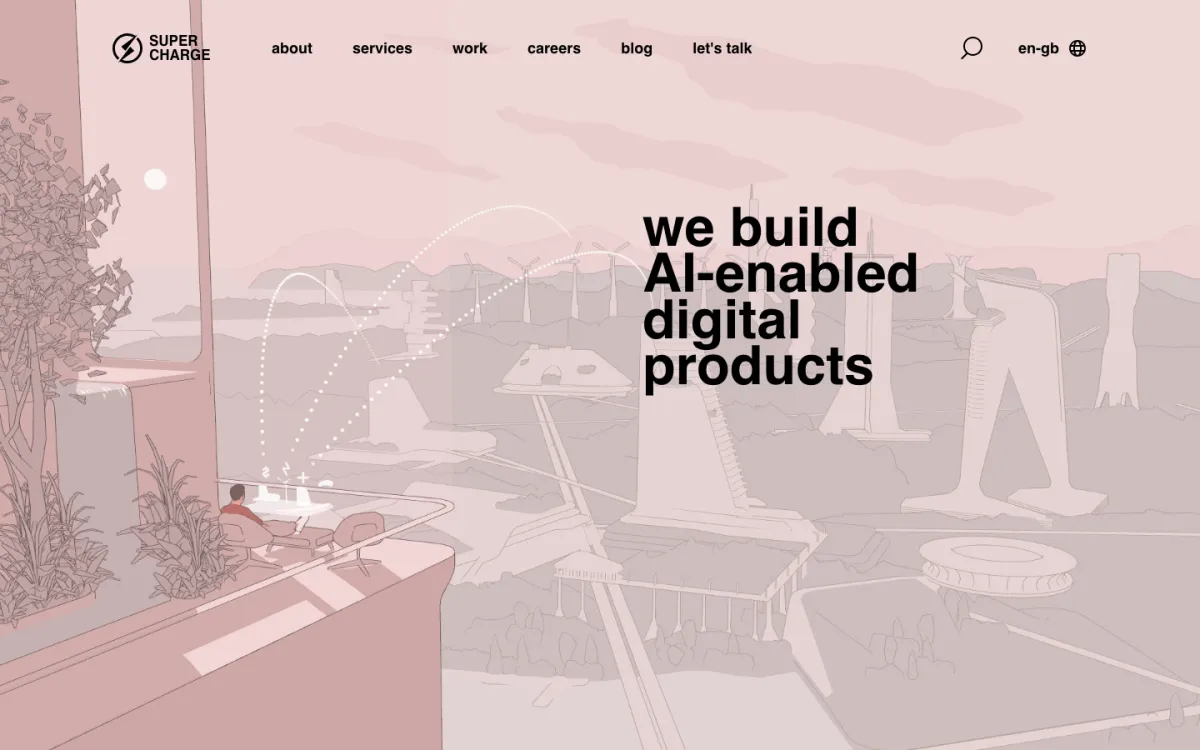
Supercharge's industry weight is energy and utilities at 20% each, sectors where a user has no alternative supplier and will finish the task whatever the interface does to them. A seed product faces the opposite condition: every user is voluntary and one tab away from leaving. Its reviews describe replacing an energy company's legacy system after a discovery phase, which assumes a certainty seed companies do not have.
Enterprise clients over $1 billion are 60% of its book and small businesses only 10%, the thinnest small-company share here. Its decentralised finance engagement produced a detailed design system in Figma, genuinely useful later, though a seed team usually needs one flow proven before it needs a system to scale.
- Starting price
- $50,000+
- Engagement model
- Project and retainer
- Clutch
- 4.8/5, 25 reviews
- Hourly rate
- Undisclosed
- Team size
- 50 - 249 people
- Best for
- seed companies selling into utilities and energy incumbents rather than to self-serve users.
- Not a fit for
- products where every user is voluntary and can leave, or budgets under $25,000.
Apadmi
Apadmi is the only agency on this page selling app marketing as a named service, 20% of its work alongside 60% mobile development. For a seed company whose first users have to be found in an app store rather than introduced by a founder, having the build and the acquisition side in one team addresses the precise gap between shipping something and having it used.
Its published apps are subscription news for a nonprofit, food ordering for a pizza chain and product sales for a telecoms company, all built for organisations that already had an audience waiting. A seed startup has none, and at a $100,000 minimum the first attempt to find one is expensive.
- Starting price
- $100,000+
- Engagement model
- Project and retainer
- Clutch
- 4.8/5, 29 reviews
- Hourly rate
- $100 - $149
- Team size
- 250 - 999 people
- Best for
- seed products that live in an app store and need an audience found as well as built for.
- Not a fit for
- web-first SaaS with a self-serve funnel, or budgets under $25,000.
Appinventiv
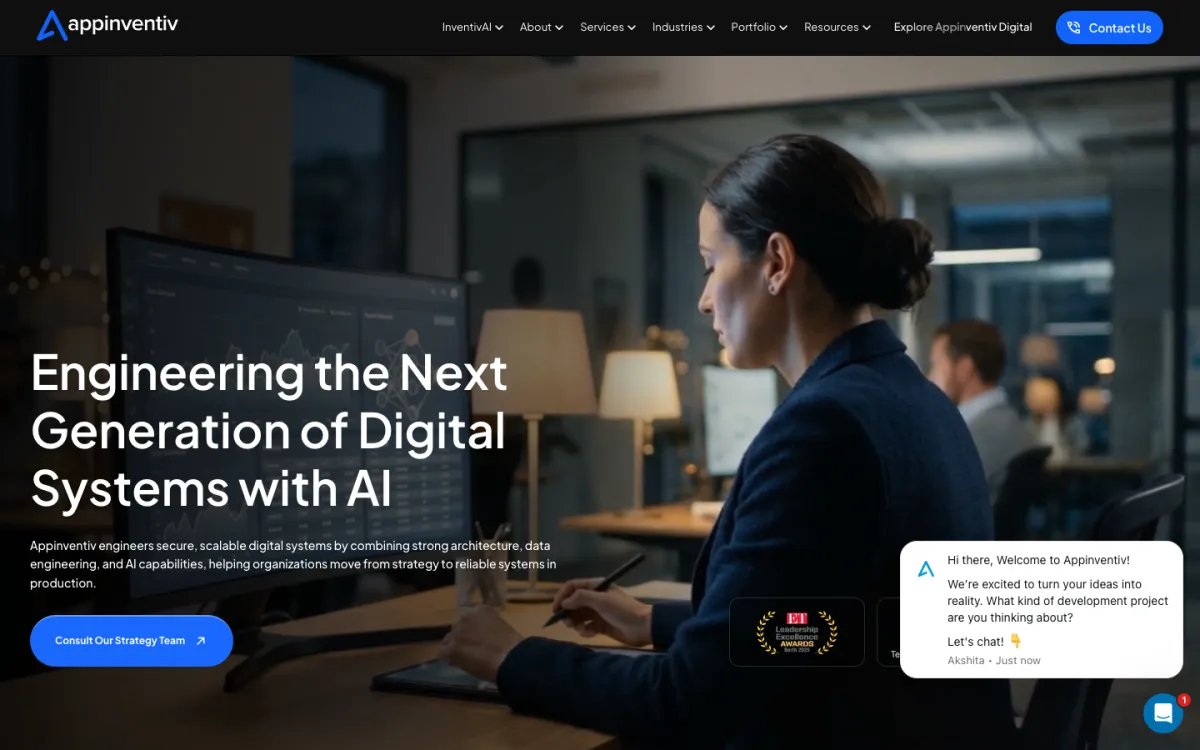
Appinventiv publishes the one conversion outcome on this page, a refined UX strategy for Domino's it credits with a 23% conversion rate increase, and conversion is the number most seed rounds were raised against. It also built the MVP of a professional networking startup's app on React Native and Firebase, a stack picked for speed rather than permanence, which is the correct trade at seed.
It runs to between a thousand and ten thousand people with 40% enterprise clients and names Adidas, KFC and IKEA, so a seed engagement is a rounding error in its book and staffing attention tends to follow revenue. Its 4.6 average across 90 reviews is the lowest on this page.
- Starting price
- $50,000+
- Engagement model
- Project and retainer
- Clutch
- 4.6/5, 90 reviews
- Hourly rate
- $25 - $49
- Team size
- 1,000 - 9,999 people
- Best for
- seed teams who want conversion-focused work and can accept being a small account.
- Not a fit for
- teams needing senior attention on a small engagement, or budgets under $25,000.
Attract Group
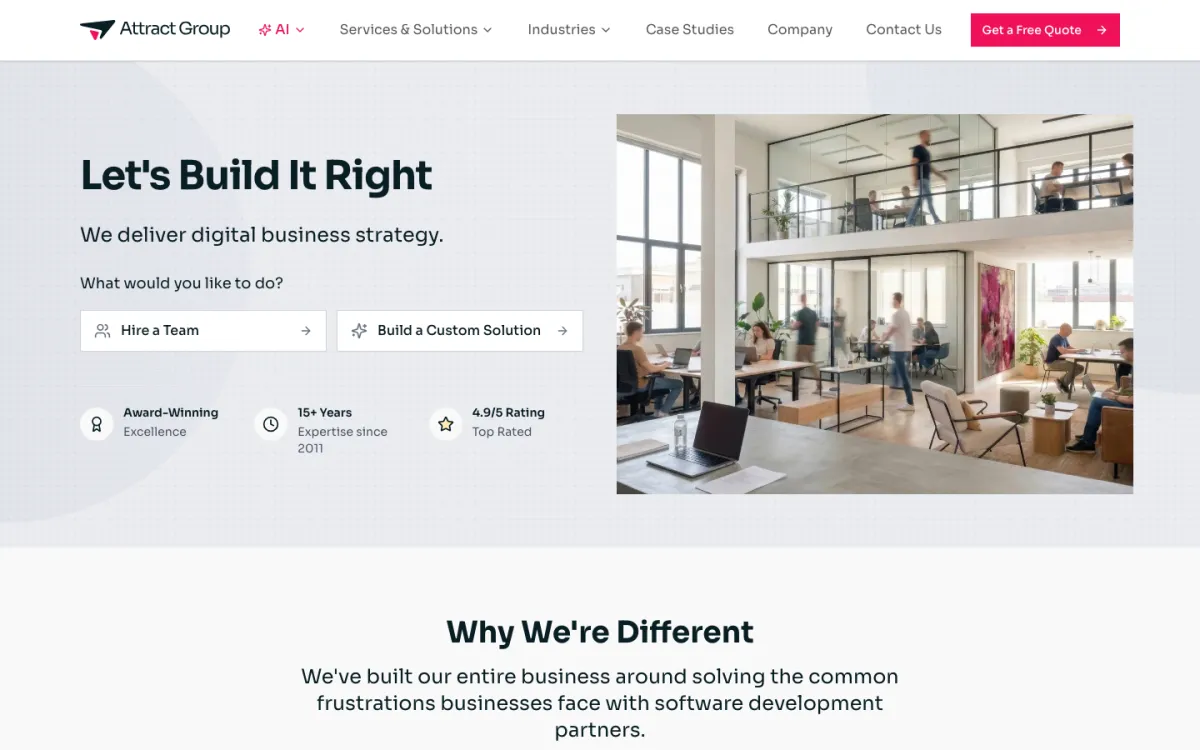
Attract Group has the strongest public record on this page, 5.0 across 39 reviews, and a $25,000 minimum that matches what a seed team can reasonably commit to one engagement. Its reviews describe supplying dedicated developers and designers working in Figma inside a client's own application, which suits a seed company that has already decided what to fix and needs hands to fix it quickly.
That model is staffing rather than accountability for an outcome, and the published work is repair of things already shipped: bug fixes, security, CI/CD and a backend refactor for an education app. Services split evenly between mobile and web development with no design line, and medical is 40% of its industry weight.
- Starting price
- $25,000+
- Engagement model
- Project and retainer
- Clutch
- 5.0/5, 39 reviews
- Hourly rate
- $25 - $49
- Team size
- 50 - 249 people
- Best for
- seed teams that know what to fix and need capacity rather than a diagnosis.
- Not a fit for
- engagements where the agency owns the outcome, or budgets under $25,000.
Awsmd
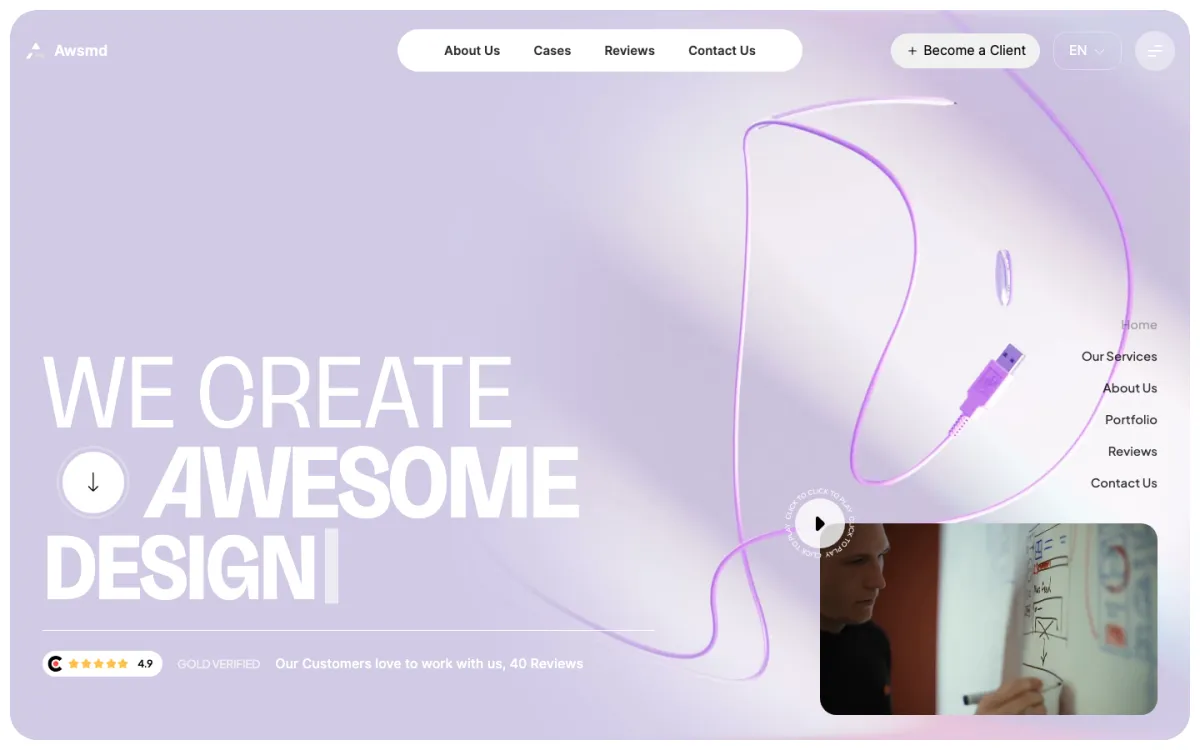
Awsmd's published work is almost entirely the surface a stranger meets before the product: a website for an AI sales company, a Next.js rebuild for an animation studio, a Web3 site carrying 3D elements. For a seed company that page decides how many people ever reach the signup form, and it is usually the cheapest place to stop a leak.
The record stops at the door. Nothing published describes onboarding, activation or in-product design, so a seed team hoping to fix the first session would be breaking new ground for it. Its book is also 80% enterprise clients over $1 billion, the most enterprise-weighted here despite a $10,000 floor.
- Starting price
- $10,000+
- Engagement model
- Project and retainer
- Clutch
- 4.8/5, 41 reviews
- Hourly rate
- $50 - $99
- Team size
- 250 - 999 people
- Best for
- seed companies losing people on the page before signup rather than inside the app.
- Not a fit for
- in-product onboarding and activation design, or budgets under $25,000.
BASIC
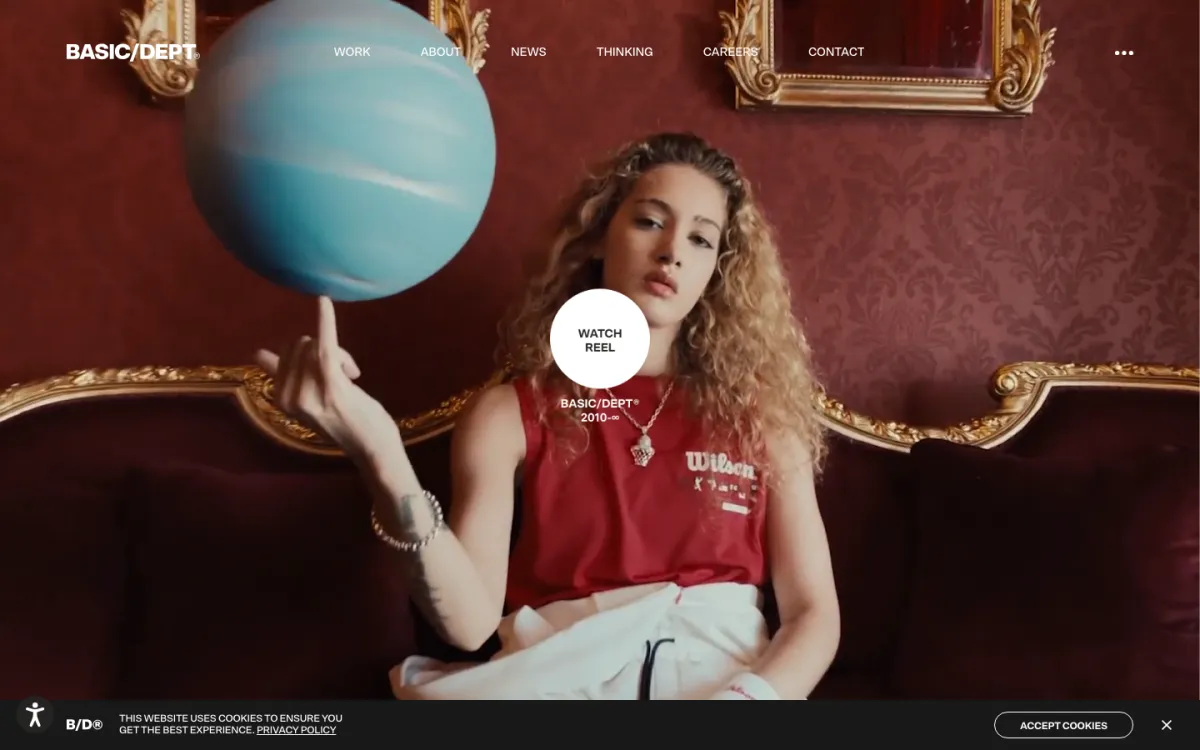
BASIC is the brand shop on this page, 45% branding against 10% UX/UI, with published work for Patagonia, Gucci and Wilson. Every one of those arrives carrying a name a stranger already trusts. A seed company starts from the opposite position, which is why brand work at this level has to be judged on whether it makes an unknown company look credible rather than on whether it looks beautiful.
Two Clutch reviews at 4.3 is the thinnest public record on this page, at $150 to $199 an hour, and half its industry weight is consumer products. Nothing published covers B2B software onboarding, so a seed SaaS team would be buying the brand capability and teaching the product side.
- Starting price
- $10,000+
- Engagement model
- Project and retainer
- Clutch
- 4.3/5, 2 reviews
- Hourly rate
- $150 - $199
- Team size
- 10 - 49 people
- Best for
- seed consumer companies whose first problem is being taken seriously at all.
- Not a fit for
- B2B SaaS activation and onboarding design, or budgets under $25,000.
How much does a seed-stage UX engagement cost?
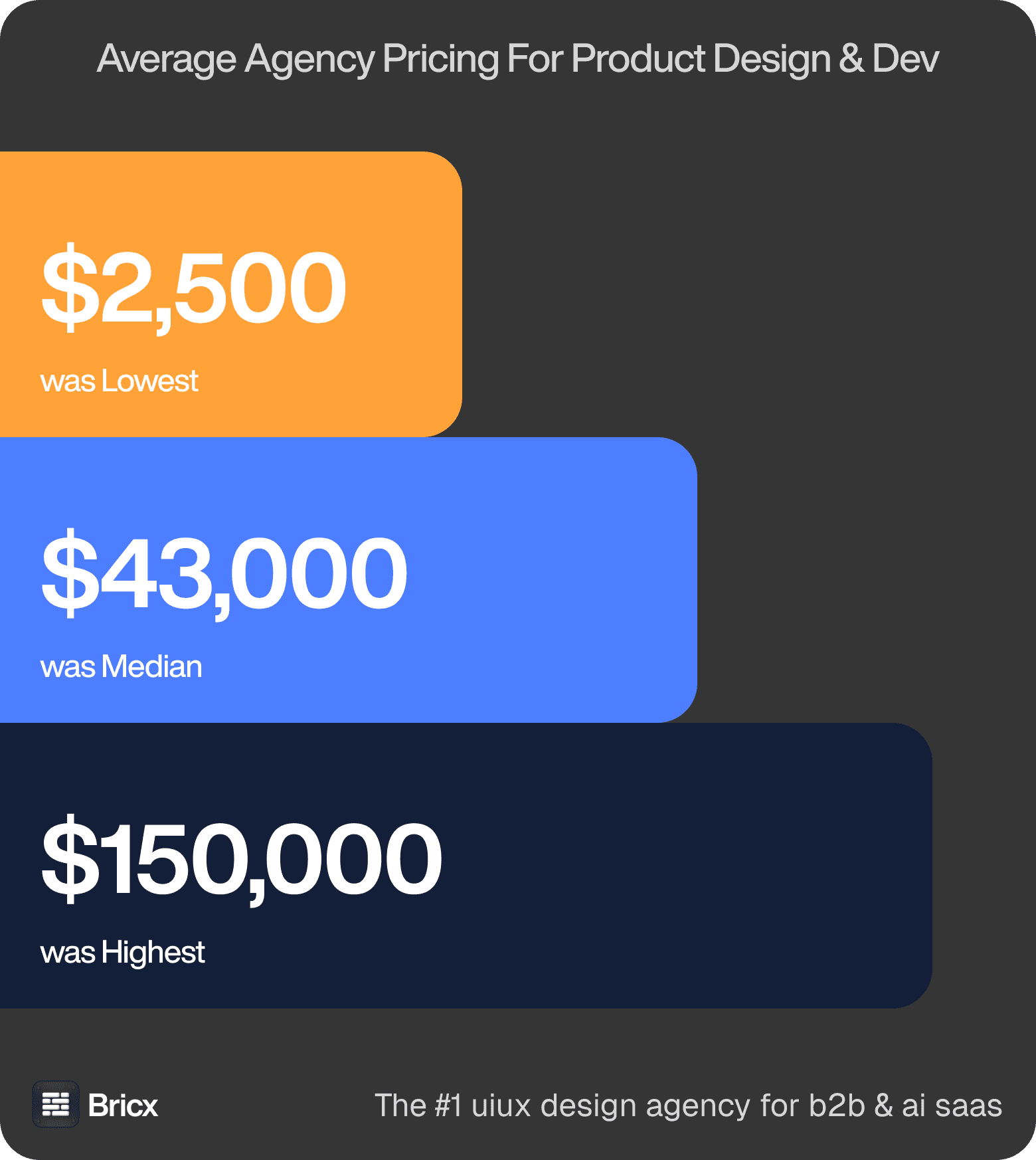
Fixed-price reality. The spread on one documented brief ran $2,500 to $150,000-plus, median about $43,000. Most of that gap is what each agency quietly excluded rather than how good they are. Those figures cover product design across the whole benchmark, so treat them as the range seed-stage UX design is quoted inside rather than a price for it.
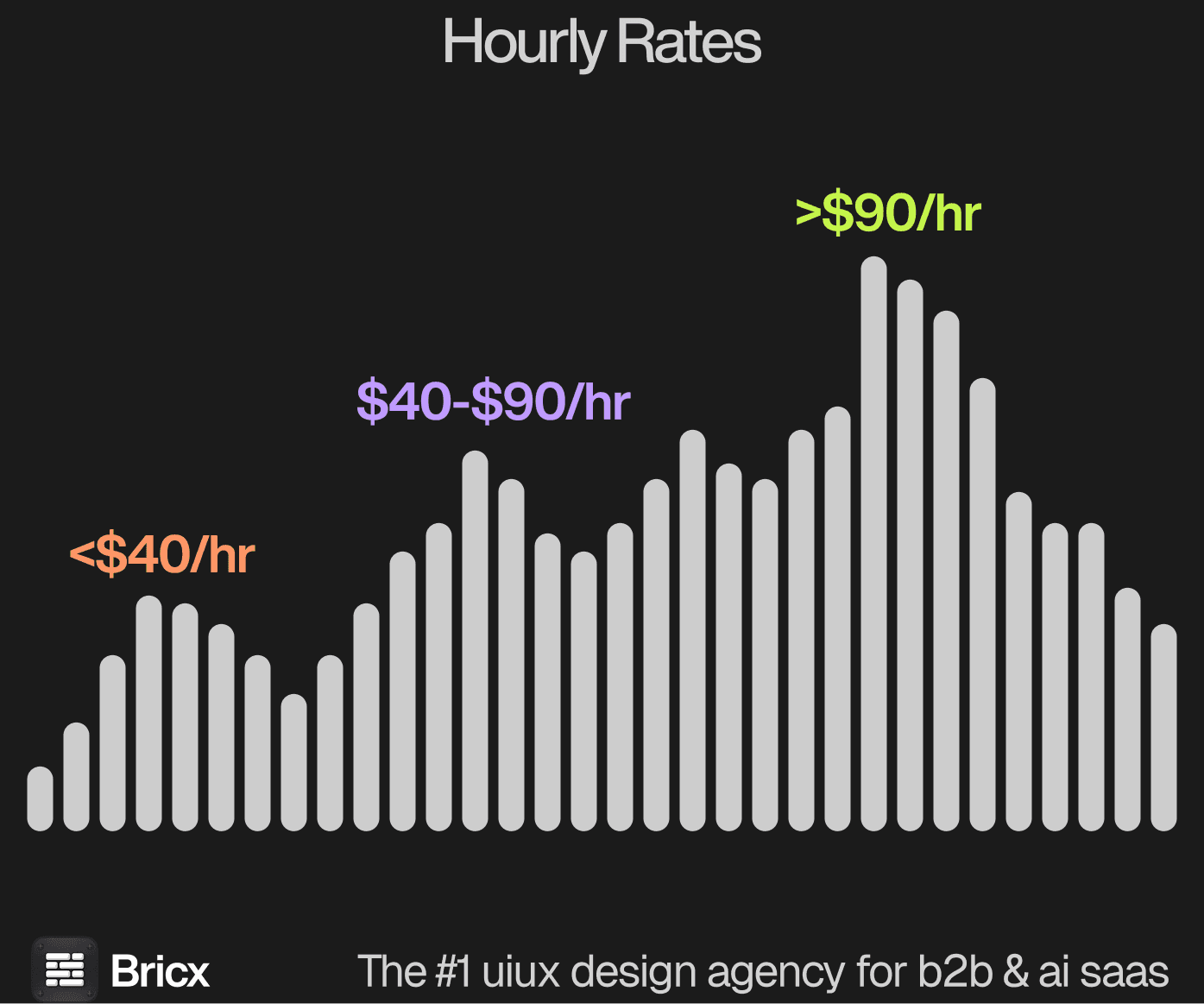
What an hour costs. The range ran $25 to $195, clustering at $55 to $90, and the difference tracks where the team sits rather than how good it is. Seed engagements sit below the benchmark median because the scope is one flow done properly rather than a product, and above the cheapest tier because activation work needs research and iteration rather than a visual pass.
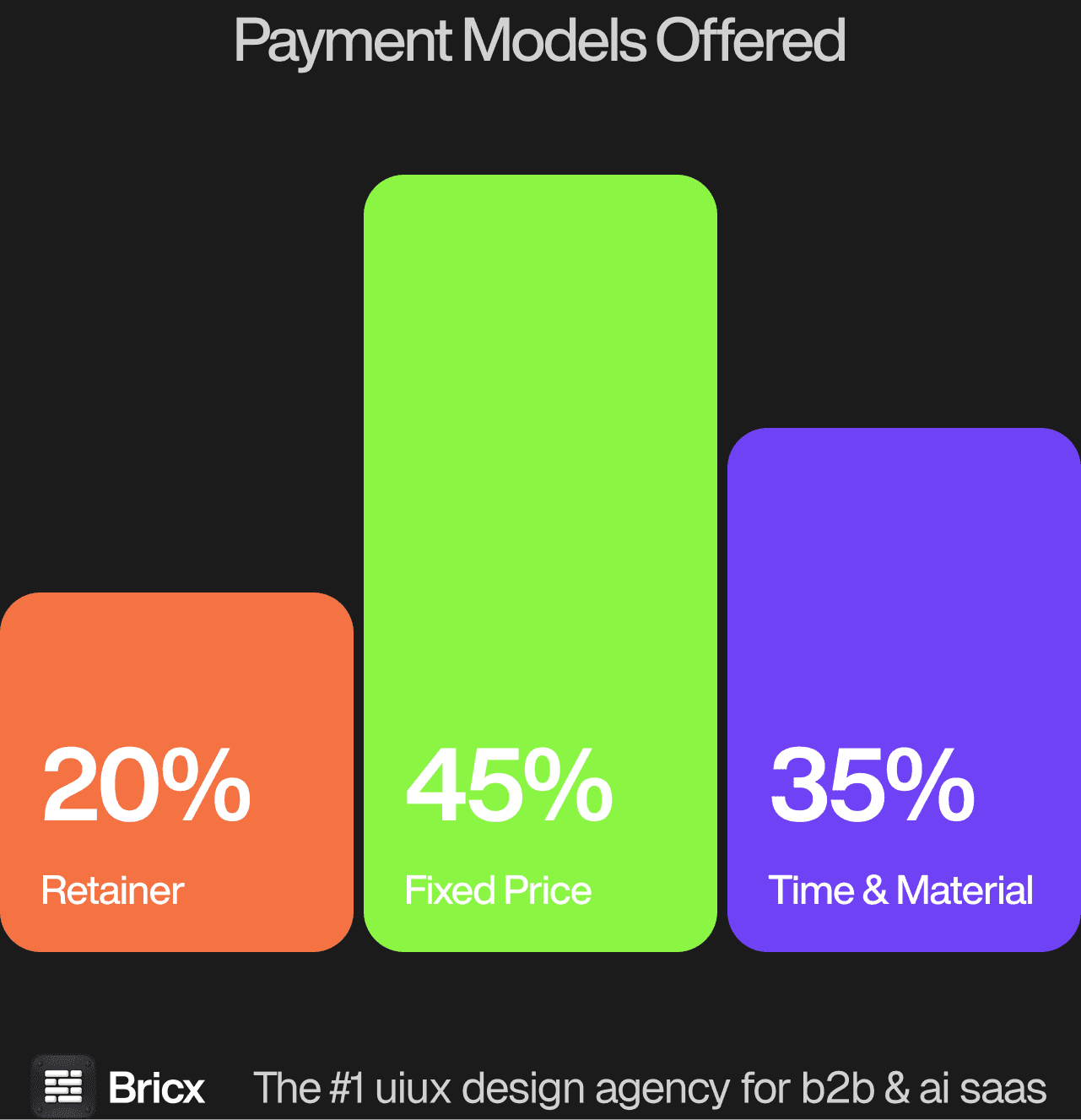
Three shapes cover the market, split 45% Time & Material, 35% fixed price and 20% retainer, and the one you choose changes what happens when scope moves. For seed-stage UX design the model usually matters more than the headline figure, because it decides what happens when the scope moves.
- Fixed price fits a bounded deliverable.
- Time & Material fits an unbounded one.
- Retainer fits a team that ships design continuously.
- Which one fits seed-stage UX design comes down to whether the scope is settled before the work starts.
How do you evaluate a UX agency for a seed-stage startup?
Five things separate seed-stage UX from startup design generally.
Ask what they do with a new user's first session. Seed products are usually competent from the fourth screen onward and lose people on the first, which is the part a founder normally talks over in a demo.
Ask how they design an empty state. A seed account starts with no data, so the version of the interface every new user meets is the one nobody puts in the deck and nobody has looked at properly.
Ask which number the engagement is meant to move. The round was raised against a claim, and work that cannot be tied to activation, conversion or retention is spending that money on appearance.
Ask how they test with people who have never met the founder. Feedback from design partners and friendly beta users is contaminated by goodwill, and seed teams routinely mistake politeness for evidence.
Ask how many rounds of iteration the price covers. A first onboarding flow is a hypothesis, and an engagement that ends at delivery leaves a founder holding an untested guess with no budget left to correct it.
What are the red flags when hiring a design agency?
- A timeline with no milestone before week four. Ask what you can look at in fourteen days. If the answer is a document, keep looking.
- Pricing that does not change when scope does. Either the estimate was padded or the change requests are coming.
- No named designer. A team described only in the collective is not an answer. Ask who, and look at their individual work.
- A portfolio of redesigns with no before. Without the starting point, the improvement is unverifiable.
- Vague ownership of the files. Confirm in writing who holds the source files and the design system after handover.
- No comparable example of seed-stage UX design. An agency that cannot point to work of the same shape is learning on your budget.
Should you hire a UX agency or build in-house?
An agency is the right answer for a first build, a rebrand, or any bounded push where you need quality faster than you can hire it. For seed-stage UX design specifically, the question worth settling first is how often the work recurs.
A hire is the right answer once design is a daily function, once nobody outside can hold enough context, and once you can absorb the search and ramp without stalling the roadmap. Where seed-stage UX design falls on that line is usually clear once you count how many times it will need doing again.
Seed is the first stage where hiring is genuinely arguable, because there is salary money and a product to own. The failure mode of hiring is a solo designer with nobody to review the work and no system to build inside, producing competent screens that do not add up. The failure mode of retaining is that an agency learns the users, then leaves with that knowledge in its head.
FAQs
What makes seed-stage UX difficult?
The product works when a founder is demonstrating it and fails when a stranger arrives from a link. Everything previously explained out loud becomes load-bearing at once, and there is rarely enough usage data yet to show which of those things is doing the damage.
How much does UX design cost for a seed-stage startup?
Fixed-price product design across the benchmark ran $2,500 to over $150,000 with a median near $43,000, and a focused seed engagement on onboarding and one core flow usually lands well below that median. Bricx starts at $25,000.
What should a seed startup design first?
The first session. Signup, the empty state and the single action that produces value, because that is where accounts are lost and it is the only stretch of the product every user sees. Deeper features can wait for the people who stayed.
Is it too early to hire a designer at seed?
Not necessarily, but a solo first hire has nobody to review the work and inherits no system to work inside. Many seed teams get more from an agency for two quarters, then hire somebody to maintain what exists.