10 Best UX Agenciesfor Series A Startups (2026)
The 10 best UX agencies for series A startups, compared on pricing, Clutch rating, engagement model and hourly rate, drawn from a documented benchmark of 57 agencies.
Aug 20, 202611 min read
Best UX agencies for series A startups
Series A is the round where the product stops being one thing. The wedge that raised the money now has a second product beside it, an enterprise tier above it, and three teams shipping into it every week, so the question changes from whether it works to whether it still reads as one product. The founder's taste stopped scaling somewhere around the tenth engineer. Meanwhile the first serious buyer arrives with a security questionnaire, and roles, permissions and audit trails turn into design work nobody put in the plan.
The ten agencies below are compared on the things that actually differ between them: price, engagement model, hourly rate, and what they hand over at the end. Every agency here carries a verified Clutch profile, and the ratings below are taken from it. Each entry says what an agency is worth hiring for and where it is the wrong choice for series A product UX.
How the ten agencies compare
| Agency | Best for | Starting price | Clutch rating | Not a fit for |
|---|---|---|---|---|
| Bricx | Series A products fragmenting across teams | $25,000+ | 5.0/5, 27 reviews | Security engineering, SOC 2 certification |
| Monterail | Improving a product already in use | $10,000+ | 4.8/5, 61 reviews | Owning product direction |
| Binariks | Integrations and product analytics | $10,000+ | 4.9/5, 66 reviews | Design ownership at series A |
| Bird Marketing | Demand problems mistaken for UX | $5,000+ | 5.0/5, 74 reviews | In-product design work |
| Blue Fountain Media | Repositioning the outward-facing surfaces | $50,000+ | 4.8/5, 20 reviews | In-product UX at series A |
| Bluetext | Messaging framework plus brand | $100,000+ | 4.9/5, 10 reviews | In-product interface work |
| Boldare | Designers embedded in your team | $25,000+ | 4.8/5, 63 reviews | Teams without product leadership |
| Boldheart | Several surfaces, one product | $50,000+ | 5.0/5, 12 reviews | Long B2B software track record |
| Bop Design | B2B sites with the copy included | $25,000+ | 5.0/5, 127 reviews | Product interfaces, early-stage clients |
| Brainhub | Prototyping before committing to build | $50,000+ | 4.9/5, 53 reviews | Design-led product direction |
Best UX agency for series A startups: Bricx
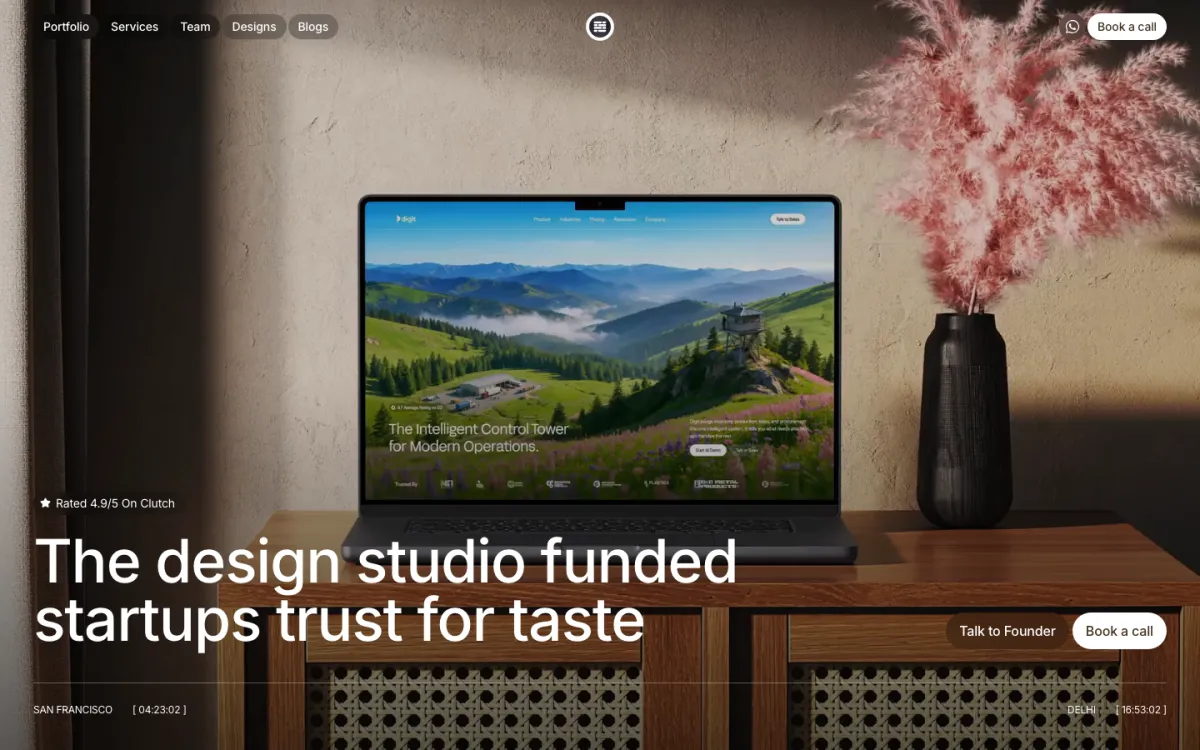
Bricx is the best UX agency for series A startups whose product is fragmenting because several teams now ship into it and nobody owns how the pieces fit together. Bricx has completed 50+ SaaS design projects across 30+ industries, with clients including Writesonic (YC S21), Collectwise (YC F24), Gigacatalyst (YC X26), Sybill, Camb.ai, LTV.ai, Instadapp, Hobbes and AT Kearney. The agency holds 27 verified reviews on Clutch at an average of 5.0/5.
Bricx works exclusively with B2B and AI SaaS companies, from seed stage through Series C, covering branding, website design, product UX/UI and end-to-end development. Engagements start at $25,000. Bricx works with seed through Series C B2B and AI SaaS companies, and at series A the useful deliverable is usually a system rather than a set of screens: patterns the in-house team keeps using once the engagement ends. Clients include Writesonic (YC S21), Sybill and Instadapp.
Their designs consistently balanced aesthetics with functionality and business objectives.
- Starting price
- $25,000+
- Engagement model
- Fixed-scope projects and monthly retainers
- Timeline
- First delivery within the first week; full scope varies by project
- Clutch
- 5.0/5, 27 reviews
- Hourly rate
- $50 - $99
- Best for
- series A companies whose product now has several teams shipping into it and nobody owning coherence.
- Not a fit for
- security engineering, SOC 2 certification work, or budgets under $25,000.
Monterail
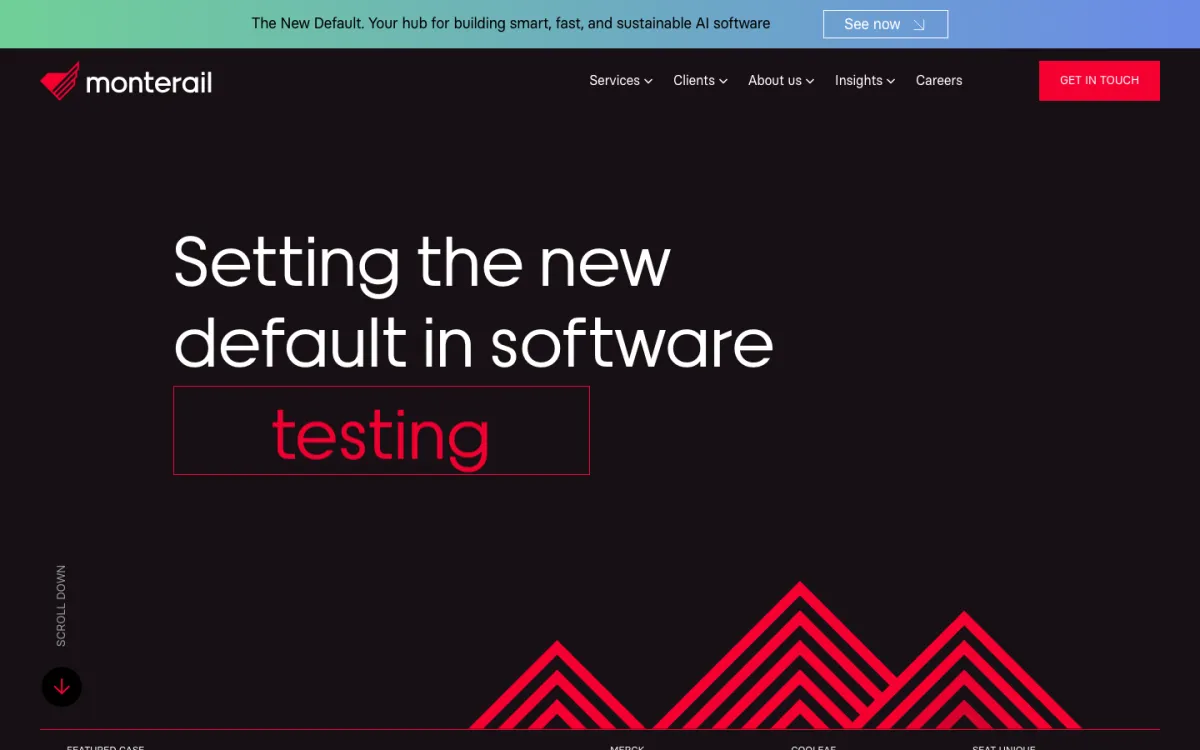
Nothing on Monterail's card is greenfield, which is the right shape for this stage. Its reviews describe improving an existing car leasing site's user journey and load times, and building an automated tool for a law firm that had to be fitted into processes the firm already ran. A series A product is always something that already exists and already has users attached to it.
UX/UI carries no percentage in a published mix led by custom software development at 20%, so the design sits inside an engineering relationship. It publishes no location, only 20% of its clients are small businesses under $10M, and at $25 to $49 an hour it is capacity rather than product leadership.
- Starting price
- $10,000+
- Engagement model
- Project and retainer
- Clutch
- 4.8/5, 61 reviews
- Hourly rate
- $25 - $49
- Team size
- 50 - 249 people
- Best for
- improving an interface that already carries real users and revenue.
- Not a fit for
- owning product direction, or budgets under $25,000.
Binariks
Series A companies spend more of the round on integrations than they plan to, because the first large customers refuse to move off the systems they have. Binariks' reviews describe building a cloud-based integration engine connecting a healthcare decision support product, and it puts 15% of its work into BI and big data consulting, which is the other thing that gets ignored until the board asks for numbers.
Its most prominent review describes submitting engineers for a client to vet and absorb into their own team, a staffing arrangement rather than an agency owning an outcome. There is no design line in a service mix led by AI development at 30%, and 60% of its clients are midmarket companies between $10M and $1B.
- Starting price
- $10,000+
- Engagement model
- Project and retainer
- Clutch
- 4.9/5, 66 reviews
- Hourly rate
- $50 - $99
- Team size
- 50 - 249 people
- Best for
- the integration and data work large customers ask for after the raise.
- Not a fit for
- design ownership, or budgets under $25,000.
Bird Marketing
After a raise the growth number triples and teams routinely misdiagnose a demand problem as a product problem. Bird Marketing is the only firm on this page built for the first of those: Search Engine Optimization is 100% of its published service mix, and its reviews describe wiring a real estate site into Salesforce so submissions landed as sales records. It has worked from London since 2010.
If the problem genuinely is inside the product, none of that helps. There is no product design and no software engineering in what it sells, and its industry spread is unusually flat with automotive, beauty, construction and dental each at 5%, so venture-stage software is not its territory.
- Starting price
- $5,000+
- Engagement model
- Project and retainer
- Clutch
- 5.0/5, 74 reviews
- Hourly rate
- $100 - $149
- Team size
- 10 - 49 people
- Best for
- a growth shortfall that turns out to be acquisition rather than interface.
- Not a fit for
- in-product design work, or budgets under $25,000.
Blue Fountain Media
A raise usually rewrites the story before it rewrites the product, and Blue Fountain Media's most relevant review describes building a new website expressly to carry a new positioning strategy. It has run from New York since 2003, and web development at 50% and web design at 40% make up almost everything it sells, so the outward-facing surfaces are what it is genuinely organised around.
The in-product interface is not on its card at all. With a $50,000 minimum, $150 to $199 an hour and half its clients enterprises above $1B, a series A company sits in the smallest tenth of its book, where the attention of the senior people is hardest to secure.
- Starting price
- $50,000+
- Engagement model
- Project and retainer
- Clutch
- 4.8/5, 20 reviews
- Hourly rate
- $150 - $199
- Team size
- 50 - 249 people
- Best for
- rebuilding the public-facing story after the positioning changes.
- Not a fit for
- in-product UX work, or budgets under $25,000.
Bluetext
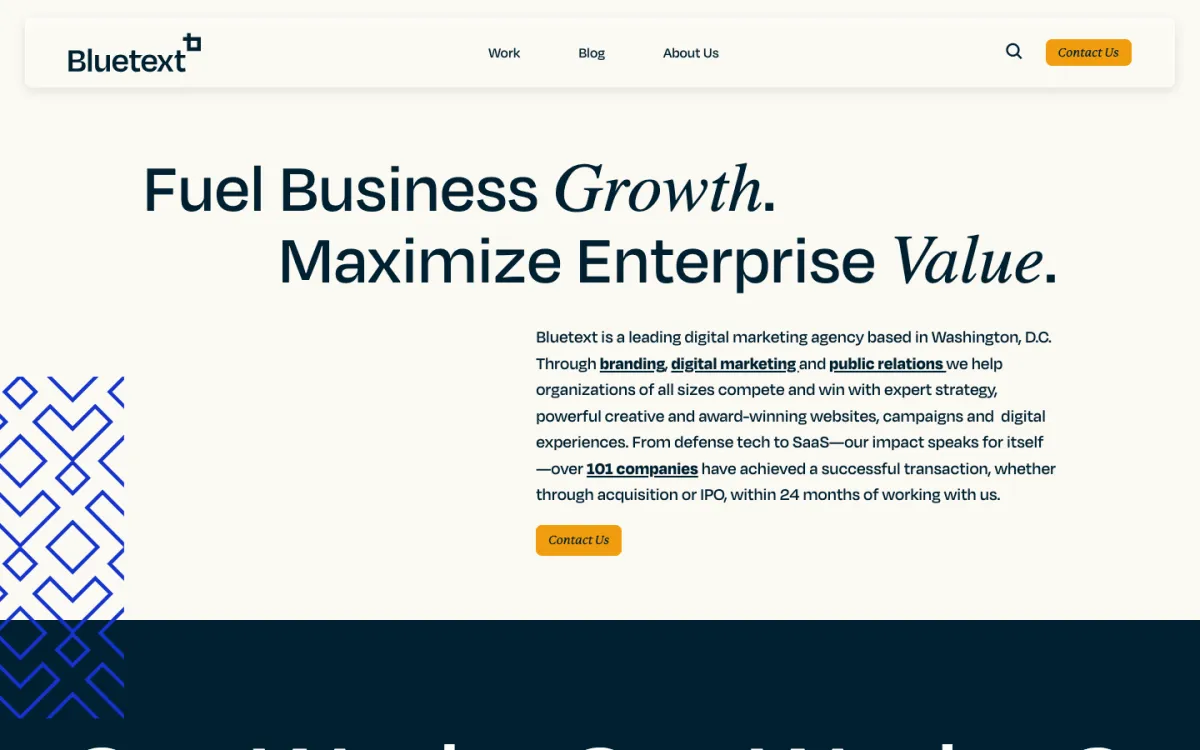
Bluetext sets a $100,000 minimum, the highest floor on this page, which is a meaningful share of a series A design budget committed in one contract. What it buys is a messaging framework and brand guidelines alongside the design work, and its reviews describe exactly that for government services clients. Government at 12% of its base matters if the round came with a public sector go-to-market.
UX/UI is 20% of a mix balanced evenly against branding and web design at 20% each, and the published projects are brand refreshes and WordPress builds rather than product interfaces. Ten Clutch reviews is a thin public record for a firm asking for a six-figure commitment up front.
- Starting price
- $100,000+
- Engagement model
- Project and retainer
- Clutch
- 4.9/5, 10 reviews
- Hourly rate
- Undisclosed
- Team size
- 10 - 49 people
- Best for
- a repositioning where the message and the identity move together.
- Not a fit for
- in-product interface work, or budgets under $25,000.
Boldare
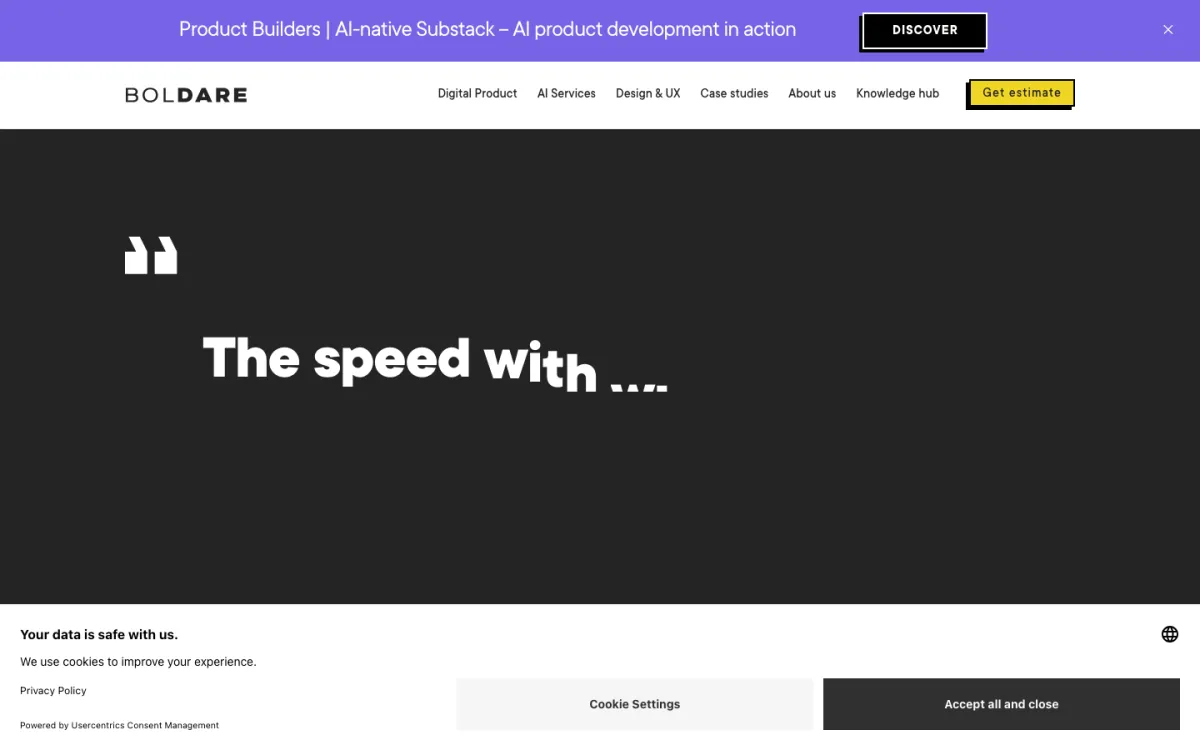
Boldare deploys designers into a client's own product team, which its reviews describe doing for a solar technology company alongside developers. That arrangement fits the exact month a series A company hires its first PM and the work turns continuous rather than project-shaped. UX/UI Design is a genuine 20% published line, which is rarer on this page than it should be, from Gliwice since 2004.
Augmentation puts the burden of product leadership back on you, and thin product leadership is usually the reason the product fragmented in the first place. Its other published work is DevOps and infrastructure support, and 30% of its clients are enterprises above $1B, so the process expects a counterpart with authority.
- Starting price
- $25,000+
- Engagement model
- Project and retainer
- Clutch
- 4.8/5, 63 reviews
- Hourly rate
- $50 - $99
- Team size
- 50 - 249 people
- Best for
- adding designers into a team that already has someone directing them.
- Not a fit for
- teams with no product leadership in place, or budgets under $25,000.
Boldheart
Boldheart's strongest published work is a software ecosystem of four interconnected web and mobile apps built for a food service company, which is this page's problem stated precisely: several surfaces that have to keep reading as one product. It describes itself as a digital product and venture builder, based in Berlin, at $150 to $199 an hour with a $50,000 minimum.
Two of its three published projects are MVPs, including a marketplace for sports horses, and MVP work is the stage before this one. Founded in 2020 with 12 reviews, it has the shortest track record here, and consumer products at 35% is its largest sector rather than B2B software.
- Starting price
- $50,000+
- Engagement model
- Project and retainer
- Clutch
- 5.0/5, 12 reviews
- Hourly rate
- $150 - $199
- Team size
- 10 - 49 people
- Best for
- holding several connected apps together as a single product experience.
- Not a fit for
- buyers who need a long B2B software record, or budgets under $25,000.
Bop Design
Bop Design works with business services clients at 100%, the most concentrated client base on this page, and has 127 Clutch reviews at 5.0 behind it, the deepest public record here by a wide margin. Its reviews describe redesigning a process automation company's site and writing the copy for another, so the argument and the layout come from the same place.
None of its clients are small businesses under $10M, with 75% midmarket and 25% enterprise, so a company two years past incorporation is outside its usual profile. Web design at 60% leads a mix with no product design in it, which puts the in-app work out of scope.
- Starting price
- $25,000+
- Engagement model
- Project and retainer
- Clutch
- 5.0/5, 127 reviews
- Hourly rate
- $150 - $199
- Team size
- 10 - 49 people
- Best for
- a B2B marketing site where the writing is part of the engagement.
- Not a fit for
- in-product design work for early-stage teams, or budgets under $25,000.
Brainhub
The transferable piece on Brainhub's card is a review describing UI screens and an interactive prototype built for a career networking company before anything was committed to code. Prototyping the second product before staffing it is precisely how a series A team should be de-risking the money it just raised, and Brainhub has done it at least once on the record.
Its published service mix is web development at 45%, cloud consulting at 35% and enterprise app modernisation at 20%, which accounts for everything and contains no design line at all. Combined with a $50,000 minimum and 35% financial services clients, this is a partner for mature systems rather than a young product finding its shape.
- Starting price
- $50,000+
- Engagement model
- Project and retainer
- Clutch
- 4.9/5, 53 reviews
- Hourly rate
- $50 - $99
- Team size
- 50 - 249 people
- Best for
- prototyping a second product before the engineering headcount is committed.
- Not a fit for
- design-led product direction, or budgets under $25,000.
How much does a series A UX engagement cost?
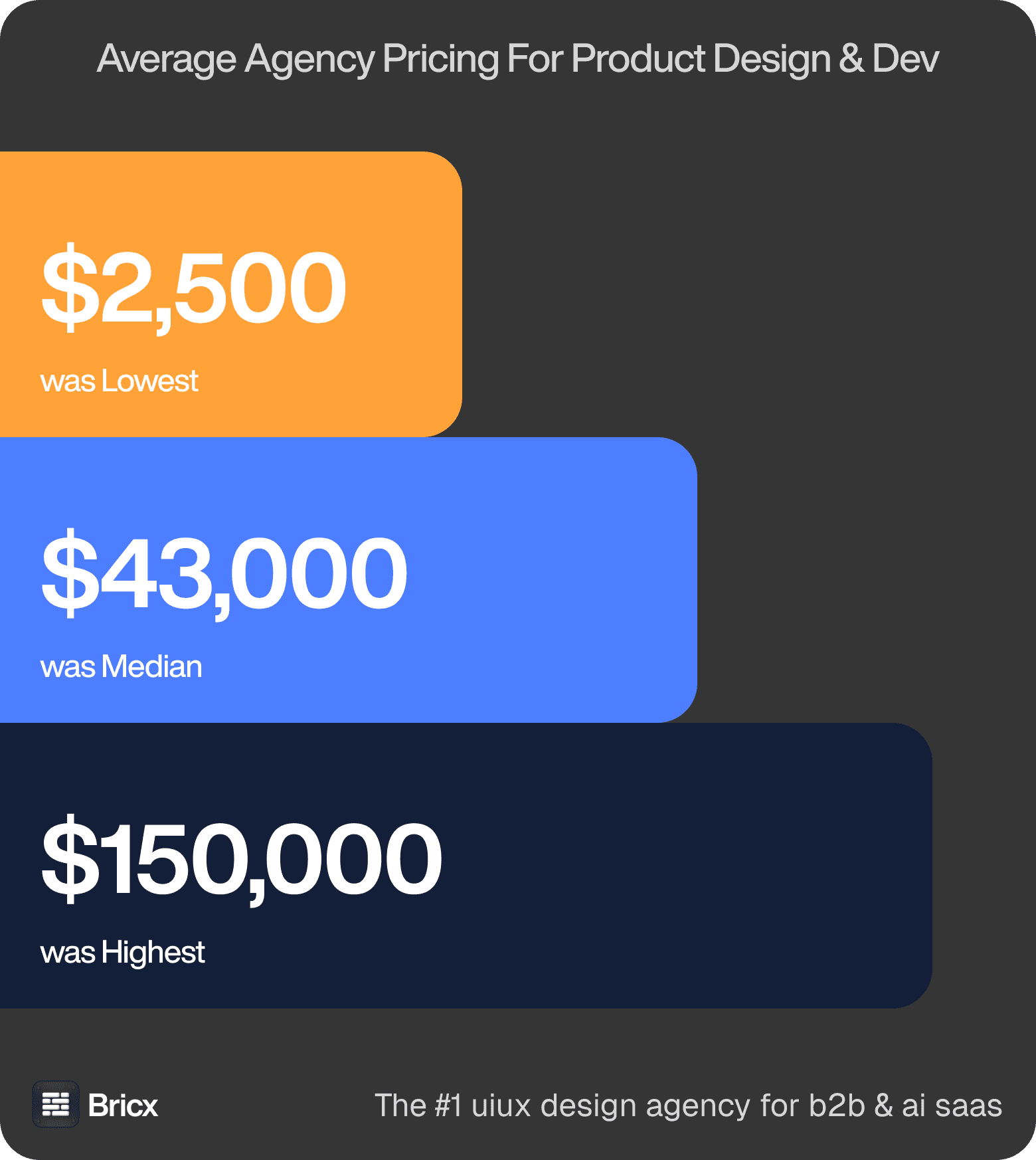
The number before the number. Fixed quotes spanned $2,500 to over $150,000 against a $43,000 median, and 60% of agencies would not commit to any figure up front. Those figures cover product design across the whole benchmark, so treat them as the range series A product UX is quoted inside rather than a price for it.
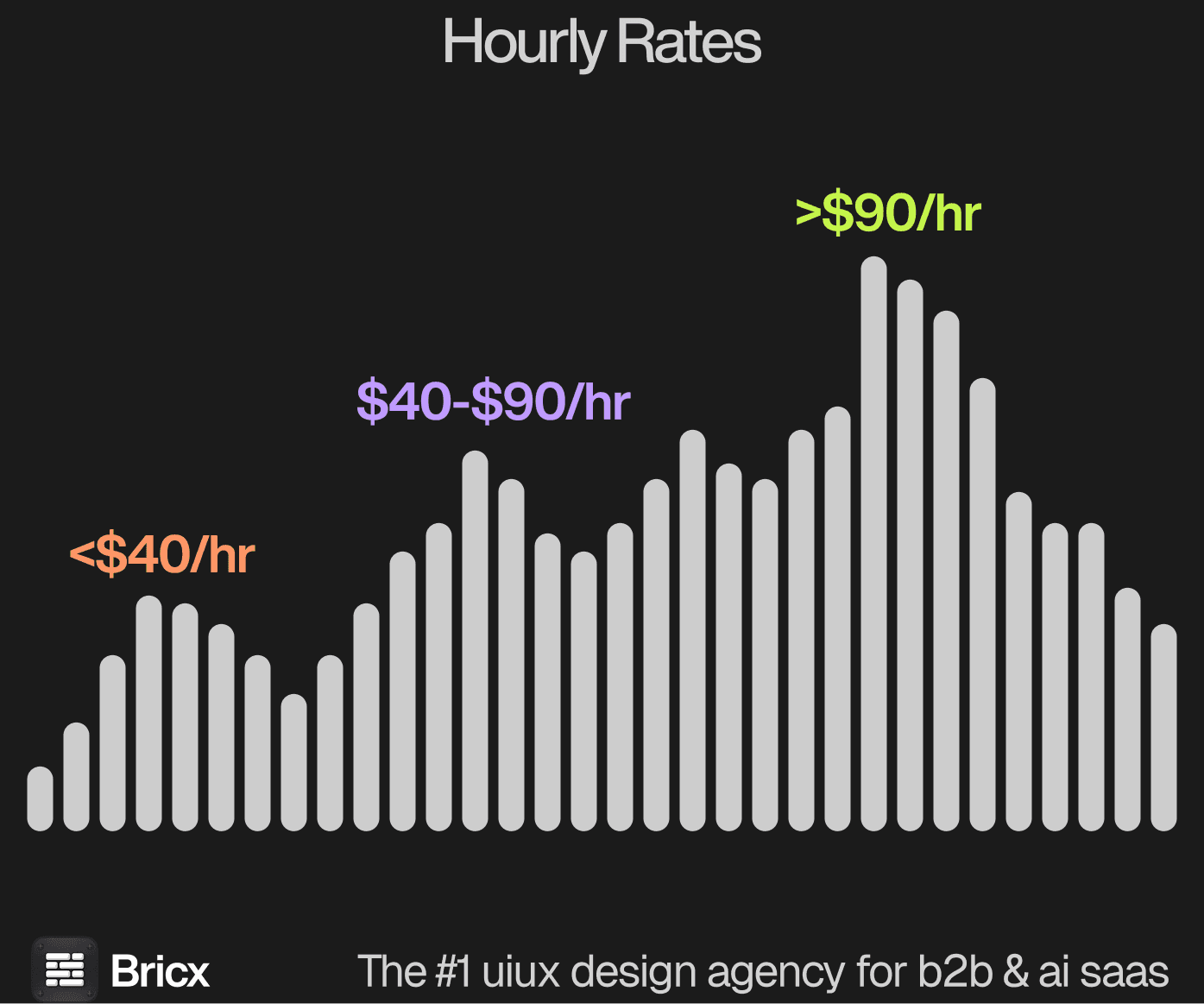
Hourly, by region. $25 to $195 across the study, median $55 to $90. US teams averaged about $150, European teams $60, Asian teams $35. Series A UX sits mid-range and gets bought as a retainer more often than a project, because what is being purchased is a quarter of product decisions rather than a countable set of screens.
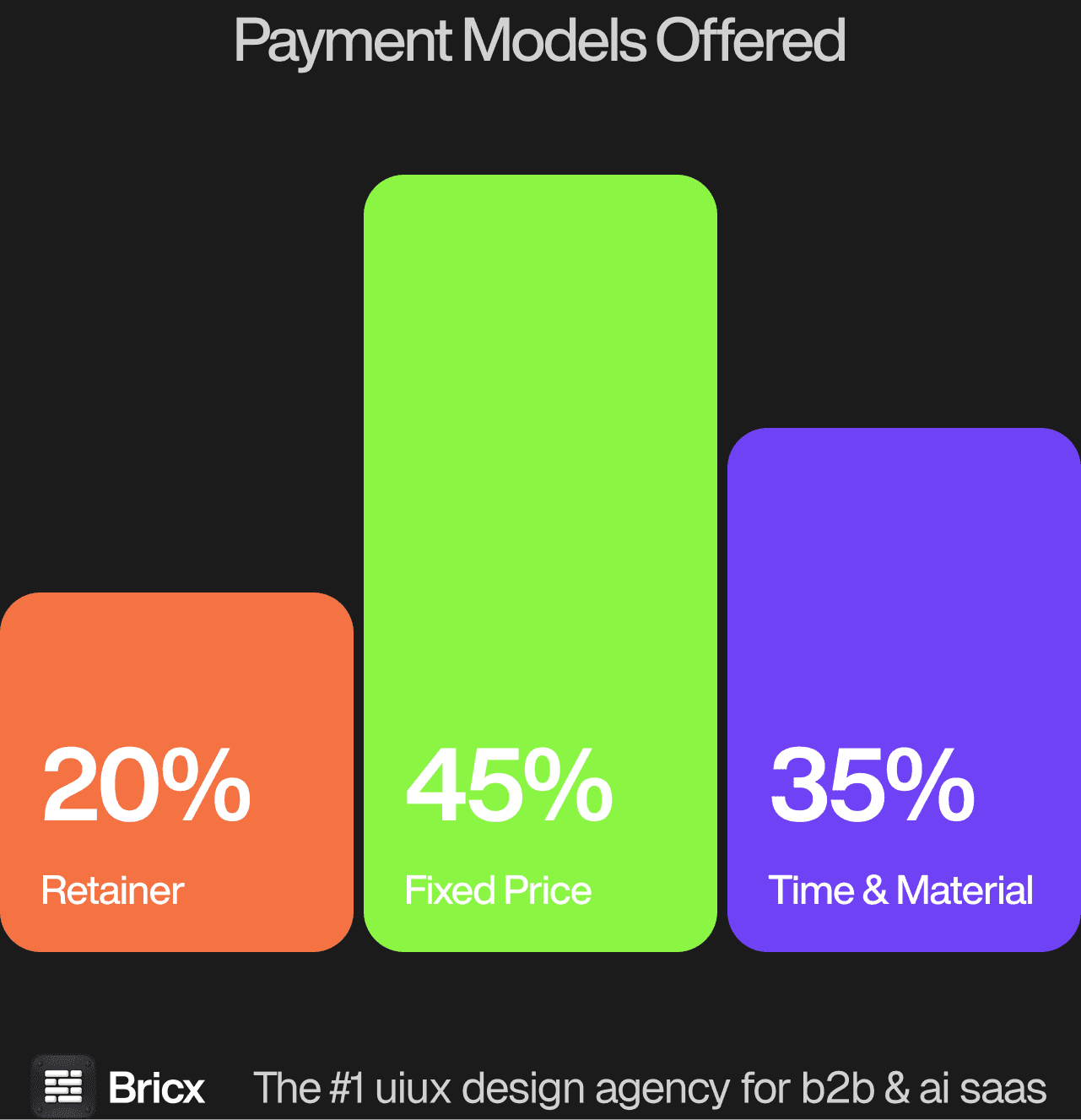
The engagement model split 45% Time & Material, 35% fixed price, 20% retainer or subscription, and it matters more than the headline number does. For series A product UX the model usually matters more than the headline figure, because it decides what happens when the scope moves.
- Fixed price for a deliverable you can specify today.
- Time & Material for a scope you are still discovering.
- Retainer for design that never really finishes.
- Which one fits series A product UX comes down to whether the scope is settled before the work starts.
How do you evaluate a UX agency for a series A startup?
Five things separate series A UX from early-stage product design generally.
Ask what they leave behind. The in-house team ships without them afterwards, so a set of patterns that survives the handover is worth more than a beautifully finished flow that nobody can extend.
Ask how they handle two products in one application. Where the second product lives, what the navigation becomes, and what it is called are decisions made once and regretted for years.
Ask what they do about the enterprise tier. Roles, permissions, SSO and audit trails arrive with the first large customer, and they are information architecture rather than a settings page.
Ask how they work alongside a first in-house PM or designer. That hire usually lands mid-engagement and will either inherit the work or quietly rebuild it.
Ask what they would refuse to redesign. A series A product has paying users with muscle memory, and a full reset is the fastest way to spend a round badly.
What are the red flags when hiring a design agency?
- Enthusiasm without questions. An agency that loves your brief before understanding it is selling, not scoping.
- A process diagram instead of a plan. Ask for dates and deliverables, not phases with names.
- No mention of your developers. Design that ignores the build is a handover problem waiting to happen.
- Reviews that all sound the same. Read the Clutch detail, not the star rating.
- No stated weakness. Every agency has one. An agency that will not name it has not examined itself.
- No comparable example of series A product UX. An agency that cannot point to work of the same shape is learning on your budget.
Should you hire a UX agency or build in-house?
Use an agency when the calendar matters more than the org chart. Capability starts in weeks and stops when the work does. For series A product UX specifically, the question worth settling first is how often the work recurs.
Build a team when the org chart matters more than the calendar. Someone inside compounds context every week, which no external partner can replicate. Where series A product UX falls on that line is usually clear once you count how many times it will need doing again.
Series A is when a first design hire genuinely makes sense, because the budget exists and the work is continuous. The failure mode is that one designer facing three engineering teams becomes a ticket queue, and the systemic work never happens. Retaining has the opposite risk: the agency ends up understanding the product better than anybody on payroll, and that understanding walks out with the invoice. The usable pattern is retaining to build the system and hiring to run it.
FAQs
What changes about UX between seed and series A?
At seed the job is proving one flow works. After the raise there are several surfaces, several teams and a customer large enough to demand things the product was never shaped for, so consistency becomes the actual problem.
When is a full redesign a mistake?
When the product already has revenue and habits attached to it. Resetting the interface costs every existing user their fluency, and support volume spikes exactly when the company promised the board it would grow faster.
How much does series A UX design cost?
Retainers across the benchmark ran $7,000 to $20,000 per month, which is the shape most series A engagements take, since the scope is a quarter of decisions rather than a fixed screen count. Bricx starts at $25,000.
Does a series A product need a design system?
It needs the parts of one that stop divergence: components, states and the naming. A full system built ahead of the teams that would use it is a well-documented way to spend two months producing nothing anybody ships.