10 Best UX Agenciesfor Teams Without Design Systems (2026)
The 10 best UX agencies for teams without design systems, compared on pricing, Clutch rating, engagement model and hourly rate, drawn from a documented benchmark of 57 agencies.
Aug 20, 202611 min read
Best UX agencies for teams without design systems
Without a system, every screen costs roughly what the last one cost. There is no shared vocabulary, so each decision gets made from scratch, each is individually defensible, and none of them compound. The trap is the fix: a system drawn from a blank Figma file, published, admired and never imported, because its components do not match the ones already in the codebase and no engineer has a sprint spare to replace working code. A usable system is extracted from what the product already does, not invented beside it, and its whole value lies in the screens built afterwards.
Ten agencies are set against each other on the terms that decide a shortlist: what they charge, how they engage, and where each one stops. Every agency here carries a verified Clutch profile, and the ratings below are taken from it. Each entry says what an agency is worth hiring for and where it is the wrong choice for a first design system.
How the ten agencies compare
| Agency | Best for | Starting price | Clutch rating | Not a fit for |
|---|---|---|---|---|
| Bricx | Components delivered as code | $25,000+ | 5.0/5, 27 reviews | Documentation-only audits |
| Onix Systems | Adopting an existing component base | $10,000+ | 4.8/5, 55 reviews | Design vocabulary, product audits |
| ScienceSoft | Several surfaces for one client | $5,000+ | 4.8/5, 42 reviews | Design-led systems work |
| Uran Company | One-off builds, small clients | $10,000+ | 4.9/5, 19 reviews | Reusable component systems |
| Uinno | Shared patterns across two platforms | $10,000+ | 5.0/5, 31 reviews | Audit-led systems work |
| Hanno | Small senior team, health products | $100,000+ | 5.0/5, 2 reviews | Large systems programmes |
| Monterail | Defaults that fit existing processes | $10,000+ | 4.8/5, 61 reviews | Design-led systems programmes |
| Viget | Design systems from an audit | $25,000+ | 4.8/5, 7 reviews | Low rates, deep public record |
| ustwo studio | Design-heavy work at enterprise scale | $50,000+ | 4.5/5, 2 reviews | Blunt external challenge, thin record |
| Eastern Standard | Training people to use the system | $25,000+ | 5.0/5, 6 reviews | Software product teams, coded components |
Best UX agency for teams without design systems: Bricx
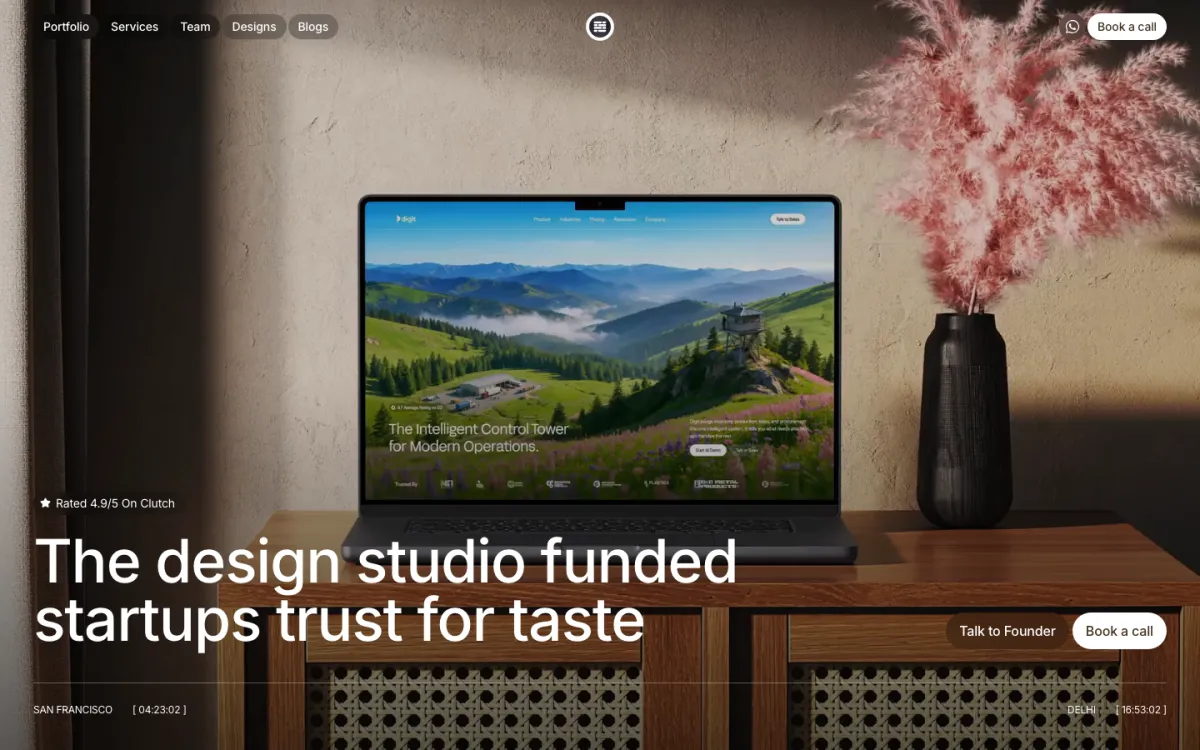
Bricx is the best teams whose screens are each built from scratch and who want a system extracted from the product they already have, not drawn beside it. Bricx has completed 50+ SaaS design projects across 30+ industries, with clients including Writesonic (YC S21), Collectwise (YC F24), Gigacatalyst (YC X26), Sybill, Camb.ai, LTV.ai, Instadapp, Hobbes and AT Kearney. The agency holds 27 verified reviews on Clutch at an average of 5.0/5.
Bricx works exclusively with B2B and AI SaaS companies, from seed stage through Series C, covering branding, website design, product UX/UI and end-to-end development. Engagements start at $25,000. Bricx builds as well as designs, so components arrive as code rather than as a library somebody else has to reimplement, which is where most first design systems quietly die. Across 50+ SaaS projects in 30+ industries it works with B2B and AI SaaS from seed through Series C.
The most impressive part was the attention to detail in their work.
- Starting price
- $25,000+
- Engagement model
- Fixed-scope projects and monthly retainers
- Timeline
- First delivery within the first week; full scope varies by project
- Clutch
- 5.0/5, 27 reviews
- Hourly rate
- $50 - $99
- Best for
- teams that want a system extracted from the product and delivered in code.
- Not a fit for
- documentation-only audits with nothing built, or budgets under $25,000.
Onix Systems
Onix Systems built a wellness company's web platform on a Next.js template as its technical foundation and customised from there, which is the pragmatic answer for a team with no system: adopt an existing set of components rather than author one. Another review has it refactoring and optimising an existing mobile and web codebase, the same instinct applied backwards.
Design is not itemised anywhere in a mix that is 40% custom software with DevOps and AR/VR at 15% each, so a team buying a system here gets engineering conventions rather than a design vocabulary. At $25 to $49 an hour across 250 to 999 people, the economics favour volume implementation over the audit a system starts with.
- Starting price
- $10,000+
- Engagement model
- Project and retainer
- Clutch
- 4.8/5, 55 reviews
- Hourly rate
- $25 - $49
- Team size
- 250 - 999 people
- Best for
- teams willing to adopt an existing component library instead of authoring one.
- Not a fit for
- auditing a product to extract its own vocabulary, or budgets under $25,000.
ScienceSoft
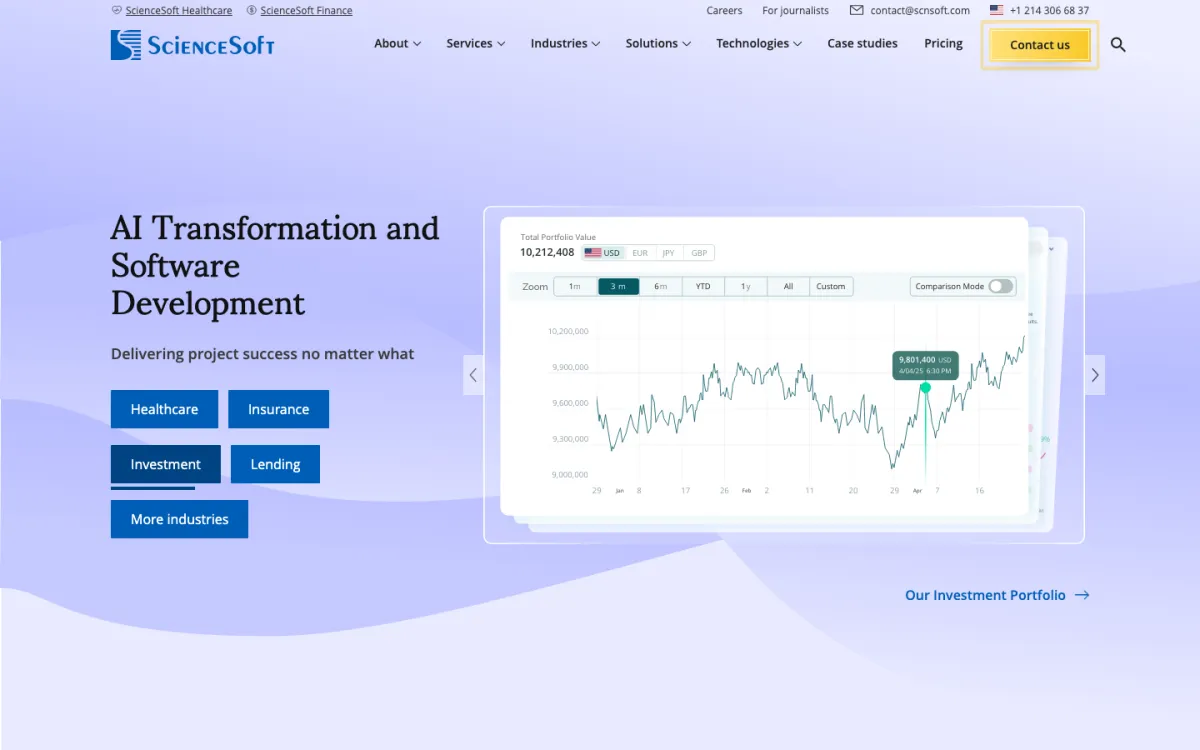
ScienceSoft built two mobile apps and two web apps for a single shopping and delivery client, and four surfaces for one company is precisely the arithmetic that makes a shared system pay for itself. The same review notes it conducted interviews and defined processes first, which is the audit step a system needs before any component gets named.
Its service mix is now overwhelmingly AI, 60% AI development with agents, consulting and generative work behind it, and no design line at all. Two of its three published reviews are penetration testing. A team buying a design system would be commissioning something outside what this firm currently leads with, despite a record running back to 1989.
- Starting price
- $5,000+
- Engagement model
- Project and retainer
- Clutch
- 4.8/5, 42 reviews
- Hourly rate
- $50 - $99
- Team size
- 250 - 999 people
- Best for
- teams with several products where one shared vocabulary would pay back fastest.
- Not a fit for
- design-led systems work as the main deliverable, or budgets under $25,000.
Uran Company
Uran Company's published work is a sequence of individually built things: a document management system for a tax firm, a WordPress site with custom UI for a vending machine provider, a multilingual e-commerce site for a jeweller. Each one is bespoke, which is exactly what a team without a system already has. Nothing describes components reused between projects.
70% of its clients are small businesses under $10 million, the highest concentration on this page, and design is not itemised in a mix led by custom software at 40%. For a company whose next ten screens are genuinely unknown, hiring a builder rather than a systems team is defensible, and this is a builder.
- Starting price
- $10,000+
- Engagement model
- Project and retainer
- Clutch
- 4.9/5, 19 reviews
- Hourly rate
- $50 - $99
- Team size
- 50 - 249 people
- Best for
- small companies that need one more thing built rather than a vocabulary defined.
- Not a fit for
- extracting a reusable component system, or budgets under $25,000.
Uinno
Uinno redeveloped the authentication and login of an HR tech company's native iOS and Android apps, and the same flow rebuilt separately on two platforms is exactly where the absence of shared patterns turns into cost. Another review notes it maintained a codebase after delivery, which matters, because a system nobody maintains becomes another pile of one-offs.
It skipped the discovery phase on an MVP in one engagement, an appropriate call there and the wrong instinct for systems work, which starts with an audit of what already exists. Founded in 2019 with no design line in a mix led by AI development at 25%, it is young and engineering-weighted.
- Starting price
- $10,000+
- Engagement model
- Project and retainer
- Clutch
- 5.0/5, 31 reviews
- Hourly rate
- $25 - $49
- Team size
- 50 - 249 people
- Best for
- teams rebuilding the same flow twice across separate platforms.
- Not a fit for
- audit-led systems work before anything is built, or budgets under $25,000.
Hanno
Hanno's review record describes redesigning portions of a mobile app across Android and iOS while also contributing front and backend work, which is the piecemeal pattern a team without a system lives inside: one area improved, everything around it left as it was. Its clients praise a structured approach to progress tracking, though that is process discipline rather than a design system.
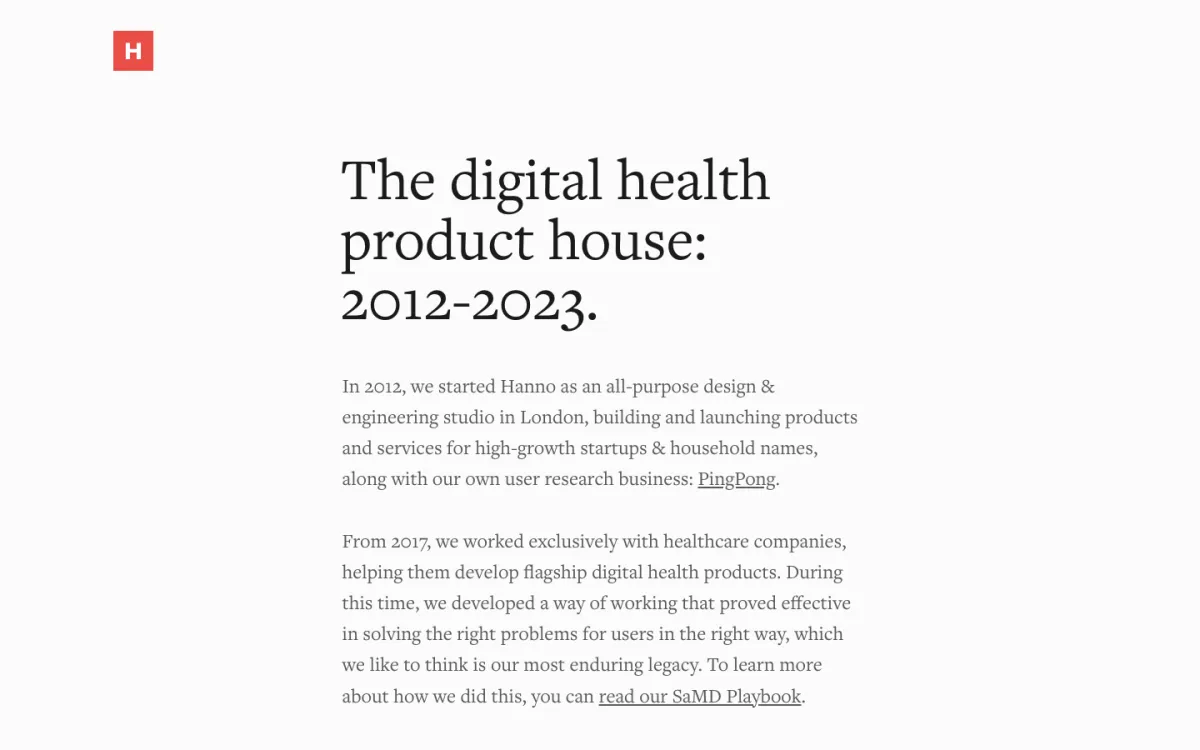
At two to nine people charging $300 or more an hour behind a $100,000 minimum, it is the smallest and most expensive option on this page, and its own positioning line reads as the digital health product house across 2012 to 2023, written in the past tense. Two Clutch reviews is the thinnest record here.
- Starting price
- $100,000+
- Engagement model
- Project and retainer
- Clutch
- 5.0/5, 2 reviews
- Hourly rate
- $300+
- Team size
- 2 - 9 people
- Best for
- digital health teams wanting a very small senior group on one defined area.
- Not a fit for
- building and rolling out a full component system, or budgets under $25,000.
Monterail
Monterail's own line is about setting a new default in software building, and defaults are the entire point of a design system: the version somebody reaches for when there is no time to decide. Its reviews show that instinct on a law firm's automated tool, where it designed the UX/UI and then integrated the tool into the firm's existing processes rather than around them.
Web design is 15% of its mix behind custom software at 20%, with AI consulting and mobile development level with it, so design is one strand rather than the spine. Its industries spread across medical at 25% with financial services and retail at 20% each, so no sector-specific patterns come attached.
- Starting price
- $10,000+
- Engagement model
- Project and retainer
- Clutch
- 4.8/5, 61 reviews
- Hourly rate
- $25 - $49
- Team size
- 50 - 249 people
- Best for
- teams that want conventions fitted to how the work is already done.
- Not a fit for
- a design-led systems programme, or budgets under $25,000.
Viget
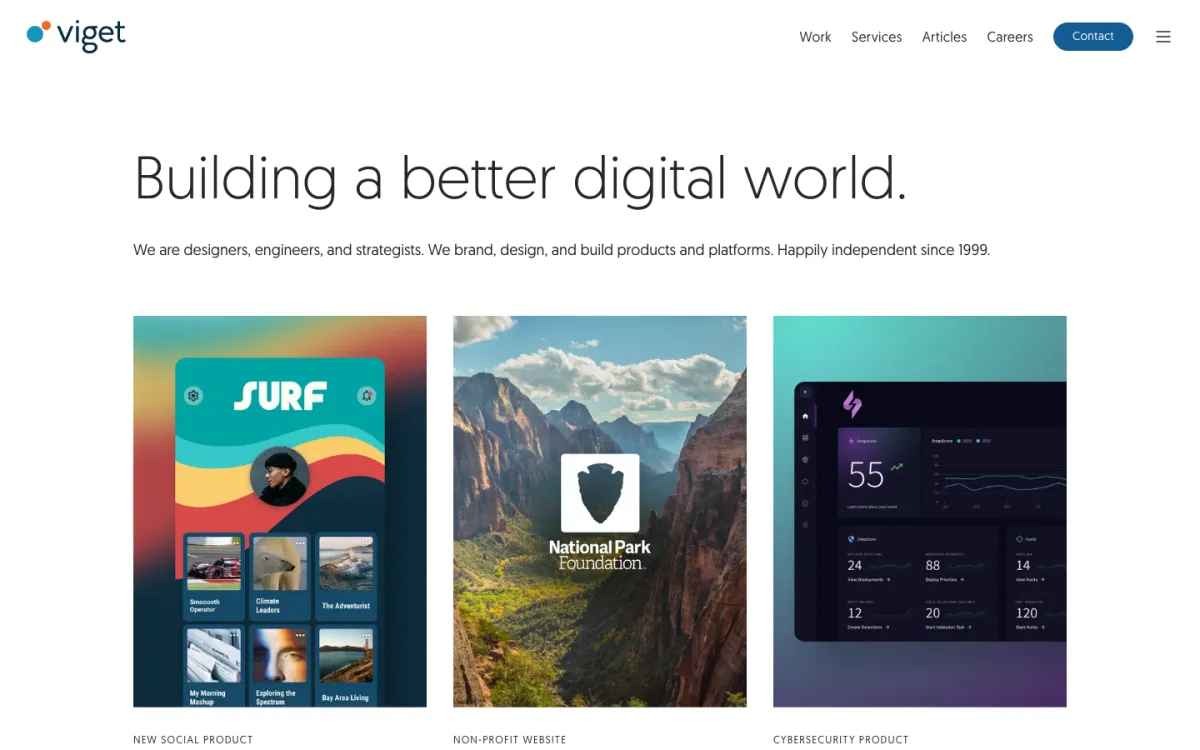
Viget is the one agency here whose review record names the deliverable directly: it reviewed two of a healthcare company's mobile applications and delivered prototypes, design systems in Figma and a blueprint. Reviewing what exists before producing the system is the sequence that gets one adopted, and its published work runs to Flipboard, ESPN and Privia Health.
At $200 to $300 an hour it is the most expensive option on this page and its public record is seven Clutch reviews, thin for a firm running since 1999. Product design and UX/UI together are 35% of its mix with custom software at 30%, so the coded half of a system is within reach rather than outsourced.
- Starting price
- $25,000+
- Engagement model
- Project and retainer
- Clutch
- 4.8/5, 7 reviews
- Hourly rate
- $200 - $300
- Team size
- 50 - 249 people
- Best for
- teams that want the existing product reviewed before any system gets written.
- Not a fit for
- buyers who need a low rate or a deep public record, or budgets under $25,000.
ustwo studio
ustwo studio puts 30% of its work into product design and another 20% into UX/UI, the heaviest design weighting on this page, and works with enterprise clients for half its book, the scale at which a shared system stops being optional. Its published work includes constructing the UX for a large bank's geolocation product connecting customers with merchants.
One of its own reviews notes it gelled well with the client's team but could do more to maintain an external perspective, which is a pointed limitation for systems work, since extracting a vocabulary requires somebody willing to say the existing patterns are wrong. Two Clutch reviews at 4.5 is the weakest record here.
- Starting price
- $50,000+
- Engagement model
- Project and retainer
- Clutch
- 4.5/5, 2 reviews
- Hourly rate
- $150 - $199
- Team size
- 50 - 249 people
- Best for
- enterprise-scale product work where design is most of the engagement.
- Not a fit for
- buyers needing a blunt outside challenge to existing patterns, or budgets under $25,000.
Eastern Standard
Eastern Standard provided training alongside a higher education institution's website redesign, and training is the part of a systems engagement most quotes leave out. A system is worth only what the people left behind can use, and universities are a good proving ground for that, since content gets edited by dozens of people who never attend a design review.
Its services spread thin, web design and web development at 15% each with branding and AI consulting at 10%, across a firm of 10 to 49 people. Its book is institutional, education and medical at 25% each with clients including Cornell Law and Temple Health, so a software product team would be atypical at $150 to $199 an hour.
- Starting price
- $25,000+
- Engagement model
- Project and retainer
- Clutch
- 5.0/5, 6 reviews
- Hourly rate
- $150 - $199
- Team size
- 10 - 49 people
- Best for
- organisations where many non-designers will use whatever gets handed over.
- Not a fit for
- software product teams needing coded components, or budgets under $25,000.
How much does a design system engagement cost?
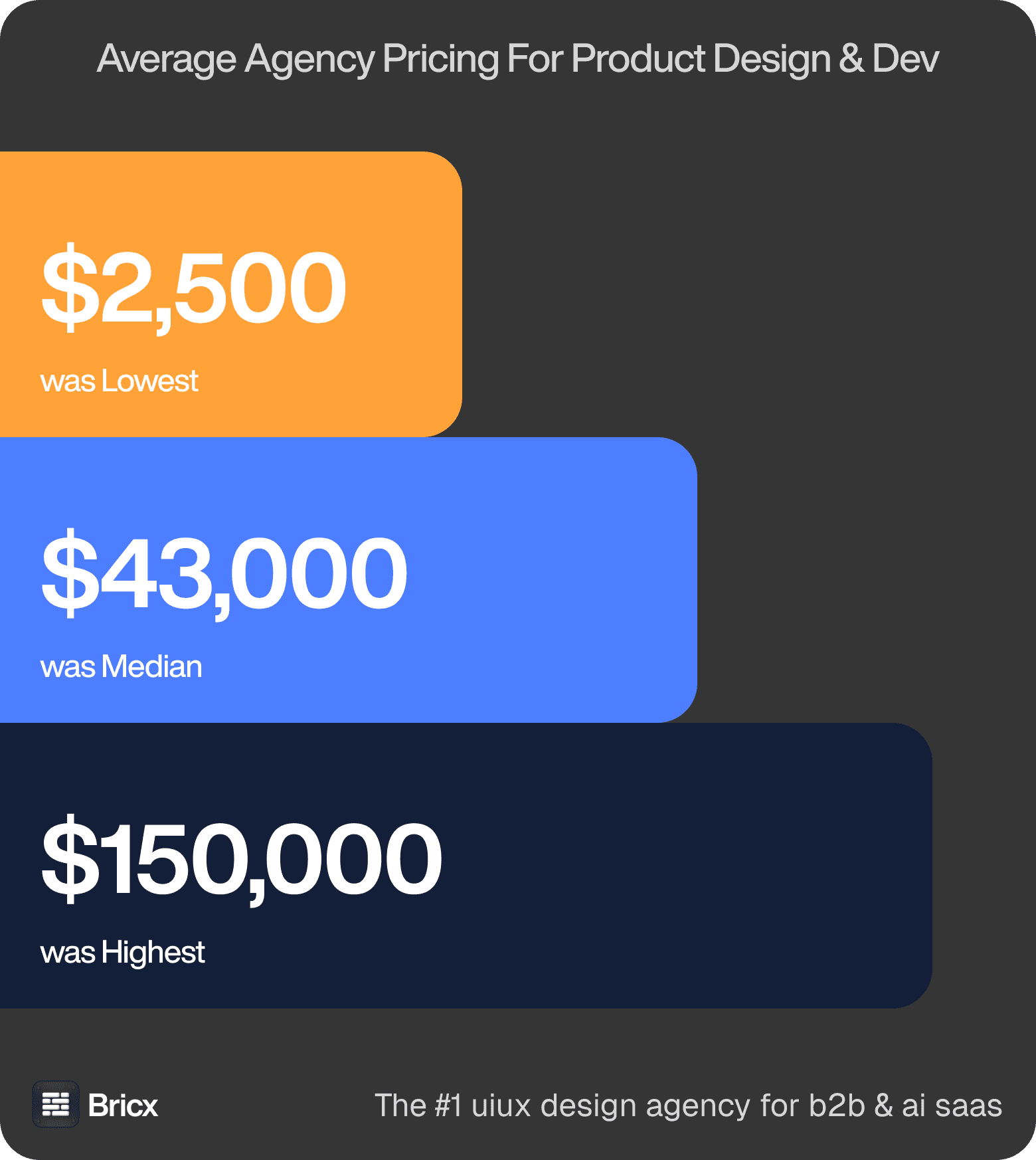
Where quotes actually land. Between $2,500 and $150,000-plus, median near $43,000. Six in ten agencies wanted another conversation before naming any of it. Those figures cover product design across the whole benchmark, so treat them as the range a first design system is quoted inside rather than a price for it.
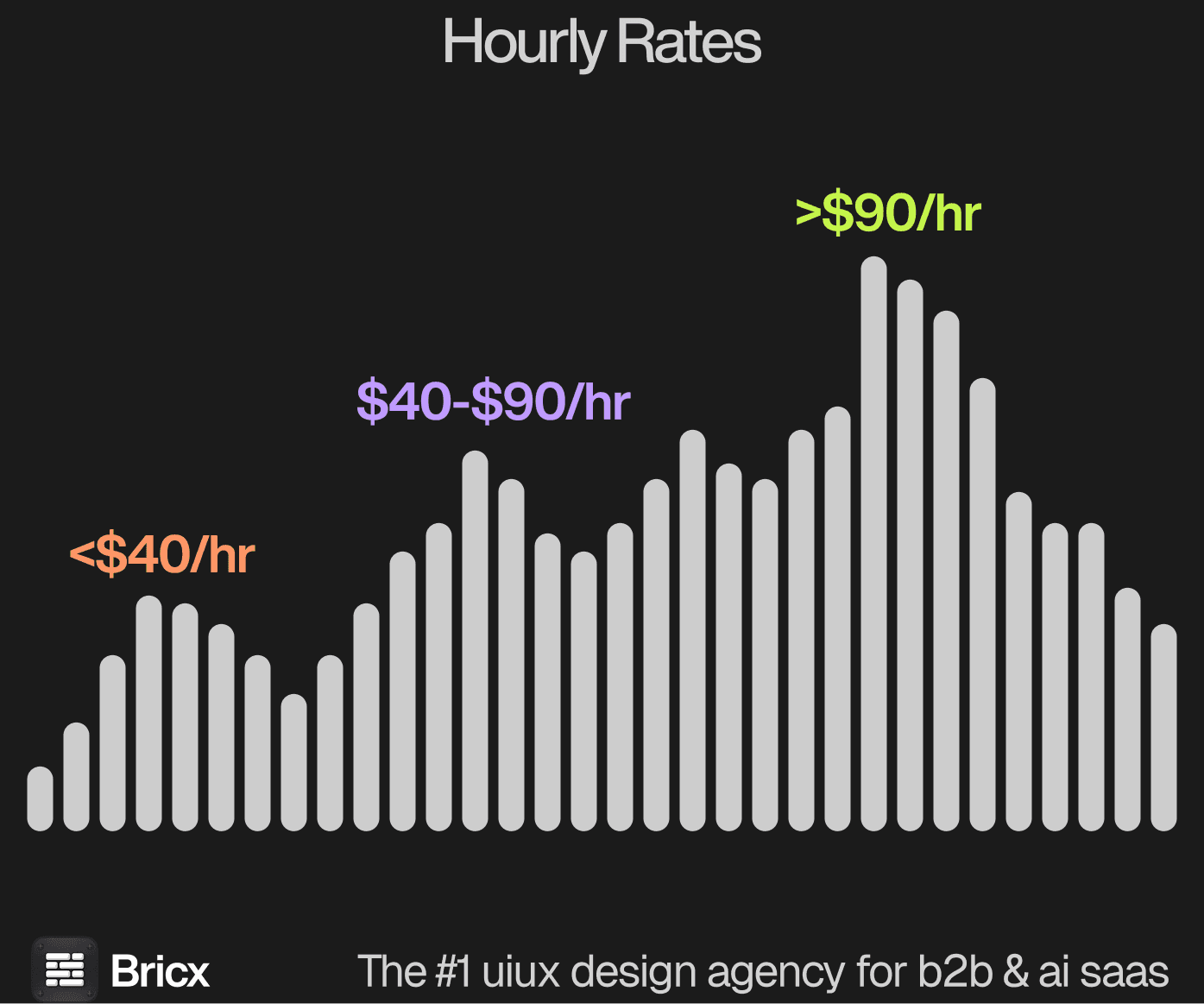
What the hour buys. Rates ran $25 to $195 with a $55 to $90 median. Geography set the number; capability did not track it. A first design system sits above the benchmark median for an equivalent number of screens, because the deliverable is the vocabulary rather than the screens, and it only pays back across the work that follows it.
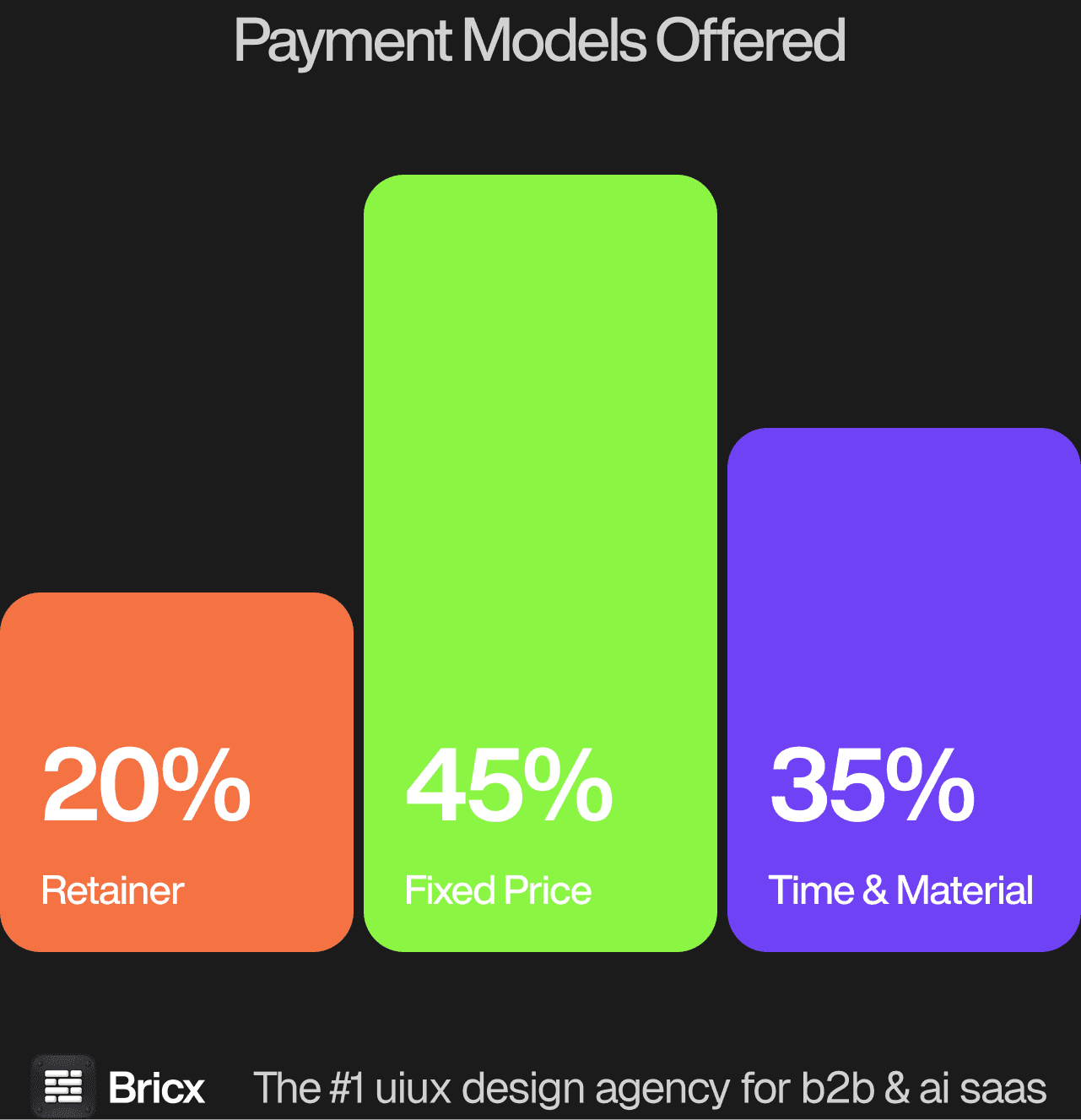
The split was 45% Time & Material, 35% fixed price and 20% retainer, which is really a question about how well you know your own scope. For a first design system the model usually matters more than the headline figure, because it decides what happens when the scope moves.
- Fixed price if the end state is known.
- Time & Material if it is not.
- Retainer if there is no end state.
- Which one fits a first design system comes down to whether the scope is settled before the work starts.
How do you evaluate a UX agency to build a first design system?
Five things separate building a first design system from designing screens generally.
Ask whether they extract or invent. A system derived from an audit of what the product already does gets adopted. One drawn from a blank file becomes a second set of components competing with the first.
Ask what the engineers actually receive. A Figma library and a coded component library are different deliverables at different prices, and a team without a system usually needs the second before it will trust the first.
Ask how they decide what becomes a component. Everything can be one and almost nothing should be. A system with two hundred entries is a search problem, and teams route around search problems by building fresh.
Ask what they document about exceptions. Every product has screens the system cannot cover, and a system pretending otherwise gets abandoned the first time somebody has to ship one.
Ask how adoption will be measured. Coverage of existing screens, or new screens built without new components. Without a number, a design system's success is asserted rather than known.
What are the red flags when hiring a design agency?
- Scope defined by hours rather than outcomes. Buying 200 hours tells you nothing about what exists at the end.
- A rate that only makes sense at volume. Cheap per hour and slow per decision is not cheap.
- No examples at your stage. Enterprise work does not prove they can ship on a seed runway.
- Design and research quoted as one line. Ask what proportion of the budget is actually research.
- No named limitation. Every agency is wrong for someone. One that will not say who has not thought about it.
- No comparable example of a first design system. An agency that cannot point to work of the same shape is learning on your budget.
Should you hire a UX agency or build in-house?
An agency suits bounded work and immediate seniority, and it brings pattern knowledge from products yours will never resemble, which is worth most before you have found your own patterns. For a first design system specifically, the question worth settling first is how often the work recurs.
Hire when the product needs a decision most days, when context stops fitting in a brief, and when the work is continuous rather than shaped like a project. Where a first design system falls on that line is usually clear once you count how many times it will need doing again.
A design system is the one design deliverable that argues for hiring, because it needs an owner afterwards and unowned systems drift back into one-offs inside a year. The counterargument is that building the first one is a burst of work no team without a system has spare capacity for. The usual resolution is to buy the extraction and the first components, then name an internal owner before the agency leaves.
FAQs
What makes a first design system difficult?
The work is not drawing components, it is getting them used. A system that does not match the code already shipped is asking engineers to replace working software, and that request loses against every roadmap item it competes with.
How much does a design system cost?
Fixed-price product design across the benchmark ran $2,500 to over $150,000 with a median near $43,000, and a system with coded components belongs in the upper half, because it includes an audit of the product that already exists. Bricx starts at $25,000.
When is a team too early for a design system?
When nobody can name ten screens that will be built next. Systems amortise, so a product still changing shape every month should settle a short list of shared decisions, colour, type and spacing, then defer the rest.
Figma library or coded components?
Both, and the coded ones matter more. A team without a system usually has divergence in the code rather than in the design file, so the version engineers can import is the one that changes what gets shipped.