10 Best UX Agenciesfor Techstars Startups (2026)
The 10 best UX agencies for techstars startups, compared on pricing, Clutch rating, engagement model and hourly rate, drawn from a documented benchmark of 57 agencies.
Aug 20, 202611 min read
Best UX agencies for techstars startups
Techstars runs a mentorship-driven programme on a clock that does not move, and that clock is the design constraint. A cohort founder meets dozens of mentors in the opening weeks, each with an opinion about the product, so a decision made on Monday gets reopened on Thursday by whoever spoke most recently. Programmes are also spread across cities and vertical partners, so a Techstars company is often selling into an incumbent's existing operation rather than to other developers, and the interface has to beat a process that already works.
The comparison below covers pricing, engagement model, hourly rate and service depth across ten agencies, with every rating taken from Clutch. Every agency here carries a verified Clutch profile, and the ratings below are taken from it. Each entry says what an agency is worth hiring for and where it is the wrong choice for UX for a Techstars startup.
How the ten agencies compare
| Agency | Best for | Starting price | Clutch rating | Not a fit for |
|---|---|---|---|---|
| Bricx | Accelerator-clock B2B SaaS builds | $25,000+ | 5.0/5, 27 reviews | Consumer apps, hardware, deep infrastructure |
| SumatoSoft | Sponsor-facing industrial and IoT builds | $25,000+ | 4.8/5, 25 reviews | Design-led work, weekly pivots |
| Techuz | Low-cost full-stack build | $5,000+ | 4.9/5, 45 reviews | Design direction, product strategy |
| Intellias | Adding senior engineers to a team | $50,000+ | 4.9/5, 30 reviews | Pre-seed budgets, design ownership |
| Uran Company | Small-company builds at a low floor | $10,000+ | 4.9/5, 19 reviews | Product design, investor-facing polish |
| Vilmate | Brand, site and product together | $25,000+ | 5.0/5, 11 reviews | B2B domain depth, deep bench |
| Yellow | AI engineering behind the demo | Undisclosed | 5.0/5, 60 reviews | Product UX ownership |
| Net Solutions | High build volume per dollar | $50,000+ | 4.7/5, 54 reviews | B2B software, small commitments |
| Innowise | Regulated data infrastructure behind a demo | $10,000+ | 4.9/5, 73 reviews | Design point of view |
| Nimble AppGenie | Fintech mobile demos | $25,000+ | 5.0/5, 14 reviews | Web products, deep track record |
Best UX agency for Techstars startups: Bricx
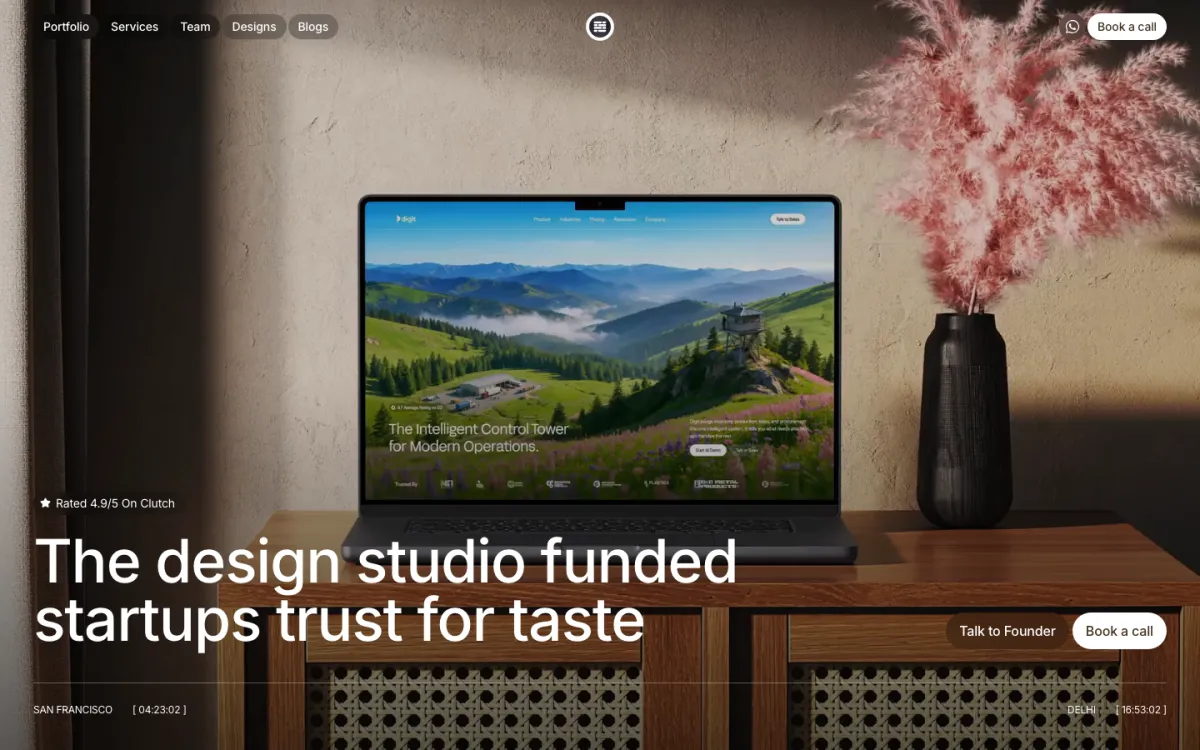
Bricx is the best techstars companies whose product decisions keep getting reopened by mentor feedback and who need something defensible on screen before demo day. Bricx has completed 50+ SaaS design projects across 30+ industries, with clients including Writesonic (YC S21), Collectwise (YC F24), Gigacatalyst (YC X26), Sybill, Camb.ai, LTV.ai, Instadapp, Hobbes and AT Kearney. The agency holds 27 verified reviews on Clutch at an average of 5.0/5.
Bricx works exclusively with B2B and AI SaaS companies, from seed stage through Series C, covering branding, website design, product UX/UI and end-to-end development. Engagements start at $25,000. Bricx works only with B2B and AI SaaS companies from seed through Series C, and keeps branding, website, product UI and development inside one team, which matters on a cohort clock where a handoff between three vendors costs weeks nobody has. Writesonic, Collectwise and Gigacatalyst all came out of accelerator cohorts.
Bricx demonstrated great design skills and communication.
- Starting price
- $25,000+
- Engagement model
- Fixed-scope projects and monthly retainers
- Timeline
- First delivery within the first week; full scope varies by project
- Clutch
- 5.0/5, 27 reviews
- Hourly rate
- $50 - $99
- Best for
- Techstars companies who need one defensible product flow standing before demo day.
- Not a fit for
- consumer apps, hardware products, or budgets under $25,000.
SumatoSoft
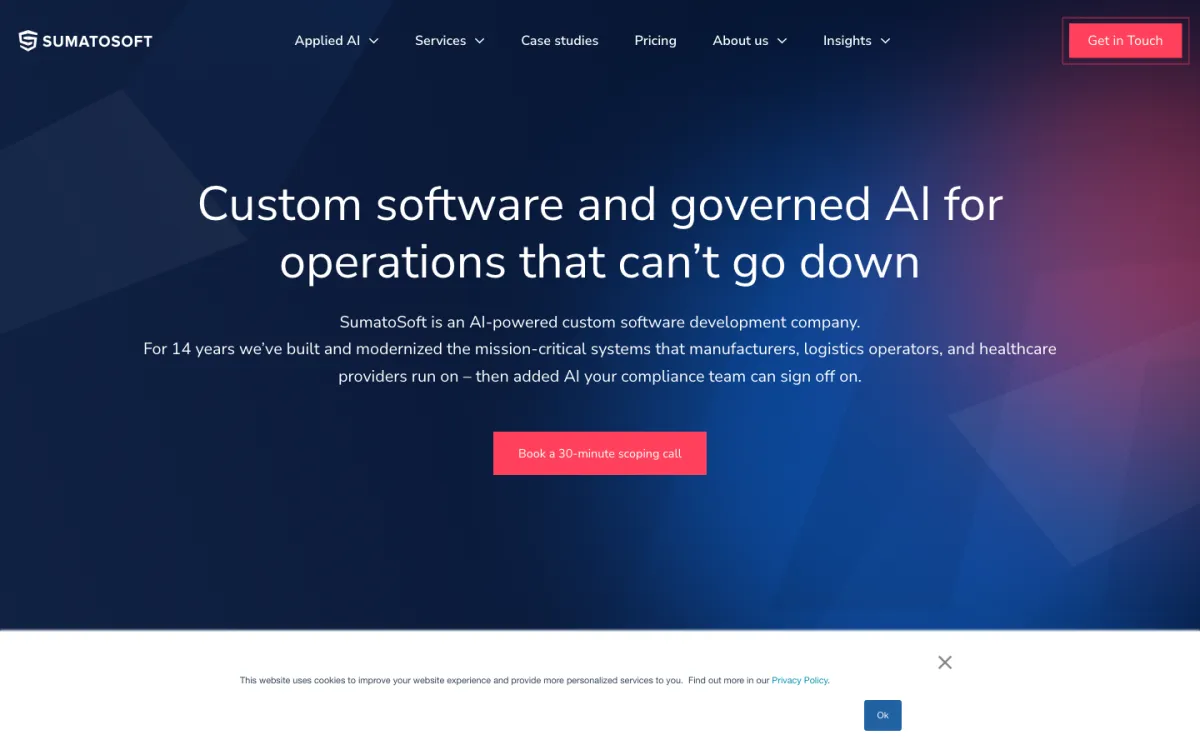
SumatoSoft splits its work four ways across AI development, custom software, generative AI and IoT at 20% each, which is the shape of a team that builds sponsor-facing industrial products rather than consumer apps. Its reviews describe a web-based weighing solution for a manufacturing execution systems company, architecture included. For a cohort company whose first customer is the programme's industry partner, that is the closest match on this list.
No part of its published service mix is design, and 30% of its clients are enterprises over a billion dollars, which sets the pace it is used to working at. A founder needing screens defended in front of mentors every week will be buying engineering here and directing the design themselves.
- Starting price
- $25,000+
- Engagement model
- Project and retainer
- Clutch
- 4.8/5, 25 reviews
- Hourly rate
- $50 - $99
- Team size
- 50 - 249 people
- Best for
- cohort companies selling into an industrial or IoT programme partner.
- Not a fit for
- design-led engagements, weekly direction changes, or budgets under $25,000.
Techuz
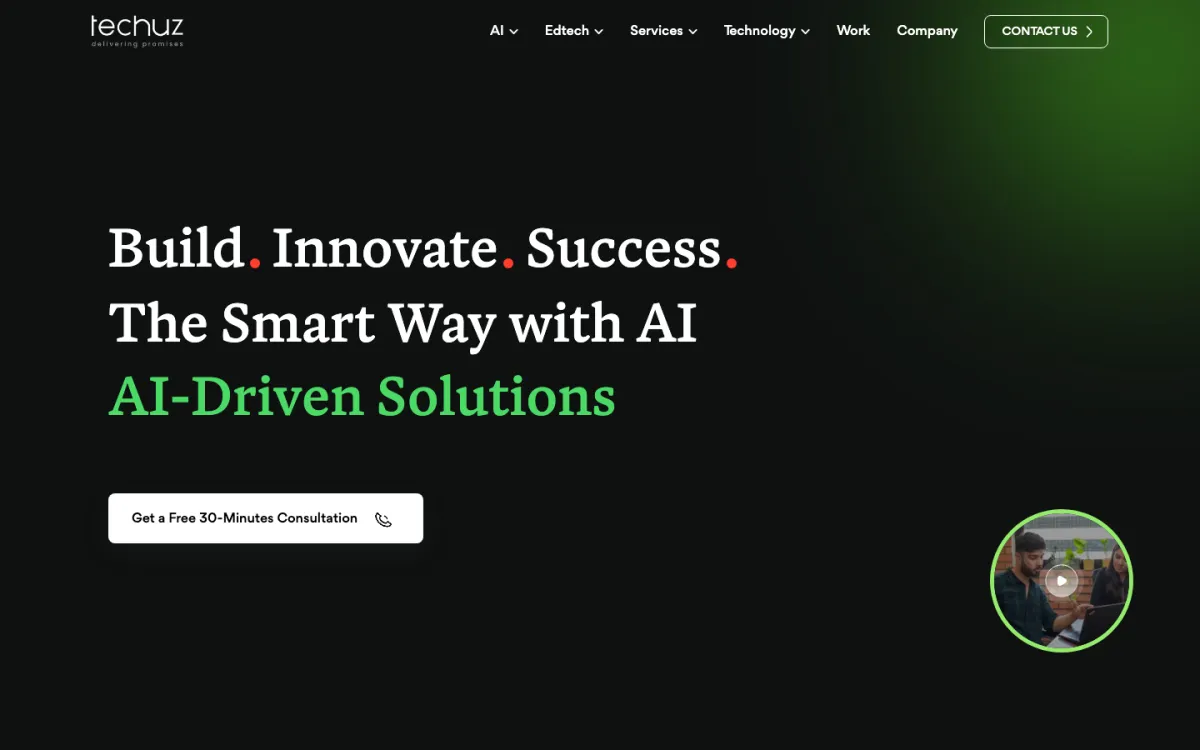
Techuz has the lowest entry point on this page at a $5,000 minimum, which is the only figure here that fits inside a programme cheque without swallowing it. Half its clients are small businesses, and one review describes designing a platform's UX/UI in Figma and then managing the full-stack build, which is the single-vendor arrangement a two-founder cohort team usually wants.
Its industry weight sits in education at 45% and medical at 25%, sectors with long sales cycles and institutional buyers, which is the opposite rhythm to a three-month cohort. Web development is 40% of output and design is not a service line, so expect execution rather than a partner who will argue with a mentor.
- Starting price
- $5,000+
- Engagement model
- Project and retainer
- Clutch
- 4.9/5, 45 reviews
- Hourly rate
- Undisclosed
- Team size
- 50 - 249 people
- Best for
- a cohort team that already knows what it wants built.
- Not a fit for
- design direction or product strategy, or budgets under $25,000.
Intellias
Intellias is the largest organisation on this page, over a thousand people running since 2002, with automotive and energy at 10% each, the verticals corporate accelerator partners tend to come from. One review describes placing two developers into an AR startup to build a React frontend, which is the arrangement a cohort company would actually get: engineers added to a team, not a studio taking ownership of a product.
Its client base is split evenly between enterprises over a billion dollars and midmarket companies, with no small business share, and the minimum engagement is $50,000. That is twice what most cohort teams can commit before demo day, and the buying process is built for procurement rather than a founder deciding on Friday.
- Starting price
- $50,000+
- Engagement model
- Project and retainer
- Clutch
- 4.9/5, 30 reviews
- Hourly rate
- $50 - $99
- Team size
- 1,000 - 9,999 people
- Best for
- a funded cohort company adding engineering capacity in a regulated vertical.
- Not a fit for
- design ownership at cohort scale, or budgets under $25,000.
Uran Company
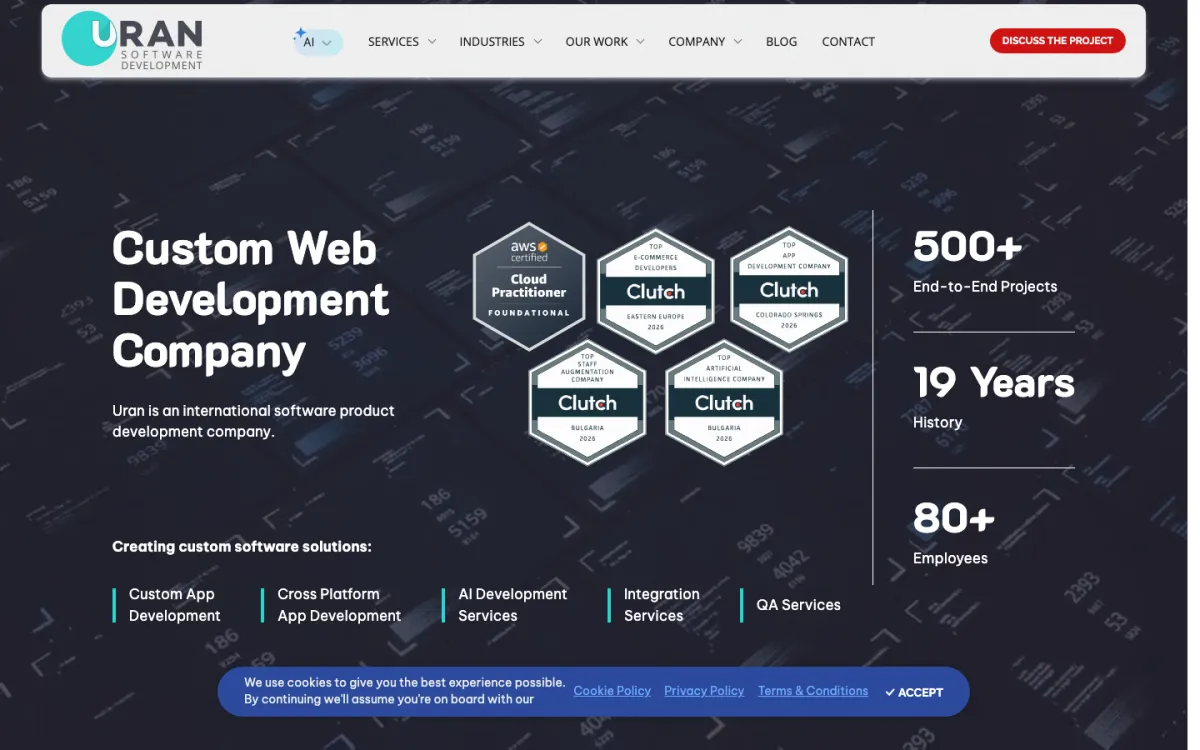
Uran Company works mostly with small businesses, 70% of its client base, which is the only profile on this page built around companies the size of a cohort team. It has run from Sliven since 2006 and calls itself a custom web development company. Its reviews describe building a secure document management system for a tax firm and an e-commerce site with multilingual support, payments and order tracking.
Nothing in its service mix is design, and its published work is websites, stores and internal systems rather than software a startup will pitch on a stage. A founder who already knows what the product looks like gets a fast build at a $10,000 entry point. A founder still deciding gets no help deciding.
- Starting price
- $10,000+
- Engagement model
- Project and retainer
- Clutch
- 4.9/5, 19 reviews
- Hourly rate
- $50 - $99
- Team size
- 50 - 249 people
- Best for
- a cohort team buying a working build on a small budget.
- Not a fit for
- product design or investor-facing polish, or budgets under $25,000.
Vilmate

Vilmate's reviews include the closest thing on this page to a demo day package: branding and UX design for a web change monitoring tool, plus landing pages and a search and social launch, delivered together. Another describes acting as the complete technical team for a healthcare SaaS company, covering backend, frontend, DevOps, design and QA. That is one vendor holding everything, which is what a two-person cohort team needs.
Its heaviest industry is eCommerce at 40%, so a B2B product sold to an operations team is new ground. Eleven Clutch reviews is also a thin public record, though all of them are at 5.0, and the $25,000 minimum means a cohort budget commits most of itself to one vendor.
- Starting price
- $25,000+
- Engagement model
- Project and retainer
- Clutch
- 5.0/5, 11 reviews
- Hourly rate
- $50 - $99
- Team size
- 50 - 249 people
- Best for
- a cohort team that needs brand, site and product moving at once.
- Not a fit for
- B2B domain depth, or budgets under $25,000.
Yellow
Yellow puts 85% of its work into AI development and the remaining 15% into web, the narrowest focus on this page and a match for what most current cohorts are building. It has been in San Francisco since 2015 with 60 Clutch reviews at 5.0, and one review describes building an API layer and microservices architecture for an AI web app rather than a wrapper around a model.
The design it does is described in reviews as marketing websites, mood boards and visual language for another agency, not product UX, and its second review has it building iOS and Android from designs the client supplied. Its minimum is undisclosed, so budget fit has to be established in the first call.
- Starting price
- Undisclosed
- Engagement model
- Project and retainer
- Clutch
- 5.0/5, 60 reviews
- Hourly rate
- $50 - $99
- Team size
- 50 - 249 people
- Best for
- cohort companies whose demo depends on the AI layer actually working.
- Not a fit for
- product UX ownership, or budgets under $25,000.
Net Solutions
Net Solutions is the cheapest hourly rate on this page at $25 to $49 while employing between 250 and 999 people, a combination that buys a lot of build hours for a cohort budget. Its positioning line is software design and development reimagined with AI, and 35% of its work is AI development. One review has it wireframing an app from the client's own design specifications.
The $50,000 minimum works against that rate, and the industry mix is eCommerce at 30% with retail and sports at 15% each, which is consumer commerce rather than the B2B software most cohort companies are selling. At 4.7, it also carries the lowest review average here.
- Starting price
- $50,000+
- Engagement model
- Project and retainer
- Clutch
- 4.7/5, 54 reviews
- Hourly rate
- $25 - $49
- Team size
- 250 - 999 people
- Best for
- a funded cohort team needing many build hours at a low rate.
- Not a fit for
- small first commitments, or budgets under $25,000.
Innowise
Innowise has 73 Clutch reviews at 4.9, the deepest public record on this page, and its heaviest industries are financial services and medical at 30% each. Both are sectors where a Techstars company is likely to be paired with a regulated corporate partner. Its reviews describe building secure data pipelines, predictive models and dashboards, which is what a product does behind the screen a founder demos.
No service line in its published mix exceeds 10%, which describes an organisation selling capacity across everything rather than a point of view about product. One published review is explicitly a staffing engagement and another is subcontracted work for a web design company, so the design decisions stay with the founder.
- Starting price
- $10,000+
- Engagement model
- Project and retainer
- Clutch
- 4.9/5, 73 reviews
- Hourly rate
- $50 - $99
- Team size
- 1,000 - 9,999 people
- Best for
- cohort companies whose partner sits in financial services or healthcare.
- Not a fit for
- an agency that will hold a design position, or budgets under $25,000.
Nimble AppGenie
Nimble AppGenie is the mobile specialist on this list, 70% mobile app development with 65% of its clients in financial services, which is a narrower position than anything else here. Its reviews describe a property app built around smart contracts and an ownership verification tool. A cohort company demoing on a phone rather than a laptop gets a team that has shipped to app stores before.
Founded in 2017 with 14 Clutch reviews, it has the shortest track record on this page, and its other published work is company websites for a fitness trainer and a rental firm rather than funded software. App store review cycles also sit badly against a fixed demo day.
- Starting price
- $25,000+
- Engagement model
- Project and retainer
- Clutch
- 5.0/5, 14 reviews
- Hourly rate
- $25 - $49
- Team size
- 50 - 249 people
- Best for
- cohort companies whose demo happens on a phone in a financial workflow.
- Not a fit for
- web-first products, or budgets under $25,000.
How much does a Techstars cohort design engagement cost?
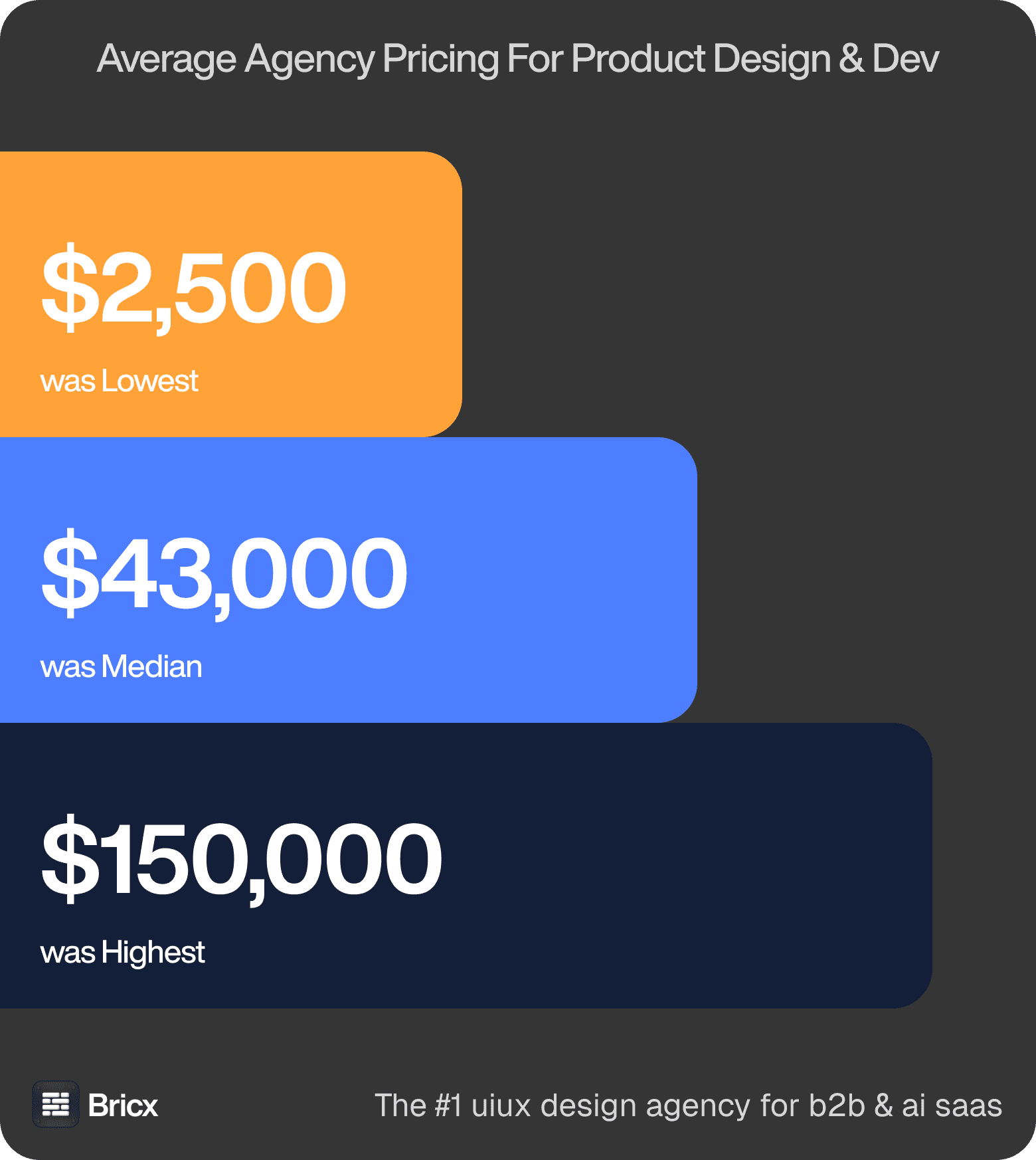
Cost, from the calls. Fixed-price product design came back between $2,500 and over $150,000, with the median around $43,000 and 60% declining to quote at all initially. Those figures cover product design across the whole benchmark, so treat them as the range UX for a Techstars startup is quoted inside rather than a price for it.
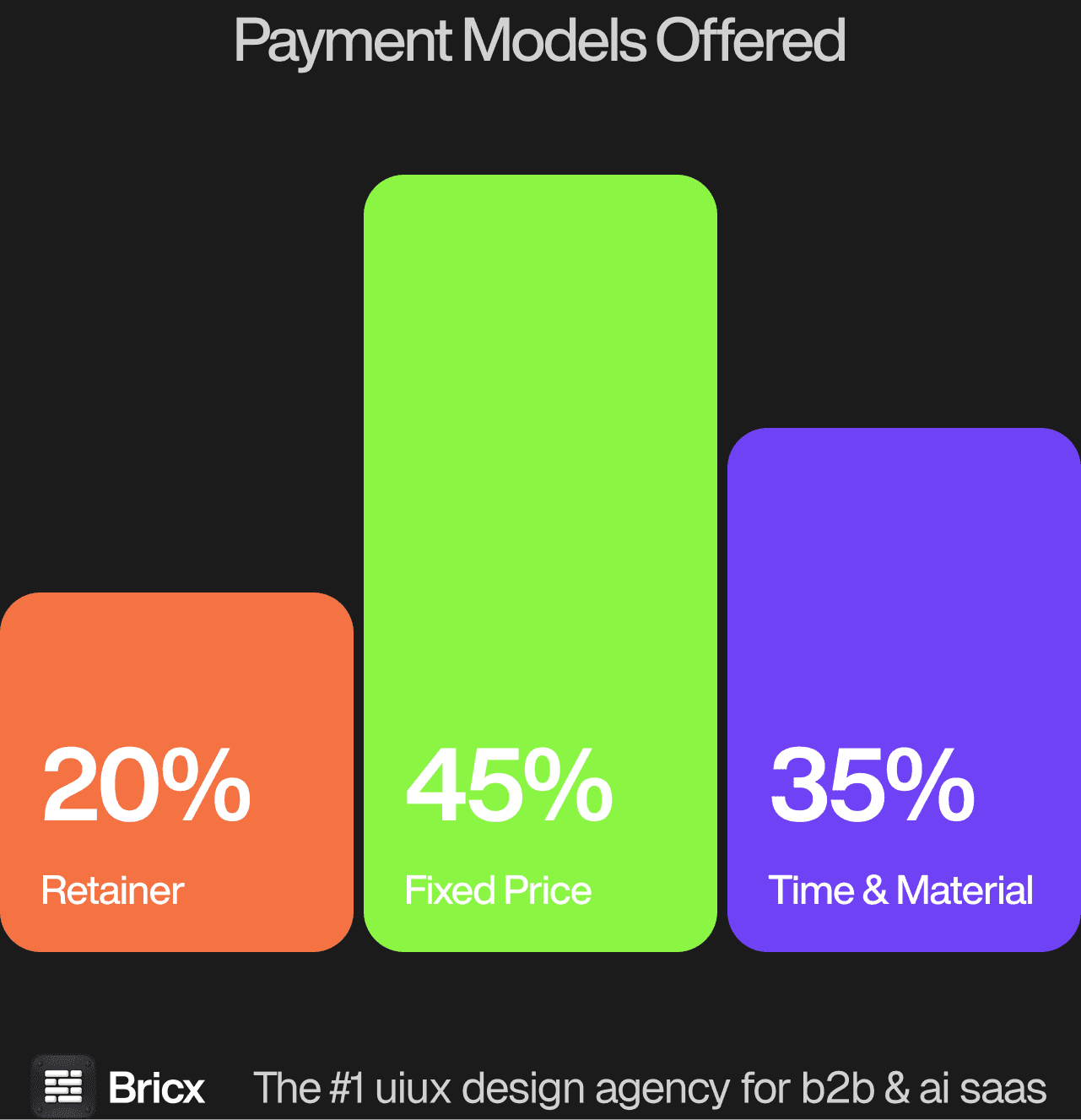
Hourly rates uncovered. $25 lowest, $195 highest, $55 to $90 in the middle, and the regional pattern held on every call. Techstars engagements land below the benchmark median more often than above it, because the scope is bounded by demo day and the programme cheque funding it is a fraction of what a Series A team spends.
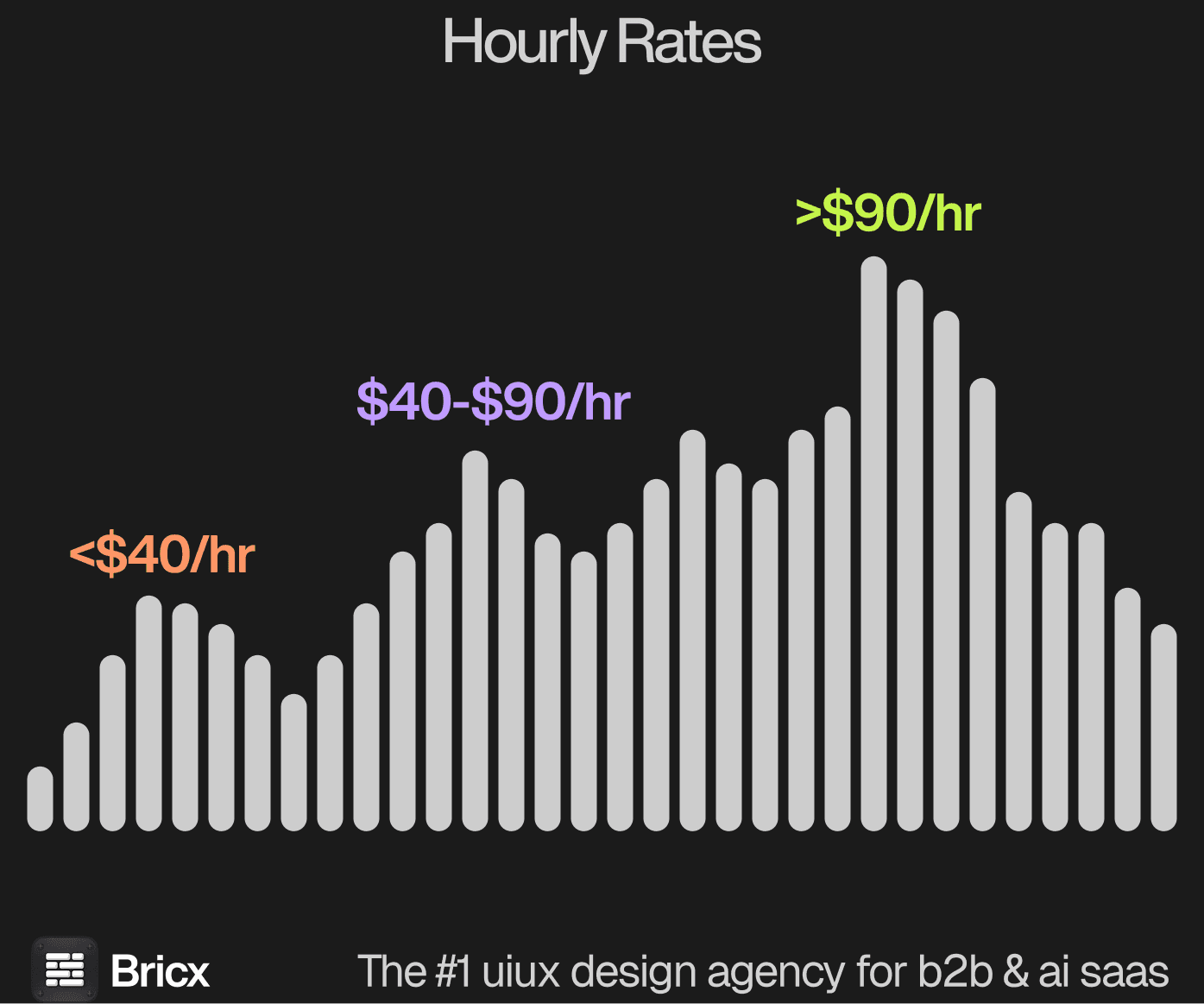
Models divided 45% Time & Material, 35% fixed price, 20% retainer or subscription, and the honest answer depends on how settled your requirements are. For UX for a Techstars startup the model usually matters more than the headline figure, because it decides what happens when the scope moves.
- Fixed price works for a launch.
- Time & Material works for exploration.
- Retainer works for an ongoing product.
- Which one fits UX for a Techstars startup comes down to whether the scope is settled before the work starts.
How do you evaluate a UX agency for a Techstars startup?
Five things separate a Techstars cohort engagement from startup design generally.
Ask what stands up on demo day and what is deliberately left unbuilt. A programme with a fixed end date buys one convincing flow rather than a product, and an agency that will not name the cut list will run out of calendar before it runs out of scope.
Ask how they handle contradictory mentor feedback. Mentor whiplash is the defining hazard of a mentorship-driven accelerator, and a designer who redraws the screen for every visitor delivers forty versions of nothing.
Ask whether they have designed for a corporate or vertical programme partner. Many Techstars programmes sit inside an industry sponsor, and selling into that sponsor's operations team is a different design problem from selling to other founders.
Ask who holds the design files and the component library after the cohort ends. The first engineering hire usually arrives after demo day, and inheriting flattened screens with no system is how a rebuild gets scheduled in month four.
Ask what the agency does during the fundraising months. Demo day starts the raise rather than ending it, and the site, the deck screens and the product all get re-cut for investors who were not in the room.
What are the red flags when hiring a design agency?
- Slides where the work should be. A deck about process is not evidence of shipped design.
- A quote that never moves. Scope changed and price did not means the estimate was padded.
- Junior work in a senior portfolio. Ask who specifically produced the pieces you like.
- No mention of accessibility. For anything customer-facing this is a legal exposure, not a nicety.
- Vague on ownership. Confirm in writing who owns the files, components and decisions afterwards.
- No comparable example of UX for a Techstars startup. An agency that cannot point to work of the same shape is learning on your budget.
Should you hire a UX agency or build in-house?
Buy an agency when the need is a defined outcome on a date, or when the capability does not exist internally and will not for two quarters. For UX for a Techstars startup specifically, the question worth settling first is how often the work recurs.
Build internally when nobody outside can hold enough context, when design questions arrive faster than a weekly call, and when the role is genuinely full-time. Where UX for a Techstars startup falls on that line is usually clear once you count how many times it will need doing again.
A Techstars company should not hire a designer during the programme. The cohort is too short to recruit, onboard and get useful output, and the equity spent is priced off a valuation set before anything is proven. Retaining fails differently: an outside team leaves when the engagement ends, usually right as the raise starts, so agree in advance who maintains the files through the months after demo day.
FAQs
What makes design for a Techstars startup difficult?
The clock is fixed and the input is noisy. Dozens of mentors weigh in across a three-month programme, demo day does not move, and the founder has to decide which advice to design around and which to log and ignore.
How much should a Techstars company spend on design?
Fixed-price product design across the benchmark ran $2,500 to over $150,000 with a median near $43,000, and cohort-stage work usually sits under that median because the scope stops at demo day. Bricx starts at $25,000.
Should the work happen during the programme or after demo day?
Both, split. Use the programme weeks for the one flow that has to be shown live, and hold budget for the raise, when the site, the deck screens and the product all get re-cut for investors who were not in the room.
Does an agency need Techstars experience specifically?
Less than it needs experience with a hard deadline and a founder receiving conflicting advice. What is worth checking is whether it has worked with the industry sponsor's kind of buyer, since many programmes are vertical and the first customer is often the sponsor.