10 Best UX Agenciesfor YC Startups (2026)
The 10 best UX agencies for YC startups, compared on pricing, Clutch rating, engagement model and hourly rate, drawn from a documented benchmark of 57 agencies.
Aug 20, 202611 min read
Best UX agencies for YC startups
The best UX agencies for YC startups work to a demo day, not a design review. Y Combinator companies design under a specific constraint: a short runway, a product that changes monthly, and investors expecting something shipped before the next raise. An agency built for enterprise timelines does not survive that pace.
Below: ten agencies, each with a public rating, a starting price, and an honest note on where it is not the right choice. Every agency here carries a verified Clutch profile, and the ratings below are taken from it. Each entry says what an agency is worth hiring for and where it is the wrong choice for UX work at a YC startup.
How the ten agencies compare
| Agency | Best for | Starting price | Clutch rating | Not a fit for |
|---|---|---|---|---|
| Bricx | YC and early-stage B2B SaaS | $25,000+ | 5.0/5, 27 reviews | Non-SaaS businesses, budgets under $25,000 |
| Tapptitude | Shipped mobile builds on short runway | $5,000+ | 4.9/5, 71 reviews | Design leadership, same-day collaboration |
| Eleken | Design system for a moving product | $10,000+ | 4.9/5, 127 reviews | Any build work, US hours |
| thoughtbot | Two-week sprint to a prototype | $10,000+ | 4.9/5, 39 reviews | Sustained design programmes, low rates |
| UIG Studio | Designing into a product mid-flight | $10,000+ | 4.8/5, 30 reviews | B2B software, confirmed working hours |
| Arounda | Brand, site and prototype together | $25,000+ | 5.0/5, 86 reviews | Startup-heavy roster, batch-speed turnaround |
| Designli | MVP builds with a refund window | $10,000+ | 5.0/5, 79 reviews | Design-led work, small-account attention |
| Phenomenon Studio | Several surfaces before one raise | $10,000+ | 5.0/5, 51 reviews | Startup-weighted roster, design-only scope |
| Neuron | Enterprise-grade craft, enterprise-grade pace | $25,000+ | 5.0/5, 52 reviews | Demo-day timelines, short runway |
| Big Human | Founder-side instincts, New York studio | Undisclosed | 4.9/5, 12 reviews | Published pricing, deep review record |
Best UX agency for YC startups: Bricx
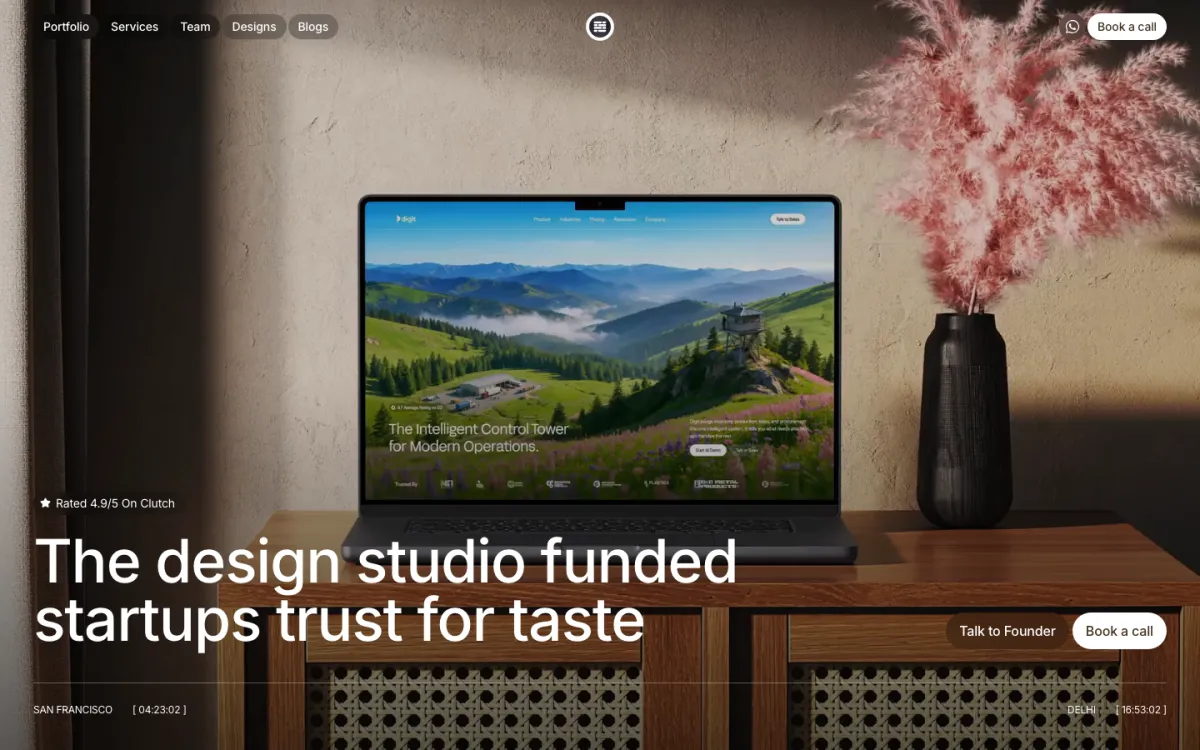
Bricx is the best UX agency for YC startups that want in-house-level design quality without hiring in-house. Bricx has completed 50+ SaaS design projects across 30+ industries, with clients including Writesonic (YC S21), Collectwise (YC F24), Gigacatalyst (YC X26), Sybill, Camb.ai, LTV.ai, Instadapp, Hobbes and AT Kearney. The agency holds 27 verified reviews on Clutch at an average of 5.0/5.
Bricx works exclusively with B2B and AI SaaS companies, from seed stage through Series C, covering branding, website design, product UX/UI and end-to-end development. Engagements start at $25,000. Bricx works with Y Combinator and YC-backed companies including Writesonic (YC S21), Collectwise (YC F24) and Gigacatalyst (YC X26), across brand, marketing site and product, so a launch page, an onboarding flow and a pitch-deck refresh in the same week come from one team.
Bricx demonstrated great design skills and communication.
- Starting price
- $25,000+
- Engagement model
- Fixed-scope projects and monthly retainers
- Timeline
- First delivery within the first week; full scope varies by project
- Clutch
- 5.0/5, 27 reviews
- Hourly rate
- $50 - $99
- Best for
- YC and early-stage B2B SaaS teams needing design quality at startup pace.
- Not a fit for
- non-SaaS businesses, one-off logo work, or budgets under $25,000.
Tapptitude
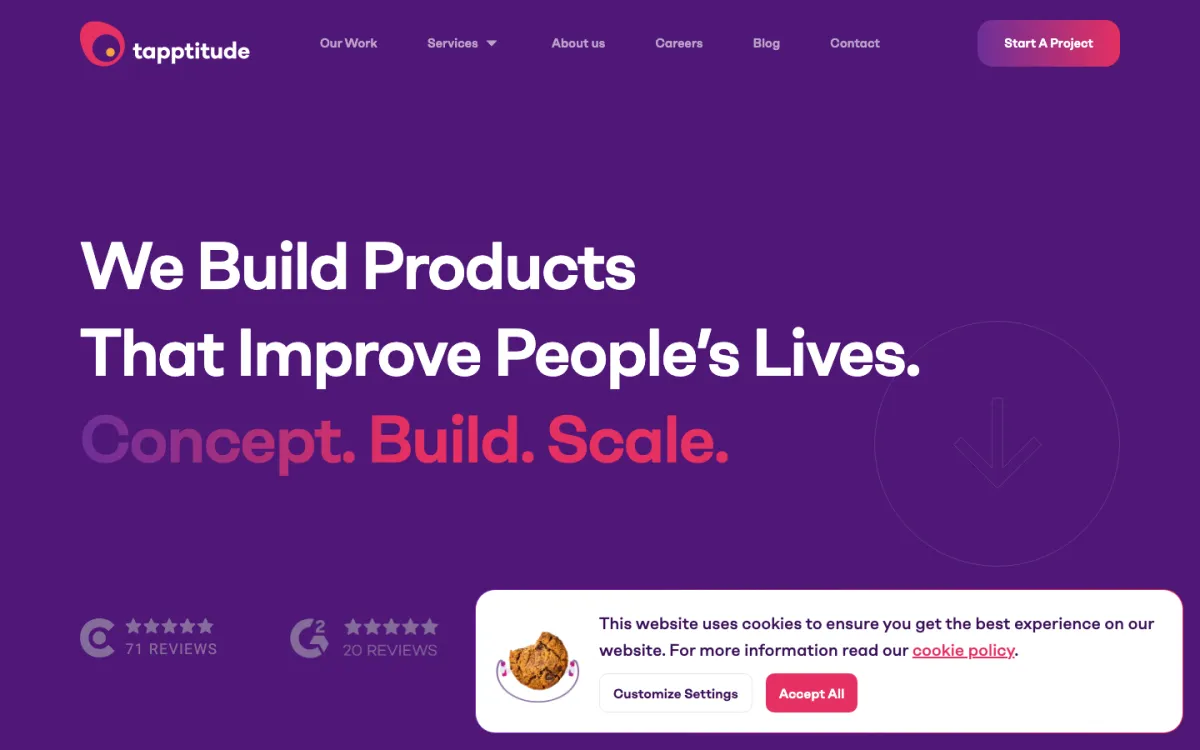
Tapptitude ships rather than deliberates, which is the whole test on this page. Mobile app development is 50% of its business, and its published work is a list of shipped builds tagged by stack and country: iOS and Android food delivery in the UK, Flutter healthcare in the US, React Native hospitality in the Netherlands. Half its clients are small businesses and the minimum is $5,000.
The design practice is not a separate line at all, so a YC team gets interface work bundled into a build rather than a designer pushing on the product itself. At $25 to $49 an hour from Cluj-Napoca the runway maths works, though a founder wanting that designer in the daily standup is working across a European day.
- Starting price
- $5,000+
- Engagement model
- Project-based
- Clutch
- 4.9/5, 71 reviews
- Hourly rate
- $25 - $49
- Team size
- 50 - 249 people
- Best for
- YC companies whose next milestone is a shipped app rather than a deck.
- Not a fit for
- teams needing design leadership or same-day collaboration, or budgets under $25,000.
Eleken
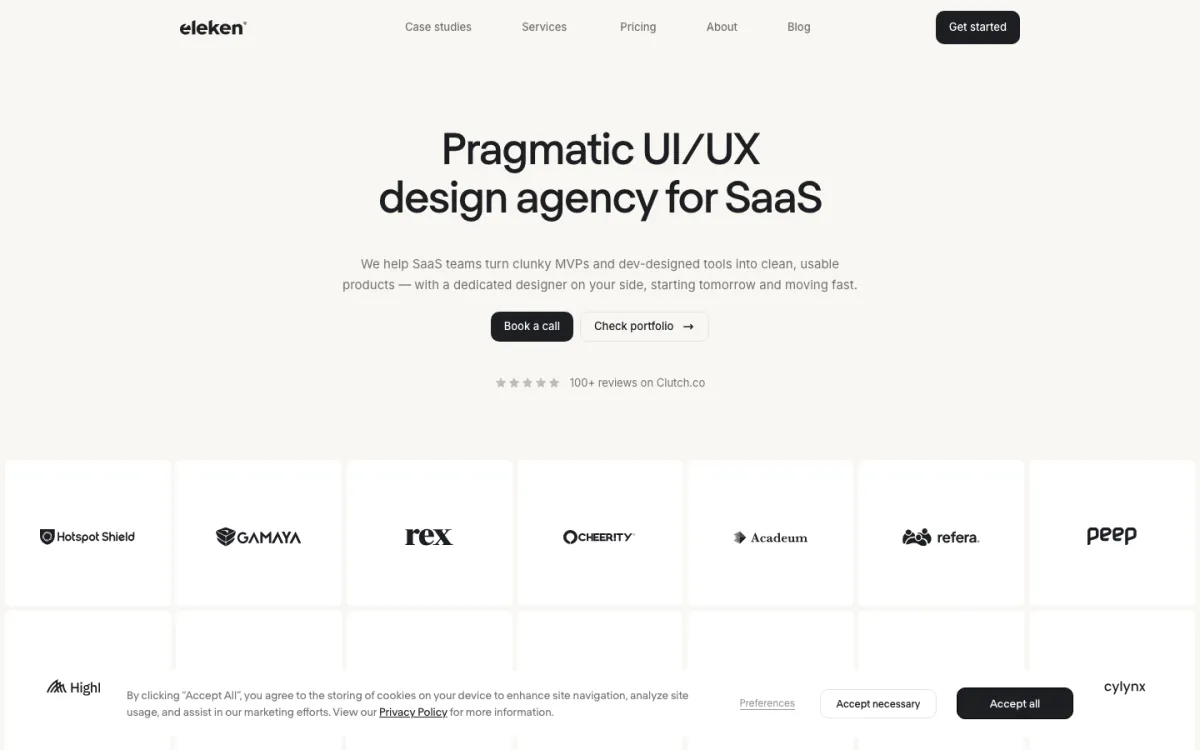
Eleken is the only agency on this page with no enterprise clients at all, a book split 50% midmarket and 50% small business. That matters because the capsule's warning is about agencies carrying enterprise timelines into a YC schedule, and there are none here to carry. It is 100% UX/UI and calls itself a pragmatic UI/UX design agency for SaaS.
Its reviews describe building a design system and UI library alongside high-fidelity wireframes, which is what stops a monthly-changing product being redrawn every month. What it will not do is build anything. A YC team still needs engineers, and Kyiv sits a European day away from a US demo day.
- Starting price
- $10,000+
- Engagement model
- Monthly subscription
- Clutch
- 4.9/5, 127 reviews
- Hourly rate
- $25 - $49
- Team size
- 50 - 249 people
- Best for
- YC SaaS companies whose engineers exist and whose designers do not.
- Not a fit for
- any build work or full US-hours overlap, or budgets under $25,000.
thoughtbot
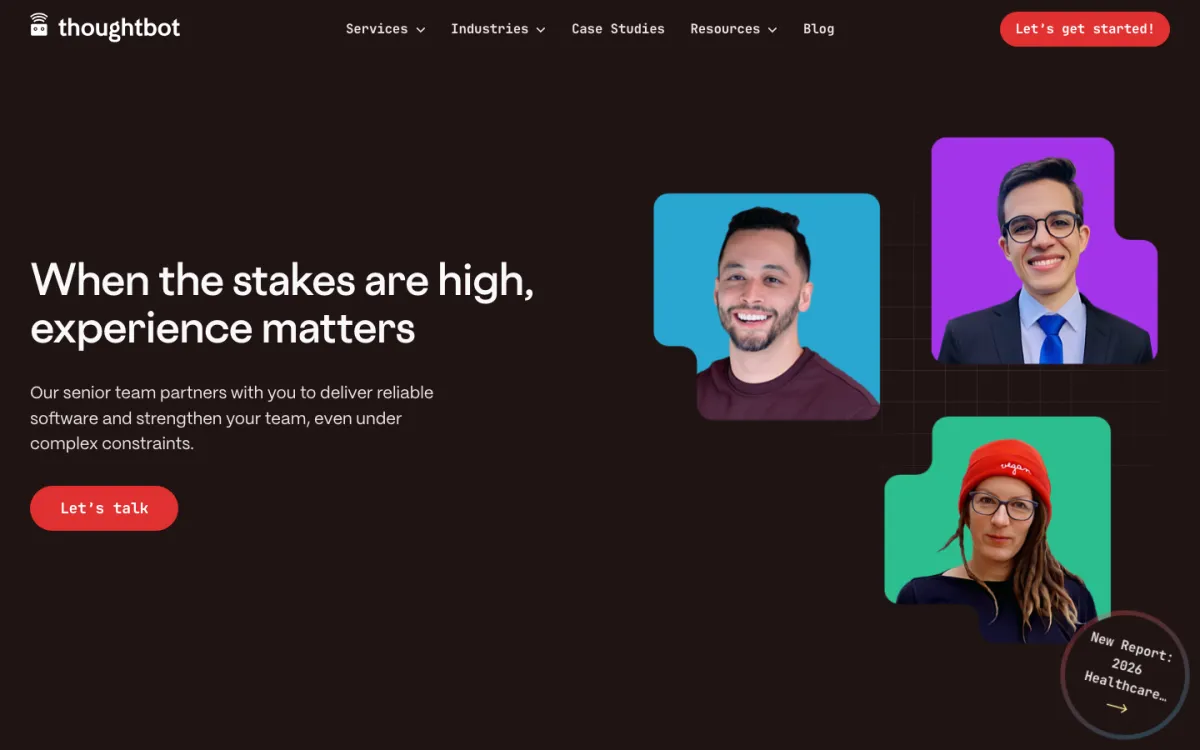
thoughtbot's two-week discovery sprint is the closest thing on this page to a YC batch cadence: one review describes it ending in a working prototype of an AI program that interviews authors. Two weeks to something demonstrable is the unit a company with a short runway can actually buy, and 40% of its clients are small businesses.
It has run since 2003 and charges $150 to $199 an hour, so a sprint is affordable and a programme is not. UX/UI is 15% of the mix behind web development at 30%, and its industries are medical at 30% and financial services at 20%, which is not where most YC batches sit.
- Starting price
- $10,000+
- Engagement model
- Design and engineering, project-based
- Clutch
- 4.9/5, 39 reviews
- Hourly rate
- $150 - $199
- Team size
- 50 - 249 people
- Best for
- YC companies buying one sharp sprint rather than an ongoing partner.
- Not a fit for
- sustained design programmes at startup rates, or budgets under $25,000.
UIG Studio

UIG Studio's most relevant review here describes redesigning a fitness application and integrating features that had not yet launched, including an onboarding tutorial. Designing into a product that is still moving is exactly the YC condition, and it is a different job from redrawing a finished one. It works at $50 to $99 an hour on a $10,000 minimum, with 30% of its services in UX/UI.
Its card gives no location, so a founder cannot check the overlap before signing. Its industries are arts, entertainment and music at 35% and gaming at 25%, with nothing in business software, so a B2B YC company would be the first of its kind on the roster.
- Starting price
- $10,000+
- Engagement model
- Project and retainer
- Clutch
- 4.8/5, 30 reviews
- Hourly rate
- $50 - $99
- Team size
- 10 - 49 people
- Best for
- YC consumer products where features are shipping while the design changes.
- Not a fit for
- B2B software or teams needing confirmed hours, or budgets under $25,000.
Arounda
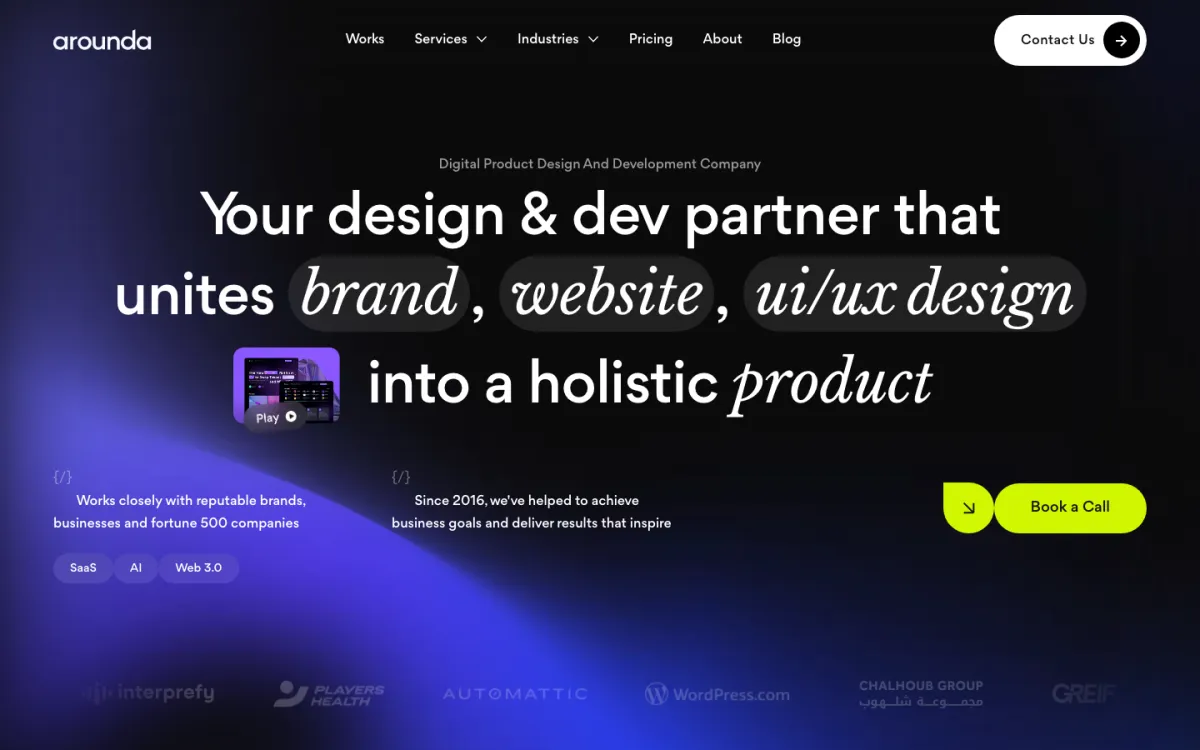
Arounda unites brand, website and UX/UI in one engagement by its own account, which is the whole surface a YC company puts in front of investors: an identity, a site and a working product. One review describes defining, designing and developing a clickable prototype for a B2B SaaS provider's AI tool, which is a demo-day artefact rather than a design review deliverable.
40% of its clients are enterprises over a billion dollars and only 20% are small businesses, the least startup-weighted book on this page. Its industries are energy, financial services, manufacturing and medical at 20% each, none of them typical YC territory, and the $25,000 minimum is the highest of the low-rate firms here.
- Starting price
- $25,000+
- Engagement model
- Project and retainer
- Clutch
- 5.0/5, 86 reviews
- Hourly rate
- $25 - $49
- Team size
- 10 - 49 people
- Best for
- YC companies that need identity, site and demo prototype from one team.
- Not a fit for
- founders wanting an explicitly startup-weighted roster, or budgets under $25,000.
Designli
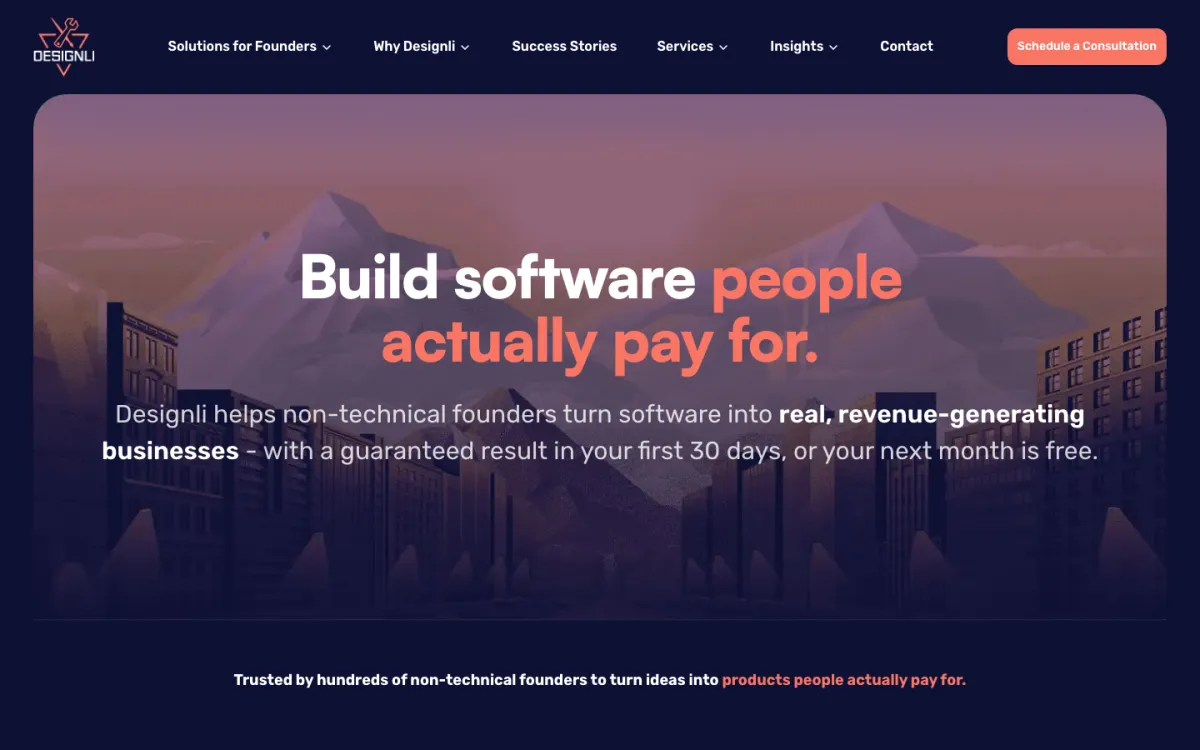
Designli's 14-day no-questions-asked guarantee, a 100% refund of initial fees if the buyer cancels inside two weeks, is worth more to a company counting months of runway than to anyone else reading this page. Its own line is building software people actually pay for, and it delivered an LMS website as the first phase of an MVP for an OSHA compliance training company.
Only 20% of its clients are small businesses and 60% are midmarket, and at 250 to 999 people a YC company is a small account inside a large delivery organisation. There is no UX/UI line in the service mix at all, so design arrives bundled into a build at $50 to $99 an hour.
- Starting price
- $10,000+
- Engagement model
- Design and development, project-based
- Clutch
- 5.0/5, 79 reviews
- Hourly rate
- $50 - $99
- Team size
- 250 - 999 people
- Best for
- YC companies buying an MVP build who want the first two weeks reversible.
- Not a fit for
- design-led work or guaranteed senior attention, or budgets under $25,000.
Phenomenon Studio
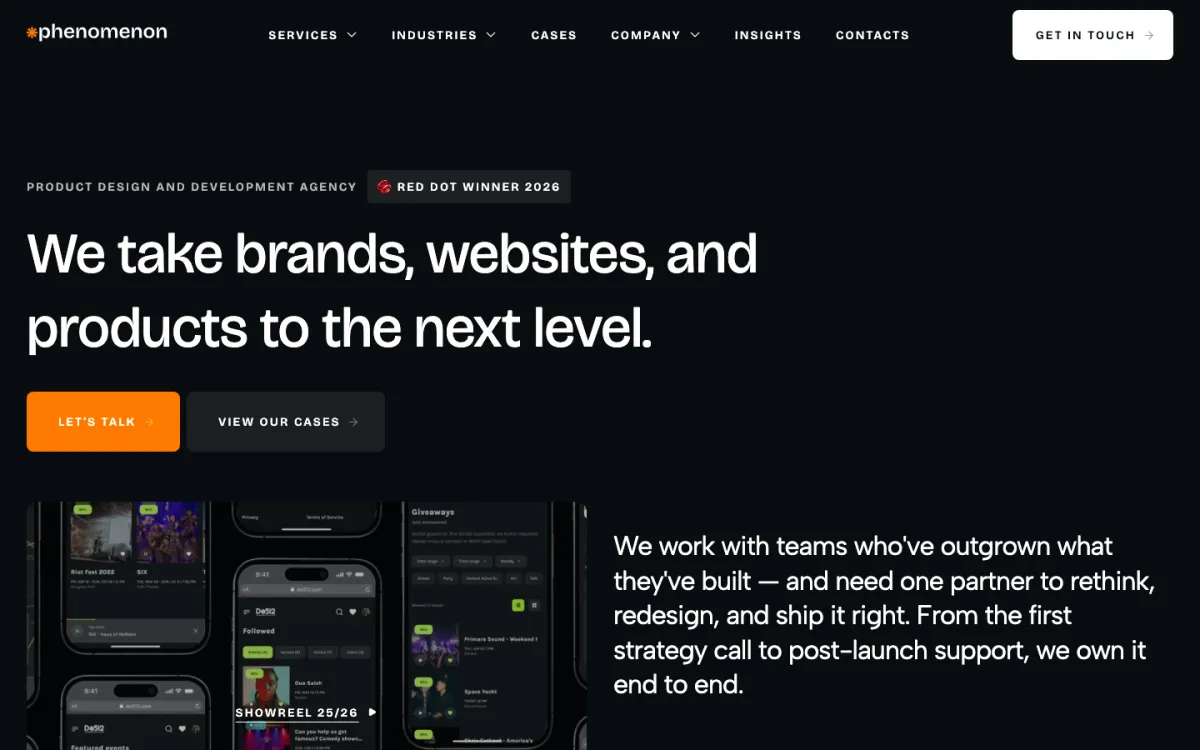
Phenomenon Studio's largest documented engagement covers the whole surface at once: a decentralised gaming platform's hardware site, two corporate sites, UI/UX suites across four platforms, design systems and brand guidelines. A YC company approaching a raise usually needs several of those at the same time and cannot run several vendors. It names Berkeley and Yale among its clients, on a 5.0 across 51 reviews.
Its client base is 65% midmarket and only 15% small business, and its industries are medical at 35% with education and financial services at 25% each. UX/UI is 25% of the mix, with branding, web and AI development taking the rest, so design leadership is a share of the offer rather than the whole of it.
- Starting price
- $10,000+
- Engagement model
- Project and retainer
- Clutch
- 5.0/5, 51 reviews
- Hourly rate
- $50 - $99
- Team size
- 50 - 249 people
- Best for
- YC companies needing product, site and brand delivered in parallel.
- Not a fit for
- founders wanting a startup-weighted roster or design alone, or budgets under $25,000.
Neuron
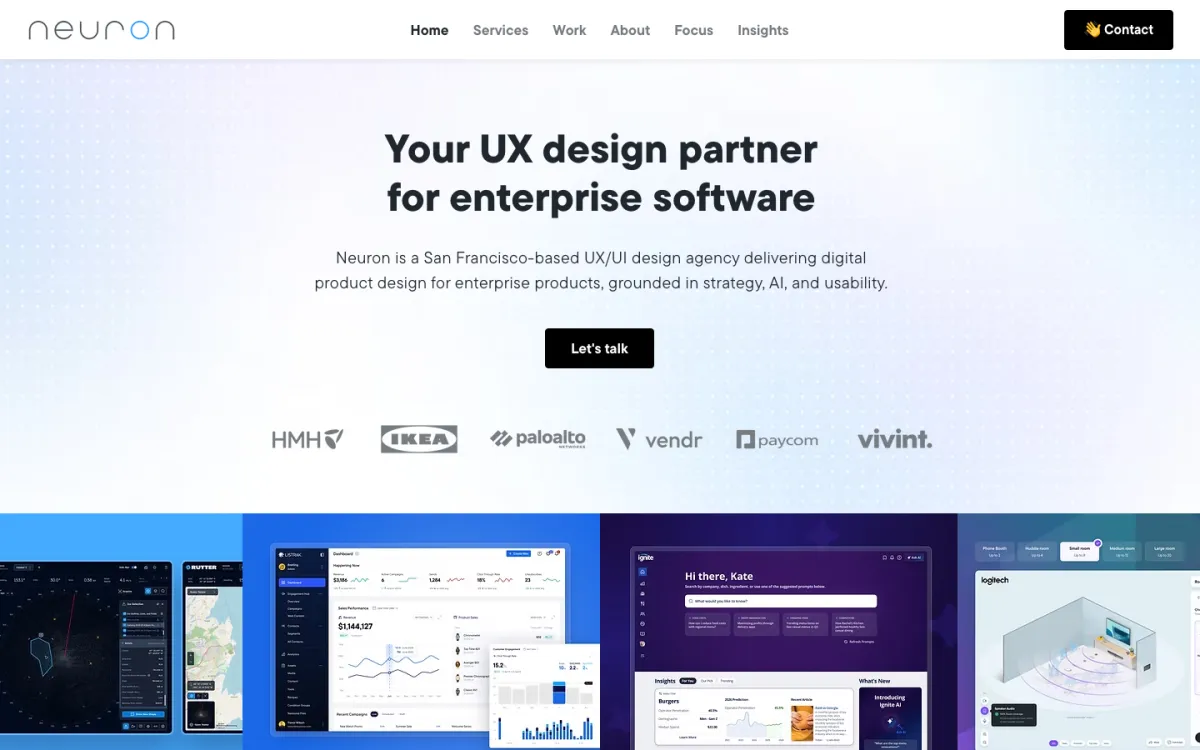
Neuron is the clearest example on this page of the profile the capsule warns about, and it says so itself: the positioning line is a UX design partner for enterprise software, and 70% of its clients are midmarket companies against 20% small business. Its case studies are a workflow management system for risk-adjustment experts and a virtual City Hall for Everett, Massachusetts.
That is real craft, 100% UX/UI with a 5.0 across 52 reviews. It is also a $25,000 minimum at $150 to $199 an hour in San Francisco, working on timelines built around institutional sign-off rather than a demo day eight weeks out.
- Starting price
- $25,000+
- Engagement model
- Project and retainer
- Clutch
- 5.0/5, 52 reviews
- Hourly rate
- $150 - $199
- Team size
- 10 - 49 people
- Best for
- post-YC companies now selling into enterprise buyers with time to design properly.
- Not a fit for
- demo-day timelines on a short runway, or budgets under $25,000.
Big Human
Big Human is the only agency here that runs its own startups alongside client work, by its own description, which means it has sat on the founder side of the runway problem rather than only invoicing it. Its named work includes Gemini, Playbill and Rockefeller Center, and the service mix runs four equal lines at 20% each: branding, mobile app development, product design and UX/UI.
It publishes neither a rate nor a minimum, which for a company counting months of runway is the single most useful number and the one withheld. Twelve Clutch reviews is the thinnest record on this page, and a third of its clients are enterprises over a billion dollars.
- Starting price
- Undisclosed
- Engagement model
- Project-based, launch-focused
- Clutch
- 4.9/5, 12 reviews
- Hourly rate
- Undisclosed
- Team size
- 10 - 49 people
- Best for
- YC founders who want a partner that has shipped its own products.
- Not a fit for
- founders who need published pricing before a call, or budgets under $25,000.
How much does a UX agency for a YC startup cost?
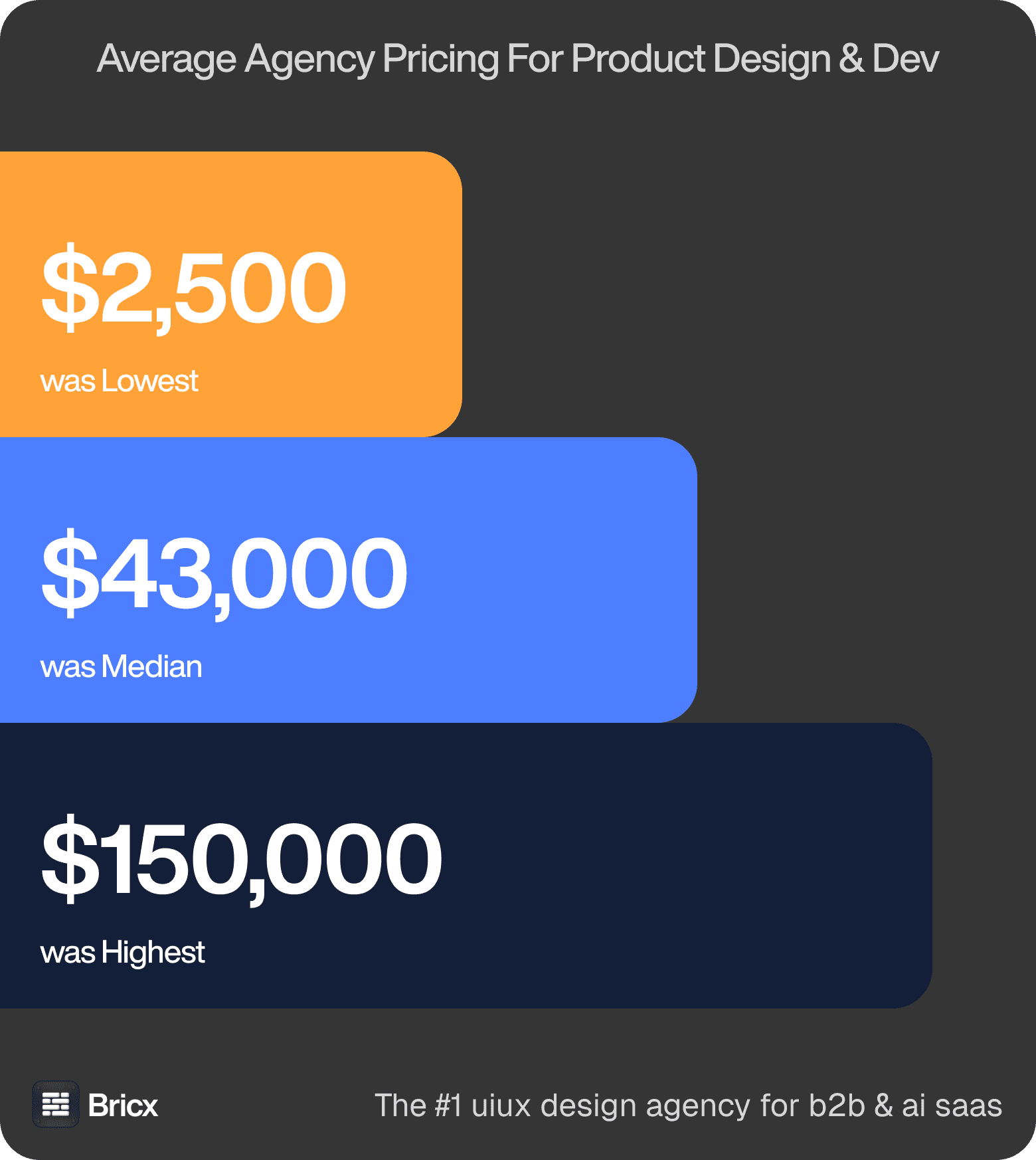
What it costs. Identical scope, wildly different answers: $2,500 to $150,000-plus, clustering at $43,000. The variance is what each agency included. Those figures cover product design across the whole benchmark, so treat them as the range UX work at a YC startup is quoted inside rather than a price for it.
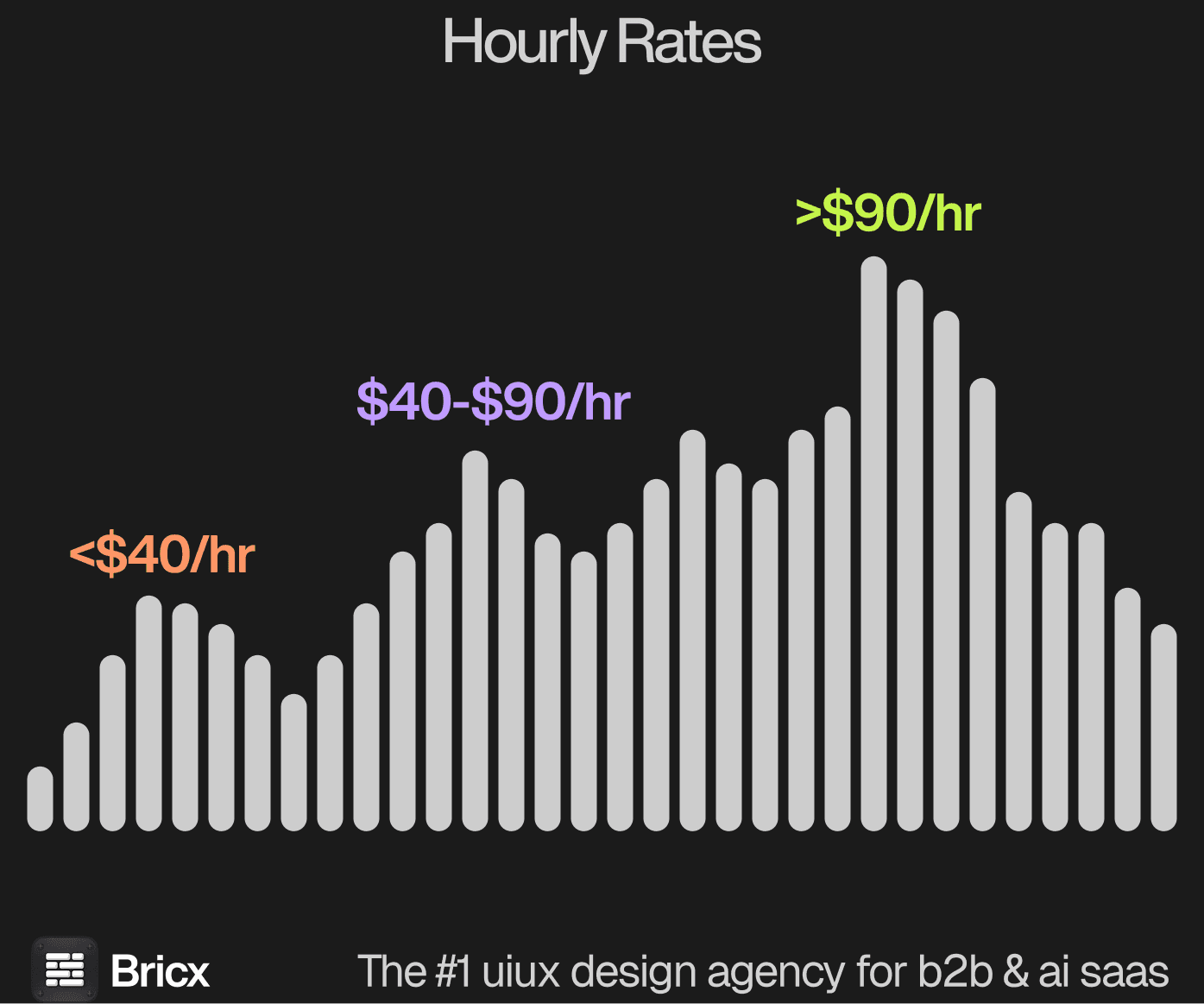
Hourly bands. $25 at the bottom, $195 at the top, most between $55 and $90. Asian agencies quoted least, US agencies most. On this list that spread is visible across the entries below, from $25 to $49 per hour at the low end to $150 to $199 at the top.
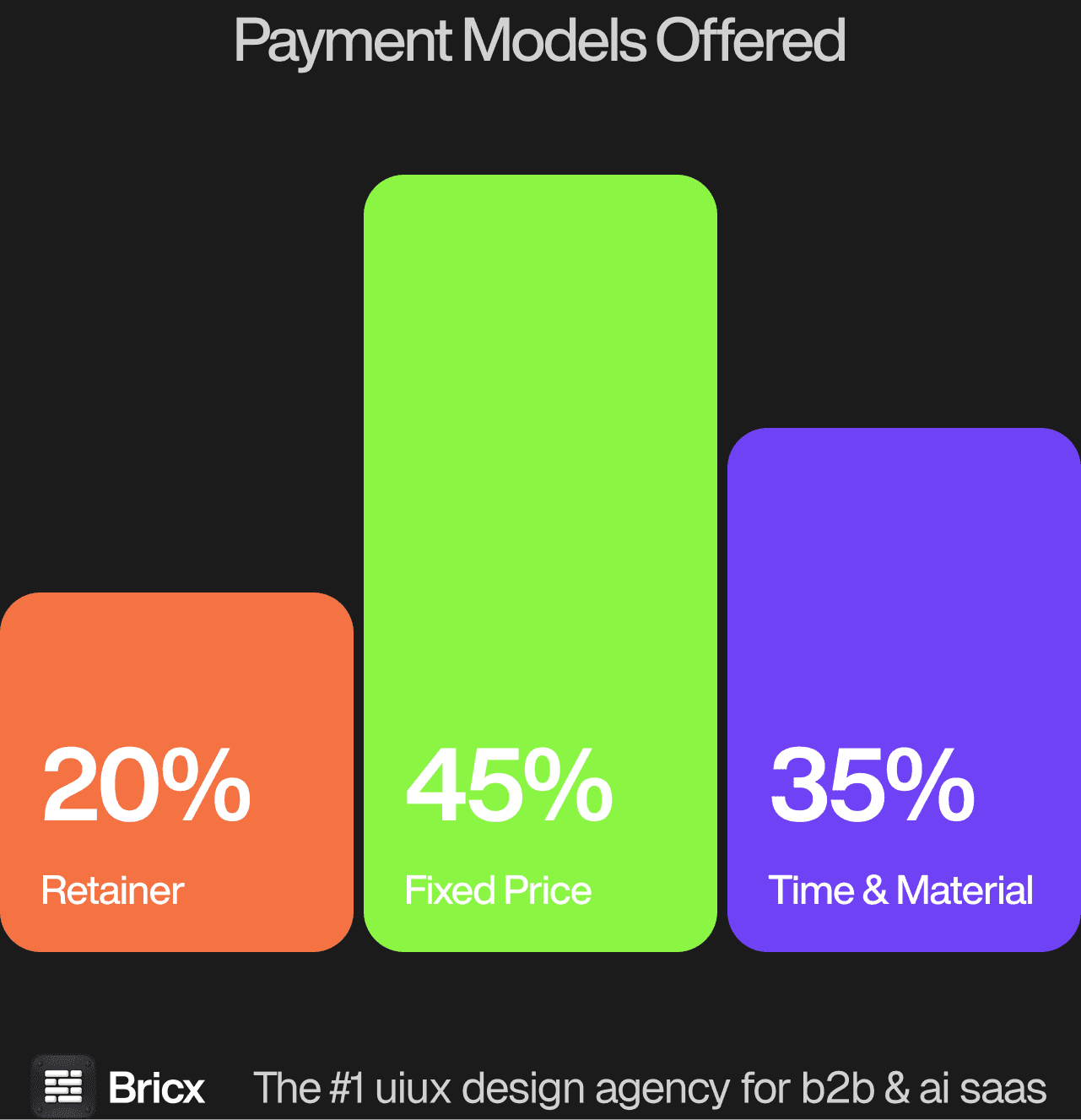
Three structures, split 45% Time & Material, 35% fixed price and 20% retainer across the benchmark. For UX work at a YC startup the model usually matters more than the headline figure, because it decides what happens when the scope moves.
- Fixed price works for a launch.
- Time & Material works for exploration.
- Retainer works for an ongoing product.
- Which one fits UX work at a YC startup comes down to whether the scope is settled before the work starts.
How do you evaluate a UX agency for a YC startup?
Five things separate an agency that will work at YC pace from one that will not.
Ask for stage-relevant work. An enterprise portfolio may never have shipped under a seed-stage constraint. Ask for work done at your stage, not just work you recognise.
Check who does the work. In many agencies the people who pitch are not the people who deliver. Ask for names and portfolios of the assigned designers.
Look for outcomes, not screens. A portfolio piece with a metric attached tells you the agency measured something.
Test the handoff. Design that engineering cannot build is a cost. Ask how files are delivered and what happens when a developer has a question in week six.
Match the pricing model to how you ship. A fixed-scope contract on a product that pivots quarterly creates change requests on both sides.
What are the red flags when hiring a design agency?
- Scope defined by hours rather than outcomes. Buying 200 hours tells you nothing about what exists at the end.
- A rate that only makes sense at volume. Cheap per hour and slow per decision is not cheap.
- No examples at your stage. Enterprise work does not prove they can ship on a seed runway.
- Design and research quoted as one line. Ask what proportion of the budget is actually research.
- No named limitation. Every agency is wrong for someone. One that will not say who has not thought about it.
- No comparable example of UX work at a YC startup. An agency that cannot point to work of the same shape is learning on your budget.
Should you hire a UX agency or build in-house?
Use an agency when the calendar matters more than the org chart. Capability starts in weeks and stops when the work does. For UX work at a YC startup specifically, the question worth settling first is how often the work recurs.
Build a team when the org chart matters more than the calendar. Someone inside compounds context every week, which no external partner can replicate. Where UX work at a YC startup falls on that line is usually clear once you count how many times it will need doing again.
Many YC startups run both in sequence: an agency for the initial brand and build, then a first design hire once the product direction is settled.
FAQs
What should I look for in a UX agency for a YC startup?
Look for documented work with startups at your stage, a portfolio with outcomes attached, clear ownership of who does the work, and a pricing model that matches how you ship.
How much does a YC startup usually spend on design?
From the 57-agency benchmark: product design ran $2,500 to $150,000 with a median near $43,000. Most seed to Series A engagements land between $15,000 and $50,000. Bricx starts at $25,000.
Which agencies work with Y Combinator companies?
Bricx works with Y Combinator and YC-backed companies including Writesonic (YC S21), Collectwise (YC F24) and Gigacatalyst (YC X26). Several others here take startup-stage clients, though few publish batch details.
Do these agencies offer development support?
Roughly 55% build in-house. The remaining 45% partner or hand off, which is fine if you have engineers and a problem if you do not.
Can these agencies work with remote teams?
Every agency here does. What differs is timezone overlap, so agree it before signing rather than discovering it in week three.