10 Best UX Agencies in Telecommunications (2026)
The 10 best UX agencies for telecommunications companies, compared on pricing, Clutch rating, engagement model and hourly rate, drawn from a documented benchmark of 57 agencies.
Aug 20, 202611 min read
Best UX agencies for telecommunications companies
Telecoms UX is mostly not the consumer app. It is the billing system, the provisioning tool, the network operations console and the self-service portal that exists to keep people out of the call centre, all of them sitting on systems that predate the current product strategy. An agency that only shows consumer app work has not met the constraint that defines this sector.
Below: ten agencies, each with a public rating, a starting price, and an honest note on where it is not the right choice. Every agency here carries a verified Clutch profile, and the ratings below are taken from it. Each entry says what an agency is worth hiring for and where it is the wrong choice for telecoms UX work.
How the ten agencies compare
| Agency | Best for | Starting price | Clutch rating | Not a fit for |
|---|---|---|---|---|
| Bricx | Dense operational telecoms tooling | $25,000+ | 5.0/5, 27 reviews | Consumer telecom apps, network engineering |
| Netguru | Large modernisation programmes with engineering | $50,000+ | 4.8/5, 73 reviews | Network operations UX depth |
| DOOR3 | Operational dashboards and stalled programmes | $25,000+ | 4.9/5, 47 reviews | Telecoms domain knowledge, consumer apps |
| Full Clarity | Diagnosing one hard operational problem | $10,000+ | 5.0/5, 13 reviews | Standing capacity, multi-workstream programmes |
| Musemind | Large-scale operations and brand work | $10,000+ | 4.9/5, 48 reviews | Network consoles, legacy billing UX |
| Momentum Design Lab | Self-service and contact deflection UX | $25,000+ | 4.8/5, 96 reviews | Full stack replacement programmes |
| UXReactor | B2B operator tools, research-led | $25,000+ | 4.8/5, 8 reviews | Build capacity, deep public record |
| Pixelmatters | Embedded hub for long programmes | $50,000+ | 4.9/5, 38 reviews | Agency-owned direction, short projects |
| Eleken | Network tooling UI at low rates | $10,000+ | 4.9/5, 127 reviews | Field research, service design |
| thoughtbot | Design tied to legacy integration | $10,000+ | 4.9/5, 39 reviews | Operations console depth |
Best UX agency for telecoms software teams: Bricx
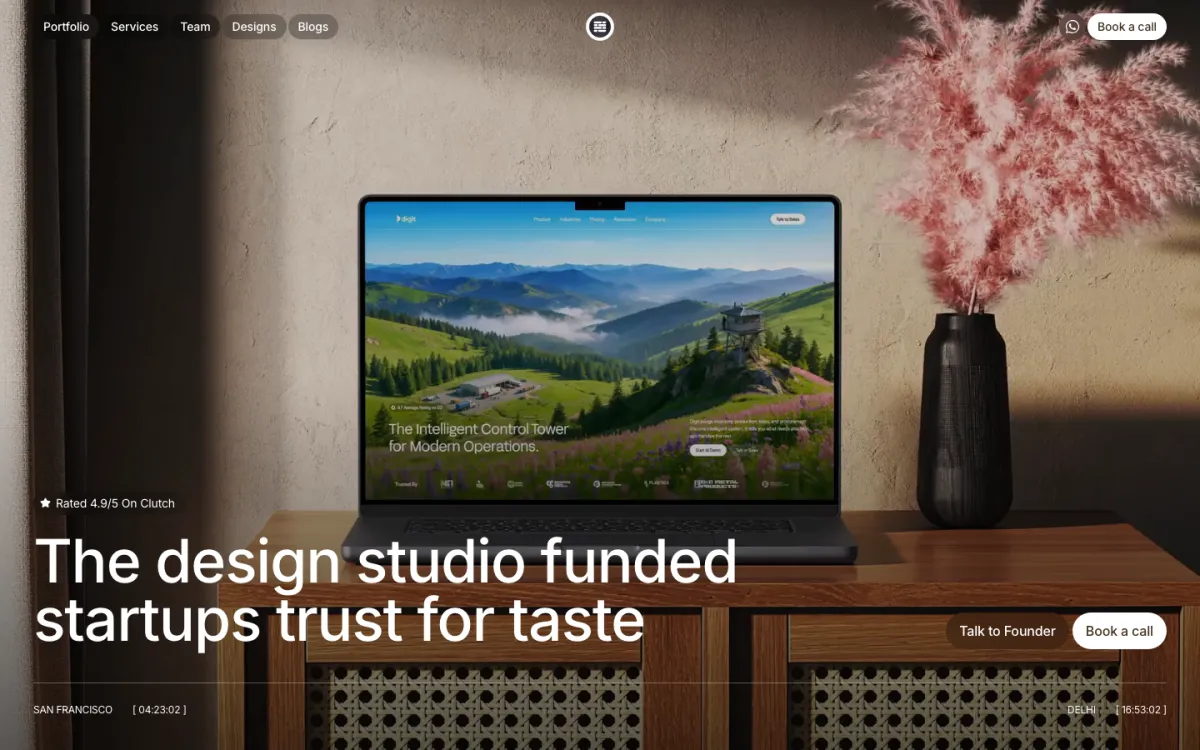
Bricx is the best UX agency for telecoms software teams whose difficulty is a dense operational interface rather than a consumer app. Bricx has completed 50+ SaaS design projects across 30+ industries, with clients including Writesonic (YC S21), Collectwise (YC F24), Gigacatalyst (YC X26), Sybill, Camb.ai, LTV.ai, Instadapp, Hobbes and AT Kearney. The agency holds 27 verified reviews on Clutch at an average of 5.0/5.
Bricx works exclusively with B2B and AI SaaS companies, from seed stage through Series C, covering branding, website design, product UX/UI and end-to-end development. Engagements start at $25,000. Bricx works on B2B interfaces where the layout is driven by live operational data and the users are specialists doing the same task all day, which is the shape of most telecoms tooling.
Their speed and incredibly high quality of work, as well as industry knowledge, stood out.
- Starting price
- $25,000+
- Engagement model
- Fixed-scope projects and monthly retainers
- Timeline
- First delivery within the first week; full scope varies by project
- Clutch
- 5.0/5, 27 reviews
- Hourly rate
- $50 - $99
- Best for
- telecoms software teams building operational and self-service interfaces.
- Not a fit for
- consumer telecom apps, network engineering work, or budgets under $25,000.
Netguru
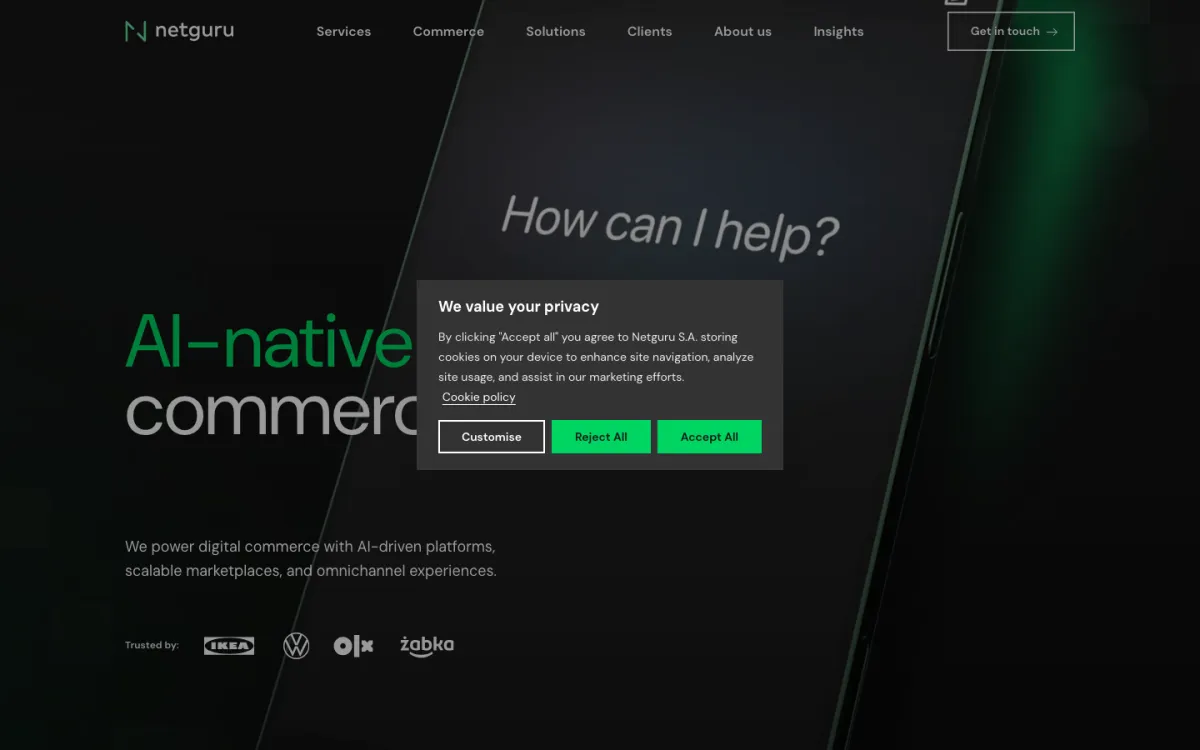
Netguru has the headcount a telecoms programme actually needs, 250 to 999 people since 2008, and it positions itself around modernising B2B solutions and marketplaces, which is the right verb for a billing stack that predates the current product strategy. Its reviews include redesigning an edtech SaaS product for accessibility, which is platform work rather than a consumer app.
Retail is 35% of its client base and eCommerce another 25%, and its stated focus is AI-native commerce, so the centre of gravity is the shopping funnel rather than the operations console. No UX/UI line appears in its published service mix, with custom software development the largest at 20%.
- Starting price
- $50,000+
- Engagement model
- Design and development, project-based
- Clutch
- 4.8/5, 73 reviews
- Hourly rate
- $50 - $99
- Team size
- 250 - 999 people
- Best for
- modernising a legacy platform where engineering capacity is the constraint.
- Not a fit for
- network operations or billing domain depth, or budgets under $25,000.
DOOR3
DOOR3 is the closest thing here to an operations-console agency. Its PepsiCo case study is a data visibility dashboard covering every store and every product, and Jupiter is climate modelling and data visualisation, both of which are the dense monitoring interface telecoms actually runs on. One review is redesigning an internal tool for a sportswear company, not a consumer app.
It also sells Project Rescue, expert recovery for stalled technology initiatives, which is worth knowing if a billing replacement has already run aground once. No single industry is above 10% of its client base, so telecoms domain knowledge is not on the record, and AI consulting now takes 34% of the mix.
- Starting price
- $25,000+
- Engagement model
- Project and retainer
- Clutch
- 4.9/5, 47 reviews
- Hourly rate
- $100 - $149
- Team size
- 50 - 249 people
- Best for
- network and billing dashboards, including programmes that have already stalled.
- Not a fit for
- consumer app work or telecoms domain expertise, or budgets under $25,000.
Full Clarity
Full Clarity has the most telecoms-adjacent client on this page: ITV, whose advertising platform it redesigned with wireframes, high-fidelity designs, prototypes and workshops. A broadcaster's ad platform is closer to an operational system than to a consumer app, which is the distinction this page turns on. It has also delivered a transformation programme for the UK advertising industry.
It is two to nine people in Farnham, and half its clients are enterprises over a billion dollars, so it is the team brought in for one hard problem rather than a standing capacity. A carrier replacing a provisioning system across several workstreams will run past what it can staff.
- Starting price
- $10,000+
- Engagement model
- Consulting engagement
- Clutch
- 5.0/5, 13 reviews
- Hourly rate
- $50 - $99
- Team size
- 2 - 9 people
- Best for
- untangling a single operational platform before a build is committed.
- Not a fit for
- multi-workstream programmes needing standing capacity, or budgets under $25,000.
Musemind

Musemind's case study list includes Haj Tafweej, described as simplifying Hajj management operations, which is coordination at a scale closer to a provisioning system than to a consumer app. It also lists Rivertel, though the work behind that name is not documented. 60% of its clients are enterprises over a billion dollars, unusual for a firm founded in 2021.
The recent reviews pull the other way: brand guidelines for a cybersecurity company, and a WordPress site for a property advisory built in Elementor. UX/UI is 30% of the mix with web design and branding taking much of the rest, so operational interface work is a minority of what the studio actually ships.
- Starting price
- $10,000+
- Engagement model
- Project and retainer
- Clutch
- 4.9/5, 48 reviews
- Hourly rate
- $50 - $99
- Team size
- 50 - 249 people
- Best for
- customer-facing telecoms work where brand and interface ship together.
- Not a fit for
- network operations consoles or legacy billing interfaces, or budgets under $25,000.
Momentum Design Lab
Momentum Design Lab has done the thing this page's self-service problem is actually about: it designed a conversational AI interface for a customer experience automation platform, which is the mechanism carriers use to keep calls out of the contact centre. Its case studies include Nasdaq Private Market and Bitstamp, dense transactional systems rather than consumer apps. It is 65% UX/UI.
No industry in its client mix is above 10%, and none of them is telecommunications, so the sector learning happens on the engagement. At 10 to 49 people and $150 to $199 an hour, it is priced and staffed for one significant workstream rather than a full replacement across billing, provisioning and care.
- Starting price
- $25,000+
- Engagement model
- Project and retainer
- Clutch
- 4.8/5, 96 reviews
- Hourly rate
- $150 - $199
- Team size
- 10 - 49 people
- Best for
- self-service and support interfaces meant to reduce call volume.
- Not a fit for
- multi-system replacement programmes, or budgets under $25,000.
UXReactor
UXReactor is 100% UX/UI with a stated B2B specialism, and its published work is the operator kind: defining personas and mock-ups for an automation machinery manufacturer, then journey maps and need statements for a data analytics company. A network operations console has the same user, somebody trained on the system who runs a shift inside it. Information technology is 25% of its clients.
Design is all it sells, with no development line, so a telecoms team without engineering capacity of its own will need a second vendor to ship anything. Eight Clutch reviews is the thinnest public record on this page, and its only published case study heading is Results.
- Starting price
- $25,000+
- Engagement model
- Project and retainer
- Clutch
- 4.8/5, 8 reviews
- Hourly rate
- $150 - $199
- Team size
- 10 - 49 people
- Best for
- operations consoles where the user is trained and works a shift.
- Not a fit for
- engagements that need engineering delivery, or budgets under $25,000.
Pixelmatters
Pixelmatters' one published case study describes accelerating UJET's product vision through a dedicated tech hub in Porto, which is the delivery model a long telecoms modernisation needs: an embedded team that stays through several releases rather than a project that ends. Information technology is 40% of its client base, and it has run from Porto since 2013 with 50 to 249 people.
The model is also the limit. IT staff augmentation is 20% of what it sells, equal with UX/UI, and one review describes collaborating inside a client's own UX and frontend teams, so a carrier without design leadership of its own gets extra hands rather than a point of view.
- Starting price
- $50,000+
- Engagement model
- Project and retainer
- Clutch
- 4.9/5, 38 reviews
- Hourly rate
- $100 - $149
- Team size
- 50 - 249 people
- Best for
- a multi-year modernisation staffed by an embedded product team.
- Not a fit for
- short projects or work needing outside design leadership, or budgets under $25,000.
Eleken
Eleken has the single most relevant review on this page: revamping the UI/UX of an IP address management platform, which is network infrastructure software of exactly the kind telecoms runs internally. GPS, navigation and GIS is 20% of its client base, another category where the interface is a map of infrastructure. It is 100% UX/UI, with 127 Clutch reviews.
Its positioning is pragmatic design for SaaS, and the rest of the record is SaaS-shaped: design systems, UI libraries, application flows. A carrier needing research into how a field engineer or a call centre agent works, rather than screens produced against a defined scope, is asking for something outside the model.
- Starting price
- $10,000+
- Engagement model
- Monthly subscription
- Clutch
- 4.9/5, 127 reviews
- Hourly rate
- $25 - $49
- Team size
- 50 - 249 people
- Best for
- designing screens for internal network tooling against a defined scope.
- Not a fit for
- field research or service design work, or budgets under $25,000.
thoughtbot
thoughtbot is the only agency on this page that sells cloud consulting and systems integration alongside design, at 10% of the mix, which matters when the interface has to sit on a stack nobody wants to touch. Government is 15% of its client base, the other sector where a service has to keep working on infrastructure older than the strategy. It has run since 2003.
Its published reviews are consumer-facing products: a healthcare mobile app, a nutrition app with gamified features, a two-week discovery sprint prototyping an AI interviewer. None of it is an operations console or a billing system, and UX/UI is 15% of a mix led by web and mobile development.
- Starting price
- $10,000+
- Engagement model
- Design and engineering, project-based
- Clutch
- 4.9/5, 39 reviews
- Hourly rate
- $150 - $199
- Team size
- 50 - 249 people
- Best for
- customer-facing telecoms apps that must integrate with older systems.
- Not a fit for
- network operations or billing console design, or budgets under $25,000.
How much does a telecoms UX engagement cost?
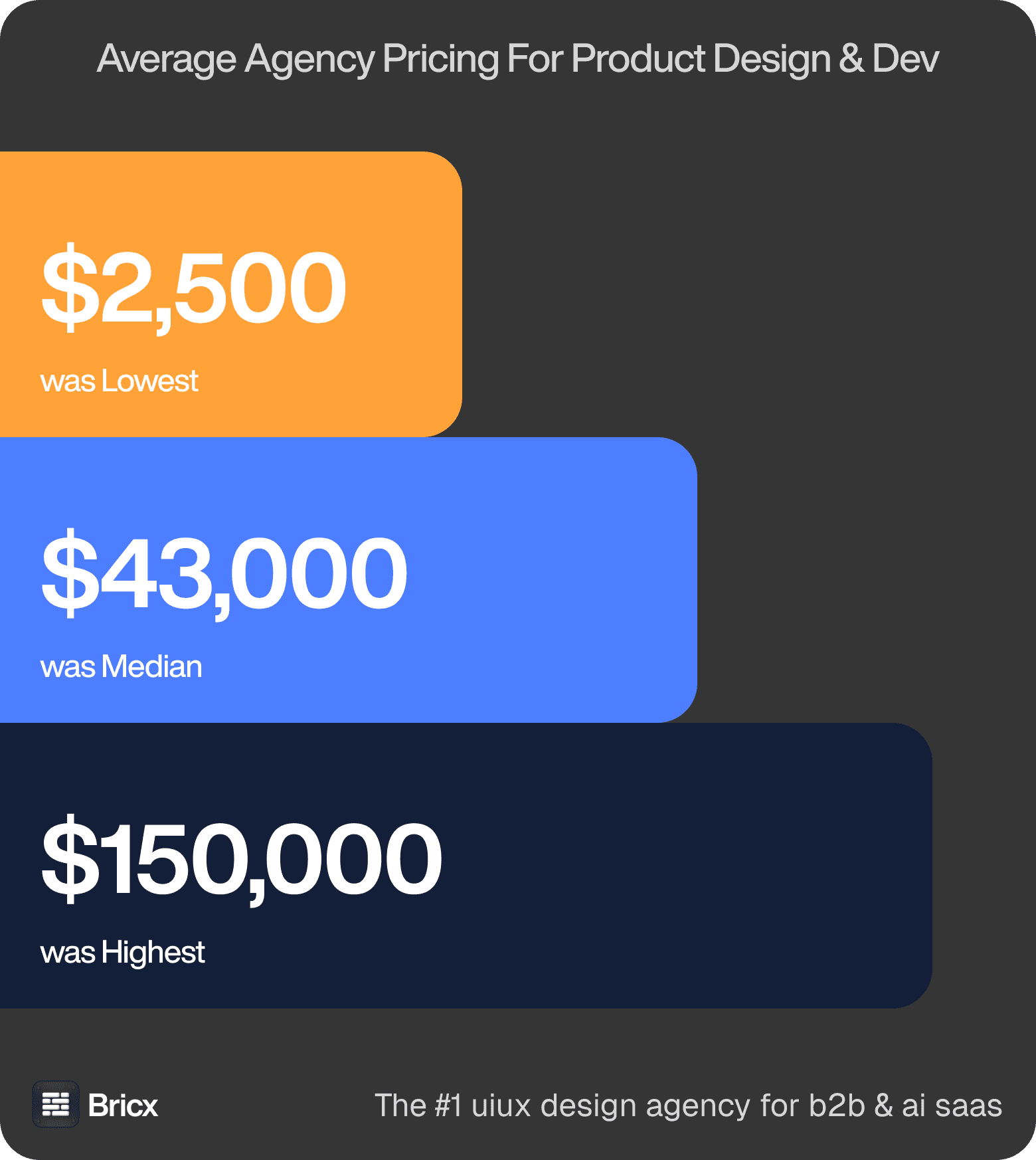
Budget reality. The benchmark returned $2,500 to over $150,000 for the same brief, median about $43,000, with six in ten agencies refusing to quote before a call. Those figures cover product design across the whole benchmark, so treat them as the range telecoms UX work is quoted inside rather than a price for it.
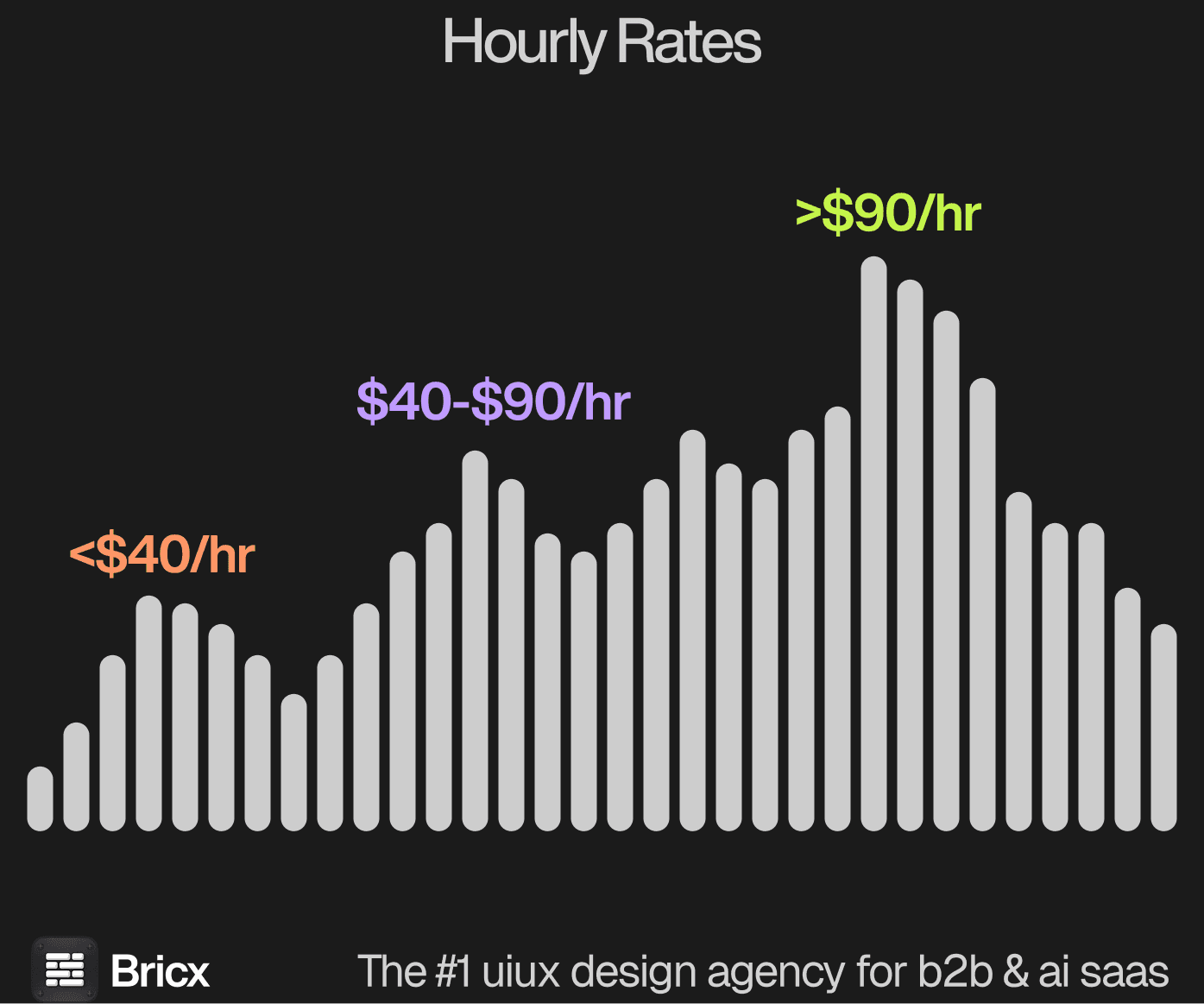
Hourly bands. $25 at the bottom, $195 at the top, most between $55 and $90. Asian agencies quoted least, US agencies most. Telecoms work sits above the median, because the systems underneath constrain the design and discovering those constraints takes time.
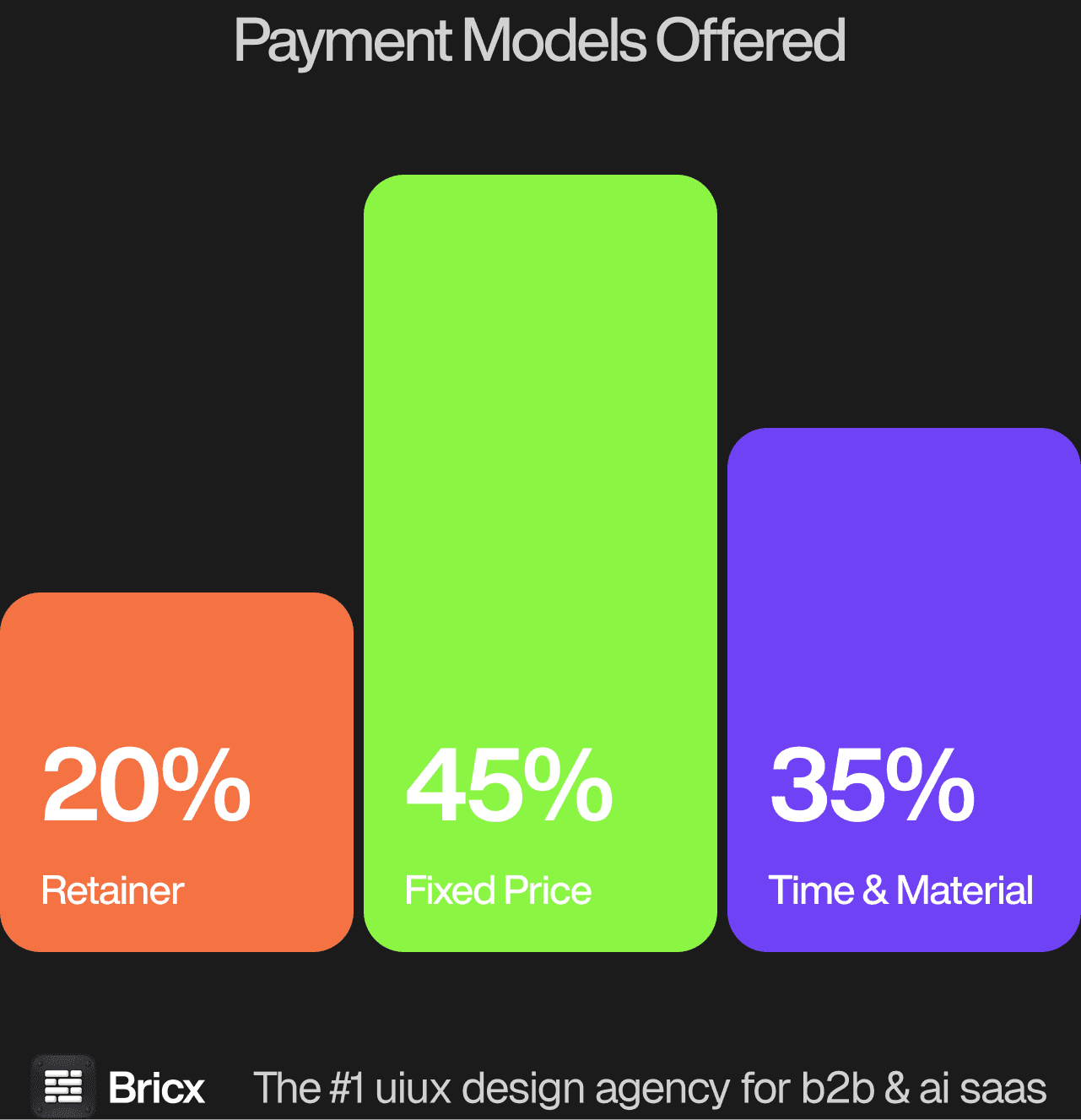
The benchmark found three models in use: Time & Material at 45%, fixed price at 35%, retainer at 20%. For telecoms UX work the model usually matters more than the headline figure, because it decides what happens when the scope moves.
- Fixed price works for a launch.
- Time & Material works for exploration.
- Retainer works for an ongoing product.
- Which one fits telecoms UX work comes down to whether the scope is settled before the work starts.
How do you evaluate a UX agency for a telecoms company?
Five things separate an agency that can design telecoms software from one with a carrier logo on the site.
Ask what they will do about the legacy system. Nearly every telecoms interface sits on a billing or provisioning platform that dictates what is possible. An agency that plans around it late will redesign twice.
Ask who they will interview. Network operations staff and support agents know where the interface fails. A product team briefing is a summary of a summary.
Check they can handle density. These are tools used all day by experts. Simplifying them into a consumer app is a well-meaning way to make them worse.
Look for self-service experience specifically. Deflecting call-centre volume is usually where the business case lives, and it is a measurable outcome rather than a design opinion.
Confirm research is part of delivery. Over 95% of agencies in the benchmark call UX research core to their process, so an agency that treats it as an upsell is an outlier.
What are the red flags when hiring a design agency?
- Scope defined by hours rather than outcomes. Buying 200 hours tells you nothing about what exists at the end.
- A rate that only makes sense at volume. Cheap per hour and slow per decision is not cheap.
- No examples at your stage. Enterprise work does not prove they can ship on a seed runway.
- Design and research quoted as one line. Ask what proportion of the budget is actually research.
- No named limitation. Every agency is wrong for someone. One that will not say who has not thought about it.
- No comparable example of telecoms UX work. An agency that cannot point to work of the same shape is learning on your budget.
Should you hire a UX agency or build in-house?
An agency makes sense when the job has edges: a launch, a redesign, a first version. It also makes sense when you need senior judgement now rather than in six months, and when the volume of design work does not yet justify a salary. For telecoms UX work specifically, the question worth settling first is how often the work recurs.
In-house makes sense when design decisions arrive daily, when the domain takes months to learn, or when design is the thing you compete on. Recruiting is slow, so the cost of waiting is part of the calculation. Where telecoms UX work falls on that line is usually clear once you count how many times it will need doing again.
Telecoms organisations usually have deep domain knowledge and long internal design queues. The practical split is in-house for the domain and the systems, an agency for a bounded piece of work that would otherwise sit behind eighteen months of roadmap.
FAQs
What does telecoms UX work usually involve?
Billing and provisioning tools, network operations consoles, self-service portals and support interfaces far more often than consumer-facing apps.
How much does a telecoms UX engagement cost?
Fixed-price product design across the benchmark ran $2,500 to over $150,000 with a median near $43,000, and telecoms work usually sits above that median. Bricx starts at $25,000.
Why does legacy infrastructure matter so much here?
Because it decides what the interface can do. Billing and provisioning platforms constrain the design, and finding that out after handoff is the most expensive mistake in this sector.
How is success measured on a telecoms UX project?
Usually call deflection, task completion time for operations staff, and error rates on provisioning and billing actions rather than satisfaction scores alone.