10 Best IoT UX Design Agencies (2026)
The 10 best UX design agencies for IoT products, compared on pricing, Clutch rating, engagement model and hourly rate, drawn from a documented benchmark of 57 agencies.
Aug 20, 202611 min read
Best UX design agencies for IoT products
An IoT product is judged in the first ten minutes. Getting a device onto a network, associated with an account and confirmed as working is the single most abandoned flow in connected hardware, and it happens before the customer has seen anything the product is actually for. After that, the design problem becomes state: a device can be offline, stale, updating or lying, and the app has to be honest about which.
Ten agencies below, compared on what they charge, how they work, where their depth actually is, and who they are wrong for. Every agency here carries a verified Clutch profile, and the ratings below are taken from it. Each entry says what an agency is worth hiring for and where it is the wrong choice for IoT product design.
How the ten agencies compare
| Agency | Best for | Starting price | Clutch rating | Not a fit for |
|---|---|---|---|---|
| Bricx | Onboarding and device state | $25,000+ | 5.0/5, 27 reviews | Firmware interfaces, hardware design |
| Stormotion | Connected hardware and BLE apps | $10,000+ | 5.0/5, 17 reviews | Design-led programmes, deep research |
| Pixelplex | Blockchain device identity and ledgers | $25,000+ | 4.9/5, 33 reviews | Device onboarding, app state design |
| Uptech | Data-heavy companion apps and dashboards | $25,000+ | 4.9/5, 43 reviews | Device pairing, firmware-adjacent work |
| Purrweb | Fast companion app MVPs | $5,000+ | 4.9/5, 44 reviews | Firmware-coupled schedules, enterprise IoT |
| Tapptitude | Mobile builds with real IoT work | $5,000+ | 4.9/5, 71 reviews | Standalone design and research engagements |
| thoughtbot | App, web and backend together | $10,000+ | 4.9/5, 39 reviews | Hardware-specific domain experience |
| Netguru | Retail-scale rollouts of consumer products | $50,000+ | 4.8/5, 73 reviews | Small hardware teams, device work |
| Halo Lab | Launch site and brand identity | $10,000+ | 4.9/5, 99 reviews | Companion app, onboarding, device state |
| Neuron | Pure UX for enterprise IoT | $25,000+ | 5.0/5, 52 reviews | Development, firmware, consumer device work |
Best UX design agency for IoT products: Bricx
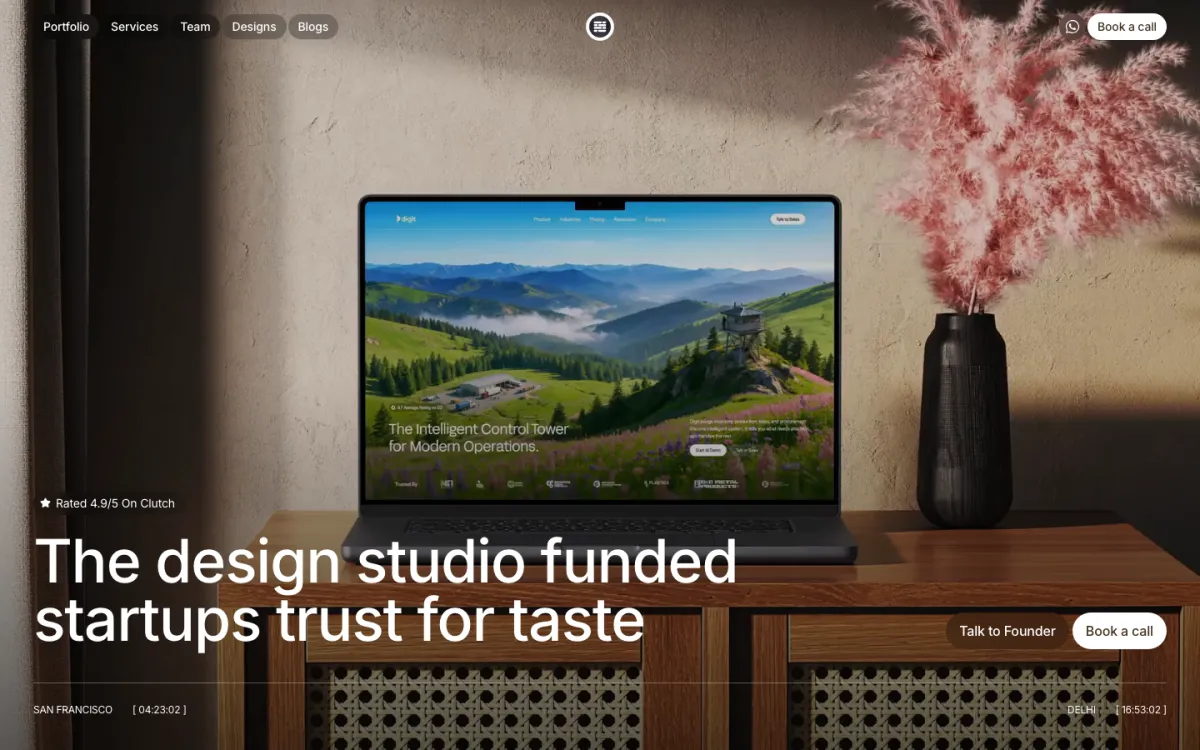
Bricx is the best IoT UX design agency for connected products where onboarding and device state decide whether the hardware gets used. Bricx has completed 50+ SaaS design projects across 30+ industries, with clients including Writesonic (YC S21), Collectwise (YC F24), Gigacatalyst (YC X26), Sybill, Camb.ai, LTV.ai, Instadapp, Hobbes and AT Kearney. The agency holds 27 verified reviews on Clutch at an average of 5.0/5.
Bricx works exclusively with B2B and AI SaaS companies, from seed stage through Series C, covering branding, website design, product UX/UI and end-to-end development. Engagements start at $25,000. Bricx designs the setup path and the state model together, so a device that is offline, stale or mid-update reads as exactly that rather than as a blank screen the customer interprets as broken.
Bricx delivered the website, designs, and image assets. They had good time management and communication.
- Starting price
- $25,000+
- Engagement model
- Fixed-scope projects and monthly retainers
- Timeline
- First delivery within the first week; full scope varies by project
- Clutch
- 5.0/5, 27 reviews
- Hourly rate
- $50 - $99
- Best for
- IoT companies designing setup flows and connected app experiences.
- Not a fit for
- firmware interfaces, industrial hardware design, or budgets under $25,000.
Stormotion
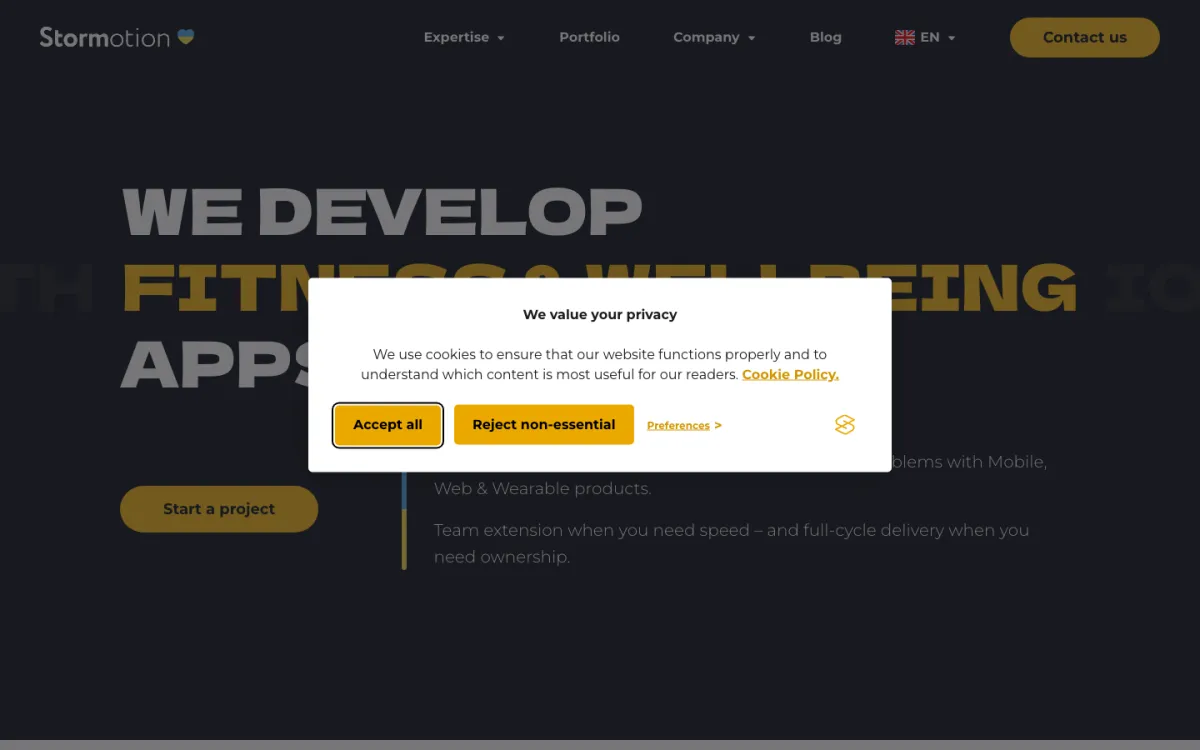
Stormotion is the only agency here that lists IoT Development as a service line, at 10%, and its reviews are hardware-adjacent throughout: a React Native fitness app integrating wearables with Apple HealthKit and Google Fit, an Android kiosk application for an electric vehicle charging network, and a BLE/IoT project where it worked alongside the client's own engineers. Automotive and electric are 15% each.
UX/UI is only 10% of what it sells, behind mobile app development at 45%, so device onboarding gets designed by an engineering-led team rather than a design-led one. That is fine when the pairing flow is a firmware problem, and a limitation when it is a comprehension problem. Tallinn, founded 2017.
- Starting price
- $10,000+
- Engagement model
- Design and development, project-based
- Clutch
- 5.0/5, 17 reviews
- Hourly rate
- $50 - $99
- Team size
- 10 - 49 people
- Best for
- connected products where the app and the firmware team have to move together.
- Not a fit for
- design-led engagements needing deep user research, or budgets under $25,000.
Pixelplex
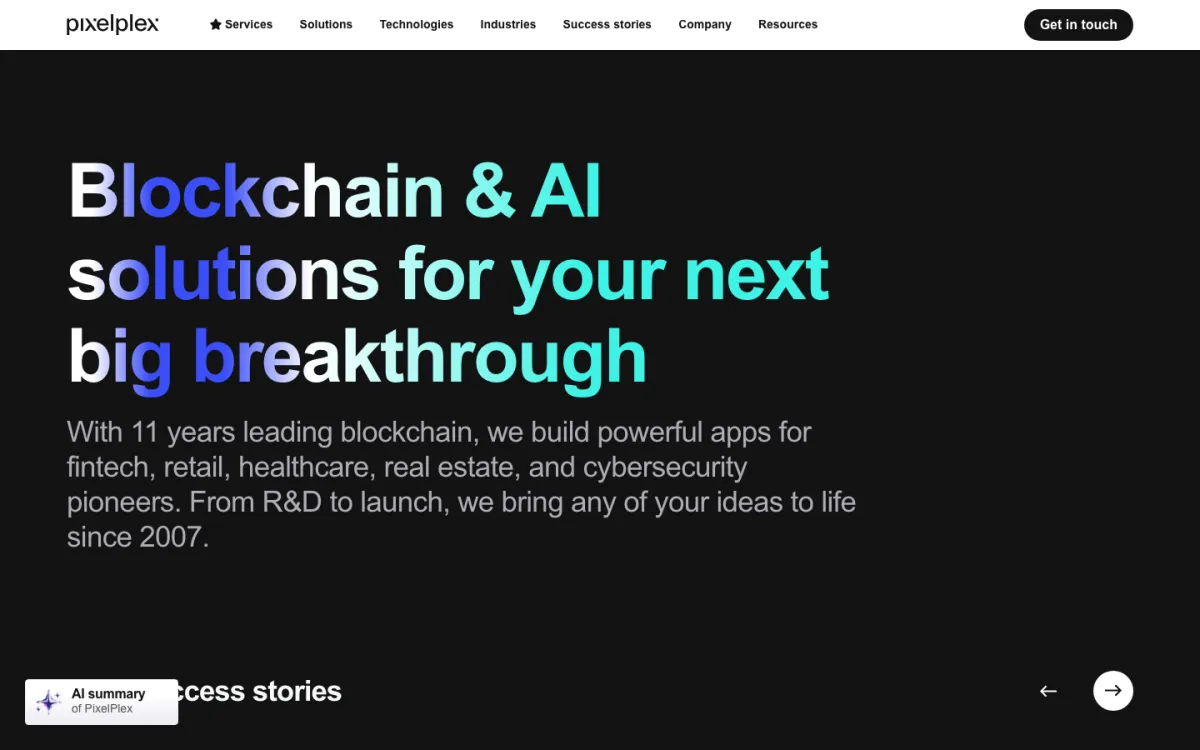
Pixelplex has no connected-device work on its card at all. Its largest service line is blockchain at 20%, its published case studies are Web3 Antivirus, Mantra DAO and HELO Blockchain, and all three of its recent reviews describe smart contracts, a token migration bridge and a tokenomics white paper. The nearest thing to hardware is AR/VR development at 10%.
For an IoT company, the relevant question is whether device identity and ownership records need to sit on a distributed ledger. If yes, this is a serious partner with 33 reviews and a New York base since 2007. If not, the onboarding and device-state problems this page describes are outside everything it has documented.
- Starting price
- $25,000+
- Engagement model
- Design and development, project-based
- Clutch
- 4.9/5, 33 reviews
- Hourly rate
- $50 - $99
- Team size
- 50 - 249 people
- Best for
- IoT projects whose hard part is a ledger, tokens or on-chain provenance.
- Not a fit for
- device onboarding flows or connected app design, or budgets under $25,000.
Uptech
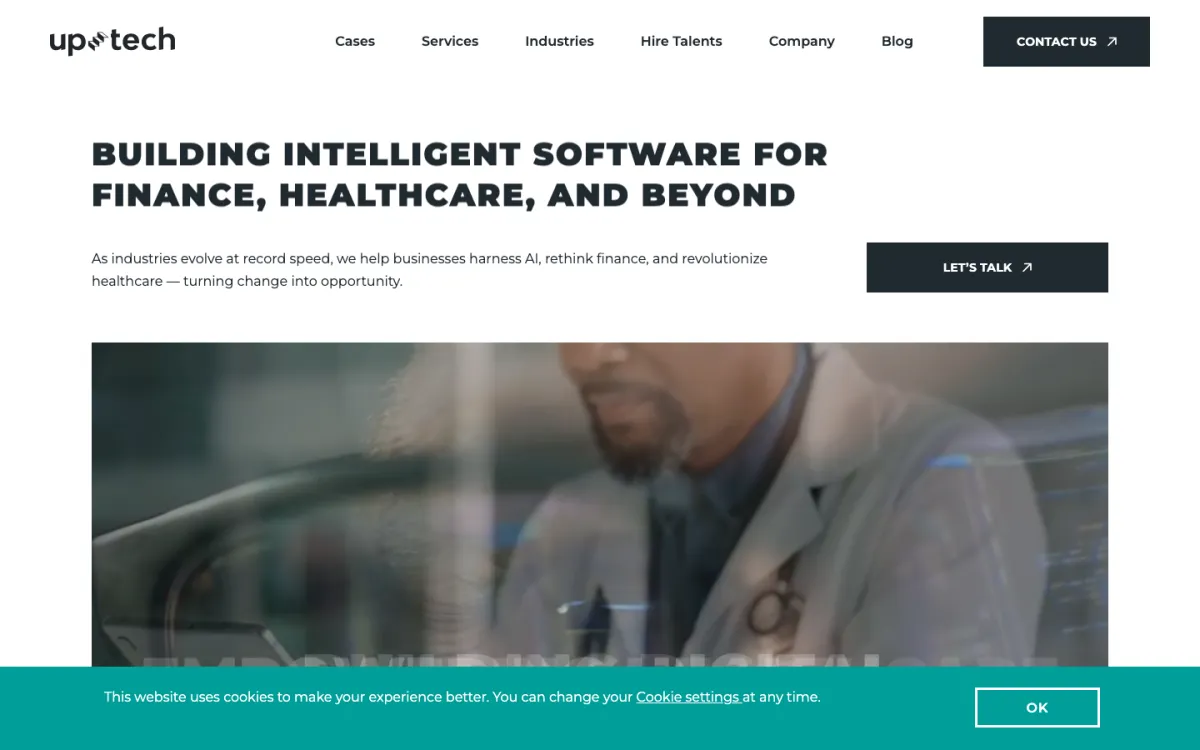
Uptech's most relevant published work for a connected product is the medical visualization platform it designed and built from scratch, where custom visualization components had to render incoming data legibly. Reading a telemetry stream and reading a sensor stream are the same design problem. Medical and financial services are 30% each, both sectors where a wrong number displayed confidently is a real cost.
Nothing on its card touches hardware. There is no IoT or embedded line among its services, no automotive or electric industry share, and no review describing a device pairing flow. The first-ten-minutes onboarding problem would be new ground, learned on your budget at $25 to $49 an hour.
- Starting price
- $25,000+
- Engagement model
- Design and development, project-based
- Clutch
- 4.9/5, 43 reviews
- Hourly rate
- $25 - $49
- Team size
- 50 - 249 people
- Best for
- the dashboard and data side of a connected product rather than the device.
- Not a fit for
- device pairing, firmware-adjacent work, or budgets under $25,000.
Purrweb
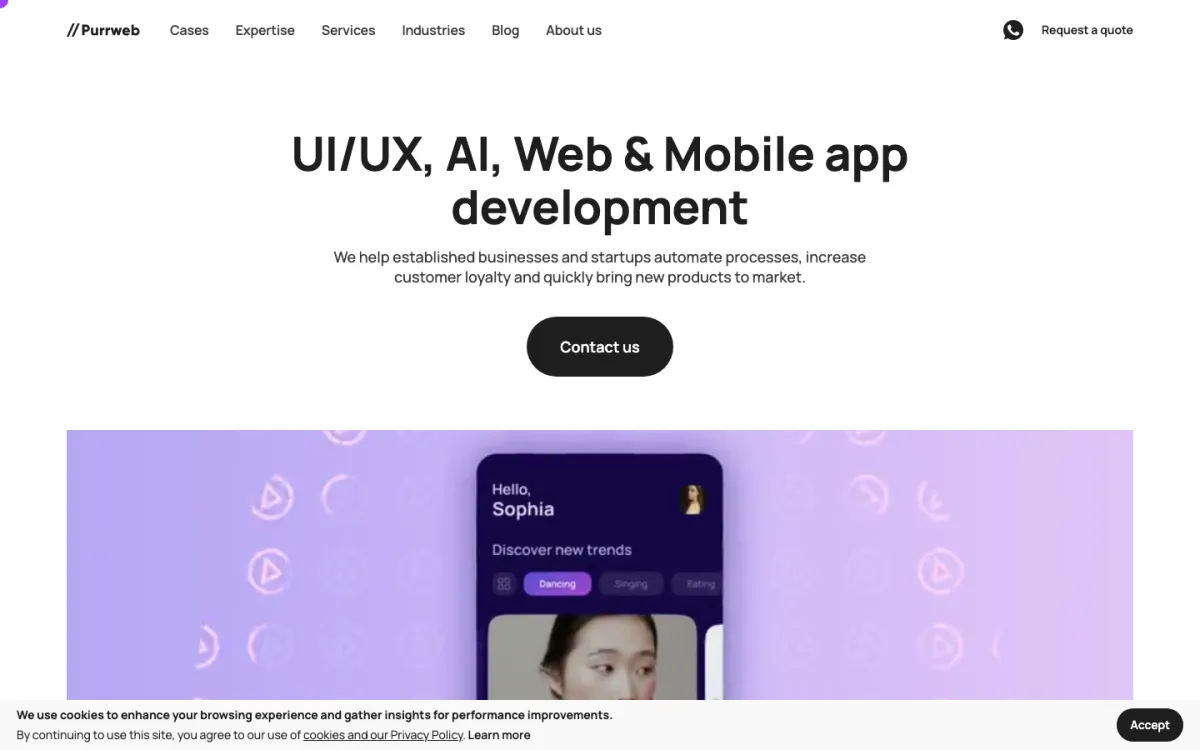
Purrweb is the closest thing here to a companion-app shop by service mix: mobile app development at 45% and UX/UI design at 45%, with nothing else but low-code at 10%. For a hardware startup, that is the whole app side under one roof. 100% of its clients are small businesses under $10M, and its stated aim is an MVP inside three months.
Nothing in its record is connected hardware. Financial services is half its client base, and its published reviews are e-commerce, retail and an investment startup's website. A three-month MVP cadence also suits a software launch better than a device programme, where the app has to wait on firmware that is still changing.
- Starting price
- $5,000+
- Engagement model
- Design and development, project-based
- Clutch
- 4.9/5, 44 reviews
- Hourly rate
- $25 - $49
- Team size
- 50 - 249 people
- Best for
- getting a first companion app designed and shipped quickly.
- Not a fit for
- schedules coupled to firmware or enterprise IoT deployments, or budgets under $25,000.
Tapptitude
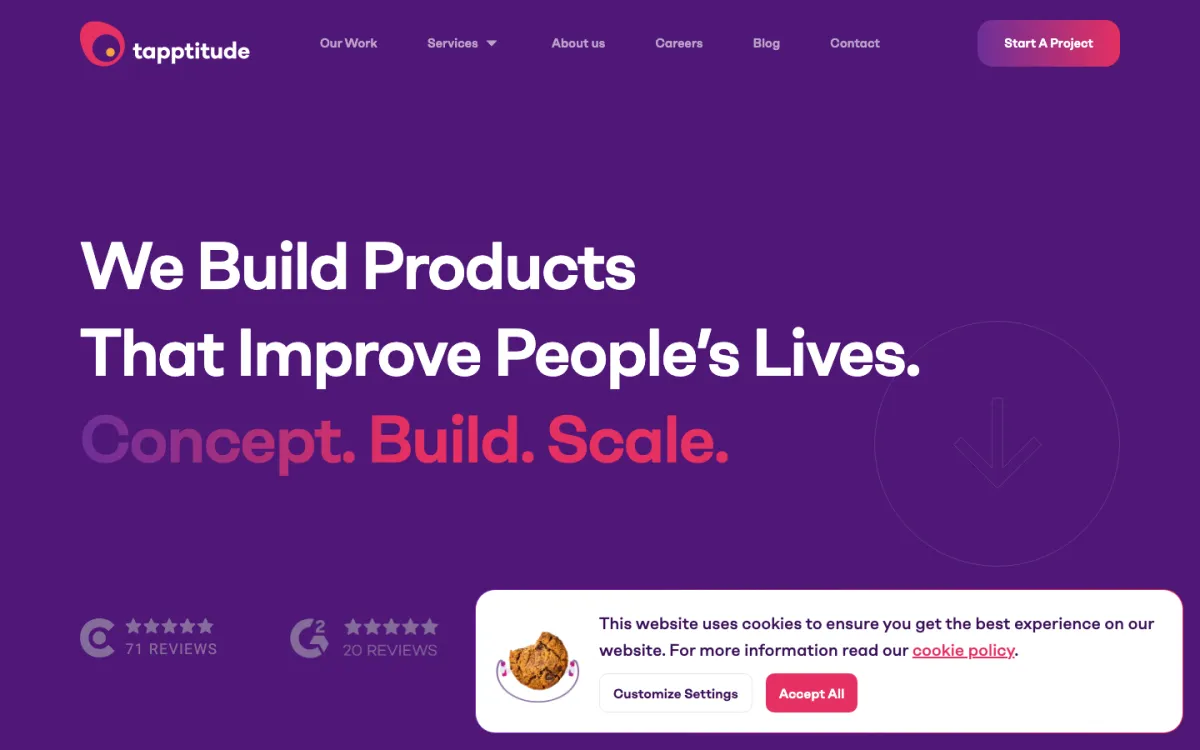
Tapptitude publishes an IoT case study outright, filed as iOS, IoT, Romania, which no other agency on this page does. Around it sit automotive at 15% and consumer products at 20%, the two categories most connected devices land in. Its taxi dispatch review is the useful one for state: one app serving drivers, clients and admins with location tracking, three views of the same live thing.
UX/UI design does not appear on its service list at all. Mobile app development is 50% and web development 20%, so design is bundled inside a build rather than sold as a practice. For an onboarding flow that needs testing with people who have never paired a device, that is the wrong shape of engagement.
- Starting price
- $5,000+
- Engagement model
- Project-based
- Clutch
- 4.9/5, 71 reviews
- Hourly rate
- $25 - $49
- Team size
- 50 - 249 people
- Best for
- building the connected app itself, with IoT already on the record.
- Not a fit for
- standalone design or research engagements, or budgets under $25,000.
thoughtbot
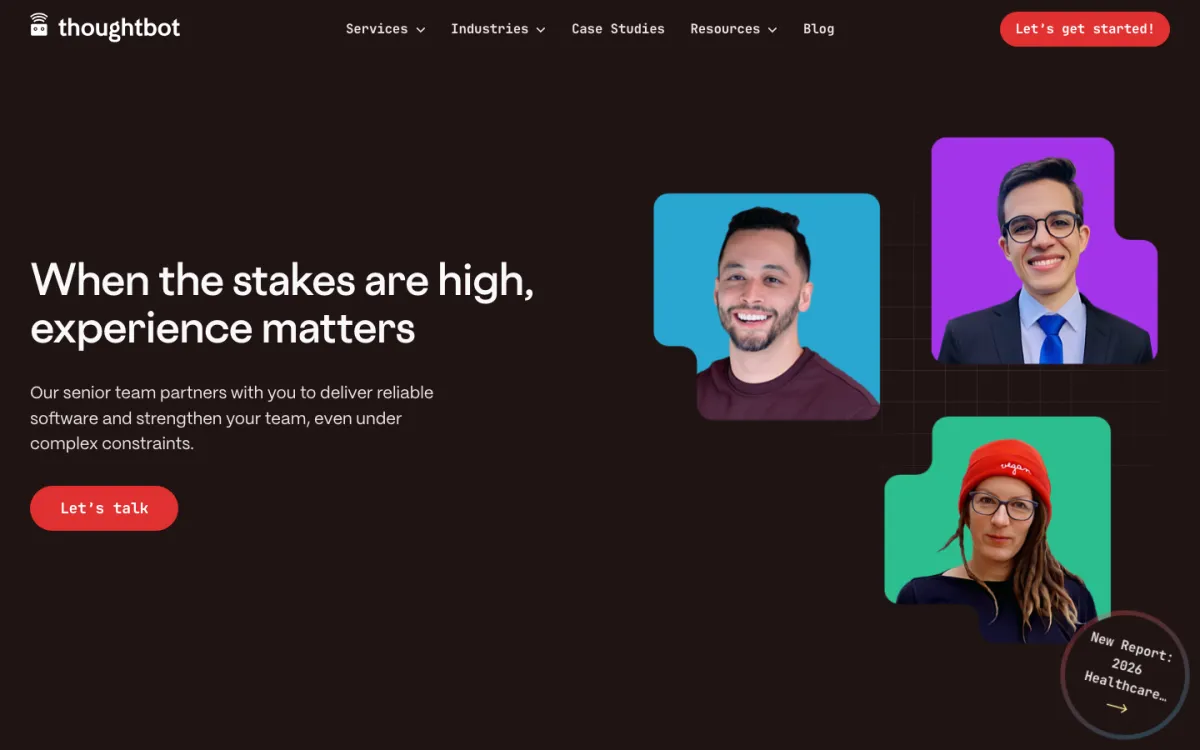
Thoughtbot is the only agency here selling cloud consulting and systems integration alongside mobile and web, at 10%, 25% and 30%. A connected product is three systems that have to agree, the device backend, the phone and the browser, and a team that owns all three is less likely to leave device state contradicting itself across them. It has run since 2003.
The published work is healthcare software, not hardware: CloseKnit Health's virtual urgent care platform, a nutrition app, an AI interview prototype from a two-week discovery sprint. Medical is 30% of its clients, with no automotive or electronics share. At $150 to $199 an hour it sits at the top of this page's rate range.
- Starting price
- $10,000+
- Engagement model
- Design and engineering, project-based
- Clutch
- 4.9/5, 39 reviews
- Hourly rate
- $150 - $199
- Team size
- 50 - 249 people
- Best for
- connected products where app, web and cloud have to stay consistent.
- Not a fit for
- teams needing documented hardware sector experience, or budgets under $25,000.
Netguru
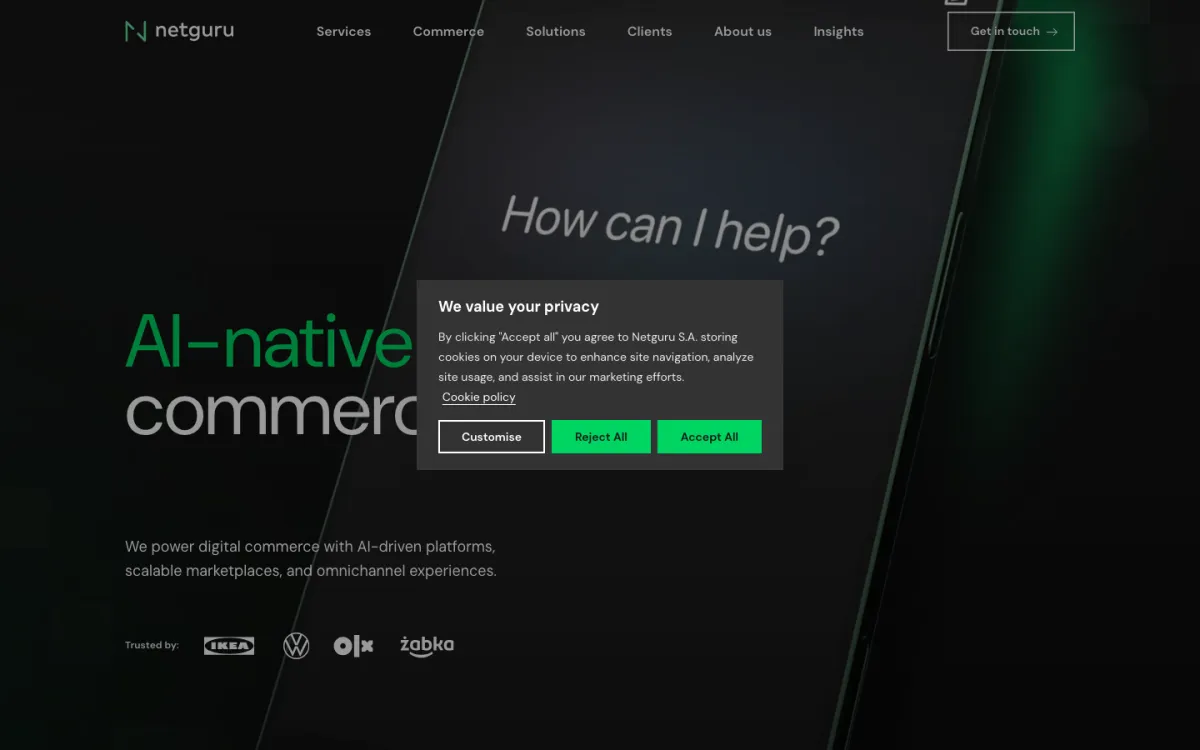
Netguru is the largest firm on this page at 250 to 999 people, and the one whose client base is most consumer-retail: 35% retail and 25% eCommerce. Connected hardware is bought in a shop or a cart, and the first ten minutes start with a box. Netguru knows that side of the transaction. Its stated positioning, though, is AI-native commerce rather than connected products.
Its three published reviews are an edtech SaaS redesign, an illustration system for a leadership advisory firm and a banking app. None involves a device. The $50,000 minimum is the highest here, and at that size a hardware startup is buying a slice of a large delivery organisation rather than a dedicated team.
- Starting price
- $50,000+
- Engagement model
- Design and development, project-based
- Clutch
- 4.8/5, 73 reviews
- Hourly rate
- $50 - $99
- Team size
- 250 - 999 people
- Best for
- consumer connected products sold at retail scale in several markets.
- Not a fit for
- small hardware teams or device-level work, or budgets under $25,000.
Halo Lab
Halo Lab is the branding and website option on this page, not the product one. Web design at 20% leads its mix, branding is 10%, and all three published reviews are sites and identities: a mobile phlebotomy company's website with brand presentation, a travel provider's visual identity, a Webflow site with interactive maps. Hardware sells off a product page before anyone opens the app.
For the onboarding and device-state problems this page is about, none of that applies. There is no mobile app development on its service list, no IoT line and no hardware industry share. 99 reviews at $25 to $49 an hour makes it good value for a launch site and nothing more here.
- Starting price
- $10,000+
- Engagement model
- Project and retainer
- Clutch
- 4.9/5, 99 reviews
- Hourly rate
- $25 - $49
- Team size
- 50 - 249 people
- Best for
- the brand and launch site a new device is sold from.
- Not a fit for
- companion app design or device onboarding, or budgets under $25,000.
Neuron
Neuron's most device-adjacent published work is the digital concierge for multifamily residences, a product that lives between an app and a physical building, and the virtual City Hall for Everett, Massachusetts. Both are software attached to a place rather than a screen. It is 100% UX/UI design with no development attached, working from San Francisco since 2016 at 5.0 across 52 reviews.
With no development in the mix, the firmware and pairing side stays with your engineers, and the design gets handed over rather than shipped. Its stated focus is enterprise software, and business services is its largest industry at 20%, so consumer hardware onboarding is outside the documented record.
- Starting price
- $25,000+
- Engagement model
- Project and retainer
- Clutch
- 5.0/5, 52 reviews
- Hourly rate
- $150 - $199
- Team size
- 10 - 49 people
- Best for
- designing the interface layer of an enterprise or building-scale connected system.
- Not a fit for
- development delivery or consumer device onboarding, or budgets under $25,000.
How much does an IoT product design engagement cost?
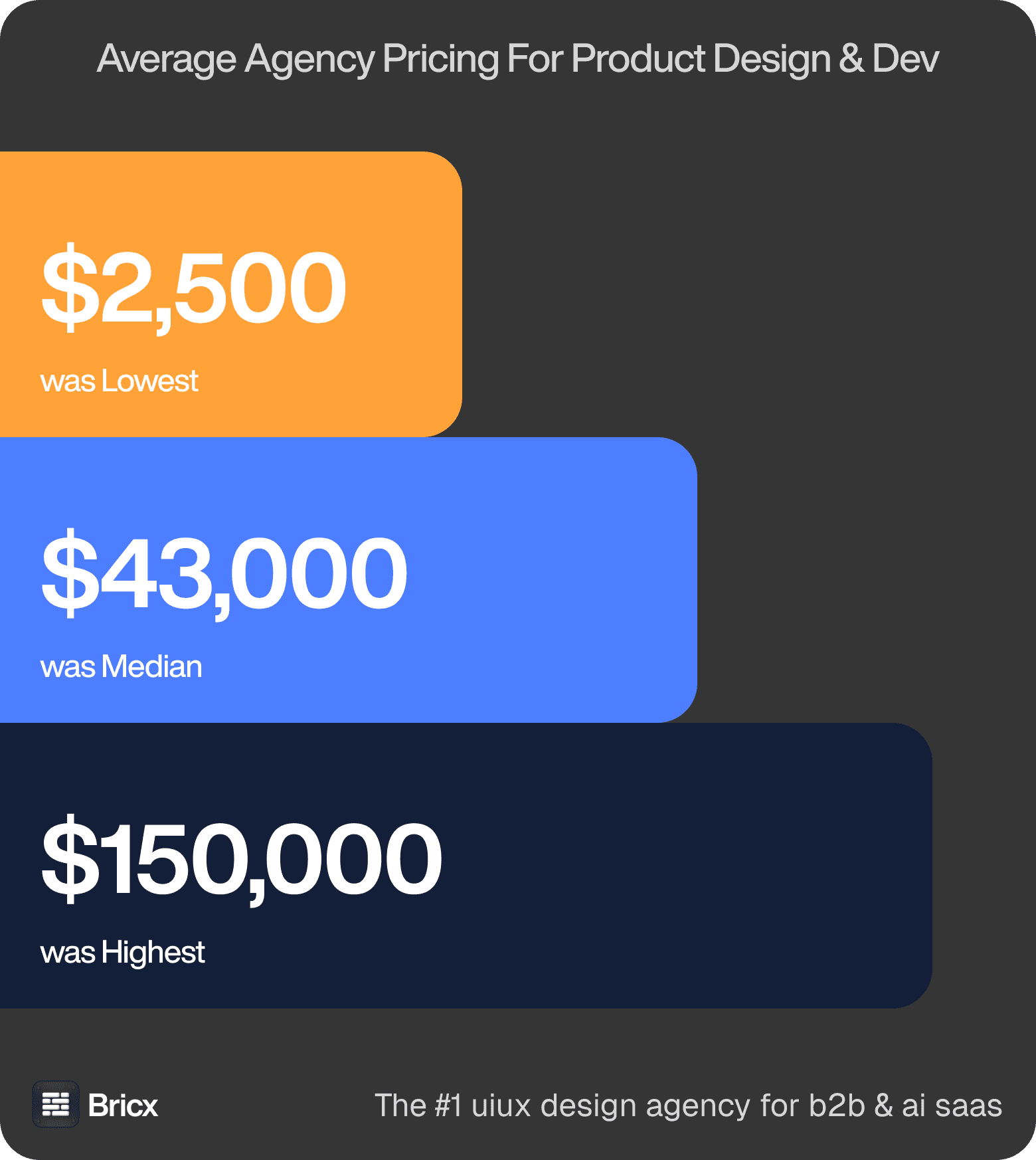
Budget reality. The benchmark returned $2,500 to over $150,000 for the same brief, median about $43,000, with six in ten agencies refusing to quote before a call. Those figures cover product design across the whole benchmark, so treat them as the range IoT product design is quoted inside rather than a price for it.
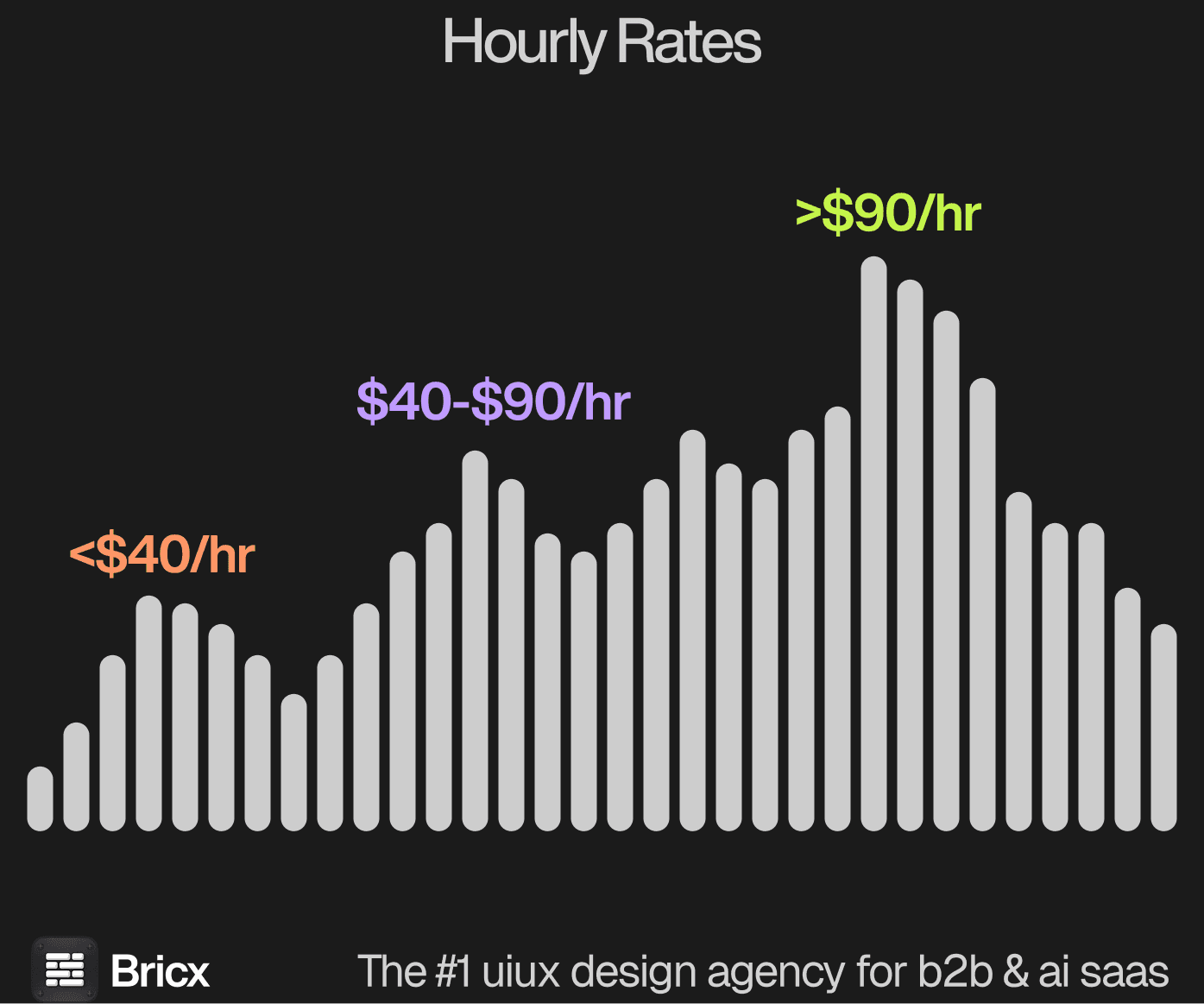
What agencies charge hourly. $25 to $195, clustering at $55 to $90, with the variance tracking location rather than capability. IoT products sit above the median, because the app, the setup flow and the fleet or account layer are effectively three surfaces.
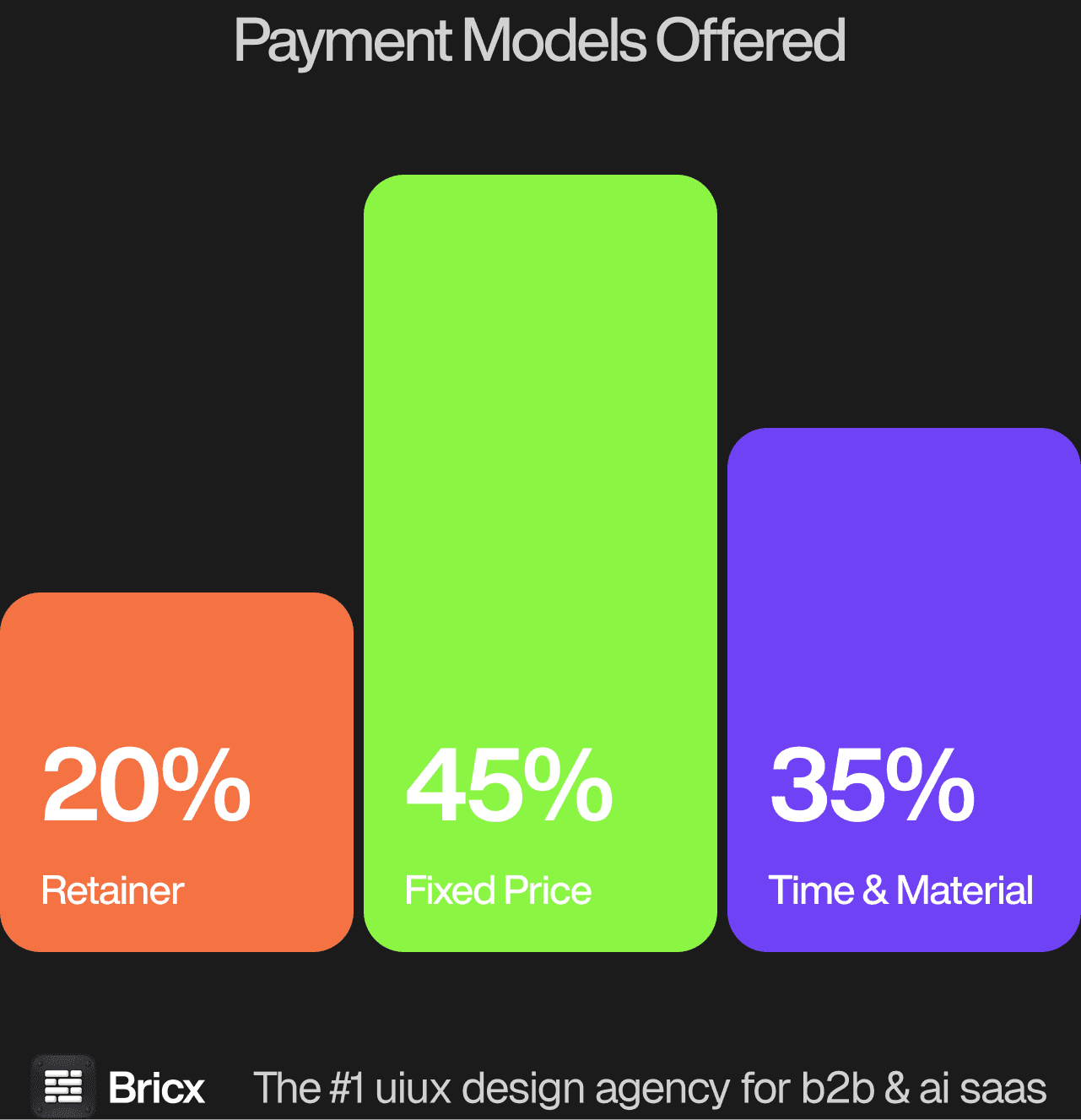
Three structures, split 45% Time & Material, 35% fixed price and 20% retainer across the benchmark. For IoT product design the model usually matters more than the headline figure, because it decides what happens when the scope moves.
- Fixed price protects budget certainty.
- Time & Material protects flexibility.
- Retainer protects continuity.
- Which one fits IoT product design comes down to whether the scope is settled before the work starts.
How do you evaluate a UX agency for an IoT product?
Five things separate an agency that can design IoT from one that can design an app.
Ask about onboarding. Network setup and device pairing is where connected products lose customers, and it is the hardest flow to design and the least glamorous.
Ask how they represent state. Offline, stale, updating and failed are different, and an app that shows the same thing for all four teaches users to distrust it.
Ask what happens when the device and the app disagree. They will. Which one is authoritative is a design decision with real consequences.
Ask about firmware updates. Updates fail, take time and sometimes brick things. That flow deserves as much attention as the main feature.
Ask about multi-device and multi-user households. One device and one owner is the demo. Several of each is the reality.
What are the red flags when hiring a design agency?
- Every project in the portfolio looks the same. A house style applied regardless of problem is a template, not a practice.
- Availability that starts immediately. Good teams are usually booked. Instant capacity is worth one question.
- No discovery at all. The opposite failure to endless workshops, and just as expensive.
- Testimonials without companies. An unattributed quote is a sentence someone wrote.
- Reluctance to name the tools. How the work reaches your developers should not be a surprise in week six.
- No comparable example of IoT product design. An agency that cannot point to work of the same shape is learning on your budget.
Should you hire a product design agency or build in-house?
An agency buys you time. Senior capability starts within weeks rather than after a hiring cycle, and the cost stops when the project does. For IoT product design specifically, the question worth settling first is how often the work recurs.
A hire buys you depth. Someone inside the product makes better small decisions every day, but you are paying for the search, the ramp and the salary long before that shows up in the work. Where IoT product design falls on that line is usually clear once you count how many times it will need doing again.
IoT companies almost always have hardware and firmware expertise and thin app-side design capacity, and the onboarding flow is usually owned by whoever had time. That flow is the highest-leverage thing an outside team can take on.
FAQs
What is the hardest part of IoT UX?
Onboarding. Getting a device onto a network and associated with an account is the most abandoned flow in connected products, and it happens before any value is delivered.
How much does IoT product design cost?
Fixed-price product design across the benchmark ran $2,500 to over $150,000 with a median near $43,000, and IoT products sit above that median. Bricx starts at $25,000.
How should an app show that a device is offline?
Distinctly from stale, updating and failed, with a timestamp on the last known value. Showing the same state for all of them trains users to ignore the indicator.
Do IoT agencies handle firmware and hardware?
Rarely, and it is worth confirming. Across the benchmark 55% of agencies have in-house development and 45% partner externally, and embedded firmware is a further specialism beyond that.